
From Dubai to Chile, Turkish series expand their empire

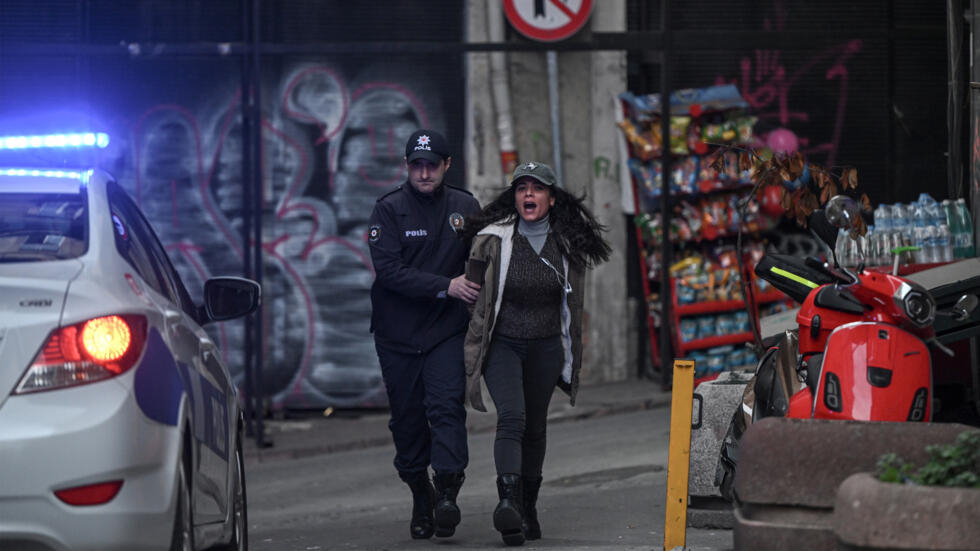
ISTANBUL: In the skies above Istanbul’s Tophane neighbourhood, seagulls are sent scattering by a drone that’s filming a policeman arresting a young woman on the streets below.

But it’s for a television series called “Degenler”, one of about 60 filmed annually in Turkiye that have made Istanbul and other Turkish cities familiar to viewers in nearly 170 countries around the world. Over the past 15 years, Turkiye has established itself as the foremost exporter of series after the United States and Britain.

“Latin Americans find Turkish series very close to their culture,” said Erdi Isik, development manager at Ay Yapim — Turkiye’s leading exporter last year and whose production “Yargi” (“Family Secrets”) last November won an International Emmy for best telenovela.

“When I show samples to a panel, even if they don’t understand a word of Turkish, they catch what it is about because the family culture is very much the same,” he said. Censorship constraints in Turkiye also provide more modest material, important for audiences in the Middle East and Spanish-speaking countries who are accustomed to watching soap operas as a family.

However, “we think of the Turkish market first,” he said, even though “we pick actors that can fit international expectations”, citing a list of about 20 actors that appeal to the public outside Turkiye.

“Bitter Lands”, another success story, won best telenovela of the year in South America in 2020 with its lead actress likewise crowned. Long popular in the Middle East, North Africa and the Balkans, all once ruled by the Ottoman Empire, Turkish series about history, family intrigues and thwarted love stories are now present on every continent, even in the United States where they have captured the Hispanic market.

“They are now broadcast in prime-time in Spain, Saudi Arabia and Egypt,” said Xavier Rambert, head of research and marketing at Glance, an audience measurement company in London, who praises the “effectiveness” of Turkish productions.

“Their ability to provide masses of content at very controlled costs makes it possible to fill the programmes at reasonable prices,” he added. In total, nearly 700 million viewers enjoy “alla turca” telenovelas, according to the Turkish culture ministry.

The success is also due to the quality of the productions, said Ozlem Ozsumbul, sales director at Madd, the company which distributes series produced by Ay Yapim. “We always shoot on location”, she said.

Each episode is written and shot from one week to the next, based on a general plot which evolves to adjust to the audience. A two-hour episode can be entirely written, shot and produced in six days.
Saudi king calls for end to ‘heinous crimes’ in Gaza in Ramadan message

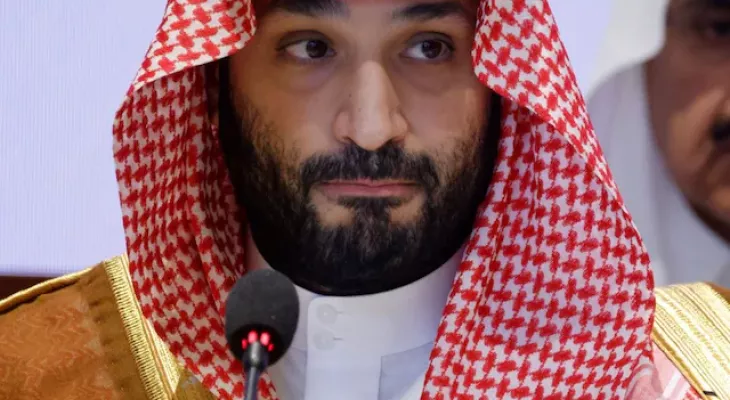
Saudi Arabia’s King Salman has called in his Ramadan message for the international community to bring an end to the “heinous crimes” taking place in Gaza, where Israel’s war with Hamas has been raging for more than five months.

Speaking as custodian of Islam’s two holiest sites, King Salman gave thanks on Sunday for the “blessings bestowed upon the Kingdom of Saudi Arabia”, but noted the war in besieged Gaza would cast a shadow over the holy month of fasting and prayer.

“As we witness the arrival of Ramadan this year, our hearts are heavy with sorrow for the ongoing suffering of our Palestinian brothers facing relentless aggression,” he said.

“We call upon the international community to uphold its responsibilities to put an end to these heinous crimes and ensure the establishment of safe humanitarian and relief corridors.”

Gaza is in the midst of a spiralling humanitarian crisis after months of war sparked by Hamas’s unprecedented October 7 attacks on Israel.

Aid groups say only a fraction of the supplies required to meet basic humanitarian needs have been allowed into the territory since Israel placed it under a near-total siege.

There are renewed fears of violence spreading, particularly to Jerusalem, during the Islamic holy month of Ramadan, as a truce remains elusive.

Hamas has reiterated a call for Palestinians to step up visits to al-Aqsa Mosque.

Israel has accused Hamas of “striving to ignite the region during Ramadan”, which begins on 11 March for Palestinians.

The third holiest shrine in Islam is a place of worship for local Muslims.

But the site – also the holiest place in Judaism, known as Temple Mount – is often a flashpoint during flare-ups in the Israel-Palestinian conflict.

Ramadan is due to begin on Monday for Palestinians with the sighting of the new moon.

Last week, the courtyards of al-Aqsa were calm as I visited, but Palestinian worshippers’ minds were on the war.

“People don’t feel like celebrating and enjoying the regular Ramadan traditions,” said one woman, Ayat, sadly. “This year, they won’t go ahead because of what’s happening in Gaza.”

Hopes that a 40-day ceasefire could take effect by the start of Ramadan have faded although Egyptian sources said mediators would again meet a Hamas delegation on Sunday to try to reach an agreement with Israel.

Israel said on Saturday that its spy chief had met with his US counterpart as it continued efforts to try to release dozens of hostages.

Afterwards the Israeli prime minister’s office released a statement saying Hamas was “holding to its position,” as if it was “uninterested in a deal.”

A framework plan being discussed would see some of the Israeli hostages snatched by Hamas in its deadly 7 October attacks released in exchange for Palestinian prisoners and an increase in aid, amid UN warnings of famine.

“This Ramadan will be difficult. How will we break our daily fast and eat when we think of our compatriots in Gaza,” commented Abu Nader, who had been following the news, as he crossed al-Aqsa in his mobility scooter.

“We pray to God for better times.”

Abu Nader says breaking the daily fast will be hard given the levels of hunger in Gaza

Israeli police are always visibly dotted around the vast al-Aqsa mosque complex and have officers present at every gate, controlling access.

This weekend, thousands of police have been deployed in the Old City where tens of thousands of worshippers are expected daily at the al-Aqsa mosque.

Since Israel captured East Jerusalem, including this part of the Old City, from Jordan in the 1967 Middle East War and occupied and annexed it, the site has become a prominent symbol of the wider Palestinian struggle.

In 2000, the visit of then Israeli opposition leader, Ariel Sharon to the sacred hilltop was seen as a key trigger for the Second Palestinian Uprising, which Palestinians refer to as the “al-Aqsa Intifada”.

There are often clashes here between Israeli security forces and Palestinian worshippers, particularly during Ramadan.

Tensions also run high whenever there are Israeli nationalist marches in the Old City, and in response to calls from Israel’s far-right to change the long-established, highly sensitive religious status quo rules at the site, which permit Jewish visitors but not Jewish prayer.

In May 2021, heightened tensions in Jerusalem erupted in violence at al-Aqsa. Hamas then fired rockets at Jerusalem, leading to a short war in Gaza and widespread unrest between Jewish and Arab Israelis.

Last year, when Ramadan overlapped with the Jewish Passover holiday, reports circulated that Jewish extremists planned to carry out the ritual sacrifice of a goat on Temple Mount.

Not trusting Israeli police to prevent that, hundreds of Muslims barricaded themselves in al-Aqsa and stun grenades were used against them.

This year, Ramadan does not coincide with any major Jewish holiday.

Dr Imam Mustafa Abu Sway says people who come to al-Aqsa Mosque during Ramadan do so to pray, not inflame tensions

How this Ramadan plays out depends a lot on events in Gaza as well as the limitations imposed by Israel.

The far-right Israeli National Security Minister, Itamar Ben-Gvir, did call for tight restrictions on Muslim Israeli citizens’ access to al-Aqsa, saying this was to stop Hamas “celebrating victory” while Israeli hostages remained captive in Gaza.

However, the Israeli Prime Minister, Benjamin Netanyahu has now rejected the plan.

It is not yet clear how many people will be allowed to reach the site.

On Sunday, Israel said worshippers would be permitted entrance to Temple Mount in “similar numbers to previous years”.

It said “this month and every month” it would allow “safe and proper prayers”, urging people not to listen to false rumours.

During the Gaza war, Israel has largely blocked Palestinians from the West Bank from entering Jerusalem. Typically, large crowds would pass through Israeli military checkpoints to attend Friday prayers during this sacred month.


The Israeli government spokesman, Eylon Levy, insisted that the right decisions would be made to safeguard freedom of worship.

“Ramadan is often an occasion when extremist elements try to whip up and inflame violence. We are working to deter that,” he told the BBC.

“We will continue to facilitate access to the Temple Mount for worship as in previous years, make clear that is our policy and will, of course, work against anyone determined to disturb the peace.”

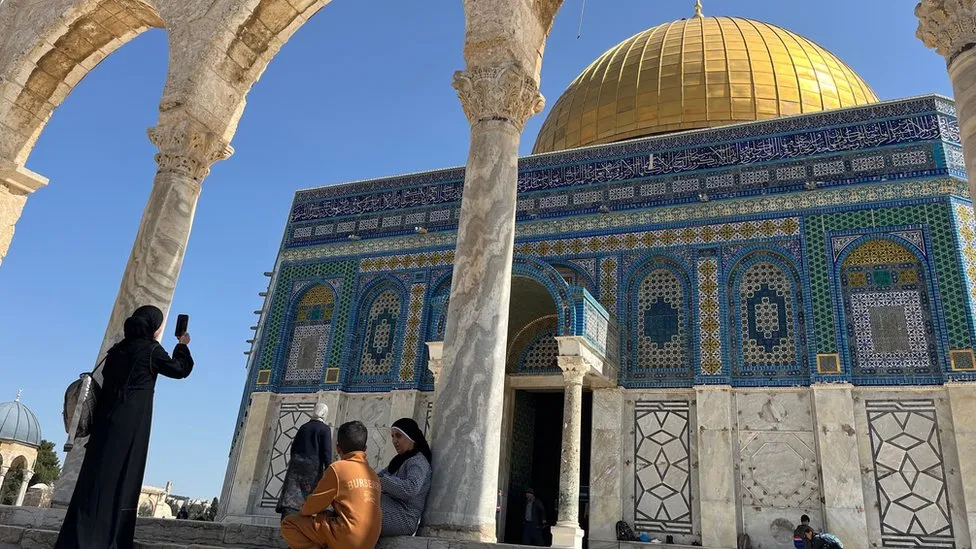
Next to the gold-gilded Dome of the Rock, I met Dr Imam Mustafa Abu Sway, a member of the Islamic Waqf council, which administers al-Aqsa Mosque or Haram al-Sharif, which the compound is also known as.

“A few years ago, Israel allowed practically everyone who wanted to, to come from the West Bank and there wasn’t one single incident,” the scholar said.

“People do come to worship. They don’t come to disturb the peace. If the Israeli police and security forces leave them alone, everything will, hopefully, be ok.”

This year, even more than usual, the world will be scrutinising what happens in Jerusalem, to see if that is the case.

Conservative MSP Stephen Kerr has insisted he has “no regrets” for saying Humza Yousaf may have had a conflict of interest in sending funding to Gaza.

The Scottish government gave £250,000 to the UNRWA aid agency in November 2023, while the first minister’s parents-in-law were trapped in Gaza.

Mr Kerr said it suggested Mr Yousaf was “prepared to bend the rules” if he had overridden official advice.

That led Mr Yousaf to condemn the claim as an “outrageous smear”.

He also said the decision by the Telegraph newspaper to carry the story was “an Islamophobic attack”.

The Scottish government has said that the funding decision was taken by Mr Yousaf following advice from officials.

The SNP’s deputy leader Keith Brown has now called on Rishi Sunak to block Stephen Kerr from standing as a Westminster candidate at the next general election.

‘What happened and why?’

However, Mr Kerr insisted he was absolutely right to question why the £250,000 of funding went to UNWRA when government officials had initially suggested £100,000 to £200,000 should instead go to another aid agency, Unicef.

He told BBC Scotland’s The Sunday Show: “No-one who watched the trauma that the first minister went through in those days and weeks when his family were stuck, locked, in Gaza… of course there was an issue of personal interest.

“And therefore it’s not wrong in the slightest (to challenge the first minister).

“That being the case, the question is very simple – what happened and why did it happen?”

Humza Yousaf gave the go-ahead for £250,000 to be sent to the UNRWA aid agency

Mr Yousaf posted a series of messages on social media platform X on Saturday, in which he said the newspaper story was an attempt to link him to terrorism.

He said: “Most of my political life, I’ve battled insinuations from sections of the media desperate to link me to terrorism despite campaigning my whole life against it.

“Due to my faith & race, there will always be those, particularly on the far-right, who will desperately try to “prove” my loyalties lie elsewhere. That I am a fifth columnist in the only country I call home, the country I love and the country I have the privilege of leading.”

The Scottish government said civil servants had presented funding options to the first minister “in the usual way”.

A spokesperson said: “All those options, by definition, were open to ministers to choose. The decision being sought was which option ministers wished to choose.

“The first minister made that decision in the standard way. No ministerial direction was necessary, nor was one ever sought.”

But Stephen Kerr, who sits on Holyrood’s standards committee, maintains the first minister may have breached the Scottish ministerial code.

He said: “I do not regret doing my job as a parliamentarian in scrutinising the work of the Scottish government, including the work of the first minister.

“That is why we we have parliamentarians, that is my job and I will continue doing it.”

The SNP’s deputy leader Keith Brown has said Rishi Sunak should block Stephen Kerr’s bid to become a Tory MP at the next Westminster general election.

He pointed to a recent statement the prime minister made outside 10 Downing Street in which he spoke about trying to stop hatred and division.

Mr Brown also said politicians should “know the consequences of smears like this”.

He told BBC Scotland News: “Anybody looking at the first minister’s social media timeline will see the nature of the racist abuse that he gets.

“And I think this is a scandalous way to try and misrepresent the granting of humanitarian aid to people in Gaza.

“Rishi Sunak, if he is to be taken at his word, should denounce this and should sack Stephen Kerr as a Westminster candidate. He is unfit to be so.”

UNRWA has since been at the centre of controversy surrounding Israeli accusations that members of its staff were involved in the 7 October attacks by Hamas that triggered the fighting.

Several countries, including the UK, have announced a pause in support for the relief agency while an investigation takes place after the allegations emerged in January.

However, those accusations only became known several weeks after the Scottish government funding announcement had been made.

Assemblies to be formed on 29th; presidential polls mandatory 30 days after elections: ECP

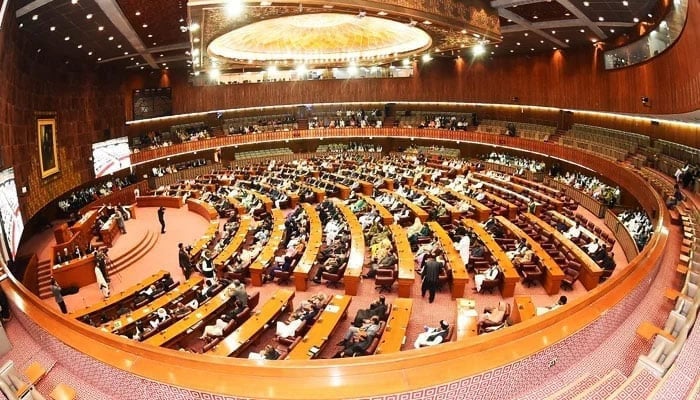
ISLAMABAD: After the conduct of the 2024 nationwide general polls and its preliminary results amid much criticism, the Election Commission of Pakistan (ECP) has pulled up its socks to organise presidential elections and the first session of all assemblies under constitutional bindings.

The top electoral authority, which is yet to decide on the matter related to the reserved seats belonging to the Pakistan Tehreek-e-Insaf (PTI) backed candidates after the party’s merger into the Sunni Ittehad Council (SIC), started preparations for the presidential polls.

“A public notice will be issued alongside the schedule for the presidential polls on March 1st,” read a declaration issued on Tuesday which further stated: “Nomination papers for the aforementioned event would be accepted by March 2, 12 noon.”

The nominees have been asked to submit their documents concerned to the presiding officers, it added.

Additionally, the commission opened doors for candidates to receive nomination papers who were willing to be in the race for the president’s slot.

It is noteworthy to mention here that the ECP had already approached the high courts on February 23 regarding the conduct of the polls for the top political slot slated for March 9, 2024, in which it advised the appointment of chief justices of the relevant high courts as the presiding officers as per past tradition.

Elaborating on the constitutional bindings, the commission stated that it was mandatory to conduct the presidential elections within 30 days, and the first session of all assemblies 21 days after the general elections under Articles 91 and 130 of the Constitution.

“All assemblies would be formed on February 29, marking the completion of the required electoral college for the presidential polls.

The latest declaration came after the National Assembly Secretariat convened the lower house of parliament’s session on February 29 at 10am following President Arif Alvi’s refusal, however, the officers concerned asserted that they were under legal restrictions to commence the parliamentary business on the 21st day of the general elections under Article 91 of the Constitution.

Before the development, the president reportedly rejected a summary to summon the NA session, sources said, in which MNAs-elect will take oath as he believed that the assembly was “incomplete sans the allocation of all the reserved seats to the political parties.”

While the ECP has allocated reserved seats to political parties, it has not awarded reserved quota to the SIC after the independent candidates backed by the Imran-founded party joined their ranks. The electoral body announced conducting hearings on the matter that commenced today.

Murad Ali Shah takes oath, becomes Sindh CM for third time in a row

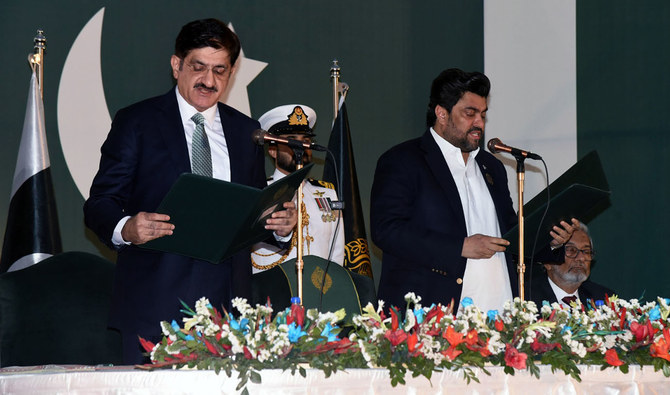
Sindh Chief Minister-elect Murad Ali Shah on Tuesday took the oath of office a day after he obtained a majority of votes to win the election of the provincial chief executive.

Sindh Governor Kamran Tessori administered the oath to the Shah at a ceremony held at the Governor’s House attended by top officials and Pakistan Peoples Party (PPP) leaders including party chief Bilawal Bhutto Zardari.

Outgoing Chief Minister Justice (retd) Maqbool Baqar was also present on the ocassion.

The swearing ceremony of the chief minister was conducted by Chief Secretary Dr Fakhre Alam. At the outset of the ceremony, the chief secretary announced that MPA Shah had been elected chief minister of Sindh by the provincial assembly on February 26.

Those who attended the oath-taking ceremony were Faryal Talpur, former chief minister Syed Qaim Ali Shah, former Speaker Agha Siraj Durani, Speaker Sindh Assembly Awais Qadir Shah, Deputy Speaker Anthony Naveed, former ministers and PPP MPAs Nasir Shah, Sharjeel Memon, Imtiaz Shaikh, Saeed Ghani, Sardar Shah, Jam Khan Shoro.

CM Shah made history after he was re-elected as the provincial chief executive for the third consecutive time with an overwhelming majority.

The assembly session was chaired by Speaker Awais Qadir Shah. The election for the provincial chief executive was held through the division of the house.

Murad secured 112 votes, while the candidate of Muttahida Qaumi Movement-Pakistan (MQM-P) Ali Khursheedi secured 36 votes.

The speaker, while greeting Shah, termed his election a historical moment. Lawmakers belonging to Pakistan Tehreek-e-Insaf, who have joined the Sunni Ittehad Council, and the lone MPA belonging to Jamaat-e-Islami, did not take part in the election process.

Speaking on the floor of the Sindh Assembly on Monday, Shah announced accelerating the pace of development work in the province. He said establishing the rule of law was priority number one of his new government.

He cautioned the officials of provincial bureaucracy to observe punctuality in attending to their duties and reaching their offices at 9 am daily. He said the salaries of the provincial government employees would be doubled in the next five years.

The CM announced that the law-enforcement agencies would conduct an operation against dacoits in the riverine belt of the province, commonly known as katcha area, while the menace of street crimes would also be eliminated in Karachi.

He mentioned that late prime minister Benazir Bhutto had encouraged him to join politics. He expressed gratitude to the PPP leadership for granting him the opportunity to serve the people of the province for the third time. He recalled that after he had been threatened with imprisonment in the past regime, Bilawal had declared that Murad Ali Shah would remain the Sindh CM even after he was sent behind bars.

Shah assured the house that he would not differentiate between the treasury and opposition benches during his rule. He said that he would always remain open to criticism by the opposition lawmakers for improvement in his regime.

Veto power countries behind UNSC’s failure to establish peace in Gaza, Ukraine: Pakistan

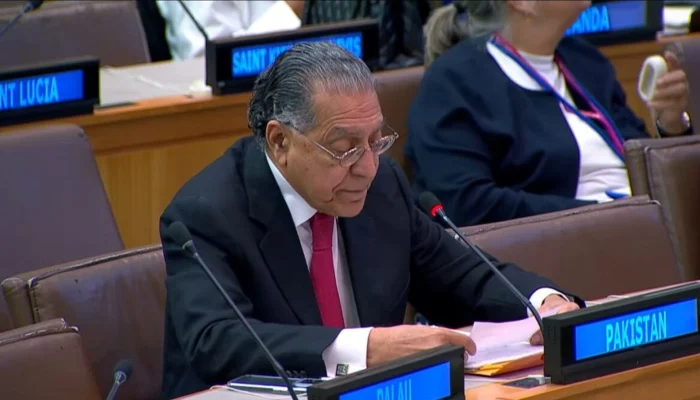
ISLAMABAD: Pakistan’s Permanent Representative to the United Nations Munir Akram has held the states having veto power responsible for the UN Security Council (UNSC)’s failure to establish peace in Ukraine and Gaza.

Akram on Monday said there were some advantages and disadvantages of permanent membership of the UNSC as the permanent members could paralyse the Security Council using veto power.

“We are trying to curtail the veto power of the permanent members,” the Pakistani envoy said adding that there was no point in adding new permanent members to the UNSC.

Urging for more non-permanent elected seats in the council, the Pakistani diplomat said that the UNSC should comprise 27 members with a majority of developing nations.

Five UNSC permanent members have veto power including China, France, Russia, the UK and USA. These countries have vetoed resolutions hundreds of times with Russia using the power 125 times and the US 82 times.

UN likely to vote on Gaza ceasefire today, US signals veto

Meanwhile, the UNSC is likely to vote on Tuesday (today) on an Algerian push for the 15-member body to demand an immediate humanitarian ceasefire in the Israel-Hamas war, said diplomats, a move the United States signaled it would veto.

Algeria put forward an initial draft resolution more than two weeks ago. But US Ambassador to the UN Linda Thomas-Greenfield quickly said the text could jeopardise “sensitive negotiations” aimed at brokering a pause in the war.

Algeria requested on Saturday that the council vote on Tuesday, diplomats said. To be adopted, UN Security Council resolution needs at least nine votes in favour and no vetoes by the United States, Britain, France, China or Russia.

“The United States does not support action on this draft resolution. Should it come up for a vote as drafted, it will not be adopted,” Thomas-Greenfield said in a statement on Saturday.

China hopeful for Pakistan’s political parties to cooperatively form new govt

ISLAMABAD: As Pakistan underwent its much-awaited general elections on February 8, China congratulated Islamabad, expressing hope that “the political parties in Pakistan could work together to form a new government after the polls.

Pakistan conducted its 12th general polls earlier this month with around 60.6 million voters exercising their democratic right. Pakistan Tehreek-e-Insaf (PTI) backed candidates took the lead in the electoral race, while Pakistan Muslim League-Nawaz (PML-N) and Pakistan Peoples Party (PPP) came second and third, respectively.

Following the elections, political parties are engaged in wheeling and dealing as a number of candidates joined the Shehbaz Sharif-led party. Negotiations are also underway between PPP and PML-N regarding the formation of the next government.

Moreover, PTI initially said it would sit in the opposition and not be a part of the government. However, the Imran Khan-founded party on Monday announced its independents will join the Sunni Ittehad Council (SIC) and said it would form an alliance with SIC and Majlis Wahdat-e-Muslimeen (MWM).

“We noted that general elections in Pakistan were held in a generally steady and smooth manner, and we offer our congratulations,” said Mao Ning, the spokesperson of the Chinese Ministry for Foreign Affairs, during a routine briefing on Monday.

“As a close and friendly neighbour, China fully respects the choices of Pakistani people and sincerely hopes that relevant parties of Pakistan will work together to uphold the political solidarity and social stability after the elections,” she added.

The spokesperson said that China and Pakistan were all-weather strategic cooperative partners and Beijing hoped to work with Islamabad to build on the traditional friendship, deepen practical cooperation in various areas and accelerate the building of an even closer China-Pakistan community with a shared future in the new era for the benefit of the peoples of the two countries.

In response to a query about the delay in forming a government in Pakistan, she said that the Chinese side noted that the Pakistan election was generally steady and smooth and it respected the choice of Pakistani people. “As to the situation you mentioned, we believe the relevant parties in Pakistan can stick to solidarity and work together to solve relevant issues,” she reminded.

Governments around the world continue to felicitate Pakistan over the conduct of elections, including the United States which announced working with a new government in the country. Iran was the first country to congratulate the people and government of Pakistan on holding the nationwide general polls.

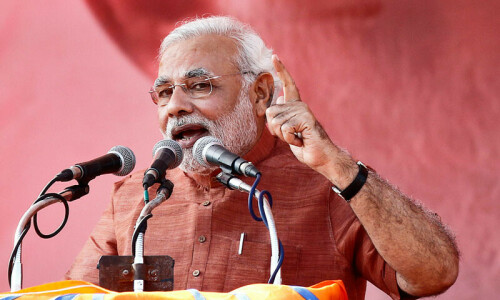
Kashmiris to stage protests against Modi’s visit to Jammu

“Since India’s savage machinery has been brazenly stifling all voices of dissent through the worst ever coercive measures, we, who breathe in free air on this side of the divide, will represent the sentiments of the entire Kashmiri nation by condemning the visit of killer Modi at a demonstration in Muzaffarabad,” said Uzair Ahmed Ghazali, chief of Pasban-e-Hurriyat Jammu and Kashmir (PHJK) in a conversation with a group of mediapersons on Monday.

Mr Ghazali said Mr Modi’s second visit to the occupied Jammu after scrapping the special status of the internationally acknowledged disputed region in August 2019 was not meant for development of the occupied state as claimed by him, but a portent of another spell of deaths and destruction.

“The so-called development in occupied Jammu and Kashmir is nothing but a farce to hoodwink the international community and can never win over the Kashmiris who have been constantly witnessing their loved ones killed, injured, arrested, harassed and humiliated at the hands of India’s occupational machinery,” he said.

He said since 2015 the fascist BJP regime under Mr Modi had arrested as many as 43,000 innocent Kashmiris to crush the revolutionary anti-India movement in occupied Jammu and Kashmir, apart from martyring more than 2,500 and maiming and injuring over 30,000 Kashmiris.

The most painful of all crimes against the Kashmiris were attacks on their women which they used as weapons of war despite condemnations from different parts of the world, he said.

“In fact, Mr Modi is the biggest terrorist on this globe like that of his Israeli counterpart Benjamin Netanyahu, because his hands are stained with the blood of Indian Muslims as well as the Kashmiris since long and the visit of such a person to the occupied territory is bound to be greeted with hatred by the subjugated Kashmiris,” Mr Ghazali said.

He pointed out that while there was no let-up in machinations to bring about demographic changes in occupied Jammu and Kashmir through issuance of illegal domicile certificates to Indian citizens, notorious Indian agencies like NIA and SIA were encroaching on state and private lands and properties of bona-fide state subjects were also being demolished or seized to subdue the Kashmiris and render them a minority in their own land.

Ironically, the Indian judiciary had also been aiding and abetting the war crimes perpetrated by the Indian government and its institutionsin occupied Jammu and Kashmirwith impunity, he added.

Mr Ghazali warned India to keep in mind that Kashmiri people would not give up their heroic movement against its unlawful military occupation of their motherland.

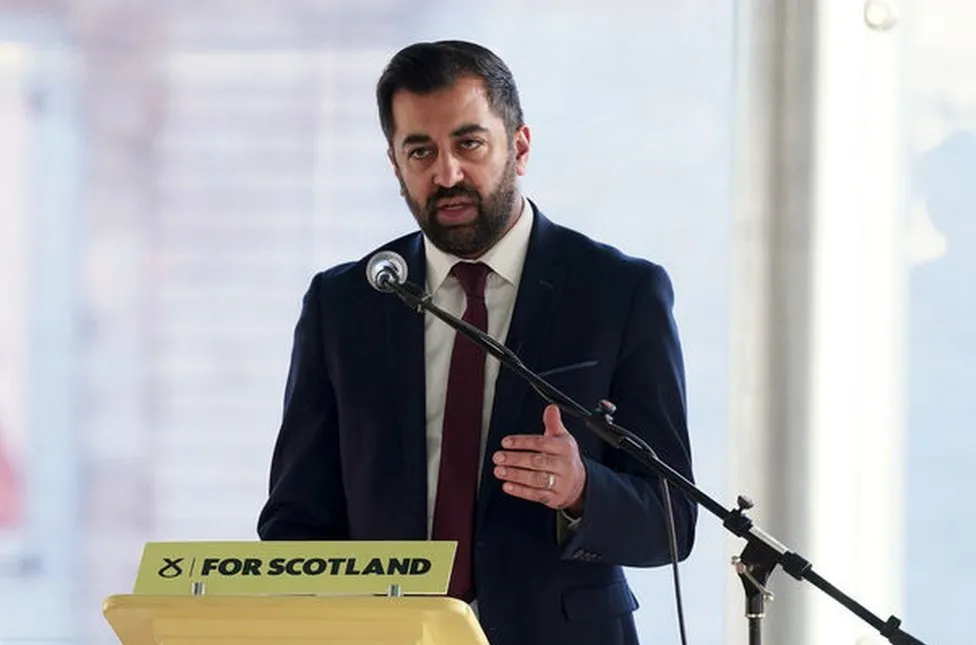
First Minister Humza Yousaf has pledged to oppose Labour’s plans to increase the windfall tax.

Mr Yousaf said there was “extreme anger” from people in the north east of Scotland at the party’s plans for the oil and gas sector.

Sir Keir Starmer has wants to raise the windfall tax on fossil fuel firms from 75% of excess profits to 78% while also extending it to 2029.

Scottish Labour said the SNP was “siding with the energy giants”.

The proposals have faced criticism from the oil and gas industry.

At the Scottish Labour conference in Glasgow on Sunday, Sir Keir promised work in the North Sea oil and gas sector would continue “for decades to come”.

However, the first minister warned that the policy could sacrifice up to 100,000 jobs in the industry.

In a speech at the HM Theatre in Aberdeen, Mr Yousaf said his party would oppose “Labour’s aggressive tax plans for the sector”, describing them as a bid to plug a financial black hole caused by the party’s intention to build new nuclear plants.

He said: “We support a windfall tax in order to protect people during a cost of living crisis.

“But Labour’s plans to increase this to pay for new nuclear power plants in England is plain wrong and will cost tens of thousands, if not more, jobs in the north east.”

He accused the UK Labour leader of “doubling down on austerity” with his plans if the party wins the upcoming general election.

Mr Yousaf said he favoured maintaining the windfall tax at the current 75% level.

The first minister said the SNP wanted to “unleash the potential of Scotland’s green revolution” while supporting jobs in the oil and gas industry.

But he said Labour’s plans would “raid the north-east energy industry” to a loss of some 100,000 jobs.

He said Labour’s decision to “dump” their £28bn pledge and “water down” energy plans showed that Scotland was “not the priority” for Labour.

“Westminster is so broken, so skewed to the right, that even Labour know they can’t win unless they promise to be just as right wing as the Conservatives.”

‘Out of touch’

He said the tax proposals came on the back of Labour announcing it would no longer invest £28bn a year on green policies and it would instead commit to other policies such as wind farms and the clean energy firm GB Energy.

“The SNP will not let the north east go the way that coal and mining towns went under Thatcher – that is exactly what Labour is threatening to do.”

The Scottish Greens said future windfall taxes should be used to fund jobs in renewable energy and speed up the transition from fossil fuels, and not to “bankroll nuclear energy programmes in England or create a smokescreen for further oil and gas exploration”.

However, Labour’s Scottish secretary Ian Murray said Mr Yousaf’s position was “completely incoherent and out of touch”.

“Last year energy giants recorded profits of £33bn while a third of households in Scotland were living in fuel poverty,” he said.

Ian Murray criticised Humza Yousaf for being “out of touch”

“But after a dizzying series of U-turns, it seems the SNP has decided to side with the energy giants.

“It beggars belief that Humza Yousaf thinks that a person earning more than £28,500 deserves to pay more tax but energy giants earning billions in profits from soaring bills should pay less.”

He said the oil and gas sector would continue to play a “key role” in the UK energy system for decades to come, and Labour’s plans would “ensure” that future jobs and opportunities came to the north east.

The Scottish Tory leader Douglas Ross said the first minister displayed “breathtaking hypocrisy masquerading as a friend of Scotland’s oil and gas industry when he and the SNP have abandoned it at every opportunity.”

He cited the party’s opposition to new oil and gas licences and its refusal to back the Rosebank development.

Located 80 miles west of Shetland, Rosebank is the UK’s largest untapped oil field and is estimated to contain up to 300 million barrels of oil.

Regulators granted development and production approval to owners Equinor and Ithaca Energy in September.

Mr Ross also said Labour’s plans would be “catastrophic” for the region, adding: “You can barely put a cigarette paper between Labour and the SNP on this.”