
CPEC significantly changed Pakistanis’ lives: Chinese vice premier

Chinese Vice Premier He Lifeng has termed the China-Pakistan Economic Corridor (CPEC) an important project of Belt and Road Initiative (BRI), saying that the multibillion-dollar project has significantly changed the lives of the people of Pakistan.

The Chinese vice premier, who arrived in Islamabad a day earlier on a three-day official visit to Pakistan, remarked this while addressing a ceremony held in the federal capital on Monday to celebrate the 10th anniversary of CPEC.

Prime Minister Shehbaz Sharif, ministers, members of the Chinese delegation, parliamentarians, chief ministers, senior officials and relevant authorities were also present on the occasion.

The Chinese vice PM said that  CPEC is an example of mutual trust and common development between the two countries, adding that the project became a corridor of progress and prosperity, involving huge investment and creating immense job opportunities, with the completion of various key projects thus transforming the local economy.

Vice Premier He also said that CPEC was initiated under a principle of extensive cooperation for mutual interests, social and economic development of Pakistan through a network of regional connectivity.

He further said both countries are committed to high standards of CPEC projects in the second phase, adding that they would continue to work together.

Enumerating different projects being initiated and completed under CPEC, he said that cooperation would further continue in IT, agriculture, training and special zones ventures.

The Chinese vice premier said that CPEC had “significantly changed lives of the ordinary people of Pakistan and proved as a win-win cooperation and become a corridor of friendship, bringing our people closer”.

He observed that even during the COVID-19 pandemic, the workers had ensured smooth progress of the different projects, writing stories of mutual trust and cooperation that transformed the vision into reality.

He also reiterated Chinese support for peace, stability and national sovereignty and territorial integrity of Pakistan, its social and economic stability to build a better future.

CPEC had a new engine of growth and was further deepening the relationship between the leadership and people of the two countries, he added.

‘CPEC to turn around Pakistan economy’

Addressing the ceremony, PM Shehbaz said the two countries are entering the second phase of CPEC which would help promote investment, progress and prosperity not only for Pakistan but also for the entire region.

The second phase, he also said, would focus on high-quality development, envisaging a growth corridor, with the completion of special economic zones, industrial and green corridors, and openness and connectivity.

He hoped that this corridor of “North and South” would expand to include the entire region and different parts of the world.

The prime minister said that CPEC is going to turn around Pakistan’s economy through multiple programmes and initiatives.

He also expressed gratitude to the Chinese leadership for supporting Pakistan at the critical juncture with financial support and thanked the Chinese bank and their commercial banks for their loans roll over in the last few months.

“But we have to move away from these borrowed loans and aids and have to stand on our feet to show to the world that our people are great, energetic and capable of facing the difficult challenges,” he stressed.

The prime minister also thanked the Chinese leadership and other friendly nations for their support during the negotiations with the International Monetary Fund (IMF) which he termed as one of the challenges faced by Pakistan.

The prime minister said it also provided them an opportunity “of introspection and moment to carve out a way forward,” and to emulate the Chinese model of development.

He underlined that Pakistan needed Chinese expertise and to learn from their experiences as taking 800 million people out of poverty in just three and half decades was a miracle which had never happened in the world.

It was possible only through the visionary leadership, hard work and journey of sweating blood by the Chinese leadership and the people, the PM added.

Premier Shehbaz said during their meeting today, they had announced joint working groups to further boost their cooperation in diverse fields for the mutual benefit of the ‘Iron brothers’.

He said there is complete unanimity among the 220 million people of Pakistan and its entire political and military leadership that China is a sincere friend.

“Pakistan soon, one day, will stand on its feet and we will generate our own resources, eliminate poverty and provide jobs as China did.”

Hilal-e-Pakistan conferred upon Chinese vice PM

Earlier, President Dr Arif Alvi conferred the Hilal-e-Pakistan award on the Chinese vice premier in recognition of his contribution to the Pakistan-China friendship and promotion of the CPEC.


The award was conferred at a special investiture ceremony held at the Aiwan-e-Sadr and attended by PM Shehbaz, services chiefs, National Assembly speaker, Senate chairman, federal ministers and parliamentarians.

Separately, Chinese Vice Premier He also met army chief General Asim Munir and discussed matters of mutual interest and defence cooperation, the Inter-Services Public Relations (ISPR) said in a statement.

“Both reiterated the desire to further enhance and strengthen bilateral relations in all fields,” it added.

Indian SC seeks details of 6,000 Manipur violence cases

A three-judge bench, headed by Chief Justice of India D.Y. Chan­drachud, was hearing petitions by the two women who were paraded naked and raped. The bench observed it was surprised to find both the centre and the state groping for facts about crimes which are “public knowledge, reported widely in the national media”.

The court set up hearings on Tuesday, and said it was shocked to know that the Manipur police took 14 whole days to register even a ‘Zero FIR’ (an FIR that can be filed in any police station) on the sexual assault and gang-rape of two women in Thoubal district on May 4,

While the video of the horrific visuals of the sexual violence went viral on July 19, the case was transferred to the relevant police station on June 21 a day after the Supreme Court took suo motu cognisance of the video.

Rape victims allege ‘collaboration’ between govt and mob, object to transferring cases to CBI

The arrests, seven in number, were made only after the apex court took judicial note. “What were the police doing from May 4 to May 18? The incident came to light involving three women paraded naked in the presence of a mob. At least, two of them were raped. What were the police doing for 14 days?” Chief Justice Chandrachud asked Attorney General R. Venkataramani and Solicitor General Tushar Mehta, appearing for the centre and the Manipur state government.

Alleging “collaboration” between the state police and the mob, the two women, represented by senior advocate Kapil Sibal, have objecting to the government decision to transfer the case to the Central Bureau of Investigation (CBI), which works under Home Minister Amit Shah.

Mr Sibal said the police, instead of taking the women away from the mob, took them towards the crowd and abandoned them to their fate.

The court proposed appointing its own special investigation team.

‘Systemic acts of violence’

The chief justice said the May 4 incident was not an isolated one. “This is apparent from the home secretary’s affidavit. As much as we want to give justice to the two women, we also want to put in place a mechanism by which justice is available to all other women. We have to put in a mechanism to ensure complaints are filed, FIRs are lodged… The process of justice should go to the victims’ doorsteps,” he observed.

The solicitor general claimed the government was “serious” and had “nothing to hide”, saying that the government was open to the Supreme Court monitoring the investigation. “There are reasons why the case investigation was transferred to the CBI, so that it is a neutral investigation… After the video went viral, people were arrested in 24 hours,” he claimed.

The law officer explained the 14-day delay in registering the Zero FIR, saying “May 18 was the day when the incident was brought to our notice”. But the court asked whether the Thoubal incident was a “standalone” instance of perpetration of violence on women in Manipur during the clashes. “Let us say for example if there are 1,000 of them, will the CBI be able to cope? How many such FIRs are there really? Here we are dealing with systemic acts of violence committed in the course of communal and sectarian strife,” the court told the government.

The bench said it had to first see a “breakdown” of the 6,000 FIRs the government was said to have registered.

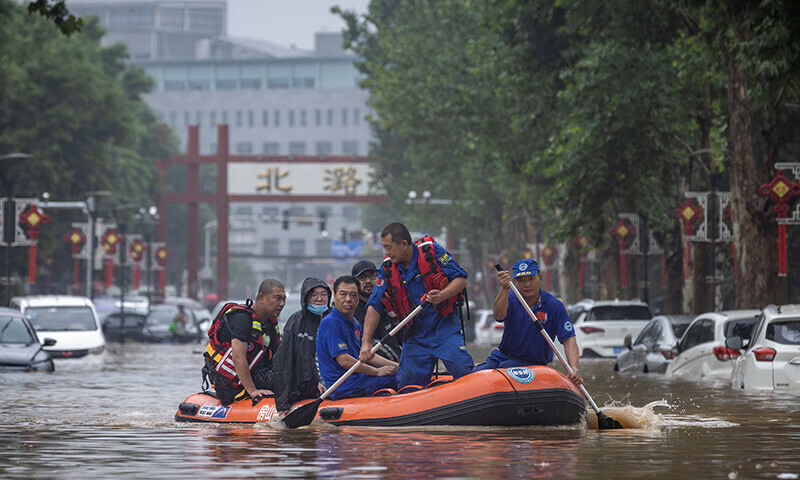
At least 11 killed, 27 missing in Beijing rainstorms

Storm Doksuri, a former super typhoon, had swept northwards through China since hitting southern Fujian province on Friday after first scything through the Philippines.

Heavy rains began pummelling Beijing and its surrounding areas on Saturday, with nearly the average rainfall for the entire month of July dumped on the capital in just 40 hours.


Swathes of suburban Beijing remain badly hit by the rains — some of the city’s heaviest in years.

On Tuesday, state broadcaster CCTV reported the rains had killed at least 11 people and that 27 were missing. Among the dead were two workers “killed on duty during rescue and relief” efforts, it said.

More than 100,000 people across the city deemed at risk had been evacuated, state-owned tabloid The Global Times reported.

On the banks of the Mentougou river, one of the areas worst affected by the flooding, AFP reporters saw muddy debris strewn across the road.

One local elderly man told AFP he had not seen flooding this bad since July 2012, when 79 people were killed and tens of thousands evacuated.

“This time it’s much bigger than that,” he said, declining to give his name.

“It’s a natural disaster, there’s nothing you can do,” a man in his 20s surnamed Qi told AFP as he waited for a taxi outside a hospital with his grandmother.

“(We) still have to work hard and rebuild,” he added.

About a dozen emergency vehicles, including trucks with water tanks and bulldozers, were spotted on the road between Shijingshan and Mentougou districts.

Parts of the road were still closed off and workers in bright orange raincoats used shovels to clear the road


Chaotic scenes

President Xi Jinping on Tuesday called for “every effort” to rescue those “lost or trapped” by the rains.

Local authorities “must do a good job in treating the injured and comforting the families of victims, and minimize casualties”, CCTV quoted Xi as saying.

“They must properly relocate affected people, work quickly to repair damaged transportation, communication and electricity infrastructure, and restore the order of normal production and life as soon as possible,” he added.

“Xi Jinping emphasised that it is currently the critical period for flood control in late July and early August,” state media said.

Meanwhile, Prime Minister Shehbaz Sharif extended the Pakistani nation’s condolences over the lives lost in the torrential rainfall. “Our thoughts and prayers are with the families who lost their loved ones,” he said.

“Pakistan and China are enduring friends and partners sharing weal and woe. The entire Pakistani nation stands by our Chinese brothers and sisters in this hour of grief,” he said.

“I also extend my best wishes for the ongoing relief and rescue efforts, and we are ready to extend all possible assistance,” PM Shehbaz added.


Live images from broadcaster CCTV on Tuesday morning showed a row of buses half submerged in floodwater in Beijing’s southwest Fangshan neighbourhood.

Around 150,000 households in Mentougou were without running water, the local Communist Party newspaper Beijing Daily said, with 45 water tankers dispatched to offer emergency supplies.

Local media on Monday published footage of chaotic scenes aboard high-speed rail trains stranded on tracks for as long as 30 hours, with passengers complaining they had run out of food and water.

Parts of neighbouring Hebei province remain under red alert for rainstorms, with authorities warning of potential flash floods and landslides.

The city activated a flood control reservoir on Monday for the first time since it was built in 1998, the Beijing Daily said.

And in Handan, Hebei province, rescuers lifted by crane reached a man trapped atop his car by floodwaters, lifting him to safety before the vehicle was flipped over and washed away by the current.

China has been experiencing extreme weather and posting record temperatures this summer, events that scientists say are being exacerbated by climate change.

The country is already preparing for the arrival of another typhoon — Khanun, the sixth such storm of the year — as it nears China’s east coast.

China replaced two leaders of an elite unit managing its nuclear arsenal, triggering speculation of a purge.

General Li Yuchao who headed the People’s Liberation Army’s (PLA) Rocket Force unit and his deputy had “disappeared” for months.

Former deputy navy chief Wang Houbin and party central committee member Xu Xisheng were named as replacements.

This is the biggest unplanned shake-up in Beijing’s military leadership in almost a decade.

“The latest purge is significant… [as] China is undertaking one of the most profound changes in nuclear strategy in decades,” said Lyle Morris, a foreign policy and national security fellow at the Asia Society Policy Institute.

“Xi has consolidated control of the PLA in unprecedented ways, but that doesn’t mean it’s complete. Xi is still worried about corruption in the ranks and has signalled that absolute loyalty to the [party] has not yet been achieved,” he said.

Mr Xi is also chairman of China’s top military command, the Central Military Commission.

At a meeting late last month, Mr Xi stressed the need to focus efforts on “addressing prominent issues faced by party organisations at all levels, in aspects such as maintaining the party’s absolute leadership over the military”, Chinese state media reported.

Xi Jinping at a PLA parade
IMAGE SOURCE,GETTY IMAGES
Image caption,
The replacement of Rocket Force leaders mark the biggest irregular shake-up in Beijing’s military leadership in almost a decade
Beijing has not commented on the whereabouts of Gen Li and his deputy General Liu Guangbin, but a South China Morning Post report last week suggested that the commission’s anti-corruption arm had launched a probe into the two men, as well as Gen Li’s former deputy Zhang Zhenzhong.

The report cited two unnamed sources.

Mr Wang’s and Mr Xu’s new appointments came a day before the 96th anniversary of the PLA’s founding on 1 August. They were announced at a ceremony at the commission’s headquarters in Beijing.

Both have been promoted from the rank of lieutenant general to full general which in China marks the highest rank for active service officers.

Mr Morris said Gen Li’s downfall, together with the recent replacement of former foreign minister Qin Gang, presents one of the biggest leadership challenges for Mr Xi in recent times.

Mr Qin had been absent from public commitments for a month before he was replaced, unexplained, by his predecessor Wang Yi last week.

In 2014, a broad purge among China’s military ranks saw former deputy chairs of the Central Military Commission Xu Caihou and Guo Boxiong ousted and prosecuted for corruption. Guo was sentenced to life in jail by a military court, while Xu died before his trial.

Prime Minister Rishi Sunak defended the decision to grant 100 new North Sea oil and gas licences.

The UK government has also said it will support a carbon capture project in the north east of Scotland.

Campaigners said that extracting more fossil fuels from the North Sea would “send a wrecking ball through the UK’s climate commitments”.

But Mr Sunak said granting the new licences was “entirely consistent” with net zero commitments.

It comes as the party faces internal divisions over its green policies – such as the review over low-traffic neighbourhoods in England – with some MPs calling for a rethink.

Mr Sunak confirmed support for the Acorn Project in St Fergus, Aberdeenshire, on the BBC’s Good Morning Scotland programme, then later visited the site.

It is one of four carbon capture projects which will share up to £20bn of funding.

Mr Sunak said the announcement would support thousands of jobs across the UK.

He said granting the new oil and gas licences was “the right thing to do”.

The Acorn Project will be located at St Fergus gas terminal in Aberdeenshire

He said: “Even when we reach net zero in 2050, a quarter of our energy needs will still come from oil and gas and domestic gas production has about a quarter or a third of the carbon footprint of imported gas.”

The prime minister also said it made “absolutely no sense” to import energy supplies with “two to three times the carbon footprint of what we have got at home”.

He said increasing home-grown sources of energy would improve the UK’s resilience, create jobs and generate tax revenue to fund public services.

Mr Sunak said the government was determined to transition to net zero in a “proportionate and pragmatic” way.

And he also defended his plans to fly to Scotland as “an efficient use of time for the person running the country” and highlighted investment in new technologies, such as sustainable aviation fuel.

The prime minister said: “If your approach to climate change is to say that no one should go on holiday, no one should go on a plane, I think you are completely and utterly wrong.”

The Acorn project in St Fergus in Aberdeenshire missed out, quite controversially, on track one of funding for this back in 2021.

Instead it went to two projects in the north of England.

That was highly controversial because there had been heavy hints placed that the Scottish project would form part of that.

It was one of the most advanced projects in the UK, if not the most advanced, and then suddenly it was dropped.

The accusation was that the Conservative government at Westminster was favouring Red Wall constituencies following its success at the last general election.

But it was always the case that this would be a sequencing of events.

Between the projects announced in 2021 and today 10 mega tonnes of carbon dioxide will be captured and stored by 2030, the UK government says.

That includes emissions from Mosmorran, from Grangemouth, from a new power station to be built at Peterhead and, potentially, from direct air capture.

It effectively sucks carbon dioxide out of the atmosphere and also stores it.

Labour’s Ed Miliband claimed the Conservatives’ energy policy had left Britain as “the worst hit country in Western Europe during the energy crisis”.

Mr Miliband, the shadow climate change secretary, said: “Rishi Sunak’s weak and confused policy will not take a penny off bills – as his own party chair has admitted – will do nothing for our energy security, and drive a coach and horses through our climate commitments, while continuing to leave us at the mercy of fossil fuel dictators like Putin.”

And Scotland’s First Minister Humza Yousaf said the new oil and gas licences demonstrated the UK government was “not serious about tackling the climate emergency”.

He tweeted: “For the PM to announce unlimited extraction of oil & gas, in the week the UN has confirmed July is set to be the hottest month in human history, shows the PM is willing to recklessly gamble the future of our planet for cheap political gain.”

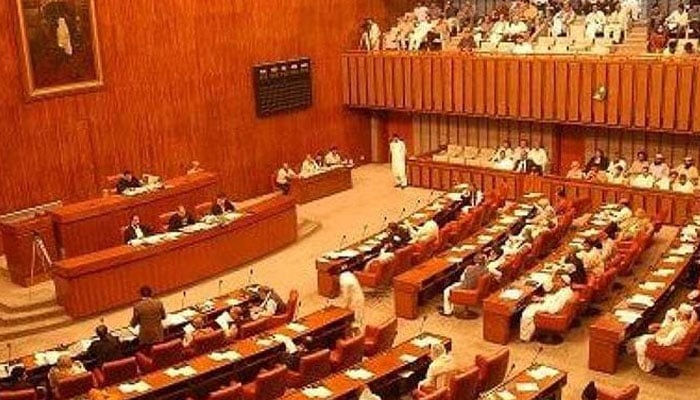
Bill proposing heavy penalty for violation of Toshkhana rules tabled in Senate

In order to curb corrupt practices, the federal government on Tuesday presented Toshakhana (Management and Regulation) Bill, 2023 in the Senate, proposing a fine of five times the market value of a gift for violation of the rules.

The bill was moved by the ruling PML-N’s Minister for Parliamentary Affairs Murtaza Javed Abbasi. The bill suggests a penalty of five times the value of a Toshakhana gift in case of failure to deposit the item in the repository within the time period given in the rules.

If the Senate passes the bill, it would be applied to the president, prime minister and members of the armed forces. It would also be applicable to governors, Senate chairperson and deputy chairperson, National Assembly speaker and deputy speaker, federal and provincial ministers, ministers of state, chief ministers, political secretaries, PM’s aides, advisers, attorney general and law officers. Spouses and children of public office holders would not be expected from it.

It is pertinent to mention here that the Election Commission of Pakistan (ECP), in a consensus verdict in Toshakana reference, had disqualified former prime minister Imran Khan and ruled that the PTI chairman is no more a member of the National Assembly in October last year.

The ECP stated that Imran Khan submitted a false affidavit and was found involved in corrupt practices under Article 63(1)(p).

It is pertinent to mention here that besides the PTI chief, leaders from the other parties also boarded Toshakhana ‘gravy train’.

In March, 2023, the federal government, in compliance with the orders of the Lahore High Court (LHC), made public the record of state officials who obtained Toshakhana gifts since 2002.

As per the details, Khan retained one watch (Graff No.AU750) 18-carat gold and diamond assessed value of Rs85 million, a pair of cufflinks (over Rs5.6m), one pen (Rs1.5m) and a ring (Rs8.7m) by depositing just Rs20.17m in Toshakhana.

Former president Asif Ali Zardari also retained various items including one BMW 760 Li (Security version, model No.2008) — assessed value Rs57,828,705 — and one Toyota Lexus LX 470 (Security version) — valued at Rs.50,000,000 by depositing a total of around Rs16.1m.

He also obtained another BMW 760 Li white (Security version) (Model No.2004) — valued at Rs27,339,370 — by depositing Rs4.09m.

In 2013, former prime minister Nawaz Sharif retained one Rolex Watch Oyster Perpetual N Series 0835D018 (over Rs1.18m), one pair of cufflinks with a pen (Rs0.025m) and four commemorative coins of the Central Bank of Kuwait (Rs0.015m) by depositing Rs0.243m in Toshakhana.

In 2016, Nawaz Sharif’s wife, Kulsoom Nawaz, retained one bracelet valued at Rs12.7m, one necklace and earrings (Rs41.6m) by depositing Rs10.8m.

Moreover, former premiers Raja Pervaiz Ashraf, Yousaf Raza Gillani; former finance minister Sartaj Aziz; ex-president Pervez Musharraf; incumbent Finance Minister Ishaq Dar and others’ names are included in the list.

PM Shehbaz vows to smash begging bowl by curtailing govt expenses

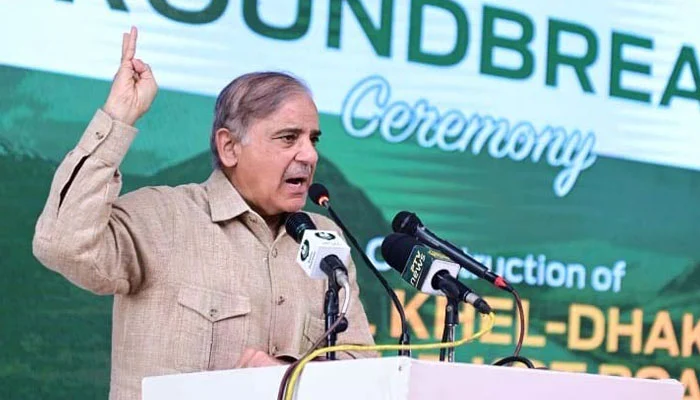
In order to change the nation’s fate, Prime Minister Shehbaz Sharif has vowed to break the begging bowl by curtailing the government’s expenses.

He made the remarks while addressing an inaugural and groundbreaking ceremony of eight development projects in the energy and communication sectors in Khyber Pakhtunkhwa’s Dera Ismail Khan on Tuesday.

A day earlier, Chief of Army Staff (COAS) General Syed Asim Munir had also underscored the need for making the country’s economy self-reliant to end dependence on foreign loans, saying: “All Pakistanis must throw out the begging bowl.”

Addressing the event, PM Shehbaz said despite history’s most difficult period, the coalition government had steered the country out of the economic crisis.

“During the last 16 months, the incumbent government faced the most difficult challenges like the devastating flood that hit the country soon after it took charge of the office,” he added.

The premier said, “We faced the devastating flood on one side, and inflation, the International Monetary Fund’s (IMF) pressure, and political crisis on the other. Such challenging problems have never been faced by me in my whole life.”

He said all the coalition government parties had unanimously decided to ensure economic stability at all costs, including their politics. Such a resolve on their part helped the government to bring the country out of the crisis, the PM said, adding that there was record wheat production in a decade, which saved billions of dollars.

‘Opposition had wished for the country’s default’

Berating the PTI, the premier said that Imran Khan exploited his own created situation which he used for political gains at the country’s cost.

The PM said political opponents had wished for the country’s default, which by the blessings of the Almighty Allah reverted due to the efforts of the incumbent government.

PM Shehbaz said that had the former regimes fully utilised the country’s rich resources such as hydro power the country might have had affordable and clean energy, and stressed overhaul of the faulty power transmission system causing over Rs400 billion annual losses to the national exchequer.

A comprehensive plan of the Pakistan Green Initiative had been undertaken to take the country to new heights of development and prosperity, he added.

Speaking on the occasion, Pakistan Democratic Movement (PDM) Chief Maulana Fazlur Rehman thanked the prime minister for his personal interest in ensuring the development of the area.

Former prime minister Nawaz Sharif had laid the foundation of many mega projects, which the PTI government seized hampering economic development, he added.

Fazl said industrial estates being established in Bannu and Dera Ismail Khan would change the fate of the people of the area.

Denmark: Quran desecration outside Turkey, Egypt embassies enrage Muslims

Just a day after demonstrators desecrated the Holy Book in front of the Iraqi embassy in Denmark, more copies of the Quran were burnt in front of the Egyptian and Turkish embassies in Copenhagen Tuesday, anguishing Muslims all over the world.

In a statement indicating clean-chit to the perpetrators of such acts under so-called freedom of speech, Denmark and Sweden said they deplore the burning but cannot prevent it as it falls under rules of “protecting freedom of speech”.

Protestors last week, lit up the Swedish embassy in the Iraqi capital Baghdad as a response to the unholy act, which enraged billions of Muslims, according to a Reuters report.

Tuesday’s demonstration in Copenhagen by a group called “Danish Patriots” followed Quran burnings the group staged Monday and last week in front of the Iraqi embassy. Two such incidents have taken place in Sweden over the past month.

Iraq’s foreign ministry Monday called on authorities of EU countries to “quickly reconsider so-called freedom of expression and the right to demonstrate in light of the Quran burnings.”

Turkey Monday said it strongly condemned what it called a “despicable attack” on the Quran and called on Denmark to take necessary measures to prevent this “hate crime” against Islam.

The Egyptian foreign ministry Tuesday summoned Sweden’s charge d’affaires to condemn the desecration of the Qurans.

“People benefit from an extended freedom of speech when they demonstrate,” University of Copenhagen law Professor Trine Baumbach told Reuters, explaining Danish laws.

“It does not just include verbal expression. People can express themselves in various ways, such as through the burning of items.”

The organizer of Monday’s demonstration in Copenhagen stomped on the Quran and set it alight in a tin foil tray next to the Iraqi flag on the ground.

Iranian Supreme Leader Ayatollah Ali Khamenei said Saturday that people who desecrate the Quran should face the “most severe punishment”

Weeks earlier, Pope Francis also condemned the burning of the Holy Quran in Sweden, in June saying that the vile act had “angered and disgusted” him.

“Any book considered holy should be respected to respect those who believe in it,” the pope said in an interview with the United Arab Emirates newspaper Al Ittihad.

“Freedom of speech should never be used as a means to despise others and allowing that is rejected and condemned.”

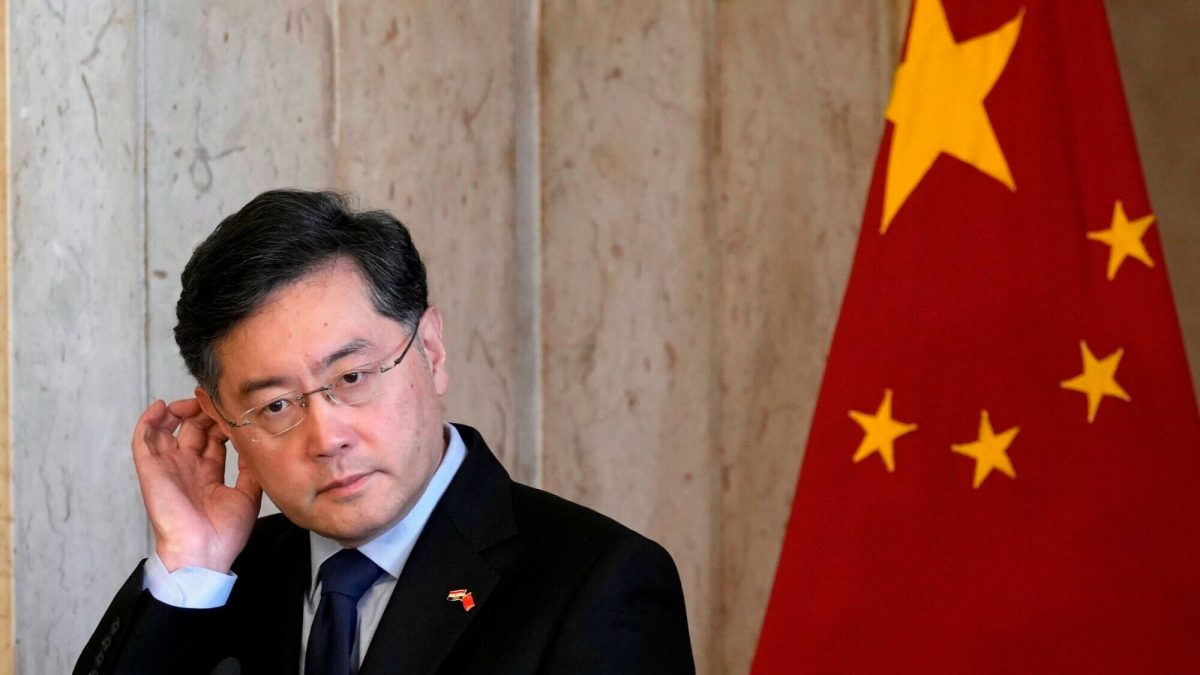
Chinese Foreign Minister Qin Gang removed from office

His absence had sparked a storm of speculation that Qin, considered a confidant of President Xi Jinping, had fallen from grace or was subject to an official investigation.

“China’s top legislature voted to appoint Wang Yi as foreign minister… as it convened a session on Tuesday,” state media outlet Xinhua said.

“Qin Gang was removed from the post of foreign minister.”

The report did not give a reason for Qin’s removal but said Xi had signed a presidential order to enact the decision.

China has remained tight-lipped for weeks about the fate of Qin, who has not been seen in public since June 25 when he met Russia’s deputy foreign minister Andrey Rudenko in Beijing.

Asked repeatedly about Qin on Tuesday, foreign ministry spokeswoman Mao Ning told journalists that she had “no information” to offer and insisted that “China’s diplomatic activities are steadily moving forward”.

The ministry had previously said “health reasons” were to blame for Qin’s absence.

But that did little to stem an explosion of rumours online, some of which claimed Qin was under official investigation for an alleged affair with a prominent television anchor.

Originally from the northeastern city of Tianjin, Qin frequently rubbed shoulders with Xi in an earlier role as chief of the foreign ministry’s protocol department.

His promotion over more experienced candidates, first to US ambassador and then foreign minister, was attributed to the trust placed in him by Xi directly.

Qin had replaced Wang as foreign minister in December last year.

A fluent English speaker, Qin was a visible presence in Washington through public and media appearances in which he defended the Chinese geopolitical position.

He also previously served as a spokesperson for the Chinese foreign ministry, where he gained a reputation for caustic responses to difficult questions from journalists.

Over the past month, many of Qin’s duties had been taken on by Wang, China’s top diplomat who leads the ruling Communist Party’s foreign policy and outranks Qin in the government hierarchy.

Even so, the absence had left a vacuum at the top of China’s foreign ministry.

A visit to Beijing by the European Union’s foreign policy chief Josep Borrell was abruptly called off this month.

And Bloomberg reported on Friday that a visit by UK Foreign Secretary James Cleverly was also postponed due to Qin’s situation.

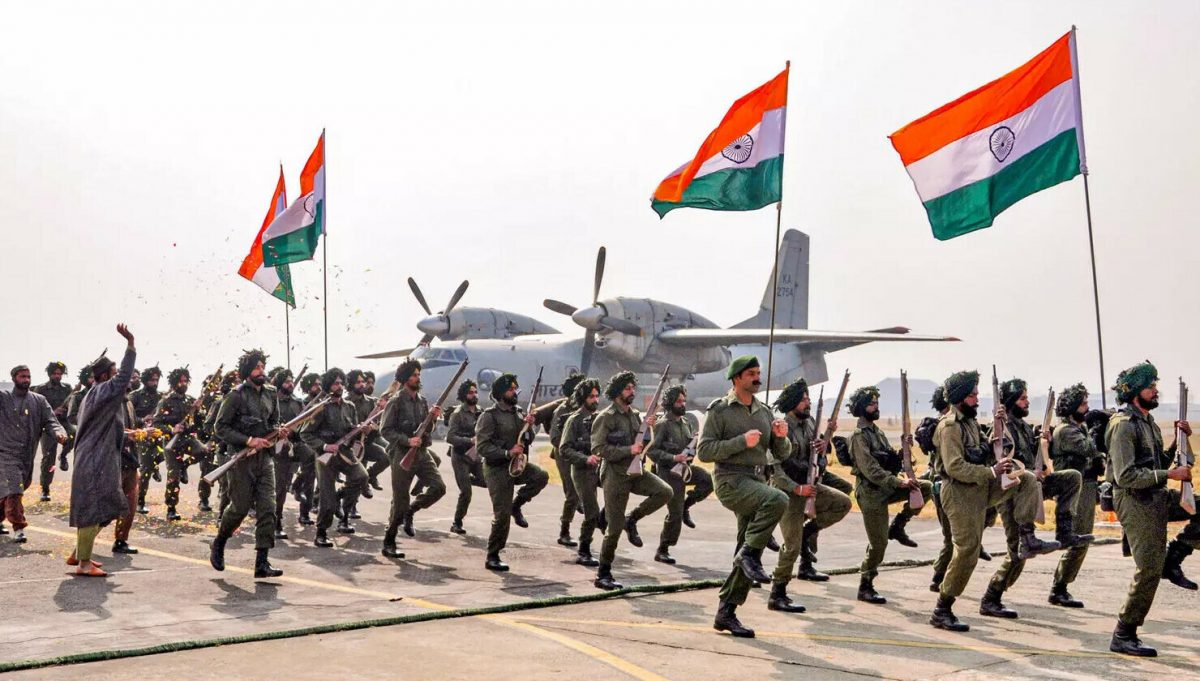
Defenders turn offenders: Indian Army’s 1,800 corruption scandals

One of the most alarming aspects of this scandal is the special treatment given to officers above the rank of colonel when it comes to free liquor concessions from the Canteen Stores Department (CSD).

While the youth serving in the army were only entitled to four bottles, there was no such restriction imposed on higher-ranking officers. This led to a disturbing trend of officers selling free liquor in the market, profiting from a perk meant for their personal use.

The issue of military officers paying less tax has also raised eyebrows.

Through obscure legislative provisions, some officers have managed to exploit loopholes and evade a fair share of their tax responsibilities.

Another scandal that has shaken the public’s faith in the Indian Army is the revelation of officers grabbing free “ration”. The intended purpose of this food is to provide sustenance to those serving in challenging and often remote areas. However, some officers have been taking advantage of this system for personal gain.

Perhaps one of the most heart-wrenching incidents linked to this corruption web is the embezzlement of funds meant for the purchase of coffins for soldiers who sacrificed their lives during the Kargil War. It has been reported that three officers, including a major general, siphoned off millions of rupees from these funds.

The allegations of officers misappropriating funds for the purchase of a helicopter meant for the Indian Air Force in 2013 is yet another distressing revelation.