
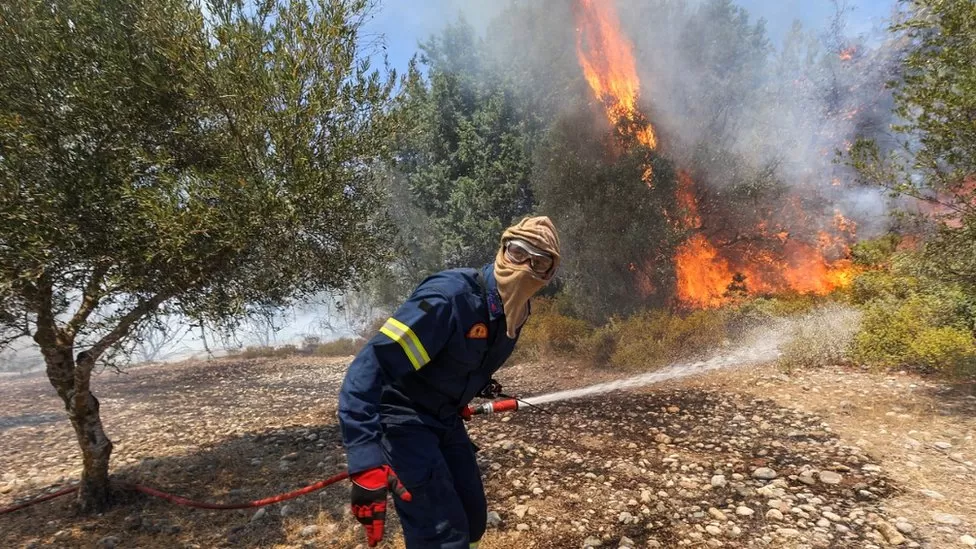
More than 40 people have died – most of them in Algeria – in the Mediterranean wildfires threatening villages and holiday resorts, and thousands have been evacuated.

Greece is preparing for more evacuation flights from Rhodes, as fires also rage on the islands of Corfu and Evia.

The current long heatwave shows no let-up – temperatures are expected to rise above 44C (111F) in parts of Greece.

Fires spreading in Sicily forced Italy to briefly close Palermo airport.

High winds and tinder-dry vegetation mean firefighters are struggling in many areas to douse the flames and create firebreaks.

The heaviest death toll so far is in Algeria, where the 34 victims included 10 soldiers surrounded by flames during an evacuation in the coastal province of Bejaia, east of Algiers. Bejaia is the worst-hit area, accounting for 23 of the deaths, local media report.

The Algerian authorities said 80% of the blazes had been put out since Sunday, but a massive firefighting effort continues, involving about 8,000 personnel, hundreds of fire trucks and some aircraft.

Fires have also raged in neighbouring Tunisia, where 300 people had to be evacuated from the coastal village of Melloula.

In Greece, the Civil Protection Ministry warned of an “extreme danger” of fire in six of the country’s 13 regions on Wednesday.

A team of climate scientists – the World Weather Attribution group – said this month’s intense heatwave in Southern Europe, North America and China would have been virtually impossible without human-induced climate change.

On the island of Rhodes more than 20,000 people have been evacuated from homes and resorts in the south in recent days. An airport official told AFP news agency that more than 5,000 had flown home on more than 40 emergency flights between Sunday and Tuesday.

Holiday firms Jet2 and Tui have cancelled departures for Rhodes for the coming days.

Tourism accounts for one in five jobs in Greece, and the industry is vital for Rhodes and many other islands. The UK Foreign Office has not advised against travel to the affected parts of Greece, but has urged tourists to check with tour operators for updates.

On the island of Evia, just north of Athens, two pilots died when their Canadair firefighting plane crashed into a ravine. Elsewhere on the island a man’s charred body was found in a remote rural shack.

Thousands of people have also been evacuated on Evia and Corfu, while Crete – another major holiday destination – is on high alert.


Italy has been hit by contrasting extreme weather events – with storms in the north and wildfires in Sicily and several more southern regions.

A couple in their 70s were found dead in a fire-gutted house near Palermo, an 88-year-old woman also died near the city and a fourth fire victim – a man aged 98 – was found in Calabria, just east of Sicily.

The storms in the north meanwhile claimed two lives on Tuesday – victims of falling trees.

A wildfire in the Foggia region, on Italy’s Adriatic coast, forced the evacuation of 2,000 people from three hotels, Italy’s Rai news reports. The blaze approached Vieste from a nearby national park.

“We are experiencing in Italy one of the most complicated days in recent decades – rainstorms, tornadoes and giant hail in the north, and scorching heat and devastating fires in the centre and south,” said Civil Protection Minister Nello Musumeci.
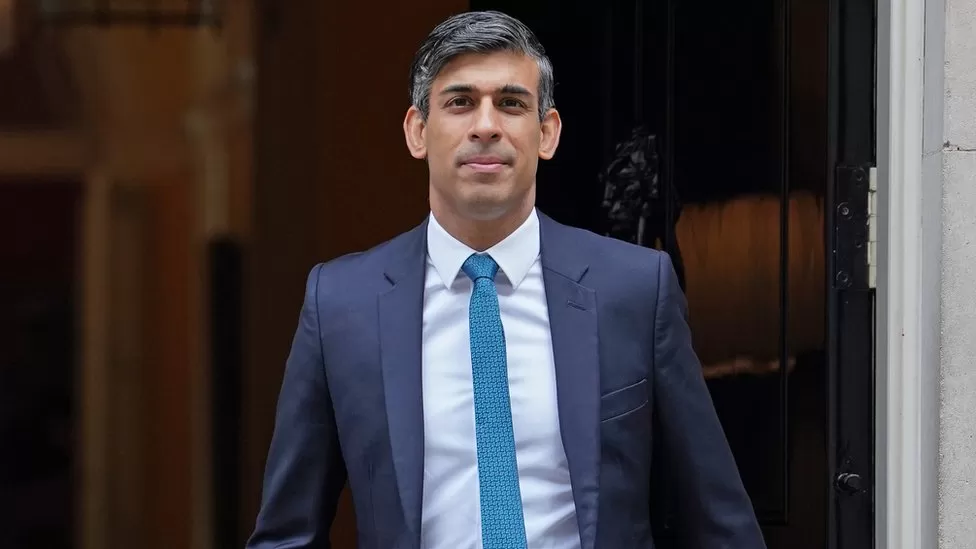
Prime Minister Rishi Sunak will appear in front of the Infected Blood Inquiry on Wednesday.

Bereaved families want Mr Sunak to accept compensation recommendations made three months ago by the inquiry’s chairman, Sir Brian Langstaff.

It is thought that 30,000 people in the UK were given contaminated blood products in the 1970s and 80s.

Some victims have received financial support but not all have been fully compensated.

The inquiry has recommended the Government establish an arms-length compensation body as soon as possible, and definitely before the final report in the autumn.

What is the infected blood scandal?

The inquiry was established to examine how thousands of patients in the UK were infected with HIV and hepatitis C some 40 years ago, how authorities – including government – responded, and whether there was a cover-up.

Thousands of NHS patients with haemophilia and other blood disorders became seriously ill after being given a blood transfusion or a new treatment called factor VIII or IX from the mid-1970s onwards.

At the time, the medication was imported from the US, where it was made from the pooled blood plasma of thousands of paid donors, including some in high-risk groups, such as prisoners and drug users.

If a single donor was infected with a blood-borne virus such as hepatitis or HIV, then the whole batch of medication could be contaminated.

People demonstrate as relatives of victims of the NHS infected blood scandal hand in a letter to No 10 Downing Street

About 2,900 people died in what has been called the worst treatment disaster in the history of the NHS.

Now the families of those affected want Downing Street to respond to the compensation recommendations made by the inquiry – which some are speculating could cost the government billions of pounds.


They have already written a letter to No 10, asking for urgent action on the payments.

When running for Prime Minister in July 2022, Rishi Sunak called the contaminated blood scandal a “tragic injustice” and promised to provide certainty to survivors.

Leader of the House of Commons, Penny Mordaunt, has already given evidence to the inquiry this week – she was formally the minister responsible as paymaster general between February 2020 and September 2021.

She said the Covid pandemic had been “all-consuming” but added that the government had not been dragging its feet over paying compensation.

This was backed up by current paymaster general Jeremy Quin, who, when giving evidence on Tuesday, said he was determined to “redress” amid anger over fears that the delays are because compensation is deemed too expensive and complicated.

Gwynneth Walker is campaigning for compensation after her son, Steven, died after receiving contaminated blood products.

One of those affected is Gwynneth Walker, whose son Steven died aged 37 in August 2017.

He died as a result of receiving contaminated blood products, having been infected with hepatitis C and HIV as a child, while receiving treatment for haemophilia.

Hepatitis C is a virus that can infect the liver and has flu-like symptoms.

It is mostly possible to cure, with modern treatments.

HIV is human immunodeficiency virus, which damages the cells in your immune system and weakens your ability to fight everyday infections and diseases.

It has no cure, but does now have effective treatments that allow people to live a relatively normal life.

Ms Walker told the BBC the infections that Steven had, along with the stigma associated with them, “absolutely blighted the whole of his life”.

“They ruined every opportunity that he may have had otherwise.

“From the opportunity to learn at school, to go to college, to start a career, to have a girlfriend, to be able to get married, to have children, be a father, he wanted all of those things, and had none of them.”

Steven was given infected blood products as a child and as a result was diagnosed with HIV and hepatitis C

Ms Walker added: “Watching my child being poorly for all those years and eventually dying has been a blight on my life.

“I was in my 20s when this happened to my little boy and here I am, a pensioner, still without justice served,” she said on the subject of compensation.

Ms Walker said that while no proper justice can be served, the only help can be in financial compensation, which she says would be used to help all members of her family, including her older children “who had to watch him [Steven] suffer for most of his life”.

Although Steven died before the inquiry began, Ms Walker says he was “delighted” when the announcement was made by Theresa May, in 2017, that a public inquiry would take place.

Senate approves ‘contempt of parliament’ bill

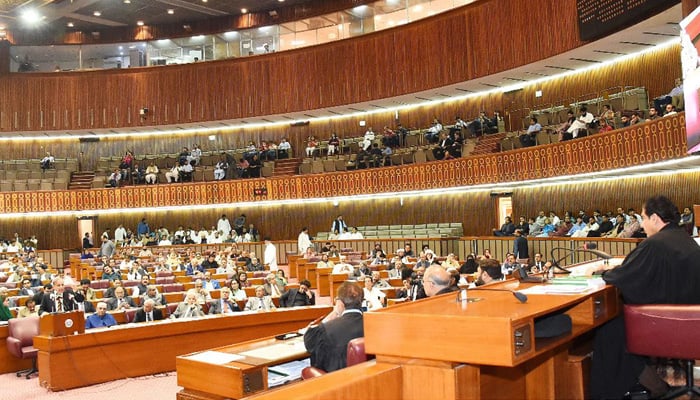
ISLAMABAD: The Senate, on a private members day, passed the ‘Contempt of Majlis-e-Shoora (Parliament) Bill 2023’, aiming to criminalise individuals who commit contempt of parliament or its committees, as well as those who breach the privileges of any legislator.

During the Senate session, the bill was tabled on the floor as part of a supplementary agenda and subsequently passed through a voice vote. There were, interestingly, no objections from the opposition benches against the bill when the chair proposed it for approval.

The National Assembly had already passed the bill.

As per the draft law’s provisions, offenders may be imprisoned for up to six months, a fine of up to Rs1 million, or both, once the president grants assent and it officially becomes an act of the parliament.

Four senators from Balochistan and one from Punjab, Kauda Babar, Naseebullah Bazai, Sarfraz Ahmed Bugti, Prince Ahmed Umer Ahmedzai and Rana Mahmoodul Hassan, respectively, raised objections as the house was adopting it without having been sent to the standing committee concerned for consideration, deliberations and report.

Minister of State for Law Senator Shahadat Awan of PPP said that the NA has already passed the bill unanimously and should be put to vote without being sent to the standing committee, to which Chairman Senate Muhammad Sadiq Sanjrani agreed.

It is significant that the parliament has passed the draft law at a time when there is serious tension between the executive and judiciary over the powers and formation of benches in the apex court.

Under the draft law, the parliamentary contempt committee, to be formed by the NA Speaker, will consist of five members, three from NA and two from Senate, whereas the secretary NA will act as the secretary of the contempt committee.

The proposed law empowers the speaker to constitute the contempt committee within 30 days of coming into force of this law. Two members each from the NA and Senate will be nominated by the leaders of the house and opposition in both houses and one member of the NA to be nominated by the speaker.

The committee is empowered to award punishments by a majority decision. According to the bill, whoever commits contempt under this Act, shall be punished with simple imprisonment for a term which may extend to six months or with a fine which may extend to one million rupees or both.

“The contempt committee shall have powers as vested in civil court under the Code of Civil Procedure for enforcing the attendance of any person and compelling the production of documents,” the bill reads.

Moreover, all proceedings before the committee shall be quasi-judicial, and any document produced and evidence recorded by the committee shall not be admissible in evidence in any court.

Section 10 of the bill states that any decision of a House shall be executed and enforced by a district magistrate within whose territorial jurisdiction the accused is temporarily residing under relevant provisions of the Code of Criminal Procedure, 1898. Any appeal against the decision under this law may be filed within 30 days before the speaker NA or the chairman Senate.

The privilege committee of either house shall prepare its report within 60 days with recommendations on the matter of breach of privilege or contempt of parliament and its report shall be laid in the respective house for its decision to refer the matter to the contempt committee.

The chair deferred a bill, moved by PTI Senator Dr Sania Nishtar, concerning the vendors. The bill provides for protection of street vendors livelihood (The Rehribaan, Street Vendors) Livelihood Protection Bill, 2023.

Unleashing power of gender equality

The House passed a resolution, moved by Dr Sania, recognising the importance of commemorating World Population Day on July 11 each year, as designated by the United Nations to highlight the significance of population issues.

The resolution says that acknowledging that the theme for World Population Day 2023 “unleashing the power of gender equality: Uplifting the voices of women and girls to unlock our world’s infinite possibilities,” is particularly relevant to Pakistan and other developing countries where there is an urgent need to prioritize the rights, well-being and empowerment of women and girls.

The resolution showed concern that as the world’s fifth most populous country, Pakistan’s population is projected to reach 403 million by 2050 which is expected to contribute to challenges such as poverty and unemployment, food scarcity and water crisis, housing shortages, healthcare access and human capital development, depletion of natural resources and environmental degradation.

The resolution urged upon the government to engage in multi-sectoral collaboration, involving all governmental agencies including provincial governments, civil society organizations and relevant stakeholders to work collectively towards achieving sustainable population growth and gender equality”. The House will now resume today (Tuesday) at 10:30am.

Blinken discusses Afghan issue, Pakistan’s economic recovery with Bilawal

United States Secretary of State Antony Blinken Monday spoke to Foreign Minister Bilawal Bhutto-Zardari over Pakistan’s economy and Afghanistan-related issues.

Pakistan has been facing rising cross-border terrorism, with local authorities blaming Kabul for harbouring terrorists — especially the banned Tehreek-e-Taliban Pakistan (TTP).

According to State Department’s spokesperson Matthew Miller, Secretary Blinken reaffirmed a “productive US-Pakistan partnership” in a phone conversation with FM Bilawal.

The secretary noted the Pakistani people have suffered tremendously from terrorist attacks and affirmed the United States’ commitment to continued partnership with Pakistan on counterterrorism.

The secretary and foreign minister also discussed the destabilising effects of Russia’s war against Ukraine as well as the United States and Pakistan’s shared interest in a peaceful and stable Afghanistan.

The call came hours after US Central Command (Centcom) chief, General Michael Erik Kurilla, discussed the regional security situation with Chief of Army Staff (COAS) General Asim Munir during a meeting in Rawalpindi.

Apart from the regional security situation, matters of mutual interest and defence cooperation were also discussed, the military’s media wing mentioned in a statement.

Both nations — Pakistan and US — have called on war-torn Afghanistan to ensure that its soil isn’t used as a safe haven by terrorists.

The US had last week reiterated that the Afghan Taliban must ensure that their country isn’t used for terror attacks, while the Pakistan Army’s top brass said that sanctuaries and liberty of action available to terrorists of proscribed TTP and other groups of that ilk in Afghanistan is one of the major reasons impacting the security of Islamabad.

Economy

During the call with FM Bilawal, Secretary Blinken underscored the United States steadfast commitment to the people of Pakistan, highlighting that the economic success of Pakistan remains a top priority for the US.

The secretary noted that the US would continue to engage with Pakistan through technical and development initiatives and through our robust trade and investment ties.

He also welcomed the International Monetary Fund’s (IMF) approval of a programme to support Pakistan and encouraged continued reforms to promote economic recovery and prosperity.

Secretary Blinken stressed that democratic principles and respect for the rule of law are central to the US-Pakistan relationship and these values will continue to guide this partnership forward.

The lender approved a much-awaited $3 billion bailout for Pakistan earlier this month, a move that’s saved the nation from defaulting on its debt repayments. Pakistan sought the United States’ help in convincing the IMF to approve the loan.

Black Sea Grain Initiative

Separately, the foreign minister held a telephone conversation with European Union’s High Representative for Foreign Affairs and Security Policy Josep Borrell.

Expressing Pakistan’s concerns over the expiry of the Black Sea Grain Initiative (BSGI), the foreign minister said that the resulting food inflation and food security-related challenges would adversely impact developing countries like Pakistan, which were already under economic pressure.

The deal allowing the safe Black Sea export of Ukraine’s grain expired last week after Russia quit and warned it could not guarantee the safety of ships.

According to United Nations Secretary-General Antonio Guterres, millions of people facing hunger will “pay the price” of Russia’s decision to exit the Ukraine grain deal, and the move will “strike a blow to people in need everywhere”.

FM Bilawal had, in a presser alongside his Ukrainian counterpart, Dmytro Kuleba, also said that it was “in the world’s interest” to restore the grain initiative.

The foreign minister, during the call, told Blinken that he had also spoken to his Ukrainian and Turkish counterparts on this subject.

He hoped that efforts aimed at reviving the initiative would come to fruition through dialogue and constructive engagement, accommodating the concerns of all parties.

The foreign minister requested the EU High Representative to play his role to help find a solution that would allow the renewal of BSGI, and conveyed Pakistan’s readiness to contribute to collective efforts in that regard.

One dead after ‘likely tornado’ hits Switzerland

The storm hit the watchmaking city of La Chaux-de-Fonds in the Neuchatel region bordering France.

The storm “unfortunately caused the death of one person in their 50s following the toppling of a construction crane”, the Neuchatel police said.

“About 15 injured people were taken care of by the emergency services.”

The storm passed through quickly but the strong winds caused significant damage.

Vehicles were damaged or destroyed, roofs were torn off, street furniture was blown away and trees were uprooted.

“A likely tornado associated with a rapidly developing storm along the Jura” hit La Chaux-de-Fonds in the late morning, according to the Swiss national weather service.

“A gust of 217 kilometres (135 miles) per hour was recorded by our station at La Chaux-de-Fonds aerodrome this Monday morning, under a storm cell which suddenly strengthened when arriving in the region,” MeteoSwiss said on Twitter.


Rescue and clean-up operations are under way, while the Neuchatel police urged people not to expose themselves to risks such as falling tiles or trees.

It also warned that further storms were likely and urged people to avoid going outside.

The village hall, the church and the school as well as “around 15 houses” suffered roof damage. There were no injuries.

Elsewhere on the French side of the border, around 30 houses were also affected, with the full extent of the damage as yet unknown.

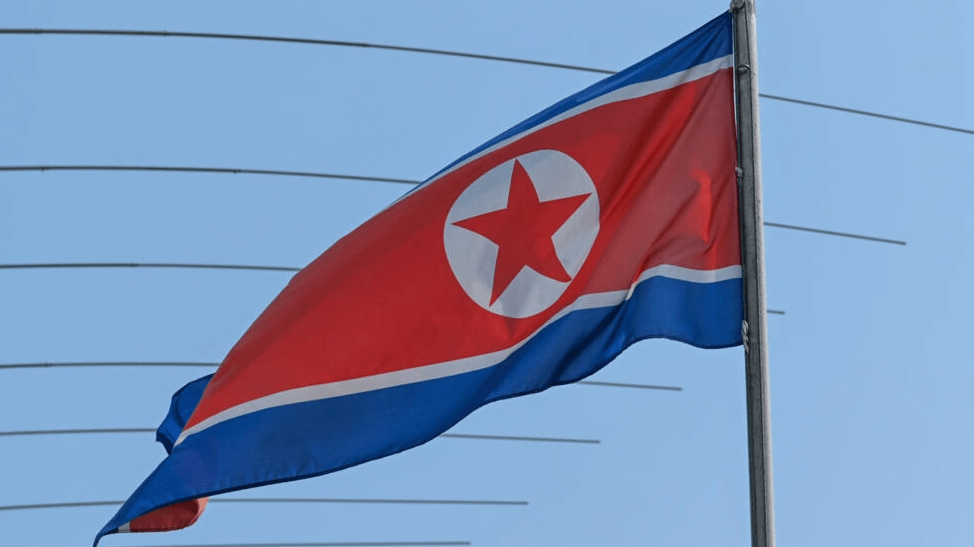
North Korea fires missiles ahead of key anniversary

South Korea’s defence ministry described the two projectiles as ballistic missiles that flew about 400 kilometers (248 miles) before falling into the sea, according to reports by news agency Yonhap of South Korea and Japan’s Kyodo.

“Our military detected two ballistic missiles North Korea fired from areas near Pyongyang into the East Sea at 11:55 pm on the 24th and at midnight of the 25th,” Yonhap quoted South Korea’s Joint Chiefs of Staff as saying.

The launches were the latest in a series of weapons tests in recent weeks by Pyongyang, and come as Seoul and Washington ramp up defence cooperation in the face of soaring tensions with the North.

Last week South Korea hosted a visit by a US nuclear-capable submarine, the first deployment there by such a nuclear-armed American vessel in decades.

And in a move that likely further provoked the North, a second US submarine, the nuclear-powered USS Annapolis, arrived at a South Korean naval base around the time of Monday’s missile launches, according to Yonhap.

The reclusive North Korean regime routinely conducts weapons tests, and the launches come days after leader Kim Jong Un personally oversaw the latest firing of the country’s newest intercontinental ballistic missile, the solid-fuel Hwasong-18.

Relations between the two Koreas are currently at one of their lowest historical points, as diplomacy between Pyongyang and Seoul has stalled and Kim has called for ramping up weapons development, including tactical nukes.

In efforts to bolster deterrence, Seoul and Washington have staged joint military exercises with advanced stealth jets and US strategic assets.

The White House took issue with Pyongyang’s latest action, with Press Secretary Karine Jean-Pierre saying “we certainly condemn the DPRK’s ballistic missile launches,” referring to North Korea by the acronym of its formal name.

The missile tests “pose a threat to the DPRK’s neighbors and the international community,” Jean-Pierre said, adding: “Our commitment to the defense of the Republic of Korea and Japan remains ironclad.”

Significant visit

Monday’s launches come ahead of celebrations in North Korea this week marking the 70th anniversary of the end of fighting in the Korean War.

A Chinese delegation led by Politburo member Li Hongzhong will travel to the North for the event, the state-run Korean Central News Agency reported, in what is the first known visit by a foreign delegation since the start of the pandemic.

North Korea has been under a rigid self-imposed coronavirus blockade since early 2020 to protect itself from Covid-19, only resuming some trade with China last year.

An armistice agreement ending Korean War hostilities was signed on July 27, 1953 but the two Koreas remain technically at war because the 1950-53 conflict ended in an armistice and not a peace treaty.

Tensions on the Korean peninsula also have ratcheted up recently due to the disappearance of a US soldier, Travis King, who was on a tour of the demilitarized zone last week when he ran across the border into North Korea.

The UN Command, a US-led multinational force that oversees the Korean War truce, said Monday it has begun discussions with Pyongyang over the missing American serviceman.

Israeli police clashed with crowds of protesters at night after parliament adopted a highly controversial law to limit the Supreme Court’s powers.

The measure – part of a big reform package – will prevent the court from overruling government actions it considers unreasonable.

Police in Jerusalem and Tel Aviv used water cannon to disperse protesters blocking highways.

Critics say the hard-right government’s reforms threaten Israeli democracy.

After months of mass street protests over the judicial reform Monday’s Knesset (parliament) vote was an important victory for Prime Minister Benjamin Netanyahu.

But the battle is not over. It may go on for months.

A political watchdog group and centrist opposition leader Yair Lapid plan to petition the Supreme Court to annul the new law.

Moreover, Israel’s Histadrut trade union confederation has threatened a general strike and thousands of military reservists, including air force pilots, have vowed to not report for duty if the law is allowed to stand.

For a country that prides itself on its ability to respond fast to any kind of threat, the fact that Israel’s very security might be compromised is causing real anxiety.

Mr Netanyahu has insisted the law is necessary for the government to “carry out policy in line with the decision of the majority of the citizens of the country”.

But he said he was willing to resume talks with the opposition, even until November, to find an all-inclusive agreement.

The planned reforms have triggered some of the biggest protests in Israel’s history. On Monday at least 22 people were arrested, police said.

Opponents fear the changes could undermine the country’s democratic system, tipping it into authoritarian territory.

They worry that nationalist and ultra-Orthodox religious parties allied to Mr Netanyahu will be able to shape policy with unchecked power.

But the government argues that the reforms are necessary to correct an imbalance in power which has seen the courts increasingly intervene in political decisions.

The so-called “reasonableness” bill was approved by 64 votes to 0, after the opposition boycotted the final vote.

Mounted police tried to move protesters off Ayalon Highway in Tel Aviv

The White House – a key ally of Israel – called it “unfortunate” that the law had been passed.

The vote brings to a head months of turmoil, with Israel’s president warning political leaders on Monday that the country was “in a state of national emergency”.

The street protests outside the Knesset lasted all of Monday, amid a cacophony of noise from drums, whistles and air horns.

A demonstrator lying in the street told the BBC he was defying “dictatorship”, adding that his grandfather had been a wartime codebreaker against the Nazis at the UK’s famous Bletchley Park.

Asked how long he would stay put he said: “We will never surrender”.


Another, Reut Yifat Uziel, the daughter of a paratrooper pictured in an iconic Israeli photograph of the capture of the Western Wall in the 1967 Middle East war, said she feared for her children’s future.

“Netanyahu kidnapped the country and I am worried it will become a theocracy,” she said.

Reut Yifat Uziel said she feared for her children’s future

The protesters – tens of thousands of whom marched some 45 miles (70km) from Tel Aviv to Jerusalem at the end of last week – set up camp in a park between the Knesset and the Supreme Court, which are located almost next to each other.

Mr Netanyahu was in parliament for the vote hours after being discharged from hospital following unscheduled surgery for a pacemaker on Saturday.

The controversial reforms have polarised Israel, triggering one of the most serious domestic crises in the country’s history.

Hundreds of thousands of demonstrators have taken to the streets weekly since the start of the year in protest at what they say is an attack on democracy.

Former heads of Israel’s security services, chief justices, and prominent legal and business figures have also been vocal against the government’s reforms.

The measures have also been criticised by the US President Joe Biden, who in his most explicit comments yet called for the “divisive” reforms to be postponed.

The green man could stay on longer at pedestrian crossings to give people more time to cross the road in England.

Transport officials are considering a change that would mean people have around seven rather than six seconds to cross the typical road.

The guidance for local councils is meant to help people with disabilities, and older people.

Campaigners welcomed the idea, saying millions of people currently struggled to cross when the green man was lit.

Current UK-wide guidance for traffic engineers assumes an average walking speed of 1.2 metres per second – a figure first calculated in the 1950s.

It was updated in 2019 to specify that councils could reduce this to one metre per second, either on a “site‑by‑site basis or as an area‑wide policy”.

Now Active Travel England (ATE), an executive agency of the transport department, is considering adopting one metre per second as its standard recommendation for councils in England.

The change will be subject to consultation from interested parties. If approved, it will be included in new advice expected to be issued to English councils before the end of the year.

Local authorities are in charge of traffic management, but Active Travel England factors in adherence to its recommendations when allocating funding for schemes to boost walking and cycling.

Research published by University College London in 2012 found that 76% of men and 85% of women had a walking speed lower than the 1.2 metres per second standard.

The average walking speed for men was calculated as 0.9 metres per second, and 0.8 metres per second for women.

An ATE spokesperson said making crossing times “inclusive” was a big part of its plans to boost the number of people making short journeys on foot.

“Crossing times can be a challenge, particularly for elderly and disabled people, and a bad experience is enough to put someone off doing it,” they added.

Living Streets, a charity that promotes everyday walking, welcomed the proposal, saying it recognised walking speeds in the UK’s ageing population.

“Millions of older people, disabled people and families with children struggle to cross the road in the time given,” added chief executive Stephen Edwards.

“If people don’t feel safe crossing the street, they simply won’t make the journey or will make it in a less sustainable and less healthy way,” he added.

Election Act to be amended for enabling interim PM to make important decisions: Dar

ISLAMABAD: As sources claim that the Pakistan Muslim League-Nawaz (PML-N) and Pakistan Peoples Party (PPP) have agreed on Finance Minister Ishaq Dar as caretaker prime minister, Dar said the Election Act, 2017, will be amended to enable the interim ruler to make important decisions, The News reported Monday.

During an interview with a local television channel, Dar — when asked if section 230 of the election law would be amended — replied in the affirmative and said the country could not be handed over to a government for day-to-day decisions.

He further said the matter need not be hidden from people since they would find out anyways.

Moreover, he said: “…but I think that whoever takes on this responsibility, it would not be appropriate to spend three months of the nation on day-to-day decisions.”

“Our experience of the past has not been very good.”

According to the sources, after reaching a consensus, the government is taking other political parties into confidence.

The sources further told Geo News that the finance minister is also acceptable to the establishment as interim PM; however, during the television programme, Dar said it was too “premature” to say he would be selected.

“Yes, I saw those reports today… as a basic Muslim, I believe that you should not aspire to any office yourself, nor should you chase it or lobby for it…”

He further said it was “premature” to say he had been selected for the role, adding that a proper Constitutional process would have to be triggered.

When asked if there was a consensus on his name, Dar said that his record shows he always did his job to the best of his capability.

Bill

Meanwhile, well-placed parliamentary sources told The News the two houses of the Parliament would separately adopt the Electoral Reforms Bill introducing major changes to the Election Act-2017 this week.

The proposed reforms would enhance the powers of the caretaker government to transact important matters of national significance, much beyond day-to-day affairs.

The amendments in the act would strengthen the Election Commission of Pakistan (ECP) further for holding free, fair and transparent elections.

Sources said a comprehensive bill would be approved by the federal cabinet in its meeting early this week and would be tabled in the National Assembly by Law and Justice Minister Senator Muhammad Azam Nazir Tarar.

They added that the amendments in the act will pass by Senate by the end of the week.

The sources pointed out that the law would enable the caretaker government to act like an elected government in dealing with international affairs and could act in a sovereign manner thereof.

The caretakers would entertain the provincial issues in the way an elected government could deal, including fiscal matters.

The committee constituted by National Assembly Speaker Raja Pervez Ashraf under former NA speaker Sardar Ayaz Sadiq has compiled its recommendations, which have been given to the government for further action.

Sadiq held a marathon closed-door session of the committee and approved the bill for reforms.

The sources said that the laws and rules about the scrutiny of the candidates would adhere to exceptional strictness in the upcoming polls so that no undesirable person could reach the Parliament or provincial assembly.

The bill will also accommodate the recommendations of Chief Election Commissioner (CEC) Sikandar Sultan Raja, who earlier asked to grant the Commission powers to take certain actions.

He reminded the government the conduct of elections is dependent upon the necessary arrangements to be made by the commission to ensure that the “standards of honesty, justness, fairness provided in Article 218(2) are met”.

The CEC mentioned that the electoral body has consistently strived to uphold the writ of law, fair play, and merit in letter and spirit.

However, he reminded that the commission’s writ had been systematically challenged several times.

“In practice, ECP’s authority has been eroded,” the letter stated.

The chief election commissioner, in his letters, wrote about the ECP’s crucial disciplinary interventions in the past, which were stayed and set aside, gaving wayward functionaries the message of hiding behind legal orders despite committing “serious level irregularities in discharge of their official functions”.

He recalled that the ECP’s writ was severely compromised at the time.

The sources said the parliament has already addressed the commission’s recommendations through legislation in the past few weeks.

Centcom chief, COAS Munir discuss regional security situation

RAWALPINDI: US Central Command (Centcom) chief, General Michael Erik Kurilla, Monday discussed the regional security situation with Chief of Army Staff (COAS) General Asim Munir.

The development came during the top US military official’s meeting with COAS Munir at the General Headquarters in Rawalpindi, the Inter-Services Public Relations (ISPR) said in a statement.

Gen Kurilla acknowledged and appreciated Pakistan Army’s successes in the fight against terrorism and Pakistan’s continued efforts to bring peace and stability to the region.

During the meeting, apart from the regional security situation, matters of mutual interest and defence cooperation were discussed, the military’s media wing mentioned.

“Both reiterated the desire to further enhance bilateral relations in all fields,” the ISPR said.

The meeting comes as both nations — Pakistan and US — called on war-torn Afghanistan to ensure that its soil isn’t used as a safe haven by terrorists.

The United States had last week reiterated that the Afghan Taliban must ensure that their country isn’t used for terror attacks as Pakistan blames the neighbouring nation for harbouring hardliners Tehreek-e-Taliban Pakistan (TTP).

“Taliban has the responsibility to prevent […] Afghanistan from being used as a safe haven for launching terrorist attacks,” US State Department spokesperson Matthew Miller said during a press briefing.

The top brass of the Pakistan Army has said that sanctuaries and liberty of action available to terrorists of proscribed TTP and other groups of that ilk in Afghanistan is one of the major reasons impacting the security of Islamabad.

The terror attacks in Pakistan have spiked since November last year when the TTP ended its ceasefire agreement with Islamabad, with the armed forces also ramping up efforts against militants.