
Zimbabwe election disinformation spreads on WhatsApp

The landlocked southern African country heads to the polls on August 23 to elect the president and legislature in what analysts expect to be a tense affair amid a crackdown on the opposition and rigging fears.

Large-scale disinformation campaigns in the run-up to a vote are now a staple across the continent. Zimbabwe is no exception, but the situation there is more opaque.

In Kenya and Nigeria, which recently held votes, misinformation peddlers hung out in the open, mostly on Facebook and Twitter, while in Zimbabwe WhatsApp is king of the rapid spread, analysts say.

This is because that’s where most voters are – but the app’s encrypted messaging service makes fact-checking harder, as fake content proliferates undetected.

Chris Chinaka, editor-in-chief of ZimFact, a Zimbabwean fact-checking group, said staff now spend most of the time flicking through WhatsApp groups for messages to debunk.

“For most Zimbabweans, the internet is WhatsApp, and a lot of communication happens there,” said Nqaba Matshazi, a journalist working at the Media Institute of Southern Africa (MISA) in Zimbabwe.

Internet penetration is quite low in Zimbabwe, where only about a third of the country’s more than 15 million people are online, according to a 2023 report by DataReportal, a data analysis firm.

Only nine percent of those who have internet use social media.

WhatsApp has a much broader reach and many Zimbabweans consider it a safe means of communication – a valued commodity in a country where criticising the government can land people in jail.

In May, Zimbabwe approved a broadly worded law imposing harsh penalties for damaging the country’s “sovereignty and national interest”, which critics say effectively bans government criticism.

Bots and pseudonyms

Few people on Twitter write about politics under their real name, as that comes with the “risk of you being arrested”, said Matshazi.

But WhatsApp is not a free zone either, as messages on the app have also landed people behind bars, he added.

The law worsened “a festering wound in an environment where already freedom of expression is quite limited,” said Matshazi.

Still, traditional social media are not immune from fake content.

Political analyst Jamie Mighti said Twitter was awash with bots that seem to have been commissioned to push government talking points.

Some embellish the accomplishments of the ruling ZANU-PF party, in power since independence in 1980.

Others repeat President Emmerson Mnangagwa’s view that Western sanctions are to blame for the country’s economic collapse.

The United States and Europe deny this, noting that the measures target specific individuals accused of graft and right abuses.

Doctored videos

Manipulated photos and videos are also circulating in large numbers – with both ZANU-PF and the leading opposition party, the Citizens’ Coalition for Change (CCC), making good use of them, analysts say.

“(They) have used doctored images of rallies from the past, or from totally different contexts, to project the false impression of overwhelming support,” said Bhekizulu Tshuma, a media studies professor at the National University of Science and Technology in Zimbabwe.

The parties have also used the tactic to suggest their rivals have few followers, he added.

Campaign messages have been deliberately distorted.

In one example, a clip of CCC leader Nelson Chamisa was edited to make it sound as if he advocated for the reversal of radical land reforms enacted by late president Robert Mugabe – and for the land to be returned to white farmers.

Disinformation can also be easily found on television, where experts say state broadcaster ZBC often depicts the CCC as a party with little support and takes its leader’s speeches out of context.

“It is a matter of public record that ZBC refuses to give any independent or fair coverage to the CCC,” the party’s spokeswoman Fadzayi Mahere wrote on Twitter, which is being rebranded as “X”.

“Not only is the state media’s coverage unequal, but whatever token coverage is accorded to the opposition is biased, derogatory and manipulated.”

Voices critical of ZANU-PF also have limited reach in South Africa, which is home to a large Zimbabwean diaspora, said Mighti.

Zimbabweans abroad, in South Africa and the UK in particular, also play a critical role in amplifying misinformation, analysts say.

“A lot of the discourse about the Zimbabwean election happens on the internet and in South African, European and American media, primarily because of the restrictions in Zimbabwe and the fear of reprisals,” he said.

‘No basis for removing Kashmir’s special status’

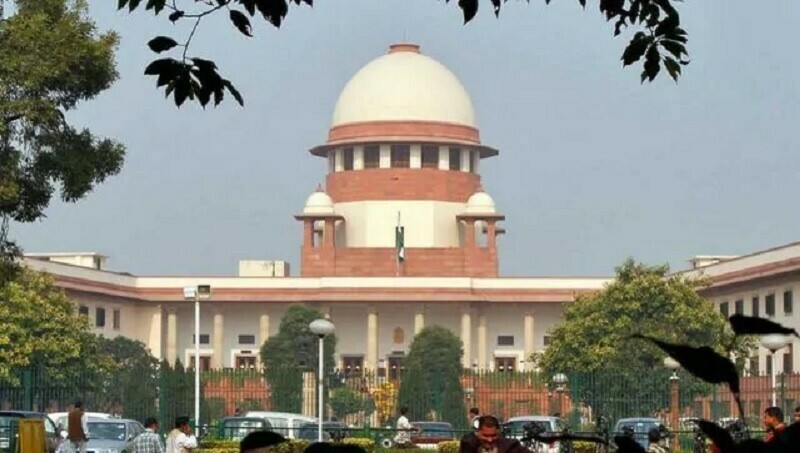
“The Indian parliament cannot declare itself as a constituent assembly,” senior counsel Kapil Sibal, who appeared on behalf of the petitioner, told the Supreme Court on Wednesday.

According to The Wire, Mr Sibal made his submissions on behalf of the petitioner, Mohammad Akbar Lone, on how the Modi government unilaterally unravelled India’s unique federal scheme five years ago, while undermining crucial elements of the due process and the rule of law.


Tracing the history of the “accession” of the princely state of Jammu and Kashmir to India, which Pakistan disputes, Mr Sibal shed light on Clause 3 of Article 370 which provided that any alteration to the relationship between the state of Jammu and Kashmir and the Indian union could only be made upon the recommendation of the constituent assembly for the state.

Indian chief justice starts hearing slew of petitions against ending Article 370 for held Kashmir

Article 370 (3) of the Indian constitution, before its reading down in 2019, said: “Notwithstanding anything in the foregoing provisions of this article, the President may, by public notification, declare that this article shall cease to be operative or shall be operative only with such exceptions and modifications and from such date as he may specify: Provided that the recommendation of the Constituent Assembly of the State referred to in clause (2) shall be necessary before the President issues such a notification.”

On Aug 5, 2019, the newly inserted Article 367(4)(d) amended Article 370 (3) by replacing the expression “Constituent Assembly of the state” with the “Legislative Assembly of the State”.

Will of the people

During the hearing, Mr Sibal contended that the concurrence of the state government provided by the governor did not express the will of the people.

He argued that Indian-held Jammu and Kashmir had a separate constitution, and therefore, the parliament had a limited scope to enact legislation for the state. Powers given to the state by its own constitution were read down by parliament, he submitted.

But the constitution bench interrupted Mr Sibal to question him whether a provision, intended to be temporary in 1950, could become permanent in 1957, only because the state’s constituent assembly had completed its task of framing the constitution for the state, and dissolved itself.

Mr Sibal explained that the proviso in Article 370(3) was incorporated to ensure that the article could be changed during the existence of the state’s Constituent Assembly.

The use of the word “temporary” in the marginal note of Article 370 serves the purpose of indicating that when Article 370 was introduced, it could be amended/abrogated with the recommendation of the Constituent Assembly of Jammu and Kashmir, he clarified.

Mr Sibal suggested framers of the constitution in 1950 would have included a reference to the state legislature if they had intended that it should be able to make such a recommendation.

In his view, the state’s Constituent Assembly had the exclusive power to determine the state’s relationship with India and to recommend the abrogation or modification of Article 370.

The petitioner submitted that the constituent assembly stands for enacting a constitution for the future, and it is essentially a political exercise to take into account the aspirations of the people.

“Constitution itself is a political document; drafting of [the] constitution is a political exercise. Once the constitution comes into place, all institutions are governed by the constitution, and those institutions are limited in the exercise of their powers consistent with the provisions of the constitution,” he told the bench.

“Parliament cannot convert itself as a Constituent Assembly. That’s done. [The] Indian Parliament cannot declare itself as a Constituent Assembly. Where does parliament get that power to decide the legislature of the state?” he asked.

Mr. Sibal submitted the task before the constituent assembly was not a law-making exercise. “There was a disparity. There were 562 princely states which had to be amalgamated. Each of them had certain conditions. Jammu and Kashmir was an exception, and therefore, it was constitutionally grafted in Article 370. You can’t jettison the people of J&K,” he elaborated.

He pointed out that the residuary power was with the state legislature/state government throughout, unlike other states.

Mr Sibal deplored that the withdrawal of the special status for the state was a move away from representative democracy. Never in the history of the country, a state could be converted into a union territory, he said.

He will continue his submissions on Thursday (today).

Bank of England poised to raise UK interest rates to 5.25%

Economists believe a 0.25 percentage point rise – to 5.25% – is the most likely increase to be announced at middal

However, the Bank’s Monetary Policy Committee (MPC) defied expectations last time when they hiked the rate by a bigger than expected 0.5 percentage points in June. There are some who think that could happen again.

Governor Andrew Bailey has said that increases will help bring down high inflation in the UK to the Bank’s target of 2% – although some critics are not convinced it is the right strategy.

Rising interest rates mean bigger borrowing costs – including larger monthly mortgage payments for many homeowners, which can have a knock-on effect of higher rents for tenants.

But, in theory, they should also result in much better rates for savers. However, concerns have been raised that many banks are not fully passing on such benefits to customers.

The Bank of England’s “shock” hike in the interest rate in June came after inflation did not fall as predicted, and instead remained at 8.7% in the year up to May.

However, inflation then dropped by more than expected to 7.9% the following month.

The last time the bank base rate stood at 5.25% was 15 years ago in March 2008.

The MPC’s announcement will be closely watched for its impact on the housing market – and the wider economy, amid fears that rising rates could help push the UK into recession.

The Nationwide Building Society said earlier this week that property values declined by 3.8% in July, the biggest drop in 14 years. It blamed dampened demand on stretched affordability for mortgages.

According to figures from Moneyfacts, the average two-year fixed residential mortgage rate was 6.85% on Monday and Tuesday.

Over the same period, the average five-year fixed residential mortgage rate was 6.37%, the financial information company said.

A survey of economists found they believe there is a 64% probability of the interest rate being increased by 0.25 percentage points on Thursday, and a 36% chance of a 0.50 percentage points rise.

But Joseph Calnan, from payments provider Moneycorp, said it was “anyone’s guess” what the MPC would do.

He said: “For the first time in a long time, we’re unsure what to expect at this next meeting. We could see a 50 bps [basis points] hike, a 25 bps hike, or even no change at all given [inflation] finally eased off in June after a stubborn 11 months.”

Army urges all stakeholders to play role in revival of economy

Chief of Army Staff (COAS) General Syed Asim Munir has called upon all stakeholders to fulfil their social responsibility of contributing towards the revival of the country’s economy saying, “We must never lose hope”.

Addressing the “Pakistan Minerals Summit” in Islamabad on Tuesday, the army chief invited foreign investors to play their due role in exploring the hidden reserves of Pakistan and to fully utilise this potential as the country is blessed with rich mineral resources.

The army chief said there are vast mining opportunities in our country that will be realised through joint efforts.

He said the authorities will ensure an investor-friendly system to soften terms and avoid unnecessary delays.

Gen Munir said Pakistan’s first mineral summit laid down new rules of ease of doing business for domestic and foreign investors in Pakistan as mineral projects are keys to success.

He said the government of Pakistan in collaboration with all the institutions assured the establishment of the Special Investment Facilitation Council (SIFC), which brings all the stakeholders on one platform.

He said it is our social responsibility to play our role in unison for the country’s economy.

Addressing the ceremony, Prime Minister Shehbaz Sharif called for exploring the untapped resources including the vast natural minerals and reserves and developing the agriculture, information technology and industrial sectors.

The premier regretted that the country’s journey of 75 years was dotted with bitter factors as they could not fully exploit the precious natural deposits estimated at worth $6 trillion.

“The day gives an opportunity to self-contemplation over a journey of last 75 years and the reasons which landed Pakistan into this situation with a begging bowl,” he added.

Elaborating his viewpoint, he said with Russian support, Pakistan Steel Mills was established during 70s while in Reko Diq a hefty penalty of $10 billion was imposed on Pakistan and if it was enforced, the entire country’s foreign reserves would have been depleted.

The prime minister referred to the Thar coal mines reserves and said these were being converted for the development of Pakistan.

The summit was attended by federal ministers, foreign delegates, ambassadors, experts, relevant authorities, and investors.

The army chief was included in a Special Investment Facilitation Council (SIFC) formed by Prime Minister Shehbaz Sharif for economic revival in June this year.

The military’s inclusion in the body — led by the PM and also comprising federal ministers — is aimed at complementing the government’s efforts to deal with economic challenges facing the country.

The government unveiled an elaborate ‘Economic Revival Plan’ with a view to capitalise on Pakistan’s untapped potential in key sectors, fast-track the development projects and facilitate investment in a bid to steer the country of economic crisis.

The total liquid foreign reserves held by the country stood at $13.534 billion.

Last month, Pakistan’s foreign exchange reserves got a boost after the country’s receiving the first tranche of $1.2 billion from the International Monetary Fund, under a shot-term standby arrangement approved by the lender of the last resort. Inflows from friendly countries, including Saudi Arabia and the UAE, also contributed in the increase in the reserves.

SBP reserves had surged by $4.2 billion to $8.7 billion as of July 14, highest level in nine months, thanks to financial support from the bilateral and multilateral partners.

Analysts noted that that was the highest level of foreign exchange reserves seen since October 2022 and hailed as a boost to the nation’s balance of payments and investor confidence in the economy.

PM urges Taliban govt to stop use of Afghan soil for ‘transnational terrorism’

Prime Minister Shehbaz Sharif has expressed concerns over the “liberty of action available” to terrorists in Afghanistan, urging the Taliban-led interim government to take action to stop “transnational terrorism”.

The statement comes after PM Shehbaz along with Chief of Army Staff (COAS) General Asim Munir visited Peshawar on Tuesday, two days after a deadly suicide attack claimed at least 54 lives in Khyber Pakhtunkhwa’s Bajaur district, according to a statement issued by the PM Office.

The deadly blast took place on Sunday evening in Bajaur district’s Khar, a former tribal area bordering Afghanistan, at the Jamiat Ulema-e-Islam-Fazl (JUI-F) gathering, killing at least 54 people and injuring over 100.

During the visit, the prime minister was briefed on the overall security situation in KP with a focus on the Khar suicide blast, the status of investigations under process and counter-terrorism efforts being undertaken to dismantle the terrorists’ network by disrupting the linkages between planners, executioners, and abettors, the official statement said.

PM Shehbaz noted with concern the involvement of the Afghan citizens in the suicide blasts and the liberty of action available to the elements hostile to Pakistan in planning and executing such cowardly attacks on innocent civilians from the sanctuaries across the border.

“The Interim Afghan government should undertake concrete measures towards denying its soil to be used for transnational terrorism”, the statement quoted the premier as saying.

The statement further said the prime minister also appreciated the emergency efforts undertaken by the army in the evacuation of wounded personnel from Khar to Peshawar, saving many lives.

PM Shehbaz and COAS Gen Munir also visited the wounded personnel under treatment at the Combined Military Hospital (CMH) and inquired about their health.

The premier directed authorities concerned to render the best possible healthcare services to the wounded patients until their full recovery.

While interacting with the bereaved family members of the victims of the Khar suicide blast, PM Shehbaz assured them that the entire nation stands with them in this hour of grief and shares the burden of their losses.

“These cowardly attacks by terrorists cannot weaken our resolve to eradicate the menace of terrorism from Pakistan. Security forces and law enforcement agencies with the support of the nation will ensure that those responsible for the dastardly attacks are brought to justice as soon as possible,” he added.

Daesh behind suicide attack

Terrorist organisation Daesh, also known as Islamic State, claimed responsibility for the suicide attack on Monday.

Sharing the investigation update, Counter-Terrorism Department’s (CTD) Additional Inspector General Shokat Abbas had said the convention began at 2pm while the explosion occurred two hours later at 4:10pm.

He said that ball bearings and other stuff used in making the explosives had been found at the site of the explosion.

Abbas further stated that the terrorist group behind the attack had been identified, which had targetted someone “specific” in the gathering.

He said that the initial probe had led the CTD to close to the attack’s perpetrators.

Abbas said that many pieces of evidence have been found at the site of the explosion, and forensic reports are being expected soon.

He confirmed that 10-12kg of explosives were used in the blast.

The KP CTD registered an FIR against unidentified suspects on charges of terrorism, murder, attempted murder and others, on behalf of Khar Station House Officer Niaz Mohammad.

At least five killed in Hindu-Muslim clashes south of New Delhi

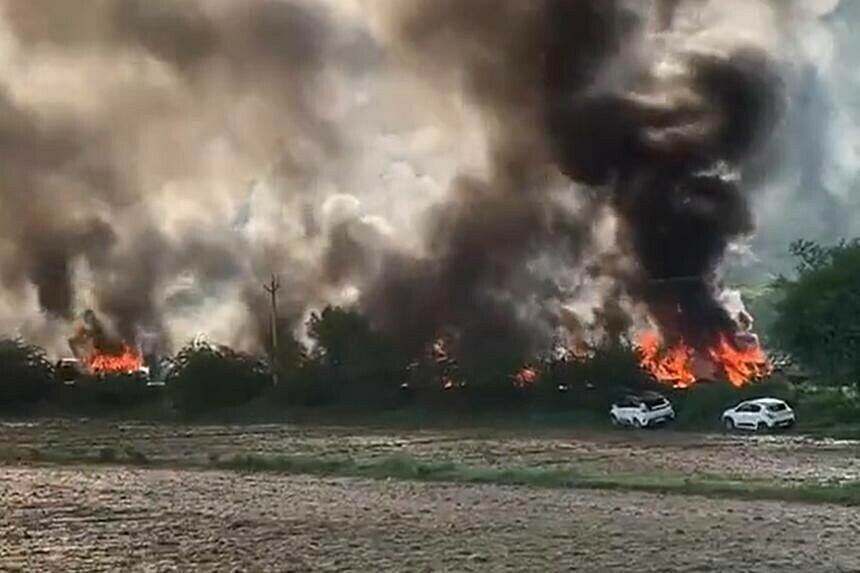
At least five people, including two police personnel, were killed in clashes between Hindus and Muslims that erupted on Monday around 50 km (30 miles) south of the Indian capital New Delhi, police officials told Reuters.

The violence erupted after a Hindu religious procession passed through the Muslim dominated Nuh region in Haryana state, the officials said. By the evening, the violence had spilled over into neighbouring Gurugram, where a mosque was torched, killing the cleric and injuring another person.

Officials from the local administration in Nuh said they were investigating the cause of the standoff that sparked the initial violence.

“The procession was meant to move from one temple to another but clashes broke out between two groups on the way, which resulted in the death of four people,” Krishan Kumar, spokesperson of Nuh police, told Reuters.

He said two of the dead were members of the home guard, a voluntary force that helps police control civil disturbances.

Another 60 people, including 10 police personnel, were injured in the clashes, local government officials said.

Haryana Chief Minister Manohar Lal Khattar, in a post on messaging platform X, formerly known as Twitter, also condemned the incident in Nuh, where curfew orders have been imposed, the internet shut off, and additional security forces deployed.

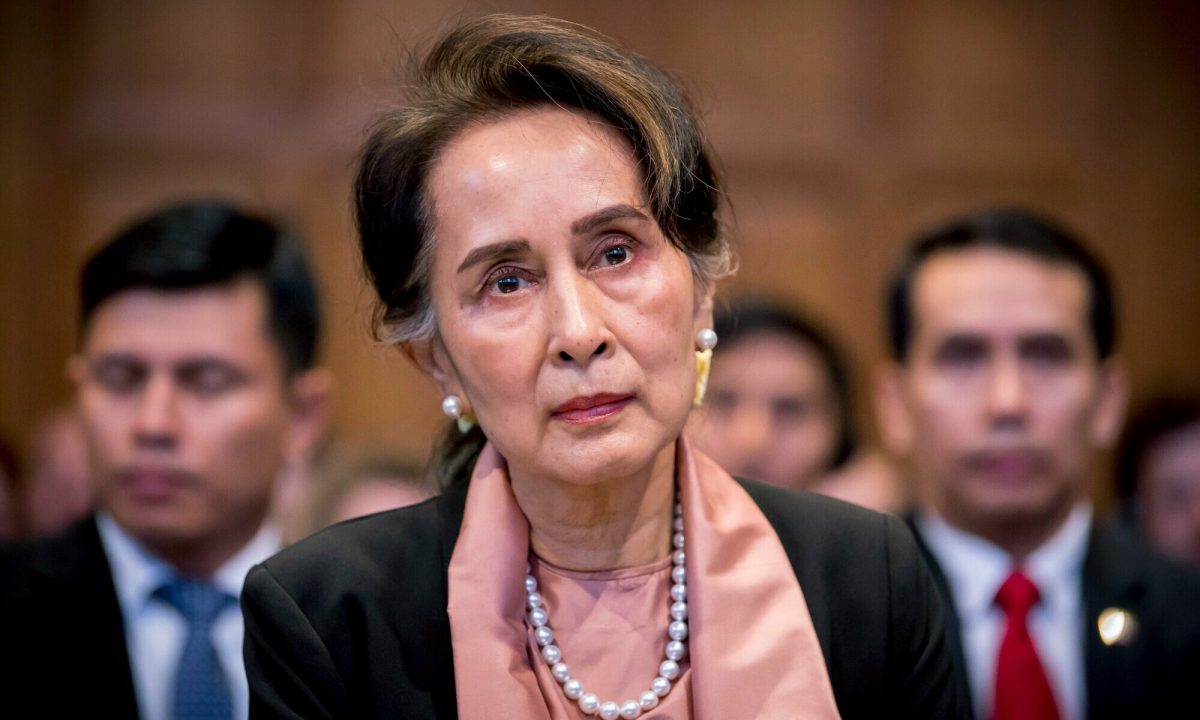
Myanmar junta cuts six years from Suu Kyi’s 33-year jail term

The country has been ravaged by violence in the two years since Suu Kyi was deposed in a coup and hit with 19 criminal cases ranging from corruption to breaching Covid-19 rules.

There have been concerns for the 78-year-old Nobel laureate’s health and the junta moved her from prison to a government building last week.

“Six years imprisonment will be reduced,” junta spokesman Zaw Min Tun told reporters after it was announced she had been pardoned in five cases.

Suu Kyi still faces 14 cases despite the pardon. Rights groups have condemned the legal battle against her as a sham designed to remove a popular democratic leader from the public eye.

Former Myanmar president Win Myint, who was also removed in the 2021 coup, was granted a four-year reduction in relation to two cases, the junta spokesman said.

‘Cruel games’

Tuesday’s announcement was part of an amnesty of more than 7,000 prisoners to mark Buddhist Lent, including 125 foreigners who are to be released and pardoned.

An unspecified number of prisoners facing the death penalty also had their sentences commuted to life imprisonment, the announcement said.

David Mathieson, an independent analyst on Myanmar, said the partial pardon was a “cynical ploy to tell the world that there might be some kind of political resolution coming. When we know that there is not”.

“I think they are just playing cruel games with a political prisoner,” Mathieson said.

“All the charges against her are absurd and shaving six years off 33 isn’t mercy.” Human Rights Watch’s Asia division deputy director Phil Robertson said the junta aimed “to create the impression of moderation and dialogue when in fact there really is none on offer”.

Joe Freeman, a spokesman on Myanmar for Amnesty International, said the reductions showed the arbitrary nature of the junta’s military courts.

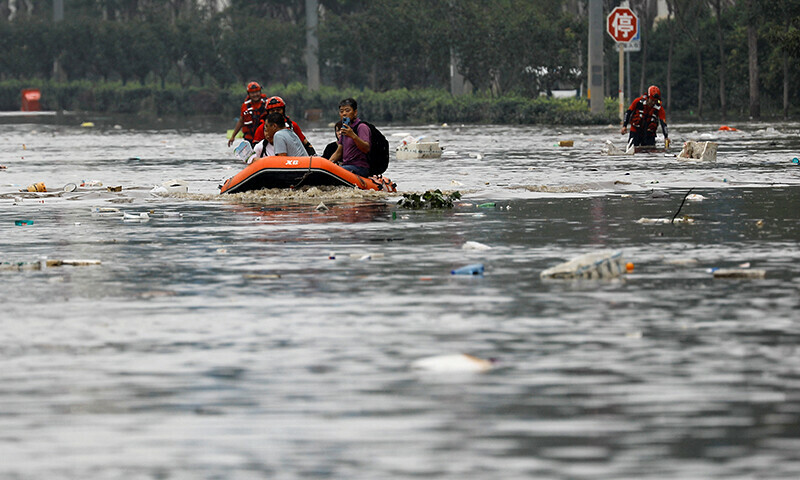
China intensifies flood rescue efforts south of Beijing after historic rains

Zhuozhou is in Hebei province, which has borne the brunt of the worst storms to hit northern China in over a decade, killing at least 20 people.

The city also borders Beijing, which was inundated with the most rainfall in 140 years between Saturday and early Wednesday, official data showed.


Authorities in Hebei have declared a state of emergency as rainfall averaged 355 mm since Saturday, the heaviest since at least July 2012.

More than 134,000 Zhuozhou residents have been affected, with over one-sixth of the city’s population evacuated.

At the confluence of several rivers, Zhuozhou is one of the hardest hit cities in Hebei as floodwaters migrated downstream, according to state media, waterlogging residential areas more than twice the size of the French capital, and affecting nearly 650 hectares of agricultural land.

The local public security bureau said on Tuesday the city faced water shortages and a partial power outage, adding that it urgently needed rafts, life jackets and emergency supplies.

Residents said waters rose as high as four metres.


Some 9,000 rescuers have been dispatched to Zhuozhou, with more rescue teams rushing over from neighbouring Henan and Shanxi provinces, state broadcaster CCTV reported.

A satellite image taken on Tuesday showed Zhuozhou surrounded by floodwaters on three sides.

The Global Times newspaper reported that a large amount of water was flowing from Beijing into three rivers around Zhuozhou.

Many Zhuozhou residents took to social media to complain about how long rescue and recovery efforts were taking.

“We are taking on the flood water discharge from Beijing, so they should provide us with rescue and equipment, but there has been nothing,” a netizen vented on China’s popular microblog Weibo.

Floods have also hit warehouses in the city, a logistics hub. Hebei authorities said they had opened another flood diversion area in Yongding River on Wednesday to help ease the flooding.

BooksChina.com, an online bookstore, said on its WeChat account on Tuesday night their staff were waiting for rescue workers on the fourth floor of their flooded warehouse where over four million books were stored.

As the floodwaters flow south, the authorities in the city of Gaobeidian have evacuated 113,000 residents, as well as opened reservoirs to trap the excess water, Xinhua reported.

In Japan, a typhoon has also struck its southwestern Okinawa prefecture. The storm is expected to veer westwards in the East China Sea but then turn northeast, potentially towards Japan’s third largest island Kyushu.

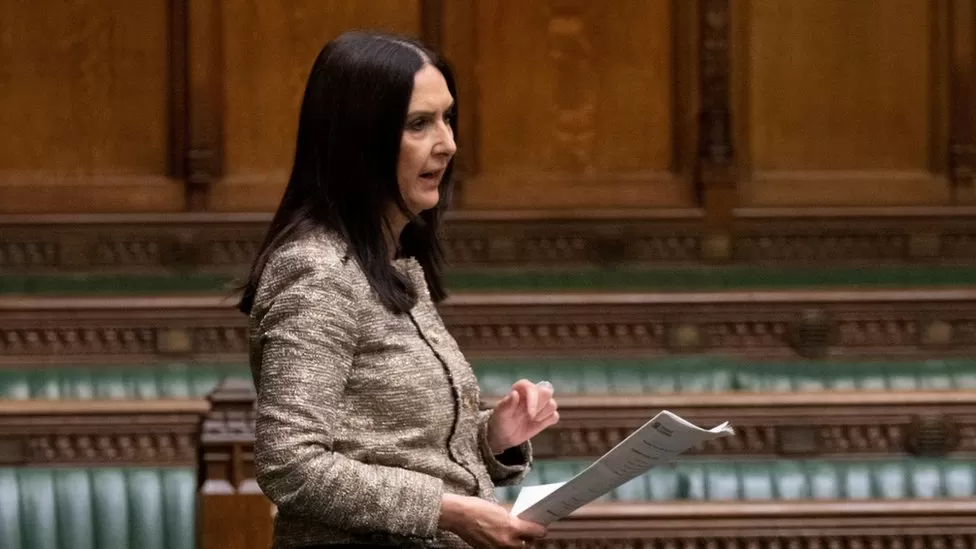
A by-election is to be held in Rutherglen and Hamilton West after nearly 12,000 constituents signed a petition to remove MP Margaret Ferrier from office.

Ferrier travelled to London and spoke in the Commons while awaiting the result of a Covid test in 2020. She then got a train home to Glasgow after testing positive.

Here are five reasons why the by-election will be an interesting one – and why it could have ramifications UK-wide.

Presentational grey line
1. It’s a marginal swing seat
Rutherglen and Hamilton West has changed hands at the last three general elections, bouncing back and forth between the SNP and Labour.

Like many other seats in the west of Scotland’s central belt, it had been a Labour stronghold until those red seats were washed away by an SNP-yellow tidal wave following the 2014 independence referendum.

Labour’s Tom Greatrex secured a stonking majority of 44.7% in 2010, but Ms Ferrier turned that into an SNP majority of 17.4% in 2015.

Ged Killen then won it back for Labour by just 265 votes – a majority of 0.5% – in 2017, as Jeremy Corbyn led a brief revival of the party’s fortunes.

Ms Ferrier was able to retake the seat comfortably in 2019 with a majority of 9.7%.

But less than a year later she was sitting as an independent MP, having been suspended from the SNP for breaking Covid-19 restrictions.

She would go on to plead guilty to “culpable and reckless conduct” and be given a community sentence, as well as a suspension from the House of Commons. And that suspension triggered the recall petition which has now been her ousted from her seat.

The first declaration in Scotland sees Labour take Rutherglen and Hamilton West from the SNP.
Image caption,
Labour’s Ged Killen took the seat from Margaret Ferrier in 2017 – but she won it back again in 2019
2. Campaigning has been going on for months
Technically, the by-election campaign will get underway once a writ has been issued in the Commons and the local returning officer has got their ducks in a row.

But in reality, the campaign in Rutherglen and Hamilton West has been running for months. Labour and the SNP were both registered as official campaigners in the recall petition process, signalling their intent.

Labour selected its candidate – teacher and activist Michael Shanks – back in May. Sir Keir Starmer visited the constituency later that month, following up on an earlier appearance in March.

Scottish Labour leader Anas Sarwar is an even more frequent visitor.

And the same is increasingly true of First Minister Humza Yousaf, who has taken part in door-knocking sessions as part of a series of “days of action” as he establishes himself as SNP leader.

His party has also already picked a candidate, Cambuslang councillor Katy Loudon, who will hope to hold the seat, while the Conservatives have announced that their candidate will be Thomas Kerr.

Other parties will doubtless put forward candidates in due course too – including the Liberal Democrats, who stood last time out. Ms Ferrier herself is free to stand again as an independent should she wish to do so.

There will be a national spotlight on this seat, which will mean representatives of all sorts of different causes will put themselves up. Last month’s by-election in Uxbridge and South Ruislip featured 17 candidates, while another in Selby and Ainsty had 13 names on the ballot paper.

Humza Yousaf has been out campaigning in Rutherglen several times already
3. It’s a key test for Labour
This is actually not the first SNP-Labour clash of the Sir Keir Starmer era – that came in Airdrie and Shotts in 2021, after Neil Gray opted to move to Holyrood. Anum Qaisar held the seat for the SNP with a reduced majority of 8%.

That – like Rutherglen – is one of only five seats in Scotland where Labour can target an SNP majority in single digits.

The party hopes to win a lot more than five seats in its bid to propel Sir Keir into Downing Street, so this will be an important test of how well its messages are cutting through north of the border.

Sir Keir be desperate to build momentum ahead of the next general election after a mixed set of results in last month’s English by-elections.

The difficulty for the Labour leader is that the vast majority of the seats he wants to win in England are held by the Conservatives. In Scotland, they are all held by the SNP.

That means contests north of the border are going to be fought on the left of politics, while Labour’s UK-wide messaging is more tuned into winning over right-leaning Tory voters.

The SNP have pounced gleefully on issues like the two-child cap on some benefits, which Sir Keir has said he would retain in the name of fiscal responsibility.

The plan may be to allow Scottish Labour to take the lead and shape more local messaging – even if that stands in contrast to some of the UK party’s positions. This by-election will be a measure of how well that can work.

Anas Sarwar and Sir Keir Starmer have both been out and about in the constituency
4. It’s an early measure of Humza Yousaf’s leadership
The by-election is an early electoral test for the SNP’s new leader.

Humza Yousaf came into the job having happily accepted the mantle of “continuity candidate” from the Nicola Sturgeon era.

However he has since slashed his predecessor’s policy platform to ribbons, ditching a succession of key pledges and kicking others into the long grass, all while promising “a fresh start”.

This by-election will be a chance to see how popular that approach has been with the electorate, and whether Mr Yousaf can continue Ms Sturgeon’s record of success at the ballot box.

The SNP clearly see Labour as their key rivals at the next election, and have been workshopping attack lines against them for months.

Their core campaign message is coming into focus too – that while Labour may offer a change of government at Westminster, only the SNP are offering “real change” via independence.

Indeed the phrase “SNP only party offering real change with independence” now features as the second line in nearly all one of their press releases, with almost 20 of them during the month of July alone.

That slogan will shortly feature prominently on leaflets dropping through letterboxes across South Lanarkshire.

But Labour will not want to engage in a constitutional bunfight the way the Conservatives are always happy to – so it will be intriguing to see the extent to which the question of independence factors in the campaign.

The SNP look set to put independence at the heart of their campaign – but Labour will not
5. It’s the final showdown
Whoever wins the seat will know that they will likely have to fight the campaign all over again in about a year’s time, with a general election looming.

This will be no dress rehearsal though – in fact it will likely be the last election to Rutherglen and Hamilton West.

New constituency boundaries have been drawn up and look set to be confirmed ahead of the next election, and a decent number of locals will be guaranteed to have another new MP – potentially their third in a year.

The constituency is being split up, with Rutherglen becoming a seat in its own right while absorbing more of Uddingston, while the western patch will join a new Hamilton and Clyde Valley seat.

Boundary changes are planned right across the UK, with some big changes having been drawn up in the first alterations since 2005.

So not only will the winner be back out on the doorsteps within a matter of months, they might not even be canvassing the same streets.

But they will feel they have built some crucial momentum ahead of that pivotal UK-wide contest.

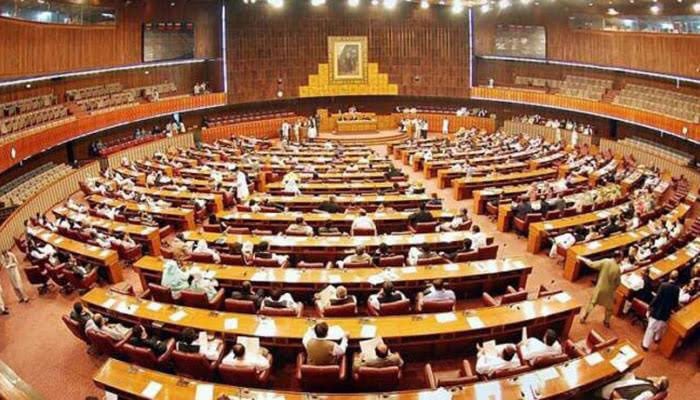
Pakistan Army Act (Amendment) Bill, 2023 sails through National Assembly

ISLAMABAD: The National Assembly on Monday approved Pakistan Army Act (Amendment) Bill, 2023, paving the way for a punishment of up to five-year rigorous imprisonment to any person guilty of disclosing any information, acquired in an official capacity which is or may be prejudicial to the security and interest of Pakistan or the armed forces.

Federal Law Minister Azam Nazeer Tarar moved the bill, which has already been passed by the Senate, in the lower house of parliament. Addressing the house, Tarar made it clear that no provision of this bill is applicable to civilians. The bill will not have any effect on the ongoing case in the Supreme Court, he added.

The bill seeks to amend the provision of the Pakistan Army Act, 1952, so as to provide the structural underpinnings of raising and maintaining the Army.

As per the bill, the Pakistan Army upon direction or with the concurrence of relevant authorities of the government, may directly or indirectly, carry out activities related to national development and advancement of national or strategic interest.

The bill also bars dual nationals to take a commission in the armed forces. It authorises the federal government, in extraordinary circumstances, to retain any person of the army compulsorily in service up to 60 years of age with the recommendation of the army chief.

The bill further recommends that a person will not engage in political activity of any kind within a period of two years from the date of his retirement, release, resignation, discharged, removal or dismissal from the service.

Besides, any person who remained posted, employed, seconded, tasked or otherwise attached to sensitive duties, shall not take part in political activities during a period of five years from the date of his retirement.

The legislation also forbids personnel from entering into employment consultation or other engagement with an entity having a conflict of interest with any of the activities of the armed forces of Pakistan or its affiliated entities in a manner or position that utilises the skills or experience acquired during association with armed forces.

However, this provision will not apply to employment made after prior approval from the army chief. Any person who is guilty of an offence will be punished with imprisonment for a term of up to two years or with a fine not exceeding Rs0.5 million or both.

The bill also deals with the electronic crimes under which a personnel, involved in undermining, ridiculing or scandalising the armed forces shall be punished.