
Storm Antoni: Strong winds and heavy rain set to clear

Storm Antoni hit several parts of England, Wales and Northern Ireland between Friday and Saturday.

Some residents were evacuated due to flooding and events such as Brighton’s Pride were also hit.

Yellow rain warnings in Northern Ireland and amber wind warnings in Wales and southwest England ended on Saturday.

The yellow warnings for thunderstorms in south-east England, including Brighton and London, ended at 22:00 BST, along with the yellow wind warnings in western areas including Cardiff and Bath.

The Met Office said winds would continue to ease overnight into Sunday, with “a few showers” persisting near coasts.

Storm Antoni hit late on Friday, with gusts of up to 65mph affecting exposed coastal areas.

The Met Office issued warnings for affecting areas encompassing Plymouth, Bristol and Bath in England and Swansea, Carmarthenshire and Pembrokeshire in Wales.

It warned that danger to life from flying debris were possible and “large waves and beach material being thrown on to sea fronts, coastal roads and properties”.

On Saturday, Cleveland Police said residents in Loftus and Carlin How, North Yorkshire were evacuated due to flooding. The force warned people not drive to the homes of relatives or make unnecessary journeys.

Trees fell on the road to Veryan on the Roseland Peninsula in Cornwall on Saturday

Met Office chief meteorologist Steve Willington previously said the storm has the potential to bring “potentially disruptive” weather as it moved from west to east.

Mr Willington said Northern Ireland would see some of the highest rainfall totals, with 40-60mm falling in some spots.

Meanwhile, Brighton’s Pride still went ahead, despite the challenges from the weather and industrial action on the railways.

This person braved the wind and rain to head down to Brighton seafront

However, a Pride festival in Devon was scaled back due to concerns over strong winds.

Plymouth Pride 2023 said a “rainbow village” featuring up to 80 traders would be cancelled because of the potential for “flying gazebos”.

Storm worries have seen the annual Stompin’ on the Quomps festival cancelled for the first time in its 30-year history in Christchurch. Around 10,000 people had been expected to attend on Saturday.

Imran Khan arrested after he was found guilty in Toshakhana case

ISLAMABAD: Pakistan Tehreek-e-Insaf (PTI) Chairman Imran Khan was arrested from his Zaman Park residence in Lahore soon after being convicted in the Toshakhana case on Saturday.

In a major development, a district and sessions court today convicted the former prime minister in the Toshakhana case, sentencing him to three years in prison.

Rejecting Khan’s petition seeking inadmissibility of the case, Judge Dilawar sentenced the former prime minister to three-year imprisonment.

“Charges of misdeclaration of assets have been proven against PTI chairman,” the Additional and Sessions Judge Humayun Dilawar mentioned in his judgment.

He then handed Khan three years in jail along with a fine of Rs100,000, while issuing his arrest warrant.

The former prime minister had challenged the Toshakhana case, related to the alleged misdeclaration of gifts he took from the state gifts repository, on several forums including the Supreme Court and Islamabad High Court (IHC).

The trial court had summoned Khan in his personal capacity today (Saturday) for a hearing in the Toshakhana case after the high court rejected his pleas challenging the maintainability order.

On Friday, the IHC also turned down Khan’s request to transfer the case to another court and directed Additional Sessions Judge Humayun Dilawar to continue hearing the case.

China executes South Korean for drug trafficking

China has executed a South Korean national for drug trafficking, Beijing’s foreign ministry said, the first time such a sentence has been carried out on a citizen of that country in almost a decade.

A court in the southern Chinese city of Guangzhou “lawfully pronounced a verdict and executed the South Korean defendant… for drug trafficking” on Friday, the foreign ministry said in a statement.

“When defendants of different nationalities commit crimes on Chinese territory, Chinese law shall be applied equally”, it added.

An official from Seoul’s foreign ministry told reporters Friday that “the death penalty was carried out today for a South Korean citizen who was sentenced to death for selling drugs in China”.

Beijing said the individual, who Chinese officials named as Jiang — which would be rendered Kang in Korean — had had their “legitimate rights and interests” protected.

South Korea expressed “regret that the death penalty has been carried out against our citizen”.

“The government has made multiple requests for reconsideration or postponement of the execution on humanitarian grounds through various channels since the death sentence was announced,” the official said.

It is the first execution of a South Korean drug offender by China in nine years, South Korea’s Yonhap news agency reported.

The individual was arrested in China in 2014 in possession of five kilograms of methamphetamine, according to Yonhap.

He was sentenced to death in 2019, the agency said.

China, the world’s top executioner, frequently carries out the death penalty by lethal injection for very serious crimes.

The Chinese legal system is tightly controlled by the ruling Communist Party and courts have a near-100 percent conviction rate in criminal cases.

Like many countries in the region, China has strict drug laws, and several foreign nationals have been handed death penalties for trafficking in recent years.

In 2020, an Australian was sentenced to death in China for drug trafficking.

According to Chinese media, he was arrested at Guangzhou airport in December 2013 with more than 7.5 kilograms of methamphetamine in his luggage.

And in 2019, China sentenced two Canadian nationals accused of drug trafficking to death at a time when relations with Ottawa were nosediving.

Seoul said Friday’s execution was “unrelated to the relationship between China and South Korea”.

Saudi dives into Ukraine peace push with Jeddah talks

The meeting of national security advisers and other officials in the Red Sea coastal city of Jeddah underscores Riyadh’s “readiness to exert its good offices to contribute to reaching a solution that will result in permanent peace,” the official Saudi Press Agency said Friday.

Invitations were sent to around 30 countries, Russia not among them, according to diplomats familiar with the preparations.

The SPA report said only that “a number of countries” would attend.

It follows Ukraine-organised talks in Copenhagen in June that were designed to be informal and did not yield an official statement.

Instead, diplomats said the sessions were intended to engage a range of countries in debates about a path towards peace, notably members of the BRICS bloc with Russia that have adopted a more neutral stance on the war in contrast to Western powers.

Speaking on Friday, Ukrainian President Volodymyr Zelensky welcomed the wide range of countries represented in the Jeddah talks, including developing countries which have been hit hard by the surge in food prices triggered by the war.

“This is very important, because on issues such as food security, the fate of millions of people in Africa, Asia, and other parts of the world directly depends on how fast the world moves to implement the peace formula,” he said.

Saudi Arabia, the world’s biggest crude exporter which works closely with Russia on oil policy, has touted its ties to both sides and positioned itself as a possible mediator in the war, now nearly a year and a half old.

“In hosting the summit, Saudi Arabia wants to reinforce its bid to become a global middle power with the ability to mediate conflicts while asking us to forget some of its failed strategies and actions of the past, like its Yemen intervention or the murder of Jamal Khashoggi,” said Joost Hiltermann, Middle East programme director for the International Crisis Group.

The 2018 slaying of Khashoggi, a Saudi columnist for The Washington Post, by Saudi agents in Turkey once threatened to isolate Crown Prince Mohammed bin Salman, the kingdom’s de facto ruler.

But the energy crisis produced by the Ukraine war elevated Saudi Arabia’s global importance, helping to facilitate his rehabilitation.

Moving forward Riyadh “wants to be in the company of an India or a Brazil, because only as a club can these middle powers hope to have impact on the world stage,” Hiltermann added.

“Whether they will be able to agree on all things, such as the Ukraine war, is a big question.”

‘Balancing’

Russia invaded Ukraine on February 24, 2022, failing in its attempt to take Kyiv but seizing swathes of territory that Western-backed Ukrainian troops are fighting to recapture.

Beijing, which says it is a neutral party in the conflict but has been criticised by Western capitals for refusing to condemn Moscow, announced on Friday it would participate in the Jeddah talks.

“China is willing to work with the international community to continue to play a constructive role in promoting a political settlement of the Ukraine crisis,” said foreign ministry spokesperson Wang Wenbin.

India has also confirmed its attendance in Jeddah, describing the move as in line “with our longstanding position” that “dialogue and diplomacy is the way forward”. South Africa said it too will take part.

Saudi Arabia has backed UN Security Council resolutions denouncing Russia’s invasion as well as its unilateral annexation of territory in eastern Ukraine.

Yet last year, Washington criticised oil production cuts approved in October, saying they amounted to “aligning with Russia” in the war.

This May, the kingdom hosted Zelensky at an Arab summit in Jeddah, where he accused some Arab leaders of turning “a blind eye” to the horrors of Russia’s invasion.

In sum, Riyadh has adopted a “classic balancing strategy” that could soften Russia’s response to this weekend’s summit, said Umar Karim, an expert on Saudi politics at the University of Birmingham.

“They’re working with the Russians on several files, so I guess Russia will deem such an initiative if not totally favourable then not unacceptable as well.”

India: Extremist Hindus give 2-day ultimatum to Muslims to leave their homes

Outspoken journalist from India Rana Ayub tweeted and said the Hindus chanted loud slogans “Jab Mulle kaate jaayenge, hum Ram naam chillayenge”.

“Well-meaning friends will ask “but how is Modi responsible for this?” Well- Meaning,” she tweeted.


According to Times of India report, hundreds of thousands of Muslim migrants’ workers living in Haryana have had to flee due to violence targeted at the community following communal clashes in Nuh district earlier this week.

The Hindu fundamentalists threatened migrants with violence unless they left.

Nuh Violence 2023

As curfew in Nuh has limited the options for the workers to leave, several of them were seen travelling with small bags towards either Alwar or Sohna in an effort to flee the violence-hit district, according to the TOI.

As per Indian media, a total of 202 people arrested so far and 80 taken into preventive detention in connection with the recent communal clashes in Haryana, state Home Minister Anil Vij said on Friday.

Vij also said 102 FIRs have been registered, half of which are in Nuh alone and the rest in other districts, including Gurugram, Faridabad and Palwal.

Death toll in religious riots near India’s capital rises to 6

Riot police were patrolling urban neighbourhoods near India’s capital on Wednesday following a second night of sectarian riots that have killed six people so far.

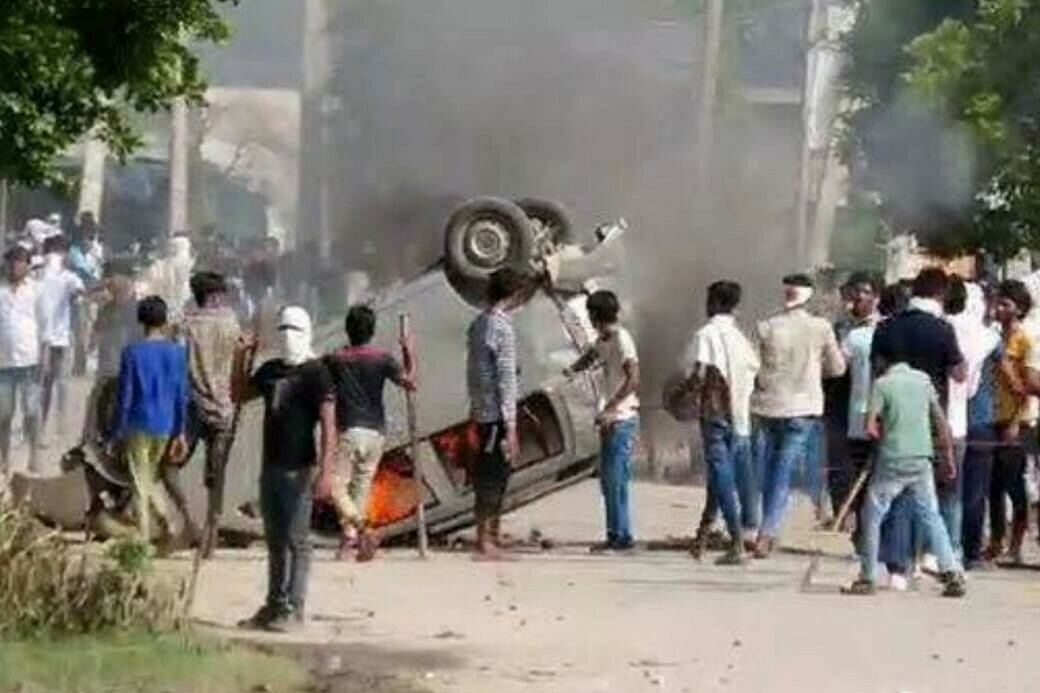
The unrest began Monday when mobs hurled stones at a Hindu religious procession and set cars alight in the predominantly Muslim district of Nuh, around 75 kilometres (45 miles) south of New Delhi.

Arson and vandalism attacks broke out the following evening in parts of nearby Gurugram, a satellite city of the capital and a key business centre where Nokia, Samsung and other multinationals have their Indian headquarters.

One neighbourhood saw a mob of around 200 people armed with sticks and stones loot several meat shops and set fire to a restaurant while chanting Hindu religious slogans.

Haryana state chief minister Manohar Lal Khattar said six people had been killed in the violence and 116 arrested so far.

“Those found guilty will not be spared. We are committed to the safety of the public,” he told reporters on Wednesday.

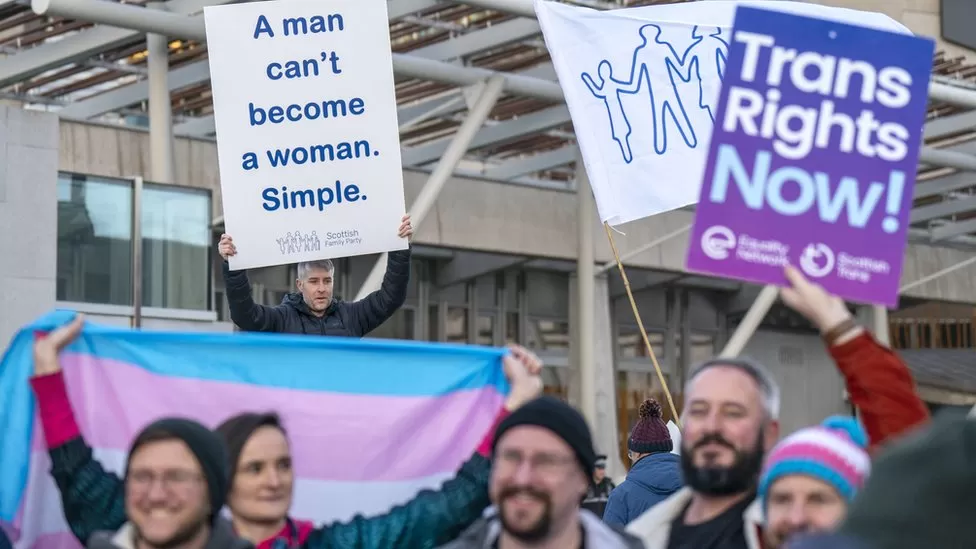
The Scottish government has failed in a bid to delay a judicial review of Westminster’s decision to block its gender recognition reforms.

The review is due to be held at the Court of Session next month.

But lawyers for the Scottish government argued it should be delayed until after an appeal in a separate case concerning the definition of “woman” is heard.

The request was rejected by judge Lady Haldane, who said the issues in the two cases were different.

Scottish Secretary Alister Jack made a section 35 order in January to prevent Holyrood’s Gender Recognition Reform Act from becoming law.

The legislation, which has been deeply divisive within the SNP, would make it easier for people in Scotland to change their legally recognised sex.

The Scottish government believes Mr Jack has acted illegally in vetoing it, and requested a judicial review of his decision in April.

At the time, Social Justice Secretary Shirley-Anne Somerville said the section 35 order was “an unprecedented challenge to the Scottish Parliament’s ability to legislate on clearly devolved matters”, and “risks setting a dangerous constitutional precedent”.

But critics of the reforms within the SNP believe the Scottish government has little chance of winning the case, and fear that the gender legislation is unpopular with the public.

The Scottish government’s lawyers went to the Court of Session on Friday to seek a delay of the hearing that has been scheduled for September.

Advocate Paul Reid told Lady Haldane that the postponement was needed because of an appeal brought to the Inner House of the Court of Session by the feminist campaign group For Women Scotland that is due to be held in October.

That case centres on the definition of “woman” in the Gender Representation on Public Boards Act, which is designed to increase the numbers of women who sit on public boards in Scotland.

Mr Reid said that the outcome of the For Women appeal could have ramifications for the Scottish government’s judicial review.

The judicial review will be heard at the Court of Session in Edinburgh next month

However, David Johnston KC – who was acting for the UK government – argued that the two cases dealt with different legal issues and there was therefore no need for a delay.

He also said the Scottish government knew of For Women Scotland’s appeal at the time the September hearing was arranged and their request for a delay had come “too late”.

And he said it was in the public interest to have the matter heard as soon as possible.

Lady Haldane agreed with Mr Johnston, and refused the Scottish government’s request for a delay.

She said: “I do not accept that the issues in the For Women Scotland case and the issues in the this motion brought by the petitioners are the same.

“In the event that For Women Scotland is successful in the Inner House, further submissions on the case can be made for whatever they see is appropriate.”

In a way nothing has changed here; the court dates remain set. But this preliminary showdown does tell us a few things.

It appears the UK government intends to base its arguments on the narrow tests setout in the Scotland Act, and whether Alister Jack acted “rationally” – and thus lawfully – when he vetoed Holyrood’s gender reform bill.

The Scottish government meanwhile appears to be building broader arguments about gender reform, bringing in case law concerning a different piece of legislation entirely.

It also means we are likely to see this judicial review unfold in the weeks running up to the crucial by-election in Rutherglen and Hamilton West.

That contest was shaping up to be hard-fought even without two governments going head-to-head over contentious issues ranging from gender reform to the balance of power between Holyrood and Westminster.

While the temperature of debate in the courtroom will remain measured as always, the political rows outside of it may well be at boiling point.

US backs direct India-Pakistan dialogue

WASHINGTON: The United States has said that it backs direct talks between arch-rivals India and Pakistan.

Prime Minister Shehbaz Sharif has proposed to initiate dialogue with the neighbouring nation, provided it is “serious”.

US State Department’s spokesperson Matthew Miller told a press briefing in Washington on Wednesday that America has long-supported such talks.

“As we have long said, we support direct dialogue between India and Pakistan on issues of concern. That has long been our position,” he said.

On Tuesday, in his bid to further regional development, PM Shehbaz reiterated his willingness to collaborate with India, emphasising that Pakistan harbours “nothing against anyone”.

Despite a history of strained ties between the two nations, marred by three wars since their independence in 1947, the premier seeks to promote valuable engagement.

However, bilateral relations have remained seriously impacted since India’s decision to revoke the special status of occupied Jammu and Kashmir in August 2019, leading to a virtual standstill in diplomatic interactions between the two countries.

“We are prepared to talk with everyone, even with our neighbour, provided that the neighbour is serious to talk serious matters on the table because war is no more an option,” PM Shehbaz said.

He mentioned that the country has fought three wars with India in the last 75 years, which only resulted in increased poverty, unemployment, and lack of resources to finance education, health, and well-being of the people.

He stressed that this is not the way to adopt, but to fight through economic competition in the region.

“Because if there is any nuclear flashpoint, who will live to tell what happened? So (war) is not an option,” he said, insisting that while Pakistan understands the issue, it is also equally important for India to realise the same.

‘China, Pakistan armies are brothers in arms’, says COAS on PLA’s 96th anniversary

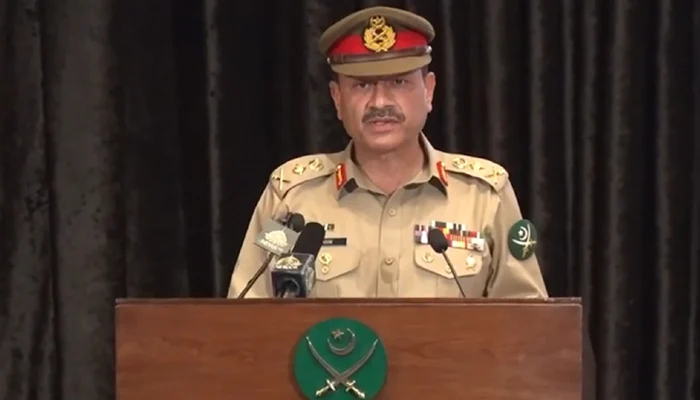
Chief of Army Staff (COAS) General Asim Munir has said that bilateral ties between Pakistan and China are “unique” and the militaries of the two countries are “brothers in arms”.

He made these remarks while addressing the 96th anniversary of the founding of the People’s Liberation Army (PLA) of China, which was commemorated at the General Headquarters (GHQ) in Rawalpindi on Wednesday, the Inter-Services Public Relations (ISPR) said in a statement.


The military’s media wing said the army chief was the chief guest on the occasion while Pang Chunxue, Chargé d’Affaires of the embassy of the People’s Republic of China, Major General Wang Zhong, Defence Attaché, Chinese Embassy officials and officers from tri-services of Pakistan attended the event.

While highlighting various facets of the deep-rooted ties between the two states, militaries, and the people, the COAS was quoted as saying: “Pakistan-China relationship is unique and robust that has proven its resilience in the face of all challenges.”

“The PLA and Pakistan Army are brothers in arms and our relationship will continue to contribute towards safeguarding our collective interests”, Gen Munir added.

Speaking on the occasion, the Chinese diplomat thanked the army chief for hosting the event for the 96th anniversary of the founding of the PLA.

“This all-weather strategic cooperative partnership between China and Pakistan has stood the test of the time and change of international landscapes”, the Chinese diplomat remarked.

“China & Pakistan have just jointly celebrated the 10th anniversary of the launch of CPEC and in the past months, COAS and other military leaders paid successful visits to China, which has strongly promoted the relationship between the two militaries”, she added.

The COAS felicitated the PLA and lauded its role in China’s defence, security and nation-building, the ISPR statement concluded.

Last week, Chinese Vice Premier He Lifeng arrived in Islamabad on a three-day official visit to celebrate the 10th anniversary of the China-Pakistan Economic Corridor (CPEC).

Addressing the ceremony, the Chinese dignitary termed CPEC an important project of the Belt and Road Initiative (BRI), saying that the multibillion-dollar project significantly changed the lives of the people of Pakistan.

Prime Minister Shehbaz Sharif had said the two countries were entering the second phase of CPEC which would help promote investment, progress and prosperity not only for Pakistan but also for the entire region.

In his message to mark the decade of the CPEC, President Xi Jinping reiterated China’s unwavering support to Pakistan, saying: “No matter how the international landscape may change, China will always stand firmly with Pakistan”.

During the Chinese vice premier’s visit, both countries also signed six MoUs aiming to promote bilateral cooperation.

Iran Guards launch naval drills near strategic Gulf islands

Iran’s Revolutionary Guards launched naval drills on Wednesday near strategic Gulf islands controlled by Iran but claimed by the United Arab Emirates, state media said.

The manoeuvres, which were being held mainly near Abu Musa island but also around Greater and Lesser Tunb, came two weeks after the United States boosted its naval presence in the Gulf.

It was not immediately clear how long the exercises would last.

“The Islamic Revolutionary Guard Corps naval exercise started Wednesday morning for the defence of the Iranian islands in the Persian Gulf,” the official IRNA news agency reported.

It quoted Guards navy commander Ali Ozmaee as saying that the drills “were held in Abu Musa island and Greater and Lesser Tunb”.

The three islands — located near the Strait of Hormuz, the vital sea passage between the Gulf and the open ocean through which a fifth of world oil output passes — have been a source of contention between the UAE and Iran for decades.

Last month, Iran summoned the Russian ambassador in Tehran to protest a statement by Gulf Arab governments and Moscow, challenging Tehran’s claim to the three islands.

IRNA said the Guards naval vessels were equipped with the Ghadir cruise missile system and Fath 360 ballistic missiles.

The Guards had also deployed unmanned surface vessels equipped with artificial intelligence, as well as warplanes, helicopters and aerial drones, the news agency added.

Last month, the US military said it was deploying a destroyer as well as F-35 and F-16 warplanes to the Middle East to deter Iran from seizing ships in the Gulf.

On July 6, the US Navy said the Guards seized a commercial vessel in the Gulf, a day after it accused Iranian forces of two similar attempts off Oman.

Iran later said the seized vessel was carrying “more than one million litres (220,000 gallons) of smuggled fuel”.

Nine killed in new clash between Brazil police, gangs

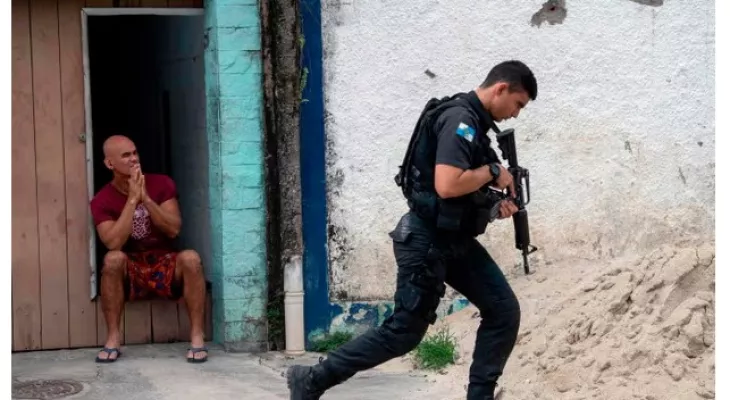
At least nine people were killed Wednesday in a police operation targeting criminal gangs in a complex of slums in Rio de Janeiro, authorities said, the latest in a series of deadly security force raids across Brazil.

The Rio raid brought the death toll from six days of police crackdowns on drug gangs in Brazil to at least 42, including 14 in Sao Paulo state and 19 in the northeastern state of Bahia.

Rio state police said officers had returned fire after coming under attack during a raid on a meeting by organized crime bosses in the Complexo da Penha group of favelas, on the city’s north side.

The deaths come amid mounting calls for independent investigations of alleged police abuses in Brazil, where the security forces have faced accusations of human-rights violations in their war with heavily armed drug gangs.

Rio state police said the operation came after officers received intelligence on a high-level meeting by gang leaders.

“A clash occurred when police teams came under attack by gunmen at the scene,” they said in a statement.

“Eleven suspects were wounded” and taken to the hospital, it said.

“Nine of them died of their injuries.”

A policeman was also wounded and is in stable condition, it added.

Rio state legislator Dani Monteiro noted the operation came just over a year after a May 2022 raid in a nearby favela that left 23 dead, the second-deadliest police operation in the city’s history.

Calling that raid a “massacre,” she criticized Rio state Governor Claudio Castro, a security hardliner and ally of far-right former president Jair Bolsonaro.

“Castro’s (in)security policy must stop!” Monteiro, a lawmaker for the left-wing PSOL party, wrote on X, formerly called Twitter.

AFP reporters outside the hospital where the wounded were taken described scenes of anxious residents waiting for news on injured relatives, amid a heavy police contingent and helicopters hovering overhead.


In Sao Paulo, police launched a massive anti-gang operation after a 30-year-old special forces officer was shot dead Thursday last week while on patrol in the port city of Guaruja.

Police have killed 14 alleged criminals so far during the operation, according to Sao Paulo Governor Tarcisio de Freitas, another Bolsonaro ally.

In the northeastern state of Bahia, officials meanwhile said 19 suspects in three different cities had been killed since Friday in clashes with police.

In all the cases, authorities said police had returned fire after coming under attack.

However, the killings have drawn criticism from rights groups in Brazil, where accusations of abuses by security forces are frequent.

The Sao Paulo operation shows “clear signs of vengeance for the death of a police officer,” said rights group Amnesty International.

“Residents have accused officers of abuses, intimidation and torture.”

Leftist President Luiz Inacio Lula da Silva’s justice minister, Flavio Dino, has also criticized the operation, saying the police reaction “doesn’t seem proportional to the crime committed.”

Last year, 6,429 people were killed by police in Brazil, according to the Public Security Forum, a watchdog group.