WASHINGTON: Ties with Islamabad through diplomatic channels US

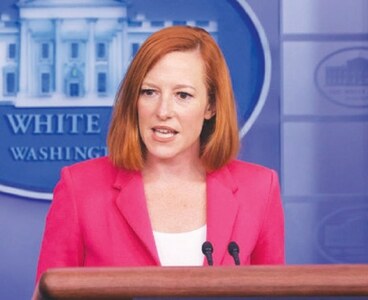
The indication came at a Friday afternoon news briefing at the White House when Press Secretary Jen Psaki ignored two provocative questions that she could have used to either criticise Pakistan’s current policies or to underline the US desire to repair ties with Islamabad.

A Pakistani journalist reminded her that many, many months ago Prime Minister Imran Khan had “requested a telephone conversation” with US President Joe Biden. “We haven’t heard anything about that. Is there a specific reason for not communicating with the Pakistani leadership?” the journalist asked.

“I don’t have any update on a planned call or engagement. Obviously, we engage with Pakistan and a range of leaders at a number of levels through the State Department, through our national security team,” the White House press secretary replied. “But in terms of a call or engagement with the president, I don’t have anything to predict on that front.”

The journalist then reminded Ms Psaki that Prime Minister Khan said at recent a public gathering that “he will not be a slave of America like other (Pakistani) politicians”.

“Would you like to comment on that?” he asked.

“We have a long relationship with Pakistan, and that is a relationship we’ll continue through diplomatic channels. So, I don’t have any more comments on that,” Ms Psaki responded.

Last month, State Department spokesperson Ned Price said at a news briefing that the United States still considered Pakistan a strategic partner and Islamabad does not need to strain its relations with Beijing to maintain ties with Washington.

“Pakistan is a strategic partner of the United States. We have an important relationship with the government in Islamabad, and it’s a relationship that we value across a number of fronts,” he said.

Pakistan was a close US ally during the cold war and remained so till the collapse of the Soviet Union. Pakistan played a key role in the anti-Soviet war in Afghanistan and partnered with the United States in the war against terrorism as well.

The relationship started to sour when Al Qaeda leader Osama bin Laden was found in Abbottabad and the Obama administration took him out without informing Islamabad.

In July 2019, Prime Minister Khan made an “official working” visit to Washington where he met the then president Donald Trump at the White House. He had another meeting with Mr Trump in New York during the UN General Assembly in September 2019.

Since then, there has been no face-to-face meeting between the leaders of the two countries and President Biden is yet to make a courtesy call to the Pakistani prime minister.

SC issues notices to 4 political parties on SCBA petition to prevent ‘anarchy’

The apex court directed the Islamabad inspector general of police to submit by Monday a report on the storming of Sindh House by PTI supporters yesterday. It said hearings on the petition would be conducted on a daily basis.

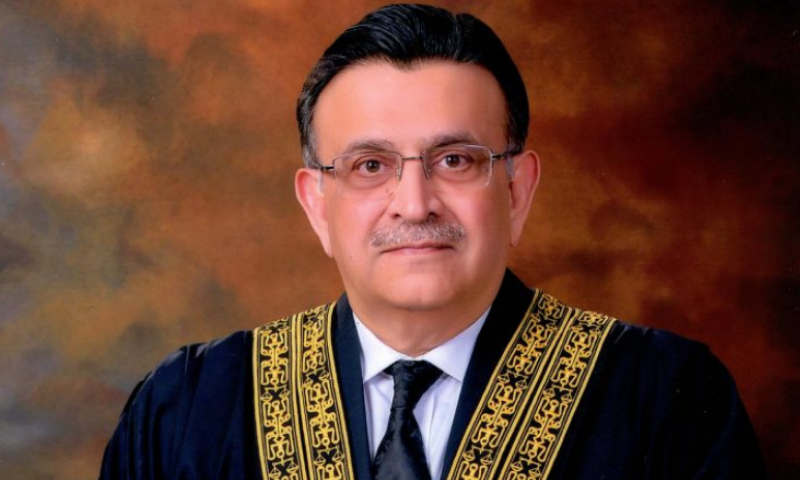
A two-judge bench, comprising Chief Justice of Pakistan Umar Ata Bandial and Justice Munib Akhtar, heard the petition that was filed by the SCBA earlier this week in which it urged the top court to direct all state functionaries as well as political stakeholders to allow peaceful execution of proceedings for the no-confidence vote in the National Assembly against the prime minister and prevent a possible “anarchic situation” that could result from the government and opposition clashing with each other.

During the hearing today, Justice Bandial said the SCBA had approached the court and wanted enforcement of the law. The CJP asked Attorney General of Pakistan (AGP) Khalid Jawed Khan if he also wanted to approach the court, to which the AGP replied that a decision had been made to file a presidential reference on Article 63(A) — which deals with disqualification of parliamentarians over defection — by Monday.

The chief justice said the SCBA wanted public order and implementation of Article 95 of the Constitution, which is related to the no-confidence vote against the prime minister. He clarified the hearing was not a suo moto proceeding as the court had previously received an application.

“What would you say on the freedom of expression and the right to protest? What would you say on yesterday’s incident?” Justice Bandial inquired from the AGP, referring to the storming of Sindh House.

The CJP said the incident went against the freedom of speech, to which the AGP agreed, saying that there was no justification for it. Khan said he wanted to elaborate on the background of yesterday’s incident.

He informed the court that 100 protesters had been dispersed by the police from Sindh House, following which 20 people again came to the location to protest. He said 13 of them were arrested for attacking Sindh House and a case was registered in Secretariat police station.

“Today, a magistrate released the 13 protesters,” he said.

“We are not concerned with what is happening. We are here for the Constitution’s implementation,” the chief justice remarked.

He asked whether attacking public property was a bailable offence. “Public property and national institutions were threatened. Members [of the National Assembly] and institutions should be protected in accordance with the Constitution,” Justice Bandial said.

The apex court said that it would not interfere in political matters but legal matters would have to be looked into.

Directing the Islamabad IGP to submit a report on the Sindh House incident by Monday, the chief justice observed, “Sindh House was damaged. All political parties will act in accordance with the law. They should not take any action which is against the law.”

The court directed that the process of the no-confidence vote should continue under Article 95.

Regarding the government’s decision to seek the court’s opinion on Article 63(A), Justice Bandial said the SC would hear the matter after the presidential reference was filed. “The court has to look at the Constitution rather than the political situation,” the CJP observed.

A day earlier, PTI workers stormed the Sindh House in Islamabad after protesting outside for hours against dissident MNAs who are staying in the building.

Television footage showed PTI workers climbing over the walls of Sindh House with some of them later breaking down the doors to enter the building. They also carried lotas in protest against “turncoats”.

Read: Storming of the Sindh House

The petition

The SCBA’s petition, a copy of which is available with Dawn.com, comes amid a heated political situation with the government and opposition trading barbs at each other and threatening to flex muscles in roadshows ahead of a crucial vote later this month that would decide the fate of Prime Minister Imran Khan.

The two sides have announced to hold rallies in the capital ahead of the parliament session, prompting fears of political instability and anarchy that the SCBA expressed in its petition.

In the plea filed with the Supreme Court on Thursday, the SCBA cited statements from the prime minister wherein he had said “I will fight against them until [my last breath]. I will face them and I am completely prepared for whatever [they throw my way]”.

It also included statements by Information Minister Fawad Chaudhry, telling lawmakers that they would have to pass through a million PTI supporters to enter the National Assembly on the day of the vote.

Likewise, the petition also quoted statements from opposition leaders including JUI-F chief Maulana Fazlur Rehman when he appealed to his workers to converge in Islamabad before the session “and stay on the Constitution Avenue till voting on the no-trust resolution and … provide safe passage to members to the Parliament House”.

The prime minister, the federation of Pakistan, Ministry of Defence secretary, leader of the opposition in the National Assembly, National Assembly secretary, Islamabad chief commissioner, Islamabad deputy commissioner and Islamabad police chief have been made respondents in the plea.

The petition says circumstances involving confrontation between the government and the opposition could trigger an “anarchic situation” in the country.

“It is evident from the political history of our country that preventing the constitutional process from taking its course has produced dire consequence for democracy and rule of law,” the petition says.

The SCBA sought the court’s directions for all state functionaries “to act strictly in accordance with the Constitution and the law and they be restrained from acting in any manner detrimental to and unwarranted by the Constitution and the law”.

It also demanded that officials tasked with the responsibility to maintain law and order in Islamabad must “prevent any assembly, gathering, public meetings and/or processions that could hamper the assembly proceedings or participation of members in the session”.

The plea also urged the court to bar authorities from taking any “coercive measures against, and including arrest and detention of the, members of the National Assembly”.


Efforts to rescue hundreds of people trapped in the basement of a bombed theatre in the besieged city of Mariupol are being hampered by intense battles in the area, the mayor says.

Vadym Boychenko told the BBC teams were only able to clear the rubble of the building during lulls in the fighting.

Ukrainian officials say Russia attacked the site, which was clearly marked as a civilian shelter. Moscow denies it.

Russian forces have encircled the city, which has no electricity, water or gas.

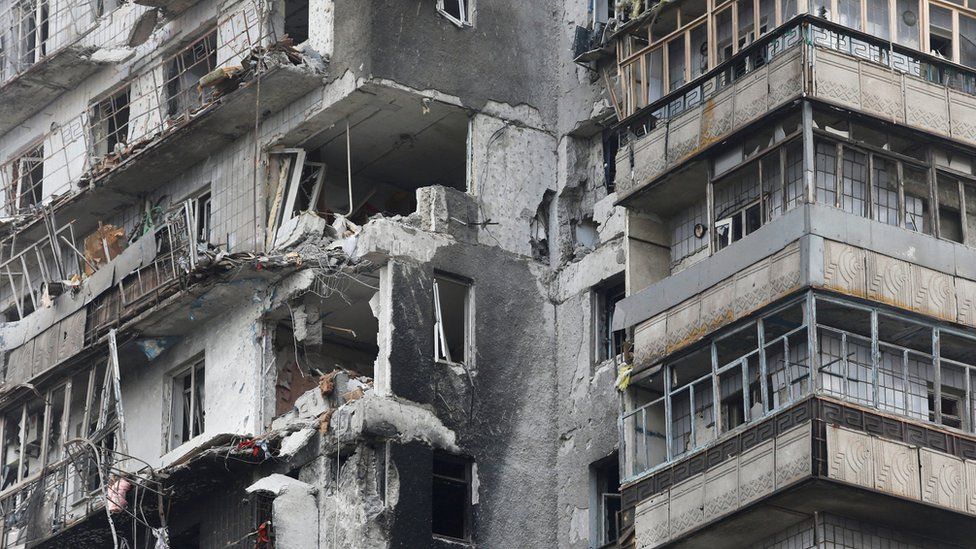
About 300,000 people are trapped inside, as food and medical supplies run out with Russia blocking the entry of humanitarian aid. Russian attacks have hit a hospital, a church and countless apartment blocks, with local officials estimating that about 80% of residential buildings are either damaged or destroyed, a third of them beyond repair.

Mariupol has seen some of the fiercest battles since Russia invaded Ukraine, three weeks ago. The location of the port city, on the Sea of Azov, is strategic for Russia, as it would help it create a land corridor between the eastern regions of Donetsk and Luhansk, controlled by Russian-backed separatists, and Crimea, the peninsula it invaded and annexed in 2014.

“[There is] street fighting in the city centre,” Mr Boychenko said, confirming a claim made by Russia on Friday, when it said it was “tightening the noose” around the city.

“There are tanks… and artillery shelling, and all kinds of weapons fired in the area,” the mayor said. “Our forces are doing everything they can to hold their positions in the city but the forces of the enemy are larger than ours, unfortunately.”

The intense fighting means it is too dangerous for teams to clear the rubble of the destroyed theatre and rescue people from the basement, which withstood Wednesday’s attack. “There’s no opportunity to do that,” Mr Boychenko said. “When it gets quiet for a bit, rubble is being cleared and people get out.”

He said he could not provide an update on how many had already left the site. A day earlier, the country’s human rights ombudsman said 130 people had been rescued, and that about 1,300 remained trapped.

Satellite images showed the Russian word for “children” had been emblazoned on the ground in two locations outside the imposing Soviet-era building, indicating the place was being used as a civilian shelter. Most of those inside are elderly people, women and children, who are living squeezed in dark rooms and corridors.

In a video address released on Saturday, President Volodymyr Zelensky said some of the people rescued were “seriously wounded” but that, at the moment, there was no information of deaths.

President Zelensky also accused Russia of a “war crime” for blocking the access of humanitarian aid to the besieged cities. “This is a totally deliberate tactic,” he said. “They [Russian forces] have a clear order to do absolutely everything to make the humanitarian catastrophe in Ukrainian cities an ‘argument’ for Ukrainians to co-operate with the occupiers.”

The authorities in Mariupol say at least 2,500 people have been killed in the city since the start of the war, although they acknowledge that is an underestimate. Some of the dead are being left on streets, as it is too risky to collect them. Many end up being buried in mass graves.

Mr Boychenko, the Mariupol mayor, said 40,000 people had managed to leave the city in the last five days, and that 20,000 others were waiting to be evacuated. Residents are fleeing in private vehicles, he said, as attempts to create official humanitarian corridors have broken down, with Ukraine accusing Russia of attacking the city despite agreeing to ceasefires.

Russia has one of the largest and most powerful armed forces in the world, but that has not been apparent in its initial invasion of Ukraine. Many military analysts in the West have been surprised by its performance on the battlefield so far, with one describing it as “dismal”.

Its military advances appear to have largely stalled and some now question whether it can recover from the losses it has suffered. This week, a senior Nato military official told the BBC, “the Russians clearly have not achieved their goals and probably will not at the end of the day”. So what has gone wrong? I have spoken to senior Western military officers and intelligence officials, about the mistakes Russia has made.

Misguided assumptions

Russia’s first mistake was to underestimate the strength of resistance and the capabilities of Ukraine’s own smaller armed forces. Russia has an annual defence budget of more than $60bn, compared with Ukraine’s spending of just over $4bn.

At the same time, Russia, and many others, appear to have overestimated its own military strengths. President Putin had embarked on an ambitious modernisation programme for his military and he too may have believed his own hype.

1px transparent line

A senior British military official said much of Russia’s investment had been spent on its vast nuclear arsenal and experimentation, that included developing new weapons such as hypersonic missiles. Russia is supposed to have built the world’s most advanced tank – the T-14 Armata. But while it has been seen on Moscow’s Victory Day Parade on Red Square, it has been missing in battle. Most of what Russia has fielded are older T-72 tanks, armoured personnel carriers, artillery and rocket launchers.

At the start of the invasion Russia had a clear advantage in the air, with the combat aircraft it had moved near the border outnumbering Ukraine’s air force by more than three to one. Most military analysts assumed the invading force would quickly gain superiority in the air, but it has not. Ukraine’s air defences are still proving effective, limiting Russia’s ability to manoeuvre.

Moscow may have also assumed its special forces would play an important role, helping deliver a quick, decisive blow.

A senior Western intelligence official told the media that Russia thought it could deploy lighter, spearhead units like the Spetsnatz and VDV paratroopers, “to eliminate a small number of defenders and that would be it”. But in the first few days their helicopter assault on Hostomel Airport, just outside Kyiv, was repelled, denying Russia an airbridge to bring in troops, equipment and supplies

Instead, Russia has had to transport its supplies mostly by road. This has created traffic jams and choke points which are easy targets for Ukrainian forces to ambush. Some heavy armour has gone off road, only to get stuck in mud, reinforcing an image of an army that has become “bogged down”.

Meanwhile, Russia’s long armoured column from the north that was captured by satellites has still failed to encircle Kyiv. The most significant advances have come from the south, where it has been able to use rail lines to resupply its forces. The UK Defence Secretary, Ben Wallace, told the BBC that President Putin’s forces “have lost the momentum”.

“They’re stuck and they are slowly but surely taking significant casualties.”

Losses and low morale

Russia had amassed a force of around 190,000 troops for this invasion and most of those have already been committed to the battle. But they have already lost about 10% of that force. There are no reliable figures for the scale of either Russian or Ukrainian losses. Ukraine claims to have killed 14,000 Russian troops, though the US estimates it is probably half that number.

Western officials say there is also evidence of dwindling morale among Russian fighters, with one saying it was “very, very, low”. Another said the troops were “cold, tired and hungry” as they had already been waiting in the snow for weeks in Belarus and Russia before they were given the order to invade.

Russia has already been forced to look for more troops to make up for its losses, including moving in reserve units from as far afield as the east of the country and Armenia. Western officials believe it is also “highly likely” that foreign troops from Syria will soon join the fight, along with mercenaries from its secretive Wagner group. A senior Nato military official said this was a sign it was “scratching the bottom of the barrel”.

Supplies and logistics

Russia has struggled with the basics. There is an old military saying that amateurs talk tactics while professionals study logistics. There is evidence that Russia has not given it enough consideration. Armoured columns have run out of fuel, food and ammunition. Vehicles have broken down and been left abandoned, then towed away by Ukrainian tractors.

Western officials also believe Russia may be running low on some munitions. It has already fired between 850 and 900 long-range precision munitions, including cruise missiles, which are harder to replace than unguided weapons. US officials have warned Russia has approached China to help address some of its shortages.

Defence support announced by the US is expected to include the Switchblade “kamikaze” drone

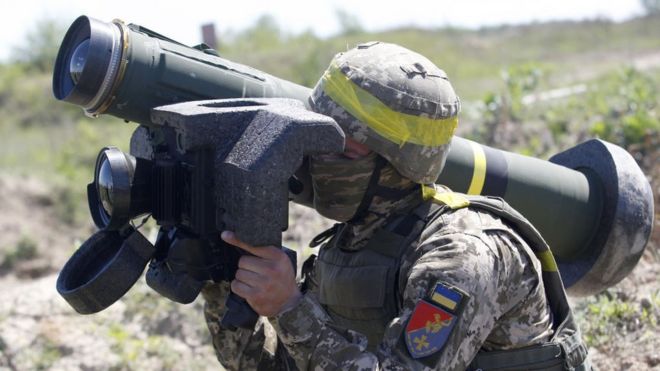
In contrast, there has been a steady flow of Western-supplied weapons going into Ukraine, which has been a boost for its morale. The US has just announced it will be providing an additional $800m in defence support. As well as more anti-tank and anti-aircraft missiles, it is expected to include Switchblade, which is a small, US-developed, “kamikaze” drone that can be carried in a backpack before being launched to deliver a small explosive at targets on the ground.

Western officials still warn that President Putin could “double down with greater brutality”. They say he still has enough firepower to bombard Ukrainian cities for a “considerable period of time”.

Despite the setbacks, one intelligence official said President Putin was, “unlikely to be deterred and may instead escalate. He likely remains confident that Russia can militarily defeat Ukraine”. And while the Ukrainian forces have shown fierce resistance, that same official warned that without significant resupplies they too could “eventually be spent in terms of ammunition and numbers”. The odds may be better than when the war first started, but they still seem stacked against Ukraine.

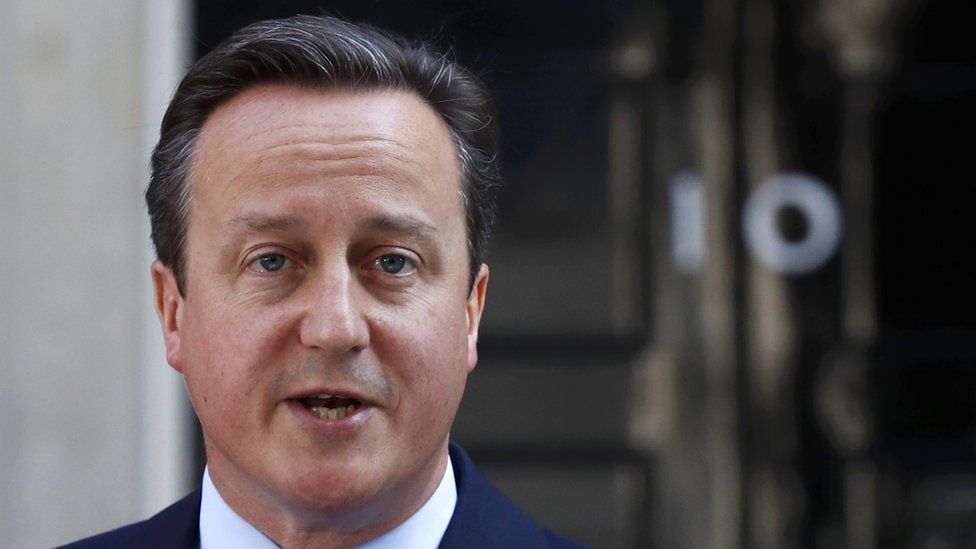
Former Prime Minister David Cameron is on his way to Poland to deliver donations to Ukrainian refugees.

In a series of tweets, the ex-Tory leader revealed he was driving a lorry to the country with goods collected by Oxfordshire food project Chippy Larder.

He said it was filled “with everything from nappies to sanitary products, warm clothes to first-aid kits”.

Mr Cameron and two colleagues from the charity will give the donations to the Red Cross when they reach Poland.

He wrote: “It’s going to be a long drive, but I’ll keep you updated along the way.”

People across the UK have been making donations to charities to help those fleeing Ukraine since the Russian invasion.

Mr Cameron said that Chippy Larder – where he has been volunteering for two years and which provides low-cost food to people in Chipping Norton – began its own collection two weeks ago.

He posted videos on Twitter of the donations, writing: “In the last fortnight we’ve appealed for the things that refugees from Ukraine need as they arrive in Poland. The response has been amazing.”

The former PM added: “The generosity of the community in West Oxfordshire – and of the British people more generally – has been typically phenomenal, stepping up to help our neighbours in their hour of need.”

The Ukrainian ambassador to the UK, Vadym Prystaiko, welcomed the support from the British public earlier on Friday.

But he said “money would be better placed” rather than bulky items.

Mr Prystaiko added: “The message is simple: if you can, give a couple of pounds rather than bring stuff in a bag.”

A murder investigation has begun after a teenage woman died at a student halls in central London.

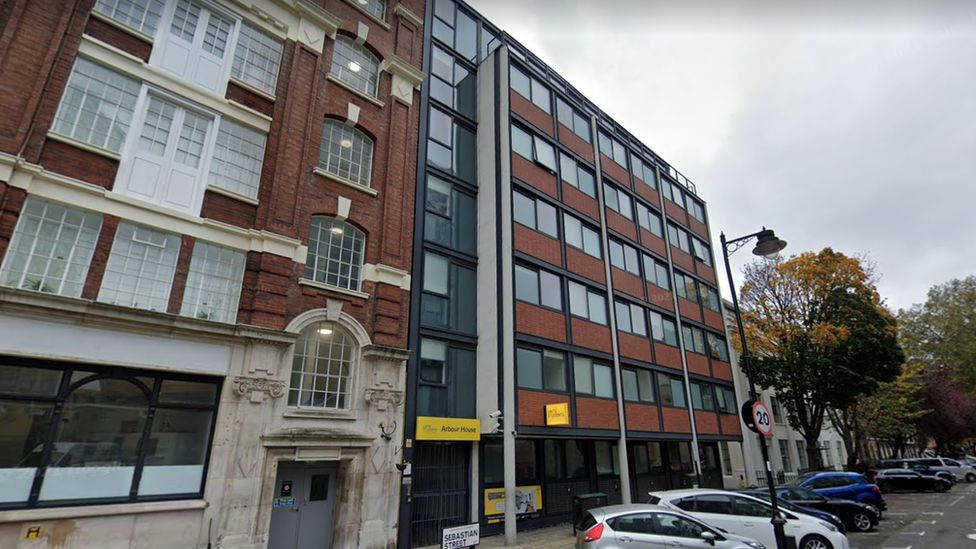
The woman, believed to be aged 19, was found with serious injuries at student accommodation block Arbour House in Sebastian Street, Clerkenwell, at about 05:10 GMT on Saturday.

She was later pronounced dead at the scene, the Met Police said.

The force said no arrests had been made and it is trying to identify her next of kin.

A police presence remains at the scene.

Scotland must shake off the “dead hand of nationalism” if it is to avoid becoming increasingly bitter and inward looking, the Scottish Conservative leader has said.

Douglas Ross told the party’s conference in Aberdeen that he grew up in a Scotland that was confident and outward looking.

But he argued that Scotland was now divided against itself.

He said the country was becoming “smaller every day” under the SNP.

Mr Ross missed the weekly First Minister’s Questions session in the Scottish Parliament on Thursday because of a bad throat – but was well enough to deliver his speech.

He welcomed Prime Minister Boris Johnson to the conference on Friday afternoon, with the two men shaking hands on stage ahead of Mr Johnson’s speech.

Mr Ross called for the PM to step down earlier this year over lockdown parties in Downing Street – but withdrew that last week, saying the row should be “put on pause” because of the Russian invasion of Ukraine.

He said the only person who would benefit from Mr Johnson being removed from office would be Vladimir Putin.

But his comments were condemned by political opponents, with SNP MP Ian Blackford describing it as an “utterly humiliating u-turn” and Labour leader Anas Sarwar saying Mr Ross “should not be using the Ukraine crisis to go bacMr Ross shook hands with the prime minister at the conference on Friday despite calling for him to quit two months ago

In his speech, Mr Ross asked whether anyone would say that Scotland is a better place today than it was when the SNP first came to power in 2007.

He said: “The nation I grew up in was confident and outward looking, yet the nation my children grow up in today is far more bitter and inward-facing.

“That isn’t a record that any government should be proud of – Scotland is becoming a smaller country every day that the SNP remain in power.

“We are becoming worse off, both economically and intellectually, because we are stuck with a government that won’t take any responsibility.”

He also called on Tory activists to “bring together the silent majority of working people to end this stalemate” and provide a real alternative for people who are “fed up with the last 15 years of SNP stagnation”.

‘Referendum obsession’

He said that this alternative would “end the referendum obsession” and “take back Scotland from the SNP and allow us all to move forward together”.

The two-day Scottish Conservative conference has seen the party call for the Curriculum for Excellence (CfE) to be scrapped in Scotland’s schools.

And it has unveiled plans to bring forward a bill in the Scottish Parliament that would create a register of domestic abusers.

The database would work in a similar manner to the sex offenders register, with police or local authorities being able to take action if a risk was identified.

We’ve got used to the Scottish Conservatives going into elections – not to win – but to retain second place. That was the case at last year’s Holyrood election. It will be again at the council elections in May.

What has changed is that Douglas Ross has set a much greater ambition for the future – to replace Nicola Sturgeon as first minister in 2026.

That might sound far-fetched. The gap between the parties is huge and Mr Ross accepts a political mountain lies ahead. He is also aware of the potential for his UK party leader and the partygate scandal to drag down Scottish Tory fortunes.

That is why Boris Johnson got no mention, never mind an endorsement in this speech, even if Douglas Ross has dropped calls for the PM’s resignation.

Unsealed files have revealed a plot by five people working on behalf of Chinese secret police to stalk and harass a US military veteran running for Congress, and to spy on an artist.

It is the first time, they say, a federal election campaign has been undermined in this way in America.

The perpetrators went to “outrageous and dangerous” lengths to do so, the Department of Justice said.

Three of the accused have been arrested, but two are at large.

According to court documents, they are accused of “transnational repression schemes” to target American residents whose political views and actions were “disfavoured by the People’s Republic of China (PRC) government”.

The co-conspirators allegedly tried to “interfere with federal elections” by orchestrating a campaign to undermine the US congressional candidacy of a military veteran who was once a leader of the 1989 pro-democracy demonstrations in Beijing.

In another plot, they planned to destroy the work of a Chinese artist, living in Los Angeles, who had been critical of his home government, and allegedly planted spy equipment in the artist’s workplace and car.

Fan “Frank” Liu, Matthew Ziburis and Shujun Wang were all arrested in the Eastern District of New York earlier this week.

Two other suspects, Qiang “Jason” Sun and Qiming Lin are at large.

Breon Peace, US attorney for the Eastern District of New York, said the plots had involved campaigns to “silence, harass, discredit and spy” on US residents for “simply exercising their freedom of speech”.

He added: “The United States will not tolerate blatantly illegal actions that target US residents, on US soil, and undermine our treasured American values and rights.”

The details of the allegations revealed on Wednesday, allege Mr Lin hired a private investigator in New York to disrupt the Brooklyn man’s congressional campaign, including “by physically attacking” him.

The man had been a student leader of the pro-democracy demonstrations in Tiananmen Square in 1989, who had escaped to America, become a citizen and served in the US military,

In 2021, he announced his intention to run for a US congressional seat on Long Island in the November 2022 general election.

Matthew Olsen, an assistant attorney general for the Justice department said the case represented “a conspiracy to derail the congressional candidacy of an American citizen” and warned that it and the others unveiled today were examples of the “alarming rise in trans-national repression… authoritarian states around the world feel emboldened to reach beyond their borders to intimidate or exact reprisals against individuals who dare to speak out against oppression and corruption”.

Mr Liu, 62, of Long Island, New York, and Mr Ziburis, 49, of Oyster Bay New York, are charged with conspiring to act as agents of the PRC government, conspiring to commit interstate harassment and the illegal use of a means of identification.

Mr Liu, the president of a media company in New York, and Mr Sun are charged with conspiring to bribe a federal official in connection with a scheme to obtain the tax returns of a pro-democracy activist residing in the United States.

Mr Lin, 59, of the PRC, is charged with conspiracy to commit interstate harassment, as well as conspiring and attempting to use a means of identification.

Mr Lin, it is alleged, works on behalf of the PRC’s Ministry of State Security (MSS), the Chinese intelligence and secret police agency.

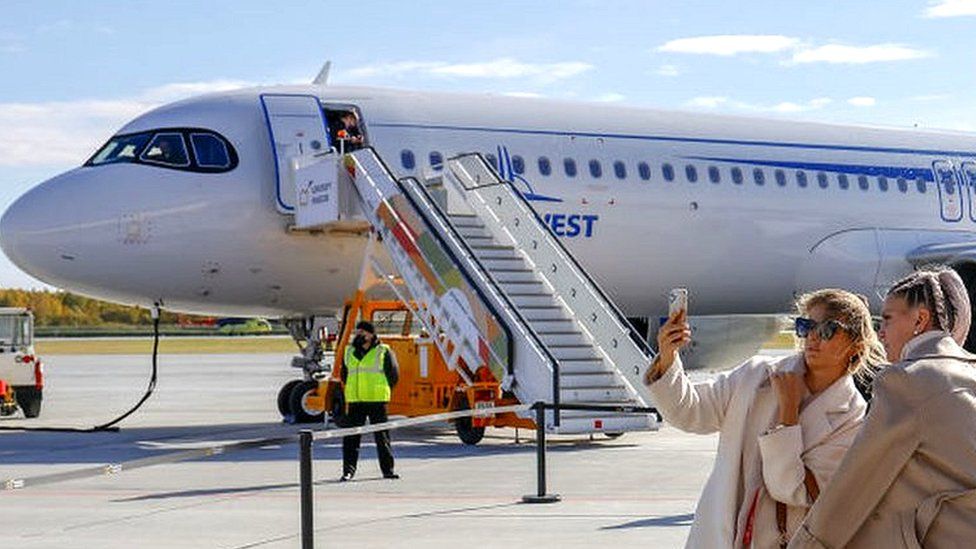
Nearly 100 planes with ties to Russia have been effectively grounded by the US government, including one owned by billionaire Roman Abramovich.

The US Commerce Department has said the planes are in contravention of US sanctions on Russia.

Providing service to these aircraft anywhere in the world – including inside Russia – may lead to heavy fines and potential jail time, it says.

The list includes aircraft operated by Russian airlines, including Aeroflot.

While most are Boeing aircraft, a Gulfstream private jet owned by Mr Abramovich – the current owner of Chelsea football club – is also included.

The Russian was among seven oligarchs sanctioned by the UK government earlier this month in response to the Ukraine war.

Mr Abramovich, 55, is alleged to have strong ties to Russian President Vladimir Putin, which he has denied.

In a statement, the department said any refuelling, maintenance or repair work of any of the listed aircraft – as well as the provision of spare parts – violates US export controls.

Commerce Secretary Gina Raimondo said the move was in response to “Russia’s brutal war of choice against Ukraine”.

She added: “We are publishing this list to put the world on notice – we will not allow Russian and Belarusian companies and oligarchs to travel with impunity in violation of our laws.”

The department said violators face “substantial jail time, fines, loss of export privileges, or other restrictions”.

The regulations apply to any aircraft which has more than 25% US-origin content that was re-exported to Russia after new controls came into effect on 24 February, the day Russia invaded Ukraine.

“By preventing these aircraft from receiving any service, for example, including from abroad, international flights from Russia on these aircraft are effectively grounded,” the statement added.

Deputy Secretary of Commerce Don Graves said the US government hoped the move highlighted Russia’s increasing isolation from the global economy.

“Our actions aren’t idle words or dead letters on the page,” he said. “They have real teeth and as Putin’s vicious war continues, they will continue to bite harder on the Russian and Belarusian economies”.

The US, Canada and European allies have already banned Russian aircraft from operating in their airspace, forcing Russian airlines to largely abandon their international routes.

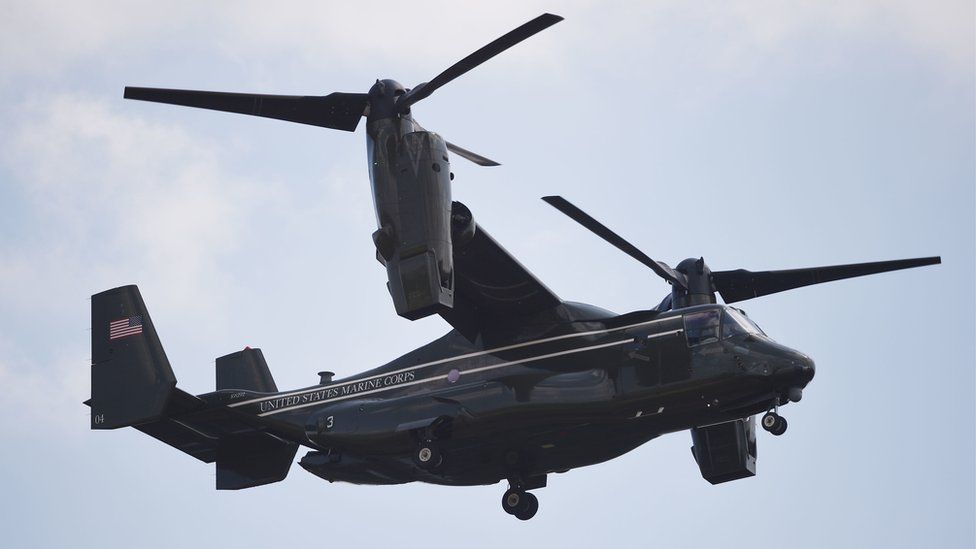
A US military plane has crashed in northern Norway, killing all four passengers on board.

The aircraft, which belonged to the US Marine Corps, was taking part in a Nato exercise when it came down on Friday.

It crashed in a remote region of Norway, south of the town of Bodo, and helicopters were unable to land at the site due to bad weather.

But search teams used snowmobiles to reach the scene of the crash in the early hours of Saturday.

“It is regrettably confirmed that all four on board the plane have perished,” local police said in a statement, adding that the victims were all US nationals.

An investigation into the cause of the accident was paused due to bad weather, but police said it would resume once the weather improves.

The MV-22B Osprey aircraft was taking part in a Nato exercise known as Cold Response, which is designed to prepare members of the defensive alliance to protect Norway.

It involves some 30,000 troops from 27 member countries.