
Gordon Brown and Sir John Major want a new international tribunal to be set up to investigate Vladimir Putin for his actions in Ukraine.

The former PMs are among 140 academics, lawyers and politicians to sign a petition calling for a legal system modelled on the Nuremberg trials of Nazi war criminals after World War Two.

But some say its powers are limited.

The ICC cannot pursue the crime of aggression without a referral from the UN security council, which Russia could veto.

Former Labour prime minister Mr Brown told the BBC that since the fall of the Berlin Wall “we’ve assumed that democracy and the rule of law will prevail”, but that Mr Putin “is replacing that by the use of force”.

“If the message is not sent out now then we face aggression in other countries which may go unpunished as well,” he told Radio 4’s Today programme.

Asked if he considered the Russian president to be a war criminal, he replied: “That’s what President Biden said, and that’s my view.”

US President Joe Biden this week called Mr Putin a “war criminal” for the first time.

The Kremlin denounced the comments as “unacceptable and unforgiveable rhetoric”. Other leaders to accuse Russian of carrying out war crimes include Ukrainian President Volodymyr Zelensky and UK Prime Minister Boris Johnson.

Mr Brown said the war had seen the indiscriminate bombing of civilians, which is against international law, as well as breaches of humanitarian ceasefires and “nuclear blackmail”.

Russian forces have bombed civilian areas in a number of cities in Ukraine.

On Wednesday a theatre where hundreds of civilians were sheltering was hit in the besieged south eastern city of Mariupol. And Ukraine has also called Russia’s air strike on Mariupol’s hospital a war crime.

A warning should be sent out that Mr Putin “will face the full force of international law” said Mr Brown, adding that the Ukrainian government was asking for such a move.

It is hoped the tribunal will act in addition to the ICC’s current investigations into war crimes.

The campaign has already been backed by 740,000 people – including dozens of public figures.

Ukrainian Foreign Minister Dmytro Kuleba and the former president of the UK Supreme Court Lady Hale have added their signatures to the petition – as have professor of international law Philippe Sands QC; former prosecutor for the Nuremberg Military Tribunal Benjamin Ferencz; Labour peer Helena Kennedy QC; and former president of the European Court of Human Rights Sir Nicolas Bratza.

Writing in the Daily Mail, Mr Brown said creating a new tribunal would close off this “loophole” in international law “that Putin could use to dodge justice”.

“We must move with speed, to assure the people of Ukraine that we are committed to action and not just warm words – and we must make Putin’s collaborators aware that the noose is tightening. If they do not distance themselves from Putin, they face prosecution and prison,” Mr Brown wrote.

The Nuremberg trial – named after the German city it was held in – was the first ever international war crimes trial and saw the most notorious Nazis tried for their crimes. The offences included waging a war of aggression, violating the customs of warfare and committing crimes against humanity.

Mr Brown continued: “From Britain – which rightly prides itself on democracy and the rule of law – the message must go out. At Nuremberg we held the Nazi war criminals to account. Eight decades on, we must ensure there will be a day of reckoning for Putin.”

Peace talks between Russia and Ukraine have been taking place – but UK Foreign Secretary Liz Truss has warned that the Kremlin might be using the negotiations as a “smokescreen”.

In an interview with the Times newspaper, she said: “If a country is serious about negotiations, it doesn’t indiscriminately bomb civilians that day.”

Meanwhile, Conservative MP Johnny Mercer revealed on Friday that he recently travelled to Ukraine, where he witnessed “total carnage” alongside demonstrations of “incredible human spirit”.

The Army veteran, who travelled to the capital Kyiv, tweeted photographs of himself visiting injured people in hospital.

He wrote in the Daily Telegraph that he decided to travel to Ukraine after being invited by a former MP in the Donetsk region. Government advice warns against travelling to the country.

Mr Mercer told The Times: “I didn’t tell anyone, I just disappeared. I decided it was the right thing to do.”

The UK government has said that two million medical items have been donated to Ukraine, including painkillers, insulin shots and intensive care equipment.

A convoy of 18 fire engines set off from Kent on Saturday, bound for Ukraine. The engines – along with thousands of pieces of equipment – have been donated by fire services from across the UK.

Millions of people face the dilemma of cutting spending on food and clothing to pay their energy bill, one supplier’s boss has said.

Bill Bullen, chief executive of Utilita – which serves prepayment meter customers – said government financial support was not directed sufficiently to those who needed it most.

He said ministers should spend money on “insulating the hell out of Britain”.

There are growing calls for help on bills ahead of the Spring Statement.

On Wednesday, Chancellor Rishi Sunak will deliver the statement – an update on the state of the UK economy, and an opportunity to outline further policies on tackling the rising cost of living.

The government is also preparing a UK energy strategy in light of the war in Ukraine and the impact it is having on global supply and prices.

Millions of households are facing a 54% rise in the cost of a typical annual gas and electricity bill, to about £2,000, when the regulator’s new, higher price cap takes effect on 1 April.

The price rise for prepayment meter customers, who can include some of the poorest and most vulnerable in society, is slightly higher. The increase for prepayment meter customers is typically £708 a year.

The war in Ukraine has heightened concern about a similar increase in October, when the next cap is set.

The government has said it is taking “decisive action” in helping people with their bills. This includes a £150 council tax rebate for 80% of households, followed by a £200 discount on bills in October which will need to be repaid.

However, Mr Bullen argued that the rise was inadequately focussed, leaving millions of people facing tough choices on their family budgets.

“They just do not have the money,” he said.

He said that the “path of no regret” for the government was to find ways to cut energy consumption, and therefore bills, over the long term with a massive home insulation programme. It was relatively easy, he said, to cut consumption by 20%.

Some people who agree with the criticism of a non-targeted approach to the government’s financial assistance have chosen to donate their £150 council rebate to charities helping those struggling to pay their fuel bills.

National Energy Action, which campaigns for warm, dry homes and runs a helpline and hardship funds, said that 40% of its donations in February came from people wishing to donate their rebate.

Ahead of the Spring Statement, a string of charities have called on the chancellor to step up support for those struggling to pay their bills, given the rising cost of basics such as food and fuel.

The debt charity Christians Against Poverty said calls to its helpline went up by 47% in January compared with the same month last year. It said requests for emergency fuel vouchers had doubled in the first two months of this year compared with the same period last year.

As well as a more generous increase in benefit payments, the charity wants the chancellor to announce a full review of the cost of living to ensure everyone has a sufficient income for their basic needs.

Citizens Advice estimated that five million people would be unable to afford the April energy price rise. The prospect of more price rises in October could mean that one in four UK adults would be unable to pay their bills.

The Joseph Rowntree Foundation argued that the minimum requirement from the chancellor to tackle the cost of living issue was to increase benefits in l

Bradford, County Durham, Southampton and Wrexham have made the shortlist to be named UK City of Culture for 2025.

A different location is given the title every four years.

The winning place will be announced in May and will be the fourth holder, after Derry-Londonderry, Hull and the current City of Culture, Coventry.

The title has brought £172m to Coventry, according to the government, as well as events like BBC Radio 1’s Big Weekend and the Turner Prize.

“We have seen a huge positive impact in this year’s host city, Coventry, with millions of pounds in investment and thousands of visitors,” said Arts Minister Lord Parkinson of Whitley Bay.

The government said the finalists would have to show how they would use culture “to transform a place through social, cultural and economic regeneration” and recover from the Covid pandemic.

For the first time, groups of towns, areas and counties have been able to bid, as well as single urban areas.

The four locations that missed out on progressing from the longlist were Cornwall, Derby, Stirling and a bid covering Armagh City, Banbridge and Craigavon.

Bradford

The city with the youngest population in the UK, Bradford says winning would “leave a lasting legacy of increased visitor numbers and a more vibrant, sustainable cultural sector”.

It would also increase opportunities for local people and “bring greater community engagement across the district and celebrate our diverse communities”, the bid says.

Bradford 2025 organisers have already backed a string of events in West Yorkshire that they say give a glimpse of what to expect, such as a new public artwork programme, a light festival visited by more than 20,000 people in November, and mentoring network FilmMakers 2025.

Claims to fame: David Hockney, Bad Boy Chiller Crew, National Science and Media Museum.

County Durham

County Durham includes the towns of Bishop Auckland and Barnard Castle as well as Durham. It says being UK City of Culture would attract 15 million visitors, spending £700m and creating 2,500 jobs in the creative industries and 1,800 in tourism.

It would also “empower residents and help to improve community well-being” and “strengthen our reputation nationally and internationally as a place to live, work, visit and invest”, organisers promise.

The year would include spectacular opening and closing events, the bicentenary of the world’s first public steam railway, a travelling fair asking “big questions” about the local economy, and a 12-month space programme.

Claims to fame: Rowan Atkinson, Mark Gatiss, The Auckland Project.

Southampton

The south-coast city is “uniquely positioned, facing outwards to the world”, it boasts.

Its bid organisers say the contest is “a real chance to put our city on the map – to change perceptions, showcase our diversity and give a voice to every part of our community”.

They say: “If our bid wins, we’ll attract visitors, enterprise and trade that will boost our own homegrown businesses and cultural organisations, bring in investment and boost opportunities for young people. We’ll get the support we need to tackle the challenges we face, too.”

Claims to fame: Craig David, Chris Packham, SeaCity Museum.

Wrexham County Borough

Covering Wrexham and the surrounding area, the borough would be the first Welsh UK City of Culture. It says success would allow “communities that don’t usually have a platform to share their stories”.

If it wins, it says it “will explore how culture can reanimate our public spaces and shopping areas, and work on how we can best upgrade our civic and artistic infrastructure”.

It wants to use the bid to become known as the “capital of play for the UK”, it pledges “a world-class events programme” and to use culture “as a catalyst for improving health and well-being, local knowledge and pride, and improved educational outcomes”.

Claims to fame: Wrexham AFC, owned by Hollywood A-listers Ryan Reynolds and Rob McElhenney, Pontcysyllte Aqueduct, Focus Wales music festival.

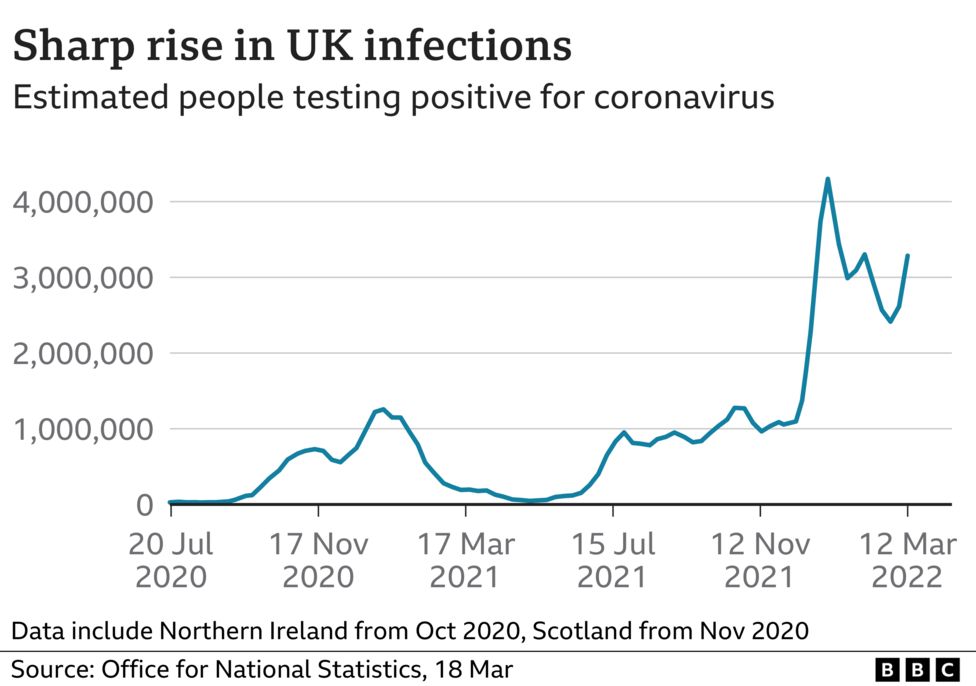
Covid cases have continued to rise in the UK, with an estimated one in every 20 people infected, figures from the Office for National Statistic suggest.

All age groups are affected, including the 75s and over, who are due a spring booster jab to top up protection.

Hospital cases are also rising, but vaccines are still helping to stop many severe cases, say experts.

An easily spread sub-variant of Omicron, called BA.2, is now causing most cases.

Recent easing of restrictions and waning immunity from the vaccines could be factors behind the rise too.

The ONS infection survey, which tests thousands of people randomly in households across the UK, estimates that 3.3 million people would have tested positive in the week ending 12 March – up from 2.6 million the previous week.

Record high

Scotland has seen infection levels rise for seven weeks in a row. They have now reached a new record high, with 376,300 people estimated to have had Covid last week, or one in 14.

Infection rates across the nations were:

  • England: 4.9%, up from 3.8% last week – approximately one in 25 people
  • Wales: 4.1%, up from 3.2% last week – approximately one in 25 people
  • Northern Ireland: 7.1% , down from 7.8% last week – approximately one in 14 people
  • Scotland: 7.15% up from 5.7% last week – approximately one in 14 people

It comes as the UK continues to lift previous Covid restrictions. As of Friday, people arriving in the UK will no longer need to take a Covid test, even if they haven’t been vaccinated.

It is part of the government’s Living with Covid strategy that relies on personal responsibility and mass vaccination to protect the public, rather than laws and limits on what people are allowed to do.

Scotland’s rules on face coverings in shops and on public transport will, however, remain in place until April due to the rise in Covid.

Sarah Crofts, head of analytical outputs for the Covid-19 Infection Survey, said Scotland was showing the highest level of infections yet.

“It’s notable also that infections have risen in all age groups, with the over-70s reaching their highest estimate since our survey began,” she added.

Prof James Naismith, Director of the Rosalind Franklin Institute, and Professor of Structural Biology, University of Oxford, said the high infection rates around the UK currently, with few Covid restrictions, meant that almost anyone could catch the virus.

He said: “My main concern is for the vulnerable for whom this disease is serious.

“Every effort must be made to triple vaccinate as many people as possible, quadruple vaccinate the most vulnerable.”

Public health expert Prof Linda Bauld told the BBC: “Let’s hope we are heading towards the peak or we are already at it in terms of infection because the problems in our hospitals are, once again, pretty acute.”

She said Scotland might soon be reaching a new high for Covid hospital admissions.

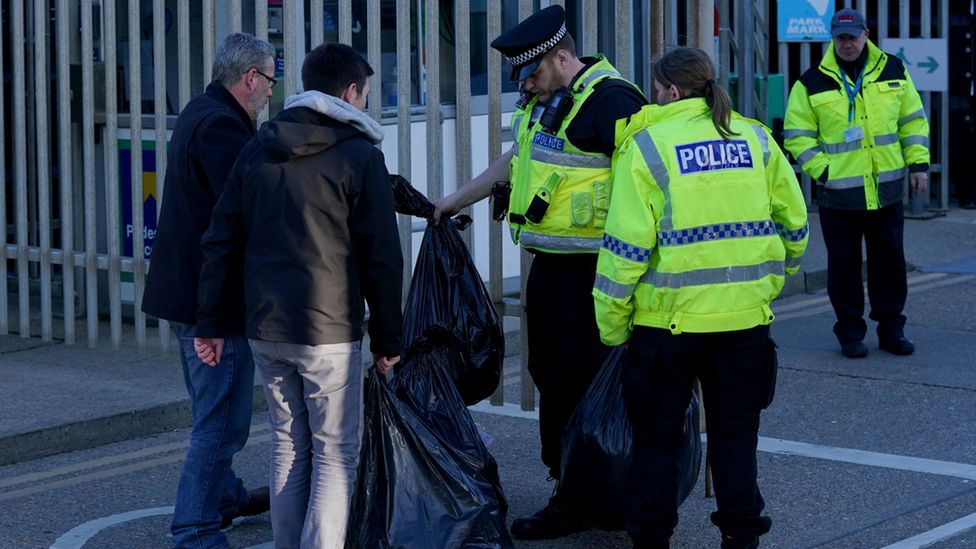
P&O Ferries staff are staging protests after the firm sacked 800 employees without giving them any notice.

The RMT and Nautilus unions are calling for action across the ports of Dover, Liverpool, Hull and Larne.

Nearly a quarter of P&O Ferries’ staff were told via a video message on Thursday that it was their “final day of employment”.

P&O said it was a “tough” decision but it would “not be a viable business” without the changes.

But unions have hit out against the dismissal, saying it marked a “dark day” in the shipping industry.

A chorus of cross-party MPs described P&O Ferries’ actions as “callous” and “disgraceful”.

The government is looking “very closely” at the action P&O Ferries has taken to see if they broke any laws after it fired its employees, planning to replace them with cheaper agency staff, it said

The RMT union labelled the move one of the “most shameful acts in the history of British industrial relations”.

Its national secretary Darren Procter told a crowd of about 250 demonstrators in Dover: “We’re going to make sure our workers get back onboard their vessels.”

P&O Ferries worker Andrew Smith said he felt “utter dismay” after working for the company for 22 years.

“It’s our lives,” he said. “It’s how our families have grown up, knowing that this is what we do, and it’s just been turned on its head within a matter of hours.”

Mark Dickinson, general secretary of the maritime trade union Nautilus, told the BBC: “It’s absolutely ripped the guts out of everybody.”

“I’ve seen some curveballs and some shocking developments over that time… but for a company to treat the legal process in such an underhand and callous way has shocked me.”

Both the RMT union and Nautilus International are seeking legal advice on the dismissal.

The transport union TSSA called on the government to “take over running vital ferry routes to safeguard trade and travel”, and “hit [P&O] where it hurts” over the “shocking events”.

Holly Cudbill, an employment lawyer from Blake Morgan, said that P&O Ferries’ actions “were almost certainly illegal”.

Although its boats sail around the world, she believes the firm’s employees are covered by UK law.

In that instance, P&O Ferries should have consulted with unions and staff about potential dismissals and notified the government that hundreds of jobs were at risk, she told the BBC.

Sacked staff said the video message had referred to a “generous severance package” being offered, but no details were given.

‘Assault on workers’ rights’

Maritime minister Robert Courts said he was “frankly angry at the way workers have been treated”. He told the House of Commons P&O Ferries’ actions were “wholly unacceptable”.

“Reports of workers being given zero notice and escorted off their ships with immediate effect while being told cheaper alternatives would take up their roles, shows the insensitive nature by which P&O approached this issue,” he said.

He added that he did not expect critical goods and services to be hit by the sudden drop in capacity, but travellers “should expect some disruption over the coming days”.

The company has said services are unable to run over the next few days.

In a letter to the prime minister, Labour’s Shadow Transport Secretary Louise Haigh described the firing as a “despicable assault on workers’ rights”.

“But British seafarers do not need meaningless platitudes – they need action,” she added, demanding that government suspends any contracts it holds with DP World – P&O Ferries’ owner.

Former transport minister Sir John Hayes also suggested the government should “recover any monies granted to P&O during the pandemic” in a bid to reverse their decision.

P&O Ferries claimed almost £15m in government grants in 2020, which included furlough payments for its employees.

The firm said on Thursday that the decision to lay-off 800 workers was “tough” but said the business would not be viable without “making swift and significant changes now”.

It said: “We have made a £100m loss year-on-year, which has been covered by our parent DP World. This is not sustainable. Without these changes there is no future for P&O Ferries.”

But the move was also condemned by the Archbishop of Canterbury and the Bishop of Dover in a joint statement, which described the sackings as “inhumane and unethical”.

“Ill-treating workers is not just business. In God’s eyes it is sin,” they said, calling for support for a consultation.

P&O Ferries is one of the UK’s leading ferry companies, carrying more than 10 million passengers a year before the pandemic and about 15% of all freight cargo in and out of the UK.

It was bought by DP World, the multi-national ports and logistics company based in Dubai in 2019. At the time of purchase, its chairman Sultan Ahmed Bin Sulayem described it as a “strong, recognisable brand”.

It paid a £270m dividend to shareholders in 2020.

However, like many transport operators, it saw demand slump in the pandemic. Just a couple of months after the dividends announcement, it said it would cut 1,100 jobs after a downturn in bookings.


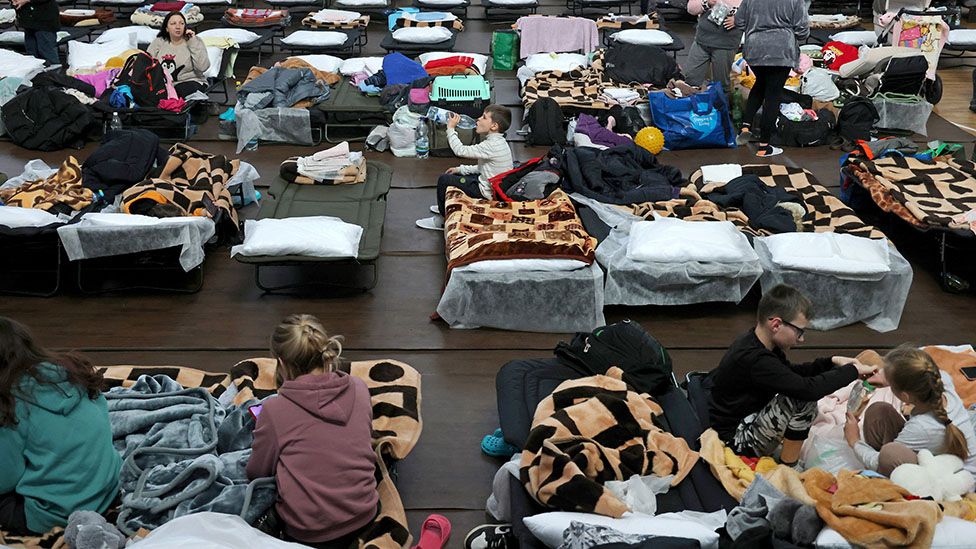
British people hoping to host Ukrainian refugees in their own homes need urgent clarity on how to do so, charities say.

More than 150,000 people have registered interest in the government’s Homes for Ukraine scheme, which is due to launch fully on Friday.

But the visa process cannot be started until potential hosts have the names of specific refugees they want to help.

In the meantime charities say they have been “deluged” with calls from people wanting advice on finding a match.

Meanwhile, the government is warning potential hosts not to link up with refugees through informal channels, such as social media.

“Our advice would be to stick to community groups and councils as they’ve got the expertise,” one member of the government’s Department for Levelling Up told the BBC.

The department said details about the matching up process would be published on Friday.

Local councils are expected to be leaned on heavily to help support refugees arriving to the UK, and the government hopes charities, businesses and faith and community groups will help the effort to match people up.

About 70 Ukrainian refugee families have already registered with Robina Qureshi’s refugee hosting programme, Room for Refugees – which also helps people fleeing many other countries.

But she says her charity’s rigorous security checks and vetting processes are being slowed down by an inundation of calls and emails they’re getting from members of the public seeking clarification about how to match up with a refugee.

“Right now every day is time wasted, and that’s what I find quite upsetting,” Ms Qureshi told the BBC.

She said she had been disturbed by some specific requests to “only host Ukrainians” rather than refugees of other nationalities who are also vulnerable.

Ms Qureshi said she appreciated the “goodwill” of those who had registered their interest with Homes for Ukraine, but added: “We haven’t got the infrastructure to deal with inane comments and questions.”

Other organisations that work with refugees have voiced confusion and reluctance to be involved in helping with the government scheme.

West London Welcome said it was not yet referring people to Homes for Ukraine because it was “not confident” in the government’s vetting process.

And a spokeswoman for IMIX, working on behalf of Reset UK, said it was “unclear currently how this matching process will work”.

Andy Hewett, head of advocacy at the Refugee Council, said the scheme could be “too slow and complex” to help the most vulnerable refugees.

He said the government must match the “incredibly heart-warming” public generosity with a scheme “that really works” for people fleeing Ukraine.

“We continue our plea to government to waive all visa requirements for Ukrainians – just as our EU neighbours have – so that all those who want to come to the UK can do so quickly,” he added.

Labour has welcomed the scheme but urged the government to be more involved in the matching-up process.

“The biggest barriers are excessive bureaucracy and the DIY nature of this scheme,” said Lisa Nandy, shadow levelling up and housing secretary.

“The government needs to cut unnecessary paperwork and play an active role in matching sponsors to refugees.”

Mariana Zlahodniuk spent days trying to persuade her mother, Olena, to get out of Ukraine.

“She wouldn’t come, was adamant in fact,” says Mariana, a 27-year-old marketing and business adviser from Ukraine, based in the Polish capital since 2012.

The pair’s hometown of Zhmerinka, in central-southern Ukraine, is a strategic railway point and the frontline of the Russian invasion is edging closer.

Mariana’s phone calls became more desperate, until, finally, Olena decided to make the hazardous journey to cross the border to safety in Poland.

Olena’s mother, Mariana’s 73-year-old grandmother, meanwhile, is left in their house in the small town. “She calls me every day and tells me to come home and tend to the garden,” Olena adds.

Mariana eventually picked up her mum on the Polish side of the border on 26 February after a complicated journey – half of it on a slow train to Lviv with the lights turned off – to avoid attracting attention from the Russian military forces.

“I will go home as soon as I can and will do what I can to help, for example cooking for the soldiers,” Olena says, when we meet in a cafe in Warsaw. “I will have to hide her passport,” Mariana laughs.

Support at the border

When she arrived to collect her mother, Mariana says she was immediately struck by the lack of food and help available for the stream of refugees crossing at the border town of Korczowa and decided to act.

After phoning round her friends in the marketing and business community, she was quickly overwhelmed by offers of help.

She joined forces with an Afghan refugee-turned-restaurant owner, Harry Parwani, a friend from Krakow. His catering company, Vegan Ramen AF, has stepped in with its portable kitchen to help provide free food for up to 8,000 people a day at the border.

A Swiss investor then also funded more than €10,000 ($11,000; £8,398) of food shopping, and Mariana spent about 10,000 zlotys ($2,357; £1,765) of her own money supporting the work before charity organisations stepped in.

Mariana now employs 20 people as cooks and helpers, providing transportation and running a hotel. Shifts rotate every three to four days as the work is gruelling and some refuse to be paid, she says.

“Bakers sell me bread below market prices, firms bring in the food for free, companies offer free transportation and drivers. It’s an extraordinary effort.”

‘We want to provide support at all stages’

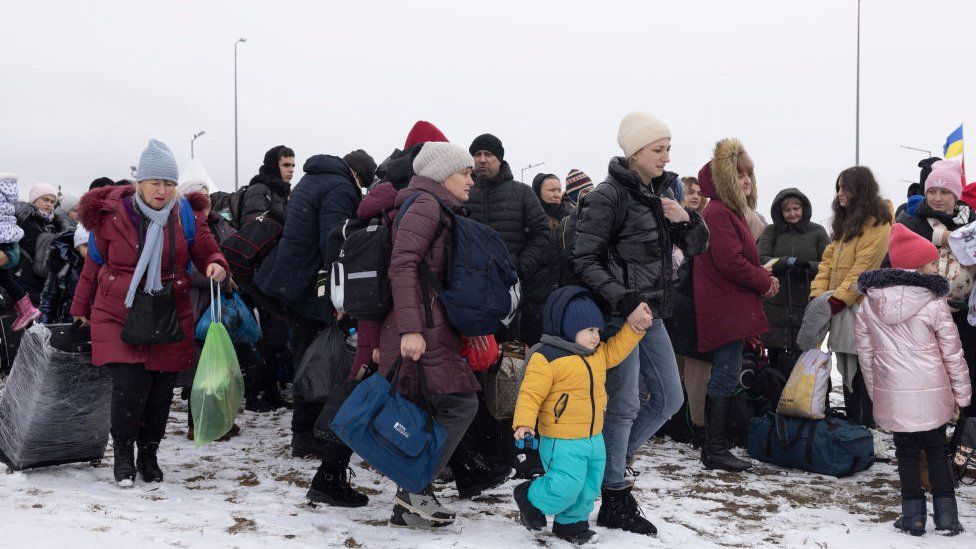
Polish businesses have mobilised quickly to help refugees. Two million have already arrived here.

“We will help as long as it will be required,” says Krzysztof Inglot, founder of Poland’s largest recruitment firm, Personnel Service.

“We know that refugees at different stages of their stay in Poland will need different support. At the beginning, it is mostly transport, accommodation, and psychological support. The next stage is settling down, finding work and integration with Polish society. We want to provide support at all these stages,” he says.

National railway company PKP Intercity is offering free travel for refugees, while Maciej Panek, chief executive of vehicle hire firm Panek has donated 1,000 rental cars to transport people away from the border.

Transport firm FlixBus, meanwhile, has provided refugees with free buses on routes from the border. The company also joined UA Talents – a jobs platform launched by two Berlin-based Ukrainian entrepreneurs that will help refugees find jobs.

Meanwhile, Poland’s largest private healthcare company, Lux Med, has offered urgent free medical assistance to refugees. And mobile phone operators Play, Orange, Plus and T-Mobile are reducing the costs of telephone calls to the main Ukrainian operators, Kyivstar, Vodafone and Lifecell.

Helping the refugees sort out their finances will also become an important part of support – banks in Poland have already removed fees for money transfers to Ukraine and commissions for cash deposits and ATM withdrawals.

Mr Inglot is optimistic, he says his recruitment company data suggests the labour market in Poland could absorb 500,000 employees within the next six months and another 200,000 after that, due to an acute shortage of workers in many sectors.

“We estimate that about 30% have travelled to other countries, so can say about half a million people may want to join the labour market. That is good news for employers who need employees,” he says.

Michael Dembinski, chief adviser to the British Polish Chamber of Commerce (BPCC), agrees. “Our members have been held back by a lack of workers in Poland.” He describes an outflow of men from sectors such as construction, logistics and IT, but is hopeful hospitality, retail, the care sector, agriculture and horticulture will now gain more staff.

Smaller firms

This rapid response has not been limited to the biggest companies: smaller firms are also pitching in. HerImpact, a recruitment agency in Warsaw, is working for free to help women arriving from Ukraine create new CVs, apply for jobs and translate documents into Polish and English, says chief brand officer Dionizy Wincenty Placzkowski.

“Many Poles have opened their hearts and houses to provide support to people in need,” says Agata Zeman, managing director of the 24/7 media agency in Warsaw. The agency has donated part of its office to Flying Bag Foundation which is helping refugees, especially teenagers, organise their lives in Warsaw. “I am proud of our people, who from the first minute, were united in solidarity and support for Ukraine. Like many other firms, we have given our team time to volunteer.”

A Polish foundation that connects IT companies with non-governmental organisations – TechForUkraine – was launched the day before Russia’s invasion and within two weeks had 450 firms signed up and 30 projects launched.

“IT companies have these ‘superpowers’ and want to use them for good,” says Jacek Siadkowski, director of TechForUkraine. “Young people coming into the sector in Poland often work on strategies for selling sausages or something, and this campaign really galvanised them.”

Mr Siadkowski says TechForUkraine is working on an “Airbnb-style” web platform, to help Ukrainians find accommodation. He says the platform called, uaSOS.org, is being created by a coalition of firms including The Boston Consulting Group, Amazon Cloud Services, Orange and Salesforce.

Ties between UK and Poland

Mr Dembicki says many of the BPCC’s members – one third are large UK-based businesses investing in Poland – have pledged some kind of support, some financial. He says many of the UK’s 52 chambers of commerce also want to help, offering English language lessons online.

“As soon as we heard about the war in Ukraine, I asked friends to start a collection of humanitarian aid, so together with Katarzyna Mazurkiewicz and volunteers we organised it,” says Irina Nowosielska from the Polish British Social Integration Club, Wawel, a charity based in West London.

“There are a lot of good people around. It’s just unbelievable how many people help us to help Ukraine,” Ms Nowosielska says.

Back in Warsaw however, Olena Zlahodniuk, is already itching to go home. “I am extremely grateful to the Polish people for helping, but this is our fight and we will win,” she says.

Russian missiles have hit an aircraft repair plant near Lviv in western Ukraine, a city that has become a safe haven for people fleeing the war.

Emergency vehicles raced to the site of the strike, just 6km (four miles) from the city centre, after three loud explosions were heard early on Friday.

No-one was injured in the attack.

It is the closest the conflict has come to Lviv, a key humanitarian supply route and a hub for hundreds of thousands of people who have fled.

Western Ukraine has so far been quieter than the rest of the country. Russia launched its invasion on three fronts – from the north, east and south – leaving cities such as Lviv relatively unscathed.

But there are signs that may be changing, after Friday’s strike and a deadly missile attack on a military training base outside the city on Sunday.

“There have been air raid alarms here every morning, but now the strikes are actually landing,” Valentin Vovchenko, 82, told the AFP news agency from Lviv. “We fled Kyiv because of the attacks but now they’ve started to hit here.”

The city’s mayor, Andriy Sadovy, confirmed that the military aircraft maintenance facility had been destroyed by cruise missiles.

The facility, which was not in operation at the time, is only a short distance from the Danylo Halytskyi International Airport. Mr Sadovy, however, said the airport itself had not been hit.

Ukraine’s air force said six cruise missiles had been fired in total from the Black Sea. Two of them were destroyed by anti-aircraft missiles.

“The Russians are going for the infrastructure that is keeping Ukrainian aircraft in the air,” Prof Michael Clarke, the former director of the Royal United Services Institute (RUSI) think tank, told the BBC.

Lviv is just 80km from Poland, a country that has taken in more than two million Ukrainians who are seeking refuge from a conflict that has destroyed homes and upended lives.

Prof Clarke said that, given the facility’s proximity to the Polish border, the strike could be seen as “an attempt to frighten the West out of helping Ukrainians as much as they have been”.

Unlike its indiscriminate shelling of Ukrainian cities, Russia appears to be using its long-range precision weapons – like cruise missiles – to hit specific military sites.

And the target list appears to be expanding to the west of the country. It’s likely this facility was used to maintain Ukraine’s dwindling number of older fighter jets.

The fact that Russia is using long-range missiles illustrates another important fact – one that has surprised many military analysts. So far, Russia has failed to gain supremacy in the air. Western officials say Ukraine’s air defences have been a key reason for that.

But as this attack shows, Russia recognises that it needs to degrade those air defences. Not just by targeting them directly, but also by destroying ground-based missiles batteries which are being used every day of this war.

Ukraine no doubt needs more supplies. One Western intelligence official told the BBC that Kyiv has been “very specific” in requesting more air defence ammunition – including for its older long-range air defence systems. The official said they are needed in large quantities because of the sheer number of Russian aircraft.

“It is very much a part of war that you go after each other’s supply lines,” UK Armed Forces Minister James Heappey told the BBC. “But the reality is this development will be a concern for people living in the west of Ukraine.”

He added that the UK was in the process of training up Ukrainians to use Starstreak anti-aircraft missile systems, which he said would arrive in the country imminently.

Several major cities also faced fresh aerial attacks on Friday.

In the eastern city of Kharkiv, one person was killed and 11 were injured when a university building and two blocks of flats were shelled.

Further south, in Kramatorsk, two people were killed and six were injured in a missile attack. And in the capital Kyiv, one person was killed after a downed missile exploded in a residential neighbourhood.

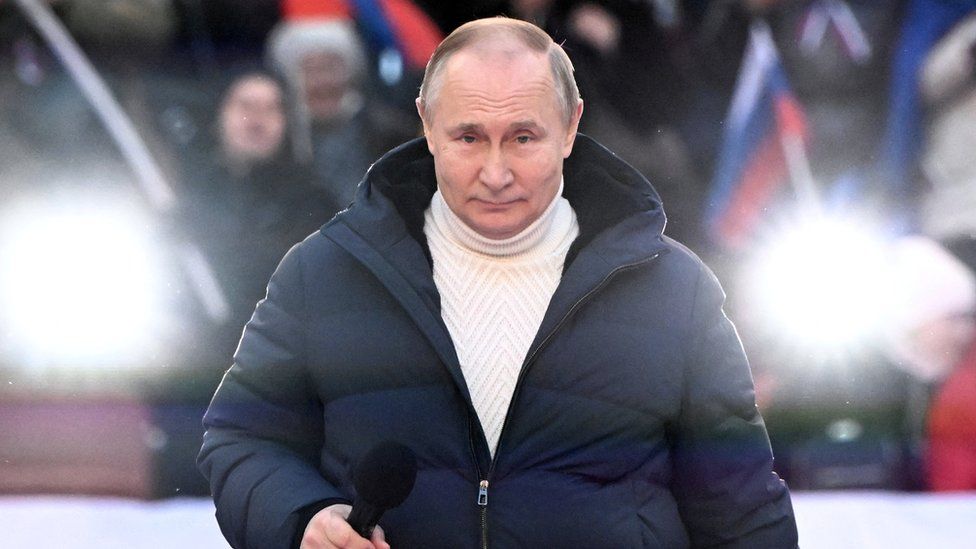
Eight years after Russian troops seized Ukraine’s southern region of Crimea, the event is being celebrated with flag-waving crowds in Moscow’s Luzhniki stadium and special lessons in schools.

President Vladimir Putin made a special appearance before the crowd.

State workers said they had been told to take part. In schools, teachers held lessons marking the “Crimean spring”.

The Russian army has used its bases in Crimea to seize towns and cities on Ukraine’s south coast.

Mr Putin has regularly used the anniversary to highlight love of the motherland.

Officials said more than 200,000 people had gathered at the stadium, although the numbers could not be verified. He told the crowd: “We know what we have to do next… we’ll definitely carry out all the plans we have made.” But his address on state TV suddenly cut to singer Oleg Gazmanov belting out the words “Forward, Russia”, in what the Kremlin later called a technical glitch.

Moscow Mayor Sergei Sobyanin also addressed the event along with top state TV journalist Margarita Simonyan and foreign ministry spokeswoman Maria Zakharova.

At the stadium

By Will Vernon, BBC News Moscow

I spoke to dozens of people queueing to enter the venue for the pro-Kremlin rally.

Many told the BBC they worked in the public sector, and that they had been pressured into attending by their employers.

One man who works in the Moscow metro, told us that he and other employees had been forced to attend the rally.

“I’ll be here for a while and then I’ll leave… I think most people here don’t support the war. I don’t,” he said.

Many people didn’t want to be filmed or answer questions.

Students told us they had been given the option of a day off from lectures if they attended “a concert”. Some of the students we spoke to didn’t even know that the event was dedicated, in part, to support the war in Ukraine.

There were doubtless some people in attendance who genuinely support President Putin and the “special military operation in Ukraine”, as the Kremlin prefers to call it.

line

Special lessons on the war entitled “My Country” began at the start of March, for students in the final six years of school. Pupils were played a video of Mr Putin from 21 February, in which he detailed his vision of Ukraine’s history, BBC Russian reports.

Photographs emerged earlier this week of children lining up to form the letter Z, a symbol painted on Russian military vehicles that have invaded Ukraine.

The education ministry then sent out lesson plans specifically geared to 18 March, the date that Russia annexed Crimea after an internationally discredited referendum.

According to a memo sent to schools by the education ministry, lessons for children in Years 6-8 (12-15 year-olds) should focus on “heroes of our time… to help form a stable and grounded understanding of the feeling of patriotism”.

Pupils were to be asked to sit in a circle to hear an explanation of how ideas of “duty, dignity and patriotism are inextricably linked with the concepts of exploits and heroism”. Teachers would then show a video to show that people with military roles were more likely to become heroes than anyone else.

A separate video was sent out to schools giving Russia’s version of the events surrounding the annexation of Crimea.

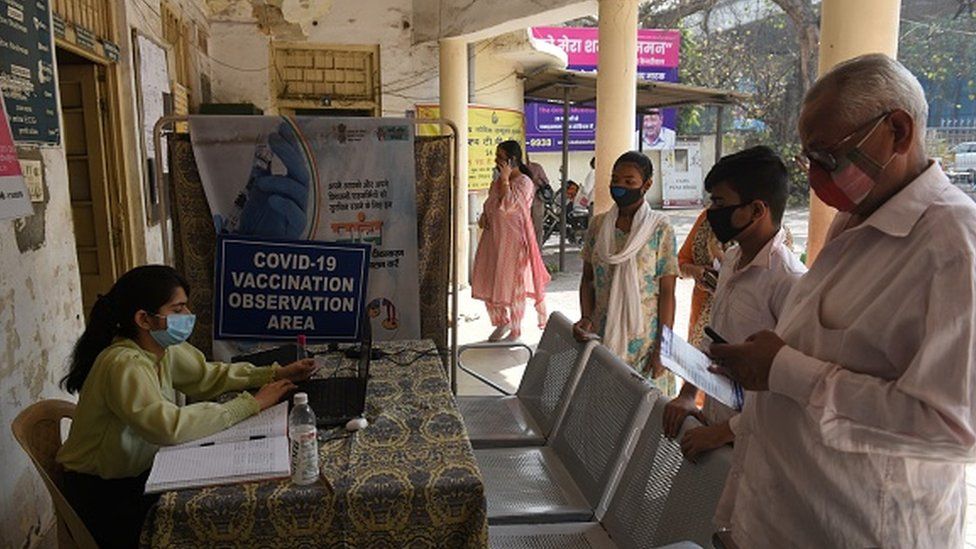
India has begun giving the coronavirus vaccine to children aged between 12 and 14 years, weeks after it reopened schools.

The new group will be administered Corbevax, the country’s third homegrown vaccine.

India also expanded its booster dose programme by removing a restriction related to comorbidities.

The change will allow everyone above 60 years of age to get a booster shot.

The country has administered over 1.8 billion vaccine doses since its vaccination drive began in January 2021.

About 90% of adults have received both doses and more than 99% have been partially vaccinated so far.

In January, the country began giving booster shots to healthcare and frontline workers, and those above 60 with comorbidities.

Since then, more than 10 million healthcare and frontline workers and another 10 million people aged above 60 have received booster shots, official data shows.

A vaccine programme for 15- to 18-year-olds also began in January – more than 75% have received the first dose.

So far, India has reported nearly 43 million Covid cases, second only to the US, and more than 515,000 deaths – behind the US and Brazil.

The country is currently reporting cases around the 3,000-mark every day. It had grappled with a third wave, fuelled by the Omicron variant, in January

The rollout

India had a slow start when vaccinations were opened for some 960 million eligible people in January 2021.

Logistical problems, supply bottlenecks, vaccine hesitancy and a debilitating second wave of Covid-19 during this period made the rollout harder.

But as the situation eased, it managed to ramp up coverage, with tens of thousands of public and private health facilities offering the jab.

The country delivered vaccines by drone to far-flung villages in north-east India’s mountainous regions.

Drones were also used to ferry doses to the eastern archipelago of Andamans and Nicobar where “transportation by boat” was taking a long time.

Though the programme missed its first, over-ambitious deadline of universal adult vaccination by 31 December 2021, it has hit some milestones.

On 17 September, India administered more than 20 million doses in a day in a record-breaking effort to mark Prime Minister Narendra Modi’s 71st birthday.

In October, it crossed the one billion mark, becoming the second country after China to do so.

Which vaccines is India using?

India is currently using four vaccines – the Oxford-AstraZeneca jab, known locally as Covishield; Covaxin by Indian firm Bharat Biotech; Russian-made Sputnik V and now Corbevax.

Covishield has accounted for over 90% of the doses given to adults so far.

Corbevax, which is a protein-based vaccine manufactured by Biological E, got emergency use authorisation from India’s drug regulator on 21 February 2022 for the age group of 12-18 years.

The government had also authorised Indian pharma company Cipla to import Moderna’s vaccine, which has shown nearly 95% efficacy against Covid-19. But doses of these are yet to be made available to India.

In February, it also approved a new single-dose vaccine, Sputnik Light, a component of Sputnik V.

Have there been ‘adverse events’ after vaccination?

People can experience side effects from vaccines.

India has a three-decade-old surveillance programme for monitoring “adverse events” following immunisation. Experts say a failure to transparently report such incidents could lead to fear-mongering around vaccines.

The government told the Supreme Court that the country reported more than 772,000 “adverse events” after vaccination as of 13 March 2022. This included “minor, serious and severe events”.

The serious cases were “minuscule in number; where vaccines may or may not be the cause of death”.

The government has previously said adverse effects may not necessarily be caused by the vaccines, adding that “the risk of dying following vaccination is negligible compared to the known risk of dying due to Covid-19 disease”.