
“Labour has changed” – that’s the headline message Keir Starmer’s party have been shouting since the start of the year.

That change means a key threat to the Conservatives, who know that controversies surrounding Labour’s former leader Jeremy Corbyn played into Boris Johnson’s landslide victory in the general election in 2019.

That is why, politically, this week matters.

Two Labour parliamentary candidates, Azhar Ali and Graham Jones, have been suspended. In the case of Mr Ali, it is for apparently making antisemitic remarks at a meeting attended by local Labour politicians.

The hurt caused by antisemitism is obvious, and there is concern about community tensions that are potentially inflamed by the recordings published.

The whole saga is a reminder of the Labour Party’s recent past, which the leadership would like to remain firmly in the past.

And as the key agent of that change, this crisis thrusts Keir Starmer’s leadership into the spotlight in a week that “has not been the party’s finest hour” (to quote Mike Katz, the national chair of the Jewish Labour Movement).


Sir Keir made it a personal pledge to eradicate antisemitism from the party. His initial decision not to suspend Rochdale candidate Mr Ali drew on the support he has earned in recent years among the Jewish community.

The party is trying to claim that Sir Keir moved “swiftly” once new revelations about Mr Ali’s comments came to light. Sir Keir has described his eventual decision as “virtually unprecedented”.

But there is frustration in the shadow Cabinet and several Labour MPs believe he should have moved more quickly, raising questions about their leader’s judgement. It was always highly likely that more allegations were going to come to light, and the story was allowed to dominate the news cycle for almost 48 hours before the party withdrew its support.

There are parallels with the party’s announcement last week that it was dropping the £28bn price tag on its programme of green investment.

Uncertainty had been swirling for weeks before the decision eventually came.

Critics of Sir Keir point to a national Savanta poll released on Wednesday morning, which found the Labour lead over the Conservatives fell by seven points in the aftermath of that decision – though it is important not to draw conclusions from just one poll.

Other opinion polls have had the gap between the two parties widening and Labour remain on course for victory in the forthcoming general election as they have consistently over the past year.

It is too soon to know what impact this week has had on voters’ views of the leader.


If Keir Starmer does become the next prime minister, the judgement calls he has faced this week may pale in comparison to the decisions he could have to take on behalf of the country.

Whether this is damaging will depend on what message voters take from this whole situation: do they see leadership and tough decisions, or do they see delay and division?

Some will be encouraged that Keir Starmer has taken action to stop supporting a candidate in a by-election the party had a good chance of winning.

Others will be alarmed that antisemitic views continue to exist within the party despite his efforts, and don’t appear to have been reported by those present.

And while it redoubles efforts to eradicate antisemitism, the party has to be sensitive to those voters who want it to go further in its criticism of Israel. The SNP have announced they’ll call for a fresh vote on an immediate ceasefire in Gaza when Parliament returns next week – an issue that has already caused challenges for Labour.

Meanwhile, the Conservatives, themselves hardly united, are keen to make the most of any opportunity to highlight the challenges Labour is facing.

There are by-elections in Kingswood and Wellingborough taking place on Thursday. Both of them were Conservative-held seats. The Labour Party is hoping wins there will help them to change the narrative once again.
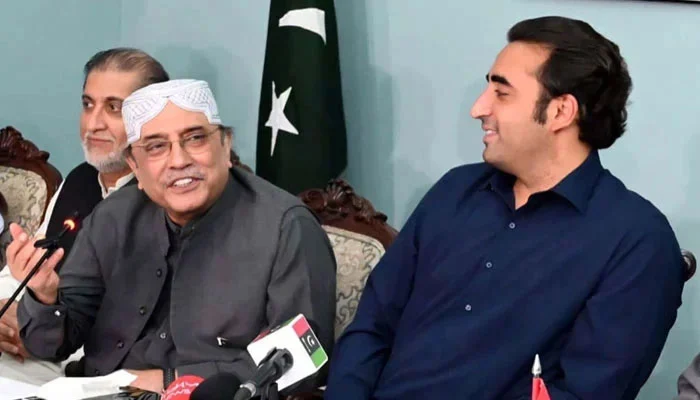
Are Zardari, Bilawal at odds with each other?

Tuesday night saw leaders of major political parties in a multi-party news conference in Islamabad including Pakistan Muslim League-Nawaz (PML-N) President Shehbaz Sharif, Pakistan Peoples Party (PPP) Co-chairperson Asif Ali Zardari, Pakistan Muslim League-Quaid (PML-Q) President Chaudhry Shujaat Hussain.

The leaders stated that all political parties, including Imran Khan-founded Pakistan Tehreek-e-Insaf (PTI), should work together for the country.

Conspicuous in his absence was PPP Chairman Bilawal Bhutto-Zardari, this being more pronounced since he had announced earlier in the day that the PPP would only help the PML-N get its premier elected and provide the necessary support to legislative business on an issue-to-issue basis.

Bilawal had also rejected the idea of going for a “PDM-2” government and announced pulling out of the candidacy for the prime minister’s post.

Are the father and son at odds with each other over the coalition issue or are they playing good cop-bad cop?

When asked, a senior PPP leader did not agree with the two propositions, saying nothing is intriguing in all this and the matter is a bit technical. Requesting anonymity, the PPP leader said that Asif Zardari is the president of PPP-Parliamentarians and his presence in the press conference to announce the coalition was quite appropriate.

When reminded that in the past, Bilawal had talked about discarding the politics of babas (elders), something that clearly indicated a difference in both leaders’ political views, the PPP leader said that Zardari, in an interview with Geo anchorperson Hamid Mir, had asserted his authority as PPP-P president.

He said that if at all there was a difference of opinion between the two leaders, it was ideological or strategic, and not tactical. According to this PPP leader, this is in fact healthy, as its synthesis will help the party grow. If the nation has thrown up a split mandate, a coalition with other parties is the need of the hour, the leader added.

When asked why Shehbaz Sharif’s name was not announced in the press conference and was revealed through a message on X (formerly Twitter), while Maryam Nawaz was named as a candidate for the Punjab chief minister’s office, a PML-N leader claimed, also on condition of anonymity, that the coalition had left it to the PML-N to name its candidate for the PM. He disagreed with the notion that Shehbaz knew he was going to be named as he expressed his desire for Nawaz Sharif to be the premier.

Meanwhile, on Geo’s special transmission on Tuesday night hosted by Shahzad Iqbal, journalist Hamid Mir said that the PML-N had already decided that Shehbaz would be the prime minister and the PPP had also decided to support a Shehbaz-led PML-N government. According to Mir, Bilawal’s press conference on Tuesday was a reflection of the decisions taken in the CEC meeting.

In the same programme, the PML-N’s Rana Sanaullah told Shahzad that Shebaz had the experience and the skill to negotiate a coalition government. He also said that the PPP and other parties should join the government.

Calling Zardari a wise politician, the PML-N leader said that the PPP would be part of the government with or without ministries but also clarified that neither had the PPP asked for the presidency slot nor had the PML-N made any such commitment.

Clarifying that there is no difference between the stance of Bilawal and Zardari, the PPP’s Faisal Karim Kundi told Shahzad in the same programme that the PPP will back the PML-N for the prime minister’s slot, will help with legislation, will vote down legislation it thinks is unfit and will form governments in Sindh and Balochistan.

He said that with or without the PML-N’s support the PPP will be contesting for the positions of the president, the chairman of Senate, and the speaker of the National Assembly.

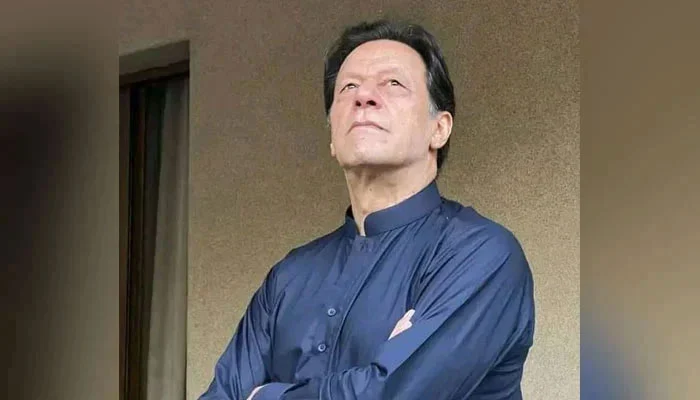
Imran Khan warns against ‘misadventure’ of forming govt with ‘stolen votes’

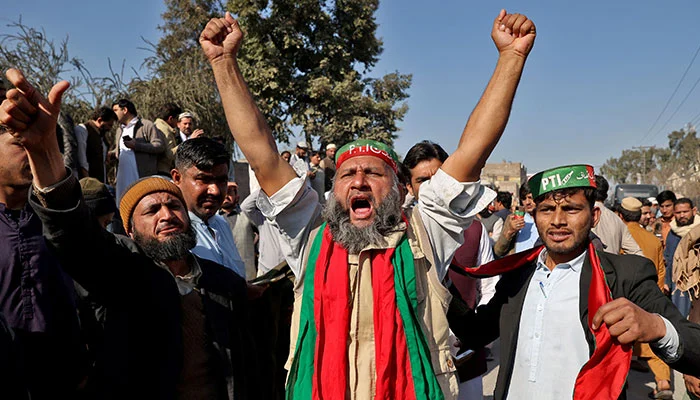
With the PPP and PML-N apparently “agreed” on coveted slots of prime minister and president, the Pakistan Tehreek-e-Insaf (PTI) Tuesday warned against the “misadventure” of forming a government with the “stolen votes”.

Earlier today, PPP Chairman Bilawal Bhutto-Zardari announced backing the PML-N’s candidate for the prime minister’s slot, adding that his party would not be a part of the federal government.

Addressing a press conference, Bilawal said he was withdrawing from the candidacy for prime minister’s post as “the PPP doesn’t have the mandate to form the federal government”.

Taking to X, formerly known as Twitter, Khan, in his message from Adiala Jail through his family, cautioned against forming the next government with a “stolen” mandate.

“Such daylight robbery will not only be a disrespect to the citizens, but will also push the country’s economy further into a downward spiral.”

His remarks come as PTI-backed candidates have emerged as the largest group by winning over 90 National Assembly seats followed by the PML-N and the PPP with 75 and 54 seats, respectively.

Khan further said that the PTI would never compromise on people’s will;

“I have categorically instructed my party against engaging with any political party that has robbed people’s mandate, including PPP, PMLN & MQM-P.”

He expressed his heartfelt gratitude to the people for entrusting the PTI with a resounding “two-third majority”.

“It was heartening to see the massive turnout. The families voting together, including women and children—truly exemplified the essence of democracy,” he added.

“As the people of Pakistan have clearly pronounced their verdict, there is a dire need for democracy and fairness in Pakistan’s elections,” he added.

Khan especially commended PTI’s social media team for its relentless efforts to stay ahead of the curve.

He also appreciated the role of the resilient polling agents who secured Form 45 in the face of “harassment and threats”.

‘Former PDM partners are staging new play’

As power politics is in full swing to form the new government in the Centre, the PTI, earlier today, came down hard on Bilawal’s press conference, saying that the “nation cannot be fooled by the PPP and the PML-N’s political drama of being opponents.

Responding to the PPP’s decision, the Imran-led party alleged that the former Pakistan Democratic Movement (PDM) partners were staging a new play to deceive the nation after the February 8 nationwide polls.

“Asif Ali Zardari’s son would have been accepting PTI’s mandate and condemning the dishonouring of votes instead of forging nexus with ‘pirates of Jati Umra’,” an official statement issued by the former ruling party read.

PTI to join hands with MWM, JI

The PTI has claimed that the former ruling party, upon directions of its founder, will join hands with Majlis-e-Wahdat-Muslimeen (MWM) to form its governments in Centre and Punjab.

Speaking to the media in Islamabad today, PTI spokesperson Raoof Hasan said that the former prime minister, while ruling out the prospects of any talks with the PML-N, PPP and MQM-P, directed the party to form a coalition with Jamaat-e-Islami (JI) in Khyber Pakhtunkhwa (KP) over reserved seats.

However, JI leader Professor Ibrahim Khan has denied reports of any alliance with the PTI, saying that there are no moral grounds for the latter to use his party’s name.

Shehbaz Sharif asks PTI to show majority

PML-N President Shehbaz Sharif has said that independent candidates backed by the PTI can form a government in the Centre if they have the required number of seats in the NA.

“If PTI-sponsored candidates can show majority [in the National Assembly] then they are welcome to form a government,” he said while addressing a press conference in Islamabad today.

The PML-N president said his party is ready to sit in opposition if PTI-backed candidates can establish their majority in the lower house of parliament.

“We will accept them [PTI government] happily if they fail to [form government] then we will use our Constitutional and legal right,” the PML-N president said.

Khan picks Gandapur for KP CM slot

The PTI founder nominated former federal minister Ali Amin Gandapur as his party’s candidate for Khyber Pakhtunkhwa’s chief minister.

“KP’s chief minister will be Ali Amin Gandapur,” said the former prime minister while speaking to journalists in jail, where he is currently incarcerated in a number of cases.

Khan, whose party secured 84 seats in the KP, is in a pole position to form the government.

ECP notifies victories of Sharif family, other party members

As per the ECP’s notification the former prime minister has been declared a returned candidate from NA-130 (Lahore), his younger brother Shehbaz Sharif from NA-123 (Lahore), daughter Mar­yam Nawaz from NA-119 (Lahore) and nephew Hamza Shehbaz Sharif from NA-118 (Lahore).

The piecemeal issuance of notifications for publication in the official gazette in deviation of the tradition made many to wonder if those declared successful have submitted details of the election expenses with the Commission.


Similarly, PML-N’s Attaullah Tarar was declared successful from NA-127, Lahore.

Under Section 98 of the Elections Act, 2017, after receiving final result from the returning officer, the commission, within 14 days from the polling day, shall publish the name of the winning candidate in the official gazette.

The law, however, says “every returned candidate shall, within ten days from the poll of an election, submit a return of election expenses under section 134 and the Commission shall not notify in the official Gazette the result of a returned candidate who fails to submit his return of election expenses”.

The commission has also declared PML-N leader Attaullah Tarar a winner from NA-127 (Lahore) and Muhammad Awn Chaudhry of IPP from NA-128 (Lahore).

Others whose victory notifications as members of the National Assembly have been issued include Nasir Iqbal Bosal from NA-69 (Mandi Baha­uddin), Chaudhry Armag­han Subhani from NA-70 (Sialkot), Khawaja Asif from NA-71 (Sialkot), Ali Zahid from NA-72 (Sialkot) and Nousheen Iftikhar from NA-73 (Lahore). All five belong to PML-N.

ECP has also notified the victory of PML-N provincial president from Khyber Pakhtunkhwa (KP), Ameer Muqam, from NA-11 (Shangla).

The commission has also issued notifications of some winners of provincial assembly seats from KP and Balochistan. ECP has also issued a notification for polling at six polling stations of NA-43, Tank-cum-D.I. Khan on February 17.

The commission said that polling at these stations could not be held on February 8, owing to bad law and order situation.

In this connection, necessary instructions have been issued to the chief secretary and KP IGP and the law-enforcement agencies, it said.

Gaza truce talks open as Erdogan due in Cairo today

CAIRO: Officials from the US, Egypt, Israel and Qatar met in Cairo on Tuesday in another bid to agree a Gaza truce as calls grew for Israel to hold back on a planned assault on the enclave’s southernmost city, crammed with over a million displaced people.

Renewed efforts were underway to secure a truce in a war whose impact has rippled across the Middle East. Egypt’s state-linked Al Qahera News said talks had begun involving US, Qatari, Egyptian and Israeli officials.

CIA director William Burns met Mossad chief David Barnea in Cairo for a new round of talks on a Qatari-brokered plan to temporarily halt fighting in exchange for Hamas freeing hostages. The two intelligence chiefs were joined by Qatar’s prime minister and Egyptian officials, while Turkish President is due in Cairo for talks on Wednesday (today).

A Palestinian official said, “The sides are looking for a formula that will be acceptable to Hamas, who says it is only possible to sign a deal once it is based on an Israeli commitment to ending its war and pulling out its forces from Gaza.”

A proposal thrashed out with Israeli negotiators in Paris last month has gone back and forth between the two sides.

“Hamas and the [other] factions are awaiting the outcome of the Cairo meetings, and Hamas is open to discussing any initiative that achieves an end to aggression and war,” a Hamas official told AFP on condition of anonymity.

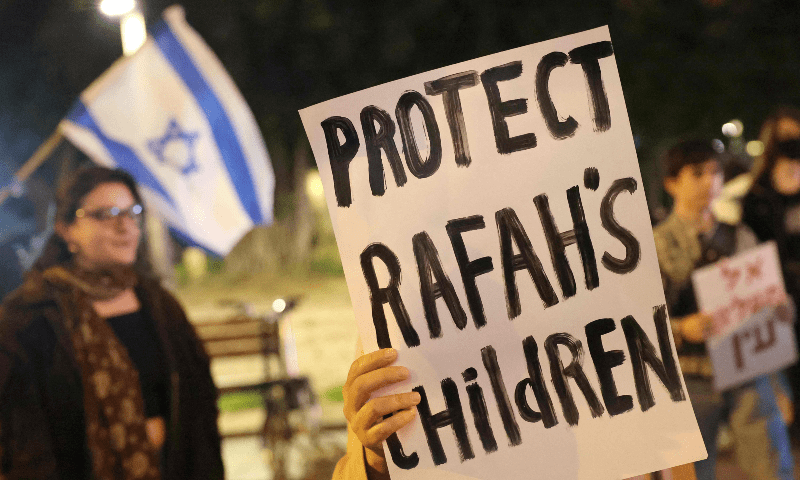
The quest for a ceasefire comes after the United States and the United Nations warned Israel against carrying out a ground offensive into Rafah, the southernmost Gaza city where more than a million Palestinians are trapped.

The official said Hamas had told the participants it does not trust Israel not to renew the war if the Israeli prisoners being held by Palestinians are released.

The prisoners have been detained by Hamas since Oct 7 to pressurise Israeli forces to stop unending assaults on the people of Palestine.

A senior Hamas official, Sami Abu Zuhri, blamed Israel for the lack of progress in peace efforts so far.

There was no comment from Israel on the status of the talks.

‘Genocide’

On Tuesday, South Africa asked the world court to consider whether Israel’s plan to extend its offensive into Rafah required additional emergency measures to safeguard the rights of Palestinians.

In a case brought by South Africa, the International Court of Justice (ICJ) last month ordered Israel to take all measures within its power to prevent its troops committing genocide against Palestinians in Gaza.


Israel denies it is committing ‘genocide’ and had asked the court to reject the case outright.

Erdogan set for Egypt visit

Meanwhile, Turkish President Recep Tayyip Erdogan is set to arrive in Cairo on Wednesday to meet his Egyptian counterpart Abdel Fattah al-Sisi.


Erdogan said the pair would discuss “every effort” to stop the “bloodshed” in the Gaza Strip, while Turkish state news agency Anadolu said the meetings would also cover economic, trade, tourism, energy and defence matters.

The visit will be the Turkish president’s first to Egypt since 2012.

While the two regional powers have often been at odds, their interests are aligned on two major conflicts: Sudan and Gaza.

Erdogan said his meetings in Egypt, as well as the United Arab Emirates, would “look at what more can be done for our brothers in Gaza”.

“As Turkiye, we continue to make every effort to stop the bloodshed,” he told a news conference.

Erdogan has emerged as one of the Muslim world’s harshest critics of Israel for its bombardment and ground offensive in the Palestinian territory, which have killed at least 28,473 people, mostly women and children, according to the Gaza health ministry.

Istanbul also served as a base for Hamas political leaders until October last year when the Nato member asked the Hamas chiefs to leave.

Also, Turkiye recalled its ambassador to Israel in November, and has maintained intermittent communication with Hamas leadership, who see Turkiye as a potential ally in ceasefire negotiations.

Egypt and Qatar are currently mediating a potential new agreement between the warring parties with US support.

Indonesia, the third-largest democracy in the world, is voting on 14 February in just its sixth election since it emerged from a military dictatorship in the 1990s.

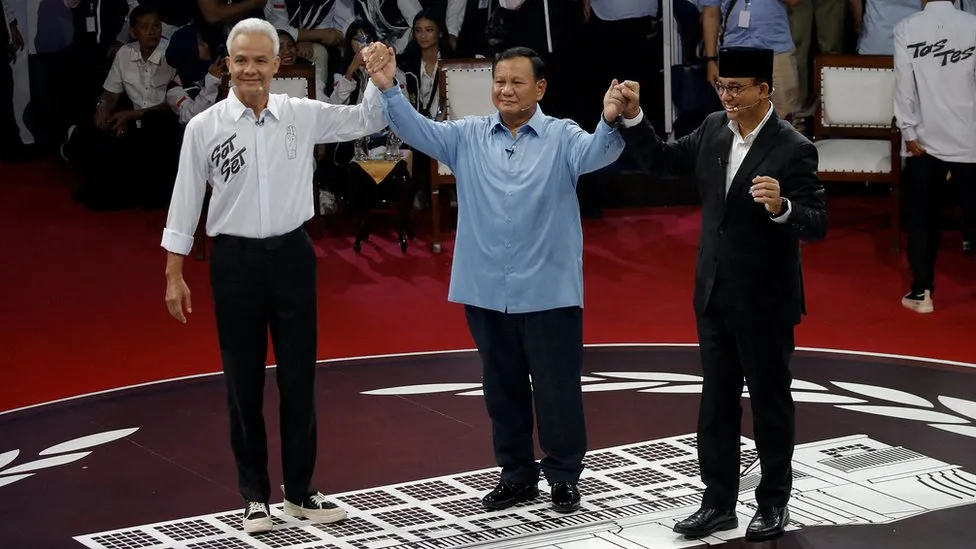
It’s a three-way race for the top job, between current Defence Minister Prabowo Subianto and two former governors, Anies Baswedan and Ganjar Pranowo.

One of them will succeed President Joko Widodo, popularly known as Jokowi, who has served two full terms.

Mr Widodo remains hugely popular but his legacy has been tainted by accusations that he’s sought to retain political influence through his eldest son, who is running alongside Mr Prabowo, a military commander under the Suharto regime.

It has prompted fears that Indonesia is in danger of sliding back towards its authoritarian past.

The outcome of the election will also have an effect far beyond Indonesia, with the winner having to contend with the growing US-China rivalry in the Indo-Pacific region.

Prabowo Subianto, Advanced Indonesia Coalition

Prabowo Subianto has the outgoing PM’s eldest son Gibran Raka (right) as his running mate

The frontrunner to be Indonesia’s next president has tried desperately to soften his strongman image but to some voters he is still associated with abuses committed during General Suharto’s dictatorship.

The 72-year-old Mr Prabowo was a military general who married one of General Suharto’s daughters. He came from a wealthy political family but the first half of his career was dedicated to the army.

During his time as a leading officer in Suharto’s regime, he’s accused of ordering his unit to abduct and torture dozens of democracy activists.

He was discharged following this scandal and went into self-imposed exile in Jordan in the 2000s.

But he returned to Indonesia a few years later, building up his wealth in various businesses before making the jump to politics.

He’s had the money and connections to run for president two times before – losing both times to Mr Widodo.

But in the last term, Mr Widodo brought him into his cabinet as defence minister – and this is now the closest Mr Prabowo has ever been to the top job. His running mate is Mr Widodo’s eldest son Gibran Rakabuming Raka.

Though Mr Widodo has not appeared at Mr Prabowo’s campaign events, he is seen as having tacitly endorsed the Prabowo-Gibran ticket.

A possible victory for Mr Prabowo is a frightening concept for freedom fighters. They fear a Suharto-era general back at the helm of Indonesian government will drag the country back into a dark period.


Anies Baswedan, Coalition of Change for Unity (KPP)

Anies Baswedan has portrayed himself as an alternative to the two other candidates

From languishing at the bottom of opinion surveys, Anies Baswedan is now polling second after he criticised Jokowi’s plan to move the capital from Jakarta to a new city that is being built on Borneo island.

The former Jakarta governor instead favours the development of existing cities to boost equitable growth instead of developing a new capital from scratch.

Mr Anies, 54, has portrayed himself as the alternative to the two other candidates who are expected to continue most of Mr Widodo’s policies if elected.

He has repeatedly claimed democracy has declined under Mr Widodo and pledged to be “consistent in keeping the country away from the practices of feudalism and nepotism”.

Mr Anies and his running mate Muhaimin Iskandar will be contesting this year’s elections under the banner of the Islamic-leaning Coalition of Change for Unity. Their narrative for change has received support from conservative Islamic groups in the world’s largest Muslim-majority country.

The pair has pledged to create 15 million jobs, offer easier access to credit for prospective home buyers and to upgrade infrastructure in Indonesia’s second-tier cities, if elected.

Born into a family of academics, Mr Anies spent the earlier years of his career lecturing economics at Paramadina University, before entering politics in 2013, He was appointed education and culture minister after Mr Widodo’s first victory but he has been more vocal in criticising the president after being removed in a cabinet reshuffle.

In 2017, he won the election to become Jakarta’s governor in a divisive vote that exposed religious and ethnic tensions in the Indonesian capital. His tenure saw a push for urban infrastructure in the city, but some feel he has not done enough to address perennial issues like air pollution and traffic congestion.

Ganjar Pranowo, Indonesian Democratic Party of Struggle (PDI-P)

Ganjar Pranowo was seen as Mr Widodo’s shoo-in successor

The governor of one of Indonesia’s largest provinces presents himself as a humble man of the people.

There’s no political dynasty or family wealth behind his rise – only a skill to connect with people on a populist agenda: it’s won him two terms in Central Java.

But he’s facing long odds in the national election without the backing of the enormously popular Mr Widodo – who was himself backed by the PDI-P for the last two elections.

In the early days of the campaign, he was seen as Mr Widodo’s shoo-in successor and analysts had him pegged as the frontrunner. But Mr Widodo has since distanced himself from his party’s campaign.

Mr Ganjar has been left to rely on his populist appeal and grassroots campaign- selling policies such as millions of jobs, social welfare expansion and making university more accessible.

His campaign trail has focused on poorer areas across Indonesia’s islands – starting in Papua in the far east and moving across the archipelago, staying in humble villagers’ homes.

The silver-haired politician had been riding high as governor until he expressed opposition to Israel’s participation in the Under-20 Fifa World Cup which was to be held in his province. Fifa then announced it was pulling the tournament from the country – prompting a backlash from football fans against Mr Ganjar.

His running mate is Mohammad Mahfud, Indonesia’s former security minister, who was also a former chief justice of the Constitutional Court.

Labour has suspended a second parliamentary candidate over comments he allegedly made about Israel.

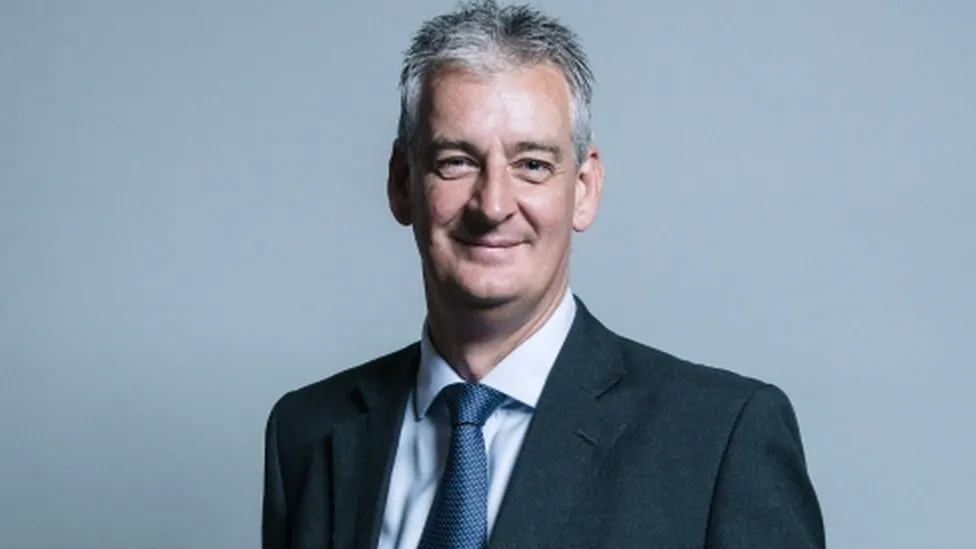
Graham Jones, the former Labour MP for Hyndburn, is also facing an investigation, the BBC understands.

It comes after Labour withdrew support for the party’s candidate for the Rochdale by-election, Azhar Ali, for apparently making antisemitic remarks.

Mr Jones has been contacted for comment.

Labour had selected Mr Jones to contest his former Lancashire seat in the forthcoming general election.

The BBC understands Mr Jones was suspended for comments he appears to have made about Israel – but Labour has yet to identify the specific remarks.

But, on Tuesday the Guido Fawkes website published audio in which the former MP allegedly uses an expletive to refer to Israel and argues that British people who fight in the Israel Defense Forces “should be locked up”.

Ministers have confirmed that British nationals with dual nationalities can “serve in legitimately recognised armed forces of the country of their other nationalities”.

At the same meeting, Mr Ali is alleged to have blamed “people in the media from certain Jewish quarters” for the suspension of MP Andy McDonald from Labour.

The Jewish Labour Movement said Mr Jones’ alleged comments were “appalling and unacceptable”. The group later said it was “pleased” that Mr Jones had been “swiftly suspended”.

Mr Jones has been called in for an interview and the party will need to go through a formal process to remove his candidacy.

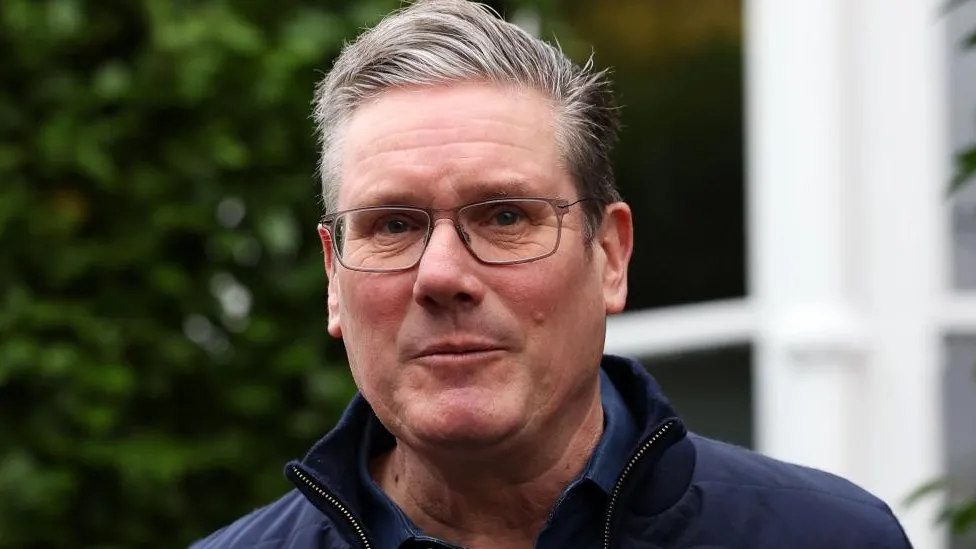
Earlier, Labour leader Sir Keir Starmer insisted he took “decisive action” over comments made by Mr Ali, whose apparent remarks were published by the Daily Mail.

The party initially stood by Mr Ali when the MP hopeful apologised for telling a meeting of Labour members and councillors that Israel had “allowed” the Hamas attacks on 7 October as a pretext to invade Gaza.

However, when the Daily Mail published a fuller recording from the meeting, Labour made the decision to withdraw support.

Defending his actions, Sir Keir said: “Further information came to light yesterday calling for decisive action, so I took decisive action.

“It is a huge thing to withdraw support for a Labour candidate during the course of a by-election.

“But when I say the Labour Party has changed under my leadership I mean it.”

On Tuesday evening, former Labour MP Dame Louise Ellman said she had spoken to Mr Ali, who apologised to her for his comments.

 North West Tonight Mr Ali “should be upset” because his comments were “truly shocking” and “go against the record of the person I knew and worked with” for over 20 years.

Sir Keir Starmer on dropping Labour’s Rochdale candidate: “I took decisive action”

When Sir Keir became Labour leader in 2020, he promised to tackle antisemitism saying he would “tear out this poison by its roots”.

However, in recent days he has received criticism for failing to withdraw support from Mr Ali sooner.

Martin Forde, who led a review into allegations of bullying and racism in the Labour Party, said the handling of the case had been “pretty shambolic” and it would have been “sensible” to withdraw support for Mr Ali when his comments first emerged.

The senior lawyer told BBC Radio 4’s Today programme that some Labour MPs believe there is uneven handling of antisemitism cases across party factions.

Left-leaning MPs feel Labour’s disciplinary process is slow for them “but if you’re in the right faction of the party, as it were, then things are dealt with either more leniently or more swiftly”, Mr Forde said.

The Labour leader received support from Lord Mann, the government’s adviser on antisemitism and a former Labour MP.

He said it was “a bold decision, basically to throw away a parliamentary seat”, adding: “I think the Jewish community, as it reflects, will take quite a lot of comfort from the fact that Sir Keir Starmer has been prepared to do that.”

Housing minister Lee Rowley told the BBC the situation with Mr Ali had been “a complete mess”.

Although Labour has withdrawn their support, electoral rules mean that Mr Ali will still appear as the party’s candidate on the ballot paper. If elected he would sit as an independent.

Also running are former Labour MPs Simon Danczuk, now the Reform Party candidate, and George Galloway, of the Workers Party of Britain, who has campaigned against Labour’s stance on Gaza.

Independents crucial in formation of new govt

ISLAMABAD: The formation of Pakistan’s next government, set to take place in the next few days or weeks, relies on the large number of independent candidates who have clinched victory in the recently held general elections on February 8

According to the election rules, the independents must join a political party of their choice three days after the issuance of the gazette notification by the Election Commission of Pakistan (ECP).

The independents, however, play a crucial role, when political parties ahead in the race require a certain number of lawmakers to forge a majority in the lower house, which eventually helps them form a government.

The independent winners can only opt for one without being allotted a share in the reserved seats, set aside for women and religious minorities. Once they formally announce to join political parties, which will be under the law, reserved seats will be allocated to them based on their respective numerical strengths.

PPP in poll position to form govenment in Sindh; MQM clean sweeps Karachi

KARACHI: Pakistan Peoples Party (PPP) is set to form a government in Sindh after it was successful in clinching more than 100 seats in the Sindh provincial assembly, the first time in the history of general elections in Pakistan

The PPP has won 84 general seats out of the 130 in the Sindh Assembly, while it is also projected to receive 20 reserved seats for women and six for members of religious minorities, taking its expected tally up to 110 members in the province’s 168th House of Sindh Assembly. From Karachi, the PPP won 10 seats.

On the National Assembly front, however, the Muttahida Qaumi Movement-Pakistan (MQM-P) has gained a strong position with 17 seats out of the total 22 — 15 in Karachi and two in Hyderabad.

The PPP, however, managed to get 44 seats in the lower house of the Parliament from Sindh, of which seven were from Karachi, said the sources. For the provincial assembly in Sindh, the MQM-P won 28 of the 47 seats.

The MQM-P’s overall position was determined after the Election Commission of Pakistan announced the “complete results” of the provincial and National Assembly constituencies.

Independent candidates in the provincial Sindh Assembly have won 14 seats, while Jamaat-e-Islami and Grand Democratic Alliance clinched two seats each.

The country witnessed a historic 10th general election, as 60 million Pakistanis exercised their right to vote on February 8. The nation now awaits the complete outcome of the 2024 polls with ECP making gradual announcements of complete results from across the country.

On February 8, the country’s population elected their choice of representatives for national and provincial assemblies — on 855 constituencies.

As the results trickle in, independent candidates are seen dominating the polls, with Pakistan Tehreek-e-Insaf (PTI) and Pakistan Muslim League-Nawaz (PML-N) claiming to be in a position to form a majority government in the Centre amid controversy surrounding the outcome.

Currently, the PTI-backed candidates are leading with nearly 100 seats followed by PML-N (71), PPP (53) and MQM-P (17).

Pakistan’s diverse polity, pluralism will be well-represented by a unified government: COAS

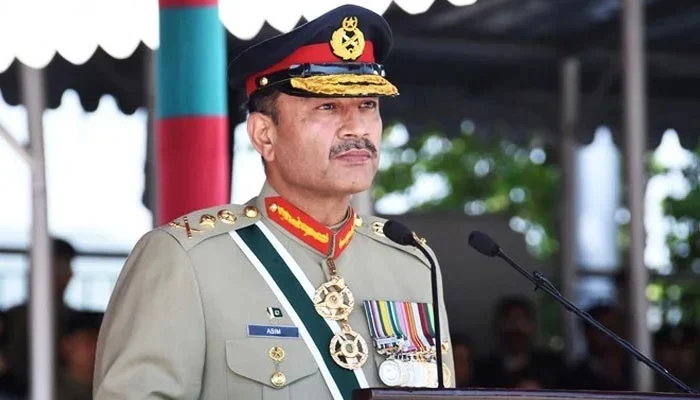
RAWALPINDI: Chief of Army Staff (COAS) General Syed Asim Munir on Saturday said Pakistan’s diverse polity and pluralism will be “well-represented by a unified government of all democratic forces” imbibed with national purpose.

The army chief’s statement comes after major political leaders met in Lahore to discuss the formation of government.

“Elections are not a zero-sum competition of winning and losing but an exercise to determine the mandate of the people. Political leadership and their workers should rise above self-interests and synergise efforts in governing and serving the people which is perhaps the only way to make democracy functional and purposeful,” the army chief said, as per the military’s media wing.

He said elections and democracy are means to serve the people of Pakistan and not ends in themselves.

The COAS congratulated the entire Pakistani nation, the caretaker government, the Election Commission of Pakistan (ECP), political parties and all the winning candidates on the successful conduct of the general elections 2024.

He said free and unhindered participation by Pakistani people to exercise their right to vote demonstrated their commitment to democracy and the rule of law as enshrined in the Constitution.

“Leadership and personnel of law-enforcement agencies deserve our highest appreciation for creating a safe and secure environment for the electoral process, despite overwhelming odds. The constructive role played by national media, civil society, members of civil administration and judiciary enabled the successful conduct of the largest electoral exercise in national history,” the army chief said.

He said as the people of Pakistan had reposed their combined trust in the constitution of Pakistan, it was now incumbent upon all political parties to reciprocate the same with political maturity and unity.

“As we move forward from this national milestone we must reflect on where the country stands today and where our rightful place should be in the comity of nations,” said the COAS wishing that the elections bring in political and economic stability and prove to be the harbinger of peace and prosperity for the country.