
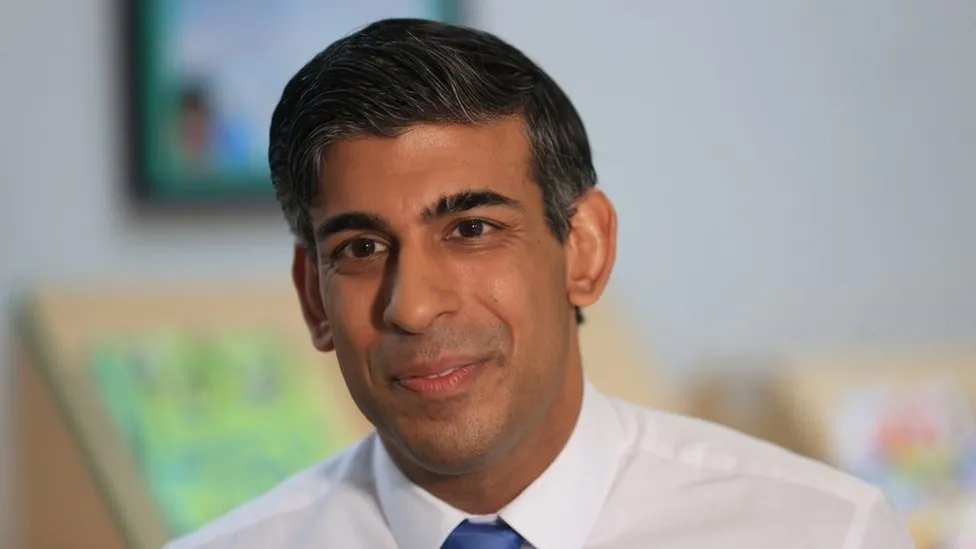
Prime Minister Rishi Sunak has been criticised by opposition parties for a bet over his Rwanda policy.

Asked by TalkTV’s Piers Morgan if he would bet £1,000 for a refugee charity that deportation flights would take off before the next election, the PM shook hands with him.

Labour said it showed he was “totally out of touch with working people”.

The SNP said it had reported Mr Sunak for a potential breach of ministerial rules over the “grotesque” bet.

The party’s Cabinet Office spokeswoman, Kirsty Blackman, has written to the PM’s independent adviser on ministers’ interests, Sir Laurie Magnus, and Cabinet Secretary Simon Case, calling for an investigation into whether Mr Sunak broke the Ministerial Code.

In her letter, she pointed to rules that state ministers should ensure no conflict appears to arise between their public duties and private interests, and that they should not accept any gift which could appear to compromise their judgement or place them under an improper obligation.

Ms Blackman said: “Placing a bet on the lives of vulnerable refugees fleeing war and persecution is grotesque, callous and downright cruel – and shows just how out of touch Westminster is with the values of people in Scotland.

“It’s particularly shameful that Rishi Sunak, one of the richest men in the UK, thinks it’s appropriate to accept a £1,000 wager – and will remind ordinary working families that near billionaire Sunak doesn’t have a clue what life is like for the rest of us in a cost of living crisis.”

Labour’s shadow paymaster general Jonathan Ashworth said: “Not a lot of people facing rising mortgages, bills and food prices are casually dropping £1,000 bets.”

Liberal Democrat home affairs spokesperson Alistair Carmichael said: “Instead of placing a trashy bet on the Rwanda scheme, the prime minister should put his money where his mouth is on the soaring NHS backlog.”


The policy of sending some asylum seekers to Rwanda aims to deter people from crossing the Channel and is a key part of Mr Sunak’s pledge to “stop the boats”.

However, the plan has been stalled by legal challenges, with no deportation flights taking off yet.

In an attempt to revive the policy, the government introduced legislation declaring Rwanda a safe country but the bill needs to be approved by the House of Lords, where it has faced significant opposition, before it becomes law.

The government has said it is still aiming for flights to take off by the spring.

In an interview on TalkTV, Morgan challenged the PM: “I’ll bet you £1,000 to a refugee charity you don’t get anybody on those planes before the election.”

Shaking hands with the presenter, Mr Sunak said: “I want to get people on the planes.”

Mr Sunak has said he expects a general election to be held in the second half of this year and one must legally take place by the end of January 2025.

Pressed over whether he had accepted the bet, the prime minister’s official spokesman said: “What is coming through in that interview is the prime minister’s absolute confidence that we will get flights off the ground.”

Asked whether, with the government taking a hard line on gambling, this set a good example, he said: “He’s focused on doing what is needed to deliver on the priorities for the British people.”
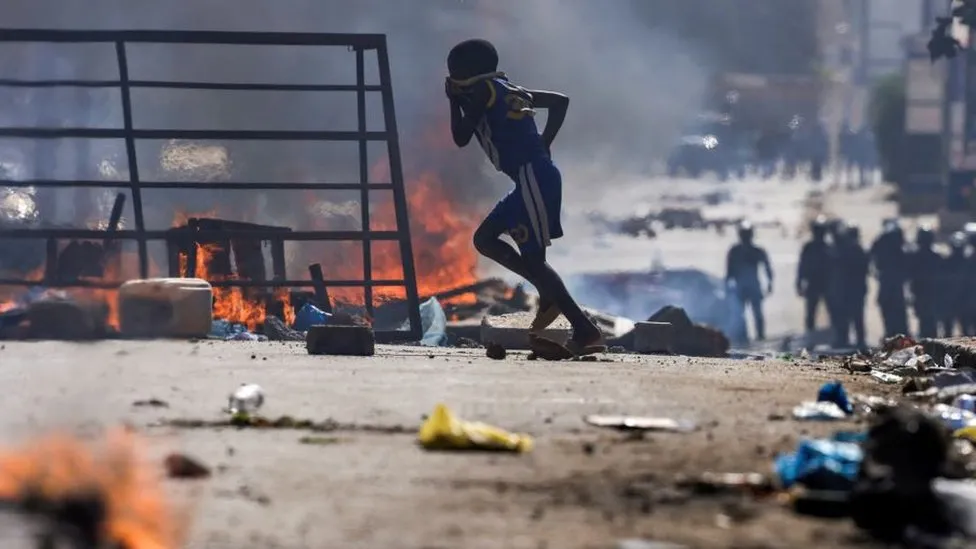
Senegal’s reputation as a bastion of democracy in an unstable region is on the line as protesters clash with police outside the National Assembly.

Inside, lawmakers have passed a contentious bill to extend President Macky Sall’s tenure and delay elections after he called off a planned election with just three weeks to go.

Khalifa Sall, a leading opponent and a former mayor of Dakar, who is not related to the president, called the delay a “constitutional coup” and urged people to protest against it. His political coalition has vowed to go to court.

Thierno Alassane Sall, another candidate, also no relation, called it “high treason” and urged his supporters to gather in front of the National Assembly to protest and “remind MPs to stand on the right side of history”.

The proposal needed the support of three-fifths (i.e. 99) of the 165 deputies to pass. The ruling Benno Bokk Yakaar coalition, of which President Sall’s Alliance for the Republic party is part, has a slight majority in parliament.

There was a heated atmosphere in the chamber, and it was reported that some opposition MPs had been removed by security forces after they tried to block proceedings.

In the end 105 MPs voted for the proposal. A six-month postponement was originally proposed, but a last-minute amendment extended it to 10 months, or 15 December.

Mr Sall reiterated that he was not planning to run for office again. But his critics accuse him of either trying to cling on to power or unfairly influencing whoever succeeds him.

No sooner had he announced the unprecedented postponement than protesters marched across the capital, Dakar, to call for a reversal.

President Sall has delayed the general elections in Senegal by six months

Senegal has long been seen as one of the most stable democracies in West Africa. It is the only country in mainland West Africa that has never had a military coup. It has had three largely peaceful handovers of power and never delayed a presidential election.

Until now.

In 2017, Senegalese troops led the West African mission sent to neighbouring The Gambia to force out long-time ruler Yahya Jammeh after he refused to accept he had lost an election. And in a region beset by coups, President Sall has been a key actor in the push by the Economic Community of West African States (Ecowas) to force military leaders to conduct elections and hand over power to civilians.

But Senegal’s democratic credentials now hang in the balance, and a constitutional crisis is brewing. The country faces a critical test of its electoral integrity and judicial independence, analysts say.

Tensions have been rising for more than two years following what the opposition say was a deliberate attempt to exclude them from the election by having their candidates charged with crimes they had not committed. One major opposition party was even banned.

The authorities have denied using the legal system for political gain and President Sall said he was trying to calm things down by delaying the vote but this does not appear to have worked so far.

“The decision has thrown Senegal into uncharted waters of a constitutional crisis,” Mucahid Durmaz, senior West Africa analyst at risk intelligence company Verisk Maplecroft, tells the BBC.

“The constitution requires elections to be organised at least 30 days before the end of the incumbent president’s mandate. Sall’s rule expires on 2 April. And the decree detailing the electoral calendar must be released 80 days before the vote takes place. Even if he appoints a transitional president after 2 April, the legality of it will be disputed.”

Authorities restricted access to mobile internet services on Monday to prevent what they called “hateful and subversive messages” from spreading online and posing a threat to public order – in other words to make it harder for protesters to organise.

Protests erupted across Senegal over the weekend

Some residents tell the BBC they have been using wifi and Virtual Private Networks (VPN’s) to bypass the curbs but not everyone is able to do this.

The opposition has condemned the shutdown of the signal of private television channel Walf TV for “incitement to violence” over its coverage of the demonstrations.

Two opposition politicians, including former Prime Minister Aminata Touré, once a close ally of President Sall but now one of his harshest critics, were both briefly detained following the protests.

Critics fear that this clampdown could plunge the country into further political turmoil which, by extension, could be dangerous for the whole West African region.

Satisfaction with democracy in Senegal has declined sharply under Mr Sall. In 2013 Afrobarometer, a pollster, found that after Mr Sall had taken office, more than two-thirds of Senegalese people were fairly or very satisfied with democracy. By 2022 less than half were.

However, Durmaz says he does not foresee the possibility of a military coup because Senegal has a “diverse range of political parties, a robust civil society and influential religious leaders who step in to mediate political disputes between the politicians”.

Twenty candidates had made the final list to contest the elections, but several more were excluded by the Constitutional Council, the judicial body that determines whether candidates have met the conditions required to run.

Prominent among them were firebrand opposition leader Ousmane Sonko barred because of a libel conviction, and Karim Wade, the son of a former president, who was accused of having French nationality. They both say the cases against them are politically motivated.

Despite the delay, it is unlikely Mr Sonko will be able to participate in the election, as his party has already replaced him with Bassirou Faye who is also in jail but remains eligible to run, Mr Durmaz says.

Mr Sonko has shown that he is able to mobilise his supporters on to the streets and so while he remains barred, tensions are likely to stay high.

His banned Pastef party has vowed to push back against the delay, calling it a “serious threat to our democracy” and “contempt for the will of the people”.

This is not the first time leading opposition candidates have been barred from running in presidential elections. Both Karim Wade and Khalifa Sall were jailed for corruption in 2015 and 2018 respectively, and barred from running in 2019.

This time, allegations of judicial corruption involving the Constitutional Council, brought by Karim Wade’s party, prompted a parliamentary inquiry.

President Sall justified the election delay by saying time was needed to resolve the dispute that ensued between the Council and some members of parliament.

Despite the widespread anger over the delay, Mr Wade’s Senegalese Democratic Party (PDS) has backed it, and if its MPs vote with the government, the bill could pass.

But Wole Ojewale, Dakar-based regional co-ordinator for Central Africa at the Institute for Security Studies, says the delay is not justified.

“The president is not in charge of the electoral process, and to the extent to which the electoral umpire has not raised doubts about their capacity to undertake the election. I don’t think anything should derail the political process.”

Mr Sall’s critics suggest he may have feared his chosen successor, Prime Minister Amadou Ba, was in danger of losing the election.

“His [President Sall’s] party is losing momentum. There are indications that they probably want to see how they can rejig, or probably replace their candidate,” Ojewale says.

He says there is still a window to conduct the election as scheduled. Otherwise, the country may be plunged into widespread unrest, becoming a police state where civil liberties are eroded, a view Durmaz shares.

Ecowas and the African Union have called for dialogue. France, the US and the EU have all called for an election as soon as possible.

However, Durmaz says President Sall’s international image would minimise any external pressure on him.

“I do not expect a firm push by Ecowas to reverse the postponement of the election in Senegal,” he says, noting that the credibility of regional organisations such as Ecowas and the AU “has been significantly tarnished due to their inability to confront the democratic deficit in civilian-run countries”.

All eyes will now be on the regional blocs to see how they treat yet another democratic headache in West Africa.

US monitoring Pakistan’s electoral process ‘quite closely’

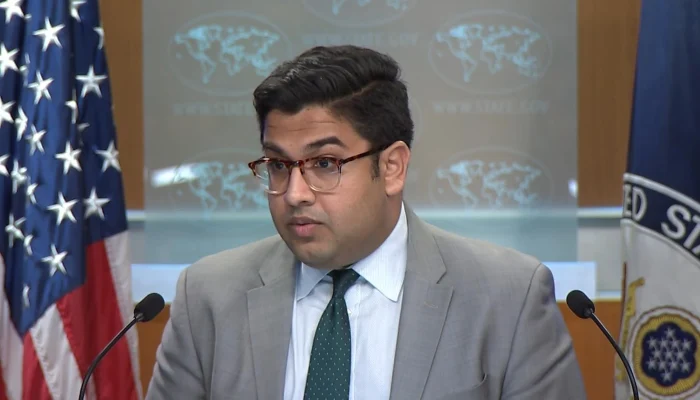
Expressing concern over violent incidents as well as restrictions on freedom of expression and media in Pakistan ahead of the general elections, the US State Department has said the United States was monitoring the electoral process in Pakistan “quite closely”.

On a question specifically mentioning former prime minister Imran Khan’s jail term amid national elections and restrictions on his party, US State Department Deputy Spokesperson Vedant Patel said, “We’re continuing to monitor Pakistan’s electoral process quite closely, and as we have said, we want to see that process takes place in a way that facilitates broad participation with respect for freedom of expression, assembly, and associations.”

Patel said the US had concerns over all the incidents of violence and restrictions on media freedom, freedom of expression, including internet freedom, as well as peaceful assembly and association.

“We’re concerned by some of the infringements that we’ve seen in that space,” the State Department spokesperson maintained.

However, he said that Pakistanis deserved to exercise their fundamental right to choose their future leaders through free and fair elections without fear, violence, or intimidation, and it was ultimately for the people of Pakistan to decide their political future.

On February 3, the Embassy of the United States had issued a travel advisory for its citizens as Pakistan braced for general elections, slated to be held on February 8.

In its advisory, the embassy had asked Americans to remain vigilant and aware of the locations of political rallies occurring in areas they intended to visit.

“On February 8, election day, areas around polling stations may be crowded, and US citizens not eligible to participate in Pakistan’s elections should avoid them,” it had advised.

The embassy had warned that disruptions to internet and cellular service could occur leading up to and throughout election day and immediately following.

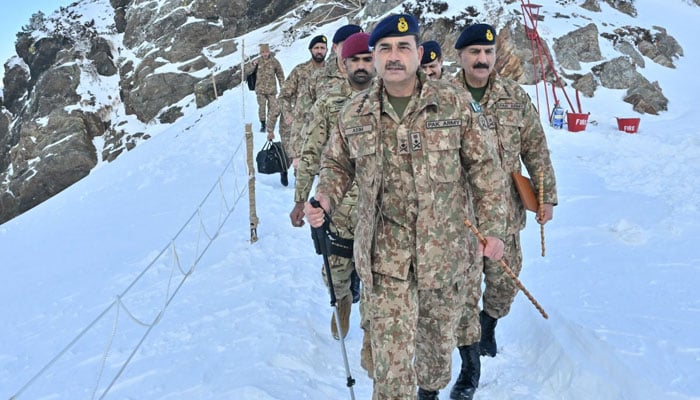
In LoC trip, COAS says ‘any aggression to be responded with full military might’

Chief of Army Staff (COAS) General Syed Asim Munir Monday reiterated that any aggression or violation of the territorial sovereignty of Pakistan will be responded to with full national resolve and military might.

According to a statement issued by the Inter-Services Public Relations (ISPR), the army chief made the remarks while addressing the troops deployed on the front lines along the Line of Control (LoC) in the Sarian Sector on Monday.

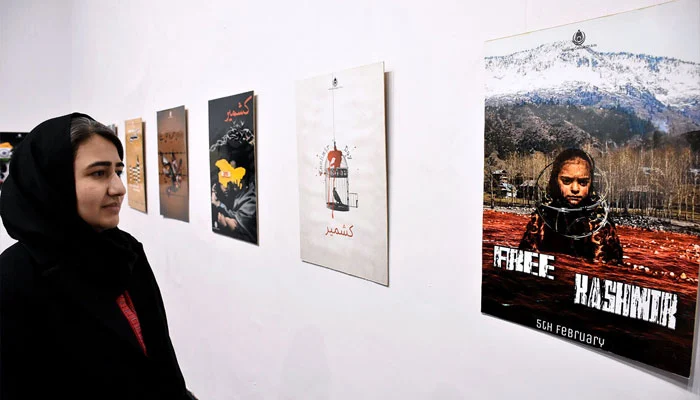
The trip comes on February 5, the day when Pakistan marks Kashmir Solidarity Day, to express wholehearted support for the struggle of Kashmiri brothers and sisters in Indian Illegally Occupied Jammu and Kashmir (IIOJK).

“Pakistan Army is well versed with the full threat spectrum and is perpetually ready to respond effectively,” the army chief said.

The COAS also mentioned the Indian state-sponsored terrorism in Pakistan which now extended to the heinous targeting of individual Pakistani citizens on our soil.

Such callous disregard for international law and norms of the international system was becoming a routine occurrence and India was now being called out openly by many countries in the world, exposing her sham credentials, Gen Munir added.

The COAS also appreciated the operational readiness, high morale, and effective response of the troops to Indian ceasefire violations.

“Pakistan would continue to expose all such attempts and ensure the security of its citizens,” said ISPR.

Earlier today, caretaker Prime Minister Anwaar-ul-Haq Kakar, Azad Jammu and Kashmir Prime Minister Chaudhry Anwarul Haq, and the army chief visited Muzaffarabad.

Upon arrival at the Jammu and Kashmir Monument Muzaffarabad, the premiers and the army chief laid a floral wreath at the Martyrs’ Monument and paid rich tribute to the supreme sacrifices of Shuhada, said ISPR.

“The leadership acknowledged that the fortitude, resilience and unwavering faith of Kashmiris in the face of unabated brutality of Indian occupation forces in IIOJK had been exemplary.”

“The brewing humanitarian and security crises in the IIOJK seriously threatens regional peace and stability. Pakistan would always stand with Kashmiris in their just struggle for the inalienable right to self-determination in light of UNSC resolutions.”

“India is attempting to change the demography of IIOJK through illegal administrative and unilaterally imposed draconian laws and security clampdowns. Such machinations cannot suppress the will and the yearning of the Kashmiri people to attain their legitimate objectives,” read the statement.

People across Pakistan observe Kashmir Solidarity Day

People across Pakistan are observing Kashmir Solidarity Day on Monday to express their wholehearted support for the struggle of their Kashmiri brothers and sisters for their struggle against human rights violations in Indian Illegally Occupied Jammu and Kashmir (IIOJK).

The Ministry of Kashmir Affairs issued a press release, saying that all arrangements have been made to observe Kashmir Solidarity Day — being marked today — at home and abroad in a befitting manner.

According to the ministry, solidarity walks are being organised across the country and in Azad Jammu and Kashmir. Meanwhile, a rally was also held in Islamabad in solidarity with the Kashmiri people on Constitution Avenue.

A minute of silence was also observed at 9:30am to pay homage to the martyrs of Kashmir.

“Posters and billboards have been displayed around important Avenves, airports, and railway stations to highlight the plight of Kashmiri people,” said the statement.

Furthermore, the educational institutes have organised debate and declamation contests and essay writing competitions in connection with the day.

President Dr Arif Alvi has said that the right to self-determination is a cardinal principle of international law but regrettably, the Kashmiri people have not been able to exercise this inalienable right.

“The UN General Assembly annually adopts a resolution expressing unequivocal support for the realisation of the right to self-determination for people under foreign occupation,” the president said.

He said the people of the IIOJK had been struggling to realise their right to self-determination for the last 26 years.

“Today, IIOJK is one of the most militarised zones in the world. Kashmiris are living in an environment of fear and intimidation,” President Secretariat Press Wing, in a press release, quoted the president as saying.

The president reiterated that on the Kashmir Solidarity Day, the government and people of Pakistan renewed their unflinching support for their just and legitimate struggle.

The president further reaffirmed that Pakistan would continue to lend unstinted moral, diplomatic and political support to the Kashmiri people till the realisation of their right to self-determination, as enshrined in the relevant UN Security Council resolutions.

Pakistan will continue to support Kashmiris: PM Kakar

Caretaker Prime Minister Anwaar-ul-Haq Kakar said that the Kashmir Solidarity Day is annually observed on February 5 to express Pakistan’s unwavering support for the Kashmiri people’s just struggle for the realisation of their right to self-determination.

Over the last 26 years, India has carried out a relentless campaign to intimidate and suppress the people of IIOJK, said the statement, adding that in IIOJK, the iron-fisted Indian approach frequently manifests itself in extrajudicial killings, arbitrary detentions and custodial torture.

“India has muzzled the media and incarcerated the Kashmiri leadership and human rights defenders. These excesses have been well-documented by several human rights organisations and international media outlets. India’s illegal and unilateral actions of August 5, 2019, in IIOJK were a blatant violation of international law including the UN Charter, Fourth Geneva Convention, and the relevant UN Security Council resolutions,” said the PM.

He said that Pakistan has consistently maintained that a lasting solution to the Jammu and Kashmir dispute is possible only in accordance with the relevant UNSC Resolutions and wishes of the Kashmiri people.

“Pakistan will continue to extend its unstinted moral, diplomatic and political support for this just cause,” added PM Kakar.

Army, CJCSC, services chiefs pay tribute to Kashmiris

Pakistan Armed Forces, Chairman Joint Chiefs of Staff Committee (CJCSC) General Sahir Shamshad Mirza, and services chiefs have paid rich tributes to the people of Kashmir.

“Kashmir remains a long pending unresolved issue on the UN agenda since 1948,” said a message released by the Inter-Services Public Relations (ISPR) on the Kashmir Solidarity Day.

The armed forces, CJCSC and the services chiefs maintained the issue had to be resolved as per the aspirations of the people of Kashmir and in accordance with the UN Resolutions, providing for their right to self-determination.

It was noted that decades of atrocities by Indian occupation forces had failed to diminish the spirit of the Kashmiri people and their legitimate freedom struggle.

“The night is, indeed, the darkest before dawn, the heroic struggle for Azadi is destined to succeed, InshaAllah,” the ISPR said.

Pakistan Muslim League-Nawaz (PML-N) President Shehbaz Sharif said that today is a day to “renew our firm commitment to continue supporting Kashmiris until their independence and to remind the world of our promise to the people of occupied Jammu and Kashmir for a referendum”.

“Without a solution to the Kashmir conflict, lasting peace in South Asia and the world cannot be guaranteed. Violation of the basic human rights of the people of Palestine and IIOJK has become a stain on the international community. We pay tribute to the people of IIOJK for their steadfastness and countless sacrifices,” said Shehbaz on X.

“Stand with Kashmir, Stand for Peace,” said the Pakistan Embassy in the United States.

Pakistan People’s Party (PPP) said that it resolved to continue its support for the Kashmiri struggle for freedom in line with the ideology of the late Zulfiqar Ali Bhutto on the occasion of Kashmir Solidarity Day.

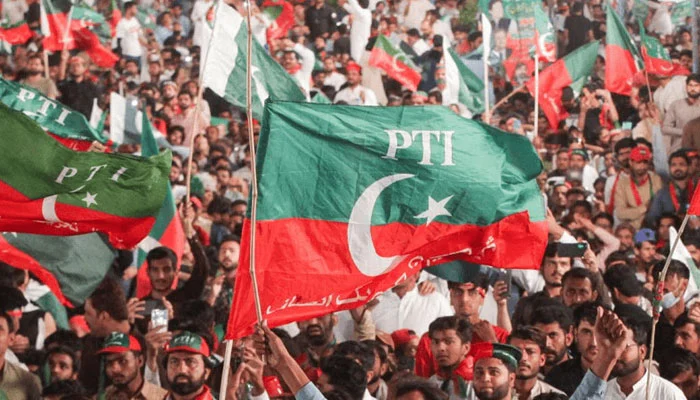
PTI announces new intra-party polls schedule

Pakistan Tehreek-e-Insaf (PTI) has released the official schedule for its intra-party elections, slated to be held on February 5 (Monday), the central media department of the party announced Thursday via a statement.

The party’s spokesperson Raoof Hasan has been appointed as the federal election commissioner.

“The PTI Federal Election Commission is pleased to announce the Election Schedule for the Intra-party Elections (IPE) of Pakistan Tehreek-e-Insaf to elect the Chairman, Central and Provincial Organisations,” the statement read.

According to a statement released by PTI, all members of the party, registered till January 31, will be allowed to vote for their preferred panel or chairman candidate at designated locations across Pakistan. Party members can also record their vote through the ‘Raabta Application Intra Party Election Module’.

The details of all the panels participating in the intra-party election as well as the detailed procedure of the election are explained in the Election Rules, 2020, which will be available on the party’s official website and Raabta application.

The time for polling will begin at 10am and end at 4pm, while election venues and the date of the appellate tribunal will be announced on February 1, 2024.

The party announced that nomination papers for aspiring candidates can be obtained from February 1 to 2, 2024, from the PTI central secretariat or website.

The last date for submission of nomination papers will be February 2, 2024, till 10pm. Candidates can submit their nomination papers at central and provincial secretariats and also digitally through email.

The scrutiny of nomination papers of intra-party election candidates will take place on February 3, 2024. In case the papers are rejected, the time for submission of objections will be till February 3, 2024, at 10pm.

The lists of all the final panels participating in the intra-party election will be published on the website at 4pm on February 4.

The results of the intra-party election will be officially announced on Tuesday, February 6, 2024.

Imran, Nawaz to see karmic turn of revenge-centric politics soon: Bilawal

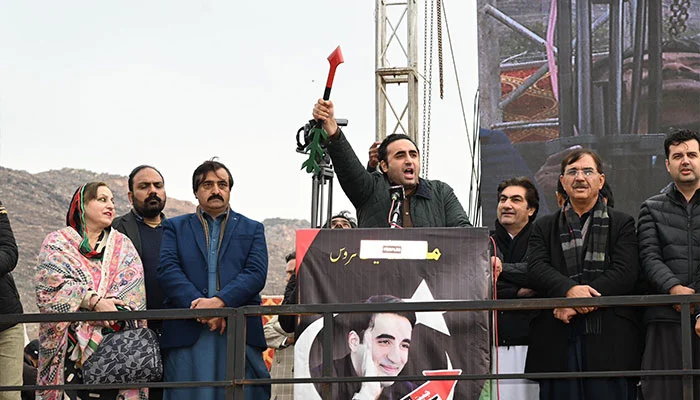
Citing the latest turn of events on the political landscape ahead of the February 8 nationwide polls, Pakistan Peoples Party (PPP) Chairman Bilawal Bhutto-Zardari has warned his rivals — Nawaz Sharif and Imran Khan — “will see the karmic turn of revenge-centric politics in this world soon”.

The PPP chief, in his address during an election rally in Malakand district of Khyber Pakhtunkhwa (KP) on Wednesday, urged politicians to put aside the traditional style of politics focused on sidelining their rivals.

Pakistan Tehreek-e-Insaf (PTI) founder Khan and Pakistan Muslim League-Nawaz supremo Nawaz will see the discomforting twist of events for involving themselves in revengeful actions, predicted Bilawal.

He censured Nawaz for not taking any lesson after witnessing his daughter, Maryam, as becoming a victim of revengeful politics after trapping Zulfikar Ali Bhutto’s daughter Benazir in fake cases.

Commenting on the Toshakhana verdict, Bilawal said that the PTI founder gave hope to the country’s youth to bring a change but he took U-turns. “I will not celebrate today’s judgement. However, I want to ask the PTI founder to seek repentance over his mistakes.”

The former foreign minister, whose party was a key coalition partner of the former Pakistan Democratic Movement (PDM) government post-departure of the PTI rule, said that some people were still demanding a level-playing field ahead of the poll but they forgot the PPP has never gotten equal opportunities in any elections.

He lambasted the calls for the postponement of the general elections again, saying: “We will fight all challenges. They were arguing about bad weather and terrorism to delay the polls. I want to tell all politicians to refrain from playing with the national economy.”

He blamed the incarcerated ex-premier Khan’s decisions for the recent surge in terrorist attacks and promised to uproot the terrorism if his party is voted into power.

The politician appealed to the nation to carefully choose their ruler in the forthcoming elections as only the PPP has the potential to deal with all national crises successfully.

Bilawal, while reiterating his vows during electioneering, said that he would release all political prisoners on the first day of his rule. He also promised to provide relief to the common people and eliminate the perks of the elites.

The election campaigns of all political parties equipped with mollifying manifestos and promises are in full swing across the country ahead of the February 8 vote. PML-N and PPP are eyeing the premier’s office and desperately swaying voters to elect them to power.

China, US resume fentanyl talks in Beijing

China and the United States on Tuesday resumed talks on curbing the production of ingredients to make fentanyl, as the two powers seek to rebuild frayed channels of communication on hot-button issues.

The synthetic opioid, many times more powerful than heroin, has caused an epidemic of addiction in the United States — and is responsible for more than 70,000 overdose deaths a year, officials say.

Washington’s allegations that Beijing is complicit in the trade have long been yet another source of contention between the United States and China, at loggerheads in recent years over everything from trade to human rights and the self-ruled island of Taiwan.

At a summit in November, presidents Xi Jinping and Joe Biden agreed to do more to cooperate on tackling companies that manufacture the precursor chemicals to make fentanyl and on cutting financing for the trade.

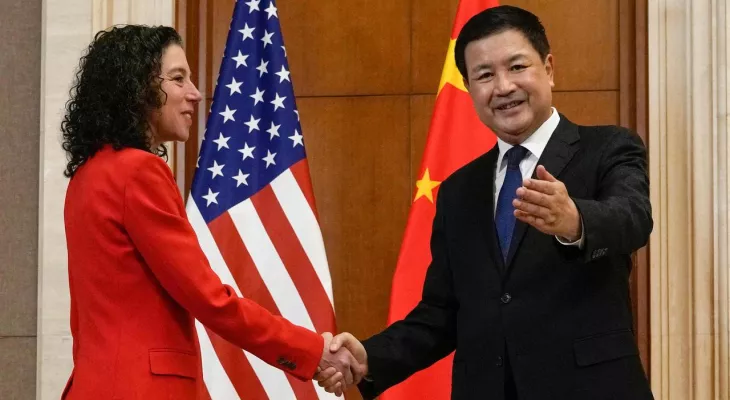
On Tuesday, a Washington delegation led by Deputy Homeland Security Advisor Jen Daskal arrived in Beijing for the inaugural meeting of a counter-narcotics cooperation working group.

She is accompanied by high-level US officials from the State Department, Treasury, Department of Homeland Security and Justice Department.

Calling the meetings “a good start” US National Security Council spokesman John Kirby told reporters there is still “a lot more work to be done.”

“The goal here is to create concrete, measurable actions that lead to a reduction of the precursor chemicals that are killing so many Americans,” he said.

Chinese Minister for Public Security Wang Xiaohong, who greeted the US delegation at Beijing’s Diaoyutai guesthouse, said establishment of the China-US working group represented an “important common understanding” reached by the presidents last year.

“Our cooperation once again shows that the China-US relationship gains from cooperation and loses from confrontation,” he said, speaking through an interpreter.

Wang said he hoped future meetings would see two sides “accommodating each other’s concerns to enhance and expand cooperation to provide more positive energy for stable, sound and sustainable China-US relations”.

Daskal in turn characterised Washington’s sending the high-level delegation as a signal of its intent at a “whole-of-government approach to tackling the global challenge”.


The United States says it hopes the talks will “provide a platform to facilitate ongoing coordination designed to tackle the illicit production, financing, and distribution of illicit drugs”.

Xi pledged during his summit with Biden in November to clamp down on the trade.

He also said that China “deeply sympathises” with victims of fentanyl.

The US Drug Enforcement Agency (DEA) has previously described China as “the main source for all fentanyl-related substances trafficked into the United States”.

And in October, the US Justice Department slapped sanctions on more than two dozen China-based entities and individuals alleged to be the “source of supply” for many US-based narcotics traffickers, dark web vendors, virtual currency money launderers and Mexico-based criminal organisations.

Beijing has denied complicity in the deadly trade, touting its “zero tolerance” drug policies and insisting the roots of the addiction crisis lie in the United States.

Since the summit China has shut down one company, blocked some international payments and resumed sharing information on shipments and trafficking, a US official said last week.

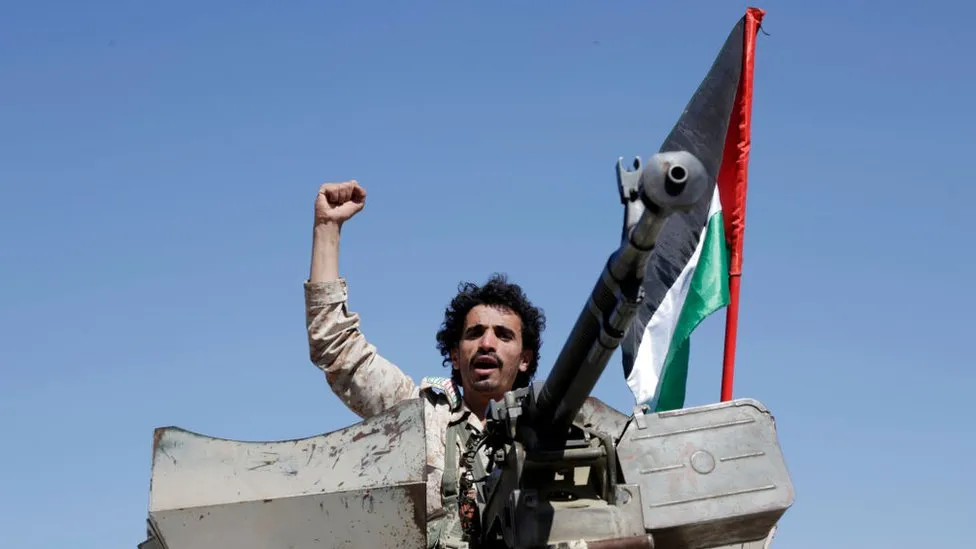
The Houthi movement in Yemen says it has struck a US merchant ship in the Red Sea in a fresh attack targeting commercial shipping.

It named the ship as the KOI, which it said was US-operated.

Maritime security firm Ambrey said a vessel operating south of Yemen’s port of Aden had reported an explosion on board but it did not name the ship.

Meanwhile, the US has launched new air strikes in Yemen, targeting 10 drones reportedly being set up to launch.

According to Reuters news agency, the KOI is a Liberian-flagged container ship operated by UK-based Oceonix Services. The same company’s fleet includes the oil tanker Marlin Luanda, which was damaged by a missile on Saturday.

The Houthis regard all Israeli, US and British ships as legitimate targets following Israel’s war on Hamas in Gaza, and US and British targeting of Houthi missile positions in what the two countries say are efforts to protect commerce.

Houthi military spokesperson Yahya Sarea said on Wednesday that the movement’s armed forces had targeted an American merchant ship named KOI with “several appropriate naval missiles”.

The ship, he said, had been heading to “the ports of occupied Palestine”, a phrase which is sometimes used to mean Israel.

Yemen, he added, would “not hesitate” to retaliate against “British-American escalation”.

“All American and British ships in the Red and Arabian Seas are legitimate targets for the Yemeni Armed Forces as long as the American-British aggression against our country continues,” the Houthi spokesman said.

US Central Command said the 10 drones being prepared for launch in Yemen had posed a threat to merchant vessels and US warships in the region.

All 10 were destroyed along with a Houthi drone ground control station, it said.

The US added that one of its warships had shot down three Iranian drones and a Houthi anti-ship ballistic missile in the Gulf of Aden.

Houthi attacks on shipping in the Red Sea have slowed down international trade, raising fears of supply bottlenecks.

On 7 October, hundreds of Palestinian gunmen from Gaza infiltrated southern Israel, where they killed around 1,300 people – mostly civilians – and took 250 others hostage.

Israel responded by launching a military campaign in Gaza, during which more than 26,900 people – most of them women and children – have been killed, according to the health ministry there which is controlled by the Hamas group.

Biden top official to meet Wednesday with Netanyahu ally

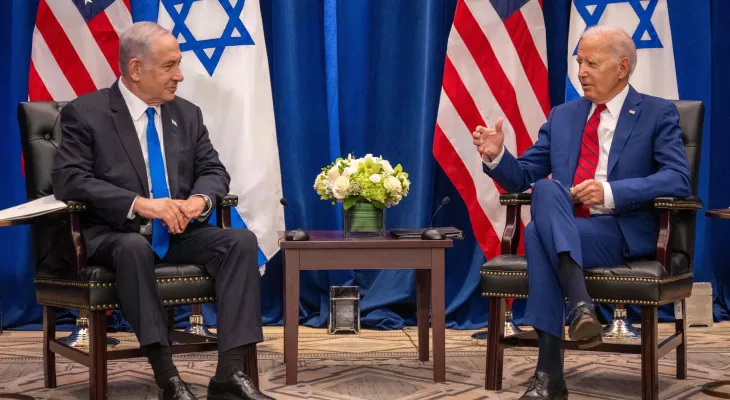
US National Security Advisor Jake Sullivan is to meet with Israeli Minister of Strategic Affairs Ron Dermer, a close ally of Prime Minister Benjamin Netanyahu, in Washington on Wednesday, according to a source familiar with the matter.

The source confirmed reports by the Axios outlet, which added the talks would cover Israel’s plans for after the conflict with Hamas ends. A Sunday meeting of US, Israeli, Egyptian and Qatari officials produced a proposed framework for a new truce and hostage release.