
Boris Johnson has promised to get the country “back on track” as the government unveils its plans for the year ahead in the Queen’s Speech.

The speech is expected to focus on boosting economic growth, but the PM will say that the UK cannot spend its way out of trouble and will need to grow the economy.

In all, 38 parliamentary bills are due to be unveiled.

Labour said the Tories were not up to the challenge of growing the economy.

A senior government source defended the lack of new direct help with the fast-rising cost of living in the Queen’s Speech, telling the BBC: “There’s been enough pain relief. It’s time for the surgery the economy needs.”

Ministers will also recommit to tougher penalties for protest groups, like Insulate Britain and Extinction Rebellion, who use disruptive tactics.

The Prince of Wales will deliver the address to Parliament at 11:30 BST, after the Queen pulled out on Monday, for the first time since 1963, due to what Buckingham Palace called “episodic mobility problems”.

The Queen’s throne will remain empty, with Prince Charles, the Duchess of Cornwall and Prince William expected to be seated in front of assembled politicians.


The speech will open with a promise to grow the economy, ease the financial burden on households and pursue the government’s levelling up programme, aimed at tackling regional disparities in the UK.

But there will be no bill specifically aimed at tackling the cost of living.

In a House of Commons debate following the speech, the prime minister is expected to argue the government “cannot simply spend our way out of the country’s problems”, arguing that the answer lies instead in creating highly paid, highly skilled jobs.

The comments will follow a recent prediction from the Bank of England that inflation is likely to rise to around 10% later this year, with food and energy price rises placing a particularly high burden on households.

Labour leader Sir Keir Starmer said: “Times are tough for working people. But they are much tougher than they should be. Some 12 years of the Conservatives have meant low economic growth, high inflation, and high taxes.

“Because the Tories are not up to the challenge of growing the economy, all those tax hikes aren’t going into improving public services. Never before have people been asked to pay so much for so little.”

Liberal Democrat rural affairs spokesman Tim Farron urged the government to use the speech to help the countryside by protecting farmers from being undercut by global trade deals.

And SNP Westminster leader Ian Blackford accused ministers of a “deafening silence” over the cost of living, saying they had to “deliver desperately needed support to put money into people’s pockets”.

An activist is led away from the blockade of the Tyburn fuel depot in Birmingham

In the Queen’s Speech there will be seven bills which ministers argue deliver the benefits of Brexit, and a Levelling Up and Regeneration Bill is expected to change planning rules in England after previous proposals led to a backbench rebellion.

A Public Order Bill would create a new criminal offence – aimed at protest groups – with a maximum sentence of 12 months for “interfering with key national infrastructure” such as airports, railways and printing press. This would also make it illegal to obstruct major transport works such as HS2.

Home Secretary Priti Patel said the powers would clamp down on the “outrageous behaviour” of “disruptive protests carried out by a “self-indulgent minority who seem to revel in causing mayhem and misery”.

But the Liberal Democrats called the plans “dangerous and draconian”, with home affairs spokesman Alistair Carmichael arguing that police already had the powers to stop “guerrilla protesters”.

The new police powers were originally announced last autumn, after campaign group Insulate Britain began blocking major roads and motorways.

Ministers then tried to add the powers as amendments to the Police, Crime, Sentencing and Courts Bill – but failed after Labour and other opposition peers teamed up to oppose them.

Because the changes were introduced after the bill had passed all its stages in the Commons, the government did not have another opportunity to add them before the previous session of Parliament ended last month.

The government will be confident of getting the measures through Parliament in this session as it has a large majority in the House of Commons.

Prince Charles is to read the Queen’s Speech on her behalf for the first time ever, after the 96-year-old monarch pulled out due to mobility problems.

The Prince of Wales and the Duke of Cambridge will open Parliament, after the Queen granted special permission.

It will be Prince William’s first state opening, and he and Prince Charles will be accompanied by the Duchess of Cornwall.

It is the first time since 1963 that the Queen will not deliver the speech.

At that time, she was pregnant with Prince Edward, and it was instead read by the Lord Chancellor.

The Queen’s main throne will remain empty in the House of Lords on Tuesday.


The decision for Prince Charles to take the Queen’s place was taken on Monday and a new Letters Patent authorised by the monarch was issued to delegate the opening of Parliament to the Counsellors of State.

This is the category of royal that includes the next four people in the line of succession who are over the age of 21.

Buckingham Palace said on Monday that the decision to pull out had been taken in consultation with the Queen’s doctors, as she continues to experience “episodic mobility problems”.

The Palace said in a statement: “At Her Majesty’s request, and with the agreement of the relevant authorities, The Prince of Wales will read The Queen’s Speech on Her Majesty’s behalf, with The Duke of Cambridge also in attendance.”

800 Pakistani Hindus returned home from India, says NGO

It quoted SLS as saying that many of the returnees went home after finding no progress in their citizenship application.

Their return is said to be embarrassing for India where the Ministry of Home Affairs (MHA) initiated an online citizenship application process in 2018. It also made 16 Collectors in seven States to accept online applications to grant citizenship to Hindus, Christians, Sikhs, Parsis, Jain and Buddhists from Pakistan, Afghanistan and Bangladesh.

The religiously-based citizenship law has been challenged by India’s opposition groups. A bureaucratic red-tape is a hindrance. Though the entire process is online, The Hindu said, the portal does not accept Pakistani passports that have expired, forcing people seeking refuge to rush to the Pakistan High Commission in Delhi to get their passports renewed for a hefty sum.

“If it is a family of ten, then they end up spending more than Rs1 lakh at the Pakistan High Commission to get the passports renewed. These people come to India amid great financial hardships and to cough up such a high amount of money is not feasible,” an SLS official was quoted as saying.

The MHA informed the Rajya Sabha on December 22, 2021, that according to the online module, as many as 10,635 applications for citizenship were pending with the Ministry as on December 14, of which 7,306 applicants were from Pakistan.

According to Mr Singh, there are 25,000 Pakistani Hindus in Rajasthan alone who have been awaiting citizenship, some for more than two decades. Many of them have applied in the offline mode.

In 2015, the MHA amended the Citizenship Rules and legalised the stay of foreign migrants belonging to six communities, who had entered India on or before December 2014 due to persecution on grounds of religion, by exempting them from the provisions of the Passport Act and the Foreigners Act as their passports had expired.

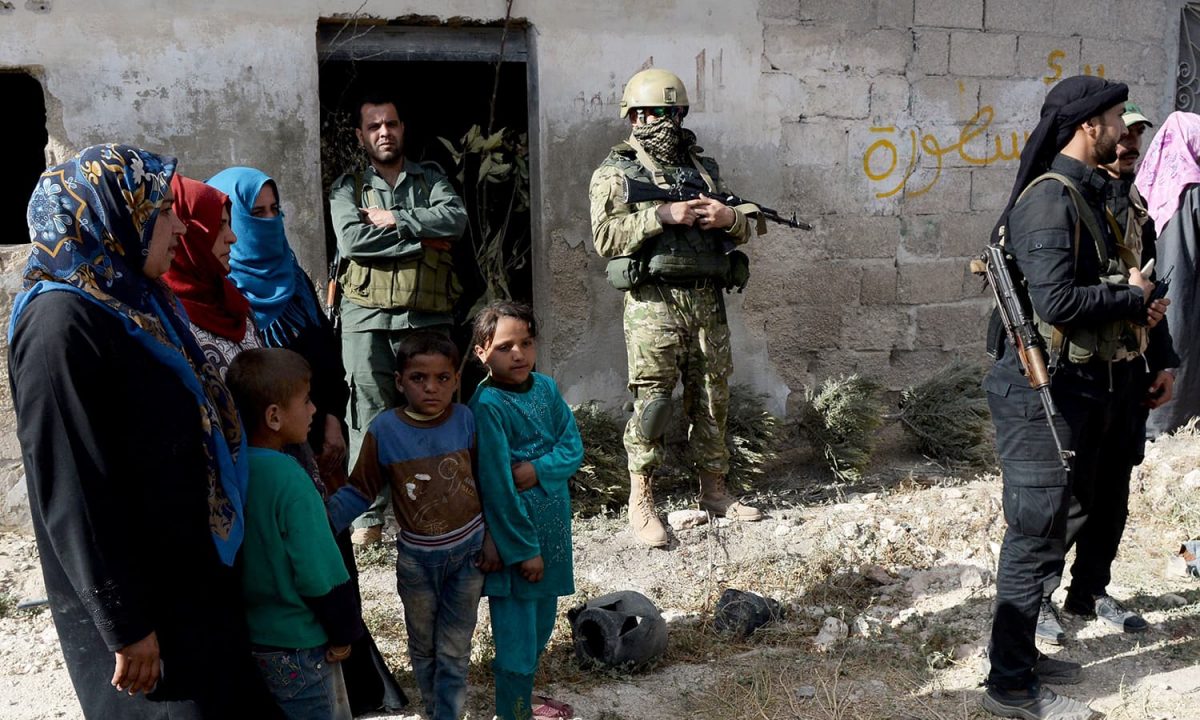
12.3 million children need aid in Syria, says UN

“Syria’s children have suffered for far too long and should not suffer any longer,” the UN children’s agency said in a statement, noting that 12.3 million were in need of aid both inside the country and in the wider region where they had fled.

“More than 6.5 million children in Syria are in need of assistance, the highest number recorded since the beginning of the crisis, more than 11 years ago,” it added.

Syria’s war is estimated to have killed nearly half a million people and displaced millions since it began with a brutal crackdown of anti-government protests in 2011. It escalated to pull in foreign powers and jihadists.

“Children’s needs, both inside Syria and in neighbouring countries, are growing,” said Adele Khodr, Unicef’s Middle East chief.

“Many families struggle to make ends meet. Prices of basic supplies including food are skyrocketing, partially as a result of the crisis in Ukraine.”

Children are among the most vulnerable and the UN warned they are bearing the brunt of the impact.

Egyptians get warning: don’t satirise inflation

In March, the group posted a satirical video on TikTok. The band mimed instruments with household items and parodied a romantic song, substituting the lyrics to bemoan soaring food prices.

The three comedians were summoned by state security in Assiut, 400 kilometres south of Cairo, on March 31, according to the Egyptian Initiative for Personal Rights (EIPR).

The agency said they appeared before the Cairo prosecutor on April 18-19, “when they were accused of belonging to a terrorist organisation and spreading false news”.

Such allegations are routinely levelled against dissidents in Egypt.

Egypt’s annual inflation rate hit 12.1 percent in March, driven by high oil and food prices. Analysts fear prices could spike further due to the impact of the war in Ukraine on global wheat supply.

Egypt’s currency has also sagged since Russia’s invasion of Ukraine in late February, further fuelling inflation.

Rights groups estimate that some 60,000 political prisoners are being held in Egypt.

President Abdel Fattah al-Sisi reactivated the dormant presidential pardon committee last month, and Egypt on April 24 released 41 political opponents from provisional detention. Three days later, officials announced that Sisi had pardoned 3,273 prisoners, including prominent journalist Hossam Moniss.

Last week, Reporters without Borders released its 2022 World Press Freedom Index, ranking Egypt 168 out of 180 countries, down two spots from last year’s score of 166.

Syria’s Assad meets Khamenei, Iran’s president

“Assad has left Iran for Damascus after meeting separately with the supreme leader” and the president, the report said.

Iran is a major ally of Assad, backing him alongside Russia in Syria’s more than decade long civil war.

Tehran has given financial and military support to the Assad regime during the 11-year war, and says it has deployed forces in Syria at the invitation of Damascus but only as advisers.

The relationship between Tehran and Damascus are “vital for both countries and we should not let it weaken,” Khamenei said, according to a statement on his website.

“We should strengthen it as much as possible.” Assad’s last reported visit to Iran was in February 2019 — and that was the first one since the start of the war.

Iran’s supreme leader also hit out at Arab nations that normalised relations with Tehran’s arch nemesis Israel under the US-sponsored Abraham Accords.

“While leaders of neighbouring countries hang out with those of the Zionist regime and drink coffee with them, the people of these countries take to the streets and chant anti-Zionist slogans on Quds (Jerusalem) Day,” Khamenei said.

The United Arab Emirates, Bahrain and Morocco all normalised ties with Israel in 2020, breaking with decades of Arab consensus that there should be no recognition of the Jewish state in the absence of a peace agreement establishing a Palestinian state.

Visitors admire soothing effects of Pakistani culture in DC

The guest, who only gave her first name Nancy, turned and faced the painting, a piece of calligraphy.

“Illuminating, soothing,” she said with a pause. “These lines, do they mean something?” she asked.

“This is a Quranic verse and highlights God’s kindness,” the artist explained.

“And it does so very effectively,” said Nancy.

Saturday, May 7, was the Passport DC Day, “when international diplomatic community displays its lively and varied culture”, explained Press Counselor Sarfraz Hussain.

Celebrated annually in May, which is International Cultural Awareness Month in Washington, “Passport DC” facilitates embassies in showcasing their art, culture and music. Thousands of people enjoy the popular embassy open houses, street festivals, performances, exhibitions, workshops, and more.

”We had more than 2,000 visitors today,” said Mr. Hussain, “although it rained all day”.

Most visitors were non-Pakistani Washington residents, followed by Pakistani Americans, Americans from other states and citizens of other countries.

“We showcased Pakistan’s rich cultural diversity, representing all regions and ethnic groups,” Mr Hussain said.

Some stalls also highlighted Pakistan’s economic and tourism potential. Diplomats from other countries, US government officials and IT professionals were seen inquiring about business potential in Pakistan.

One stall displayed cricket bats, balls, pads and soccer balls from Sialkot. For many visitors, it was a pleasant surprise that Pakistan was a major producer of sports goods.

A father and his son wanted to know if cricket was like baseball. There was no one in the crowd who knew enough about both sports to explain. But the effort earned an American kid a cricket ball.

This year’s festival happened after a gap of three years — due to Covid-19 — so people started queuing up outside embassies much before the scheduled opening.

Stalls at the embassy’s Jamshed Marker Hall had a wide selection of Pakistani handicraft and dresses, showcased in the backdrop of Pakistani folk tunes. The display included stitched and unstitched designer clothes, paintings of renowned Pakistani artists, books, and photos of historical places.

One stall also had objects made from rock-salt while another had agricultural products including basmati rice.

American guests also patronised the henna stall and had their hands “tattooed with henna”, as a guest said. At least two men also got “the Pakistan henna paint” on their hands, as one of them said while displaying his “tattoos”.

The visitors also enjoyed rich menu of Pakistani food that was served to introduce unique tastes of Pakistani cuisine. Some also picked Urdu books, asking why they opened right to left.

Colombia has sent an additional 2,000 troops and police to help contain a gang that has burned cars and threatened people as reprisal for the extradition of its leader to the US.

President Iván Duque said Dairo Antonio Úsuga, better known as Otoniel, was the world’s most dangerous trafficker.

Otoniel led the Gulf Clan cartel and was extradited to the US last week.

In response, the Gulf Clan announced a four-day so-called “armed strike” in the north of the country.

Gang members destroyed at least 100 vehicles on Friday during violent protests against their leader’s extradition. They also intimidated civilians, warning them to stay at home.

The unrest has affected almost 90 municipalities in nine of Colombia’s 32 departments, according to officials. No casualties have been reported.

Defence Minister Diego Molano said the extra troops would be sent to support almost 50,000 personnel already deployed.

The capture of Otoniel in October ended a seven-year manhunt and last month Colombia’s Supreme Court approved the extradition.

Dairo Antonio Úsuga is now facing charges in the US

The Gulf Clan trafficked between 180 and 200 tonnes of cocaine a year, according to Colombian authorities.

The gang allegedly moves between 30 and 60% of all the cocaine originating from Colombia – the world’s largest producer of the drug.


President Duque has compared Otoniel to the notorious Colombian drug lord Pablo Escobar.

Prior to his capture, Otoniel was Colombia’s most wanted man and the government had offered a $800,000 (£582,000) reward for information about his whereabouts, while the US had placed a $5m bounty on his head.

The Gulf Clan operates in many provinces and has extensive international connections. It is engaged in drug and people smuggling, illegal gold mining and extortion.

It is believed to have about 1,800 armed members, who are mainly recruited from far-right paramilitary groups. Members have been arrested in Argentina, Brazil, Honduras, Peru and Spain.

It controls many of the routes used to smuggle drugs from Colombia to the US, and as far away as Russia. Authorities in the US have described it as “heavily armed [and] extremely violent”.

Otoniel was eventually captured in his rural hideout in Antioquia province in north-western Colombia in October, close to the border with Panama in an operation involving 500 soldiers supported by 22 helicopters. He now faces life in prison.

The government has offered rewards of up to $1.2m (about £950,000) each for information leading to the capture of Otoniel’s top deputies, known as “Siopas” and “Chiquito Malo”.

Voting is under way in the Philippines, with millions queuing across the islands to choose their next president.

The man tipped to win the presidency is Ferdinand “Bongbong” Marcos Jr, the son of the nation’s former dictator.

Polls suggest he may see a landslide victory, meaning the Marcos clan ousted by a people’s revolt 36 years ago could reclaim power.

His main rival is Leni Robredo, a liberal who narrowly beat Mr Marcos in the 2016 vice-presidential race.

But polls this campaign have consistently shown the Marcos heir ahead with a commanding 30-percentage-point lead.

A high turnout is expected of the nation’s eligible 67.5 million voters – with many lining up pre-dawn on Monday to cast their votes at polling booths at schools and community centres.

There have been reports of ballot issues, with some voters at a school in Manila telling the BBC they were having trouble feeding their papers into the counting machines. Others reported that they were told to leave their votes with booth officials.

Comelec Commissioner George Garcia had earlier told the BBC “there will always be allegations of irregularities” but there were no significant breaches so far.

He also said reports of violence were “minimal” and “the police are in full control of the situation”.

Whoever wins Monday’s presidential race will take over from Rodrigo Duterte, a hardliner who’s come to the end of his six year term in office.

Mr Duterte’s government has been condemned for its brutality in cracking down on drugs and crime, though the administration has always rejected allegations of wrongdoing.

Critics also say democratic institutions have come under attack in his presidency, pointing to the shutdown of Philippines’ broadcaster ABS-CBN, a channel which – like other some other independent media outlets – has angered Mr Duterte in the past.

A long line of exasperated voters watched us as we walked into the polling station in Makati in Metro Manila.

“Are you media?”, asked one onlooker. “It’s good that you’re here.”

The polling station, which is expected to handle more than 25,000 voters today, has experienced three malfunctioning vote counting machines.

Across the country, 1,867 machines have malfunctioned, according to the Philippine elections commissioner George Garcia, but he said the problems have been resolved.

But one of the machines at our polling station was still malfunctioning. A heated argument had broken out. An elderly woman said to us she had been waiting for more than four hours to feed her ballot paper and receive an official receipt.

Election officials were urging her to leave the paper and they would feed it when the machine started working, but she remonstrated, saying she wanted to witness her vote being counted.

Elsewhere the elections have been running smoothly, but there are reports of some violent clashes and claims of vote buying. The relevant authorities say they are investigating the allegations.

Who are the candidates?

Bongbong Marcos, 64, is the son of the late dictator Ferdinand Marcos whose regime lasted 21 years.

On Monday, he and his family – including his mother Imelda – cast their votes at a school polling booth in Batac in the country’s north, his family’s heartland.

Bongbong Marcos (right) was seen with his mother Imelda (centre) who was dressed in red, her son’s campaign colour

Ferdinand Marcos’ rule saw him plunge the country into martial law and take control of the country’s courts, businesses and media. The army and police arrested and tortured thousands of dissidents and political opponents were murdered.

Mr Marcos, his wife Imelda – infamous for her lavish designer wardrobe – and their cronies plundered an estimated $10bn (£8.1bn) from public funds. Public anger over his regime saw him forced out in the People’s Power Revolution of 1986 and he died soon afterwards.

Upon his family’s return from exile in the 1990s, Bongbong used his family’s wealth and connections to resume political ambitions, becoming a province governor, congressman and senator.


When he lost the 2016 vice-presidential race to Ms Robredo, he contested the result – and has vowed that he won’t be “cheated” this time around.

His running mate is Sara Duterte, daughter of the incumbent president. The pair have promised to “unify” the nation but they rarely discussed any policies during their election rallies.

Ms Robredo is a former human rights lawyer who has consistently led campaigns against Duterte’s drugs violence and gender inequality.

She has vowed to tackle corruption, with her campaign slogan being: “Honest government, a better life for all”.

Ms Robredo is a human rights lawyer

Her rallies have drawn significant turnouts recently – particularly among engaged, generally young “Pink Shirt” supporters who launched door-knocking campaigns to win her votes.

The other candidates have trailed Marcos and Robredo in polls. They include boxing champion and national hero Manny Pacquiao who has promised to tackle corruption and poverty, and Manila’s city mayor Isko Moreno who has promised infrastructure spend and a harsher line on China.

Are there any electoral concerns?

Critics say the election has been plagued by rampant misinformation on social media.

“I have described it as a cesspool of disinformation and it just gets worse every election cycle,” Richard Heydarian, a politics professor at Polytechnic University of the Philippines told the BBC.

Bongbong has denied accusations that he’s launched online operations to whitewash his family’s history. However, his campaign consistently paints his father’s dictatorship as a false “golden period” for the country – despite widespread poverty and an economy heavily indebted to foreign banks.

He has also steered clear of debates or forums where he might have to face independent questioning.

For Ms Robredo, tracker groups have reported an escalation in online campaigns harassing and vilifying her with misogynistic messages.

The Asian Network for Free Elections – a monitor – has found past Philippines votes to be generally free and fair.

When might we expect results?

Polls will remain open until 19:00 (1100 GMT) locally, although this may be extended for Covid restrictions and if voters are still waiting in line. Many are wearing masks to the polls.

Filipinos are not only voting on the president but also the vice-president, senators, lower house legislators and thousands of lower-ranking officials across the whole archipelago’s 7,600 islands.

A turn-out of about 80% – as seen in previous elections – is expected.

Counting will start the moment polls close and it may become clear in a few hours which candidates are pulling ahead. However the process could also take days before a winner is announced, as was the case in 2016.

Sir Keir Starmer is not avoiding answering questions over claims he broke lockdown rules, shadow health secretary Wes Streeting has said.

The Labour leader, who drank beer and ate curry in an MP’s office while restrictions were in place last year, has cancelled an appearance on Monday.

Mr Streeting told the BBC Sir Keir was a man of “decency and honesty” and was not “dodging” scrutiny.

But the Conservatives have accused Sir Keir of double standards.

Sir Keir – who has previously called for Prime Minister Boris Johnson and Chancellor Rishi Sunak to resign over attending Downing Street lockdown events – himself drank beer and ate curry in the constituency office of City of Durham Labour MP Mary Foy during a visit in April last year.

Durham police have launched an inquiry into whether Covid rules were broken, having previously ruled this out.

Sir Keir was due to make a speech and take questions from journalists on Monday afternoon at an event organised by the Institute for Government (IoG) think tank, but he has cancelled his appearance.

The IoG said it had received no explanation for this.

Mr Streeting told BBC Breakfast: “I have no idea why he cancelled the event and I certainly didn’t ask before I came on because I think it’s such a trivial issue.

“The idea that Keir has been dodging questions… I mean he’s been out all weekend, even after a local election campaign where we did very well, he’s been out thanking Labour teams, particularly in the places that we did particularly well in these elections.”

“The idea that Keir is somehow ducking scrutiny is simply not true,” he added, saying he would not “even entertain the idea” that the Labour leader would be found to have broken Covid rules and fined for this.

Watch: Footage shows Sir Keir Starmer drinking beer with colleagues in Durham on 30 April 2021

Sir Keir has said the visit in Durham in April 2021 had been within the rules as it was a work event, and food and drink had been consumed in between doing work.

But an internal memorandum for the trip, obtained by the Mail on Sunday, scheduled time for “dinner”, after which the visit would conclude.

Asked on Sky News whether Sir Keir should resign, Conservative MP and Universities Minister Michelle Donelan said: “This is a decision for him. He’s going to have to search his soul after making this a top priority over the last few months at the expense of key issues like the rising cost of living.”

“My takeaway is that it does smack of sheer hypocrisy,” she added.

The coronavirus rules in place when the drinks took place in Durham on 30 April last year meant it was illegal in England to socialise indoors with people from outside one’s own household or support bubble.

There was an exemption for “work purposes”, although working from home was recommended in the guidance, but the rules did not mention socialising at work.