
The boss of Scottish Power has warned that millions of customers face an horrific winter unless there is a major government intervention in energy firms.

Keith Anderson, chief executive of Scottish Power, told the BBC that another expected rise in energy bills in October to between £2,500 and £3,000 a year could see huge losses for suppliers and many customers unable to pay their bills.

He warned regulator Ofgem that setting the new price cap too low could risk suppliers collapsing or the foreign owned firms leaving the market.

Mr Anderson has put some flesh on the bones of a plan he first mentioned in a frank exchange with a committee of MPs three weeks ago.

He has called for ten million households to have their energy bills reduced by £1,000 this October.

He said the government’s plan to give each household £200 towards their energy bill – a sum that will need to be paid back – would not be enough.

“We need to be realistic about the gravity of the situation – around 40% of UK households, potentially 10 million homes, could be in fuel poverty this winter,” Mr Anderson explained.

The price cap is set to be increased again in October.

To date, the government has said it will offer extra relief of £150 in April via the council tax system in England, and in October customers in England, Scotland and Wales will receive a £200 rebate on their energy bills.

They will have to repay this at £40 a year for five years, starting in April 2023.

However, Mr Anderson said a £10bn tariff reduction fund could be paid for by adding £40 annually to all household energy bills for the next decade. He said this would be the most effective to avoid fuel poverty for the most vulnerable.

Mr Anderson said that such a fund would directly tackle the biggest cause of the cost of living crisis in a way that other measures – such as the recent 5p cut to fuel duty or a possible cut to the frequency of MOT testing – do not.

Households on pre-payment meters and those in receipt of benefits would be eligible for the discount.


Mr Anderson also said more energy companies could collapse if their customers were unable to pay their bills.

Scottish Power is owned by Spanish firm Iberdrola and Mr Anderson fears that foreign owned energy suppliers – including EDF, Eon and his own – might struggle to persuade their parent companies to continue to subsidise loss-making UK subsidiaries and exit the UK market.

Warning to Ofgem

Scottish Power is also concerned that energy companies will sustain further big losses if Ofgem sets the new energy price cap – due to take effect in October – too low.

Wholesale gas prices have fallen sharply since the all time records set in March.

However, many energy companies bought the gas they will supply this winter at prices much higher than current levels.

If Ofgem does not recognise this when it sets the new cap, some firms will have to sell at a significant loss threatening them with further distress or collapse which would further destabilise the market, according to Scottish Power.

“We need to find a way to help to those that need it in time for winter in a way that doesn’t exacerbate the issues we’ve already seen in the industry with supplier failures and very real concerns about billpayers running up unsustainable debts,” Mr Anderson continued.

Energy suppliers concede that further government support would help them as well as their customers.

Meanwhile, government officials privately say that it is hard to distinguish between genuine potential financial distress for the energy companies and intense lobbying.

Ofgem responded that it is “too soon” to predict the level of the price cap from October. However, it said that new measures earlier this year will allow it in “exceptional circumstances”, to update the price cap more frequently than once every six months, to “ensure that the price cap continues to reflect the true cost of supplying energy”.

“This was introduced in the interests of stabilising the market and making sure both consumers and suppliers pay a fair price,” Ofgem added.

The Treasury has said it is monitoring the situation and would review the level of support needed when the level of the new price cap became clear in late summer.

Are you struggling with the rising cost of living? Email: haveyoursay@bbc.co.uk.

Please include a contact number if you are willing to speak to a BBC journalist. You can also get in touch in the following ways:

Rising prices are making the government’s plans to reduce regional inequalities more difficult and more important, says Michael Gove, the cabinet minister for levelling up.

The goal of levelling up is to provide equal opportunities across the UK.

A news Panorama investigation raises questions about whether money is reaching the most deprived areas in England.

Mr Gove said his department was helping councils to ensure bids are effective.

Levelling up was a key part of the Conservatives’ 2019 election campaign.

The government recently set out its 12 “missions” for the policy – ranging from improving education to faster broadband capability to local transport – with a deadline for delivery in 2030.

“Unless we stick to those missions, then the cost of living issues that we face at the moment will deepen inequality,” said Mr Gove.

Labour’s Lisa Nandy, the Shadow Levelling Up Secretary, said the government should begin by getting inflation under control. “By their own admission, their mismanagement of the economy is going to make levelling up harder,” she told Us.

For the first round of the so-called Levelling Up Fund, £1.7bn has been allocated to towns and cities across the UK.

When Panorama sent freedom-of-information requests to councils in the 100 most deprived areas in England, it found that 28 councils had all their bids rejected. This included 18 areas that were on the government’s top priority list, including Knowsley and Blackpool.

Meanwhile, 38 councils won all, or some, of the money they requested, and 34 councils did not submit a bid in this round.

A second round for the fund will open for applications at the end of May.

Former government economist Nicola Headlam said asking councils to bid against each other was not the right approach. “A beauty contest around who gets the money, that’s not really how I would do it,” she said. She also said that affluent places could have more resources to write better proposals.

Mr Gove said his department was deploying levelling up directors, who live in the relevant areas, to assist with bids.

Data methodology: Data gathered under Freedom of Information requests to lower tier local authorities. We have excluded any bids made at a county council or combined authority level as these had more limited eligibility criteria for the Levelling Up Fund. We used the Index of Multiple Deprivation 2019 ‘rank of average ran’ summary measure. Corby has been excluded due to boundary changes, so we included the 101st-ranked local authority Nuneaton and Bedworth.

Marcos Jr on verge of win as presidential campaign ends

Victory in Monday’s election would cap a decades-long effort to rehabilitate the Marcos legacy after the patriarch was deposed and the disgraced clan chased into US exile.

But the prospect of Ferdinand Marcos Jr moving back into the presidential palace has alarmed rights activists, church leaders and political analysts who fear he could rule “without constraint”.

The Marcoses’ remarkable return from pariahs to the peak of political power has been fuelled by public anger over corruption and poverty that persisted under governments that followed the dictatorship.

Thousands of red-clad Marcos supporters braved the ferocious sun and high winds on Saturday to amass on a dusty wasteland overlooked by a gleaming luxury casino resort — a stark reminder of the country’s vast income gap.

Wielding national flags or umbrellas for shade, they gathered before a stage featuring an enormous screen of the smiling candidate as Filipino reggae, hip hop and pop played at deafening levels.

Mary Ann Oladive, a 37-year-old call centre worker, said she hoped Marcos Jr would bring unity to the country. “We hope for greater opportunity and jobs. We trust him, we hope that after the election they will give us a better future in the Philippines,” she said.

‘Without constraint’

Ten candidates are vying to succeed President Rodrigo Duterte in the landmark elections seen by many as a make-or-break moment for Philippine democracy.

Polls indicate Marcos Jr will win more than half the votes, which would make him the first presidential candidate to secure an absolute majority since his father was ousted in 1986.

Analysts warn such an outcome would lead to weaker democratic checks and balances, more corruption and a fresh attempt to overhaul the 1987 constitution — which could include scrapping the one-term limit for presidents.

Previous administrations, including Duterte’s, have tried to amend the constitution but they lacked sufficient support in Congress to push through changes.

The latest poll by Pulse Asia Research showed Marcos Jr on 56 percent — 33 percentage points ahead of his nearest rival Leni Robredo, who narrowly beat him in the 2016 vice-presidential race.

Such a winning margin would give Marcos Jr the power to “govern the way Duterte wanted to”, one long-time observer of Philippine politics told AFP. “That is without constraint,” he said.

Robredo’s recent poll bump has raised hopes among progressive supporters that their volunteer-driven campaign could yet deliver an upset.

There was a carnival atmosphere in the capital’s financial district on Saturday as thousands of Robredo fans wearing her pink campaign colour and waving flags and balloons packed out avenues, dancing to pop music blaring over loudspeakers.

“I think this election is very important… our next six years of life will depend on it,” first-time voter Charmaigne Ang, 18, told AFP.

“Surveys are not a basis of who will win.” But pollster Ana Maria Tabunda of Pulse Asia Research gave Robredo little hope.

“Our error margin is only plus or minus two percentage points — given the large gap, it’s not going to be affecting the results,” Tabunda told AFP.

Allegations of dirty tricks marred the last week of a bitter presidential campaign, as Marcos Jr warned of vote-rigging while Robredo accused him of being a “liar”.

Gas leak blamed for blast at iconic Havana hotel

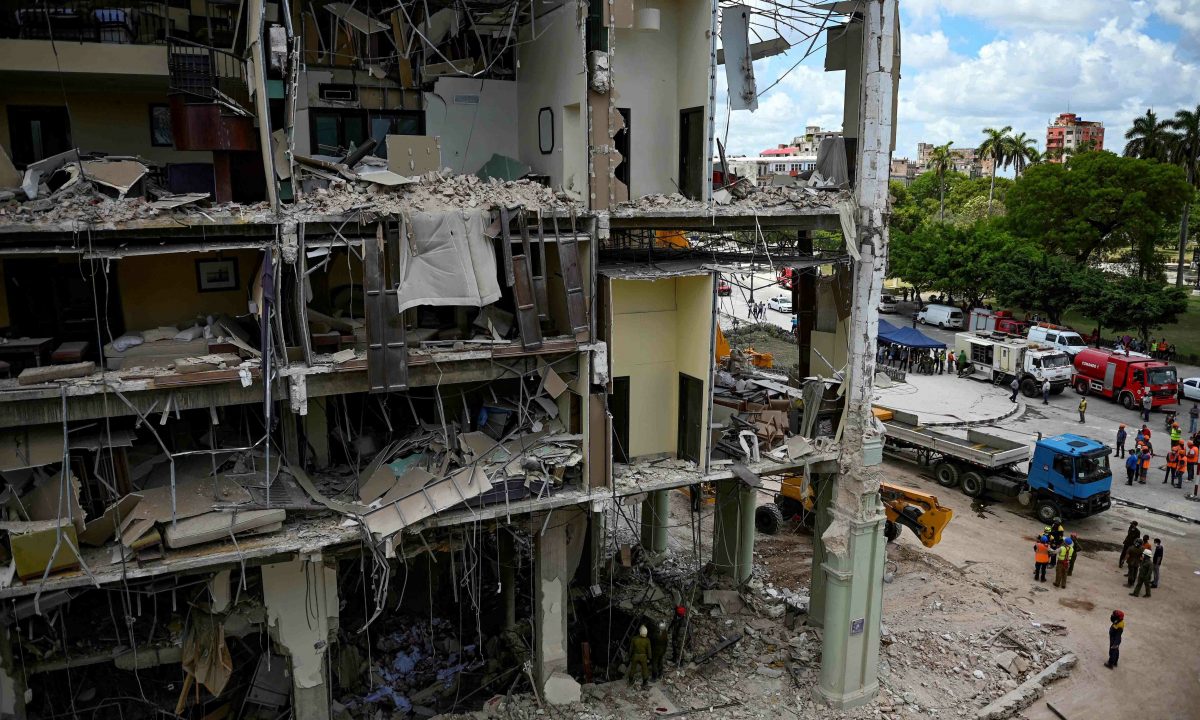
Speaking from the scene on Cuban television, President Miguel Diaz-Canel said the blast at the historic, high-end Hotel Saratoga appeared to have been caused by a gas leak.

“In no case was it a bomb or an attack,” he later told Reuters as he left the capital’s Calixto Garcia hospital, where many of the injured were treated. ‘It’s just a very unfortunate accident.”

The blast nonetheless sent a brief wave of panic through the historic old Havana neighborhood, which has gradually begun reopening to tourists after the pandemic battered the Caribbean island’s crucial travel sector.

Death toll from Hotel Saratoga explosion rises to 22 with more than 70 injured

Hundreds of Cubans and tourists alike gathered near the property under a hot sun as police cordoned off the area around the hotel. Many speculated about the cause of the blast as ambulances and rescue workers carried victims from the wreckage.

The explosion rattled a nearby school with more than 300 students in attendance, health authorities said. At least 15 children were reported injured as of late Friday evening, the health ministry said, and one child had died.

Cuba’s tourism minister, Juan Carlos Garcia, said no foreigners were killed or injured in the blast, according to initial reports.

The hotel, housed in a more than century-old building, had been closed and only workers were inside at time of the explosion, state-run TV said, citing Roberto Enrique Calzadilla, a representative of the military-run company that operates many of the country’s hotels.

Crowds jeer Sri Lankan prime minister on rare outing

Months of blackouts and acute shortages of food, fuel and medicines have caused widespread suffering across the South Asian island, which is enduring its worst-ever economic downturn.

Sunday saw the premier, brother of President Gotabaya Rajapaksa, visit one of the holiest Buddhist temples — housing a reputedly 23-century-old tree — in Anuradhapura.

But dozens of men and women carried hand-written placards and chanted slogans demanding that “thieves” be banned from the sacred city, which lies 200 kilometres north of Colombo.

“We will worship you if you stand down (as Prime Minister) and leave,” one man shouted.

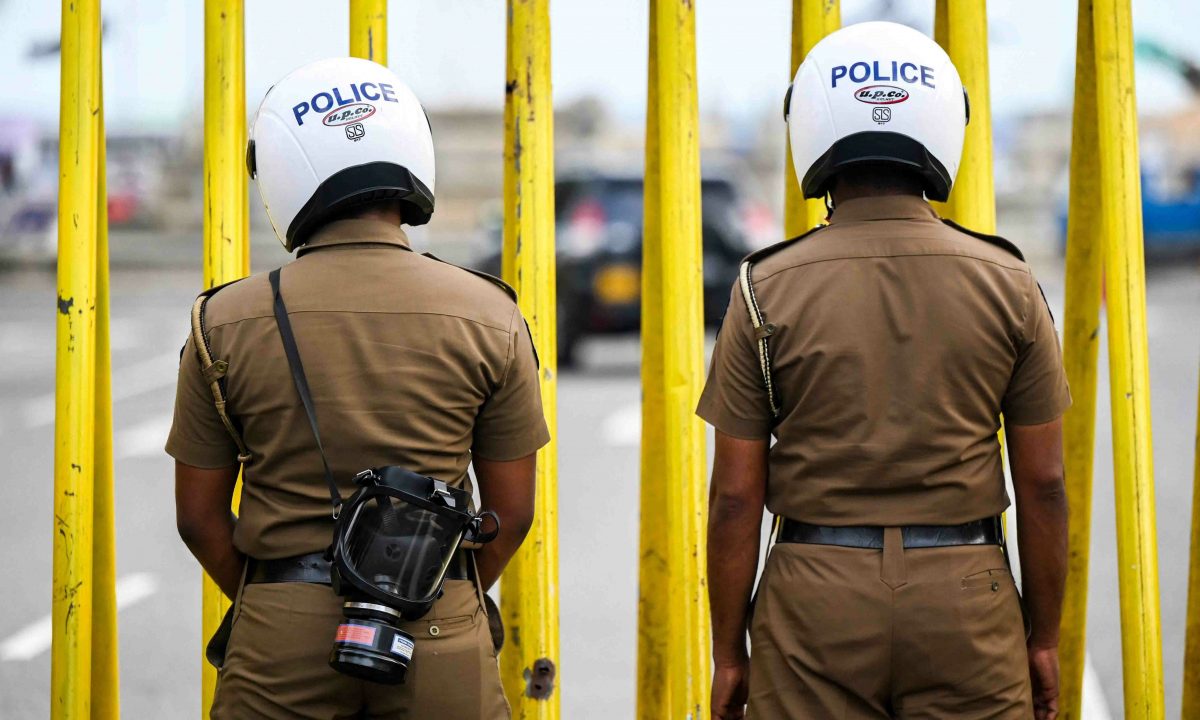
Heavily armed Special Task Force (STF) commandos were deployed while police moved to clear the road for Rajapaksa’s convoy of six vehicles. Officials said the premier would return to the capital by helicopter.

Several major roads in the country are blocked by people protesting the lack of cooking gas, petrol and diesel.

The defence ministry in a statement said demonstrators were behaving in a “provocative and threatening manner” and disrupting essential services.

The government imposed a state of emergency granting the military sweeping powers to arrest and detain people on Friday, after trade unions brought the country to a virtual standstill in a bid to pressure President Gotabaya Rajapaksa to step down.

The president, 72, has not been seen in public since tens of thousands attempted to storm his private residence in Colombo on March 31.

Since April 9, thousands have been camping in front of his office in Colombo.

Divine intervention

Mahinda Rajapaksa’s visit to Anuradhapura is part of a flurry of religious activity by the ruling family as it clings onto power in the Buddhist-majority nation.

Local media reported that the president’s personal shaman, Gnana Akka, had charmed bottled water and delivered it to the protest site in the hope the movement would fizzle out.

Another report said the premier’s wife Shiranthi, a Catholic, had visited a Hindu temple seeking divine help for her family’s bid to remain in power.

Sources say the president may ask his brother Mahinda to stand down in an effort to clear the way for a unity government to navigate Sri Lanka through the crisis.

But the country’s largest opposition party has already said it will not join any government helmed by a member of the Rajapaksa clan.

Sri Lanka was hit by an economic crisis after the coronavirus pandemic hammered income from tourism and remittances.

In April, the country announced it was defaulting on its $51 billion foreign debt.

Finance Minister Ali Sabry warned last week that the country will have to endure unprecedented economic hardship for at least two more years.

Saudi king admitted to hospital in Jeddah for tests: report

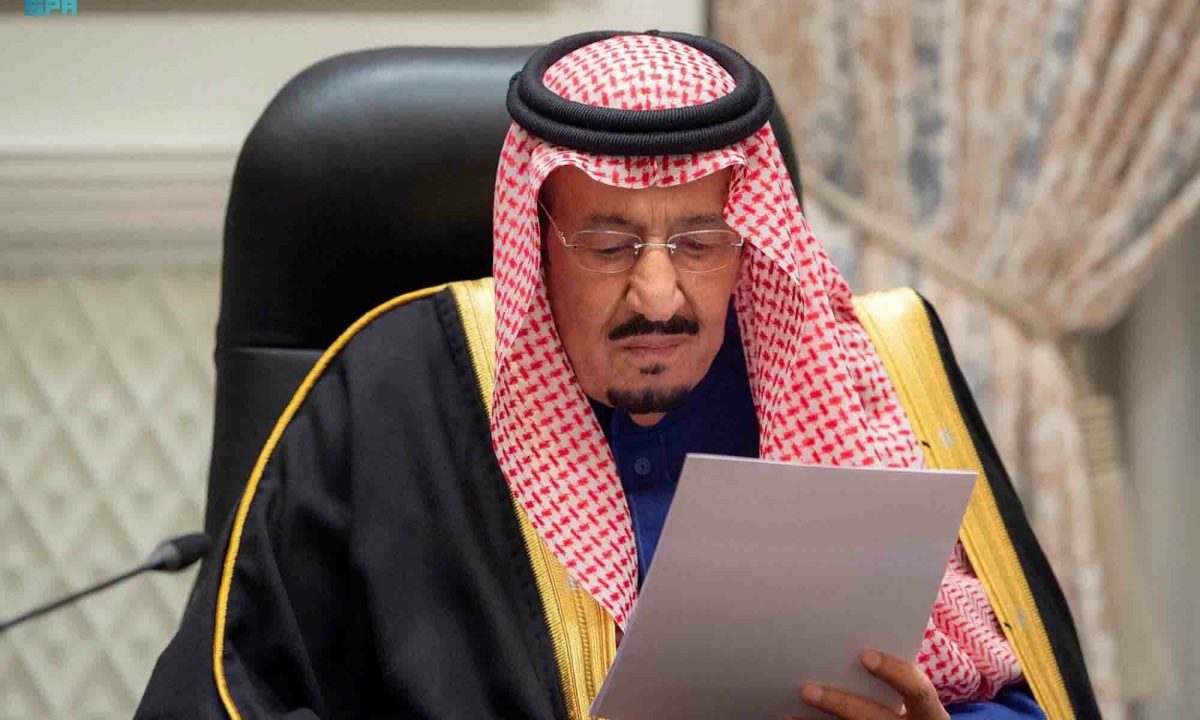
He is undergoing the tests in the King Faisal Specialist Hospital, the statement said, giving no other details. “May God preserve the Custodian of the Two Holy Mosques and may he enjoy health and wellness,” the statement said.

King Salman, the custodian of Islam’s holiest sites, became ruler of the world’s top oil exporter in 2015 after spending more than two-and-a-half years as the crown prince and deputy premier.

He also served as governor of the Riyadh region for more than 50 years.

The king, 86, underwent gallbladder surgery in 2020 and had the battery of his heart pacemaker replaced in March.

The de facto ruler and next in line to the throne is the crown prince, Mohammed bin Salman, widely referred to as MBS, who has launched reforms to transform the kingdom’s economy and end its “addiction” to oil.

Sixty feared dead in Ukraine school bombed by Russia: governor

Governor Serhiy Gaidai said Russian forces dropped a bomb on Saturday afternoon on the school in Bilohorivka where about 90 people were sheltering, causing a fire that engulfed the building.

“The fire was extinguished after nearly four hours, then the rubble was cleared, and, unfortunately, the bodies of two people were found,” Gaidai wrote on the Telegram messaging app.

“Thirty people were evacuated from the rubble, seven of whom were injured. Sixty people were likely to have died under the rubble of buildings.”

Reuters could not immediately verify the report.

Ukraine and its Western allies have accused Russian forces of targeting civilians in the war, which Moscow denies.

In the ruined southeastern port city of Mariupol, scores of civilians have been evacuated from a sprawling steel plant in a week-long operation brokered by the United Nations and the International Committee of the Red Cross (ICRC).

Ukrainian President Volodymyr Zelenskiy said in an address late on Saturday that more than 300 civilians had been rescued from the Azovstal steelworks and authorities would now focus on trying to evacuate the wounded and medics. Other Ukrainian sources have cited different figures.

Russian-backed separatists on Saturday reported a total of 176 civilians evacuated from the plant.

The Azovstal plant is a last hold-out for Ukrainian forces in the city now largely controlled by Russia, and many civilians had also taken refuges in its underground shelters. It has become a symbol of resistance to the Russian effort to capture swathes of eastern and southern Ukraine.

Russian President Vladimir Putin calls the invasion he launched on Feb. 24 a “special military operation” to disarm Ukraine and rid it of anti-Russian nationalism fomented by the West. Ukraine and its allies say Russia launched an unprovoked war.

Mariupol is key to blocking Ukrainian exports and linking the Crimean Peninsula, seized by Russia in 2014, and parts of the eastern regions of Luhansk and Donetsk that have been controlled by Russia-backed separatists since that same year.

Victory Day

In an emotional address on Sunday for Victory Day, when Europe commemorates the formal surrender of Germany to the Allies in World War Two, Zelenskiy said that evil had returned to Ukraine with the Russian invasion, but his country would prevail.

US President Joe Biden and other G7 leaders were to hold a video call with Zelenskiy on Sunday in a show of unity ahead of Victory Day celebrations on Monday in Russia.

Underlining Western support for Ukraine, Britain pledged to provide a further 1.3 billion pounds ($1.6 billion) in military support and aid, double its previous spending commitments.

Victory Day is a major event in Russia and Putin will preside on Monday over a parade in Moscow’s Red Square of troops, tanks, rockets and intercontinental ballistic missiles, showing military might even as his forces fight on in Ukraine.

His speech could offer clues on the future of the war. Russia’s efforts have been stymied by logistical and equipment problems and high casualties in the face of fierce resistance.

US Central Intelligence Agency Director William Burns said on Saturday that Putin was convinced “doubling down” on the conflict would improve the outcome for Russia. “He’s in a frame of mind in which he doesn’t believe he can afford to lose,” Burns told a Financial Times event in Washington on Saturday.

Scottish Conservatives leader Douglas Ross has no plans to quit as leader despite losing 60 councillors in the local elections.

The day after his party dropped to third place in Scotland , he said he would “try to do better” and continue fighting against the SNP.

The Moray MP told BBC Scotland he heard “loud and clear” the anger from voters over the Westminster party scandals.

His comments came as parties began to negotiate working together on councils.

Mr Ross told BBC Scotland: “I am absolutely determined to continue as the leader of the Scottish Conservatives because there is a lot of work we have to do to continue to fight the SNP to stop their distraction of national politics onto their obsession about independence and deliver for the people of Scotland.


“I also understand and accept criticism from colleagues. As leader of the party I am someone who hopefully listens when concerns are raised and I there are always issues where I can do better and I will always seek to do that going forward.”

He added: “It’s disappointing and we have lost some great councillors and some outstanding candidates haven’t had the opportunity to serve their area but in parts of Scotland we have made gains.”

Earlier, Conservative MSP, Craig Hoy, told BBC Radio’s Good Morning Scotland programme that he retained absolute confidence in Douglas Ross.

He said: “I don’t think we should be apportioning blame directly at this stage.

“The results are very disappointing. It was quite clear when I was making calls and on the doorsteps that Scottish voters, particularly Scottish Conservative voters, are very frustrated and quite angry at what they’ve seen coming out of Downing Street over the last five months or so.

“I think they were ready to give us a bit of a bloody nose and that, to some extent, is what happened.”

He added: “I have absolute confidence in Douglas Ross as the Scottish leader. We couldn’t have done any more to put out a positive campaign and message here in Scotland. Unfortunately, the drumbeat of what was going on elsewhere meant we couldn’t get that message over on the doorsteps.”

Losing more than 60 seats and slipping from second to third place in these elections is a significant setback for the Scottish Tories and their leader Douglas Ross.

While he has no intention of quitting, one MSP told me there was now an “undercurrent of unhappiness” with his leadership at Holyrood and that he would have to work hard to overcome that.

The senior MSP Liz Smith has publicly questioned his flip-flop over Boris Johnson’s resignation, telling The Times he has to “explain why he is defending him as prime minister but blaming him for the result”.

Former MSP Adam Tomkins has previously said Douglas Ross must “own the consequences” of backing the PM.

While there’s disquiet, his predecessor Ruth Davidson has pointed out that the result is the second best the Tories have got in Scottish local government for decades and urged the party to “pull together”.

There does not appear to be an organised attempt to topple Douglas Ross. No potential challenger has emerged. As one MSP put it: “if there’s a plot to oust him, no one’s asked me to join”.

Saturday saw the start of negotiations between parties to work together on Scotland’s councils.

Most councils are not in the overall control of one party, and it could take weeks before the full picture of who will run Scotland’s local authorities becomes clear.

Nicola Sturgeon met her new Dundee councillors at the V&A on Saturday

The SNP finished as the biggest party, with Labour moving into second after the Conservatives suffered big losses.

Nicola Sturgeon’s party took control in Dundee, while Anas Sarwar’s Labour won a majority in West Dunbartonshire.

The first minister hailed the result as an “incredible outcome” for her party. She met the new SNP councillors in Dundee on Saturday morning.

On council arrangements, she said: “That’s for local council groups to determine what’s in the best interests of the areas they serve, but I’m in a partnership agreement in government in Holyrood with the Greens, so clearly I’d be very open to seeing that replicated in council areas in Scotland.

“But I think it’s important that these decisions are driven locally and that we see parties that are prepared to recognise where they disagree but focus more on where they agree (and) come together to try to put arrangements in place that are in the best interest of the areas they serve.”


Westminster leader Ian Blackford told Good Morning Scotland that the SNP was willing to work with parties with a “progressive” outlook.

He said: “I think that when I use the word progressive there is one party that doesn’t fit that mould and that is the Conservative party. We will be extending the hand of friendship to others where we can work collaboratively and consensually to make sure that we put the interests of the voters and the communities first.”

Scottish Labour said the election marked the start of its recovery.

The party’s health spokeswoman, MSP, Jackie Baillie, told BBC Scotland there would be meetings this weekend on the way forward.

But she said there would be no formal coalitions.

Anas Sarwar said that Labour was back in Scotland

“As the person who chairs this process over the course of this weekend, we will be bringing together councillors, their proposals, alongside the Scottish executive committee of the party to consider wat arrangements work best at a local level,” she said.

“What we have ruled out are formal coalitions but there are a lot of other arrangements that people come to and have been enjoying in the past that make a lot of sense to those local communities. We want to reflect on those and do what is right for the local community.”

Leader Anas Sarwar visited his new Labour-run West Dunbartonshire Council. He said: “Today there is no doubt that Scottish Labour is back.

“Nicola Sturgeon wants to pretend that the next general election is Scotland versus England, but it isn’t – it will be Boris versus Britain, and Britain will win.

“For 15 years the SNP have tried to stoke up bitterness, division, and anger – but there is new hope, energy and positivity from Scottish Labour to challenge them. “

‘Anxiety about deals’

Scottish Liberal Democrat leader, Alex Cole Hamilton, increased the party’s council seat count by 20 to 87.

The party is in a strong position to work with other parties.

But he told Good Morning Scotland there were some parties he would have problems with.

“We have concerns [about] the focus of parties such as the SNP who are looking at an independence referendum as a principal priority, I would struggle to see how that shares the values we have of localism and driving down the cost of living, improving local services,” he said.

“And with the Conservatives, I have anxieties about doing deals with a party that is sending refugees to Rwanda.”

The US, UK and Irish governments have urged political parties in Northern Ireland to re-establish a devolved administration.

Sinn Féin secured the most seats in the assembly election, a first for a nationalist party in Northern Ireland.

Sinn Féin’s Michelle O’Neill is in line to become first minister, if the DUP nominate a deputy first minister.

However Northern Ireland Secretary Brandon Lewis has played down the prospect of a border poll being called.

The Northern Ireland secretary said the election results were “significant”, but pointed out that unionists still have more seats than nationalists at the Northern Ireland Assembly.

“So I think the focus at the moment quite rightly is on getting Stormont back up and running,” he told BBC NI’s Sunday Politics programme.

Ms O’Neill, who leads the party at Stormont, said on Saturday that the party will be at Stormont on Monday, ready to form an executive.

She said “other parties” need to be ready to form an executive and that there should be “no excuses” or “time wasting”.

Under the terms of the Good Friday Agreement, the decision on when to call a border poll rests with the Northern Ireland secretary.

Sinn Féin’s ultimate goal is for Northern Ireland to leave the UK and become one country with the Republic of Ireland, but that does not mean a border poll is imminent.

When asked what the criteria is for calling such a poll, Mr Lewis did not answer the question directly, but referred to the results of the assembly election.

He said he intends to meet Stormont party leaders on Monday to try to ensure the power-sharing executive resumes.

Northern Ireland has been without a power-sharing executive for several months after the DUP collapsed the institutions as part of its protest against the Northern Ireland Protocol – part of the Brexit deal.

He previously said he would be meeting party leaders over the coming days and would urge them to restore the Stormont institutions, starting with the nomination of an assembly speaker within eight days.


While the office of the first and deputy first minister is an equal one with joint power, the allocation of the titles is regarded as symbolically important.

Although Sinn Féin can now nominate a first minister, they cannot take up the office unless the Democratic Unionist Party (DUP) – the biggest party from the unionist bloc – agrees to nominate a deputy first minister.

Its leader Sir Jeffrey Donaldson has not yet made a decision on whether the party will do that.

On Saturday, Sir Jeffrey said his party would respect the result of the election, however there needed to be changes made to the protocol.

Sir Jeffrey Donaldson (centre) withdrew Paul Givan (left) as NI’s first minister in February in protest against the NI Protocol

The US State Department called on the parties “to take the necessary steps to re-establish a power-sharing executive”.

“Critical and immediate challenges concerning the economy, health, and education are best addressed through the collective efforts of a devolved government chosen by, and accountable to, its people,” spokesperson Ned Price said.

Taoiseach (Irish prime minister) Micheál Martin said it was “incumbent” on all elected representatives to deliver on their mandate through the nomination of a first and deputy first minister.

“A new power-sharing executive is vital for progress and prosperity for all in Northern Ireland,” he added.


A unionist party had always been the largest in the assembly, and previously the Stormont Parliament, since the formation of Northern Ireland in 1921.

For Sinn Féin to be installed in the role of first minister, the majority of unionist assembly members have to agree to form a power-sharing coalition.

In her acceptance speech, Michelle O’Neill said: “The executive needs to be formed immediately. The people cannot wait. People struggling with the cost of living are relying on us to get on with things and do our jobs.

“I have written to all party leaders proposing that we come together on Monday at Stormont and get down to business. Our collective task is to work together to solve the problems facing this society.”

The executive is at the heart of Northern Ireland’s devolved government, made up of ministers nominated to oversee key departments such as health, finance and justice.

Alliance surge

For the first time, the Alliance Party has become the third-biggest in the Northern Ireland Assembly.

The centre-ground party won 17 seats – up from the eight it won in 2017 – and 13.5% of first preference votes.

The Alliance Party, led by Naomi Long seen in the centre, made big gains in the election

The party took a number of seats in the assembly election at the expense of the DUP and Social Democratic and Labour Party (SDLP).

SDLP leader Colum Eastwood has said he believes that in some areas his party’s supporters also “lent their votes to Sinn Féin”.

“I think there’s a tide there and people wanted to send a message, they wanted to kick the DUP and I think this is how they decided to do it,” he told BBC News NI.

More than a third of the MLAs elected to the assembly are women.

Thirty-two of the 90 MLAs are female, compared with 27 who were elected in 2017.

PM Shehbaz ‘strongly denounces’ Indian ban on Eid prayer gatherings in occupied Kashmir

In a phone call with Azad Jammu and Kashmir Prime Minister Sardar Tanveer Ilyas earlier today, PM Shehbaz reaffirmed Pakistan’s commitment to continue to extend moral, political, and diplomatic support to the Kashmiri people until they get the right to self-determination, a report by Radio Pakistan said.

According to Indian online news portal The Print, authorities did not allow Eid prayers at the historic Jamia Masjid in the Nowhatta area of Srinagar after the management committee refused to accept the conditions posed by the administration.

The administration had asked the management committee to hold the prayers before 7 am and give an undertaking for maintaining peace and order during and after the congregation.

Meanwhile, Hindustan Times reported that no prayers were held on Tuesday even at the Srinagar Eidgah, where thousands of people typically converge for Eid prayers.

PM extends Eid greetings to President, Army chief

On Tuesday, the premier telephoned President Dr Arif Alvi, services chiefs, chief ministers of all provinces, leaders of the Pakistan Democratic Movement (PDM), and senior politicians and extended them Eid greetings.

A day after holding similar telephone conversations with leaders of the Muslim world, the premier extended warm wishes to the local leadership along with discussing the political situation in the country.

According to a statement issued by the Prime Minister’s Office, the PM interacted with Chief of Army Staff General Qamar Javed Bajwa, Naval Chief Admiral Muhammad Amjad Khan Niazi, Chief of Air Staff Air Chief Marshal Zaheer Ahmed Baber Sidhu, and exchanged Eid greetings with them.

He also spoke to the chief ministers of Sindh, Khyber Pakhtunkhwa, and Gilgit Baltistan, and the acting governor of Balochistan. PM Shehbaz, however, could not talk to the chief minister of Balochistan as the later was travelling abroad.

The prime minister also telephoned former president Asif Ali Zardari, Foreign Minister Bilawal Bhutto Zardari, Jamaat-e-Islami leader Sirajul Haq, and PDM chief Maulana Fazlur Rehman who reciprocated the greetings.

He, the statement added, also interacted with allies Maulana Asad Mahmood, Mohsin Dawar, Khalid Maqbool Siddiqui, Sardar Akhtar Mengal, Allama Sajid Mir, Khalid Magsi, Mahmood Khan Achakzai, Ali Nawaz Shah, Shahzain Bugti, Aslam Bhotani and Chaudhry Salik Hussain.

The premier inquired from Chaudhry Salik about the health condition of PML-Q’s Chaudhry Shujaat Hussain and expressed good wishes for his early recovery.