
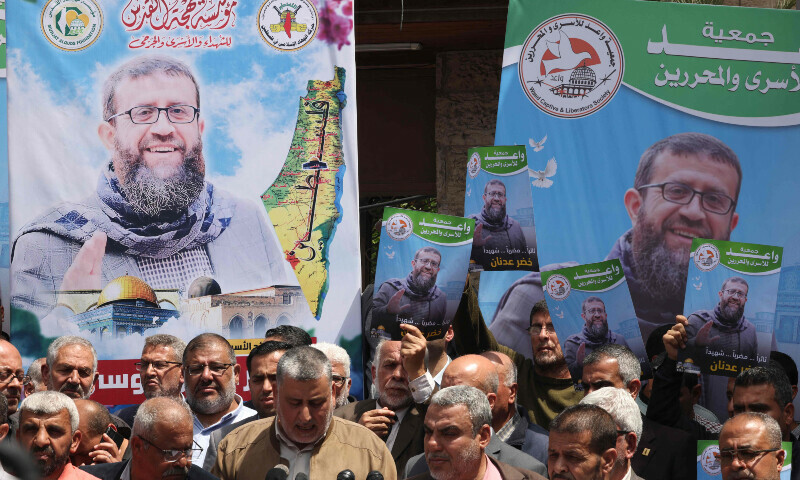
Palestinian hunger striker dies in Israeli detention

The death of Khader Adnan was swiftly followed by three rockets fired by Gaza fighters, which “fell in open areas”, the Israeli army alleged. It reported no casualties.

Palestinian Prime Minister Mohammad Shtayyeh described the death of Adnan, who was arrested in the occupied West Bank, as a “deliberate assassination”.

“By rejecting his request for his release, neglecting him medically and keeping him in his cell, despite the seriousness of his health condition,” the premier said in a statement.

Israel’s prison service announced the death of a detainee who was affiliated with Islamic Jihad.

He was “found early this morning in his cell unconscious”, the prison service said in a statement.

Adnan, 45, was the first Palestinian to die as a direct result of a hunger strike, according to the Palestinian Prisoners’ Club.

Other Palestinian detainees have died “as a result of attempts to force-feed them”, the advocacy group’s director, Qaddura Faris, said.

Palestinians shut shops as they observed a general strike in West Bank cities in response to Adnan’s death.

The Arab League said Adnan’s death was “the result of a policy of deliberate medical negligence, which is systematically practised by the Israeli occupation authorities”.

Israel’s far-right National Security Minister Itamar Ben-Gvir said prison officials decided to close cells to “prevent riots”.

“The directive to the prisoner service is zero tolerance towards hunger strikes and disturbances in security prisons,” he said in a statement.

‘Pay the price’

A senior Israeli official described Adnan as “a hunger striker who refused medical attention, risking his life.”

“In recent days, the military appeal court decided against releasing him from detention solely on the merit of his medical condition,” said the official, who requested anonymity because they were not authorised to speak publicly to the media.

The official described Adnan as an “operative” of Islamic Jihad, facing charges related to his activities within the group.

Israel has occupied the West Bank since the Six-Day War of 1967 and its forces regularly detain Palestinians, who are subject to Israeli military courts.

Islamic Jihad warned Israel will “pay the price for this crime”.

“The free hero, Khader Adnan, died as a martyr in a crime committed by the enemy in front of the world,” the group said in a statement.

Israel’s prison service said Adnan was in jail for the 10th time and his wife, Randa Mousa, previously told AFP her husband had carried out multiple hunger strikes in detention.

Family against Gaza rockets

Speaking on Tuesday, Mousa said: “We will only receive well-wishers because this martyrdom is [like] a wedding, a [moment of] pride for us and a crown on our heads.”

But she cautioned people against launching a violent response.

“We don’t want a drop of blood to be shed,” she told journalists in the family’s hometown of Arraba in the northern West Bank.

“We don’t want anyone to respond to the martyrdom. We don’t want someone to launch rockets and then [Israel] strikes Gaza,” she said.

Earlier today, the Israeli army reported a shooting targeting Israeli vehicles near Tulkarm in the northern West Bank.

In his final message, Adnan said he was “sending you these words as my flesh and fat has melted”.

“I pray that God accepts me as a faithful martyr,” he wrote, in a message published on Monday by the Palestinian Prisoners’ Club.

Physicians for Human Rights Israel previously sent a medic to assess Adnan’s condition but said their appeals to Israeli authorities to have him transferred to the hospital were refused.

“Only with the means available in a hospital could he be adequately monitored and his life could be saved in case of deterioration,” the group said today.
Riots in Kenya as opposition protests ‘cost of living’

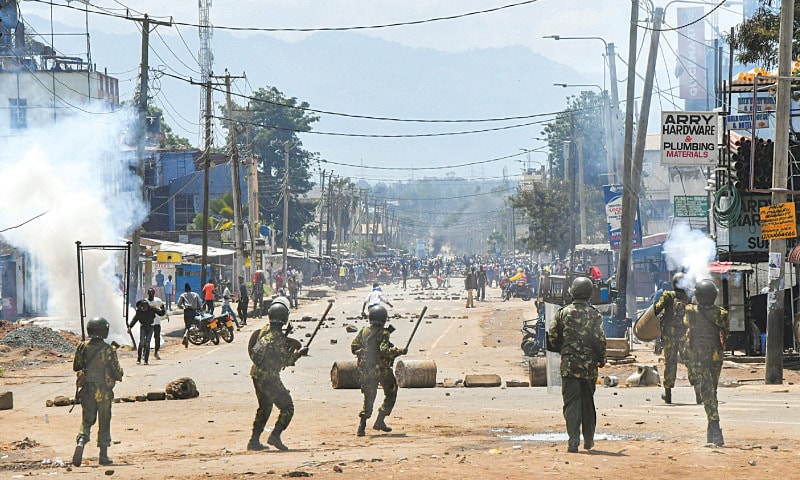
Tear gas canisters were launched at members of opposition leader Raila Odinga’s Azimio la Umoja (One Kenya) coalition near President William Ruto’s office in downtown Nairobi, according to footage of the incident.

Kenya’s Interior Minister Kithure Kindiki said there had been several acts of violence, arson and looting in the capital and in western Kenya by “hordes of criminals masquerading as political protesters” and insisted they would not be tolerated.

He also confirmed the arrest of 46 people over various criminal acts.

Odinga’s side had last month announced a halt to demonstrations to allow bipartisan talks to try to resolve its dispute with the Ruto government. But it later said it was resuming protest action as dialogue stalled, with Azimio insisting it should not be a parliamentary process as dem­anded by Ruto’s side. Pro­testers also set fires and used rocks to block roads in and out of Odinga’s lakeside stronghold of Kisumu in western Kenya, they said.

The March unrest had drawn international calls for restraint after police fired tear gas on demonstrators, including Odinga’s motorcade, and gangs went on the rampage, attacking people and property.

The violence had raised fears of a repeat of the 2007/08 post-election ethnic fighting that claimed the lives of more than 1,100 people in Kenya, now considered an anchor of democracy in a turbulent region.

Odinga lost to Ruto — his fifth presidential election defeat — and continues to insist that the poll was fraudulent and that victory was “stolen”.

Several Russian cities have announced they will scale back this year’s Victory Day celebrations.

Russian authorities have cited security reasons and attacks from pro-Ukrainian forces for the changes.

Explosions and fires have occurred in Russia in recent weeks.

But some have argued that the reduced events show the Kremlin is nervous about celebrations turning into shows of dissent against its invasion of Ukraine.

Great pomp and shows of military might are the usual hallmarks of Victory Day, which marks the Soviet Union’s victory over Nazi Germany on 9 May 1945.

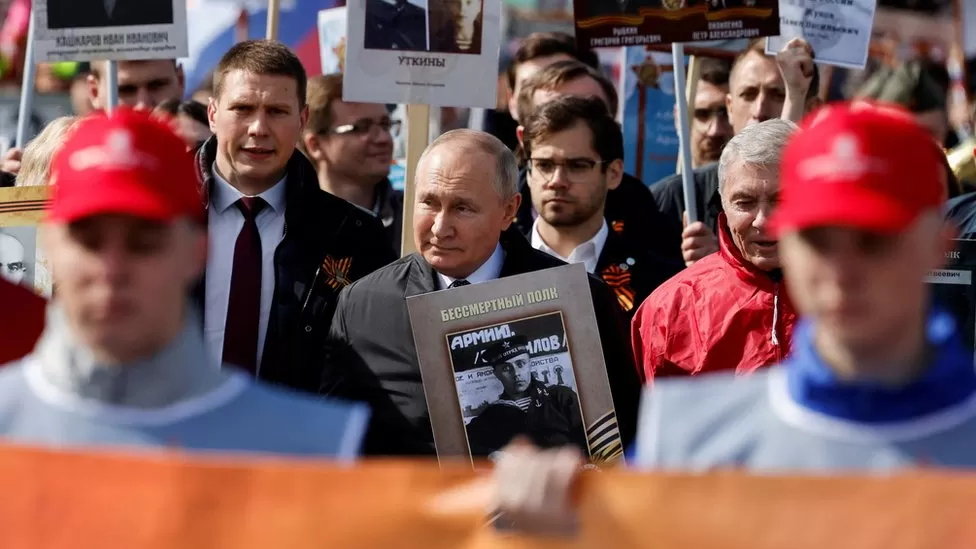
One of the day’s most recognisable events is the Immortal Regiment procession, which sees people across the country marching holding photographs of their relatives who fought in World War Two.

Last year, President Vladimir Putin led the procession across Red Square in Moscow while holding a photograph of his father in uniform.

This year, however, the Immortal Regiment “will be held in other formats for security reasons”, lawmaker and organiser Yelena Tsunayeva told journalists last month.

According to a news release on the Immortal Regiment of Russia’s website, Ms Tsunayeva suggested that those wishing to commemorate their relatives should instead place photos of war veterans in car windows, transfer their image to items of clothing, or change their social media avatars.

Some commentators have said that an in-person Immortal Regiment procession could end up highlighting the number of Russian losses in Ukraine.

Dmitry Kolezev, a journalist and editor of a liberal news website, now living in exile, said that had the procession not been cancelled, people would have “almost certainly come to the Immortal Regiment with portraits of those who died in Ukraine, and the number of recent photographs may turn out to be depressingly large”.

Mr Kolezev also said that the authorities might be concerned that a large gathering of people could snowball into a show of dissent. “History knows of examples when loyal events turned into protests,” he said on Telegram.

Viktor Muchnik, the former editor-in-chief of a Siberian TV network, who has also left the country, said the Russian state was “maniacally suspicious” and was less concerned about a “hypothetical terrorist attack” than it was about damage to its image.

He said that the Kremlin might fear that the procession will show “too many portraits of those who died not 80 years ago, but over the past year”.

“This will give an idea of the hidden extent of the disaster,” Mr Muchnik said in an interview.

Meanwhile, the world-famous parade of military equipment on Moscow’s Red Square, which is traditionally observed by President Putin, will be strictly closed off to the public.

Kremlin spokesman Dmitry Peskov said that Russia’s security services were working to ensure the safety of the parade against “terrorist attacks”.

“We are of course aware that the Kyiv regime, which is behind a number of such attacks, terrorist acts, plans to continue its campaign. All our special services are doing everything possible to ensure security,” he said.

Two separate fires at fuel storage facilities have broken out in the last few days in southern Russia and in Russian-occupied Crimea.

This week, two separate explosions in the Russian border region of Bryansk derailed freight trains, while power lines were destroyed by a suspected explosive device in Leningrad Region.

Although none of these attacks have been claimed by Ukraine, Kyiv’s military has said that undermining Russia’s logistics formed part of preparations for its long-expected counter-offensive.

The cost of a food shop “should start” to come down in the next few months, the body which represents UK supermarkets has claimed.

Supermarkets will start passing on cost savings for milk and other dairy goods due to cuts in wholesale prices, the British Retail Consortium (BRC) said.

It comes as new figures from the trade body revealed food prices were up 15.7% last month compared to April in 2022.

Last week, Sainsbury’s rejected suggestions that prices were too high.

The denial came after questions over why a drop in the cost of wholesale food prices globally had not yet led to falls in the prices charged by UK supermarkets.

Helen Dickinson, chief executive of the BRC, said customers should “start to see food prices come down in the coming months as the cut to wholesale prices and other cost pressures filter through”.

She said that retailers were “committed to helping their customers and keeping prices as low as possible”.

Many households have felt the impact of rising food bills.

Major consumer goods companies and supermarkets have blamed higher costs for higher prices.

Marmite-maker Unilever and supermarket Sainsbury’s both recently rejected suggestions that they are not protecting customers from rising prices.

While overall food inflation rose in the year to April, according to the figures from the BRC-NielsenIQ shop price index, fresh food prices accelerated last month to 17.8%.

Ms Dickinson said some goods, such as ready meals, had risen in price because of a “knock-on effect from increased production and packaging costs”.

She added the price of coffee had jumped because of an increase in the cost of coffee beans, as well as key producers exporting less.

However, she said the price of select items like butter or vegetable oils had already started to come down as retailers passed on some savings.

Wholesale food prices have started to fall and the World Bank, which works on solutions to reduce poverty in developing countries, has said it expects them to drop 8% by the end of this year.

But supermarkets have argued such falls take time to reach the shelves. The BRC has said there is a three- to nine-month lag to see a decrease in wholesale prices reflected in-store.

In March, the union Unite accused some retailers of “fuelling inflation by excessive profiteering”.

The boss of Sainsbury’s said the supermarket would pass on any falls in the price of goods as soon as it could and was “absolutely determined to battle inflation for our customers”.

However, Simon Roberts admitted widespread price falls were not likely to come soon as energy and labour costs continued to rise.

Victoria Scholar, an analyst at investment firm interactive investor, said while there was “hope” that food prices will come down, it was “more likely that price growth will just slow instead in the near-term as consumers continue to feel the squeeze from rising weekly food bills”.

“The unfortunate nature of the type of inflation the UK is facing is that it is affecting essential items such as food, hitting those at the lower end of the income spectrum most acutely,” she added.

While overall food prices continued to rise in April, the BRC said inflation, which is the rate at which prices rise, both food and non-food, had fallen marginally to 8.8% in April.

But just because the inflation rate has fallen, that does not mean prices are falling, it just means that prices are not rising as quickly.

The BRC said overall price rises in the shops had slowed slightly in April because of “heavy spring discounting in clothing, footwear, and furniture”.

UN meeting seeks ways to press Taliban on women’s rights

Representatives of nearly two dozen countries and international institutions met Monday in Qatar for talks on Afghanistan focusing on women’s rights under the Taliban administration, the United Nations said.

The Taliban authorities are absent from the closed-door two-day meeting, and UN spokesman Stephane Dujarric said recognition of their rule “is not up for discussion”.

Envoys from the United States, Russia, China and 20 other countries and organisations including major European aid donors and neighbours such as Pakistan joined UN Secretary-General Antonio Guterres for the talks in Doha, his spokesman Dujarric said.

The aim was “to reach points of commonality on key issues such as human rights, especially for women and girls, inclusive governance, countering terrorism and drug trafficking,” Dujarric told a briefing at the UN headquarters.

Guterres wants “a common understanding with the international community on how to engage with the Taliban on these issues,” he added.

Since ousting a foreign-backed government in August 2021, the Taliban authorities have imposed an austere Sharia law that the UN has labelled “gender-based apartheid”.

Women are barred from almost all secondary education and universities, and prevented from working in most government jobs. Last month, Taliban authorities extended the ban to working with UN agencies.

The Taliban administration says the ban is an “internal issue” that should not influence foreign dealings.

But in response the United Nations has ordered a review of its critical relief operation in Afghanistan, where many in the 38-million-strong population rely on food aid.

The UN has said it faces an “appalling choice” over whether to maintain its relief efforts. Guterres was to give an update on the review, due to be completed on Friday.

“Reversing all measures that restrict women’s rights to work is key to reaching the millions of people in Afghanistan that require humanitarian assistance,” Guterres said on social media before leaving for Doha.

Afghan rights groups have expressed fears that recognition of the Taliban government could be proposed, but the United Nations and United States have insisted this was not on the agenda.

Rights groups’ fears were fuelled by remarks made last month by UN Deputy Secretary-General Amina Mohammed, who said the Doha meeting could find “baby steps” that lead to a “principled recognition” of the Taliban government.

The UN said the comments were misinterpreted.

No country has established formal ties with the Taliban and UN membership can only be decided by the UN General Assembly.

The UN Security Council last week unanimously condemned the measures curbing the rights on Afghan women.

But diplomats and observers say the Doha meeting highlights the quandary faced by the international community in handling Afghanistan, which the UN considers its biggest humanitarian crisis.

One diplomat dealing with Afghanistan said no “breakthrough” should be expected from Doha, but the situation could change if different countries agreed to take on different roles to put pressure on Kabul.

“Something new has to be tried and that is what Guterres is looking for here,” the diplomat told AFP on condition of anonymity.

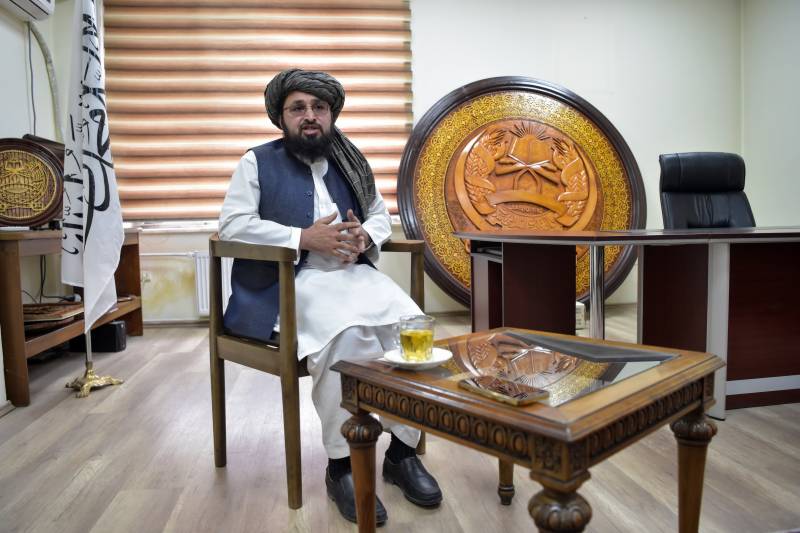
While not invited to the talks, the head of the Taliban representative office in Doha, Sohail Shaheen, said he had met with members of the British and Chinese delegations.

He said the UN meeting and “the importance of engagement” were among the topics raised.

The Taliban government’s deputy spokesman, Bilal Karimi, said Monday the administration “wants positive engagement with the world”.

But “internal issues” — such as curbs on women’s rights — should not factor into decisions about diplomatic engagement and formal recognition, he told AFP in Kabul.

“These should not be used as political tools,” he said. “Countries should have the moral courage to independently come forward for positive engagement.”

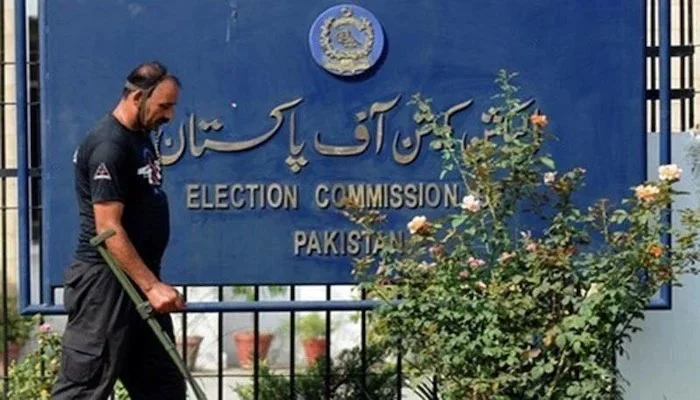
ECP may announce ‘postponement’ of Punjab elections next week

ISLAMABAD: The Election Commission of Pakistan (ECP) may announce the postponement or cancellation of the Punjab elections — scheduled for May 14 — next week,

As per the publication, the ECP has made it unequivocally clear that the Punjab Assembly elections cannot be held on May 14 as the scheduling of various actions and requirements could not be placed as per the timeline.

The sources said ECP is yet to place an order for printing of the ballot papers, pictorial voters list and other items. The retaining of the requisite staff and its training is yet to be done.

“The whole exercise involves a huge amount of money that isn’t available to the Election Commission,” the sources said.

On April 4, a three-member bench headed by Chief Justice of Pakistan (CJP) Umar Ata Bandial ordered elections in Punjab on May 14 as it quashed the ECP’s decision to extend the polls date from April 30 to Oct 8.

In the order, the government was directed to provide Rs21bn in funds to ECP by April 10 and directed ECP to submit a report by April 11 on the issue.

The government refused to issue funds as the parliament did not approve the release of funds.

On April 14, the CJP-led bench ordered the State Bank of Pakistan (SBP) to release the funds directly to the Election Commission but it informed the court that it had allocated the funds but did not have the power to release them.

The April 4 order also made it liable for the government to share a security plan for the elections by April 17. This was also not fulfilled by the government

On April 18, ECP informed the Supreme Court that the conduct of polls on May 14 was getting impossible due to the non-provision of funds and forces for maintaining law and order.

“At least 466,000 personnel are required for security in Punjab,” the ECP said in its reply.

The electoral authority added that it had written a letter to the federation for providing Pakistan Army, Frontier Corps and Rangers personnel, but did not receive a reply.

The electoral body mentioned that it is its responsibility to conduct transparent, fair and peaceful polls.

“In view of ground facts, October 8 is the appropriate date to conduct elections,” it said and added that if there is no adherence to this date, then there is fear of anarchy in the country.

The day the report was submitted, top officials of the intelligence agencies briefed the Supreme Court on the current security challenges being faced by the country regarding elections in Punjab and Khyber Pakhtunkhwa.

Following the briefing, the Ministry of Defence filed a petition seeking polls on the same date. However, the top court rejected it.

The Supreme Court, while hearing the plea, ordered the government and the Pakistan Tehreek-e-Insaf (PTI) to hold talks on the issue.

The government and PTI have held two rounds of talks and the last and final round of talks is expected to be held today.

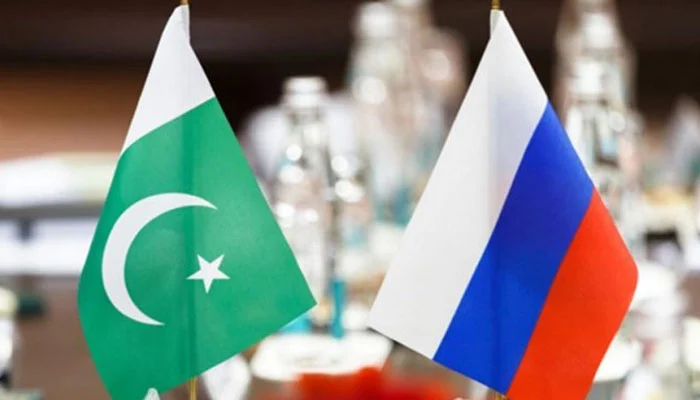
Pakistan, Russia celebrate 75th anniversary of diplomatic ties

Pakistan and Russia on Monday celebrated the 75th anniversary of the establishment of their diplomatic relations.

To mark this milestone occasion, Foreign Minister Bilawal Bhutto-Zardari and his Russian counterpart Sergey Lavrov exchanged letters of felicitations.

According to a statement issued by the Foreign Office, Pakistan and Russia enjoy close, multidimensional relations based on mutual goodwill and trust.

Bilateral ties are marked by cooperation in diverse areas, including economic, energy and security. The two countries also consult at various multilateral fora on regional and global issues of mutual interest.

It is pertinent to mention here that the diplomatic relations between Pakistan and Russia were established on May 1, 1948.

Dust storm on Illinois highway leaves six dead, dozens injured

A dust storm caused a series of collisions on a major highway in Illinois on Monday, killing at least six people and injuring dozens more. The accident involved nearly 100 vehicles, including 30 commercial trucks, along a two-mile stretch of Interstate 55.

Illinois State Police reported that excessive winds carrying dirt from nearby farm fields reduced visibility along the highway, leading to the collisions. Two semi-trucks caught fire in the aftermath, which added to the chaos of the already devastating accident.

Images from the scene showed emergency responders battling dusty and hazy conditions, with smoke and even fires rising from vehicles that had careened off the road. The accident was a reminder of a similar crash in Utah last year, in which eight people were killed and 22 vehicles were involved in a sandstorm-related collision.

In this case, victims ranged in age from two to 80, and more than 30 people were transported to area hospitals with injuries ranging from minor to life-threatening. The highway, which connects the cities of Chicago and St. Louis, was closed for several hours as police and firefighters worked to clear the wreckage.

Dust storms, like the one that caused this accident, are a growing concern in many parts of the country. They can be caused by a variety of factors, including drought, wind erosion, and human activity. They are particularly dangerous for drivers because they can reduce visibility to almost zero in a matter of seconds.

US panel assails India again over religious freedom

The US Commission on International Religious Freedom, a bipartisan panel with a congressional mandate, designated 15 nations as countries of particular concern (CPC) in its 2023 report.

Besides India and Pakistan, the list also includes Afghanistan, Burma (Myanmar), China, Cuba, Eritrea, Iran, Russia, Nicaragua, Saudi Arabia, Nigeria, Syria, North Korea, and Tajikistan.

The designation can have serious consequences for a listed country, but the US administration does not always follow the commission’s recommendations. India has been on the list since 2019 but has never been designated. Washington fears that such an action could harm its efforts to build a close relationship with India for countering China.

The 2023 report not only reiterates its call for designating India but also urges the administration to review waivers given to four designated countries – Pakistan, Saudi Arabia, Tajikistan and Turkmenistan.

The recommendation for India notes that the treatment of religious minorities in India has continued to worsen under Prime Minister Narendra Modi.

The commission urges the administration to:

Designate India as a country of particular concern for engaging in “systematic, ongoing, and egregious violations of religious freedom”.

Advance human rights for all religious communities in India and promote religious freedom, dignity, and interfaith dialogue through bilateral engagement and in multilateral forums.


Condemn ongoing religious violations and support religious organisations and human rights groups targeted for their advocacy of religious freedom. Impose targeted sanctions on Indian government agencies and officials responsible for severe violations of religious freedom by freezing those individuals’ assets and/ or barring their entry into the United States.

Mr Modi was barred from entering the United States after 2002 riots targeting Muslims but the bar was lifted after he was elected prime minister. The commission urges the US Congress to:

Raise religious freedom issues in the US-India bilateral relationship and highlight concerns through hearings, briefings, letters, and congressional delegations.

The 2023 report points to violence and destruction of religious properties in India, particularly those of Muslims and Christians. It also refers to comments and social media posts by members of the Modi government, calling for targeting religious minorities.

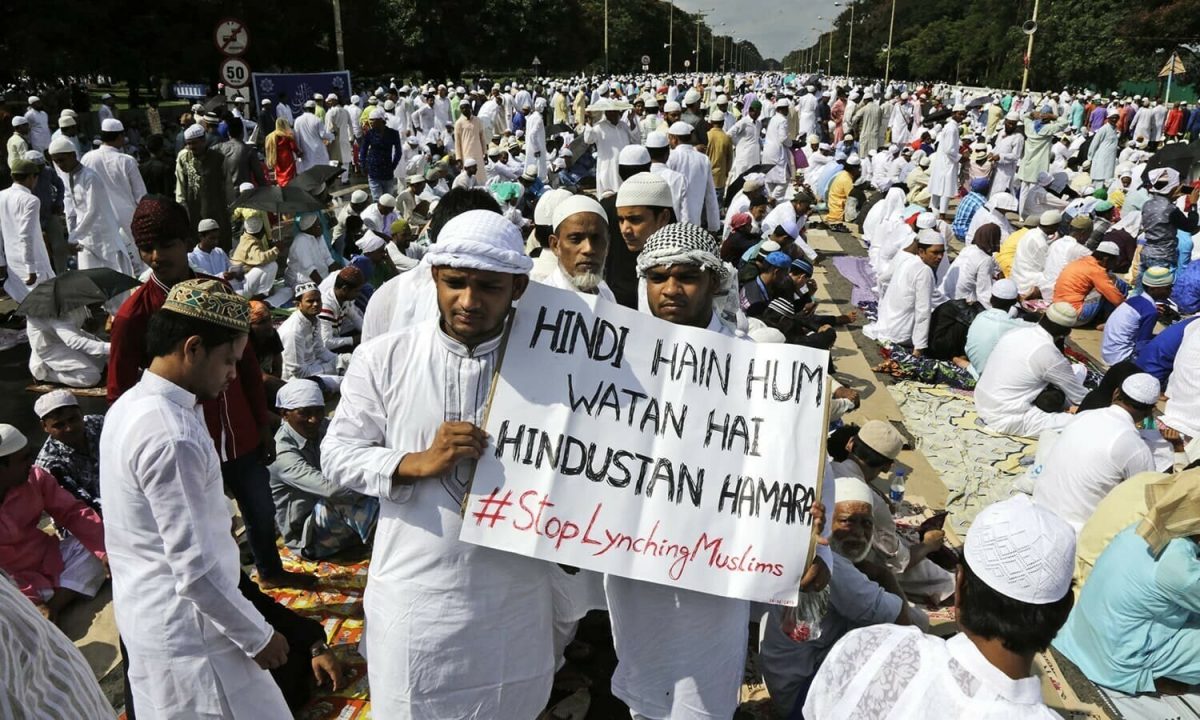
“The continued enforcement of discriminatory laws facilitated a culture of impunity for widespread campaigns of threats and violence by mobs and vigilante groups,” the report notes.

The commission’s report on Pakistan calls for redesignating it as a “country of particular concern”, or CPC, for engaging in “systematic, ongoing, and egregious violations of religious freedom”. It demands lifting the waiver that allows the administration not to take otherwise legislatively mandated action under the designation.

The commission also calls for: Entering into a binding agreement with the Pakistani government to encourage substantial steps to address religious freedom violations with benchmarks, including but not limited to: Release blasphemy prisoners and other individuals imprisoned for their religion or beliefs; Repeal blasphemy and anti-Ahmadiyya laws; until such repeal, enact reforms to make blasphemy a bailable offense, require evidence by accusers.

The commission demands the removal of requirements for self-identification of religion on identity documents and recommends reforming educational textbooks, curricula, and teacher training materials.

The commission also calls for the release of religious prisoners of conscience in Pakistan, including Junaid Hafeez, Asif Pervaiz, Notan Lal, Zafar Bhatti, and Aneeqa Ateeq.

At least 108 police officers have been injured in clashes across France with protesters angry at pension reforms, the interior minister has said.

Gérald Darmanin said such a large number of police wounded was extremely rare, adding that 291 people had been arrested during the unrest.

Hundreds of thousands have been taking part in May Day demonstrations against President Emmanuel Macron’s reforms.

Most were peaceful but radical groups threw petrol bombs and fireworks.

Police responded with tear gas and water cannon.

It is not clear how many protesters have been injured.

Prime Minister Élisabeth Borne tweeted that the violence was “unacceptable”, while also praising the “responsible mobilisation and commitment” of demonstrators in numerous cities.

This is the latest day of mass action against changes that raise the state pension age from 62 to 64. Trade unions want them withdrawn.

The Interior Ministry put the overall number of demonstrators at 782,000, including 112,000 in the capital Paris, but the CGT union say the figure is three times that number.

Union leaders were adamant that months-long opposition to the reforms was not waning.

“The page is not going to be turned as long as there is no withdrawal of this pension reform. The determination to win is intact,” said CGT leader Sophie Binet, quoted by AFP.

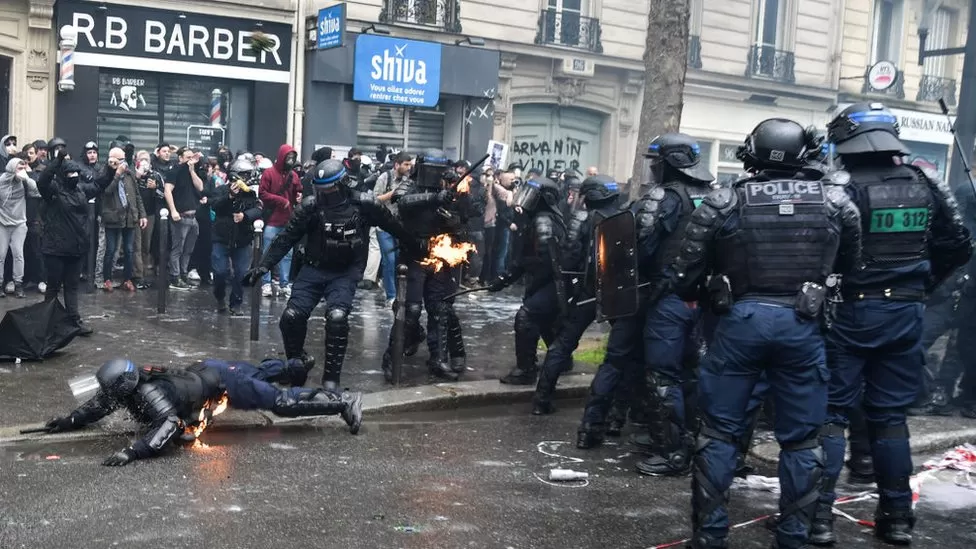
In Paris, one police officer suffered serious burns to his hands and face when struck by a petrol bomb, Mr Darmanin said.

Violence also broke out in Lyons, Toulouse and Nantes, where vehicles were set on fire and businesses attacked.

Most of the protests were peaceful but police clashed with radical groups throwing projectiles and firebombs

There were also reports that protesters briefly occupied a luxury hotel in the southern city of Marseille. Monday was the first time since 2009 that France’s top eight trade unions had backed calls for a protest, AFP news agency said.

Mr Darmanin accused far-left groups known as black blocs and numbering a few thousand of being behind the violence and urged that “those who attacked the police and public property be severely punished”.

There has been a violent element to the protests ever since March, when the government decided to force the legislation through the lower house of parliament – where it lacks an absolute majority – without a vote.

Mr Macron says the reform is a necessity.

He signed the reform into law on 15 April, hours after France’s Constitutional Council broadly backed the changes, but opinion polls show a large majority of the population opposes the higher pension age.

The reforms are expected to come into force by September.

The government has promised further talks but the unions are determined to get the changes repealed, and it is not clear where a compromise could be found.