
PM Shehbaz in UK to attend coronation ceremony of King Charles III

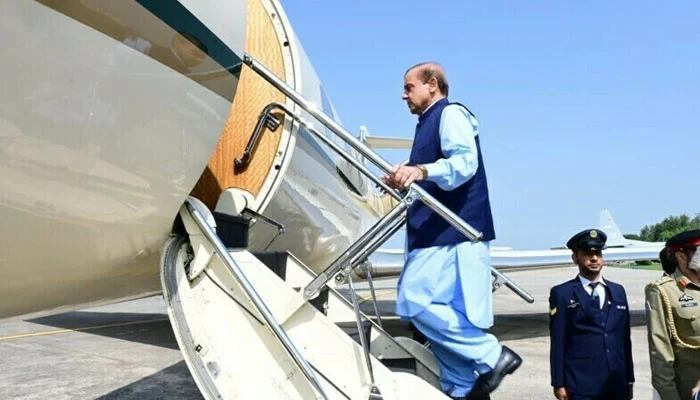
Prime Minister Shehbaz Sharif has touched down in United Kingdom’s capital London for representing Pakistan at the coronation ceremony of King Charles III.

Some 2,000 guests, including global royalty and world leaders, will be at Saturday’s event in central London, with huge crowds lining the route to and from Buckingham Palace.

More than 29,000 police officers will take part in one of the UK’s “most significant” ever security operations for the coronation of King Charles.

Before departing for the visit, the prime minister said he was en route to the Kingdom whose leaders have been “great friends of Pakistan”.

“The UK-Pakistan relations are rooted in shared history & multifaceted bonds that have grown stronger over the decades,” the prime minister said in a tweet.

“I will also use the opportunity to attend the Commonwealth leaders’ summit as well as engage with other world leaders bilaterally,” the prime minister said.

Geo News reported that the prime minister is expected to return on Monday, while he is also scheduled to meet Nawaz Sharif, who is his elder brother and Pakistan Muslim League-Nawaz’s supremo.

Thousands of ceremonial troops will take part in a procession from Buckingham Palace to Westminster Abbey as part of the coronation.

Dress rehearsals took place overnight from Tuesday to Wednesday.

The security operation to protect the route to and from the abbey — dubbed Operation Golden Orb — will include rooftop snipers and undercover officers, as well as airport-style scanners, sniffer dogs, and a no-fly zone over central London.

Archbishop of Canterbury, Justin Welby, will call on “all persons of goodwill in the United Kingdom of Great Britain and Northern Ireland, and of the other realms and the territories to make their homage, in heart and voice, to their undoubted king, defender of all”.

The order of service will read: “All who so desire, in the abbey, and elsewhere, say together: I swear that I will pay true allegiance to Your Majesty, and to your heirs and successors according to law. So help me God.”

British parliamentarians, but also Canadians since the British sovereign is their head of state, already swear allegiance to the monarch when they take office.
FM Bilawal Bhutto takes politicos into confidence over India visit

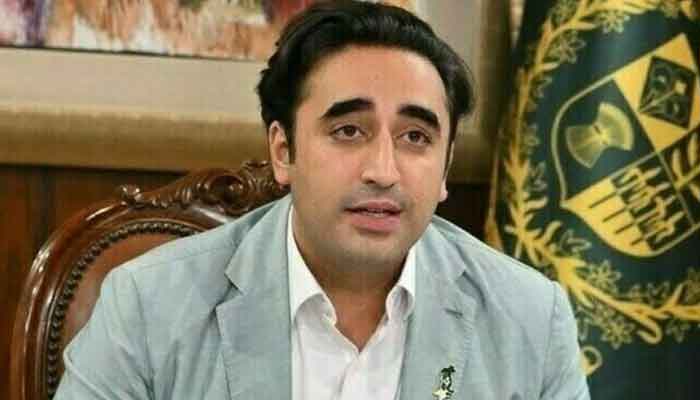
Foreign Minister Bilawal Bhutto on Wednesday took coalition partners and Jamat-e-Islami (JI) chief into confidence over his first-ever India visit.

The foreign minister will depart today to attend the Shanghai Cooperation Organisation (SCO) Council of Foreign Ministers meeting scheduled to be held on May 4-5 in India’s Goa.

Bilawal telephoned Jamiat Ulema-e-Islam-Fazl (JUI-F) Ameer Maulana Fazlur Rehman, Balochistan National Party-Mengal (BNP) President Sardar Akhtar Mengal, Muttahida Qaumi Movement-Pakistan (MQM-P) Convener Khalid Maqbool Siddiqui, JI Ameer Sirajul Haq and National Party (NP) leader Tahir Bizenjo.

He consulted with them over his two-day Goa visit

SCO meeting

According to a statement issued by the Foreign Office, the FM will attend the SCO moot at the invitation of the current chair, Minister for External Affairs of India Dr S Jaishankar.

”Our participation in the meeting reflects Pakistan’s commitment to the SCO charter and processes and the importance that Pakistan accords to the region in its foreign policy priorities,” the FO spokesperson said.

Sources in the Civil Aviation Authority (CAA) said that the foreign minister, accompanied by a delegation, will depart for Goa from Karachi via a chartered flight.

The sources privy to the development said that the Indian civil aviation authorities contacted the PCCA and finalised the route for the special plane.

In addition to deliberating upon important regional and international issues and signing some of the institutional documents, the council will finalise the agenda and decisions to be adopted by the 17th SCO Council of Heads of State Meeting scheduled to take place in New Delhi on 3-4 July 2023.

The meeting will also witness the signing of memorandums of understanding (MoUs) with five countries namely Bahrain, Kuwait Maldives, Myanmar and UAE to become Dialogue Partners of SCO.

On the sidelines of the SCO, FM Bilawal will also meet his counterparts of friendly countries.

Besides Pakistan, SCO member states include China, Russia, Kazakhstan, Kyrgyzstan, Tajikistan, Uzbekistan and India.

SCO’s major objectives include promoting mutual confidence and good, neighbourly relations among member states, strengthening regional peace, security and stability, and creating a framework for effective cooperation in the fields of politics, trade and economy, culture, science and technology, education, energy, transportation, tourism, and environmental protection etc.

Since becoming a member in 2017, Pakistan has been actively and constructively contributing to all SCO activities to realise its multi-sectoral aims and objectives in a mutually beneficial manner.

No bilateral meeting with Indian leaders

Last week, FM Bilawal dismissed speculations surrounding his India visit and clarified that it should not be “misconstrued in terms of bilateral ties” between the two neighbouring countries.

Bilawal, while speaking to Geo News, said that he did not make any request for arranging a meeting with Indian Prime Minister Narendra Modi.

“We are committed to the SCO charter and this visit should not be seen as a bilateral one but in the context of SCO. Our participation at the meeting reflects Pakistan’s continued commitment to the SCO charter and process and the importance that Pakistan accords to the region in its foreign policy priorities,” Bilawal was quoted as saying.

He had said that they cannot let India further isolate Pakistan.

It will be the first visit to India by a top Pakistani official since then-prime minister Nawaz Sharif attended Indian Prime Minister Narendra Modi’s swearing-in in 2014.

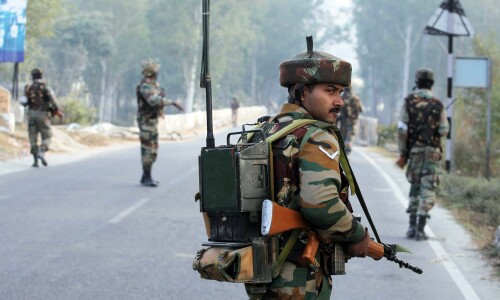
India to merge civil areas in cantonments with local bodies

It said the first cantonment to be renamed a military station is Yol in Himachal Pradesh, with Secunderabad and Nasirabad among the cantonments set to shrink.

“Not all cantonments will become military stations as some army and civilian pockets are intertwined. The move will benefit civilians who were not getting access to state government welfare schemes and enable the army to focus more on developing military stations,” the report said.

The Indian Army is set to have fewer cantonments, created during the British era, with the government embarking on a major drive to merge civil areas at these army bases with municipal corporations and municipalities, and designate the cantonments as military stations, officials familiar with the development said on Monday.

Yol in Himachal Pradesh is the first cantonment to shed the colonial tag and be renamed as a “military station”, said one of those officials, asking not to be named.

The development comes at a time when the army is reviewing British-era practices in consultation with all stakeholders, including the top brass.

With Yol out of the list, the army currently has 61 cantonments spread across the country. Secunderabad in Telangana and Nasirabad in Rajasthan are among the cantonments that are set to shrink and become military stations with their civilian areas being merged with the local civic governing bodies, another official said, also asking not to be named.

“To be sure, not all cantonments are likely to become military stations as the army and civilian pockets are intertwined and that may not permit segregation, the officials said citing Delhi and Lucknow cantonments,” the report said.

Published in Dawn, May 4t

Tehran seizes second oil tanker in Gulf

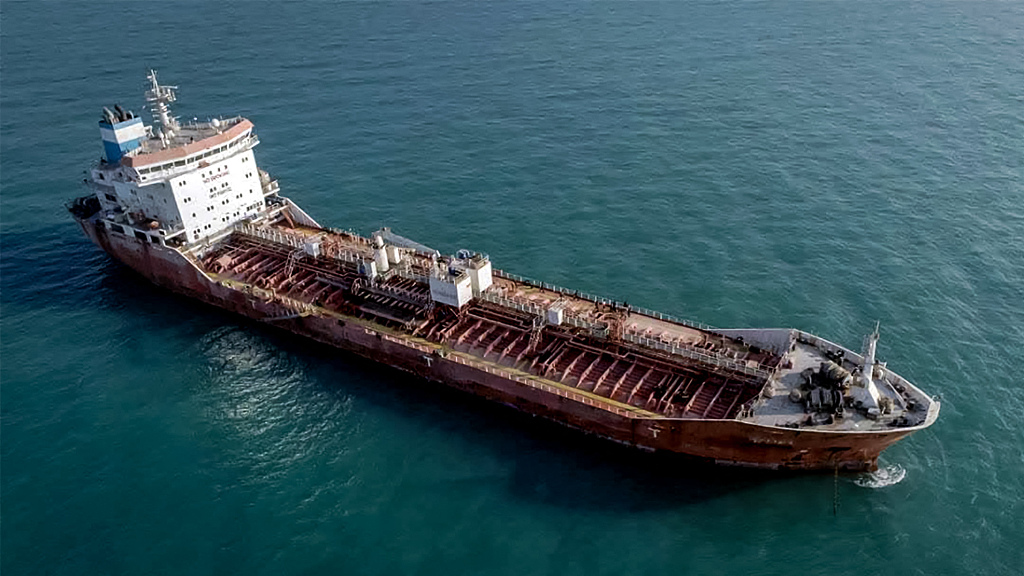
A fleet of high-speed Islamic Revolutionary Guard Corps Navy (IRGCN) craft surrounded the Greek-owned Niovi as it travelled empty from Dubai to Fujairah, another port in the United Arab Emirates, the US military said.

The Panama-flagged vessel’s seizure in the Strait of Hormuz comes six days after a similar incident also in the Gulf, which lies between Iran and the Arabian Peninsula and carries at least a third of the world’s seaborne oil.

“A dozen IRGCN fast-attack craft swarmed the vessel in the middle of the strait,” said a statement from the Bahrain-based US Fifth Fleet.

“The IRGCN subsequently forced the oil tanker to reverse course and head toward Iranian territorial waters off the coast of Bandar Abbas, Iran,” it said.

Iran has confirmed the seizure “following an order from the judiciary”, the judiciary’s Mizan Online news website said.

The Gulf has witnessed a spate of incidents since 2018, when then-US president Donald Trump pulled out of a nuclear agreement and re-imposed crippling sanctions on Iran.

On last Thursday, helicopter-borne Iranian navy commandos abseiled onto the deck of a Marshall Islands-flagged oil tanker, the Advantage Sweet, in the Gulf of Oman. It was then moved to Bandar Abbas, TankerTrackers.com said.

The Niovi’s capture also followed a warning from Greek authorities of heightened risk after the US seizure, Ambrey added.

The US central bank has raised interest rates to the highest level in 16 years as it battles to stabilise prices.

The Federal Reserve increased its key interest rate by 0.25 percentage points – its 10th hike in 14 months.

The Fed signalled that Wednesday’s rise may be its last one for now.

The moves have pushed its benchmark rate to between 5% and 5.25% – up from near zero in March 2022.

Higher rates have sharply raised borrowing costs across the world’s largest economy, spurring a slowdown in sectors such as housing and playing a role in the recent failures of three US banks.

“We’re no longer saying that we anticipate” additional interest rate increases, Federal Reserve chair Jerome Powell said at a press conference after the announcement, calling it a “significant change”.

However, he refused to rule out further action, saying: “We’ll be driven by incoming data.”

Federal Reserve chair Jerome Powell said the US was “getting close or maybe even there” to pausing its rate-hike campaign but was prepared to do more if warranted

The bank started raising interest rates aggressively last year when prices in the US were soaring at the fastest pace in decades.

Central banks around the world, including in the UK and in Europe, have taken similar action.

Higher interest rates make it more expensive to buy a home, borrow to expand a business or take on other debt. By increasing those costs, officials expect demand to fall and prices to cool off.


Since the Fed started its campaign, price increases in the US have shown signs of moderating.

In March, inflation, the rate at which prices rise, stood at 5% – the lowest level in nearly two years – though still uncomfortably high for the Fed, which is targeting a 2% rate.

Gregory Daco, chief economist at EY-Parthenon, said he thought the Fed would be “prudent” to pause now, noting that the risks to the economy as activity slows are growing.

“The fear of a recession is very much present in the economy today,” he said. “I don’t think the inflation battle is over, but we are in a situation where we’re seeing gradual disinflation and we’re also in an environment where interest rates are high and elevated and therefore should be constraining business activity, which should lead to further disinflation in coming months.”

At Ball Chain Manufacturing, a family-owned firm in New York, customers have become more cautious in recent months due to economic worries, says president Bill Taubner. His company has also cut back on replenishing its supplies in response to still-rising prices.

But he said his firm did not face imminent borrowing needs and he remained hopeful that any slowdown would be mild and relatively short-lived.Bill Taubner has felt the economy cool as customers of his manufacturing business have grown more cautious

“We realise there is some softness in the marketplace because of inflation and obviously the interest rate issues,” he said. “But long term, we’re very positive.”

The recent bank failures, and an anticipated pullback in lending as a result, are likely to weigh on the economy, Mr Powell said.

But he added that he remained hopeful that the US would avoid a recession, noting that hiring has remained strong and unemployment low.

“I continue to think that it’s possible…that this time is really different,” he said.

The Fed’s decision to raise rates on Wednesday was unanimous and widely expected by financial markets, which are looking for clues as to what the bank may do next.

In a written statement, the bank scrapped previous guidance it provided in March when it said “some additional policy firming may be appropriate” to bring inflation under control.

In the press conference, Mr Powell said the bank was “getting close or maybe even there” when it came to pausing its rate-hike campaign but was prepared to do more if warranted.

Whitney Watson, global co-head of fixed income and liquidity solutions at Goldman Sachs Asset Management, said the Fed could still raise rates, depending on what happens in the coming months.

“Inflation is trending in the right direction, but progress has been bumpy,” she said. “A pause in rate actions is therefore appropriate, but further tightening is plausible should inflation prove sticky.”

Turkey’s Elections Won’t Be Free or Fair

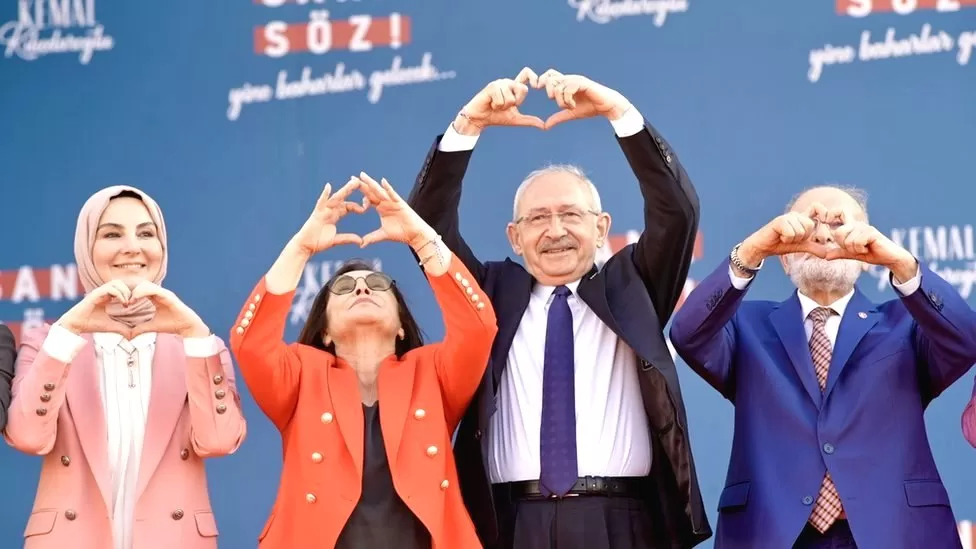
For Turkey’s long-time leader Recep Tayyip Erdogan, it comes in the shape of a former civil servant, given to making heart emojis with his hands.

Kemal Kilicdaroglu, backed by a six-party opposition alliance, says if he wins he will bring freedom and democracy to Turkey, whatever it takes.

“The youth want democracy,” he told the BBC. “They don’t want the police to come to their doors early in the morning just because they tweeted.”

He is the Islamist leader’s main rival in elections on 14 May and has a narrow lead in opinion polls. This tight race is expected to go to a second round two weeks later.

Currently Turks can go to jail for “insulting the president”. Many have.

“I am telling young people they can criticise me freely. I will make sure they have this right,” says the 74-year-old, who leads the main opposition Republican People’s Party (CHP).

Some of Mr Kilicdaroglu’s supporters fear for his safety but he says it comes with the territory.

“Being in politics in Turkey means choosing a life with risks. I will walk my path whatever Erdogan and his allies do. They can’t put me off. They can’t scare me. I made a promise to this nation.”

President Erdogan, 69, has mocked his rival in the past saying he “couldn’t even herd a sheep”. But he’s harder to dismiss now.

Mr Kilicdaroglu is greeted by chanting supporters on the sea-front at Izmir

Arriving for a rally in the port city of Izmir, an opposition stronghold, the opposition candidate is greeted by a sea of flag-waving supporters.

There are chants of “Kilicdaroglu is the hope of the people”. Many in the crowd are young. Five million Turks will vote for the first time in this election.

At 15, Oguz is too young to go to the polls but couldn’t stay away from the rally. “He is a good person, and he sees the future positively. If he becomes president our economy will rise up, and we will rise up.”

Mr Kilicdaroglu told me before the rally he would reorient Turkey, and prioritise relations with the West, not the Kremlin.

“We want to become a part of the civilized world,” he said. “We want free media and complete judicial independence. Erdogan does not think that way. He wants to be more authoritarian. The difference between us and Erdogan is the difference between black and white.”


But will Recep Tayyip Erdogan go quietly if he is defeated after 20 years in power, first as prime minister and now all-powerful president?

“We will retire him, and send him to his corner,” said Mr Kilicdaroglu. “He will step back quietly. No one should have any concerns about it.”

Others aren’t so sure. There are indications that the Turkish leader may be preparing to dispute the result if he loses. Interior Minister Suleyman Soylu has warned the vote will be “a coup attempt by the West”.

Mr Kilicdaroglu said the combined opposition would be vigilant, trusting neither the president, “nor his Supreme Election Council nor his judges”.

“By having more than one observer in all the polling stations, we want to ensure that votes are cast correctly, securely, and the counting is done properly. We have been taking precautions to achieve this, working hard for a year and a half.”

In many ways he is the anti-Erdogan. He has recorded campaign videos at his modest kitchen table, tea towels hanging neatly in the background.

Showing he knows his onions, his rival appeared in one video with one in hand, warning prices would keep soaring if Mr Erdogan remained in power. “Now, one kilogram of onion is 30 liras,” he said. “If he stays it will be 100 liras.”

President Erdogan attracted a big audience in Izmir at the weekend, the day before his main rival

The president’s economic policies are widely blamed for rampant inflation here. Whoever wins will inherit a broken economy and a divided nation – there’s no magic bullet for either.

On stage, flanked by other opposition leaders, Mr Kilicdaroglu makes his trademark heart emoji for the crowds. “Everything will be beautiful,” he says. “Believe it.” And they do.

But his rally on the waterfront in Izmir came only a day after the president attracted his own large gathering, which was segregated.

Many religious conservatives will stick with him. He speaks their language. And he has shored up his support with pre-election spending including wage increases.

As polling day draws near there is an undercurrent of tension.

Many conversations are peppered with election talk – and fears – and Turkey faces a stark choice of two competing visions.

A new poll of opinion polls suggests that Mr Kilicdaroglu will win the presidency but that the president’s alliance is ahead in the race for parliament.

With the election on a knife edge, no-one can be sure if the coming weeks will pass peacefully.


The SNP has signed a contract with a new auditor more than six months after the previous firm quit.

The SNP’s Westminster group risks losing £1.2m of public funding if it does not submit audited accounts by 31 May.

Group leader Stephen Flynn said he was now confident that the deadline would be met.

The party must also file its audited accounts with the Electoral Commission in July.

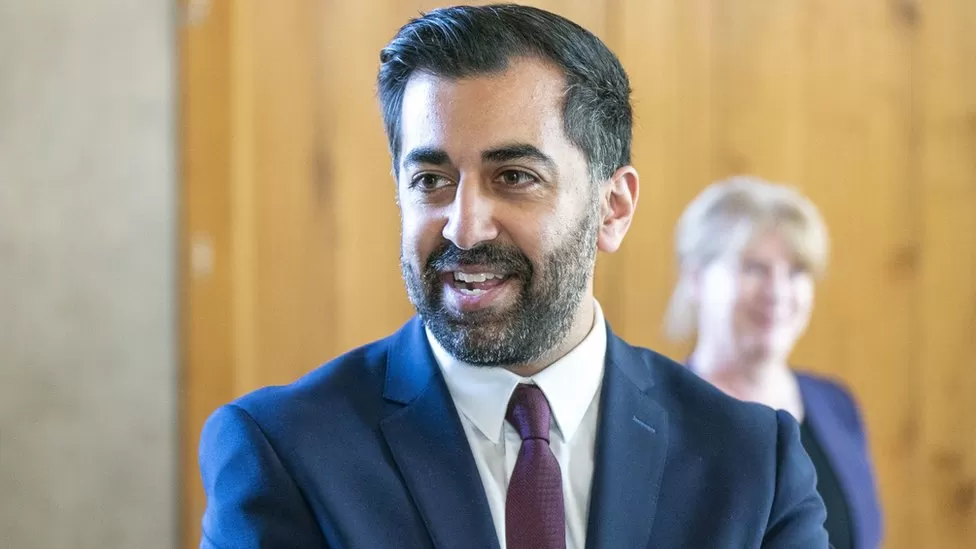
Humza Yousaf, the SNP’s leader and Scotland’s first minister, said Manchester-based AMS Accountants Group had agreed to complete the accounts for both the party and its Westminster group.

Mr Yousaf said: “There is hard work ahead but it is really encouraging to have them on board as we work towards challenging deadline”.

It emerged last month that the SNP’s previous auditors, Johnston Carmichael, had quit last September.

Mr Yousaf has said he only found out after winning the contest to succeed Nicola Sturgeon in March that the party no longer had an accounting firm in place.

A source told the BBC that Mr Yousaf, Mr Flynn and their teams had “put in some shift to fix the situation they inherited”.

The source added: “They have managed to turn things around in a matter of weeks and both the party and the Westminster group now have auditors in place.”

Mr Flynn previously told the BBC that the party was having problems finding new auditors and that he could not guarantee it would be able to meet the 31 May deadline.

He also said the SNP was likely to lose £1.2m of Short Money if it was not able to file its accounts by that date.

Short Money is given to opposition parties to help them carry out their parliamentary work, and is based on how many MPs they have.

However, Mr Flynn said on Wednesday that he was “confident we’ll meet the deadline, as in previous years”.

Mr Flynn was recently accused by his predecessor, Ian Blackford, of giving “false assurances” that a new auditor had been found – a claim that he dismissed.

Johnston Carmichael, which had worked with the party for more than a decade, said the decision to stop auditing the SNP’s accounts was taken after a review of its clients.

Police removed several boxes from the SNP’s headquarters after searching the building last mont

It comes amid an ongoing police investigation into the party’s finances that saw Nicola Sturgeon’s husband Peter Murrell – who was until recently the SNP’s chief executive – and former treasurer Colin Beattie being arrested last month.

Both men were released without charge pending further investigation.

Detectives also spent two days searching Ms Sturgeon and Mr Murrell’s home in Glasgow, and the SNP’s headquarters in Edinburgh as part of the inquiry.

And a luxury motorhome which can sell for more than £100,000 was seized from outside the home of Mr Murrell’s 92-year-old mother in Dunfermline, where it was said to have sat for more than two years.

There was a lingering note of caution from Humza Yousaf when he talked about the “challenging” deadlines facing his new auditors.

But the first minister will hope this is one less thing on his plate to worry about.

He would far rather be focusing on bread and butter issues of government, like the anti-poverty summit he convened this morning.

But there are still plenty of party matters cluttering his in-tray, and the opposition are only too keen to capitalise on them – as evidenced by the Holyrood debate this afternoon on “the transparency of Scotland’s governing party”.

Mr Yousaf’s only option is to work through the items which he least has some control over. He has appointed new auditors, and launched an internal review of how his party is run.

What may be of more concern are the issues which are out of his hands entirely – like the big unknown of the police investigation which continues to loom over the SNP.

Presentational grey line

Police Scotland launched its Operation Branchform investigation in July 2021 after receiving complaints about how more than £600,000 of donations from activists for a future independence referendum campaign were spent.

Questions were raised after accounts showed the SNP had just under £97,000 in the bank at the end of 2019, and total net assets of about £272,000.

It also emerged that Mr Murrell had given the party a loan of more than £100,000 in June 2021 to help it out with a “cash flow” issue after the previous month’s Scottish Parliament election.

About half of the loan had been repaid within a few months, but Mr Yousaf has said the party still owes money to Mr Murrell – although he has not yet said how much.

The Scottish Conservatives are to push on Wednesday afternoon for the government to make a formal statement on the chaos that has engulfed the SNP since Ms Sturgeon stepped down as party leader and first minister.

Speaking ahead of a Holyrood debate on the issue, Tory leader Douglas Ross said the SNP’s time in government had been characterised by “unacceptable secrecy” on a range of issues.

And he claimed that the country’s “real priorities” were being ignored by Mr Yousaf and his government because they are “distracted by the meltdown in the party”.

A similar call was previously rejected by the first minister, who said: “I don’t think parliament is the place to do a statement on the party’s finances.”

This latest attempt by the Conservatives is also likely to fail, with the SNP and their Scottish Green partners in government holding a majority of seats in the parliament.

Govt, PTI agree on simultaneous polls, but impasse on date persists

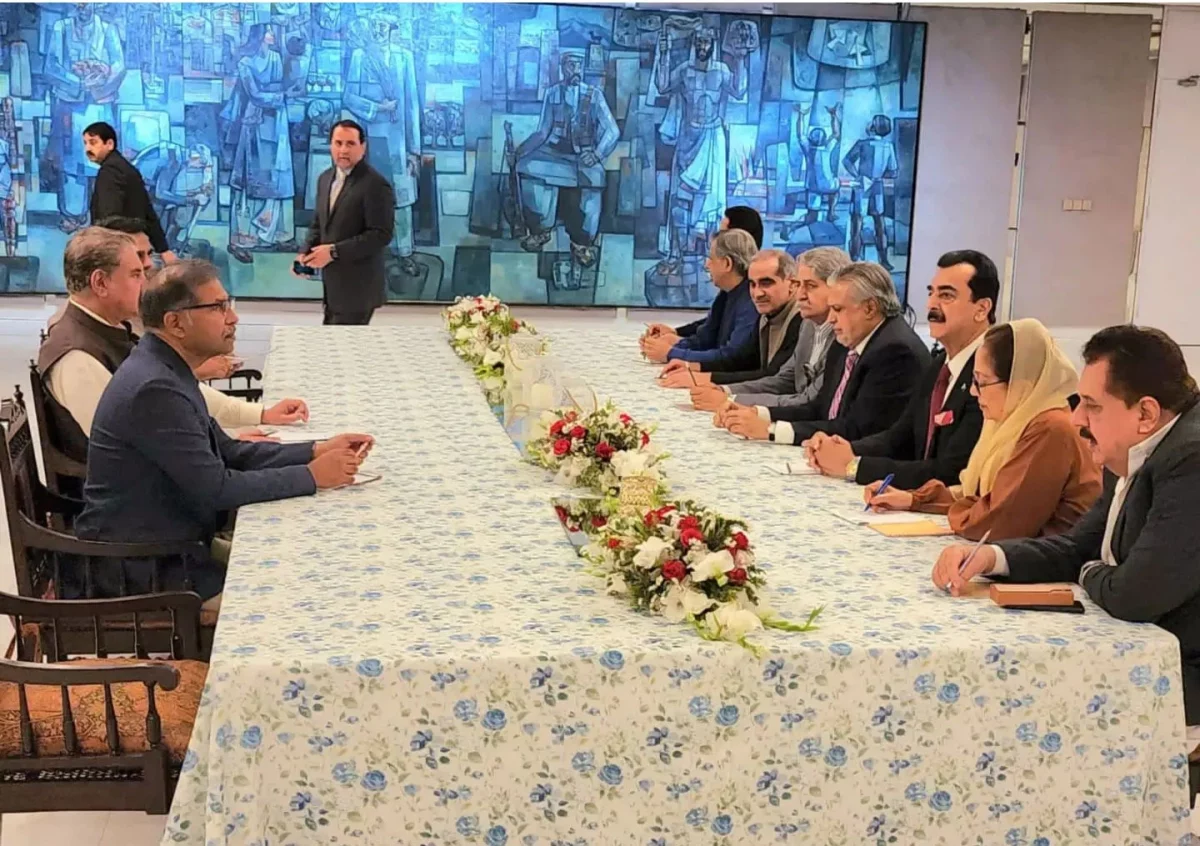
In a positive development, the ruling Pakistan Democratic Movement and the opposition Pakistan Tehreek-e-Insaf (PTI) have agreed on holding general elections across the country on the same date.

The development came late Tuesday after the negotiating teams of the both sides held third round of talks aimed at ending a deadlock over general elections timing at the Parliament House in Islamabad.

The head of the government negotiating team, Finance Minister Ishaq Dar, told the media that consensus could not be evolved on the date of the general elections.


However, he confirmed that both sides had agreed that the polls should be held simultaneously across the country. He also said both sides had shown flexibility in their positions.

“Hopefully, if they proceed with sincerity, the next phase will be passed successfully,” the financial czar added.

The meeting took place at the Parliament House in Islamabad, with Shah Mehmood Qureshi leading his delegation, which comprised Fawad Chaudhary and Senator Ali Zafar.

The government team comprised former prime minister Syed Yousaf Raza Gilani, FinMin Dar, Law Minister Senator Azam Nazir Tarar, Minister for Railways Khawaja Saad Rafique, Minister for Commerce Naveed Qamar, Minister for National Food Security and Research Tariq Bashir Cheema, and Muttahida Qaumi Movement-Pakistan Kishwar Zahra.

‘No breakthrough’

In conversation with journalists, Qureshi said the PDM wants simultaneous elections, and the Supreme Court has also asked political parties to show flexibility in making decisions on the staging of polls.

The former foreign minister added although there was “no breakthrough”, both sides have agreed that they respect the Constitution and would try to find a middle ground so that it isn’t violated.

Qureshi said that the PTI delegation has proposed that since Supreme Court’s decision is in line with the law, a one-time exemption should be allowed through amending the Constitution for holding the polls simultaneously after 90 days — the time limit for staging polls once an assembly is dissolved.

‘Election should be held between Eid ul Adha, Muharram’

Sources told Geo News that the PTI, in a document, proposed that the elections should be held between Eid ul Adha and the holy month of Muharram — which will fall between July and August.

“The elections can also be held in the second or third weeks of August,” the PTI’s document proposed. The party will send its draft to the Supreme Court, while both sides have decided to begin consultations with their top leadership over the elections.

Military leadership briefs PM Shehbaz on security situation

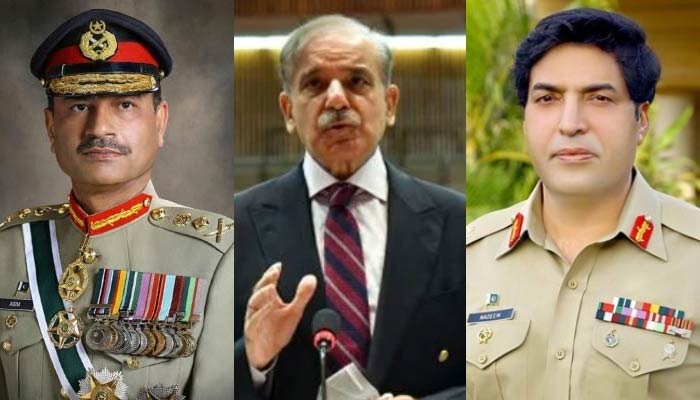
Chief of Army Staff (COAS) General Asim Munir and Inter-Services Intelligence (ISI) Director General Lieutenant General Nadeem Anjum called on Prime Minister Shehbaz Sharif at the PM House on Tuesday, The News reported citing local media.

According to local media sources, during the meeting, the army chief and ISI DG briefed the prime minister on the security situation in the country.

Reportedly, PM Shehbaz was apprised of the recent measures against terrorism, including the border situation.

In the meeting, Shehbaz expressed satisfaction with the professional affairs of the Pakistan Army.

However, despite the media reports, the Prime Minister’s Office and the army’s media wing remained tight-lipped about the meeting.

Last week, Inter-Services Public Relations (ISPR) Director-General (DG) Major General Ahmed Sharif Chaudhry — in a press conference — briefed the nation on the army’s efforts to root out terrorism from the country and situation at the borders — amongst other things.

The top military spokesperson said that the army is focused on rooting out terrorism from the country.

“Pakistan fought the war against terrorism for two decades. Every Pakistani soldier is devoted to faith and piety,” he added.

“The contacts between the Tehreek-e-Taliban Pakistan (TTP), Baloch [insurgent] organisations and foreign intelligence agencies have been proven.”

The ISPR DG further said that 137 security officials have been martyred so far this year while 117 have been wounded. “The war against terrorism that Pakistan has fought is unprecedented and will continue till the last terrorist is eliminated.”

He added, “Terrorist organisations and their facilitators’ have no ideology, religion or faith. They attack mosques, police, religious scholars, mediapersons and citizens.”

Moreover, regarding the situation at the country’s border, the army spokesperson said that around 3,141 kilometres-long border has been fenced along the frontiers with Afghanistan and Iran to prevent infiltration of terrorists.

He said 98% border with Afghanistan and 85% with Iran has been fenced, while 85% of forts along the Afghanistan frontier and 33% with Iran have been completed.

He stated that 65% of erstwhile tribal areas have been cleared of land mines.

UN agrees to allow Taliban’s meeting with Pakistan, China ministers

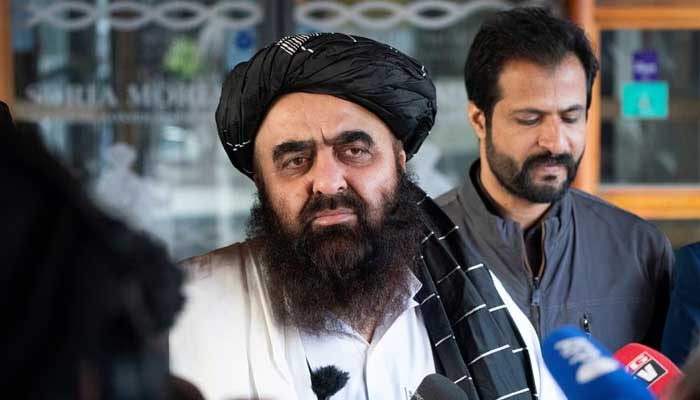
A United Nations Security Council committee has agreed to allow the Taliban administration’s foreign minister Amir Khan Muttaqi’s meeting with foreign ministers and diplomats of Pakistan and China

For the meeting, Muttaqi will travel from Afghanistan to neighbouring Pakistan next week.

The Afghan minister has long remained under a travel ban, arms embargo and asset freeze following sanctions by the UN Security Council.

According to a letter to the 15-member Security Council Taliban sanctions committee, Pakistan’s UN mission requested an exemption for Muttaqi was to travel between May 6-9 “for a meeting with the foreign ministers of Pakistan and China.”

It did not say what the ministers would discuss. It said Pakistan would cover all costs associated with Muttaqi’s trip.

Chinese and Pakistani officials have both said in the past that they would welcome Taliban-led Afghanistan into the multibillion-dollar China-Pakistan Economic Corridor (CPEC) infrastructure project, part of the Belt and Road Initiative.

Afghanistan sits as a key geographical trade and transit route between South and Central Asia and has billions of dollars of untapped mineral resources. The Taliban seized power in August 2021 as US-led forces withdrew after 20 years of war.

The Security Council committee allowed Muttaqi to travel to Uzbekistan last month for a meeting of the foreign ministers of neighboring countries of Afghanistan to discuss urgent peace, security, and stability matters.

UN Secretary-General Antonio Guterres began a two day meeting on Monday in Doha with special envoys on Afghanistan from various countries that aims “to achieve a common understanding within the international community on how to engage with the Taliban,” UN spokesman Stephane Dujarric said.

Dujarric said the closed-door meeting would discuss key issues key issues, such as human rights — in particular women’s and girls’ rights — inclusive governance, countering terrorism and drug trafficking.

Taking part are China, France, Germany, India, Indonesia, Iran, Japan, Kazakhstan, Kyrgyzstan, Norway, Pakistan, Qatar, Russia, Saudi Arabia, Tajikistan, Turkey, Turkmenistan, United Arab Emirates, Britain, the United States, Uzbekistan, the European Union and the Organisation of Islamic Cooperation.

The Taliban administration was not invited to the Doha meeting.