
Japanese PM tells South Koreans his ‘heart hurts’ over pain caused by occupation

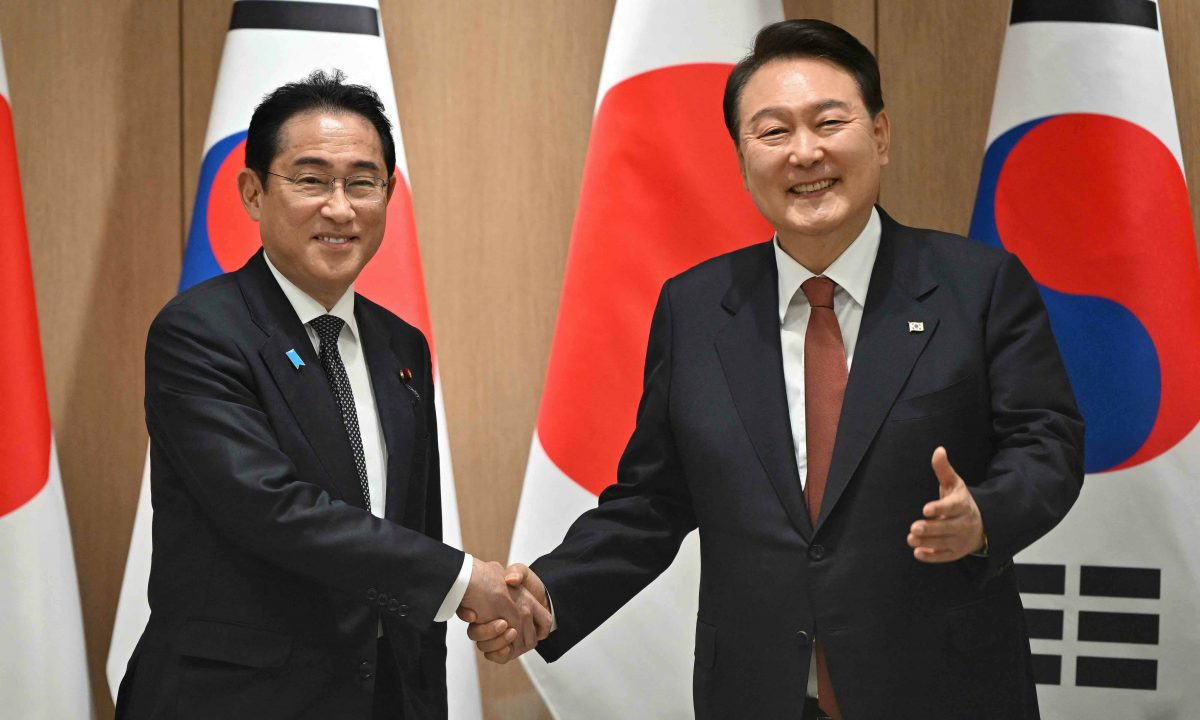
Kishida was in Seoul for the first visit to the South Korean capital by a Japanese leader in 12 years, returning the trip South Korean President Yoon Suk Yeol made to Tokyo in March where they sought to close a chapter on the historical disputes that have dominated Japan-South Korea relations for decades.

Speaking to reporters after his summit with Yoon, Kishida stopped short of offering a new official apology for wrongs committed under the 1910-1945 occupation, but said his government inherits the stance of earlier administrations, some of which have issued apologies.

“For me personally, my heart hurts when I think of the many people who endured terrible suffering and grief under the difficult circumstances of the time,” he said.

Yoon said unresolved historical issues should not mean that no forward steps can be taken to deepen ties.

A senior official at Yoon’s office said Kishida’s remarks had not been pre-arranged and Yoon thanked him for “showing his sincere position even though there was no such request,” and said it would be “greatly helpful for future cooperation.” The pledge by the leaders to boost cooperation has been welcomed by the United States as a way to better confront threats from North Korea and competition from China.

“Cooperation and coordination between South Korea and Japan are essential not only for the common interests of the two countries, but also for world peace and prosperity,” Yoon said in opening remarks at their meeting.

At least 22 people have died after a packed tourist boat capsized in India’s southern Kerala state.

The death toll could rise as rescue efforts are under way on Monday and the vessel is pulled from muddy waters.

Overcrowding caused the double-decker boat to capsize, Abdul Nazar, junior superintendent of police of Malappuram district, told Reuters.

The boat was reportedly carrying about 50 people, or double its capacity, when it overturned on Sunday night.

Indian Prime Minister Narendra Modi expressed condolences on Twitter, saying he was “pained by the loss of lives”.

Many passengers were trapped under the boat and the darkness held back rescue efforts, according to local media. The casualties included women and children on school holiday.

At least four people who were taken to hospital are in critical condition, said Kerala’s sports and fisheries minister, V Abdurahiman.

Many of the passengers were not wearing life jackets at the time of the incident, survivors told local media.

The exact number of missing passengers was not immediately clear.

Authorities are investigating the cause of the mishap.

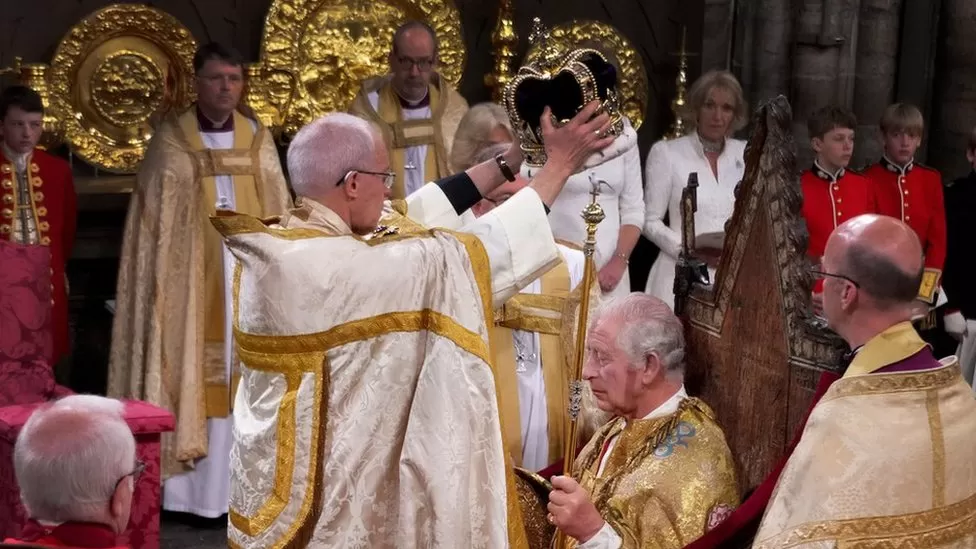
The King’s Coronation was watched by an average of 18 million viewers in the UK, overnight figures have shown.

The ceremony, which saw the King and Queen Camilla crowned, was broadcast simultaneously across a range of channels between 11:00 and 13:00 BST.

Viewing peaked at 20.4 million as the King was crowned just after midday, audience measurement group Barb said.

The figures are smaller than when an average of 26.5 million viewers tuned in for Queen Elizabeth II’s funeral.

An average of 18.8 million people tuned into watch the Coronation across 11 channels and services, including BBC One, Two, ITV and Sky News.

On BBC One, a peak of 13.4 million viewers tuned in to the broadcast led by Huw Edwards and the channel had an average audience of 11.9 million.

ITV said an average of 3.3 million viewers watched the ceremony on ITV1 between 10:45 and 13:00.

Sky News had an average of 568,000 viewers during its broadcast of the Coronation service, while GB News had an average of 176,000 and Talk TV had an average of 14,000 viewers.

Channel 4 opted to show film Johnny English Strikes Again instead of the Coronation with an average of 138,000 people preferring to the watch Rowan Atkinson film. Meanwhile, on Channel 5 children were entertained with The Adventures of Paddington Bear and SpongeBob SquarePants.

Millions of people are thought to have watched the Queen’s coronation on television in 1953 – but there are no reliable figures, making it difficult to measure against this year’s ceremony. Based on surveys carried out by the BBC at the time, it is estimated that more than 20 million adults in the UK watched it.

The funeral service for the King’s ex-wife Diana, Princess of Wales in 1997 was seen by 31 million on BBC and ITV – making it the highest TV audience on record.

Senate passes bill giving right to appeal suo motu verdicts

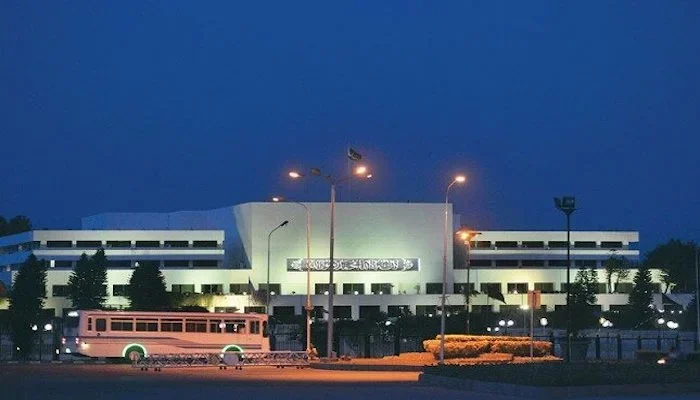
ISLAMABAD: After curtailing the powers of the chief justice of Pakistan, the government on Friday got passed the “Supreme Court Review of Judgments and Orders Bill 2023” — regarding the right of appeal in suo motu cases — through the Senate amid the ongoing tussle between parliament and the judiciary.

The bill — tabled by Pakistan Muslim League–Nawaz’s (PML-N) Irfan ul Haque Siddiqui — was passed by a majority of 32 votes despite the opposition’s uproar.

The bill that aims to facilitate and strengthen the SC in the exercise of its powers to review its judgments and orders was earlier passed by the NA on April 14.

On April 10, the federal government also got the Supreme Court (Practice and Procedure) Bill, 2023, passed in a joint session of parliament after President Arif Alvi returned the bill seeking to curtail the chief justice’s suo motu powers.

In his remarks today, Law Minister Azam Nazeer Tarar alluded to Article 188 of the Constitution saying it empowers the SC subject to the provision of any Act of Majlis-e-Shoora and any rules made by the top court, to review any judgement pronounced or any order made by it. He said the latest legislation is procedural in nature.

The law minister said the bill has been formulated in accordance with the spirit of Article 188 of the constitution.

Key features of the bill:

  • It shall come into force at once.
  • In case of judgments and orders of the SC in exercise of its original jurisdiction under Article 184 of the Constitution, the scope of review on both facts and law, shall be the same as an appeal under Article 185 of the Constitution.
  • A review petition shall be heard by a bench larger than the bench which passed the original judgment or order.
  • The review petitioner shall have the right to appoint any advocate of the SC of his choice for the review petition.
  • The right to file a review petition shall also be available to an aggrieved person against whom an order has been made under clause (3) of Article 184 of the Constitution, prior to the commencement of this act. Provided that the review petition under this section shall be filed within sixty days of the commencement of this Act.
  • A review petition may be filed within sixty days of the passing of the original order.
  • The provisions of this Act shall have effect notwithstanding anything contained in any other law, rules or regulations for the time being in force or judgment of any court including the Supreme Court and a High Court.

In meeting with King Charles, UK PM, Shehbaz proposes joint commission for bilateral relations

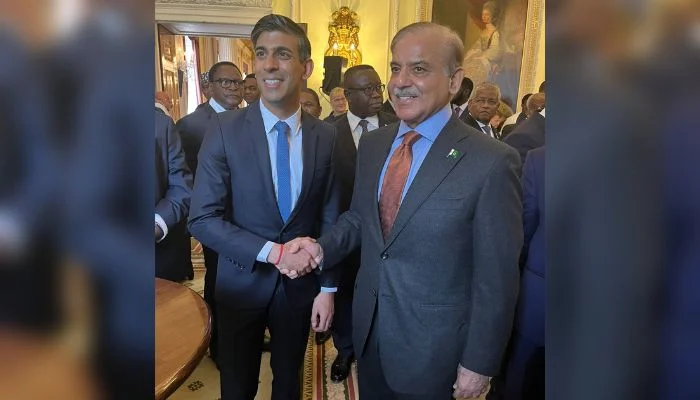
Prime Minister Shehbaz Sharif met King Charles III and United Kingdom Prime Minister Rishi Sunak Friday ahead of the highly anticipated coronation ceremony.

The premier congratulated both the king and the prime minister for what he termed excellent arrangements for the elaborate two-day coronation ceremony.

PM Shehbaz said Pakistan and the UK needed to enhance bilateral relations and proposed that a joint commission led by leaders from both countries be formed for the purpose, a statement issued by the Prime Minister’s Office (PMO) said.

During the meeting, the premier also expressed his gratitude for the UK’s generous assistance in the aftermath of last year’s devastating floods that put a third of the country under water.

For their part, both the king and Sunak expressed interest in strengthening bilateral relations. They also praised the UK’s Pakistani community for its role in the country’s development, the statement said.

Separately, the prime minister also attended a meeting of leaders from Commonwealth countries. In his address, PM Shehbaz called on the leaders to mark King Charles III’s accession to the throne as “the dawn of a new era and the opening of new vistas and fresh avenues for the remarkable family of nations known as the Commonwealth”.

He also urged the leaders to reimagine and reinvigorate the Commonwealth and infuse it with ever greater synergy and an even stronger sense of purpose, the PMO statement said.

During his address, the premier also spoke about the government’s efforts to equip the country’s youth and provide them with opportunities; to empower women; and mainstream marginalised youth, religious and ethnic minorities, persons with disabilities, and the transgender community.

King Charles III’s coronation

Some 2,000 guests, including global royalty and world leaders, will be at Saturday’s event in central London, with huge crowds lining the route to and from Buckingham Palace.

More than 29,000 police officers will take part in one of the UK’s “most significant” ever security operations for the coronation of King Charles.

Thousands of ceremonial troops will take part in a procession from Buckingham Palace to Westminster Abbey as part of the coronation.

Dress rehearsals took place overnight from Tuesday to Wednesday.

The security operation to protect the route to and from the abbey — dubbed Operation Golden Orb — will include rooftop snipers and undercover officers, as well as airport-style scanners, sniffer dogs, and a no-fly zone over central London.

Covid-era Italian PM attacked by anti-vaxxer

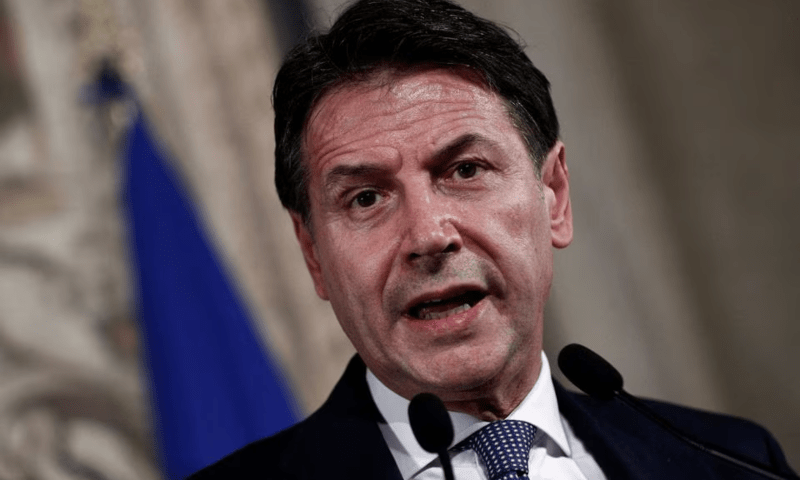
The Five Star Movement, the opposition party led by Conte, wrote on Facebook that Conte had been “attacked by an anti-vaxxer in Massa”, a small Tuscan city where he was attending an election rally.

News agency Ansa said the man struck Conte in the face, blaming him for the lockdown policies imposed during the pandemic and other measures. Police officers later took him away.

As well as his own party, Prime Minister Giorgia Meloni expressed her “solidarity” with Conte.

“Any form of violence must be condemned without hesitation,” Meloni said in a statement.

“Dissent must be civil and respectful of people and political groups.” Prime minister from June 2018 to February 2021, Conte was the head of government when the Covid-19 outbreak suddenly struck northern Italy in February 2020.

Italy was the first country outside China to suffer a major outbreak of Covid-19.

The virus has killed nearly 190,000 people in Italy to date, according to the health ministry.

Conte imposed stringent coronavirus restrictions in the early phase of the pandemic, including an economically crippling shutdown and the mandating of face masks in public.

His successor as prime minister, Mario Draghi, imposed a compulsory coronavirus health pass in September 2021 tied to the Covid-19 vaccine.

Conte’s early decisions during the breakout, including one not to impose “red zones” in two hard-hit areas, are the subject of an ongoing judicial inquiry.

Investigating magistrates suspect that Conte and his government underestimated the contagiousness of Covid-19 even though available data showed that cases were spreading rapidly.

Buildings collapse after magnitude 6.5 earthquake hits Japan’s Ishikawa

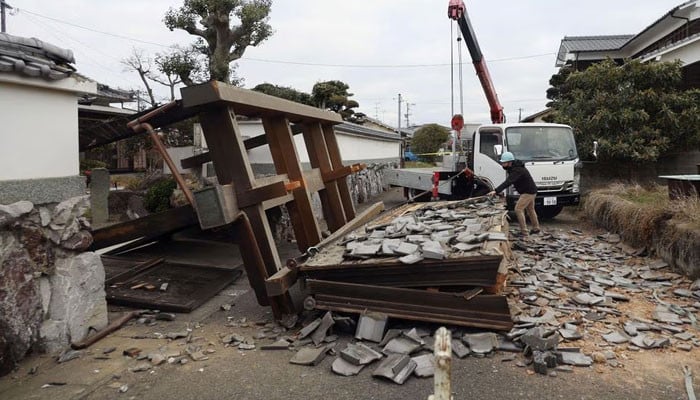
No threat of a tsunami is in sight as an earthquake of magnitude 6.5 shook Japan’s western prefecture Ishikawa Friday, authorities said on Friday amid reports of injuries and collapsed buildings.

The quake had a depth of 12 kilometres.

The earthquake struck 2:42pm on the northern tip of Ishikawa Prefecture’s Noto Peninsula on the Sea of Japan coast.

Meteorological Agency said: “There was no threat of a tsunami, but sea level changes of less than 20 cm were possible.”

According to the NHK reports, local police in the city of Suzu, Ishikawa Prefecture — near the quake’s epicentre — the seism has reportedly damaged many buildings and hospitals were receiving patients with quake-related injuries.

It reported: “One man who fell off a ladder was showing no vital signs. Suzu Fire Department noted that three houses had collapsed and that two people were trapped in two of the structures.”

Strong 6, which was recorded in the city of Suzu, is the second-highest level on Japan’s intensity scale. The level of shaking can make it “impossible to remain standing or move without crawling,” the Meteorological Agency said.

Chief Cabinet Secretary Hirokazu Matsuno, in a press conference, noted that the government was responding to the emergency and is in the process of damage assessment.

Matsuno said: “We will continue to assess the extent of the damage and, in close cooperation with local authorities, will do our best to implement emergency-disaster measures.”

He also urged citizens of Japan to remain alert if local authorities announce any evacuation measures in any form.

The area could be hit by aftershocks of similar strength. An earthquake measuring Shindo 4 followed soon after the initial jolt, Matsuno added.

West Japan Railway said: “The earthquake led to the suspension of some train lines, including the Hokuriku Shinkansen between Nagano and Kanazawa stations. The shinkansen later resumed service.”

No abnormalities were reported at the Shika nuclear power plant located in Ishikawa prefecture, as well as at the Kashiwazaki-Kariwa plant in the neighbouring prefecture of Niigata, said Matsuno.

World food prices rise for first time in a year: FAO

The Food and Agri­cul­ture Organisation’s (FAO) price index, which tracks the most globally traded food commodities, avera­ged 127.2 points last month against 126.5 for March, the agency said on Friday. The March reading was originally given as 126.9.

The Rome-based agency said the April rise reflected higher prices for sugar, meat and rice, which offset declines in the cereals, dairy and vegetable oil price indices.

“As economies recover from significant slowdowns, demand will increase, exerting upward pressure on food prices,” said FAO Chief Economist Maximo Torero.

The sugar price index surged 17.6pc from March, hitting its highest level since October 2011. FAO said the rise was linked to concerns of tighter supplies following downward revisions to production forecasts for India and China, along with lower-than-earlier-expected outputs in Thailand and the European Union.

While the meat index rose 1.3pc month-on-month, dairy prices dipped 1.7pc, vegetable oil prices fell 1.3pc and the cereal price index shed 1.7pc, with a decline in world prices of all major grains outweighing an increase in rice prices.

“The increase in rice prices is extremely worrisome and it is essential that the Black Sea initiative is renewed to avoid any other spikes in wheat and maize,” said Torero, referring to a deal to allow the export of Ukrainian grain via the Black Sea.

The FAO forecast world wheat production in 2023 of 785m tonnes, slightly below 2022 levels but nonetheless the second largest outturn on record.

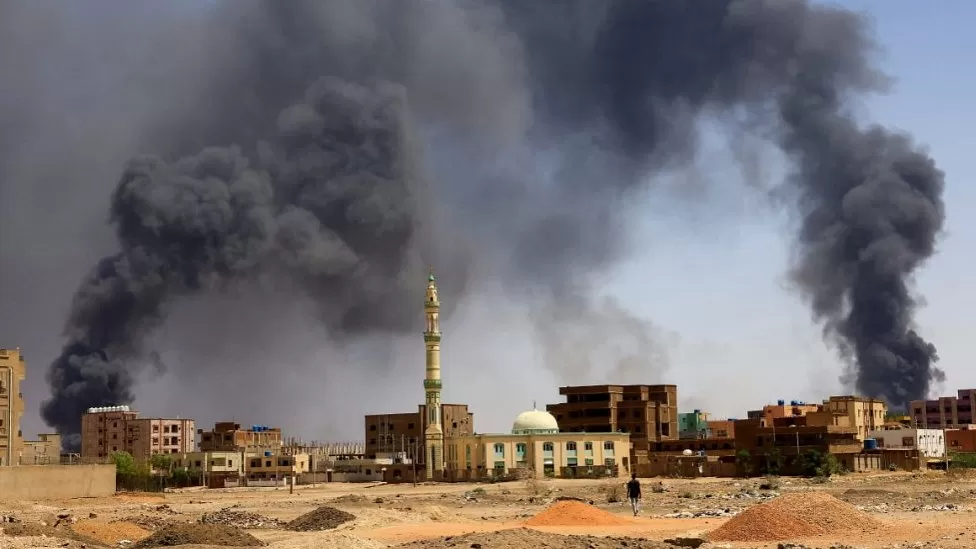
Saudi Arabia is to host the first face-to-face talks on Saturday between the warring armies in Sudan, after several ceasefires broke down.

A joint US-Saudi statement welcomed the start of “pre-negotiation talks” in Jeddah between the Sudanese army and paramilitary Rapid Support Forces (RSF). On Friday reports spoke of continuing clashes in Khartoum.

The Sudanese army says the talks aim to address humanitarian issues.

There has been no official RSF comment.

The army confirmed it had sent envoys to Jeddah to engage in the talks, which the UN and aid agencies have been pressing for, faced with a dire humanitarian crisis in Sudan.

Nearly three weeks of heavy fighting have killed hundreds of people and displaced nearly 450,000 civilians. Of that total, the International Organization for Migration says, more than 115,000 have sought refuge in neighbouring countries.

Sudan’s army commander Gen Abdel Fattah al-Burhan – the de facto Sudanese president – is engaged in a bitter power struggle with RSF leader Gen Mohamed Hamdan Dagalo, better known as Hemedti.

The statement from the US and Saudi governments said they “urge both parties to take in consideration the interests of the Sudanese nation and its people and actively engage in the talks towards a ceasefire and end to the conflict, which will spare the Sudanese people’s suffering and ensure the availability of humanitarian aid to affected areas”.

The joint statement also expressed hope for “an expanded negotiation process that should include engagement with all Sudanese parties”.


A Unicef spokesman, James Elder, said the conflict’s first 11 days alone had killed an estimated 190 children and wounded 1,700 – and those figures were just from health facilities in Khartoum and Darfur.

“The reality is likely to be much worse,” he said.

The intensity of the fighting has prevented much-needed aid deliveries getting through.

So far Gen Burhan and Hemedti, who led an Arab militia in the brutal Darfur conflict, have shown little readiness to reach a peace settlement.

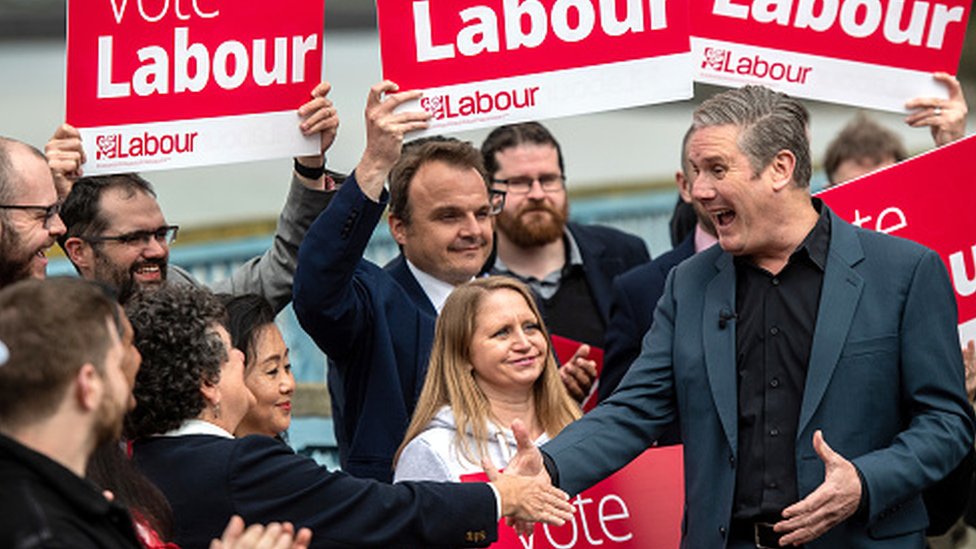
Labour leader Sir Keir Starmer says his party is on track to win the next general election after the Tories were hammered in local polls across England.

The Tories have lost 48 councils and more than 1,000 councillors, exceeding their worst predictions.

Many Conservatives were furious at the scale of the losses, with some blaming Prime Minister Rishi Sunak.

Labour says it is now the largest party in local government, surpassing the Tories for the first time since 2002.

“The British public has sent a clear rejection of a prime minister who never had a mandate to begin with,” a Labour spokesperson said.

The elections of 230 councils in England were the first big test of Mr Sunak’s electoral popularity since he won the Tory leadership contest and became prime minister last October.

The Liberal Democrats had what their leader Sir Ed Davey said was their “best result in decades”, taking control of 12 councils, mostly in Tory heartlands.

The Green Party gained 241 seats – their best-ever result in local elections – and gained its first majority on an English council, in Mid-Suffolk, although they were overtaken as the biggest party by Labour in Brighton and Hove.


Mr Sunak admitted the results were “disappointing”, but said he did not detect “a massive groundswell of movement towards the Labour Party”.

Sir Keir claimed the “fantastic” results showed his party was well placed to oust the Tories from government in a general election, expected next year.

“Make no mistake, we are on course for a Labour majority at the next general election,” he told cheering activists in Medway in Kent, one of the councils his party has wrested from the Tories.

‘Little short of calamitous’

Labour won control of councils in areas that will be crucial battlegrounds in the general election, including Medway, Swindon, Plymouth, Stoke-on-Trent, and East Staffordshire.

The BBC’s projected national vote share put Labour on 35%, the Tories on 26% and the Lib Dems on 20%.

Labour’s projected nine-point lead represents its largest over the Conservatives on this measure since the party lost power in 2010.

Sir John Curtice, the polling expert, said this year’s results were “only a little short of calamitous for the Conservatives”.

But the BBC’s political editor, Chris Mason, said the results suggested it would be hard for either the Conservatives or Labour to be confident of winning a majority at the next general election.

He said there appears to be no appetite to move against Mr Sunak, after the Tories forced two prime ministers – Boris Johnson then Liz Truss – out of office last year.

Still, some Conservatives are reeling from the results, with ousted councillors and critics of Mr Sunak venting their anger at the prime minister.

Tory recriminations

As the big picture became clearer, there was disagreement among Tories over who was to blame for the loss of so many councillors.

The elections came amid a dire economic backdrop in the UK, with high inflation contributing to the worst cost-of-living crisis in decades.

A figure loyal to Mr Johnson and Ms Truss told the BBC that Mr Sunak had “no option but to own these results”.

In a seething statement, the person said: “He has been chancellor or prime minister for virtually all of the last three years and it was he and his supporters who forced Boris and then Liz out of office in order to install him in Downing Street.

“The old saying goes that ‘it is the economy, stupid’ that defines the choice voters have at the ballot box.”

In Swindon, where Labour took control of the borough council for the first time in 20 years, ousted Tory council leader David Renard blamed “the cost of living and the performance of the government in the last 12 months” for his party’s woes locally.

Mr Renard said although the prime minister had “started to stabilise things”, for voters in Swindon, “what had gone on before that was something that they didn’t like”.

,

David Renard, Swindon’s former council leader, who lost his own seat

The Conservative mayor of the Tees Valley, Ben Houchen, said the poor Tory performance was a partly a result of “the turmoil and upheaval of the last 12 months”.

He said Labour had been “successful in making this a referendum on the government”, adding “people don’t feel like they can vote for us”.

Nigel Churchill, a former Tory councillor who lost his seat on Plymouth Council – another Labour target – said “I think we can safely say” the Conservatives will lose the next general election.

“The general public do not trust them at the moment,” he said.

But Education Minister Robert Halfon said this year’s local elections were always “going to be difficult” for his party.

He said internal party divisions “didn’t help”, but claimed the losses were down to external factors, such as the cost-of-living crisis and problems in the NHS.

“Every government during the mid-term, especially a government that has been in power for 13 years, always suffers losses in local elections,” he said.

Other Tory MPs told the BBC that apathy – Conservative voters staying at home – was also a big problem for the party.

Key results at a glance:

  • Labour has gained 536 councillors and 22 councils – including the key battlegrounds of Swindon, Plymouth, Medway and Stoke-on-Trent, where the party are hoping for success at the next general election
  • The Conservatives lost 1,061 councillors and 48 councils, but won control of Torbay and Wyre Forest
  • The Liberal Democrats have gained 12 councils and 405 councillors, including the former Conservative strongholds of Windsor and Maidenhead, and Stratford-on-Avon
  • Almost 250 Green councillors were elected, and the party won its first-ever outright majority on a council in Mid Suffolk

The Conservatives attempted to manage expectations before Thursday’s elections, with party chairman Greg Hands suggesting they could lose 1,000 council seats.

In contrast, Labour sought to downplay its chances of success, predicting gains of about 400 seats.

Most of the seats were last up for election in 2019, at a time when the UK was gripped by political turmoil over Brexit.

The seats up for grabs were mostly on district councils, responsible for services including bin collections, parks, public housing and planning applications.

The rest of the elections were for a mixture of metropolitan and unitary councils – single local authorities that deal with all local services – and for four mayors.

The elections were the first in England to see voter ID checks at polling stations. Some voters told the BBC they were turned away from polling stations, prompting critics to call for the ID rules to be dropped.