
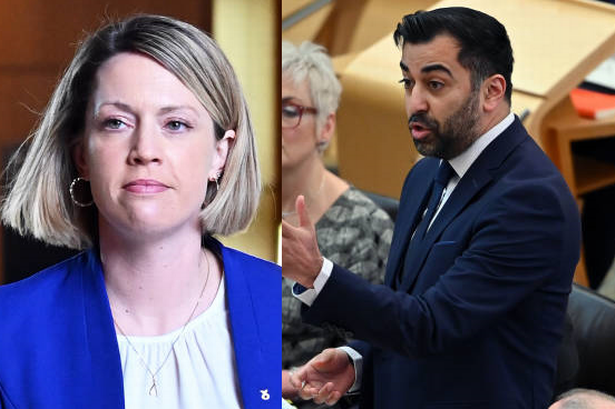
Humza Yousaf has defended SNP minister Jenny Gilruth over claims she intervened in a constituency issue while she was transport minister.

The Scottish Conservatives claim she broke the ministerial code by delaying vital rail works, costing taxpayers £1m.

They said Ms Gilruth gave “preferential treatment to her constituents”.

The first minister insisted the Tories were “throwing mud” and said her decisions benefitted the whole network.

Scottish Tory leader Douglas Ross raised the issue at first minister’s questions on Thursday.


He called for an urgent independent investigation into the claims Ms Gilruth intervened inappropriately to delay a rail upgrade for purely political reasons.

Following the session, he confirmed that he had written to the first minister formally requesting that Ms Gilruth be investigated.

The row centres on proposed line electrification work between Edinburgh Haymarket and Dalmeny, which would have caused eight days of disruption from Boxing Day last year.

It was part of a “decarbonisation” scheme to replace diesel trains with electric units on rail routes from Edinburgh to Fife.

Douglas Ross held up emails obtained by a freedom of information request

Ms Gilruth, who represents Mid Fife and Glenrothes as an MSP and is now education secretary, asked for the works to be postponed.

The Tories say that officials told the Scottish government this would lead to an extra £1m in cost and cause disruption to 9,000 passengers a day due to the work taking place at non-holiday times.

The work has still not been carried out.

‘Sackable offence’

Mr Ross said: “Ms Gilruth appears to have forced a change in order to give preferential treatment to her constituents at a higher cost to taxpayers and far more disruption to passengers”.

He said that a freedom of information response the party had received made clear that, “instead of a few days of closures after Christmas, Jenny Gilruth pushed for more than six weeks of disruption, including four full weekend closures”.

He added it looked like a “clear-cut sackable offence”.

He read out Scottish Rail Holdings Board papers, which stated: “The board is asked to note that Network Rail and ScotRail chose to do the work at this time precisely to minimise the number of passengers impacted, and Transport Scotland were fully aware of and endorsed this approach.”

He said the board papers also showed that Chris Gibb, who worked in the rail industry for more than 40 years and chaired ScotRail in 2022, raised concerns over “micromanagement by Scottish ministers, advisors and officials”.

Mr Gibb resigned just a few weeks after Ms Gilruth’s decision.

First Minister Humza Yousaf said Mr Ross was making “very serious accusations indeed” and there would be an “appropriate investigation”.The first minister insisted Douglas Ross was “throwing mud”

However, he said the situation was not as Mr Ross described, saying the decision was made for the “correct reasons” in order to benefit the “entire network”.

Mr Ross then quotes emails he had obtained. He said that ScotRail officials told the government the changes would lead to “greater cost, with more customers disrupted or inconvenienced with the revised access plan”, he said.

Mr Yousaf said the works would have led to disruption further afield than Fife and Ms Gilruth had said she wanted more done to avoid more delays on the rail network over the festive period.

Mr Ross said: “She should not even have been involved in this decision, she should have recused herself because of the clear potential for a conflict of interest.”

He suggested the “political interference” forced Chris Gibb to resign as chief executive of ScotRail Holdings.

Ms Gilruth’s decision led to a poorer service, he said, and “looks like a clear breach of the ministerial code”.

Mr Yousaf said: “What (Mr Ross) is hoping to do, because he is undoubtedly desperate, is throwing as much mud as possible and hoping that some of it sticks.”

The first minister said Mr Ross was being “selective” in his reading of the emails.

He said it was “pretty clear” that Ms Gilruth made the decision to minimise disruption for passengers across the network.

Scottish Labour were also critical of the decision.

Their business manager, Martin Whitfield, said: “We urgently need an investigation into what appears to be a breach of the ministerial code.

“It would be grossly inappropriate for a minister to use their position to try and win favour with local voters.”
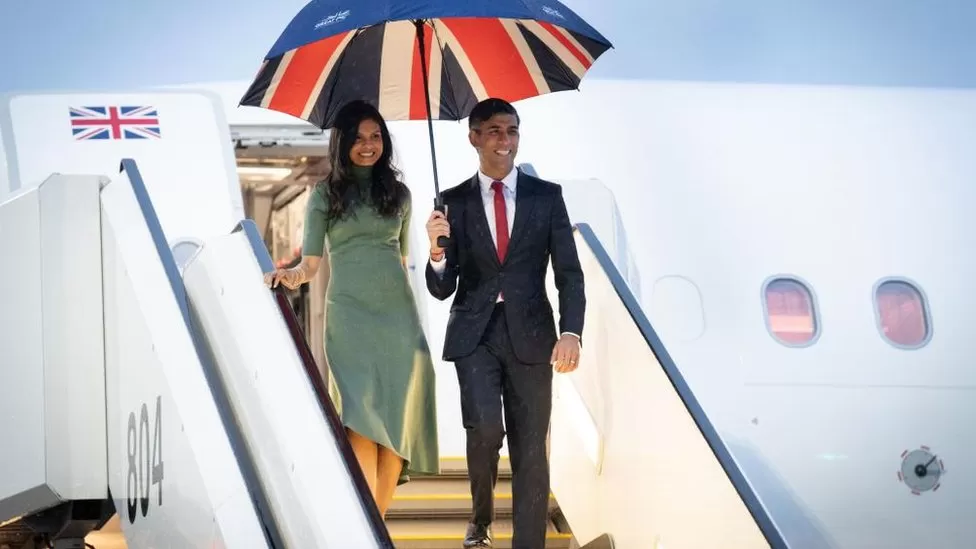
Rishi Sunak has said he wants to ensure “Russia pays a price” for the war in Ukraine, after announcing new sanctions targeting Russian exports.

Speaking to the BBC’s Chris Mason at the G7 summit in Hiroshima, the prime minister said he was leading the way with new sanctions on Russia.

He said he hoped other countries would follow suit.

Russian diamond imports to the UK are among the items that will be banned by the government.

The Russian diamond industry was worth $4bn (£3.2bn) in exports in 2021.

Russian-origin copper, aluminium and nickel imports will also be blocked, under legislation to be introduced later this year.

“We believe in democracy, freedom, the rule of law – and it’s right that we stand up for those things,” Mr Sunak told the BBC.

UK PM Rishi Sunak and his wife, Akshata Murty, arriving in Tokyo ahead of the G7 summit

“I’m hopeful and confident that our partner countries will follow as they have done when we’ve done this previously.

“That will make the sanctions more effective, ensure that Russia pays a price for its illegal activity.”

The UK government said it was also planning to target 86 more people and companies connected to President Vladimir Putin, including people who were “actively undermining the impact of existing sanctions”.

Since Russia’s attack on Ukraine, the UK has targeted more than 1,500 individuals and entities and frozen more than £18bn assets under the sanctions regime.

Last year the UK, US, Canada and Japan banned imports of Russian gold in an effort to hit the country’s ability to fund the war in Ukraine.

Downing Street said more than 60% of President Putin’s war chest has been “immobilised” – worth about £275bn.

Both the US and the EU have announced similar sanctions on Russia – with US President Joe Biden setting out plans to ban Russian diamonds, seafood and vodka last year.

The President of the European Council, Charles Michel, says the EU also wants to restrict trade in Russian diamonds to try to further isolate Moscow.

Diamonds extracted from the Yakutia region by Russian mining company Alrosas Dynasty

Mr Sunak is in Hiroshima for the G7 summit, which is comprised of some of the world’s richest nations.

The prime minister visited the Hiroshima Peace Park, the site where the US dropped the first nuclear bomb, alongside other G7 leaders before the meeting, where the Ukraine war and economic security are likely to be high on the agenda.

Russia has significantly increased the frequency of its missile attacks on Ukraine recently, while Ukraine appears to be shooting down more of Russia’s missiles.

At the meeting, Mr Sunak is expected to warn other world leaders “against complacency in defending our values and standing up to autocratic regimes”.

On Sunday, he will meet the prime minister of India, Narendra Modi, who is attending the G7 summit as a guest.

Mr Modi has remained neutral on Russia’s invasion of Ukraine, calling for peaceful dialogue to end the conflict.

Mr Sunak told reporters travelling with him in Japan that he had seen “positive” steps from India in its stance on the war.

The prime minister said the sanctions demonstrated the G7 was unified in the face of the threat from Russia.

He said: “We are meeting today in Hiroshima, a city that exemplifies both the horrors of war and the dividends of peace.

“We must redouble our efforts to defend the values of freedom, democracy and tolerance, both in Ukraine and here in the Indo-Pacific.”

In visit to martyrs’ monument, COAS vows not allowing May 9 incidents ‘again at any cost’

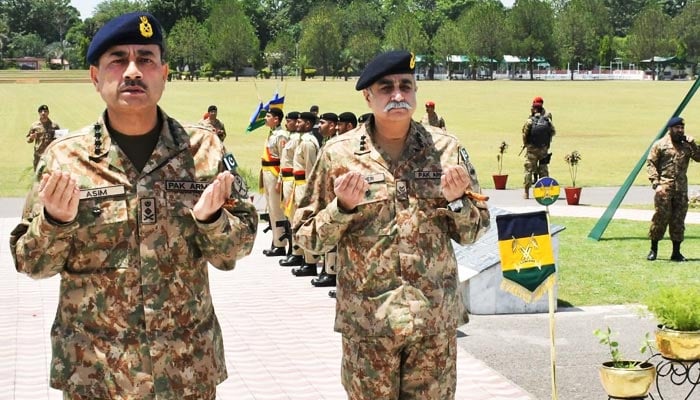
RAWALPINDI: Chief of Army Staff (COAS) General Asim Munir Wednesday vowed that the armed forces would not allow May 9 incidents to come to pass “again at any cost”.

Pakistan Tehreek-e-Insaf (PTI) workers during their protests following party chairman Imran Khan’s arrest on May 9 vandalised the martyrs’ monument, Lahore Corps Commander House, and General Headquarters.

“No one will be allowed to disrespect our shuhada [martyrs] and their monuments,” the army chief said during his visit to the martyrs’ monument, where he paid rich tribute to the martyrs who sacrificed their lives for the pride, honour, and dignity of the nation.


The army chief said the martyrs and the monuments are a source of inspiration and pride for the rank and file of the armed forces, law enforcement agencies, government officials, and the people.

The army chief underscored that recently planned and “orchestrated tragic incidents” would never be allowed again at any cost.

The COAS reassured the ranks and files that all those responsible for bringing shame to the nation on Black Day of May 9 would certainly be brought to justice.

“The martyrs have been promised the highest abode in the life hereafter and shall continue to maintain the highest levels of respect amongst the people of Pakistan.”

“The State of Pakistan and Armed Forces will always maintain all Shuhada and their families in very high esteem and continue to honour them and their supreme sacrifices with utmost respect and dignity.”

The army chief also appreciated under-command formations for their hard work, devotion, high morale and professionalism.

During his interaction with officers and troops, COAS stressed maintaining focus on the army’s professionalism and preparedness to deal with complex internal and external security challenges, including propaganda warfare.

The government has said it has “evidence” that PTI workers were involved in the attacks on military installations, but the party has distanced itself from the vandals, claiming that it preaches peace, not violence.

Several PTI leaders have also jumped ship after the army and the government alike supported the decision of trying the vandals under the Pakistan Army Act.

PM Shehbaz, Iranian President Raisi jointly inaugurate Mand-Pishin border market

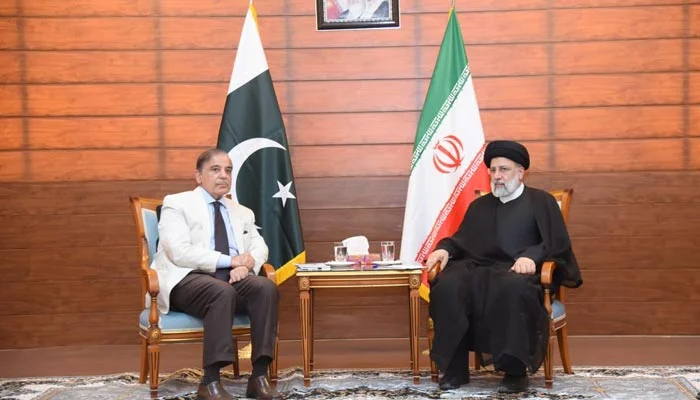
In a step aimed at boosting bilateral trade, Prime Minister Shehbaz Sharif and Iran’s President Seyed Ebrahim Raisi on Thursday jointly inaugurated the Mand-Pishin border sustenance market.

The Mand-Pishin border sustenance marketplace is expected to provide a thriving platform for increasing cross-border trade, fostering economic growth, and opening up new avenues of opportunity for local businesses.

It should be noted that this is one of the six border markets which has been constructed along the Pak-Iran border.

The two leaders also planted a sapling on the premises of the border market as a gesture to stride forward in the bilateral relationship between the two countries.

PM Shehbaz was accompanied by Foreign Minister Bilawal Bhutto-Zardari, Power Minister Khurram Dastagir, Information Minister Marriyum Aurangzeb. Moreover, senior officials of Pakistan and Iran were also present.

The Foreign Office, in a statement issued on Wednesday, said: “The joint inauguration is a manifestation of the strong commitment of Pakistan and Iran to uplift the welfare of residents of the neighboring provinces of Balochistan and Sistan-o-Baluchestan, respectively.”

100MW electricity transmission line also inaugurated

PM Shehbaz along with the Iranian president also inaugurated 100MW Polan-Gabd electricity transmission line project from Iran to Gwadar at Mand-Pishin crossing point of Pakistan-Iran border.

Aurangzeb said that the project was pending since 2009 and has been completed in record time of four months under the leadership of PM Shehbaz.

She said the project will unleash development, trade, business and employment opportunities contributing to future prosperity of people of Gwadar and Balochistan.

Moreover, Aurangzeb shared that PM Shehbaz and the Iranian president will also jointly inaugurate the first-ever 100 MW transmission line from Iran to fulfill the energy needs of Gwadar.

‘Stepping stone for greater cooperation’

In an exclusive interview with Islamic Republic News Agency (IRNA), PM Shehbaz stressed the importance of enhanced cooperation with the Islamic Republic of Iran, terming energy projects and border markets “emblematic of the vitality of Pakistan-Iran friendship”.

Muhammad Shehbaz Sharif made the remarks in a written interview sent to the Bureau office of the Islamic Republic News Agency (IRNA) in Islamabad.

The PM was of the view that the Mand-Pishin border marketplace and the Polan-Gabd electricity project are “tangible manifestations” of this joint resolution.

He added the border markets including Mand-Pishin will not only ameliorate the socioeconomic conditions of our border regions but also foster new opportunities for local businesses. “They would also serve as a stepping stone for greater cooperation between our two countries, especially in the economic domain,” the premier maintained.

Shedding light on trade, he noted there is tremendous scope and mutual desire for the actualisation of our trade potential.

“Both Pakistan and Iran are deeply committed to achieving an annual trade volume of $5 billion. In this regard, the operationalisation of the barter trade mechanism is a significant step,” he said.

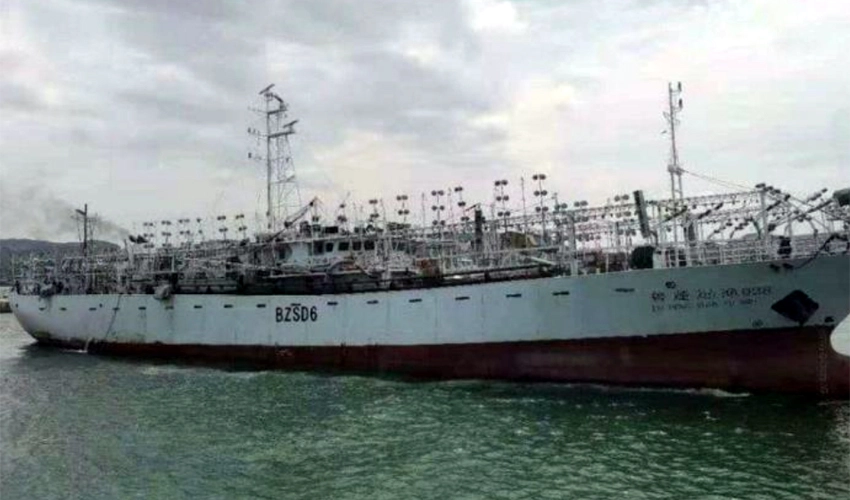
39 missing after Chinese ship capsizes

Multinational search efforts were underway after Chinese vessel Lu Peng Yuan Yu 028 overturned in the early hours of Tuesday with 17 Chinese, 17 Indonesians and five Filipinos on board.

“Chinese and foreign ships have arrived in the area where the incident occurred and the search and rescue work is ongoing,” Chinese foreign ministry spokesman Wang Wenbin told a press briefing on Wednesday.

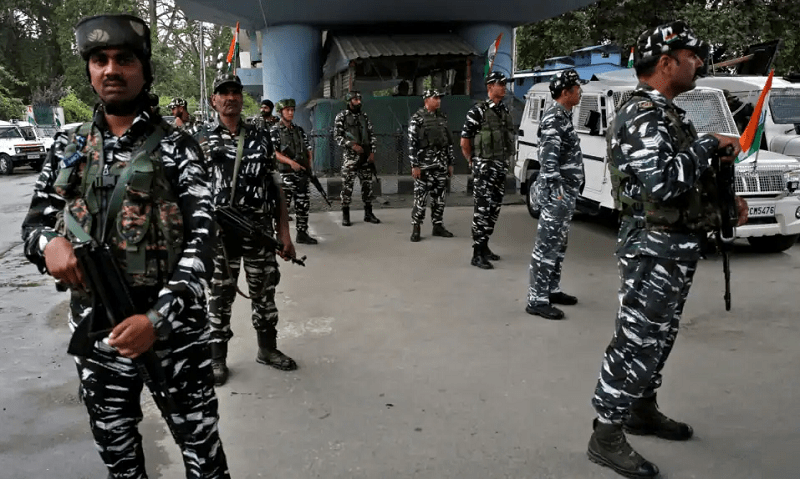
India boosts security for G20 meeting in held Kashmir

Srinagar is due to host a tourism working group meeting of G20 members on May 22-24, part of a series of meetings before a G20 summit scheduled to be held in New Delhi in September.

Srinagar has been at the centre of an uprising by Kashmiri fighters against Indian occupation since 1989. Tens of thousands of people have been killed although the violence has been reduced in recent years.

Indian officials said they fear Kashmiri fighters could try to promote their cause with an attack before or during the G20 meeting. “The timing of attacks is worrisome as they are planned just before the G20 meeting,” said an Indian army officer requesting anonymity.

Military and police officers said they had intelligence information that Kas­hmiris might target a military-run school in Jammu and take students hostage.

In response, all such schools had been shut and classes moved online until after the G20 meeting, they said.

Security agencies are not taking any chances in Srinagar, officers said.

Vijay Kumar, chief of police in the Kashmir Valley, said that commandos had been deployed in the city and members of a counter-terrorism force would be stationed in various places.

Moscow, Tehran ink rail deal for corridor intended to link Russia with India

Iranian Transport Minister Mehrdad Bazrpash, who signed the agreement with his Russian counterpart in Tehran, said the 164-kilometre railway in Iran’s north would be completed within three years.

It is the only missing link in the International North-South Transport Corridor (INSTC) from northeast Russia via Azerbaijan to Iran’s southern coastline and on to India by sea. Russia and Iran are both under international sanctions that restrict trade.

The freight network of ship, rail and road routes, which covers some 7,200 kilometres, avoids the Suez Canal between the Mediterranean and the Red Sea which would otherwise transport some Russian seaborne cargo.

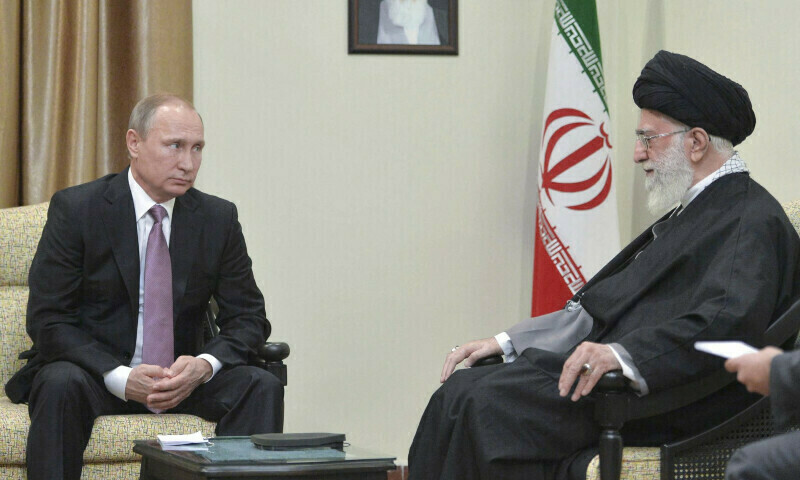
Iranian President Ebrahim Raisi, who attended the signing ceremony, and Russia’s Vladimir Putin, who spoke there via videoconference, both hailed the economic opportunities the agreement presents.

The planned railroad would connect Rasht, a city in northern Iran, and the Astara crossing on the border with Azerbaijan. Bazrpash said the “process of construction” of the Rasht-Astara railway “has started and we will finalise it within the next three years”. Raisi said that, once completed, the INSTC will boost regional trade and noted the “great potential” in ties with Russia.

The latest agreement is “an important strategic step on the path of cooperation between the Islamic Republic of Iran and the Russian Federation”, he said. Putin praised the “obvious economic benefits” for both Moscow and Tehran in the form of new jobs and investments.

“This unique north-south transport artery, of which the Rasht-Astara railway will be a part, will help significantly diversify international transport flows,” Putin said.

“The transportation of goods through the new corridor will have a significant competitive advantage,” he argued.

“The delivery of goods from Saint Petersburg (in Russia) to Mumbai (in India) will take about 10 days, compared to the journey through traditional trade routes that takes 30 to 45 days.”

Putin said Russia and Iran “attach paramount importance to strengthening their economic and trade ties” as well as their bilateral relations in general. Tehran, already facing sanctions over its nuclear activity and human rights issues, has been targeted with fresh Western restrictions over claims it was supplying Russia with attack drones to be used in the war, which Tehran denies.

On Tuesday, Washington warned that the two sanctions-hit countries were “expanding their unprecedented defence partnership”.

“Interactions between Iran and Russia in matters regarding the selling of advanced weapons, especially more advanced UAVs, are now continuing,” said US National Security Council spokesman John Kirby.

Tehran and Moscow have sought to boost cooperation in key areas to help prop up their economies in the face of sanctions.

Russian Deputy Prime Minister Alexander Novak visited Iran on Tuesday and met with the Islamic republic’s oil minister to discuss “new projects” in oil and gas exploration.

IHC extends blanket relief to Imran Khan till May 31

In the latest instance of Pakistan Tehreek-e-Insaf (PTI) Chairman Imran Khan receiving blanket relief from the country’s judiciary, the Islamabad High Court (IHC) Wednesday extended its orders against his arrest in further cases till May 31.

The development came during the hearing of PTI’s plea seeking details of all cases filed against Khan claiming that the PTI chief is booked in more than 100 cases.

The federal government — represented by the additional attorney general for Pakistan, the advocate general for Pakistan and the state counsel — requested time from the court to provide details of cases against the PTI chief.

Approving their request, the court adjourned the hearing till May 31.

On May 12, the cricketer-turned-politican was granted a blanket relief from different benches of IHC that not only barred the authorities from arresting him but also stayed his trial in the Toshakhana case until the second week of June.

The court also granted protective bail to the former prime minister in three terrorism cases registered against him in Lahore and the Zille Shah murder case.

On the same day, a separate IHC bench accepted Khan’s bail in the Al-Qadir Trust case — under the charges of which he was arrested — for two weeks, after the Supreme Court termed his arrest “invalid and unlawful”. It had stopped authorities from arresting the PTI chief till May 17 in any case registered in Islamabad after May 9.

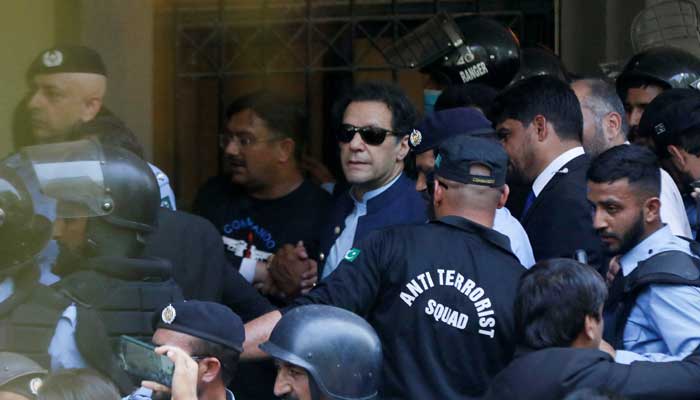
Khan was arrested from the IHC premises by paramilitary forces on Tuesday (May 9), which triggered violent protests across the country. The former prime minister had immediately approached the court for release but it had declared his arrest legal.

Since being ousted from office last April, Khan has waged a tempestuous campaign for snap elections and fired unprecedented criticism at the coalition government and military who he blames for pulling him from power.

He has accused senior military and government officials of plotting a November assassination attempt that saw him shot in the leg during a rally.

IHC orders release of Maleeka Bukhari, Ali Muhammad Khan

In a separate case, the IHC has also declared the detention of PTI leaders Maleeka Bukhari and Ali Muhammad Khan “null and void”.

Justice Miangul Hassan Aurangzeb ordered immediate release of both the politicians.

Pakistan, Saudi Arabia to sign ‘Road to Makkah’ project

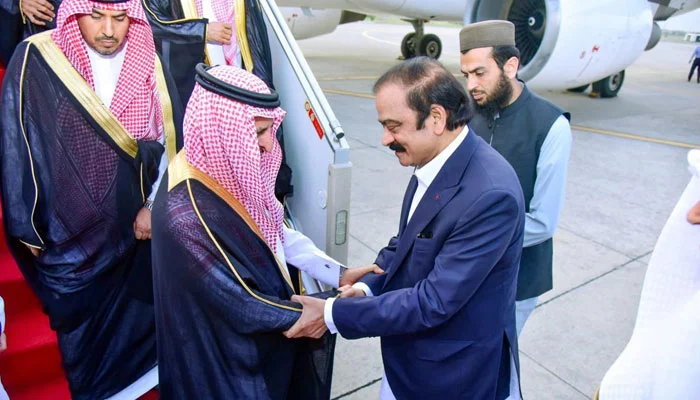
Saudi Arabia Deputy Interior Minister Dr Nasir Bin Abdul Aziz Al-Dawood on Tuesday arrived in Pakistan on a two-day official visit.

During his stay in Pakistan, the distinguished Saudi official is scheduled to finalise and ink an agreement pertaining to the “Road to Makkah” project.

This initiative is expected to mark a major milestone in simplifying and streamlining immigration processes for pilgrims, ensuring a seamless and hassle-free experience.

In addition to the signing ceremony, the Saudi deputy interior minister is also expected to hold meetings with Prime Minister Shehbaz Sharif, Chief of Army Staff (COAS) General Asim Munir, federal minister for narcotics control and others.

Upon his arrival at the Nur Khan Airbase, Interior Minister Rana Sanaullah extended a warm welcome to the visiting dignitary.

It is pertinent to mention here that nearly 40,000 intending pilgrims would depart for Saudi Arabia from Islamabad airport under the Road to Makkah initiative this year.

Under the Road to Makkah project, all immigration requirements of pilgrims are to be fulfilled at the Islamabad Airport.

This saves pilgrims several hours upon reaching the kingdom since they can just enter the country, having gone through immigration already at home.

Turkiye’s third candidate open to endorsement talks

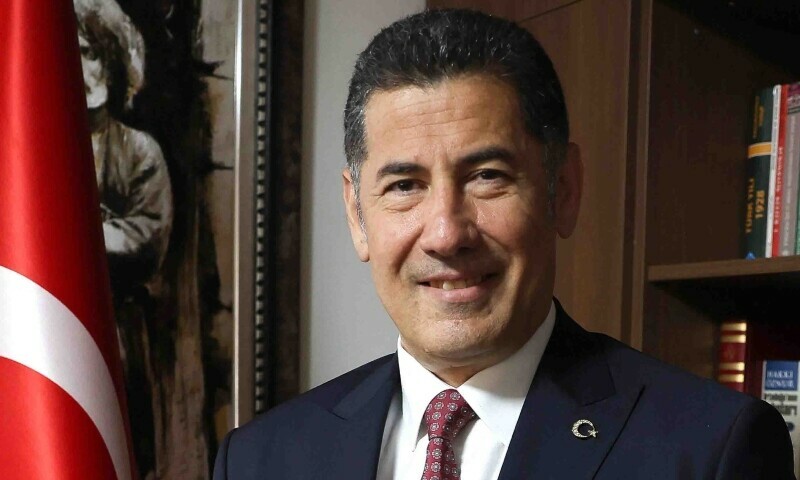
Entering the campaign at the last minute, Sinan Ogan, 55, won 5.2 per cent of the vote in Sunday’s landmark election, helping deprive Erdogan of a first-round victory for the first time in his 20-year rule. Erdogan finished with 49.5pc while Kilicdaroglu secured 44.9pc, a disappointing finish after polls suggested the opposition leader could win.

Ogan said he expected to do even better, voicing hopes that he could be elected president one day.

“I expected even more — around 10-11pc of the vote,” said Ogan, running as an independent, he said he was open to dialogue but may take a few days to make up his mind about who — if anyone — to endorse. “A decision will be made after talks with both Mr Erdogan and Mr Kilicdaroglu,” he added.

“We may say we don’t support either of them.” A Turkish official said that Erdogan’s Islamic-rooted party will soon make a statement about possible talks with Ogan.

‘No room for resentment’

Ogan, who speaks English and studied in a top Moscow university, said his voters included “Turkish nationalists as well as young people who find us more intellectual and who are fed up with the old faces in politics”.

Matt Gertken, chief political strategist at BCA Research, suggested that Ogan mostly took votes away from Erdogan, whose base is comprised of nationalists and religious conservatives.

“In the second round, Erdogan will not necessarily win the majority of Ogan’s votes, but only one-fifth of those votes would grant him the presidency, other things being equal,” Gertken said.

Ogan entered parliament as a member of the ultranationalist MHP party in 2011.

He fell out with the party’s leadership after criticising the MHP’s poor performance in 2015 polls.

Ogan was expelled from the party but then readmitted after winning a court battle.

Two years later, he was expelled again for opposing a 2017 constitutional referendum that expand­ed Erdogan’s presidential powers.

Renounce ‘terrorism’

Ogan came under pressure to drop out of the race after a fourth candidate, the nationalist Muharrem Ince, ended his campaign just four days before the election.

Asked if he was ready to make up with Erdogan after feuding with his coalition allies, Ogan said: “There can be no room for resentment, if you aspire to rule the state.” Ogan said anyone he supports must firmly renounce “terrorism” — the term Turkish politicians use to refer to banned Kurdish fighters who have been fighting for greater autonomy.