Maulvi Abdul Kabir appointed acting PM of Afghanistan by supreme leader

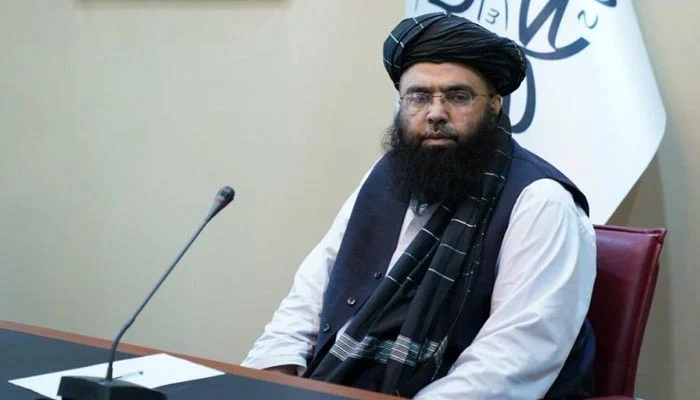
Owing to the illness of Mullah Muhammad Hassan Akhund, Taliban’s supreme leader Hibatullah Akhundzada on Wednesday appointed Maulvi Abdul Kabir as the acting prime minister of Afghanistan

Maulvi Kabir — who was the deputy prime minister for Political Affairs — will now serve as the head of the Taliban government until Akhund recovers.

It should be noted that Akhund has served as the prime minister of the Taliban government since the group’s return to power in 2021.

Although the Taliban authorities have not revealed any details about Akhund ‘s illness, the news outlet citing sources said that he was suffering from heart disease.

Maulvi Kabir is from the eastern Paktika province and it is said he belongs to the Zadran tribe. He served as the governor of Nangarhar province during the former regime of the Taliban from 1996-2001.

He is one of the senior members among the Taliban who has played a significant role in the negotiations with the US in Qatar, which resulted in the signing of the Doha Agreement between the US and the Taliban.

After the Taliban’s return to power in August 2021, Maulvi Kabir was initially appointed as the assistant to the economic deputy of Akhund and later as the political deputy of the Taliban’s prime minister.

Cyclone Mocha heaps misery on Rohingya; toll in Myanmar rises to 81

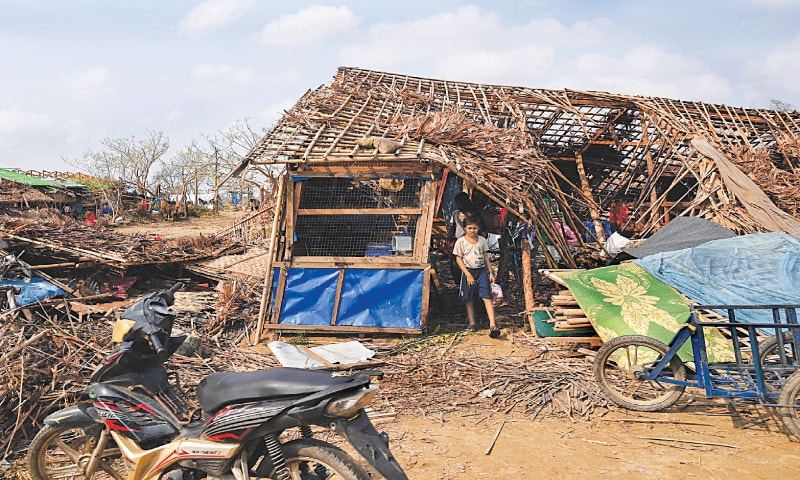
Mocha made landfall on Sunday with winds of up to 195 kilometres per hour, downing power pylons and smashing wooden fishing boats to splinters.

At least 46 people died in the Rakhine state villages of Bu Ma and nearby Khaung Doke Kar, inhabited by the persecuted Rohingya Muslim minority, local leaders said reporters at the scene.

Thirteen people were killed when a monastery collapsed in a village in Rathedaung township north of Rakhine’s capital Sittwe, and a woman died when a building collapsed in a neighbouring village, according to Myanmar state broadcaster MRTV.

“There will be more deaths, as more than a hundred people are missing,” said Karlo, the head of Bu Ma village near Sittwe.

Nearby, Aa Bul Hu Son, 66, said prayers at the grave of his daughter, whose body was recovered on Tuesday morning. “I wasn’t in good health before the cyclone, so we were delayed in moving to another place,” he said.

“While we were thinking about moving, the waves came immediately and took us.” “I just found her body in the lake in the village and buried her right away. I can’t find any words to express my loss.”

Other residents walked the seashore searching for family members swept away by a storm surge that accompanied the cyclone, agency correspondents said.

Nine people died in Dapaing camp for displaced Rohingya near Sittwe, its leader said, adding the camp was cut off and lacked supplies.

“People cannot come to our camp because bridges are broken… we need help,” he said. One person was killed in Ohn Taw Chay village and six in Ohn Taw Gyi, local leaders and officials said.

State media had reported five deaths on Monday, without offering details.

Mocha was the most powerful cyclone to hit the area in more than a decade, churning up villages, uprooting trees and knocking out communications across much of Rakhine state.

China said it was “willing to provide emergency disaster relief assistance”, according to a statement on its embassy in Myanmar’s Facebook page.

‘No one has come to ask’

The United Nations refugee office said it was investigating reports that Rohingya living in displacement camps had been killed in the storm.

It was “working to start rapid needs assessments in hard-hit areas” of Rakhine state, it added.

Widely viewed as interlopers in Myanmar, the Rohingya are deni­ed citizenship and healthcare, and require permission to travel outside their villages in western Rakhine state. Many others live in camps after being displaced by decades of ethnic conflict in the state.

In neighbouring Bangladesh, officials said that no one had died in the cyclone, which passed close to sprawling refugee camps that house almost one million Rohingya who fled a Myanmar military crackdown in 2017.

“Although the impact of the cyclone could have been much worse, the refugee camps have been severely affected, leaving thousands desperately needing help,” the UN said as it made an urgent appeal for aid late Monday.

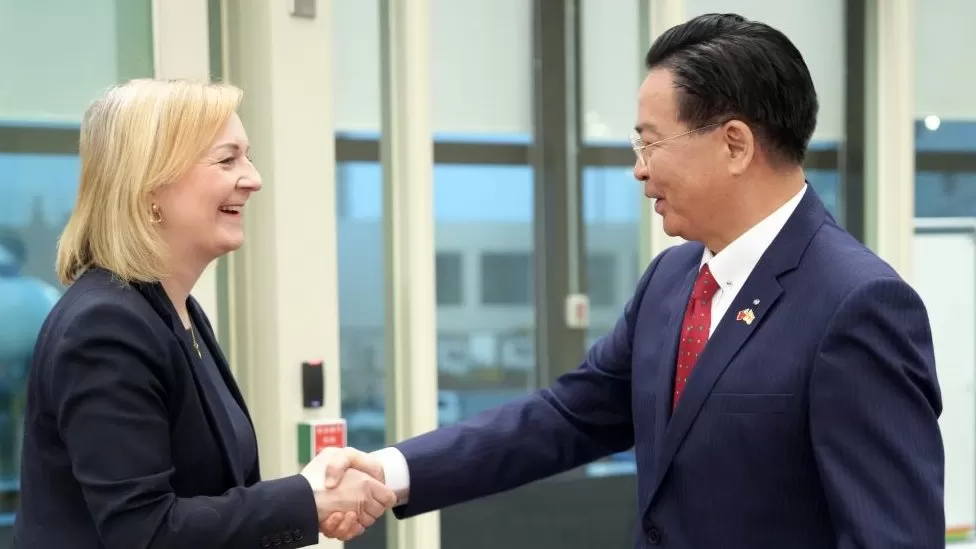
Former prime minister Liz Truss has made a personal plea for Rishi Sunak to brand China as a “threat” to UK security during a visit to Taiwan.

The ex-prime minister challenged Mr Sunak to deliver on pledges he made last summer to clamp down on China.

Ms Truss made the speech in Taipei City on Wednesday, making her the first former prime minister to visit Taiwan since Margaret Thatcher.

The Chinese Embassy called Ms Truss’s visit “a dangerous political stunt”.

It added that the visit “will do nothing but harm to the UK”.

In the speech, Ms Truss urged the West not to work with China, warning that totalitarian regimes “don’t tell the truth”.

She drew comparisons between the tensions between China and Taiwan, and the Russian invasion of Ukraine.

Former British Prime Minister Liz Truss is in Taiwan for five days to meet with a number of high-ranking officials

During the Conservative party leadership contest, Ms Truss pledged to take a firm stance against the Chinese government, and wanted to declare China under Communist Party rule a “threat” to national security.

But after her short-lived time in No 10, her plans were never realised.

Her successor Rishi Sunak, also declared China as “the biggest-long term threat to Britain”, and promised to close all 30 of Beijing’s Confucius Institutes in the UK.

Confucius Institutes, which teach Chinese language and culture, came under fire after critics and charities accused the centres of being used by the Chinese government to spread propaganda under the guise of teaching, interfere with free speech on campuses, and even spy on students.

While Mr Sunak has not closed the institutes, the UK government is expected to promise that it will stop funding Mandarin teaching at the centres.

In her speech, Ms Truss said Mr Sunak was “right” to make those pledges. “We need to see those policies enacted urgently,” she added.

The prime minister updated the UK’s integrated review on foreign and defence policy in March to describe China as representing an “epoch-defining and systemic challenge”.

In her speech, Ms Truss said the review needed to be amended to “state clearly that China is a threat”.

She called on the UK government to support Taiwan joining the Comprehensive and Progressive Agreement for Trans-Pacific Partnership (CPTPP) trade agreement – and for it to block China from joining.


The former prime minister also called for the development of “an economic Nato”, which “supports freedom and proper free enterprise”.

She suggested countries including the G7 nations, members of the EU, South Korea and Australia could join this kind of group.

Ms Truss said: “We cannot rely now on the UN security council, which was recently chaired by Putin’s Russia.

“We cannot rely on the World Trade Organisation to make sure fair trade rules are in place. That’s why we need other alternatives to get things done.”

Ms Truss made the speech at the invitation of the Prospect Foundation, a think tank. It forms part of the former UK leader’s five-day visit to the country.

Last week, senior Conservative MP Alicia Kearns accused former Prime Minister Liz Truss of “Instagram diplomacy” over her planned visit to Taiwan.

Ms Kearns, who chairs the Commons Foreign Affairs committee, told the Guardian the trip was “performative, not substantive”.

But Ms Truss accused her Tory colleague of “misusing” her position “to engage in petty political attacks”, and said her visit aimed to show “solidarity” with Taiwan.

Taiwan and China split in 1949 following a civil war that ended with the Communist Party in control of the mainland. China views Taiwan as Chinese territory.

US seeks condemnation from India over religious violence

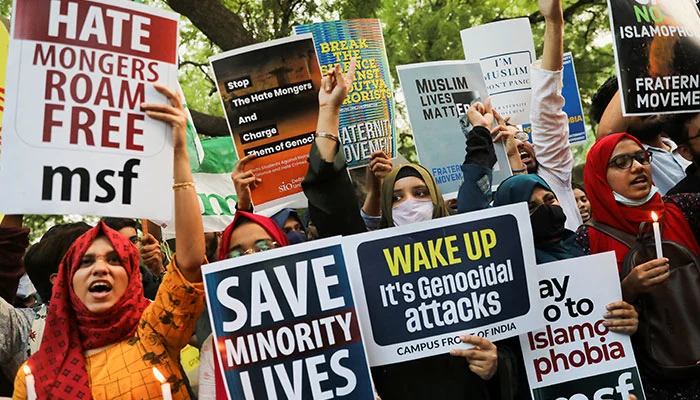
The Biden administration wants the Indian government to condemn acts of violence based on religion and hold the perpetrators accountable, a senior official said Monday, just a month before a state visit by Prime Minister Narendra Modi.

The State Department released an annual report on religious freedom which listed attacks against religious minorities including Muslims and Christians in the Narendra Modi-led nation.

Briefing reporters on the report on the condition of anonymity, a senior US official spoke of India’s “vast potential”, expressing his sadness over the persistent religious violence.

“Regarding these concerns, we’re continuing to encourage the government to condemn violence and hold accountable (those) who engage in rhetoric that’s dehumanising towards religious minorities,” the official said.

Promising to speak “directly” with Indian officials, the official said: “We’ll continue to work very closely with our civil society colleagues on the ground (and) with courageous journalists that are working every day to document some of these abuses.”

The report issued by the State Department was based on direct research, and accounts by media and advocacy groups. It pointed to the concerns surrounding the demolitions of houses against Muslims and their public flogging by police accused of injuring Hindus in Gujarat.

The autonomous US Commission on International Religious Freedom has once again recommended to the State Department put India on a blacklist over its record on religious freedom.

Secretary of State Antony Blinken will list “countries of particular concern” on religious freedom later this year. However, it is expected that he would spare India.

While voicing alarm regarding the actions by authorities in China, Iran, Myanmar and Nicaragua, Blinken did not mention India.

“We defend the right to believe — or to not believe — not only because it’s the right thing to do, but also because of the extraordinary good that people of faith can do in our societies and around the world,” he said.

Turkey heads for runoff election as candidates fail to secure 50% votes

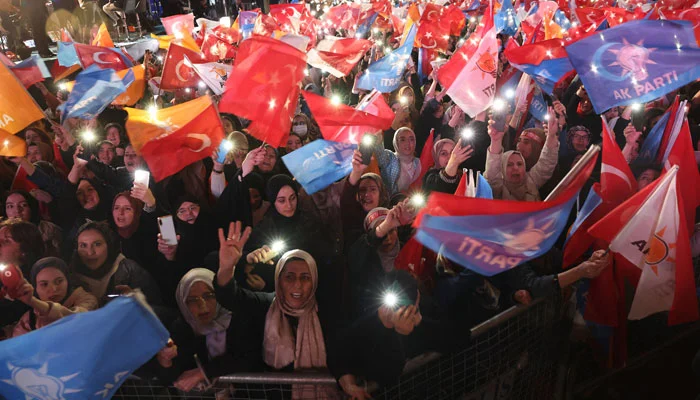
Turkish President Tayyip Erdogan was on the lead Monday as the results of the presidential election show however, he has been able to secure less than the votes required to be the president — 50%.

The presidential vote will now enter into its second round — also called a run-off — which is to take place on May 28. A run-off vote occurs when no presidential candidates secure more than half of the votes.

Erdogan’s competitor Kemal Kilicdarolgu is expected to speed up his election campaign in the next two weeks as the incumbent president is endeavouring to secure another term in office.

The 69-year-old president secured support from the regions hit by the deadly earthquake killing more than 50,000 people.

President Erdogan’s opponent encountered a harsh reality check despite a rigorous campaign Monday that they could not beat Erdogan.

“Don’t despair,” Kilicdaroglu told his supporters. “We will stand up and take this election together.”

As per an AFP report, Erdogan secured 49.5% of the vote and Kilicdaroglu 44.9 %. Another presidential candidate from the nationalist camp Sinan Ogan had 5.2%.

The voter turnout hit a record high at 88.9%.

The long-time Turkish president’s AK Party with his allied partners appear to secure a majority in the new parliament with 321 of the 600 seats, enhancing his chances to win in the run-off.

Erdogan said in a speech to cheering supporters at the AKP headquarters in the capital Ankara overnight: “The winner has undoubtedly been our country.”

The nationalist Ogan — backed by 2.8 million voters — will emerge as a deal-maker for Erdogan’s major competitor Kilicdaroglu if the latter is to defeat the former.

Leader of the six-party-alliance Kilicdaroglu vowed to prevail in the runoff and alleged Erdogan’s AK party of election interference and results.

Strong Leader

Contrary to the Kilicdaroglu supporters who were less energetic, Erdogan supporters were jubilant as the results filtered out, with cyber security engineer Feyyaz Balcu, 23, confident that Erdogan could fix Turkey’s economic problems which caused inflation to sky-rocket and eroded the purchasing power of the people.

He said: “It is very important for all Turkish people that Erdogan wins the elections. He is a world leader and all the Turks and Muslims want Erdogan as president.”

Teneo co-president Wolfango Piccoli said: “Erdogan has now a clear psychological lead against the opposition.”

“Erdogan will likely double down on his national security-focused narratives over the next two weeks.”

The elections in NATO country are being closely observed in Europe, the US, and Russia, among other states where Tayyip Erdogan has asserted Turkish power while bolstering relations with Moscow putting stress on Ankara’s traditional alliance with the United States.

Erdogan is one of President Vladimir Putin’s main allies and his strong showing is likely to encourage the Kremlin but unnerve the Joe Biden administration, as well as many European and Middle Eastern leaders who had troubled relations with Erdogan.

The Kremlin said Monday it expected Russia’s cooperation with Turkey to continue and deepen whoever wins the election.

Army vows to try violent protesters, abettors under military law

RAWALPINDI: The military’s top brass vowed Monday to try protesters and their abettors under relevant laws, including the Pakistan Army Act and the Official Secrets Act, after Pakistan Tehreek-e-Insaf (PTI) workers and supporters stormed military installations on May 9, which the army dubbed as “Black Day”.

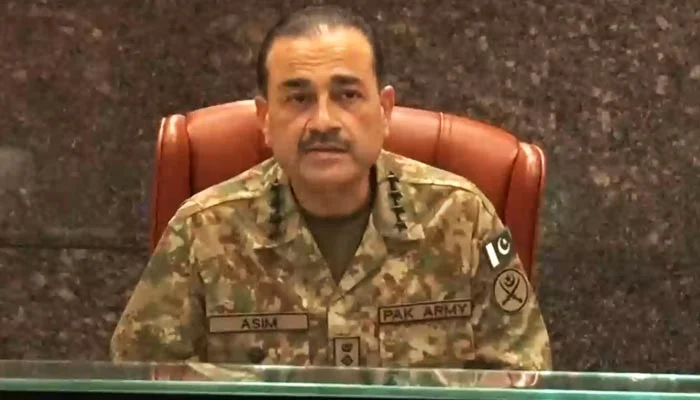
The decision came during a Special Corps Commanders Conference (CCC) held at the General Headquarters with Chief of Army Staff (COAS) General Asim Munir in the chair, according to a statement from the Inter-Services Public Relations (ISPR).

The violent protests were triggered soon after PTI Chairman Imran Khan was arrested and sent to jail in the Al-Qadir Trust case, but after walking free on bail, the party chief insisted his workers did not instigate violence and distanced the PTI from them.


Following the arrest of Khan, who has criticised the military since his ouster in April last year, the PTI workers raised the stakes and attacked an entrance gate of the GHQ among other installations of the armed forces.

“The forum expressed [a] firm resolve that those involved in these heinous crimes against the military installations and personal/ equipment will be brought to justice through trials under relevant laws of Pakistan including Pakistan Army Act and Official Secret Act,” the statement mentioned.

The military’s top brass also resolved that restraint will no longer be exercised against perpetrators, spoilers, and violators who attack military installations and setups under any circumstances.

The ISPR, quoting the commanders, said that based on the irrefutable evidence collected so far, the armed forces are well aware of the planners, instigators, abettors, and perpetrators of these attacks “and attempts to create distortions in this regard are absolutely futile”.

The forum was briefed that a well-coordinated arson plan — involving the desecration of Shuhada pictures, monuments, burning down of historical buildings and vandalism of military installations — was “executed to malign the institution and provoke it towards giving an impulsive reaction”.

The forum condemned, in the strongest possible sense, the politically motivated and instigated incidents against military installations and public and private properties.

“The commanders also communicated the anguish and sentiments of the rank and file of the army on these unfortunate and unacceptable incidents,” the statement said.

‘Concern over propaganda’

The CCC also expressed concern over propaganda against the army leadership, which it said was externally sponsored and internally facilitated and orchestrated to create fissures both between the armed forces and the people as well as within the army’s ranks.

The vicious propaganda of such inimical forces will be defeated with the support of the people, who have always stood with the armed forces during all odds, the statement said.

“Forum stressed the need for strict implementation of relevant laws to penali[s]e the violators of the social media rules and regulations,” it said.

The forum also emphasised the need for national consensus among all stakeholders to address ongoing political instability as a priority to restore public confidence, reinvigorate economic activity, and strengthen the democratic process.

“The forum resolved to support all such efforts to reach this much-needed consensus. Forum resolved that the Pakistan Army with the full support of [the] people, will defeat all nefarious designs of the enemies of Pakistan.”

Operations

The participants paid rich tribute to the martyrs, who have laid their lives in defence of the motherland while fighting the menace of terrorism.

The forum acknowledged the successful counter-terrorism and intelligence-based operations in the country by security forces, especially the valiant response given by the troops in the Muslim Bagh attack, and paid rich tribute to the supreme sacrifices made by the brave sons of the soil.

The forum was briefed in detail about the prevailing internal and external security environment.

The CCC also took comprehensive stock of the law and order situation in the past few days that was created to achieve vested political interests.

PTI distances itself from protests

PTI Chairman Khan last week denied that his party workers were involved in attacks on military establishments, including the Lahore Corps Commander House and the GHQ.

In his first address after his release, Khan called for an independent inquiry to unearth the truth. The PTI chairman said that those who were escaping from the elections wanted to create unrest and chaos in the country, not his party.

Khan said he was against violence and vandalism, adding that his party always remained peaceful despite all kinds of provocations. The deposed prime minister slammed the establishment for “attacking” him as if he was “the biggest terrorist of Pakistan”.

In an interview with Al Jazeera, Information Minister Marriyum Aurangzeb said that COAS Gen Munir is not willing to talk to PTI Chairman Khan and interfere in the democratic process.

The minister said the incumbent COAS, when he was the spy chief, informed then-prime minister Khan that his cabinet minister and wife were involved in corruption and also provided evidence.

“Instead of taking action against the corrupt [officials], Imran removed him from the post of DG ISI,” she said.


Will prove arsonists were planted to provoke peaceful May 9 protestors: Imran Khan

Amid high tensions between the government and opposition over the deadly unrest that ensued after Pakistan Tehreek-e-Insaf (PTI) Chairman Imran Khan’s arrest, the former premier said that he would prove that arsonists were planted to provoke peaceful protestors of May 9.

With all the actors in the political arena together against PTI, the party’s insistence continues on the stance that it had no hand in the incidents of violence that included attack on state property and vital installations including General Headquarters and Lahore Corps Commander House.

Despite being called out multiple times by the government, PTI has yet to officially condemned the violence.

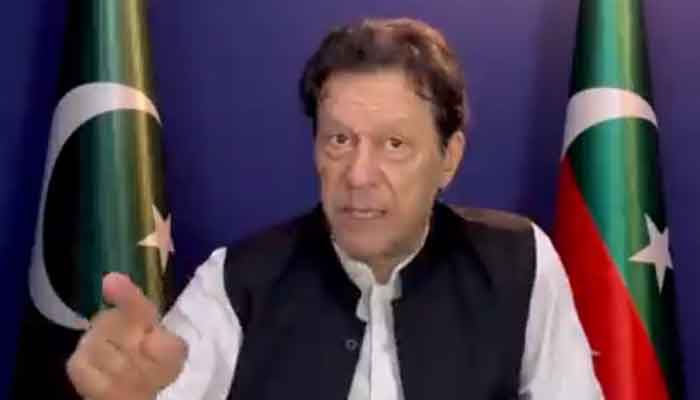
Taking to Twitter, PTI chief Imran Khan shared a video from his old televised address to the supporters, insisting that he had exposed “the plan” to incite violence amid peaceful protests on March 22 after the attack on Islamabad judicial complex.

“I recorded this on the 22nd of March after my attempted assassination in the Islamabad judicial complex on the 18th,” Khan wrote on Twitter.

He said that he had strongly advised the PTI workers that they should protest while remaining completely peaceful no matter how much anyone provoked them.

“Whenever there is an independent inquiry I will prove that those who had guns and those who committed arson were planted amongst the demonstrators just as they were going to do in the the plan I uncovered here in this video message,” said Khan.

The video

In the video dated March 22, 2023, Khan strongly advised his supporters to stay calm and peaceful despite any possible efforts to provoke them into violence.

“Now they have hatched another plan. I am letting all of you know. Im bringing it to the judiciary’s notice. I’m specially alerting the Punjab Police [that] IG Punjab and IG Islamabad, backed by handlers, have decided an operation outside Zaman Park either today or tomorrow,” the video started with Khan saying.

He said that the plan was to incorporate violent groups into peaceful crowds outside Zaman Park, which “will shoot down 4-5 policemen” turning it into a Model Town type massacre.

“They will then proceed further and attack my house, and assassinate me in a manner Murtaza Bhutto was killed,” he added.

He reiterated his advice for the PTI workers against becoming a part of the conflict.

He then directed his supporters to let the police come to him if they seek a meeting as there was no chance of his arrest as he had been granbted bail in every case then. He said that he was ready to go to jail but didn’t want his people to be killed.

Imran Khan says ‘agencies men’ involved in attacks

After the military’s top brass vowed to try protesters and their abettors under Army Act and other laws, Khan had blamed the “agencies men” for arson and shooting in some areas during the May 9 violent protests, which were triggered following his arrest in the Al-Qadir Trust case.

In a tweet from his official handle on Monday, the former premier said his party has “ample amount of evidence” to prove that agencies’ men carried out arson and shootings during the protests to blame it on PTI.

Without referring to the military’s statement, the PTI chief wrote: “We have ample amount of evidence to present to any independent inquiry that the arson and in some places shootings were done by agencies men who wanted to cause mayhem and blame it on PTI so the current crackdown would be justified.”

He said miscreants were infiltrated into the PTI protesters and instigated his workers, video evidence of which he said available with the party.

“I want an independent inquiry [into the vandalism]..,” he said adding that this was all being done under the “London plan” to ban his party and put all the leaders behind bars.

LHC to take up Imran Khan’s plea for immunity against arrest in new cases

LAHORE: The Lahore High Court (LHC) is set to take up the plea filed by Pakistan Tehreek-e-Insaf (PTI) Chairman Imran Khan against the cases registered against him on May 9 — the day he was arrested in notorious Al-Qadir Trust case — and onwards.

The former prime minister — who had been incarcerated for three days in the land corruption case — had filed the plea on Saturday, a day after being released on bail from Islamabad High Court, fearing re-arrest in the new cases.

In the plea, Khan has sought the details of the cases registered against him in the light of countrywide protests that broke out following his arrest, as well as immunity against being detained.

“I am being politically victimised. There is a risk of arrest as police have nominated me in several cases,” the plea stated.

The PTI chief has made the Punjab inspector general and advocate general respondents in the case.

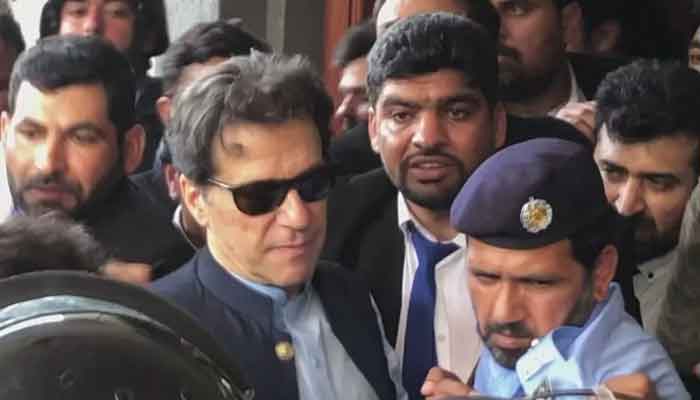
Khan’s dramatic arrest came last week when he was getting his biometrics done at the Islamabad High Court (IHC). Heavy Rangers force took the former cricket star into custody, acting on National Accountability Bureau (NAB) orders, and whisked him away in a black Rivo.

Violence ensued after the event which proved to be a major turn in the country’s restive politics as thousands of supporters and PTI workers took to streets for protests.

The countrywide demonstrations involved workers’ clashes with police, vandalism and attack on state property and vital installations including General Headquarters and Lahore Corps Commander House.

The dramatic saga also escalated tensions between Khan and the incumbent government as several cases were registered against the PTI chief and other party leaders for alleged involvement in inciting the riots.

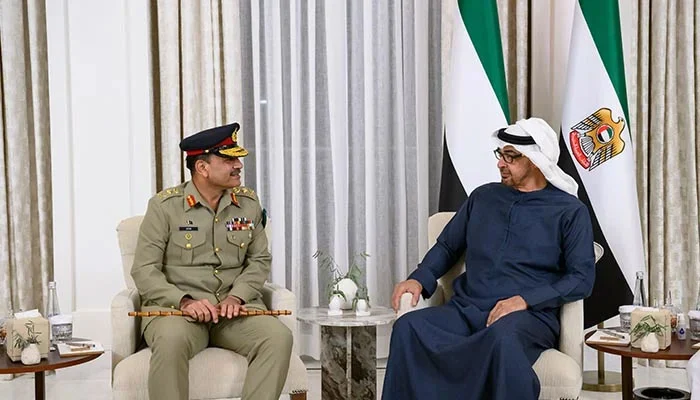
In call with COAS Munir, UAE president reiterates commitment to Pakistan’s ‘stability’

UAE President Sheikh Mohamed bin Zayed Al Nahyan on Sunday assured Chief of Army Staff (COAS) General Asim Munir of his country’s “commitment to supporting all that achieves unity and stability” in Pakistan

The UAE leader gave the assurance to the army chief during a telephone conversation.

As per the UAE news outlet, Sheikh Mohamed bin Zayed and Gen Aim Munir discussed the “enhancement of cooperation and joint work” between Abu Dhabi and Islamabad in “defence and military affairs, and ways to support and strengthen them to serve the mutual interests of both nations”.

In return, the army chief thanked and appreciated Sheikh Mohamed bin Zayed and “extended his wishes for the UAE’s continuous development, progress, and prosperity”.

The development comes as Pakistan passes through political and economic crises due to an ongoing tussle between the government and the rival Pakistan Tehreek-e-Insaf that has intensified after the arrest of former prime minister Imran Khan.

The Pakistani military has not issued yet any statement on the telephonic discussion between the two leaders.

UAE was among the first few countries that Gen Munir visited after taking charge as the chief of army staff. He had visited Saudi Arabia first and then stopped over in UAE earlier this year.

Pakistan is also seeking the UAE’s support to unlock the crucial International Monetary Fund (IMF) tranche to revive the Extended Fund Facility programme.

UAE, Saudi Arabia and China came to Pakistan’s assistance in March and April with pledges that would cover some of the funding deficit.

Thailand’s army-backed govt heads for drubbing in elections

But in a kingdom where coups and court orders have often trumped the ballot box, fears persist the military could seek to cling on, raising the prospect of fresh instability.

The election campaign played out as a clash between a young generation yearning for change and the conservative, royalist establishment embodied by Prime Minister Prayut Chan-O-Cha, the ex-army chief who seized power in a 2014 coup.

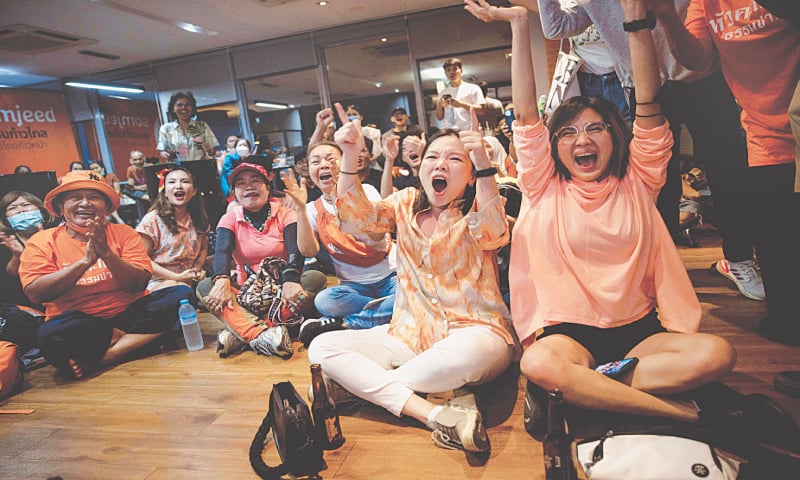
With ballots counted from three quarters of polling stations, the reformist Move Forward Party (MFP) was on nearly 8.4 million votes followed by Pheu Thai on 6.9m.

Prayut’s United Thai Nation party lay third on 2.8m, though it is not yet clear how the popular vote will translate into parliamentary seats.

MFP leader Pita Limjaroenrat said his party could take 160 of the 500 lower house seats, declaring that the result “closed the door” on any chance of army-backed parties forming a minority government.

MFP will seek talks with Pheu Thai and a coalition deal is “definitely on the cards”, Pita told reporters.

Pheu Thai leader Paetongtarn Shinawatra congratulated MFP on their success and said “we can work together”.

“We are ready to talk to Move Forward, but we are waiting for the official result,” she said.

Pheu Thai, the party of billionaire former premier Thaksin Shinawatra now fronted by his daughter, Paetongtarn, had urged voters to deliver them a landslide to see off the threat of military interference.

The Election Commission is not expected to officially confirm the final number of seats won by each party for several weeks.

But without an overwhelming majority, MFP and Pheu Thai may still face a battle to secure power, thanks to the junta-scripted 2017 constitution.

The new premier will be chosen jointly by the 500 elected MPs and 250 senate members appointed by Prayut’s junta — stacking the deck in the army’s favour.

In the controversial last election in 2019, Prayut rode senate support to become prime minister at the head of a complex multi-party coalition.

Adding to the uncertainty, rumours are already swirling that MFP could be dissolved by court order — the same fate that befell its predecessor Future Forward Party after it performed unexpectedly well at the 2019 poll.

Protest legacy

The election was the first since major youth-led pro-democracy protests erupted across Bangkok in 2020 with demands to curb the power and spending of Thailand’s king — breaching a long-held taboo on questioning the monarchy.

The demonstrations petered out as Covid-19 curbs were imposed and dozens of leaders were arrested, but their energy fuelled growing support for the more radical opposition MFP.

As he arrived to vote in Bangkok, Pita, 42, said he expected a “historic turnout”.

“Younger generations these days care about their rights and they will come out to vote,” he told reporters.

While MFP sought support from millennial and Gen Z voters — who make up nearly half the 52 million-strong electorate — Pheu Thai drew on its traditional base in the rural northeast where voters are still grateful for the welfare policies implemented by Thaksin in the early 2000s.

As results came in, a glum-looking Prayut thanked voters for their support as he left his party HQ.

“I’ll continue to do my best regardless of the result,” he told reporters.

The former general made an unashamedly nationalist pitch to older voters, painting himself as the only candidate capable of saving Thailand from chaos and ruin.

But he struggled badly in the polls, blamed for a sputtering economy and feeble recovery from the pandemic, which battered the kingdom’s crucial tourism industry.