
PM Shehbaz congratulates Erdogan on his re-election as president

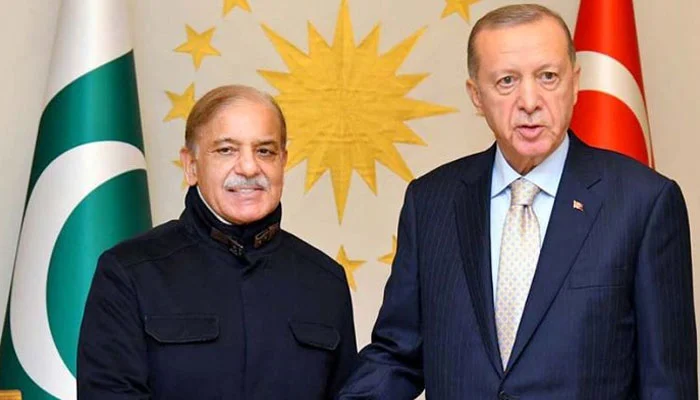
ISLAMABAD: Prime Minister Shehbaz Sharif Sunday congratulated the president of Turkiye Recep Tayyip Erdogan on his historic re-election as the country’s president.

“Heartiest congratulations to my dear brother H.E. President Recep Tayyip Erdogan on his historic re-election as President, Republic of Turkiye,” he said in a tweet on social media platform Twitter on Sunday.

“He is one of the few world leaders whose politics has been anchored in public service. He has been a pillar of strength for the oppressed Muslims and a fervent voice for their inalienable rights.”

“His presidential victory and that of AKP in parliamentary elections is significant in so many ways, reflecting the trust & confidence of the Turkish people in his dynamic leadership,” he said.

“The bilateral relations between Pakistan and Turkiye will continue to stay on an upward trajectory. I keenly look forward to working with him to further deepen our strategic partnership in line with the excellent brotherhood between our two peoples,” he added.

Erdogan claims victory

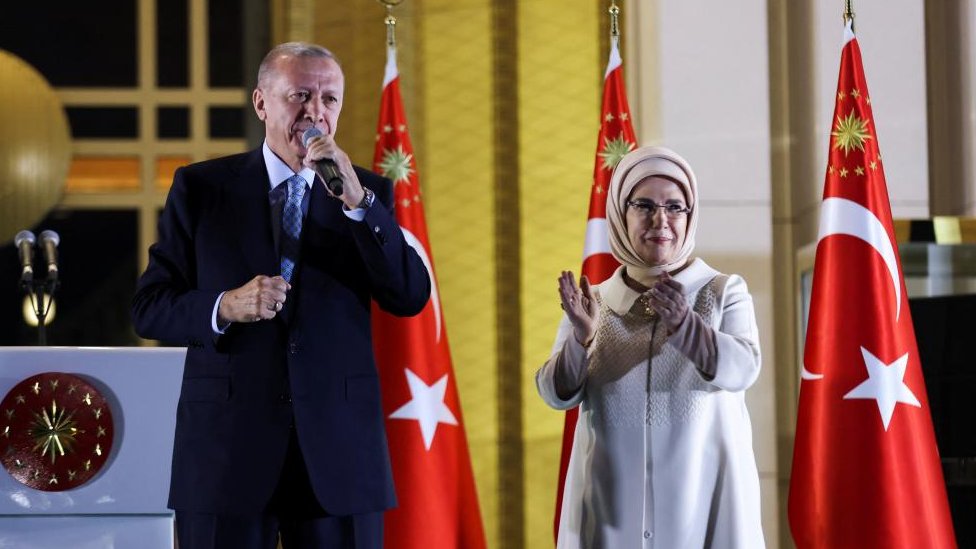
Erdogan claimed victory in Turkey’s presidential election on Sunday, a win that would steer his increasingly authoritarian rule into a third decade.

Addressing supporters, Erdogan said voters had given him the responsibility to rule for the next five years.

“The only winner is Turkey,” he said, addressing cheering supporters from atop a bus in Istanbul.

Final official results have yet to be released.

There was no immediate response to Erdogan’s victory speech from his challenger, Kemal Kilicdaroglu.

The election had been seen as one of the most consequential yet for Turkey, with the opposition believing it had a strong chance of unseating Erdogan after his popularity was hit by a cost-of-living
North Korea announces ‘satellite’ launch

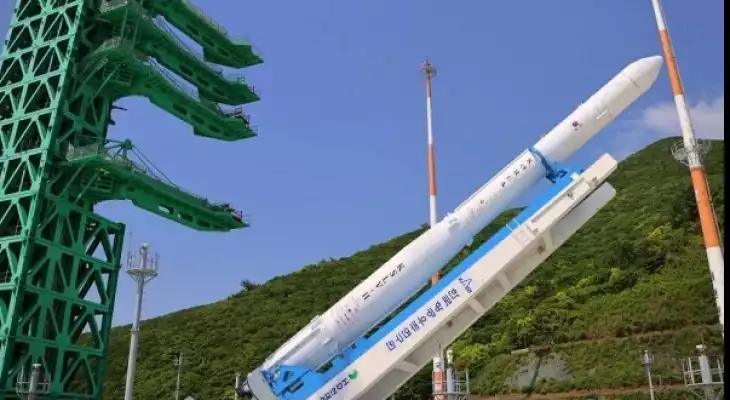
Japan said Monday it is preparing for North Korea to launch in the coming weeks what Pyongyang has described as a satellite, but Tokyo believes may be a ballistic missile.

Pyongyang has informed Japan’s coastguard that a rocket will be launched between May 31 and June 11 and will fall in waters near the Yellow Sea, East China Sea and east of Luzon Island in the Philippines, a coastguard spokesman told AFP.

However, the prime minister’s office in a tweet said Fumio Kishida issued instructions “on North Korea’s notification about the launch of a ballistic missile that it describes as a satellite”.

He has told officials to gather intelligence, remain vigilant and closely coordinate with allies including the United States and South Korea, the tweet added.

And Japan’s defence ministry has issued an order for the Air Self-Defense Force to destroy any ballistic missile confirmed to be on course to fall into the country’s territory.

The troops would be authorised to use Standard Missile SM-3 and Patriot Missile PAC-3 to shoot down a projectile in mid-air, the ministry said.

“Even if it’s described as a satellite, a launch using ballistic missile technology would be a violation of United Nations Security Council resolutions and a serious problem that threatens the safety of people,” Kishida told reporters.

Pyongyang has intensified its missile launches in recent months, with some triggering emergency warning systems in parts of Japan.

Seoul and Tokyo have meanwhile been working to mend long-frayed ties, including with greater cooperation on North Korea’s military threats.

Asked about possible negotiations with North Korea leader Kim Jong Un, Kishida on Monday reiterated that Tokyo is open to talks, adding he was interested in “making concrete progress”.

North Korean state media meanwhile published a statement from its vice-minister of foreign affairs, appearing to endorse a conciliatory approach to relations with Japan — an unusual stance from Pyongyang.

If Japan avoids “being shackled by the past, and seeks a way out for improving the relations, there is no reason for the DPRK and Japan not to meet”, the statement from Pak Sang Gil said.

US, Saudi Arabia urge extension in Sudan ceasefire

Amid the ceasefire that is to expire Monday evening, Saudi Arabia and the United States urged Sunday to extend a week-long ceasefire that reduced the intensity of six-week-long fighting in Sudan between the two warring generals.

The war has disrupted the basic humanitarian supplies for its citizens leaving them confined to their homes without basic necessities including power.

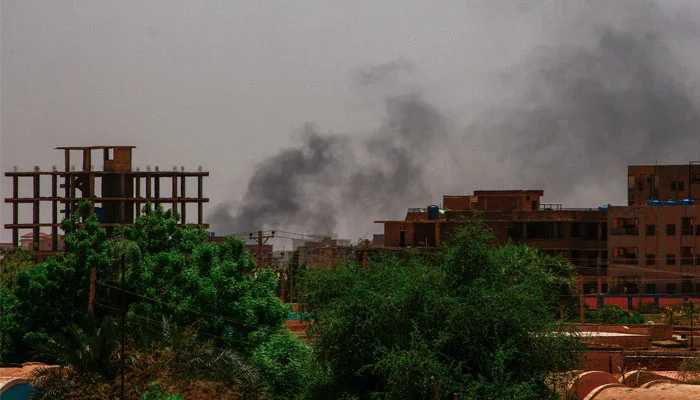
Residents of the capital city Khartoum said they heard armed clashes overnight while human rights monitors noted deadly fighting was underway in El Fashir, one of the principal cities in the western region of Darfur.

The fighting between a Sundanese army led by Abdul Fatah Alburhan and the paramilitary Rapid Support Forces (RSF) led by Mohamed Hamdan Daglo erupted on April 15 with the capital being the main ground for the fierce fighting.

So far, the fighting has forced 1.3 million people to flee their homes as observers fear regional destabilisation.

The current ceasefire was mediated by Saudi and US-led talks in Jeddah. Both the mediators are remotely observing the truce, which has been repeatedly violated, and called on the army and the RSF “to continue discussions to reach agreement on extending the ceasefire”.

“While imperfect, an extension nonetheless will facilitate the delivery of urgently needed humanitarian assistance to the Sudanese people,” Saudi Arabia and the US said in a joint statement.

RSF has said it is ready to discuss the possibility of renewing the truce and that it would continue to monitor the truce “to test the seriousness and commitment of the other party to proceed with the renewal of the agreement or not”.

The army said it was discussing the possibility of an extension.

Since the war began, more than 300,000 people have passed Sudan’s borders, with the largest numbers headed north to Egypt from Khartoum or west to Chad from Darfur.

There is a situation of lawlessness as factories, shops, homes and offices were ransacked and looted with power and communication lines disrupted. The city is also running short of medicines and medical equipment, and food supplies have been running low.

“We left because of the impact of the war. I have children and I fear for them because of the lack of medical treatment,” said one resident of the capital, told Reuters from the road to Egypt.

“I also want my children to have a chance of schooling. I don’t think things in Khartoum will be restored soon.”

Hurdles in assistance

Though the ceasefire brought some calm to the fighting, there were sporadic clashes and air strikes carried on.

The United Nations and aid groups said that despite the truce they have struggled to get bureaucratic approvals and security guarantees to transport aid and staff to Khartoum and other places of need. Warehouses have been looted.

Darfur has also witnessed violence which is already scarred by conflict and displacement, with hundreds of deaths recorded in El Geneina near the border with Chad during attacks that residents blamed on “Janjaweed” militias drawn from Arab nomadic tribes with links to the RSF.

The governor of Darfur, Minni Minawi, a former rebel whose faction fought against the militias in the Darfur conflict, said in a tweet that citizens should take up arms to defend their property.

In recent days there has also been fighting in El Fashir, the capital of North Darfur State.

One El Fashir hospital recorded three deaths and 26 injuries Saturday, including children, according to the Darfur Bar Association, an activist group, adding that “many more people were missing.”

Across the country, the Health Ministry said at least 730 people have died in the fighting, though the true figure is likely much higher. It has separately recorded up to 510 deaths in El Geneina.

Recep Tayyip Erdogan’s supporters celebrated well into the night after Turkey’s long-time president secured another five years in power.

“The entire nation of 85 million won,” he told cheering crowds outside his enormous palace on the edge of Ankara.

But his call for unity sounded hollow as he ridiculed his opponent Kemal Kilicdaroglu – and took aim at a jailed Kurdish leader and the LGBT community.

The opposition leader did not explicitly concede victory.

Complaining of “the most unfair election in recent years”, Mr Kilicdaroglu said the president’s political party had mobilised all the means of the state against him.

President Erdogan ended with just over 52% of the vote, based on near-complete unofficial results. Almost half the electorate in this deeply polarised country did not back his authoritarian vision of Turkey.

Ultimately, Mr Kilicdaroglu was no match for the well-drilled Erdogan campaign, even if he took the president to a run-off second round for the first time since the post was made directly elected in 2014.

But he barely dented his rival’s first-round lead, falling more than two million votes behind.

Watch: Kilicdaroglu gives fiery speech after Erdogan claims victory

The president made the most of his victory, with an initial speech to supporters atop a bus in Turkey’s biggest city, Istanbul, followed after dark by a balcony address from his palace to an adoring crowd that he numbered at 320,000 people.

“It is not just us who won, Turkey won,” he declared, calling it one of the most important elections in Turkish history.

He taunted his opponent’s defeat with the words “Bye, bye, Kemal” – a chant that was also taken up by his supporters in Ankara.


Mr Erdogan poured scorn on the main opposition party’s increase in its number of MPs in the parliamentary vote two weeks earlier. The true number had fallen to 129, he said, because the party had handed over dozens of seats to its allies.

He also condemned the opposition alliance’s pro-LGBT policies, which he said were in contrast with his own focus on families.

The run-up to the vote had become increasingly rancorous. In one incident, an opposition Good party official was fatally stabbed in front of a party office in the northern coastal town of Ordu.

The motive for Erhan Kurt’s killing was not clear, but a leading opposition official blamed youths celebrating the election result.

Although the final results were not confirmed, the Supreme Election Council said there was no doubt who had won.

1px transparent line

It is highly unusual for the palace complex to be opened to the public – but so was this result, extending his period in power to a quarter of a century.

Supporters came from all over Ankara to taste the victory. There were Islamic chants, while some laid Turkish flags on the grass to pray.

For a night, Turkey’s economic crisis was forgotten. One supporter, Seyhan, said it was all a lie: “Nobody is hungry. We are very happy with his economy policies. He will do even better in the next five years.”

But the president admitted that tackling inflation was Turkey’s most urgent issue.

The question is whether he is prepared to take the necessary measures to do so. At an annual rate of almost 44%, inflation seeps into everyone’s lives.

The cost of food, rent and other everyday goods has soared, exacerbated by Mr Erdogan’s refusal to observe orthodox economic policy and raise interest rates.

The Turkish lira has hit record lows against the dollar and the central bank has struggled to meet surging demand for foreign currency.

“If they continue with low interest rates, as Erdogan has signalled, the only other option is stricter capital controls,” warns Selva Demiralp, professor of economics at Koc university in Istanbul.

Economics was far from the minds of Erdogan supporters, who spoke of their pride at his powerful position in the world and his hard line on fighting “terrorists”, by which they meant Kurdish militants.

President Erdogan has accused his opposite number of siding with terrorists, and criticised him for promising to free a former co-leader of Turkey’s second largest opposition party, the pro-Kurdish HDP.

Selahattin Demirtas has been languishing in jail since 2016, despite the European Court of Human Rights ordering his release.

Mr Erdogan said while he was in power, Mr Demirtas would stay behind bars.

He also promised to prioritise rebuilding in areas hit by February’s twin earthquakes and bring about the “voluntary” return of a million Syrian refugees.

Crowds flocked to Istanbul’s Taksim Square, with many coming from the Middle East and the Gulf.

Supporters gathered outside the palace from all over Ankara to hear Mr Erdogan

Palestinians from Jordan wrapped Turkish flags around their shoulders. A Tunisian visitor, Alaa Nassar, said Mr Erdogan had not just made improvements to his own country, “he is also supporting Arabs and the Muslim world”.

For all the celebrations, the idea of unity in this polarised country seems farther away than ever.

Since a failed coup in 2016, Mr Erdogan has abolished the post of prime minister and amassed extensive powers, which his opponent had pledged to roll back.

One voter outside an Ankara polling station on Sunday said he wanted to see an end to the brain drain that began with the post-coup purge. There is a risk that it may now intensify.

Turkey’s opposition will now have to regroup ahead of local elections in 2024.

Mr Kilicdaroglu’s party has two popular mayors running Ankara and Istanbul – and one of them might have had a better chance of winning the presidential race.

Three people were seriously assaulted as thousands of Celtic fans celebrated lifting the Scottish Premiership trophy.

Supporters gathered at Glasgow Cross in the city centre on Saturday afternoon.

Police said a 31-year-old man was in a serious condition at the Queen Elizabeth University Hospital after being attacked.

Two other men, aged 33 and 19, were taken to hospital after being assaulted in separate incidents.

They have since been discharged.


Police Scotland said officers were forced to intervene to prevent situations from escalating.

Ten people were arrested for a number of offences including assault, acts of public disorder and police assault.

Another eight people were issued with fixed penalty notices.

Police confirmed that 18 people sustained minor injuries mainly due to intoxication, and no officers were injured.

Inquiries into all reported incidents are ongoing.

Celtic fans gathered in Glasgow city centre after the team lifted the Scottish Premiership trophy

Supt Gerry Corrigan said: “Working with partners, a proportionate policing plan was in place which facilitated the gathering, prioritised public safety and sought to minimise disruption to businesses and communities.

“Throughout the day, there was an unacceptable level of anti-social behaviour and incidents of disorder.

“Police officers took swift and robust action to prevent these escalating.”

The disorder came after the Parkhead side won 5-0 against Aberdeen.

A major clean-up operation was completed on Sunday after the celebrations left rubbish throughout the Glasgow city centre.

Plastic bags, bottles and cans were littered on the streets after the crowds cleared.

The council worked with police leading up to the match and refuse staff worked through the night to collect the debris.

Roads had been closed at short notice for safety reasons but were reopened on Sunday morning.

The council said traffic signals that had been damaged during the gathering had been repaired.

A spokesperson said: “A full assessment of the impact of the unofficial event will be undertaken. But the gathering clearly caused disruption to residents, local businesses and the roads network.

“We are also concerned about the anti-social behaviour and risk to public safety associated with the gathering.

“We will be engaging with our partners in Saturday’s operation on how the issues that arose during the gathering can be addressed in future.”


Celtic had already sealed their fate as champions before the match with Aberdeen kicked off at 12:30.

The league was settled with a victory at Tynecastle at the start of May.

Concerns were raised following Celtic’s win last year, when police also described described the level of anti-social behaviour and littering as “unacceptable”.

The post-match celebrations in 2022 featured flares and smoke bombs, however officers said there were no serious incidents or disorder.

Related Topics

A Scottish Tory MSP has defended the UK government changing its position on a UK-wide recycling scheme, which casts doubt over Scottish plans.


Glass bottles were a key part of Scottish government proposals for the deposit return scheme (DRS).

But UK ministers excluded glass from English and Northern Irish schemes shortly before granting Scotland a key exemption to internal market rules.

Maurice Golden said the UK government had reacted to industry concerns.

The scheme is aimed at increasing the number of single-use drinks bottles and cans that are recycled.

It means 20p will be added to the price of a single-use drinks container, which will be refunded to people who return it to a retailer or hospitality premises that offer single-use products.

But some firms feared it would place extra costs and other burdens on them at a time when they are already struggling.


Scotland’s scheme is due to start in March while other UK nations will launch similar schemes in 2025.

In order to do this, the Scottish government needed an exemption from the Internal Market Act – legislation introduced after Brexit to ensure smooth trade across the UK.

The UK government granted this on Saturday, but it only covered PET plastic, aluminium and steel cans.

The drinks industry previously shared concerns about the scheme’s readiness

Ministers said they wanted to ensure the Scottish scheme “aligned” with plans in other nations.

In a letter to the first minister on Friday night, they said including glass “would have created a potentially permanent divergence from the schemes planned for England and Northern Ireland”.

Proposals in Wales however still include glass bottles.

Humza Yousaf accused the UK government of trying to “sabotage” the DRS in Scotland, as businesses had already signed up to and spent money on a scheme including glass.

He said he would have to hold urgent talks with businesses and examine the viability of the Scottish scheme.

Humza Yousaf said UK ministers had “demanded” that glass be exempt from the scheme

In their 2019 manifesto, the UK Conservatives said they wanted a DRS that included glass – something Mr Golden said was “common sense”.

On Sunday the MSP said schemes work best “when you’re encouraging consistent consumer behaviour”.

Speaking to BBC Scotland, he said: “Since the position four years ago what we’ve seen is that industry has lost support for the scheme in Scotland.

“Consumers are increasingly concerned and ultimately what I’m proposing is that we salvage the scheme. I think from listening to businesses that unfortunately does not include glass at this stage.”

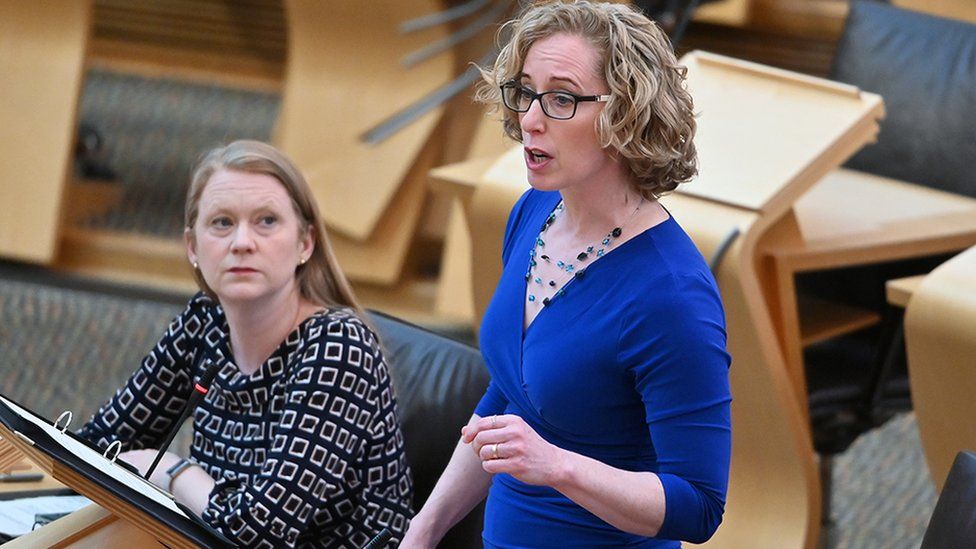
He added that Circular Economy Minister Lorna Slater, who has been driving the introduction of the DRS in Scotland, had “turned her back” on a re-melting target.

He said this would lead to glass going into aggregate instead of back into bottles.

However Circularity Scotland, which is in charge of administering the DRS, said this claim was “entirely untrue” as it had its own target for 90% of recycled glass to be used in glass-making.

Lorna Slater said excluding glass was a last minute change of the goal posts

Meanwhile Mr Golden said the scheme in Wales still included glass because the Welsh government had not applied for any exemption to start the DRS ahead of 2025.

Ms Slater told the BBC’s Sunday Politics show UK’s position would also have implications for the Welsh plans.

She said: “Rishi Sunak, Alistair Jack even Douglas Ross all stood for election in 2019 on a manifesto that promised a deposit return scheme with glass. Now they have decided to remove glass from England’s scheme alone, which is a change from what we had all agreed as four nations.

“Wales has yet to pass their regulations and I feel that it is likely that they would come up against exactly the same issues we’ve had.

“We have been working very well with the UK government all this time. This is a bit of a shock for them to suddenly move the goal posts on us at the last minute.”

The British Soft Drinks Association (BSDA) has said the “only viable option now” was for a UK-wide initiative to be launched across all four nations in 2025.

The deposit return scheme is the latest policy which sees the Scottish and UK governments butting heads.

For people not involved in day-to-day politics, it’s perhaps hard to understand why it functions so easily in, say, Germany – but yet seems impossible to work in Scotland.

Cross-border trade is the issue – and there being no blocks to that.

DRS can go ahead – but without glass, say UK ministers.

The Conservative MSP Maurice Golden said in 2019 that including glass was “common sense”, but industry’s now turned its back on that.

England and Northern Ireland won’t be including glass in 2025 – Wales want to but Mr Golden told me they’ve not asked for an exemption request from the UK government.

It maybe now sounds like if they do, they won’t get it.

If you’re drinking from the pro-independence bottle you’re probably frustrated by the UK government and think Scotland should go it alone.

If it’s the pro-union bottle, you probably think a UK-wide scheme is much more sensible.

It all comes down to your favourite tipple.

26 former MPAs turn to PML-Q after exit from PTI

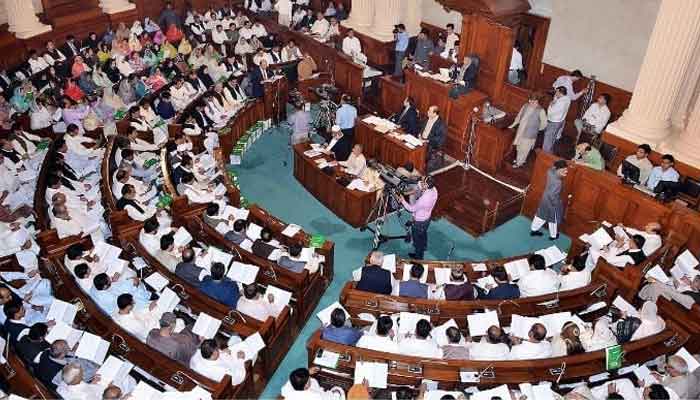
ISLAMABAD: As many as 26 former MPAs from Punjab have turned to Pakistan Muslim League Quaid (PML-Q), after jumping the sinking Pakistan Tehreek-e-Insaf (PTI) ship in the recent quitting spree in the wake of May 9 protests, The News reported Sunday citing sources.

The country’s politics see one of the worst turmoils in history, with PTI facing mass exodus and clampdown against violent protests.

PTI Chairman Imran Khan’s arrest in the £190 million settlement case on May 9 and subsequent events of violence amid protests, during which unruly supporters and workers stormed and torched state installations almost across the country, have unleashed a mass exodus of leaders from the party.

As per the report, these PTI deserters have expressed inclination towards joining PML-Q, which is led by PTI President Chaudhry Parvez Elahi’s cousin Chaudhry Shujaat Hussain. Sources said that the ex-MPAs have requested the party leadership to give them tickets to contest in the upcoming elections in case they join the party.

Those who have contacted PML-Q leadership include Faizullah Kamoka, Chaudhry Akhlaq and others.

Meanwhile, PML-Q’s senior leader Chaudhry Muhammad Sarwar has been assigned the responsibility of holding talks with the former assembly members and other parties. He also has the power to adjust the PTI members. The majority of the PTI members, who have contacted the PML-Q, belong to south Punjab.

The heat

Khan’s party has been feeling the heat of the state’s might after his party workers burnt and smashed military installations, including the General Headquarters in Rawalpindi, after his arrest on May 9 — a day the army dubbed as “Black Day”.

Nearly three-day-long protests also claimed at least eight lives and injured dozens of others with the incumbent coalition government suspending internet services and deploying army troops to maintain law and order situation.

Following the unprecedented attacks on defence and public properties, the crackdown was launched on the PTI to detain the suspect involved in the vandalism with the country’s top civil-military leadership vowing to try rioters under relevant laws of the country including the Army Act.

Several party leaders and thousands of workers have been rounded up in connection with the violent protests.

A close aide of Khan, Asad Umar, has relinquished his posts of secretary general and core committee member, citing the ongoing situation, while several other senior members including Fawad Chaudhary, Shireen Mazari, Maleeka Bokhari and Fayyazul Hassan Chohan have parted ways with Khan.

The last ones to jump ship are PTI’s Sindh president, Ali Zaidi and former Sindh governor Imran Ismail.

They have publicly denounced the attacks on the state installations and announced leaving the former ruling party since the May 9 vandalism, with some blaming Khan’s policies for the attacks on the military installations.

Fazl leaves for London to meet PML-N supremo Nawaz amid PTI’s collapse

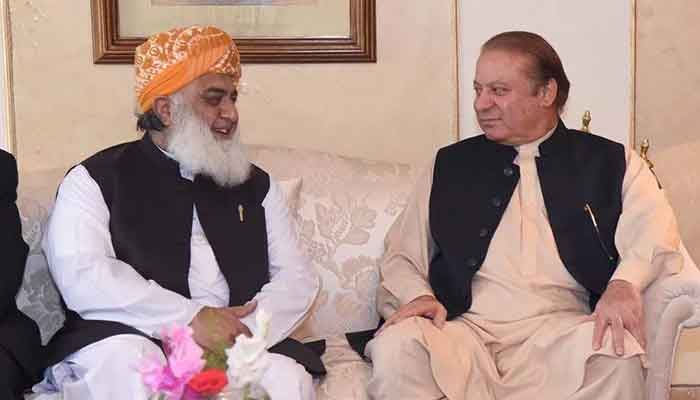
As the country’s politics see one of the worst turmoils in history with Pakistan Tehreek-e-Insaf (PTI) facing mass exodus and clampdown in the wake of May 9 protests, sources said that Fazl is set to meet Pakistan Muslim League Nawaz (PML-N) supremo Nawaz Sharif in London to discuss the current affairs.

The JUI-F leader, who is also the chief of political parties’s alliance Pakistan Democratic Movement (PDM) — PTI’s united rival, will stay in Britain for a few days and meet his party workers operating in different cities, sources added.

PTI Chairman Imran Khan’s arrest in the £190 million settlement case on May 9 and subsequent violent protests, during which unruly supporters and workers stormed and torched state installations almost across the country, have unleashed a mass exodus of leaders from the party.

Several PTI leaders including close aides of Khan have announced quitting the party over May 9 vandalism with some blaming Khan’s policies for the attacks on the military installations.

The latest person to jump ship is party’s Sindh President Ali Zaidi, who announced on Saturday that he is quitting politics and resigned from party positions.

Nearly three-day-long protests also claimed at least 8 lives and injured dozens of others with the incumbent coalition government suspending internet services and deploying army troops to maintain law and order situation.


Following the unprecedented attacks on defence and public properties, the crackdown was launched on the PTI to detain the suspect involved in the vandalism with the country’s top civil-military leadership vowing to try rioters under relevant laws of the country including the Army Act.

Iraq unveils $17bn transport project linking Europe and Mideast

BAGHDAD: Iraq on Saturday presented an ambitious plan to turn itself into a regional transportation hub by developing its road and rail infrastructure, linking Europe with the Middle East.

Once completed, the $17 billion project known as the “Route of Development” would span the length of the country, stretching 1,200 kilometres (745 miles) from the northern border with Turkey to the Gulf in the south.

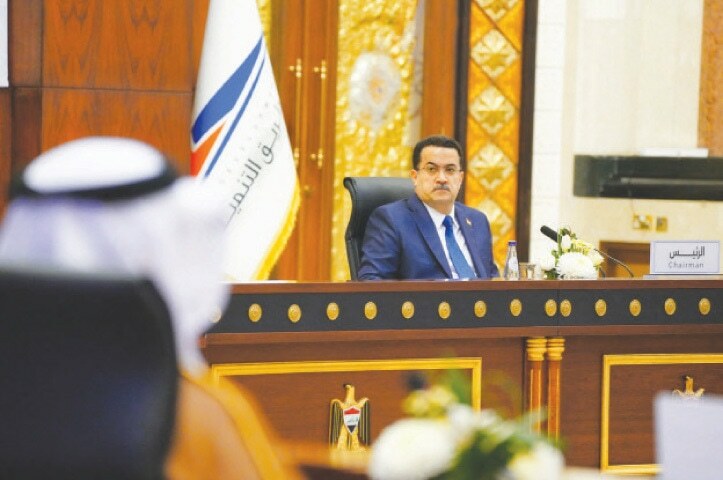
Prime Minister Mohamed Shia al-Sudani announced the project during a conference with transport ministry representatives from Iran, Jordan, Kuwait, Oman, Qatar, Saudi Arabia, Syria, Turkey and the United Arab Emirates.

“We see this project as a pillar of a sustainable non-oil economy, a link that serves Iraq’s neighbours and the region, and a contribution to economic integration efforts,” Sudani said.

While further discussions are required, any country that wishes “will be able to carry out part of the project”, the Iraqi parliament’s transport committee said, adding the project could be completed in “three to five years”.

“The Route of Development will boost interdependence between the countries of the region,” Turkey’s ambassador to Baghdad Ali Riza Guney said, without elaborating on what role his country would play in the project.

War-ravaged and beset by rampant corruption, oil-rich Iraq suffers from dilapidated infrastructure.

Its roads, riddled with potholes and poorly maintained, are in terrible condition.

Those connecting Baghdad to the north cross areas where sporadic attacks are still carried out by remnants of the Islamic State group.

Sudani has prioritised the reconstruction of the country’s road network, along with upgrading its failing electricity infrastructure.

Developing the road and rail corridor would allow Iraq to capitalise on its geographical position, with the aim of making the country a transportation hub for goods and people moving between the Gulf, Turkey and Europe.

Work has already started to increase capacity at the commercial port of Al-Faw, on the shores of the Gulf, where cargo is to be unloaded before it embarks on the new road and rail links.

The project also includes the construction of around 15 train stations along the route, including in the major cities of Basra, Baghdad and Mosul, and up to the Turkish border.

The Gulf, largely bordered by Iran and Saudi Arabia, is a major shipping zone, especially for the transportation of hydrocarbons extracted by countries of the region.

Zyad al-Hashemi, an Iraqi consultant on international transport, cast doubt on the plan to develop the country into a transportation hub, saying it lacks “fluidity”.

“Customers prefer to transport their goods directly from Asia to Europe, without going through a loading and unloading process,” that would see containers moved between ships and road or rail, he said.

Transport is a key sector in the global economy and Iraq’s announcement is the latest in other planned international mega-projects, including China’s “Belt and Road Initiative” announced in 2013 by its President Xi Jinping.

The planned works in that project would see 130 countries across Asia, Europe and Africa connected through land and sea infrastructure providing greater access to China.

The White House and the Republicans have agreed in principle to raise the US debt ceiling and avert a default after weeks of bitter negotiations.

The deal still needs to be approved by a divided US Congress.

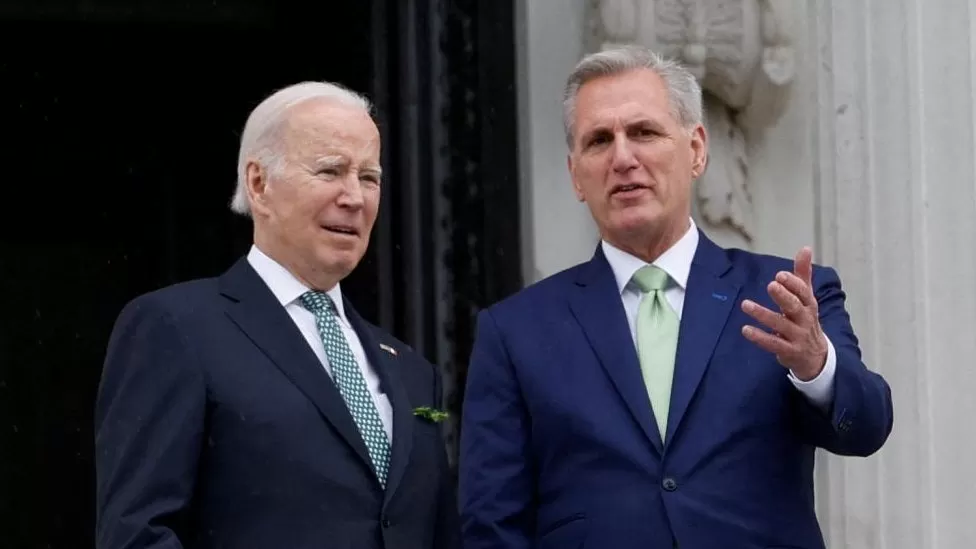
President Joe Biden described the agreement as a “compromise”, while House Speaker Kevin McCarthy said it “has historic reductions in spending”.

The US Treasury earlier warned the country would run out of money to pay its bills on 5 June without a deal.

Such a default would upend the US economy and disrupt global markets.

The US must borrow money to fund the government because it spends more than it raises in taxes.

Republicans have been seeking spending cuts in areas such as education and other social programmes in exchange for raising the $31.4tn (£25tn) debt limit, a law that caps how much debt the US government can accrue.

Senior party members have said they will not raise the debt ceiling unless the government reduces its spending in the years ahead, while Democrats have countered with proposals to raise certain taxes.

Details of the new deal have not officially been released – but CBS, BBC’s partner in America, reported that non-defence government spending would be kept flat for two years and then rise by 1% in 2025.

There would be no major changes to Medicaid health insurance, CBS reported. It was unclear how exactly a government programme that provides food-purchasing assistance for people on low or no incomes would change, according to the report.

At a brief press conference late on Saturday, Mr McCarthy said he had spoken to President Biden on the phone twice during the day.

“And after weeks of negotiations, we have come to an agreement in principle. We still have a lot of work to do, but I believe this is an agreement in principle that’s worthy of the American people.

“It has historic reductions in spending, consequential reforms that will lift people out of poverty into the workforce, rein in government overreach, there are no new taxes, no new government programs, there’s a lot more within the bill,” he said.

Mr McCarthy added that he planned to finish writing the bill on Sunday and speak to President Biden again later in the day, before having a vote in Congress on Wednesday.

In a statement, President Biden said: “The agreement represents a compromise, which means not everyone gets what they want. That’s the responsibility of governing.

“And, this agreement is good news for the American people, because it prevents what could have been a catastrophic default and would have led to an economic recession, retirement accounts devastated, and millions of jobs lost”.

Both Mr Biden and Mr McCarthy will need to convince members of Congress in their own parties that the deal is a good one before the vote this coming week.