
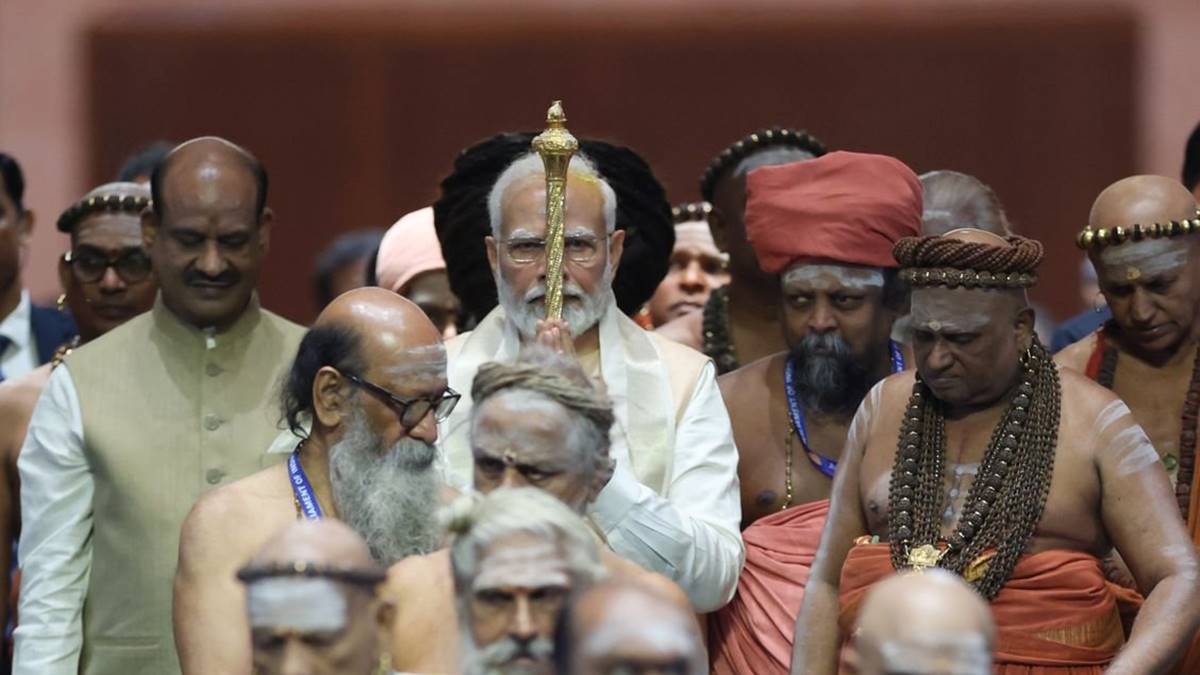
Prime Minister Narendra Modi is due to inaugurate India’s new parliament building amid a boycott of the ceremony by 20 opposition parties.

Ceremonies leading up to a formal inauguration began at 7.30am on Sunday with a prayer.

Mr Modi also installed a historically significant gold sceptre called sengol in the house chamber.

He has unveiled a plaque dedicating the new parliament to the country and is expected to make a speech later.

But MPs from several major opposition parties are not participating in the event.

Last week, 20 parties – including the main opposition Congress – had announced their “collective decision” to boycott the inauguration ceremony.

They had criticised the government for not asking President Droupadi Murmu, the parliament’s highest constitutional authority, to open the new building. They also denounced the decision to hold the event on the birth anniversary of Hindutva ideologue VD Savarkar. Opposition parties consider Savarkar as a divisive figure, while the ruling Bharatiya Janata Party (BJP) hails him as a hero.

The BJP has called the boycott a “disrespect of democracy”.

On Sunday, Mr Modi will also unveil a new 75-rupee coin to commemorate the event and serve as a tribute to 75 years of India’s independence.

The new parliament building is part of the government’s ambitious project to develop the Central Vista power corridor in capital Delhi.

Built in front of the British-era parliament, the new four-storey parliament building – built at an estimated cost of 9.7bn rupees ($117.1m, £94.2m) – has increased seating capacity, with 1,272 seats across two chambers.

The Lok Sabha chamber, which will seat the lower house of the parliament, is designed in the likeness of a peacock, India’s national bird. The Rajya Sabha chamber, which will seat the lower house, is designed to resemble the lotus, India’s national flower.

The new Parliament building has been built in front of the current structure

The current parliament building is expected to be converted into a museum.

The government has said that the new parliament was necessary as the older building was “showing signs of distress and over utilization”.

But its construction, along with that of the Central Vista project, during the pandemic had received criticism from many opposition politicians, environmentalists and civil society groups. They decried its cost, its construction during the pandemic and alleged that the government had not consulted other lawmakers and the public.

The Congress had also stayed away from the foundation stone-laying event of the new parliament in 2020.

Last week, several opposition leaders criticised the government’s announcement that Mr Modi would formally open the building, along with Lok Sabha speaker Om Birla.

The details of the inauguration ceremony sparked a political row

Commentators have said that the row reflects a fractious milieu where India’s ruling party and the opposition are unable to reach an agreement on most issues.

“Both sides need to find a way out of the separate corners they have backed themselves into. They must do so because history will not forgive them if they won’t,” The Indian Express newspaper had argued in an editorial. “They must do so, for the sake of the people, and for the people’s parliament.”

As the new parliament is inaugurated, it may also witness protests by India’s top wrestlers outside the building.

The wrestlers, including Olympic medallists, have been on a month-long protest at Jantar Mantar, a heritage site in the capital Delhi, demanding the resignation and arrest of their wrestling federation president, Brij Bhushan Singh

Singh, an influential lawmaker and politician from BJP, is accused of sexual abuse and harassment of female wrestlers – allegations he denies.

Delhi police officials have told reporters that security has been tightened in the city and its borders to ensure that the protests don’t “disrupt” the parliament’s inauguration.

“Any attempt to create disturbance in the inauguration of the new Parliament building will be dealt with very politely and firmly. I request our respected athletes not to do any such thing today,” said Dependra Pathak, special commissioner, Delhi Police.
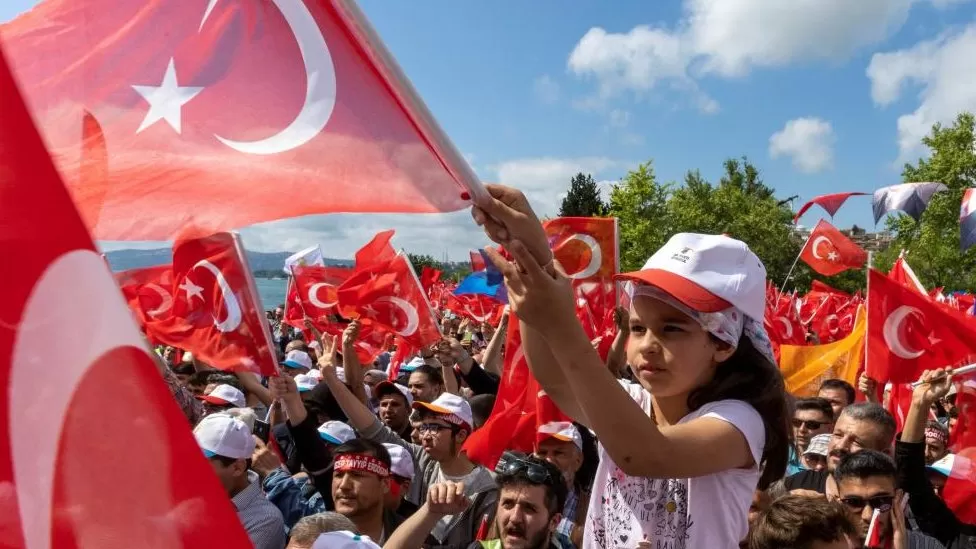

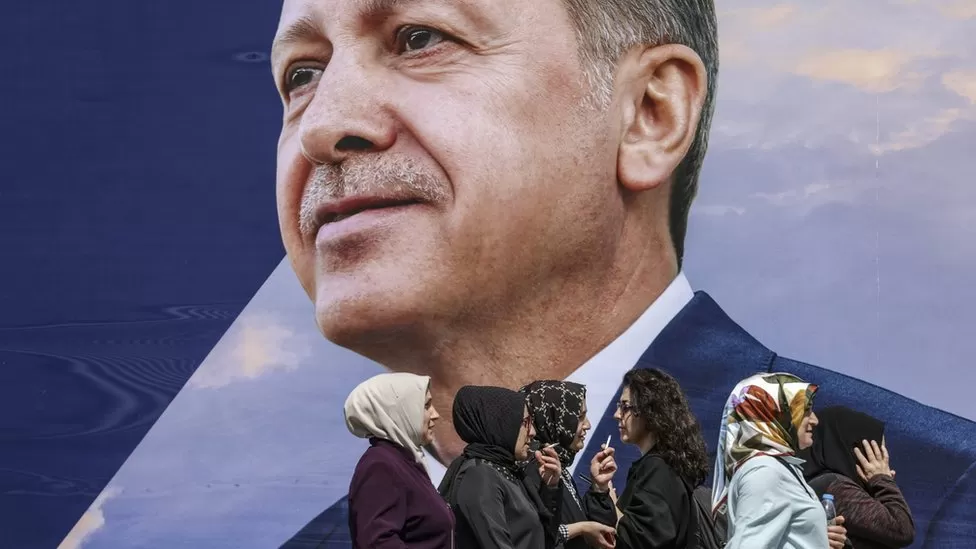
Turks are voting in a momentous presidential run-off to decide whether or not Recep Tayyip Erdogan should remain in power after 20 years.

His challenger Kemal Kilicdaroglu, backed by a broad opposition alliance, has billed the vote as a referendum on Turkey’s future direction.

The president, who is favourite to win, promises a new era uniting the country around a “Turkish century”.

But the more pressing issue is rampant inflation and a cost-of-living crisis.

Polling stations close at 17:00 local time (14:00 GMT). Turkish expats in Europe and the US have already cast their vote.

Turnout in the first round was an impressive 88.8%, and Mr Erdogan’s lead was 2.5 million votes. That is why both candidates have their eye on the eight million who did not vote – but could this time.

Ahead of the run-off Mr Kilicdaroglu accused his rival of foul play, by blocking his text messages to voters while the president’s messages went through.

Opposition parties are deploying an army of volunteers in a bid to ensure no vote-rigging takes place.

International observers spoke of an uneven playing field after the first round. But there was no suggestion that any irregularities in voting would have changed the result.

Mr Kilicdaroglu promised a very different style of presidency on his final day of campaigning: “I have no interest in living in palaces. I will live like you, modestly… and solve your problems.”

It was a swipe at Mr Erdogan’s enormous palatial complex on the edge of Ankara which he moved to when he switched from prime minister to president in 2014. After surviving a failed coup in 2016 he took on extensive powers, detained tens of thousands of people and took control of the media.

So it was laden with symbolism when he paid a campaign visit on Saturday to the mausoleum of a prime minister executed by the military after a coup in 1960.

One of President Erdogan’s final acts before the vote was to lay carnations at a mausoleum

“The era of coups and juntas is over,” he declared, linking Turkey’s current stability to his own authoritarian rule.

Turkey, however, is deeply polarised, with the president reliant on a support base of religious conservatives and nationalists, while his opposite number’s supporters are mainly secular – but many of them are nationalist too.

For days the two men traded insults. Mr Kilicdaroglu accused the president of cowardice and hiding from a fair election; Mr Erdogan said his rival was on the side of “terrorists”, referring to Kurdish militants.

But after days of inflammatory rhetoric about sending millions of Syrian refugees home, the opposition candidate returned to Turkey’s number-one issue – the economic crisis, and in particular its effect on poorer households.

A 59-year-old woman and her grandson joined him on stage to explain how her monthly salary of 5,000 lira (£200; $250) was now impossible to live on as her rent had shot up to 4,000 lira (£160; $200).

A boy takes a picture of his grandmother, 59, with Kemal Kilicdaroglu

It may have been staged, but this is the story across Turkey, with inflation at almost 44% and salaries and state help failing to keep pace.

Economists say the Erdogan policy of cutting interest rates rather than raising them has only made matters worse.

The Turkish lira has hit record lows, demand for foreign currency has surged and the central bank’s net foreign currency reserves are in negative territory for the first time since 2002.


East of Ankara, gleaming tower blocks have been springing up in Kirikkale. It looks like boom-time for this city, run by the president’s party.

But many people here are struggling.

Fatma has run a hairdresser’s for 13 years but for the past two, work has dried up, and the cost of rent and hair products has soared.

She voted for an ultranationalist candidate who came third, and does not trust the two men left in the race.

A few doors up the street, Binnaz is working a sewing machine at a shop for mending clothes.

People cannot afford new dresses so she is earning much more, even if her monthly rent has trebled to to 4,000 lira. Despite Turkey’s stricken economy, she is putting her faith in the president.

I believe [Erdogan] can fix it because he’s been in power for 21 years and he has all the power. It’s his last term [in office] so he’ll do all he can for us
1px transparent line

Outside a supermarket, Emrah Turgut says he is also sticking with Mr Erdogan because he has no faith in the other option, and believes the president’s unfounded allegations that the biggest opposition party co-operates with terrorists.

Turkey’s second-biggest opposition party, the HDP, denies any link to the militant PKK, but President Erdogan has used their backing for the rival candidate to suggest a link to terrorists.

Whoever wins on Sunday, Turkey’s parliament is already firmly in the grip of Mr Erdogan’s Islamist-rooted AK Party and its far-right nationalist ally, the MHP.

The AKP also has the youngest MP, who arrived in parliament on the eve of the presidential vote.

Zehranur Aydemir, 24, believes if he wins then he will lay the foundations for a century in which Turkey will become a global power: “Now Turkey has a bigger vision it can dream bigger.”

It is another grandiose Erdogan project, but Turkey’s economy is likely to prove a more pressing task, whoever wins the run-off.

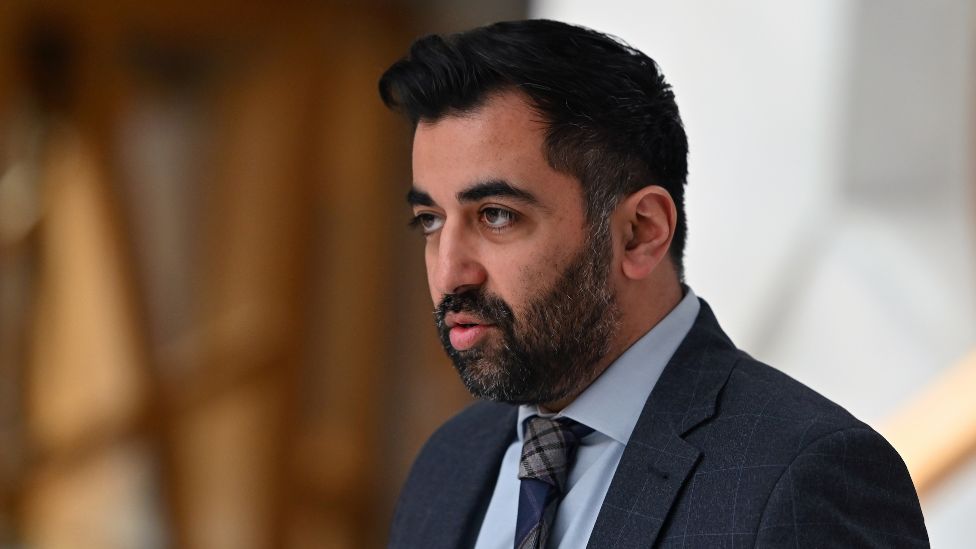
First Minister Humza Yousaf has accused the UK government of sabotaging a pilot recycling scheme by excluding glass.

Glass bottles were a key part of Scottish proposals for the deposit return scheme (DRS), due to start in March – ahead of other UK schemes.

The UK government agreed for the scheme to go ahead in Scotland, but said it wanted to ensure it “aligned” with plans in other nations.

The move casts doubt over whether the Scottish scheme can go ahead.

Mr Yousaf told the BBC: “They’re not just trying to scupper the DRS – they’re trying to undermine devolution. We’ve seen it multiple times.

“Not only is it bad in terms of devolution and self government, it’s really poor for the environment. If we don’t include glass that’s 600 million bottles that won’t be moved from our streets, our beaches and our parks.”

The drinks industry previously shared concerns about the scheme’s readiness

BBC Scotland’s political editor Glenn Campbell said one source closely involved in the DRS had put the chances of it going ahead at 50/50.

The Scottish government is expected to take a couple of weeks to crunch the numbers before making a decision.

The scheme is aimed at increasing the number of single-use drinks bottles and cans that are recycled.

It means 20p will be added to the price of a single-use drinks container, which will be refunded to people who return it to a retailer or hospitality premises that offer single-use products.


The scheme was due to begin in August but was delayed following concerns from the drinks industry.

Some firms feared it would place extra costs and other burdens on them at a time when they are already struggling.

Similar UK initiatives are expected in 2025 – with proposals in Wales including glass bottles.

Because Scottish ministers wanted to introduce their scheme sooner, they had to seek an exemption from the Internal Market Act.

The legislation was brought in after Brexit in a bid to ensure smooth trade across the different nations of the UK.

There had been concerns that the timing of a Scottish scheme could create a trade barrier.

‘Same rules as UK’

On Saturday morning the UK government confirmed it had accepted the Scottish government’s request “on a temporary and limited basis”.

The exemption from internal market rules lasts from the launch of the Scottish scheme until other planned schemes are in place in the rest of the UK.

Scotland’s DRS will cover PET plastic, aluminium, and steel cans only.

A UK government spokesperson said: “Deposit return schemes need to be consistent across the UK and this is the best way to provide a simple and effective system.

“A system with the same rules for the whole UK will increase recycling collection rates and reduce litter – as well as minimise disruption to the drinks industry and ensure simplicity for consumers.”

Mr Yousaf previously claimed it would be a “democratic outrage” for the UK government to agree to the DRS excluding glass.

However Scottish Conservative MSP Maurice Golden said the situation was a mess of the Scottish government’s own making.

He said: “Rather than trying to pick a fight, the SNP and Greens must now accept this help to create a deposit return scheme that actually works for the people of Scotland.”

Lorna Slater had urged Westminster to “do the right thing” and allow the scheme to go ahead

Scottish Greens co-leader Lorna Slater, who had been driving the introduction of the DRS, said the Scottish Parliament had been “treated with contempt”.

The decision to exclude glass meant she would have to look “very seriously” at the viability of the Scottish scheme, she said.

Mr Yousaf added that millions of pounds had been spent on a scheme that proposed to include glass.

He said he did not want to go ahead with a scheme that excluded glass, but would look at the various options.

For it to work effectively, the Scottish deposit return scheme needs an exemption from the rules of the UK internal market act.

The Scottish government has asked for that and – on the face of it – their request has now been granted by the UK government. So what’s the problem?

There are strings attached. A tangle of conditions including the exclusion of glass that make the Scottish government wonder whether their proposals are still viable.

UK ministers will argue they are acting on a practical basis, to ensure any Scottish scheme aligns with future developments in other parts of the UK.

There are certainly businesses that welcome their intervention and others that may have an axe to grind against government at some level, having shelled out to prepare for a scheme that would include glass.

To Scottish ministers this is a power play by the UK government – an outrageous interference in devolved decision making akin to the block on gender reform legislation and resistance to indyref2.

Presentational grey line

The British Soft Drinks Association (BSDA) has said the “only viable option now” was for a UK-wide initiative to be launched across all four nations in 2025.

However Dougal Sharp, founder of brewer Innis and Gunn, said uncertainty over the scheme made things “brutal and impossible to plan”.

Brewer Dougal Sharp said businesses had faced enough uncertainty in recent years

He said: “Businesses are already spending a lot of money on this scheme in Scotland. It just feels like another twist and a very shambolic scheme implementation.

“We’ve already seen it delayed from August. All of these delays inevitably lead to weakened consumer confidence and particularly business confidence.

“Businesses cannot plan in this environment. Businesses are struggling to survive and this is absolutely the last thing we need at the moment.”

‘May 9 events are sad, condemnable’: COAS Munir in address to families of martyrs

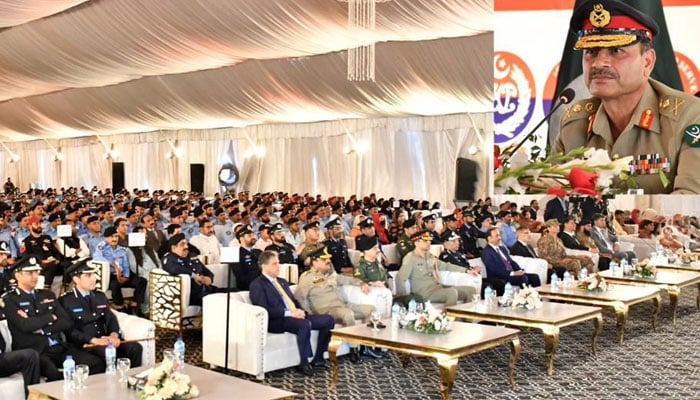
Chief of Army Staff (COAS) General Asim Munir on Thursday said that whatever happened May 9 — the day when violent protests gripped the country after Pakistan Tehreek-e-Insaf (PTI) Chairman Imran Khan — was very sad and condemnable.

His comments came during his visit to the Police Lines Headquarters in Islamabad on the occasion of Youm-e-Takreem Shuhada-e-Pakistan (Martyrs Reverence Day) to remember and pay rich tribute to the martyrs who laid their lives while defending the motherland and its people.

The main event was held at the General Headquarters (GHQ), Rawalpindi with COAS Munir as the chief guest. During the ceremony, rich tributes were paid to the martyrs and prominent personalities laid flowers at the martyrs’ monument.

Those who attended the ceremony included former army chief Gen (retd) Qamar Javed Bajwa, former chairman joint chiefs of staff committee Gen (retd) Nadeem Raza, Pakistan cricket team captain Babar Azam, Mufti Muneeb ur Rehman and other members of the society.

The army chief was welcomed by the Inspector General of Police (IG) Islamabad Dr Akbar Nasir Khan where he addressed the police officials and families of the martyred policemen and personnel.

“Such behaviour will not be tolerated,” said the army chief, adding that the nation will not forgive or forget those who desecrated the memorials of martyrs and undermined their dignity.

Gen Munir said that the Pakistan Army, police and law enforcement agencies are the symbols of the state and the first line of defence that would render sacrifices for the dignity of the country and the people.

“I want to convey this message to the heirs of those martyred that the people of Pakistan and the Pakistan Army are standing and will continue to do so with the relatives of the martyrs of all law enforcement agencies,” he continued to say.

Gen Munir also invited the daughter of martyr Sepoy Imran, Azra, whose video condemning the May 9 events went viral. The army chief assured her that the sacrifices of the martyrs will never be forgotten.

“The Pakistan Army will always stand with you in every difficulty,” he said, adding that all the martyrs of the country are a source of pride.

COAS promises to stand with children of martyrs

The army chief also met the school students and children of martyrs present on the occasion. He said that the Pakistan Army was the heir of all children of martyrs. Thanks to the eternal sacrifices of the martyrs, army’s relationship with them was ideal and eternal, he added.

He pledged on behalf of the armed forces that the army would stand on their side always.

“A strong army is the guarantor of a country’s security and unity,” he maintained.

President Alvi, PM Shehbaz express pride over martyrs’ valiance

In his message, President Arif Alvi said that the entire nation is proud of its valiant martyrs who displayed the spirit of patriotism and fearlessness in testing times throughout history.

“The nation owes to the heroism and sacrifices offered by the jawans (soldiers) and officers of our armed forces, including Pakistan Army, rangers, air force, navy, police, and other security institutions that made Pakistan’s defence impregnable,” a press release issued by President Secretariat Press Wing stated.

The president acknowledged the armed forces’ services for crushing the menace of terrorism and assisting fellow countrymen during natural calamities and pandemics.

“Let us pledge on this day that we will never forget our valiant martyrs and reiterate our commitment to always honour them and express our undying love for these brave sons and daughters of the nation,” the statement added.

Meanwhile, PM Shehbaz Sharif urged the people, especially the children, to visit monuments and graves of martyrs and shower flowers on them as a sign of affection and respect. He said Pakistan should show the world that it is a nation that holds its martyrs in veneration and affection.

He said that martyrs’ reverence day is being observed to pay glowing tribute to the heroes and express unflinching solidarity with their families.

In a detailed tweet, the prime minister regretted and condemned the May 9 violence and desecration of martyrs’ monuments, saying that the incidents gave the enemy a reason to celebrate.

“Our nation knows how to protect the honour of their martyrs. […] Today we revive and reiterate our pledge to uphold the honour and respect of our Shuhada. The essence of Pakistan’s existence lies in the spiritual covenant between its people and the martyrs,” PM wrote on Twitter.

Moreover, the chairman joint chiefs of staff committee, tri-services services chiefs, retired services officers and representatives of civil society also paid tributes to martyrs of Pakistan, a statement released by Inter-Services Public Relations said.

They said the sacrifices of the martyrs are eternal and will continue to inspire future generations of countrymen.

“These sacrifices will never be forgotten, irrespective of vicious propaganda by the enemies of Pakistan,” it added.

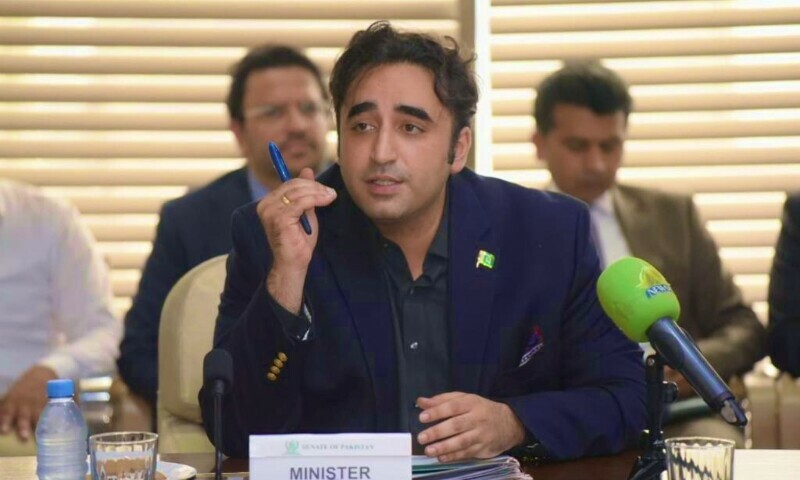
Visit to India proved productive, says Bilawal

“We thought, we should project Pakistan’s case and point of view in front of not only Indian but the other participant countries,” he informed the committee. The minister said it was also decided not to provide an open opportunity to India. He said that it was a difficult decision to participate in the event and a lot of work was done by the Foreign Ministry to evolve consensus in that regrade.


He said the second point that had been considered for attending the event was that all-weather friend of Pakistan, China and Russia were the founder of this organisation. He said that SCO had provided an opportunity to highlight Pakistan’s narrative as it was the Indian objective to abuse this important forum.

Belarussian Foreign Minister Aleinik due on two-day visit on 30th

He said Pakistan had effectively responded to the Indian narrative of linking terrorism with Pakistan, Muslims and Kashmiris. “The event provided an opportunity to make them understand that I am the son of Shaheed Mohtarma Benazir Bhutto who became a victim of terrorism. People of Pakistan are most affected by terrorism,” he added. He said that Pakistan wanted to fight terrorism in the best interest of the country.

The minister said that positive and productive meetings with all the foreign ministers of the members’ countries were held on the sideline of the event. He said it was decided before leaving for India not to hold bilateral meetings with Indian leadership due to the August 2019 unilateral decision of India. “It is our principled stance that we will not seek a meeting with our Indian counterpart,” he added.

He was of the view that the SCO meeting also provided an opportunity to interact with Indian people, senior anchors and media persons and counter the Indian narrative of linking terrorism with Pakistan and Muslims. He said that Pakistan would host the SCO conference in 2026-2027 and there was hope the Indian counterpart would attend the meeting.

Responding to a question, the minister said that soon after arriving from India at Karachi Airport, he effectively responded to the allegations of Indians in the SCO conference. He said that diplomatic channels had also been used to respond to the Indian allegations. Responding to a question regarding Afghanistan, he said a stable, prosperous and secure Afghanistan was in the interest of people of Afghanistan, Pakistan and other neighbouring countries.

Relations with neighbouring countries

He said that it was the request of the interim government of Afghanistan to address the core issue of TTP operating from its soil against Pakistan. He said that after the taking over of the interim Afghanistan government, terrorist attacks in Pakistan had increased. He said that issue of Afghanistan had also been discussed with the participants of the SCO conference during sideline meetings.

About relations with Saudi Arabia and Iran, he appreciated the role of China in bringing closer Saudi Arabia and Iran. “China has proved itself as super power and peacemaker” he added. He said that improved relations between Iran and Saudi Arabia would also bring a positive effect on Pakistan.

He said that the Indian decision to hold the Group of 20 Youth and Tourism convention in Indian-held Kashmir was condemnable. He said the holding of the meeting indicated that India did not care about the United Nations resolution. “You cannot dream of being a superpower by violating international laws and resolutions of the United Nations,” he added.

He said that during his stay in India, he told the Indians that they would not achieve 100 per cent participation because the meeting was being held in the disputed area. “I could not find a single international media report on the conference in Indian-occupied Jammu Kashmir confined to tourism and youth affairs. Every report discusses disputed areas and action of 2019 and Human Rights abuses,” he added.

Belarus FM official to visit Pakistan

Foreign Minister of the Republic of Belarus, Sergei Aleinik, will arrive here on a two-day official visit on May 30, at the invitation of Foreign Minister Bilawal Bhutto-Zardari.

As foreign office reported, the two leaders will hold wide-ranging conversations covering a range of topics of bilateral interest. They will undertake an overview of bilateral relations and explore enhanced cooperation in political, economic, defence and science and technology domains.

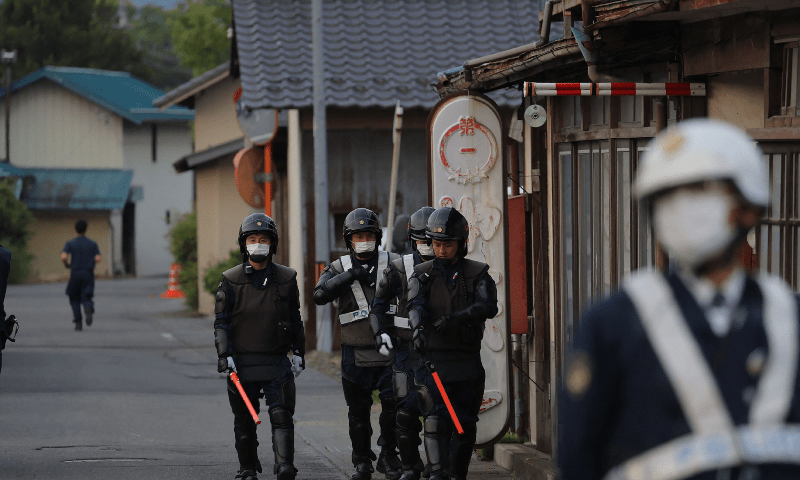
Man arrested after 4 killed in Japan gun and knife attack

The man was taken into custody outside a farm near the city of Nakano in Nagano region, with police confirming a fourth fatality overnight — an elderly woman who was found injured at the scene and later pronounced dead.

Another woman and two police officers were earlier confirmed dead in the attack.

Police told AFP that the 31-year-old suspect had been detained at about 4:30am (1930 GMT on Thursday), and later confirmed he had been formally arrested on suspicion of murder using a suspected hunting rifle.

The rampage in a rural area of the western region was a rare instance of violent crime in Japan, which has a low murder rate and some of the world’s toughest gun laws.

No motive has yet emerged in the killings, nor has the suspect been formally identified, though several local media reported he is the son of the speaker of Nakano’s city assembly.

“We pray for the souls of the deceased and express our heartfelt condolences to the bereaved families,” top government spokesman Hirokazu Matsuno told reporters.

“Police are investigating to uncover the whole picture of the incident, including how the crime developed and its background.”

‘Because I wanted to’

The attack started on Thursday afternoon, when a local man working on a farm saw a woman “running from the road saying, ‘help me’,” he told national broadcaster NHK.

“Behind her came a man wearing camouflage and carrying a large knife, who stabbed her in the back,” the 72-year-old witness said.

He said he called emergency services while neighbours tried to resuscitate the woman.

The attacker announced: “I killed her because I wanted to,” according to an eyewitness cited by Kyodo news.

Local media said he then fired what has been described as a hunting gun at police officers who arrived at the scene.

The officers were inside a patrol car and the attacker placed the weapon against a window of the vehicle and fired twice, NHK reported.

The slain officers were identified as Yoshiki Tamai, 46, and Takuo Ikeuchi, 61.

Local media said the man then barricaded himself inside his father’s home, where he remained most of the night, with occasional gunshots heard.

Two women, including the suspect’s mother, escaped the house, one at around 8:35pm and the other soon after midnight.

The suspect was finally detained. A woman was found at the scene with injuries and later pronounced dead.

Japan was left reeling in July last year when former prime minister Shinzo Abe was shot dead in broad daylight with an apparently homemade gun.

Abe’s accused assassin, Tetsuya Yamagami, reportedly targeted the politician over his links to the Unification Church.

And last month, a man was arrested for allegedly hurling a pipe bomb-like explosive towards Prime Minister Fumio Kishida as he campaigned in the western city of Wakayama.

Kishida was unharmed and a man arrested on the scene will undergo a three-month psychiatric examination, a regional court said this week.

The suspect has reportedly remained tight-lipped about his motive for that failed attack.

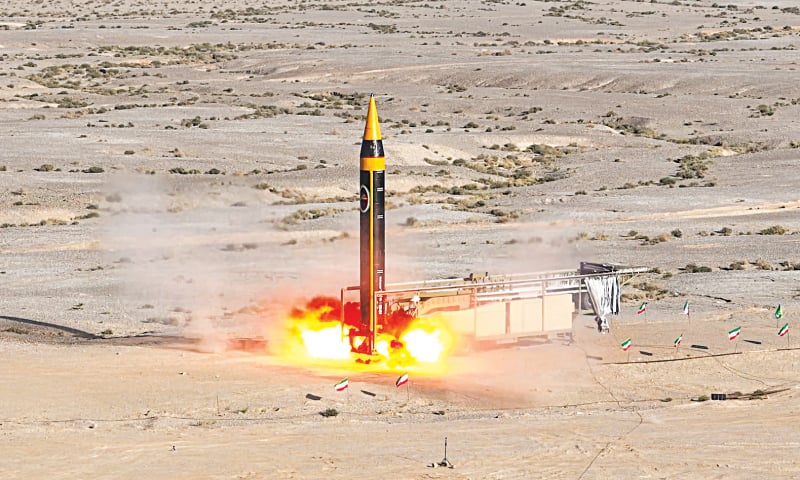
Iran successfully test-launches ballistic missile

Iran, which has one of the biggest missile programmes in the Middle East, says its weapons are capable of reaching the bases of arch-foes Israel and the United States in the region.

Despite US and European opposition, the Islamic Republic has said it will further develop its “defensive” missile programme.

“Our message to Iran’s enemies is that we will defend the country and its achievements. Our message to our friends is that we want to help regional stability,” Iranian Defence Minister Mohammadreza Ashtiani said.

France says test worrying in light of nuclear escalation

State TV broadcast a few seconds of footage of what it said was the launch of an upgraded version of Iran’s Khorramshahr 4 ballistic missile with a range of 2,000km and able to carry a 1,500kg warhead.

“The domestically build Kheibar missile’s outstanding features include quick preparation and launch time, which makes it a tactical weapon in addition to a strategic one,” it said.

On Tuesday, the top Israeli general mooted possible military action against Iran as efforts by six world powers to revive Tehran’s 2015 nuclear deal have stalled since last September, amid growing Western fears about Tehran’s accelerating nuclear advances.

‘Uninterrupted escalation’

France accused Iran of violating a UN Security Council resolution endorsing the nuclear deal after ballistic missile test, which Paris said was worrying given “uninterrupted escalation” of Tehran’s nuclear programme.

“These activities are all the more worrying in the context of the continuing escalation of Iran’s nuclear programme”, French foreign ministry spokesperson Anne-Claire Legendre told reporters at a daily briefing.

Legendre’s reference to the escalation of Iran’s nuclear programme comes just 10 days before the International Atomic Energy Agency’s 35-nation Board of Governors meets in Vienna.

“We expect Iran to respect its international obligations … and carry out concrete and tangible progress before the Board of Governors meeting,” Legendre said.

“Iran’s activities pose serious and increased non-proliferation risks without any credible civilian justification,” she said.

UN Security Council resolution 2231 calls on Iran not to conduct any activity related to ballistic missiles capable of delivering nuclear weapons, but the language is ambiguous, leaving it open to interpretation.

Western officials say that although the launches go against 2231, they are not a violation of the core nuclear agreement between Iran, Britain, China, France, Germany, Russia and the United States.

Western powers are particularly concerned because UN Security Council restrictions on missiles and related technologies last until October 2023 after which Iran is free to pursue its ballistic missile activity.

Israel, which the Islamic Republic does not recognise, sees Iran as an existential threat. Iran says its ballistic missiles are an important deterrent and retaliatory force against the United States, Israel and other potential regional adversaries. An Israeli military spokesperson said the military does not comment on such matters.

Turkey election: What five more years of Erdogan would mean

He controlled the crowd like the conductor of an orchestra. They cheered and clapped – and booed the opposition – on cue. The venue was a waterside convention centre in Istanbul, built during his time as mayor of the city.

The rally reached a crescendo as the president delivered his parting shot: “One Nation, One Flag, One Motherland, One State.” By then, many aging drivers were on their feet, punching the air or raising one arm in a salute.

Ayse Ozdogan, a conservatively dressed woman in a headscarf, had come early with her taxi driver husband to hear her leader’s every word. A crutch rested on the seat next to her. She struggles to walk but could not stay away.

“Erdogan is everything to me,” she said, with a broad smile. “We could not get to hospitals before, but now we can get around easily. We have transportation. We have everything. He has improved roads. He has built mosques. He has developed the country with high-speed trains and underground lines.”

Skyrocketing food prices have hit people in Turkey

The president’s nationalist message appealed to many in the crowd, including Kadir Kavlioglu, aged 58, who has been driving a minibus for 40 years. “Since we love our homeland and our nation, we are walking steadily behind the president.”

“We are with him every step of the way,” he said, “whether the price of potatoes and onions rises or falls. My dear president is our hope.”

When Turks went to the polls earlier this month, they were not voting with their wallets. Food prices are skyrocketing. Inflation is at a punishing 43%.

Yet President Recep Tayyip Erdogan – who controls the economy and much else here – came out in front with 49.5% of the vote. That confounded analysts and taught a lesson here – beware opinion polls.

A divided country

His rival Kemal Kilicdaroglu, the secular opposition leader, got 44.9%. So, the electorate in this polarised country was split – the two sides implacably opposed but just 4% apart.

An ultra-nationalist candidate, Sinan Ogan, took an unexpected 5.2%, pushing the contest to a second round this Sunday. He has now endorsed President Erdogan.

President Erdogan is the favourite to win the second round of the elections

Why have most voters stuck with him despite the economic crisis, and the government’s slow response to disastrous twin earthquakes in February, which killed at least 50,000 people?

“I think he is the [ultimate] Teflon politician,” says Professor Soli Ozel, who lectures in international relations at Istanbul’s Kadir Has University. “He also has the common touch. You can’t deny it. He exudes power. That’s one thing that Kilicdaroglu does not.”

Mr Kilicdaroglu, who is backed by a six-party opposition alliance, used to exude hope, and promise freedom and democracy.

But after his first-round disappointment, he made a sharp right turn. Now there is less of the caring grandfather and more of the nationalist hardliner. “It is a race to the bottom,” according to one Turkish journalist.

“I am announcing here that I will send all refugees back home once I am elected President, period,” said Mr Kilicdaroglu at a recent election rally.

That includes more than three million Syrians who fled war at home. It is a message that goes down well in Turkey.

Whoever is Turkey’s next president, nationalism is already a winner here. The voters have elected the most nationalist and conservative parliament ever, in which Mr Erdogan’s ruling AK (Justice and Development) Party coalition has retained control.

For some young voters it feels like the die has already been cast here. Sitting on a red couch beneath a rainbow flag, Zeynep, 21, and Mert, 23, serve piping hot Turkish tea and worry about the future.

Both study psychology at Bogazici University, a respected seat of learning with a history of now-suppressed student protests. Their friendship began at the university’s LGBTQ+ club, which has since been closed. Gay pride parades have been banned starting from 2015.

During the election campaign, the president has been targeting the community. “No LGBT people come out of this nation,” he told a packed rally in the city of Izmir. “We do not tarnish our family structure. Stand up straight like a man, our families are like that.”

The community is now at growing risk, according to Mert, who has shoulder-length dark hair and earrings.

“Erdogan himself, in every speech, at every event he holds, has started to portray us as targets,” he said. “Day by day, the state is making an enemy out of us.”

A new Turkish century

“What the government says has an impact on people. You see it reflected in those closest to you, even in your family. If this continues, then what next? We end up always living on alert, always tense, always in fear,” he said.

Zeynep – who has dark eyes and expressive hands – is still hoping for a new era but knows it may not come. “I am 21 years old and they have been here for 20 years,” she said.

“I want change and if I don’t see that I will be sad and scared. They will attack us more; they will take our rights more. They will ban many more things, I think. But we will still do something, we will still fight.”

Image caption,

Results from the first round of Turkey’s presidential election

On Sunday, voters will go to the polls for the first presidential runoff in their history with their country at a turning point.

It is almost 100 years since Turkey was founded by Mustafa Kemal Ataturk as a secular republic.

Recep Tayyip Erdogan is promising a new “Turkish century” if he is re-elected.

His supporters say he will deliver more development and a stronger Turkey. His critics say it will be less Ataturk, more Islamisation, and a darker future.

Sunak vows to rein in immigration as figures hit new high


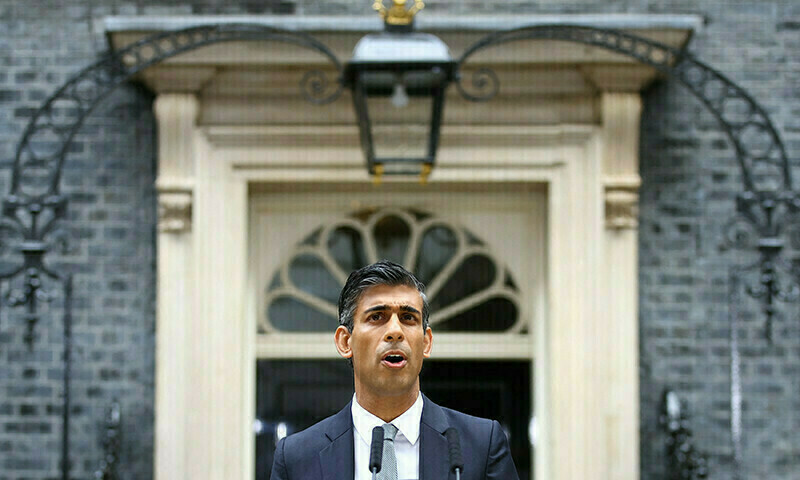
Responding to the figures, Prime Minister Rishi Sunak described legal immigration levels as “too high”. “It’s as simple as that and I want to bring them down,” he told ITV in an interview.

Measures announced earlier this week to tighten the number of international students allowed to bring their families with them would have a significant impact, he added.

Immigration has long been a key political issue in the UK and was one of the main battlegrounds of the Brexit referendum in 2016, which saw the country leave the European Union.

In 2021, net migration — the difference between the number of people leaving the UK and those arriving — was 488,000.

Jay Lindop, director of the centre for international migration at the Office for National Statistics (ONS), said world events such as the end of the Covid-19 pandemic and Russia’s invasion of Ukraine played a part in the increase.

China’s squeeze on civil rights in Hong Kong, which led to the UK relaxing entry rules for holders of British overseas passports, also had an impact.

“A series of unprecedented world events throughout 2022 and the lifting of restrictions following the coronavirus pandemic led to record levels of international immigration to the UK,” said Lindop.

Skills shortage

Brexit brought an end to the policy of free movement of people from EU member states, which many businesses have since blamed for a shortage of workers. Among those hardest hit has been agriculture, and the health and social care sector, prompting the government to relax immigration rules to try to plug the gap.

The main opposition Labour party’s home affairs spokeswoman, Yvette Cooper, called the latest figures “extraordinary” and said it showed the government had “no plan and no grip” on the issue.

“Ministers have completely failed to tackle skills shortages or help people back into work after Covid,” she added.


Sunak is under pressure from within his own Conservative ranks to restrict immigration, with right-wingers arguing that the current numbers are unsustainable.

Adding to his woes is a growing backlog in the Home Office’s processing of asylum claims, particularly of migrants crossing the Channel from northern Europe in small boats.

Attempts to send failed asylum seekers to Rwanda, prompted by an unprecedented 45,000 arrivals last year, have been stuck in the courts.

So far, no one who has had their asylum application turned down has been sent to the central African nation as part of a deal between London and Kigali.

Separate figures also released on Thursday showed that the number of outstanding asylum claims at the end of March 2023 stood at just over 172,000 — up 57 per cent from some 109,000 the previous year.

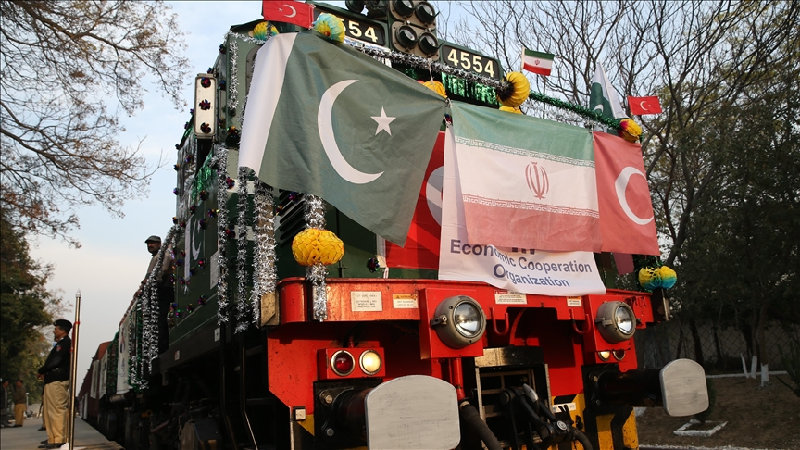
Proposal to revive cargo train with Iran, Turkiye

“A successful experience has already been done in the near past and should be initiated on a permanent basis which can lead to increased trade between these three countries by providing a faster, more cost-effective and more reliable transportation option for goods,” he said in a press statement issued on Tuesday.

This could lead to increased economic growth and job creation as Turkiye is the gateway to Europe while a cargo train can travel to Europe in just 15 days via Turkiye. He said Pakistan should take advantage of this strategic location of Turkiye and introduce a more reliable and safe transportation mode for cargo.

He said it could diversify Pakistan’s trade routes, reducing the country’s reliance on sea and air transportation, which can be affected by geopolitical tensions and other risks.

The cargo train project could also provide a boost to Pakistan’s logistics industry by creating new opportunities for logistics providers, freight forwarders, and other businesses involved in the transportation of goods, he added.