
Pakistan yet to confirm PM’s participation in India-chaired SCO summit

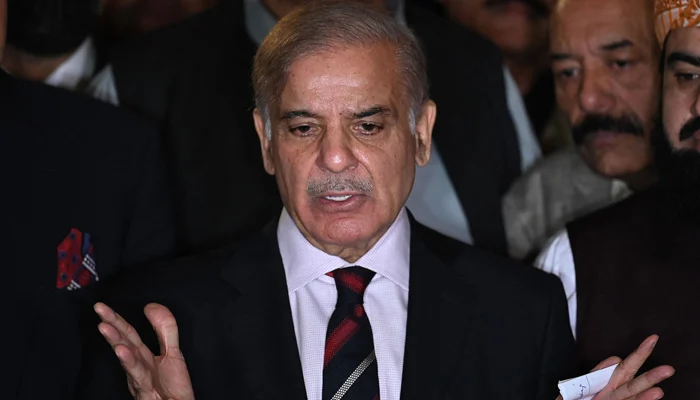
ISLAMABAD: Pakistan has not yet confirmed the participation of Prime Minister Shehbaz Sharif in the SCO virtual summit in New Delhi

“We have received a notification that the Heads of State Meeting will take place in the virtual format and we are awaiting details from the current chair of SCO with regard to the details of the virtual meeting,” said Foreign Office spokesperson Mumtaz Zahra Baloch during a weekly briefing.

“We do not have further information to share. We await the details of this online meeting and once received, the invitation will be duly considered,” the spokesperson said.

When asked about a mural in the new Indian Parliament showing regional countries, including Pakistan, as Akhand Bharat, she said: “We have seen the reports about a mural installed at the new parliament building in New Delhi.”

“The mural depicts so-called ancient India, including areas that now constitute parts of Pakistan and other regional countries. We are appalled by the statements made by some BJP politicians including a union minister, linking the mural with ‘Akhand Bharat’ (Unified Greater India).”

“The gratuitous assertion of ‘Akhand Bharat’ is a manifestation of a revisionist and expansionist mindset that seeks to subjugate the identity and culture of not only India’s neighbouring countries but also its own religious minorities.”

She pointed out that it was a matter of grave concern that the idea of Akhand Bharat was increasingly being peddled by individuals belonging to the ruling dispensation in India.

“The Indian politicians are well-advised not to indulge in rhetoric against other countries merely to further their divisive and parochial political agenda,” the spokesperson said.

“Instead of nurturing hegemonic and expansionist ambitions, India should resolve disputes with its neighbours and work with them to build a peaceful and prosperous South Asia,” she said.

To a query regarding 65 US Congressmen writing a letter to Secretary of State Antony Blinken, asking him to make sure that Pakistan was fulfilling the commitment to human rights, the spokesperson responded.

“We have seen those statements. We do not agree with the characterisation that has been made on developments around May 9 and the situation in Pakistan,” she said.

“You may have seen the National Security Committee’s statement, which has clearly spelt out the factual situation around the May 9 events. We believe that Pakistan is fully capable of dealing with all domestic challenges in accordance with our laws and our Constitution.”

Pakistan, she said, was cognizant of its constitutional obligations to protect the rights and property of all of its citizens.

“We are committed to ensuring observance of national law, maintaining public order and respecting the Constitution, democratic traditions and human rights principles. These constitutional guarantees and fundamental freedoms are underwritten by our judiciary,” she added.

Regarding the recent visit by the Belarus foreign minister, she was asked whether the issue of Russia deploying its nuclear weapons in Belarus came up.

“The focus of discussions between the visiting foreign minister of Belarus and Pakistani dignitaries, including the foreign minister, was on the bilateral relationship. As such, no such issue came up,” she said.

However, while reiterating Pakistan’s position, she said all states should abide by their international legal obligations and non-proliferation commitments and avoid steps inconsistent with such commitments.

“The issue of stationing nuclear weapons on territories of NPT non-nuclear weapon states, at present as well as in the past, needs to be carefully examined by all parties to the Treaty as it has serious repercussions for global peace and security,” she said.
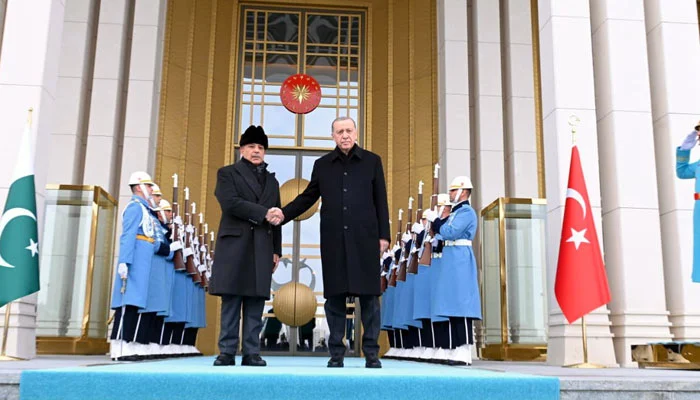
PM Shehbaz to attend Turkish President Erdogan’s inauguration ceremony

ISLAMABAD: Prime Minister Shehbaz Sharif will leave for Turkey tomorrow (Friday) to attend Turkish President Recep Tayyip Erdogan’s inauguration which is scheduled to take place on June 3 (Saturday).

As per the Foreign Office (FO) spokesperson, the premier is visiting Ankara at the invitation of President Erdogan. He will congratulate the president of Turkey on his election victory on behalf of the government and people of Pakistan

“The prime minister’s visit will be a reaffirmation of the deep-rooted fraternal ties between Pakistan and Turkey,” the spokesperson added.

During the visit, PM Shehbaz will also extend an invitation to President Erdogan to attend the 7th Meeting of the High-Level Strategic Cooperation Council (HLSCC) in Islamabad.

“Pakistan-Turkey relationship is deeply embedded in commonalities of faith, culture and history, and strengthened by mutual trust and convergence of views on regional and global matters. Frequent leadership level exchanges are a defining feature of the eternal bonds of friendship between the two countries,” the spokesperson further said.

The FO statement was unclear as to how long the PM’s trip would be but sources told Geo News that the trip will be two days long. They also shared that the premier will depart from Islamabad tomorrow.

The PM made his maiden trip to Turkey in June 2022 for a three-day trip. He took a second trip to the country in November of last year.

The last trip the prime minister took to Ankara was in February of this year when he went to the country to express solidarity with the people of Turkey following the massive earthquake that claimed more than 36,000 lives and left the country reeling.

This will be the fourth trip to Turkey by PM Shehbaz ever since he took charge of the country.

President Erdogan prevails in election test

last week, President Erdogan extended his two decades in power in elections, winning a mandate to pursue increasingly authoritarian policies which have polarised Turkey and strengthened its position as a regional military power.

His challenger, Kemal Kilicdaroglu, called it “the most unfair election in years” but did not dispute the outcome.

Official results showed Kilicdaroglu won 47.9% of the votes to Erdogan’s 52.1%, pointing to a deeply divided nation.

The election had been seen as one of the most consequential yet for Turkey, with the opposition believing it had a strong chance of unseating Erdogan and reversing his policies after his popularity was hit by a cost-of-living crisis.

Instead, victory reinforced his image of invincibility, after he had already redrawn domestic, economic, security and foreign policy in the NATO member country of 85 million people.

The prospect of five more years of his rule was a major blow to opponents who accused him of undermining democracy as he amassed ever more power — a charge he denies.

In a victory speech in Ankara, Erdogan pledged to leave all disputes behind and unite behind national values and dreams but then switched gears, lashing out at the opposition and accusing Kilicdaroglu of siding with terrorists without providing evidence.

He said releasing former pro-Kurdish party leader Selahattin Demirtas, whom he branded a “terrorist,” would not be possible under his governance.

Erdogan said inflation was Turkey’s most urgent issue.

China’s President Xi seeks to keep powerful AI on tight leash

As concerns over the possible deadly fallout of artificial intelligence (AI) grip experts, leaders, and academicians around the world, top Chinese officials including President Xi Jinping have called for greater state control over the technology to counter possible threats and problems.

During a meeting of the National Security Commission, the president and the other high-ups of the Communist Party of China agreed to “improve security governance of network data and artificial intelligence.”

A number of AI experts, academicians and notable people including OpenAI CEO and Google DeepMind Tuesday warned of humanity’s extinction if the threats posed by AI to humans were not dealt with as a top global priority.

In a brief statement published on the webpage of the Centre for AI Safety Tuesday, it read: “Mitigating the risk of extinction from AI should be a global priority alongside other societal-scale risks such as pandemics and nuclear war.”

According to an official statement released on Xinhua, it read: “We must be prepared for worst-case and extreme scenarios, and be ready to withstand the major test of high winds, choppy waters, and even dangerous storms.”

President Xi said that the “complexity and severity of national security problems faced by our country have increased dramatically.”

In recent months, China has geared up its efforts to identify threats to its national security and interests, with restrictions on foreign firms, and strengthening counter-espionage laws.

Earlier last week, the Chinese cyberspace regulator banned US Micron Technology from selling its memory chips to domestic consumers saying the chipmaker, had failed its network security review, fuelling the latest trade spat between Washington and Beijing,

Chinese regulator noted that Micron, the biggest US memory chipmaker, had failed its network security review and that it would block operators of crucial infrastructure from buying from the company.

It remained unclear what are the risks or what products from the company would be affected.

In response, the US said that it won’t tolerate the ban.

Moreover, China has also stepped up to bring AI under state control with a draft law unveiled last month requiring all AI products to undergo an overhauling before going public.

AI products will be required to reflect “core socialist values”, the draft law states, and must not “contain content on the subversion of state power.”

Beijing has said deep fakes — the technology generating images and audio that can be falsely attributed to others as they did it — also present a “danger to national security and social stability.”

It has been the ambition of China to become a global leader in AI by 2030. According to an estimation by McKinsey estimates, the sector could add about $600bn every year to China’s gross domestic product by then.

President Biden trips during graduation ceremony but recovers swiftly

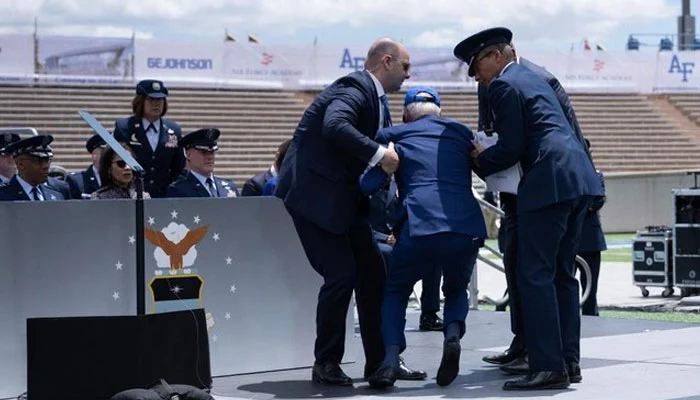
President Joe Biden stumbled and fell after presenting the final diploma during a graduation ceremony at the US Air Force Academy. With the help of three individuals, the 80-year-old president swiftly regained his footing and returned to his seat without assistance. As he was being assisted, Biden gestured behind him, indicating the object that caused him to trip.

According to White House communications director Ben LaBolt, who shared an update on Twitter, Biden sustained no injuries. LaBolt clarified that a sandbag was present on the stage when Biden was shaking hands, leading to the stumble.

Prior to the incident, President Biden had delivered a commencement address to an enthusiastic audience, emphasising the graduates’ entry into an increasingly volatile global landscape and highlighting the challenges posed by Russia and China.

It is noteworthy that President Biden is seeking re-election in 2024, and in February, he underwent a physical examination where doctors declared him to be in good health and fully capable of fulfilling his duties.

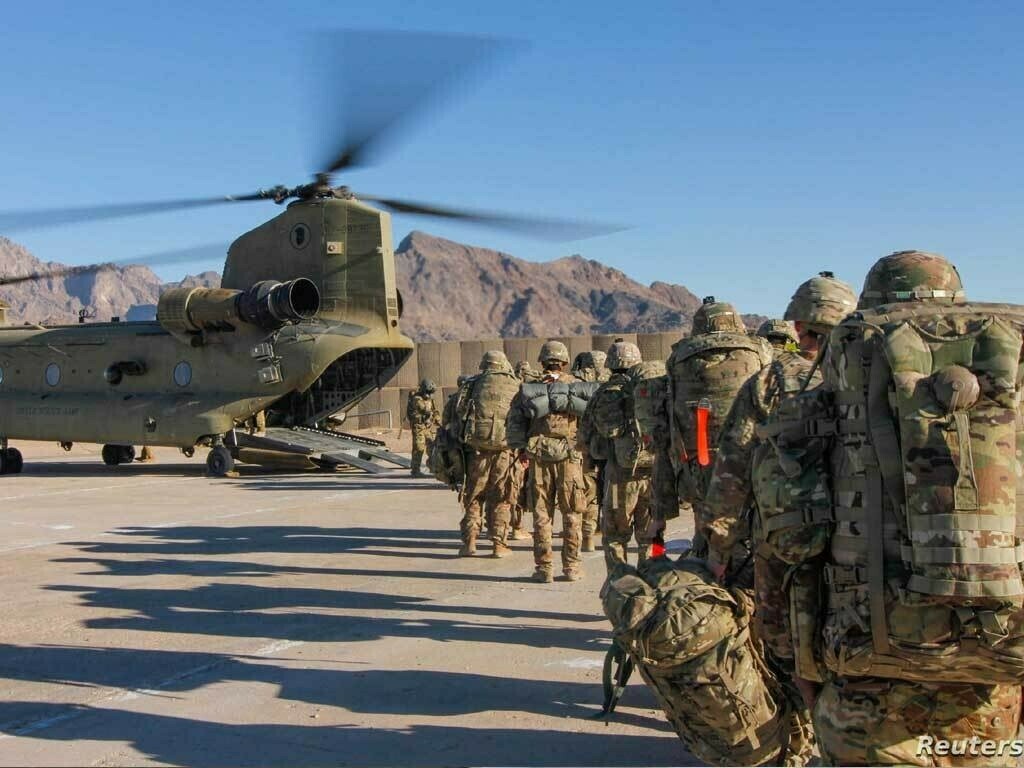
Taliban say foreign forces committed ‘uncountable crimes’ in Afghanistan

Taliban administration spokesperson Bilal Karimi said the incidents involved in the Australian court case were a “small part” of the many alleged crimes that took place and that they did not trust any court globally to follow them up.

Ben Roberts-Smith, a former member of Australia’s elite Special Air Service Regiment, sued three newspapers for 2018 reports that alleged he was involved in the murders of unarmed prisoners in Afghanistan.

Roberts-Smith denied the allegations and launched a multi-million-dollar defamation case in response.


But after two years of proceedings, Justice Anthony Beskano ruled that the papers had proven the bulk of their allegations to be “substantially true” and dismissed the case against them.

The defendants hailed the verdict as a major victory for media freedom in Australia, where defamation laws are often used to muzzle the press.

But journalist Nick McKenzie said it was also a victory for servicemen who testified against their former comrade and for Afghan victims.

“It’s a day of justice for those brave men of the SAS who stood up and told the truth about who Ben Roberts-Smith is — a war criminal, a bully and a liar.

“Australia should be proud of those men in the SAS, they are the majority in the SAS.” “Today is a day of some small justice for the Afghan victims of Ben Roberts-Smith,” he added.

Before the trial, Perth-born Roberts-Smith had been Australia’s most famous and distinguished living soldier.

He won the Victoria Cross — Australia’s highest military honour — for “conspicuous gallantry” in Afghanistan while on the hunt for a senior Taliban commander.

He met Queen Elizabeth II and his image hung in the hallowed halls of the Australian War Memorial in Canberra.

But after painstaking reporting, The AgeThe Sydney Morning Herald and The Canberra Times alleged that lauded public persona masked a pattern of criminal and immoral behaviour.

The papers reported Roberts-Smith had kicked an unarmed Afghan civilian off a cliff and ordered subordinates to shoot him.

He was also said to have taken part in the machine-gunning of a man with a prosthetic leg, later bringing the leg back to Australia and using it as a drinking vessel with comrades.

The towering veteran was also accused of domestic violence against a woman in a Canberra hotel — an allegation the justice said had not been proven.

The case was one of Australia’s longest-running defamation trials and local media has estimated the legal costs to be about US$16 million, making it also one of the costliest.

Lawyers for the media defendants indicated they would now be seeking “indemnity costs against the applicant”.

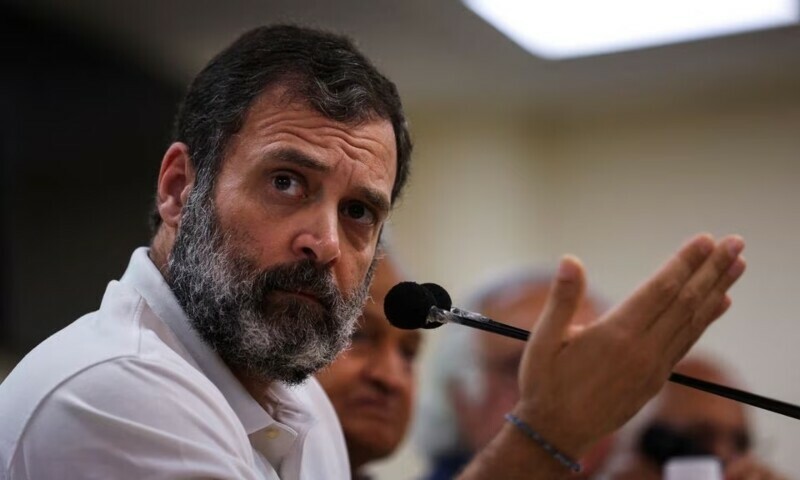
India opposition leader Rahul Gandhi takes a dig at Modi over China in US visit

“The fact of the matter is China is occupying our territory. It’s an accepted fact,” Gandhi, who belongs to the opposition Congress party, said in remarks at The National Press Club during a visit to Washington.

“It’s absolutely unacceptable. Prime Minister seems to believe otherwise.”

India’s embassy in Washington did not immediately respond to a request for comment. Gandhi’s trip comes weeks ahead of Modi’s scheduled US visit later this month.


China and India have been uneasy neighbours for decades following the war on their disputed Himalayan frontier in the early 1960s.

After deadly border clashes in 2020 that killed 20 Indian soldiers and four Chinese troops, China this year ramped up the tension by renaming 11 locations in India’s eastern state of Arunachal Pradesh, which China calls southern Tibet and claims as its territory. India has rejected and denied those claims.

In May, Modi said peace on India’s border with China is essential for normal relations between the nuclear-armed neighbours. Since coming to power in 2014, the Bharatiya Janata Party (BJP) government of Modi has pumped millions of dollars to boost military and civilian infrastructure along its 3,800km (2,360-mile) frontier with China.

Separately, Gandhi blamed Modi for India’s religious polarization, saying his Hindu nationalist party was not inclusive.

“They sort of generate a certain amount of hatred in society, they polarize society and they are not inclusive. They don’t embrace everybody, and they divide society,” Gandhi said.

The BJP denies the allegations and says its policies are aimed at the welfare and development of all Indians.

Gandhi also accused the BJP of “capture of institutions” and “capture of the press” in India. Since Modi came to power in 2014, India has slid from 140th in World Press Freedom Index, an annual ranking by non-profit Reporters Without Borders, to 161st this year, its lowest ever.

The BJP denies institutional compromise and says its governance abides by the rule of law.

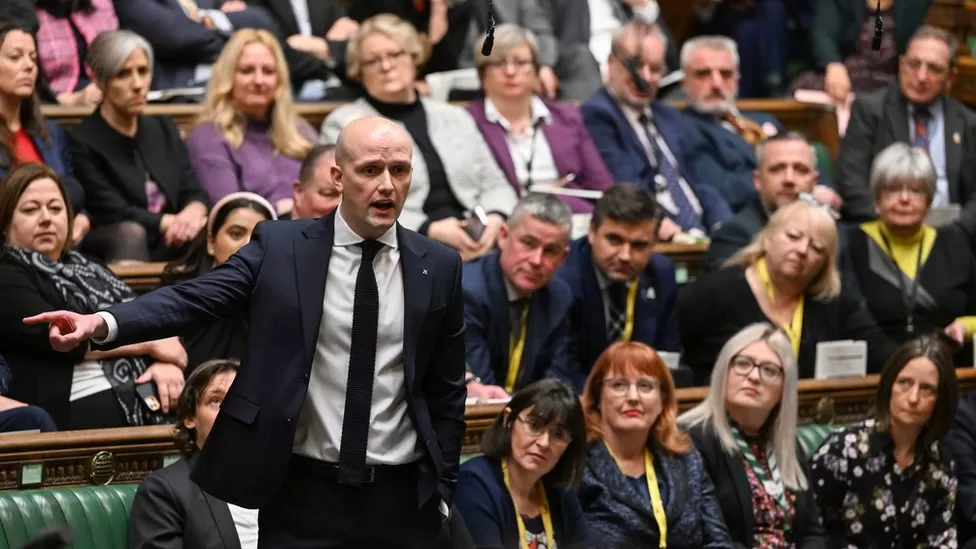
The SNP’s Westminster group has filed its audited accounts ahead of a deadline, the party has said.

It had faced losing some of its £1.2m in public funding if the accounts were not submitted by midnight on Wednesday.

Its previous auditors quit last September – but it was only made public last month.

SNP bosses were initially unable to a find a replacement before Manchester-based firm AMS Accounting agreed to take on the job on 3 May.

Peter Grant MP, the group’s treasurer, confirmed that the annual financial return “has received a clean audit certificate and has been submitted, on time, to the parliamentary authorities”.

BBC Scotland editor Glenn Campbell said he believed missing the deadline would have seen the party lose the first month of its Short Money funding.

Failure to meet subsequent deadlines would have seen the overall pot of cash being reduced further.


Short Money is given to opposition parties at Westminster to help them carry out their parliamentary work.

The amount received is based on how many MPs a party has, with the SNP currently being given about £1.2m every year.

The SNP as a whole now has to file its audited accounts with the Electoral Commission in July, with AMS Accounting also carrying out that work.

The party had worked with its previous accountants, Johnston Carmichael, for more than a decade.

The company, which describes itself as being Scotland’s largest independent firm of chartered accountants, said it had decided to stop auditing the accounts last autumn following a review of its clients.

First Minister Humza Yousaf said he only found out after winning the contest to succeed Nicola Sturgeon as party leader in March that it no longer had an accounting firm in place.

Westminster group leader Stephen Flynn said he learned in February that Johnston Carmichael had quit.

Humza Yousaf says he only found out after winning the party leadership that its auditors had quit about seven months earlier

It comes amid an ongoing police investigation into the party’s finances which saw its former chief executive Peter Murrell – the husband of Nicola Sturgeon – and then-treasurer Colin Beattie arrested.

Both men were subsequently released without charge pending further investigation.

Police Scotland launched its Operation Branchform investigation in July 2021 after receiving complaints about how more than £600,000 of donations earmarked for independence campaigning were spent.

Officers searched the Glasgow home of Ms Sturgeon and Mr Murrell, and the SNP’s headquarters in Edinburgh, as part of the inquiry.

A luxury motorhome that sells for about £110,000 was also seized from outside the home of Mr Murrell’s mother in Dunfermline.

‘Parliament will retaliate if its authority challenged’, defence minister tells top judge

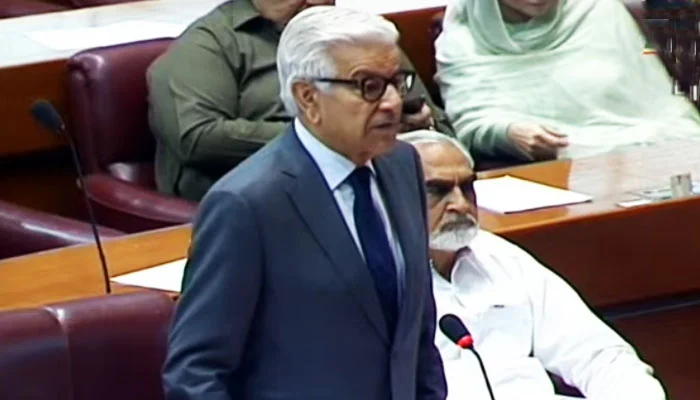
Defence Minister Khawaja Asif on Tuesday excoriated Chief Justice of Pakistan (CJP) Umar Ata Bandial for his inclusion in the five-member larger bench to hear petitions against the inquiry commission probing audio leaks involving judges.

“Parliament will retaliate if its authority is challenged and if our writ comes under attack, the house will counterattack,” the defence minister told the top judge while speaking in the National Assembly.

He said that the government had formed a commission and it was stopped from operating by the chief justice. “The judiciary cannot dictate the parliament as it is independent,” he added.


“It was expected that the chief justice would leave this matter to the commission as it also involved his mother-in-law,” said the defence minister, who is also a senior leader of the Pakistan Muslim League-Nawaz (PML-N).

Talking about the Arsalan Iftikhar case, he said that the former chief justice Iftikhar Chaudhary had recused himself from the bench at that time and distanced himself from his son’s case.

“If Iftikhar Chaudhary can separate himself from the bench then the incumbent chief justice should also be separated,” he said, adding, “It seems like good traditions are being abandoned.”

Speaking about the Supreme Court (Practice and Procedure) Bill, 2023, the seasoned politician said that the top court took notice of the bill before it even became an act.

“We have not added any outsider inside the commission,” he said, adding, “We want an end to the one-man show in the apex court. We want transparency of justice to be increased as we don’t want any confrontation with the judiciary.”

Judicial commission

A high-powered judicial commission comprising Justice Qazi Faez Isa along with Justice Naeem Akhtar Afghan and Justice Aamer Farooq was tasked on May 20 to probe the audio leaks related to the judiciary.

The commission was tasked to complete the inquiry within 30 days.

Among the multiple audio leaks, the commission will also probe into the veracity of the alleged call between former Punjab chief minister Chaudhry Parvez Elahi and a sitting top court judge as well as another call between CM Elahi and a Supreme Court lawyer over the constitution of an apex court bench.

Subsequently, Pakistan Tehreek-e-Insaf (PTI) Chairman Imran Khan questioned the government for the “deliberate omission” of the terms of reference (TORs) and challenged the formation of the three-member judicial commission on audio leaks.

Babar Awan, the PTI chief’s lawyer and party leader, had filed the plea on his behalf requesting the court to declare the notification for constituting the commission null and void.

Similarly, Supreme Court Bar Association (SCBA) President Abid Zubairi had also challenged the audio leaks commission to summon directing him to appear before the panel in connection with the inquiry.

Law Minister Azam Nazeer Tarar earlier said that the government did not consult CJP Bandial before forming the commission.

In light of these petitions, the Supreme Court stayed the proceedings of the commission and suspended the federal government’s notification of the commission’s constitution.

The order was issued by a five-member apex court bench headed by CJP Bandial and comprising Justice Ijaz ul Ahsan, Justice Munib Akhtar, Justice Syed Hasan Azhar Rizvi and Justice Shahid Waheed.

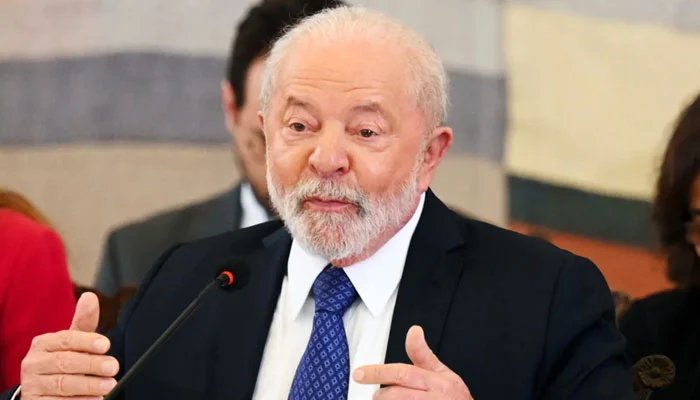
Brazilian President Lula proposes common currency for South America

Brazilian President Luiz Inácio Lula da Silva, during a meeting with South American heads of state in Brasilia, put forward a proposal to establish a common currency for the Mercosur trade bloc, which includes Argentina, Brazil, Paraguay, and Uruguay.

The idea of a shared currency within the bloc has been discussed intermittently since its establishment in 1991. Lula emphasised the need to strengthen the South American identity in monetary policy and reduce reliance on external currencies by creating a unified unit of transaction for trade.

Furthermore, Lula called for increased financial support from regional development banks such as the Andean Development Corporation (CAF), the Bank of the South, and Brazil’s development bank BNDES to drive social and economic development in the region. The notion of a common currency in South America has been raised by regional leaders before, but analysts remain sceptical about its feasibility due to varying monetary policies across the region.

Ives Gandra, a Brazilian jurist, pointed out the challenges of implementing a common currency, drawing a comparison to the Eurozone’s development. Gandra highlighted that discussions on the Eurozone’s common currency began in the 1950s and were followed by the establishment of free trade zones, customs agreements, and a common market. Only after these foundational steps were taken did they form a commission, a common council, and a European tribunal to guide the process.

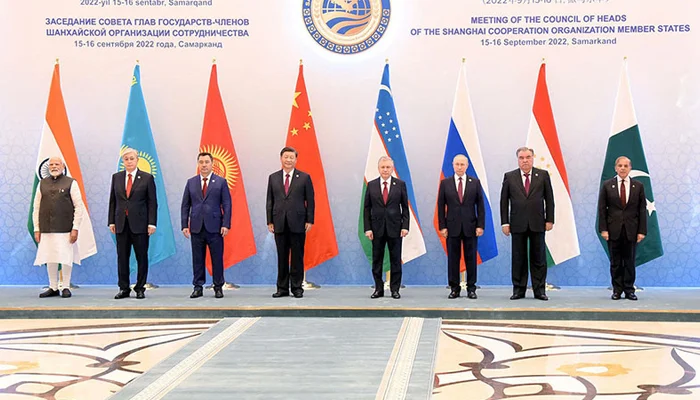
India to hold SCO meeting virtually


ISLAMABAD: India has announced to hold the Shanghai Cooperation Organisation (SCO) Council of Heads of State Summit via video conference on July 4.

Announcing the decision on Tuesday, the Indian foreign ministry said the 22nd SCO meeting would be held virtually and be presided over by Indian Prime Minister Narendra Singh Modi.

The move to hold the SCO meeting virtually is unexpected and the Indian government has not cited any reason for it, which is leading to speculations and conflicting opinions.

Quoting sources privy to the development, the Indian media commented that the decision was made on Monday and had nothing to do with the engagements of the leadership of SCO member countries.

They said the leadership of China and Russia have to attend the G20 meeting in September.

Had the leaders of member countries been invited in person, it would be Russian President Vladimir Putin’s first visit to India after the breakout of the Russia-Ukraine war.

In addition, there were also prospects of meeting Pakistan and China’s leadership with the Indian leadership.

Experts in Pakistan are of the view that India made the decision to go virtually to prevent Prime Minister Shehbaz Sharif from visiting India.

Earlier this month, Foreign Bilawal Bhutto-Zardari attended the SCO Foreign Ministers meeting in Goa, India, where he met several of his counterparts, but did not hold a bilateral meeting with his Indian counterpart, Dr Subrahmanyam Jaishankar.

The SCO is a political and security bloc that includes Pakistan, Russia, China — and India has been the chair since September.