
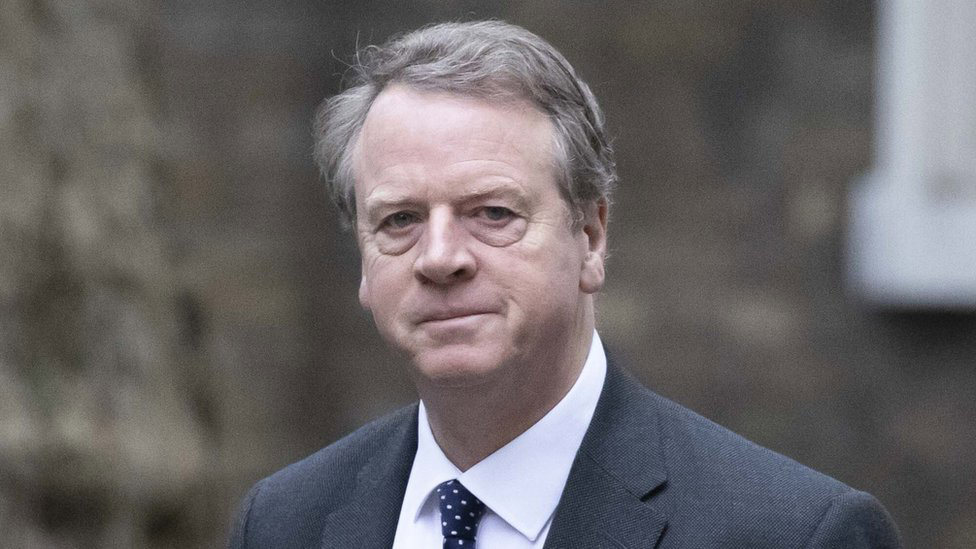
Scottish Secretary Alister Jack has said the UK government should not change its position on Scotland’s deposit return scheme (DRS).

UK ministers have made the exclusion of glass a condition of their support.

First Minister Humza Yousaf has said the scheme is in jeopardy if the UK government does not make the necessary concessions.

Mr Yousaf has written to Prime Minister Rishi Sunak, asking him to include glass, and wants a response by Monday.

He told BBC Scotland this deadline was “effectively” an ultimatum.

The UK government wrote to the Scottish government last week granting a partial exemption to the Internal Market Act which would exclude glass containers from the DRS – which is due to go live in Scotland in March next year.

Glass has been excluded mainly because the UK government said deposit return schemes should be consistent across the UK.

Mr Yousaf has urged a rethink from the UK government, citing concerns from businesses.

In his letter to Mr Sunak, the first minister said: “The removal of glass fundamentally threatens the viability of Scotland’s DRS with reduced revenue for the scheme administrator.

“Removing glass will also have a significant impact on business.”

He also said that, apart from threatening jobs and investment, excluding glass would also put companies at a competitive disadvantage.

In an interview on the BBC’s The Sunday Show, Mr Jack strongly defended the UK government’s position.

“We’ve given the exclusion and there are four conditions in that exclusion which allow the schemes to work across the United Kingdom,”

The DRS would see customers given money back by returning empty bottles

He said there would be a single bar code system and membership of just one scheme would be needed instead of multiple schemes so there would be no extra costs.

He added that having no glass in the scheme “makes sense” as “that’s what industry have asked us to do”.

“I haven’t had a single letter from a business supporting the proposed scheme that Lorna Slater brought forward whereas I have had over 1,000 letters of concern,” he said. “And it’s those concerns that we’ve taken into account when we’ve come to our conclusion because we believe the deposit charge should be the same and reciprocated across the UK.

“If I get off the train in Carlisle and buy some recyclable material and it’s 10p in Carlisle and 20p in Dumfries I double my money. That makes no sense.”


Mr Jack added: “You have to protect internal markets and not have disruption to the drinks industry. French wine producers have told us they wouldn’t be relabelling just for Scotland for glass. It was too small a market so they would sell their wine elsewhere.”

He added that the British Glass Industry had written to the UK government saying the glass was not recycling glass and that Circularity Scotland [the administrator of the scheme] was going to crush it and put it into roads, adding that it should instead be melted and recycled into bottles.

However, this was later disputed by Circularity Scotland which said the aggregate claims were “totally inaccurate”.

The organisation, which represents drinks producers, retailers and trade bodies who are backing the DRS scheme, said it had set a high target for remelting glass so it could be reused to make new drinks containers.

A spokesman said: “Circularity Scotland has consistently stated that the Scottish Deposit Return Scheme has set a target of 90% for the remelting and reuse of glass from the scheme’s launch, rising to 95% post-launch. Any claims to the contrary are totally inaccurate.

“These claims have seriously jeopardised a £10m investment in glass recycling planned for Scotland’s Deposit Return Scheme

Scottish government wants to include glass bottles in its plans

The Scottish secretary also said there were issues with contamination because if a bottle was broken and had a shard of less than 10mm, it would contaminate all the recyclable material in the bin and it would have to go to landfill.

Mr Jack said the UK government had listened to the drinks industry, including the Scotch Whisky Association which said having glass in the scheme would cost it jobs.

In his letter to the prime minister, Mr Yousaf had cited concerns raised by C&C Group – one of the country’s biggest brewers and the company behind Tennent’s Lager – but, in correspondence Mr Jack received from the firm, seen by the BBC, the company said it had been “misrepresented”.

‘Competitive disadvantage’

Reading a section of the letter, Mr Jack said: “Please find enclosed the letter we sent to Humza Yousaf, Scotland’s first minister, setting out our position following last weekend’s UK Internal Market announcement.

“Regrettably, specific passages of this letter were leaked to the media misrepresenting C&C’s position on DRS.

“C&C Group/Tennent’s is actively seeking and supports a UK-wide scheme introduced at the same time across the four UK nations.”

The letter went on to say that the removal of glass would leave the company at a “competitive disadvantage with the rest of the UK” and the firm “cannot therefore support a stand-alone Scottish DRS that excludes glass”.

Circularity Scotland previously urged the UK and Scottish governments to “get round the table” to deliver the programme.

It said it had invested about £300m to develop the deposit return scheme.

Scottish Secretary Alister Jack’s comments can be taken to mean the UK government will not agree to what Humza Yousaf described to the BBC as an “effective” ultimatum.

Mr Yousaf wants the UK government to allow glass bottles to be part of the Deposit Return Scheme and wants them to agree to this by Monday. He says he struggles to see how it can go ahead otherwise.

The Scottish government is expected to decide on the future of the scheme this week.

But as things now stand, it would seem there is very little prospect of it going ahead next March as planned.

Supporters of the Scottish government will present the UK government’s position as an attack on devolution and the powers of Holyrood.

The issue will be less the rights and wrongs of the scheme itself – and more the principle that a scheme backed by a majority of MSPs cannot go ahead.

The UK government, on the other hand, would also mount a strong argument.

It would argue it is listening to the concerns of businesses about the scheme and ensuring there are no barriers to trade within Britain.

This increasingly feels like a story about constitutional politics rather than the rights and wrongs of the Deposit Return Scheme itself.
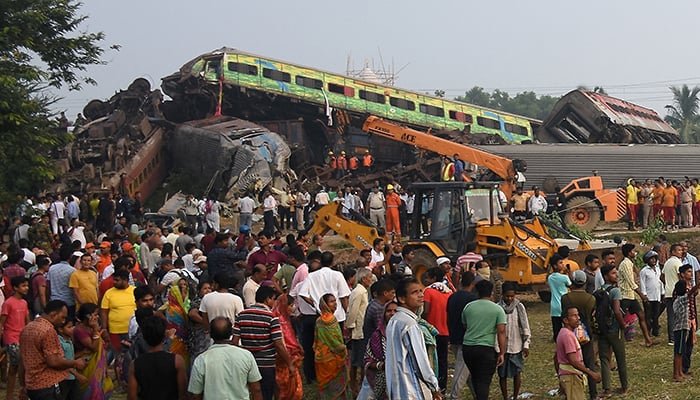
Odisha train accident: Pakistan prays for ‘speedy recovery’ as India mourns loss of hundreds

Pakistan Saturday expressed condolences to hundreds of Indian families who lost their loved ones in a horrific three-train collision in Odisha state, the country’s deadliest rail accident in more than 20 years.

The state has declared Saturday a day of state mourning as a mark of respect to the victims as 288 people have lost their lives, with more fatalities expected. Over 900 people injured are reported injured in the accident.

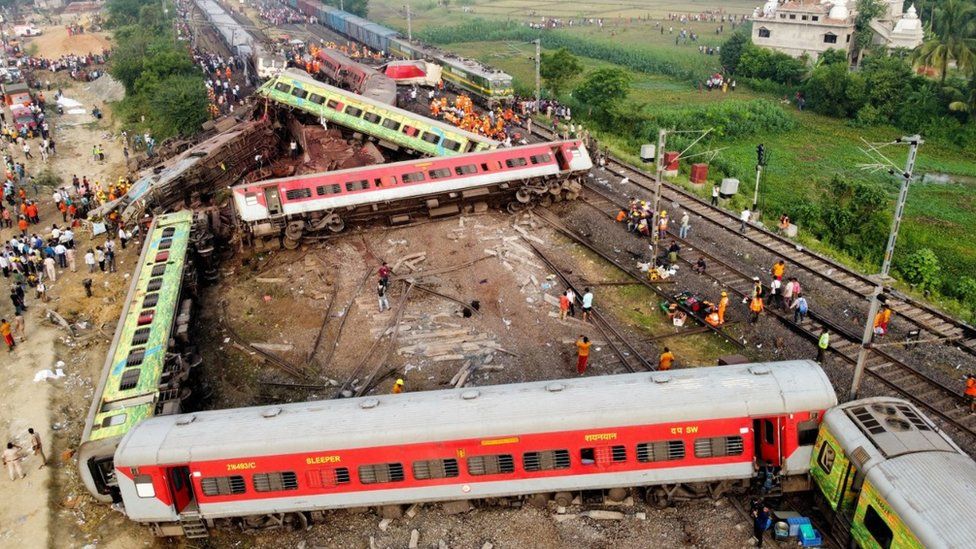
Wreckage debris was piled high at the crash site near Balasore, in the eastern state, where some carriages had been tossed far from the tracks and others flipped over entirely.

Smashed train compartments were torn open in the impact late on Friday, leaving blood-stained holes in their sides.

In a statement, Prime Minister Shehbaz Sharif said that he was “deeply saddened” by the loss of hundreds of lives in the Indian train accident.

“I extend my heartfelt condolences to the bereaved families who lost their loved ones in this tragedy. Prayers for speedy recovery of the injured,” the prime minister said.

Foreign Minister Bilawal Bhutto-Zardari said he was saddened after learning about the terrible incident.

“Our condolences for the families of the victims. Wish speedy recovery to the injured. #BalasoreTrainAccident,” he added.

The disaster began when an express train running north from India’s tech hub Bengaluru to Kolkata derailed, falling onto the adjacent southbound track.

Minutes later, the Coromandel Express heading from Kolkata to Chennai smashed into the wreckage, some of its coaches also colliding with a goods train parked nearby.

‘Hour of grief’

India has one of the world’s largest rail networks and has seen several disasters over the years, the worst of them in 1981 when a train derailed while crossing a bridge in Bihar and plunged into the river below, killing between 800 and 1,000 people.

Friday’s crash ranks as its third worst, and the deadliest since 1995, when two express trains collided in Firozabad, near Agra, killing more than 300 people.

Odisha state’s chief secretary Pradeep Jena confirmed that about 900 injured people had been hospitalised.

Rescue teams including from the National Disaster Response Force and air force were deployed, while the railways ministry announced an investigation.

Authorities said every hospital between the crash site and the state capital Bhubaneswar around 200 kilometres (125 miles) away was receiving victims, with 200 ambulances — and even buses — deployed to transport them.

At Bhadrak District Hospital, bloodied and shocked survivors were receiving treatment in crowded wards.

The disaster comes despite new investments and upgrades in technology that have significantly improved railway safety in recent years.

Indian Prime Minister Narendra Modi — who officials said would visit the crash site and hospitals later Saturday — said he was “distressed by the train accident”.

“In this hour of grief, my thoughts are with the bereaved families. May the injured recover soon,” he tweeted.

Survivors’ account

Survivor Arjun Das told a Bengali television channel he heard a thundering sound, then saw people falling from upper berths.

He jumped out of the train. “People were screaming, shouting for help,” he said.

“There were injured lying everywhere inside coaches and along the tracks. I want to forget the scenes.”

Researcher Anubhav Das was in the last carriage of the second train when he heard “screeching, horrifying sounds coming from a distance”.

His coach stayed upright and he jumped out unhurt after it ground to a halt.

“I saw bloodied scenes, mangled bodies and one man with a severed arm being desperately helped by his injured son,” the 27-year-old told AFP.

“I lost count of the bodies before leaving the site. Now I now feel almost guilty.”

PM Shehbaz attends Turkish President Erdogan’s inauguration ceremony

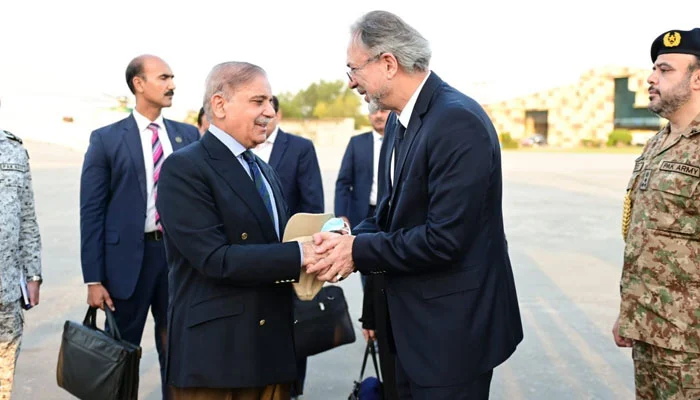
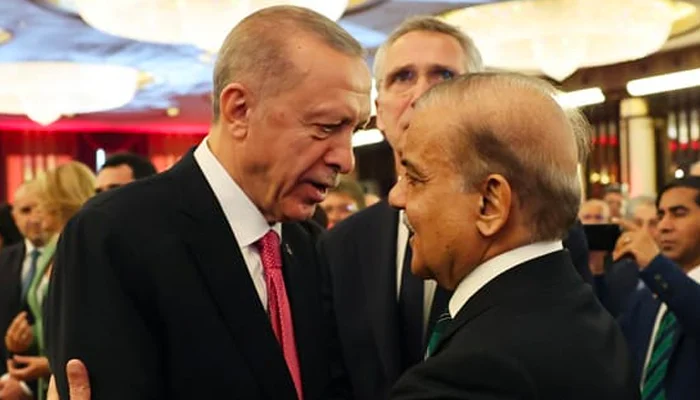
ANKARA: Joining other world leaders in celebrating Recep Tayyip Erdogan’s presidential election run-off win, Prime Minister Shehbaz Sharif Saturday attended his inauguration ceremony.

On behalf of Pakistani government and the nation, the premier congratulated Turkey President Erdogan, who has been in power since August 2014 and has entered his third decade, for winning the polls and reelection for the third term.

The two leaders exchanged greetings and shook hands during their meeting at the ceremony where PM Shehbaz was joined by Information and Broadcasting Minister Marriyum Aurangzeb, who also felicitated President Erdogan.

Turkiye’s national anthem and traditional music was played during the grand ceremony where the re-elected Erdogan was accompanied by his wife Emine Erdogan.

In his remarks on the occasion, the Turkish president thanked his nation for electing him for another term. He urged the country’s people to forge unity and work towards a better future with collective effort.

“Democracy in Turkey is strong. We will strengthen it further,” he said, adding Turkey wanted good relations with all countries and would play its role for peace and security in the world.

President Erdogan thanked leaders of the countries, including PM Shehbaz, for attending his inauguration ceremony. High-level officials from 78 countries attended the swearing-in ceremony.

The ceremony at the Presidential Complex was attended by 21 heads of state, 13 prime ministers, as well as parliamentary and ministerial-level representatives, and representatives of international organisations, including the Organisation of Turkic States (OTS), NATO and the Organisation of Islamic Cooperation (OIC).

Earlier, President Erdogan took oath in the Grand National Assembly of Türkiye and began his new term. He received his mandate from the Temporary Speaker of the Grand National Assembly of Turkiye, Devlet Bahceli.

After taking the oath, Erdogan visited Anitkabir. He hosted guests at a dinner at the Cankaya Palaca, the former home of Turkish presidents, after the ceremony.

The Turkish president won a presidential runoff election last Sunday with 52.18% of the vote. Opposition candidate Kemal Kilicdaroglu received 47.82%, according to final results released by the country’s Supreme Election Council.

PM Shehbaz meets Turkish business groups

Meanwhile, chief executives of Turkish business groups called on the PM Shehbaz during his Turkey visit, after which he invited them to invest in Pakistan and establish strategic collaboration in sectors of energy, agriculture, information technology (IT) and construction.

During the meetings, the PM outlined the government’s vision to facilitate foreign direct investment and encouraged joint ventures. Their exchanges spanned around expanding trade and investment ties to maximise mutual gains from available opportunities in Pakistan and to enhance cooperation in key sectors of the economy through the direct presence of Turkish enterprises and via joint ventures with Pakistani counterparts.

It may be recalled that after the signing of the historic Trade in Goods Agreement by the two countries in August last year, which became operational on May 1, new opportunities for trade of traditional and non-traditional products have emerged between the two countries.

Therefore, for the effective utilisation of these opportunities, the PM urged Turkish companies to invest in Pakistan, assuring them of complete facilitation and a conducive business environment.

The prime minister also held separate meetings with leading Turkish companies that have already invested in Pakistan including Anadolu Group, Arcelik, Zorlu, Albayrak, Limak, Dolsar, Turkish Contractors Association and Pak Yetirim.

During the meeting, the PM encouraged them to benefit from an investment-friendly environment and to expand their operations. The Turkish companies briefed him on their existing and future plans for investment while thanking him for facilitating their operations in Pakistan.

A considerable number of Turkish enterprises are already operating in Pakistan in various sectors and have contributed to the economic development of the country.

Nevertheless, there are opportunities for cooperation and collaboration in the areas of energy; especially hydro and solar, housing and construction, infrastructure, tourism, and transportation. During a meeting with Sinan Ak of Zorlu Group, the two sides discussed projects regarding wind power and solar energy.

RECOMMENDED FOR YOU

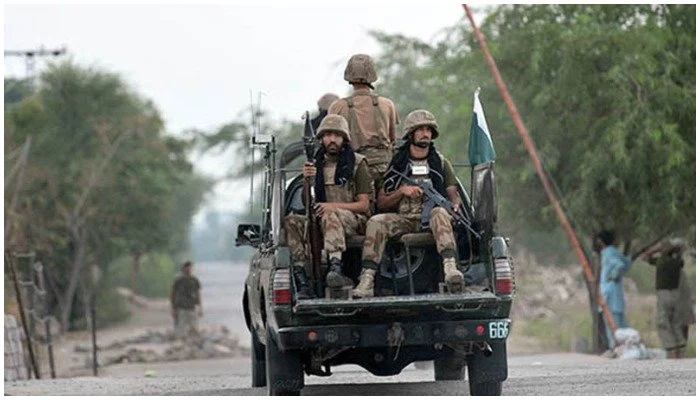
Two terrorists killed in North Waziristan shootout

RAWALPINDI: Two terrorists were gunned down by security forces in an exchange of fire that took place in the general area of Dossali in North Waziristan District of Khyber Pakhtunkhwa, the military’s media wing said on Friday.

According to the Inter-Services Public Relations (ISPR), once the fire exchange took place the troops “effectively engaged the terrorists’ location and sealed all possible escape routes”. It added that during the shootout “two terrorists were sent to hell”.

The ISPR also said that weapons and ammunition were also recovered from the terrorists. It added that the miscreants were “actively involved in terrorist activities against security forces and killing of innocent citizens”.

The sanitisation of the area is being carried out to eliminate any terrorists found in the area.

“Locals of the area appreciated the operation and expressed their full support to eliminate the menace of terrorism from the area,” the army’s media wing added.

The shootout comes two days after a soldier was martyred as security forces thwarted terrorists’ attempt to disrupt the ongoing polio campaign in the North Waziristan District.

According to the ISPR, terrorists fired on the members of a polio team, employed in the general area Spinwam of North Waziristan.

However, the security forces deployed with the team “effectively engaged terrorists’ location ensuring the safety of all members of the team and extricated them unharmed”.

The martyred soldier was identified as 25-year-old Sepoy Saqib Ur Rehman of District Mardan.

The ISPR also said that sanitisation of the area is being carried out to eliminate any terrorists found in the area. “Security forces of Pakistan are determined to eliminate the menace of terrorism and such sacrifices of our brave soldiers further strengthen our resolve.”

PM Shehbaz Sharif leaves for Turkey to attend ‘brother’ Erdogan’s inauguration

ISLAMABAD: Prime Minister Shehbaz Sharif has left for Turkey to attend the inauguration of his “brother” President Recep Tayyip Erdogan.

According to the Prime Minister’s Office, Turkish Ambassador to Pakistan Dr Mehmet Paçaci bid farewell to PM Shehbaz as he was leaving for his two-day trip.

“Leaving for Turkey today at the invitation of my brother, HE President Recep Tayyip Erdogan, to attend his inauguration ceremony,” tweeted the premier before departing from Islamabad.

The prime minister added that he will convey the “warmest greetings” to President Erdogan on behalf of the government and people of Pakistan on election victory.

“The fraternal ties between Pakistan and Turkey are set to deepen further in line with our shared resolve and common destiny,” he said.

He went on to say that both countries “have yet to unlock the potential of our multifaceted relationship and efforts are being made in that direction”.

The upcoming 7th Meeting of the High-Level Strategic Cooperation Council in Islamabad will also “provide the right avenue to take the momentum” of both the countries’ “strategic partnership forward”, he added.

A day earlier, the Foreign Office, while announcing the PM’s visit, said that the premier will extend an invitation to President Erdogan to attend the council’s meeting in Islamabad.

President Erdogan prevails in election test

Last week, President Erdogan extended his two decades in power in elections, winning a mandate to pursue increasingly authoritarian policies which have polarised Turkey and strengthened its position as a regional military power.

His challenger, Kemal Kilicdaroglu, called it “the most unfair election in years” but did not dispute the outcome.

Official results showed Kilicdaroglu won 47.9% of the votes to Erdogan’s 52.1%, pointing to a deeply divided nation.

The election had been seen as one of the most consequential yet for Turkey, with the opposition believing it had a strong chance of unseating Erdogan and reversing his policies after his popularity was hit by a cost-of-living crisis.

Instead, victory reinforced his image of invincibility, after he had already redrawn domestic, economic, security and foreign policy in the NATO member country of 85 million people.

The prospect of five more years of his rule was a major blow to opponents who accused him of undermining democracy as he amassed ever more power — a charge he denies.

In a victory speech in Ankara, Erdogan pledged to leave all disputes behind and unite behind national values and dreams but then switched gears, lashing out at the opposition and accusing Kilicdaroglu of siding with terrorists without providing evidence.

He said releasing former pro-Kurdish party leader Selahattin Demirtas, whom he branded a “terrorist,” would not be possible under his governance.

Erdogan said inflation was Turkey’s most urgent issue.

Evacuation alert in Japan after heavy rain

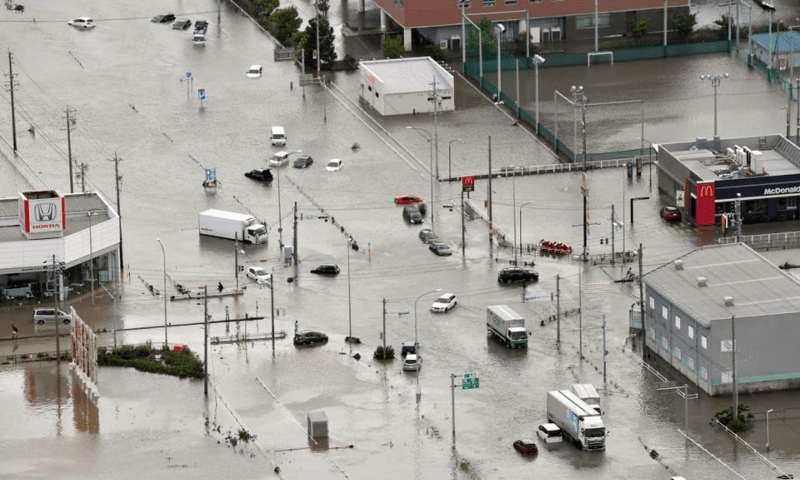
A non-compulsory evacuation order was issued to more than 410,000 people in Toyota in the central Aichi region, as well as in other parts of western and central Japan.

The highest evacuation alert — which urges residents to immediately secure safety — was issued to some 130,000 people in Toyohashi, also in Aichi, according to public broadcaster NHK.

Western Wakayama region saw several rivers burst their banks, and NHK footage showed a brown-coloured river in a Wakayama town covering railway tracks.


Two people were missing in Wakayama — one washed away when a road flooded and another swept up by a river, NHK reported.

“We urge residents (in the affected areas) to be extremely vigilant against landslides, flooding and rising and overflowing rivers,” top government spokesman Hirokazu Matsuno told reporters.

“Extremely heavy rainfall with thunderstorms are expected over a wide area from western to eastern Japan over the next three days” due to the storm, which has been downgraded from typhoon status, he added.

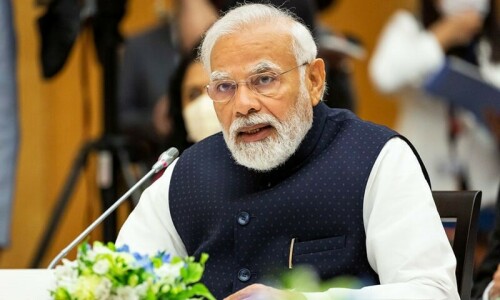
Modi invited to address US Congress on June 22

“During your address, you will have the opportunity to share your vision for India’s future and speak to the global challenges our countries both face,” House Speaker Kevin McCarthy, Senate Majority Leader Chuck Schumer, Senate Republican Leader Mitch McConnell, and House Democratic Leader Hakeem Jeffries said in a letter to Modi.

The speech would be Modi’s second to a joint meeting of the US legislature.

The White House announced last month that President Joe Biden had invited Modi for an official state visit this month.

Biden is eager to deepen ties with the world’s largest democracy as part of his bid to win what he has framed as a contest between free and autocratic societies, especially China.

Addresses to joint meetings of Congress, are generally reserved for the closest US allies or major world figures. The last was by South Korean President Yoon Suk Yeol in April, and Ukrainian President Volodymyr Zelenskiy addressed the House and Senate in December.

Several Indian leaders have made such addresses. Modi last did so in 2016. The first was Prime Minister Jawaharlal Nehru in 1949.

Modi’s relationship with Washington has evolved since 2005, when the administration of then-President George W. Bush denied him a visa under a US law barring entry to foreigners who have committed “particularly severe violations of religious freedom”.

That stemmed from the killing of more than 1,000 people, mostly Muslims, in sectarian riots in the Indian state of Gujarat shortly after Modi became its chief minister. Modi denied wrongdoing.

In their letter, McCarthy, Sch­umer, McConnell and Jeffries said

the address would cele­brate the enduring friendship between the United States and India.

Sri Lanka’s economic recovery remains challenging, says IMF

The International Monetary Fund’s Deputy Managing Director Kenji Okamura said the country was emerging from its unprecedented crisis thanks to reforms including the doubling of taxes, spending cuts and the scrapping of subsidies.

A currency crisis since late 2021 led to severe shortages of food, fuel and medicines and triggered months of protests that led to the toppling of former president Gotabaya Rajapaksa in July.

“The current economic crisis has its genesis in policy missteps aggravated by external shocks,” Okamura said in a statement Friday, after meeting President Ranil Wickremesinghe and other leaders on Wednesday.

“We discussed the importance of fiscal measures, in particular revenue measures, for a return to macroeconomic stability.”


Sri Lanka defaulted on its $46 billion external debt in April last year, and is still negotiating with its bilateral and private creditors on repayments.

“The economic recovery remains challenging,” Okamura added.

At least 288 people are now known to have been killed and 850 injured in a multiple train collision in India’s eastern Odisha state, officials say.

More than 200 ambulances were sent to the scene in Balasore district, says Odisha’s chief secretary Pradeep Jena.

One passenger train is thought to have derailed before being struck by another on the adjacent track late on Friday.

It is India’s worst train crash this century. Officials say the death toll is expected to rise further.

Indian Railways said the two services involved were the Coromandel Express and the Howrah Superfast Express.

Sudhanshu Sarangi, director general of Odisha Fire Services, said that the death toll stood at 288.

Mr Jena said earlier that more than 100 additional doctors had been mobilised.

Indian Prime Minister Narendra Modi said he was distressed by the incident and his thoughts were with the bereaved families.

“Rescue ops are under way at the site of the mishap and all possible assistance is being given to those affected,” he tweeted.

Meanwhile, Home Minister Amit Shah labelled the incident “deeply agonising”.

One male survivor said that “10 to 15 people fell on me when the accident happened and everything went haywire. I was at the bottom of the pile.

“I got hurt in my hand and also the back of my neck. When I came out of the train bogie, I saw someone had lost their hand, someone had lost their leg, while someone’s face was distorted,” the survivor told India’s ANI news agency.

A day of mourning has been announced in the state.

It is India’s worst train crash this century

It is believed that several carriages from the Shalimar-Chennai Coromandel Express derailed at about 19:00 local time (13:30 GMT), with some of them ending up on the opposite track.

Another train – the Howrah Superfast Express travelling from Yesvantpur to Howrah – is then thought to have hit the overturned carriages.

Indian officials said that a goods train – which was stationary at the site – was also involved in the incident. They provided no further details.

Some surviving passengers were seen rushing in to help rescue those trapped in the wreckage.

Local bus companies were also helping to transport wounded passengers.

India has one of the largest train networks in the world and accidents are common, despite successive governments investing hundreds of millions of dollars to improve the infrastructure, says BBC South Asia regional editor Anbarasan Ethirajan.

India’s worst train disaster was in 1981, when an overcrowded passenger train was blown off the tracks and into a river during a cyclone in Bihar state, killing at least 800 people.

Former MP Alice Mahon died of a cancer linked to asbestos exposure. Now her son is calling for asbestos to be removed from all buildings to protect lives.

Asbestos is a material which if inhaled can cause cancer and is the biggest cause of work-related deaths in the UK.

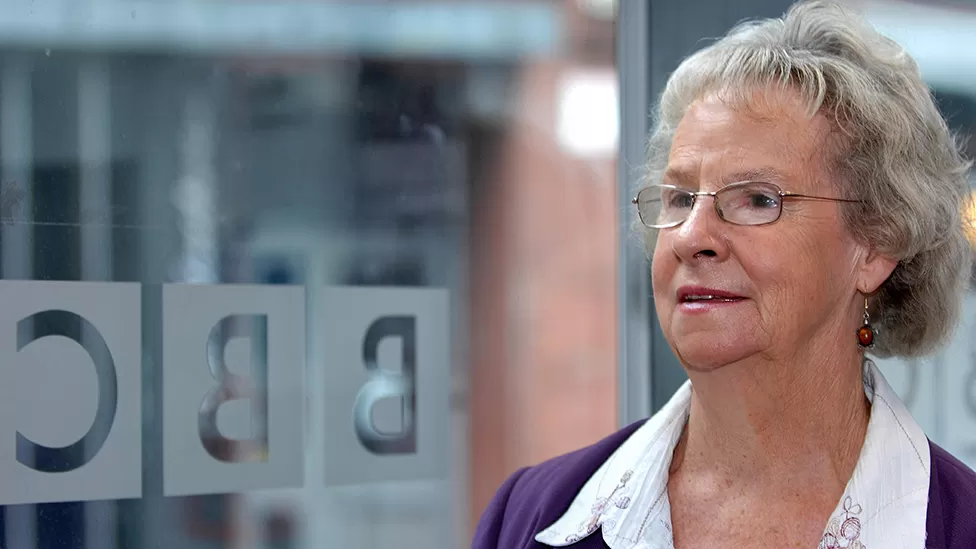
Mrs Mahon, who died last year of malignant mesothelioma at the age of 85, was best known as a fiery Labour left-winger and a close ally of former Labour leader Jeremy Corbyn.

But the former Halifax MP also campaigned tirelessly for asbestos victims, backing calls for a public inquiry into the high incidence of asbestos-related disease amongst former power industry workers.

She said she had been exposed to asbestos when she worked as an auxiliary nurse at a West Yorkshire hospital in the 1960s and 1970s, an inquest was told in January.

She also believed she could have been exposed during the 17 years she spent in Parliament, the inquest heard.

Mrs Mahon’s son, Kris, tells the BBC: “Alice was very keenly aware of what was going to happen to her once she had her diagnosis.

“Her plans had to be replaced with a calm acceptance that death was coming.”

His mother lived next door to a plumber who also died from mesothelioma at the age of about 60. Additionally a young man who was a carpenter and builder and well known to the family died from mesothelioma.

“So we saw two hard-working men reduced to ghosts before their early deaths,” says Kris.

Asbestos is classified as being carcinogenic, which means it can cause cancer such as mesothelioma and other dangerous lung conditions when the fibres are inhaled.

Until it was banned in 1999, it was widely used as a building material for roofing, insulation, walls and flooring.

It remains present in buildings across the UK.


As long as the asbestos is in good condition and is not disturbed there is negligible risk, according to the Health and Safety Executive.

But if it is disturbed it can become a danger to health because asbestos fibres are released into the air and people may breathe them in.

Companies have a duty to prevent employees being exposed to the substance at work, under the Control of Asbestos Regulations 2012.

However, the regulations state that asbestos-containing materials that are in good condition and unlikely to be disturbed can be left in place.

MPs from all parties have campaigned for more action to get rid of asbestos, which can be a complex and costly process.

Last year, the Commons Work and Pensions Committee called for a strategy with a 40-year deadline to remove all asbestos from public and commercial buildings.

‘Ticking time bomb’

The government’s position was set out in April by Rishi Sunak, in answer to a question from Conservative MP Jane Hunt.

The prime minister said: “The law does require duty holders to assess whether asbestos is present, what condition it is in and whether it gives rise to a risk of exposure, and they must draw up a plan to manage that risk, which must include removal if it cannot be safely managed where it is located.”

Ms Hunt backs the charity Mesothelioma UK’s campaign for a register of all workplaces in the country that contain asbestos and a timetable for eradicating it.

The charity says the situation is a “ticking time bomb” and is asking the government to prioritise high-risk settings such as schools and hospitals.

Kris, who works as a professor of law in New Zealand, is also calling for more action from the government, arguing that asbestos should not be left in place.

“The government has a duty to protect lives from a known, indiscriminate killer such as asbestos: that requires proactive action to locate and remove asbestos,” he says.

“Asbestos is in many settings, often mingled with other products, and the argument is often put forward that it is best left in place because it is only a risk if it is disturbed.

“But the problem is that buildings deteriorate and need refurbishment, or are knocked down and replaced, and this will lead to asbestos being released in uncontrolled circumstances. The safest thing to do is remove the risk.”

Kris, who now lives in New Zealand, is a professor of law

In 2019 there were more than 5,000 asbestos-related deaths, including from cancers such as mesothelioma.

In January, an inquest ruled that Mrs Mahon “came by her death as a result of an industrial disease”.

Mrs Mahon had blamed the disease on her exposure to asbestos during time as a nurse at Northowram Hospital, in Calderdale, West Yorkshire, the inquest was told.

She had described in a compensation claim how the temporary huts she worked were made of corrugated asbestos sheets, that had been disturbed by maintenance work.

But she also believed she may have been exposed to the substance during her time as an MP, after being told after her retirement in 2005 that Parliament was “riddled with asbestos”.

Asbestos was identified in 680 rooms across the parliamentary estate in surveys carried out between 2019 to 2022 by the parliamentary maintenance services team.

A UK Parliament spokesperson says: “As with many historical buildings, asbestos is present – and appropriately managed. The risk to anyone on the estate is very low.”

The spokesperson added that any work posing an asbestos risk is “properly planned” in compliance with regulations.

MPs have long been concerned about Parliament’s state of disrepair

However, the Public Accounts Committee recently released a report that found a growing list of health and safety incidents within Parliament, including some involving asbestos.

“There are already people on decades-long risk watchlists after being exposed to asbestos in the building,” warned the committee’s Labour chairwoman Dame Meg Hillier.

Regarding asbestos in Parliament, Kris says: “Every workplace, including such grand places as the Palace of Westminster, should be a safe place.

“The risks of asbestos are so well known now, and have been for decades, that steps to identify and remove asbestos from all workplaces should have been completed by now.

“At the very least, there should be detailed audit to determine the risks, which can no doubt be done alongside other refurbishment.”

The UK Health Security Agency says asbestos should not be removed without expert advice. People are advised to contact their local council for more information about its removal and disposal.