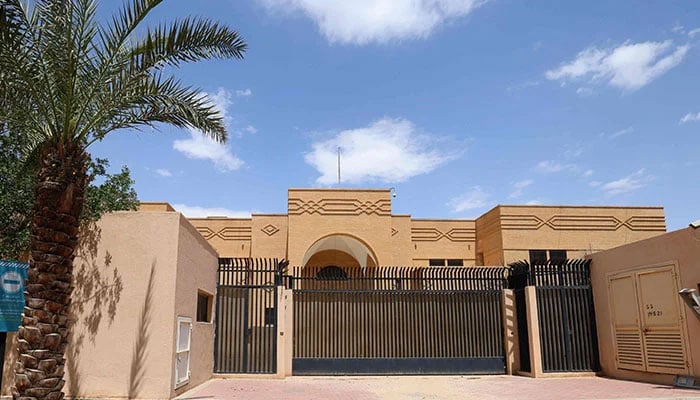
Iran to reopen embassy in Riyadh today

Tehran’s foreign ministry spokesman Nasser Kanani announced the reopening in a statement on Monday, confirming earlier comments by a diplomatic source in Riyadh.

Iran’s embassy in Riy­adh, its consulate in Jed­dah and its representative office to the Organisation of Islamic Cooperation “will be officially reopened on Tuesday and Wednesday”, Kanani said.

The diplomatic source had earlier said the opening “will take place Tuesday at 6pm local time (1500 GMT) with the presence of the newly appointed Iranian ambassador” to Saudi Arabia.

While Saudi Arabia has yet to confirm when it will reopen its embassy in Tehran or its pick for ambassador, Iranian media had named Alireza Enayati as the Islamic republic’s Saudi envoy last month. He had previously served as Iran’s ambassador to Kuwait. Also, he had previously served as assistant to the foreign minister and director general of Gulf affairs at the foreign ministry, according to Iranian reports.

Saudi Arabia severed relations with Iran in 2016 after its embassy in Tehran and consulate in the northwestern city of Mashhad were attacked during protests over Riyadh’s execution of Shia cleric Nimr al-Nimr.

After years of discord, the two Middle East heavyweights signed a surprise reconciliation agreement in China on March 10.

Since then, Saudi Arabia has restored ties with Tehran ally Syria and ramped up a push for peace in Yemen, where it has for years led a military coalition against the Iran-backed Huthi rebels. Iran and Saudi Arabia had backed opposing sides in conflict zones across the Middle East for years before mending fences.

Saudi Arabia, Israel should normalise ties: Blinken

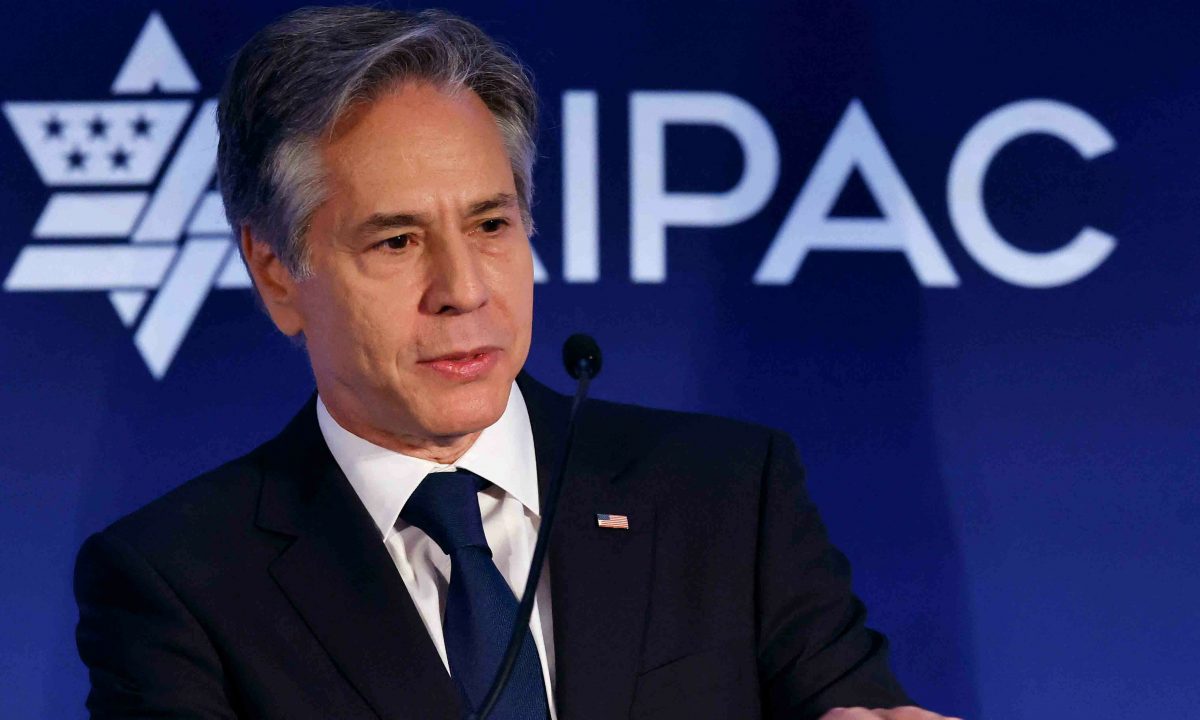
“The United States has a real national security interest in promoting normalisation between Israel and Saudi Arabia,” Blinken said in a speech to the powerful pro-Israel lobby AIPAC.

“We believe we can and indeed we must play an integral role in advancing it,” Blinken said.

He said the administration of President Joe Biden has “no illusions” that bringing about full Saudi-Israel diplomatic relations can be done quickly or easily.

“But we remain committed to working toward that outcome, including on my trip this week to Jeddah and Riyadh for engagements with Saudi and Gulf counterparts,” he said.

US secretary of state warns against expansion of Jewish settlements

Blinken is expected to arrive on Tuesday evening in Jeddah, the Red Sea port where the ruling Saudi royalty keep palaces for the summer season.

On Wednesday and Thursday, he will be in Riyadh for a ministerial meeting of the Gulf Cooperation Council and a separate meeting of the 80-strong coalition of countries fighting the Islamic State group.

In a speech Blinken also cautioned that moves toward annexation of the Israeli-occupied West Bank or that disrupt the status quo at holy sites would hurt the prospects for a two-state solution. He didn’t name the specific holy sites he was referring to.

“Settlement expansion clearly presents an obstacle to the horizon of hope that we seek,” Blinken said to muted response from the audience.

“Likewise, any move toward annexation of the West Bank, de facto or de jure, disruption of the historic status quo at holy sites, the continuing demolitions of homes and the evictions of families that have lived in those homes for generations damage prospects for two-states. They also undermine the basic daily dignity to which all people are entitled.”

The top US diplomat drew widespread applause when he outlined the longstanding American commitment to Israel and said all options were on the table when it came to preventing Israel’s No. 1 enemy, Iran, from acquiring a nuclear weapon.

Washington would continue to work toward helping Israel integrate into the region as a means of enhancing security, stability and prosperity in the Middle East, Blinken said.

Blinken made an oblique reference to the contentious judicial reform proposal that led to massive protests in Israel in recent months. US President Joe Biden publicly opposed the proposal, which would give the Israeli government greater control over appointments to the country’s Supreme Court.

“We’ll continue to express our support for core democratic principles, including a separation of powers, checks and balances, and the equal administration of justice for all citizens of Israel,” he said.

Deep but testy relations

Besides his diplomatic counterparts, Blinken is expected to meet with Crown Prince Mohammed bin Salman, the de facto power in the country.

Despite longstanding close ties, US relations with the Saudis have been testy in recent years, over human rights issues like the murder of dissident journalist Jamal Khashoggi by a group tied to the Saudi royal palace, and Riyadh’s effort to raise oil prices after Russia’s invasion of Ukraine.

“There is just a tremendous amount of work that we’re trying to do” with the visit, said Daniel Benaim, a senior State Department official dealing with Arabian Peninsula affairs.

“We’re focused on an affirmative agenda here and the great deal of work our countries can do together.”

The anti-Islamic State coalition meeting will focus on the spread of extremism outside the Middle East, according to Ian McCary of the De­part­ment of State’s Counter­terrorism Bureau.

“We’re focusing in particular on Africa, where violent groups have adopted ISIS’s ideology,” McCary said, using another acronym for the Islamic State.

Israel has returned to Egypt the body of an Egyptian policeman who shot dead three Israeli soldiers near the border between the two countries on Saturday.

Media reports identified the policeman as Mohammed Salah, 22.

Egypt said after the incident that he crossed into Israel while chasing drug smugglers, leading to an exchange of fire with the Israeli soldiers.

But Israel’s prime minister said that it was a terrorist attack and demanded a thorough joint investigation.

A relative and a comrade of Salah told the BBC that he was not an extremist.

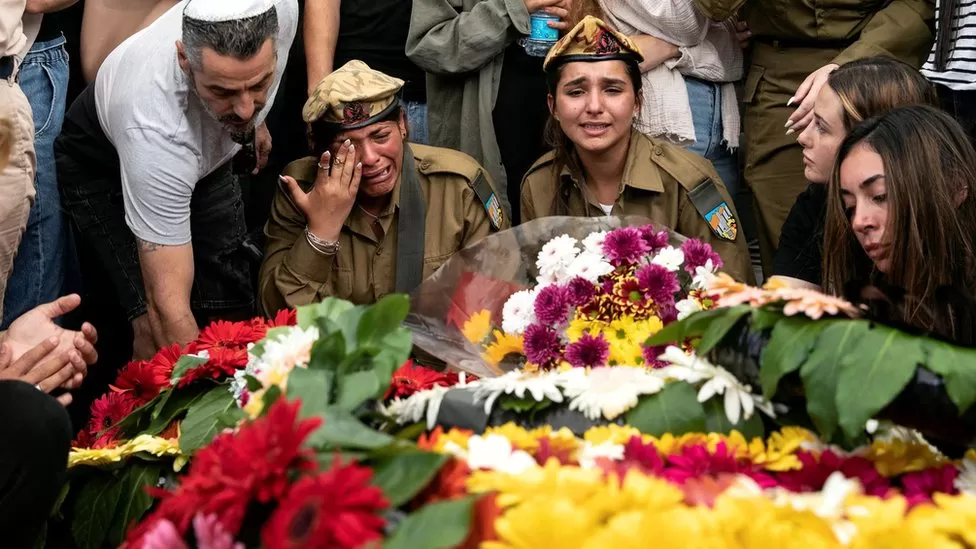
According to the Israeli military, two Israeli soldiers – Staff Sgt Uri Iluz, 20, and Sgt Lia Ben-Nun, 19 – posted in a remote spot along the border were shot dead early on Saturday morning. Their bodies were discovered after a senior officer was unable to contact them by radio.

After a search operation, the attacker was encircled and there was a shootout. The third soldier – Staff Sgt Ohad Dahan, 20 – was killed along with the attacker, who the Israeli military said was an Egyptian policeman.

Prime Minister Benjamin Netanyahu told a cabinet meeting on Sunday: “Israel relayed a clear message to the Egyptian government. We expect that the joint investigation will be exhaustive and thorough.”

“We will refresh procedures and methods of operations and also the measures to reduce to a minimum the smuggling and to ensure tragic terrorist attacks like this do not happen again.”

Israeli media cited a preliminary investigation as saying the policeman entered Israel by using a closed emergency gate in the border fence, which was a few hundred metres away from Staff Sgt Iluz and Sgt Ben-Nun’s guard post.

After the policeman was killed, Israeli soldiers found that he was carrying six magazines for his rifle, as well as two combat knives and a Quran, they added.

The reports also said Egyptian officials had told their Israeli counterparts in meetings that the attacker was a “rogue” officer who had acted on his own after becoming radicalised.

Egyptian authorities have not commented on the reports or confirmed the policeman’s identity, but a relative of Mohammed Salah and a member of his unit told BBC News Arabic on Monday that members of this family and friends were being detained for questioning by investigators.

The relative denied that Salah had been radicalised and suggested that he might have wanted to avenge the death of a comrade.

During a period of leave last month, Salah had expressed his anger about “the silence over the killing of one of his military friends by Israeli soldiers during his military service at the border”, they said. He had also complained about the military rejecting a request for a medical exemption, they added.

It is not known what alleged incident the relative was referring to.

Civil servants around the UK are to continue striking despite an improved pay offer from the government.

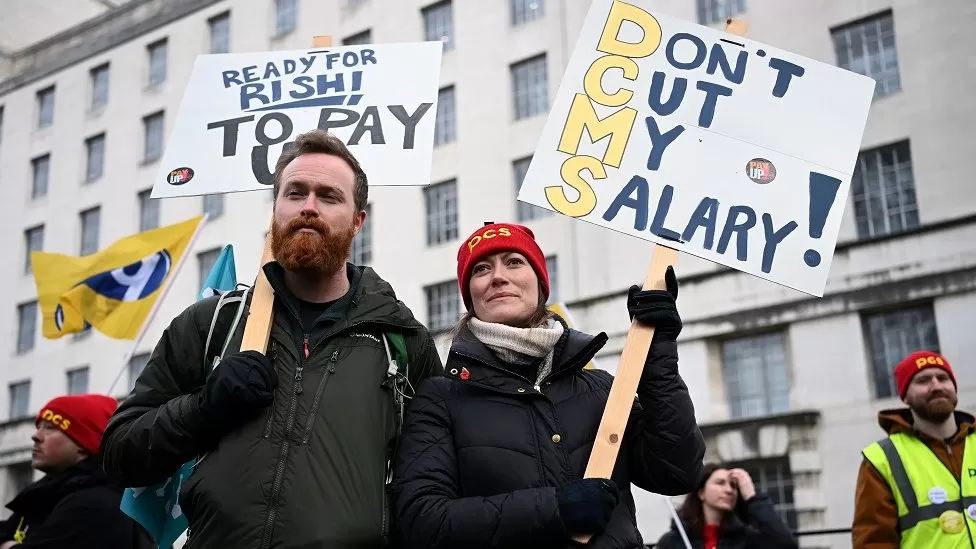
Public and Commercial Services (PCS) union members will take industrial action on Tuesday in Northern Ireland and Wednesday in Wales.

The PCS says the stoppages will continue while it considers the “significant concessions” to pay, redundancy terms and job security.

The government said the offer was the highest for civil servants in 20 years.

Union members have taken action for months and there have been three national walkouts. Previously, PCS general secretary Mark Serwotka said: “Ministers need to resolve the dispute by putting money on the table.”

On Friday, the government made a new offer to try to break the deadlock. Union bosses said civil servants below senior grades had been offered a lump sum of £1,500 for 2022/23.


The deal was welcomed by the union and in a statement on Monday evening the PCS said it was the “first time in our union’s history” that members had won “considerable extra money for members”.

But it said “planned targeted action” would go ahead this month – members in the Northern Ireland Office will walk out for three days from Tuesday, while Audit Wales and the National Museum of Wales will be affected from Wednesday.

It added members at the Driver and Vehicle Licensing Agency will take part in a 15-day strike from 11 June and driving examiners in 286 test centres across England and Wales will take action from 15 June.

The union said any re-ballots for further action had been put on hold pending the outcome of talks with the government at the end of the month.

‘Significant achievement’

Officials had been calling for a 10% pay rise to reflect the rising cost of living but at the time the government said their demands would cost an “unaffordable £2.4bn”.

The union said the latest offer was a “significant achievement… which, while short of our full claim, puts money in members’ pockets and brings parity of treatment with other public sector workers”.

The government, when it announced its new offer on Friday, said guidance for Civil Service pay allowed departments to award a 4.5% pay increase for staff, with the potential for an extra 0.5% increase for lower paid staff.

Cabinet Office minister Jeremy Quin said “constructive engagement” with the unions had allowed the department to make the £1,500 payment offer.

“This is both fair to the taxpayer and a recognition of the financial pressures civil servants have faced over the last year,” Mr Quin said.

NAB expedites £190m scam probe against 22 former cabinet members

ISLAMABAD: Further tightening the noose around Pakistan Tehreek-e-Insaf (PTI), the National Accountability Bureau (NAB) has accelerated the investigation against 22 former federal ministers in the £190 million settlement case linked with the transfer of money from Britain’s National Crime Agency’s (NCA) account

The anti-graft watchdog has issued letters to all the provincial excise departments seeking the records of vehicles, properties, and bank accounts held by the former cabinet members, which include members of political parties other than PTI as well.

These former ministers are Ghulam Sarwar Khan, Murad Saeed, Pervez Khattak, Zubaida Jalal, Hammad Azhar, Shafqat Mehmood, Shireen Mazari, Khalid Maqbool Siddiqui, Ejaz Ahmed Shah, Ali Amin Gandapur, Farogh Naseem, Makhdoom Khusro Bakhtiar, Asad Umar, Omer Ayub, Fawad Chaudhary, Mehboob Sultan, Faisal Vawda, Ali Zaidi, Azam Swati, Sheikh Rashid, Zaheeruddin Babar Awan, and others.

Moreover, NAB has also sought the details or copies of certified documents of vehicles purchased or sold by the former ministers during the period from January 2018 to 2023.

The anti-corruption body’s combined investigation team (CIT) from the Rawalpindi office, probing the corruption case had already recorded statements of the former ministers.

As per details, the majority of the ex-ministers appeared before the CIT while some submitted their reply through their lawyers when summoned.

It may be noted that the PTI chief and his wife Bushra Bibi were summoned on June 7 in relation to the same probe.

The former first lady has been asked to record her statement as a witness for being the trustee of the Al-Qadir University Trust, while the CIT has called the former prime minister to submit the response to a questionnaire given to him at his last appearance on May 23.

The case

The British government, in 2019, uncovered a whopping £140 million in an account owned by a renowned Pakistani real estate tycoon’s son, and his wife from 2018 to 2019.

The NCA swiftly froze the funds, suspecting the criminal origins of the proceeds.

Surprisingly, neither the individual nor his wife challenged the account freeze. Following proper legal procedures, the UK returned the laundered funds to Pakistan’s government in 2019.

This decision was announced through a joint press release by the Assets Recovery Unit (ARU) and the NCA.

The case subsequently made its way to Pakistan’s federal cabinet on December 3, 2019, where it was presented by the then-special assistant to the prime minister (SAPM), Mirza Shahzad Akbar, in a sealed envelope.

The purpose of the presentation was to discuss the return of the funds, which would be channelled into an account overseen by the registrar of the Supreme Court of Pakistan.

This particular account was associated with the recovery of a staggering Rs460 billion from the same property tycoon, in connection with fines imposed on a housing scheme in Karachi.

“[PTI chief] approved the settlement without allowing his cabinet members to read it,” a source familiar with the investigation told The News.

Investigations have revealed that as part of an agreement to return the laundered money, the property tycoon offered a substantial compensation package.

This included the transfer of 458 Kanal, 4 Marla and 58 square feet of land in Jhelum, alongside cash amounting to Rs285 million, which was destined for the Al-Qadir Trust.

The trustees of Al-Qadir Trust included the then-prime minister Imran Khan, his wife Bushra Bibi and his senior advisers Zulfiqar Bukhari and Babar Awan. However, it is worth noting that Awan and Bukhari’s positions were subsequently revoked on April 22, 2020.


Pakistan calls for global action against ‘plastic pollution’

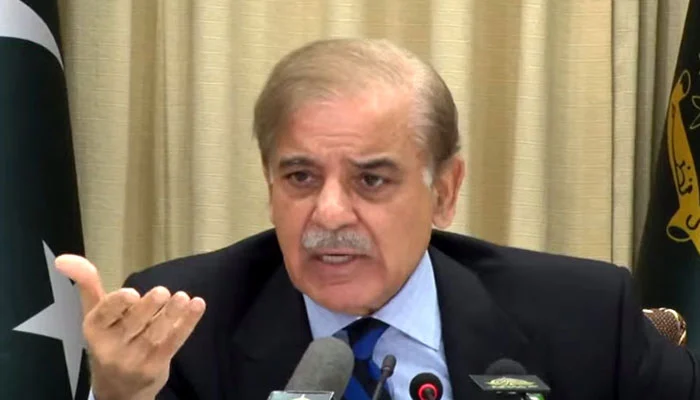
ISLAMABAD: Prime Minister Shehbaz Sharif on Sunday emphasised the urgent need to combat plastic pollution under the global theme “Beating Plastic Pollution.”

In a message on the occasion of World Environment Day, the premier stressed Pakistan’s unwavering commitment to combat plastic pollution and embark on a journey of plastics reduction.

PM Shehbaz said that his government has taken several steps to take the country on the path to sustainable use of resources.

The government has prioritised the adoption of environment-friendly alternatives and is actively working on the Plastics Prohibition Regulation 2023 for Islamabad Capital Territory. This regulation will establish a comprehensive framework and timeline for phasing out single-use plastics, while also leading by example on a plan to reduce and then ban the use of single-use plastics by the entire federal government.

In a demonstration of the federal government’s commitment to reducing plastic waste in Pakistan, the premier has directed the PM House to stop using single-use plastics, which like the Ministry of Climate Change and Environmental Coordination, will lead the way in phasing out and restricting the use of Polyethylene Terephthalate (PET) bottles in Federal Ministries, Divisions across the board.

By doing so, the government aims to establish a sustainable and responsible approach to plastic usage and waste management, ensuring the protection of the environment and the well-being of future generations.

PM Shehbaz acknowledged that Pakistan has actively participated in crucial international and national level discussions to develop a comprehensive, legally binding instrument aimed at ending plastic pollution, with a target date set for 2024.

The government of Pakistan recognises the significance of ensuring inclusivity and equity within the agreement, emphasizing the need for the treaty to prioritize so that no one is left behind.

The prime minister also called upon all stakeholders, including citizens, businesses, civil society organisations, and the media, to renew their commitment to the fight against plastic pollution and preserving the planet’s biodiversity for future generations.

He emphasized the importance of empowering local communities, supporting recycling initiatives, and promoting a circular economy that minimises plastic waste.

World’s spy chiefs meet in secret conclave in Singapore

Such meetings are organised by the Singapore government and have been discreetly held at a separate venue alongside the security summit for several years, they said. The meetings have not been previously reported.

The US was represented by Director of National Intelligence Avril Haines, the head of her country’s intelligence community, while China was among the other countries present, despite the tensions between the two superpowers.

Samant Goel, the head of India’s overseas intelligence gathering agency, the Research and Analysis Wing, also attended, an Indian source said.

“The meeting is an important fixture on the international shadow agenda,” said one person with knowledge of the discussions. “Given the range of countries involved, it is not a festival of tradecraft, but rather a way of promoting a deeper understanding of intentions and bottom lines.

“There is an unspoken code among intelligence services that they can talk when more formal and open diplomacy is harder — it is a very important factor during times of tension, and the Singapore event helps promote that.” All five sources who discussed the meetings declined to be identified because of the sensitivity of the matter.

A spokesperson for the Singapore Ministry of Defence said that while attending the Shangri-La Dialogue, “participants including senior officials from intelligence agencies also take the opportunity to meet their counterparts.”

“The Singapore Ministry of Defence may facilitate some of these bilateral or multilateral meetings,” the spokesperson said. “Participants have found such meetings held on the sidelines of the (dialogue) beneficial.”

The US Embassy in Singapore said it had no information on the meeting. The Chinese and Indian governments did not immediately respond to requests for comment.

The United States, Britain, Canada, Australia and New Zealand operate what is called the Five Eyes network to gather and share a broad range of intelligence, and their intelligence officials meet frequently.

Larger meetings of the intelligence community are rarer, and almost never publicised.

Although few details were available on the specific discussions in Singapore, Russia’s war in Ukraine and transnational crime figured in the talks on Friday, the person with knowledge of the discussions added. On Thursday evening, the intelligence chiefs held an informal gathering. No Russian representative was present, one of the sources said.

Ukraine’s deputy defence minister, Volodymr V. Havrylov, was at the Shangri-La Dialogue but said he did not attend the intelligence meeting. Another of the sources said the tone at the meeting was collaborative and cooperative, and not confrontational. Haines was among the official US delegates to the Shangri-La Dialogue.

At a discussion on cybersecurity in the main meeting, she said in response to a question from a Chinese military officer that cooperation between countries was essential.

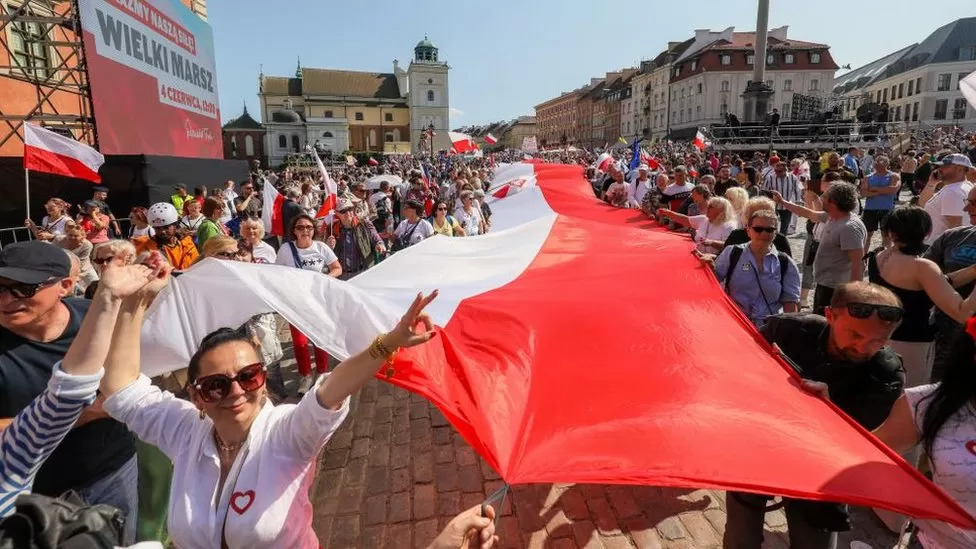
Hundreds of thousands of protesters have gathered in Warsaw for one of Poland’s largest demonstrators since the fall of communism in 1989.

Most opposition parties have called on supporters to join the march against the nationalist Law and Justice party (PiS), led by Jaroslaw Kaczynski.

Among those attending are former Prime Minister Donald Tusk, and former President Lech Walesa.

The PiS has condemned the gathering as a “march of hate”.

The mayor’s office for Warsaw has estimated half a million people attended the event, which fell on the 34th anniversary of Poland’s first partially-free elections.

Many travelled from across the country to take part, and simultaneous demonstrations have been held in other Polish cities like Krakow.

A wide variety of issues brought protests together, including frustrations over inflation, costs of living, and rights for women and LGBT.

Concerns have also been raised against new law accused of undermining Poland’s democracy.

The law, criticised by the EU and US, sets up a commission to investigate undue Russian influence in Polish politics, and has the power to ban people from assuming public office for 10 years.


The government denies it is subverting democracy and President Andrzej Duda has proposed amendments to remove these powers.

But critics say it could still be used against people, including Mr Tusk – Poland’s main opposition leader and head of the centrist Civic Platform (PO) party.

Opponents say it could also bolster the PiS’ standing in this year’s parliamentary elections.

The protest was attended by former President Lech Walesa (left) and former Prime Minister Donald Tusk (right)

Crowds of people have been pictured waving Polish and EU flags and holding placards, and participants told the BBC that protesters were chanting “democracy” and “we will win”.

“I came here to defend democracy because I can’t stand how our parliament, the constitutional tribunal are destroyed, the European Union is diminished,” one protester told Reuters news agency.

Donald Tusk, a former head of the European Council, also welcomed supporters during the “record” march.

“Democracy dies in silence but you’ve raised your voice for democracy today, silence is over, we will shout,” said Mr Tusk.

Ahead of the event, the PiS accused organisers of of hypocrisy, tweeting a video that police brutality and violence against the media while Mr Tusk was in office.

Wojciech Przybylski, editor of Visegrad Insight, told the BBC that these protests show Poland’s opposition groups can unite over common causes, despite their political differences.

But PiS is still ahead in opinion polls, he adds, and “this is going to mobilise them, because they know the opposition is for real”.

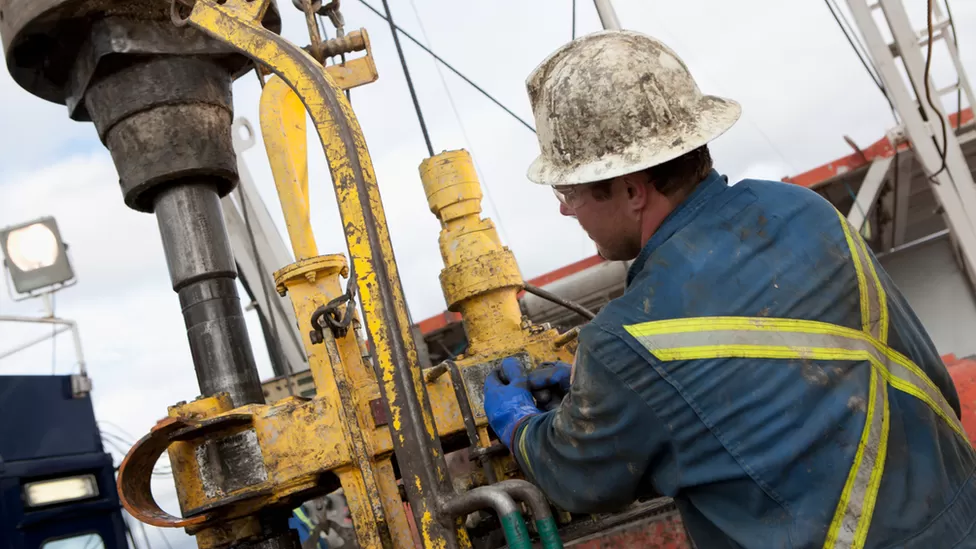
Oil prices have risen after Saudi Arabia said it would make cuts of a million barrels per day (bpd) in July.

Other members of Opec+, a group of oil-producing countries, also agreed to continued cuts in production in an attempt to shore up flagging prices.

Opec+ accounts for around 40% of the world’s crude oil and its decisions can have a major impact on oil prices.

In Asia trade on Monday, Brent crude oil rose by as much as 2.4% before settling at around $77 a barrel.

Opec+ said production targets would drop by a further 1.4 million bpd from 2024.

The seven hour-long meeting on Sunday of the oil-rich nations came against a backdrop of falling energy prices.

Oil prices soared when Russia invaded Ukraine last year, but are now back at levels seen before the conflict began.

In October last year Opec+, a formulation which refers to the Organization of Petroleum Exporting Countries and its allies, agreed to cut production by two million bpd, about 2% of global demand.

In April this year the group agreed to a further cuts, which were due to last to the end of this year. But Russian Deputy Prime Minister Alexander Novak said that Sunday’s talks led to “the extension of the deal until the end of 2024”.

On Sunday, Saudi Energy Minister Prince Abdulaziz bin Salman said that his country’s cut of one million bpd could be extended beyond July if needed. “This is a Saudi lollipop,” he said, in what is seen as a bid to stabilise the market.

Before the two-day Opec+ meeting started, it was widely expected the oil cartel would make production cuts to prop up prices. It appears most members were against the idea, as any cuts would impact oil revenues, which are crucial to keep running their economies.

Saudi Arabia’s decision to make a voluntary reduction of one-million barrels per day was unexpected but does not come as a huge surprise. As the leader of the pack, and also the largest exporter of oil, it was the only one in a position to be able to lower output.

From Riyadh’s point of view, it is crucial the price of crude remains over $80 a barrel for it to break even. Saudi officials want elevated prices to keep spending billions of dollars on ambitious projects spearheaded by Crown Prince Mohammed bin Salman, as he tries to diversify the kingdom’s economy away from oil.

The move by the Saudis also underlines the uncertain outlook for demand for fuels in the months to come. Concerns about the global economy, especially recessionary fears in the US and Europe are expected to put further pressure on crude prices.

Oil producers are grappling with falling prices and high market volatility amid the Russian invasion of Ukraine.

The West has accused Opec of manipulating prices and undermining the global economy through high energy costs, according to Reuters. It has also accused the group of siding with Russia despite sanctions over the invasion of Ukraine.

In response, Opec insiders have said the West’s monetary policy over the last decade has driven inflation and forced oil-producing nations to act to maintain the value of their main export.

India’s railway ministry has recommended that the country’s top detective agency should investigate the deadly crash that killed 275 people.

Railway Minister Ashwini Vaishnaw announced the decision but did not give more details.

Railways-led investigations have already started and preliminary reports say a signal fault led to the crash.

The three-train collision on Friday night has been described as India’s worst rail accident this century.

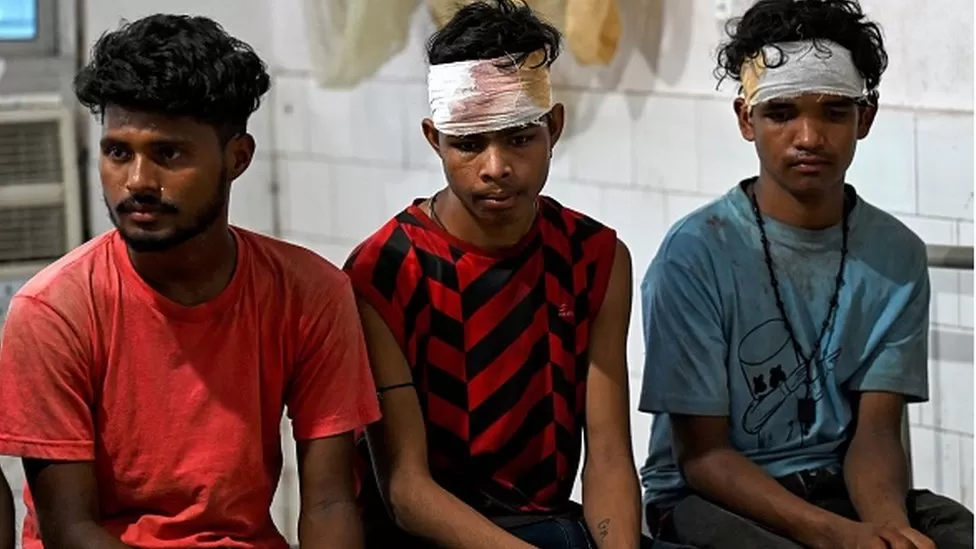
More than 1,000 suffered injuries and were taken to hospitals. Some families are still searching for their loved ones.

It’s not clear why the Railway Board, the ministry’s top decision making body, has recommended a separate investigation by the Central Bureau of Investigation (CBI) when other inquiries have already started.

The CBI investigates high profile criminal causes, including serious financial frauds and murders.

Mr Vaishnaw said on Sunday that “the root cause” of the accident and people responsible for the “criminal act” had been identified.

He added that a “change in electronic interlocking” was the likely cause of the accident. The minister urged people to wait for the final report.

A report by the Commissioner of Railway Safety would be made public soon and it would reveal the cause, he said.


Meanwhile, the railways said on Sunday that the Coromandel Express’s engine and coaches crashed into a goods train due to a signal fault and a “change in electronic interlocking”.

In railway signalling the electronic interlocking system sets routes for each train in a set area, ensuring the safe movement of trains along the track.

The impact of the crash threw coaches of the Coromandel Express onto a third track and they rammed into the rear carriages of the Bengaluru-Howrah Superfast Express that was coming down the line at a high speed.

More than 3,000 passengers are thought to have been on board the two passenger trains.

Atul Karwal, chief of the National Disaster Response Force (NDRF), said the force of the collision left several coaches crushed. Rescuers had to cut through the wreckage to reach the passengers.

Hundreds of ambulances, doctors, nurses and rescue personnel were sent to the scene and worked for 18 hours to rescue passengers and pull out bodies.On Sunday night, Mr Vaishnaw said train movement had been restored on the railway tracks where the accident took place.

Reports say several passengers are still missing.

Opposition leaders have called on Mr Vaishnaw to take responsibility for the tragedy and resign.

The ruling Bharatiya Janata Party has responded by asking them not to politicise the accident.