
PTI’s Shah Mahmood Qureshi released on LHC orders

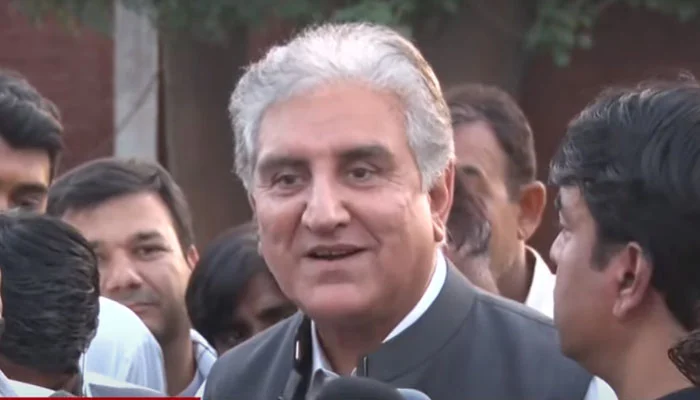
RAWALPINDI: In a sigh of relief for the Pakistan Tehreek-e-Insaf (PTI), the former ruling party’s Vice-Chairman Shah Mahmood Qureshi has been released from Rawalpindi’s Adiala jail on the court’s order.

The jail officials confirmed the development saying that the former foreign minister was released on the orders of the Lahore High Court (LHC) Rawalpindi Bench.

“I want to tell PTI workers that the ‘flag of justice’ is in my hands and I am still part of this movement,” he said while addressing the media outside the Adiala Jail soon after being released.

Qureshi, the former foreign minister, also said he would meet PTI Chairman Imran Khan tomorrow (Wednesday) at his Zaman Park residence in Lahore to discuss the prevailing political situation.

Apparently referring to the crackdown on party workers and leaders in the wake of the May 9 riots, the PTI senior leader said the party is facing “tough and testing times”.

“But don’t lose hope, ‘sun of justice’ will rise again,” he added.

Qureshi said he would brief the media on PTI’s future course of action after holding the meeting Khan — the former prime minister who was ousted from power through a vote of no confidence in April last year.

Earlier today, the LHC ordered the immediate release of the PTI leader. Qureshi, a former foreign minister, has been arrested multiple times following the May 9 violent riots.

While hearing a petition against his arrest, LHC’s Rawalpindi Bench ordered that Qureshi should not be arrested under the Maintenance of Public Order Ordinance (MPO) anymore.

The court also declared Rawalpindi deputy commissioner’s MPO orders illegal and directed authorities to immediately release the PTI vice chairman without asking him to submit surety bonds.

Assistant Attorney General Abid Aziz Rajouri represented the government’s side, while lawyer Taimoor Malik and Qureshi’s daughter were there for the PTI leader.

During the hearing, the court inquired from the law officer if Qureshi had given any speech or led any protest.

“No political leader can control his words in a political gathering,” the court remarked while directing the law officer to present evidence against the former foreign minister if any.

At this, the official sought two days for the submission of evidence.

However, the court directed him to update the court within an hour after taking directives from the government.

The court then adjourned the hearing for an hour.

Meanwhile, the Punjab police presented a report on the cases against Qureshi.

As per the report, nine cases have been registered against Qureshi across Punjab. Four of these cases are registered in Lahore, while five cases are registered at different police stations in Multan.

The report was submitted upon the request of the PTI leader’s daughter.

It may be noted that several senior PTI leaders had been arrested after the protests erupted in response to PTI Chairman Imran Khan’s arrest on May 9.

At least eight people were killed in clashes between PTI supporters and law enforcement agencies after his arrest on corruption charges.

Apart from Qureshi, Asad Umar, Shireen Mazari, Fawad Chaudhry and Yasmeen Rashid were among the prominent PTI names who had been taken into custody.

However, some of the leaders including Umar, Mazari and Chaudhry were released. Many of them have also quitted the party and parted ways with the former prime minister in condemnation of the violent protests.
US announces over $16m additional flood aid for Pakistan

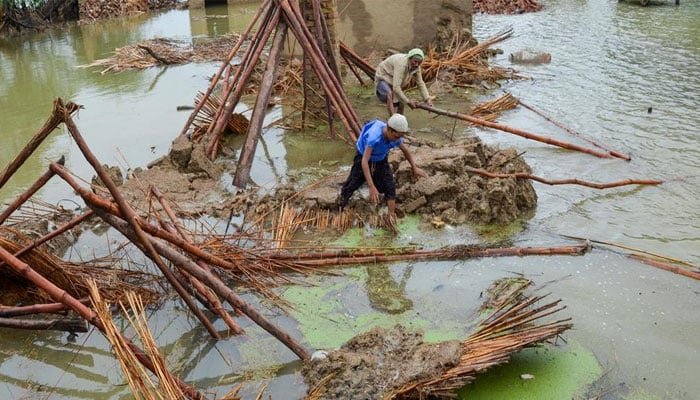
The United States Agency for International Development (USAID) has announced $16.4 million in aid for Pakistan to support victims affected by 2022’s devastating floods.

“Today in Sindh, Pakistan, USAID Deputy Administrator Isobel Coleman announced $16.4 million in additional development and humanitarian assistance to support the resilience of communities in Pakistan that experienced 2022’s historically severe floods,” the US agency announced in a statement on Tuesday.

It said the flood impacted an estimated 33 million people and had a devastating impact on infrastructure, crops, livelihoods, and livestock throughout the country.

The new funding will reach over 20 million flood-affected individuals to assist in their recovery, risk reduction, and resilience,” it added.

The assistance will address worsening food insecurity and malnutrition and help curb the spread of disease. In addition, this funding will support humanitarian partners to provide nutritious food to mothers and their children, help families rebuild local infrastructure to protect them from future disasters and increase protection services to prevent gender-based violence and support survivors, according to the statement.

Following severe monsoon rains and resultant floods in Pakistan during mid-2022, USAID deployed a Disaster Assistance Response Team to lead the US humanitarian response and rapidly provide aid to affected communities.

This included working with partners to quickly scale up vital humanitarian assistance, including through partnering with the US Department of Defense to successfully complete an air bridge that delivered nearly 630 metric tons of life-saving relief commodities to Pakistan.

“The US is one of the largest donors to Pakistan, providing more than $200 million in humanitarian and development assistance since 2022’s catastrophic floods. The United States continues to stand with the people of Pakistan as they recover from the impacts of the historic floods,” the US agency added.

Teen arrested for drawing moustache on Erdogan campaign poster

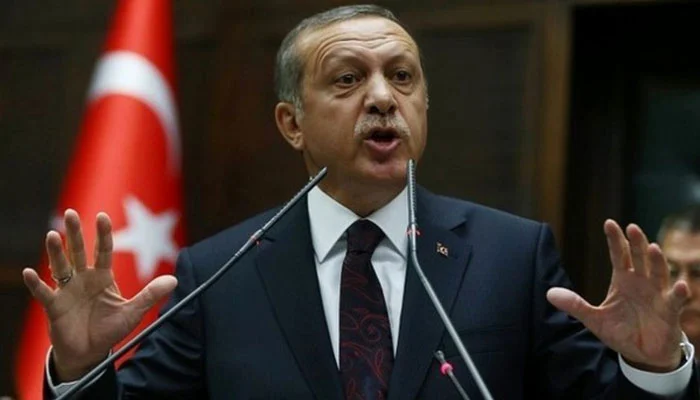
Turkish authorities have reportedly arrested and jailed a 16-year-old teenager for defacing an election campaign poster featuring President Recep Tayyip Erdogan.

According to media reports from various opposition-affiliated outlets, including BirGun, Cumhuriyet, and Halk TV, the youth, who resides in the southeastern town of Mersin, allegedly added a Hitler-style moustache to the poster near his home, accompanied by derogatory comments.

The arrest took place after the teenager was identified through CCTV footage. Following his apprehension, authorities interrogated him at his residence. While he admitted to drawing the moustache, he denied writing the insulting remarks. Nevertheless, after being brought before the public prosecutor, he was charged with “insulting the president” and subsequently sent to a nearby youth detention facility, as reported by Halk TV.

Recep Tayyip Erdogan recently secured another five-year term in the presidential election held on May 28, further extending his 20-year rule over Turkey. The country’s justice ministry has stated that “insulting the president” is one of the most prevalent offences in Turkey, with 16,753 convictions recorded last year.

It is worth noting that drawing attention to cases like this sheds light on the limitations on freedom of expression in Turkey, where criticising or mocking public figures can result in legal consequences. The incident involving the teenager adds to the ongoing discussions about the state of civil liberties in the country and the restrictions placed on dissenting voices.

German firm plans to bid for supply of six submarines to Indian Navy

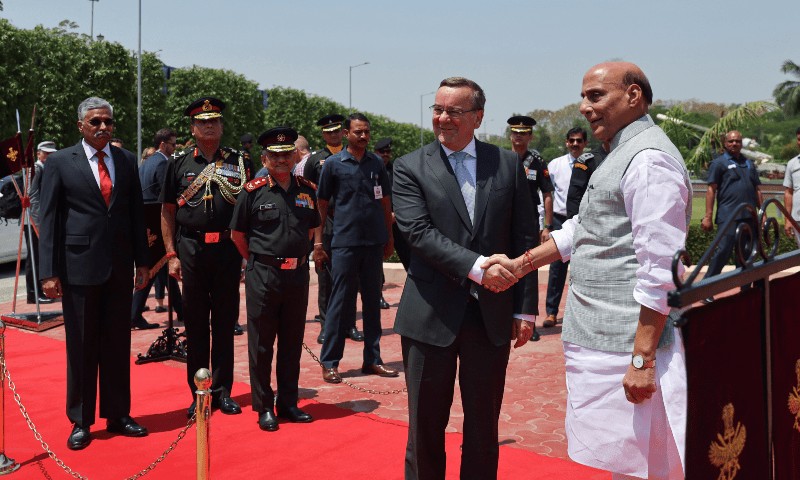
Earlier, Pistorius met his counterpart Rajnath Singh, at a time when the South Asian nation is looking to boost domestic defence manufacturing as it aims to counter China’s growing presence in the Indian Ocean.

“We talked about a concrete cooperation in military procurement. That could be six submarines from TKMS,” Pistorius said, referring to the firm’s marine arm. “That could be a lighthouse project.”

Thyssenkrupp’s marine arm is expected to sign the deal with the Indian company on Wednesday, a source familiar with the matter said.

In February, had reported that Thyssen­krupp would bid for the $5.2-billion project in a bid to replace the navy’s ageing submarine fleet, as Western military manufacturers attempt to wean New Delhi from its depen­dence on Russian gear.

German newspaper Frankfurter Allgemeine Zeitung first reported that an MoU between Thyssenkrupp and India’s Mazagon Dock Shipbuilders would be signed on Wednesday, with the value of the agreement expected to be about 7 billion euros.

In March, India approved a budget of 560 billion rupees ($6.8 billion) for its navy, which has 16 conventional submarines, 11 of them more than two decades old, along with two indigenous nuclear-powered submarines.

“India’s skilled workforce and competitive costs along with Germany’s high technologies and investment can further strengthen ties,” Singh said in a statement that did not refer to the submarines, however.

Mazagon Dock did not immediately respond to a request for comment while Thyssenkrupp declined to comment.

Blinken discusses human rights with Saudi crown prince

Blinken’s three-day visit to the oil-rich kingdom will also focus on efforts to end conflicts in Sudan and Yemen, the joint battle against the Islamic State group (IS) and the Arab world’s relations with Israel.

His trip comes at a time of quickly shifting alliances in the Middle East, centred around a China-brokered rapprochement in March between regional heavyweights Saudi Arabia and Iran.


Another landmark change saw Syrian leader Bashar al-Assad invited back to the Arab League last month for the first time since the start of the 12-year civil war in which his government has been backed by Russia and Iran.

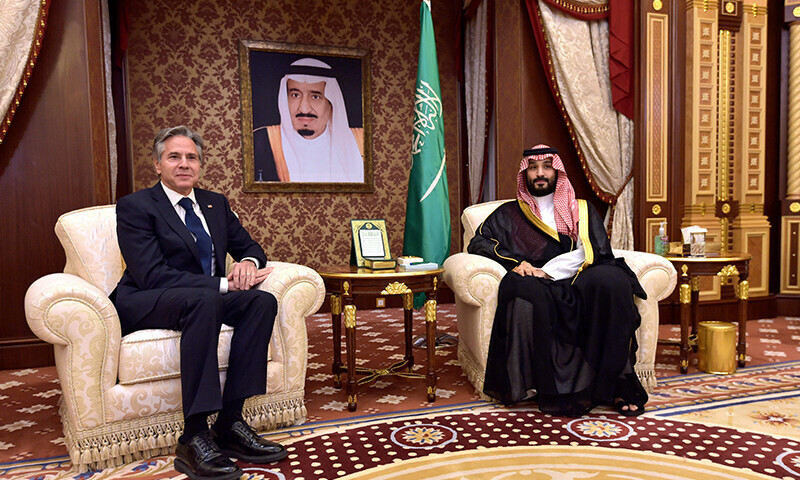
Biden met Saudi Arabia’s de facto leader Crown Prince Mohammed bin Salman late on Tuesday and the two men had “an open, candid discussion that covered the full range of regional and bilateral issues”, a US official said on condition of anonymity.

“The secretary raised human rights both generally and with regards to specific issues.”

The meeting, which lasted about an hour and 40 minutes, touched on topics including Saudi Arabia’s support for US evacuations from Sudan, the need for political dialogue in Yemen and the potential for the normalisation of relations with Israel.

Blinken landed in the Red Sea city of Jeddah on Tuesday evening and is expected to head to Riyadh Wednesday for a Gulf Cooperation Council meeting.

Energy prices

The visit is Blinken’s first since the kingdom restored diplomatic ties with Iran, which the West considers a pariah over its contested nuclear activities and involvement in regional conflicts.

The United States offered cautious support for the deal that was sealed in China, the rising power making inroads in the Middle East.

US-Saudi relations, centred for decades on energy and defence, were badly strained by the 2018 murder of dissident journalist Jamal Khashoggi.

Washington was also upset when Saudi Arabia, the world’s biggest oil exporter, refused to help bring down skyrocketing energy prices after Russia’s attack on Ukraine in February last year.

Rights activists including Abdullah Al-Qahtani, a US citizen whose father, Mohammad Al-Qahtani, was jailed for 10 years after founding a civil rights group in Saudi Arabia and who remains unaccounted for, urged Blinken to raise their concerns.

“He has to bring up my dad’s situation. Is he alive? Is he being tortured? We don’t know,” Abdullah Al-Qahtani told a virtual news conference.

Prince Mohammed, 37, has steered an independent foreign policy course, also hosting Venezuelan President Nicolas Maduro on Monday.

Iran, the arch-enemy of the United States and Israel for decades, reopened its embassy in Saudi Arabia on Tuesday following a seven-year hiatus.

Still, US-Saudi strategic relations remain close, especially on defence: Washington has long provided the Sunni Arab giant security protection from Shiite Iran, and Riyadh buys cutting-edge US weaponry.

Israel relations

US and Saudi diplomats have cooperated closely on efforts to broker a lasting ceasefire in Sudan’s eight-week-old war, so far unsuccessfully, and Saudi help was crucial in evacuating thousands of foreigners from the war zone.

The two allies are also engaged in the ongoing battle against IS, the jihadist group that has lost all its territory in the Middle East but is increasingly active in parts of Africa.

They are also discussing efforts to end the conflict in Yemen, where a Saudi-led coalition has long provided military support to the government in a fight against Huthi rebels backed by Iran.

The United States also hopes that Saudi Arabia will eventually agree to normalise relations with Israel, which has already built ties with several other Arab countries under the Abraham Accords brokered by the Donald Trump administration.

On the eve of his Saudi trip, Blinken reiterated that “the United States has a real national security interest in promoting normalisation between Israel and Saudi Arabia”.

He said Washington has “no illusions” that this can be done quickly or easily, but stressed that “we remain committed to working toward that outcome”.

Saudi Arabia has so far maintained that Israel must first recognise an independent Palestinian state.

83 bodies still unidentified four days after Indian rail crash

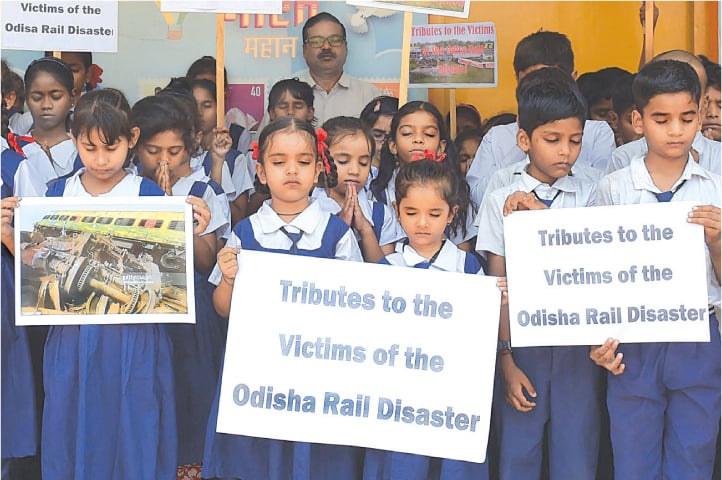
BALASORE: Indian authorities made fervent appeals to families on Tuesday to help identify 83 unclaimed bodies kept in hospitals and mortuaries after the death toll in the country’s deadliest rail crash in over two decades rose to 288.

The disaster struck on Friday, when a passenger train hit a stationary freight train, jumped the tracks and hit another passenger train passing in the opposite direction near the district of Balasore in the eastern state of Odisha.

Bijay Kumar Mohapatra, health director of Odisha, said that authorities were trying to source iced containers to help preserve the unclaimed bodies.

“Unless they are identified, a post-mortem cannot be done,” Mohapatra said, explaining that under Odisha state regulations no autopsy can be conducted on an unclaimed body until 96 hours have passed.

The state government revised the death toll upwards to 288, from 275 earlier, and said that 205 dead bodies have been identified and handed over. The remaining 83 will be preserved, Odisha Chief Secretary Pradeep Jena said.

At state capital Bhubaneswar’s biggest hospital — the All India Institute of Medical Sciences (AIIMS) — large television screens displayed pictures of the dead to help desperate families who are scouring hospitals and mortuaries for friends and relatives.

A detailed list was made of distinguishing features for each body, but relatives could first view photographs, however gruesome, to identify missing loved ones, a senior police official said.

The trains had passengers from several states and officials from seven states were in Balasore to help people claim the bodies and take the dead home, the police official added.

Missing bodies

However, all the help proved inadequate for some families. Niranjan Patra was shocked when authorities informed him that the body of his aunt, Manju Mani Patra, who had travelled on the Coromandel Express, seemed to have been handed over to someone else.

Patra said his family identified her through the photographs of the deceased released by the government, but they were unable to find her body in any of the hospitals in Bhubaneswar.

“We don’t want the compensation, we want to perform her last rites. No one is able to tell us where her body is,” Patra said, standing at the help desk at Balasore railway station.

A forlorn Parbati Hembrum, from West Bengal’s Hooghly district, also stood near the help desk, looking for information on her son Gopal.

The 20-year-old had travelled in the Coromandel Express with three others from their village, but while the other three returned home, Gopal has not.

Tarapada Tudu, standing next to his relative Hembrum, said Gopal was admitted to Balasore hospital after the accident but when they looked for him there, the hospital said he was released the same day after being treated for minor injuries.

But, filled with dread over the lack of contact with Gopal, Tudu said he and Hembrum will travel to Bhubaneswar to look for him among the dead.

There were also incidents of double claims for dead bodies.

“In those cases, we are going for DNA sampling and matching. We have already preserved DNA of the dead bodies,” senior police official Prateek Singh told reporters.

A team from the federal Central Bureau of Investigation reached the site on Tuesday to start a probe into the cause of the disaster. A separate inquiry by the railway’s safety commission started on Monday.

A signal failure was the likely cause of the disaster, according to preliminary findings, which indicated the Coromandel Express, heading southbound to Chennai from Kolkata, moved off the main line and entered a loop track a side track used to park trains at 128kph (80mph), crashing into the stationary freight train.

That crash caused the engine and first four or five coaches of the Coromandel Express to jump the tracks, topple and hit the last two coaches of the Yeshwantpur-Howrah train heading in the opposite direction at 126kph on the second main track.

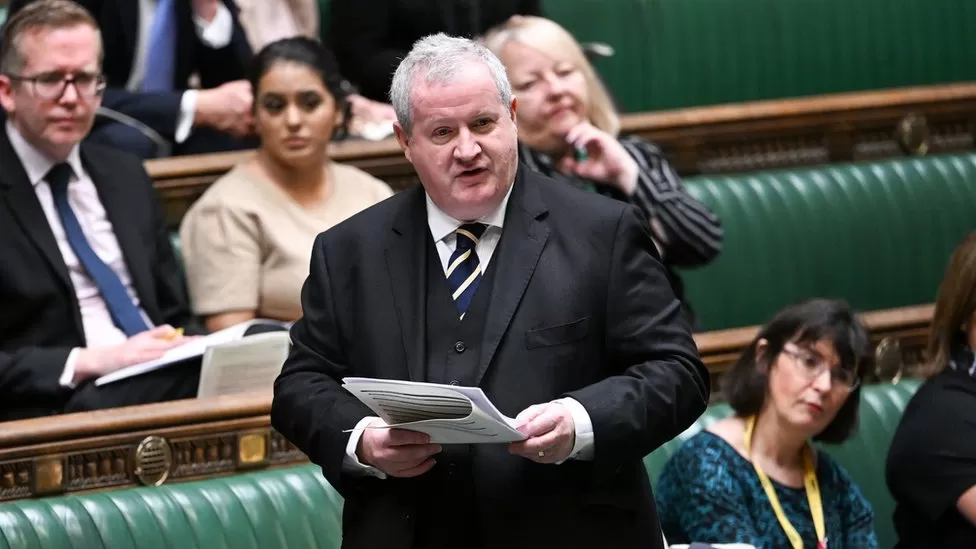
Ian Blackford, the SNP’s former Westminster leader, is to stand down as an MP at the next general election.

Mr Blackford has been the MP for Ross, Skye and Lochaber since 2015, when he defeated former Lib Dem leader Charles Kennedy in a controversial campaign.

He led the SNP’s Westminster group for five years and faced four different Conservative prime ministers at question time in the Commons.

The former banker stepped down as group leader in December.

The resignation avoided Mr Blackford facing a possible challenge from his eventual successor, Stephen Flynn, amid speculation that some of his MPs were plotting to replace him.

He had become a well-known figure in the House of Commons through his weekly appearance at Prime Minister’s Questions and was seen as being a close ally of Nicola Sturgeon, the former first minister and SNP leader who stood down earlier this year.

But he angered some members of the party’s Westminster group by urging them to give “absolute full support” to SNP MP Patrick Grady, who had been suspended for sexual misconduct.


Mr Blackford said he had thought “long and hard” whether to stand in next year’s general election and that he was “privileged and humbled that people across my home constituency have put their trust in me at three elections”.

He added: “Having stood down as SNP Westminster leader, I have gone through a period of reflection as to how I can best assist the party and the cause of independence – a cause I have campaigned for since joining the SNP as a teenager in the 1970s.

“My desire to see Scotland become an independent country, and for our country and its people to achieve its full potential, remains as strong as when I first entered politics decades ago.

“Although I will not be standing for the Westminster Parliament at the next election, I look forward to playing my part in the continuing campaign for Scottish independence and supporting our first minister and the SNP as we go forward to the next election and beyond.”

Mr Blackford has been working on producing a paper on Scotland’s industrial future, which he said he hoped would lead to “sustainable enhancement in economic growth, driving investment and better paid jobs in Scotland and raising living standards”.

He added: “I look forward to finishing this work and continuing as the first minister’s business ambassador, on behalf of the SNP.”

Mr Blackford was a close ally of Nicola Sturgeon

Mr Flynn, the SNP’s current group leader at Westminster, said his predecessor had played a “massive role” in making the party a formidable force in Scottish and UK politics.

He said Mr Blackfrd had been a “stalwart in the SNP for decades”, adding: “I know Ian will be sorely missed by his constituents and colleagues when he stands down as an MP but I am confident that he will have a key role in continuing the campaign for Scotland to become an independent country.”

Mr Blackford’s campaign to replace Mr Kennedy as the MP for Ross, Skye and Lochaber in 2015 became mired in controversy over online abuse aimed at the former Liberal Democrat leader and his long-running battle with alcoholism.

Brian Smith, who was convenor of the local SNP branch, later resigned after it was reported that he had called Mr Kennedy a “drunken slob” and “quisling-in-chief” in a series of more than 130 tweets.

Mr Kennedy died of a major haemorrhage linked to his alcoholism just three weeks after the election.

Pakistan, Iraq agree to boost bilateral cooperation in diverse fields

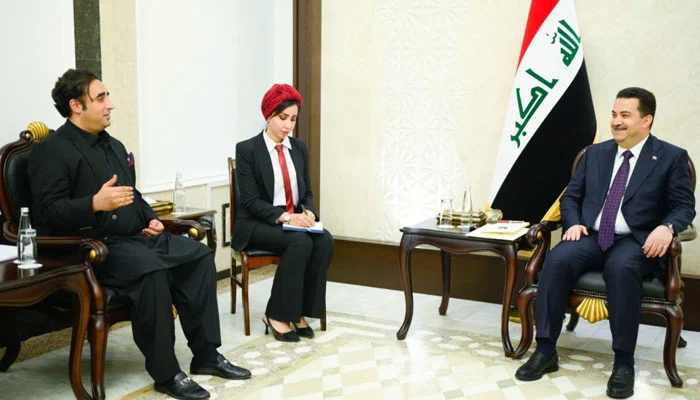
Pakistan and Iraq on Monday agreed to further enhance bilateral cooperation in various sectors and cement the brotherly ties between the two nations.

The development came during a meeting between Foreign Minister Bilawal Bhutto-Zardari and Iraqi President Dr Abdul Latif Jamal in Baghdad today, according to a statement issued by the Ministry of Foreign Affairs.

During the meeting, the two leaders appreciated the trajectory of bilateral relations and agreed to expand mutually beneficial cooperation.

Pakistan and Iraq enjoy close and cordial relations based on mutual respect and shared values, read the statement.

Separately, the foreign minister called on Prime Minister Mohammed Shia Al Sudani and conveyed best wishes to the leadership and the people of Iraq.

Speaking on the occasion, FM Bilawal expressed Pakistan’s resolve to enhance cooperation with Iraq in diverse fields and strengthen bilateral relations.

He also expressed good wishes for the Iraqi people and the government on behalf of the government and the people of Pakistan.

The foreign minister is undertaking this visit at the invitation of the deputy prime minister and foreign minister of Iraq Dr Fuad Hussein.

PM Office to ‘strictly use only refillable water containers’ from today onwards

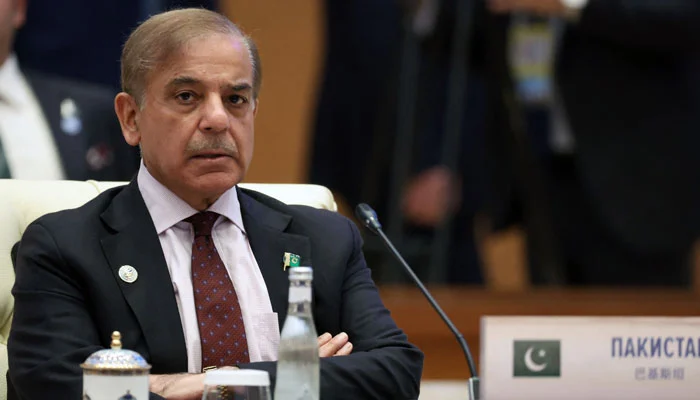
On World Environment Day, Prime Minister Shehbaz Sharif directed his office and federal government entities to “strictly use only refillable water containers” as a reflection of his government’s “commitment to fighting pollution”.

The premier issued the directives while announcing the federal cabinet’s approval of the “Single Use Plastics Prohibition Regulations 2023”. He added that it would kick-start the country’s “journey to reduce plastic waste”.

“The new regulation will phase out single-use plastic items throughout Islamabad. We will also be introducing an action plan for its implementation,” PM Shehbaz added.

The premier also urged all provincial governments and the public at large to join the Centre “in reducing and help to beat plastic pollution in Pakistan”.

World Environment Day is an initiative led by the United Nations Environment Programme (UNEP) and held annually on June 5 since 1973.

“World Environment Day is the largest global platform for environmental public outreach and is celebrated by millions of people across the world,” says the UN. This year’s host for the day is Côte D’Ivoire.

Earlier today, in a message on the occasion of World Environment Day, PM Shehbaz emphasised the urgent need to combat plastic pollution under the global theme “Beating Plastic Pollution”.

He stressed Pakistan’s unwavering commitment to combat plastic pollution and embark on a journey of plastics reduction.

He said that his government has taken several steps to take the country on the path to sustainable use of resources.

PM Shehbaz acknowledged that Pakistan has actively participated in crucial international and national level discussions to develop a comprehensive, legally binding instrument aimed at ending plastic pollution, with a target date set for 2024.

The government of Pakistan recognises the significance of ensuring inclusivity and equity within the agreement, emphasizing the need for the treaty to prioritize so that no one is left behind.

The prime minister also called upon all stakeholders, including citizens, businesses, civil society organisations, and the media, to renew their commitment to the fight against plastic pollution and preserving the planet’s biodiversity for future generations.

He emphasised the importance of empowering local communities, supporting recycling initiatives, and promoting a circular economy that minimises plastic waste.

US, India unveil roadmap to step up joint defence production

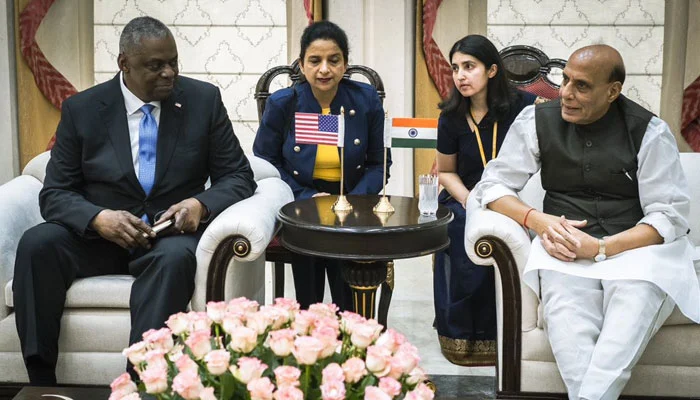
Washington and New Delhi established an ambitious roadmap for military industrial cooperation on Monday amid India’s efforts to reduce its dependence on arms supplier Russia and localise defence production.

“We established an ambitious new roadmap for defence industrial cooperation, which will fast-track high priority co-development and co-production projects,” US Secretary of Defense Lloyd Austin said as he wrapped up an overnight visit to New Delhi.

Moscow and New Delhi have been allies for decades, with Russia by far India’s biggest arms supplier.

Now India — which has not condemned Russia for its invasion of Ukraine — is looking to diversify, both by broadening its sources of imports and ramping up domestic production.

Western countries, including the United States and France, are negotiating multi-billion-dollar contracts, and diplomats say India is putting a high priority on technology transfer as part of any deal.

The agreement will fast-track technology cooperation and co-production in areas including air combat and land mobility systems, the “undersea domain”, and intelligence, surveillance and reconnaissance, the US Defense Department said.

The initiative “aims to change the paradigm for cooperation between US and Indian defense sectors”, it said, and “could provide India access to cutting-edge technologies and support India’s defense modernisation plans”.

India displaced China as the world’s most populous country earlier this year, and relations between the Asian giants have been strained since a deadly high-altitude border clash in June 2020.

At the same time, Washington and Beijing are engaged in fierce competition on diplomatic, military, technological and economic fronts.

But India is walking a diplomatic tightrope: uniquely, it is a member of both the Shanghai Cooperation Organisation, which includes both Russia and China, and the Quad, set up with the United States, Japan, and Australia to counter Beijing’s growing assertiveness.

As well as arms, India also imports oil from Russia, increasing its purchases since the Ukraine war began.

Austin, speaking to reporters after meeting his counterpart Rajnath Singh, said boosting partnerships with India came against a backdrop of “bullying and coercion” from China, as well as Russian “aggression against Ukraine”.

India’s defence ministry said discussions had a “particular focus on identifying ways to strengthen industrial cooperation” with Washington, including the “co-development of new technologies and co-production of existing and new systems”.

Austin’s visit comes ahead of a trip by Prime Minister Narendra Modi to Washington in June.

Austin visited India as part of a tour of Asia that previously took him to Japan and Singapore, part of a push to help counter China and an increasingly bellicose North Korea.

The United States is “committed to collaborating closely with India in support of our shared vision for a free and open Indo-Pacific”, Austin said, but added they were “absolutely not trying to establish a NATO” equivalent in the region.