Pakistan confirms virtual participation in SCO India meeting

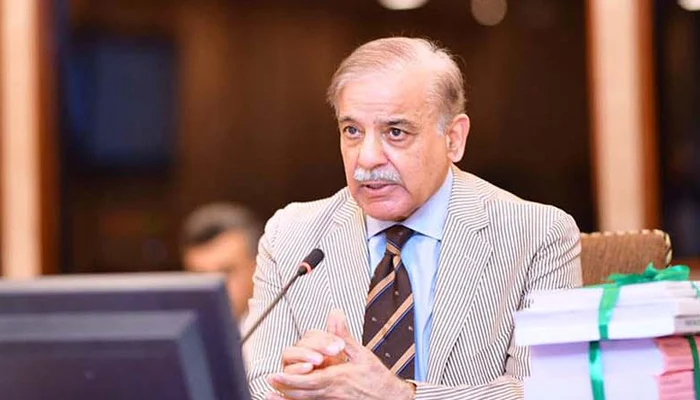
ISLAMABAD: After India changed the Shanghai Cooperation Organisation (SCO) summit’s format to a virtual meeting without providing any reasons, the Foreign Office confirmed that Prime Minister Shehbaz Sharif will attend the meeting virtually.

The regional summit will be held in the Indian capital New Delhi on July 4 but will be virtually attended by member countries, including Pakistan, Russia and China.

The two latter nations would not have been able to attend the meeting in-person either.

“We have received the official invitation from the Indian prime minister for our prime minister to attend the virtual meeting of the Heads of State of Shanghai Cooperation Organisation due to take place on July 4. Pakistan will be represented at the summit,” said FO spokesperson Mumtaz Zahra Baloch in the weekly briefing.

She added that the FO would announce Pakistan’s participation in the coming days.

Talks with Taliban

Moreover, the FO spokesperson also commented on the possibility of holding talks with the Afghan Taliban, who have once again proposed Pakistan enter into talks with Tehreek-e-Taliban Pakistan (TTP) to take up issues of terrorist activities by the latter in the country.

“We have responded to such questions in the past as well. I would like to invite you to a statement made by our foreign minister in which he stated Pakistan will not negotiate with individuals who are responsible for killing of Pakistani civilians and law-enforcement officials,” the FO spokesperson remarked.

However, she said, Pakistan continues to engage with the Afghan interim government in Kabul, adding she would not go into the specifics of these talks.

She said the counter-terrorism threat remains high on the country’s agenda.

Pakistan regularly engages with the interim Afghan government in countering the menace of terrorism.

“And this is an ongoing process. We hope and expect the commitments made in the trilateral outcome declaration between Pakistan, Afghanistan and China will be fulfilled, so that Afghanistan is not a source of terrorism and instability faced by its neighbours, including Pakistan,” she said.

Greek shipwreck

Furthermore, commenting on the recent boat tragedy off the coast of Greece, where several Pakistanis lost their lives, the spokeswoman said: “We have been unable to verify [the] number and identity of Pakistani nationals among the deceased and missing. Greek authorities have recovered 84 bodies. Their identification will take place through DNA matching.”

Relevant authorities have started collecting DNA samples from the families of those suspected to be aboard the ship and will share this with the Greek authorities, she said.

Bilawal’s Japan visit

Meanwhile, she added Foreign Minister Bilawal Bhutto-Zardari will visit Japan on July 2-3.

He will hold substantive talks with Japanese Foreign Minister Hayashi Yoshimasa in Tokyo, during which they will discuss bilateral trade and investment, cooperation in science and technology, education, information technology, culture and human resource development.

Baloch said the two ministers would also deliberate over significant regional and global developments, cooperation, and multilateral dialogue.

Climate finance summit wraps up eyeing bigger progress

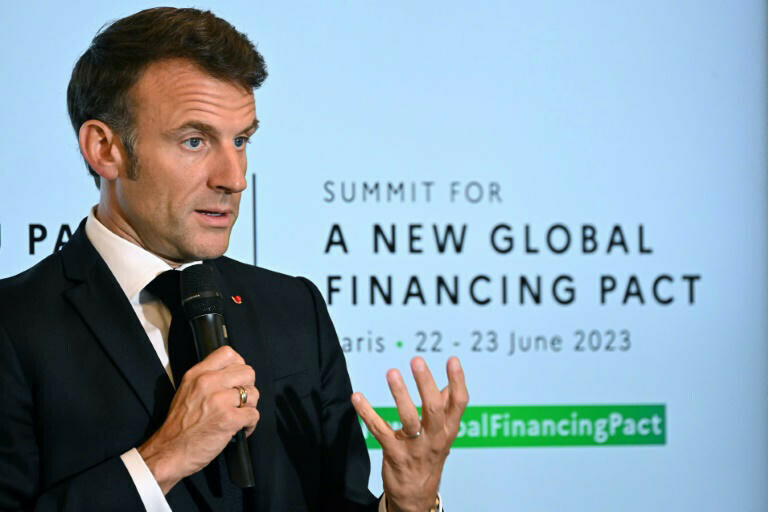
While host country France pitched the conference as a consensus-building exercise, leaders are under pressure to produce clear outcomes from the two-day meeting as economies stagger under growing debt after successive crises in recent years.

The summit comes amid growing recognition of the scale of the financial challenges ahead, with warnings that the world’s ability to curb global warming at tolerable levels is reliant on a massive increase in clean energy investment in developing countries.

With trust in short supply over broken climate financing promises from richer countries, developing nations are looking for tangible progress.

The V20 group of countries on the climate front lines – which now includes 58 member nations – has said restructuring the global financial system to align with climate targets must be completed by 2030.

“We come to Paris to identify the common humanity that we share and the absolute moral imperative to save our planet and to make it liveable,” said Barbados Prime Minister Mia Mottley, whose Caribbean island nation is threatened by rising sea levels and tropical storms.

She has become a powerful advocate for revamping the role of the World Bank and International Monetary Fund in an era of climate crisis.

Barbados has put forward a detailed plan for how to fix the global financial system to help developing countries invest in clean energy and boost resilience to climate impacts.

One key announcement came from IMF director Kristalina Georgieva, who said a pledge to shift $100 billion of liquidity-boosting “special drawing rights” into a climate and poverty fund had been met.

World Bank president Ajay Banga said the lender would introduce a “pause” mechanism on debt repayments for countries hit by a crisis so they could “focus on what matters” and “stop worrying about the bill that is going to come”.

Separately, Senegal was promised 2.5 billion euros ($2.7 billion) by a group of wealthy nations and multilateral development banks to help the west African country reduce its dependence on fossil fuels.

And Zambia, which defaulted on its debt after the Covid pandemic broke out, secured some financial relief as its main lender China and other creditors agreed to restructure $6.3 billion in loans.

On Twitter, Zambian President Hakainde Hichilema called it a “significant milestone in our journey towards economic recovery & growth”.

Turning ‘billions to trillions’

But much more is needed to help developing countries combat climate change.

Macron said he was hopeful that a pledge to deliver $100 billion a year in climate finance to poorer nations by 2020 would finally be fulfilled this year – although actual confirmation the money has been delivered will take months if not years.

This week, the International Energy Agency said annual investment just for clean energy in these countries will need to jump to nearly $2 trillion within a decade.

This is crucial to keep alive the Paris Agreement goal of limiting global warming to “well below” two degrees Celsius since pre-industrial times, and below 1.5C if possible.

Ideas for how to turn “billions to trillions” for these climate and development goals include using multilateral development banks to help unlock climate investments, as well as taxation on fossil fuel profits and financial transactions to raise climate funds.

France backs the idea of an international tax on carbon emissions from shipping, with hopes for a breakthrough at a meeting of the International Maritime Organization in July.

Countries also want disaster clauses added to new debt arrangements to allow a country to pause repayments for two years after an extreme weather event.

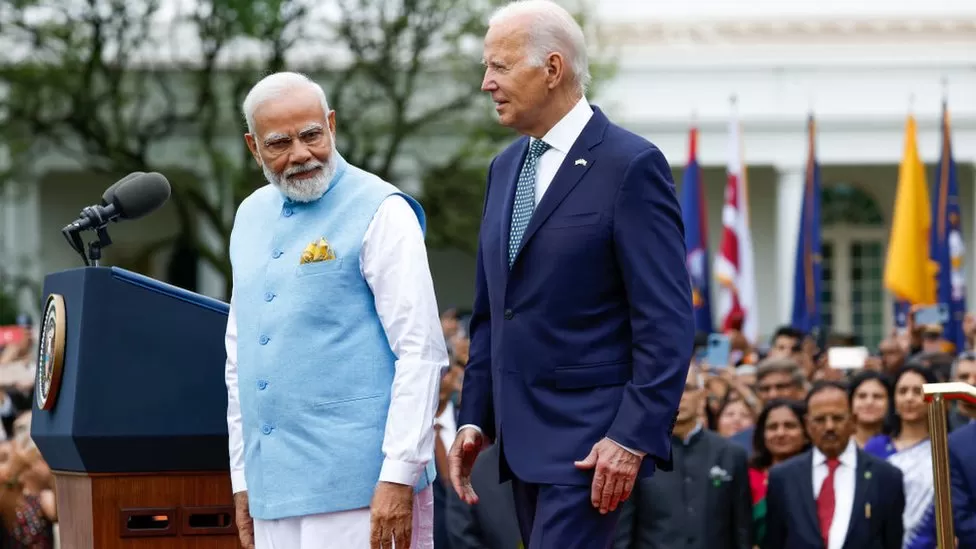
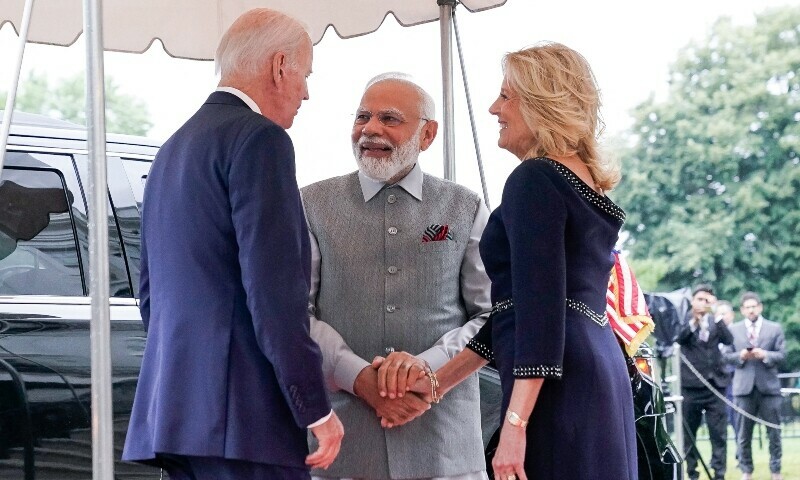
US President Joe Biden hailed US-India ties, while rolling out the pomp and pageantry for visiting Prime Minister Narendra Modi on Thursday.

This included marching bands, a lavish vegetarian dinner and a 21-gun salute on the South Lawn of the White House.

Mr Modi, who is on a state visit, also addressed the US Congress, where he received a standing ovation.

The US, which denied a visa to Mr Modi over human rights concerns before he was PM, now sees him as a crucial ally.

Washington has long viewed India as a counterbalance to China’s growing influence in the Indo-Pacific, although Delhi has never been fully comfortable with owning the tag.

When addressing Congress, Mr Modi did not mention China by name, although he mentioned “dark clouds of coercion and confrontation casting their shadow over the Indo-Pacific”.

Mr Modi also did not mention Russia or who started the war, saying instead, “With the Ukraine conflict, war has returned to Europe”.


India has so far not directly criticised Russia, which analysts say is largely due to its huge dependency on Russian defence imports and its “time-tested ties” with Moscow.

This has strained relations between Washington and Delhi but Mr Biden chose to focus on the positive, saying ties between the two countries were stronger than ever. He went as far as to call it “one of the defining relationships of the 21st Century”.

Mr Modi agreed, telling the US Congress that this was a coming together of the world’s two great democracies. He also said that the friendship between the two countries would be “instrumental in enhancing the strength of the whole world”.

He added that a “new chapter” had been added to the two countries’ comprehensive and global-strategic partnership.

Mr Modi addressed the US Congress on Thursday

However, not everyone was celebrating.

The Indian prime minister has come under increasing criticism for cracking down on dissent. His Hindu nationalist government too has been accused of not doing enough to protect minorities from violence and discrimination. But even as Mr Modi’s visit to the US has seen protests, it has also been welcomed by a large and influential diaspora that includes many Silicon Valley CEOs.

A number of liberal Democrats, however, boycotted his speech at Congress. Among them was representative Alexandria Ocasio-Cortez, who said on Twitter that state visits – the highest diplomatic protocol in the US – should not be offered to individuals with “deeply troubling human rights records”.

Apart from the pomp and parades, there was also progress on the trade front.

The two countries agreed to terminate six outstanding disputes at the World Trade Organization, and announced deals with General Electric and Micron.

Mr Modi also took the rare step of answering questions from reporters – something he has almost never done since becoming India’s prime minister in 2014.

When asked about human rights concerns in India, he said “democracy runs in our veins” and there is “absolutely no space for discrimination” in India, even as protesters gathered outside the White House to oppose his visit.

The route to independence used to seem simple for SNP members.

The route to independence used to seem simple for SNP members.

There was a widespread expectation in the party that election victories would lead to a second referendum.

But the continued UK government refusal to grant another vote, and last year’s Supreme Court confirmation that Holyrood doesn’t have the powers to legislate for one, has left the party looking for a new direction.

And that’s why members will descend on Dundee this weekend.

At the party’s Convention on Independence, they hope to flesh out a new strategy.

So what are the alternative paths to independence?

This isn’t an exhaustive list, but here are three options the SNP may consider this weekend.

A gradualist approach

Option one could be called the gradualist approach.

This involves taking time to drive up support for independence, ultimately reaching a level that means Downing Street can’t ignore referendum demands.

It’s rare for anyone in the SNP to publicly put a number on the level of support needed for this, but a sustained period of 60% pro-independence polling is thrown around privately.

The MSP Ben Macpherson is a former Scottish government minister. He stresses that he’s as dedicated to independence as anyone in the SNP, but he believes that patience is required.

He’s urged fellow members to focus on convincing more undecided voters to support independence, which he believes will create “overwhelming” pressure on the UK government to grant a second referendum.

De facto referendums

But others feel another referendum won’t happen, and that brings us to option two. This involves using elections to secure independence.

It’s a tactic that’s gained prominence in SNP circles in recent years.

Towards the end of her leadership, Nicola Sturgeon floated the idea of running an election as a “de facto” referendum.

The concept is fairly simple: the SNP would contest an election (or elections) insisting that a vote for them is a vote for independence. This could be stated in the opening line of a manifesto.

Ash Regan, who ran to replace Nicola Sturgeon earlier this year, backs this approach.

Former SNP leadership contender Ash Regan backs the de facto referendum strategy

She believes the SNP could even team up with other pro-independence parties, meaning that more than 50% of the vote combined would lead to independence.

She thinks it’s time to move away from relying on the referendum path, saying “we’ve been thinking of it as the gold standard, but in fact it’s the ballot box that’s the gold standard route”.

But there are potential weaknesses with this option.

Why would the UK government agree to this? Would the international community recognise it?

Most advocates of such a Plan B feel that Westminster intransigence on a second referendum means that a radical alternative is needed.

But others fear it won’t deliver independence and would alienate the middle-ground of Scottish politics.

Public demonstrations

Option three involves taking to the streets – mass demonstrations calling for independence.

Perhaps this option should be seen as complementing others, rather than being a route to independence in itself.

The cross-party All Under One Banner movement will march from Stirling to Bannockburn at the very same time the SNP gathers in Dundee.

Patrick McCarthy is organising Saturday’s All Under One Banner march

As a party member, Patrick McCarthy could have attended the convention. But he worries the SNP is simply “talking to themselves” .

He’ll be “speaking to the mass movement” by organising the march instead.

He says “the hearts and minds and belief in independence is the thing that’s going to get us over the line”.

The first minister will set out his preferred route to independence at Saturday’s convention.

The first minister must show SNP members that he has an indy plan

Humza Yousaf wants to drive up overall support, but he’s also said that elections must be used to advance the cause of independence.

This convention won’t rubber-stamp any strategy. That would have to come at the SNP’s autumn conference.

There are political risks for Humza Yousaf in this weekend’s convention.

It could highlight splits within his party. And it exposes him to accusations that he’s prioritising the constitution over day-to-day problems.

But, given that independence is his party’s fundamental aim, it’s important for him to show party members that he’s formulating a plan to achieve the ultimate goal.

The SNP may emerge closer to defining their strategy on independence, but making that a reality feels a harder task for the party right now.

Pak-Japan literary and cultural relations highlighted at lecture in Karachi

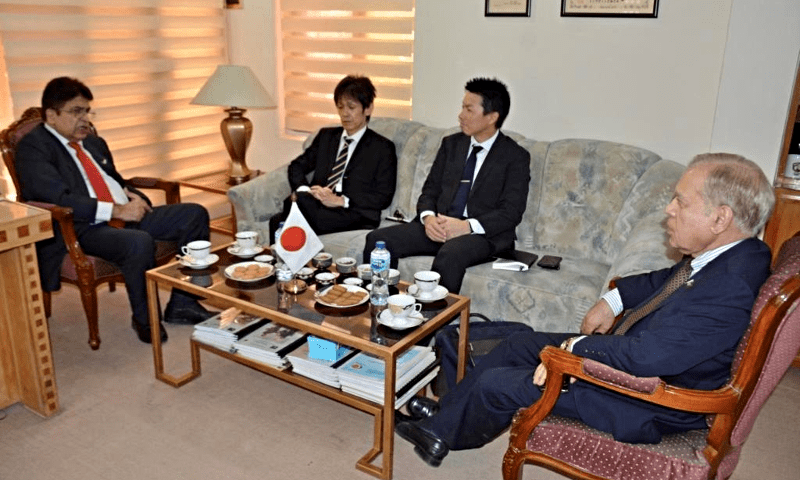
Dr Aqeel said usually it’s the diplomatic relations between two countries that are often strengthened, which is important. Cultural ties are even more important. Pakistan [from the time when it was a part of the subcontinent] and Japan enjoy such an association for the past 150 to 175 years.

He said when Western powers came to South Asia they used education to change the local or indigenous system because education entailed western concepts. Urdu had an important role to play in the creation of Pakistan as well as in furthering the country’s ideology.

Dr Aqeel said Pakistan and Japan have learnt a great deal from each other. One of the things that brought the two nations closer was literature, especially in the form of travelogues.

The first travelogue in that connection was penned by a ruler of Rampur named Hamid Ali Khan. For six months in 1893 he travelled across the world. Unlike the usual practice of globetrotters from west to east, he began his journey from the east.

It was after visiting Japan that he left for the US. In 1896, he published his Japan journey from Agra. It’s an important cultural document which became very popular at the time of its publication.

The other aspect that the scholar emphasised was the various Islamic movements that the British suppressed. He said before the 1857 war, there was one such movement which due to lack of resources couldn’t succeed.

One of the exiled men was Maulvi Barkatullah Bhopali, who first went to America from India and then to Japan from where he took out a magazine that generated interest of the Japanese people in Islam.

After giving examples of how some individuals popularised Urdu in Japan, the scholar said the Urdu novel is fondly read in that country and no fewer than 300 Urdu short stories have been translated into Japanese. He also mentioned the name of Sir Syed’s grandson Ross Masud who visited Japan three times.

In his closing remarks, which were delivered in Urdu, Nakagawa Yasushi, deputy consul general of Japan in Karachi, thanked Dr Aqeel for giving an informative talk. He then talked about how he was introduced to the Urdu language and how he got to learn it.

M Iqbal Burma spoke on the genesis of the PJIF at the event, which was moderated by Shakil Khan.

US to ease visas for skilled Indian workers as Modi visits

The State Department could announce as soon as Thursday that a small number of Indians and other foreign workers on H-1B visas will be able to renew those visas in the US, without having to travel abroad, one of the sources said, part of a pilot program that could be expanded in coming years.

Indian citizens are by far the most active users of the US H-1B program and made up 73 per cent of the nearly 442,000 H-1B workers in fiscal year 2022.

“We all recognize that mobility of our people is a huge asset to us,” said another US official.

“And so our goal is to approach that in a sort of multifaceted way. The State Department already has been working very hard to find creative ways to make changes to things.”

A State Department spokesperson declined to comment on questions about which visa types would qualify or the timing of the pilot launch. Plans for a pilot program were first reported by Bloomberg Law in February.

“The pilot would begin with a small number of cases with the intention to scale the initiative over the following one to two years,” the spokesperson said while declining to define small.

The steps could change and are not finalised until they are announced. The White House declined to comment.

Each year, the US government makes 65,000 H-1B visas available to companies seeking skilled foreign workers and 20,000 visas for workers with advanced degrees. The visas last for three years and can be renewed for another three years.

The companies using the most H-1B workers in recent years include the Indian-based Infosys and Tata Consultancy Services as well as Amazon, Alphabet and Meta in the US, according to US government data.

The ability for some of the temporary foreign workers to renew visas in the US would free up resources for visa interviews in consulates abroad, the spokesperson said.

The pilot program would also include some workers with L-1 visas, which are available to people transferring within a company to a position in the US, one of the sources said.

A separate initiative to clear a backlog of visa applications at US embassies in India is finally showing signs of progress, according to another one of those sources, and is expected to figure into the discussions between the two countries’ delegations in Washington this week.

India has long had concerns with the difficulty its citizens face in receiving visas to live in the United States, including technology industry workers. More than 10 million jobs stood open in the United States at the end of April, according to the Labor Department.

Some H-1B visa holders in the US have been among the thousands of tech workers laid off this year, sending them scrambling to find new employers within a 60-day “grace period” or return to their home country.


The Biden administration has spent months working to improve visa access for Indians, trying to get around the lack of political will in Congress to comprehensively reform US immigration policy. President Joe Biden wants to knit together the world’s two largest democracies, partly in a bid to better compete with China.

US visa services are still attempting to clear a backlog after Washington halted almost all visa processing worldwide in March 2020 due to the Covid-19 pandemic. The visa backlog has led to some families being separated for extended periods of time, with some taking to social media to lament their situation.

‘No need to look at anything negatively’: Pakistan responds to Modi’s US visit

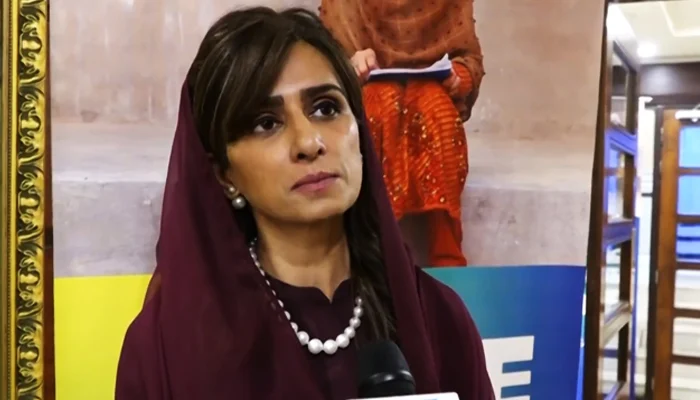
Commenting on the Indian Prime Minister’s visit to the US, Minister of State Hina Rabbani Khar said that Pakistan would always look positively at bilateral ties between sovereign countries and not view them in a negative light.

“There is no need to look at anything negatively,” she said in an interview with Voice of America (VoA).

However, she maintained Pakistan had a very belligerent neighbour who indulged in military adventurism by sending jets to Pakistan in 2019, terming the move “unprecedented” and “unthinkable”.

The state minister said the world must look into this factor and decide whether those being propagated for a role in regional security deserved it.

“The world has to see whether there was conflict preservation instead conflict resolution due to them (India), then it did not augur well for the region. We hope that nothing will go wrong for the region and Pakistan,” she remarked.

The Indian PM is currently in the US for his first visit with the full diplomatic status of an official state visit.

The visit is also the third state visit of Joe Biden’s presidency and the third by an Indian leader to the US, indicating the strengthening bond between Washington and New Delhi.

The visit is expected to see the two countries expand cooperation in the defence industry and high technology sectors, with India getting access to critical American technologies that Washington rarely shares with non-allies.

The visit, however, puts Pakistan in a precarious position given its strained ties with India.

Over the years, Washington’s cooperation with India has increased as Pakistan has gotten closer to China — especially after the latter’s investment in the China-Pakistan Economic Corridor (CPEC).

Ties with EU

About ties with the EU, the state minister said Pakistan’s Scheme of Preferences Plus (GSP+) status was not sufficient to define the country’s relations with the EU as their bilateral engagements were wider and broader at all levels, including business contacts, institutional linkages, IT sector growth etc.

She said the GSP Plus benefited Pakistan and enhanced the EU’s trade with Pakistan, adding that Pakistan and the EU countries were engaged at different multilateral fora.

The MoS further stressed that such relations should not be looked at merely through the GSP Plus lens, but their interactions were much broader.

About her recent visits to different Scandinavian countries, she elaborated that certain countries had an ageing population and required young people for various sectors.

She said opening legal migration of skilled labour to these countries was their primary objective, as Pakistan and these countries did not want to promote illegal migration.

PM Shehbaz hails China for supporting Pakistan during tough economic times

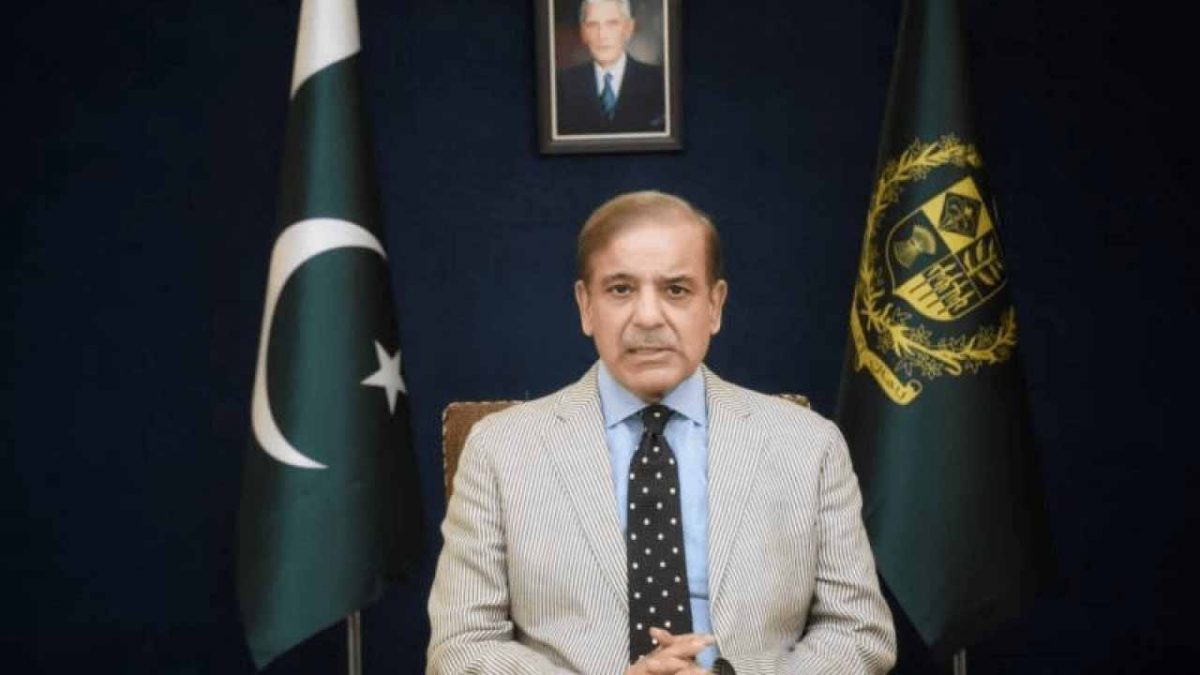
Prime Minister Shehbaz Sharif appreciated China for extending all-out support to Pakistan during challenging economic times and expressed resolve to steer the country of crisis.

“China is fully supporting Pakistan and $1 billion have been received from China,” the premier said while addressing the PM’s National Innovation Awards ceremony in Islamabad on Monday.

In a major boost to the forex reserves, China announced refinancing $1 billion loan in Pakistan, the State Bank of Pakistan (SBP) confirmed late on Friday.

The news of the refinancing came after Finance Minister Ishaq Dar informed the National Assembly’s Standing Committee on Finance and Revenue on Friday that China would be refinancing the $1 billion loan it had given to Pakistan earlier.

“$1 billion will come from China today or on Monday,” Dar had told the lawmakers. He also said that talks are ongoing with the Bank of China for a loan of $300 million. He added that Pakistan would also receive dollars under China’s swap agreement.

Speaking at the ceremony earlier today, the prime minister also praised Saudi Arabia, Qatar and UAE for helping Pakistan in the challenging times.

PM Shehbaz emphasised the need for getting rid of foreign loans saying the friendly countries also urged Pakistan to use foreign loans efficiently to fully utilise the potential of natural resources.

The prime minister said Pakistan has been “blessed” with natural resources and it has capacity to become self-sufficient.

“We will come out of the economic and financial challenges,” the premier said.

He also proposed non-partisan agenda to lift the country out of crisis saying that all stakeholders including opposition parties needed to agree on the economic and foreign policy agenda to ensure continuation of the policies.

Senate chairman perks: PPP senator calls for revisiting private member bill, terms it ‘bad signal’

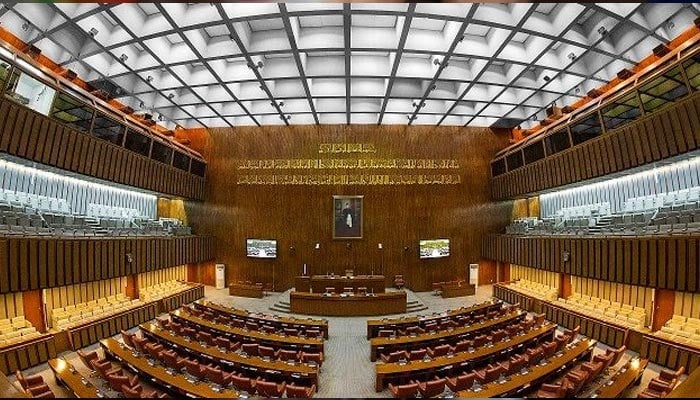
ISLAMABAD: Chairman Senate Sadiq Sanjrani attempted to defend the chairman’s perks and privileges on Monday, saying it will correct things and resolve audit issues, as the development received severe condemnation from both within and outside the house, with the country suffering an unparalleled financial crisis.

Pakistan People’s Party (PPP) Senator Salim Mandviwalla has strongly opposed the bill suggesting it should be revisited, as it sent a very bad signal to everyone. In contrast, other Senate members were only given a lollipop in the bill.

Sanjrani, during the ongoing budget debate, claimed that the salaries, allowances, and privileges bills of the chairman, deputy chairman, and Senate members would not impose a single penny on the national exchequer. He regretted that the impression of burdening it with billions of rupees had been created.

He said only the old act of 1975 was rectified as per the decisions of the committees from time to time, and salaries, perks, privileges and allowances of the chairman, deputy and members of the House had been made independent in the form of legislation.

The three bills were passed by the House on Friday last while some members, who wanted to speak, were not been able to do so.

Chairman Senate, who is currently in his second term of three years, explained as per the bill, the monthly expenses of the chairman or deputy chairman’s office were Rs6,000, which had been increased up to Rs50,000, whereas both had never used this amount.

Likewise, he explained a measure was proposed for the residence of the chairman or deputy chairman as at present.

The chairman was residing in a house owned by the housing and work ministry, and there was no official residence under the Senate secretariat. He noted that the Senate chairman was to get Rs100,000 per month previously if he was living in his own house, which has now been rationalised to Rs250,000.

Under the 1975 act, he pointed out an amount of Rs6,000 per month was set aside for office expenses of the chairman, which has been increased to Rs50,000, while a travelling allowance of only Rs5,000 had been proposed against Rs75 for the chairman or deputy chairman, pointing out that he has never claimed even a single penny as TA/DA.

The daily allowance of the Senate chairman, Sanjrani noted, had been proposed to increase from Rs1,750 to Rs10,000.

Moreover, in addition to Pakistan International Airlines, other airlines had been included for getting air tickets, while per kilometre charges on PIA for the Senate, chairman had been revised as well.

Sanjrani clarified that the Senate secretariat had not purchased any plane. The provision for requisitioning an aircraft for the Senate chairman, who in the absence of the president becomes acting president, had been amended; and now he would be able to requisition a commercial plane as well.

The chairman said there was no change in family medical entitlement while the compensation amount for any victim, as per the privilege of the chairman, had been proposed to increase from Rs300,000 to Rs10 million.

He said the Senate has proposed to increase the discretionary fund for the chairman and deputy chairman from Rs 600,000 to Rs1,200,000 and from Rs300,000 to Rs600,000, respectively.

Earlier, Mandviwalla, who heads the Senate standing committee on finance, said the bill on the Senate chairman’s salary, perks and privileges had sent a very bad signal to everyone as Pakistan is suffering and the House is being run on loans.

Calling to revisit the bill, he said without addressing the salary and other issues of the senators, the bill was infructuous for the chairman. “If you being the custodian of the House, can’t protect the rights of the members, then we have failed. All chairmen of the Senate have failed,” he remarked. “Through this, what message are we sending.”

First, address the salary and other issues of senators, put the House in order, he emphasised, and then talked about chairman and deputy chairman.

He suggested sending the bill to the Senate Standing Committee on Finance, where every member should present his viewpoint and then be brought to the House, where senators should debate it and then put before them (for voting).

Referring to different clauses of the bill, he pointed out that while the ordinary members have been given lollipops, everything is for the chairman Senate. He cited that in one clause, the chairman is empowered to charter a commercial plane to go anywhere, he wanted to.

Meanwhile, the report of the standing committee on finance, proposing 55 recommendations related to the Finance Bill 2023-24 and 31 regarding the Public Sector Development Programme, was presented in the House by Mandviwala. The Senate has recommended to the National Assembly to gradually impose taxes on the real estate and agricultural sectors.

It also proposed that the state-owned enterprises running in losses should be audited, and comprehensive reforms be introduced for their economic turnaround. Moreover, the income-generating industries should be given tax exemptions and provided with gas supply. It has been proposed to establish tax-free zones to attract foreign direct investment and rationalise the subsidy mechanism for seeds, fertilisers, solar energy devices, and essential food items. It was recommended to abolish the super tax and not to increase the 12% tax on the sale of retailers and brands registered with FBR to 15%.

The House also recommended to the NA not to block company bank accounts without prior notice and remove barriers in the refund of income tax and sales tax. It proposed to declare up to 2 KW generators as tax-free while refunds of input tax should be eligible for reimbursement at a rate of 5 percent for the IT sector and shares of IT sector companies should be exempted from capital gains tax.

The Senate proposed to take effective measures for the development of renewable energy sectors in the country and promote skill development. It suggested increasing the television fee collected in electricity bills from Rs35 to Rs50 per month and allocate an additional Rs15 for Radio Pakistan to meet its financial needs.

It suggested designating Gwadar as a tax-free zone and releasing remaining funds for the Gwadar Development Authority. The Senate proposed that steel mills should be allowed to purchase local scrap and reduce the withholding tax rate on scrap supply to 0.25%. Later the House was prorogued sine die.

Meanwhile, PPP has announced to reject the controversial. Minister for Poverty Alleviation and Social Security Shazia Marri, who is also the party’s secretary information, announced the PPP’s rejection of the Chairman Senate (Salaries, Allowance and Privileges) Act, 2023 through a statement on Monday.

When Marri was contacted about the matter, she said the PPP has rejected the bill as the party and its leadership were not taken into confidence on it.


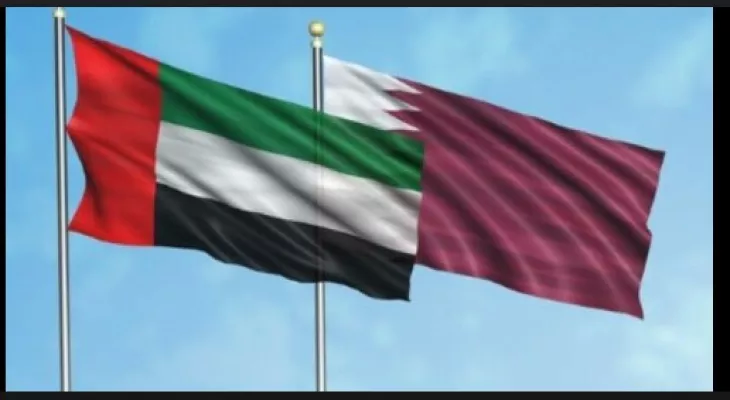
UAE, Qatar reopen embassies after years of tensions

The United Arab Emirates and Qatar announced on Monday the reopening of their respective diplomatic missions, six years after the Gulf rivals severed ties during a regional blockade that sent tensions soaring.

The two resource-rich monarchies restored official relations in January 2021, after the end of the nearly four-year diplomatic and transport blockade that isolated tiny Qatar.

“The United Arab Emirates and the State of Qatar announced the restoration of diplomatic representation between the two countries,” said a statement on the UAE’s official WAM news agency.

The sides are “resuming the work at the embassy of the UAE in Doha, and at the embassy of Qatar in Abu Dhabi and its consulate in Dubai”, it said.

A similar statement was released by Qatar’s foreign ministry.

Saudi Arabia, the UAE, Bahrain and Egypt imposed a diplomatic and transport blockade on Qatar in 2017, accusing it of supporting extremist organisations and becoming too close to Iran. Doha has denied the allegations.

The reopening of the diplomatic missions comes at a time of an easing in Gulf enmities after heavyweight rivals Saudi Arabia and Iran announced in March the end of a seven-year break in ties.

Among the round of reconciliation that has followed, Qatar and close neighbours Bahrain put aside a chronic feud to resume relations in April.

Saudi Arabia’s Foreign Minister Faisal bin Farhan visited Iran on Saturday, meeting President Ebrahim Raisi, in another major step in their rapprochement. Iran reopened its Riyadh embassy this month.

The detente between the Sunni Muslim kingdom and Shiite theocracy appears momentous because they have long been vying for influence around the region, backing opposing sides in conflicts including Yemen.