Sudan spiralling into destruction, says UN chief

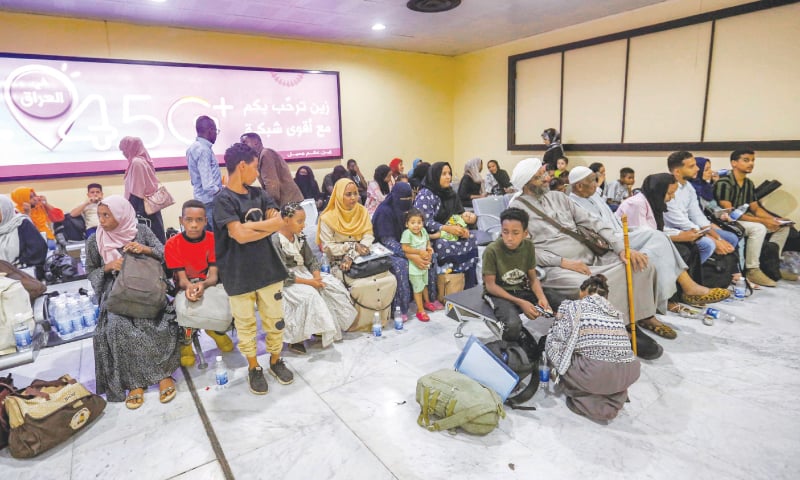
The pledging conference comes mid-way through a three-day ceasefire which appeared to have brought calm to the capital Khartoum, after the failure of earlier truces to ensure secure aid corridors.

More than two months into the fighting, the United Nations is worried that the crisis could spill over and destabilise neighbouring African states.

“The scale and speed of Sudan’s descent into death and destruction is unprecedented,” UN Secretary-General Guterres told the conference.

The death toll has topped 2,000, the Armed Conflict Location and Event Data Project said.

A record 25 million people — more than half Sudan’s population — are in need of aid, according to the UN.

Roughly 2.5 million people have been uprooted across Sudan by the war, which has forced around 550,000 to seek refuge in neighbouring countries, according to UN figures.

Around $3 billion needed

The UN has two appeals for tackling the crisis — the humanitarian response within Sudan, which needs $2.6 billion this year, and the regional refugee response, which needs $470 million.

However, both are less than 17 per cent funded.

“The situation in Darfur and Khartoum is catastrophic,” Guterres said.

Modi says criticism of India’s stance on Russia not widespread in US

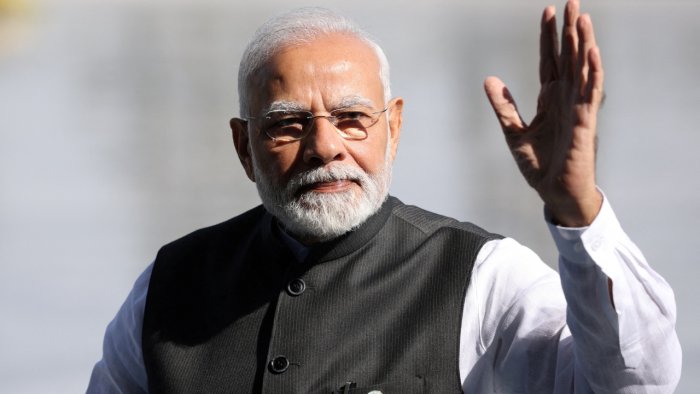
Asked in an interview with the Wall Street Journal about critical comments in the US for not taking a more forceful stance against Russia’s invasion of Ukraine, Modi said: “I don’t think this type of perception is widespread in the US.”


“I think India’s position is well known and well understood in the entire world. The world has full confidence that India’s top-most priority is peace,” he said.

Modi left on Tuesday on a state visit to the US billed as a turning point for bilateral relations, with deeper cooperation in defence and high technology in focus.


New Delhi has refused to condemn its old ally Russia for the war in Ukraine and has increased its trade with Moscow to record levels, driven largely by imports of Russian oil.


US President Joe Biden has been eager to strengthen relations with India as part of his bid to win what he has framed as a contest between free and autocratic societies, especially China.

Modi called for changes to global institutions like the United Nations to adapt them for an increasingly “multipolar world order”, and make them more representative of the world’s less-affluent countries, the report said.

India would like to be a permanent member of the Security Council, he said.


“The world should be asked if it wants India to be there,” he said.

Modi also said that India’s ties with China could only progress if there was peace on the border between the two Asian giants.

India and China have fortified positions and deployed large numbers of troops and equipment in the western Himalayas in the last three years, after a clash in which 20 Indian soldiers and four Chinese soldiers were killed in hand-to-hand fighting.

“For normal bilateral ties with China, peace and tranquillity in the border areas is essential,” Modi told the paper.

“We have a core belief in respecting sovereignty and territorial integrity, observing the rule of law and peaceful resolution of differences and disputes. At the same time, India is fully prepared and committed to protect its sovereignty and dignity.”

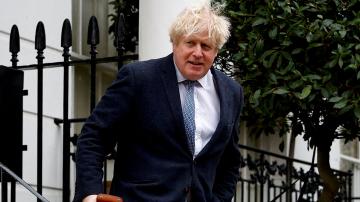
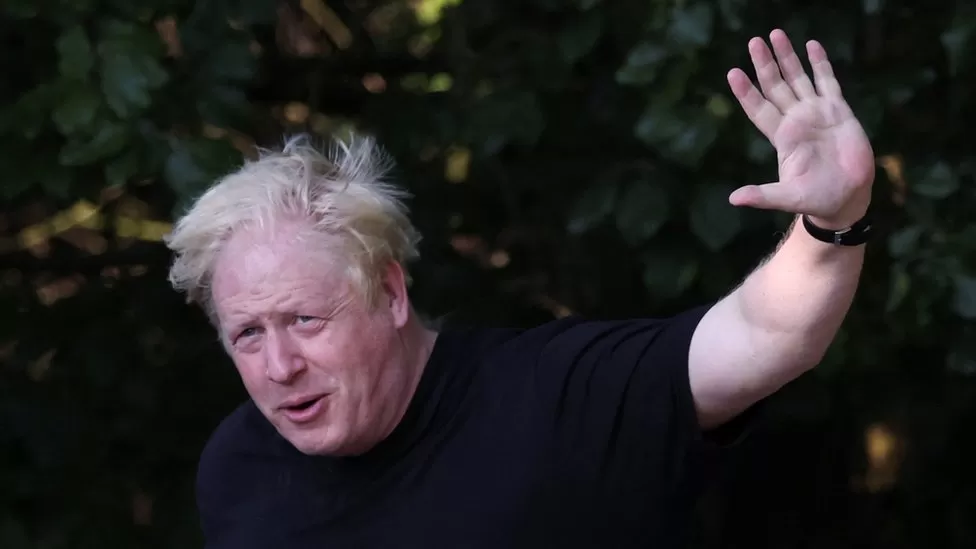
MPs have backed a report that found Boris Johnson deliberately misled MPs over lockdown parties at Downing Street.

The Commons voted overwhelmingly in support of the report, by 354 to seven.

The cross-party committee’s report had found Mr Johnson committed repeated offences when he said Covid rules had been followed at No 10 at all times.

Several allies of Mr Johnson questioned the impartiality of the committee and said they would vote against.

Former Prime Minister Theresa May, Commons Leader Penny Mordaunt and Education Secretary Gillian Keegan were among the senior Conservatives who supported the report’s findings.

Conservative MPs who voted against included Sir Bill Cash, Nick Fletcher, Adam Holloway, Karl McCartney, Joy Morrissey and Heather Wheeler – while 118 Tories voted in favour.

No vote was recorded for 225 MPs, because they either abstained or did not turn up to vote.

Mr Johnson had asked his supporters not to vote against the report, with sources close to the former prime minister arguing it had no practical effect now he has resigned.

But his critics suggested the move was designed to avoid revealing the low level of support for him among Tory MPs.

Some abstained, while others did not turn up to vote at all.

Johnson allies who spoke in the debate but did not vote include Sir Jacob Rees-Mogg and Lia Nici.

Prime Minister Rishi Sunak did not attend the debate and has refused to say how he would have voted, suggesting he did not want to influence others.

The Liberal Democrats accused Mr Sunak of “a cowardly cop-out”.

The party’s deputy leader Daisy Cooper said: “His failure to vote says all you need to know about this prime minister’s lack of leadership.”

A Labour Party spokesperson said Mr Sunak was “too weak to lead a party too divided to govern”.

The vote means Mr Johnson loses his right to a parliamentary pass, which gives access to certain parts of Parliament, as this was one of the report’s recommendations.


The Privileges Committee of MPs, which has a Conservative majority, was asked to investigate whether Mr Johnson had misled MPs over what he knew about parties held in Downing Street during Covid lockdowns – dubbed the Partygate scandal.

Its report concluded that Mr Johnson made multiple deliberately misleading statements to Parliament about events at No 10.

Ahead of the report’s publication, Mr Johnson announced he was quitting as an MP, branding the committee a “kangaroo court”.

The report found Mr Johnson had committed further “contempts” of Parliament by attacking the committee, increasing the severity of the recommended sanction.

The committee subsequently recommended a 90-day suspension for Mr Johnson – a long ban by recent standards – as well as denying him the parliamentary pass, which he would normally be entitled to as a former MP.

If he had still been an MP, the suspension could have triggered a by-election in his constituency.

Speaking during a Commons debate ahead of the vote, Mrs May said backing the report would be “a small but important step in restoring people’s trust” in Parliament.

It was “important to show the public that there is not one rule for them and another for us”, she said.

Mrs May urged her fellow MPs to vote in support of the report “to uphold standards in public life, to show that we all recognise the responsibility we have to the people we serve, and to help to restore faith in our parliamentary democracy”.

Rishi Sunak is asked several times if he will take part in Boris Johnson Partygate report debate and vote in the Commons.

During the debate, supporters of Mr Johnson spoke out against the report’s findings.

Ms Nici, who was Mr Johnson’s parliamentary private secretary, told MPs she could not see any evidence he had knowingly misled Parliament.

She questioned the impartiality of the committee and suggested the process was “political opportunism” for people who did not like Mr Johnson.

Former minister Sir Jacob, who was knighted by Mr Johnson in his resignation honours, described the proposed 90-day suspension as “a vindictive sanction”.

In response to accusations some Johnson allies had attempted to discredit the committee’s work, Mr Rees-Mogg said it was “absolutely legitimate to criticise the conduct of a committee” and its members.

However, the committee’s chairwoman, Labour MP Harriet Harman, said its members had to “withstand a campaign of threats, intimidation, and harassment designed to challenge the legitimacy of the inquiry”.

She defended her impartiality, after Sir Jacob referenced her previous tweets criticising Mr Johnson, saying she had offered to step aside as chairwoman after the tweets emerged but she said she was assured by the government she should continue in her role.

Watch: Harriet Harman answers Jacob Rees-Mogg who raises her “famous tweets” about Boris Johnson

Earlier it was not clear whether there would be a formal vote on the report – compelling MPs to go on the record to either vote for, against or abstain – but Labour forced one.

It was a free vote for Tory MPs, meaning party managers – known as whips – had not instructed them how to vote.

Commons Leader Ms Mordaunt, who opened the debate, said she would vote in support of the report, adding: “The integrity of our institutions matter.”

However, she said “all members need to make up their own minds and others should leave them alone to do so”.

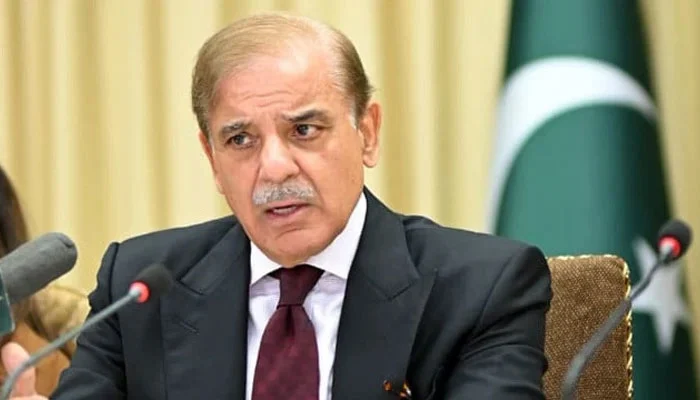
PM Shehbaz moves to address PPP’s concerns on budget

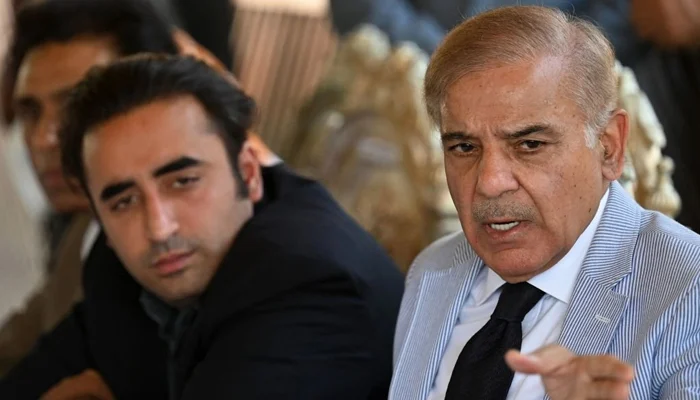
Prime Minister Shehbaz Sharif Monday will chair a meeting to sort out the differences regarding the recently-presented budget with his biggest coalition partner in the government, Pakistan People’s Party (PPP).

The meeting will also be attended by Foreign Minister Bilawal Bhutto-Zardari as well as ministers and experts related to the financial affairs of both parties.

In a rally held in Swat on Saturday, Bilawal — who is also the PPP’s chairman — complained to the prime minister about not being able to fulfil his promises in the budget.

He warned that his party would not allow approval of the financial bill if no money were received for the rehabilitation of flood victims in Sindh.

Reacting to the foreign minister’s statement, Planning, Development, and Special Initiatives Minister Ahsan Iqbal suggested discussing the matter in the cabinet and avoiding opening a new front.

When speaking to Geo News on Sunday, the minister said the coalition partners were consulted on every stage of preparation of the federal budget and its approval by the National Economic Council (NEC) meeting.

He said that the 2023-24 federal budget was tabled in the National Assembly with the consent of Sindh Chief Minister Murad Ali Shah.

Responding to Bilawal’s warning, he said the PPP-backed Sindh chief minister’s objections over the budget were removed by the economic team.

He questioned why objections were being raised now when the budget was approved with consensus in the NEC meeting. Similarly, he said the federal cabinet also approved the budget.

Iqbal said some funds were also increased in the budget on the demand of CM Shah and added that most of the Rs80 billion funds for flood victims were given to the country’s southern province.

Under the leadership of PM Shehbaz, the planning minister said, they were trying to make all decisions with allies with consensus. He added that the input of all allies was included in the preparation of the budget.

The senior PML-N leader warned that opening any new front by the coalition partners would only weaken the government and would not benefit any party.

Referring to Bhutto’s speech in Swat, Iqbal said the coalition partners’ criticism of each other would cause uncertainty in the country and the ruling coalition could not afford it at this stage.

He said whatever concerns the PPP had could be resolved through discussion in the cabinet meeting. He made it clear to the PPP leadership that the premier had always given the allies importance and sought their input on all crucial issues.

Meanwhile, caretaker Punjab CM Mohsin Naqvi met former president and PPP Co-chairman Asif Zardari in Dubai, who underwent an eye operation there recently.

According to the sources, Naqvi left for Dubai three or four days ago and visited the former president.

Sources say the former president also spoke about the concerns of PPP leaders during the meeting. However, caretaker Information Minister Punjab Amir Mir said he did not know about the caretaker chief minister’s meeting with the former president.

Meanwhile, sources said the PML-N and PPP leaders would meet here on Monday (today) to discuss and settle their differences regarding the financial issues.

The meeting, which is likely to be chaired by PM Shehbaz and attended by FM Bilawal among others, is being termed crucial because the PPP leaders have been criticising the budgetary allocations lately.

The first meeting in this regard between the two political parties also presided over by the premier, took place earlier this week, but the PPP chairman was unable to attend it.

Greece boat tragedy: PM Shehbaz orders ‘immediate crackdown’ against human traffickers

Expressing grief over the unfortunate incident of a boat capsizing near the coast of Greece, Prime Minister Shehbaz Sharif has ordered an action against the elements involved in human trafficking.

At least 78 people were drowned when the ill-fated boat with reportedly 400 to 750 people onboard sank in the Mediterranean Sea near the Greek coast. Meanwhile, some 104 people were found alive as per the details received till Friday.

The Ministry of Foreign Affairs had confirmed that 12 Pakistanis were among the survivors of the capsized overloaded fishing boat which sank off the Peloponnese in southern Greece.

“Sympathies of the entire nation, including me, are with the families of the deceased,” a press release issued by Prime Minister Office’s media wing quoted PM Shehbaz as saying on Sunday.

It said that the premier while ordering the probe into the matter, directed the authorities concerned to tighten the noose around the elements involved in luring people into dangerous businesses such as trafficking.

It further stated that the premier also ordered an immediate crackdown against the agents involved in the heinous crime and punish them in a befitting manner.

PM Shehbaz also directed the Pakistani Embassy in Greece to take care of the 12 Pakistanis who had been rescued in the incident, it added.

Meanwhile, Federal Investigation Agency (FIA) Director General Alam Shinwari was appointed as the focal person for the information and facilitation of those died and injured in the incident as per the prime minister’s directive.

On Saturday, the FIA said that the prime suspect in the Greek boat tragedy, Sajid Mehmood, was arrested at Karachi airport while he was trying to flee to Azerbaijan.

The FIA said the suspect was allegedly involved in smuggling people to Europe via Greece and Libya. He was offloaded from a plane after his name appeared on the FIA’s stop list, the officials added.

The federal agency further stated that the same suspect was also allegedly involved in the boat incident that capsized in Libya in March.

On Thursday, the Greek police arrested nine Egyptians on suspicion of people smuggling — one of them was the captain of the boat carrying the migrants.

They were detained at the port of Kalamata, where the survivors are being cared for, said Greek news agency ANA.

The survivors, mainly from Syria, Egypt and Pakistan, were being housed in a Kalamata warehouse.

Greece, Italy and Spain are among the main landing points for tens of thousands of people who seek to reach Europe as they flee conflict and

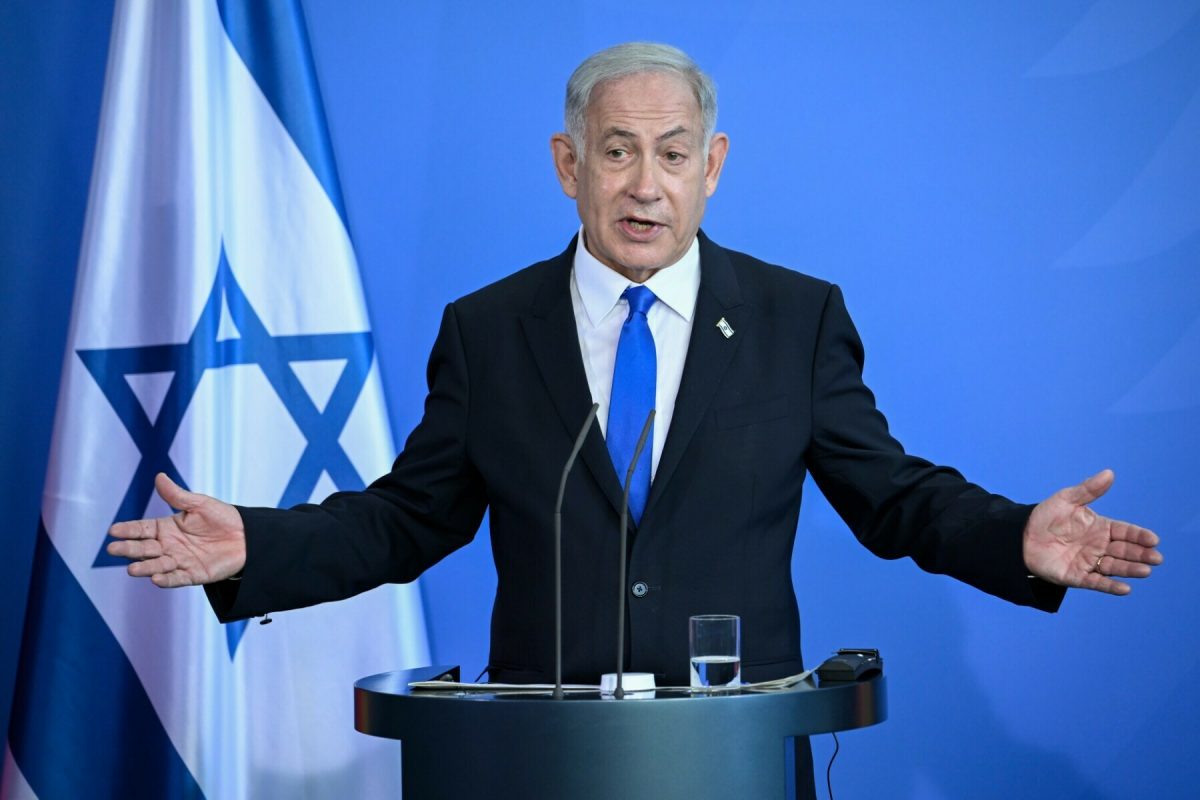
Israel set to approve thousands of building permits in West Bank

The plans for approval of 4,560 housing units in various areas of the West Bank were included on the agenda of Israel’s Supreme Planning Council that meets next week, although only 1,332 are up for final approval, with the remainder still going through the preliminary clearance process.

“We will continue to develop the settlement of and strengthen the Israeli hold on the territory,” said Finance Minister Bezalel Smotrich, who also holds a defence portfolio that gives him a leading role in West Bank administration.

Most countries deem the settlements, built on land captured by Israel in the 1967 Middle East war, as illegal. Their presence is one of the fundamental issues in the Israeli-Palestinian conflict.

Palestinians seek to establish an independent state in the West Bank and Gaza Strip with East Jerusalem as their capital. Peace talks that had been brokered by the United States have been frozen since 2014.

The U.S. State Department said it was “deeply troubled” by the move, and called on Israel to return to dialogue aimed at de-escalation.

“As has been longstanding policy, the United States opposes such unilateral actions that make a two-state solution more difficult to achieve and are an obstacle to peace,” department spokesperson Matthew Miller said in a statement.

Since entering office in January, Prime Minister Benjamin Netanyahu’s coalition has approved the promotion of more than 7,000 new housing units, most deep in the West Bank.

It also amended a law to clear the way for settlers to return to four settlements that had previously been evacuated.

In response to Sunday’s Israeli decision, the Palestinian Authority – which exercises limited self-rule in parts of the West Bank – said it would boycott a meeting of the Joint Economic Committee with Israel scheduled for Monday.

The Palestinian Islamist group Hamas, which has ruled Gaza since 2007, after Israel’s withdrawal of soldiers and settlers, condemned the move, saying it “will not give (Israel) legitimacy over our land. Our people will resist it by all means”.

Jewish settler groups welcomed the announcement.

“The people have chosen to continue building in Judea and Samaria and the Jordan Valley, and that is the way it should be,” said Shlomo Ne’eman, mayor of the Gush Etzion Regional Council and Chairman of the Yesha Council, using Israel’s biblical names for the West Bank.

US, China to expand talks to mend frosty ties

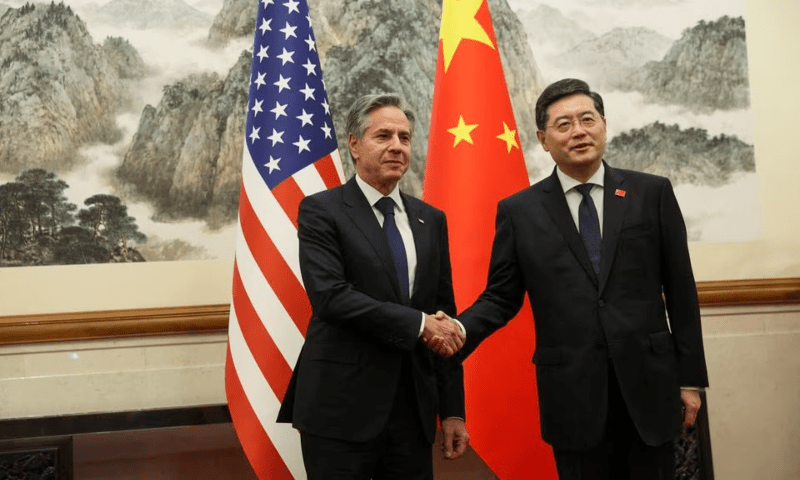
The highest-ranking US visitor to Beijing in nearly five years, Blinken spoke to his Chinese counterpart for seven and a half hours — an hour more than expected — at an ornate state villa, including over a banquet dinner.

The two sides said Foreign Minister Qin Gang agreed to pay a return visit to Washington at a later date and that the two top diplomats would work together to expand flights between the world’s two largest economies, which remain at a bare minimum since the Covid-19 pandemic.

Blinken stressed “the importance of diplomacy and maintaining open channels of communication across the full range of issues to reduce the risk of misperception and miscalculation”, State Depart­ment spokesman Matthew Miller said, calling the talks “candid, substantive and constructive”.

Blinken will hold a second day of meetings on Monday and address reporters before leaving. He and Qin made no comments on their first day as they shook hands at the state guesthouse before their respective flags in front of a painting of craggy mountains and wispy clouds.

Behind closed doors, Qin told Blinken that relations between the United States and China “are at the lowest point since the establishment of diplomatic relations,” according to state-run broadcaster CCTV.

“This does not conform to the fundamental interests of the two peoples, nor does it meet the common expectations of the international community,” Qin said during the talks at the ancient Diaoyutai gardens.

But he issued a warning on Taiwan, the self-ruling democracy claimed by Beijing, which has launched live-fire military drills twice near the island since August in anger over actions by top US lawmakers.

“The Taiwan issue is the core of China’s core interests, the most important issue in China-US relations and the most prominent risk,” Qin said.

A senior US official, speaking on condition of anonymity, said the discussions went beyond the usual talking points, including on Taiwan. “This was a real conversation,” he said.

Turning page from showdown

Blinken was originally scheduled to visit in February but abruptly scrapped his plans as the United States protested — and later shot down — what it said was a Chinese spy balloon flying over its soil.

US President Joe Biden played down the balloon episode as Blinken was heading to China, saying: “I don’t think the leadership knew where it was and knew what was in it and knew what was going on.” “I think it was more embarrassing than it was intentional,” Biden told reporters on Saturday.

Biden said he hoped to again meet President Xi Jinping after their lengthy and strikingly cordial meeting in November on the sidelines of a Group of 20 summit in Bali, where they agreed on Blinken’s visit.

“I’m hoping that, over the next several months, I’ll be meeting with Xi again and talking about legitimate differences we have but also how there are areas we can get along,” Biden said.

The two leaders are likely to attend the next G20 summit, in September in New Delhi, and Xi is invited to travel to San Francisco in November when the United States hosts the Asia-Pacific Economic Cooperation forum.

Beijing has been especially irritated by Biden’s restrictions on the export of high-end semiconductors to China, with the United States fearing possible military applications and aiming to prevent the communist state from dominating next-generation technologies.

In a rising domestic priority for the United States, an aide said Blinken is expected to press China to curb precursor chemicals sent to Latin America to produce fentanyl, the powerful painkiller behind an addiction pandemic that kills tens of thousands of Americans per year.

Washington has also lashed China over human rights, with Blinken’s visit the first by a cabinet member since the United States accused Beijing of genocide against the mostly Muslim Uyghur minority.

Keeping allies close

As part of the Biden administration’s focus on keeping allies close, Blinken spoke by telephone with his counterparts from both Japan and South Korea during his 20-hour trans-Pacific journey and met in Washington before departure with Singapore’s foreign minister.

Biden’s national security adviser, Jake Sullivan, travelled to Tokyo for separate three-way meetings involving Japan, South Korea and the Philippines.

In recent months, the United States has reached deals on troop deployments in southern Japan and the northern Philippines, both strategically close to Taiwan.

Blinken is the first top US diplomat to visit Beijing since a stop in 2018 by his predecessor Mike Pompeo, who later championed no-holds-barred confrontation with China in the final years of Donald Trump’s presidency.

The Biden administration has gone further than Trump in some areas, notably with semiconductor sanctions, but has remained open to cooperation in limited areas such as climate.

Experts say China sees more predictability with Biden than with Trump, who is running for re-election next year.


MPs will decide later whether to endorse a report that found Boris Johnson deliberately misled Parliament over lockdown parties in No 10.

A year-long inquiry from the Commons privileges committee said the former prime minister committed repeated offences with his Partygate denials.

It recommends he should have been suspended from the Commons for 90 days if he had remained an MP.

Rishi Sunak is yet to confirm whether he will vote on its findings.

It will be a free vote for Tory MPs, meaning party managers – known as whips – will not instruct them what to do at the vote, which is expected to take place on Monday evening after a debate.

The report is expected to pass easily, but it is unclear whether a vote will be recorded, with Mr Johnson asking his allies not to vote against it.

Asked by ITV’s Good Morning Britain, Mr Sunak repeatedly declined to say if he would vote on the report, saying it is “a matter for the House [of Commons], not for the government”.

“That’s an important distinction and that’s why I wouldn’t want to influence anyone in advance of that vote,” he said.


It is likely that some Conservative MPs could abstain or not turn up to take part.

Housing Secretary Michael Gove, who also served in Mr Johnson’s cabinet, has confirmed he intends to abstain – becoming the only member of the Sunak government to say what he intends to do.

Speaking on Sunday, he told the BBC there were areas where Mr Johnson’s conduct had fallen short of expectations, but he disagreed with the report’s recommendation for a 90-day suspension.

The vote is tricky politically for the prime minister, who is embroiled in a bitter war of words with his former boss over his resignation honours list.

Mr Sunak vowed to put “integrity” at the heart of his government upon entering Downing Street, and will be under pressure from opposition MPs to approve the findings from the cross-party committee.

But voting for it would enrage Mr Johnson’s supporters, some of whom have attacked the committee over their conclusions.

Mr Johnson himself also lashed out at the committee in an angry statement announcing his resignation as an MP before the report’s publication, branding it a “kangaroo court”.

Watch: Key moments from Boris Johnson’s Partygate grilling

Commons votes are initially conducted by voice, with a division – where MPs go through the voting lobbies to record their support – only called if the Speaker thinks the result is not obvious.

Opposition MPs are expected to shout “aye” later to approve the report, but if no MP in the chamber shouts “no” then there won’t be a division, meaning the votes of individual MPs will not be recorded.

In their report, the privileges committee said Mr Johnson had deliberately misled MPs when he assured them after the Partygate scandal emerged that lockdown rules had always been followed in No 10.

Mr Johnson argued during the inquiry that his assurances were made in good faith, and were based on advice from officials.

But the MPs found he had “personal knowledge” of rule-breaking events, and had failed to “pro-actively” investigate allegations that Covid rules had been broken during the pandemic.

Parliamentary pass

They concluded he had committed multiple “contempts” of Parliament – including by attacking the committee, which they added justified the 90-day ban, which is lengthy by the standards of recent years.

The report also recommends that Mr Johnson should be denied a parliamentary pass, which he would normally be entitled to as an ex-MP.

Several of Mr Johnson’s allies have heaped criticism on the committee for its findings.

Nadine Dorries, who was culture secretary in Mr Johnson’s cabinet, said the committee had “overreached,” warning that any Tory MP voting to endorse it would be “held to account” by party members.

However, it is not clear how many of his allies are ultimately willing to turn up to register their opposition.

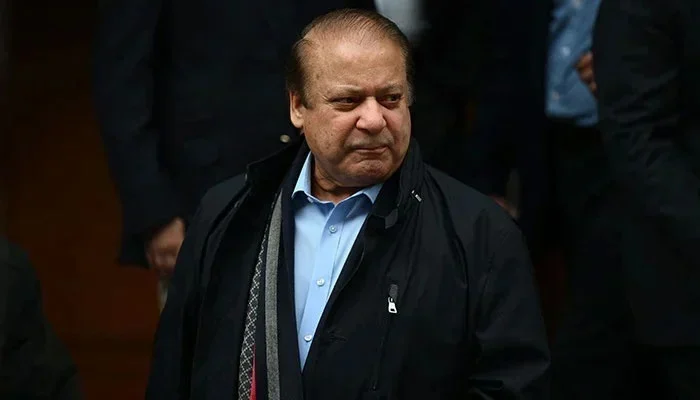
Amendment to Election Act: Attempt to pave way for Nawaz’s participation in elections?

ISLAMABAD: The ruling coalition has once again passed legislation to ensure no parliamentarian is disqualified for lifetime under Article 62 of the Constitution.

The opposition parties have termed it an attempt to ensure Pakistan Muslim League-Nawaz (PML-N) supremo Nawaz Sharif’s participation in the upcoming elections.

The earlier two attempts to reverse lifetime disqualification of a person have failed, as the Supreme Court is hearing two legislations, including “The Supreme Court Review of Judgments and Orders Bill 2023” and the law to limit the Chief Justice’s powers.

These legislations were also termed attempts to reverse Nawaz’s lifetime disqualification. However, how the apex court will react to the current legislation of amending the Election Act to limit the disqualification period is yet to be seen.

The sources in the ruling coalition claimed it is unfair for the parliamentarians who have been disqualified for a lifetime under Article 62 of the Constitution.

There was an ambiguity, and the parliament has now removed it by limiting the disqualification period to five years, they said.

When asked whether the Supreme Court can take notice of this legislation, the sources claimed: “The parliament is supreme and it has the right to legislate and remove any ambiguity if there is any in a law or act. This was due, and it should have been done a long time ago.”

When asked whether this legislation has been introduced to ensure the participation of Nawaz in the upcoming elections, the sources said it is not just for the PML-N supremo only.

In future, if any leader is disqualified, they too will be the beneficiary of it, as this is not a person-specific legislation, the sources said.

According to the amendment to the Elections Bill 2023, a copy of which is available with The News, an amendment to Section 232 (qualification, disqualification) of the Election Act 2017 has been added which reads: “Notwithstanding anything contained in any other provision of this Act, any other law for the time being in force and judgment, order or decree of any court, including the Supreme Court and a high court, the disqualification of a person to be elected, chosen or to remain as a member of the parliament or provincial assembly under paragraph (f) of clause (1) of Article 62 of the Constitution shall be for a period not exceeding five years from the declaration of the court of law in that regard and such declaration shall be subject to the due process of law”.

The amendment further adds: “The procedure, manner and duration of disqualifications and qualifications shall be such as specifically provided for in the relevant provisions of Article 63 of the Constitution and where no such procedure, manner or duration has been provided for therein, the provisions of this Act shall apply”.

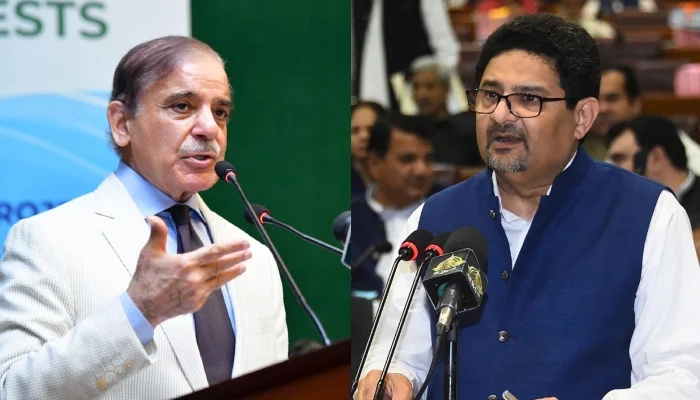
Not pulling legs, but constrained to tell truth, says Miftah in response to PM’s criticism

ISLAMABAD: Former finance minister Miftah Ismail has made it clear that he is not in the business of pulling anyone’s leg but is “constrained” to speak only the truth.

In a brief chat with The News late Friday evening, Miftah said he couldn’t hear Prime Minister Shahbaz Sharif properly when he spoke about those “out to pull Dar’s leg”.

In his address to the party’s general council meeting on Friday, the PM had, without naming anyone, mentioned that people within the party pulling Finance Minister Ishaq Dar’s legs have no right to remain part of the PML-N.


Miftah had served the PML-N government as the finance minister twice, first in 2017 and again when the incumbent government assumed office in April last year.

On both occasions, he wasn’t a member of any house of the parliament but worked as a federal minister.

However, in September last year, Dar replaced Miftah as the finance minister.

When his attention was drawn towards the prime minister’s remarks about the leg-pulling of Ishaq Dar, he said he had no clue about it.

“Why did he say it and who he was pointing to, I have no idea.” Miftah maintained.

However, Miftah has been very vocal in his criticism of his successor.

On June 9, he said that the recently revealed budget 2023-24 is in line with the International Monetary Fund’s (IMF) demands and not very expansionary.

But termed the budget “unsustainable”.

Moreover, referring to Dar’s statement in Geo News’ programme ‘Aaj Shahzeb Khanzada’ on Thursday, Miftah said that geopolitics was not invented in September last year in relation to dealing with the IMF.

“It is always happening. The Ministry of Finance should first decide whether we want to do the IMF program or not.”

Absent Abbasi

Moreover, sources told The News that former prime minister Shahid Khaqan Abbasi did not attend Friday’s PML-N general council meeting.

On the one hand, the sources hinted that PML-N stalwart Abbasi and his close buddy Miftah have no plan to part ways with Nawaz Sharif-led PML-N.

However, well-placed sources close to Abbasi — who had cooperated in laying the foundation of “Reimagining Pakistan”, an intellectual movement forum — said the former prime minister had been articulating his views about the political approach of the government in a frank manner and was found criticising economic policies and specific political steps.

Abbasi was senior vice president of the PML-N but quit the party office soon after Maryam Nawaz was made chief organiser and senior vice president.

In a strange move, he was ignored at Friday’s PML-N’s general council meeting.

He is a National Assembly member from Lahore and sits in the house on government benches. He was made prime minister by Nawaz in 2017.

Nawaz had first designated Shehbaz Sharif to replace him, but in a change of mind, he made Abbasi his replacement after his ouster due to the Panama Papers case.