IMF set to hold crucial board meeting on Pakistan bailout deal today

The International Monetary Fund (IMF) is all set to hold the Executive Board’s key vote on Pakistan’s $3 billion bailout programme today, a person familiar with the matter told Bloomberg.

Islamabad signed a short-term IMF deal on June 30 under a standby arrangement, under which the nation is set to receive $3 billion over nine months, subject to approval by the IMF’s board.

Speaking to Geo.tv, Arif Habib Limited (AHL) Head of Research Tahir Abbas said: “I am hopeful that [IMF’s board] will discuss and approve the loan.”

“Once the board approval is granted, Pakistan will receive $1.1 billion within three to four days,” Abbas added.

Pakistan’s external financing environment has improved since then as Fitch Ratings Inc. upgraded the cash-strapped country by one notch to CCC long-term foreign currency issuer rating this week.

Saudi Arabia has also deposited $2 billion into the account of the State Bank of Pakistan (SBP), Finance Minister Ishaq Dar confirmed Tuesday, a major development to ease the country’s fiscal turmoil.

With sky-high inflation and foreign exchange reserves barely enough for a month of controlled imports, analysts said Pakistan’s economic crisis could have spiralled into a debt default in the absence of the IMF bailout.

Fitch’s statement mentioned the upgrade reflected the country’s improved external liquidity and funding conditions following the SLA with the IMF, but warned that the fiscal deficit remained wide.

With the IMF deal in place, Pakistan can now unlock other external financing.

In the plan sent to the lender, sources in the Finance Division said that Pakistan arranged $3.5 billion in bilateral funds from China, $2 billion from Saudi Arabia, and $1 from the United Arab Emirates.

On the multilateral side, Pakistan aims to secure $500 million from Asian Development Bank, $500 million from World Bank, and $3 billion from the IMF.

Fitch said local authorities expect $25 billion in gross new external financing in FY24, against $15 billion in public debt maturities, including $1 billion in bonds and $3.6 billion to multilateral creditors.

The South Asian nation has also seen severe political uncertainty since former prime minister Imran Khan was ousted through a no-confidence motion in April last year.

In a bid to ensure that the programme’s measures are implemented in the lead-up to the elections due in October, the lender’s team met all mainstream political parties to seek support and consensus for the SBA.

Khan’s Pakistan Tehreek-e-Insaf said he gave his support for the deal.

Not asking Pakistan to choose between US and China: State Dept

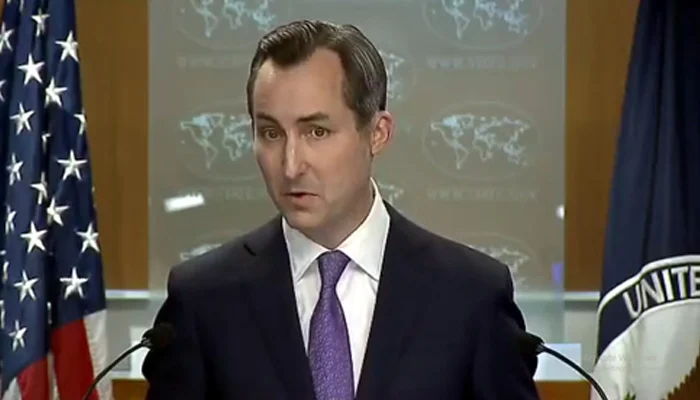
WASHINGTON: The State Department on Wednesday maintained that Pakistan is not being pressured to pick sides between US and China and that relations with Islamabad “build on our close people-to-people ties”.

State Department Spokesperson Matthew Miller was asked during a press briefing about Pakistan’s minister of state for foreign affairs, Hina Rabbani Khar’s statement that Islamabad had no appetite to pick a fight in the growing global rivalry between Washington and Beijing.

“No, the United States does not ask Pakistan or any other country to choose between the United States and the PRC [People’s Republic of China] or to choose between the United States and any other country,” the spokesperson said.

Miller said that relations with Pakistan are based on close people-to-people ties, and the US will continue to seek ways to expand its partnership and economic ties with the South Asian nation.

“Our economic cooperation with Pakistan reflects our vision for the region as one of — comprised of nations that are independent, strong, and prosperous. And our relationships are based on a spirit of respect and partnership.”

US welcomes Pak-IMF deal

The spokesperson also commented about the recently concluded staff-level agreement between Pakistan and the International Monetary Fund (IMF) on a $3 billion bailout package.

The State Department official didn’t deny the reports that the US played a key role in helping Pakistan to secure the deal.

“What I would say is that we stand by the Pakistani people during these difficult times. We welcome the progress that has been made between the IMF and Pakistan in having reached a staff-level agreement,” he replied and vowed to continue supporting Islamabad.

“Our support for the country’s economic success is unwavering.”

The US will continue to engage with Pakistan through technical engagements and continue to strengthen its trade and investment ties, all of which are priorities for the bilateral relationship, he added.

“We believe Pakistan has a lot of hard work ahead to be on a long-term sustainable path to economic recovery and prosperity, but we will continue to stand by them through that process.”

Flash floods rage in New York, reservoir threatens to overwhelm dam in Vermont

More than 13 million Americans were under flood watches and warnings from Eastern New York state to Boston and Western Maine to the northeast, the National Weather Service said in its forecast Monday, after storms that began over the weekend inundated rivers and streams.

Meanwhile, a Vermont reservoir threatened to overwhelm a dam protecting the state’s capital on Tuesday and exacerbate “catastrophic” flooding that has already shut roadways leading out of town and trapped some residents in their homes.

Private forecaster AccuWeather estimated damages and economic loss at $3 billion to $5bn, preliminarily, based on its own method of evaluation.

More than 1,000 flights to and from airports across the region, including New York’s LaGuardia and Boston’s Logan, were delayed or cancelled on Monday due to the rains.

Amtrak suspended passenger train service between the state capital Albany and New York City after flooding damaged tracks, as did the Metro-North commuter railroad which shares some of the same track.

New York and Vermont were the hardest-hit states.

Vermont officials were calling the flooding the worst since Hurricane Irene reached the state as a tropical storm in 2011.

“This is an all-hands-on-deck” event, Vermont Governor Phil Scott told a news conference.

Parts of Vermont had already received between seven and eight inches of rain, turning streets into raging rivers.

Some 50 isolated people were rescued by swift boat, said Mark Bosma, spokesperson for Vermont Emergency Management, on WCAX television. Officials expected rivers to flood overnight, posing risks to cities such as Montpelier, the state capital.

“We really want people to be hyper-vigilant and monitoring the weather and don’t wait too long to get higher ground,” Bosma said.


Swiftboat crews rescued about a dozen campers in Andover, said Jeanette Haight, the town’s clerk.

“A bridge washed out, and that was the only way in or out,” she said. “The call for help went out at 4am and they set up a swift-boat rescue. Everyone is safe this morning.”

In New York, more than eight inches of rain fell from Sunday to Monday in Stormville, a small town just over 50 miles northeast of New York City.

The weather claimed the life of an Orange County, New York, woman, swept away by floodwaters as she tried to leave her home with her dog on Sunday, officials said.

“Her fiance literally saw her swept away,” New York Governor Kathy Hochul told a press conference in the town of Highland Falls.

Much of the New York flooding was along the Hudson River north of New York City including the Orange County town of West Point, home to the Army’s US Military Academy.

Video and photos posted on social media showed washed-out roadways and raging floodwaters reaching houses on Sunday and early Monday morning.


“Oh my God. It’s up to my knees,” Melissa Roberts said in a video showing floodwaters rushing past her and several vehicles and up to homes in Orange County.

More rain forecast

Concerns over the Vermont dam have worsened as more rains threaten to cause additional flooding across Vermont, the northeastern corner of New York state and parts of Connecticut and Massachusetts, the National Weather Service said.

Light to moderate showers were in the forecast on Tuesday, before gradually diminishing throughout the day.

As much as another half an inch of rain was expected for the area, the service said, while rain showers and thunderstorms were in the forecast each day this week.

The Winooski is one of three major Vermont rivers that were cresting on Tuesday morning at or near record levels, said Weather Service forecaster Marlon Verasamy.

In Johnson, in central Vermont, the Lamoille River was at 21 feet, some five feet above its normal flood stage, he said.

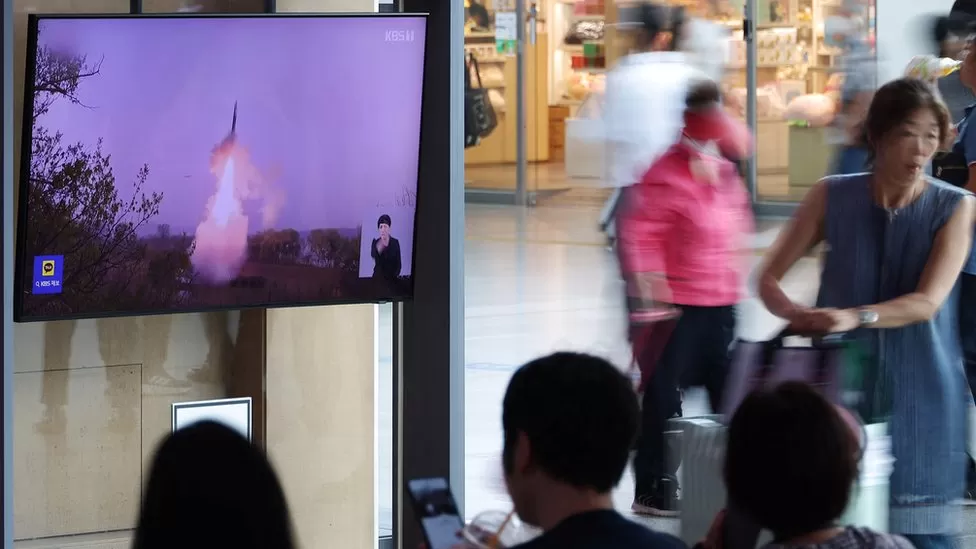
North Korea has fired a suspected intercontinental ballistic missile (ICBM), Japanese and South Korean officials report.

The long-range missile flew for more than an hour before landing short of Japanese waters on Wednesday morning.

Pyongyang’s launch comes after it threatened retaliation against what it said were recent US spy plane incursions over its territory.

Earlier this week it threatened to shoot down such planes.

Washington has dismissed the accusations, saying its military patrols are in line with international law.

Security concerns have ramped up on the peninsula this year after North Korea tested new weapons. The country also conducted a record number of missile launches in 2022 including ones capable of reaching US territory.

In response, the US and South Korea have increased their joint military drills around the peninsula.

Pyongyang so far has continued with its missile launches – testing a new ICBM in April which it described as its “most powerful” missile to date. It also tried to launch a spy satellite in May which failed.


North Korea’s missile on Wednesday flew eastwards from Pyongyang for more than an hour before landing in the sea west of Japan around 11:15 local time (02:15 GMT), the Japanese Coast Guard reported. The high-angled flight covered a 1,000km (621 miles) distance said South Korea’s military.

South Korean and US officials met immediately after Wednesday’s launch, issuing a statement reiterating their “strengthened” joint defence.

“We strongly condemn North Korea’s launch of a long-range ballistic missile as a grave provocative act that harms the peace and stability of the Korean peninsula and the international community and is a clear violation of UN Security Council resolutions,” the South Korean Joint Chiefs of Staff said.

South Korean President Yoon Suk-yeol also convened an emergency meeting of his national security council from Lithuania. where he is attending the Nato summit.

North Korea’s last launch was in mid-June when it fired two short-range ballistic miles in response to US and South Korean drills. It last test-fired an ICBM in February.

ICBMs are particularly worrying because of their long range, including mainland United States.

When Pyongyang tested one in November 2022, it fired it at a high-angle, short-range trajectory. But this could have reached the US mainland if it were fired at a lower trajectory, the Japanese government said at the time.

Wednesday’s launch comes days after heated rhetoric from Pyongyang warning the US to stop its air patrols and proposal for a nuclear submarine to visit Korean waters.

On Monday, North Korean leader Kim Jong Un’s powerful sister, Kim Yo-jong, accused a US surveillance plane of violating North Korea’s air space. She said if such flights continued, there would be “shocking” consequences.

Such rhetoric falls into Pyongyang’s pattern of “inflating external threats to rally domestic support and justify weapons tests”, said Prof Leif-Eric Easley, a North Korea expert at Ewha University in Seoul.

He added Pyongyang often timed launches to “disrupt what it perceives as diplomatic coordination against it”, referring to the Nato summit where South Korea and Japan leaders were due to meet on the sidelines.

Despite UN sanctions, Kim Jong-Un has repeatedly vowed to increase his country’s production of nuclear warheads and development of more powerful weapons.

Analysts are expecting the latest North Korean hardware to be on display in late July when the country celebrates the anniversary of the Korean War armistice, known in the country as Victory Day.

G7 members are expected to ratify a wide-ranging security pact with Ukraine at the Nato summit on Wednesday.

But they stopped short of providing a timeframe for Kyiv to join the security alliance, provoking the anger of President Volodymyr Zelensky.

The security arrangement will include defence equipment, training and intelligence sharing.

And UK Prime Minister Rishi Sunak said it would send a “strong signal” to Russian President Vladimir Putin.

The security arrangement with Ukraine comes after its President Volodymyr Zelensky raged against Nato’s reluctance to offer Kyiv a timeframe for joining the alliance.

G7 leaders will sign the declaration in Vilnius on Wednesday on the side-lines of the second day of a Nato defence summit.

Speaking ahead of a meeting with President Zelensky on Wednesday, Mr Sunak said Kyiv’s allies were ramping up their “formal arrangements to protect Ukraine for the long term”.

“We can never see a repeat of what has happened in Ukraine and this declaration reaffirms our commitment to ensure it is never left vulnerable to the kind of brutality Russia has inflicted on it again,” he said.

British officials said the UK had played a leading role in the agreement involving G7 partners Canada, France, Germany, Italy, Japan and the US. More details are expected on Wednesday.

US President Joe Biden earlier suggested a model for Ukraine similar to his country’s agreement with Israel. Under that deal, Washington has committed to providing $3.8bn (£2.9bn) in military aid per year over a decade.

But unlike Nato membership – this does not include a clause to come to the target nation’s aid during a time of attack.

The G7 announcement comes after Nato said Ukraine could join the military alliance “when allies agree and conditions are met” – a delay Mr Zelensky has called “absurd”.

Kyiv accepts it cannot join Nato while it is at war with Russia but wants to join as soon as possible after fighting ends.

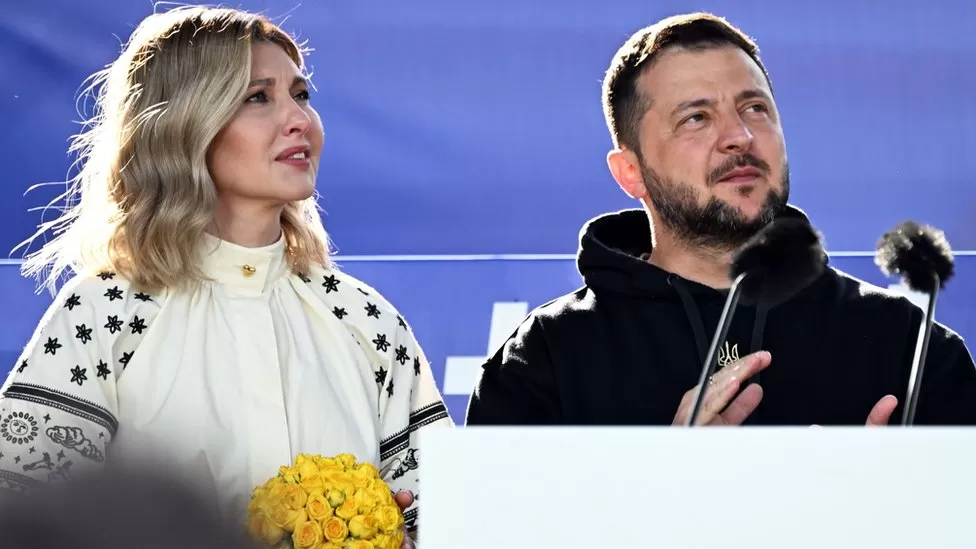
Addressing crowds in the Lithuanian capital on Tuesday, Mr Zelensky said: “Nato will give Ukraine security – Ukraine will make the alliance stronger.”

He also presented a battle flag from the destroyed city of Bakhmut – the site of the longest, and possibly bloodiest, battle in Russia’s invasion of Ukraine.

Mr Zelensky had earlier tweeted that “uncertainty is weakness”, and said the lack of an agreed timeframe meant his country’s eventual membership could become a bargaining chip.

Nato might not have said when and how Ukraine might join the alliance, but diplomats emphasised that they had set out a clear path to membership, with the onerous application process shortened significantly.

They said they had recognised that Ukraine’s army was increasingly “interoperable” and more “politically integrated” with Nato forces, and promised continue supporting reforms to Ukraine’s democracy and security sector.

Diplomats also highlighted the creation of a new Nato-Ukraine Council, meeting on Wednesday for the first time, which will give Kyiv the right to summon meetings of the whole alliance.

Some member states fear near-automatic membership for Ukraine could give Russia an incentive to both escalate and prolong the war.

In the past, Western security pledges failed to deter two Russian invasions. Nato allies hope a third round will be robust and explicit enough to persuade the Kremlin that further aggression would be too costly.

The two-day Nato summit is taking place in Vilnius, Lithuania

A series of military packages for Ukraine were also announced at the summit on Tuesday.

A coalition of 11 nations will start training Ukrainian pilots to fly US-made F-16 fighter jets at a centre to be set up in Romania in August, officials said.

In May the US gave the go-ahead for its Western allies to supply Ukraine with advanced jets, including the long sought F-16s – a significant upgrade on the Soviet-era planes it is currently using.

Ukraine had repeatedly lobbied its Western allies to provide jets to help with its recently-begun counter-offensive aiming to retake territory seized by Russia.

However experts say the training of Ukrainian pilots to fly and operate Western jets will take some time.

In addition to the G7 security pact, the UK has announced plans to deliver more than 70 combat and logistics vehicles to Ukraine, aimed at boosting its counteroffensive operation.

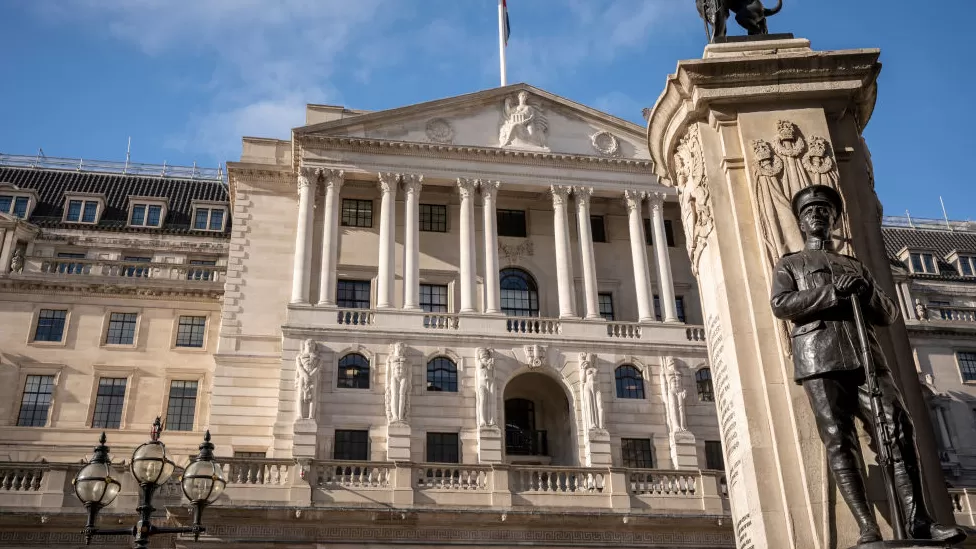
UK banks are strong enough to withstand a fresh economic crisis, according to the Bank of England.

In its stress test of the financial system, the Bank said the UK’s eight largest lenders could survive a worst case scenario of plunging house prices, a deep recession and soaring inflation.

It also said that the country has “so far been resilient” to rapidly rising interest rates.

But some households and firms “may struggle with repayments” on loans.

Big powers shouldn’t make ‘terrorism a victim of geopolitics’, Bilawal advises after US-India rhetoric

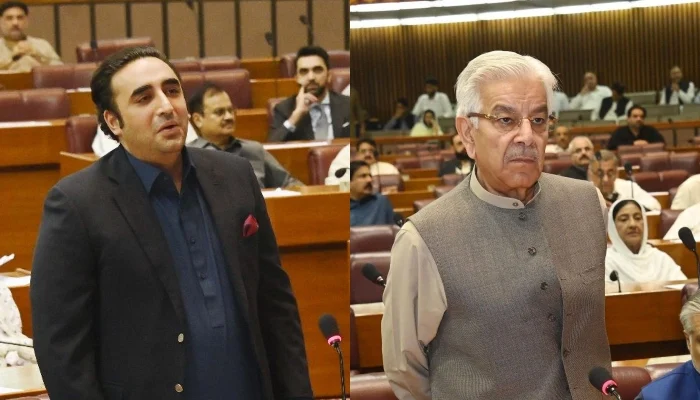
Following the United States and India’s joint statement mentioning Pakistan, Foreign Minister Bilawal Bhutto-Zardari said Islamabad shouldn’t be “insecure” about it but advised big powers not to make “terrorism a victim of geopolitics”.

In an address to the National Assembly, Bilawal said that the Foreign Office would issue a “detailed policy statement” on the recent US-India joint statement that mentioned Pakistan. However, he shared some “observatory notes” on the issue on the floor of the lower house of parliament.

The country’s top diplomat told parliamentarians that he believes it is “important for Pakistan to stay away from world politics and focus on itself”.

He added once political stability and economic issues are resolved, then Pakistan can achieve its “international targets in the world”.

“I don’t believe there is any reason for Pakistan to be insecure about its relationship with the world or its bilateral partnership with America as a result of increasingly close cooperation between the US and India,” the foreign minister said. He added that Pakistan was standing on its own feet yesterday and is still standing today.


Pakistan, he further said, would move forward on its own as per the people’s aspirations, not because in the US-India joint statement, “terrorism was mentioned and Pakistan would take action”.

He also reminded the world that Pakistan is the most affected nation by terrorism, even if the casualties of India, the US, Iran and the rest of the world is counted.

“Due to our national security and the people’s future, we want to fight terrorism. We have before on the people’s mandate we took up this issue in 2008 and defeated them,” Bilawal said. However, he added that the policies of the Pakistan Tehreek-e-Insaf (PTI) government “pushed back” Islamabad.

“And once again this issue is a problem for us and today it is our problem and God forbid might become a problem for some other country. We want to fight [terrorism] for our reasons and to establish peace in our country,” he went on to say.

‘Easy to add focus on terrorism in statement’

In a rebuke to India on the inclusion of Pakistan’s name in the statement, the foreign minister expressed concern that ever since he took charge and departure of the world from Afghanistan, terrorism has been on the back burner, and Ukraine is the main issue.

“No one is focused on terrorism. It is very easy to add that “there should be work on terrorism” in your statement.”

He added that after the fall of Kabul, for the US, Europe or any other country, their focus is on “geopolitics and then other issues”.

“We believe that terrorism is such an issue that big powers should not make it controversial. They shouldn’t make it a victim of geopolitics. If we have to face terrorism properly then we will do it ourselves in our country,” he further said.

As far as fighting the menace of terrorism in the world is concerned,  Bilawal said, Pakistan can only do it if its international partners take it seriously if they decide not to play geo politics on terrorism.

“The whole world will [have to] unite and fight this then we will be able to take out its root and end it.”

‘Terrorism entered Pakistan due to alliance with US’

The foreign minister touched on the topic of the US-India joint statement after Defence Minister Khawaja Asif spoke about it in the assembly before he was given the microphone.

Asif said that Pakistan today is paying a heavy price for serving as a frontline state in the two Afghan wars.

“Terrorism entered Pakistan because it acted as an ally of the United States in the war on terrorism,” he said, regretting that the sacrifices of Pakistan were not acknowledged.

The federal minister also recalled that it was Indian Prime Minister Narendra Modi who oversaw the killings of thousands of Muslims and the rape of Muslim women in Gujarat during his tenure as the chief minister of the state, and in recognition of those atrocities, the US, at that time, had imposed a ban on issuing a visa to him.

“The Indian prime minister continues to target the minorities, especially the Muslims. There is an undeclared curfew in Indian Illegally Occupied Jammu and Kashmir (IIOJK) and the people there are living under restrictions of all sorts in blatant violation of human rights,” Asif added. He also said that the Indian government is perpetrating state terrorism in the occupied territory.

Biden, Modi jointly call on Pakistan to end ‘cross-border terrorism’

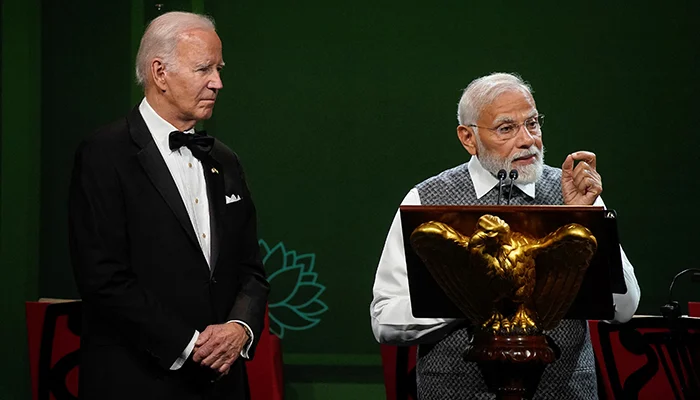
The minister spoke about the issue after US President Joe Biden and PM Modi jointly demanded Islamabad take steps to make sure that Pakistani soil is not being used in “launching terror attacks”.

A joint statement issued after the meeting of Biden with the Indian premier, who is on a state visit to the United States, said that their countries stood together against global terrorism.

The two leaders called for action against extremist groups allegedly based in Pakistan, such as Lashkar-e-Taiba and Jaish-e-Mohammad.

“They strongly condemned cross-border terrorism, the use of terrorist proxies and called on Pakistan to take immediate action to ensure that no territory under its control is used for launching terrorist attacks,” the 58-point statement issued by the White House read.

Biden and Modi also reiterated the call for concerted action against all UN-listed terrorist groups, including Al-Qaeda, Daesh and Hizbul Mujahideen.

They stressed bringing the perpetrators of attacks, including the bloody 2008 siege of Mumbai and the Pathankot incidents.


Nawaz Sharif to embark on visits to Saudi Arabia, UAE tomorrow

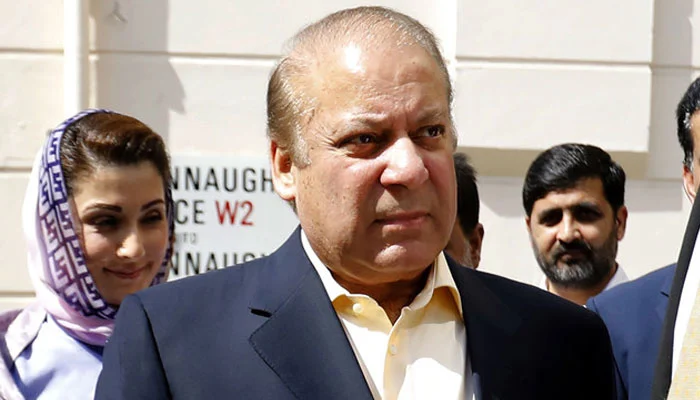
LONDON: Pakistan Muslim League-Nawaz (PML-N) supremo and former prime minister Nawaz Sharif on Saturday (tomorrow) is set to travel to the United Arab Emirates (UAE) and Saudi Arabia where he is expected to spend Eid ul Adha with his family and perform Umrah.

The three-time premier confirmed to this reporter that he will be visiting Dubai, Abu Dhabi and Saudi Arabia for about three weeks. He will be holding meetings with members of royal families and local businessmen as well as community leaders.

Hussain Nawaz — the elder son of the former prime minister —  also told reporters that his father would be going to Dubai and travel to Saudi Arabia to perform the holy pilgrimage.

It is understood that the PML-N supremo will be joined by PML-N Vice President Maryam Nawaz and other family members including Finance Minister Ishaq Dar.

Prime Minister Shehbaz Sharif arrived in London over the weekend after his trip to Paris. Nawaz Sharif will be meeting his younger brother before going to Saudi Arabia.

The PML-N supremo had spent the previous Eid with his family in the kingdom where PM Shehbaz and other family members joined him in the last days of Ramadan and over Eid ul Fitr.

PML-N sources said Nawaz will be returning to Pakistan in the next few months.

Kiswah: New Kaabah cover ready to embrace

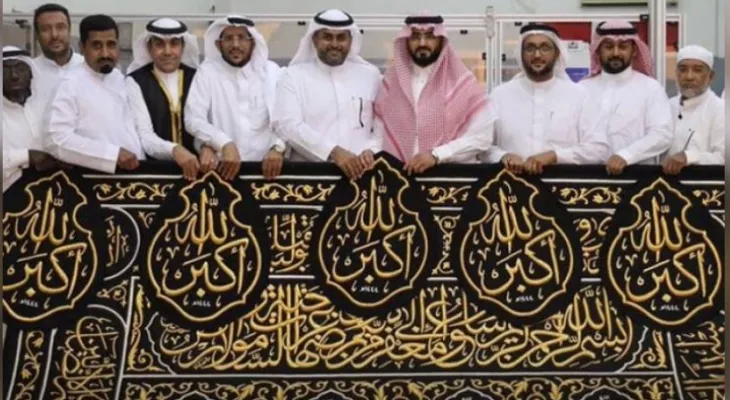
King Abdulaziz Complex for the Holy Kaabah Kiswah has almost finished manufacturing the new cover (Kiswah) for the coming Hijri year 1445.

The holy Kaaba is draped with a new covering, called Kiswah, every year.

Hundreds of kilogrammes of silk, gold, and silver are used in the manufacturing of Kiswah.

The ritual used to perform on the ninth or tenth day of Dhul Hijja, the 12th and final month of the Islamic calendar.

This year, it will be replaced on the first Muharram, the first month of the Islamic calendar.

The lower part of the Kiswah has been raised about three meters and the area beneath has been covered with white cotton fabric in preparation for Hajj.

The same procedure is repeated annually before the Hajj season in order to protect the black cloth, as some pilgrims touch it while circling the Kaaba.

King Abdulaziz Complex has manufactured Kiswah according to an operational plan.

The complex is gearing up to complete the manufacturing process to ensure that Kiswah is produced as scheduled and installed on the holy Kaabah on the first of Muharram, the first month in the Hijri calendar.

Biden, Modi jointly call on Pakistan to end ‘cross-border terrorism’

US President Joe Biden and Indian Prime Minister Narendra Modi have jointly demanded Islamabad take steps to make sure that Pakistani soil is not being used in “launching terror attacks”.

A joint statement issued after the meeting of Biden with the Indian premier, who is visiting the United States, said that their countries stood together against global terrorism.

The two leaders called for action against extremist groups allegedly based in Pakistan such as Lashkar-e-Taiba and Jaish-e-Mohammad.

“They strongly condemned cross-border terrorism, the use of terrorist proxies and called on Pakistan to take immediate action to ensure that no territory under its control is used for launching terrorist attacks,” the  58-point statement issued by the White House read.

Biden and Modi also reiterated the call for concerted action against all UN-listed terrorist groups including Al-Qa’ida, Daesh and Hizb-ul-Mujhahideen.

They stressed bringing the perpetrators of attacks, including the bloody 2008 siege of Mumbai and the Pathankot incidents.
 

Moreover, while discussing the humanitarian crisis in Afghanistan, Biden and Modi concurred on the need for uninterrupted provision of immediate assistance to the people of Afghanistan.

“The leaders reiterated their strong support for a peaceful, secure, and stable Afghanistan,” the statement read.

They also urged the Taliban to abide by UNSC Resolution 2593 which demands “Afghan territory should never be used to threaten or attack any country, shelter or train terrorists, or plan or finance terrorist attacks”.

The leaders stressed the need for the formation of an inclusive political structure, calling on the Taliban to respect the human rights of all Afghans inclusive of women and girls.

The two countries also voiced “deep concern about the deteriorating situation in Myanmar,” where the military ousted a fledgling civilian government in 2021. They called for the release of all those arbitrarily detained, the establishment of constructive dialogue, and the transition of the Southeast Asian country toward an inclusive federal democratic system.

President Biden highlighted the impactful participation of Prime Minister Modi in the G7 Hiroshima Summit and said that he looks forward to the G20 Summit in September in New Delhi. He also applauded India’s leadership in its ongoing G20 Presidency,