Indonesian president warns ASEAN ‘can’t be proxy’ of any country

Indonesian President Joko Widodo on Friday said ASEAN cannot become a proxy for other countries, as US-China tensions rise over issues in the Asia-Pacific.

Foreign ministers from the Southeast Asian bloc have gathered in Jakarta for talks about regional issues from the disputed South China Sea, which Beijing claims almost in its entirety, to the crisis in Myanmar, where China is its junta’s main ally.

Disagreements over the waterway have pitted some members of the Association of Southeast Asian Nations (ASEAN) against Beijing and boosted sympathy for US opposition to China’s growing assertiveness. Others have backed Beijing.

“ASEAN cannot be a competition, it can’t be a proxy of any country, and international law should be respected consistently,” Widodo told the ministers.

“We in ASEAN are committed to strengthening the unity and solidity as well as centrality in ASEAN to guard the peace and stability in the region.”

Tensions between the world’s two largest economies have soared in recent years over a host of issues, including China’s drills around self-ruled Taiwan and sweeping US export restrictions on advanced semiconductors.

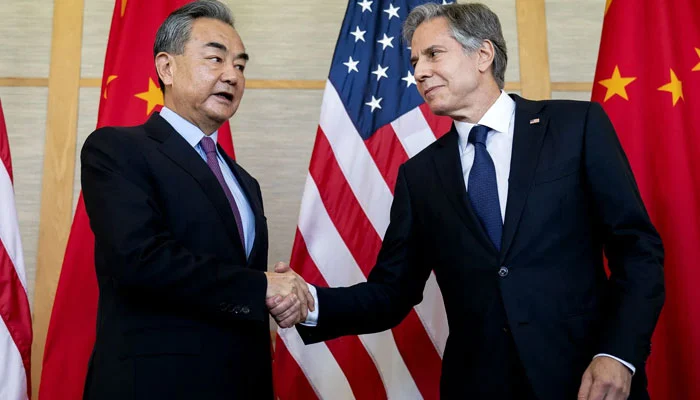
The Jakarta meetings have been joined by both China and the United States, whose top diplomats met Thursday on the sidelines in the Indonesian capital.

US Secretary of State Antony Blinken warned China’s Wang Yi of consequences after a cybersecurity breach blamed on China again threatened to undermine a nascent stabilisation of ties, a US official told AFP.

Wang told Blinken that the United States should not interfere in China’s affairs and “work with” Beijing to improve their relationship, according to the Chinese foreign ministry.

ASEAN has been divided on the Myanmar crisis and how to engage with its pro-China junta since the 2021 coup plunged the country into violent turmoil.

The bloc issued a much-debated communique on Thursday that repeated its condemnation of violence. It reiterated that a five-point peace plan agreed with the junta, but largely ignored since, must remain the basis for resolving the conflict.

Myanmar remains an ASEAN member but its rulers have been barred from top-level summits over a lack of progress on the plan, which aims to end violence and resume talks between the military and the anti-coup movement.

“The Indo-Pacific should not be another battleground. Our region must remain stable, and we intend to keep it that way,” Indonesia’s Foreign Minister Retno Marsudi told ministers at the start of an 18-nation East Asia Summit ministerial meeting on Friday.

Record-breaking heat bakes US, Europe, China

Extreme heat advisories have been issued for more than 100 million Americans with the National Weather Service forecasting particularly dangerous conditions in Arizona, California, Nevada and Texs

At the same time, several European nations, including France, Germany, Italy, Spain and Poland, are also baking in searing temperatures.

The mercury may soar as high as 48 degrees Celsius (118.4 degrees Fahrenheit) on the islands of Sicily and Sardinia, the European Space Agency said – “potentially the hottest temperatures ever recorded in Europe.”

North Africa has also been sweltering and the Moroccan meteorological service issued an extreme heat red alert for southern parts of the country.

Some regions of China, including the capital Beijing, are also experiencing sweltering temperatures and a major Chinese power company said its single-day power generation hit a record high on Monday.

Last month was already the hottest June on record, according to the US space agency NASA and the European Union’s Copernicus Climate Change Service.

Extreme weather resulting from a warming climate is “unfortunately becoming the new normal,” warns Secretary-General Petteri Taalas of the World Meteorological Organization (WMO).

Excessive heat is one of the deadliest meteorological events, according to the WMO. One recent study estimates over 61,000 people died from heat during Europe’s record-breaking summer last year.

Death Valley

A contributing factor to the higher temperatures this year may be the climate pattern known as El Nino.

El Nino events, which occur every two to seven years, are marked by warmer-than-average sea surface temperatures in the central and eastern Pacific near the Equator, and last about nine to 12 months.

North America has already seen a series of extreme meteorological events this summer, with smoke from wildfires that continue to burn out of control in Canada causing extraordinary air pollution across large parts of the United States.

The US northeast, particularly Vermont, has also recently been pummelled by torrential rains which have caused devastating floods.

According to climate scientists, global warming can cause heavier and more frequent rainfall.

Meanwhile, residents of much of the southern United States have been experiencing unrelenting high temperatures for weeks.

Daniel Swain, a climate scientist at the University of California, Los Angeles, said the temperature in Death Valley could equal or surpass the record for the hottest air temperature ever reliably measured on Earth.

The WMO’s official record is 56.7C (134F) recorded in Death Valley, in the southern California desert. But that was measured in 1913 and Swain stands by the figure of 54.4C (130F) from 2020 and 2021.

‘Exceptionally high’

The oceans have not been spared from the warm early summer either.

Water temperatures off the southern coast of Florida have surpassed 32C (90F), according to the National Oceanic and Atmospheric Administration.

As for the Mediterranean, surface temperatures will be “exceptionally high” over the coming days and weeks, the WMO said, exceeding 30C (86F) in some parts, several degrees above average.

Warming ocean temperatures can have devastating consequences for aquatic life both in terms of survival and migration and can also negatively impact the fishing industry.

At the other end of the planet, Antarctic sea ice hit its lowest recorded level for a month of June.

The world has warmed an average of nearly 1.2C (1.9F) since the mid-1800s, unleashing more intense heatwaves, more severe droughts in some areas and storms made fiercer by rising seas.

The WMO’s Taalas said the current heat wave “underlines the increasing urgency of cutting greenhouse gas emissions as quickly and as deeply as possible.”

France to fete India’s Modi at Bastille Day celebration

Modi and President Emmanuel Macron will watch French and Indian soldiers march down the tree-lined Champs-Elysee avenue in Paris, while French-made Rafale fighter jets India bought in 2015 will take part in the fly-past over the Arc de Triomphe.

Modi began a two-day visit to Paris on Thursday.


The parade comes after New Delhi gave initial approval to purchase an extra 26 Rafale jets for its navy and three Scorpene class submarines, deepening defence ties with Paris at a time the two nations are seeking allies in the Indo-Pacific.

The total value of the purchases is expected to be around 800 billion rupees ($9.75 billion), according to a source familiar with the details, although that was still subject to negotiations.

France has been one of India’s closest partners in Europe for decades. It was the only Western nation to not impose sanctions on New Delhi after India conducted nuclear tests in 1998.


India has relied on French fighter jets for four decades now. Much before buying Dassault Aviation’s Rafale, India bought Mirage jets in the 1980s and those still comprise two squadrons of the air force.

The ageing fleet of India’s Russian-made planes, Moscow’s inability to perform maintenance work, and delays in India’s indigenous manufacturing plans have necessitated the two new defence deals.

Later on Friday, Macron will host Modi at the Elysee Palace for talks before a state banquet at the Louvre Museum.

For France, the strategic partnership with India is crucial as it seeks to consolidate its alliance network in the Indo-Pacific region after being dealt a blow by Australia when Canberra decided to ditch a big French submarine contract and form the AUKUS alliance with Britain and the United States.

Both India and France through its island territories have deep interests in the Indian Ocean and are concerned about China’s growing assertiveness in the region.

The two-day visit comes less than a month after President Joe Biden hosted Modi for a state visit, during which the US offered critical military technology including fighter jet engines and high-altitude drones to India.

Macron has treated only a few global leaders to the Bastille Day military parade.

He invited Donald Trump for the 2017 celebrations, and the then-US president was so impressed by the French march-past that he asked Pentagon officials to explore a similar parade in celebration of American troops.

Scotland’s top civil servant was told about the arrest of Nicola Sturgeon’s husband shortly after it happened, according to an email.

The email says John-Paul Marks was contacted by the chief constable at 08:00 on 5 April and told that Peter Murrell had been taken into custody.

Officers had arrived at the Glasgow home of Mr Murrell and Ms Sturgeon about 25 minutes earlier.

A police press release announcing the arrest was issued at about 09:30.

The email, which was sent by Mr Marks to First Minister Humza Yousaf at 09:20 that morning, has been released by the Scottish government under freedom of information laws.

In it, Mr Marks tells Mr Yousaf that it was “routine” for Chief Constable Sir Iain Livingstone to inform him of all high-profile Police Scotland (PS) action.

He wrote: “The Chief Constable (CC) contacted me at 8am this morning to update on Operation Branchform.

“Following agreement with the Crown Office, PS have arrested a suspect and taken him into custody to be interviewed under caution.

“I informed you after the event and after this PS action had occurred as is routine, with the explicit permission of the CC.

“In terms of any and all liaison from SG (Scottish government) Ministers or senior SG officials on Operation Branchform, I have agreed with the CC that this should be via me only without exception”.

Nicola Sturgeon has said she had no prior warning that her husband Peter Murrell was to be arrested

Mr Marks is the Scottish government’s permanent secretary – its most senior civil servant.

A subsequent email was sent by him to the first minister shortly after the arrest of then-SNP treasurer Colin Beattie on 18 April.

Mr Marks again wrote that he formally informed Mr Yousaf of the arrest after it had happened, on the advice of the chief constable.

The email was sent at 09:02, just minutes after the arrest of Mr Beattie had been made public in a police press release.

Both Mr Murrell and Mr Beattie were subsequently released without charge pending further investigation, as was Ms Sturgeon following her arrest on 11 June.

The ongoing Operation Branchform investigation is examining the funding and finances of the SNP, and was launched in response to concerns about what happened to £660,000 of money that was donated to the party by activists.

Ms Sturgeon and Mr Yousaf have both previously said they had no prior warning in advance of the arrests, with Sir Iain Livingstone saying last month that any suggestion the government had been told before the arrests were made was “absolutely outrageous”.

Five more soldiers martyred in Zhob garrison attack, toll rises to nine

With five more soldiers scumbled to their injuries, the number of military personnel who embraced martyrdom climbed to nine as terrorists launched a “dastardly attack” on the Pakistan Army’s Zhob Garrison in Northern Balochistan, the Inter-Services Public Relations (ISPR) said in a statement on Wednesday.

Earlier today, the military’s media win said that four soldiers were martyred and five critically injured in the terrorists’ attack.

In the wee hours of Wednesday, a group of terrorists launched a dastardly attack on the garrison, the ISPR said, adding that the initial attempt to sneak into the facility was “checked by soldiers on duty”.

Upon interception, a heavy exchange of fire took place between the terrorists and soldiers, with the militants being “contained into a small area at the boundary”.

“Security forces remain determined to thwart all such ghastly attempts at destroying the peace of Balochistan and Pakistan,” the ISPR added.

Later tonight, the army’s media wing announced that the clearance operation at the Zhob Cantt has been completed, adding that five terrorists have been killed during the operation.

“However, five soldiers while fighting gallantly got critically injured earlier succumbed to injuries and embraced shahadat [martyrdom] taking the figure to a total of 9 shaheeds.”

The ISPR said that the security forces and the nation remain resilient and determined to thwart all such dastardly attempts of the enemy aimed at destroying the peace of Balochistan and Pakistan.

Terror activities in the country have soared by 79% during the first half of 2023, a statistical report released by the independent think tank Pakistan Institute for Conflict and Security Studies (PICSS) showed.

The report voiced alarm, stating that at least 271 militant attacks took place during the last six months, resulting in the loss of 389 lives and injuring 656 individuals.

The situation in the same timeframe last year was way better as compared to the current, as the first half of 2022 saw 151 attacks and 293 deaths, and 487 injuries.

These figures represent a staggering 79% increase in militant attacks during the first half of this year compared to the corresponding period last year.

Furthermore, the latter half of 2022 recorded 228 attacks, resulting in 246 fatalities and 349 injuries. Thus, the first six months of 2023 witnessed an 18% rise in attacks compared to the latter half of 2022, accompanied by a 58% increase in fatalities and an 88% increase in injuries.

Pakistani security forces have also stepped up their response against terrorism and killed at least 236 militants across the country while 295 suspected militants were also arrested during the first six months of 2023.

Parliamentary panel expedites work on electoral reforms

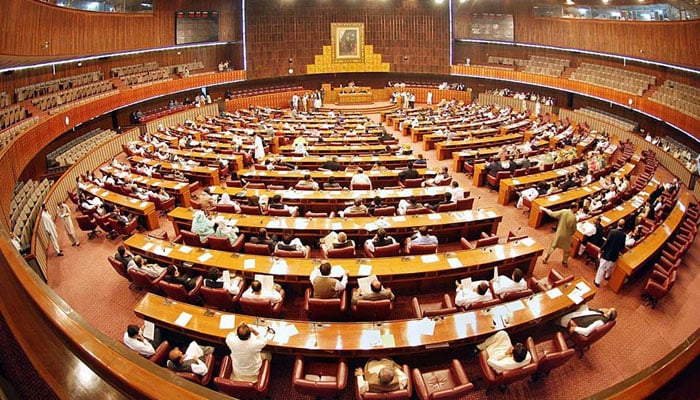
ISLAMABAD: The Parliamentary Committee on Electoral Reforms has expedited the work on the amendments to the election laws by examining 73 rectification proposals presented before it

The panel has reportedly decided to finalise the recommendations by the next week and get the reforms to the Election Act approved by both houses of parliament before the end of the tenure of the National Assembly, which Prime Minister Shehbaz Sharif has said will be in August.

An in-camera meeting of the Parliamentary Committee on Electoral Reforms headed by its chairman and Minister for Economic Affairs, Sardar Ayaz Sadiq.

Committee members, including Law Minister Azam Tarar, Dr Fehmida Mirza, Commerce Minister Naveed Qamar, Senator Taj Haider, MNA Afzal Dhandla, Senator Manzoor Ahmed, Senator Kamran Murtaza and the Election Commission of Pakistan (ECP) secretary attended the meeting.

Talking to the media after the meeting, Sadiq ruled out the possibility of banning any political party, saying there was no proposal to ban any party as the committee’s job was to make electoral reforms.

“We will review the contentious issues on Thursday besides drafting the agreed-upon proposals. The controversial issues which need further discussion will be examined on Monday,” he said.

Sadiq said there was a thorough discussion on proposals for electoral reforms, and effective proposals were taken into consideration for the transparent conduct of elections.

He said many things were done during former chief justice Saqib Nisar’s tenure, and the committee was trying to fix controversial decisions related to elections.

The proposals

Sources said that the committee was suggested to give a specific time limit to the presiding officer to compile results and to call them to account in case of any delay in the process.

Binding the presiding officer to give a sound reason for the delay in compiling election results was also suggested.

Moreover, it was proposed in the meeting that the presiding officer would send a photocopy of the signed result to the returning officer and also proposed to provide the presiding officer with high-speed internet and smartphone. Allowing polling agents to carry camera phones was also suggested.

The committee was suggested installing CCTV cameras at each polling station booth for assistance in poll review, counting and compilation of results and in case of complaints, and provision of camera recordings as evidence.

Further suggestions include jacking up election expenses limit for both national and provincial assemblies’ candidates, allowing the candidates to be able to get the video of any polling station by paying a fee, taking action against the presiding and reviewing officer under the criminal law over negligence, displaying the complete voters list outside each polling station, and allowing security personnel deployed outside the polling station to enter the polling station with the permission of the presiding officer in case of emergency.

Under the proposal of increasing the poll expenses, Rs4 million to Rs10 million were suggested to be spent for the NA seat electioneering, and Rs2 million to Rs4 million on provincial assembly seat electioneering.

Awarding a 6-month to 3-year jail term to the election staff over involvement in rigging the election was also discussed in the meeting.

Meanwhile, a proposal to decide the violation of the code of conduct in seven days instead of 15 days was also given in the meeting.

Another proposal was uploading the final list of polling staff on the ECP website so that the candidate would be able to challenge the appointment of polling staff to the constituency within 10 days.

Six killed in banned Kenya protests

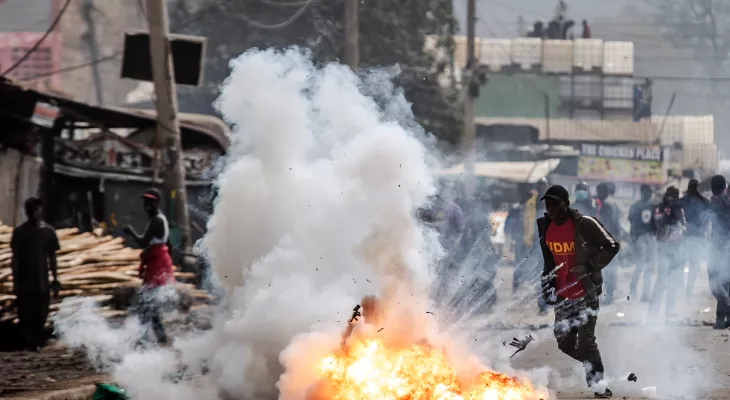
Six people were killed on Wednesday in clashes between police and demonstrators who joined banned opposition protests against tax hikes, police officers told AFP.

After the violence, Interior Minister Kithure Kindiki issued a warning that the authorities would no longer tolerate it.

“Lives have been lost, scores of law enforcement officers and civilians have been grievously injured and unimaginable loss to the country’s economy has been occasioned,” he said in a statement condemning “widespread violence, looting and destruction of private and public property”.

“This culture of impunity will stop,” he vowed. Police had earlier fired tear gas on protesters in and around Nairobi, with five of the six deaths reported in the towns of Mlolongo and Kitengela on the capital’s outskirts.

Tear gas was also used to disperse crowds attacking a highway connecting Nairobi to the port city of Mombasa, with one death recorded in Emali, a town located along that route.

“We have three deaths in Mlolongo, where a group of demonstrators had blocked the road to protest, and we also have two others in Kitengela and one in Emali,” a police officer said.

“There was a confrontation with police officers deployed to quell the riots and some (people)… were shot in the process,” he said on condition of anonymity.

A second policeman said, “I can confirm the deaths in Mlolongo, Emali and Kitengela,” without elaborating further.

In Nairobi’s Kangemi slum, dozens of children were hospitalised, some unconscious, after teargas was fired near their classrooms, the head of the clinic told AFP.

“We took 53 of them to the hospital and they are all now in a stable condition awaiting discharge,” he said.

Opposition leader Raila Odinga, pursuing a protest campaign against the government, had urged demonstrations against a tax law that has seen fuel prices surge, adding to the difficulties faced by poor Kenyans.

But late Tuesday, police chief Japhet Koome said the authorities had not received any official notification of rallies, as required by law.

“All lawful means will be used to disperse such demonstrations,” he warned.  Major roads in several western cities where Odinga commands significant support were deserted as protesters took to the streets.

Blinken and Chinese diplomat meet in Jakarta to navigate rivalry

US Secretary of State Antony Blinken is set to meet with top Chinese diplomat Wang Yi in Jakarta in a crucial development that underscores the escalating tensions between the United States and China.

The meeting comes as officials from both nations gather in Indonesia for ASEAN meetings, marking the latest in a series of interactions between the rival superpowers. The talks aim to manage the strained relationship and prevent further conflict.

During their second meeting in as many months, Blinken and Wang will engage in discussions on the sidelines of the ASEAN-plus-three foreign minister talks. The meeting’s significance lies in the flurry of recent diplomacy between the world’s two largest economies, which have been grappling with numerous issues, including China’s regional assertiveness and US restrictions on semiconductor exports.

While both countries acknowledge the need to manage the relationship, no breakthroughs are expected at this stage. The primary goal is to prevent friction from escalating into outright conflict. As one analyst suggests, “It’s about managing the competition…trying to prevent things from spiraling out of control.”

The meeting follows Blinken’s historic visit to Beijing last month, the first by a US Secretary of State in five years. President Xi Jinping, along with Wang and Foreign Minister Qin Gang, met with Blinken during the visit. These engagements, along with recent visits by US Treasury Secretary Janet Yellen and climate envoy John Kerry, highlight the ongoing efforts to stabilise the intense rivalry between the superpowers.

However, it is important to note that tensions remain high, as evidenced by recent events. Microsoft’s revelation of Chinese hackers breaching US government email accounts, including those of the State Department, has added another layer of complexity to the already strained relations. Nevertheless, both sides are keen to continue diplomatic engagements, with hopes of a potential summit between President Joe Biden and Chinese leader Xi Jinping later this year.

The Jakarta meetings, involving the Association of Southeast Asian Nations (ASEAN) and partner countries, provide a platform for Blinken and Wang to address their countries’ respective interests and concerns. While the focus of the discussions may be on managing conflicts, the meetings also aim to foster stability and explore avenues for cooperation.

NATO allies offer Ukraine security assurances as Biden hits out at ‘craven’ Putin

VILNIUS: President Joe Biden accused Russian President Vladimir Putin of having a “craven lust for land and power” at the end of a NATO summit on Wednesday where Ukraine won new security assurances from the US and its allies for its defence against Moscow.

Members of the world’s most powerful military bloc offered the prospect of long-term protection a day after Ukrainian President Volodymyr Zelenskiy decried as “absurd” a refusal to offer an invitation or timetable for Ukraine’s entry into NATO.

Ukraine has been pushing for rapid membership while fighting a Russian invasion unleashed in February 2022 that has killed tens of thousands of people and displaced millions.

Instead, a declaration by the G7 group of the world’s most industrialised countries launched a framework for bilateral negotiations to provide military and financial support, intelligence sharing and a promise of immediate steps if Russia should attack again.

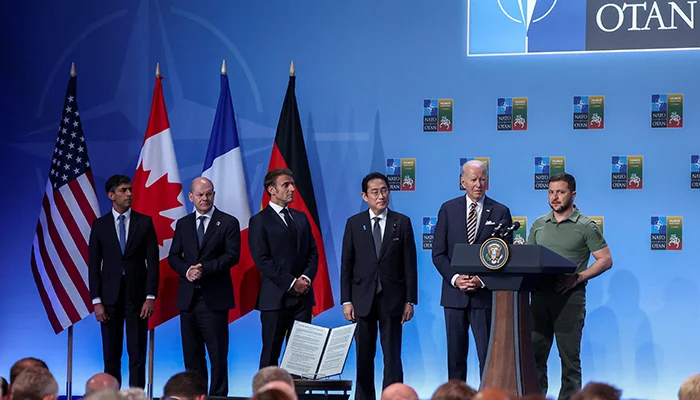
“Our support will last long into the future. It’s a powerful statement of our commitment to Ukraine,” Biden said alongside Zelenskiy and leaders of the G7, which is made up of the US, Britain, Canada, France, Germany, Italy and Japan.

Speaking in Vilnius, Lithuania, at the end of the two-day meeting on Russia’s doorstep, Biden said Putin had badly underestimated the resolve of the US-led military alliance.

“NATO is stronger, more energized and yes, more united than ever in its history. Indeed, more vital to our shared future. It didn’t happen by accident. It wasn’t inevitable,” Biden said.

“When Putin, and his craven lust for land and power, unleashed his brutal war on Ukraine, he was betting NATO would break apart … But he thought wrong.”

Swallowing his disappointment over the lack of a membership timetable, Zelenskiy hailed NATO’s “practical and unprecedented support for Ukraine” and said that at the summit, Ukraine had obtained “unambiguous clarity that Ukraine will be in NATO”.

He tweeted: “I believe we will be in NATO once the security situation stabilises. Put simply, when the war is over, Ukraine will be invited into NATO and Ukraine will clearly become a member of the Alliance. I felt no thoughts of any other sort.”

At a meeting with Zelenskiy, Biden promised him the US was doing everything it could to meet Ukraine’s needs and acknowledged Zelenskiy’s frustration about the scale and speed of support.

“Your resilience and your resolve has been a model for the whole world to see,” Biden said. “I look forward to the day when we’re having the meeting celebrating your official, official membership in NATO.”

“The bad news for you is, we’re not going anywhere. You’re stuck with us,” Biden joked, prompting laughter from Zelenskiy.

US national security adviser Jake Sullivan had said Biden would discuss the issue of long-range missiles with Zelenskiy when they met.

Speaking to reporters later, Biden said: “One thing Zelenskiy understands now is that whether or not he’s in NATO now is not relevant” as long as he has the commitments that have been made at the summit. “He’s not concerned about that now.”

Zelenskiy told Biden he wanted to thank “all Americans” for the billions of dollars in aid his country had received.

British Defence Secretary Ben Wallace said he had told Ukraine that its international allies were “not Amazon” and Kyiv needed to show gratitude for weapons donations to persuade Western politicians to give more.

Zelenskiy said: “We were always grateful to the UK, prime ministers and the minister of defence because the people are always supporting us.”

Britain, France, Germany and the US have been negotiating with Kyiv for weeks over a broad international framework of support, encompassing modern advanced military equipment such as fighter jets, training, intelligence-sharing and cyberdefence.

In return Ukraine would pledge better governance, including through judicial and economic reforms and enhanced transparency.

The first sitting of a new NATO-Ukraine Council was also held on Wednesday, a format designed to tighten cooperation between Kyiv and the 31-nation alliance.

‘Potentially very dangerous’

NATO is built around mutual security guarantees whereby an attack on one is an attack on all, and it has carefully avoided extending any firm military commitments to Ukraine, worried it would risk taking it closer to a full-on war with Russia.

Ukraine has been wary of any less-binding security “assurances”, given Russia’s invasion already trampled the so-called Budapest Memorandum under which international powers committed to keeping the country safe in exchange for Kyiv giving up its Soviet-era nuclear arms.

Speaking earlier alongside Zelenskiy, NATO Secretary General Jens Stoltenberg said Ukraine was closer to the alliance than ever before, and brushed aside new warnings from Russia about the consequences of supporting Ukraine.

British Prime Minister Rishi Sunak said the security arrangements for Ukraine were not designed to be a substitute for full NATO membership and said the commitments at the summit marked a high point for the West’s support for Kyiv.

Russia, which says NATO’s eastward expansion is an existential threat to its own security, swiftly lashed out.

Kremlin spokesman Dmitry Peskov said it was “potentially very dangerous” for the West to give Ukraine security guarantees.

The Russian foreign ministry said the summit showed that NATO was reverting to “Cold War schemes” and added that it would respond “in a timely and appropriate manner, using all means and methods at our disposal.”


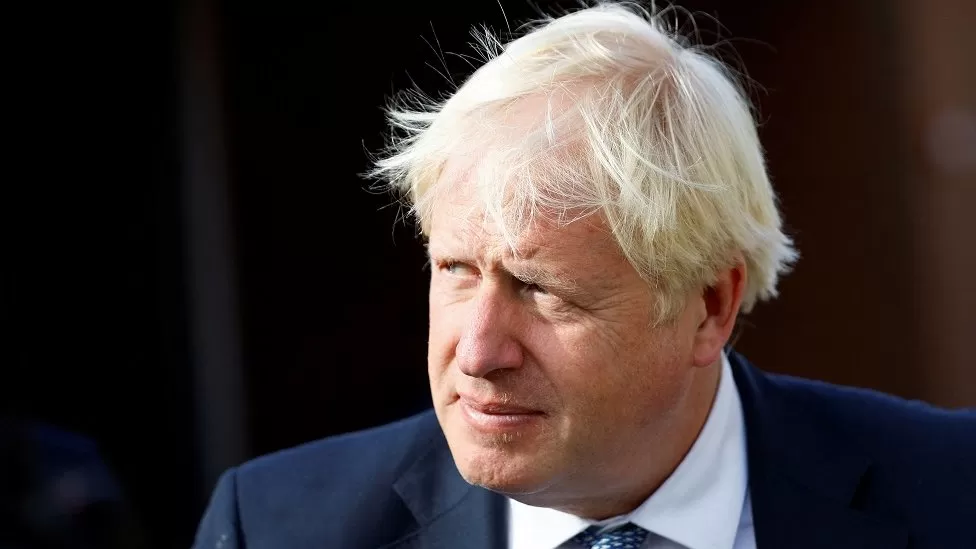
WhatsApp messages sent to and by Boris Johnson before May 2021 have still not been handed over to the Covid inquiry, because they are stuck on his phone.

The government had until 16.00 BST on Monday to hand over relevant material to the inquiry after the Cabinet Office lost a legal challenge.

But the BBC understands neither the government nor Mr Johnson’s team can access messages on the phone.

The phone, which Mr Johnson used until May 2021, is with the ex-PM’s lawyers.

It has prompted Whitehall officials to formally notify the inquiry why they have not yet been able to send them the correspondence.

Inquiry chair Baroness Hallett had requested access to WhatsApp messages on Mr Johnson’s devices from a group chat set up to discuss the pandemic response.

She also asked to see WhatsApp messages he exchanged with a host of politicians, including then-Chancellor Rishi Sunak, as well as various civil servants, including the UK’s top civil servant Simon Case.

But the former PM’s WhatsApp messages are held on a mobile phone which has been turned off and securely locked away since May 2021, due to a security breach.

Mr Johnson was forced to change his mobile phone in 2021 after it emerged his number had been publicly available online for 15 years.

The rest of the messages the High Court ruled should be shared with the inquiry were sent on Monday morning.

BBC political editor Chris Mason says there is widespread irritation within government at the failure to comply with the inquiry’s demand to be sent Mr Johnson’s messages. Access to a mobile phone conventionally requires knowledge of a passcode – which only the phone’s owner would normally know.

Mr Johnson’s phone – which he used during crucial periods of the Covid pandemic – is currently with his lawyers.

The BBC understands government officials have attempted to help Mr Johnson access the data on the phone, while in the company of his representatives.

But the phone has never been in the sole possession of the government, as it belongs to Mr Johnson.

Mr Johnson’s team say “he will be happy to disclose any relevant material to the inquiry when it is accessible” and insist “full cooperation is underway”.

‘More than happy’

The government had attempted to block an order by inquiry chair Baroness Hallett to have access to Mr Johnson’s WhatsApps, diaries and notebooks in full.

In an unprecedented step, the government launched a judicial review of the order. But the High Court rejected the government’s argument, ruling inquiries should be allowed to “fish” for documents.

Mr Johnson said he was “more than happy” for the inquiry to see his unredacted messages. The former prime minister previously said he had handed over WhatsApp messages, diaries and personal notebooks to the Cabinet Office in unredacted form.