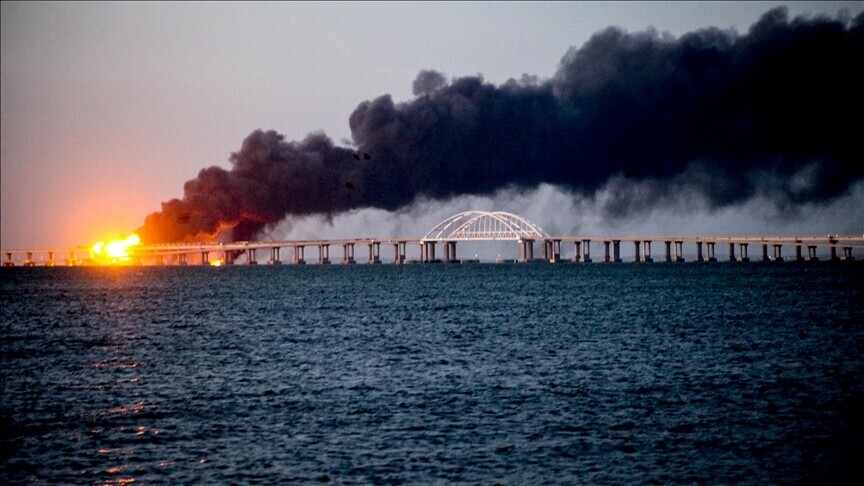
Two killed, girl injured in Crimea bridge ‘explosion’: Russian officials

The announcement came hours after Russian officials said traffic along the bridge had been halted and media in Ukraine reported explosions along the overpass.

“This morning, we all started with information about the emergency that happened on the Crimean bridge. What information is available at the moment: a girl was moderately injured … The hardest thing is that her parents died, dad and mom,” Belgorod Governor Vyacheslav Gladkov said in a statement on Telegram.

Gladkov added that the girl is under the supervision of doctors and will be immediately transported to the Belgorod region once doctors permit it.

In earlier statements, Sergey Aksyonov, the Russian-installed head of Crimea, announced on Telegram that traffic at the Kerch Bridge had stopped and that an “emergency” had occurred.

In a separate statement, Vladimir Konstantinov, the head of the pro-Russian State Council of Crimea, claimed on Telegram that there was an attack on the bridge and blamed it on Ukraine.

No suprise if N.Korea conducts new nuclear test, US says

“I have been concerned for some time that North Korea would conduct what would be its seventh nuclear test going back multiple administrations. And I remain concerned about that,” National Security Advisor Jake Sullivan told CBS talk show “Face the Nation” in an interview

“I don’t see any immediate indications that that’s going to happen,” he added.

“But it would not come as a surprise if North Korea moved forward with another nuclear test with respect to its intercontinental ballistic missile capability.”

Sullivan stressed that Pyongyang had begun testing its nuclear capacity several years ago and “they have continued to test it.”

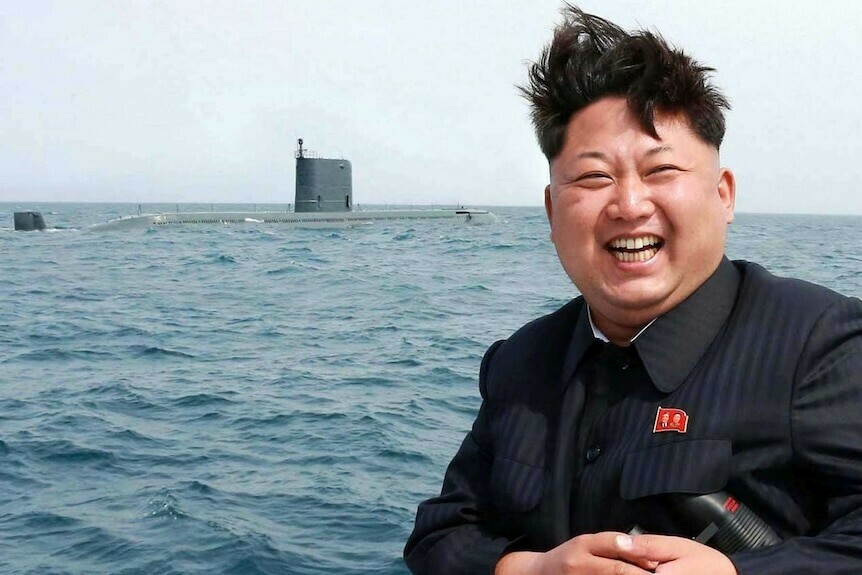
North Korea said Thursday it successfully test-fired the reclusive country’s newest ICBM, with leader Kim Jong Un personally overseeing the launch.

The missile, a solid-fuel Hwasong-18 that had reportedly been test-fired only once before, flew 1,001 kilometres (622 miles) at a maximum altitude of 6,648 kilometres before splashing into the East Sea, also known as the Sea of Japan, the official Korean Central News Agency reported.

Relations between North and South Korea are at a low point. Last year, Kim declared his country an “irreversible” nuclear power, and has called for ramped-up weapons production, including of tactical nukes.

The United Nations, the United States and its allies including France strongly condemned Wednesday’s launch, which violated multiple UN Security Council resolutions.

Sullivan nevertheless reiterated Washington’s offer of negotiations with Pyongyang, saying President Joe Biden’s administration is “prepared to sit down and talk without preconditions about their nuclear program.”

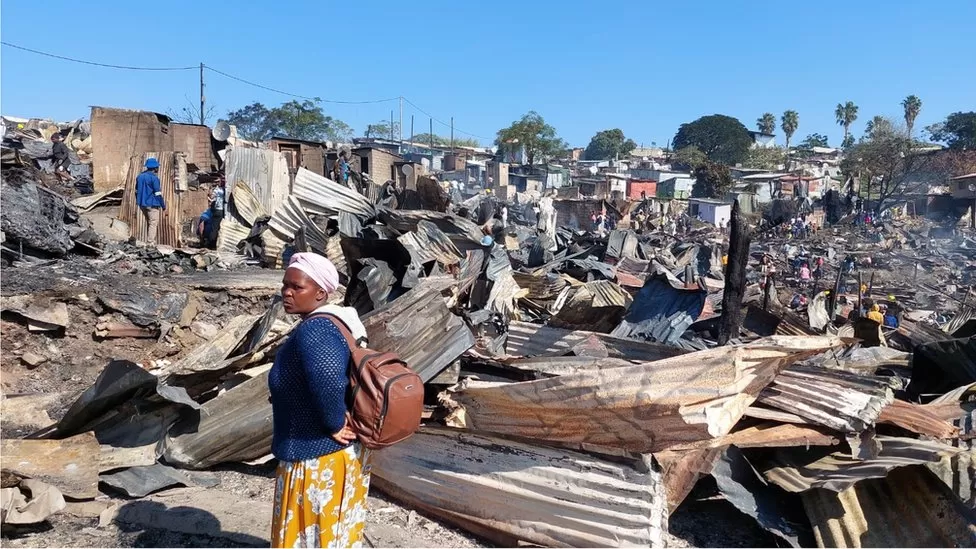
Kennedy Road fire: Hundreds of Durban homes destroyed in South Africa

One person is known to have died in the blaze that tore through the Kennedy Road informal settlement early on Sunday morning, but there are fears that more bodies could be found.

Video footage shows the twisted remains of corrugated iron sheets used to build the shacks amid the smouldering debris.

People can be seen trying to salvage their belongings.

The cause of the fire is not yet known. However, some eyewitnesses say it started when two people, who had been drinking, got into an argument.

A South African Red Cross spokesman described it as a disaster and estimated that about 1,000 shacks may have been destroyed, leaving some 3,000 people homeless.

Siyabonga Hlatshwayo told the eNCA news site that the Red Cross had been distributing hot meals, mattresses and blankets to those affected and he appealed to the public for more donations.

South Korea president vows ‘overhaul’ of approach to extreme weather after 39 killed in monsoon rains

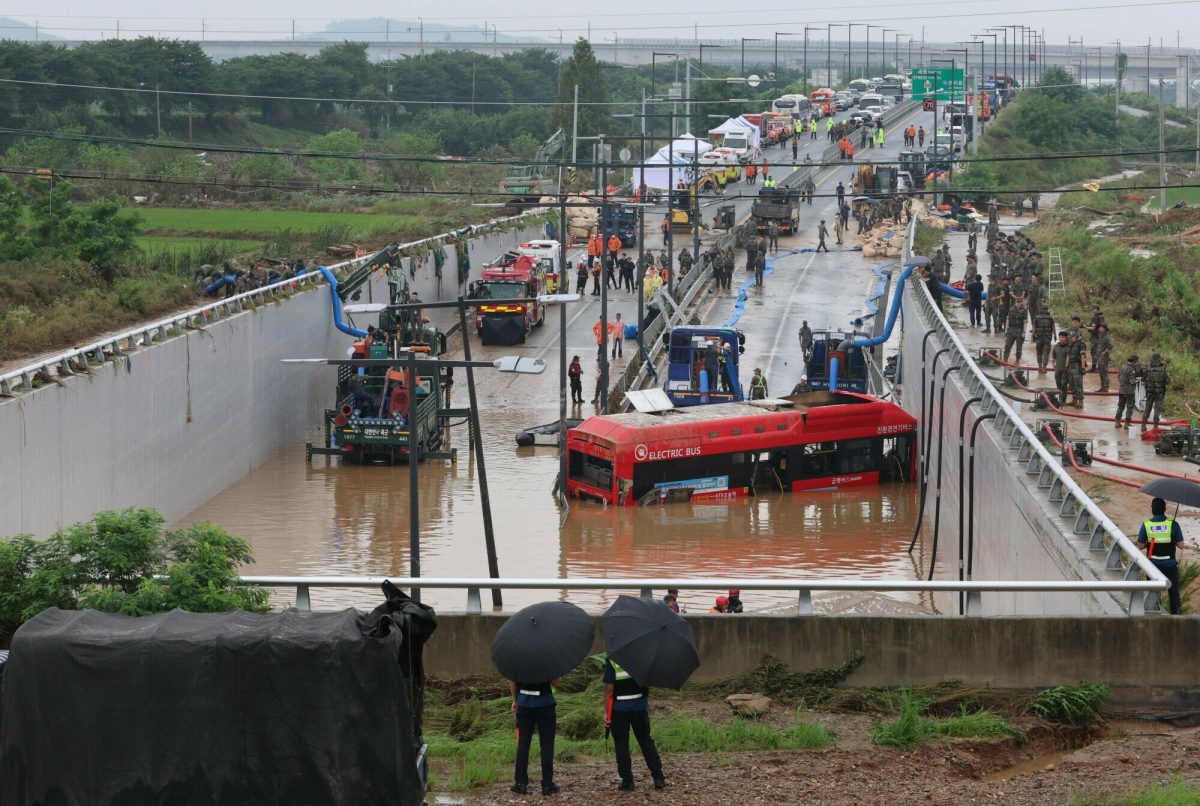
Rescue workers waded through thick mud as they drained a flooded underpass in central Cheongju, searching for more victims after vehicles were trapped in the tunnel by flash floods, the interior ministry said, with nine people still missing nationwide.

South Korea is at the peak of its summer monsoon season and days of torrential rain have caused widespread flooding and landslides, with rivers bursting their banks and reservoirs and dams overflowing — and there is more rain forecast this week.

“This kind of extreme weather event will become commonplace — we must accept climate change is happening, and deal with it,” President Yoon Suk Yeol said on Monday, ahead of a visit to flood-hit North Gyeongsang province.

The idea that extreme weather linked to climate change “is an anomaly and can’t be helped needs to be completely overhauled”, he said, calling for “extraordinary determination” to improve the country’s preparedness and response.

South Korea will “mobilise all available resources” including the military and police to help with rescue efforts, he said.

“The rainy season is not over yet, and the forecast is now that there will be torrential rain again tomorrow,” he added.

The majority of the casualties — including 19 of the dead and eight of the missing — were from North Gyeongsang province and were largely due to massive landslides in the mountainous area that engulfed houses with people inside.

Some of the people who have been reported missing were swept away when a river overflowed in the province, the interior ministry said.

Stay inside

South Korean police said they would launch an investigation into the fatal flooding of the underpass in Cheongju, some 112km south of Seoul, Yonhap reported.

The underpass flooded early on Saturday when a nearby river overflowed and an embankment collapsed, leaving 16 vehicles, including a bus, trapped inside, with at least 12 people killed and rescue workers warning the toll could rise as they searched the area.

The Korea Meteorological Administration forecast more heavy rain through Wednesday and urged the public to “refrain from going outside”.

South Korea is regularly hit by flooding during the summer monsoon period, but the country is typically well-prepared and the death toll is usually relatively low.

Scientists say climate change has made weather events around the world more extreme and more frequent.

South Korea endured record-breaking rains and flooding last year, which left more than 11 people dead.

They included three people who died trapped in a Seoul basement apartment of the kind that became internationally known because of the Oscar-winning Korean film “Parasite”.

The government said at the time that the 2022 flooding was the heaviest rainfall since Seoul weather records began 115 years ago, blaming climate change for the extreme weather.


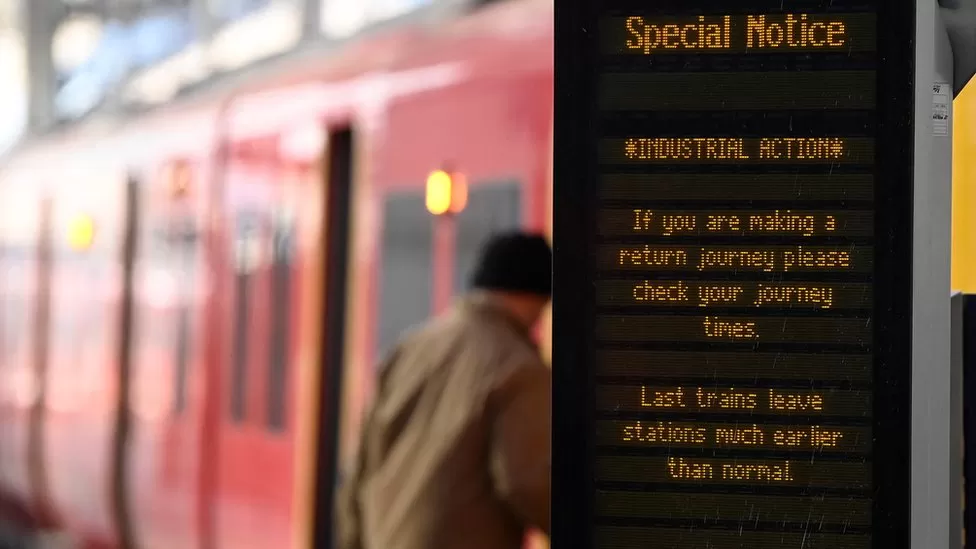
Passengers are being warned of fresh rail disruption from Monday as two rail unions take industrial action this week.

Aslef train drivers will not work overtime this week, and RMT members will strike on Thursday and Saturday.

The action is part of a long-running dispute about pay, jobs and conditions that has seen some severe disruption.

Passengers are being advised to check before they travel as service levels will vary across the country.

When is the next industrial action?

Members of Aslef, the train drivers union, are taking industrial action short of a strike, in the form of an overtime ban.

Most train companies rely on drivers working overtime to run their full schedules.

Services at 15 companies based in England will be disrupted from Monday 17 to Saturday 22 July.

Many train operators will reduce their service levels.

When are the next actual strikes and which lines will be affected?

Strikes will be held on Thursday 20Saturday 22 and Saturday 29 July.

Members of the RMT union will be taking action at 14 rail companies:

  • Avanti West Coast
  • C2C
  • Chiltern Railways
  • CrossCountry
  • East Midlands Railway
  • GTR
  • Great Western Railway
  • Greater Anglia
  • LNER
  • Northern Trains
  • Southeastern
  • South Western Railway
  • TransPennine Express
  • West Midlands Trains

GTR operates Southern, Thameslink, Great Northern and Gatwick Express.

Greater Anglia includes Stansted Express.

Will some trains still run on strike days?

The RMT says 20,000 of its members, including guards, train managers and station staff, will walk out.

On previous strike days there have been thousands of cancellations, with some lines not operating at all.

On lines where there have been services, they have tended to start later and finish earlier than normal.

Passengers are advised to check with the operator before travelling.

Why have railway workers been on strike?

Unions say any pay offer should reflect the rising cost of living – with the inflation rate only recently having dipped below 10%.

But the rail industry is under pressure to save money, after the pandemic left a hole in its finances.

Bosses say reforms need to be agreed to afford pay increases and modernise the railway.


What about the Tube strikes?

London Underground workers at three unions will strike from Sunday 23 July until Friday 28 July in a long-running dispute about pensions, job cuts and working conditions:

  • 23 to 28 July: Members of the RMT will walk out although the union has not yet confirmed which groups of workers will strike on which days, nor whether the action will last for a solid six days
  • 26 and 28 July: Aslef drivers will go on strike
  • 26 and 28 July: Members of the Unite union who work in engineering, maintenance and management roles will go on strike

How much are rail workers paid?

The average salary of rail workers in 2022 was £45,919, according to the Office for National Statistics (ONS).

If drivers are excluded (because they tend to be members of the Aslef union, not RMT) its estimate is £39,518. However, the RMT union said that figure was too high because it does not include rail cleaning staff.

The ONS says median pay for “train and tram drivers” is just under £59,000.

Although Aslef members tend to be better paid than other rail workers, Mick Whelan, general secretary of the union, told BBC News on 12 May that train drivers “haven’t had a pay rise for four years”. He was just referring to the ones who are taking industrial action.

That’s because a new pay deal has not been reached since their last agreement ended in 2019.

However, Transport Minister Huw Merriman said the pay of train drivers “has gone up by 39% since 2011… the highest increase of any employment group.”

He is right about the 39% increase, but we have not been able to establish whether it’s the highest increase for any employment group. That’s because of changes to the way the figures have been released over the last decade.


What deal have rail workers been offered?

The Rail Delivery Group (RDG), which represents the 14 train companies, made an offer that would have seen rail workers receive a backdated pay rise of 5% for 2022. It would then negotiate reforms ahead of a second year’s pay rise with individual operators.

On 5 May, RMT members voted to extend the strike mandate for another six months.

The Aslef union, meanwhile, has rejected a two-year offer which would see drivers get a backdated pay rise of 4% for 2022 and a 4% increase this year.

The union said the offer amounted to an uplift on salaries of between 14.4% for the lowest paid grades to 9.2% for the highest paid.

PM Shehbaz, Zardari discuss caretaker set-up, general elections

Just days before the end of their five-year term, top leadership of Pakistan Peoples Party (PPP) and Pakistan Muslim League Nawaz — two main coalition partners in the federal government — on Saturday joined heads to mull over their political strategy, upcoming general elections on the interim set-up

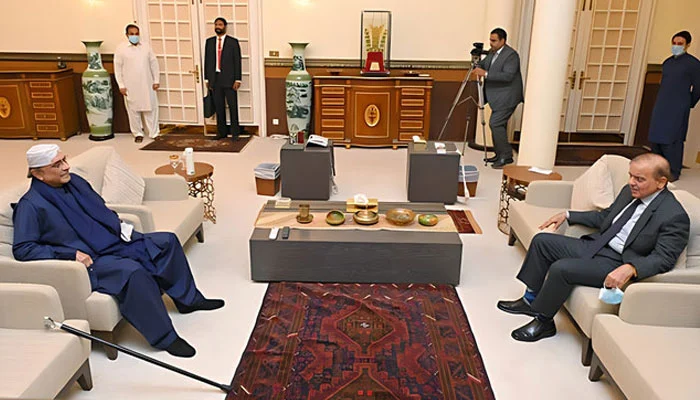
PPP co-chairman Asif Ali Zardari held a one-on-one meeting with Prime Minister Shehbaz Sharif at his Model Town residence today, in which matters pertaining to country’s overall political situation, caretaker set-up and other issues were discussed.

During the meeting that lasted for one hour, the former president proposed to the premier to dissolve the assemblies in the second week of August. PM Shehbaz assured that he would take all the coalition partners into confidence on his proposal.

It is pertinent to mention here that the incumbent National Assembly will complete its constitutional term on August 12. The premier, however claimed that his government will complete its term on August 14.

Both the leaders agreed to hold the next general elections on time, the sources said, adding that they vowed “not to tolerate any delay in the elections.”

It is also discussed in the meeting that a politician should be appointed as a caretaker PM instead of a retired bureaucrat for this time.

The PPP co-chairman also commended the premier over the International Monetary Fund (IMF) deal.

The IMF deposited $1.2 billion into the State Bank of Pakistan’s (SBP) account yesterday, boosting the cash-strapped nation’s hope for economic stability, as it teetered on the brink of default for several months.

The global lender’s executive board approved a $3 billion Stand-By Agreement (SBA) under a nine-month programme. Pakistan reached a staff-level agreement with the lender last month, securing a short-term pact, which got more than expected funding for the crises-hit country of 230 million.

PM Shehbaz on interim set-up

On July 13, PM Shehbaz had said that the coalition government will hand over the reins of the regime to the interim set-up in August ahead of the general elections in the country which are expected to take place in October or November.

“In August 2023, we will give responsibility to the interim government,” the premier said in an address to the nation.

The premier repeated the circumstances in which the coalition government — a group of 13 political parties — came to power in April 2022.

“[We] cleaned up the mess of four years in 15 months and doused the fire that had engulfed the economic and foreign relations front,” he said, adding that during their 15 months in power, the coalition government “saved the state, not politics”.

PM Shehbaz calls for immediate reforms to steer Pakistan out of crises

Prime Minister Shehbaz Sharif has emphasised the need for immediate structural reforms to steer the country out of crises saying that there is no other way but to take initiate “drastic structural and economic reforms”.

Addressing the office-bearers of the Lahore Chamber of Commerce and Industry (LCCI) and renowned businessmen and industrialists at Governor’s House in Lahore, the premier said sacrifices of all stakeholders including the business community required to deal with prevailing challenges.

PM Shehbaz said the government was taking all possible measures for the promotion of industry and agriculture. However, in the given circumstances and in the face of grave challenges, industrialists and the business community would have to play their role even more actively for enhancing exports and stabilising the economy, he added.

Citing an example of Bangladesh textile industry, PM Shehbaz urged the business community to examine as to why Pakistan’s economy was unable to achieve the desired targets and its full potential despite having all natural resources.

Bangladesh textile sector totally relies on imported cotton, but it is developing fast and gaining a niche in the global market while Pakistan’s textile is losing competition in the export markets, the PM added.

Pakistan’s foreign reserves jump to $14 billion

In the same address, the PM disclosed that the country’s total foreign exchange reserves rose to $14 billion after the country received funds from friendly countries and International Monetary Fund (IMF) following a $3 billion Stand-By Arrangement (SBA).

He said that the incumbent government saved the country from default as the country received $2 billion from Saudi Arabia, $1 billion from UAE and $1.2 billion from the IMF.

PM Shehbaz said forex reserves stood at $14 billion when the coalition government came to power in April last year, adding that the reserves reached the same level where they were previously.

He also lauded China’s financial support to Pakistan saying that Beijing rolled over $5 billion of commercial and sovereign loans, which played a key in securing the IMF bailout package.

“We have to take optimum benefit from the IMF deal by utilising the amount on economic development and people’s prosperity,” he remarked.

He added that unfortunately, the Pakistan-US relations were hit hard by the “ill-conceived decisions and remarks” by the previous Pakistan Tehreek-e-Insaf (PTI)-led government.

The incumbent coalition government with collective efforts normalised and improved ties with the USA, he added.

During the previous government, the PM said, national interests were compromised for personal interests, and the economic situation became even worse when the IMF pact was violated in the past.

Paris bans protest against police violence

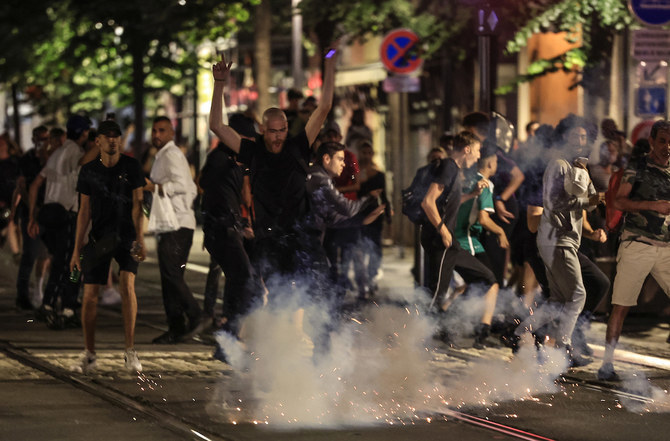
Authorities have attempted to clamp down on demonstrations to avoid further chaos after the week of riots saw massive destruction to public and private property.

Interior Minister Gerald Darmanin had announced the ban on Wednesday of any protest “directly linked to the riots” that followed the shooting of 17-year-old Nahel during a traffic stop.

A video of a police officer shooting the teen at point-blank range went viral, fuelling old tensions over police brutality and racism in the country. An administrative court in Paris upheld the ban on Saturday, after a last-ditch effort by protest organisers to appeal the decision.

“Given the very recent nature of the serious riots”, a lack of police availability, and the risk of disturbances, the judges ruled that banning the protest was the only option.

Lucie Simon, a lawyer for the protest organisers — made up of a grouping against police violence and other associations — accused authorities of “impeding all channels of democratic expression of perfectly legitimate demands.”

Last Saturday, some 2,000 people defied a similar ban to join a memorial rally in central Paris for a young black man who died in police custody in 2016, while protests against police brutality took place around France.

India ties up with UAE to settle trade in rupees

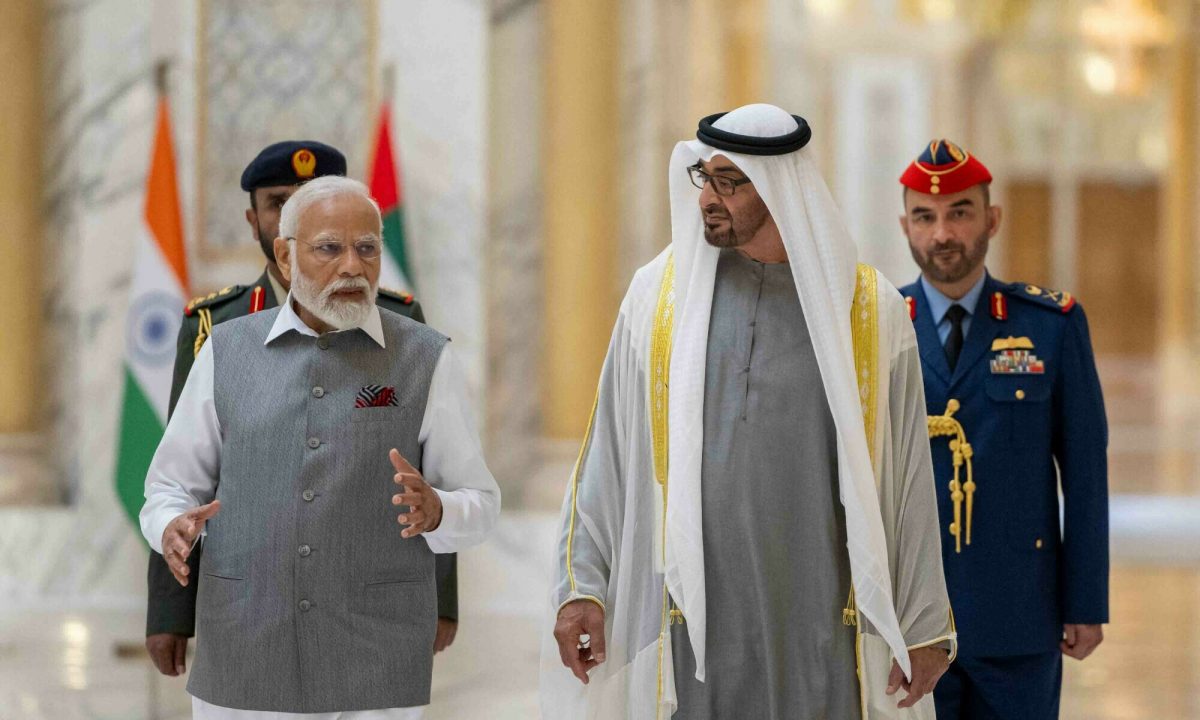
During a visit by India’s Prime Minister Narendra Modi to the UAE on Saturday, the two countries also agreed to set up a real-time payment link to facilitate easier cross-border money transfers.

The two agreements will enable “seamless cross-border transactions and payments, and foster greater economic cooperation”, said a statement from the Reserve Bank of India on Saturday.


India, the world’s third biggest oil importer and consumer and whose central bank last year announced a framework for settling global trade in rupees, currently pays for UAE oil in dollars.

Bilateral trade between the two countries was $84.5 billion in the year from April 2022 to March 2023.

An official with knowledge of the details of the agreement said India could make its first rupee payment for UAE oil to Abu Dhabi National Oil Co (ADNOC), Reuters reported on Friday.

The Reserve Bank of India said the two central banks agreed to link India’s Unified Payments Interface (UPI) and UAE’s Instant Payment Platform (IPP).

Such arrangements, which are a growing trend in Asia, typically lower the cost of payments.

Modi landed in Abu Dhabi earlier on Saturday for a one-day visit and met President Sheikh Mohamed bin Zayed Al Nahyan.


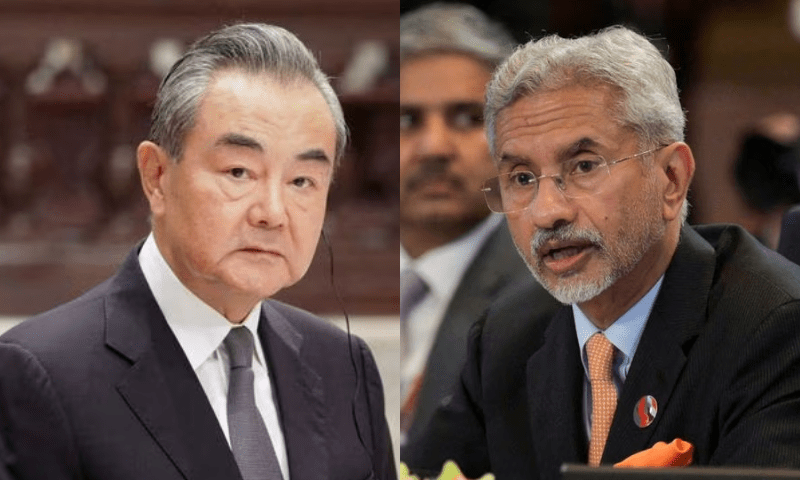
China calls on India to meet ‘halfway’ on border issue

Relations between India and China have deteriorated in recent months over their contested Himalayan border, and a visa spat in which the two sides have expelled nearly all of each other’s journalists.

“China and India’s common interests clearly outweigh their differences,” Wang Yi told Indian Foreign Minister Subrahmanyam Jaishankar, when the two met on Friday on the sidelines of Southeast Asian talks in Jakarta, the Chinese foreign ministry said in a statement.


“The two sides should support each other, rather than… suspect each other,” Mr Wang added.

Commander-level talks on the issue expected ‘as soon as possible’

India and its northern neighbour are locked in a military standoff along their mostly undemarcated border in the Ladakh region.

Beijing also claims the Indian state of Arunachal Pradesh as part of Tibet, and it considers Kashmir a disputed territory. “It is hoped that the Indian side will meet China halfway and find a solution to the border issue that is acceptable to both sides,” Mr Wang said.

The two countries have agreed to hold the next round of military commander-level talks on the border issue “as soon as possible”, the ministry statement said.

Despite frosty relations, China is India’s second-largest trade partner.

In 2020, India sought to limit investments from China as political tensions heightened between them, with their soldiers clashing in the disputed Himalayan region.

“China is highly concerned about India’s recent restrictive measures against Chinese companies,” Mr Wang added, while urging New Delhi to provide a “fair, transparent and non-discriminatory business environment”.