
North Korea is reported to have detained a serving US army soldier who crossed the heavily fortified border from South Korea without permission.

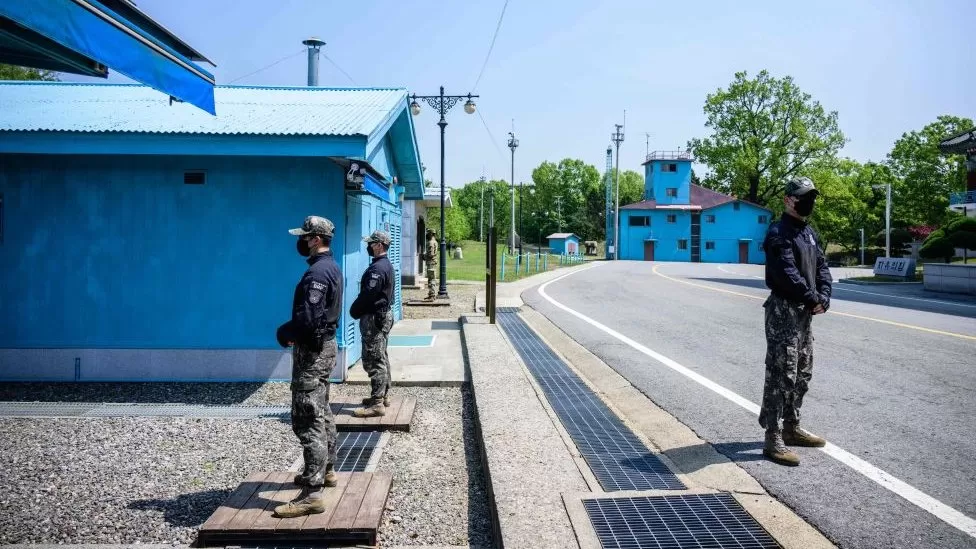
The man was on an organised tour of the UN-run zone dividing the two countries.

The crisis comes during a particularly tense time with the North, one of the world’s most isolated states. The US tells its citizens not to go there.

A senior US commander said there had been no contact with the soldier.

Admiral John Aquilino Commander of the US Indo-Pacific Command said he was “not tracking” contact with North Korea. He said the soldier had acted willingly by “making a run” but without authorisation, and the incident was being investigated by US Forces Korea.

Hours after the soldier’s detention, North Korea launched two suspected ballistic missiles into the nearby sea.

The missile launch, which has been confirmed by South Korea’s military, comes as tensions run high on the Korean peninsula. There has been no suggestion that the launch is tied to the soldier’s detention.

It is unclear if the man has defected to North Korea or hopes to return. There has been no word yet from the North.

The Pentagon has identified the soldier as Private 2nd Class (PV2) Travis King. In a statement, a Pentagon spokesperson said that PV2 King had been in the army since January 2021.

He is a cavalry scout – a reconnaissance specialist – originally assigned to an element of the army’s 1st Armoured Division on a rotation with the US military in South Korea.

The Associated Press reports that PV2 King was apparently facing disciplinary action after being held in South Korea on assault charges.

According to the BBC’s US partner CBS News, PV2 King passed through airport security in Seoul but somehow managed to leave the terminal and get on a tour of the border, from where he crossed over.

The American military has said he did so “wilfully and without authorisation”.

Watch: Pentagon concerned about welfare of captured soldier

An eyewitness on the same tour told CBS they had visited a building at the border site – reported by local media to be the truce village of Panmunjom – when “this man gives out a loud ‘ha ha ha’ and just runs in between some buildings”.

“I thought it was a bad joke at first but, when he didn’t come back, I realised it wasn’t a joke and then everybody reacted and things got crazy,” they said.

The United Nations Command, which operates the Demilitarised Zone and joint security area (JSA), said earlier its team had made contact with the North Korean military to try to negotiate his release.

“We believe he is currently in DPRK custody and are working with our KPA [Korean People’s Army – North Korea’s military] counterparts to resolve this incident,” it said.

It is unclear where or in what conditions PV2 King is being held.

Greg Scarlatoiu, executive director of the Washington DC-based Committee for Human Rights in North Korea, told the BBC that North Korean authorities were likely to “try pump information out of him” about his military service and “try to coerce him into becoming a propaganda tool”.

The Demilitarised Zone (DMZ) separates the two Koreas and is one of the most heavily fortified areas in the world.

It is filled with landmines, surrounded by electric and barbed wire fencing and surveillance cameras. Armed guards are supposed to be on alert 24 hours a day.

The DMZ has separated the two countries since the Korean War in the 1950s, in which the US backed the South. The war ended with an armistice, meaning that the two sides are still technically at war.

Dozens of people try to escape North Korea every year, fleeing poverty and famine, but defections across the DMZ are extremely dangerous and rare. The country sealed its borders in 2020 at the start of the Covid-19 pandemic and has yet to reopen them.

The last time a soldier defected at the JSA was in 2017, when a North Korean soldier drove a vehicle, then ran by foot across the military demarcation line, South Korea said at the time. The soldier was shot at 40 times, but survived.

Before the pandemic more than 1,000 people fled from North Korea to China every year, according to numbers released by the South Korean government.

The detention of the soldier presents a major foreign policy headache for US President Joe Biden. PV2 King is believed to be the only American citizen currently in North Korean custody. Six South Koreans remain in detention there.

Relations between the US and the North plummeted in 2017 after a US student who had been arrested a year earlier for stealing a propaganda sign was returned to the US in a comatose state and later died. His family blames the North Korean authorities for his death.

Three US citizens were later freed during Donald Trump’s presidency in 2018. But ultimately, a series of talks held between Kim Jong Un and the former US president did little to improve the relationship.

North Korea has since tested dozens of increasingly powerful missiles that could carry nuclear warheads, which have been met by a slew of sanctions by the US and its allies.

The detention of the US national comes on the same day as a US nuclear-capable submarine docked in South Korea for the first time since 1981.

The submarine was specifically supplied to help the country deal with the nuclear threat posed by North Korea. Ahead of its deployment there were threats of retaliation from the authorities in Pyongyang, which warned the US that sending nuclear weapons to the peninsula could spark a nuclear crisis.

Hours after PV2 King’s detention, South Korea’s military confirmed that two ballistic missiles were launched from North Korea and landed outside Japan’s exclusive economic zone.
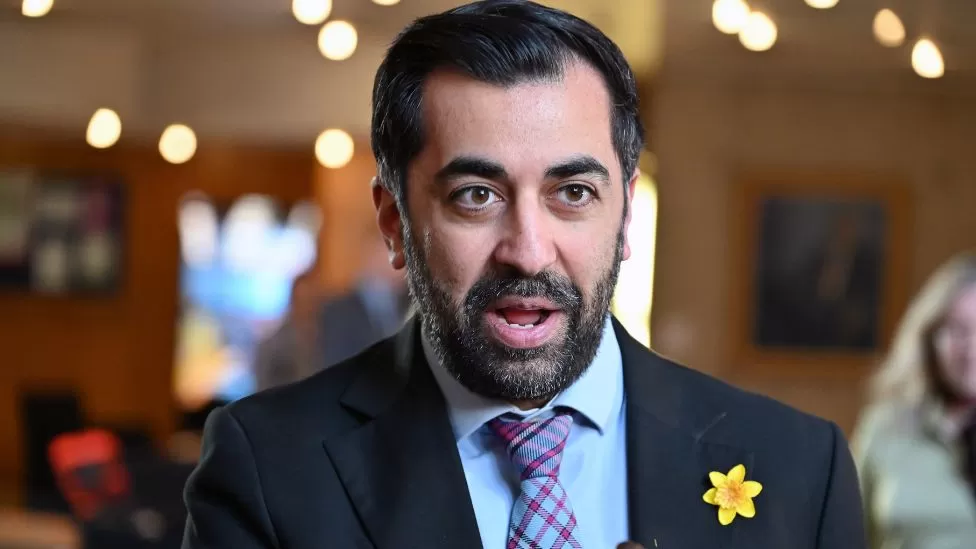
First Minister Humza Yousaf has said he is willing to consider proposals for Scotland to host at least part of the 2026 Commonwealth Games.

The Australian state of Victoria cancelled its plan to stage the event due to soaring costs, raising doubts about whether it will go ahead at all.

Mr Yousaf said he was “really disappointed” by the news.

Ex-Commonwealth Games Scotland chairman Paul Bush has suggested the nation could be a joint-host for the event.

Commonwealth Games has ‘relevancy and scale’ issues
Commonwealth Games in doubt after Australian state cancels
Mr Yousaf said: “We were desperate for the games to go ahead in 2026 given that we know how excellent the preparations have been going for Team Scotland. It’s also an opportunity for us to compete under the Scottish banner.”

He added: “It’s early days. I’ve noted the comments from Paul Bush and Commonwealth Games Scotland, looking at and exploring the possibility of whether or not Scotland could be part of something bigger, part of a multi-city, multi-country host.

“Those are sensible ideas all worth exploring. We certainly couldn’t commit to anything at this stage.”

Scotland has previously hosted the Commonwealth Games in 1970, 1986 and 2014.

On calls for those events to be repeated, the first minister said: “I’ve asked my team to explore whether that’s a possibility or not.

“It may be difficult but let’s see what the art of the possible is.”

Glasgow hosted the Commonwealth Games in 2014
Commonwealth Games Scotland said it was “shocked” by the announcement from Victoria with preparations well under way for the 2026 event.

“The games is the only opportunity for many athletes to compete under the Scottish flag, and we know how much that means to them, our sports and supporters,” it said in a statement.

“We share their disappointment with today’s announcement and recognise the uncertainty it creates for all parties.”

The organisation said it was awaiting an update from the Commonwealth Games Federation.

Eilish’s win last year emulated her mother Liz’s success in 1986 and 1990

Eilish McColgan took gold in the women’s 10,000m at the 2022 Commonwealth Games
The event was last held in Birmingham in 2022, with Eilish McColgan’s 10,000m victory the highlight during a games of historic success for Team Scotland.

First held in 1930, the Commonwealth Games have only ever been cancelled during World War Two.

The latest cost projection for the 2026 event had risen to more than A$6 billion (£3.13bn), according to organisers, who said the new figure was more than twice the estimated economic benefit it would bring to Victoria.

The total cost of the 2014 games in Glasgow was about £543 million, according to the government figures.

GB elects its first female deputy speaker

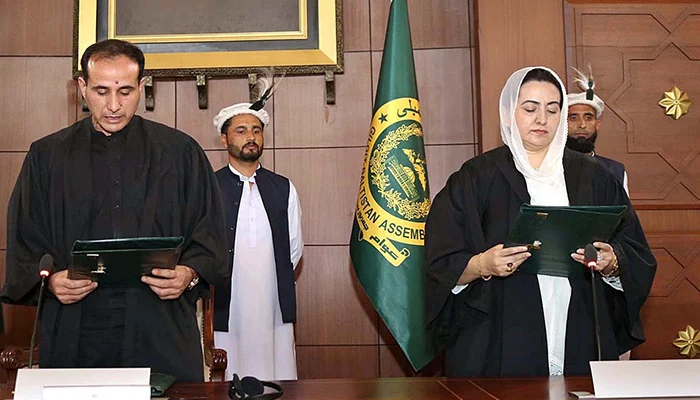
Gilgit-Baltistan witnessed a wave of change in its legislature as its first female deputy speaker was elected unopposed Monday.

Sadia Danish, a Pakistan Peoples Party (PPP) leader and nominee of the Pakistan Democratic Movement (PDM), assumed the position following consensus among her party and the Pakistan Tehreek-e-Insaf’s (PTI) forward bloc, which supported her nomination.

The process of electing the GB assembly’s deputy speaking concluded on Monday after Danish was elected unopposed. She later took the oath of the office, administered by Speaker Nazeer Advocate, who presided over the assembly’s 22nd session.

The PTI, on the other hand, did not submit nomination papers for the spot. They had earlier removed its speaker by bringing a no-confidence motion against him and made its deputy speaker as speaker of the GB assembly.

The assembly’s session, ahead of the landmark development, was presided over by the speaker.

Danish was a member of the GB legislative assembly from 2009 to 2014 and was also part of the GB cabinet.

She was also a former minister for information, tourism, sports and culture. She was also the PPP’s secretary of information and a member of the National Commission on the Status of Women (NCSW).

Gul Bar Khan — new GB CM

Last week, PTI forward bloc leader Gul Bar Khan was elected as GB’s new chief minister, days after controversy marred the top post’s polls.

Khan, who received 19 votes of the 20 members present in the house, was elected unopposed as three other candidates vying for the post withdrew their nomination papers.

An independent lawmaker, Nawaz Khan Naji, abstained from voting, with PPP and PML-N parliamentarians backing the new chief minister.

All 11 members of the PTI’s ‘like-minded group’ boycotted the polling, claiming rigging.

Army top brass terms TTP sanctuaries in Afghanistan major reason ‘impacting Pakistan’s security’

The top brass of the Pakistan Army has said that sanctuaries and liberty of action available to terrorists of proscribed Tehreek-e-Taliban Pakistan (TTP) and other groups of that ilk in Afghanistan is one of the major reasons impacting the security of Pakistan.

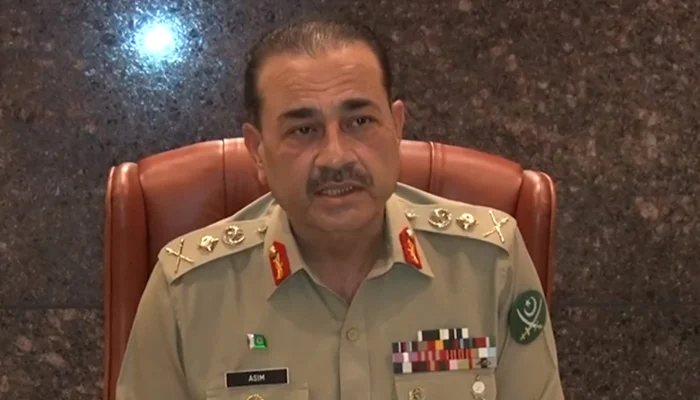
The statement comes after the 258th Corps Commanders’ Conference (CCC) presided over by Chief of Army Staff (COAS) General Syed Asim Munir held at the General Headquarters in Rawalpindi, the Inter-Services Public Relations (ISPR) said in a statement on Monday.


“The sanctuaries and liberty of action available to the terrorists of proscribed TTP and other groups of that ilk in a neighbouring country and availability of latest weapons to the terrorists were noted as major reasons impacting the security of Pakistan,” read the statement issued by the military’s media wing.

The participants were briefed in detail about the prevailing Internal security environment and paid rich tribute to the supreme sacrifices persistently being offered by the valiant soldiers in the defence of their motherland against the threat of terrorism, the ISPR added.

The forum deliberated in detail upon the operational preparedness and training aspects of the army.

“Objective training remains the hallmark of our professionalism and we must always remain prepared to guard against any threat to our national security,” the ISPR quoted Gen Munir as saying.

Last week, the Pakistan Army said it was seriously concerned that militants had found safe havens in the neighbouring nation and threatened to take an “effective response” two days after 12 of its soldiers embraced martyrdom in two attacks.

In the statement, the ISPR said that said it is expected that the interim Afghan government would not allow the use of its soil to perpetrate terror against any country, in the real sense and in line with commitments made in the Doha agreement.

“The involvement of Afghan nationals in acts of terrorism in Pakistan is another important concern that needs to be addressed,” the statement emphasised.

Such attacks are intolerable and would elicit an effective response from the security forces of Pakistan, the ISPR statement added.

Pakistan has witnessed a surge in terrorist attacks following Afghan Taliban’s return to power in August 2021 and called upon the interim rulers to take decisive actions against terrorists including the TTP responsible for cross-border attacks.

Terror activities in the country have soared by 79% during the first half of 2023, a statistical report released by the independent think tank Pakistan Institute for Conflict and Security Studies (PICSS) showed.

Army vows all-out support for economic revival

In the same huddle, the ISPR said top commanders were also apprised about the government’s economic revival plan and the role of the army in uplifting agriculture, IT, mining and mineral and defence production sectors under the ambit of Special Investment Facilitation Council (SIFC).

The participants vowed to fully support the strategic initiatives planned by the government for the revival of the economy by providing all possible technical and management support for the overall good of the people of Pakistan, it added.

Last month, the federal government unveiled an elaborate ‘Economic Revival Plan’ with a view to capitalise on Pakistan’s untapped potential in key sectors, fast-track the development projects and facilitate investment.

General Munir was included to a Special Investment Facilitation Council (SIFC) formed by PM Shehbaz for economic revival.

The military’s inclusion in the body — led by the PM and also comprising federal ministers — is aimed at complementing the government’s efforts to deal with economic challenges facing the country.

Turkey’s Erdogan arrives in Saudi Arabia on first leg of three-nation Gulf tour

Aimed at attracting foreign investment to strengthen Turkey’s economy, President Recep Tayyip Erdogan arrives in Saudi Arabia on the first leg of his three-country Gulf trip on Monday.

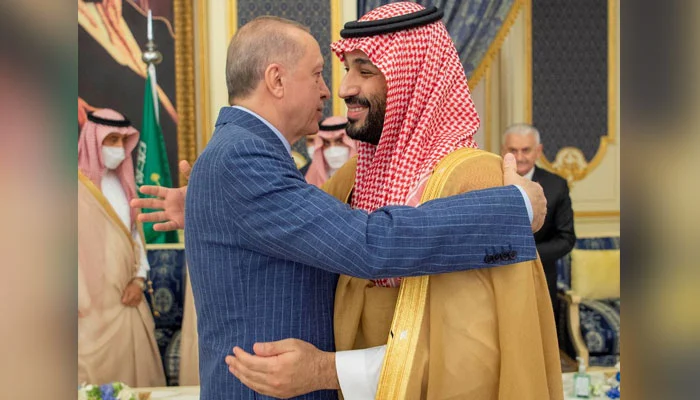
The Turkish president will meet King Salman and Crown Prince Mohammed bin Salman in Jeddah before leaving for the United Arab Emirates (UAE) and Qatar later this week.

Ahead of embarking on the Gulf trip, Erdogan said: “During our visits, our primary agenda will be joint investment and commercial activities with these countries in the upcoming period.”

The Turkish president said bilateral trade with Gulf countries has increased from $1.6 billion to approximately $22 billion over the past 20 years, AFP reported.

“With the business forums to be organised, we will look for ways to move this figure much further,” Erdogan said.

The visit is his second to Saudi Arabia since a recent rapprochement. Ties between the two countries were strained by the 2018 murder of journalist Jamal Khashoggi in the kingdom’s Istanbul consulate.

Turkey angered Saudi Arabia by vigorously pursuing the case at the time, opening an investigation and briefing international media on the gory details of the killing.

But with ties on the mend, Erdogan visited Saudi Arabia in April 2022, and Prince Mohammed went to Turkey in June last year.

Erdogan’s new Saudi trip comes as Turkey battles a currency devaluation and soaring inflation that has battered its economy.

The two countries will sign several accords during Erdogan’s trip as Ankara looks to non-Western partners for financial support, a senior Saudi official told AFP on condition of anonymity because he is not authorised to speak to the press.

Erdogan’s Gulf tour will be followed by a trip to northern Cyprus which Turkey invaded and occupied in 1974, and comes after his re-election in May for another five-year term.

“Erdogan’s visit to the Gulf after the critical elections held in Turkey itself reflects the importance of the Gulf states in the Turkish foreign policy agenda,” Sinem Cengiz, a researcher at Qatar University, told AFP.

“Growing Gulf interest in investing in diverse sectors is a boost for Turkey, which is trying to increase exports to help ease its economic problems,” said the expert on Gulf-Turkish relations.

Japan PM in UAE to pitch green technology ahead of COP28

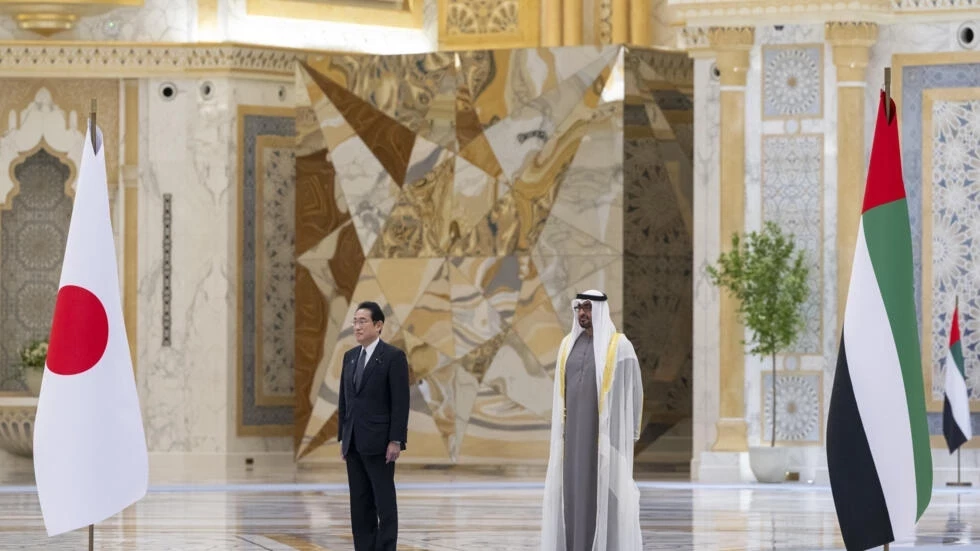
Kishida’s visit to the United Arab Emirates, which will host COP28 in November-December, is part of the first Gulf tour by a Japanese premier since the late Shinzo Abe in 2020.

Japan relies almost entirely on imports for its crude oil, with Saudi Arabia, the UAE and Qatar accounting for the bulk of its supplies.

As the Asian country increases the role of renewables in its energy mix, the Gulf states, too, are moving more towards cleaner energy sources.

Kishida flew in from Saudi Arabia, where he met de facto leader Crown Prince Mohammed bin Salman on Sunday. After talks with UAE President Sheikh Mohammed bin Zayed Al Nahyan in Abu Dhabi, he will head to Qatar on Tuesday.

The Japanese PM plans to offer Japan’s “cutting-edge decarbonisation technologies” as part of a green energy initiative for the Middle East, he said in an open letter carried by the UAE’s official WAM news agency.

Tokyo’s embassy confirmed the comments.

Under the initiative, the UAE and Japan “will be well placed to collaborate in the related fields of hydrogen and ammonia production and utilisation as well as carbon recycling”, Kishida added.

As the oil-rich UAE gears up to host the COP28 United Nations climate talks, many countries remain far apart on ways to reduce fossil fuels and the global warming they cause.

“Japan will work closely with the UAE towards the success of COP28,” Kishida said.

On Monday, Sheikh Mohammed said he held “fruitful and constructive discussions” with Kishida in Abu Dhabi on “developing bilateral relations and advancing the comprehensive strategic partnership between our two countries”.

‘Clean energy cooperation’

On Sunday, Kishida discussed energy security and decarbonisation with senior Saudi officials including Prince Mohammed in the Red Sea city of Jeddah, official Saudi statements said.

During the meeting with Prince Mohammed, Tokyo and Saudi Arabia agreed to launch the “Lighthouse Initiative for Clean Energy Cooperation,” according to the official Saudi Press Agency.

“The initiative will support the ongoing efforts that Saudi Arabia is undertaking to become a hub for clean energy,” said a joint statement carried by SPA on Monday.

It will focus on areas including hydrogen, ammonia, recycled carbon fuels and carbon capture technology, the statement said.

Saudi Arabia is the biggest oil exporter to Japan, fulfilling 40 percent of its total needs, the kingdom’s Energy Minister Prince Abdulaziz bin Salman said on Sunday.

“The Kingdom, based on its commitment to the strategic relationship with Japan in the field of energy, will continue to ensure the security of oil supplies to Japan,” he said, in comments published on his ministry’s website.

During Kishida’s visit, Saudi Arabia and Tokyo signed 26 cooperation agreements, including in the fields of energy and green energy, according to the state-run Al Ekhbariya TV.

The six-member Gulf Cooperation Council and Japan on Sunday also announced the resumption of Free Trade Agreement (FTA) negotiations, according to a GCC statement.

The GCC-Japan FTA negotiations began in Tokyo in September 2006 but talks were suspended in 2009.

“Japan is considered as one of the priorities of the Council,” GCC Secretary General Jasem Mohamed AlBudaiwi said, hailing “a new era of partnership”.

The prime minister was due to visit Saudi Arabia, the UAE and Qatar in August last year, but he postponed the trip after contracting the coronavirus.

His visit comes at a time of deepening engagement between the region and China which brokered a shock detente between Gulf rivals Saudi Arabia and Iran in March.

Building collapse in Egypt capital kills eight

A statement from the public prosecution said the building in the city’s Hadayek al-Qubba district “completely collapsed”, killing eight people.

“Civil defence workers pulled out nine people, among them an injured woman, while the eight others were deceased”, the statement added, adding that “another five were able to leave the property before it fell down”.

It said the woman and two residents gave testimony “suggesting that the collapse was caused by a resident who recently knocked down walls in his first-floor flat”, despite neighbours asking him not to do so.

The prosecution ordered the arrest of the building’s owner, the contractor in charge of the works and one of his employees for questioning.

Government newspaper Al-Ahram, quoting a resident of the area, reported that seven members of one family had been killed.

Egypt has seen a number of deadly building collapses in recent years, both because of the poor state of some and also because of non-compliance with building and town-planning regulations

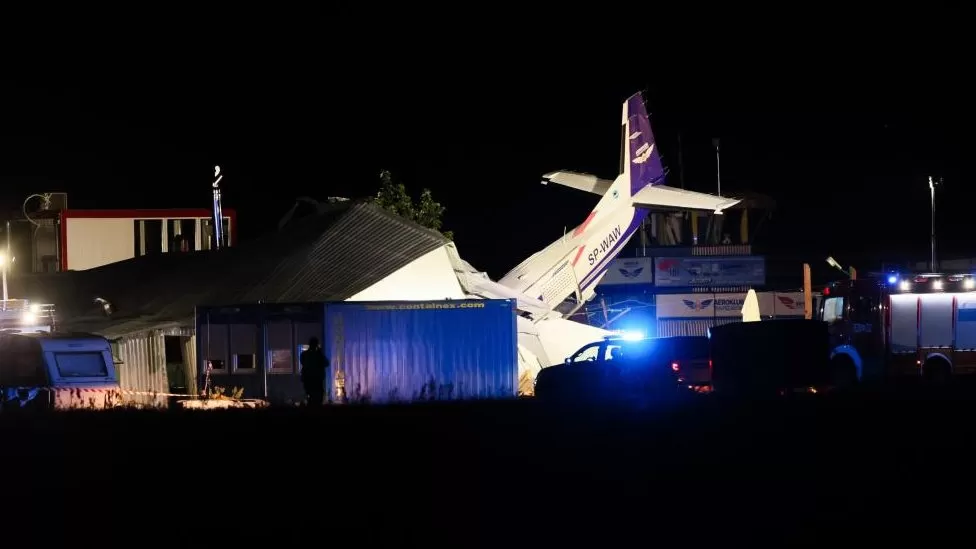
A small plane has crashed into a hangar at an airfield near the Polish capital Warsaw, killing five people including its pilot, officials say.

Eight people were also injured in the crash, police say. Thirteen people had reportedly been sheltering from bad weather in the hangar.

The fire brigade said poor weather was a “probable cause” of the crash.

Four helicopters and 10 ambulances were dispatched to the scene of the incident in the village of Chrcynno.

The village is 47km (29 miles) from the capital Warsaw.

Polish media identified the plane that crashed as a Cessna 208.

The local fire department confirmed the incident had happened at an airfield in Chrcynno and posted a photo on Facebook showing the tail of the plane sticking out of a hangar.

Police were alerted shortly after 17:30 GMT, AFP news agency reports. They were to launch an investigation.

Rescuers say three people were on board the plane when it collided with the corrugated iron hangar, AFP adds.

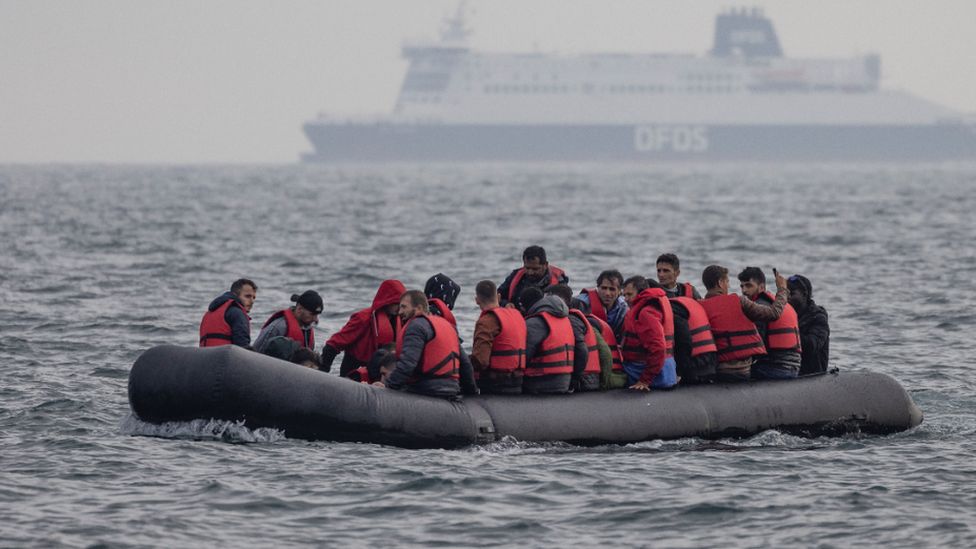
The Illegal Migration Bill is set to become law after the government won a final series of votes in the Lords.

The bill is central to the prime minister’s pledge to stop small boats crossing the English Channel.

Amendments by peers including time limits on child detention and modern slavery protections were defeated.

In a late-night debate in the House of Lords, the last of the proposed changes was voted down. Now the bill can go for royal assent.

For weeks, MPs were locked in a battle over the final shape of the bill with the Lords, where it had repeatedly been amended by opposition peers.

One such amendment would have ensured that the National Crime Agency gave reports on immigration crime operations every three months.

Peers voted to reject that by 201 peers to 166 on Monday, with a majority of 35.

Another – to provide safeguards to UK-based victims of modern slavery – was rejected by 205 to 193.

It called for the bill to ensure the provision of a 14-day grace period, allowing people to access support and co-operate with criminal proceedings against traffickers.

The Archbishop of Canterbury, the Most Reverend Justin Welby, who has been a critic of the bill, dropped his demand for the government to draw up a 10-year strategy for collaborating internationally on refugees and human trafficking to the UK, after it was again rejected by MPs

The end of the stand-off between peers and MPs paves the way for the bill to receive royal assent – when the King formally agrees to make the bill into an Act of Parliament, or law.

Backed by MPs in March, the bill is at the heart of Prime Minister Rishi Sunak’s pledge to end small boat crossings in the English Channel.

During the Lords debate, Home Office minister Lord Murray of Blidworth said the number of small boat arrivals had “overwhelmed” the UK’s asylum system and that accommodation was costing taxpayers £6m per day.

“With over 45,000 people making dangerous Channel crossings last year this is simply no longer sustainable,” he told peers, adding it was “only right” that the “business model” of human traffickers be broken.

He urged the Lords to “respect the will of the elected House and the British people by passing this bill”.

The bill would place a legal duty on the government to detain and remove those arriving in the UK illegally, either to Rwanda or another “safe” third country.

The Rwanda plan was ruled unlawful by the Court of Appeal last month, but ministers are challenging the judgement.

Before the debate, shadow immigration minister Stephen Kinnock said the bill was “unworkable” and an exercise in “performative cruelty”.

He added that Rwanda would only be able to take a tiny fraction of the migrants arriving in small boats, meaning the threat of being deported there would not deter people from making the journey.

PPP hints at appointment of politician as caretaker PM

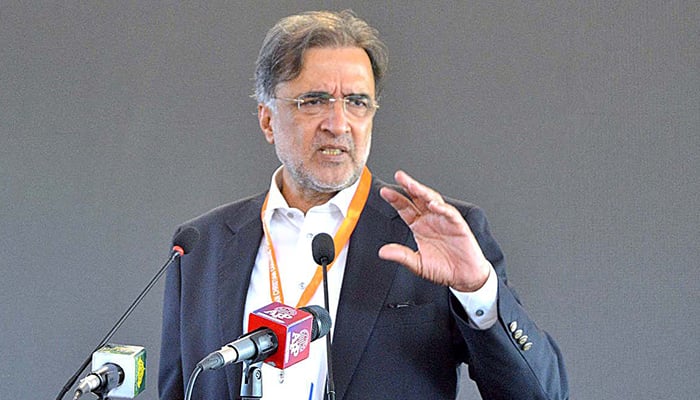
Senior Pakistan Peoples’ Party (PPP) leader Qamar Zaman Kaira said Monday that a politician should be appointed as caretaker prime minister, saying Premier Shehbaz Sharif has started consultations with allied parties on the selection of interim setup.

Kaira said that the prime minister would consult with the opposition leader after deliberations with coalition partners.

Kaira’s statement comes after PM Shehbaz’s announcement that the government will hand over the reins to the interim rulers next month, before the completion of the assembly’s tenure.

The early dissolution of the National Assembly — which is completing its tenure on August 12 at midnight — will give the Election Commission of Pakistan (ECP) 90 days to fix a date for the election.

If the assembly completes its tenure, then the ECP is bound to hold polls in 60 days.

The senior PPP leader said that political offices can be run only by politicians, as this is their job.

He added that the most elevated political office of the country is that of the prime minister. “If a judge, general, bureaucrat, technocrat, journalist, or any corporate sector employee is appointed to it, it will be a disgrace to the post and cannot work.”

“Can I be appointed, if a seat of a judge in a high court or the Supreme Court is vacant? How will I be able to do justice there?” he asked.

Kaira said the PM’s Office has many responsibilities.

“Political people should be appointed as prime minister, ministers or chief ministers. These posts should not go to others.”

Kaira said that the election reforms could be completed in a few days and that the election commission had started the process based on the old census.

The PPP leader added that the commission needs four months for new delimitation.

He advised the political parties to legislate on election reforms soon after completing the consultation.