
France braces for new pension strikes, mass protests

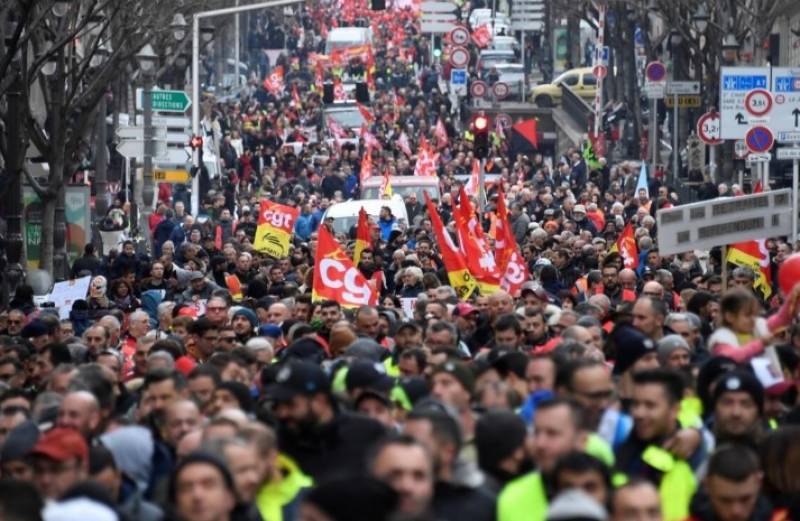
France braced for new strikes and mass demonstrations against a deeply unpopular pensions overhaul on Tuesday, a day after lawmakers started debating the contested bill.

President Emmanuel Macron made the reform the heart of his re-election campaign last year, and is determined to implement it despite fierce opposition from the political left and unions, but also the wider public.

Tuesday’s protests are the third such nationwide rallies organised since the start of the year.

Last week’s demonstrations brought out 1.3 million people across the country, according to the police, while unions claimed more than 2.5 million people took part.

Either way, they were the largest such protests in France since 2010.

Trains and the Paris metro are again expected to see “severe disruptions” on Tuesday, operators said, with around one in five flights at Orly airport south of the capital expected to be cancelled.

“We’re counting on there being rallies so that the country’s elected representatives take into account the opinion of citizens,” Philippe Martinez, leader of the hard-left CGT union, told the France 2 broadcaster on Monday.

More marches are planned for Saturday, although unions for rail operator SNCF said they would not call for a strike at the weekend, a holiday getaway date in some regions.

Macron’s proposal includes hiking the retirement age from 62 to 64 years old — still lower than in many European countries — and increasing the number of years people must make contributions for a full pension.

His ruling party is hoping to pass the bill with the help of allies on the political right, without having to resort to controversial executive powers that dispense with the need for a ballot.

But members of the left-wing opposition are staunchly opposed, and have filed for thousands of amendments.

– ‘Reform or bankrupcy’ –

Members of Prime Minister Elisabeth Borne’s government struggled to defend the overhaul as necessary in parliament on Monday, with many in the lower house booing.

As pressure grew, Borne on Sunday offered a key concession, saying people who started work aged 20 or 21 would be allowed to leave work a year earlier.

But the head of the CFDT union, Laurent Berger, dismissed the offer as a mere “band aid” — not a response to widespread public criticism.

Macron aims to lift the pensions system out of deficit by 2030 by finding around 18 billion euros ($19.5 billion) of annual savings — mostly from pushing people to work for longer and abolishing some special retirement schemes.

“It’s reform or bankrupcy,” Public Accounts Minister Gabriel Attal said in parliament on Monday.

But critics say that women will on average have to wait longer for retirement than men, as many have interruptions in their careers from childbearing and care responsibilities.

Opponents also say the reform fails to adequately account for people in physically strenuous jobs like builders and does not deal with companies’ reluctance to hire and retain older workers.

Borne claimed the government would pile pressure on companies to end the practice of letting go older employees, which leaves many struggling to find work in their final years before pension age.
North Korea pledges ‘expanded, intensified’ military drills

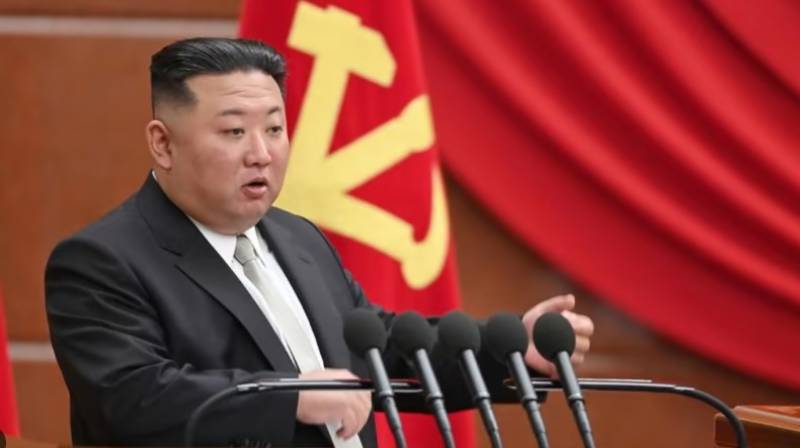
North Korea’s top army officials have said they will expand and intensify military drills to ensure their readiness for war, state media reported Tuesday, ahead of a massive parade.

The pledge came at a Monday meeting overseen by leader Kim Jong Un and follows last week’s staging of joint air drills by South Korea and the United States.

The agenda was topped by “the issue of constantly expanding and intensifying the operation and combat drills of the (Korean People’s Army) … strictly perfecting the preparedness for war”, the official Korean Central News Agency said.

The meeting of North Korea’s central military commission comes as commercial satellite imagery suggests “extensive parade preparations” are underway in Pyongyang ahead of key state holidays this month.

North Korea celebrates the founding anniversary of its armed forces on Wednesday and the “Day of the Shining Star” on February 16. The latter is the birthday of Kim Jong Il, son of North Korea’s founder Kim Il Sung and father of Kim Jong Un.

Seoul and Washington have moved to bolster joint military drills following a year of sanctions-busting weapons tests, infuriating Pyongyang, which sees them as rehearsals for invasion.

Last week, the security allies staged joint air drills featuring strategic bombers and stealth fighters, prompting Pyongyang to warn such exercises could “ignite an all-out showdown”.

The joint exercises, their first this year, came a day after US Defense Secretary Lloyd Austin and his South Korean counterpart vowed to boost security cooperation to counter an increasingly belligerent nuclear-armed North.

North Korea’s foreign minister has said the move to ramp up joint drills crossed “an extreme red line”.

Experts say Monday’s meeting of North Korea’s top brass aimed to highlight the country’s readiness to face down upcoming joint military drills between South Korea and the United States — and also stress it was prepared for an actual war.

“North Korea is hinting about the possibility of military action in the future in the name of operational and combat training and war preparedness,” said Hong Min, researcher at the Korea Institute for National Unification.

Kim recently called for an “exponential” increase in Pyongyang’s nuclear arsenal, including mass-producing tactical nuclear weapons and developing new missiles for nuclear counterstrikes.

Kim has also said his country must “overwhelmingly beef up military muscle” in 2023 in response to what Pyongyang calls US and South Korean hostility.

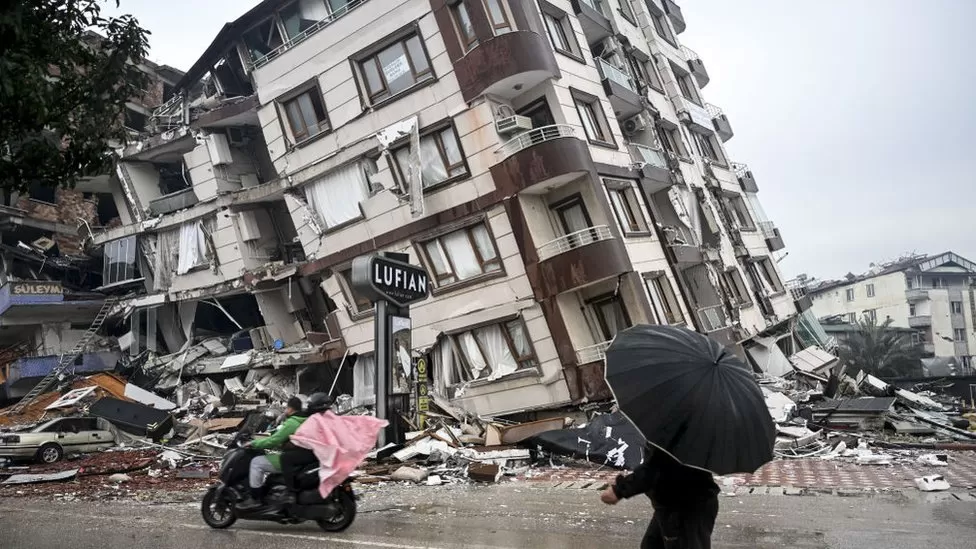
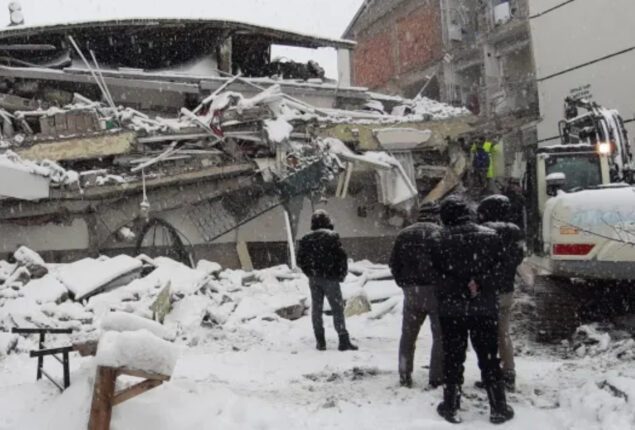
Rescuers are battling heavy rain and snow as they race against the clock to find survivors of a devastating earthquake in south-east Turkey.

More than 4,300 people were killed and 15,000 injured in Turkey and over the border in Syria when the quake struck in the early hours of Monday.

The World Health Organization has warned the toll may rise dramatically as rescuers find more victims.

As day breaks rescue teams are stepping up their search for survivors.

Many people in the disaster zone have been too scared to go back into buildings.

The 7.8 magnitude tremor struck at 04:17 (01:17 GMT) on Monday at a depth of 17.9km (11 miles) near the city of Gaziantep, according to the US Geological Survey.

Seismologists say it was one of the largest ever recorded in Turkey, where at least 2,921 people are now known to have died. Survivors say it took two minutes for the shaking to stop.

A later tremor had a magnitude of 7.5, and its epicentre was in the Elbistan district of Kahramanmaras province.

As dawn broke on Tuesday, traffic was at a standstill on the main highway to the Turkish city of Maras, close to the epicentre of the quake and believed to be one of the worst-affected areas.

Cars occasionally crawled forward, the wet road illuminated by glowing red brake lights.

Few rescuers have made it to this part of southern Turkey yet and everyone is trying to get there as fast as they can to assess the damage and give vital help.

One search and rescue team on their way to the city, their van loaded with specialist equipment and supplies, told the BBC they were eager to get there and start looking for survivors, but they had no idea how bad the devastation would be when they arrived.

As aftershocks continue, rescuers in some areas have been digging through rubble with their bare hands looking for survivors.

In the Turkish city of Osmaniye, near the epicentre, pouring rain hampered rescuers as they searched through the rubble looking for any survivors.

The city was without power as the cold and rain set in.

One family camped on the street – despite the freezing temperatures – as they were scared of the aftershocks triggering another building to collapse.

Every time they felt an aftershock, the family moved closer into the middle of the street.

A hotel owner in the city told the BBC that of 14 guests staying that night only seven had been found.

Countries around the world are sending support to help the rescue efforts, including specialist teams, sniffer dogs and equipment.

But the earthquake has caused significant damage to three airports across Turkey, also creating challenges for aid deliveries.

A woman reacts while embracing another person near rubble in Hatay, Turkey, on Tuesday

At least 1,400 people are now known to have been killed in Syria where millions of refugees live in camps on the Turkish border.

Following an international appeal for help, Turkey’s President Recep Tayyip Erdogan said 45 countries had offered support.

UN Secretary General António Guterres called for an international response, saying that many of the families hit by the disaster were “already in dire need of humanitarian aid in areas where access is a challenge”.

The European Union is sending search and rescue teams to Turkey, while rescuers from the Netherlands and Romania are already on their way. The UK has said it will send 76 specialists, equipment and rescue dogs.

France, Germany, Israel, and the US have also pledged to help. Russian President Vladimir Putin has offered help to both Turkey and Syria, as has Iran.

Diyarbakir, Turkey: ‘People are still trapped under the rubble’

Turkey lies in one of the world’s most active earthquake zones.

In 1999 a quake killed more than 17,000 in the north-west while in 1939, 33,000 people died in the eastern province of Erzincan.

This earthquake was powerful enough to be felt as far away as Cyprus, Lebanon and Israel.

British search and rescue specialists are travelling to Turkey to help search for survivors following the earthquake that has killed over 2,300 people.

A team of 76 rescuers is flying to Turkey on Monday evening.

Two 7.8 and 7.5 magnitude quakes have devastated parts of Turkey and Syria, reducing many buildings to rubble.

Turkish communities in the UK have been sending aid to the areas affected by the earthquake since early on Monday morning.

Foreign Secretary James Cleverly said the impact of the quakes was “on a scale that we have not seen for quite some time”.

More than 10,000 people are thought to have been injured.

No Britons had yet been reported dead in the disaster, said Mr Cleverly.

The British rescue team “should be on the ground shortly to give the Turkish authorities the help that they need to try to save as many lives as possible”, he said.

The UK is also sending specialist equipment, four specially trained dogs and a team of emergency medics in what Downing Street said was “very much the initial response”.


No 10 said the government was looking at ways it could support humanitarian action in northwest Syria, and that its first approach would be to work through the United Nations (UN).

Turkey’s disaster agency said more than 1,500 people had died there, while it is estimated that 810 people died in Syria.

Those numbers are still expected to rise as rescuers comb through mountains of rubble in freezing, snowy weather.

The chairman of the British Turkish Association said he had been “inundated” with calls from people worried about loved ones.

Attila Ustun described it as a “heartbreaking” day for Turks everywhere and said there was “a very large connection” between the Turkish communities in east and north London and the area where the quake struck.

He continued: “Some were born in those cities and towns that are now a disaster zone.”

Mr Ustun said people from Turkish backgrounds had been reaching out after learning family members had died, including “one gentleman in Bedfordshire who has lost three of his uncles in one property”.

He added: “I’ve been inundated, I had one lady in London crying her eyes out and saying that half of her village is now rubble.

“People are ringing me asking what they can do to help.”

The British Turkish Association is taking donations, particularly winter clothes, at different points across the UK.

Countries around the world have pledged or offered support for operations in southeast Turkey and northern Syria following the disaster.

Ebu Bekir Tezgel, senior Imam at Aziziye Mosque in north London, said many of its worshippers had relatives in the area of Turkey where the earthquake hit.

He said there had been prayers for those affected and efforts were being made to send emergency aid.

“Everyone’s morale is very down as you can imagine,” he told BBC News.

“We would normally stop and talk after prayer, to sit around and have a little chat – but that didn’t happen today.”

Senior Imam Ebu Bekir Tezgel said a number of worshippers at the Aziziye Mosque had family in the areas hit by the earthquake

He said work would continue to gather aid to send to Turkey as well as identify members of mosque who need specific support.

Cengiz Akarsu lives in Durham, but is originally from Elaziğ in the east of Turkey. His brother moved to the city of Hatay – which has been devastated by the earthquake – for work, and has lost his house. The company he works for has moved him and his family to a hotel in Adana.

He says he feels “helpless” knowing he “can’t do anything”.

“It’s just like your family, you know and I know, they’re in trouble and you’re watching them,” he says.

“Everyone is like family… they don’t have religion, they don’t have colour, they don’t have country, they are just human people dying.”

Mr Akarsu said his best friend had also been missing since the earthquake happened.

Cengiz Akarsu’s brother has lost his house in the disaster

Charities are also launching appeals, including The British Red Cross.

Its chief executive, Mike Adamson, said it was “shocking” to see the scale of destruction caused by this earthquake with homes, hospitals and roads destroyed across the region.

“The priority right now is rescuing people from the rubble and Red Cross Red Crescent teams are on the ground in Syria and Turkey providing urgent support during these critical hours.”

The government is expected to announce some new names in senior roles – with widespread talk among senior sources that the prime minister will also set out a reorganisation of some government departments on Tuesday.

The weekly cabinet meeting has been pushed back an hour and will now begin at 10:30 GMT.

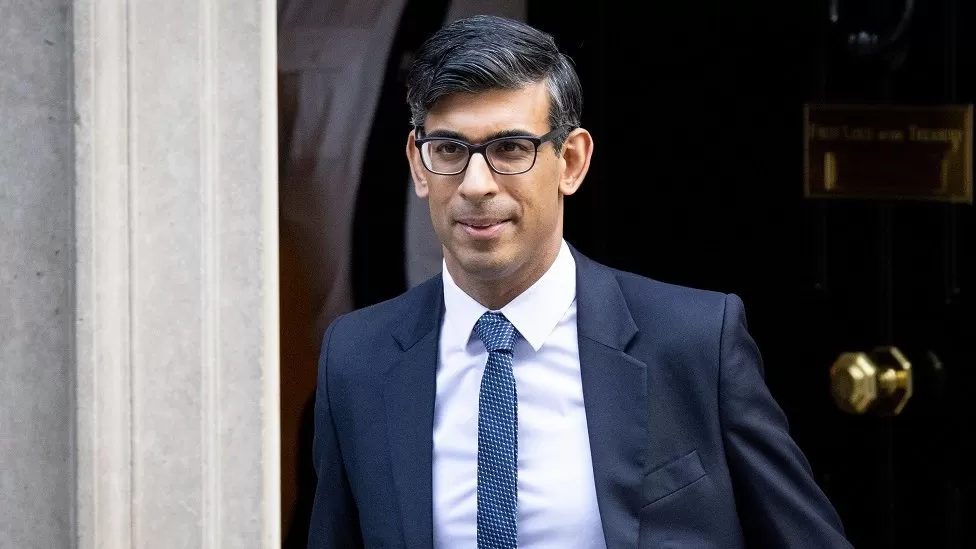
Rishi Sunak has been looking for a new party chairman for over a week now, following the sacking of Nadhim Zahawi.

One well-placed source told the BBC they expected Mr Zahawi’s successor to be the Trade Minister Greg Hands.

Were that to be the case, that would mean Mr Sunak would be looking for a new trade minister.

We understand the current Business Secretary Grant Shapps – a former party chairman – will not be the new party chairman.

It is also thought the responsibilities of some government departments may be changed, with a reorganisation of what is currently the Department for Business, Energy and Industrial Strategy expected by some.

The prime minister promised last summer – when he was campaigning for the job – to re-establish a standalone Department for Energy.

Changing departments

The Westminster rumour mill had been alive with chat about a potential reshuffle all weekend, after requests were made for diaries to be shifted prompted suspicions from some.

Talk of a reshuffle had been dismissed by those around the prime minister. But when both The Sun and The Times reported expected changes, Downing Street refused to comment.

There was fury from some in Whitehall about what was seen as the prime minister’s failure to tell his colleagues and the civil service before it was reported by journalists.

“There are a bunch of civil servants going to bed not knowing which department they’re going to be working for in the morning,” one source said.

“Surely they should have the courtesy of telling us first.”

The Department of Culture, Media, Digital and Sport is also anticipating change. The current Culture Secretary Michelle Donelan is expected to take maternity leave this spring.

The Sun suggests the responsibilities of her department may be changed too – which would pose big questions for complex bits of legislation such as the Online Safety Bill.

When repeatedly asked to comment on or deny suggestions of a reshuffle or Whitehall reorganisation, a Number 10 source said “no comment”.

Pakistan’s economic strength vital for Kashmir’s fight for freedom: PM Shehbaz

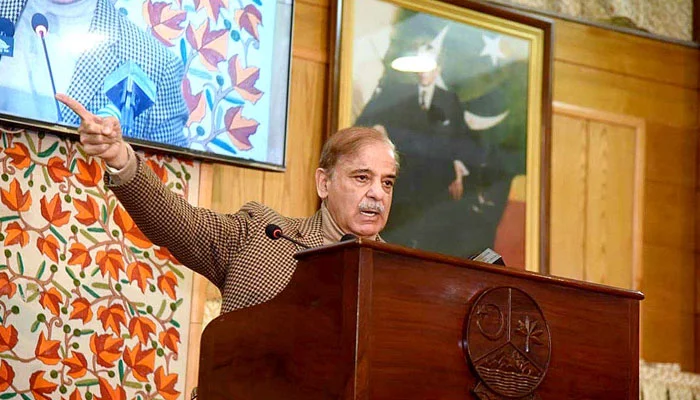
Prime Minister Shehbaz Sharif has underscored the importance of Pakistan’s economic stability to help Indian Illegally Occupied Jammu Kashmir (IIOJK) get its right to self-determination.

“It won’t be long before holding all the injustices done accountable if the Muslims across the globe stand united,” the premier said in his address at the Azad Jammu and Kashmir Legislative Assembly on Kashmir Day on Sunday.

He said that in order to help Kashmiris to achieve freedom, Pakistan needs to be financially strong and united.

“We need to forget differences, adopt simplicity and make sacrifices and we need to move forward instead of living in the past,” said the premier. “Kashmiris are looking to Pakistan and we need to play our role.”

PM Shehbaz, while talking about the ongoing talks with the International Monetary Fund (IMF) for the revival of the programme, said that the “country is facing many financial challenges and the IMF is asking for the details”.

There has been a division created in society, he said, adding that the unity and mutual agreement “help with achieving goals”.

Expressing his regret, PM Shehbaz said: “The Kashmir valley has turned red with the blood of innocent Muslims. Hundreds of thousands of Muslims were martyred in Kashmir in a year.”

Talking about the brutality of India towards the Muslims in IIOJK, the premier condemned the revoking of Kashmir’s special status by the Modi-led government on August 5, 2019.

“Pakistani people and the government has always supported Kashmiris,” he said, adding that “Unity and accord” help in achieving the goals.

He further said that India would be concerned after seeing the coalition of all political parties in Pakistan.

Moreover, the premier called for practical steps instead of only passing statements, and slogans or doing poetry and speeches.

“India has turned occupied Kashmir into a jail,” he said, adding that IIOJK raises questions on the failure of the Kashmir cause despite 75 years passed.

He said that answers to these questions need to be found by examining ourselves first.

On his maiden visit as COAS, General Asim Munir in UK on 5-day official trip

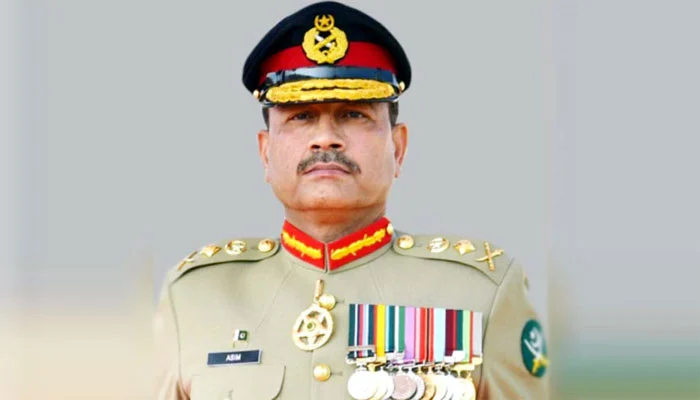
LONDON: Chief of Army Staff (COAS) General Asim Munir has reached the United Kingdom on a highly important visit on Britain’s Ministry of Defence invitation to discuss security-related strategic issues.

Sources have told Geo News that General Munir will be visiting the UK officially for five days starting from Monday. The senior military commanders will accompany him during the visit.

They landed in the UK late on Saturday night.

The visit is seen as highly important in view of the rising issue of Taliban militancy and the situation in the South Asian region. This is General Asim Munir’s first visit to the UK after taking over as Pakistan’s powerful army chief at the end of November last year.

A security source said that both countries are attaching huge importance to the visit. The army chief will address the 5th joint UK-Pakistan stabilisation conference at Wilton Park between February 5-8.

Wilton Park is an executive agency created by the UK Foreign Commonwealth and Development Office to foster open dialogue between governments.

Co-hosted by UK Army Chief General Sir Patrick Sanders, the conference is themed “Regional Stability in South Asia: the return of geopolitics and other challenges.”

The conference will also focus on the Ukraine war’s impact on the EU, UK, and its consideration for Pakistan.

The COAS will visit the headquarters of the British military and address senior military commanders including the UK army chief. According to the source, Gen Munir will also address a security think-tank towards the end of his visit.

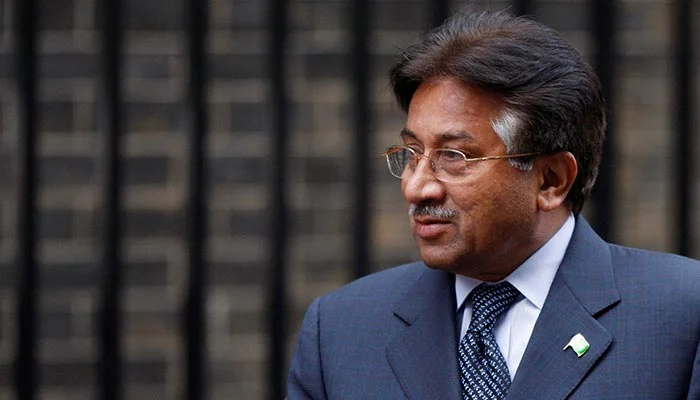
Gen (retd) Pervez Musharraf’s body to be moved to Pakistan today

Former president General (retd) Pervez Musharraf‘s body will be repatriated to Pakistan today from the United Arab Emirates, where he passed away on Sunday at the age of 79 after a prolonged illness.

The mortal remains of the former army chief will be flown to Pakistan on a special flight at 11:30am Pakistan time.

The Pakistani embassy in the UAE had issued a no objection certificate (NOC) for the repatriation of Musharraf’s body to Pakistan at the request of his family.

Former military leader’s wife Sehba Musharraf, son Bilal and daughter Ayla will bring the deceased’s body to Pakistan.

The doctors suggested the immediate burial of Musharraf after the body reaches Pakistan.

The former president’s body has been kept in the mortuary of a local hospital as of now.

Musharraf passed away on Sunday in a hospital at the age of 79. He was undergoing treatment for amyloidosis at American Hospital Dubai.

Musharraf’s family had filed an application in the Pakistani consulate in Dubai to shift the former military leader’s body to Pakistan.

‘Musharraf to be laid to rest in Karachi’

The former president will be buried in a Karachi graveyard, confirmed his family sources. The bereaved family formally approached Pakistan’s consulate in Dubai seeking permission to shift the mortal remains of Musharraf to Pakistan.

It is pertinent to mention here that the former president’s mother was buried in Dubai while his father was laid to rest in Karachi. “His [Musharraf] passport has been cancelled,” the diplomatic officials said, adding that the special plane carrying the body of the former army chief will land in Rawalpindi.

Earlier, Foreign Office spokesperson Mumtaz Zahra Baloch confirmed that they were facilitating the transportation of the mortal remains of the former army chief.

“Our missions in the UAE are in contact with the family and are facilitating the transportation of the mortal remains,” she added.

Condolences

As soon as Musharraf’s death was reported, politicians including Prime Minister Shehbaz Sharif as well as chief of army staff offered their condolences over his demise.

Inter-Services Public Relations (ISPR) said that the Chairman Joint Chiefs of Staff Committee (CJCSC) General Sahir Shamshad, and tri-services chiefs expressed heartfelt condolences on Musharraf’s death.

“CJCSC and services chiefs express heartfelt condolences on the sad demise of General Pervez Musharraf, former president, CJCSC and chief of army staff. May Allah bless the departed soul and give strength to the bereaved family,” the military’s media wing said.

Qatar sends envoy to Kabul for talks with Taliban

The visit comes after the Taliban administration placed restrictions on women’s education and NGO work, which Qatar labelled “deeply concerning” amid widespread international criticism.

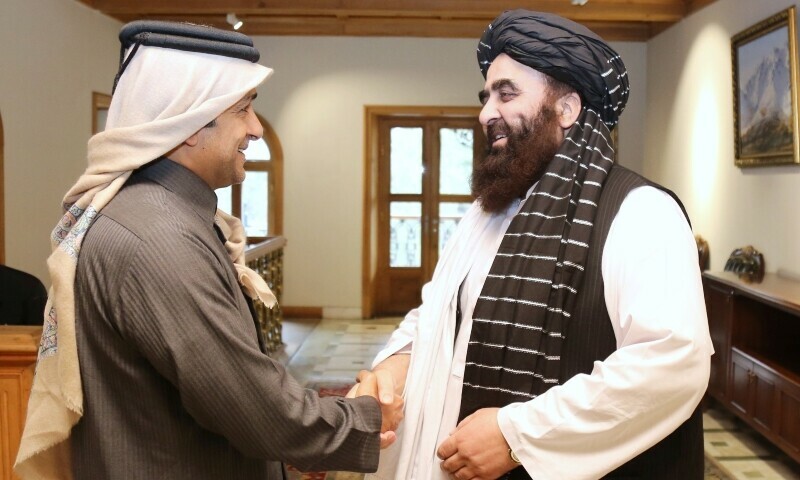
Mutlaq Bin Majed Al-Qahtani, the special envoy of Qatar’s foreign minister, took part in meetings with acting foreign minister Amir Khan Muttaqi in Kabul, according to Afghan foreign affairs spokesperson Abdul Qahar Balkhi.

“Both sides discussed political coordination, the strength of the relationship and humanitarian aid,” Balkhi said.


No foreign country has formally recognised the Taliban government, though both China and Pakistan sent their foreign ministers last year and the UN deputy special representative recently visited to discuss women’s rights and aid.

Qatar was home to the Taliban’s political office since around 2012 when they were waging an insurgency against the Western-backed government until they seized power in 2021.

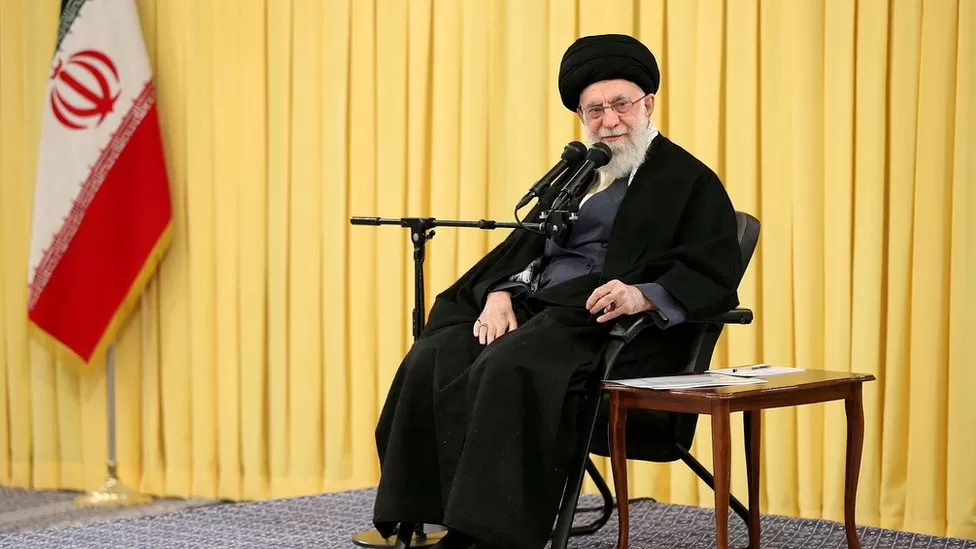
Iran’s supreme leader has pardoned “tens of thousands” of prisoners, including many linked to anti-government protests.

State media reports the pardons by Ayatollah Ali Khamenei came with conditions.

The pardons come on the eve of the anniversary of the Islamic revolution in 1979.

Demonstrations erupted last September following the death in custody of a woman held by Iran’s morality police.

Mahsa Amini, 22, was arrested for allegedly wearing her hijab, or headscarf, “improperly” – in violation of Iran’s strict dress code for women.

Authorities have portrayed the protests – which are still continuing – as foreign-backed “riots” and at times have responded with lethal force.

Human rights groups say more than 500 demonstrators have been killed, including 70 minors, and around 20,000 have been arrested.


Protests around the country have slowed considerably since the first of the hangings began.

Iran’s state media says Ayatollah Khamenei’s latest pardons came after a letter from the head of the judiciary framed many of those detained as young people who’d been led astray by foreign influence and propaganda.

The letter claims that a number of protesters had expressed regret and asked for forgiveness.

But those charged with more serious offences – such as spying for foreign agents, murder or destruction of state property – will not be pardoned.

The measure will also not extend to any dual nationals currently being detained.

Under Article 110 of the Iranian constitution, the country’s supreme leader has the authority to issue pardons at the recommendation of the judiciary.

Watch: The secret diaries of women protesting in Iran

Sadeq Rahimi, the deputy judiciary chief, explained that those inmates who are qualified to be pardoned must pledge in writing that they regret what they have done otherwise, they will not be freed.

According to a report by the judiciary-affiliated news agency, Mizan, Mr Rahimi said that “for the first time ever” defendants who have not received any final verdict will be also pardoned.

Oslo-based group Iran Human Rights estimates that at least 100 people in detention are facing death sentences. It says that all defendants have been “deprived of the right to access their own lawyer, due process and fair trials”.

Four have already been executed for crimes connected to the protests. In January two men were hanged for killing a member of Iran’s security forces.

The pair launched an appeal before their deaths, saying they had been tortured.