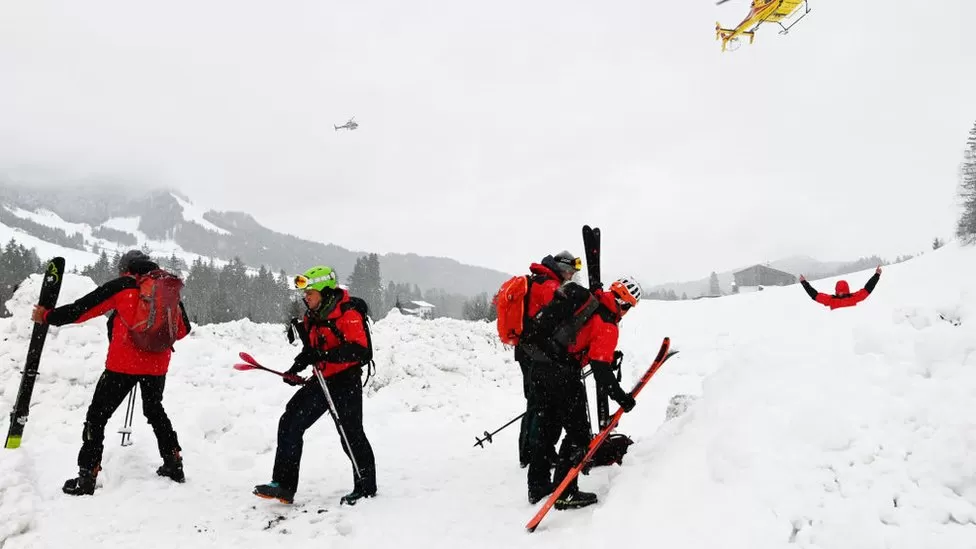
Ten people have been killed in several avalanches across the Austrian and Swiss Alps over the weekend.

Tourists from New Zealand, China and Germany were among the dead at a number of different ski resorts.

Austrian authorities put in place a level four avalanche alert – the second highest – following intense snowfall and wind in the area.

Despite the warnings, ski resorts in western Austria have been filling up due to school holidays in Vienna.

Austrian police announced five deaths on Sunday, including that of a 59-year-old man who was using a snow plough in the western region of Tyrol.

They also recovered the bodies of a ski guide in Sankt Anton am Arlberg and a 62-year-old man who was cross-country skiing around the summit of Hohe Aifner.

On Saturday, a 17-year-old New Zealander, a 32-year-old Chinese national and a German man in his 50s – who were all said to be skiing off designated ski trails when avalanches hit – were also found dead.

In Switzerland, a 56-year-old woman and 52-year-old man were also killed by unstable snow in the south-east canton of Graubuenden on Saturday morning. Swiss police said a third member of their group managed to escape unharmed.

Avalanches are common in both countries. According to Austria’s APA news agency, 30 avalanches were reported in the Tyrol region on Saturday alone – 11 of these involving people.

Austria’s level four alert level means “very large avalanches are likely” – it advises inexperienced skiers to remain on open ski runs and trails and for experienced skiers to stay away from very steep terrain.

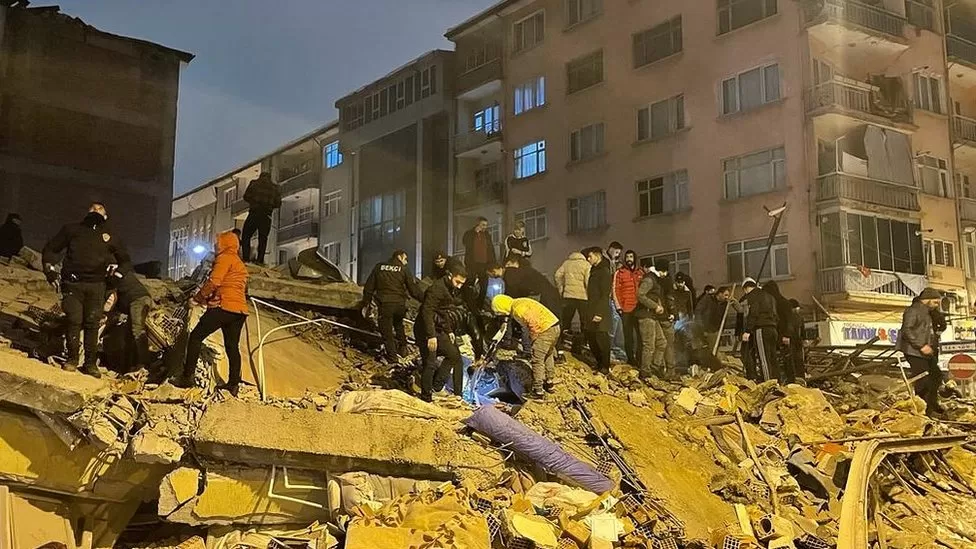
A powerful earthquake has hit a wide area in south-eastern Turkey, near the Syrian border, killing more than 100 people and trapping many others.

The US Geological Survey said the 7.8 magnitude tremor struck at 04:17 local time (01:17 GMT) at a depth of 17.9km (11 miles) near the city of Gaziantep.

In Turkey, officials confirmed more than 76 deaths so far and 10 cities hit, including Diyarbakir.

In Syria, more than 50 people were killed, state media reported.

There are fears the death toll will rise sharply in the coming hours.

Many buildings have collapsed and rescue teams have been deployed to search for survivors under huge piles of rubble.

Turkish Interior Minister Suleymon Soylu said 10 cities were affected: Gaziantep, Kahramanmaras, Hatay, Osmaniye, Adiyaman, Malatya, Sanliurfa, Adana, Diyarbakir and Kilis.

In Malatya province, north-east of Gaziantep, at least 23 people were killed, local officials said. In Sanliurfa, to the east, there were 17 deaths. And more deaths were reported in Diyarbakir and Osmaniye.

A BBC Turkish correspondent in Diyarbakir, reported that a shopping mall in the city collapsed.

Watch: Searching for people in earthquake rubble in Malatya

The tremor was also felt in Lebanon and Cyprus.

“I was writing something and just all of a sudden the entire building started shaking and yes I didn’t really know what to feel,” Mohamad El Chamaa, a student in the Lebanese capital Beirut, told the BBC.

“I was right next to the window so I was just scared that they might shatter. It went on for four-five minutes and it was pretty horrific. It was mind-blowing,” he said.

Rushdi Abualouf, a BBC producer in the Gaza Strip, said there was about 45 seconds of shaking in the house he was staying in.

Turkish seismologists estimated the strength of the quake to be 7.4 magnitude. They said that a second tremor hit the region just minutes later.

Turkey lies in one of the world’s most active earthquake zones.

In 1999, more than 17,000 people were killed after a powerful tremor rocked the north-west of the country.

Teachers should suspend their strike action while pay talks continue to allow schools to stay open, the education secretary has said.

Shirley-Anne Somerville called for “more compromise” as pupils move closer to the exam season.

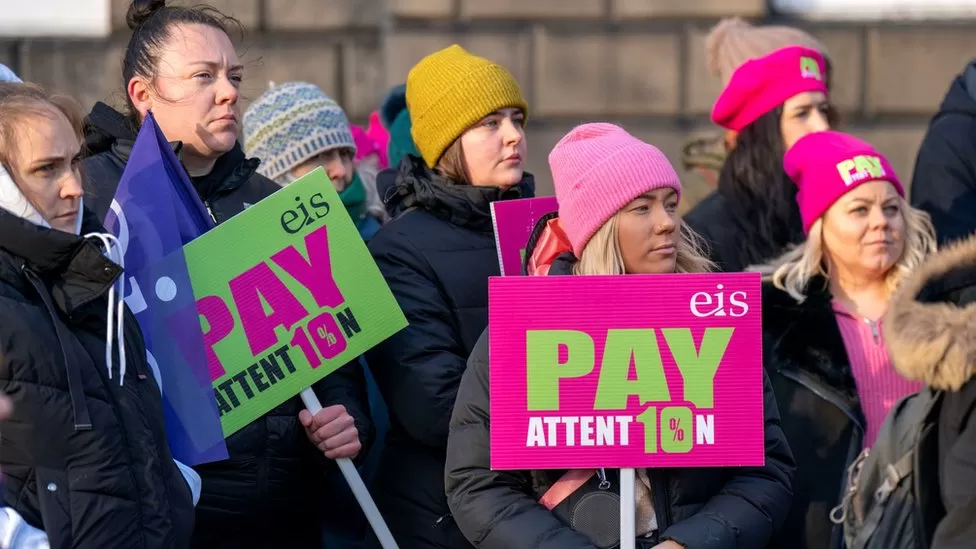
Members of the EIS union have held three weeks of rolling strikes affecting two council areas each day.

The union has accused the Scottish government of “a complete lack of urgency” to end the dispute.

The last day of the current action will take place on Monday in Inverclyde and Shetland.

And the EIS has refused to rule out further walkouts during the exam period and said its strategy was being kept “under review”.

The education secretary previously said there will be no new pay offer for teachers and that the union’s requested 10% pay rise is unaffordable.

The current 5% offer includes rises of up to 6.85% for the lowest-paid staff.

Members of the EIS union have been campaigning for a 10% pay rise

Ms Somerville told BBC Scotland’s The Sunday Show that local government body Cosla and the unions “remain some way apart”.

But she called for more talks in the coming week.

“Trade union colleagues have their mandate to strike and I absolutely respect that.

“But what we could see, as we have seen in other sectors, is a suspension and no further strike dates while talks are continuing.

“I’ve asked trade unions to look at that – they have so far refused. But, particularly as we move forward to exam season, I would like them to consider it.”

Pupils could face more disruption in the lead up to the exams period

She added: “I would hope that everyone involved would be able to agree that we do not want exams disrupted.

“As you would expect, Scottish government is working with local government and the SQA (Scottish Qualifications Authority) to make sure contingencies are in place.

“But I would like to think, for the benefit of children, young people and parents across the country, it wouldn’t be too difficult for trade unions to say we absolutely respect children and young people’s right to be able to carry out their exam and not have any threats to that hanging over them.”

EIS salaries convener Des Morris, who is party of the union’s negotiation team, said nothing in the government’s stance had changed during six months of pay talks.

He told The Sunday Show: “It should come as no surprise that our members are out on picket lines.

“We want this dispute resolved as quickly, and in as timely a manner, as possible. But we keep our industrial action strategy under review.

“The dates that we have are set out an publicly available.

“It is up to Scottish government and Cosla to back up their public statements about compromise and movement with actions that match that in the room.”

‘Lost trust’

Scottish Labour have accused the government of “doing nothing to win back the lost trust of teachers and parents”.

The party’s education spokesperson Michael Marra said: “While the cabinet secretary goes on television to attack teachers, her government brings nothing new to table in negotiations.

“It is now months since any offer was made and the unions have nothing further to put to their members.

“Unless a resolution is found soon, our children will miss out on even more vital education and our teachers will remain feeling undervalued and overworked – all because the SNP are unwilling to find a compromise that works for everyone.”

Scottish Conservative education spokesman Stephen Kerr said Ms Somerville had “once again passed the buck to teaching unions to resolve this dispute, rather than recognising it’s her job to break the impasse”.

He added: “The public will rightly be wondering why pupils and parents are being treated with such contempt by Shirley-Anne Somerville.

“The onus is on the SNP government to resolve this so that pupils approaching vital exams can have the stable education they rightly deserve.”

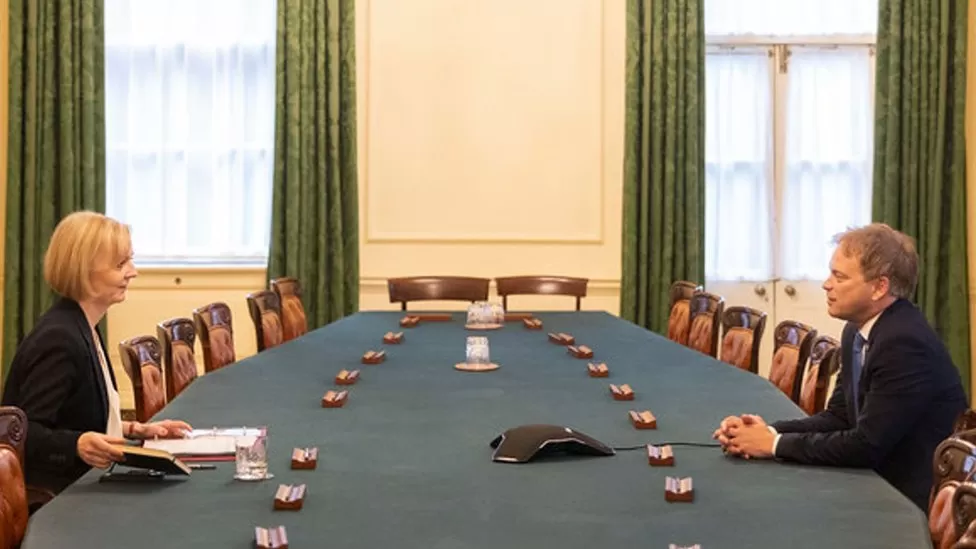
Liz Truss’s radical tax-cutting plan was “clearly” not the right approach, according to Grant Shapps, who briefly served in her short-lived government.

In a return to the political fray, Ms Truss wrote in the Sunday Telegraph that her economic agenda was never given a “realistic chance”.

Business Secretary Mr Shapps said he agreed with Ms Truss on wanting lower taxes – but inflation must fall first.

“You can’t just go straight to those tax cuts,” he said.

In her 4,000-word essay, Ms Truss stood by her plans to boost economic growth, arguing they were brought down by “the left-wing economic establishment”.

But she acknowledged she was not “blameless” for the unravelling of the mini-budget.

They are the first public comments the former PM has made on her resignation in October of last year.

Ms Truss resigned after she and her chancellor Kwasi Kwarteng introduced a £45bn package of tax cuts – including a cut to the top rate of income tax – which panicked the markets and alienated Tory MPs.


Mr Shapps was asked on BBC One’s Sunday With Laura Kuenssberg show whether Ms Truss’s approach had been the right one.

“Clearly it wasn’t,” he said.

He admitted that the UK’s tax burden was currently “very high”, and said he agreed with Ms Truss that Conservatives must be “making the good arguments” that a lower-tax economy can be successful in the long term.

But before the government cuts tax, it must first halve inflation, get “growth into the economy” and get debt “under control”, he said.

Grant Shapps was home secretary under Liz Truss for her final six days in office

He tried to avoid addressing Truss’s criticism that the Conservative Party had failed, for years, to make the case for free-market economics with low taxes and low regulation.

Mr Shapps said he took the role of home secretary in the final days of Ms Truss’s government out of a sense of “national duty”, and that by that point “we’d seen the impact on the markets”.

He replaced Suella Braverman, who resigned over two data breaches. Six weeks earlier, as Ms Truss entered Downing Street, she had fired Mr Shapps as transport secretary, a role he held under the former Prime Minister Boris Johnson.

Ms Truss’s brief time in power – 49 days – made her the shortest-serving prime minister in UK history.

In her essay, Ms Truss said that while her experience last autumn was “bruising for me personally”, she believed that over the medium term her policies would have increased growth and therefore brought down debt.

She argued that the government was made a “scapegoat” for developments that had been brewing for some time.

“Frankly, we were also pushing water uphill. Large parts of the media and the wider public sphere had become unfamiliar with key arguments about tax and economic policy and over time sentiment had shifted leftward,” she wrote.

She also said she had not appreciated the strength of the resistance she would face to her plans – including plans to abolish the 45p top rate of income tax.

“I assumed upon entering Downing Street that my mandate would be respected and accepted. How wrong I was.”

Liz Truss resigned as prime minister in October 2022 and officially stepped down after a week-long contest to find her successor

Mr Kwarteng dropped the 45p income tax proposals 10 days after they were announced, telling the BBC it was “a massive distraction on what was a strong package”.

Less than a fortnight later, Ms Truss sacked Mr Kwarteng, something she said she was “deeply disturbed by”. She described Mr Kwarteng in her essay as “an original thinker and a great advocate for Conservative ideas” – but that it was clear the tax proposals could not survive.

With the benefit of hindsight, she would have acted differently during her premiership, she wrote – but she still backs her plans for growth.

Sir Jake Berry, who was Conservative party chairman under Ms Truss, said he agreed with her assessment of the problems facing the UK economy, but “not necessarily the cure”.

Speaking on the Sunday With Laura Kuenssberg show, he added that Ms Truss had been wrong to say the Conservatives had failed to make the argument for lower taxes.

Meanwhile, shadow chancellor Rachel Reeves said Ms Truss’s policies “made working people pay the price”.

“The Conservatives crashed the economy, sank the pound, put pensions in peril and made working people pay the price through higher mortgages for years to come.

“After 13 years of low growth, squeezed wages and higher taxes under the Tories, only Labour offers the leadership and ideas to fix our economy and to get it growing.”

While Ms Truss resigned as prime minister, she is still serving in parliament as the MP for South West Norfolk.

Govt mulls introducing law to end defamation campaign against institutions

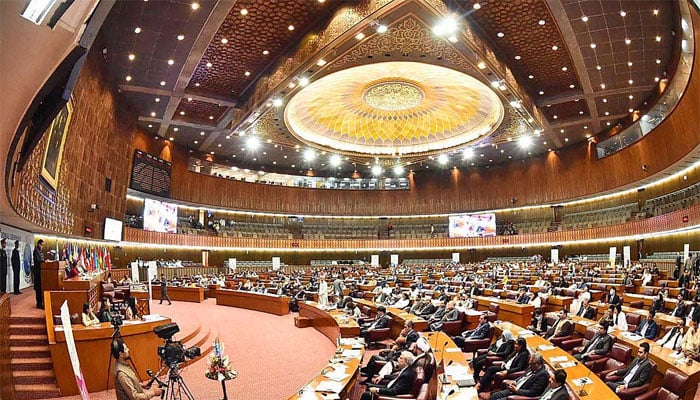
ISLAMABAD: The federal government is considering taking strict measures to halt the defamation drive against the state institutions, including the judiciary, army and other constitutional organisations

The enactment of such a law to penalise the elements carrying out such activities against institutions is also under consideration.

This legal development holds significant importance as an unending campaign of a political party — against the army, judiciary and other constitutional institutions — is in the swing.

Sources informed with legislation told The News that a draft of the legislation is in circulation to amend the Pakistan Penal Code (PPC) and Code of Criminal Procedure (CrPC) where up to five-year imprisonment will be awarded to whoever scandalises or ridicules the Pakistan Army and judiciary through any medium.

Before submission to the cabinet, the law is yet to get a final shape.

The bill has been authored by the Ministry of Interior and the Ministry of Law and Justice is busy with its fine-tuning before submitting it to the prime minister for putting it up before the cabinet. A cabinet summary has also been referred to with the draft.

The sources pointed out that the bill titled Criminal Laws (Amendment) Act, 2023, suggests a new section 500A after section 500 in PPC 1860. The new section is titled “intentional ridiculing or scandalising of the state institutions, etc”.

The legislation provides that “whoever makes, publishes, circulates any statement or disseminates information, through any medium, with an intention to ridicule or scandalise the judiciary, the armed forces or any of their member will be guilty of an offence punishable with simple imprisonment for a term, which may extend to five years or with a fine which may extend to Rs1 million or with both.”

Similarly, in the Schedule II of the PPC, a new section titled 500A has been added to Section 500, which says that the offender will be arrested without a warrant and the offence will be non-bailable and non-compoundable, which can only be challenged in a sessions court.

The cabinet summary says that recently the country has witnessed a spate of scandalous, derogatory and vicious attacks on certain institutions of the state, including the judiciary and armed forces.

It adds that “it is well-known that a deliberate cyber campaign has been launched for self-serving motives with the objective of inciting and nurturing hatred against important state institutions and their officials.”

It also states that such attacks are focused on undermining the integrity, stability and independence of the country’s state institutions.

The summary further mentions that judicial and army officials do not have the opportunity to step forward and negate scandalous, derogatory remarks while appearing in the media.

Given the long-tested legal principle noted in Section 196 of the CrPC, prior approval of the federal government before taking cognisance of the case or registration of a first information report (FIR) against any person has been made mandatory to avoid misuse of the mooted PPC section, the document suggests.

Constitutional experts are of the view that stringent laws are already part of the book to stop maligning the army, judiciary and other state institutions. In the presence of such laws, there is no need for fresh legislation.


11 students discharged in India’s Jamia violence case

Mr Imam will, however, remain in custody in another case he shares with former Jawaharlal Nehru University (JNU) student leader Umar Khalid under the more stringent anti-terror laws known as the Unlawful Activities (Prevention) Act (UAPA), The Hindu newspaper reported.

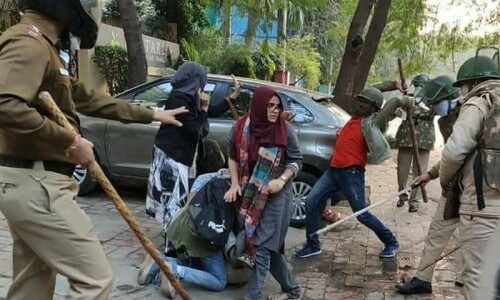
The court order on Saturday said the Delhi police had made the 11 student activists scapegoats, and that there was no prima facie evidence that the accused were part of the mob violence, had any weapon, or were throwing stones. An FIR had been lodged against them alleging offences of rioting and unlawful assembly during the protests against the Citizen Amendment Act and National Register of Citizens that year.

The court maintained that the police could not apprehend the “actual perpetrators”, and that the charge sheets filed by the police were “ill-conceived”. Alluding to Article 19 of the Constitution of India, it said: “Dissent is an extension of the right to freedom of speech and expression. It is therefore a right which we are sworn to uphold.”

Court raps police for scapegoating activists and failing to arrest ‘actual perpetrators’ in 2019 case

Additional Sessions Judge (Saket Court) Arul Varma was hearing the case, in which 12 persons were booked by the Delhi police in the Jamia violence case.

The court also said that there was a need for investigative agencies to discern the difference between dissent and insurrection.

The court discharged Mohammad Qasim, Mahmood Anwar, Shahzar Raza Khan, Abuzar, Shoaib, Umair Ahmad, Bilal Nadeem, Sharjeel Imam, Asif Iqbal Tanha, Chanda Yadav and Safoora Zargar.

However, the court framed charges against Ilyas as photographs of him hurling a burning tyre have been clearly shown in a newspaper.

‘Relentless struggle’: Pakistan expresses unflinching support for Kashmiris on Solidarity Day

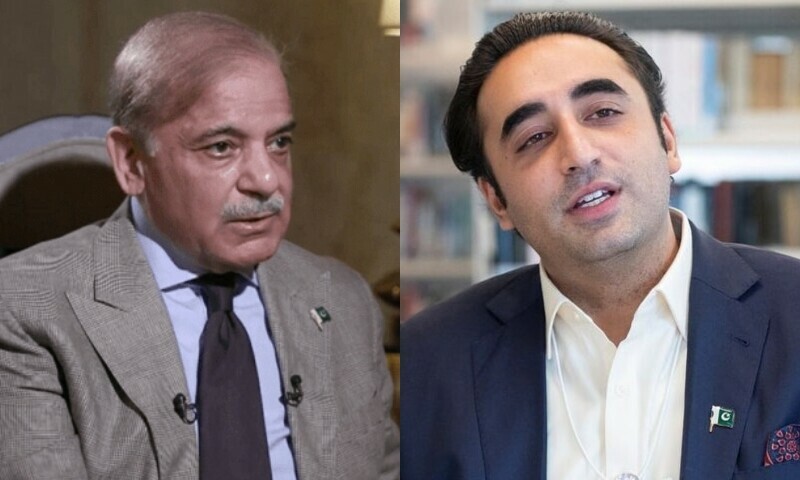
In a message on the occasion, Prime Minister Shehbaz Sharif said: “Today the whole of Pakistan comes together to express its unflinching solidarity and support to Kashmiri brothers and sisters, who remain undeterred by the oppressive Indian occupation apparatus in the struggle for UN-sanctioned right to self-determination.”


He went on to say that the people of Kashmir were waging a relentless struggle of “epic proportions” to realise their dream of freedom from the “Indian yoke”.

“Through their sacrifices, they have kept the torch of freedom burning. It is my faith that their dreams will soon see the light of day,” the premier added.

Foreign Minister Bilawal Bhutto-Zardari stressed that India must end its gross human rights violations in Indian Illegally Occupied Jammu and Kashmir (IIOJK) and reverse its unilateral and illegal actions of 5 August 2019.

“As we observe the Kashmir Solidarity Day, the people of Pakistan salute the sacrifices of our Kashmiri brothers and sisters who have suffered for more than 75 years under brutal Indian oppression,” he said in a video message.


The minister recalled that for over seven decades, Indian Occupation Forces have brutalised Kashmiris and denied them their rights. “Today, Indian Illegally Occupied Jammu and Kashmir (IIOJK) is one of the most-militarised zones of the world, with the presence of over 900,000 occupation forces.”

With its illegal and unilateral actions of 5 August 2019, he continued, India had opened a new chapter in suppressing the people of IIOJK.

“I want to remind our Kashmiri brothers and sisters that Pakistan will never sit back and watch silently while Kashmiris continue to suffer Indian atrocities,” he promised.

“Jammu and Kashmir dispute will remain a key pillar of Pakistan’s foreign policy. We will continue to lend unstinted moral, diplomatic and political support to the Kashmiri people until the realization of their right to self-determination in accordance with the UN Security Council resolutions. As we observe the Kashmir Solidarity Day, the people of Pakistan salute the sacrifices of our Kashmiri brothers and sisters who have suffered for more than seventy-five years under brutal Indian oppression,” Bilawal added.

The Pakistan army also paid tribute to the indigenous freedom struggle of brave Kashmiris for their right to self-determination as per UN resolutions and aspirations of people of Kashmir.

“No amount of HRV (human rights violations) /atrocities can suppress the spirit of Kashmiris for freedom,” Inter-Services Public Relations (ISPR) Director General (DG) Major General Ahmed Sharif Chaudhry said.


OIC panel expresses solidarity

Meanwhile, an informal meeting of the OIC Contact Group on Jammu and Kashmir at the UN — comprising Azerbaijan, Niger, Pakistan, Saudi Arabia and Turkiye — was convened by Pakistan’s Ambassador Munir Akram.

He said despite India’s massive repression Kashmiris were continuing their heroic struggle for the exercise of the right to self-determination, according to a press release issued by the Pakistan mission.

Besides, ambassadors from the OIC member states participated in the virtual commemoration marking the Kashmir Solidarity Day.

Expressing solidarity with Kashmiris were Saudi Ambassador Abdulaziz Alwasil, Azerbaijan envoy Yashar Aliyev, and Turkish Ambassador Feridun Sinirlioglu.

Turkey elections: Biggest test for Erdogan amid cost of living crisis

She is one of millions of Turks struggling to cope with the cost of living in a country where the official inflation rate is higher than 57%.

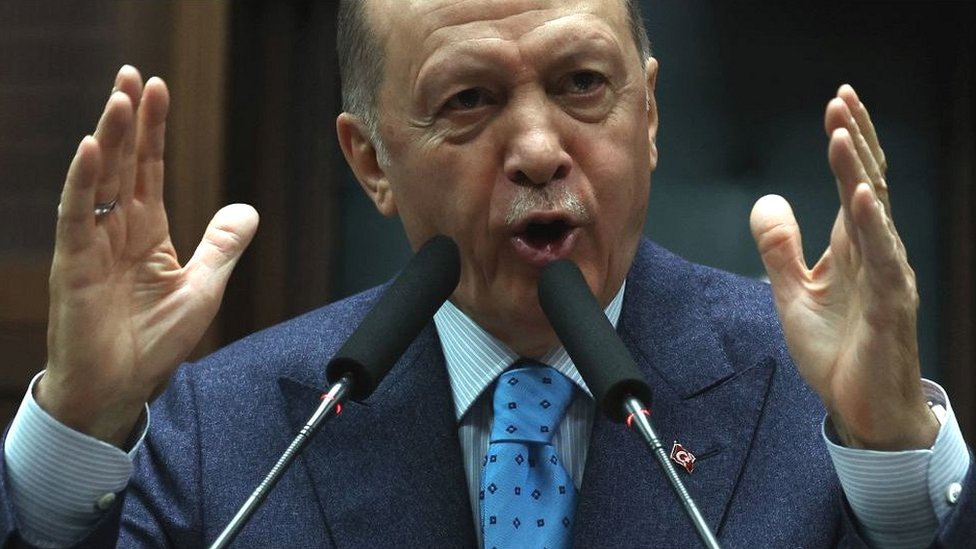
Against this backdrop of economic turbulence, President Recep Tayyip Erdogan has announced elections for 14 May in a bid to stay in power, after 20 years at the top.

Parliamentary and presidential elections will be held on the same day and polls suggest both will be very tight.

Seda’s search for a flat continues, but rents have surged as high as 30,000 liras – and her earnings have not kept pace: “I feel very vulnerable – as though I’m in a jungle, trying to survive.”

Hoping to stimulate the economy, President Erdogan has announced record public spending.

His plan includes energy subsidies, a doubling of the minimum wage and pension increases, as well as the chance for more than two million people to retire immediately.

A kilogram of tomatoes sold in a market was around 8-10 liras last May. Now the tag is at 25 liras

But one elderly man shopping for groceries in a street market in Istanbul was unimpressed.

“We have become poorer all of a sudden this year. I think that the inflation we feel on the street is 600%, but the rise in pensions is only 30%,” he said.

Some analysts argue that an earlier election date could help President Erdogan capitalise on his stimulus measures.

But Global Source Partners Turkey consultant Atilla Yesilada believes that inflation will eat into the pay rises too soon.

“Unless there is another wage and pension adjustment… the feeling of gratitude that some voters currently feel will dissipate rapidly,” he said.

President Erdogan’s main opposition is an alliance of centre-left and right-wing parties, known as the Table of Six.

They have pledged to reverse his economic policies, introduce a tighter monetary policy and restore central bank independence.

But they are yet to pick a presidential candidate.

A decision is likely to come on 13 February and many expect they will choose Kemal Kilicdaroglu, the leader of Turkey’s main opposition party, the Republican People’s Party (CHP).

Another much-discussed figure is Istanbul’s mayor Ekrem Imamoglu.

Last month a court banned the mayor from politics for allegedly insulting electoral officials and sentenced him to nearly three years in prison – in a case he dismissed as politically motivated. He is still in office while he appeals against the judgement.

Ekrem Imamoglu rose to prominence in 2019 after winning the rerun Istanbul mayoral election in June by a landslide

Soner Cagaptay from The Washington Institute think tank believes any attempt to ban the mayor of Istanbul from political life could backfire.

He points out that President Erdogan himself was in a very similar situation in the 1990s – a popular and successful mayor of Istanbul who was banned from politics by Turkey’s secular courts.

“That made him a martyr and a hero and he made a spectacular comeback,” said Mr Cagaptay.

It is Turkey’s third-biggest party that could play the role of kingmaker.

The Peoples’ Democratic Party (HDP) is pro-Kurdish. In January its state funding was cut off by Turkey’s top court and it could even be banned for alleged links to Kurdish militants.

Its former co-leader Selahattin Demirtas has been jailed since 2016, accused of “spreading terrorist propaganda”.

Critics say Selahattin Demirtas is in jail because of his increasing popularity amongst voters

The party’s vice chair Hisyar Ozsoy admits that the authorities could shut them down. But he says it won’t stop his party, or the people who support it.

“Even if it is banned, our people will find ways to enter the elections by using some other political parties,” he said.

If the presidential race goes to a second round, the HDP’s support will most probably determine Turkey’s next president.

No-one yet has officially declared their candidacy for the presidency, including President Erdogan himself. There is a debate on whether he should even be allowed to run, since he has already been elected twice – the maximum limit.

President Erdogan has not yet officially announced whether he is going to run for another term or not

Article 101 in the Turkish constitution states that “a person may be elected as president of the republic for two terms at most”.

“If Erdogan wants to run he will run,” said Mr Cagaptay.

“Because his brand is that he is the underdog fighting the elites, it might actually help his case if someone came up and said he’s not allowed. This is the kind of argument that has helped Erdogan in the past.”

There is a lot at stake in the upcoming elections, with opposition figures arguing that it will be a choice between increasing autocracy or democracy. The ruling AKP says only it can bring the cost of living down and sustain stability.

For Mr Erdogan, who has led Turkey since 2003, first as prime minister and later as directly elected president, the vote will decide whether his rule will go into a third decade.

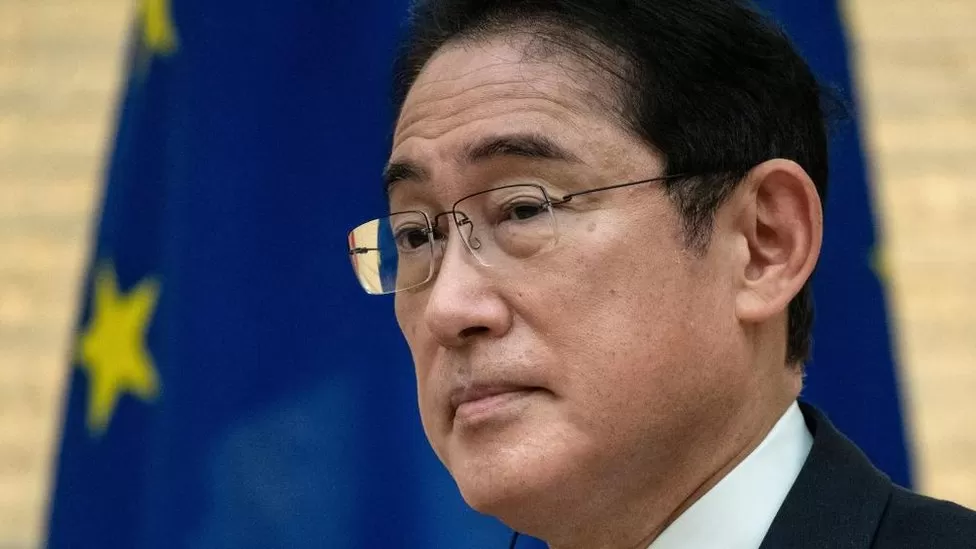
Japan’s Prime Minister Fumio Kishida has fired a government aide who made derogatory remarks about LGBT couples.

Masayoshi Arai reportedly said he would not want to live next to, or look at, people in same-sex relationships.

Mr Arai also warned that permitting gay marriage in Japan would lead to many abandoning the country.

Mr Kishida said the remarks were “outrageous” and “completely incompatible” with his government’s policies.

Japan – a country still largely bound by traditional gender roles and family values – is the only G7 nation that does not recognise same-sex marriage.

However, recent polling suggests most Japanese support gay marriage.

A number of same-sex couples have also filed lawsuits across Japan in recent years arguing that the ban on same-sex marriage violates the country’s constitution.

Prior to Mr Arai’s dismissal, Mr Kishida had talked about issues surrounding same-sex marriage in parliament.

He stated that it needed to be carefully considered because of its potential impact on traditional family structures.

The resignation comes as Fumio Kishida’s approval ratings have plummeted in recent months

Mr Arai reacted to the remarks afterwards, telling reporters that he “wouldn’t like it if [LGBT couples] lived next door” and “doesn’t even want to look at them.”

He added that it would “change the way society is” and “quite a few people would abandon this country,” according to Kyodo News.

In response, Mr Kishida said he had dismissed Mr Arai, adding: “We have been respecting diversity and realising an inclusive society.”

Mr Arai later apologised, stating that his remarks were not appropriate and were not representative of the prime minister’s views.

His resignation represents a further blow to Mr Kishida, whose government has seen plummeting approval ratings after a number of his ministers have resigned over various scandals in recent months.

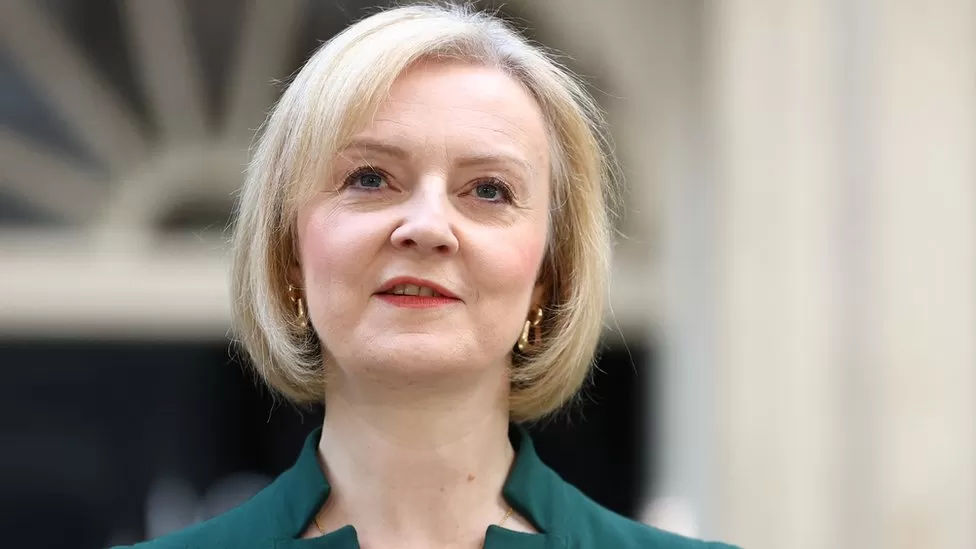
Liz Truss has said she was never given a “realistic chance” to implement her radical tax-cutting agenda by her party.

In a 4,000-word essay in the Sunday Telegraph, Ms Truss stood by her plans to boost economic growth, arguing they were brought down by “the left-wing economic establishment”.

They are the first public comments the ex-PM has made on her resignation.

But she said she was not “blameless” for the unravelling of the mini-budget.

Ms Truss was forced to quit after she and her chancellor Kwasi Kwarteng’s £45bn package of unfunded tax cuts panicked the markets and tanked the pound to a record low.

Her brief time in power – 49 days – made her the shortest-serving prime minister in UK history.

Ms Truss said that while her experience last autumn was “bruising for me personally”, she believed that over the medium term her policies would have increased growth and therefore brought down debt.

The ex-PM said she had not been warned of the risks to the bond markets from liability-driven investments (LDIs) – bought up by pension funds – due to the mini-budget, which forced the Bank of England to step in to prevent them collapsing as the cost of government borrowing soared.

The government did not tell the Bank of England about its tax cut plans before the mini-budget, one of its deputy governors said at the time.

But the ex-PM argued that the government was made a “scapegoat” for developments that had been brewing for some time.

She wrote: “While the government was focused on investigating what had happened and taking action to remedy the situation, political and media commentators cast an immediate verdict blaming the mini-budget.

“Frankly, we were also pushing water uphill. Large parts of the media and the wider public sphere had become unfamiliar with key arguments about tax and economic policy and over time sentiment had shifted leftwards.

“Regrettably, the government became a useful scapegoat for problems that had been brewing over a number of months.”

1px transparent line

After 100 days of “soul searching” we have a version of events from the shortest serving UK Prime Minister in history.

This is Liz Truss’s catastrophic time in office, described and defended in her own words.

At some length, she attempts to argue her case and answer for her actions. There is reflection and regret but not the apology which many might expect.

What burns through this 4000 word essay is a sense from Liz Truss that almost everything was against her as she makes a case for what might have been.

The system, officials, Conservative MPs all played a part, she argues, in stopping her from achieving her aim of economic growth through tax cuts and de-regulation.

There are breath taking reminders of how high the stakes were as her policies sent shockwaves through the economy – Kwasi Kwarteng had to go to avoid “a serious meltdown for the UK” and “the starkest of warnings” came from officials that the country may have to default on its debt.

Despite her downfall, Liz Truss argues many still share her enthusiasm for what she was trying to achieve.

1px transparent line

And as Conservatives engage in open debate about whether her successor Rishi Sunak should move to cut taxes more quickly, she’s promised more to come.

She also said she had not appreciated the strength of the resistance she would face to her plans – including plans to abolish the 45p top rate of income tax.

“I assumed upon entering Downing Street that my mandate would be respected and accepted. How wrong I was. While I anticipated resistance to my programme from the system, I underestimated the extent of it,” she writes.

Mr Kwarteng dropped the 45p income tax proposals 10 days after they were announced, telling the BBC it was “a massive distraction on what was a strong package”.

Less than a fortnight later, Ms Truss sacked Mr Kwarteng, something she said she was “deeply disturbed by”.

“Kwasi Kwarteng had put together a brave package that was genuinely transformative – he is an original thinker and a great advocate for Conservative ideas. But at this point, it was clear that the policy agenda could not survive and my priority had to be avoiding a serious meltdown for the UK,” she wrote.

With the benefit of hindsight, she writes that she would have acted differently during her premiership – but she still backs her plans for growth.


“I have lost track of how many people have written to me or approached me since leaving Downing Street to say that they believe my diagnosis of the problems causing our country’s economic lethargy was correct and that they shared my enthusiasm for the solutions I was proposing,” she said.

“While I regret that I wasn’t able to implement my full programme, I am still optimistic for the future, with the United Kingdom now able to steer its own course as a free nation.”

Ms Truss’s explanation for the failure of her premiership has elicited strong reactions from inside and outside of her party.

The Tory peer Lord Barwell, who was Theresa May’s chief of staff, said Ms Truss was brought down because “in a matter of weeks you lost the confidence of the financial markets, the electorate and your own MPs.”

He tweeted: “During a profound cost of living crisis, you thought it was a priority to cut tax for the richest people in the country.”

While shadow chancellor Rachel Reeves said Ms Truss’s policies “made working people pay the price”.

“The Conservatives crashed the economy, sank the pound, put pensions in peril and made working people pay the price through higher mortgages for years to come.

“After 13 years of low growth, squeezed wages and higher taxes under the Tories, only Labour offers the leadership and ideas to fix our economy and to get it growing.”

While Liz Truss resigned as prime minister, she is still serving in parliament as the MP for South West Norfolk.