ISPR terms speculations over army chief’s visit to US ‘baseless’

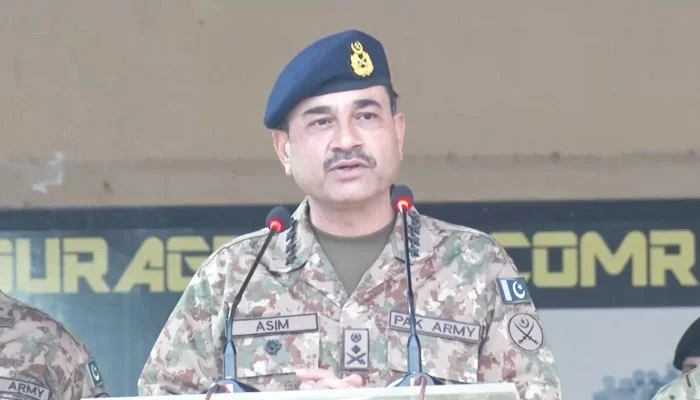
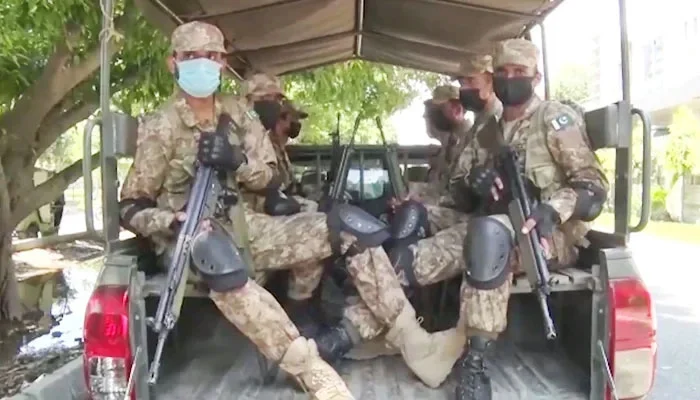
RAWALPINDI: Speculations surrounding Chief of Army Staff (COAS) General Asim Munir’s visit to the United States of America are “baseless”, the Inter-Services Public Relations (ISPR) said Thursday.

“There have been baseless speculations on social media that COAS is visiting USA,” the military’s media wing said in a series of tweets, as it put an end to speculations.

The ISPR added that the army chief is on an official visit to the United Kingdom (UK) from 5 to 10 February in connection with the 5th Pakistan-UK Stabilisation Conference.

The military’s media wing explained that the conference is a bi-annual event for military-to-military cooperation between the two countries, in which senior Pakistani military leadership has been participating since 2016.

The visit is seen as highly important in view of the rising issue of Taliban militancy and the situation in the South Asian region. This is Gen Munir’s first visit to the UK after taking over as Pakistan’s powerful army chief at the end of November last year.

The conference will also focus on the Ukraine war’s impact on the EU, the UK, and its consideration for Pakistan.

The COAS will visit the headquarters of the British military and address senior military commanders including the UK army chief. According to a source, Gen Munir will also address a security think-tank towards the end of his visit.

The ISPR’s statement came just hours after the Ministry of Foreign Affairs was asked to comment on the army chief’s speculated visit to the United States.

“We are not aware of the army chief’s trip to the US. ISPR could inform better on this matter,” Foreign Office spokesperson Mumtaz Zahra Baloch told journalists during her weekly press briefing.

N Korea shows off largest-ever number of nuclear missiles at nighttime parade

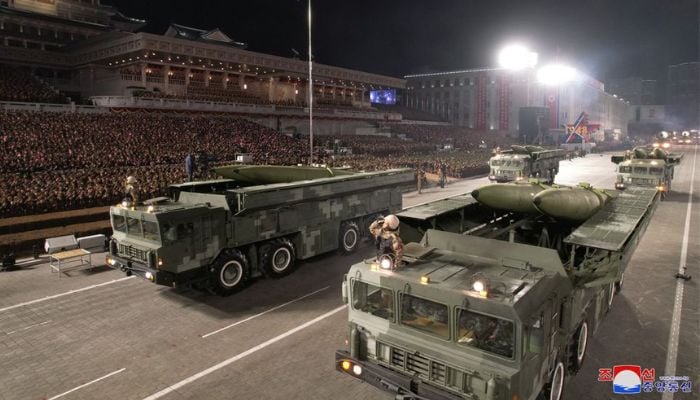
SEOUL: Nuclear-armed North Korea showcased its missile production muscle during a nighttime parade, state media reported on Thursday, displaying more intercontinental ballistic missiles (ICBMs) than ever before and hinting at a new solid-fuel weapon.

The country has forged ahead with its ballistic missile programme, test-launching dozens of advanced missiles last year despite United Nations Security Council resolutions and sanctions.

“This time, Kim Jong Un let North Korea’s expanding tactical and long-range missile forces speak for themselves,” said Leif-Eric Easley, a professor at Ewha University in Seoul. “The message Pyongyang wants to send internationally, demonstrating its capabilities to deter and coerce, will likely come in the form of solid-fuel missile tests and detonation of a miniaturised nuclear device.”

Imagery released by state media outlet KCNA of the Wednesday night parade showed as many as 11 Hwasong-17s, North Korea’s largest ICBM, which are suspected to be able to strike nearly anywhere in the world with a nuclear warhead.

Eleven missiles could be enough to overwhelm current US missile defences, Ankit Panda of the United States–based Carnegie Endowment for International Peace said on Twitter.

“This is cumulatively more ICBM launchers than we’ve ever seen before at a North Korean parade,” he said in a tweet.

The Hwasong-17 was first tested last year. Alongside them at the parade were what some analysts said could be a prototype or mockup of a new solid-fuel ICBM in canister launchers.

Developing a solid-fuel ICBM has long been seen as a key goal for the country, as it could make its nuclear missiles harder to spot and destroy during a conflict.

North Korea held the parade in Pyongyang to mark the 75th anniversary of the founding of its army, KCNA said. Leader Kim Jong Un attended with his daughter, who is seen as playing a possible future leadership role in the hereditary dictatorship.

South Korea’s foreign ministry criticised North Korea for holding the event when it is facing a worsening food crisis and economic difficulties.

“We urge North Korea to immediately stop illegal nuclear and missile development, and reckless nuclear threats, and promptly return to the denuclearisation negotiations,” South Korea’s foreign ministry spokesperson, Lim Soo-suk, told a regular briefing.

North Korea has said its missile programme and nuclear weapons development fall under its sovereign right to self-defence, and are necessary because of hostile policies by the United States and its allies.

Solid-fuel missile

In December North Korea conducted the first static ground test of a large solid-propellant rocket motor at its Sohae Satellite Launching Station, but at the time it was unclear whether it was solely for the country’s submarine-launched ballistic missile (SLBM) programme, said Dave Schmerler, a researcher at the James Martin Center for Nonproliferation Studies (CNS).

North Korea has not launched its new missile submarine, however, so the parade weapon suggests intentional signalling that Pyongyang is pursuing a complex, land-based ICBM deterrent, he said.

“The general takeaway is that we should expect to see North Korea test a large land-based solid-fuel ICBM,” Schmerler said.

Most of the country’s largest ballistic missiles use liquid fuel, which requires them to be loaded with propellant at their launch site — a time-consuming process.

It is unclear how close the suspected new missile could be to testing. North Korea has sometimes displayed mockups at the parades.


Pakistan is holding last-ditch talks with the International Monetary Fund (IMF) to secure help to stem a deepening economic crisis that has all but emptied its foreign exchange reserves.

It has enough dollars to cover less than a month of imports at normal levels and is struggling to service sky-high levels of foreign debt.

An IMF team is due to leave the country on Thursday after 10 days of talks with the government aimed at unlocking vital international funds.

In January annual inflation soared to over 27%, the highest its been in Pakistan since 1975, and there are mounting fears for the economy in a pivotal election year.

This week the rupee sank to a historic low of 275 to the dollar, down from 175 a year ago, making it more expensive for Pakistan to buy and pay for things.

The lack of foreign currency is one of the most pressing of Pakistan’s problems.

Factories like Jubilee Textiles in Faisalabad, the industrial heartland of Pakistan, were shut recently – not by the frequent power cuts that have dogged Pakistan for years, but because they couldn’t get hold of dollars to pay for the goods they need.

Many factories like this one have been idle across Pakistan in recent weeks

“If we can’t import, how can we manufacture? We’ve already made a loss,” its manager Fahim told the BBC, adding that all its 300 workers had been sent home.

Jubilee’s printing machines have only just restarted after shutting last month. Piles of white cotton sheets sat in iron tubs, covered by a light coat of brick dust, when the BBC visited, with the only sound the drip, drip of an industrial washer.

Walking through the network of frozen machines, Fahim said the factory had run out of the dyes they import from China, not because they weren’t available, but because they say their bank wouldn’t clear the dollars to pay for them for weeks.

According to analysts, the government had been holding the bank’s exchange rate artificially high behind the scenes which was contributing to the lack of dollars in the system. At the end of last month, they allowed it to drop, which could help some businesses, but also push prices up.

Imports have been stacking up in ports, including here in Karachi

Businesses and industries across Pakistan said they have had to slow or stop work while they also wait for goods they have imported that are currently stacking up in ports.

In late January, a government minister told the BBC that there were more than 8,000 containers piled up in Karachi’s two ports, containing goods from medicine to food. Some of that has started to clear, according to local media reports, but much is still stuck.

A perfect storm of problems

Pakistan, like many countries, is suffering as a result of the coronavirus pandemic and Russia’s invasion of Ukraine, following which global fuel prices have soared. Pakistan relies heavily on imported fossil fuels and importing food has also become more expensive.

If the rupee depreciates, fuel costs more, with knock-on effects for goods that are transported or manufactured. The government recently increased fuel prices by over 13% but says it’s not planning any more.

Add to this the cost of last year’s floods, which the UN says caused damage of more than $16bn. Huge areas of Pakistan were submerged, destroying farmland and disrupting its ability to produce food. Basics like wheat and onions have skyrocketed in price.


All this comes in an uncertain and febrile political climate – an election is due by the end of the year.

As for bailouts, Pakistan is no stranger to them. The country – which has a massive military budget and years of debt-driven infrastructure spending – has long failed to wean itself off populist subsides and stabilise its economy.

“If you see the history of Pakistan, we have a cycle of balance of payments problems,” says Dr Sajid Amin Javed, deputy executive director at the Sustainable Development Policy Institute in Islamabad.

“We go to the IMF. We implement very strict reforms, for two or three years, then it’s an election year and unfortunately, we reverse them all.”

Subsidies have long been used to woo voters in Pakistan, he says.

Is Pakistan the next Sri Lanka?

Imran Khan, who was ousted as Pakistan’s prime minister last April, came to power in 2018 promising to fix the economy. At the time he had vowed not to seek help from the IMF, but inflation soared and the rupee dropped.

He ended up negotiating a $6bn rescue bailout with the IMF to address the balance of payments crisis.

The current negotiations are over the next $1.1bn tranche of this. It was originally due to be made in November, but talks have repeatedly stalled.

The government and Mr Khan’s party, the PTI, have had their own disagreements with the IMF in the past, but with the country’s foreign reserves now so low both agree Pakistan needs to come to an agreement to secure the funds.

The negotiations have been difficult, according to Pakistan; last week Prime Minister Shehbaz Sharif said the organisation had given Pakistan’s finance minister a tough time.

In an interview last month Mr Khan warned that Pakistan could follow in the footsteps of Sri Lanka, which ran out of money to buy food, fuel and other essentials last year, causing a popular uprising that unseated the president.

The comparison doesn’t hold for Dr Javed.

“The size of the economy is absolutely different, number one,” he says. “Pakistan has always had good support from friendly countries, such as China, UAE, Saudi Arabia – and in turbulent times that’s come in the form of rollovers, refinancing, friendly deposits and delayed oil repayments.”

However, he does have his concerns.

“The common ground that we do have is political instability and our ability to navigate that will be crucial in coming out of this crisis.”

The current government and Mr Khan’s party, the PTI, have no love lost between them. Mr Khan, who still has considerable support, has been holding rallies and marches, claiming his removal from office under the constitution was unfair.

Pakistan’s new government says it won’t accede to his demands for an early election and argues it’s putting the economy first.

“For one person’s personal interest we cannot put the whole country into limbo,” planning minister Ahsan Iqbal told the BBC.

“Calling an election at this time means there will be four to five months of uncertainty.”

That’s one thing both sides agree on: economic stability is difficult when there is no political certainty, and while an election looms that is unlikely to happen.

The IMF holds the key – for now

So, could the situation get better for Pakistan? Put simply, the country needs more dollars and it needs them soon, not least to keep the lights on.

As the weather gets warmer and people use more electricity to power fans and air conditioning, the need for energy will go up putting more strain on the system – and more pressure on Pakistan’s almost exhausted foreign reserves.

The question is, how long would a bailout deal buy the country this time?

“If the IMF programme resumption is successful, that also unlocks billions of dollars promised by Saudi Arabia and the UAE. Then the risk of a larger balance of payments problem will be pushed down the road,” says Khurram Hussain, a business and economic journalist in Pakistan.

But he adds: “In the long term the programme will have little to no impact. Pakistan faces a crushing debt burden. Without comprehensive debt restructuring, the country will keep landing up back at this spot, at the edge of a balance of payments crisis.”

Trying to get a deal could mean painful political promises, potentially including dropping subsidies on energy.

Mr Hussain says coming to a deal with the IMF will help the economy and the state, but at the expense of normal people. However, he thinks that the biggest risk is that the government comes to an agreement with the IMF, starts implementing the plans, then changes its mind.

“If the government gets cold feet and asks to halt the process of adjustment and tries to renegotiate again, Pakistan will swivel back firmly into where it is facing a balance of payments crisis.”

The first convoy of UN aid for opposition-held north-west Syria since Monday’s devastating earthquake has crossed into the region from Turkey

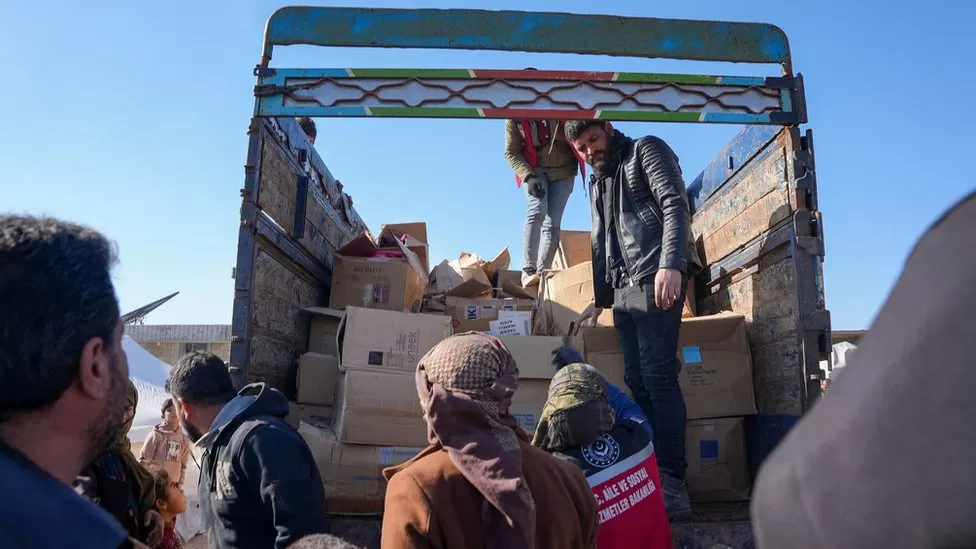
The UN said six lorries carrying shelter and relief supplies had gone through Idlib’s Bab al-Hawa crossing.

The shipment had been due before the disaster, which caused damage to roads and temporarily halted deliveries.

Local rescuers expressed disappointment at the failure to send the specialist equipment they need to save lives.

“The UN aid… is the regular and periodic assistance that has been occurring since before the earthquake,” tweeted the White Helmets, an organisation whose volunteer first responders operate in the region.

“It is not special aid and equipment for the search and rescue teams, and the recovery of those trapped under the rubble.”

“We are working very closely with authorities to support in any way we can and hope that aid will quickly reach those most impacted,” said its director general, António Vitorino.

UN Secretary General António Guterres said: “More help is on the way, but much more is needed.”

The White Helmets have reported at least 1,970 deaths since the 7.8-magnitude earthquake struck southern Turkey in the early hours of Monday.

They have warned that the figure is likely to rise significantly because hundreds of families are still trapped beneath 418 destroyed and more than 1,300 partially destroyed buildings.

Watch: How rescuers’ videos give glimpse into Syria quake horror

On Thursday morning, as the window to find survivors narrowed, the White Helmets said the lack of heavy machinery was significantly hampering their work and appealed to the international community for help.

Harsh winter weather conditions have also complicated the operation, while major power outages have resulted in fuel shortages at hospitals overwhelmed by the 2,950 injured survivors.

“The situation is very bad. And there is no aid,” Ibrahim Khalil Menkaween told Reuters news agency in the town of Jindayris.

The 56-year-old, who lost seven members of his family including his wife, was waiting next to the remains of his home with a body bag to give to rescuers.

“I’m holding this bag for when they bring out my brother, and my brother’s young son, and both of their wives,” he explained.

Even before the earthquake struck, 4.1 million people – most of them women and children – were relying on humanitarian assistance to survive in the opposition-held north-west, which is controlled by a jihadist alliance and Turkish-backed rebel factions opposed to President Bashar al-Assad.

Last year, about 600 lorries carrying aid crossed from Turkey each month via Bab al-Hawa, the only border crossing that the UN is authorised to use. All other deliveries are meant to go via Damascus, although in the past the government has facilitated only a small amount of so-called “cross-line” aid.

The UN special envoy for Syria said on Thursday that earthquake-affected regions of the country had received “nowhere near enough” lifesaving aid and warned that assistance must not be “politicised”.

“We need it urgently through the fastest, most direct and most effective routes. They need more of absolutely everything,” Geir Pedersen told reporters in Geneva.

He was speaking after a meeting of the UN’s humanitarian task force for Syria, which includes Russia and Iran, whose forces have backed the Syrian government in the country’s 12-year civil war, as well as Turkey, the United States and the European Union, which support the opposition.

The UN top aid official in Syria, El-Mostafa Benlamlih, has said the country is experiencing a “crisis on top of a crisis”, with 10.9 million people affected by earthquake nationwide.

Aid from countries including Iran, Iraq, Iran, Jordan, the United Arab Emirates, Oman, Egypt, India and Venezuela has already reached government-controlled areas, where the health ministry says at least 1,260 people have been killed.

The government has suggested that lifting US and EU economic sanctions would help to speed up its emergency response. However, the EU has said the sanctions do not prohibit the export of food, medicines or medical equipment.

Defence ministry excuses itself from providing security during polls

The Ministry of Defence has excused itself from providing security for the Khyber Pakhtunkhwa and Punjab Assembly elections and the by-elections of 93 National Assembly constituencies.

The defence ministry’s response came after the Election Commission of Pakistan (ECP) requested the interior ministry to seek assistance from the armed forces to provide security cover during the elections.

In its letter to the interior ministry, the Defence Ministry apologised that it could not provide the static deployment of rangers and Frontier Corps for the upcoming by-elections, as, according to them, the deployment of the armed forces was not feasible.

The defense ministry told the interior secretary that the armed forces and civil armed forces were currently engaged in border management and internal security management.

Threats of terrorism are on the rise in the country, said the ministry. Moreover, the armed forces will be engaged in the census process from February 27 to April 3 this year, it was said.

However, the Punjab Rangers will be available as the Quick Response Force during these elections.

On the other hand, replying to the ECP’s letter, the Finance Ministry has asked the election-conducting authority to postpone its demand for the additional grant in the wider national interest.

The finance ministry requested the election commission to delay its request for the grant until the economic situation of the country improves.

IGs of Punjab, KP on security challenges during polls

Over the last couple of days, the top police officers of Punjab and Khyber Pakhtunkhwa have apprised the ECP of the uphill security task during the upcoming elections following the dissolution of the two provincial assemblies.

“It cannot be presumed that the next elections will be completely peaceful,” Inspector-General of KP Police Moazzam Jah Ansari had said in a meeting regarding polls in the province presided over by Chief Election Commissioner Sikandar Sultan Raja.

The IG said that there was a shortfall of 57,000 police personnel for security during the polls. The personnel shortfall cannot be met even after seeking the services of the Azad Kashmir and Gilgit Baltistan police, he said.

Ansari added that assistance of the Pakistan Army and Frontier Corps will be required.

The provincial police chief also shared statistics regarding attacks on law enforcers in KP. “In 2022, 494 attacks were carried out on the police, while 119 policemen were martyred,” he said and added that law enforcers have been attacked 46 times in 2023, and as a result, 93 policemen have lost their lives.

Meanwhile, Punjab IG Dr Usman Anwar also told CEC Raja during a meeting at the ECP about the challenges of conducting elections amid growing threats of terrorism in the province.

“The police operation in progress in South Punjab’s rural areas and other districts of the province will be completed in four to five months. It will be a difficult task to conduct elections until the operation is concluded,” he said while highlighting the threats of terrorism increasing in Punjab.

The Punjab top police officer told participants of the meeting that 412,852 police personnel are required for security during the polls. However, the number of police officers in Punjab is 11,5000. “300,000 more soldiers will be needed to meet this shortfall. The services of the Pakistan Army and Rangers will be needed to meet this shortfall.”

IG Anwar also said that 213 terror incidents were prevented from happening since December 2022 due to prior information. He added that almost all districts in the province have agency reports about terror incidents.

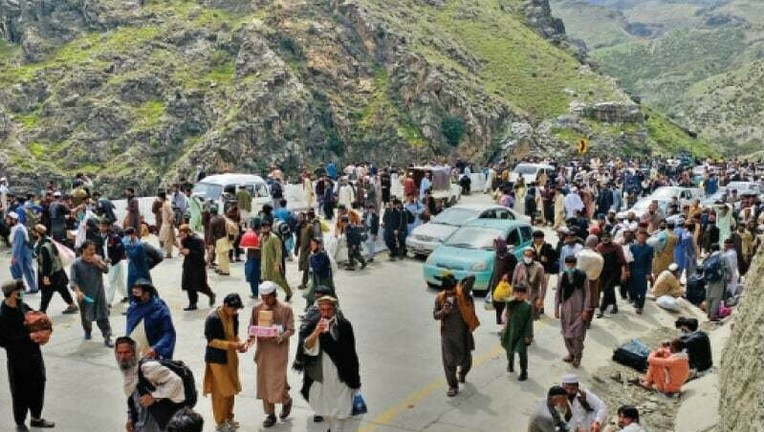
Pakistanis living in Afghanistan to get travel passes

Officials said that all those, who were interested in receiving the special cards for movement from Afghanistan into Pakistan, would be issued a form, which would be filled and submitted to the office of the tehsilsdar concerned. The forms, according to the officials, would be attested and thoroughly checked before being submitted.

Meanwhile, Utmanzai elders said that Pakistani nationals living across the border in Khost, Paktia and Paktika provinces were facing immense problems while travelling across the border to meet their family members.

On request of the area residents, the armed forces decided to issue special passes to Pakistani nationals having a valid national identity card.

The special cards would enable Pakistani national families to easily travel across the border. Utmanzai elders have appreciated the step.

Sri Lanka seen returning to growth by year-end, president says

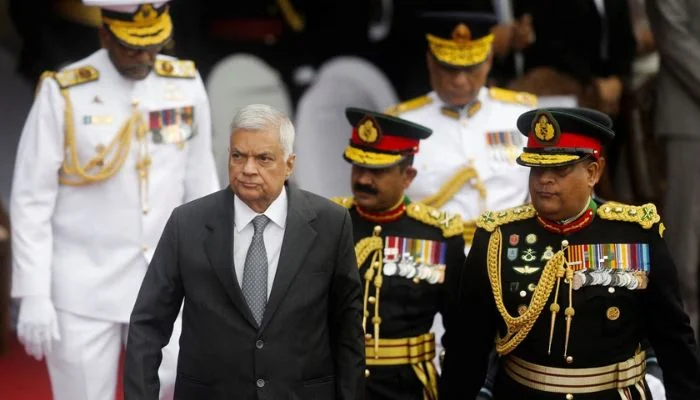
COLOMBO: Sri Lanka’s economy is expected to grow again from the end of this year and the government hopes to extricate the country from its economic crisis by 2026, President Ranil Wickremesinghe told parliament on Wednesday.

The Indian Ocean island of 22 million people has been struggling with its worst economic turmoil since its independence from Britain in 1948, which has forced it to default on loans and seek a $2.9 billion bailout from the International Monetary Fund (IMF).

“We are now moving from a negative economy towards a positive one. By the end of 2023, we can achieve economic growth,” President Wickremesinghe said in a special policy statement to parliament.

“We have now been able to increase the foreign reserves which had fallen to zero up to $500 million.”

Sri Lanka’s official reserves reached $2.1 billion at the end of January, which is the highest it has been in about a year, the latest central bank data showed.

The reserves include a $1.5 billion swap from China People’s Bank, which Sri Lanka has been unable to tap as it requires the island to have three months worth of reserves.

Sri Lanka is also working with its largest bilateral lender, China, to obtain financing assurances supporting a debt restructuring to finalise an IMF program, Wickremesinghe added.

“We are in direct discussions with China. We have received positive responses from all parties. We are now working towards unifying the approaches of other countries and that of China.”

India and Japan, Sri Lanka’s other key lenders have already expressed support.

Wickremesinghe said the government could turn around the economy if the public tolerated high direct taxes for another six months. He said last month that the economy for the full year could contract by 3.5% or 4.0% after shrinking 11% last year.

“If we continue according to this plan, we can rise out of bankruptcy by 2026. As I have been continuously appealing, if all the parties in this Parliament join the process to build the country, we would be able to extricate from this crisis even earlier.”

Recent increases in income tax have hit salaried workers hard, with trade unions and private sector professionals staging protests.

Wickremesinghe said the aim was to reduce inflation to single digits by the end of the year. Sri Lanka’s key inflation rate, the Colombo Consumer Price Index (LKCCPI=ECI), eased to 54.2% in January from 57.2% in December.

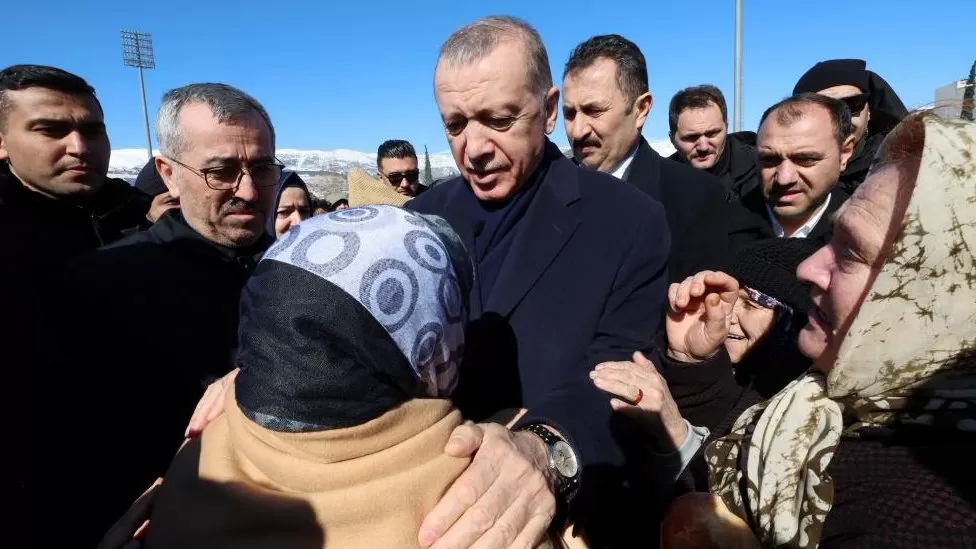
Turkey’s president Recep Tayyip Erdogan has defended his government’s response to two catastrophic earthquakes, saying it was impossible to prepare for the scale of the disaster.

At least 15,000 people are confirmed dead in Turkey and northern Syria.

Critics claimed the emergency services’ response was too slow and the government was poorly prepared.

Mr Erdogan accepted the government had encountered some problems, but said the situation was now “under control”.

The leader of Turkey’s main opposition party, Kemal Kilicdaroglu disagreed.

“If there is one person responsible for this, it is Erdogan,” he said.

The president rejected the accusation and said unity was required in the aftermath of the disaster, “In a period like this, I cannot stomach people conducting negative campaigns for political interest,” he told reporters in Hatay.

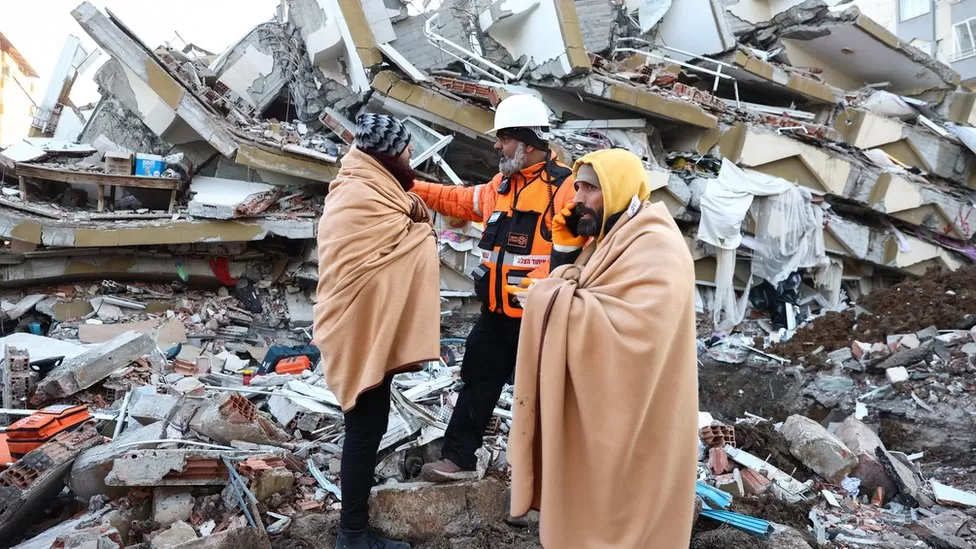
Thousands of survivors have been spending a third night in freezing conditions, with hope fading for many trapped under the rubble.

A World Health Organization official has warned there could be significant injuries caused by freezing temperatures among survivors of the quakes.

Syria earthquake: Crowds chant ‘God is great’ as family pulled alive from rubble

“We’ve got a lot of people who have survived now out in the open, in worsening and horrific conditions,” said WHO earthquake response incident manager Robert Holden on Wednesday.

“We are in real danger of seeing a secondary disaster which may cause harm to more people than the initial disaster if we don’t move with the same pace and intensity as we are doing on the search and rescue.”

In nearby Syria, relief efforts have been complicated by years of conflict that has destroyed the nation’s infrastructure.

The Bab al-Hawa crossing between Turkey and Syria has been closed since the earthquake as the roads were badly damaged.

While a senior UN official said the road may soon be accessible, Turkey’s Foreign Minister Mevlut Cavusoglu confirmed the country was working to open two more border gates to help get aid into the country.

“There are some difficulties in terms of Turkey’s and the international community’s aid [reaching Syria]. For this reason, efforts are being made to open two more border gates,” he said.

The EU has confirmed it will send €3.5m (£3.1m) in aid to Syria following a government request for assistance, but said the aid must be delivered to both government- and rebel-controlled areas.

More than 1,500 people have died in Idlib province alone and an adviser to Syrian President Bashar al-Assad said sanctions were stopping Syria from receiving the aid it needed.

“We don’t have enough bulldozers, we do not have enough cranes, we do not have enough oil due to European and American sanctions,” Bouthaina Shabban said.

North Korea has shown its largest display ever of intercontinental ballistic missiles (ICBMs), a number analysts say could potentially challenge the US’ defence system.

More than a dozen long-range ICBMs were shown at Wednesday’s military parade.

Leader Kim Jong-un was seen at the midnight parade with his young daughter elevated to his side.

Kim Chu-ae’s appearance has fuelled speculation she’s being positioned as her father’s successor.

The number of long-range missiles shown in the parade has prompted concern. Analysts say such a number of the missiles – which can in theory hit as far as the US mainland – could potentially overwhelm US nuclear defences if each missile carried multiple war heads.

North Korea’s media did not provide detail, but said such an arsenal demonstrated the country’s “mighty war deterrence and counterattack capabilities”.

Pictures published by North Korean media on Thursday morning appeared to show more than a dozen ICBMs rolling through the central square of Pyongyang – accompanied by an army of foot solders.

Satellite imagery of missile launchers

Some North Korea analysts, looking at satellite pictures, said the display also appeared to include a new ICBM launcher designed to accommodate a solid-fuel missile.

Solid-fuel missiles can be launched more quickly than liquid-fuel missiles, which will significantly enhance retaliatory capabilities.

However, solid-fuel missiles have not been successfully tested by Kim’s regime.

“This is one of North Korea’s major nuclear modernisation goals,” said Ankit Panda, a nuclear policy specialist at the Carnegie Endowment for International Peace.

“We should expect to see the first flight tests of longer-range solid fuel missiles in the coming months,” he told the BBC.

He added the expansion of North Korea’s ICBM arsenal presented potentially “serious military planning challenges” for the US in a conflict, as it would be difficult for the US to find and destroy all of North Korea’s mobile ICBMs.

The parade comes after a record year of missile testing by North Korea in breach of UN economic sanctions. That has led to several flare-ups of tensions on the Korean peninsula.


The state’s Korean Central News Agency reported the parade stressed the country’s ability to face down its enemies “nuke for nuke, confrontation for confrontation”.

Images published showed Mr Kim clad in a black coat and fedora inspecting rows of soldiers holding bayonets, and saluting as troops and missile units paraded past.

He was also photographed observing the parade from a balcony with Chu-ae by his side.

The elevation of Chu-ae – who is believed to be 10 or 11 years old – has been another key talking point for observers.

Kim Chu-ae with her father Kim Jong-un and mother Ri Sol Ju at a banquet

State media photographs showed her taking centre stage at a pre-parade banquet with military leaders, where she was seated in the centre between Mr Kim and his wife Ri Sol Ju, a spot usually given to her father.

The trio was pictured smiling and flanked by top military commanders. Ms Ri was also seen wearing a necklace with a pendant in the shape of a Hwasong-17 ICBM, North Korea’s largest missile which was test-launched last year.

While some analysts say this points to Chu-ae as Mr Kim’s heir apparent, others say the state may be portraying the North Korean leader as a “family man”.

“The inclusion of Kim’s daughter in the banquet was difficult to miss. North Korea’s state propagandists are clearly try to portray Kim Jong Un as a family man, but the exclusion of his other reported daughter is curious,” said Martyn Williams, a senior fellow at Stimson Center who focuses on North Korea.

Kim Jong-un reportedly has at least three children, including an elder son and a younger daughter. Chu-ae is believed to be his second child.

She only made her first appearance in public three months ago in November, when her father took her to the launch of a major ICBM launch.

While succession positioning may ultimately be the case, it is “too early” to arrive at the conclusion, Mr Williams told the BBC.

Mr Panda said Chu-ae’s prominence in recent months could indicate that Kim expects his country’s nuclear enterprise to become a multi-generational affair.

An appeal is being launched by the UK’s Disasters Emergency Committee (DEC) to help hundreds of thousands of people affected by earthquakes that hit Turkey and Syria.

UK aid agencies – including the British Red Cross, Oxfam and ActionAid – are joining together to raise money.

Funds will go towards medical aid, emergency shelter, food and clean water after the quakes injured thousands.

The appeal will be broadcast on television on Thursday evening.

More than 15,000 people have died, with that number expected to rise.


Thousands of buildings have been destroyed in the disaster and responders have been searching the rubble for survivors. Many people have lost homes, leaving them without shelter in freezing, winter conditions, the DEC says.

In Syria, some people who were already living in tents after fleeing conflict in the country are now hosting those whose homes have been destroyed by the quake.

The charities say access to clean water is going to be difficult in the coming days, and waterborne diseases will be a hazard.

The UK government will match the first £5m of donations from the public. Money raised will also provide blankets, warm clothes and heaters for safe spaces.

The Scottish government is also contributing £500,000 and the Disasters Emergency Committee (DEC) Scotland will officially launch an appeal on Thursday.

First Minister Nicola Sturgeon described the scenes in Turkey and Syria as “heart-wrenching”, adding that: “This earthquake has caused a huge amount of damage and significant loss of life that will be felt for some time to come.”

She said there was an urgent need to help the humanitarian efforts being made and emergency services had already been deployed.

The money donated to the DEC appeal would “support those affected with medical care, shelter, food and clean water”, added Ms Sturgeon.


DEC chief executive Saleh Saeed described the scenes in Turkey and Syria as “heartbreaking”, with thousands “losing loved ones suddenly in the most shocking of ways”.

He said: “We know that money is tight for many people here in the UK as the cost of living crisis continues but, if you can, please do donate to support people caught up in this deadly disaster.”

Salah Aboulgasem, from the Islamic Relief charity, based in Gazientep, Turkey, added: “The priority right now is saving lives by clearing the rubble. The next priority is supporting people who have lost their homes and gone through huge trauma.

“People need medicines and warmth. There is a lot of screaming, people are trying to find relatives. A lot of people are sleeping in cars because they are scared to go back into the buildings due to aftershocks.”

The appeal will be broadcast on the BBC, ITV, Channel 4, Channel 5 and Sky.

Fourteen of the DEC’s 15 members are either responding, or planning to respond, in Turkey and Syria and will receive funds from the appeal.

The DEC has previously launched similar appeals to raise funds for victims of the Pakistan floods and for Ukrainians displaced by the war with Russia.