
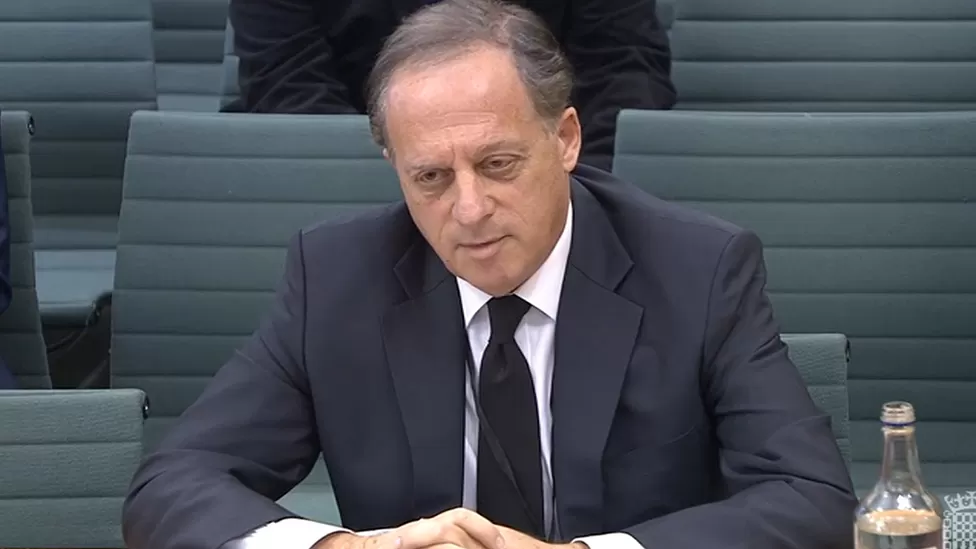
BBC chairman Richard Sharp made “significant errors of judgement” in acting as a go-between on a loan for Boris Johnson while he was applying for the post, MPs have said.

A cross-party committee said he had not given them the “full facts” two years ago when they were considering his suitability for the BBC role.

He should consider how this affected trust in him and the BBC, it said.

Mr Sharp apologised if MPs had not had all the details they needed.

His involvement in the then-Prime Minister Mr Johnson obtaining an £800,000 loan guarantee has come under scrutiny since the Sunday Times first reported the claims last month.

Businessman Sam Blyth, a distant cousin of Mr Johnson and Mr Sharp’s friend, had reportedly raised the idea of acting as a loan guarantor for Mr Johnson in 2020.

When he appeared before MPs on the Commons Digital, Culture, Media and Sport (DCMS) Committee this week, Mr Sharp said he did not help arrange this guarantee or give Mr Johnson financial advice.

He was named as the government’s preferred candidate for the BBC job in January 2021 and at the time the DCMS Committee backed his appointment. The government’s choice is ultimately decided by the prime minister, on the advice of the culture secretary, who is in turn advised by a panel.

In its report published on Sunday, the DCMS Committee is highly critical of Mr Sharp’s failure to mention any involvement he had in events surrounding the loan when they were considering his suitability for the job.

The report said his decisions to “become involved in the facilitation of a loan to the then-prime minister while at the same time applying for a job that was in that same person’s gift” and failure to disclose this to the committee undermined confidence in the public appointments process.

Earlier this week Mr Sharp had told the committee he had met Cabinet Secretary Simon Case in December 2020 to get permission to pass on Mr Blyth’s details to him.

However, at the same meeting he had told Mr Case that he had applied for the BBC job, and therefore agreed he would have “no further participation” in order to avoid any conflict of interest or perception of conflict given his application to the BBC.

In is highly critical report, MPs said Mr Sharp had recognised the need to be “open and transparent” by bringing it to the attention of the cabinet secretary, but “failed to apply the same standards of openness and candour in his decision not to divulge this information during the interview process or to this committee during the pre-appointment hearing”.

“Mr Sharp’s failure to disclose his actions to the panel and the committee, although he believed this to be completely proper, constitute a breach of the standards expected of individuals applying for such public appointments,” the report added.

The report concluded: “Mr Sharp should consider the impact his omissions will have on trust in him, the BBC and the public appointments process.”

A spokesperson for Mr Sharp said he did not facilitate an introduction between Mr Johnson and Mr Blyth and he was not involved in the arrangement of a loan between them.

“Mr Sharp appreciates that there was information that the committee felt that it should have been made aware of in his pre-appointment hearing. He regrets this and apologises.

“It was in seeking at the time to ensure that the rules were followed, and in the belief that this had been achieved, that Mr Sharp acted in good faith in the way he did.”

The spokesperson added: “Mr Sharp believed he had dealt with the issue by proactively briefing the cabinet secretary that he was applying for the role of BBC chair, and therefore beyond connecting Mr Blyth with Mr Case, he recused himself from the matter.”

The DCMS Committee report was also critical of ministers who had defended the decision to endorse Mr Sharp in 2021 after the row over the loan broke, despite the fact they had not been told about the situation.

“The fact that ministers have cited this committee’s original report on Mr Sharp’s appointment as a defence of the process was followed, when we were not in full possession of all the facts that we should have had before us in order to come to our judgement, is highly unsatisfactory,” the report said.

Prime Minister Rishi Sunak said Mr Sharp was made as BBC chairman following two “transparent and rigorous” appointment processes, adding the appointment was made by his predecessor.

According to the Sunday Times, a leaked memo from Mr Case allegedly warned Mr Johnson to “no longer” ask for financial advice from Mr Sharp.

But the MPs in this new report said there was an “unresolved issue” as to why the cabinet secretary had believed Mr Sharp had been giving financial advice to Mr Johnson and called on the Cabinet Office to “clear up the confusion” given that Mr Sharp had said this was not the case.

Acting Chair of the DCMS Committee Damian Green MP said: “The public appointments process can only work effectively if everyone is open and transparent, yet Richard Sharp chose not to tell either the appointment panel or our committee about his involvement in the facilitation of a loan to Boris Johnson.”

For those of us following this story in detail, a fascinating element is the memo written by the Cabinet Office to Boris Johnson on 22 December 2020.

Mr Sharp is about to be announced as BBC chairman, a role appointed by the then-prime minister. So Boris Johnson is told he must “no longer ask him advice about your personal financial matters”.

Mr Sharp says he never gave Mr Johnson advice about his finances. So why is the memo phrased in that way? The committee has called upon the Cabinet Office to clear up the confusion immediately.

The committee doesn’t call for him to resign, but it does come close to suggesting Mr Sharp considers his position when it says he should consider the impact his actions have had on trust in him and the BBC.

It is not at all certain that, even if he had declared this potential conflict of interest, somebody else would have been chosen as BBC chairman.

The process, though, is under scrutiny and we now await the investigation by the public appointments watchdog.

Shadow culture secretary Lucy Powell said the BBC chairman’s position was becoming “increasingly untenable” and it “throws into serious doubt the impartiality and independence that is so fundamental to trust in the BBC.”

The Liberal Democrats said Mr Johnson also needed to answer questions as part of an independent inquiry.

The watchdog that oversees how public appointments are made is also reviewing the process of how Mr Sharp was hired.

William Shawcross, the Commissioner for Public Appointments, recused himself from heading up that review last month after writing to the DCMS to say he had met Mr Sharp on “previous occasions”.

The BBC is also conducting its own internal review over any potential conflicts of interest Mr Sharp may have in his role as BBC chairman.
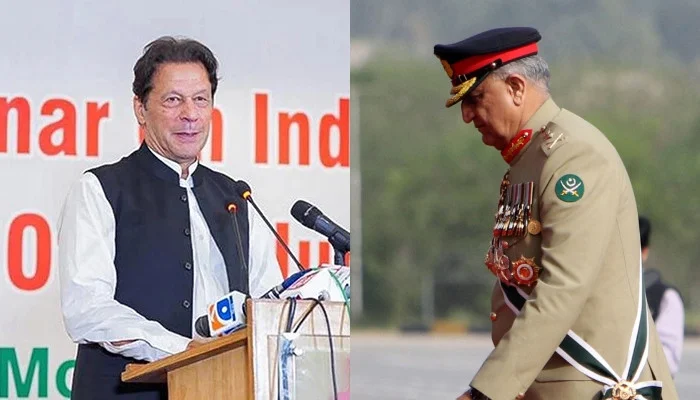
Gen Bajwa concedes he was behind ‘regime change’: Imran Khan

Former prime minister and Pakistan Tehreek-e-Insaf (PTI) Chairman Imran Khan Friday said that ex-army chief General (retd) Qamar Javed Bajwa had accepted that he was behind the “regime change” move that led to his government’s removal.

Khan had earlier blamed the United States for overthrowing his  PTI administration, later he turned the guns towards the ex-army chief, and then he also claimed that Punjab caretaker Chief Minister Mohsin Naqvi was also involved in the “regime change” operation.

In an interview with Voice of America (Urdu), the ex-premier said: “General Bajwa told the journalist with much pride how he had our government ousted due to economic policies and other matters.”


He added, “People were already aware of who was behind overthrowing the PTI regime. However, General Bajwa has accepted and clarified that he was behind our government’s ouster.”

Imran Khan — who became the first prime minister to be ousted through a no-confidence vote in April last year — said that at present the establishment and the Pakistan Democratic Movement-led coalition government are on “one page”.

Khan was referring to a recent column published in a local newspaper, in which a journalist wrote about his meeting with the ex-army chief, where Gen (retd) Bajwa spoke about his time in the office and interactions with the PTI chief.

In the column, the journalist wrote that Khan wanted the former COAS to save his government, however, Gen (retd) Bajwa did not do so as he feared that the PTI “was dangerous for the country and if it remains in power, the country would not survive”.

‘Confession’

In conversation with journalists in Lahore, PTI Senior Vice President Fawad Chaudhry stressed the need to “consider General Bajwa’s confession, as after it, the matter is clear”.

The former federal minister said the ex-COAS’ “revelation” has ended the legality of the incumbent government. The PTI leader said that since the PTI government’s ouster, the economy remains in shambles.

Fawad added that there is a need to end the “differences” for the country to move forward, but stressed that Pakistan should not be taking dictation from friendly countries on how it should be running its affairs.

The senior PTI leader said that the country should move towards elections soon and those whom the people should be allowed to form the government.

In response, former finance minister Shaukat Tarin said that he could not “believe” that Gen (retd) Bajwa could say such things about him, which were mentioned in the column.

“On March 31, 2022, General sahib had declared me a hero when I finalised the Reko Diq deal,” the former finance minister said, slamming the former army chief.

“The columnist wrote that the former army chief had my NAB (National Accountability Bureau) cases dismissed through [Lt Gen (retd)] Faiz Hamid. The former army chief’s comments are against the truth and ridiculous.”

PTI leader Farrukh Habib, while talking to journalists in Faisalabad, said that finally, “General Bajwa has spoken the truth” that he was behind the move that led to the ouster of Khan’s government.

Rs10bn allocated for quake-hit Turkey, announces PM Shehbaz Sharif

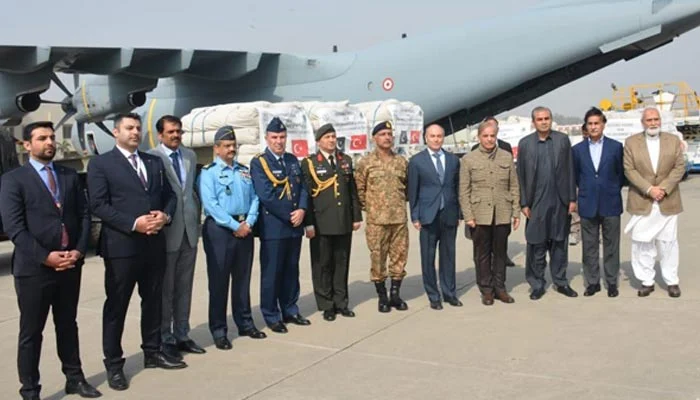
Prime Minister Shehbaz Sharif on Friday announced that the federal government has allocated Rs10 billion to help Turkey’s earthquake relief efforts, saying that Pakistan will continue to assist the calamity-hit country every day.

A devastating 7.8 magnitude earthquake wreaked havoc in Turkey and Syria early morning on Monday that has so far claimed about 21,000 lives as hopes of finding more survivors faded.

Speaking at an airport in Lahore where relief goods were being sent for the earthquake victims, the prime minister said Pakistan will never leave Turkey in these circumstances, urging the nation to pray for the victims of the earthquake in Friday prayers today.

The premier said that thousands of people have been killed and wounded in Turkey and Syria and many are searching for their loved ones stuck under the rubble.

“I believe that the people of Turkey and Syria will come out of this difficulty,” he said, adding that Pakistan assured Turkey of assistance the day when this tragedy took place.

He said that the Turkish president visited Pakistan at the time when the country was hit by heavy flooding and donated millions of dollars to the flood-affected people.

“A Pakistan Army team was sent the day when the earthquake hit Turkey and the dispatchment of the relief goods has begun,” he continued.

He said that goods weighing 100 tonnes are being sent to Turkey in a truck today.

The prime minister urged the people, welfare organisations and businessmen to take part in the fund collection drive. He also requested the chief ministers to help in this regard.

“A committee has been formed to send funds to Turkey. 1,486 tonnes of relief goods are being sent to Turkey and Syria,” he added.

The premier said that 13 centres have been established in Pakistan for the collection of funds, adding that donations will also be collected in educational institutions across the country.

Earlier this week, Pakistan established a relief fund to help the victims of a deadly earthquake in Turkey.

“To help the victims of the earthquake in Turkey at this difficult hour, PM Shehbaz Sharif has decided to establish PM Relief Fund,” Information Minister Marriyum Aurangzeb said Tuesday after a plane load of relief goods and rescue team from Pakistan reached Turkey.

The minister said that the federal cabinet has announced to contribute one month’s salary while the PM has appealed to the philanthropists to extend help.

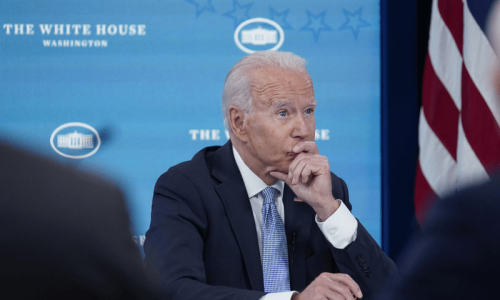
Biden hoping for second term, but voters not convinced

The findings of these recent opinion polls were highlighted in the US media on Friday, two days after President Biden indicated in his state of the union speech that he is interested in a second term.

The speech was devoted almost entirely to domestic issues that matter most to American voters – economic and administrative reforms, bringing jobs back to America and reviving the American industry.

It was a long speech – one hour and 13 minutes, beating his last year’s state of the union speech by 11 minutes. Yet, there’s little space for foreign policy issues. He did talk about China and Ukraine though, briefly. China, which is often described as America’s enemy number one, got about 200 words in a more than 7,000-word speech.

Obviously, yesterday’s issues, like Afghanistan and Pakistan, got no mention.

“The speech had to make Democrats more comfortable with the idea of Biden as the standard-bearer again in 2024,” commented the National Public Radio (NPR) while explaining why domestic issues dominated the address.

Yet, the majority in Mr. Biden’s own party does not want him to run again. A new Associated Press-NORC Center for Public Affairs Research poll shows that just 37 percent of Democrats support his bid for a second term, down from 52 percent before last year’s midterm elections. Overall, only 41 percent approve of how Biden is handling his job as president.

An earlier, CNBC-All America Economic Survey showed that he is even more unpopular among general voters. About 70 percent of those polled said Mr. Biden should not run for a second term.

But 61 percent of voters also opposed former president Donald Trump’s effort to seek another term. Most prefer fresh candidates from both Democratic and Republican parties, but no one knows who.

US media reports have published a list of about 10 candidates from each of the two parties.

Number one on the Democrats’ list is California Governor Gavin Newsome. Donald Trump tops the Republican list.

Others on the Democratic list include West Virginia Senator Joe Manchin, Minnesota Senator Amy Klobuchar, Massachusetts Senator Elizabeth Warren, Vermont Senator Bernie Sanders, Louisiana Governor John Edwards, and Transportation Secretary Pete Buttigieg.

Some of them ran against Mr. Biden in 2020 but lost the primary to Mr. Biden.

The Republican list includes Florida Governor Ron DeSantis, former Vice President Mike Pence, Congresswoman Liz Cheney, Mike Pompeo, former Kansas representative, CIA director, and Secretary of State, Virginia Governor Glenn Younkin and Texas Senator Ted Cruz.

While the Democratic field is wide open because of Mr. Biden’s declining support, most observers agree that it will be difficult for any Republican to win a primary against Mr. Trump.

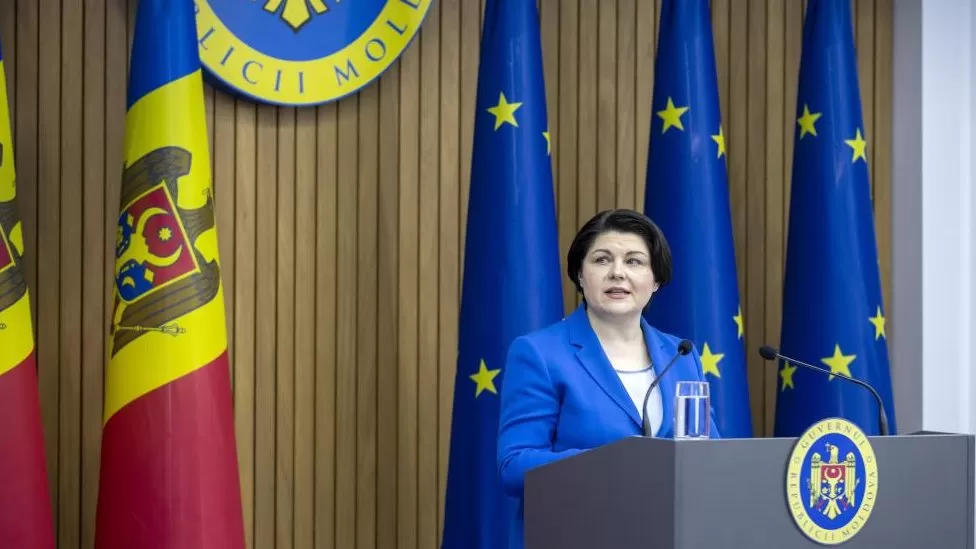
Moldova’s government has collapsed and its pro-EU prime minister has stepped down after 18 months of political and economic turbulence.

Europe’s poorest country was struggling with “multiple crises”, outgoing PM Natalia Gavrilita said on Friday.

With the war raging in neighbouring Ukraine, Moldova has been facing inflation, high energy prices, a refugee influx and Russian aggression.

The news came just hours after Russian missiles flew over Moldovan airspace.

Announcing her resignation on Friday, Ms Gavrilita said that when her government was elected in 2021, no one expected it would have to manage “so many crises caused by Russian aggression in Ukraine”.

Moldova is precariously close to the war – it shares a 1,222km (759 mile) border with Ukraine, and has suffered greatly from the fallout of Russia’s invasion.

“I took over the government with an anti-corruption, pro-development and pro-European mandate at a time when corruption schemes had captured all the institutions and the oligarchs felt untouchable,” Ms Gavrilita said at a news conference.

“We were immediately faced with energy blackmail, and those who did this hoped that we would give in,” she said, referring to the Kremlin.

An energy crisis was sparked last year when Russia suddenly reduced its gas supplies to Moldova, which relied 100% on Russia for gas. It caused inflation to skyrocket and there was public unrest over the high energy costs.

President Maia Sandu thanked Ms Gavrilita for her “enormous sacrifice and efforts to lead the country in a time of so many crises”.

“We have stability, peace and development, where others wanted war and bankruptcy,” the president said.

She has already nominated her former defence adviser Dorin Recean – who is also pro-EU – as the next prime minister. The Moldovan parliament will vote to confirm his nomination next week.

In the earlier days of the war in Ukraine, there were fears the conflict would spill over into Moldova, or that Russia might invade it too.

That concern has receded for now, but as Moldova moves ever closer to joining the European Union, pressure has increased from Russia – which has tried to undermine the former Soviet state, and the EU’s influence.

In a stark warning on Thursday, Ukraine’s President Volodymyr Zelensky said that Russia had a plan to “destroy” Moldova, according to Ukrainian intelligence.

“These documents show who, when and how Russia is going to break democracy of Moldova and establish control,” he told EU leaders at a summit in Brussels.

“I immediately warned Moldova about these threats,” he added.

Moldovan intelligence services later confirmed they had also identified “subversive activities” aimed at “undermining the state of the Republic of Moldova, destabilizing and violating public order.”

There are also renewed tensions in Transnistria, a breakaway territory controlled by pro-Russian separatists that runs along Moldova’s border with Ukraine, and where some 1,500 Russian soldiers are stationed.

Last week, Russian Foreign Minister Sergei Lavrov accused the West of trying to turn Moldova against Russia – as he claimed it had already done with Ukraine.


Natalia Gavrilita became prime minister in August 2021 when President Sandu’s pro-European Party of Action and Solidarity (PAS) won a landslide parliamentary election.

She previously served as finance minister from June 2019 to November 2019 in when Ms Sandu was prime minister.

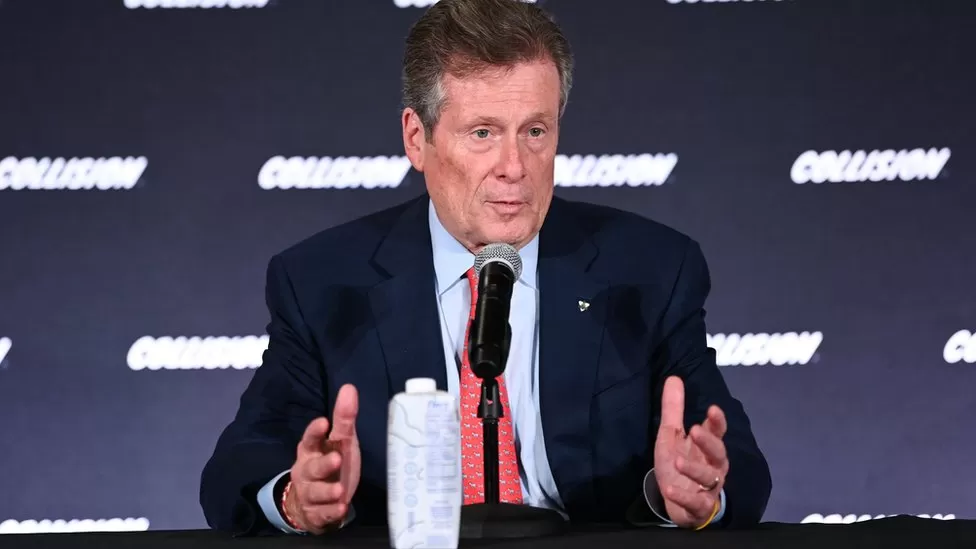
The mayor of Canadian city Toronto has resigned unexpectedly after admitting to a relationship with a former staff member.

John Tory’s announcement came shortly after the Toronto Star newspaper reported he had an affair with the 31-year-old woman – whom he did not name.

He said the affair started during the Covid-19 pandemic and was “ended mutually by consent this year”.

The 68-year-old called the relationship “a serious error in judgement.”

In a statement Mr Tory said: “I am deeply sorry, and I apologise unreservedly to the people of Toronto, and to all of those hurt by my actions.

“Most of all, I apologise to my wife, Barb and to my family who I’ve let down more than anyone else,” he added.

Mr Tory said he would work with city employees and deputy mayor Jennifer McKelvie to ensure an orderly transition to a new administration.

He added: “I deeply regret having to step away from a job that I love in a city that I love even more.

“I believe, in my heart, it is best to fully commit myself to the work that is required to repair these most important (family) relationships as well.”

He took office in December 2014 having beaten Doug Ford and Olivia Chow in the election.

Mr Tory was re-elected in 2018 and clinched a third term in office four years later.

A by-election at a later date will be held to determine an elected successor to Mr Tory.

The RMT rail union has rejected new pay offers, in a blow to any hopes the lengthy dispute was close to ending.

The body which represents train firms and Network Rail had described the proposals as their “best and final”.

RMT boss Mick Lynch branded the offers “dreadful”, while the transport secretary called the move “a kick in the teeth for passengers”.

The rejection was made by the national executive committee but the industry and government want a members’ vote.

Twenty officials and representatives sit on the body but the RMT said the decision was made following a wide-ranging consultation with every level of the union involved in the national rail dispute.

Mr Lynch said the offers did not meet members’ expectations “on pay, job security or working conditions”.

The RMT said it would now seek further meetings with Network Rail and the Rail Delivery Group (RDG) – which represents train operating companies – to try to work towards a settlement.

But it will start preparing to re-ballot its members when the existing strike mandate runs out in late May.

It is a significant moment in the ongoing national rail dispute – not just because the RMT has rejected what were billed as final offers from the employers, but because the union is now talking explicitly about seeking an “unconditional” pay deal.

The government and industry have said all along that a pay increase would have to be funded by “reforms”.

There had been movement in the dispute in recent months and on all sides the tone had become less antagonistic. But it is clearly not as close to a resolution as some onlookers had hoped.

Pay deals

The RDG said on Friday that passengers and “many hard-working RMT members will be deeply dismayed that the union leadership has opted to reject our fair proposals without putting out a vote to their full membership in a democratic referendum”.

It said it had made “substantial changes” to its offer after recent negotiations, including a minimum 9% pay increase over two years which rail workers “will now miss out on, without even having had an opportunity to have their say”.

“We removed driver-only operation and gave an improved job security offer,” the group said, adding: “The railway’s financial crisis is not going away.”

“The RMT leadership must now accept the urgent need to make the railway fit for the future for both our people, and the communities the railway serves,” it said.

Last month, the RDG put forward a list of changes to working practices which it said could fund a 5% pay rise for 2022 and a further 4% this year.

Separately Network Rail, whose employees include maintenance and signalling staff, offered a package including a 5% pay increase last year and 4% for 2023, plus other benefits such as discounted travel for family. Members rejected this in December.

Network Rail recently put forward a slightly updated offer, but kept the pay element the same.

The RMT said it was seeking “an unconditional pay offer, a job security agreement and no detrimental changes being imposed on members terms, conditions and working practices”.

The transport secretary echoed the rail industry’s position that RMT members should be given a vote on the deals on the table.

Mark Harper said workers are “being blocked from having a say on their own future” and that a decision had been made for them behind closed doors.

‘So-called modernisation’

Planned changes to how maintenance teams at Network Rail work are a particular point of contention for the RMT.

The union said it viewed proposed plans as “unsafe” and unworkable. Network Rail has always insisted safety would not be compromised.

Mr Lynch said: “We have carried out an in-depth consultation of our 40,000 members and the message we have received, loud and clear, is to reject these dreadful offers.

“Our members cannot accept the ripping up of their terms and conditions or to have safety standards on the railway put into jeopardy under the guise of so-called modernisation.

“If our union did accept these offers, we would see a severe reduction in scheduled maintenance tasks, making the railways less safe, the closure of all ticket offices, and thousands of jobs stripped out of the industry when the railways need more investment, not less.”

Network Rail’s chief negotiator Tim Shoveller claimed employees want to accept the offer and said the RMT “is condemning its members to continuing a fruitless, pointless and costly dispute for everyone involved”.

“Our rank-and-file employees are telling us they want to take the current improved offer that’s on the table and to end this dispute but the RMT leadership refuses to listen and instead takes soundings from the echo chamber of its most active members,” he said.

This is separate to the train drivers’ dispute. The drivers’ main union, Aslef, says it hopes to have more talks next week.

A smaller union, the TSSA, said on Friday that thousands of its members would be given a vote on the offers from the train companies.

The UK narrowly avoided falling into recession in 2022, new figures show, after the economy saw zero growth between October and December.

This is despite a sharp 0.5% fall in economic output during December, partly due to strike action, the Office for National Statistics (ONS) said.

Chancellor Jeremy Hunt said the figures showed “underlying resilience” but said “we are not out of the woods”.

The Bank of England still expects the UK to enter recession this year.

But it thinks it will be shorter and less severe than previously forecast.

The Bank of England is the UK’s central bank. The BBC included its view as it has a central role in managing the overall state of the economy.

One of the ways it does that is by changing interest rates. Recently, it has been raising rates in a bid to tackle the soaring cost of living.

Mr Hunt, who the BBC spoke to for the government’s position, said that high inflation remains a problem and continues to cause “pain for families up and down the country”.

Inflation – or the rate at which prices are rising – is slowing but at 10.5% remains close to a 40-year high.


The ONS, which published the economic output figures, said there was no growth in the final three months of 2022.

This is the first estimate for the period and figures are often revised later on.

On Friday, the ONS revised up its figures for the July to September quarter, to show that the economy shrank by 0.2% instead of the previous estimate of a 0.3% fall.

A recession is typically defined as when the economy shrinks for two consecutive three-month periods. This usually means it is performing badly and companies may make less money and cut jobs, leaving the government with less tax revenue.

The figures for December, however, were worse than expected, and there will be no celebrations at the Treasury.

Darren Morgan from the ONS said there was a fall in health services with fewer operations and GP visits, while school attendance also dropped in the week before schools broke up for Christmas.

He explained that in terms of public services, the ONS measures things like teachers’ wages, and how much investment is made in schools and the health services. “The services they provide are a really important part of the economy so we include it in our measurement,” he said.

He also said that sporting activities, particularly football, were impacted because of the World Cup.

He said people were not “able to enjoy top-flight football due to the absence of Premier League football until Boxing Day, as the World Cup continued”.

Mr Morgan added that rail and postal industries “had a poor month”. “We certainly saw the impact of strikes as both fell heavily in December.”

Strike action on trains caused disruption on the railways and on the roads in December. Postal workers also went on strike on a series of days in the run-up to Christmas.

The year-on-year comparison is not the same as adding up the quarterly growth figures.

It is a comparison of the full year with the full previous 12 months, which in 2021 included the lockdown at the beginning. When compared against that low base, the UK’s economy was 4% bigger in 2022 than in 2021.

That was the biggest increase of all G7 nations for last year.

But the UK is also still the only G7 country where the economy is smaller than pre-pandemic levels.

Labour and the Liberal Democrats, who we’ve included to explain opposing parties’ point of view, warned the latest figures make for grim reading.

Rachel Reeves, Labour’s shadow chancellor, said they show the economy “is stuck in the slow lane”.

She added: “We must bring in urgent measures to prevent yet more harm from the cost of living crisis, using a proper windfall tax on oil and gas giants to stop the energy price cap going up in April so that people have more money in their pockets.”

Liberal Democrat MP Sarah Olney said: “Britain is dangling on over the edge of a recession after months of economic vandalism and chaos in government.

“The blame for these gloomy figures lies squarely with the government, who have botched budgets, failed to tackle inflation and have no plan for growth.”

Antonia Sanchez-Toomey, owner of Tailormade Living, says sales were down sharply over Christmas

Image caption,

Antonia Sanchez-Toomey runs Tailormade Living in Enfield, north London, a company selling items such as scented candles and accessories for the home.

The BBC spoke to Ms Sanchez-Toomey ahead of the data to understand how a typical small business is faring in the current economic climate.

She says it is businesses like hers that suffer when the economy shrinks and people cut back on luxuries.

“We sell non-essential products,” she says.

“People are cutting back on those sorts of things. So they might still come in for a gift, but if they would buy a gift and then something for themselves, it’s the ‘something for themselves’ that’s not happening anymore.”

She says in 2022, sales were down year-on-year and down by about 40% over Christmas, which she says was a shock.

“And then we’ve just had our quietest January ever,” she says. “So we’ve had to make lots of cuts within the business. And that has affected some of my team members. And I’ve just got this real sense that consumer confidence is at an all-time low.”

Downturn

Most forecasters now predict 2023 will see a milder downturn than previously expected because of a fall in energy prices. But some think the UK will avoid a technical recession completely.

There was an upbeat take from the National Institute of Economic and Social Research, an economic think tank, which forecast that the UK will swerve a recession.

But both the Bank of England and the International Monetary Fund were gloomier, expecting the UK economy to shrink in 2023.

The UK economy is more sensitive to gas prices, to rising interest rates and has a specific issue about the failure of the workforce to return to its pre-pandemic size.

The latest numbers and the early evidence from this year could still pile on the pressure for the government to do more over the workforce and over the further rise in domestic energy bills coming in the spring.

Mr Hunt will outline his plans for taxation and spending in the Budget on 15 March.

Separate statistics from the ONS showed that the UK’s annual trade deficit for goods and services widened by £85bn to £108bn in 2022 when compared with the year before mainly due to a rise in the value of imports.

This was largely driven by the soaring cost of food and fuel.

Death toll tops 21,000 from Turkey-Syria quake as hopes fade

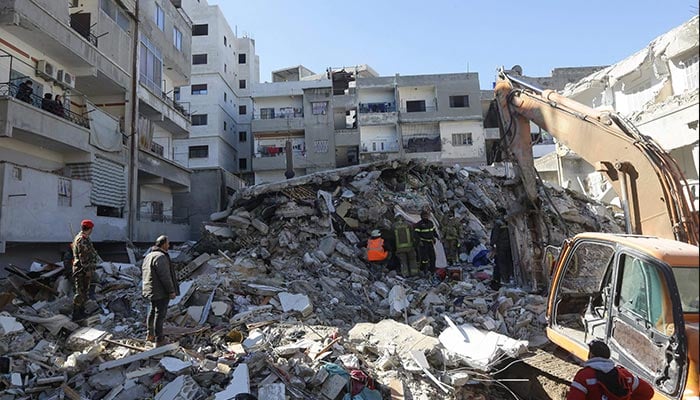
BAB AL-HAWA BORDER CROSSING, SYRIA: The death toll from the massive earthquake in Turkey and Syria kept on climbing Thursday, topping 21,000 as the first UN aid reached Syrian rebel-held zones but hopes of finding more survivors faded.

The chief of the World Health Organisation said he was on his way to Syria, as bitter cold hampered the search of thousands of flattened buildings and threatened the lives of many quake victims who are without shelter and drinking water.

Relatives were left scouring body bags laid out in a hospital car park in Turkey’s southern city of Antakya to search for missing relatives, an indication of the scale of the tragedy.

“We found my aunt, but not my uncle,” said Rania Zaboubi, a Syrian refugee who lost eight members of her family.

Chances of finding survivors have dimmed now that the 72-hour mark that experts consider the most likely period to save lives has passed.

The 7.8-magnitude quake struck early Monday as people slept, in a region where many had already suffered loss and displacement due to Syria’s civil war.

WHO head Tedros Adhanom Ghebreyesus said Thursday that he was heading to Syria.

“On my way to Syria, where WHO is supporting essential health care in the areas affected by the recent earthquake,” Tedros tweeted.

But in a potentially life-saving development, an aid convoy reached rebel-held northwestern Syria earlier in the day, the first since the quake, an official at the Bab al-Hawa border crossing told AFP.

Freezing temperatures

The crossing is the only way UN assistance can reach civilians without going through areas controlled by Syrian government forces.

A decade of civil war and Syrian-Russian aerial bombardment had already destroyed hospitals, collapsed the economy and prompted electricity, fuel and water shortages.

UN Secretary-General Antonio Guterres urged the Security Council to authorise the opening of new cross-border humanitarian aid points between Turkey and Syria to deliver aid.

Four million people living in rebel-held areas of northwest Syria have had to rely on the Bab al-Hawa crossing as part of a cross-border aid operation authorised by the Security Council nearly a decade ago.

“This is the moment of unity, it’s not a moment to politicise or to divide but it is obvious that we need massive support,” Guterres said.

Temperatures in the Turkish city of Gaziantep plunged to minus five degrees Celsius (23 degrees Fahrenheit) early Thursday, but thousands of families spent the night in cars and makeshift tents — too scared or banned from returning to their homes.

Parents walked the streets of the city — close to the epicentre of Monday’s earthquake — carrying their children in blankets because it was warmer than sitting in a tent.

Gyms, mosques, schools and some stores have opened at night. But beds are still at a premium and thousands spend the nights in cars with engines running to provide heat.

“I fear for anyone who is trapped under the rubble in this,” said Melek Halici, who wrapped her two-year-old daughter in a blanket as they watched rescuers working into the night.

International rescuers have said the intense cold has forced them to weigh whether to use their limited fuel supplies to keep warm or to carry out their work.

Racing against the clock

“Not a single person has failed to mention this, the cold,” Athanassios Balafas, a Greek fire official, said in Athens. “Obviously we chose to keep operating.”

Turkish President Recep Tayyip Erdogan acknowledged on Wednesday that there were “shortcomings” in the government’s handling of the disaster.

Monday’s quake was the largest Turkey has seen since 1939, when 33,000 people died in the eastern Erzincan province.

Officials and medics said 17,674 people had died in Turkey and 3,377 in Syria from Monday’s 7.8-magnitude tremor, bringing the confirmed total to 21,051.

Experts fear the number will continue to rise sharply.

Anger has mounted over the government’s handling of the disaster.

“People who didn’t die from the earthquake were left to die in the cold,” Hakan Tanriverdi told AFP in Adiyaman province, one of the areas hardest hit.

Despite the difficulties, thousands of local and foreign searchers have not given up the hunt for more survivors.

Two dozen children and some of their parents from northern Cyprus — 39 Turkish Cypriots in all — were on a school trip to join a volleyball tournament when the quake hit their hotel in southeast Turkey’s Adiyaman.

Their home region’s government has declared a national mobilisation, hiring a private plane so they could join the search-and-rescue effort for the children.

Ilhami Bilgen, whose brother Hasan was on the volleyball team, looked at the frightening pile of concrete slabs and heavy bricks that used to be the hotel.

“There’s a hollow over there. The children may have crawled into it,” Bilgen said. “We still haven’t given up hope.”

Donor conference

Dozens of nations, including China and the United States have pledged to help.

The World Bank said it would give $1.78 billion in aid to Turkey to help relief and recovery efforts.

Immediate assistance of $780 million will be offered from two existing projects in Turkey, said the bank, while an added $1 billion in operations is being prepared to support people affected amid recovery and reconstruction.

In addition to a staggering human toll, the quake’s economic cost appears likely to exceed $2 billion and could reach $4 billion or more, Fitch Ratings said.

China slams Biden’s ‘irresponsible’ remarks on Xi

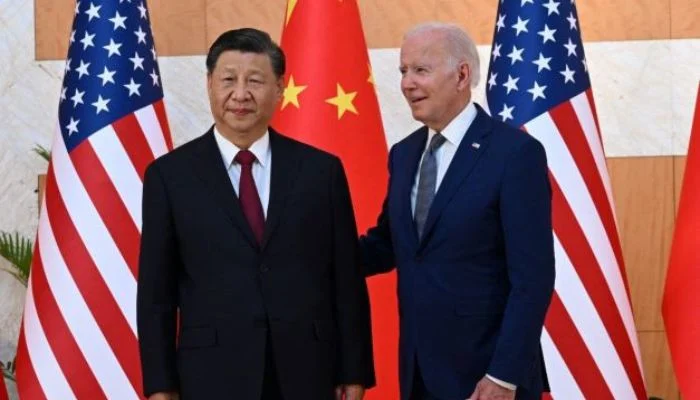
BEIJING: Beijing condemned on Thursday US President Joe Biden’s comments that Xi Jinping faced “enormous problems”, saying the remarks were “extremely irresponsible”.

The latest rhetorical salvo between the United States and China came after last week’s downing of a Chinese balloon that Washington said was part of a spy fleet spanning five continents.

Following a brief warming after a November G20 meeting between Biden and Xi, US-China relations have once again nosedived, with Secretary of State Antony Blinken last week calling off a visit to Beijing over the balloon fracas.

The US has alleged the high-altitude device — which crossed directly over at least one sensitive US military site — was intended for espionage.

China has angrily denied the claims, arguing it was a weather observation craft that blew off course.

On Wednesday, Washington said the balloon was part of a “fleet”, adding they had been spotted around the world for several years and urged allies to step up vigilance.

In an interview with PBS NewsHour the same day, Biden defended the decision to shoot it down and stressed that the US is not looking for conflict with China.

He also said Xi had “enormous problems”, including “an economy that is not functioning very well”.

“Can you think of any other world leader who’d trade places with Xi Jinping? I can’t think of one,” Biden said.

China hit back at the remarks Thursday, with foreign ministry spokesperson Mao Ning telling a regular briefing that Beijing was “strongly dissatisfied”.

“This type of rhetoric from the US is extremely irresponsible and runs counter to basic diplomatic etiquette,” Mao said, adding that Beijing “firmly opposed this”.

It also doubled down on its position that the balloon shot down last week was for civilian purposes, saying claims it was part of a fleet represented an “information war” against China.

“The US disregard for China’s repeated explanations and communications, excessive reaction, and misuse of force are irresponsible,” Mao said.

“The international community can see very clearly what the world’s biggest country of espionage, monitoring and surveillance is.”

‘Be vigilant’
But in the face of mounting concern over Chinese espionage in the skies, Japan said Thursday it was coordinating with Washington as it analysed unidentified aerial objects spotted over the country in past years.

A mysterious balloon-like object was seen over northern Japan in June 2020, with locals posting pictures on social media.

Authorities said then that they were baffled by the object, which in close-up images by residents and media appeared to be composed of a balloon attached to crossed sticks with propellers.

In a visit to Washington this week, NATO Secretary-General Jens Stoltenberg said the device showed the need for countries across the alliance to protect themselves.

“The Chinese balloon over the United States confirms a pattern of Chinese behaviour where we see that China over the last years has invested heavily in new military capabilities,” Stoltenberg said.

“We’ve also seen increased Chinese intelligence activities in Europe. They use satellites, they use cyber and, as we’ve seen over the United States, also balloons,” he said.

“So we just have to be vigilant.”