
Anti-Tehran groups in Paris urge EU to list Guards as terrorist

Tehran has been engaged in a violent crackdown on protesters since September, including carrying out executions, and it has also detained dozens of European nationals. The EU has become increasingly critical of its actions.

Ties between EU members and Tehran have also deteriorated in recent months as efforts to revive talks on Iran’s nuclear programme have stalled and the country has transferred drones to Russia to help it in its war against Ukraine.

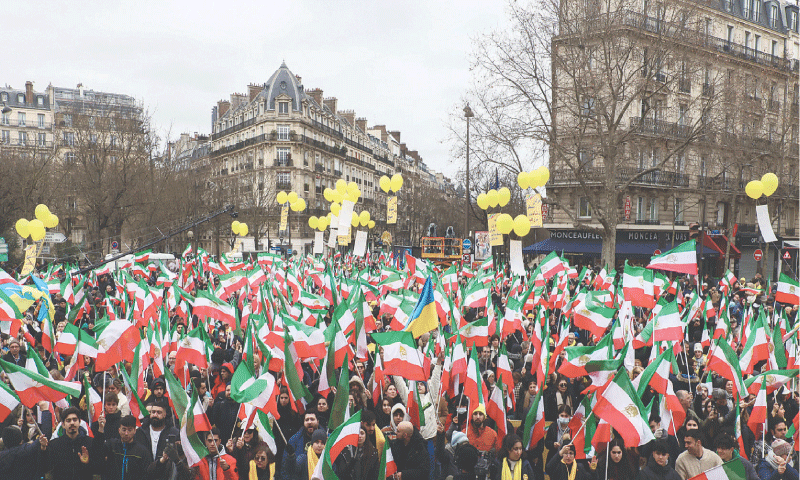
Sunday’s rally in Paris, organised by the National Council of Resistance of Iran (NCRI) and which followed a similar rally on Saturday by European-based Iranians, aimed to highlight the IRGC’s role in cracking down on protesters, but also its activities outside Iran.

“This will be a revolution… The youth know there is no future under this regime. They say they are better off dying in the streets than living in this country with this regime,” said Ela Zabihi, a university lecturer in London.

Widespread anti-government demonstrations erupted in Iran in September after the death of young Kurdish Iranian woman Mahsa Amini, who had been detained by morality police for allegedly flouting the strict dress code imposed on women.

While some EU member states and the European parliament have pushed for the IRGC to be listed, others have been more cautious fearing that it could lead to a complete break in ties with Iran, harming any chance of reviving nuclear talks and jeopardising any hope of getting their nationals released.

Designating the IRGC as a terrorist group would mean that it would become a criminal offence to belong to the group, attend its meetings and carry its logo in public.

Set up after Iran’s 1979 Islamic Revolution to protect the Shia clerical ruling system, the Guards have great sway in the country, controlling swathes of the economy and armed forces and put in charge of Iran’s ballistic missile and nuclear programmes.

“The IRGC must be added to the list of designated terrorist organisations by the European Union,” Maryam Rajavi, president-elect of the NCRI told the rally of several thousand people.

“The valiant youth have the right to defend themselves against the IRGC, covert agents, and the barrage of bullets that pierce their eyes, heads, and hearts.” The People’s Mujahideen Organisation of Iran is the main component of NCRI. The group, also known by its Persian name Mujahideen-e-Khalq, was once listed as a terrorist organisation by the United States and the European Union but not since 2012.

Tehran has long called for a crackdown on the NCRI in Paris, Riyadh and Washington. The group, whose level of support is unclear, is regularly criticised in state media.
Iran’s Raisi to leave for China on three-day official trip

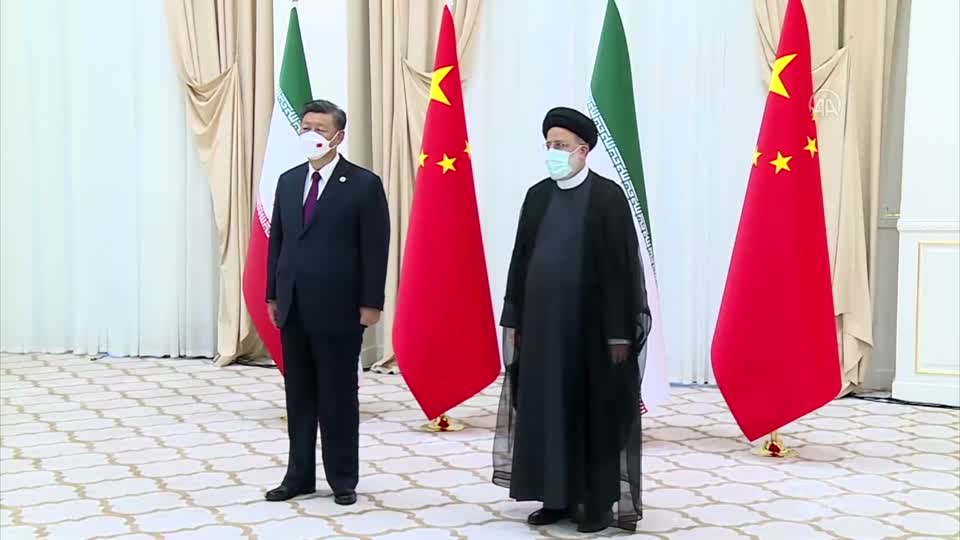
The Iranian president will set out for Beijing in response to an official invitation by Chinese President Xi Jinping, Iran’s state news agency IRNA said.

Both presidents met for the first time last September in Uzbekistan at a summit for the Shanghai Cooperation Organisation, where the Iranian president called for expanded ties.

On his upcoming trip, the Iranian president is expected to hold private talks with Xi, and delegations from both countries are due to sign “cooperation documents”, according to IRNA.

The agency added that President Raisi would also take part in meetings with Chinese businessmen and Iranians living in the country.

Iran and China have strong economic ties, especially in the fields of energy, transit, agriculture, trade and investment.

In 2021, both countries signed a 25-year “strategic cooperation pact” said to include “political, strategic and economic” components.

China is Iran’s largest trade partner, IRNA said, citing the 10-month statistics of Iranian customs authorities.

Teh­ran’s exports to Beijing stood at $12.6 billion, while it imported $12.7 billion worth of goods from China.

Russian soldiers are dying in greater numbers in Ukraine this month than at any time since the first week of the invasion, according to Ukrainian data.

The Ukrainian data shows 824 Russian soldiers dying per day in February.

The figures were highlighted by the UK’s Ministry of Defence. The figures cannot be verified – but the UK says the trends are “likely accurate”.

The increase comes as Ukrainian officials say that Russia has launched a “big offensive”.

However, the secretary of the National Security and Defence Council of Ukraine (NSDC), Oleksiy Danilov, also said Russia is experiencing “big problems” with the campaign.

“Our troops are repulsing [the offensive] very strongly,” Mr Danilov said. “The offensive they planned is already taking place, gradually, but it’s not the offensive they imagined.”

Last week, Ukraine’s outgoing defence minister, Oleksiy Reznikov, said they were anticipating a new Russian offensive around 24 February – the anniversary of the full-scale invasion.

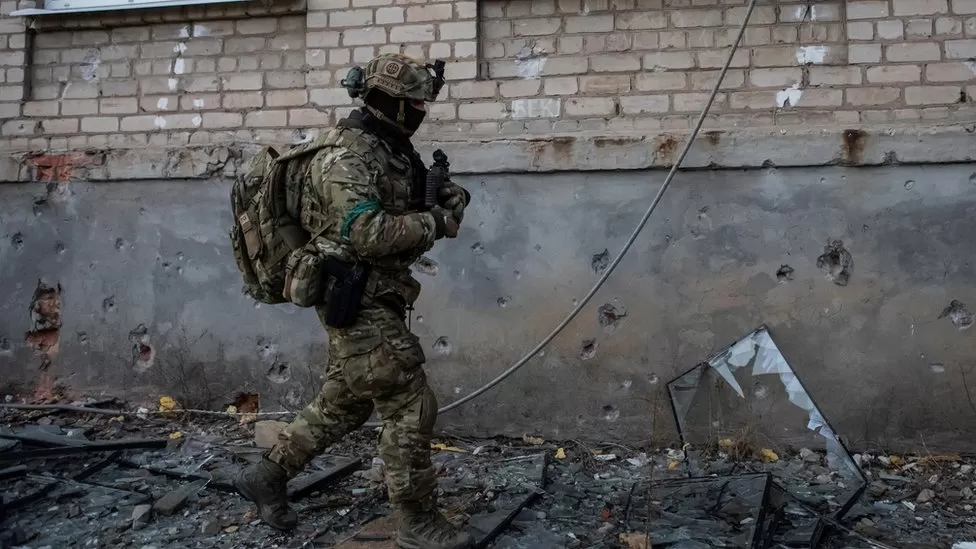
Some of the fiercest fighting has been around Bakhmut in the east of the country.

On Sunday, the head of Russia’s Wagner mercenary force said the group had seized a settlement near the devastated city.

Yevgeny Prigozhin said on Telegram: “Today, the settlement of Krasna Hora was taken by assault detachments of the Wagner PMC.”

Mr Prigozhin also gave his group credit for the offensive on Bakhmut, downplaying the Russian army’s role: “Within a radius of 50 km, plus or minus, there are only Wagner PMC fighters,” he wrote.

The statement hints at longstanding tensions between the Russian military and Wagner.

When the town of Soledar was taken in January, Mr Prigozhin claimed his fighters were in full control there boasted that only his troops took part – a claim the Russian defence ministry questioned.

Bakhmut’s strategic importance has been questioned, but the prolonged fighting has turned it into a symbolic prize.

According to the Ukrainian data, highlighted by the UK, 824 Russian losses a day is more than four times the rate reported in June and July, when around 172 Russian soldiers died each day.

The Ukrainian military claims 137,780 Russian military deaths since the full-scale invasion began.

The UK’s MoD pointed out the recent increase could be due to “a range of factors, including lack of trained personnel, coordination, and resources across the front”.

Ukraine “also continues to suffer a high attrition rate”, the UK said.

Russian forces have made little progress in Ukraine since their retreat from the major southern city of Kherson last November.

Last month they captured the town of Soledar north of Bakhmut after an intense battle. Capturing Bakhmut could enable Russian forces to press on towards the bigger cities of Kramatorsk and Slovyansk.

Ukraine’s President Volodymyr Zelensky has appealed to Western countries to hurry sending heavy weaponry to Ukraine to help Ukraine repel Russia’s expected offensive.

The US agreed last week to send long-range missiles that would enable Ukraine to double its attack range.

But President Zelensky wants the West to send fighter jets – saying during a visit to the UK Parliament this week that he was “thanking you all in advance for powerful English planes”.

Labour has accused the Conservative government of overseeing “lavish spending” on hotels, hospitality and other costs using taxpayer-funded debit cards.

The bills have been highlighted in a Labour study of spending on government debit cards in 2021.

Examples of bills include £3,393 on 13 fine art photographs, and £23,457 on alcohol for UK embassies abroad.

The Conservatives branded Labour’s analysis a “political stunt”.

A Conservative Party spokesperson said Labour spent almost £1bn on the cards – known as government procurement cards (GPCs) – in 2009, when the party was last in government.

The spokesperson said the Conservatives cut the number of cards in use and introduced a requirement for spending to be publicly declared.

The £1bn of spending in 2009 was across the whole of the public sector, while Labour’s analysis focused on 14 government departments, so the figures are not directly comparable.

The Cabinet Office said the cards can save time and money when used for one-off purchases and are considered to be an efficient way of paying for goods and services.

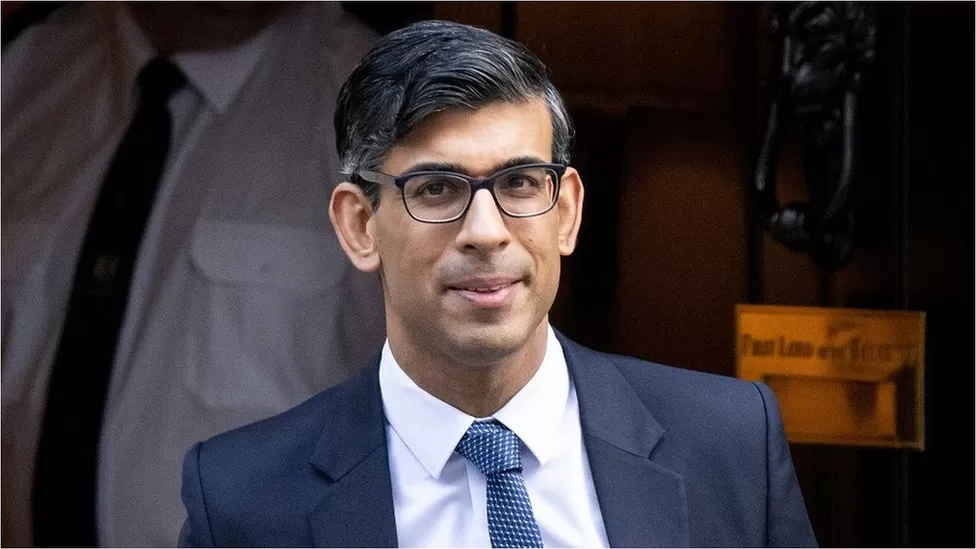
But Labour’s deputy leader Angela Rayner said Prime Minister Rishi Sunak “has failed to rein in the culture of lavish spending across Whitehall on his watch”.

The cards were introduced by the government of former Labour prime minister Tony Blair in 1997 as a more convenient way to make low-value purchases.

They were made available to all public sector organisations, including central government departments, local authorities and the NHS.

The use of the cards has come under increased public and political scrutiny following a major scandal over expenses claims made by MPs in 2009.

In a report on GPCs in 2012, the National Audit Office said “there has been a lack of central oversight and control of the card, which has increased risks to value for money”.

‘Catalogue of waste’

In its study of the cards, Labour analysed spending data for every major government department in 2021, apart from the Ministry of Defence.

The party obtained some of the data in statements written by ministers in response to parliamentary questions asked by Emily Thornberry, the shadow attorney general.

The 14 government departments – including the Treasury and Home Office – spent about £145.5m using GPCs in 2021, compared to £84.9m spent by the equivalent departments in 2010-11, according to Labour’s analysis.

However, the analysis does not take into account inflation.

In a 24-page document, titled the GPC Files, Labour included examples of government spending, including:

  • The Treasury buying 13 fine art photographs from The Tate Gallery for £3,393
  • £344,803 of card expenditure by Foreign Office diplomats in 2021 under the category “restaurants and bars”
  • The Foreign Office spending £7,218 on a reception for Liz Truss, when she was foreign secretary
  • The Ministry of Justice paying £4,019 for 850 branded USB cables for staff taking part in a virtual conference
  • The Department of Health spending £59,155 on items of stationery in March 2021, compared to £1,470 in the whole of the rest of the year combined

Labour’s deputy leader said her party’s analysis showed “a scandalous catalogue of waste, with taxpayers’ money frittered away across every part of government”.

Ms Rayner said a Labour government would “get tough on waste, with an Office of Value for Money upholding transparency and high standards for all public spending, including on government procurement cards”.

Labour’s full analysis of the government’s use of GPCs is due to be published later on Monday.

The UK is getting aid to Syria, development minister Andrew Mitchell has said, as he defended the government’s response to the earthquakes which hit the country.

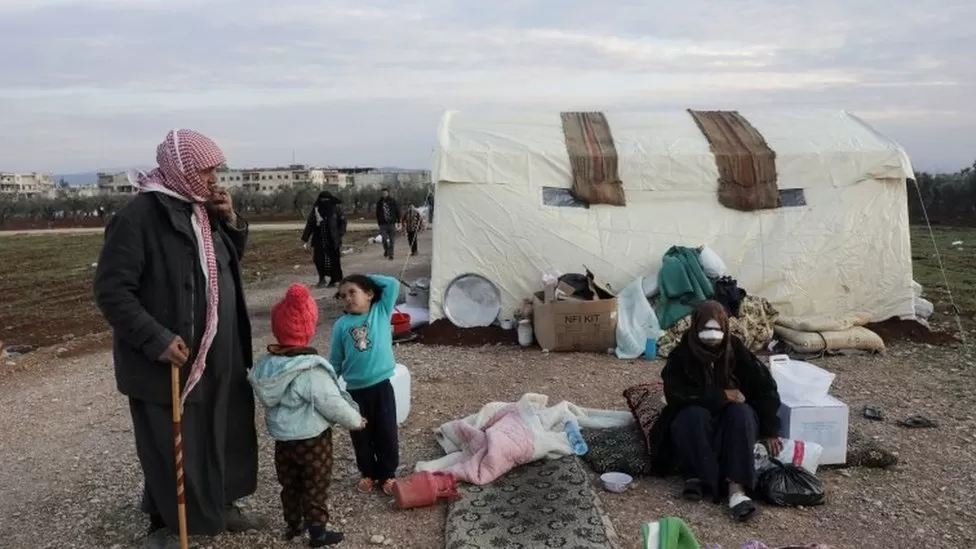
The tremor has added to the devastation caused by the civil war in Syria and local rescue groups have complained about the lack of international aid.

More than 28,000 people have now died in Turkey and Syria after the quakes.

Mr Mitchell told the BBC the UK had helped Syria from “the beginning”.

Speaking on the Sunday with Laura Kuenssberg programme, Mr Mitchell said the UK’s response included sending firefighters to Tukey and providing funding for major rescue operations in Syria.

However, he did acknowledge that sending aid to Syria was “much more difficult than Turkey, because it’s ungoverned space there”.

Why was the earthquake so deadly?
How are UK charities trying to help quake victims?
Why it’s hard to get help to Syria after earthquake
Earthquake donations to UK aid agencies pass £50m
There has been a delay in getting aid to Syria, where years of conflict have ravaged parts of the country that remain under the control of rebels battling the government of President Bashar al-Assad, which is under Western sanctions.

Some rebel-held areas in north-west Syria are already inhospitable and inaccessible after more than a decade of civil war.

Currently, the UN is only authorised to use one route to deliver aid into north-western Syria, over the Turkish border into the province of Idlib.

In his interview with Laura Kuenssberg, Mr Mitchell was asked about the US’s decision to announce a 180-day exemption to its sanctions on Syria for “all transactions related to earthquake relief efforts”.

When asked if the UK government would lift sanctions on Syria to speed up aid deliveries, Mr Mitchell said ministers would “do everything we can to make sure aid gets through to people who are suffering”.

“Specifically here, where sanctions would hold us back in any way, we would seek to have them lifted,” the minister said. “But at the moment we are able to get what we want through. And that’s the key thing.”

Media caption,
Watch: How rescuers’ videos give glimpse into Syria quake horror

The World Health Organization says about 26 million people across Syria and Turkey have been affected by the earthquake. In Syria alone, up to 5.3 million people may have been made homeless.

Earlier this week, the UK government said it was giving £8m of support to Syria and Turkey, sending items such as tents and blankets and a team of medics.

The government also said it would give £3m in extra funding to aid the White Helmets, a volunteer organisation that operates in parts of Syria and in Turkey.

Meanwhile, a UK appeal to help earthquake survivors in Turkey and Syria has raised more than £60m in its first three days, including a £5m government donation.

On Sunday, the chief of the United Nations aid agency, Martin Griffiths, said the international community had failed the people of north-west Syria.

“They rightly feel abandoned. Looking for international help that hasn’t arrived,” Mr Griffiths said on Twitter. “My duty and our obligation is to correct this failure as fast as we can.”

He made the comments from the border between Turkey and Syria, which has seen only a few convoys of aid enter the rebel-held territory since the disaster.

PM Shehbaz offers Syria all possible support for relief efforts

Prime Minister Shehbaz Sharif offered all possible support in connection with the relief efforts to the government and people of the Syrian Arab Republic following the massive earthquake that rattled the region including Turkey.

An earthquake of magnitude 7.9 rattled central Turkey and northwest Syria on February 6, where the death toll has cross 25,800.

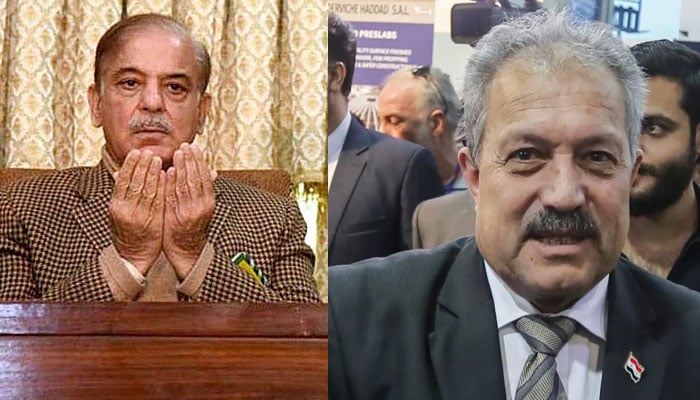
PM Shehbaz assured the country’s support for the Syrian people in a telephonic conversation with his Syrian counterpart Hussein Arnous on Saturday.

The PM expressed deep sympathy for the people of Syria following the recent devastating earthquake that struck the Arab nation in early hours of Monday. The death toll in the country has risen to 3,500.

PM Shehbaz also offered condolences to the Syrian Prime Minister on his personal loss of family members in the horrific natural calamity.

Prime Minister Shehbaz expressed concern with regard to reports emanating from the region of severe aftershocks. He shared that Pakistan had already dispatched the first batch of humanitarian assistance which was being followed-up with more relief goods sent via air and land routes.

He added that a medical team from Pakistan would also support humanitarian efforts in Syria.

Prime Minister Arnous thanked the government and people of Pakistan for demonstrating solidarity with the Syrian people at this difficult time.

Pakistan extends support to Turkey, Syria

After an earthquake struck the region hosting Turkey and Syria early this week, Pakistan extended all-out support in the relief efforts.

In a statement issued by the Foreign Office, Pakistan offered condolences over the loss of lives from the earthquake.

“The Government and people of Pakistan are deeply saddened to learn that a severe earthquake hit parts of Southern Türkiye earlier today, resulting in loss of precious lives and extensive damage to property,” said the statement.

It added that the Pakistani nation stands in complete solidarity with its Turkish brethren in this hour of grief. “We extend our deepest condolences to the bereaved families and pray for early recovery of those injured,” said the FO.

“Pakistan stands ready to extend all possible support in the relief effort,” said the statement, adding that “we are confident that the resilient Turkish nation will overcome this natural calamity with characteristic grit and determination.”

UAE president meets COAS, discusses bilateral ties

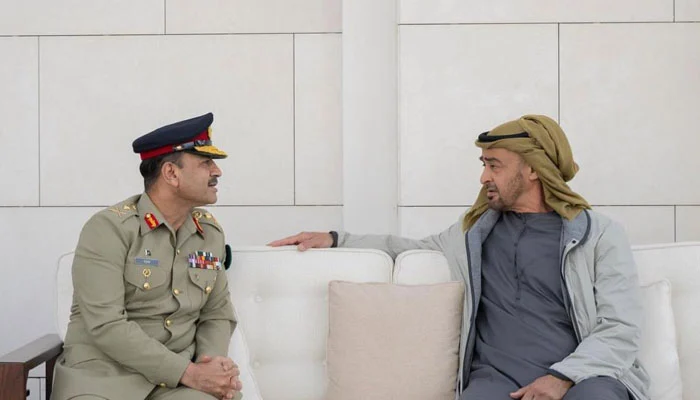
ISLAMABAD/ABU DHABI: United Arab Emirates (UAE) President Sheikh Mohamed bin Zayed Al Nahyan held a meeting with Pakistan Chief of Army Staff (COAS) General Syed Asim Munir at the Qasr Al Shati Palace, Abu Dhabi, The News reported on Sunday.

According to an official statement on Twitter issued by the UAE Embassy in Pakistan on Saturday, both leaders talked about ways to further the bilateral cooperation and joint work between the two countries.

“H.H Sheikh Mohamed bin Zayed Al Nahyan, President of UAE receives at Qasr Al Shati Palace Abu Dhabi General Asim Munir, Chief of Army Staff of the Islamic Republic of Pakistan, and discusses ways to enhance bilateral cooperation and joint work between the two countries,” the embassy said in the statement.

The UAE Embassy in Pakistan also released a picture of the meeting between both leaders in which they can be seen talking to each other.

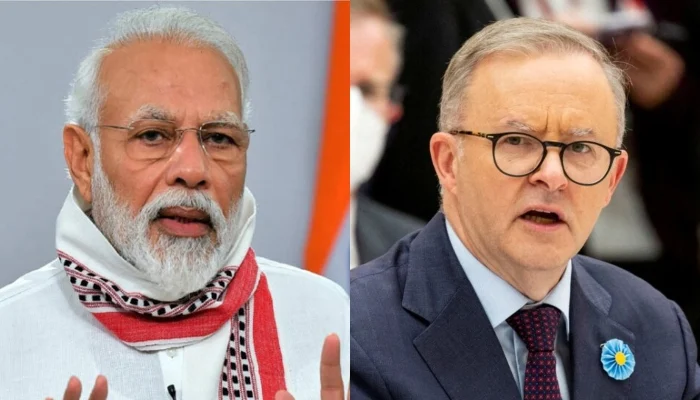
Khalistan Referendum in Brisbane on March 19 as Modi meets Australian PM

BRISBANE: On the heels of Indian Prime Minister Narendra Modi gearing up to host Australian Prime Minister Anthony Albanese, pro-Khalistan secessionist group Sikhs for Justice (SFJ) has announced to hold Khalistan Referendum voting in Brisbane on March 19 after a strong show of over 55,000 Australian Sikhs at Federation Square, Melbourne two weeks ago.

Gurpatwant Singh Pannun, Sikhs for Justice General Counsel declared that the March 19 “Battlefield – Brisbane” Khalistan Referendum Voting Centre is dedicated to Shaheed Bhai Harmeet Singh Bhaowal and Shaheed Bibi Baljinder Kaur who were bombed to death along with their nine months old son Pavittar Singh on December 05, 1992, by the Indian Police forces in Haryana.

“While Modi regime is pursuing violence to crush the Khalistan Referendum, SFJ is using voting to resolve the decades-old conflict between the Sikhs and the Union of India,” stated SFJ General Counsel Gurpatwant Singh Pannun in a video message.

“We urge PM Albanese to educate Modi that in democracy, seeking secession and independence through voting cannot be labelled as terrorism,” added Pannun, the New York-based Attorney at Law who has been leading a global campaign for the creation of Khalistan.

SFJ announced that scores of November 1984 Sikh Genocide victim families from 32 Block Tirlokpuri, Delhi will be travelling to Brisbane to campaign for March 19 Khalistan Referendum voting.

Trilokpuri is the neighbourhood of Delhi where during November 1984 Hindu death squads were led by Congress leader Bhagat and BJP leader Ram Jain, a close associate of PM Vajpayee, the then head of BJP. The death squads necklaced to death over 450 Sikh men and gang-raped 100 plus Sikh women in broad daylight in the presence of police.

Two weeks ago on January 29, over 55,000 Sikhs voted for Khalistan Referendum at Melbourne’s Federation Square to raise demand for the creation of Khalistan in Indian Punjab.

While over 55,000 Sikh men and women — over the age of 18 — were eligible to cast their votes, an estimated 15,000 voters were unable to cast their votes due to time limitations. An estimated 300,000 Sikhs live in Australian cities and the SFJ had announced that it will take the Referendum campaign to other cities to accommodate Sikhs wishing to express their democratic right for the creation of Khalistan.

Outside the voting centres Sikh youth and Hindutva supporters clashed and the local police arrested at least two people. Videos showed a group of Hindutva supporters attacking Sikh voters. Sikhs for Justice also released videos of a group of Indian men trying to vandalise Sikh Gurdwaras and actually vandalised three local Gurdwaras for supporting the Khalistan Referendum.

The Indian government has launched complaints with the UK, Canadian and Australian governments against Sikh groups, mainly SFJ, for running pro-Khalistan campaigns. These governments have told Indians that no laws have been violated and while they stood by the Indian government there is nothing they could do to stop their nationals from taking part in a democratic exercise.

Last week India told Canada that the Khalistan issue is of “national security concern” for New Delhi and that Ottawa should take stringent action against the Sikh groups. Sikhs For Justice says its activities are democratic and peaceful and covered by local laws.

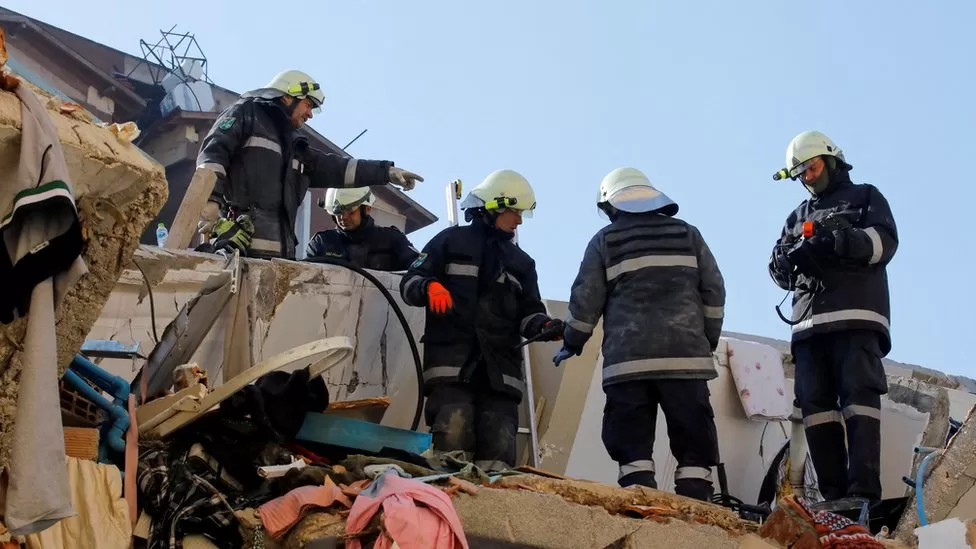
Unrest in southern Turkey has disrupted rescue efforts in some places following Monday’s deadly earthquake, three rescue groups have said.

The death toll in Turkey and Syria from the quake has surpassed 28,000, and hope of finding many more survivors is fading despite some miraculous rescues.

German rescuers and the Austrian army paused search operations on Saturday, citing clashes between unnamed groups.

Security is expected to worsen as food supplies dwindle, one rescuer said.

Turkey’s president said he would use emergency powers to punish anyone breaking the law.

An Austrian army spokesperson said early on Saturday that clashes between unidentified groups in the Hatay province had left dozens of personnel from the Austrian Forces Disaster Relief Unit seeking shelter in a base camp with other international organisations.

“There is increasing aggression between factions in Turkey,” Lieutenant Colonel Pierre Kugelweis said in a statement. “The chances of saving a life bears no reasonable relation to the safety risk.”

Hours after Austria paused its rescue efforts, the country’s ministry of defence said that the Turkish army had stepped in to offer protection, allowing the rescue operations to resume.

The German branch of the search and rescue group ISAR and Germany’s Federal Agency for Technical Relief (TSW) also suspended operations, citing security concerns.


“There are more and more reports of clashes between different factions, shots have also been fired,” said ISAR spokesperson Stefan Heine.

Steven Bayer, operations manager of Isar, said he expected security to worsen as food, water, and hope become more scarce.

“We are watching the security situation very closely as it develops,” he said.

German rescue teams said they would resume work as soon as Turkish authorities deem the situation safe, Reuters news agency reported.

The Vice President of Turkey, Fuat Oktay announced on Saturday the death toll in Turkey has risen to 24,617.

While Turkey’s President, Recep Tayyip Erdogan hasn’t commented on the reported unrest in Hatay, he did reiterate on Saturday that the government would take action against those involved in crimes in the region.

“We’ve declared a state of emergency,” Mr Erdogan said during a visit to the disaster zone today. “It means that, from now on, the people who are involved in looting or kidnapping should know that the state’s firm hand is on their backs.”

State media reported on Saturday that 48 people had been arrested for looting, according to AFP. Turkish state media reported several guns were seized, along with cash, jewellery and bank cards.

A 26-year-old man searching for a work colleague in a collapsed building in Antakya told Reuters: “People were smashing the windows and fences of shops and cars.”

Turkish police have also reportedly detained 12 people over collapsed buildings in the provinces of Gaziantep and Sanliurfa. They included contractors, according to the DHA news agency.

There are also expected to be more arrests after Mr Oktay told reporters late Saturday that prosecutors issued 113 arrest warrants over the buildings.

At least 6,000 buildings collapsed in Turkey, raising questions about if the large-scale tragedy could have been avoided and whether President Recep Tayyip Erdogan’s government could have done more to save lives.

With elections looming, the president’s future is on the line after spending 20 years in power and his pleas for national unity going unheeded.

Mr Erdogan has admitted shortcomings in the response, but he appeared to blame fate on a visit to one disaster zone: “Such things have always happened. It’s part of destiny’s plan.”

Miraculous rescues after 100 hours under rubble

Among those rescued on Saturday were a family of five pulled from the rubble in Turkey’s Gaziantep province.

AP news agency reported the parents, two daughters and son were brought to safety after five days under their collapsed home, to cries of “God is great”.

The same outlet reported that a seven-year-old girl was pulled from the debris in the province of Hatay after almost 132 hours under the rubble.

The BBC has also published footage of the remarkable rescue of two sisters in Antakya, southern Turkey, from Wednesday.

The quake was described as the “worst event in 100 years in this region” by the United Nations aid chief, who was in the Turkish province of Kahramanmaras on Saturday.

“I think it’s the worst natural disaster that I’ve ever seen and it’s also the most extraordinary international response,” Martin Griffiths told the BBC’s Lyse Doucet in Turkey.

“We have more than a hundred countries who have sent people here so there’s been incredible response but there’s a need for it,” he added.

Mr Griffiths has called for regional politics to be put aside in the face of the disaster – and there are some signs that this is happening.

The border crossing between long-feuding Armenia and Turkey reopened on Saturday for the first time in 35 years to allow aid through.

And there are reports that the Syrian government has agreed to let UN aid into areas controlled by opposition groups, with whom they have been engaged in a bitter civil war since 2011.

The death toll in Syria from the earthquake now stands at more than 3,500, according to AFP – but new figures have not been publishes since Friday.

There has been criticism that the international effort to send aid to Syria has not been fast enough.

Ismail al Abdullah of the Syrian Civil Defence Force, or White Helmets, which operates in rebel-held areas, told the BBC’s Quentin Sommerville that the organisation had stopped searching for survivors.

The international community has “blood on its hands,” he said. “We needed rescue equipment that never came.”

Sivanka Dhanapala, the Syria representative of the UN High Commissioner for Refugees (UNHCR), told AlJazeera that as many 5.3 million Syrians may be homeless following the quake.

“That is a huge number and comes to a population already suffering mass displacement,” he said.

Another unidentified object has been shot down over North American airspace, Canadian Prime Minister Justin Trudeau has confirmed.

He said the latest object “violated Canadian airspace” and was shot down over Yukon in north-west Canada.

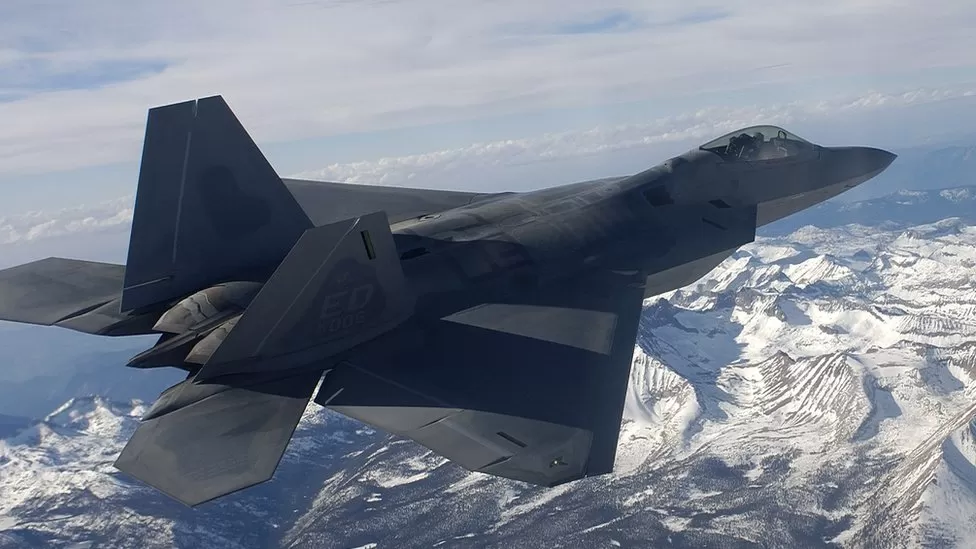
Both Canadian and US aircraft were scrambled to track down the object which Mr Trudeau says was taken out by a US F-22 fighter jet.

It is the third object to be shot down over North America in the last week.

The American military destroyed a Chinese balloon last weekend, and on Friday an unspecified object the size of a small car was shot down off Alaska.

Mr Trudeau confirmed on Saturday he gave the order and had spoken with US President Joe Biden.

“Canadian forces will now recover and analyse the wreckage of the object,” he wrote on Twitter.

The latest unspecified object was flying over central Yukon at about 40,000 ft (12,000m) and intercepted at about 15:41 local time on Saturday, defence minister Anita Anand told reporters.

She described it as “small” and “cylindrical”, but that recovery efforts are still being carried out to discover more details.

Ms Anand said it was taken out “about 100 miles” from the US border, adding it posed a “reasonable threat to civil aviation”.

She said it “appears to be smaller than the one shot down off the coast of South Carolina” last Saturday – meaning the giant Chinese suspected spy balloon that measured 200ft (60m) tall.

Posting earlier on Twitter, Prime Minister Trudeau thanked the North American Aerospace Defense Command (NORAD) which carries out air defence for the US and Canada and led the mission.

The White House said the object had been tracked and monitored “over the last 24 hours”.

“Out of an abundance of caution and at the recommendation of their militaries, President Biden and Prime Minister Trudeau authorised it to be taken down,” it said.

“The leaders discussed the importance of recovering the object in order to determine more details on its purpose or origin.”

Canada’s Minister of National Defence Anita Anand said the object posed a threat to civil aviation

Giving more details on the mission to take down the object, the US Department of Defense confirmed two F-22 jets took off from a military base in Anchorage, Alaska and the object was shot down with an AIM 9X missile.

Pentagon Press Secretary Brig Gen Pat Ryder added that the FBI will be “working closely” with Canadian police.

Separately on Saturday, the US military also scrambled fighter jets over Montana as some airspace was closed – but it turned out to be a “radar anomaly” and nothing unusual was found.

The latest object’s appearance over North America comes just a week after a suspected Chinese spy balloon was also destroyed by the US.

On Friday another unspecified object was tracked and shot down over Alaska at the orders of US President Biden.

In a short statement, the military said US troops, including from the Alaska National Guard, were still conducting search and recovery activities on sea ice for Friday’s object.

It said it had no further details about the object’s capabilities, purpose or origin but confirmed the FBI is helping with the recovery near the Alaskan town of Deadhorse.

“Arctic weather conditions, including wind chill, snow, and limited daylight, are a factor in this operation, and personnel will adjust recovery operations to maintain safety,” it added – and that the rescue operation will continue as weather permits.


Last weekend, defence officials told US media that debris from the Chinese balloon landed in 47ft (14m) of water – shallower than they had expected – near Myrtle Beach, South Carolina.

China has denied the balloon – which first entered US airspace on 28 January – was used for spying purposes, saying it was a weather device gone astray.

The US, however, said the balloon is part of a fleet of surveillance balloons that have flown over five continents.

The balloon incident has strained US-China relations, with Secretary of State Antony Blinken cancelling a planned trip to Beijing.

Chinese officials on Friday accused the US of “political manipulation and hype”.

In an interview on Thursday, President Biden defended his handling of the Chinese balloon, maintaining that it was not “a major breach”.