‘Not a mistake’: PPP defends Gen (retd) Bajwa’s extension

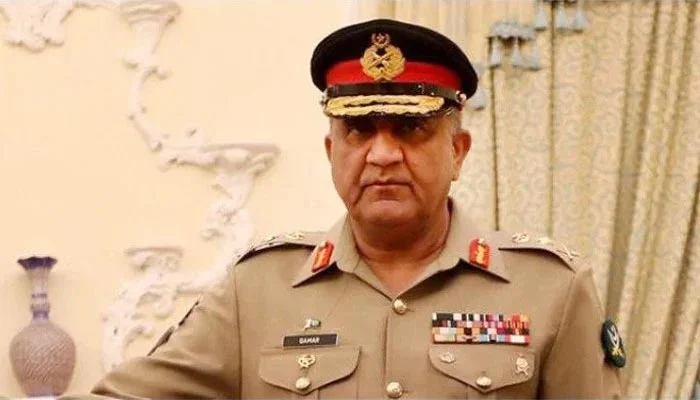
ISLAMABAD: Pakistan Peoples Party (PPP) Secretary General Nayyar Hussain Bokhari defended the decision regarding former army chief General (retd) Qamar Javed Bajwa’s extension during the previous government, The News reported Monday.

Bokhari said that the decision to extend Gen (retd) Bajwa’s tenure for three years after the completion of his term in 2019 was not a mistake, declaring that it was given in view of the country’s situation at that time.

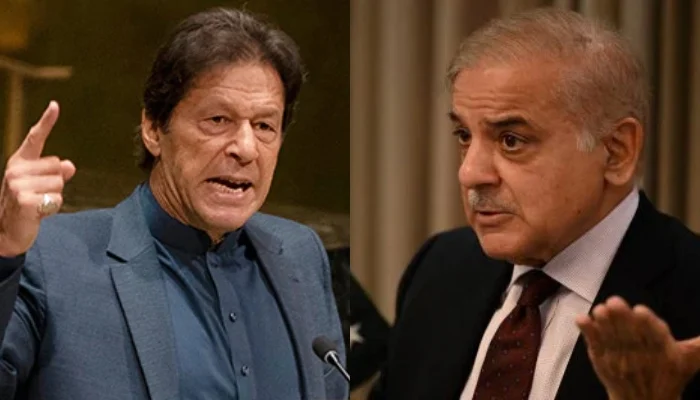
The secretary general’s comments came in a statement given on Sunday. Bokhari said that Pakistan Tehreek-e-Insaf (PTI) chief Imran Khan directly accused the former army chief.

“If Imran Khan was a powerless prime minister because of General (retd) Bajwa, then he should have shown the courage to fire him,” he said.

Bokhari said Khan, addicted to crutches, is still waiting for some guarantees on the dissolution of the assemblies of Punjab and Khyber Pakhtunkhwa.

He further said that as the “leader of lies brigade”, Khan calls Gen (retd) Bajwa a conspirator while his ally Chief Minister Punjab Chaudhry Parvez Elahi says the former COAS sent him to the PTI chief. Now the people can guess for themselves who is talking right, he said.

Extension

Gen (retd) Bajwa was due to retire on November 29, 2019, at the end of his stipulated term, but was given a three-year extension in service by the then prime minister Imran Khan on August 19, 2019.

On November 28, 2019, the Supreme Court suspended the government order, observing there was no law to extend an army chief’s tenure.

However, the apex court granted a six-month extension to General Bajwa after being assured by the government that parliament would pass legislation on the extension/reappointment of an army chief within six months.

The notification extending General Bajwa’s tenure was finally issued on January 28, 2020, after the parliament passed a law to settle the issue pertaining to the extension of the army chief’s tenure.

Mustafa Khokhar

Bokhari said that party leader Mustafa Nawaz Khokhar was greatly blessed by the party by making him a senator from Sindh. “Mustafa Khokhar contested four elections from Islamabad but never won,” he said.

He said that not only the PPP but the Muttahida Qaumi Movement-Pakistan (MQM-P) also have reservations regarding the census.

The PPP’s secretary-general said allies’ reservations on the Reko Diq Bill have been removed.

‘They are interested in NRO-II’: Imran Khan slams govt as terror incidents rise

Pakistan Tehreek-e-Insaf (PTI) Chairman Imran Khan Monday criticised the Shehbaz Sharif-led government for “failing” to counter terrorism while focusing on “preserving” the benefits taken under NRO-II.

The statement from the former prime minister came as the Khyber Pakhtunkhwa province — ruled by PTI — witnessed a sudden rise in terror incidents following the end of the ceasefire by the banned TTP last month.

Foreign Minister Bilawal Bhutto had also warned of direct action if the cross-border terror activities continue from the militants based in Afghanistan.

He also mentioned the shelling by Afghan forces on civil areas in Chaman last week, saying “they have also failed to deal with attacks from the international Pak-Afghan border by security forces of a ‘friendly’ Afghan government.”

The PTI chairman said that apart from running the economy to the ground, this imported government has failed to deal with the 50% increase in terrorism in Pakistan with incidents from Chaman to Swat to Lakki Marwat to Bannu.

“While our soldiers, police and local people are giving daily sacrifices with their lives, the worst part is that this increasing terrorist threat and attacks from across our Western border are finding no space in the discourse of this govt of a cabal of crooks,” the former prime minister said, in a series of tweets.

Imran Khan also termed snap elections as a solution to all the problems faced by the country both economic and political.

“All they are interested in is their NRO2 and its preservation. Therefore, despite the economy tanking, they are petrified of holding elections which is the only way to stabilise the economy through political stabilisation.”

Worsening law and order situation in KP

The law and order situation in KP has gone south over the last few weeks as an increase has been noticed in threats and attacks on security forces as well as high-profile political personalities.

According to a The News report, the police are on high alert across the province after the recent spike in attacks in areas including Peshawar, southern districts, and the Mardan region.

The publication, citing a source, said: “Apart from the police, senior politicians have complained of receiving threats. The houses of some of them have also come under grenade attack.”

The wave of terrorist attacks has risen across the province in the last few months, the report said. At least 118 terrorist incidents were reported in KP from mid-August till the last week of November, according to official numbers.

At least 26 policemen, 12 personnel of other law enforcement agencies and 17 civilians were killed in terror incidents across the KP. Moreover, 18 policemen, 10 civilians, and 37 law enforcement agencies personnel suffered injuries in these attacks.

A dozen districts, including Peshawar, Mardan, Bajaur, Mohmand, Dera Ismail Khan, Tank, Kohat, Bannu, and Nowshera came under attack in November.

Bilawal asks Indians to protest against hatred, not him

At a news conference inside the UN earlier this week, Mr Bhutto-Zardari had described Mr Modi as “the butcher of Gujarat,” adding that instead of being punished for the 2002 massacre of over 2,000 Muslims in Gujarat, he was made the prime minister.

He was responding to his Indian counterpart S. Jaishankar’s remarks who, for two days in a row, had called Pakistan “the host of Osama bin Laden” and the “perpetrator of terrorism.”


“My comments were based in history, and it is difficult to distort history,” said Mr Bhutto-Zardari when asked about the BJP’s protests against him. “You cannot rewrite history to suit your likes and dislikes.”

FO terms India’s remarks ‘reflection of Delhi’s growing frustration’; BJP holds protests

Talking to the Pakistani media in New York, he said: “The history is a witness to the role the current Indian prime minister played in Gujarat. No matter how hard the BJP or RSS protests, they cannot distort history.”

The foreign minister said he did not coin the term “Butcher of Gujarat, Indian citizens gave this title to him (Modi). So, no matter how much you protest, you cannot change facts.”

“They must also condemn the Muslim genocide in Gujarat, and condemn the way Muslims in India, who are the largest minority in the world, are treated. I wish… they had also protested for their own Muslim citizens — who are now the victims of discrimination, hatred — instead of targeting me.”

He said instead of trying to curb this hatred, “their own government instigates people against Indian Muslims”.

The FM said if the purpose of these protests was to scare Pakistan, it would not work. “We are not afraid of RSS. We are not afraid of Mr Modi. We are not afraid of the BJP. If they want to protest, they should.”

Meanwhile, the Foreign Office rejected the statement by the Indian Ministry of External Affairs (MEA), reported PPI.

![](https://twitter.com/ForeignOfficePk/status/1604004319874977793_

Responding to media queries about Friday’s statement by the Indian MEA, FO Spokesperson Mumtaz Zahra Baloch in a statement said that the MEA’s statement is also a reflection of India’s growing frustration over its failure in maligning and isolating Pakistan.

She said after being unable to prevent Pakistan’s exit from FATF grey list and international recognition of Pakistan’s counterterrorism efforts, India is desperately using international platforms to advance its agenda to defame and target Pakistan.

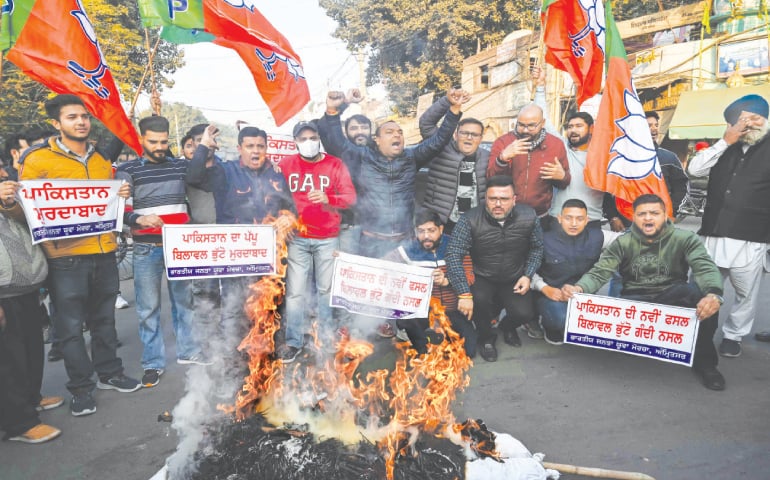
In Uttar Pradesh, the agitation against Mr Bhutto-Zardari’s remarks started on Friday as BJP state president Bhupendra Singh Chaudhary issued a statement, calling his remarks “indecent” and “shameful”.

BJP workers staged a protest in Mathura on Friday and burnt an effigy of the foreign minister.

In Lucknow, BJP workers gathered at the Atal Chowk and started a march, shouting slogans against the FM.

In Delhi, BJP workers protested outside the Pakistan Embassy. Their leaders in Pune led by Maharashtra party chief Chandrashekhar Bawankule held a protest at Tilak Chowk and raised anti-Pakistan slogans.

Mr Bawankule told PTI: “We will not tolerate any statement against our prime minister. PM Narendra Modi is the one who is striving hard to save our Hindu religion, and Pakistan is unable to see it. That is why they are making such statements.”

Similar protests were also held in Mumbai, Karnataka, Telangana, Jammu and Bhubhaneswar.

PTI to dissolve Punjab, KP assemblies on Dec 23

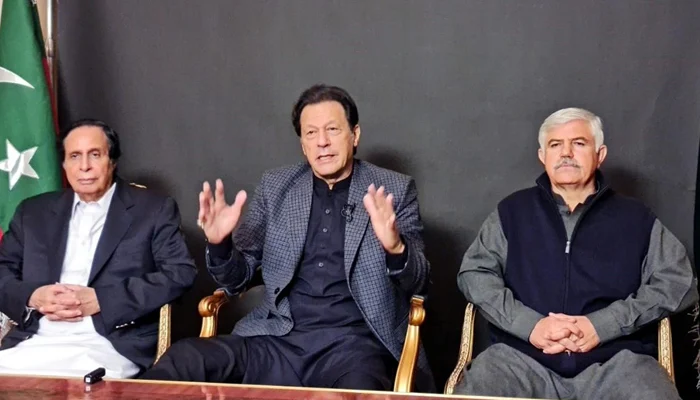
Pakistan Tehreek-e-Insaf (PTI) Chairman Imran Khan Saturday announced that the party will dissolve Punjab and Khyber Pakhtunkhwa assemblies on December 23 (Friday).

The former prime minister — during his address via a video link along with Chief Minister Punjab Parvez Elahi and Khyber Pakhtunkhwa CM Mehmood Khan — said the decision to “sacrifice” Punjab and Khyber Pakhtunkhwa assemblies was taken after consultations with lawyers, CMs, senior party leadership.

The PTI chief reiterated his demand for free and fair elections, warning the country might sink otherwise.

“Once we dissolve both the assemblies, we will hold elections in the provinces. Also, our 123-125 National Assembly members — whose resignations have not been accepted — will ask the speaker inside the assembly to accept their resignations,” he said.

Following these moves, the ex-premier said as much as 66% of Pakistan would move towards elections and in line with the law, elections should take place within 90 days of the assemblies’ dissolution.

He thanked both chief ministers for “sacrificing” their respective governments for the “betterment of the country” and announced that his party would now be starting its election campaign.

Prior to this announcement, reports suggested issues emerged between the PTI and Pakistan Muslim League-Quaid (PML-Q) on the date of dissolution; however, the chief minister refuted the rumours and vowed that he would back “all of Imran Khan’s decisions”.

He also warned the government against employing tactics to delay the elections and said: “I have also spoken to my lawyers […] it would be against the rules to delay the polls past 90 days.”

In response, Interior Minister Rana Sanaullah and Special Assistant to Prime Minister on Kashmir and Gilgit-Baltistan Affairs Qamar Zaman Kaira reiterated that the government’s stance still stands — elections for assemblies that will be dissolved and by-polls on the constituencies that are vacated.

‘Imran Khan blames ex-COAS Bajwa for ousting PTI govt’

He blamed former chief of army staff General (retd) Qamar Javed Bajwa for being involved in the “conspiracy” hatched against his party.

“Ex-COAS Gen Bajwa is the only person responsible for bringing down the PTI government,” the former prime minister claimed during his address.

At the outset of his address, the PTI chief said he wanted to inform the people about why did he decide to dissolve the assemblies in both the provinces where his party ruled.

The cricketer-turned-politician said he provided all the details to the courts about his assets just like every common man in Pakistan — unlike the ones who “loot” the money of the masses and siphon it abroad.

“All their money, business, and children are abroad. They are living a luxurious life in Pakistan after looting the money of the nation,” Khan said, claiming that he never thought that he could ever live anywhere else except Pakistan.

‘Foresaw removal’

The PTI chief added that he “foresaw the removal of his government” and was aware that some elements wanted to impose Shehbaz Sharif as the prime minister.

“General (retd) Qamar Javed Bajwa told me that he did not want this (Shehbaz becoming PM to happen). So who is responsible? Will anyone tell me this? Gen (retd) Bajwa would tell me that the [ incumbent rulers] are corrupt.”

But not conceding defeat, Imran said that the Pakistan Democratic Movement (PDM) move to remove him “was in my favour” as I have received “unprecedented respect”.

“Gen (retd) Bajwa thought the PM and Ishaq Dar are geniuses and will manage the country,” the PTI chairman said, adding that the former army chief realised the nation’s support for Khan’s party after toppling the government.

The former prime minister further said that his party’s popularity increased after April, following his ouster from the government due to a no-confidence motion moved by the then-opposition.

“We haven’t seen such cruelty even during Gen (retd) Musharraf’s time after what Gen (retd) Bajwa did to us,” he said.


‘Corrupt gang’

The PTI chief said that for the first time in his life, he “fears” that the “corrupt gang” imposed on the country was taking the nation towards destruction.

“You can ask any industrialist, labour, and farmer; their finances cannot be managed amid the ongoing economic situation,” he added.

Shedding light on the record-high inflation — which clocked in at 23.8% in November — he said that Pakistan witnessed 50-year high inflation after the incumbent government came into power. “They washed away all the hard work we did,” he lamented.

The PTI chief recalled that the economy — including industries, taxes, exports, and agriculture — witnessed a boost during his party’s government, which lasted for nearly four years.

“But this government has not been even able to progress in one sector. Given the situation in the country, 750,000 people have gone abroad,” Khan said lambasting the ruling coalition.

The ex-prime minister lamented that the hundreds of thousands of people who left Pakistan were skilled workers and their absence will hurt the country in the long run.

But Khan further lamented that his government — which was ousted in April — worked hard to revive the economy that was on the brink of default when the Pakistan Muslim League-Nawaz (PML-N) left the government in 2018.

“We even revived the economy that was devastated due to COVID — which wreaked havoc across the country. We introduced […] incentives for all sectors to ensure that they do not suffer.”

The PTI chief mentioned that the growth witnessed during his party’s tenure was last seen during three previous governments — former army dictators General (retd) Ayub Khan, General Zia-ul-Haq, and General (retd) Pervez Musharraf.

“All these growth targets were achieved because we were hand-in-hand with America on several fronts. So, who was behind all this regime change operation? Why were these corrupt elements brought into power?”

Khan highlighted that foreign direct investment, remittances, tax, and exports have all decreased. “Foreign investors do not trust the coalition government. We do not have dollars to repay energy debt, foreign debt […] they [coalition government] do not even have a plan except seeking loans from China.”

He said loans were not enough as it is tantamount to treating cancer with disprin. “The only solution to it is through wealth creation. If you create wealth, you can ensure that you don’t have to beg for loans the next time.”

Blaming the government for mishandling the country’s economy, Khan said: “Had they managed the economy well, we would have been fine with them completing the term, but the country is going down. Everything is going down in the country. I’m afraid [Pakistan] is moving toward default.”

‘Govt will not even conduct elections in October’

Questioning the government about its roadmap, the PTI chief said that the government will not even conduct elections in October [2023].”

“The election commission is conniving with them. A very dishonest man is involved with them, who will tell them ways to delay elections,” Khan said while attacking the Election Commission of Pakistan (ECP).

The PTI chief added that even after the Supreme Court of Pakistan agreed for the elections to be held, it was this same ECP that refused to conduct elections for seven months.

“The Constitution of Pakistan says that the ECP should always be ready to conduct elections in 90 days. I know that it will try its best to not do so,” he said.


Four cops martyred in Lakki Marwat police station attack

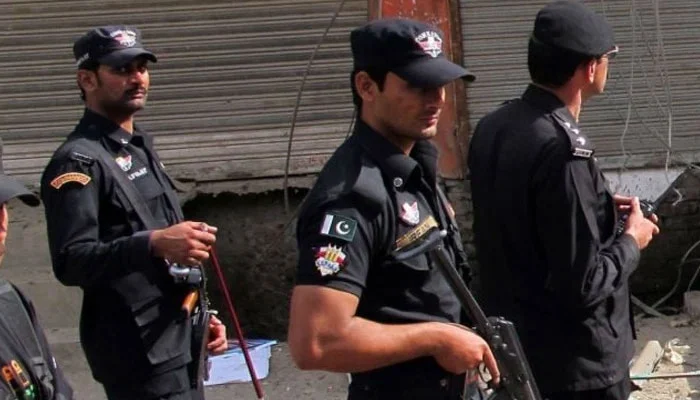
LAKKI MARWAT: At least four police personnel were martyred and as many others wounded in an overnight terrorist attack on the Bargai police station of Lakki MarwatGeo News reported on Sunday.

Terrorists launched an armed assault on the police station from two sides. A fierce exchange of fire took place between the police and the outlaws that left four policemen dead and as many injured.

The attackers escaped after the assault. Police have launched a search operation in the area for the saboteurs.

Constables Ibrahim, Imran, Khairur Rahman and Sabz Ali are among the deceased.

Condemning the attack, Khyber Pakhtunkhwa Chief Minister Mehmood Khan sought report on the matter and ordered best medical aid for the injured cops.

“The incident is extremely unfortunate. The sacrifices of the martyred will not go in vain,” he vowed.

Law and order deteriorates in KP

The law and order situation in Khyber Pakhtunkhwa has gone south over the last few weeks as an increase has been noticed in threats and attacks on security forces as well as high-profile political personalities.

According to a The News report, the police are on high alert across the province after the recent spike in attacks in areas including Peshawar, southern districts, and the Mardan region.

The publication, citing a source, said: “Apart from the police, senior politicians have complained of receiving threats. The houses of some of them have also come under grenade attack.”

Provincial spokesperson of the Awami National Party (ANP) Samar Bilour has also shared that their provincial president Aimal Wali Khan had received a call about a plan of attack on his life.

Samar said that their leadership’s protection is the state’s responsibility, adding that they will be left with no other option but to take the protection of their leaders into their own hands if the state does not act.

“Apart from Aimal Wali Khan, Sardar Hussain Babak and others have received threats as well while the house of MPA Faisal Zeb was attacked twice in the last few weeks,” Samar Haroon Bilour had said last week.

Apart from the attack on the house of ANP MPA Faisal Zeb in Shangla, a grenade was hurled at the house of party Senator Hidayatullah in Peshawar in recent months.

Terror incidents

The wave of terrorist attacks has risen across the province in the last few months, the report said. At least 118 terrorist incidents were reported in KP from mid-August till the last week of November, according to official numbers.

At least 26 policemen, 12 personnel of other law enforcement agencies and 17 civilians were killed in terror incidents across the KP. Moreover, 18 policemen, 10 civilians, and 37 law enforcement agencies personnel suffered injuries in these attacks.

A dozen districts, including Peshawar, Mardan, Bajaur, Mohmand, Dera Ismail Khan, Tank, Kohat, Bannu, and Nowshera came under attack in November.

Meanwhile, KP Police claims that they have accelerated operations against the terrorists saying at least 539 alleged terrorists and proclaimed offenders were arrested in the province during the first 10 months of 2022. They added 141 were also killed including 42 of those who carried head money.

The CTD in the last two days claimed to have killed eight terrorists associated with Daesh and other groups in North Waziristan and Nowshera.

PM Shehbaz calls for political stability as Imran readies himself for announcement

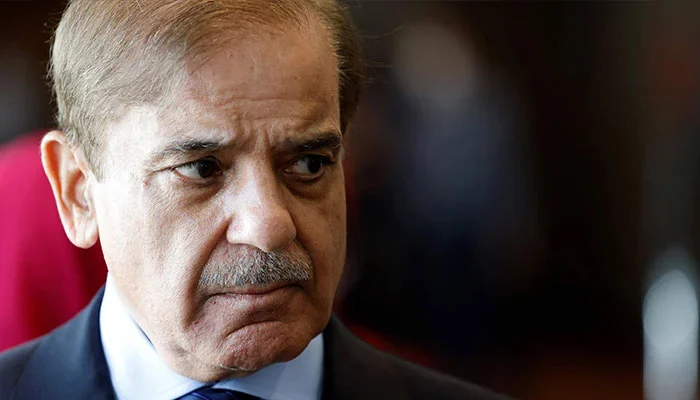
ISLAMABAD: Political stability is a vital condition for economic prosperity, Prime Minister Shehbaz Sharif said Saturday as former prime minister Imran Khan is all set for the announcement today of a date to dissolve the Khyber Pakhtunkhwa and Punjab assemblies.

“It is required for the sake of loyalty to Pakistan and allegiance, that there must be economic stability,” PM Shehbaz said in a press statement shared by PM Office.

The prime minister said it was the desire of someone that Pakistan might be pushed into default, but neither it would it happen and nor would they let it happen, Insha’Allah.

“The people who had laid land mines in the economic foundations of the country, are out to do the same in the political foundations of the country,” the PM said in a veiled reference to the political opponents of Pakistan Tehreek-e-Insaf (PTI).

The people who had hurt public confidence were now out to dissolve assemblies, he said, adding that their objective was to create political instability.

“Political stability and economic charter can only strengthen Pakistan’s national solidarity,” he opined.

The prime minister vowed that they would rid the public of the problems of food inflation and employment like the way they delivered by removing ‘a liar and corrupt government’ with the power of the constitution.

The political miscreants by spreading anarchy wanted to force the world not to invest in Pakistan, besides hampering the efforts for rehabilitation of the flood-affected people, he added.

He said these political mischief makers were not concerned about the plight of flood-affected population and the efforts to save them from winter, hunger and diseases, as they were only self-centric and interested in their political interests.

The prime minister said for providing employment to the youth, it was necessary to get rid of ‘the political unemployed’.

He called upon the nation to ponder whenever the country was taken on the path of economic prosperity, why the wrongdoing junta suddenly swung into action!

“There is no doubt that economic havoc was brought under an agenda and the political instability is a continuity of that action,” he opined.

The prime minister advised the political opponents to take pity on the condition of the people of Pakistan. To bring the public out of the curse of poverty and unemployment were the real politics, he observed.

He further said that during the past four years of the previous government’s tenure, the people had braced the economic upheaval and exhorted the PTI leaders not to create hurdles in the economic prosperity of the public.

BJP workers incensed by FM Bilawal’s remarks on Modi protest outside Pakistan embassy in Delhi

A day earlier, FM Bilawal had responded to his Indian counterpart during a briefing at the United Nations after the latter accused Pakistan of perpetuating terrorism and sheltering Osama bin Laden.

“I would like to remind Mr Jaishankar that Osama bin Laden is dead, but the butcher of Gujarat lives, and he is the prime minister (of India),” the Pakistani foreign minister said while responding to Indian Minister of Foreign Affairs S. Jaishankar’s remarks.

“He (Narendra Modi) was banned from entering this country (the United States). These are the prime minister and foreign minister of RSS, which draws inspiration from Hitler’s SS,” he added.


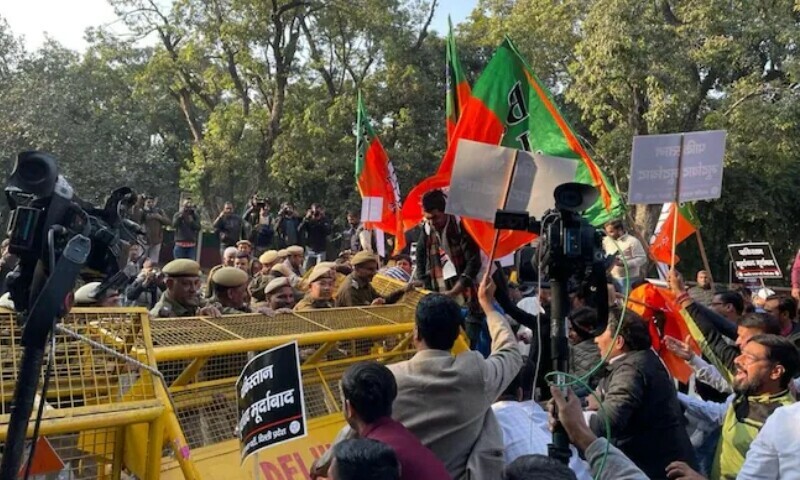
In a report published today, India Today said the protesters carried placards and chanted raised slogans of “Pakistan hay hay” and “Bilawal Bhutto maafi maango” slogans.

“The Delhi police put up barricades to stop the BJP workers from marching towards the Pakistan embassy. However, the protesters broke through the first round of barricades and began marching towards the embassy,” the report said.


The publication said that police stopped the protesters at the second line of barricades put up in Chanakyapuri area. “Water canons have also been placed here. Some BJP workers were also detained by the police,” the report added.

Separately, the Indian government heavily criticised Bilawal’s remarks. According to NDTV, the Indian foreign ministry said that Pakistan “lacked the credentials to cast aspersions at India”.

Bilawal, Jaishankar go head-to-head

Minutes before FM Bilawal’s briefing on Thursday, Jaishankar had addressed the media at a UN stakeout site, repeating the allegations he made inside the UN Security Council on Wednesday, where he accused Pakistan of “hosting Osama bin Laden”.

Jaishankar also responded to the remarks Minister of State for Foreign Affairs Hina Rabbani Khar made in Islamabad on Wednesday, calling India “the biggest perpetrator of terrorism”.


Jaishankar said that Khar’s remarks reminded him of the then-US secretary of state Hillary Clinton’s visit to Islamabad more than a decade ago when she reminded Pakistan that “if you have snakes in your backyard, you cannot expect them to bite only your neighbours”.

He claimed that Pakistan was “not great at listening to good advice … and now look what’s happening there. Today, it’s the epicentre of terrorism … and has its fingerprints over a lot of activities in the region and beyond”.

Urging Pakistan not to blame others, the Indian minister asked: “How long Pakistan intends to practice [terrorism] and hide it by taking that debate elsewhere? Please clean up your act. Please try to be a good neighbour.”

At Bilawal’s briefing, a journalist asked him why the Indian and Pakistani foreign ministers were engaged in a war of words.

“This is not in a war of words. I have not noticed,” the foreign minister said, adding that he was a victim of terrorism as his mother was killed by terrorists along with thousands of other Pakistanis.

“We have lost far more lives to terrorism than India did,” said FM Bilawal, while pointing out that “India has been playing in the space” that has made it “very easy” to bracket Muslims with terrorism.

The Pakistani foreign minister noted that India has continuously perpetuated this philosophy, not just for Pakistan but Muslims in India too.

Japan embarks on defence overhaul to counter China’s ‘strategic challenge’

In its largest defence shake-up in decades, Japan vowed to increase security spending to two percent of GDP by 2027, reshape its military command, and acquire new missiles that can strike far-flung enemy launch sites.

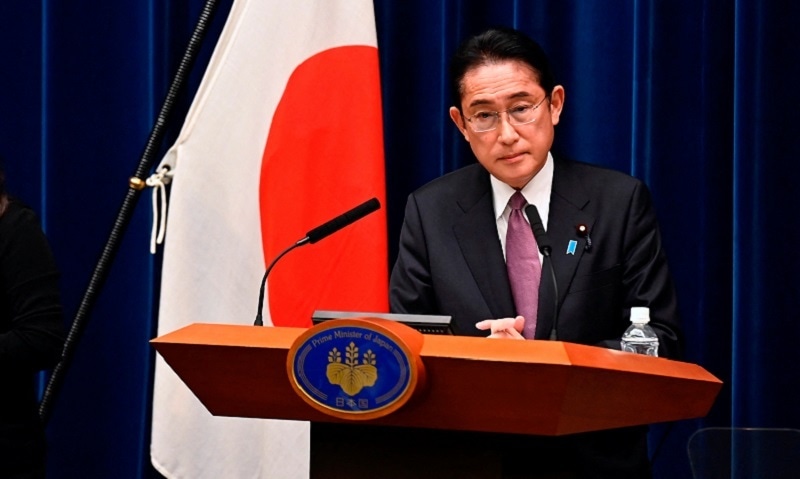
Prime Minister Fumio Kishida told a news conference he was “determined to remain resolute in our mission to protect and defend the nation and its people, at this turning point in history”.

“In our neighbouring countries and regions, the strengthening of nuclear missile capabilities, rapid military build-up and attempts to unilaterally change the status quo by force have become even more pronounced,” he said, evoking Russia’s invasion of Ukraine as an example of the changing times.

Polls suggest Japan’s public largely backs the shift, but the changes could still be controversial because Japan’s post-war constitution does not

officially recognise the military and limits it to nominally self-defensive capabilities.

The moves are outlined in three defence and security documents approved by the cabinet on Friday.

They describe Beijing as “the greatest strategic challenge ever to securing the peace and stability of Japan”, as well as a “serious concern” for Japan and the international community.

In response, the government plans to raise its defence spending to two percent of GDP by fiscal 2027, bringing Japan in line with Nato member guidelines.

That marks a significant increase from historic spending of around one percent and has sparked criticism over how it will be financed.

The money will fund projects, including the acquisition of what Japan calls “counter-strike capacity” — the ability to hit launch sites that threaten the country.

The documents warn that Japan’s current missile interception systems are no longer sufficient, and Kishida said counter-strike capacity “will be essential in the future”.

Aversion to show of power

While Japanese governments have long suggested that counter-strikes to neutralise enemy attacks would be permissible under the constitution, there has been little appetite to secure the capacity.

That has shifted with the continued growth of Chinese military might and a record volley of North Korean missile launches in recent months, including over Japanese territory.

Still, in a nod to the sensitivity of the issue, the documents rule out pre-emptive strikes and insist Japan is committed to “an exclusively defence-oriented policy”.

“Japan’s adherence to the three non-nuclear principles, the exclusive defence policy and its progress as a peaceful nation will remain unchanged,” Kishida said on Friday.

The counter-strike capacity will involve both upgrading existing Japanese weaponry but also buying US-made Tomahawk missiles, reportedly up to 500.

Other changes include the establishment of a permanent joint command for Japan’s armed forces as well as enhancement of its coastguard.

Core army troops in the south-western islands will be doubled, and logistics strengthened “to enable the’ rapid deployment of troops from all over Japan” in an emergency, Kishida said.

Among the documents is the National Security Strategy, which is being updated for the first time since its 2013 launch. Its language on

relations with both China and Russia has hardened significantly.

The strategy document previously said Japan was seeking a “mutually beneficial strategic partnership” with Beijing, a phrase that has disappeared from this iteration. Instead it suggests a “constructive and stable relationship” and better communication.

And while the document once called for enhanced ties and cooperation with Russia, it now warns that Moscow’s military posturing in Asia and cooperation with China are “a strong security concern”.

China’s foreign ministry urged Japan on Friday to “reflect on its policies”.

“Japan disregards the facts, deviates from the common understandings between China and Japan and its

commitment to bilateral relations, and discredits China,” ministry spokesman Wang Wenbin told reporters.

However, US President Joe Biden said Washington welcomed “Japan’s

contributions to peace and prosperity”.

“The United States stands with Japan at this critical moment. Our alliance is the cornerstone of a free and open Indo-Pacific,” he wrote on Twitter.

The strategy contained in the documents represents a major evolution of Japan’s military posture, according to Chris Hughes, professor of international politics and Japanese studies at the University of Warwick.

“The Japanese government will depict these changes as necessary, moderate and wholly in line with previous defence posture,” he said.

Still, “they are going to, in the words often used by the (ruling) Liberal Democratic Party itself in policy documents, ‘radically strengthen’ Japan’s military power”, said Hughes, author of a book, Japan as a Global Military Power.

Biden says US is ‘all in for Africa’, vows to promote democracy

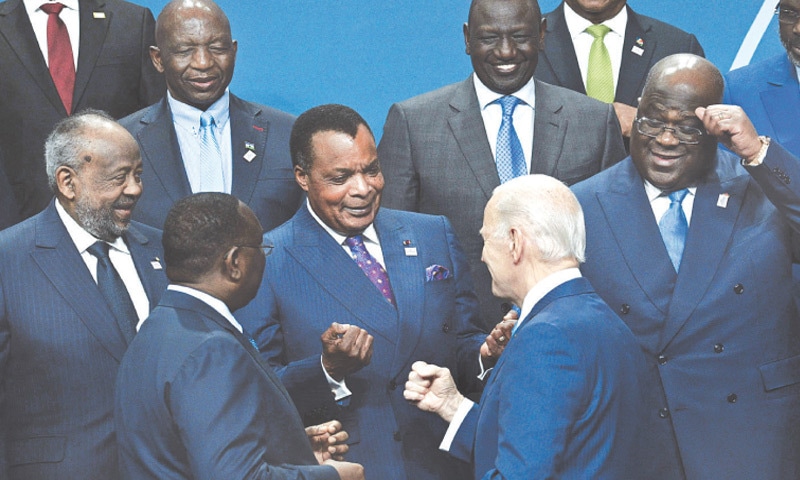
“The United States is all in on Africa and all in with Africa,” Biden told nearly 50 African leaders who spent three days in a wintry Washington summit that featured a gala White House dinner.

“Africa belongs to the table in every room — every room for global challenges that are being discussed,” Biden said.

Biden, who in September called for an African permanent seat on the UN Security Council, backed a permanent African Union role in the Group of 20 economies and said he was planning a visit — the first by a US president since 2015 — to sub-Saharan Africa.

Parcel bomb hurts Russian official in Central Africa

The summit is the first of its kind since African leaders came in 2014 to see Barack Obama, whose successor Donald Trump made no secret of his lack of interest in Africa.

China for the past decade has eclipsed the United States as an investor, and Russia in recent years has sent in mercenaries and sought diplomatic support against Western pressure.

Biden announced $2.5 billion in new assistance on food as price increases lead to hunger across the continent, especially in the drought-struck Horn.

“Russia’s brutal war in Ukraine has led to the disruption of food and energy supplies that affect all of our economies,” Vice President Kamala Harris told a luncheon. She told African leaders “international rules and norms are under threat — for example, sovereignty and territory integrity, unimpeded commerce and peaceful resolution of disputes”.

The Biden administration has been more veiled in its criticism of China, which has poured in funding for high-profile infrastructure projects and lent more than $120bn across the continent since the start of the century.

The United States at the summit laid out $55bn in projects over the coming three years including in green energy, training for health workers and modernisation of internet networks, with the private sector also pledging $15bn led by investment in technology.

In contrast with China that has been happy to do business with all African regimes, the United States has made a point of stressing democracy, even if Biden still invited leaders seen as authoritarian. “The United States will always lead with our values,” Biden told the African leaders.

“Support for democracy, respect for the rule of law, commitment to human rights, responsible government, all are part of our DNA.”

While announcing $100 million for security, Biden also said the US would invest $75m to counteract “democratic backsliding” including by strengthening electoral authorities and civil society.

Biden on Wednesday met leaders of six nations that hold elections next year including Nigeria and the Democratic Republic of Congo, sub-Saharan Africa’s largest countries in population and size respectively, to seek promises on free elections.

African leaders hail summit

African leaders largely welcomed the summit. But the continent has also been reluctant to take sides among major powers.

Secretary of State Antony Blinken, speaking to reporters at the end of the summit, said: “America will not dictate Africa’s choices. Neither should anyone else.” Senegalese President Macky Sall, the current chair of the African Union, welcomed US support for the institution and voiced appreciation for Biden’s summit.

But he also called for the US to end longstanding rights sanctions on Zimbabwe and voiced alarm over a bill in the US Congress that would impose sanctions on African countries over dealings with Russia. “This would be the first time in international relations that a whole continent is targeted,” Sall said.

Parcel bomb

Meanwhile, a parcel bomb wounded the head of a Russian cultural centre in the Central African Republic on Friday, an embassy spokesman said.

“This morning, an attempt was made on the life of the director general of the Russian House, Dmitry Sergeevich Syt­yi. He is in hospital,” the spokesman for the Russian embassy was quoted as saying by state news agency TASS.

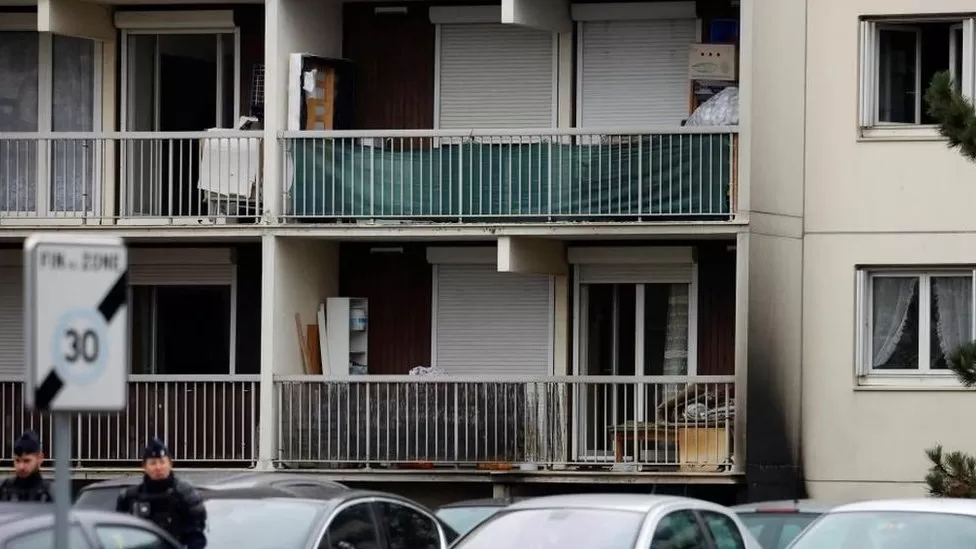
Ten people, including five children, have been killed in a fire in an apartment building near Lyon, France, the local government says.

Officials released a statement saying a “sizeable fire” broke out in a seven-storey block of flats in the suburb of Vaulx-en-Velin.

Four people are in a critical condition and 15 others reported minor injuries, including two firefighters.

The fire is now out and prosecutors are investigating its cause.

The flames appear to have started on the ground floor before spreading upwards.

“I was awakened by the screams… we wanted to help people but the smoke was too heavy. I saw a dead woman… it’s dramatic,” a local resident told Le Progres de Lyon newspaper.

Another resident told the AFP news agency that his friends had caught a 10-year-old boy who was thrown to safety from an upper-floor window by his mother.

Interior Minister Gerard Darmanin said the children who died were all aged between three and 15.

He praised the firefighters for taking considerable risks by “climbing the building from the outside… saving children and babies up to the seventh floor”. Without their “heroism” the death toll would have been much higher, he said.

The block of flats where the fire broke out is part of a housing project in the Lyon suburbs. It underwent emergency repairs in 2019 and was described as “rundown” by Lyon city authorities.

Mr Darmanin said the area was a known drug-dealing spot.

The neighbourhood has had a poor reputation for problems of urban decay and crime, but is undergoing a multi-million euro renovation.