
Authorities in Peru have held high-level talks to try to resolve a deepening political crisis triggered by the ousting of the former president.

The Council of State, the body made up of representatives of all branches of power, and church leaders had a three-hour meeting in the capital, Lima.

Earlier, two government ministers resigned, following days of violent protests over the impeachment of Pedro Castillo on 7 December.

More than 20 people have been killed.

After the meeting on Friday evening, the head of the National Board of Justice, José Ávila, called on Peruvians to avoid violence and engage in peaceful dialogue with the authorities.

He said government ministers would be travelling to the areas where people were protesting, in order to promote such a dialogue.

The new President, Dina Boluarte, gave no statement to the press.

In another development, thousands of tourists are trapped in the south-eastern city of Cusco after protesters forced the local airport to close.

Peru has been through years of political turmoil, with the latest crisis coming to a head when Mr Castillo announced he was dissolving Congress and introducing a state of emergency.

However, his plan backfired and Congress instead voted overwhelmingly to impeach him. Mr Castillo, who is currently in detention, is being investigated on charges of rebellion and conspiracy.

He denies all the accusation, insisting that is still the country’s legitimate president.

Demonstrators are calling for the closure of Congress, the resignation of Ms Boluarte and early elections. On Friday, Congress voted against a proposal to bring elections forward to next year.


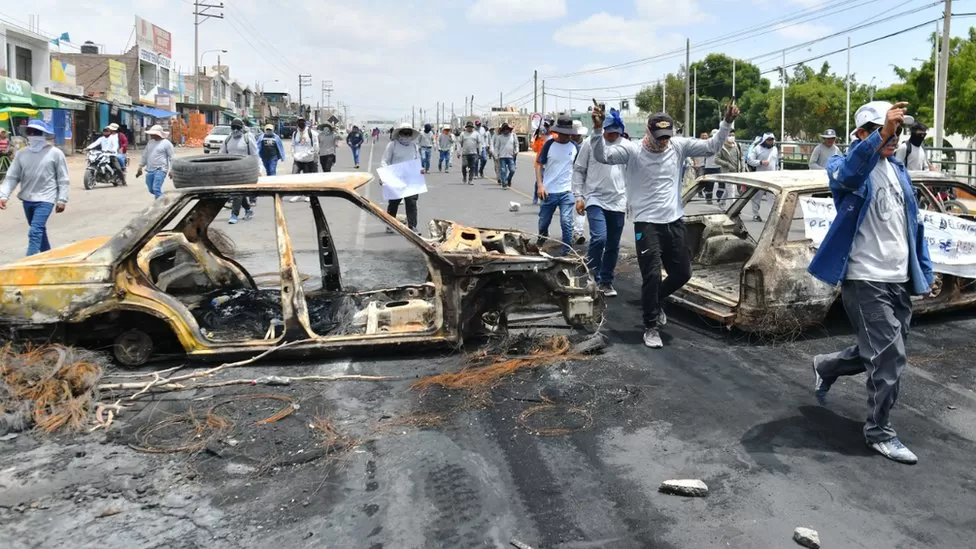
Thursday’s clashes between the army and Castillo supporters in the central Ayacucho region left at least eight people dead, health authorities said. Footage on social media showed protestors blocking main roads and airports.

Just hours later, Education Minister Patricia Correa said she was stepping down. In a Twitter post on Friday, she wrote that the “death of compatriots has no justification”, and that “state violence cannot be disproportionate and cause death”.

Culture Minister Jair Perez also resigned.

The protests are also affecting the country’s tourism industry. The mayor of Cusco told AFP news agency that about 5,000 tourists are stranded in the city after the airport there closed when protesters tried to storm the terminal.

The city is the gateway to Macchu Picchu, an ancient Inca citadel which is visited by hundreds of thousands of people a year.

About 800 tourists are also stuck in the small town at the foot of the mountain where the citadel stands, because the railway line which serves it has stopped running.

Some mostly American and European tourists have reportedly left the town on foot along the train tracks in an attempt to return to Cusco.
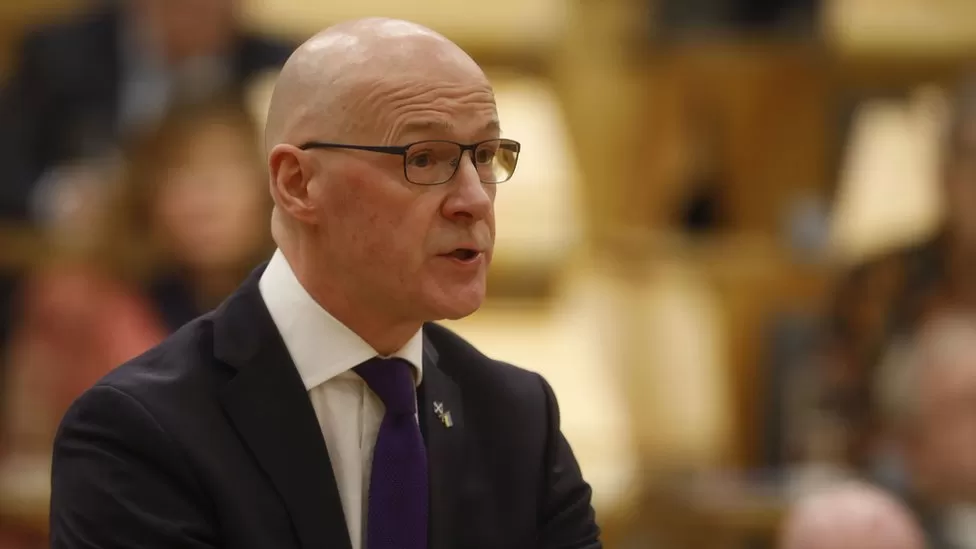
Some local services may have to be scrapped due to funding shortages, council leaders have warned following the Scottish government’s budget

Local authority chiefs have unanimously backed a motion arguing the budget will be detrimental to services.

It follows Deputy First Minister John Swinney announcing that councils will benefit from a funding increase of £550m.

The Scottish government says its budget will ensure councils are “protected”.

In his budget announcement, Mr Swinney said that local authorities would receive more than £550m extra – instead of a flat cash settlement.

At a meeting of the Convention of Scottish Local Authorities (Cosla), the leaders said that most of that sum was for existing commitments – claiming the settlement meant another massive real-terms cut in funding, leaving them “extremely disappointed”.

They urged ministers to prioritise local government funding and pause plans for a National Care Service, which is expected to cost between £664m and £1.2bn over five years.

Council chiefs said funding should instead be reallocated to social care and prevention measures within local government.

‘Breaking point’

Katie Hagmann, Cosla’s resources spokeswoman, said: “Council services will now be at absolute breaking point and some may have to stop altogether.

“This is a result of cuts to our councils’ core budgets and direction on spend towards other Scottish government priorities over the last few years.

“Yesterday’s budget announcement compounds this and there is a real risk that many of our essential services will not only be cut, but may have to stop altogether.”

Analysis published by Cosla suggests the cash increase could be just £71m once Scottish government-mandated policies are paid for, while it claims capital funding will remain flat for next year.

The Fraser of Allander Institute said the funding was equal to a 4.9% real-terms decrease based on spending last year, while the Institute for Fiscal Studies accused the government of overstating the spending increases by comparing spending next year to last year’s budget and not taking into account in-year rises.

But the Scottish government rejected the claims by Cosla.

A spokeswoman said: “We have protected councils in the most challenging budget since devolution to provide more than £13.2bn in the 2023-24 local government settlement.

“This represents a cash increase of over £550m, or 4.5%, which is a real-terms increase of £160.6m, or 1.3%.”

As part of the budget announcement, local authorities were also given full flexibility to set their own council tax rates.

Mr Swinney said councils should “consider carefully the cost pressures facing the public” when deciding the rate they will charge people.

Scottish Conservative local government spokesman Miles Briggs said: “Services that residents rely on could be lost forever under John Swinney’s current budget proposals. He should stop with the shameless spin and instead step up and ensure our councils have the funding they need.

“While tough decisions have to be made, our councils should not always have to bear the brunt of SNP-Green cuts. Many of them simply have no more room to manoeuvre when it comes to managing their finances, while still delivering local services.”

Gujarat’s butcher has become India’s PM, says FM Bilawal at UN presser

Foreign Minister Bilawal Bhutto-Zardari told India that Osama Bin Laden has died but the butcher of Gujarat — Narendra Modi — is still alive and has become the prime minister of India.

The Indian government does not believe in Gandhi’s ideology, but rather in the doctrines of his assassin, Bilawal told journalists at a press conference in New York on Thursday. The Indian government is influenced by Hitler, he said.

Condemning India’s role in stoking terrorism in Pakistan, the foreign minister said that terrorist elements in Pakistan are getting support from the neighbouring country. Foreign elements are actively trying to create instability in Balochistan, he said.

Bilawal stated that there was irrefutable evidence of Indian involvement in the Johar Town blast in Lahore. He demanded elements responsible for terrorism in Pakistan be brought to book.

Terrorism in Pakistan was sponsored from abroad, he noted. He underscored the need to stop terrorist groups from receiving training and financial support from across the border.

The foreign minister said that Pakistan is proud of its achievements in the war against terrorism, as the country has taken concrete steps in connection with the National Action Plan for counterterrorism.

He said that the Financial Action Task Force (FATF) endorsed Pakistan’s measures taken to stem terror financing. Bilawal also said that it is wrong to blame the Muslim world for terrorism as terrorism doesn’t belong to any religion or region.

He pointed out that terrorism has mainly targeted Muslims since 2001. Also, there were incidents where Chinese citizens were targeted in Karachi, he said.

Highlighting the post-flood situation in Pakistan, the foreign minister said some areas of Balochistan and Sindh are still waterlogged. The massive flooding adversely impacted sectors of health, education and basic infrastructure.

Assistance from the international community is crucial for Pakistan in coping with the challenge of rehabilitation and reconstruction of the victims, he asserted.

He called upon the international community to engage the Afghan interim government. Bilawal said primary education is permitted in Afghanistan but permission for secondary education is still awaited.

Replying to a question regarding Pakistan Tehreek-e-Insaf (PTI) Chairman Imran Khan, he said that the former prime minister lost three of the ten seats of his party.

“If my party had lost three of its ten seats, I would have been very concerned,” he said.

PML-Q wants seat adjustment with PTI before assembly dissolution

LAHORE: Pakistan Muslim League-Quaid (PML-Q) has demanded seat adjustment in 25 constituencies with the Pakistan Tehreek-e-Insaf (PTI) before the dissolution of the Punjab Assembly,

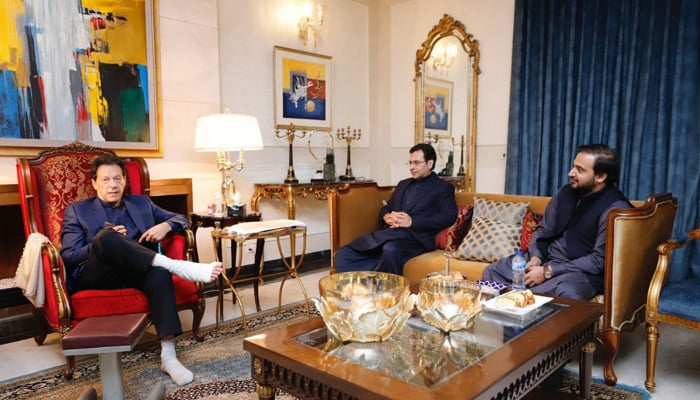
The development came on Thursday during a meeting of a PML-Q delegation, headed by former federal minister Ch Moonis Elahi, with PTI Chairman Imran Khan in Lahore as political activity heats up in the country ahead of the dissolution of the Khyber Pakhtunkhwa and Punjab assemblies.

MNA Ch Hussein Elahi also attended the meeting that discussed the core issue related to the dissolution of the assembly, sources said.

They shared that the PML-Q wanted to finalise seat adjustments with the PTI before the dissolution and in case of fresh or by-polls, both sides would come up as election allies.

The sources said the PML-Q wanted its share of at least 25 general seats in Punjab in the next polls.

Chief Minister Parvez Elahi, during the past few weeks, has granted the status of division to Gujrat and has given the status of the district to different Tehsils — a move analysts believe is done to secure political mileage.

The PML-Q leadership wants to field its candidates from Wazirabad and parts of southern Punjab. On all such issues, negotiations are underway.

Alvi meets Elahi

Meanwhile, Parvez Elahi, in a meeting with President Dr Arif Alvi at the CM office, reiterated his pledge to stand with Imran Khan through thick and thin, adding that he owed the chief minister’s post to the PTI chief.

PML-Q leaders Moonis Elahi and Hussain Elahi were also present.

The two sides discussed matters of mutual interest as well as the politico-economic situation of the province.

Pervaiz Elahi apprised Dr Alvi of the development projects and relief-related initiatives, carried out by the provincial government. He expressed deep concern over the poor state of the economy and the faulty policies of the federal government.

The chief minister regretted that the federal government had economically reversed Pakistan’s progress within a few months.

“The imposed, incompetent cabal is only interested in saving its politics,” CM Elahi said and added that saving the state was most important at the moment and everyone would have to think about the country.

President Arif Alvi said, “we will have to think only of Pakistan as a Pakistani. Nothing is final in politics; decisions have to be made under difficult circumstances”.

He asserted that Pakistan demands unity and political tolerance in the current situation. “We are trying to resolve the issues amicably and it’s hoped that Allah Almighty will guide Pakistan to a better path,” Dr Arif Alvi said.

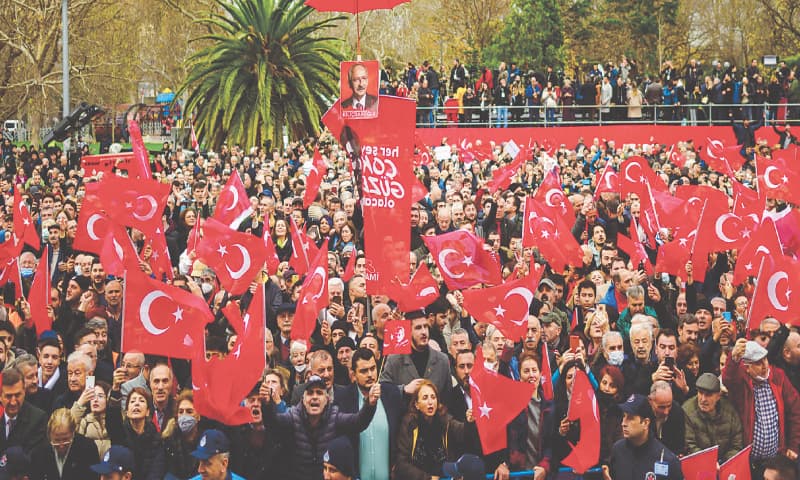
Thousands swarm square to support Istanbul’s mayor

A criminal court on Wednesday sentenced Ekrem Imamoglu to more than two years in prison and barred him from holding office for the same length of time for “insulting a public official” in 2019.

Imamoglu will continue to serve as mayor of Turkey’s largest city while his appeal is heard in a case linked to a hugely contested election in which his initial victory was annulled.

The case could be fast-tracked for a quick hearing and destroy any bid by Imamoglu to run in the June presidential campaign. The US State Department said it was “deeply troubled and disappointed” by the potential removal of one of President Recep Tayyip Erdogan’s biggest rivals from the political scene.

Germany called it “a heavy blow to democracy” while France urged Turkey to “reverse its slide away from the rule of law, democracy and respect for fundamental rights”.

“This sentence is disproportionate and confirms the systemic lack of independence of the judiciary and the undue political pressure on judges and prosecutors in Turkey,” a European Union said in a statement.

Turkey’s fractured opposition has struggled to unite behind a single candidate to challenge Erdogan’s two-decade rule in the upcoming vote.

Polls show the 52-year-old Istanbul mayor as one of the more likely challengers to beat Erdogan in a head-to-head race. But his secular CHP party’s leader Kemal Kilicdaroglu — a bookish former civil servant who struggles in opinion polls — is still pushing hard for his own candidacy.

Meral Aksener of the nationalist Iyi (Good) Party has also seen her electoral ratings shoot up.

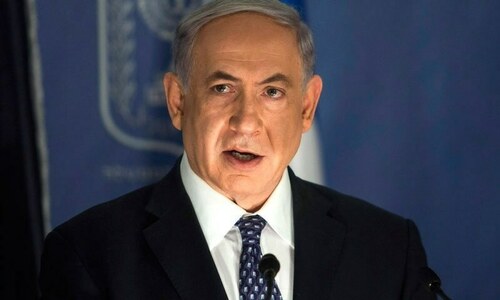
Peace accord with S. Arabia will lead to resolution of conflict with Palestinians, says Netanyahu

Netanyahu suggested that extending the progress made in the 2020 Abraham Accords — a peace initiative between Israel, the United Arab Emirates, and Bahrain — to other Arab states would be a more effective route to peace than engaging with Palestinian leaders directly, who he alleged, were not willing to recognise Israel.

“I think peace with Saudi Arabia will serve two purposes: It will be a quantum leap for an overall peace between Israel and the Arab world, it will change our region in ways that are unimaginable,” he said.

“And I think it will facilitate, ultimately, a Palestinian-Israeli peace. I believe in that. I intend to pursue it.”

Netanyahu pointed the blame at Palestinian leaders for the failure to achieve peace.

“The reason we’ve not had an Israeli-Palestinian peace is because the Palestinian… leadership for the last century has refused to do what is finally happening in the rest of the Arab world — and that is to recognise that the state of Israel is here to stay.”

But Benjamin Netanyahu added that achieving peace with Riyadh was “up to the leadership of Saudi Arabia”.

In 2002, Saudi Arabia spearheaded the Arab Peace Initiative, a proposal to achieve Arab-Israeli peace if Israel agreed to reverse all occupation of Arab territories. When asked about the initiative and if he was prepared to use it as a blueprint, Netanyahu avoided committing to the terms it laid out.

He said it was “an indication of a desire to end the conflict in all its terms, but I think 20 years later we need to have a fresh view”.

Saudi Arabia has been one of the biggest backers of the Palestinian cause and has repeatedly stated that it needed to see a Palestinian state before taking up normalisation with Israel.

Although Riyadh has not officially commented on the Abraham Accords, there have been signs of a thaw in relations in recent years.

In an Oct 2020 interview with Al Arabiya, the influential former Saudi Ambassador to the US Bandar bin Sultan said: “The Palestinian cause is a just cause, but its advocates are failures. And the Israeli cause is unjust, but its advocates have proven to be successful.”

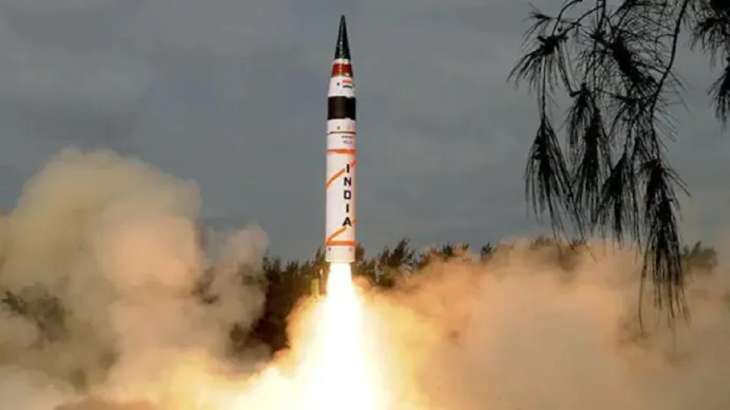
India test-fires nuclear-capable ballistic missile Agni-5

According to Indian news website The Quint, the surface-to-surface missile, Agni-5, was developed indigenously, and it has a strike range of 5,000 kilometres.

The missile was launched from the Integrated Test Range at Abdul Kalam Island in the eastern Indian state of Odisha’s Bhadrak district, the report said, citing defence ministry source.

Later, a minister from Prime Minister Narendra Modi’s cabinet, Pralhad Joshi, celebrated the development as a “historic milestone”.

“India successfully test-fires Agni- 5 interconuclear-capablear capable ballistic missile from Abdul Kalam Island. The missile will add great value to the defense and strengthen national security to a greater extent as it can travel 5400+ plus kilometres,” the minister added in a Twitter post.


Meanwhile, a report by international news agency Bloomberg said the missile’s range gave it the “ability to strike key cities in the region”.

“While a pre-test warning had been issued to airmen weeks ago as per protocol, the timing of the actual firing could be seen as a message to China,” the report added.

Relations between China and India have been at rock-bottom since a clash that left 20 Indian soldiers and at least four Chinese troops dead on their high-altitude Himalayan frontier in June 2020.

A more recent clash earlier this saw Indian defence minister Rajnath Singh accusing Beijing of attempting “to unilaterally change the status quo by encroaching on the Line of Actual Control”.

He said the face-off had resulted in injuries on both sides of the border, but there was no confirmation by Beijing in this regard.

For its part, China called on New Delhi to “together uphold peace” and said the two sides “maintained unobstructed dialogue on the border issue through diplomatic and military channels.”

At least eight people have been killed and dozens more are missing after a landslide hit a camping site in Malaysia’s Selangor state, officials say.

The landslide took place around 03:00 on Friday (19:00 GMT Thursday) just outside the hilly Genting Highlands, north of the capital Kuala Lumpur.

Authorities are scrambling to rescue people who may be buried in the mud.

More than 90 people had been camped at a farm site on the side of a road.

Malaysia’s National Disaster Management Agency said it had rescued 53 people so far. But dozens more remain missing.

“I pray that the missing victims can be found safely soon,” said Malaysia’s environment and natural resources minister Nik Nazmi bin Nik Ahmad on Twitter.

He noted rescue teams had been working since the early morning. He and other government officials are due to visit the site of the disaster today.

The landslide struck a farm stay area in Batang Kali town, 50km (30 miles) north of the capital.

It began up a slope about 30m (100ft) higher than the campsite, and affected about an acre of the surrounding land.

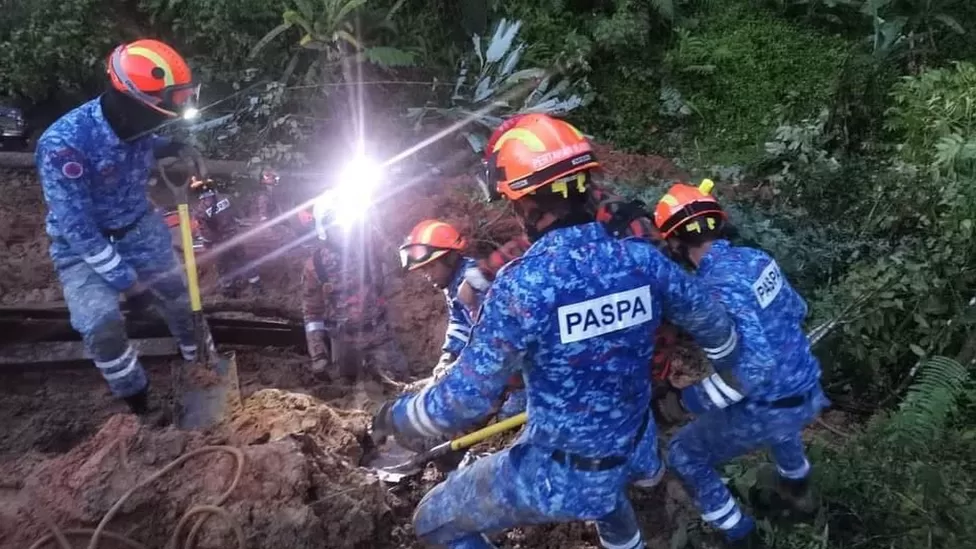
Pictures posted online by Malaysia’s rescue agencies showed crews of helmeted workers clambering up uneven ground, past uprooted trees and other debris.

It’s unclear what triggered the landslide – local media said there had been no heavy rains or earthquakes in the lead up to it.


Labour have cruised to victory in the Stretford and Urmston by-election.

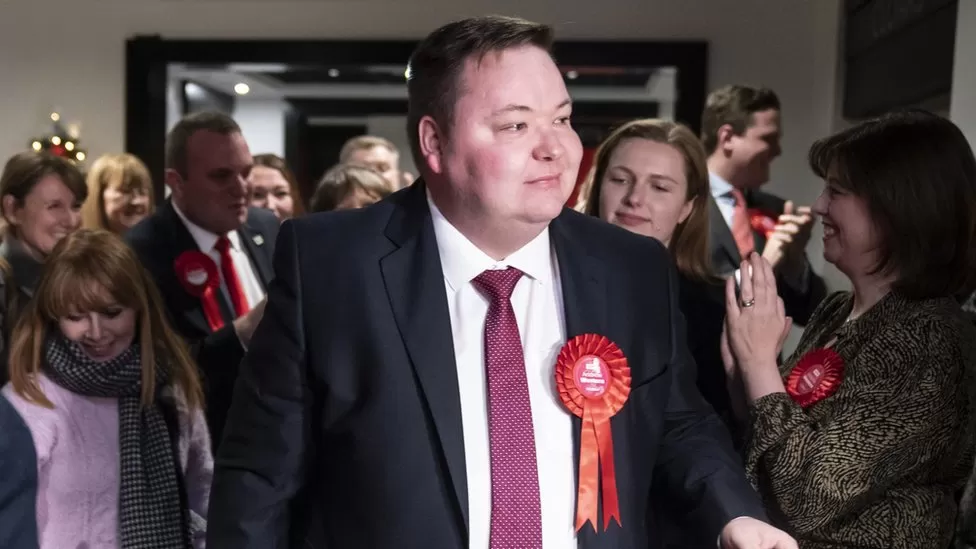
Andrew Western, who secured 70% of the vote, declared “the British people are giving up” on the Conservatives.

Labour had been expected to retain the Greater Manchester seat, which they have held since it was created in 1997, and saw an 11% swing from the Tories.

But the fact the result was in little doubt, plus the bitterly cold weather on polling day, led to only a quarter of eligible voters turning out.

Mr Western, who leads Trafford Council within the Westminster constituency, achieved a majority of 9,906.

The 37-year-old succeeds Kate Green, who resigned last month after being nominated as deputy mayor of Greater Manchester.

‘Ready to deliver’

Mr Western said the result sent out a “strong message”, showing 12 years of Conservative government was “coming to an end”.

The Conservative Party’s Emily Carter-Kandola trailed second with a 16% share of the vote.

Analysis

By Kevin Fitzpatrick, political reporter, BBC Radio Manchester

Andrew Western has led Trafford Council since 2018

As expected, this was a resounding victory for Labour.

The freezing temperatures on polling day and a lack of jeopardy appear to have contributed to a low turnout but it’s the percentage share of the vote that the parties are focused on.

By-elections are always tricky for a party of government and this one – in a Labour stronghold, in a cost-of-living crisis – was always going to be harder than most for the Tories.

But it does all add to the growing sense of momentum that Labour are building as they become increasingly bullish about their chances of returning to power at the next general election.

Mr Western said the by-election “must hold the record for the coldest polling day” and thanked voters who had braved the -6C conditions to back him.

“It’s clear from the result, and from the conversations I have had with voters throughout the campaign, that the public want a general election,” he said.

“The Tories have given up on governing and it is increasingly clear that the British people are giving up on them.”

“Labour stands ready to deliver for our country and only Labour has a plan for working people and to create a fairer, greener, future,” he said.

Another factor in the low turnout may have been problems with postal ballots amid ongoing industrial action.

Mr Western’s victory is Labour’s second by-election win this month after the party comfortably held the City of Chester seat.

Stretford and Urmston by-election: full results

  • Andrew Western (Labour): 12,828 votes (69.7%, up 9.3% on the 2019 general election)
  • Emily Carter-Kandola (Conservative): 2,922 (15.9%, down -11.7%)
  • Dan Jerrome (Green): 789 (4.3%, up 1.6%)
  • Anna Fryer (Liberal Democrat): 659 (3.6%, down -2.4%)
  • Paul Swansborough (Reform UK, formerly known as the Brexit Party): 650 (3.5%)
  • Jim Newell (Rejoin EU): 237 (1.3%)
  • Hazel Gibb (Independent): 183 (1%)
  • Christina Glancy (Freedom Alliance): 76 (0.4%)
  • Julien Yvon (Social Democratic Party): 74 (0.4%)
  • Turnout 25.8%; Swing of 10.5% from Conservatives to Labour

‘New era of cooperation’: Pakistan, Tajikistan vow to expand bilateral ties

ISLAMABAD: Prime Minister Muhammad Shehbaz Sharif on Wednesday said that Pakistan wanted the establishment of energy, rail, and road connectivity with the diverse energy resources-rich Central Asian Republics (CARs) for the development and prosperity of the entire region.

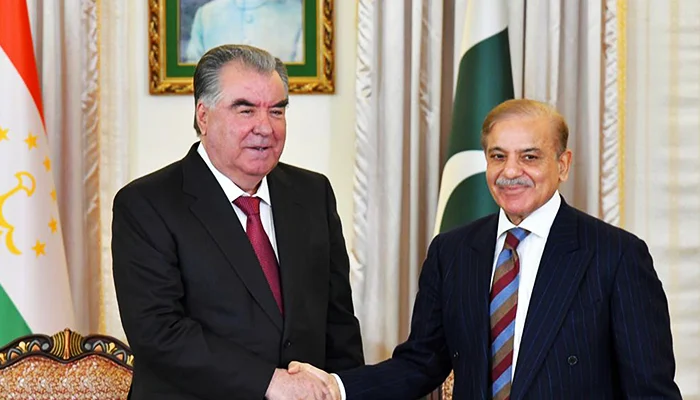
During a joint press stakeout with President of Tajikistan Emamoli Rahmon, the prime minister said Pakistan desired early completion of the Central Asia-South Asia (CASA-1000) power project to meet its energy needs.

He said Pakistan had been the first country that established ties with Tajikistan some 31 years back. Since then, both countries had been enjoying excellent cordial and friendly ties.

The prime minister said Pakistan wants to further strengthen bilateral cooperation and ties in all fields including energy, trade, joint ventures in agriculture and food etc, he added.

Prime Minister Shehbaz further said Pakistan attached immense importance to its bilateral ties with Tajikistan as it was a gateway to the CARs.

He also said that they held very productive meetings to further strengthen the bilateral relations and promote trade, investment and culture between the people of the two brotherly nations.

The prime minister expressed the hope that Tajik President Rahmon’s visit to Pakistan “would usher a new era of cooperation and development between the two countries”.

He also welcomed the Tajik president and his delegation and said that the people of Pakistan were overwhelmed with joy and pleasure over their visit.

President Rahmon, reciprocating the warm feelings for the government and people of Pakistan, said that his country attached high priority to its ties with the country.

He said both countries had been making joint efforts to further promote the friendly ties and expressed the optimism that the MoUs signed would give new impetus to these relations.

He said during their delegation-level deliberations, they had discussed government-to-government level contacts, security, economic situation, global economic decay, energy and connectivity activities and linking of the port city of Karachi.

He said they also had a useful exchange of views on CASA-1000, cooperation in agriculture, energy connectivity, joint ventures in food technology, trade, science and technology and cooperation between the business communities of the two countries.

President Rahmon further said that both countries shared commonalities which served to further strengthen these ties.

The two sides also expressed satisfaction over cooperation in security and reaffirmed to face contemporary challenges jointly like extremism, terrorism and radicalism, he added.

He said that they also acknowledged the significance of concerted global efforts for a stable and peaceful Afghanistan, adding Tajikistan and Pakistan were also closely cooperating at the global level including the UN, Economic Cooperation Organization (ECO), Shanghai Cooperation Organization (SCO) and other multilateral forums.

Earlier, the Tajik President and the prime minister witnessed the inking of a number of MoUs and agreements to boost bilateral cooperation in diverse fields.