
Chinese military ship docks in Sri Lanka

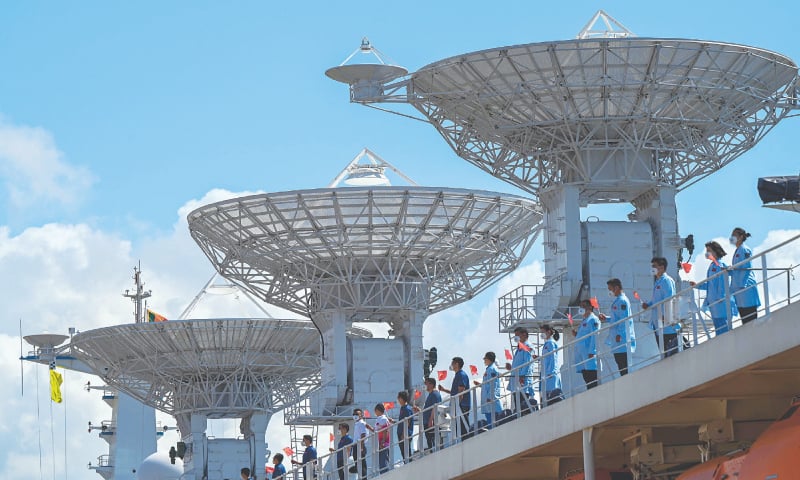
The Yuan Wang 5 entered the deep-sea port after securing permission to enter Sri Lankan waters on the condition it would not engage in research, port officials said.

It was originally due to arrive last week, but Colombo asked Beijing to defer the visit following objections by India, which shares Western concerns about Chinese activities in the region.

But on Saturday, after intense negotiations, Sri Lanka announced a U-turn, saying permission was restored to dock at the southern port and remain for six days for refuelling and taking in other supplies.

New Delhi lodges complaint with Colombo, Washington raises security concerns

“We are granting the same facilities that we extend to all other countries,” government spokesman Bandula Gunawardana told reporters. “All these countries are important to us.”

Chinese ambassador to Sri Lanka Qi Zhenhong said the visit of Yuan Wang 5 was part of “normal ex­­changes between the two countries”.

“China and Sri Lanka enjoy outstanding friendship,” Qi told reporters at a ceremony to welcome the ship.

Shipping analytics websites des­cribed the Yuan Wang 5 as a research and survey vessel, but according to Indian media it is a dual-use spy ship.

There was no customary military band to welcome the vessel, but a small group of traditional Kandyan dancers and drummers performed on a red carpet.

Also dockside were several lawmakers, but there were no senior politicians or other dignitaries in attendance.

“Long live China and Sri Lanka friendship,” read a red-and-white banner on an upper deck of the vessel, which had at least four satellite dish antennas pointed skywards.

Men in white shirts and black trousers stood on deck waving Chinese and Sri Lankan flags as the vessel was pushed alongside the main jetty.

The Hambantota port has been run by the Chinese since 2017, when they took it on a 99-year lease for $1.12 billion, less than the $1.4bn Sri Lanka paid a Chinese firm to build it.

New Delhi is suspicious of Beijing’s increasing presence in the Indian Ocean and influence in Sri Lanka, seeing both as firmly within its sphere of influence.

Both India and the US have raised security concerns over the ship’s visit to Sri Lanka, with New Delhi lodging a complaint with Colombo.

China has said it was “completely unjustified for certain countries” to cite “security concerns” to pressure Sri Lanka, especially at a time when the island is facing an unprecedented economic crisis.

The vessel’s activities were “in line with international law and international practice, and do not affect any country’s security or economic interests,” Chinese foreign ministry spokesman Wang Wenbin told reporters. “They should not be interfered with by third parties.”

A day before the arrival of the vessel, India gifted a Dornier 228 surveillance aircraft to Sri Lanka in a bid to bolster the island’s maritime surveillance capabilities.

The Chinese ship was allowed into port on the condition it keeps its Automatic Identification System (AIS) switched on while in Sri Lankan waters and does not carry out scientific research.
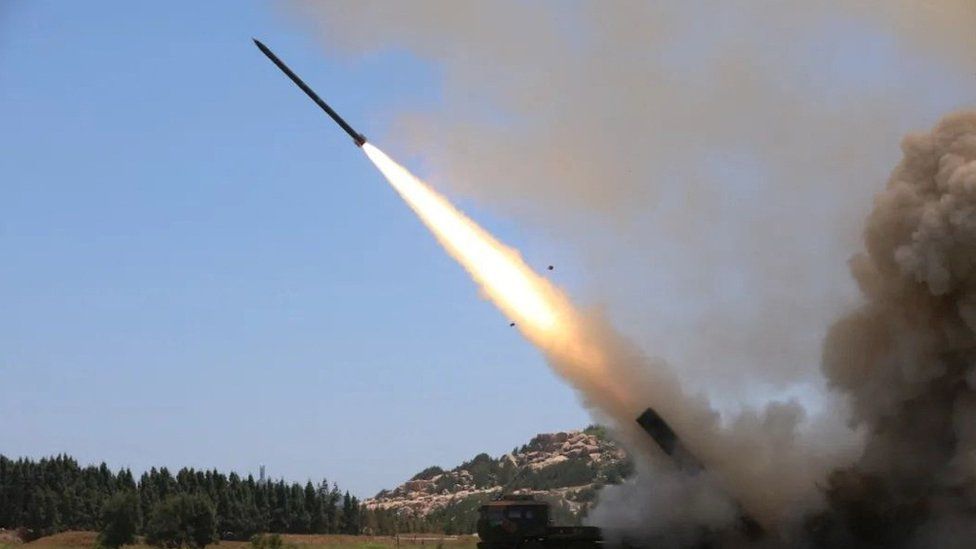
China’s decision to fire missiles over Taiwan must be contested, a top US military commander has said.

Seventh Fleet commander Vice Admiral Karl Thomas said otherwise such action by China would become the norm, calling it “a gorilla in the room”.

Beijing held military drills around the self-governing island earlier this month but did not confirm if any missiles passed directly over it.

Tensions soared after US politician Nancy Pelosi visited Taiwan in August.

Her high-profile visit infuriated Beijing, which claims the self-ruled island as part of its territory.

Tuesday’s comments by Vice Admiral Thomas are significant, Based in Yokosuka, Japan, the Seventh Fleet is the largest forward-­deployed fleet in the US Navy, with some 50 to 70 vessels and submarines – and is a key part of its military presence in the region.

“It’s very important that we contest this type of thing. I know that the gorilla in the room is launching missiles over Taiwan,” Vice Admiral Thomas told reporters in Singapore. “It’s irresponsible to launch missiles over Taiwan into international waters.

“If you don’t challenge it… all of a sudden it can become just like the islands in the South China Sea [that] have now become military outposts. They now are full functioning military outposts that have missiles on them, large runways, hangers, radars, listening posts.”

China’s decision to conduct nearly a week of military drills in the waters around Taiwan disrupted major shipping and aerial routes – a move the island said effectively amounted to a blockade. It also accused Beijing of using the drills as practice for an invasion.

Taiwan said the missiles China fired flew high into the atmosphere and posed no threat. Its defence ministry did not disclose the trajectory of the missiles, citing intelligence concerns.

The Japanese embassy in Washington said it believed four missiles fired by China had passed over Taiwan’s capital Taipei.


The US and other allies have stepped up naval crossings in the Taiwan Strait and the South China Sea, another area of strategic importance to Beijing, to emphasise that these are international waters.

While the US has official diplomatic relations with China and not Taiwan, it maintains a special relationship with the island, which includes selling weapons for defence – an arrangement that has long troubled China.

In recent years it has also become yet another flashpoint between Washington and Beijing as tensions between the two soured.

China and Taiwan: The basics

  • Why do China and Taiwan have poor relations? China sees the self-ruled island as a part of its territory and insists it should be unified with the mainland, by force if necessary
  • How is Taiwan governed? The island has its own constitution, democratically elected leaders, and about 300,000 active troops in its armed forces
  • Who recognises Taiwan? Only a few countries recognise Taiwan. Most recognise the Chinese government in Beijing instead. The US has no official ties with Taiwan but does have a law which requires it to provide the island with the means to defend itself

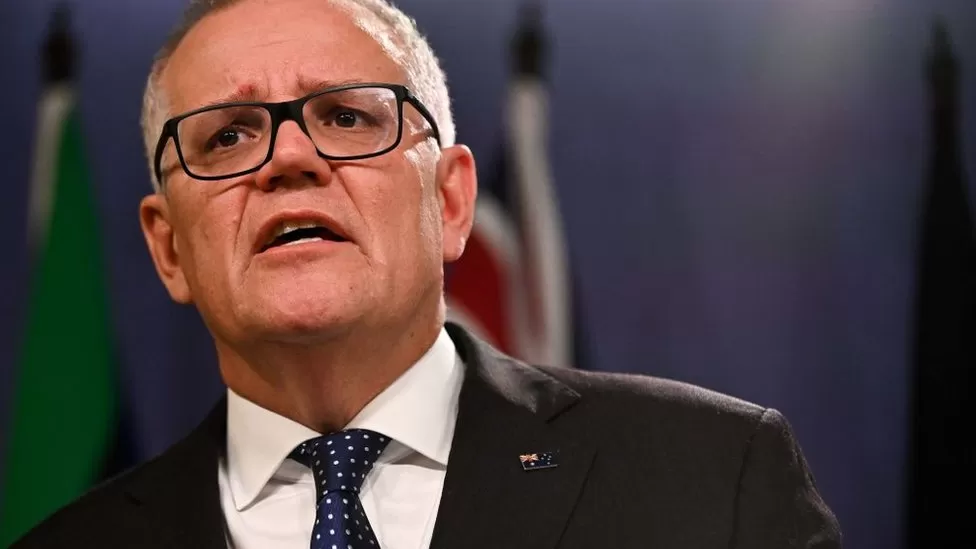
Former Australian Prime Minister Scott Morrison has resisted calls to resign from parliament, after news emerged that he had secretly assumed five additional roles during his tenure.

He defended his decision – which was taken during the pandemic – as “necessary” in “extraordinary times”.

Mr Morrison is currently the member of parliament for Cook.

The revelations caused uproar amongst the public and his colleagues, with one calling his behaviour “dictatorial”.

Mr Morrison became joint minister for the health, finance, treasury, home affairs and resources portfolios from March 2020 and May 2021.

In a press conference on Wednesday, Mr Morrison defended his decision by saying he was “acting in the national interest in a crisis” in the event a minister was incapacitated with Covid-19.

“I believed it was necessary to have authority, to have what were effectively emergency powers, to exercise in extreme situations,” he said.

He added he had never acted as minister despite being secretly sworn into those portfolios.

“I did not instruct any department that I was to have jurisdiction for carriage of any of the issues that the ministers were dealing with on a day-to-day basis,” he said.

When queried about why he had not disclosed the expansion of portfolios to cabinet or to the broader public, he argued there was a risk the powers he took on could have been misconstrued.

“I think there was a great risk that … those powers could be misinterpreted and misunderstood, which would have caused unnecessary angst in the middle of a pandemic,” he said.

The long-time politician has come under intense criticism in recent days from former colleagues – including his own party members – and the broader public after revelations broke about his expanded powers.

Current treasurer Jim Chalmers said Mr Morrison had “dictatorial tendencies”, and called on Coalition leader Peter Dutton to condemn his actions.

Current prime minister Anthony Albanese called it an “unprecedented trashing of our democracy”.

The news came to light after two New Corp journalists wrote that the then-prime minister had assigned himself those roles, in a recently-published book about the Morrison government’s response to the pandemic.

Some ministers – including the then finance minister Mathias Cormann – were reportedly unaware they were sharing portfolios with Mr Morrison.

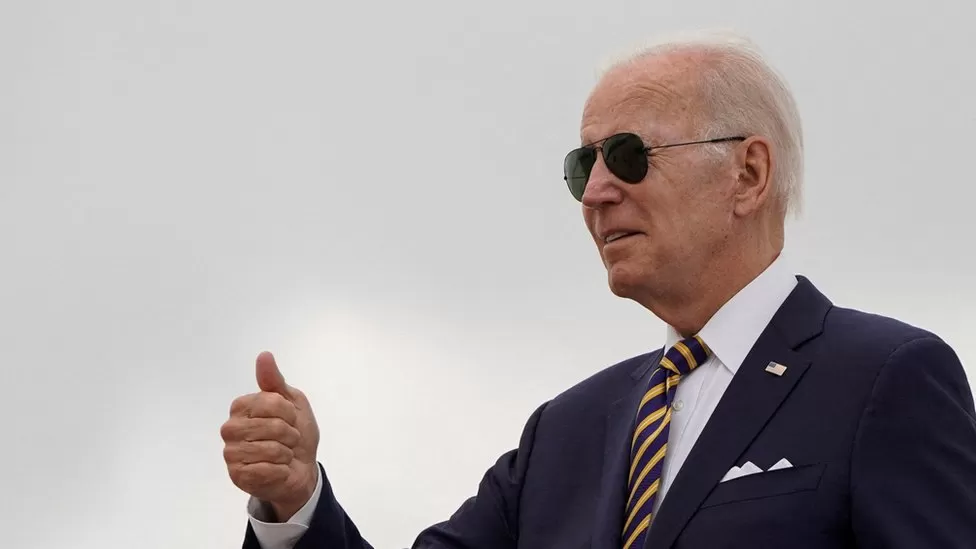
US President Joe Biden has signed a $700bn (£579bn) bill that aims to fight climate change and healthcare costs while raising taxes mainly on the rich.

The act includes measures to make good on decades of congressional promises to curb the price of prescription drugs.

The final version is more modest in scope than the $3.5tn package first envisaged by Democrats.

A flagship of Mr Biden’s agenda, the bill could provide a boost ahead of the mid-term elections.

Voters casting their ballots in November will decide whether Mr Biden’s Democrats retain control of Congress for two more years.

The president hailed the bill as he signed it on Tuesday as the “final piece” of his domestic agenda.

The package invests $375bn to fight climate change – the most significant federal investment in history in the issue.

An analysis by scientists with the Climate Action Tracker says the bill will reduce future global warming by “not a lot, but not insignificantly either”.

It is projected to lower US emissions by up to 44% by 2030, compared with the current US trajectory, which would lower emissions by up to 35%, according to an analysis by the Rhodium Group, a consultancy.


The bill does not require companies to reduce their emissions, but includes tax incentives for firms to invest in renewable energy and rebates for people who buy electric cars or invest in energy-efficient home improvements.

In a major breakthrough, the package also allows the government to negotiate lower prices for some prescription medicines provided under its Medicare health insurance programme for those aged over 65.

That is expected to save hundreds of billions of dollars over the next decade, according to estimates from the nonpartisan Congressional Budget Office.

On Tuesday, Mr Biden said the measure was a “historic moment”, adding: “Every single Republican in Congress voted against this bill.”

But Republican Senate leader Mitch McConnell said the legislation “means higher taxes, higher energy bills, and aggressive IRS [tax] audits”.

Key economic claims about the legislation have been under scrutiny.

Despite being called the Inflation Reduction Act (IRA), the package will have zero measurable impact on inflation, according to an analysis by the Penn Wharton Budget Model, a group of economists and data scientists at University of Pennsylvania.

The bill sets a minimum 15% tax for corporations, and Democrats have pledged it will entail no tax hikes for those with incomes below $400,000 a year.

But an analysis of the legislation by the Congressional Budget Office said Americans earning less than $400,000 a year would end up paying an additional $20bn in taxes.

The bill includes about $46bn for the Internal Revenue Service to hire tens of thousands more tax agents.

Brett Reinford, 36, a dairy farmer from Pennsylvania, told the BBC he welcomed the climate funding and hoped it would help his family’s cow farm reduce its methane emissions.

“If we can get some support from the government, it makes a lot of these projects make more sense economically,” he said.

Brett Reinford is interested in helping his family’s cow farm reduce its emissions

While the climate spending is unprecedented, many of its changes will not go into effect for at least two more years, leaving questions about how the new programmes will work.

The tax credit for electric vehicles, for example, comes with price caps that disqualify nearly every option currently on the market, according to the car industry.

Several ambitious proposals were scrapped from the bill in the final weeks, including closing a tax loophole for private equity firms and capping the price of the diabetes medicine insulin.

The outcome disappointed some such as 21-year-old Trevor Milton.

The construction worker in Washington, who was diagnosed with Type 1 diabetes when he was 12, pays about $210 a month for insulin, which he needs to help regulate his blood sugar levels.

“I always find it dumbfounding that I have to pay so much for this medicine just to keep me alive

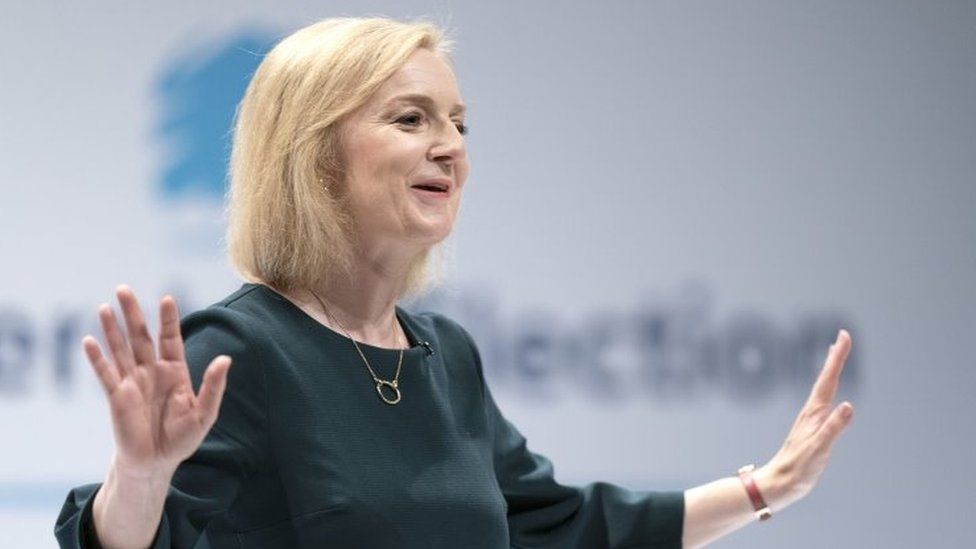
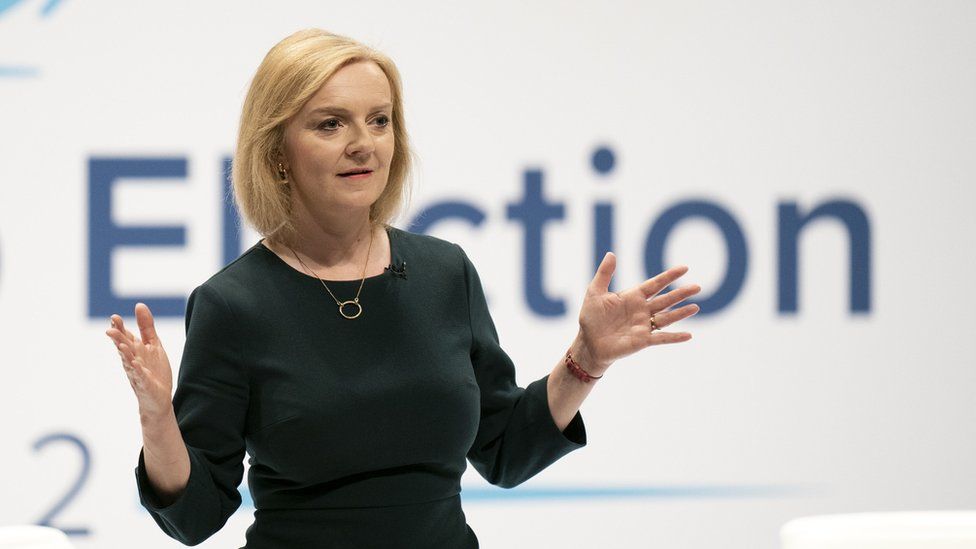
Critics of Conservative leadership candidate Liz Truss have accused her of suggesting British workers were “lazy” in comments made in a leaked recording.

In the audio, published by the Guardian newspaper, Ms Truss suggested British citizens lacked the “skill and application” of foreign nationals.

Labour said her comments were “offensive” and “effectively brand British workers as lazy”.

Asked about the remarks, the foreign secretary did not deny making them.

“I don’t know what you’re quoting there,” Ms Truss said under questioning at a Tory leadership event on Tuesday evening.

“But the point that I’ve always made is what we need in this country is more productivity across the country and we need more economic growth.”

The party’s roughly 200,000-strong membership are voting for their next leader, who will succeed Boris Johnson as prime minister in September.


The Guardian report said Ms Truss made the comments in the audio when she was chief secretary to the Treasury, a role she held between 2017 and 2019.

The report did not reveal the source of the audio recording, parts of which were redacted.

In the two-minute clip, Ms Truss said British workers’ “mindset and attitude” were partly to blame for them producing less per hour than their foreign counterparts, suggesting they needed “more graft”.

Ms Truss said in the recording: “Essentially it’s partly a mindset and attitude thing I think. Yeah, its working culture basically. If you go to China it’s quite different, I can assure you…

“There’s a fundamental issue of British working culture. Essentially if we’re going to be a richer country and a more prosperous country, that needs to change.

“But I don’t think people are that keen to change that.”

Speaking on difference in productivity in the UK, she said: “If you look at productivity, it’s very, very different in London from the rest of the country.”

A Truss campaign source said the comments were “half a decade old” and lacked “context”, while acknowledging the UK does “need to boost productivity”.

“As prime minister, Liz will deliver an economy that is high wage, high growth and low tax,” the source said.

The Office for National Statistics says every country has seen slower growth in output per worker since 2009 when compared with the pre-financial crisis period.

OECD figures show that in 2019, the UK came fourth highest in the rankings of GDP per hour worked among G7 countries.

Ms Truss, who has consistently led Mr Sunak in polls, has put her tax-cutting plan for boosting economic growth at the centre of her pitch to Conservative members.

Watch: Liz Truss quizzed on ‘no handouts’ cost of living policy

The remarks by Ms Truss echo controversial arguments made in a 2012 book she co-authored, “Britannia Unchained”, in which British workers were described as among the “worst idlers in the world”.

Asked about it at a leadership debate last month, Ms Truss distanced herself from the contentious assessment, claiming co-author and Sunak supporter Deputy Prime Minister Dominic Raab, had written it.

Mr Raab has subsequently said the authors of the book, which also included several other senior Conservative ministers, had agreed “collective responsibility” over its contents.

Labour’s shadow work and pensions secretary Jonathan Ashworth said the “Britannia Unchained fiasco” seemed to be “the blueprint” for Ms Truss’s prospective government.

“Workers across the country are working all hours to keep a roof over their heads, put food on the table and provide for their families,” he said.

“Liz Truss should be helping working people to cope with this cost of living crises, as Labour this week outlined we would do, not peddling this offensive nonsense.”

The BBC approached Mr Sunak’s team for comment on the matter but received no response.

Leadership candidates Liz Truss and Rishi Sunak have rejected a second Scottish independence referendum at a hustings in Perth.

Mr Sunak said it’s “quite frankly barmy” that any government would focus on an independence referendum during the cost of living crisis.

And Ms Truss said she would not allow another independence referendum if she was elected.

The SNP said it was “depressing watching for Scots”.

For nearly two hours, the final two candidates pitched for the votes of Scottish Conservative members.

The UK will find out its next prime minister in less than three weeks on 5 September.

Protesters break barriers

Activists, supporters and members of the public gathered outside the hustings at Perth Concert Hall before the event.

Some broke through the barriers and chanted “Tory scum” outside the front doors.


The two contenders to replace Boris Johnson as prime minister are taking part in a series of events around the UK.

The event in Perth gave local Tory members the chance to question the candidates on Scottish issues as well as other topics such as the cost of living and taxation.

Both candidates gave a speech then answered questions separately one after the other.

The Scottish Liberal Democrats said the Tory leadership debate was packed with “superficial platitudes that only play to their narrow Tory party member electorate”.

‘Trying to out-Thatcher one another’

Meanwhile, the SNP called Sunak and Truss “two out-of-touch Tory ministers trying to out-Thatcher one another” who were “denying Scots their democracy”.

The SNP’s deputy Westminster spokeswoman Kirsten Oswald MP added: “The options for the next UK prime minister are truly grim.

“The pair repeatedly attempted to tell us tonight what Scotland wants.

“Scotland has made it clear what it does and doesn’t want by repeatedly rejecting the Tories at the polls and repeatedly voting for independence supporting parties.”

Having previously said she would ignore First Minister Nicola Sturgeon, Ms Truss clarified that she wanted a “constructive relationship” with the Holyrood administration but would ignore calls for another independence referendum.

Liz Truss said she would not allow a second referendum

Mr Sunak said: “I don’t just want to ignore Nicola Sturgeon; I want to take her on and beat her.”

As he promised to end the “devolve and forget mentality”, Mr Sunak told party members: “I will not be shy about calling out the SNP’s record on things like drug and alcohol abuse, because it is not good enough and the Scottish people deserve better.”

Both candidates discussed freeports – areas where imports are exempt from tariffs – and the benefits of Brexit.

Mr Sunak vowed to tackle “woke” culture and Liz Truss declared “a woman is a woman” to cheers from the audience.

On the cost of living crisis, Mr Sunak said he would cut VAT off energy bills.

Rishi Sunak vowed to tackle the “woke” culture

He also said he would bypass the Scottish government to deliver funding directly to councils in Scotland.

Ms Truss said the number of defence contracts being given to Scottish firms would increase if she became prime minister.

She also said she would appoint Rishi Sunak as a Cabinet minister if she won the Tory leadership race.

Ms Truss also defended the outgoing prime minister Boris Johnson saying he did not mislead parliament and did a “great job as prime minister”.

However, Mr Sunak said the government “hasn’t been run with integrity” which was why he said he had resigned.

It is little surprise that both candidates took a hard-line position on indyref2.

They know that this is the ultimate red meat to throw to Conservative members north of the border.

The fact they agree on it also means there was an incentive for them to take an ever stronger position to one-up the other.

There was a warm reception for Mr Sunak overall, and he pushed particularly hard on the issue of independence – dismissing a fresh referendum as a “barmy” idea.

But it was Ms Truss who won by far the bigger cheers for her pitch about the UK as a “family” – a family she will “never, ever” allow to split up.

When the campaign was first narrowed down to the final two, it was initially hard to find Scottish Tories who would publicly back Ms Truss.

Those days are firmly forgotten now. She looked every inch the favourite as she rallied a group of MSPs for a photocall before the hustings had even begun.

After the reception she received, the foreign secretary will be hopeful that a good number of members who attended will be heading home to send in their ballots for her.

Nawaz Sharif has disowned POL increase, says Maryam Nawaz

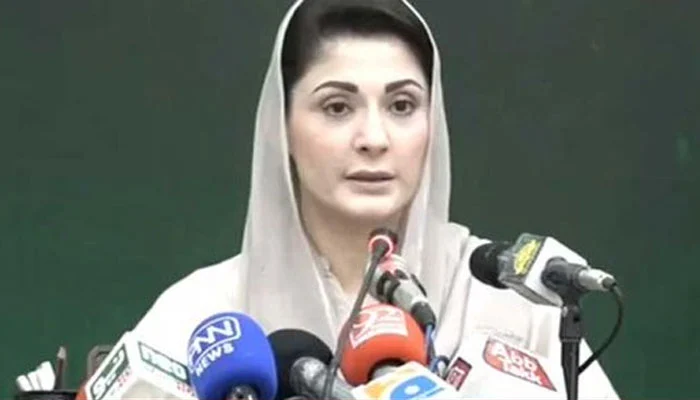
PML-N supremo Nawaz Sharif has expressed his opposition to the federal government’s decision to ramp up the prices of petroleum products, said PML-N Vice President Maryam Nawaz on Tuesday.

On Monday, the government cranked up the price of petrol by Rs6.72 per litre for the next fortnight. “In the wake of fluctuations in petroleum prices in the international market and exchange rate variations, the government has decided to revise the existing prices or petroleum products to pass on the impact to the consumers,” the statement released by the Finance Division read.

The government’s decision invited a lot of criticism from the public. Citizens are of the view that the prices of petroleum products are on a downward slope all over the world but their prices are being increased in Pakistan.

As people vented out their views on the government’s decision, a user on Twitter tagged Maryam Nawaz and requested her to “speak to Mian Nawaz Sharif to take notice of the increase in the price of petrol.”

Replying to the user, Maryam wrote: “Mian Sahib strongly opposed this decision. He even said that I cannot burden the people with one more penny.”

She said her father stressed that he was not on board and that if the government was bound by some constraint, it should go ahead with the increase. Maryam said the PML-N supremo disowned the POL increase decision and left the meeting.

Maryam reacts to increase in POL prices

Earlier, after the government issued the notification of the new POL prices, Maryam, too, rejected the federal government’s decision.

Reacting to a Twitter user, Maryam noted: “I stand by the people of Pakistan. I cannot support this decision.”

New POL prices

On August 15, the federal finance ministry issued a notification regarding the new POL prices. While the government raised the price of petrol, it slashed the price of diesel by Rs0.51.

In line with the new changes, the price of petrol will be Rs233.91 per litre and diesel will be Rs244.44 per litre. Kerosene oil will be sold for Rs199.40 per litre after a cut of Rs1.67, and the price of light diesel oil will be Rs191.75 per litre with the addition of Rs0.43.

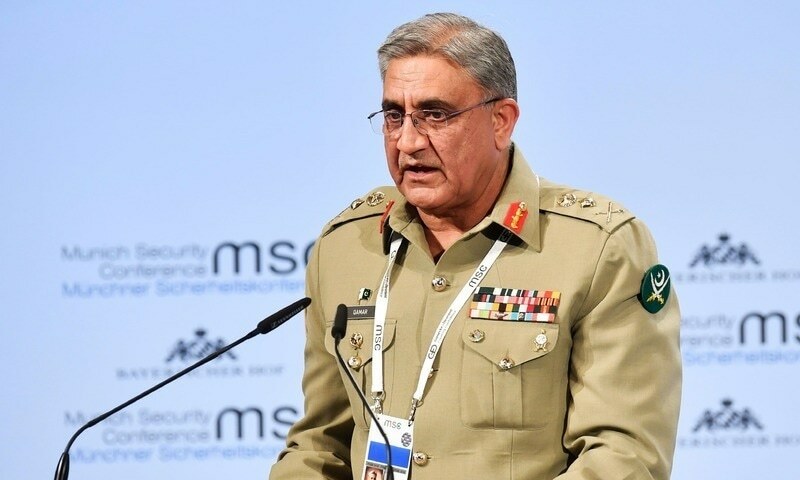
US, Pakistan discuss options for Gen Bajwa’s visit to DC

“A date will soon be finalized,” a source said. Since the visit has not yet been officially confirmed, neither side has announced the agenda of the talks Gen Bajwa is likely to hold in Washington.

But diplomatic circles and think-tank experts point out that both sides have been trying to arrange such a visit for more than a year now. They also refer to various recent events and statements that might be discussed if and when Gen Bajwa visits Washington.

“We remain engaged with a range of stakeholders in Pakistan, (including) those currently in the government” and with “a broad array of others,” the department’s spokesperson Ned Price said.

Last month, Gen Bajwa reached out to Washington to request help in securing an early disbursement of funds from the IMF. He spoke with US Deputy Secretary of State Wendy Sherman and later a State Department official rejected media speculations that the call was linked to the current political situation in Pakistan.

Later, Gen Bajwa also spoke with Commander US Centcom Gen Michael Erik Kurilla and, according to an official statement, the two discussed “matters of mutual interests, regional stability as well as defence and security cooperation in detail.”

Israeli police kill Palestinian in east Jerusalem raid

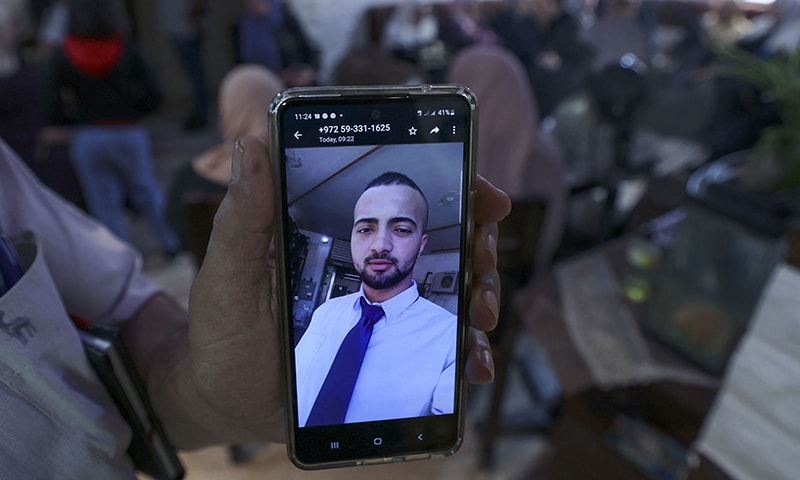
The man, identified by Palestinians as Mohammed al-Shaham, 21, was “neutralised” and died in an Israeli military hospital, police said. The man’s father, Ibrahim al-Shaham, said that his son was shot in the head at point-blank range and was left bleeding for 40 minutes.

According to al-Shaham, police knocked on their door at 3:30am and “we didn’t manage to make it to the door, Mohammed got there first, and the door exploded”.

“They started shooting inside the house, the first shot was in Mohammed’s head,” he said, adding that the officers left him bleeding before arresting him and taking him away.

Jerusalem Border Police launched the raid to locate weapons in the town of Kafr Aqab, which is part of Israeli-annexed east Jerusalem but located on the West Bank side of the security barrier.

Al-Shaham said that one of the officers had told him that they got the wrong house. Police denied those claims, saying “this was the right house and this was the suspect,” although no weapons were seized.

The Palestine Liberation Organisation’s new secretary general, Hussein al-Sheikh, called for “an immediate and urgent international investigation” into what he labelled a “criminal execution”. On Sunday, eight Israeli and US citizens were wounded when a Palestinian gunman opened fire on a bus just outside Jerusalem’s Old City.

That shooting came a week after the end of a deadly three-day conflict between Israel and Islamic Jihad militants in the Palestinian coastal enclave of Gaza.

Clashes in Kenya as Ruto declared president-elect after disputed count

Ruto won with 50.49 percent of the vote on Aug 9, narrowly ahead of Raila Odinga on 48.85pc, Independent Electoral and Boundaries Commission chairman Wafula Chebukati announced after an anxious days-long wait for results.

With tensions running high after the disputed outcome, the 55-year-old president-elect vowed to work with “all leaders”.

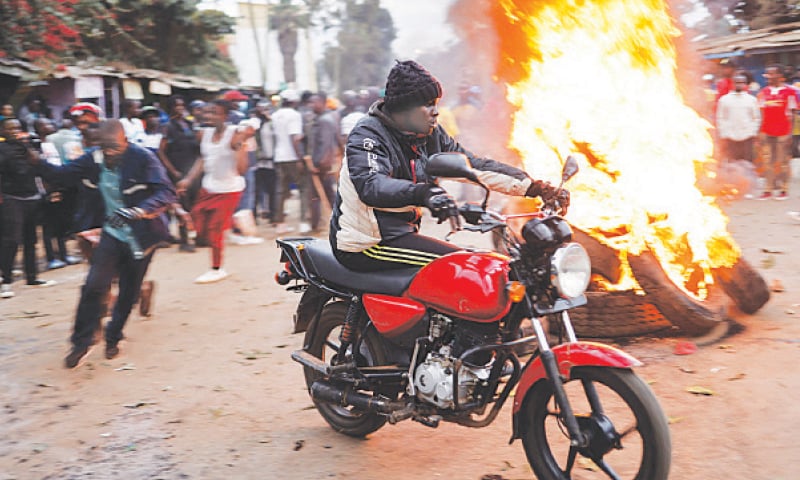
“There is no room for vengeance,” said Ruto. “I am acutely aware that our country is at a stage where we need all hands on deck.” Correspondents reported that police fired live rounds as protests erupted in a Nairobi slum that is an Odinga stronghold.

Police also fired tear gas in his lakeside bastion of Kisumu where demonstrators threw stones and erected roadblocks with large chunks of rock. “We were cheated,” Isaac Onyango, 24, said on a street sealed off by two large bonfires and broken rock.

“The government must listen to us. They must redo the election. Raila Odinga must be president. We will keep protesting until the Kenyan Supreme Court listens to us.” The dispute is likely to further damage the reputation of the IEBC after it had faced stinging criticism over its handling of the 2017 election which was annulled by the country’s top court in a historic first for Africa.

Four out of seven IEBC commissioners rejected the outcome of Tuesday’s vote, with vice chair Juliana Cherera describing the process as “opaque”.

But Chebukati, who was also in charge of the IEBC in 2017, insisted he had carried out his duties according to the law of the land despite facing “intimidation and harassment”.

The dispute will test Kenya’s stability after previous elections in the East African political and economic powerhouse were blighted by claims of rigging and vicious bouts of deadly violence.

The country of about 50 million people is already struggling with soaring prices, a crippling drought, endemic corruption and growing disenchantment with the political elite.

It was first time lucky for the incumbent deputy president, a shadowy rags-to-riches businessman who had characterised the vote as a battle between ordinary “hustlers” and the “dynasties” who have dominated Kenya since independence from Britain in 1963.

He will succeed President Uhuru Kenyatta, 60, the son of Kenya’s first post-independence leader, who has served two terms and under the constitution was not allowed to run again. Ruto had been promised Kenyatta’s backing for the top job only to see his boss throw his support behind former foe Odinga, leaving him out in the cold. It was a bitter blow for 77-year-old Odinga, who has failed in his fifth attempt at the top job despite having the weight of the ruling party machinery behind him.

He has yet to make any comment on the result, but his running mate Martha Karua said on Twitter: “It is not over till it is over”.

With memories of previous post-poll violence still fresh, both Odinga and Ruto had pledged to accept the outcome of a free and fair election, and air their grievances in court rather than on the streets.

Polling day had passed off generally peacefully. But power transfers are fraught in Kenya, and how Odinga handles defeat will be anxiously watched by the country’s foreign partners.

No presidential ballot has gone uncontested in Kenya since 2002, and a Supreme Court challenge by Odinga is seen as almost certain.

If there is no court petition, Ruto will take the oath of office in two weeks’ time, becoming Kenya’s fifth president since independence. Kenya’s months-long campaign saw vitriolic mudslinging on the hustings and widespread disinformation swirling on social media.

While polling day was largely peaceful, turnout was historically low at around 65 percent of the 22 million registered voters, with disillusionment over corruption by power-hungry elites prompting many Kenyans to stay home.

Any challenge to results must be made within seven days to the Supreme Court, the country’s highest judicial body. The court has a 14-day deadline to issue a ruling, and if it orders an annulment, a new vote must be held within 60 days.