
Labour has called for MPs to return to Parliament early to deal with the cost-of-living crisis.

Thangam Debbonaire, the shadow leader of the House of Commons, has written to the prime minister asking him to recall MPs two weeks early on 22 August.

She said new policies were needed before a rise in the energy price cap in October.

But the government said it was already supporting people now – and new fiscal decisions will be for the next PM.

Experts expect the energy price cap – the maximum amount suppliers can charge their customers in England, Scotland and Wales – to hit £3,582 in October.

The average bill was £1,400 a year in October 2021.

And by January 2023, the next time the cap is due to be changed, energy industry analysts Cornwall Insight predict it will go up again to £4,266.


In her letter, Ms Debbonaire told Mr Johnson that the country faces an “urgent choice”.

She said: “Across Britain, people are having to make unthinkable choices about how to pay their bills, causing endless worry for households and businesses.

“That is why I am writing to you today to urge you to bring Parliament back early on Monday 22 August so that we can freeze the energy price cap now ahead of winter.

“Families deserve a government that is on their side, and is ready to take the action needed now to meet the scale of this national emergency.”

Labour is calling for the energy price cap to be frozen for six months, funded by an increased windfall tax – and has claimed his proposals would save the average household £1,000. But economists have said it would be a very expensive plan.

The two contenders for Conservative Party leader, Liz Truss and Rishi Sunak, have indicated they are not keen on extending the windfall tax on oil and gas companies – or freezing the price cap – meaning it is unlikely to happen unless they have a change of heart.

Ms Truss says she will tackle the crisis by reversing the National Insurance rise, suspend the green levy part of energy bills and cancel a planned rise in corporation tax.

Mr Sunak says getting control of inflation is the most pressing issue and has promised to reduce VAT on domestic energy bills from 5% to zero, and to cut 3p off income tax by late 2029.

Conservative Party leadership contenders Rishi Sunak and Liz Truss are opposed on how to tackle the cost of living crisis

The increase in the cost of living is putting a squeeze on people’s finances, as wages fail to keep up.

This week figures showed UK inflation rose above 10% in July for the first time in 40 years.

The Bank of England’s governor Andrew Bailey has said “the Russia shock is now the largest contributor to UK inflation”.

But pay increases for many aren’t keeping up with rising prices, sparking the fastest fall in real pay on record.

It comes as consumer confidence has hit a record low, according to market research company GfK.

Their long-running Consumer Confidence Index fell three points in August to -44, its lowest figure since records began in 1974.

The index provides a snapshot of how UK consumers view their finance and the economy.
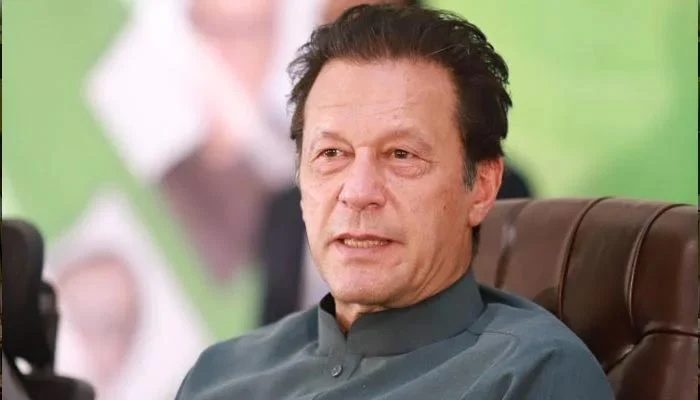
Imran Khan’s nomination papers for NA-108 rejected

FAISALABAD: The nomination papers filed by PTI chairperson Imran Khan to contest by-elections from National Assembly Constituency NA-108 were rejected on Wednesday.

Khan had filed his nomination papers from all nine constituencies of the National Assembly.

His papers were submitted by PTI leaders from constituencies NA-22, 24, 31, 45, 108, 118, 237, 239 and 246 of Mardan, Charsadda, Peshawar, Kurram, Faisalabad, Nankana, Malir, Korangi and Karachi’s District South, respectively.

However, the district election commissioner for NA-108 said that the former prime minister did not provide a satisfactory answer to the objections related to his assets, and therefore, his nomination papers were rejected.


The returning officer issued the final list after checking all the documents.

The Election Commission of Pakistan (ECP) announced September 25 as the date for the by-polls after National Assembly Speaker Raja Pervaiz Ashraf had on July 28 accepted the resignations of 11 PTI lawmakers — nine on general and two on reserved seats.

However, Khan’s papers have been accepted in the remaining eight constituencies.

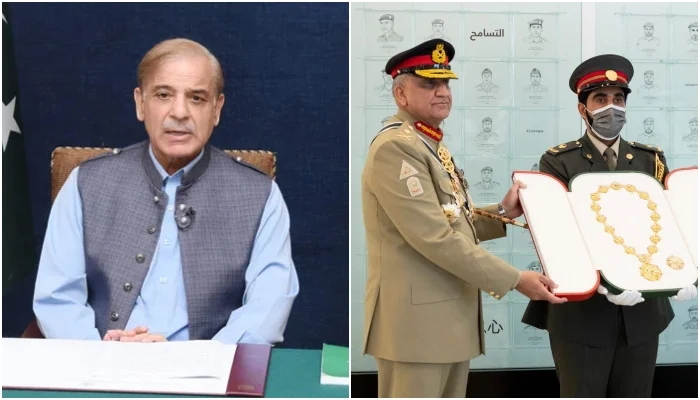
PM Shehbaz congratulates Gen Bajwa on receiving UAE’s highest civil award

Prime Minister Shehbaz Sharif Wednesday congratulated Chief of Army Staff General Qamar Javed Bajwa for receiving UAE’s highest civil award, the Order of Zayed or Order of the Union Medal.

The army chief was awarded for making significant contributions to furthering bilateral ties between both countries.

Taking on Twitter, PM Shehbaz wrote: “Congratulations to COAS General Qamar Javed Bajwa on the conferment of Order of the Union by UAE President Sheikh Mohamed bin Zayed Al-Nahyan.”

The prime minister said that the award has been an honour for COAS General Bajwa and for Pakistan.


“The relationship between our two brotherly countries has gone from strength to strength,” he added.

The award was bestowed on COAS General Bajwa by UAE President Sheikh Mohammad bin Zayed Al Nahyan at a ceremony in Abu Dhabi.

Crown Prince Mohammad Bin Salman of Saudi Arabia was the last recipient of the Award in December 2021.

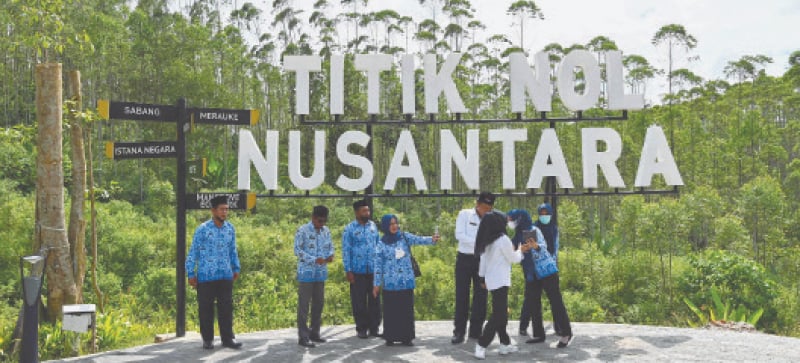
Indonesia celebrates first independence day at future capital

Nusantara, which is 2,000 kilometres (1,200 miles) from Jakarta, is set to become the new political centre of the world’s fourth-largest country.

It is a legacy project of President Joko Widodo but environmentalists have warned it could accelerate the destruction of tropical jungles home to long-nosed monkeys and orangutans.

The government is preparing to ramp up infrastructure projects to open the doors to the city — which will cover about 56,180 hectares (216 square miles) on Borneo island — by the time Widodo leaves office in 2024.

“The main point (of the ceremony) is to take the spirit of the 77th Independence Day to strengthen our resolve and spirit to build the new capital,” said State Capital Authority head Bambang Susantono, who will govern the new city.

After the national flag was hoisted by officials to mark the occasion, workers at the site cheered in unison that they were “ready to develop Nusantara”, which means archipelago in Indonesian.

Jakarta is home to 30 million people in its greater metro area and it has long been plagued by serious infrastructure problems and flooding exacerbated by climate change.

It is sinking as much as 25 centimetres (10 inches) a year in some areas — double the global average for major coastal cities — with some experts predicting up to a third of the megalopolis could be underwater by 2050.

Government officials say the new capital will take decades to be fully completed and inhabited by its planned population of two million people and will help spread economic growth to an underdeveloped region.

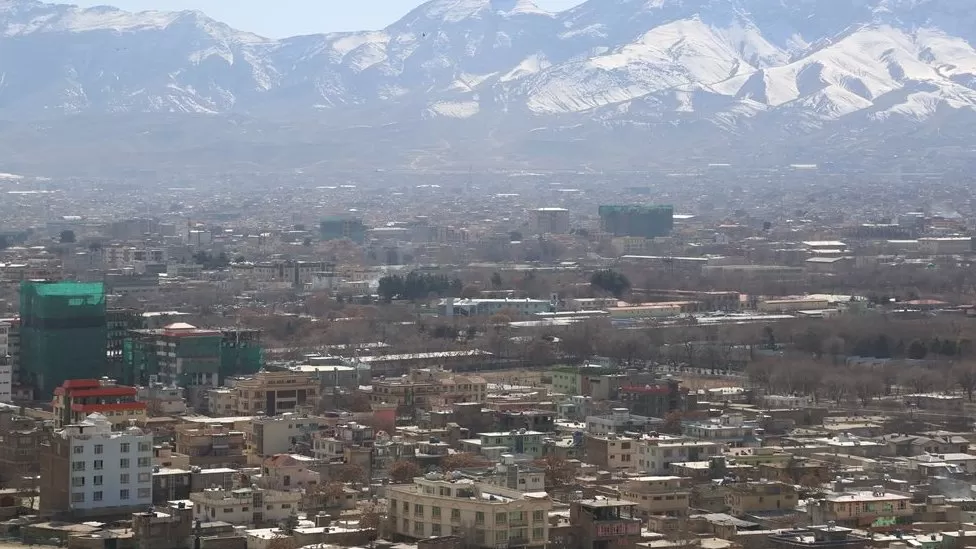
A huge explosion has ripped through a mosque in the Afghan capital Kabul, police say.

The blast is thought to have occurred during evening prayers, killing at least three people and injuring dozens more, according to the NGO Emergency.

Khalid Zadran, the Taliban’s Kabul police spokesman, was quoted by local media as saying there had been an explosion in the city’s north-west.

Reports say the Siddiqi mosque’s imam was among the dead.

It is unclear who was behind the attack, which comes the week after a prominent pro-Taliban cleric was killed in a suicide bomb blast, also in Kabul. The Islamic State (IS) group claimed responsibility for the earlier attack.

Security forces have arrived at the scene, in a northern Kabul neighbourhood, the spokesman added.

Italian NGO Emergency – which operates in Kabul – said three deaths have been recorded so far.

The NGO also tweeted to say it had received 27 people wounded in the blast, including children. “Five children [were] among them, including a seven-year-old,” it said.

A Taliban intelligence official told news agency Reuters that as many as 35 people may have been wounded or killed, and the toll could rise further.

Witnesses described hearing a powerful explosion which shattered windows in nearby buildings.

The official, who spoke on condition of anonymity, said the explosion took place at a mosque among worshippers in the Khair Khana area of Kabul.

Intelligence teams were at the blast site and investigations are ongoing, they added.

A spokesman for the Taliban said it strongly condemned the attack.

The mosque was crowded, the bomb powerful, and another cleric seems to have been in the sights of IS (Islamic State), the group which has emerged as the Taliban’s most potent enemy.

In the past month, three prominent religious leaders were targeted in Kabul and there were assassinations in other cities.

Last week it was Sheikh Rahimullah Haqqani, known to be close to the Taliban. This time it’s Amir Muhammad Kabuli, said to be an adherent of the more moderate Sufi faith.

Video posted on social media showed a scene of carnage.

One religious student who was just outside the mosque told the BBC he saw the bodies of the dead and injured sprawled inside, including children attending evening prayers.

IS’s signature has been its devastating attacks on the minority Shia Hazara community. But their focus now seems to be widening just as the Taliban celebrate their one year in power – a takeover which ended one chapter of a long bloody war but only ushered in yet another.

At least 26 people have been killed and dozens more injured in forest fires that have devastated northern Algeria.

Kamel Beldjoud, the country’s interior minister, said 24 died in El Tarf, near the border with Tunisia, as well as a mother and daughter in Setif.

Firefighters, supported by helicopters, were still trying to contain several blazes on Wednesday evening.

Reports say some 350 residents have been evacuated in various provinces.

The civil protection agency said that El Tarf was the worst hit area with 16 fires in progress.

The names of the mother, 58, and her 36-year-old daughter who died in Setif have not yet been released, but officials there said flames had reached dozens of homes and villages.

Northern Algeria is affected by forest fires every year, with 90 people thought to have died in them last year – and more than 100,000 hectares of woodland burnt.

Last August, Mr Beldjoud blamed a spate of fires in Algeria’s Kabyle region on arson, claiming “only criminal hands” could explain “the simultaneous outbreak of about 50 fires across several localities”.

Wednesday’s toll brings the total number of Algerians killed in wildfires this summer up to 30.

The latest blazes come during a summer which has seen a number of countries in the Mediterranean region ravaged by wildfires – particularly in Europe, with France, Greece, Portugal, Spain and Italy all affected.

Just last week, more than 1,000 fire officials battled what they described as a “monster” wildfire near Bordeaux.

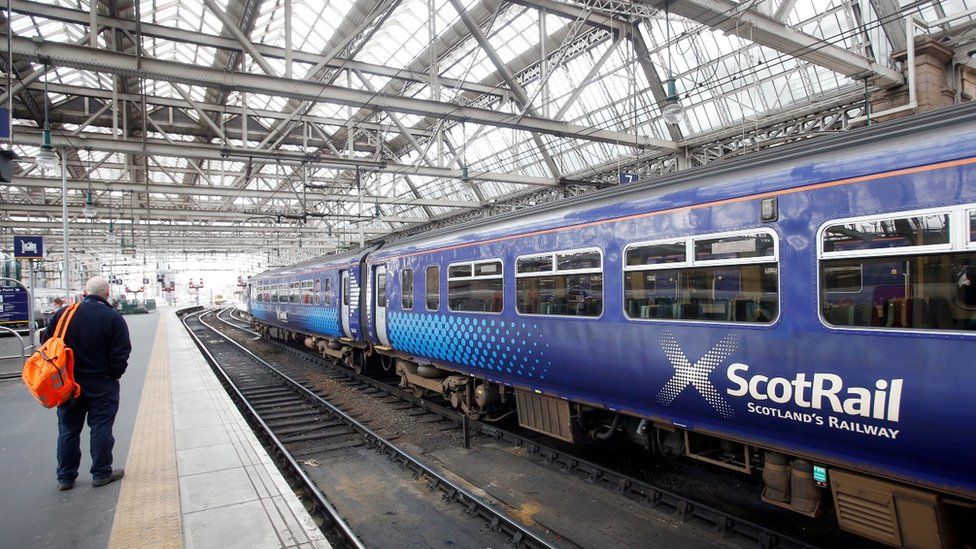
ScotRail has warned of four days of disruption across Scotland as a fresh round of rail strikes begin.

Rail, Maritime and Transport (RMT) union members oat National Rail will be striking over jobs, pay and working conditions on Thursday and Saturday.

Some services will operate on a limited number of routes between 07:30 and 18:30 each day.

ScotRail staff are not involved in the strike, but many of the Network Rail staff involved work in rail safety.

The disruption will also impact the day following each strike day, so services will be still be affected on Friday and Sunday.

The RMT union announced industrial action across the UK’s railway network last month and 40,000 workers across Network Rail are expected to walk out.

This dispute does not involve ScotRail staff, however it will affect the train operator’s ability to provide services.

A ScotRail spokesperson said many of the Network Rail staff due to take part in the strikes work safety-critical roles, which means ScotRail cannot run the majority of its services.

RMT general secretary Mick Lynch said members were determined to protect their pensions, pay, job security and working conditions.

Services will run on 11 routes across the Central Belt, Fife and Borders on the days of strike action.

‘It has an impact on tourism’

Emmanuel Moine says Highland hotels have suffered cancellations

Emmanuel Moine is the general manager of the Glen Mhor Hotel in Inverness.

Mr Moine said: “We have had some cancellations and the hotel is 60 or 70% full when we should be fully booked.

“We are in August so obviously it has an impact on the tourism.”

Mr Moine is also the chairman of the Highland Hotels Association which represents 20 chain and independently-operated hotels.

He said other hoteliers have noticed similar downturns in business.

“We are suffering from guests not able to travel,” he said.

“I’ve been speaking to every hotelier in Inverness and we have the same problem.

“We had a great tourist season, but we do our best to correct the problem and it’s not helping.

“We need to adapt and react as quickly as we can depending on cancellations and how the strike will be on these days.”

line

ScotRail said double the number of services will be provided compared to the previous strike by RMT members of Network Rail on 27 July.

It will operate 378 services on 18 and 20 August compared to 189 on 27 July.

However, the railway will only operate between 07:30 and 18:30 on 18 and 20 August.

Final trains are expected to depart well before 18:30, so passengers are urged to plan in advance.

What routes will run?

The following services will run during the strike days:

•Edinburgh Waverley – Glasgow Queen Street via Falkirk High: two trains per hour

•Edinburgh Waverley – Helensburgh Central: two trains per hour

•Glasgow Central – Hamilton/Larkhall: two trains per hour

•Glasgow Central – Lanark: two trains per hour

•Edinburgh Waverley – Glasgow Central via Shotts: one train per hour

•Edinburgh Waverley – Inverkeithing: two trains per hour

•Edinburgh Waverley – Tweedbank: two trains per hour

•Edinburgh Waverley – North Berwick: one train per hour

•Glasgow Queen Street – Larbert: one train per hour

•Glasgow Queen Street – Falkirk Grahamston: one train per hour

•Milngavie – Springburn: two trains per hour

Passengers are urged to consider alternative travel options if they can.

Trains will be in limited supply on Thursday and Sunday

ScotRail service delivery director David Simpson said:  ”It is very unfortunate to see such widespread disruption across the whole of the Great Britain rail network and we know this will be frustrating for ScotRail customers.

“Regrettably, this strike action by RMT members of Network Rail means that we will not be able to operate the vast majority of our services during the period of strike action.

“Customers should expect significant disruption to services on strike days, as well as the following day.

“We are able to operate on more routes than on the previous day of strike action, however, we are still only able to run a very limited number of services on these routes, so we’re advising customers to seek alternative means of transport and to only travel if they really need to.”

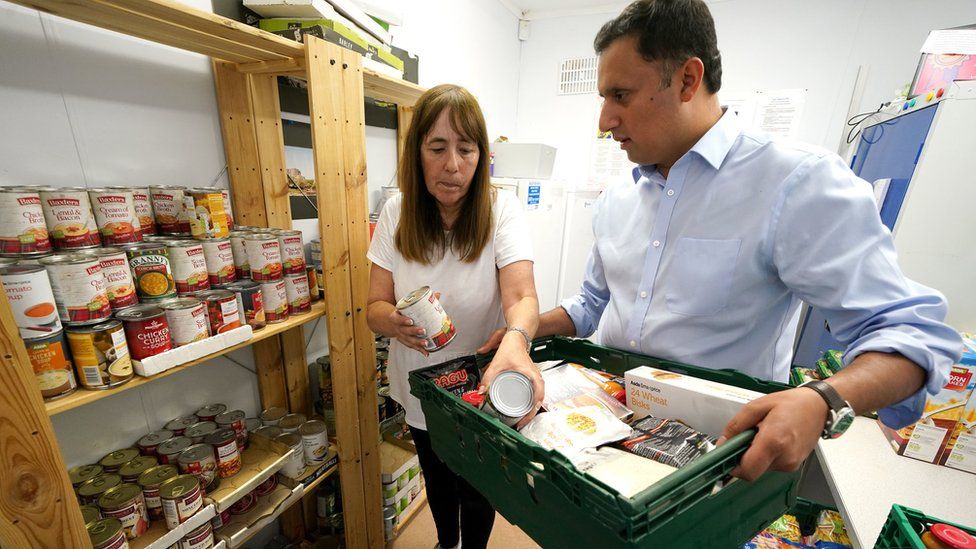
Scottish labour leader Anas Sarwar has called for urgent legislation to help deal with the cost of living crisis.

Mr Sarwar said the economic crisis was a national emergency like the Covid-19 pandemic and required a radical response.

First Minister Nicola Sturgeon said “significant action” was already being taken.

Both Mr Sarwar and Ms Sturgeon have warned that lives could be lost without more support.

Scottish Labour has published its proposals for action on the cost of living around housing, transport costs, debt and reducing bills for households and businesses.


These include a temporary rent freeze, a winter evictions ban, cancelling school meal debt, temporarily halving rail fares and capping the cost of bus journeys.

The party wants emergency cost of living legislation brought before the Scottish Parliament in the first week after Holyrood returns from recess in September.

It says addressing the cost of living crisis must be the “first priority” of both the Scottish government and the Scottish Parliament.

Labour has also called on the UK government to take action, including freezing energy prices for six months, which would save a typical household £1,000.

Anas Sarwar said the situation was a “national emergency”

Speaking to BBC Scotland’s Good Morning Scotland programme, Mr Sarwar said the cost of living crisis was a “national emergency” that should be viewed on the scale of Covid-19.

He warned that without more action “lives could be lost as we push more and more people into poverty”.

‘Genuine emergency budget’

Last week the Scottish government announced it would carry out an emergency budget review in light of the cost of living crisis, but Scottish Labour says it has failed to produce concrete actions using the powers available.

Mr Sarwar told Good Morning Scotland there was a reserve of £241m in the Scottish budget.

He called for a “genuine” emergency budget review that “gets the eyes open” on where money is available and what support can be given to people right now rather than “hoarding money for later down the road”.

“The rainy day has arrived,” he said. “We need to support people.”

But the Scottish government’s business minister Ivan McKee told Good Morning Scotland that Mr Sarwar was “not understanding the numbers very well” and the remaining money was needed to “smooth things over” through the year and make sure the Scottish government didn’t run out of money.

He said the Scottish government was “absolutely having a look at all measures that could make an impact” and “what possibility there is to free up additional cash to be able to support the most vulnerable on top of all the work and funding we’ve put in place”.

Nicola Sturgeon will chair an energy summit

Nicola Sturgeon told the BBC the Scottish government was “already taking significant action”, but the key levers lie with the UK government.

‘Looming disaster’

This week the Scottish government announced it will hold an energy summit, to be chaired by Nicola Sturgeon, that will bring together energy companies and voluntary sector organisations working around poverty.

Ms Sturgeon told the BBC she wanted to make sure that the Scottish government was “genuinely doing everything we can” to help, but she also wanted all those involved to come together to call on the UK government to take action.

“There is a looming disaster that is already unfolding, but it is going to get worse,” she said. “This is going to cause destitution and devastation.”

She warned: “This will cause loss of life if real action is not taken to stem this crisis”.

Nicola Sturgeon has called for the price cap increase to be cancelled

Asked for her views on renationalising energy companies, Ms Sturgeon said it should be “on the table”.

She said: “Cancel the price cap increase. Do that first of all and then, yes, how is that then funded, what is the contribution from energy companies and the UK government, what does it mean in terms of the ownership profile of energy companies, all of that has to be on the table.

“But first and foremost, this increase in people’s energy bills – further increase in people’s energy bills – can’t be allowed to go ahead”.

Govt to arrest all people involved in social media campaign against Balochistan copter crash

The government has decided to arrest all the people behind the negative propaganda against Lasbela helicopter crash on social media, sources privy to the investigation told Geo News on the condition of anonymity.

Sources said that the people who led the campaign will also be arrested after investigating the individuals involved in the propaganda. They added that the investigations have shown that Indian accounts were also involved in the social media campaign.

They added that a campaign was launched against the Pakistan Army by the workers of a political party and Indian social media accounts actively participated in it. The investigations show that at least 17 Indian accounts were linked to the campaign.

FIA tasked to probe malicious social media campaign

Last week, Federal Investigation Agency (FIA) Cyber Crime Wing registered a case and launched an investigation into the malicious social media propaganda following the martyrdom of army officers in the Balochistan helicopter crash.

A joint investigation team headed by Additional Director General Cybercrimes Muhammad Jafar is carrying out the probe.

The investigation team includes Director Operations Waqar Chauhan, Additional Director Ayaz, and Assistant Director Imran Haider, sources told Geo News.


The development follows after Prime Minister Shehbaz Sharif characterised the campaign as “horrifying”.

“The social media campaign belittling and ridiculing the sacrifices of our martyrs was horrifying,” he wrote in a message on Twitter.

The prime minister attributed such vitriol to “self-righteous political narratives”.

“They poison the minds of the youth and weaponise hate speech. Which way are we headed?” he asked.

Meanwhile, in a conversation on Geo News programme “Naya Pakistan“, the Director-General of Inter-Services Public Relations Major General Babar Iftikhar condemned the negative social media propaganda.

“The way this happens on social media, we have to look into this and reject such elements involved in it,” he said.

“We can do this collectively. That’s why we issued a press release as it was important to highlight this matter. This has to be condemned at every level.”

The press release issued by the ISPR stated: “We have been distressed since the accident on August 1. The propaganda has caused immense pain, particularly to the families of the martyrs,” he said.

Emphasising that this should not happen, Maj Gen Iftikhar said that elements spreading negative propaganda and rumours should be rejected.

“Insensitive behaviour is unacceptable and should be condemned on every platform,” he asserted, adding that the Pakistan Army is grateful to the nation which continues to stand by them and the martyrs.

The helicopter crash

A Pakistan Army helicopter had gone missing on August 1 in Balochistan during flood relief efforts and was reported crashed by the ISPR the following day. It was found near Musa Goth in the Lasbela district. Six military personnel were martyred.

The military chopper had gone missing as it was en route from Quetta to Karachi at around 5:30pm.

The personnel in the chopper were overseeing flood relief efforts in the southwest of the country.

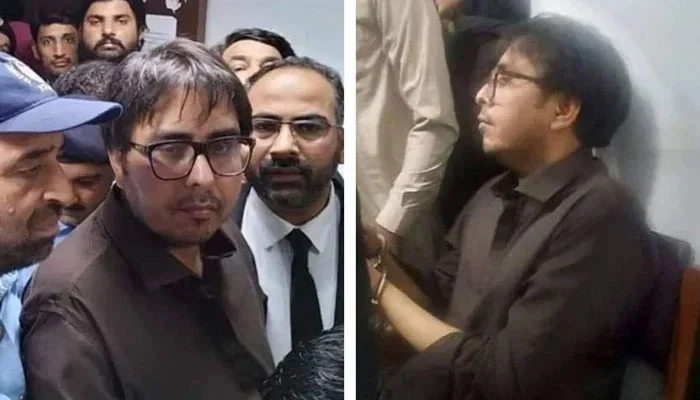
Islamabad court rehears plea for Shahbaz Gill’s judicial remand in sedition case

An Islamabad district and sessions court on Wednesday took up the review plea seeking the judicial remand of PTI senior leader Shahbaz Gill in a sedition case filed against him, as per the orders of the Islamabad High Court (IHC).

The IHC had directed the sessions court judge to rehear the case over the government’s plea challenging the dismissal of Gill’s physical remand by the duty magistrate.

Gill’s lawyers Salman Safdar and Faisal Chaudhry appeared in court, while judge Zeba Chaudhry is hearing the plea.


At the outset of the hearing, Special Prosecutor Rizwan Abbasi informed the court that the judicial magistrate remanded Gill into police custody for two days but the investigation officer requested for an extension in the remand.

He said that the duty magistrate should have considered all aspects of the matter but he rejected the request.

“How did he [magistrate] take Gill’s statement for the final statement?” he asked.

Abbasi maintained that a remand of at least 10 days is granted in ordinary cases while this is a case of criminal conspiracy.

He contended that the accused PTI leader is telling lies again and again and, therefore, further interrogation and a polygraph test is required.

The special prosecutor further stated that Gill has already confessed that his driver has one of his mobile phones.

“The IO clearly wrote in the plea that it’s not just about the recovery [of the phone] but there are other aspects that need to be investigated,” he said.

The case

Gill was arrested last Tuesday afternoon from Banigala Chowk in the capital a day after making controversial remarks on a private TV channel. He was subsequently booked on charges of sedition and inciting members of state institutions against the Pakistan Army.

A treason case was registered against him at the Kohsar Police Station under several sections of the Pakistan Penal Code, including 124-A (sedition), 131 (abetting mutiny, or attempting to seduce a soldier, sailor or airman from his duty), 153 (wantonly giving provocation with intent to cause riot if rioting be committed; if not committed), 153-A (promoting enmity between different groups, etc), and 505 (statements conducing to public mischief), 506 (punishment for criminal intimidation), among others.