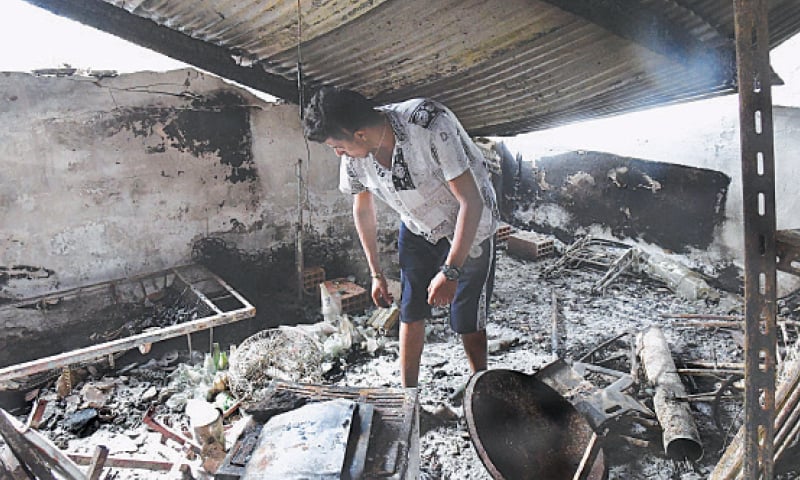

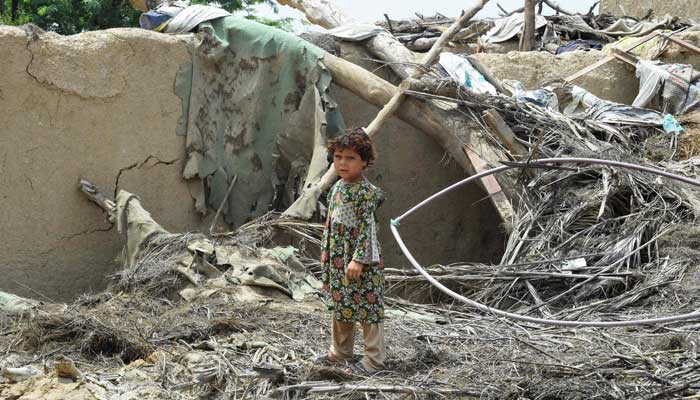
Eight more people lost their lives in two different incidents of roof collapses in Jaffarabad and Dera Bugti.

QUETTA: Torrential rains and flash floods continue to play havoc in Balochistan amid the fourth spell of monsoon, with eight more people killed in rain-related incidents on Saturday, taking the provincial death toll to 215 since June 1.

According to NDMA, the rains have inflicted major life, property and livestock losses. While Balochistan was the most-affected region, in the last 48 hours Sindh witnessed maximum rainfall that caused heavy life, property and infrastructure losses. Furthermore, the Met Office has warned of a new spell forecast that will cause further rains in eastern Balochistan, south Punjab and Sindh in the next 24 to 36 hours.


On Saturday, five people of a family in Goth Mir Khan Sobdrani Gandakha died when the roof of their mud house caved in, official sources confirmed, adding that three family members also passed away when the roof of their home collapsed in Dera Bugti district.

As per the Provincial Disaster Management Authority, monsoon rains and floods have so far claimed 215 lives in Bolan, Quetta, Zhob, Duki, Khuzdar, Kohlu, Mastung, Harnai, Qila Saifullah and Sibi districts of Balochistan.

Meanwhile, the Chief of Army Staff (COAS) General Qamar Javed Bajwa called Commander Balochistan Corps and directed him to assist the provincial government in rescue and relief operations during floods.

According to the Inter-Services Public Relations (ISPR), the army chief directed the Balochistan Corps commander to get an update on the flood situation and undertake all measures to assist Balochistan in rescue, relief and rehabilitation efforts on an emergency basis in coordination with the civil administration.

“Unprecedented rains have caused devastation to human life and communication infrastructure, especially in Balochistan,” the COAS said. He further directed the utilisation of army resources to help the affected population and restore critical communication infrastructure as an immediate temporary measure.

“Pakistan Army stands with flood-affected population in this difficult testing time and shall undertake this assistance effort as a national obligation,” the COAS said.

Incessant rain and flash floods in Balochistan have affected 18 bridges and 690 kms of the highway while it also killed as many as 107,377 cattle, damaged 23,117 houses while 6,057 houses collapsed. Traffic on the National Highway at Bolan connecting Balochistan with Sindh through Quetta-Sibi-Sukkur has been partially restored.

However, due to heavy rains, the highway was closed at various points due to the flow of flood water in the Harek Causeway, Gashtri Nallah, Drinjan Nallah and Yaru Causeway. The Quetta-Karachi road links through Lasbela are disconnected for almost a week at Uthal while due to landsliding and continuous rains, traffic at Quetta-Zhob and Quetta-Lorali connecting Balochistan with Punjab and KPK was also suspended for the last two days. The railway track at Notal and Dera Murad Jamali was also inundated in flood waters, suspending rail service between Balochistan and the rest of the country.

Chief Minister Sindh Murad Ali Shah visited different parts of the rain-hit areas to monitor the relief work and assess damages. During the visit, they declared Sajawal and Badin as disaster-struck areas.

Loss of life and infrastructure continued to mount amid torrential rains in Hyderabad, Khairpur, Sukkur, Nawabshah, Khairpur, Dadu and other cities of Sindh. Hill torrents were heading towards Majhand city of Dadu sending off alarms to the residents of the area who were trying to go to safer zones and higher ground. The Nizamani Dyke was breached which inundated many villages of Nara Town and UC Jalalani and Shank dyke in Ghotki was also breached which inundated many villages. Pak Army reached Khairpur and other cities to rescue the rain victims.

Earlier in the day, the frustrated people of Khairpur protested at the office of Assistant Commissioner Kot Diji and blocked the National Highway against the administration’s apathy to take rescue and rehabilitation measures. During the protest, the guards of Dinal Wasan, brother of PPP MPA Munawar Wasan, thrashed them when they refused to lift the road blockade.

In Karachi, two bodies remained untraced, three days after a vehicle with six family members and a driver drowned Wednesday in Karachi’s Malir River after being swept away by strong currents from the National Highway Link Road. According to rescue officials, five bodies, including children, were recovered.

Under the supervision of PDMA, local administration and Pak Army relief and rehabilitation operation is going on in the affected districts. “Relief materials including 600 tents, 1400 food packets, 400 blankets, 400 mats and 400 gas cylinders were distributed among the victims in Naseerabad, Pishin, Mastung, Qila Saifullah and Kohlu districts.

In a related development, Chairman of National Disaster Management Authority (NDMA) Lieutenant General Akhtar Nawaz said the country received an unprecedented monsoon rainfall and the Authority, keeping in view the recent spell in Sindh, has sent a special relief package to its flood-affected areas.

Addressing a ceremony for relief assistance being dispatched to flood-hit areas of Sindh, the NDMA chairman said the monsoon rains this season were 150pc above normal than the past 30 years’ recorded average of the country. Lt General Satti said Balochistan was the most-affected region due to heavy monsoon rains, whereas, now in the past 48 hours, Sindh was witnessing the maximum rainfall that caused heavy life, property and infrastructure losses.
PM Shehbaz orders fixed sales tax collection from shopkeepers suspended

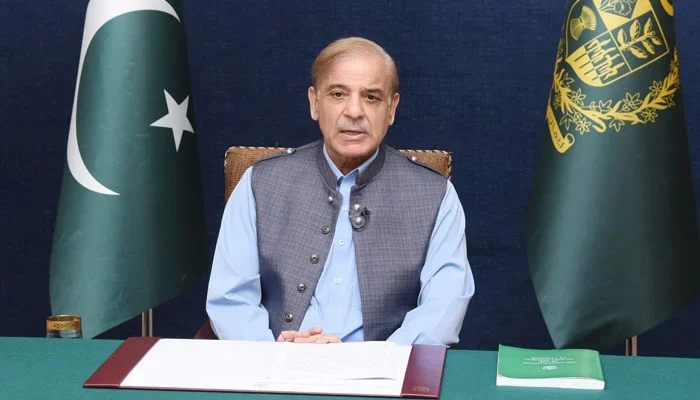
The prime minister chaired a meeting in Lahore in which the country’s economic situation and the problems of businessmen and their solutions were discussed, in particular the electricity rates and fixed sales tax collection through electricity bills.

While addressing the meeting, PM Shehbaz ordered the Federal Board of Revenue (FBR) to immediately suspend collection of fixed sales tax through electricity bills from small traders and retailers, and devise a new roadmap in consultation with traders for the purpose.

 “An inquiry must be conducted into the levy of increased sales tax ratio on shopkeepers/ retailers in the electricity bills other than that agreed,” he said.

The PM said representatives of traders should be taken on board while making any decision on tax collection through electricity bills.

The development comes after the government decided to withdraw a fixed tax regime on electricity bills for one year on August 4. The breakthrough was achieved after three days of talks between the government and traders community protesting against the levy since July 1.

“The decision was taken as per the demands of traders community, Prime Minister Shehbaz Sharif and PML-N leaders’ instructions,” Minister for Finance Miftah Ismail had said after a meeting with them in Islamabad.

Reiterating his commitment to take all-possible measures for financial security of the poor, PM Shehbaz directed all relevant ministries and authorities to immediately finalise an effective mechanism to reduce electricity rates to provide relief to people.

The meeting was attended by Minister for Energy Engineer Khurram Dastagir, Minister for Finance Miftah Ismail, Minister of State for Petroleum Dr Musadik Malik, FBR chairman, relevant federal secretaries and other senior officials.

Receiving tax from traders via their electricity bill was one of the clauses approved by the National Assembly in the Finance Bill 2022 on July 29, prompting the community to protest over the tweaks.

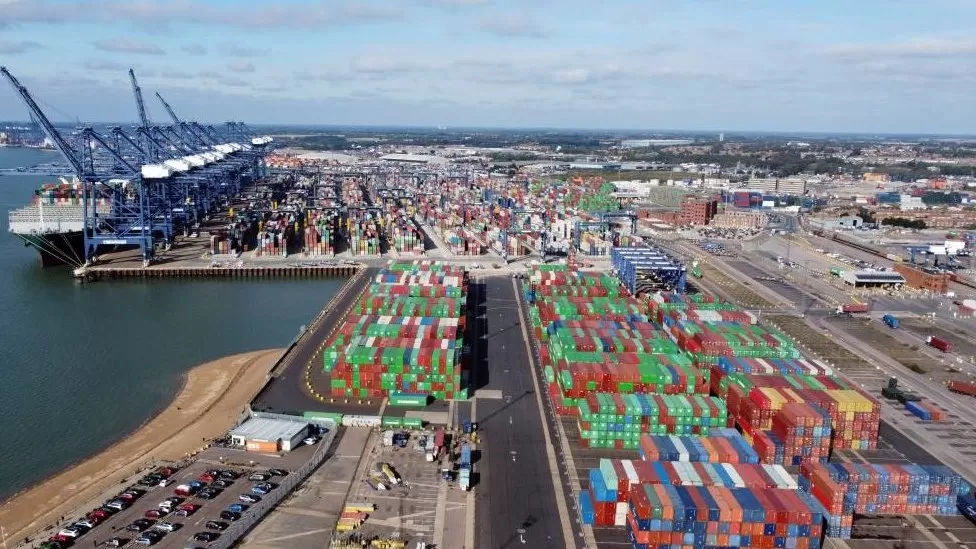
Workers at the UK’s busiest container port have walked out in a pay dispute.

About 1,900 members of the union Unite are taking strike action, expected to last eight days, at the Port of Felixstowe in Suffolk, from Sunday.

The union said members rejected a 7% pay offer from port operator, the Felixstowe Dock and Railway Company, which it said was “significantly below” the rate of inflation.

A port spokesman described the union decision to strike as “disappointing”.

A picket line formed early on Sunday as the strike began, and the union said it would be manned until 22:00 each day of the strike.

About 2,550 people work at the Port of Felixstowe, which handles about 48% of the UK’s container trade.

Strike action is expected to last for eight days

Ahead of the strike, port spokesman Paul Davey said workers had been offered 7% plus a single payment of £500.

He said the offer represented “an increase of between 8.1% and 9.6%, depending upon the category of worker at the port”, at a time when the average pay increase in the country was 5%.

“We’ve got a shrinking economy, we’re going into recession – as a country I think that’s a very fair offer indeed,” he said.

Freight transport body Logistics UK said it was “not expecting massive disruption” from the strike action at the port.

A spokesperson for the trade association told BBC News: “Felixstowe is not a just-in-time delivery port – everything coming in is scheduled well in advance.

“If it [the strike] goes on for longer than eight days then those using the port will be looking at alternative routes, but at the moment there is plenty of stock in the supply chain. Others have already been planning alternative routes – we’re not expecting panic.”

The spokesperson added: “As an industry, we are incredibly flexible and have been working for a while to put these goods into alternative ports if they have to be.”

But PA press agency’s industrial correspondent Alan Jones described the action as unprecedented.

“Dock strikes are as big as it gets really because of the importance of goods coming in,” he told the BBC.

“A lot of companies have suffered a shortage of goods anyway, partly because of Brexit and the pandemic, so this really is going to cause a lot of problems.

“Felixstowe has been strike-free for about 30 years.”

line

‘Most of our stock comes through Felixstowe’

Derek Hailstone, owner of Mick’s Cycles in Bury St Edmunds, is concerned about the potential impact of the strikes at Felixstowe Port

Derek Hailstone, co-owner of Mick’s Cycles, in Bury St Edmunds, Suffolk, says the majority of his stock comes in through Felixstowe.

“The strikes have the potential to affect us, as most of our stock comes into the UK through Felixstowe,” he says.

Haulage company Turners of Soham, in Cambridgeshire, moves about 500 containers out of the port every day.

“About 30% of our business is at Felixstowe, so it’s going to have a huge impact,” says Paul Day, managing director.

Unite general secretary Sharon Graham said: “Felixstowe docks is enormously profitable.”

Together with its parent company, CK Hutchison Holdings Ltd, they could “give Felixstowe workers a decent pay raise”, she said.

“It’s clear both companies have prioritised delivering multi-million pound profits and dividends rather than paying their workers a decent wage.”

Strike action at the port is expected to last until Monday 29 August.

The port said its staff union, which represents about 500 clerical and engineering employees, had “voted to accept the same pay offer that Unite has refused to put to its members”.

Unite said it balloted the dock workers, not the clerical groups represented by the The Port of Felixstowe staff union.

Referring to the staff who had accepted the offer, a Unite spokesperson said: “This group of members have the right to accept the offer from the company but Unite’s dockers want to press for 10%.”

Households struggling with the rising cost of living in the UK will receive some help this winter, Business Secretary Kwasi Kwarteng has said.

The cabinet minister, who is a key ally of Tory leadership hopeful Liz Truss, claimed the Treasury was “working on options for the new prime minister”.

But he fell short of outlining how the government intends to support people.

Since declaring his support of Ms Truss, Mr Kwarteng has been linked to the chancellor position.

Writing in the Mail on Sunday, he said he understood the “deep anxiety” price rises were causing, and acknowledged the “millions of families [who] will be concerned about how they are going make ends meet”.

“But I want to reassure the British people that help is coming,” Mr Kwarteng wrote.

He went on to insist that Ms Truss “will do all she can to help households across Britain” if selected to become party leader and prime minister.

He insisted Ms Truss’ pledges to reverse an increase to National Insurance and introduce a temporary moratorium on energy levies were examples of her willingness to “look at what more can be done”.

In an interview with the Sun on Sunday, Ms Truss also suggested families and businesses would be offered some kind of help with soaring bills under her – but she too gave little detail.

She said every government “has to look at making sure life is affordable for people” and she is looking at help “across the board”.

The paper also reports that, under plans drawn up by the Treasury, doctors would be able to write prescriptions to give people money off their energy bills.

Under the proposal, GPs would hold a patient consultation and verify they need help, before writing a prescription. Money would then either be given in cash or as a voucher.

In a fortnight, we’ll find out who is the UK’s next prime minister.

The cost of living will dominate the early days of Liz Truss or Rishi Sunak’s government.

Kwasi Kwarteng is a close ally of Ms Truss – and seen by many as the most likely choice for chancellor in a Truss government.

He isn’t providing new details of what she’d do today – he argues the new PM will need the full facts before making their decision.

But Mr Kwarteng is seeking to provide some assurance: help will be on its way and the next No 10 operation will be able to hit the ground running.

Some of Mr Sunak’s allies question whether Ms Truss will be able to afford both her expensive tax cutting policy and a significant assistance programme to help with rising energy bills.

Mr Sunak has provided a few more details of his intentions; pledging to cut VAT on energy bills and target extra help at those who need it most.

But we won’t know for sure what either plan means until one of them becomes prime minister in two weeks’ time.

2px presentational grey line

The cost-of-living crisis has been driven by a series of issues, including inflation outstripping wage increases and record energy bills due to a surge in wholesale gas prices.

new price cap – determining the maximum suppliers can charge customers for energy usage in England, Scotland and Wales – is due to be announced at the end of this month.

It will come into effect in October – and customers have been warned to expect annual bills to reach more than £3,500.

Energy consultancy Auxilione used Friday’s gas prices to suggest typical household energy bills in the UK could hit as much as £6,000 a year next April.

Mr Kwarteng gave no detail about the government’s apparent plans to help households and businesses with soaring prices. Instead, he said this would be made clear when the new prime minister takes office.

As one of Ms Truss’ earliest backers, it is widely thought Mr Kwarteng will be handed one of the more senior cabinet positions, should she win.

Reports have suggested he could become the next chancellor, but Ms Truss’ campaign team insist no decisions have been made yet.

The leadership race between Ms Truss and former chancellor Rishi Sunak will conclude on 5 September, with a winner announced and their top teams to follow soon after.

At that point, the UK’s new leader will have the “full information and analysis” to work up the “best package measures that will help deal with” cost of living issues, Mr Kwarteng wrote.

He said energy independence will be key for Ms Truss, promising more nuclear power stations, offshore wind and a lifting of the ban on fracking in areas where there is local consent.

Mr Kwarteng, an opponent of windfall taxes, added: “Rather than slapping a punitive windfall tax, as Rishi Sunak has done, we need to incentivise investment in domestic oil and gas for our own energy security.

“I appreciate windfall taxes are sometimes popular. But popularity won’t keep the lights on.”

Labour has pledged to extend the oil and gas windfall tax to fund a freeze to the energy price cap at its current level of £1,971 for six months.

‘Tornado of fire’: Algeria forest blazes kill 38

Deadly forest fires have become an annual scourge in the North African country, where climate change is turning large areas into a tinderbox in the baking summer months.

As residents have lost their homes to the flames, authorities have been accused of being ill-prepared, with few firefighting aircraft available, despite record casualties in last year’s blazes.

The justice ministry has launched an inquiry into the possibility that some of the blazes were started deliberately, after comments to that effect by Interior Minister Kamel Beldjoud. At least 38 people have been killed including more than 10 children, according to multiple sources, including local journalists and the fire service.

Most were in the El Tarf region near Algeria’s eastern border with Tunisia, an area which has been sweltering in 48 degree Celsius (118 Fahrenheit) heat.

At least 200 more people have suffered burns or respiratory problems, according to various Algerian media. Algerian television showed people fleeing their burning homes, women carrying children in their arms.

A journalist in El Tarf described “scenes of devastation” on the road to El Kala in the country’s far northeast. “A tornado of fire swept everything away in seconds,” he said. “Most of those who died were surrounded while visiting a wildlife park.” A team in El Kala saw burned-out cars, exhausted people and charred trees amid the strong smell of smoke.

A witness, who asked not to be named, said 12 people had been burned to death in their bus as they tried to escape when the fire ripped through a wildlife park.

The fire service said Thursday afternoon that 1,700 firefighters had been deployed to battle the fires, of which 24 were still raging.

A journalist in the mountainous area of Souk Ahras said that a huge blaze in a forest nearby had sparked panic in the city of half a million people, where nearly 100 women and 17 newborn babies had to be evacuated from a hospital.

The scenes sparked fears of a repeat of the large-scale fires of last year which killed at least 90 people and ravaged 100,000 hectares of forest and farmland in the country’s north. That disaster provoked bitter criticism of authorities over the lack of fire-fighting aircraft.

Authorities have rented a Russian Beriev BE 200 water bomber plane, but it has suffered a breakdown and is not expected to be operational again until Saturday, Interior Minister Kamel Beldjoud said.

The civil protection service and the army do have access to several firefighting helicopters. Experts have called for a major effort to bolster the firefighting capacity of Africa’s biggest country, which has over four million hectares of forest.

One specialist, who asked not to be named, said that in the 1980s the country had 22 Grumman aircraft for battling forest fires but that they had been “sold on the cheap, without any alternative solution being proposed”.

Algeria had agreed to buy seven firefighting aircraft from Spanish firm Plysa, but cancelled the contract following a diplomatic row over the Western Sahara in late June, according to specialist website Mena Defense.

Trump firm’s official pleads guilty to tax fraud

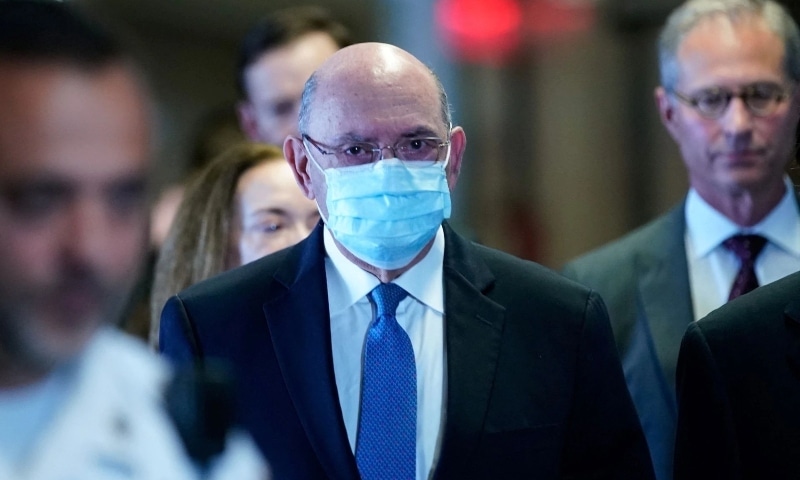
The 75-year-old Weiss­elberg, who served as CFO of the Trump Organisation from 2005 to 2021, pleaded guilty to 15 counts of tax fraud, Manhattan District Attorney Alvin Bragg said in a statement.

Weisselberg admitted his involvement in a 15-year scheme with co-defendant the Trump Organisation to defraud federal, New York State and New York City tax authorities, Bragg said.

Weisselberg is to serve five months in prison contingent on his testifying truthfully at the October criminal trial of the Trump Organisation on tax fraud charges, Bragg said.

Weisselberg has steadfastly refused to deliver testimony against Donald Trump personally. The 76-year-old Trump served as president and owner of the Trump Orga­nisation until 2017, when he entered the White House.

But the former Trump Organisation executive could face additional prison time if he fails to testify at the criminal trial of the real estate company. Jury selection in the Trump Organisation trial on tax fraud charges is scheduled to begin October 24, Bragg said.

In the plea agreement, Weisselberg admitted evading payment of taxes due on $1.76 million in unreported income. He will be required to repay nearly $2 million in taxes, penalties and interest.

“Today Allen Weisselberg admitted in court that he used his position at the Trump Organisation to bilk taxpayers and enrich himself,” Bragg said.

“Weisselberg had the Trump Organisation provide him with a rent-free apartment, expensive cars, private school tuition for his grandchildren and new furniture — all without paying required taxes,” he said.

“This plea agreement dir­ectly implicates the Trump Organisation in a wide range of criminal activity and requires Weisselberg to provide invaluable testimony in the upcoming trial against the corporation,” he said. “We look forward to proving our case in court against the Trump Organisation.”

Erdogan warns of ‘another Chernobyl’ after talks in Ukraine

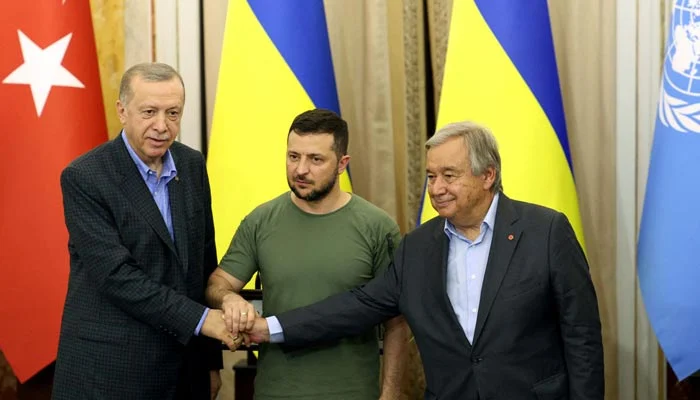
LVIV, UKRAINE: Turkish leader Recep Tayyip Erdogan warned Thursday of a nuclear disaster in Ukraine during his first face-to-face talks with President Volodymyr Zelensky since Russia’s invasion began, echoing pleas from the UN’s chief.

A flare-up in fighting around Europe’s largest nuclear facility in Russian-controlled southern Ukraine has sparked urgent warnings from world leaders and UN chief Antonio Guterres cautioned during talks with Erdogan that any damage to the plant would be akin to “suicide”.

“We are worried. We don’t want another Chernobyl,” Erdogan said during a press conference in the eastern city of Lviv, during which he also assured the Ukrainian leader that Ankara was a firm ally.


“While continuing our efforts to find a solution, we remain on the side of our Ukraine friends,” Erdogan said.

Guterres said he was “gravely concerned” about the situation at the plant and said it had to be demilitarised, adding: “We must tell it like it is — any potential damage to Zaporizhzhia is suicide”.

Erdogan, who has major geopolitical rivalries with the Kremlin but maintains a close working relationship with President Vladimir Putin, met with the Russian leader less than two weeks ago in the Black Sea resort of Sochi.

The Turkish leader along with Guterres were key brokers of a deal inked in Istanbul last month allowing the resumption of grain exports from Ukraine after Russia’s invasion blocked essential global supplies.

Ahead of the press conference with Zelensky, Ukraine’s port authority announced that the 25th cargo ship under the deal had departed for Egypt carrying 33,000 tonnes of grain.

Ukraine and Russia are two of the world’s biggest grain exporters and the halt in exports saw grain prices soar and fears rise of global food shortages, particularly in poor countries already experiencing shortfalls.

Guterres said during the meeting with reporters that the sides hoped to intensify efforts to bolster operations at three southern ports designated for exports under the deal.

“We will do our best to scale up our operations to face… the coming winter,” the UN chief said, hailing the deal that saw a safe corridor established for cargo ships to exit Black Sea ports.

The success of the grain deal contrasts with failed peace talks early in the war and Zelensky on Thursday ruled out peace with Russia unless it withdraws its troops from Ukraine.

He told reporters he was “very surprised” to hear from President Recep Tayyip Erdogan that Russia was “ready for some kind of peace”, adding: “First they should leave our territory and then we’ll see”.

Fighting raged along the front on Thursday.

In the war-scarred eastern region of Kharkiv, Russian strikes left several dead and dozens injured.

The early morning bombardments across the city of Kharkiv and nearby Krasnograd left at least six dead and 25 injured, just one day after Russian bombardments killed 13 in the country’s second-largest urban centre.

The regional governor Oleg Synegubov posted images from the scene of one Kharkiv strike showing the smouldering remains of several burnt-out buildings and twisted wreckage of destroyed vehicles nearby.

“Kharkiv. 175 days of horror. Daily terror, missile strikes on residential areas and civilians,” a senior presidential aide, Mykhaylo Podolyak, wrote on social media.

But fighting in recent weeks has focused around the southern region of Zaporizhzhia and the nuclear facility there, and Zelensky has called on the UN to ensure security at the plant after direct talks with Guterres in Lviv.

“The UN must ensure the security of this strategic object, its demilitarisation and complete liberation from Russian troops,” he said, blaming Russia for “deliberate” attacks on the facility.

Russian forces took the Zaporizhzhia plant in southern Ukraine in March and uncertainty surrounding it has fuelled fears of a nuclear incident, recalling the Chernobyl disaster in 1986.

Moscow meanwhile dismissed Ukrainian allegations Thursday saying its forces had not deployed heavy weapons at Zaporizhzhia and accused Kyiv of preparing a “provocation” there.

“Russian troops have no heavy weapons either on the territory of the station or in areas around it. There are only guard units,” the ministry said in a statement.

NATO Secretary General Jens Stoltenberg said Russia’s seizure of the plant “poses a serious threat” and also called for a Russian withdrawal and inspections by the IAEA.

The UN chief is due to travel on Friday to Odessa, one of three ports involved in the grain exports deal.

He will then head to Turkey to visit the Joint Coordination Centre, the body tasked with overseeing the accord.

Pakistan categorically rejects India’s pre-poll rigging attempts in occupied Kashmir

Pakistan has categorically rejected India’s pre-poll rigging attempts in occupied Jammu and Kashmir and called on the international community to take cognizance of its attempts at effecting illegal demographic changes in the region.

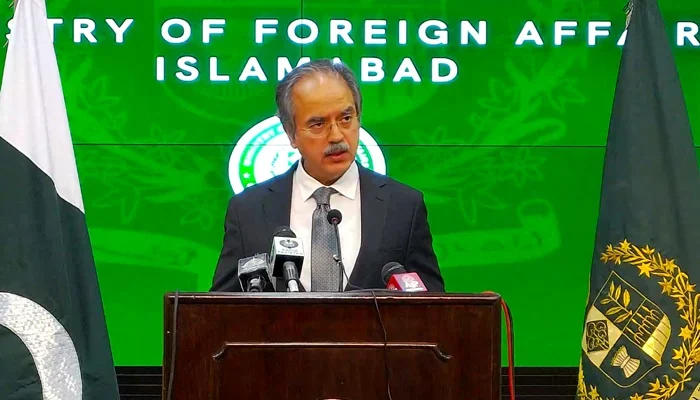
In a statement issued on Friday, the Foreign Office spokesperson said: “Pakistan categorically rejects the deliberate Indian attempts of pre-poll rigging and overt manipulation in the Indian Illegally Occupied Jammu & Kashmir.”

The statement said that the latest act of permitting temporary residents in the occupied region to register as voters “is a clear manifestation of the treacherous Indian design to influence the outcome of ‘so-called’ elections” in the territory.

“Pakistan reiterates its complete rejection of India’s entire litany of steps aimed at turning the Muslim majority in [occupied Jammu and Kashmir] into a minority — including the formulation of the so-called ‘Delimitation’ Commission and its baseless report, the issuance of fake Kashmiri domiciles to millions of outsiders, and changes in the property laws,” the FO statement read.


Despite all reprehensible measures that have followed the illegal and unilateral actions of August 5, 2019, “India will not be able to break the will of the Kashmiri people or to mislead the world community”, the FO said.

India stripped semi-autonomy from occupied Jammu and Kashmir in 2019, changing the Indian constitution to allow non-Kashmiris to vote and own land there.

Pakistan has called on India to desist from all actions in occupied Jammu and Kashmir that violate the international law, the UN Charter, and the 4th Geneva Convention.

Furthermore it has demanded that India “release all political prisoners detained on trumped-up charges, halt human rights violations in the [occupied Jammu and Kashmir], lift the brutal military siege, and let the Kashmiris exercise their legitimate right to self-determination as stipulated in the relevant UN Security Council resolutions”.

Pakistan has appealed to the international community to take immediate cognizance of the blatant Indian attempts at effecting illegal demographic changes in the occupied Jammu and Kashmir and to hold India to account.

2.5 million new voters

India is expected to register as many as 2.5 million new voters in the occupied region, a top official said late on Wednesday, in a move local political parties said was an attempt to influence upcoming elections.

Chief Electoral Officer Hirdesh Kumar in occupied Jammu and Kashmir told reporters that more than 2 million new voters are expected to be enrolled in the region ahead of local polls due in November. The new registrants could increase the voter count by more than a third, adding to the existing 7.6 million voters in the region.

“We are expecting an addition of (2 to 2.5 million) new voters in the final list,” Kumar said, including non-Kashmiris living in the region.

Kashmiris fear the rule changes will allow the Hindu-nationalist Bharatiya Janata Party (BJP) government led by Prime Minister Narendra Modi to alter the demographics of the region, quelling a decades-long independence movement.

Islamabad court reserves verdict on plea to extend Shahbaz Gill’s physical remand

A district and sessions court in Islamabad reserved its verdict on Friday over a plea seeking senior PTI leader Shahbaz Gill’s physical remand for eight more days in a sedition case filed against him.

The verdict, reserved by duty judge Judicial Magistrate Raja Farrukh Ali Khan, will be announced shortly.

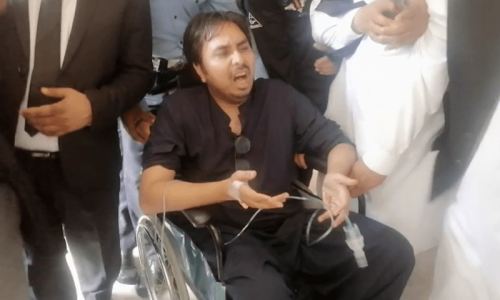
PTI Chairman Imran Khan’s chief of staff Shahbaz Gill was presented before the court early morning. He was escorted by the police to court in a wheelchair from the Pakistan Institute of Medical Science (PIMS) after being deemed “fit” by a medical board. Strict security arrangements were in place outside the court.


At the outset of the hearing, Gill pleaded to the court to return his oxygen mask, complaining that it was snatched while he was being escorted to the courtroom.

“For God’s sake, give me my mask back,” he said.

At this, the judge asked him if he intends to stay, to which Gill said he will if his mask is provided to him.

Later, an oxygen cylinder was also brought to the court.

Police request eight more days of Gill’s custody

Meanwhile, the police requested an extension of eight days in Gill’s physical remand.

At this, the court inquired why the police was requesting for another eight days of Gill’s custody when a two-day remand had already been granted.

The first question is whether the police was able to investigate in two days, the court said.

“Are the police seeking a new remand or an extension in the existing remand?” the judge questioned, asking whether the initial two-day remand had even started technically.

Giving his arguments, special prosecutor Rizwan Abbasi said that the investigation officer is supposed to take care of the accused’s health if the court has granted a remand.

“It is written nowhere that physical remand cannot be granted if the accused is unwell,” he said, adding that the IO can have the accused undergo a medical examination without a court’s order.

However, Gill’s lawyer opposed the request for extension in Gill’s remand.

Verdict on plea seeking board for Gill’s medical examination reserved

Separately, the Islamabad High Court reserved its verdict on the admissibility of a plea seeking the formation of a board for Gill’s medical examination.

The PTI had filed a miscellaneous plea in the IHC on Thursday for the formation of a judicial commission to probe alleged “mental and physical” torture inflicted on him during remand.

The plea requested that Gill be allowed to get treatment from wherever he wants.

Gill deemed fit

Meanwhile, Shahbaz Gill is absolutely healthy, declared a medical report by the PIMS Hospital.

Sources said doctors of the PIMS hospital released Gill’s medical report late Thursday. The medical board issued the report after conducting ten different tests, including the coronavirus test. All his tests are clear, according to the report.

Besides, six different X-rays were also carried out. The report says the PTI leader is in good physical health and no signs of torture were found on his body.

Sources say that Shahbaz Gill can be discharged from the hospital at any time. The doctors of the medical board are of the opinion that Shahbaz Gill is fully fit but they have prevented the police officers from interrogating him at the hospital premises.

COAS Gen Bajwa, US commander discuss military-to-military ties

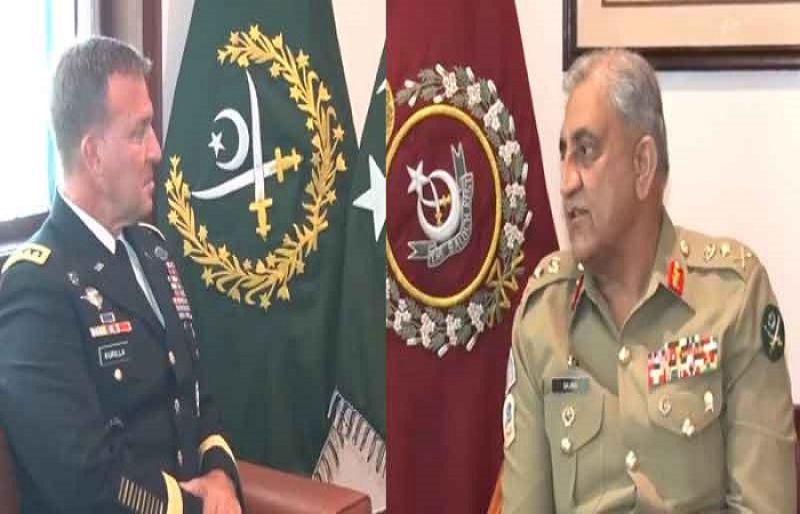
RAWALPINDI: Chief of Army Staff General Qamar Javed Bajwa discussed military-to-military ties with Commander US Centcom General Michael Erik Kurilla, a statement issued by Inter-Services Public Relations (ISPR) said Thursday.

COAS Gen Bajwa held a meeting with the commander US CENTCOM along with his delegation at General Head Quarters (GHQ).

According to the military’s media wing, the meeting discussed matters of mutual interest, regional security situation, stability, defence and security cooperation.


The one-on-one call was followed by a delegation-level meeting.

The discussion also included the Pakistan Army’s counter-terrorism efforts and significant contributions toward regional peace and stability. The Pakistan-US military training exchange programme also came under discussion.

The visiting dignitary acknowledged the Pakistan Army’s commendable efforts in the fight against terrorism, counter-terrorism experiences and efforts for regional peace and stability.

Later, the delegation also visited Army Museum and took a keen interest in various historical enclosures.