Gunman kills three in Indiana mall before being shot by armed bystander

A gunman killed three people when he opened fire in the food court of a shopping mall outside Indianapolis on Sunday before a bystander fatally shot the assailant, Greenwood Police Chief Jim Ison said.

Two other people were injured in the incident, which took place in the early evening at Greenwood Park Mall, the Indianapolis Star reported.


“The real hero of the day is the citizen that was lawfully carrying a firearm in that food court and was able to stop the shooter almost as soon as he began,” Ison told reporters. He described the armed bystander as a 22-year-old man.

The shooter was alone and had a rifle and several magazines of ammunition, according to the newspaper.

Police did not release the names of the victims, gunman or bystanders. Shoppers and mall employees scattered at the sound of gunfire or hid.

The shootings occurred amid widespread concerns over the drumbeat of US shootings in schools, workplaces, and public areas that regularly make headlines.

A spate of gun massacres since May at a New York grocery store, a Texas elementary school and an Illinois Independence Day parade has renewed a fierce US debate over gun regulations.

The US House Judiciary Committee will take up proposed legislation this week that would ban certain assault weapons, the panel said on Friday. It is not expected to pass the Senate.

Iran ‘capable of making N-bomb’, says Ayatollah Khamenei’s aide

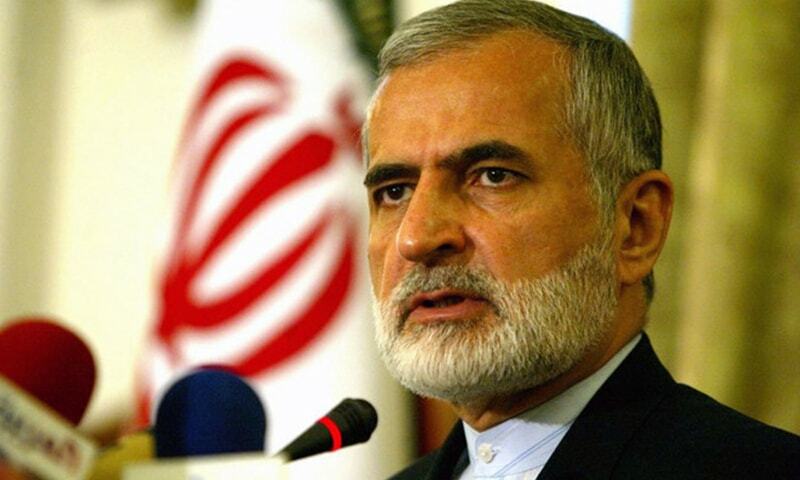
Kamal Kharrazi spoke a day after US President Joe Biden ended his four-day trip to Israel and Saudi Arabia, vowing to stop Iran from “acquiring a nuclear weapon”.

Kharrazi’s comments were a rare suggestion that Iran might have an interest in nuclear weapons, which it has long denied seeking.

“In a few days we were able to enrich uranium up to 60% and we can easily produce 90% enriched uranium … Iran has the technical means to produce a nuclear bomb but there has been no decision by Iran to build one,” Kharrazi said.

Iran is already enriching to up to 60 per cent, far above a cap of 3.67pc under Tehran’s 2015 nuclear deal with world powers. Uranium enriched to 90pc is suitable for a nuclear bomb.

In 2018, former US President Donald Trump ditched the nuclear pact, under which Iran curbed its uranium enrichment work, a potential pathway to nuclear weapons, in exchange for relief from economic sanctions.

In reaction to Washington’s withdrawal and its reimposition of harsh sanctions, Tehran started violating the pact’s nuclear restrictions.

Last year, Iran’s intelligence minister said Western pressure could push Tehran to seek nuclear weapons, the development of which Khamenei banned in a fatwa, or religious decree, in the early 2000s.

Iran says it is refining uranium only for civilian energy uses, and has said its breaches of the international deal are reversible if the United States lifts sanctions and rejoins the agreement.

The broad outline of a revived deal was essentially agreed in March after 11 months of indirect talks between Tehran and Biden’s administration in Vienna.

But talks then broke down over obstacles, including Tehran’s demand that Washington should give guarantees that no US president will abandon the deal, the same way Trump did.

Biden cannot promise this because the nuclear deal is a non-binding political understanding, not a legally-binding treaty.

“The United States has not provided guarantees on preserving the nuclear deal and this ruins the possibility of any agreement,” Kharrazi said.

Israel, which Iran does not recognise, has threatened to attack Iranian nuclear sites if diplomacy fails to contain Tehran’s nuclear ambitions.

Kharrazi said Iran would never negotiate its ballistic missile programme and regional policy, as demanded by the West and its allies in the Middle East.

“Any targeting of our security from neighbouring countries will be met with direct response to these countries and Israel.”

Pakistani delegation visits Kabul today to discuss trade issues

The delegation will be led by Secretary Commerce Sualeh Ahmed Faruqui and comprise senior officials of the ministries of power, interior, commerce and the Federal Board of Revenue and National Logistics Cell — the state-run logistic fleet operator, a statement issued by the Ministry of Commerce said on Sunday.

“Bilateral cooperation in the areas of trade, transit, transport facilitation and border facilitation will be discussed during the meetings between Pakistani and Afghan officials in Kabul”, the Ministry of Commerce said, adding that issues being faced by traders in bilateral and transit trade between the two countries will also be discussed during the talks.

The meeting is a continuation of an ongoing process of bilateral engagements between Pakistan and Afghanistan in the fields of trade, transit, connectivity and economic cooperation, it added.

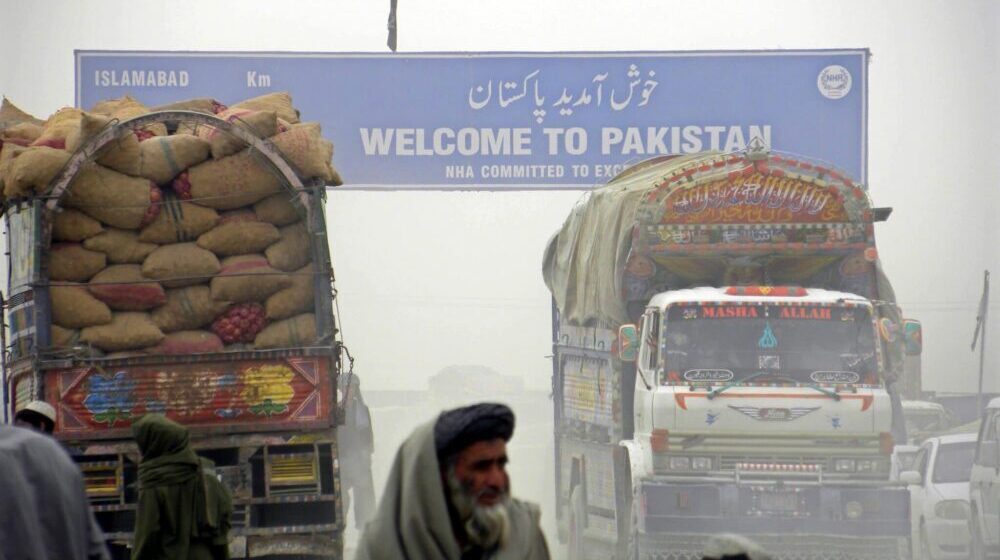
Pakistan decided a couple of days ago to relax trade conditions with Afghanistan, including barter trade and transactions in Pakistani rupee and wants border facilities to operate round the clock to facilitate coal imports from Afghanistan throughout the night. At present, trade facilities at border points operate only during day time and most of the time is consumed in movement of people and import of Afghan fruits and vegetables into Pakistan.

The federal cabinet on Friday approved amendments in Paragraph 3(1) of the Import Policy Order 2022 to allow import of goods of Afghan origin against Pak rupee and without the requirement of Importers Electronic I-Form (EIF) forms for a period of one year. However, Afghan exporters will provide a Certificate of Origin issued by Afghan Customs proving that the goods have originated from Afghanistan.

The decision was taken in view of political and economic situation in Afghanistan. The absence of formal banking infrastructure transactions had badly impacted the trade between the two countries. Afghanistan would benefit from the relaxation that has already been in place for 14 items since April 14 this year to facilitate Afghan traders exporting fruits to Pakistan.

Also, on the request of the World Food Programme (WFP) of the United Nations, Pakistan has made a reservation of 120,000 tonnes of wheat for Afghanistan from the imported wheat stock of PASSCO on the latest import price in view of the situation in the brotherly neighbour and on humanitarian ground.

The amount of supplied wheat along with cost and incidentals would be charged in US dollar. The wheat will be locally ground into flour and supplied to Afghanistan by WFP, subject to relaxation of ban on the export of flour to the extent of the instant proposal of 120,000 tonnes of wheat, an official announcement said.

Earlier this month, Pakistan started importing coal from Afghanistan for its power plants, particularly 1,320MW Sahiwal Coal Power Project in Punjab in view of record making coal prices in the international market.

Power Minister Engineer Khurram Dastgir Khan had reported on July 7 that a major progress on import of coal from Afghanistan had been made and 1,320MW Sahiwal Coal Power Project had reached an agreement with a private Afghan entity for coal supplies with active facilitation of Pakistan and Afghan governments. According to the power minister, another 1,320MW China-Hubco Coal Power Plant was in negotiation for the procurement of Afghan coal.

Mr Khan had, however, declined to share the details of the agreement, saying these would become public once these were submitted to the National Electric Power Regulatory Authority (Nepra) for tariff approval. The minister had confirmed that the Afghan government had increased duty on coal export from $90 to $200 per tonne and still it was cheaper than international imports from elsewhere as coal prices had gone beyond $400 per tonne from $90 a few months ago. He said that the best thing was that the trade would be in Pak rupee which will help the government in saving foreign exchange.

The Pakistani delegation will hold discussions with Afghan authorities on how to streamline coal supplies on permanent basis and would request the interim Afghan government to ensure round-the-clock border operations to ensure uninterrupted coal supplies, particularly in the night. The delegation would also raise the issue of incre­ased duties on coal supplies to Pakistan.

US terms Imran’s claim disturbing, looks ahead to strong ties

Addressing a convention of Pakistani physicians in Atlantic City, New Jersey, Director Pakistan Desk Neil W. Hop described US-Pakis­tan relations as “a partnership we cannot do without”.

“We have to work with Pakistan in tackling global affairs. It is a partnership that is essential for us,” he said.

Mr Hop said that a Paki­stani delegation would visit Washington on July 25 for the largest ever health talks between the two countries.

Pakistan’s Ambassador Masood Khan said that the US-Pakistan relations had already stabilised and were “poised to become even better” in the near future.

A former Pakistani ambassador to the US, Jalil Abbas Jilani, however, acknowledged that relations were passing through a difficult phase and suggested “the revival of structured high-level dialogue” to keep the partnership on track.

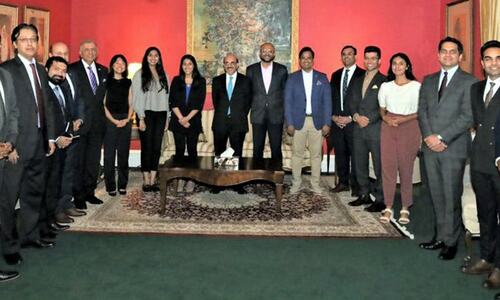
Ambassador Khan suggested strong commercial ties between the two countries, reminding American investors that “Pakistan has a large and vibrant Middle class and offers great opportunities for investment.”

Responding to a question about former prime minister Imran Khan’s claim of alleged US interference in Pakistan’s domestic politics, Hop said: “It’s very disturbing. There’s absolutely no truth in those allegations. We support a strong, democratic setup in Pakistan. We have no interests in its domestic politics.”

Jilani said the entire episode was very tragic, adding that he has had personal relations with the US official, Donald Lu, implicated in this alleged conspiracy. “He has positive feelings for Pakistan and has rejected involvement in any conspiracy,” he said.

Hop too called Lu a thorough “professional who cannot make such statements.”

Jilani suggested tackling this and other similar issues “in a discreet and dispassionate fashion”.

Sri Lanka crisis is a warning to other Asian nations

“Countries with high debt levels and limited policy space will face additional strains. Look no further than Sri Lanka as a warning sign,” said IMF Managing Director Kristalina Georgieva on Saturday.

She said developing nations had also been experiencing sustained capital outflows for four months in a row, putting their dreams of catching up with advanced economies at risk.

Sri Lanka is struggling to pay for crucial imports like food, fuel and medicine for its 22 million people as it battles a foreign exchange crisis. Inflation has soared about 50%, with food prices 80% higher than a year ago. The Sri Lankan rupee has slumped in value against the US dollar and other major global currencies this year.

Many blame ex-President Gotabaya Rajapaksa for mishandling the economy with disastrous policies whose impact was only exacerbated by the pandemic.

Over the years, Sri Lanka had built up a huge amount of debt – last month, it became the first country in the Asia Pacific region in 20 years to default on foreign debt.

Officials had been negotiating with the IMF for a $3bn (£2.5bn) bailout. But those talks are currently stalled amid the political chaos.

But the same global headwinds – rising inflation and interest rate hikes, depreciating currencies, high levels of debt and dwindling foreign currency reserves – also affect other economies in the region.

China has been a dominant lender to several of these developing nations and therefore could control their destinies in crucial ways. Buy it’s largely unclear what Beijing’s lending conditions have been, or how it may restructure the debt.

Where China is at fault, according to Alan Keenan from International Crisis Group, is in encouraging and supporting expensive infrastructure projects that have not produced major economic returns.

“Equally important has been their active political support for the ruling Rajapaksa family and its policies… These political failures are at the heart of Sri Lanka’s economic collapse, and until they are remedied through constitutional change and a more democratic political culture, Sri Lanka is unlikely to escape its current nightmare.”

Worryingly, other countries appear to be on a similar trajectory.

Laos

The landlocked East Asian nation of more than 7.5 million people has been facing the risk of defaulting on its foreign loans for several months.

Now, a rise in oil prices because of the Russian invasion of Ukraine has put further strain on fuel supplies, pushing up the cost of food in a country where an estimated third of people live in poverty.

Local media outlets have reported long lines for fuel, and said some households had been unable to pay their bills.

Laos’ currency, the kip, has been plunging and is down by more than a third against the US dollar this year.

Higher interest rates in the US have strengthened the dollar, and weakened local currencies, increasing their debt burden and making imports costlier.

Laos, which is already heavily in debt, is struggling to repay those loans or or pay for imports like fuel. The World Bank says the country had $1.3bn of reserves as of December last year.

But its total annual external debt obligations are around the same amount until 2025 – equivalent to about half of the country’s total domestic revenue.

As a result, Moody’s Investor Services last month downgraded the communist-ruled nation to “junk”, a category in which debt is considered high risk.

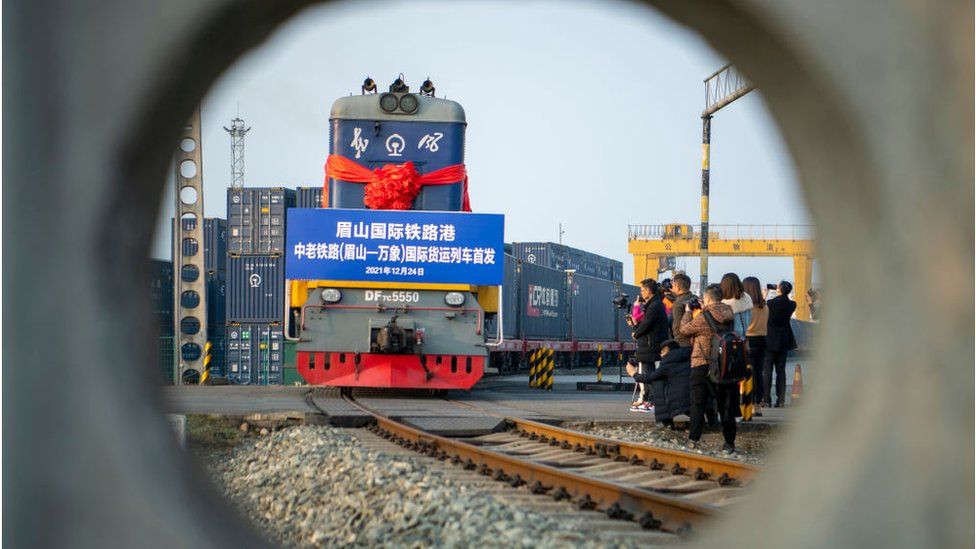
China has loaned Laos huge amounts of money in recent years to fund big projects like a hydropower plant and a railway. According to Laotian officials speaking to Chinese state news agency Xinhua, Beijing has undertaken 813 projects worth more than $16bn last year alone.

China has been extending loans to Laos, which is thought to be on the brink of bankruptcy

Laos’ public debt amounted to 88% of its Gross Domestic Product (GDP) in 2021, according to the World Bank, with almost half of that figure owed to China.

Experts point to years of economic mismanagement in the country, where one party – the Lao People’s Revolutionary Party – has held power since 1975.

But Moody’s Analytics has flagged increased trade with China and the export of hydroelectricity as positive developments. “Laos has a fighting chance of avoiding the danger zone and the need for a bailout,” economist Heron Lim said in a recent report.

Pakistan

Fuel prices in Pakistan are up by around 90% since the end of May, after the government ended fuel subsidies. It’s trying to rein in spending as it negotiates with the IMF to resume a bailout programme.

The economy is struggling with the rising cost of goods. In June, the annual inflation rate hit 21.3%, the highest it has been in 13 years.

Like Sri Lanka and Laos, Pakistan also faces low foreign currency reserves, which have almost halved since August last year.

It has imposed a 10% tax on large-scale industry for one year to raise $1.93bn as it tries to reduce the gap between government revenue and spending – one of the IMF’s key demands.

“If they are able to unlock these funds, other financial lenders like Saudi Arabia and the UAE [United Arab Emirates] may be willing to extend credit,” Andrew Wood, sovereign analyst at S&P Global Ratings told the BBC.

Former Prime Minister Imran Khan who vowed to fix some of these problems, was ousted from power although the faltering economy is not the only reason for that.

Pakistan is the world’s biggest importer of tea, known locally as “chai”, paying more than $515m a year to bring in the commodity

Again China plays a role here, with Pakistan reportedly owing more than a quarter of its debt to Beijing.

“Pakistan appears to have renewed a commercial loan facility vis-a-vis China and this has added to its foreign exchange reserves and there are indications they will reach out to China for the second half of this year,” Mr Wood added.

Maldives

The Maldives has seen its public debt swell in recent years and it’s now well above 100% of its GDP.

Like Sri Lanka, the pandemic hammered an economy that was heavily reliant on tourism.

Countries that depend so much on tourism tend to have higher public debt ratios, but the World Bank says the island nation is particularly vulnerable to higher fuel costs because its economy is not diversified.

US investment bank JPMorgan has said the holiday destination is at risk of defaulting on its debt by the end of 2023.

Bangladesh

Inflation hit an 8-year high in May in Bangladesh, touching 7.42%.

With reserves dwindling, the government has acted fast to curb non-essential imports, relaxing rules to attract remittances from millions of migrants living overseas and reducing foreign trips for officials.

“For economies running current account deficits – such as Bangladesh, Pakistan and Sri Lanka – governments face serious headwinds in increasing subsidies. Pakistan and Sri Lanka have turned to the IMF and other governments for financial assistance,” Kim Eng Tan, a sovereign analyst at S&P Global Ratings, told the BBC.

“Bangladesh has had to re-prioritise government spending and impose restrictions on consumer activities,” he said.

Rising food and energy prices are threatening the pandemic-battered world economy. Now developing nations that have borrowed heavily for years are finding that their weak foundations make them particularly vulnerable to global shockwaves.

The UK could have its hottest day on record on Monday, with temperatures forecast to hit up to 41C.

The Met Office has issued a red warning for heat across large parts of England, stretching from York and Manchester to London and the south-east.

The current highest temperature in the UK is 38.7C, in Cambridge in 2019.

High temperatures are also forecast in the rest of the UK – with amber warnings in the rest of England, all of Wales, and parts of Scotland.

London is set to be one of the hottest places in the world on Monday, with temperatures soaring above the Western Sahara and the Caribbean.

The capital is forecast to be hotter than Dakhla in Western Sahara (24C), Nassau in the Bahamas (32C), Kingston in Jamaica (33C), Malaga in Spain (28C) and Athens in Greece (35C).

The hot weather will continue on Tuesday – with overnight temperatures warned to be in the mid twenties – before cooling on Wednesday.

It is the first time the Met Office has issued a red warning since the system was introduced last year.

It means “widespread impacts on people and infrastructure” are expected, with “substantial changes in working practices and daily routines” required.

Some schools plan to close early – or not open at all – although the government has issued guidance designed to keep them open.

Network Rail said people should travel only “if absolutely necessary” on Monday and Tuesday, with some cancellations already announced, and speed restrictions in place across the network.

LNER will not run services between London and Leeds and York for much of Tuesday.

A woman keeping cool on the London Underground on Sunday

Alongside the Met Office’s red and amber warnings, the UK Health Security Agency has issued a level four warning for England, which the government is treating as a “national emergency”.

After an emergency Cobra meeting for ministers on Saturday, Health Secretary Steve Barclay said ambulance capacity would increase, alongside more call handlers.

Sunday was the hottest day of the year so far with temperatures reaching 33C in Flintshire, 32C in Cheshire, 27.7C in Armagh in Northern Ireland, and 26.4C at Auchincruive in Ayrshire.

Beaches across the country were packed, and people have been warned to take care if they cool off in water.

On Saturday evening, a 16-year-old boy died after swimming in Salford Quays, while a man is missing after entering a reservoir in West Yorkshire.

Water companies in southern and eastern England have warned increased demand is leading to low pressure – and even interrupted supply – for some households.

Experts have urged people to drink water, keep their curtains closed where possible, and to check on friends and relatives.

“In this country we’re used to treating a hot spell as a chance to go and play in in the sun,” said Prof Penny Endersby, Met Office chief executive. “This is not that sort of weather.”

Heatwaves have become more frequent, more intense, and last longer because of human-induced climate change.

The world has already warmed by about 1.1C since the industrial era began and temperatures will keep rising unless governments around the world make steep cuts to emissions.

UK climate chief could quit amid discord on target

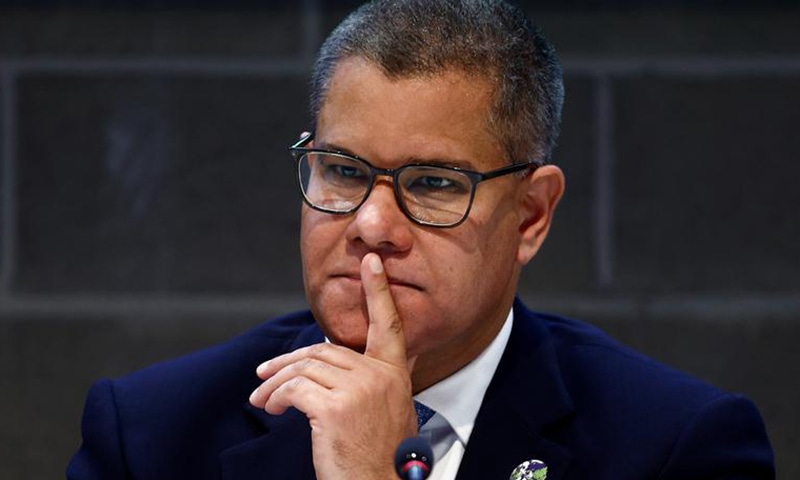
The intervention by COP26 president Alok Sharma came as a poll of Tory rank-and-file members, who will have the final say out of the two finalists, gave a surprise double-digit lead to outsider Kemi Badenoch.

Foreign Secretary Liz Truss was second, narrowly ahead of former grassroots favourite Penny Mordaunt and ex-finance minister Rishi Sunak, according to the unscientific poll by the ConservativeHome website.

Badenoch, a former junior minister with no cabinet experience, is running on an “anti-woke”, right-wing platform and has said net zero amounts to “unilateral economic disarmament” by Britain.

“Green levies”, backed by Sunak to help pay for the legally enshrined aim of achieving net-zero carbon emissions by 2050, have also been questioned by Truss and Mordaunt as Britons struggle with a cost-of-living crisis.

But with Britain facing record-breaking temperatures this week, Sharma told Sunday’s Observer newspaper that the target was “absolutely a leadership issue”, as the candidates wage an acrimonious battle to succeed scandal-tainted Prime Minister Boris Johnson.

“Anyone aspiring to lead our country needs to demonstrate that they take this issue incredibly seriously, that they’re willing to continue to lead and take up the mantle that Boris Johnson started off,” the minister said. Asked if he could resign if candidates showed weakness on net zero, Sharma said: “Let’s see, shall we? I think we need to see where the candidates are.

And we need to see who actually ends up in Number 10 (Downing Street Under Sharma’s chairmanship, nearly 200 countries pledged at a UN summit in Glasgow last Nove­mber to speed up the fight against rising temperatures, after two weeks of marathon negotiations.

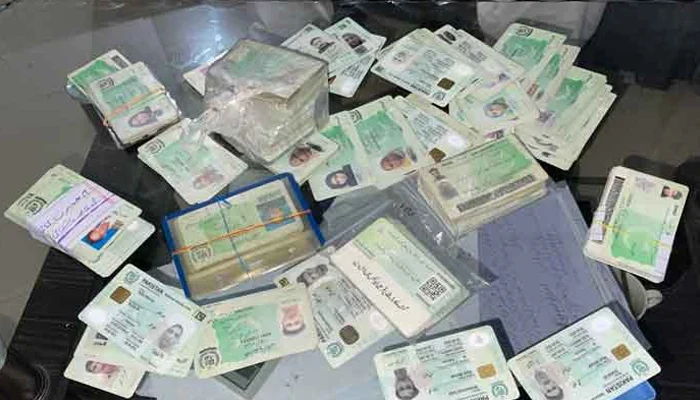
200 CNICs recovered from PTI worker in Lahore ahead of by-polls

LAHORE: As many as 200 identity cards were recovered Saturday from Khalid Sindhu, a PTI worker, from Lahore’s Factory Area just a day before the crucial by-elections in the city’s four constituencies.

The police said that Sindhu was planning to buy votes through ID cards in the PP-168 constituency.

He bought the voters’ ID cards in several union councils (UCs) of PP-168, Lahore, in exchange for money.

Police said that Sindhu revealed that some people demanded Rs2,000 and others Rs3,000 in exchange for their ID cards. Following his arrest, police registered a case against the PTI worker.


Punjab will witness intense political activity tomorrow (Sunday) as the make-or-break by-elections on 20 provincial constituencies will take place — that will decide who will become the next chief minister of the province.

The 20 seats fell vacant after the Election Commission of Pakistan (ECP) “de-seated” 25 PTI dissident lawmakers on May 23 — which included five lawmakers elected on reserved seats for women and minorities — for voting against PML-N’s Hamza Shehbaz in the Punjab chief minister’s election.

‘No instructions given by me’: Farrukh Habib

PTI senior leader Farrukh Habib responded to a video going viral on social media, saying that the “chat leaked by the PML-N does not indicate that I gave instructions to collect ID cards.”

A video has been circulating on the internet which shows a chat between Habib and Sindhu that took place on June 29, 2022. It shows Sindhu sending a bunch of pictures of ID cards to the PTI leader that he allegedly bought on his instructions.

To this, Habib said that he is only campaigning in this constituency, circulating the party’s message and mobilising.

He added that the [PML-N} created fake chats. “I have met this person [Sindhu] only once in the last week of June. I did not meet him after that neither directed him to do something,” said Habib.

Armenia, Azerbaijan FMs hold first bilateral talks

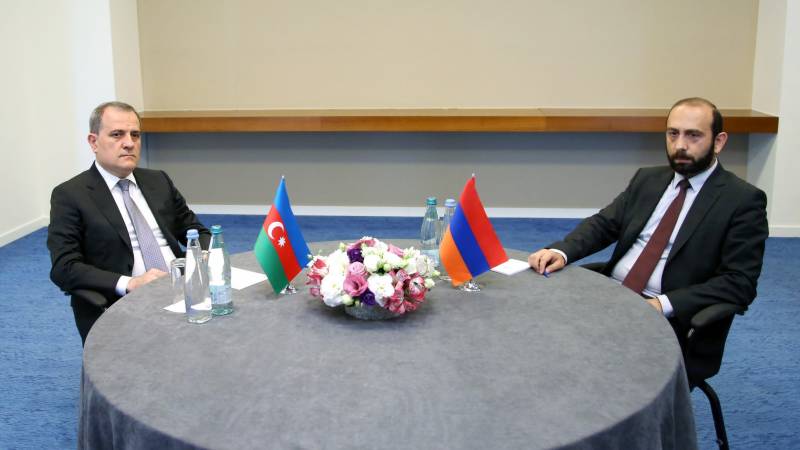
The foreign ministers of Armenia and Azerbaijan on Saturday held their first one-on-one talks since the 2020 war between the arch-foes for control of the disputed Nagorno-Karabakh region, officials said.

Held in the Georgian capital Tbilisi, the talks were expected to build on an agreement the Caucasus countries’ leaders reached under EU mediation in May to “advance discussions” on a future peace treaty.

Armenian Foreign Minister Ararat Mirzoyan and his Azerbaijani counterpart Jeyhun Bayramov “discussed a wide range of issues related to normalising relations between the two countries,” the Armenian foreign ministry said in a statement.

Mirzoyan “stressed the importance of the Karabakh conflict’s political resolution for building a lasting peace in the (Caucasus) region” and called on Baku to release Armenian POWs, the ministry said.

The Azerbaijani foreign ministry said Bayramov demanded “the withdrawal of the Armenian armed forces from the territory of Azerbaijan,” referring to the parts of Karabakh still under Armenian separatists’ control.

He also “noted the importance of clarifying the fates of nearly 4,000 missing Azerbaijanis,” the foreign ministry in Baku said.

“The ministers pledged to continue the direct dialogue between Azerbaijan and Armenia.”

The atmosphere was tense ahead of the meeting as both countries’ defence ministries traded accusations of initiating an overnight shootout at their shared border.

Armenia and Azerbaijan fought two wars — in 2020 and in the 1990s — over Azerbaijan‘s Armenian-populated region of Nagorno-Karabakh.

Six weeks of fighting in autumn 2020 claimed more than 6,500 lives and ended with a Russian-brokered ceasefire agreement.

Under the deal, Armenia ceded swathes of territory it had controlled for decades, and Russia deployed some 2,000 peacekeepers to oversee the fragile truce.

Following its invasion of Ukraine on February 24, increasingly isolated Moscow lost its status as a primary mediator in the conflict.

The European Union has since led the Armenia-Azerbaijan normalisation process, which involves peace talks, border delimitation and the reopening of transport links.

Aliyev and Armenian Prime Minister Nikol Pashinyan met in Brussels in April and May and European Council President Charles Michel has said their next meeting is scheduled for July or August.

Ethnic Armenian separatists in Nagorno-Karabakh broke away from Azerbaijan when the Soviet Union collapsed in 1991. The ensuing conflict claimed around 30,000 lives.

31 dead in Sudan tribal clashes near Ethiopia border

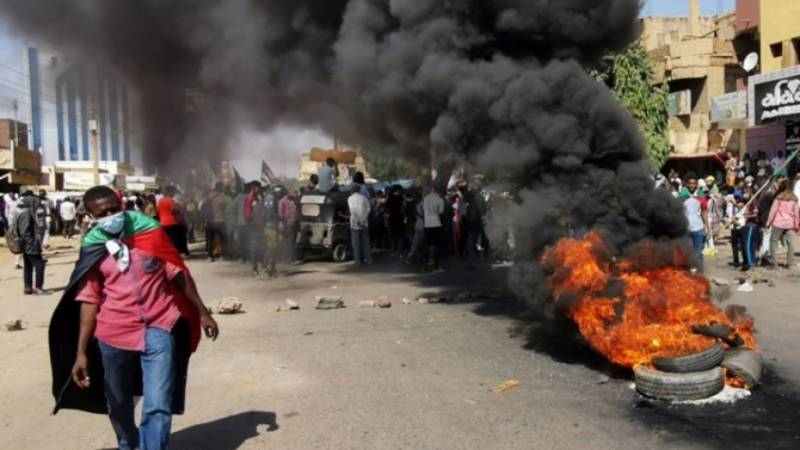
At least 31 people have been killed in clashes this week between two tribes in Sudan‘s Blue Nile state bordering Ethiopia, the security services said on Saturday.

They added that another 39 people had been wounded and 16 shops torched during the violence, which erupted on Monday over a land dispute between the Berti and Hawsa tribes.

Soldiers were deployed and a night curfew was imposed on Saturday, a day after Blue Nile governor Ahmed al-Omda issued an order prohibiting any gatherings or marches for one month.

An urgent appeal for blood donations was launched by hospitals for the treatment of casualties from the unrest, according to medical sources.

The violence broke out after the Berti tribe rejected a Hawsa request to create a “civil authority to supervise access to land”, a prominent Hawsa member told AFP on condition of anonymity.

But a senior member of the Bertis said the tribe was responding to a “violation” of its lands by the Hawsas.

The Qissan region and Blue Nile state more generally have long seen unrest, with southern guerrillas a thorn in the side of Sudan‘s former strongman president Omar al-Bashir, who was ousted by the army in 2019 following street pressure.

Experts say the coup created a security vacuum that has fostered a resurgence in tribal violence, in a country where deadly clashes regularly erupt over land, livestock, access to water and grazing.