
Saudi Crown Prince hits back at US president

Saudi officials indicated Saturday they were keen to move on from the killing of journalist Jamal Khashoggi, one day after US President Joe Biden raised it in his talks with Crown Prince Mohammed bin Salman.

Tensions between the two men had been high ahead of their first meeting, especially after Biden’s administration last year released an assessment by the intelligence community that Prince Mohammed “approved” the operation that led to Khashoggi’s killing and dismemberment in the kingdom’s Istanbul consulate.

In remarks Friday night, Biden called Khashoggi’s death “outrageous” and said he had warned Prince Mohammed against further attacks on dissidents, without specifying what actions he might take.

The Al-Arabiya channel quoted a Saudi official saying the pair “addressed the issue of Jamal Khashoggi quickly” and that Prince Mohammed “confirmed that what happened is regrettable and we have taken all legal measures to prevent” a recurrence.


Prince Mohammed also pointed out that “such an incident occurs anywhere in the world”, highlighting “a number of mistakes” made by Washington such as torturing detainees at Abu Ghraib prison in Iraq, Al-Arabiya reported.

In an interview with CNN, Adel al-Jubeir, minister of state for foreign affairs, cast doubt on the intelligence community’s determination that Prince Mohammed ordered the 2018 operation, something Prince Mohammed has denied.

“We know what the intelligence community’s assessment was with regard to Saddam Hussein having weapons of mass destruction,” Jubeir shot back in an exchange with Wolf Blitzer shared widely on Saudi social media.


Accusations that the Iraqi dictator had such weapons trigged the 2003 Iraq War. None were found.

‘Double standards’ 

Jubeir also made clear the kingdom believed the Khashoggi affair had been sufficiently dealt with, even though Khashoggi’s remains have never been found.

A Saudi court in 2020 jailed eight people for between seven and 20 years over the killing. Their names were never released, and Khashoggi’s fiancee branded the ruling a “farce”.

“The Kingdom of Saudi Arabia investigated this crime. The Kingdom of Saudi Arabia held those responsible for it accountable, and they are paying the price of the crime they committed as we speak,” Jubeir said.

“We investigated, we punished and we put in place procedures to ensure this doesn’t happen again. This is what countries do in situations like this.”

Despite lingering discord over the Khashoggi affair, the meeting between Prince Mohammed and Biden “went well with a frank exchange of opinions,” Ali Shihabi, a Saudi analyst, told AFP.

Prince Mohammed “responded to Biden, pointing out US double standards of making a huge noise about Khashoggi (a Saudi) while trying their best to downplay the assassination of Shireen Abu Akleh even though she is a US citizen,” Shihabi said, referring to the Palestinian-American journalist shot dead in May while covering an Israeli army raid in the West Bank.

Undermining rights pledges

It took less than 24 hours in Saudi Arabia for US President Joe Biden to tarnish an image he has long cultivated: that of a fierce defender of human rights.

The life of any politician is dotted with campaign pledges that ultimately backfire, and for Biden that list now includes his 2019 vow to make the desert kingdom a “pariah” over its human rights record.

Similarly his solemn description, delivered last year on US Independence Day, of Washington’s role on the global stage: “We stand as a beacon to the world.”

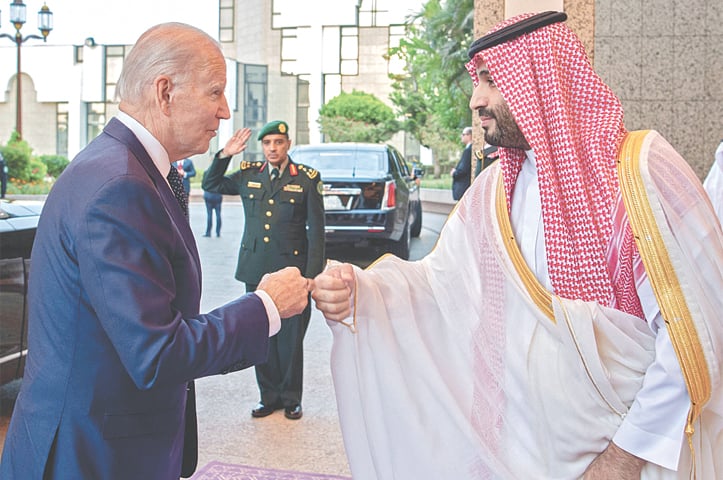
It was difficult for many to reconcile those words with the single-most searing image from Biden’s first visit to the Middle East as president: his fist-bump with Saudi Crown Prince Mohammed bin Salman.

US intelligence officials believe the crown princeSaudi Arabia‘s de facto leader, “approved” the 2018 operation that led to the killing and dismemberment of journalist Jamal Khashoggi.

Taken outside a palace in the Red Sea coastal city of Jeddah, the fist-bump image was immediately distributed by official Saudi news outlets before doing the rounds on social media.

It eventually landed on the front page of The Washington Post, where Khashoggi was a contributing columnist.

– ‘Shameful’ –

Prior to Biden’s arrival in Jeddah, the White House took several measures to try to mitigate blowback from an encounter it knew was coming.

Biden published a column in the Post explaining his reasons for making the trip, saying he wanted to “strengthen a strategic partnership” while insisting that “fundamental freedoms are always on the agenda when I travel abroad”.

At the start of the tour, which took him to Jerusalem and Bethlehem before Jeddah, his communications team said Biden would limit physical contact with those he met, citing coronavirus concerns.

Some journalists immediately speculated that the measures — which Biden ended up not fully adhering to — were motivated less by public health and more by fear of an awkward photo-op with Prince Mohammed, often referred to by his initials, MBS.

In the end, the first-bump in Jeddah “was worse than a handshake — it was shameful”, the Post’s CEO Fred Ryan said in a statement.

“It projected a level of intimacy and comfort that delivers to MBS the unwarranted redemption he has been desperately seeking.”

The travelling press corps wasn’t present for the scene. By the time they arrived at the palace in Jeddah, the two leaders had already gone inside.

But soon the “fist-bump” was inescapable, broadcast on a seemingly constant loop by state media and Saudi government social media accounts.

White House-accredited journalists faced further restrictions as Biden held his meetings with the Saudi leadership.

They were only allowed in briefly for a meeting of the American and Saudi government delegations, and they were kept some distance from the negotiating table.

Brief statements from Biden and Prince Mohammed were rendered inaudible as boom microphones were not permitted.

– ‘Autocrats are smiling’ –

After his meetings with Saudi royals ended Friday evening, the White House hastily arranged for Biden to deliver brief remarks and take a few questions.

Biden told journalists he had raised the Khashoggi case “at the top” of his meeting with Prince Mohammed, adding that he’d made clear “what I thought of it at the time and what I think of it now”.

On Saturday, Biden told leaders from nine Arab nations assembled for a summit that “the future will be won by countries that unleash the full potential of their populations… where citizens can question and criticise leaders without fear of reprisal”.

But the fist-bump had already become the tour’s defining shot.

Earlier, in Israel, Biden explained his decision to go to Saudi Arabia by appearing to allude to the political compromise it represented.

“My views on Khashoggi have been absolutely, positively clear, and I have never been quiet about talking about human rights,” he told a press conference.

But beyond human rights, Biden said the trip was intended “to promote US interests”, a likely nod to the need to push for more oil production from the world’s biggest crude exporter, as rising gas prices hurt his party’s prospects ahead of November mid-term elections.

Back home in the US, Biden got no sympathy from human rights activists.

“The autocrats of the world are smiling,” Kenneth Roth, the executive director of Human Rights Watch, said on Twitter.

“Biden’s support for human rights can be sold for a smidgen of oil.”

US won’t ‘walk away’ from Middle East

President Joe Biden assured Arab leaders the United States would remain fully engaged in the Middle East, as he wrapped up his first tour of the region since taking office.

“We will not walk away and leave a vacuum to be filled by China, Russia or Iran,” Biden said during a summit in Jeddah, on the Red Sea coast of Saudi Arabia.

US ties to Gulf powers in particular have been roiled by multiple issues in recent years, notably Washington’s push for a deal to curb Iran’s suspect nuclear programme and its tepid response to attacks on Saudi oil facilities in 2019 claimed by Yemen’s Iran-backed Huthi rebels.

The summit, the final stop of Biden’s Middle East tour, brought together the six members of the Gulf Cooperation Council as well as Egypt, Jordan and Iraq.


Biden had been looking to use the trip to discuss volatile oil prices and outline his vision for Washington’s role in the region.

On Friday he met Saudi King Salman and Crown Prince Mohammed bin Salman, the kingdom’s de facto ruler who US intelligence agencies assess “approved” the 2018 operation that killed journalist Jamal Khashoggi.

After a fist-bump with Prince Mohammed, Biden said he raised the Khashoggi case and warned against future attacks on dissidents.

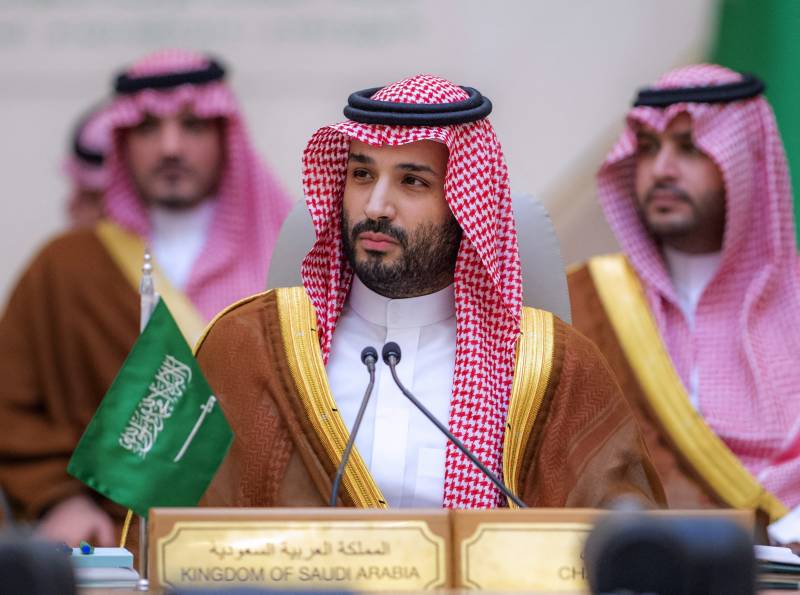
Prince Mohammed, who chaired the opening of Saturday’s summit, has denied any role in the death of Khashoggi, who was dismembered in the kingdom’s Istanbul consulate and whose remains have never been found.

Biden told the assembled Arab leaders that “the future will be won by countries that unleash the full potential of their populations… where citizens can question and criticise leaders without fear of reprisal”.

– Ukraine tensions –

Air Force One took off from Jeddah at around 5:00 pm (1400 GMT) on Saturday, bringing Biden’s four-day visit to a close.

Hours later a joint statement was released in which the leaders committed to “preserve regional security and stability” and deepen their defense and intelligence cooperation.

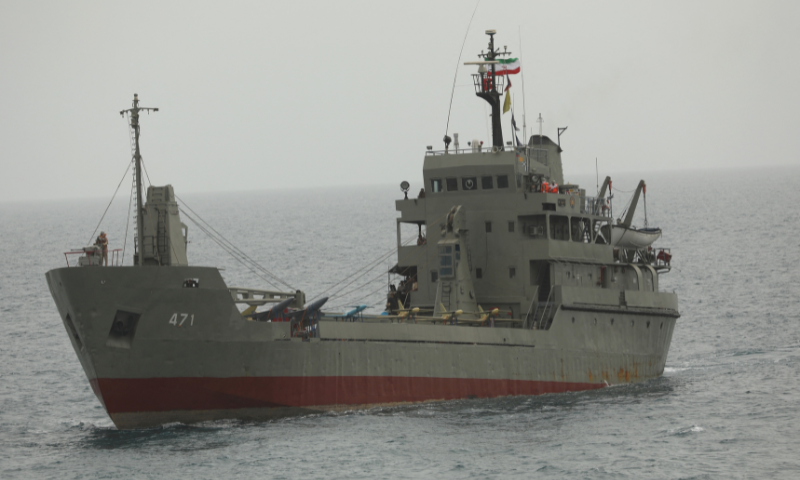
It also underscored diplomatic efforts to prevent Iran from developing a nuclear weapon, and notably called for enhanced joint deterrence capabilities “against the increasing threat” posed by unmanned aerial vehicles — a likely reference to Tehran, which on Friday unveiled ships capable of carrying armed drones.

Biden said Washington would commit $1 billion in food aid to the Middle East and North Africa amid rising food insecurity induced by the war in Ukraine.

Russia’s invasion of Ukraine has exposed a once unthinkable divergence between Washington and key Middle East allies Saudi Arabia and the United Arab Emirates, the oil giants that are increasingly independent on the international stage.

The wealthy Gulf nations, which host US forces and have dependably backed Washington for decades, have notably refrained from supporting the Biden administration as it tries to choke Moscow’s lifelines, from energy to diplomacy.

Analysts say the new position reveals a turning point in Gulf relations with the United States, long the region’s protector against neighbour Iran.

In their joint statement, the leaders “recognized ongoing efforts of OPEC+ towards stabilizing the global oil market,” and welcomed the recent announcement by the Organization of Petroleum Exporting Countries to “increase supply over the course of July and August.”

– Push for oil –

Saturday brought some conciliatory gestures, with Biden inviting Emirati leader, Sheikh Mohamed bin Zayed Al-Nahyan, to visit the White House before the year is up.

And in his summit remarks, Saudi Prince Mohammed said he hoped it would “establish a new era of joint cooperation to deepen the strategic partnership between our countries and the United States of America, to serve our common interests and enhance security and development in this vital region for the whole world.”

Riyadh and Washington signed 18 agreements Friday on areas including energy, space, health and investment, including developing 5G and 6G technology, a Saudi statement said.

The two nations, in a joint statement, also voiced a “commitment to the stability of global energy markets,” while acknowledging the importance of cooperation “in light of the current crisis in Ukraine and its repercussions.”

Saudi Arabia agreed to link the electricity networks of the Gulf Cooperation Council to Iraq, which relies heavily on energy from Iran, “in order to provide Iraq and its people with new and diversified electricity sources,” the White House said.

Washington wants Riyadh to open the oil floodgates to bring down soaring gasoline prices, which threaten Democratic chances in November mid-term elections.

But Biden on Friday tried to tamp down expectations his trip would yield immediate gains.

“I’m doing all I can to increase the supply for the United States of America,” he said.

– Israeli ties –

White House officials used the trip as a bid to promote integration between Israel and Arab nations.

That process appeared to get a boost Friday when Saudi Arabia announced it was lifting restrictions on civilian air carriers, a move that allows flights to and from Israel to use its airspace for the first time.

But Saudi foreign minister Prince Faisal bin Farhan told reporters after Biden’s departure that the move had nothing to do with Israel and was “not in any way a precursor to any further steps”.
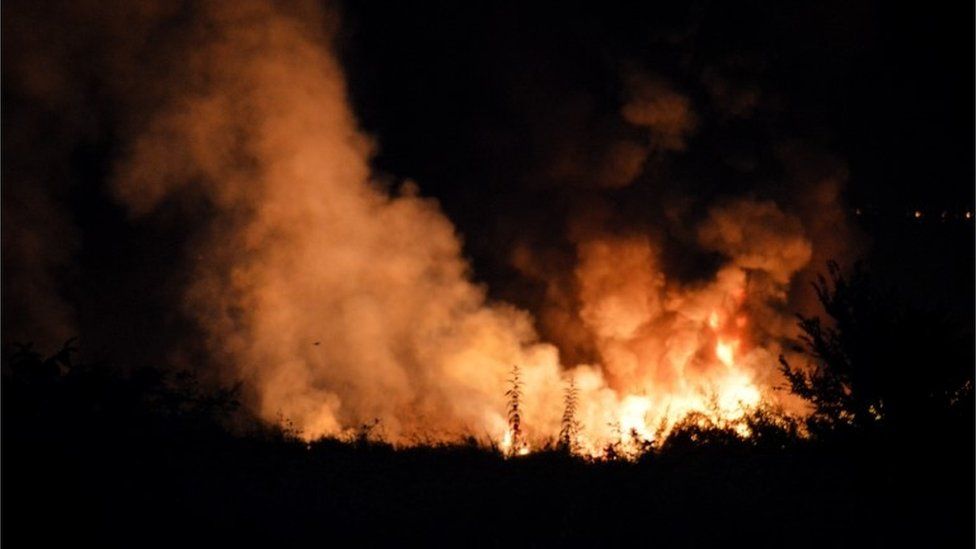
A cargo plane has crashed near the city of Kavala in northern Greece, local officials say

The Antonov-12 operated by a Ukraine-based company was flying from Serbia to Jordan when it went down on Saturday.

It was not immediately known how many people were on board and whether there were any survivors.

Greece’s ERT state broadcaster reported that the aircraft had been carrying a 12-tonne cargo, describing it as potentially dangerous.

The pilot reportedly requested an emergency landing at Kavala airport due to an engine problem but was unable to reach the runway.

Some reports say eight people may have been on board the aircraft.

Footage has emerged purportedly showing the plane already on fire as it descended followed by a large explosion after it hits the ground.

“At 22:45 (19:45 GMT) I was surprised by the sound of the engine of the aircraft,” local resident Giorgos Archontopoulos told the ERT. “I went outside and saw the engine on fire.”

Eyewitnesses also heard blasts according to several media reports.

Local officials said seven fire engines had been deployed but they could not approach the crash site because of continuing explosions.

“We are treating the cargo as dangerous material,” Reuters quoted a fire brigade official as saying.

Greece’s special disaster response unit was also investigating the scene, Reuters reported.

So far there has been no public comment from Ukraine, Serbia or Jordan.

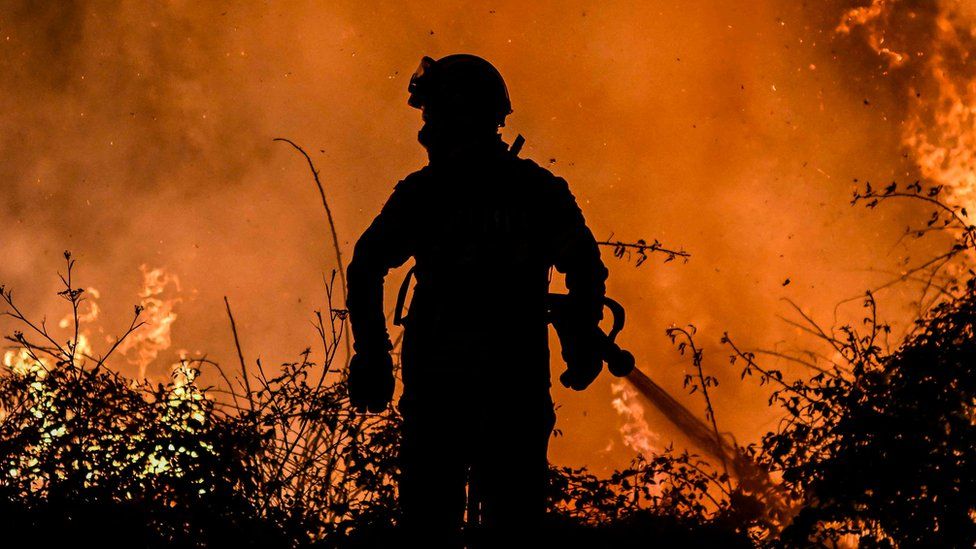
Thousands of firefighters are continuing to battle wildfires in Portugal, Spain and France, as a heatwave shows no sign of easing.

In northern Portugal, a pilot died when his waterbombing plane crashed in the Foz Coa area, near the Spanish border.

The Portuguese authorities say at least 238 people have died from the heat over the past week.

Fires are ravaging areas of France’s south-western Gironde region, where over 12,000 people have been evacuated.

Heatwaves have become more frequent, more intense, and last longer because of human-induced climate change. The world has already warmed by about 1.1C since the industrial era began and temperatures will keep rising unless governments around the world make steep cuts to carbon emissions.

The Frenchweather service has forecast temperatures of up to 41 degrees in parts of the country’s south on Sunday and new heat records are predicted for Monday.

Late on Saturday the country placed 22 more regional departments mostly along its Atlantic coast on high orange alert.

One resident in south-west France described the forest fires as feeling “post-apocalyptic” – “I’ve never seen this before,” Karyn, who lives near Teste-de-Buch, told news agency AFP.

Interior Minister Gerald Darmanin said fires had so far burned 10,000 hectares (25,000 acres) of land and praised firefighters’ “remarkable courage”.

Manon Jacquart was evacuated on Wednesday and has been sleeping in a shelter

Christophe Nader and his son-in-law are now at a shelter near Teste-de-Buch, having been forced to abandoned their house in the village of Cazaux with nothing more than the clothes they are wearing. He told the BBC he was hoping to get back there to rescue their cat. Hundreds of others from the danger zone are also at the temporary shelter, which has provided beds.

Animal rescues are being organised from there, but it is a slow process, the BBC’s Jessica Parker reports.

“Everything went so fast – the fire too, was big, big, big,” Manon Jacquart, 27, told the BBC. She was evacuated from the campsite she works at early on Wednesday morning, and has been sleeping at a shelter near La Teste-de-Buch, on France’s west coast.

“I’m just worried, I’m afraid… I’m trying to be as strong as I can but I’m not ok… I want to forget this week,” she said.

Meanwhile in the Alps climbers are being urged to postpone their trips to Mont Blanc due to the risk of rock falls caused by “exceptional climatic conditions”.

Since Tuesday, temperatures have soared to 47C in Portugal and above 40C in Spain, leaving the countryside bone dry and fuelling the fires.

Portuguese weather forecasters say temperatures will continue hovering above 40C before dropping next week.

Why is it so hot (in under 60 seconds)?

The Portuguese pilot who died was flying solo in a Fire Boss amphibious plane.

Portugal’s fire hotspots are in the north – east of the city of Porto. Fires have destroyed 30,000 hectares (75,000 acres) of land this year – the largest area since the summer of 2017, when Portugal suffered devastating fires in which some 100 people died.

Gemma Suarez, a Spanish farmer evacuated from Casas de Miravete, sobbed as she told Reuters news agency: “What a night. We haven’t slept all night.

“A social worker came to see me to go pick up my elderly uncle. We spent the night in Navalmoral but we didn’t sleep at all. I have never seen such a big fire.”

In southern Spain, holidaymakers on the beach in Torremolinos saw big plumes of smoke rising in the hills, where several aircraft were tackling the blaze.

Ashley Baker, a Briton who lives in Mijas, told the BBC that the fire appeared more threatening on Friday, but since then the wind had blown it away from his area.

Southern Spain: Fires in the Mijas hills are not far from holiday homes

Planes have been a dropping fire retardant substance, as helicopters shuttle to and from the coast, collecting seawater to douse the flames.

“There are about 40 houses in our area, everyone was really nervous and standing outside or on balconies watching it,” Mr Baker said.

“Even now there are fires at the top of the mountains. It moved away from here, I’m very relieved. When you live in the hills, it’s very scary – all the road signs are giving you updates all the time about extreme fire risks.”

Other parts of the Mediterranean are affected too. In Italy, the government has declared a state of emergency in the desiccated Po Valley – the country’s longest river is no more than a trickle in some places.

In Greece, firefighters are tackling blazes in the Feriza area, about 50km (31 miles) south-east of Athens, and near Rethymno, on the north coast of Crete. Seven villages have been evacuated near Rethymno.

In northern Morocco, several villages had to be evacuated as fires swept through the Larache, Ouezzane, Taza and Tetouan provinces. One village was totally destroyed in the Ksar El Kebir area and at least one person died in a blaze.

The Met Office amber warning for extreme heat could be extended to cover a larger part of Scotland, the Scottish government has said.

Temperatures are expected to hit 30C (86F) in parts of southern Scotland on Monday and Tuesday.

Justice Secretary Keith Brown, who attended the UK Cobra emergency committee on Saturday, warned that this could be extended to a wider area.

He urged the public to take “basic precautions” and prepare for the heat.

Mr Brown told BBC Scotland: “It’s getting close to the hottest weather we’ve had in Scotland.

“We have no indication a red warning will be issued, but we do think it’s possible that the amber warning could be extended to larger area than was previously expected.”

A national emergency has been declared in the UK, with the first ever red extreme heat warning issued in England.

Temperatures could reach 41C (106F) in England next week, while the rest of the UK could also see new record highs.

The highest temperature recorded in Scotland was 32.9C (91.2F) at Greycrook in the Borders in August 2003.

Mr Brown said the main concern was for younger and older people.

He said: “We’re asking people to take cover and keep out of direct sun, make sure you’re well hydrated, and look after others who may be suffering from the heat.

“All public services – police, fire, water and health services are making sure they stand ready – we’re asking people to make sure they are ready too and take basic precautions.”

Scottish Water has requested that people help maintain normal supplies by being as efficient as possible with water use.

It urged the public to use watering cans rather than hoses in gardens, not to fill up paddling pools and to take shorter showers.

Susan Powell looks at the high temperatures expected by day and night

The Scottish Environment Protection Agency (Sepa) also advised businesses to reduced their water usage.

Sepa’s head of water and planning, Nathan Crichlow-Watton, said there had been a water scarcity warning every year since 2018 – but this year was “particularly bad”.

“Several businesses rely on the environment for the well-being of their business,” he said.

“They take water – primarily from rivers, but also groundwater – and use it for irrigating crops, watering golf courses or producing whisky for example.

“People think of Scotland as a wet country, but the last six months have had below average rainfall.

“We’re not prepared for the scarcity situations that we’re seeing, and when we need to conserve water the most, people use more of it.”

The Met Office red warning – the highest level – covers an area including London, Manchester and York on Monday and Tuesday.

Southern Scotland and the rest of England and Wales are under an amber warning for extreme heat – while in Europe, deadly wildfires have broken out in Portugal, Spain and southwestern France.

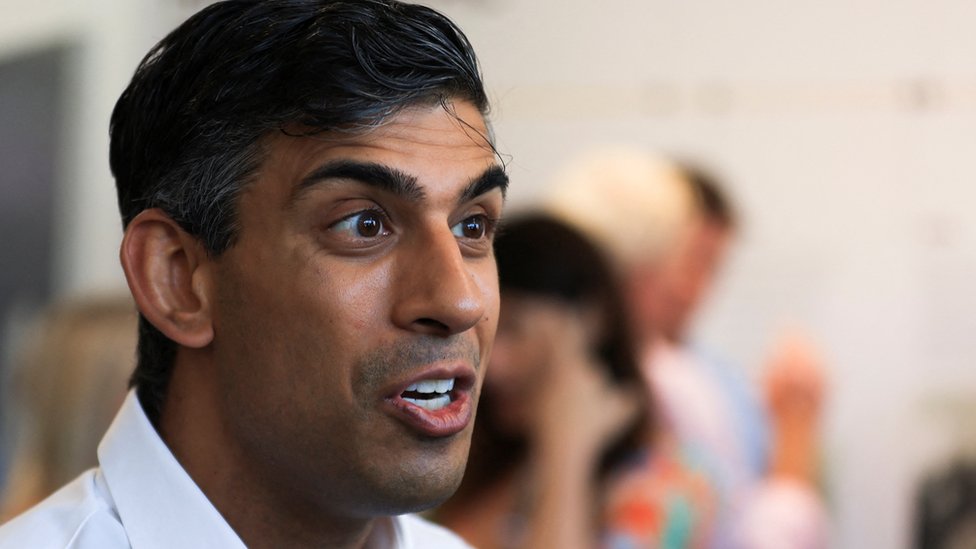
Rishi Sunak has said he will “get a grip of inflation” before cutting tax, if he becomes prime minister.

The former chancellor – who resigned last week after losing faith in Boris Johnson – said inflation was the “number one economic priority”.

“Once we’ve done that, I will deliver tax cuts,” he said.

Meanwhile, Penny Mordaunt – who remains the bookies’ favourite to be new PM – has defended her record as a minister, after criticism from rival camps.

“Look at my record, look at what I’ve done,” Ms Mordaunt told the Daily Telegraph. “I do get stuff done.”

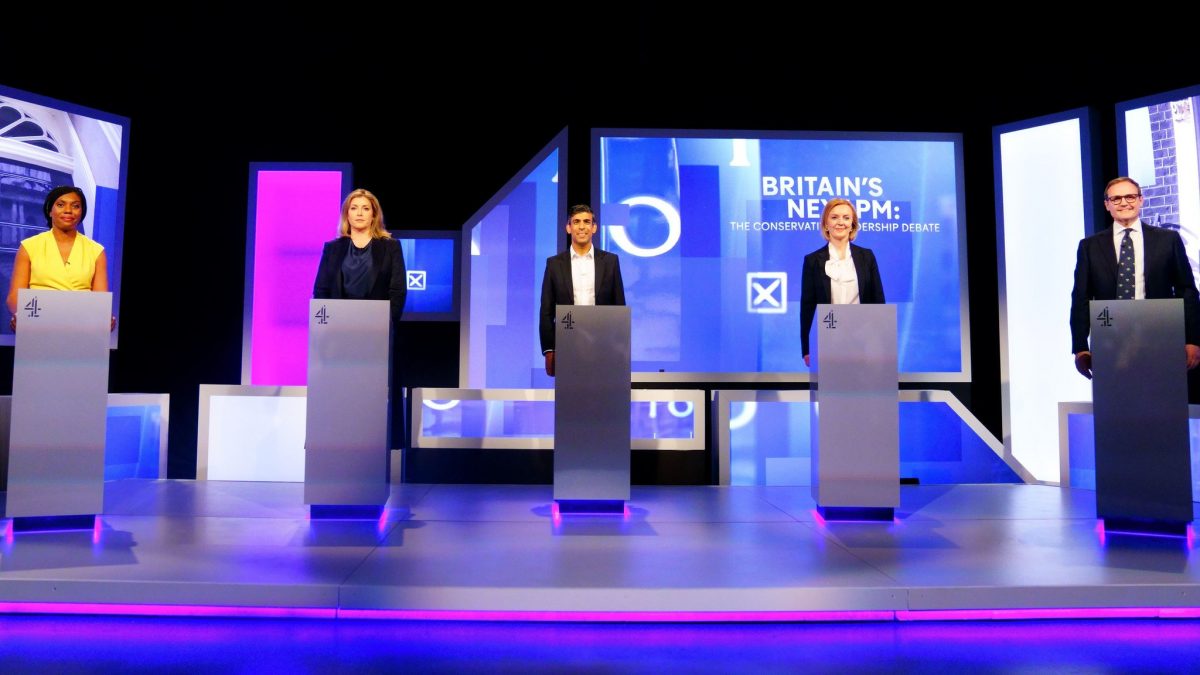
Five Conservative MPs – Mr Sunak, Ms Mordaunt, Liz Truss, Kemi Badenoch, and Tom Tugendhat – are competing to become new party leader, and therefore prime minister.

Tory MPs will whittle the candidates down to two in votes next week, before party members choose the winner.


Mr Sunak was speaking on a visit to Teesside, the day after the five candidates had their first TV debate.

“I think the number one economic priority we face as a country is inflation,” he told the media on his visit.

“I want to get a grip of inflation because inflation is what makes everybody poorer. If we don’t get a grip of it now it will last longer and that is not a good thing.

“Once we’ve done that, I will deliver tax cuts.”

Tax is one of the main dividing lines between the leadership candidates, with some – such as Ms Truss and Ms Mordaunt – promising immediate cuts.

Ms Truss said she would reverse April’s national insurance rise, postpone planned increases in corporation tax, and scrap green levies.

Critics say the plans would cost more than £30bn a year – and at Friday’s debate Mr Sunak said “borrowing your way out of inflation isn’t a plan, it’s a fairy tale”.

The rate of inflation – which measures how quickly prices are rising – is currently 9.1%, and the Bank of England has warned it could rise further.

Ms Mordaunt, meanwhile, has insisted she does “get stuff done” after criticism of her record.

Lord Frost – who worked with Ms Mordaunt when he negotiated the UK’s exit from the EU – said he “would have grave reservations” about her as prime minister.

“I’m sorry to say this, she did not master the necessary detail in the negotiations last year,” Lord Frost told Talk TV on Thursday.

But Ms Mordaunt – who has held a number of positions in government, including a brief spell as defence secretary – defended her record.

“Look at my record, look at what I’ve done,” she told the Telegraph.

“The first job that I had in government, I managed to bring the firefighters’ dispute, pensions dispute and strikes to an end. Other ministers didn’t…

“People look at my record and people will have seen me at the dispatch box and people know who I am.

“That’s why I’m taking support from across our party and that’s why I’m topping every poll out in the country.”

Although Ms Mordaunt remains favourite with the bookmakers, a poll for the Sunday Telegraph suggested that – of those who had heard of all five candidates – Mr Sunak had the highest approval rating among Tory voters.

During Friday’s debate, Ms Mordaunt was challenged on her record on gender self-identification for trans people.

She said that, while she was equalities minister, she had begun a consultation of the Gender Recognition Act but had not been in favour of self-identification – people being able to change gender legally without, for example, medical diagnosis.


But Ms Badenoch said when she became a junior equalities minister in 2020, self-ID “was being pushed” – and her understanding was that Ms Mordaunt had pushed for it.

Ms Mordaunt replied: “That is not correct and this will all be on record in government.”

On Saturday, Mr Sunak was asked for his views on gender identity. He said that, as a father of two young girls, he wanted to make sure “women’s rights are protected – whether that’s in sports, in changing rooms, or in language”.

“But of course I respect everyone’s freedom to love who they want and live as they live,” he added.

Tehran unveils naval drone division

The United States and Israel, the sworn enemies of Iran, have previously accused the Islamic republic of using drones and missiles to attack US forces and Israel-linked ships in the Gulf.

“The first drone-carrier division of the Iranian navy consisting of ships and submarine units carrying all types of drone for combat, detection and destruction has been unveiled,” state television said.

“All types of the latest advanced drones produced by the military and the defence ministry have flown over the Indian Ocean’s waters to demonstrate their capabilities,” it added, showing images of drones taking off from a naval vessel.

The announcement comes as Biden undertakes his first presidential visit to Israel, where he and the Jewish state’s caretaker Prime Minister Yair Lapid on Thursday signed a security pact reinforcing their common front against Iran.

Biden’s trip also included a presentation of Israel’s “Iron Beam” air defence system, which uses lasers to intercept drones and missiles.

“As we are aware of the aggressive attitude in the (United States’) system of domination, it is necessary to increase our defensive capabilities day-by-day,” Iranian army commander Abdolrahim Mousavi said on television.

“If the enemies make a mistake, (these drones) will present them with a regrettable response,” he warned during the unveiling.

In October 2021, the United States imposed sanctions targeting Iran’s drone programme, accusing it of supplying the technology to its allies in the region, such as Lebanon’s Hezbollah, the Houthis of Yemen and the Palestinian Islamist movement Hamas in the Gaza Strip.

White House national security adviser Jake Sullivan on Monday said Iran plans to deliver “hundreds of drones” to Russia to aid its war on Ukraine.

On Friday, Iranian Foreign Minister Hossein Amir-Abdollahian dismissed Sullivan’s accusations as “baseless”, during a telephone conversation with his Ukrainian counterpart, Dmytro Kuleba.

Iran began developing its drone programme in the 1980s during the Iran-Iraq war.

Wickremesinghe takes over, election of new Sri Lankan president due on 20th

Sri Lankans will now have to wait for lawmakers to elect a new president on July 20.

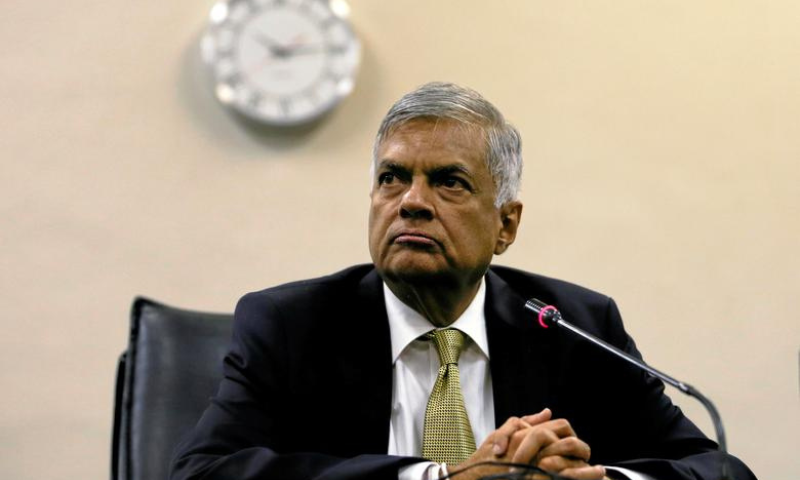
Until then, Prime Minister Ranil Wickremesinghe will be the interim president although protesters want him gone too. His private residence was set ablaze by demonstrators last weekend and his office stormed this week.

Nevertheless, the ruling Sri Lanka Podujana Peramuna (SLPP) party on Friday nominated Wickremesinghe to take up the top job full-time.

Top court bars Rajapaksa’s brothers from leaving country

“Ranil Wickremesinghe is not the change we have fought so hard for,” said Wimal Jayasuriya, 43, a martial arts specialist who is on a hunger strike opposite the prime minister’s official residence that was also sacked by protesters.

“We will not allow him to be president. The SLPP parliamentarians should stand with the people and not allow Ranil Wickremesinghe to become president.”

The speaker of parliament, Mahinda Yapa Abeywardena, said lawmakers would “constitutionally appoint a new president”.

“It will happen quickly and successfully. I request everyone to support this process,” said Abeywardena, who received Rajapaksa’s resignation the previous night.

Rajapaksa landed in Singapore on Thursday, having fled to the Maldives early on Wednesday on a military jet along with his wife and two security guards. Protesters occupied his home and office last weekend after surging past armed guards.

Sri Lanka’s top court on Friday barred two of his brothers, former prime minister Mahinda Rajapaksa and former finance minister Basil Rajapaksa, from leaving the country without permission until July 28, according to anti-corruption group Transparency International Sri Lanka.

The group approached the court seeking “action against persons responsible for the current economic crisis”.

A lawyer for the brothers did not respond to calls from Reuters.

“We are so happy today that he resigned and we feel that when we, the people, come together, we can do everything,” said Aruna­n­andan, 34, a schoolteacher who had been camping at the main protest site opposite the presidential secretariat for the past three months. “We are the real power in this country.”

Speaker Abeywardena said he hoped to complete the process of selecting a new president within a week. Parliament would reconvene on Saturday and be notified formally of the vacancy at the top, with a vote for a new president set for July 20.

The Bar Association of Sri Lanka, an influential lawyers’ collective, called on parliament to ensure that the election of Rajapaksa’s successor is held without delay.

The opposition’s presidential nominee is Sajith Premadasa, while the potential dark horse is senior lawmaker Dullas Alahapperuma.

After he was sworn in by the chief justice as interim president, Wickremesinghe said he would follow the constitutional process and establish law and order in the country.

He also vowed to start moves to increase parliament’s powers and reduce those of the president, as demanded by protesters.

“This change can be completed by the new president once he is elected by parliament next week,” Wickrem­esinghe said.

Biden lands in Saudi Arabia to mend fences

JEDDAH: US President Joe Biden landed on Friday in Saudi Arabia and met Crown Prince Mohammed bin Salman, beating a retreat from his campaign pledge to turn the kingdom into a “pariah” over human rights abuses.

Saudi state media showed images of Air Force One at the airport in the coastal city of Jeddah after a flight from Israel, making Biden the first US leader to fly directly from the Jewish state to an Arab nation that does not recognise it.

Wearing sunglasses, Biden emerged from Air Force One to walk down a purple carpet and be greeted by Makkah Governor Prince Khaled al-Faisal and Princess Reema bint Bandar Al-Saud, Saudi Arabia’s ambassador to Washington.

Later, state television Al-Ekhbariya showed Prince Mohammed, the kingdom’s de facto leader, greeting Biden with a fist bump and escorting him into Jeddah’s Al-Salam palace.


Biden met Saudi King Salman, 86, then he and Prince Mohammed sat across from one another at a large conference table for a “working session”, flanked by top officials.

Shadow of Khashoggi killing

After taking office last year, Biden’s administration released US intelligence findings that Prince Mohammed “approved” an operation targeting journalist Jamal Khashoggi, whose gruesome killing in Saudi Arabia’s Istanbul consulate sparked global outrage. Saudi officials deny Prince Mohammed’s involvement and say Khashoggi’s death resulted from a “rogue” operation.

Biden now appears ready to re-engage with a country that has been a key strategic ally of the United States for decades, a major supplier of oil and an avid buyer of weapons. Washington wants the world’s largest exporter of crude to open the floodgates to bring down soaring gasoline prices, which threaten Democratic chances in November mid-term elections.

The US president said on Friday he raised the 2018 killing of journalist Jamal Khashoggi “at the top of the meeting” with Saudi Crown Prince Mohammed bin Salman.

“What happened to Khashoggi was outrageous… I just made it clear if anything occurs like that again they will get that response and much more,” Biden said after meeting Prince Mohammed.

But the slain journalist’s fiancée said Biden had enabled the crown prince to take more victims after the US leader met and fist-bumped the man accused of ordering the journalist’s murder.

In the form of what she imagined as a tweet by Khashoggi, Hatice Cengiz wrote to Biden, “Is this the accountability you promised for my murder? The blood of MBS’s next victim is on your hands.”


“The fist bump between President Biden and Mohammed bin Salman was worse than a handshake — it was shameful,” said Fred Ryan, the publisher and CEO of The Washington Post, which has demanded accountability for the death of its late contributor.

Package of announcements

US and Saudi Arabia announced various measures, ranging from the removal of peacekeepers from a strategic island off the Saudi and Egyptian coasts, to cooperation in mobile technology.

In the statement released after Biden held talks with senior Saudi officials, Washington welcomed previously announced accelerated oil production increases by OPEC+, a group which includes Saudi Arabia and Russia.

The statement said US and other peacekeepers would leave Tiran island where they have been stationed as part of accords reached in 1978 and which led to a peace deal between Israel and Egypt.

Other announcements also covered an agreement on cooperation on 5G and 6G mobile technology and on cybersecurity.

Meeting with Palestinian president

Jeddah marks the final stop on Biden’s Middle East tour, following talks on Friday with Palestinian President Mahmud Abbas and meetings with Israeli officials a day earlier. Biden promised not to give up efforts to end the decades-long Israeli Palestinian conflict, though he offered no new proposals to restart the stalled political dialogue between the two sides.

As he wrapped up the first leg of a Middle Eastern trip before departing for Saudi Arabia, Biden visited a hospital in East Jerusalem and pledged a multi-year $100 million package of financial and technical help.

As Palestinians are banned by Israel from political activity in Jerusalem, the US president travelled to Bethlehem in the occupied West Bank to meet Abbas.

Standing alongside him, Biden reiterated his commitment to a two-state solution to end the decades-old Israeli-Palestinian conflict.

There “must be a political horizon that the Palestinian people can actually see”, Biden said. “I know that the goal of the two states seems so far away,” Biden added.

Abbas said he was “taking steps” to improve relations with Washington and aimed to see the US consulate to Palestinians in Jerusalem — which Trump closed — reopen.

With Israeli-Palestinian peace negotiations moribund since 2014, the US delegation has been focusing on economic measures.

Biden made clear on Thursday he had no plans to reverse the controversial move by Trump to recognise Jerusalem as Israel’s capital, which infuriated Palestinians who see its eastern sector as the seat of their future state.

‘Justice for Shireen’

Biden was greeted in Bethlehem with a billboard reading “Justice for Shireen”, referring to Shireen Abu Akleh, the veteran Palestinian-American journalist shot dead in May while covering an Israeli army raid in the West Bank.

The family requested to meet Biden during his visit, but his administration has instead invited them to Washington.

“I think if President Biden (can) find an hour and a half to go and attend a sport activity, he should have respected the family and given them 10 minutes to listen to them,” said Samer Sinijlawi, chairman of a Palestinian nonprofit, the Jerusalem Development Fund, after Biden on Thursday attended a ceremony for Jewish athletes.

Speaking alongside Abbas, Biden said the US “will continue to insist on a full and transparent accounting” of Abu Akleh’s death.

Washington earlier this month concluded she was likely shot from an Israeli military position, but that there was no evidence of intent to kill.

An amber warning for extreme heat has been extended to southern Scotland early next week.

The Met Office said it could have widespread impacts on people and infrastructure on Monday and Tuesday.

The latest forecast is for temperatures to reach about 29C (84F) in parts of Dumfries and Galloway.

A red warning has been issued for the first time for parts of England, meaning a risk to life is likely as temperatures could hit 40C (104F).

The Scottish government said it had held a resilience meeting to prepare for the potential impacts of extreme heat in Scotland.

Severe high temperatures mean the risk of illness is not limited to vulnerable people.


The Met Office warned that people are likely to experience “some adverse effects” including sunburn or heat exhaustion and other heat-related illnesses.

There is an increased chance of heat-sensitive systems and equipment failing and there could be travel issues.

The highest temperature recorded in Scotland was 32.9C (91.2F) in the Borders in August 2003.

But BBC Scotland weather presenter Judith Ralston warned it could get even hotter next week.

She said: “Heat will build during the weekend peaking at 26C or 27C across mainland Scotland on Monday.

“But it’s Tuesday when we’re expecting even higher values, peaking at around 31C, for the Borders and Dumfriesshire.

“We may break the record summer temperatures recorded in Greycrook in the Scottish Borders.”


Judith said the heat would be less extreme than south of the border, where temperatures in the high 30s are predicted for many areas.

She added: “This is a glancing blow compared to what will be affecting England and Wales with our weather turning fresher and more unsettled on Wednesday.”

The UK Health Security Agency (UKHSA) has increased its heat health warning from level three to level four in affected areas – denoting a “national emergency”.

The Met Office said the hot weather was caused by high pressure over the UK and hot air flowing from southern Europe.

People have being urged to stay hydrated, look out for vulnerable people, keep curtains closed and stay out of the sun in the middle of the day.

The heat is expected to increase pressure on the NHS, with the UK government’s Cobra emergency committee holding a meeting on Thursday about how to prepare for it.

Justice Secretary Keith Brown, lead minister for resilience, said: “We are aware of the weather warnings currently in place and are receiving regular updates from partners including the Met Office and emergency services.

“Our resilience arrangements have been activated and stand ready at all times to coordinate a response to severe weather issues where required. We will continue to closely monitor developments.”

He advised people to monitor forecasts and follow public health advice, including staying hydrated and avoiding excess alcohol.

Water safety

Mr Brown also urged everyone to look out for vulnerable family, friends and neighbours, as older people, those with underlying conditions and those living alone may struggle to keep cool and hydrated.

He added: “Water safety incidents and drownings increase in hot weather and people should be aware of the dangers and use supervised beaches and pools when possible – follow the Water Safety Code and in an emergency call 999.”

ScotRail has also warned that train services could be affected.

It said in a statement: “Rails can be up to 20C higher than the air temperature in hot weather, meaning they can expand or even buckle.

“For safety, we may need to run some trains at reduced speeds on these days.”

Scottish Water has urged people to help maintain normal water supplies by being as efficient as possible.

It advised to use watering cans rather than hoses in gardens and urged the public not to fill up paddling pools and take shorter showers.

The Scottish Environment Protection Agency has increased its water scarcity risk rating for 11 more parts of the country. It said the situation was deteriorating in the east and south west.

Tory leadership frontrunners have clashed over how best to fund public services and control inflation in the contest’s first TV debate.

Foreign Secretary Liz Truss attacked tax rises introduced under ex-chancellor Rishi Sunak as “wrong” and pledged to reverse them.

But Mr Sunak said they were needed to fund the NHS, and accused her of believing in economic “fairy tales”.

Rivals also sparred over Boris Johnson, trans rights and trust in politics.

All five remaining candidates in the Tory leadership race took part in the Channel 4 TV debate, the first of two this weekend. They come ahead of the next round of MPs’ voting on Monday.

Tory MPs will whittle the field down to two final contenders next week, before around 160,000 Tory members decide the party’s next leader in a postal vote.

In a lively 90 minutes of exchanges, the economic backdrop loomed large as candidates were pushed on how they would fund public services and help people with the cost of living during a time of soaring inflation.

Mr Sunak, currently in pole position among MPs, was forced to defend tax rises introduced during his time as chancellor, including April’s hike in National Insurance to pay for social care and the NHS.

Ms Truss, who came third in the latest MPs’ voting round on Thursday, said the hike had been “wrong” and said she had “called it out” in cabinet.

She said if she won power she would reverse the rise, as well as removing green levies on energy bills – saying she would pay for it for by spreading the UK’s “Covid debt” over a longer period.

The race to be our next prime minister is reaching a crucial phase.

By Wednesday, the shortlist will have been whittled down to two by Conservative MPs, who will then be put to Conservative party members over summer.

There is a lot to play for in the next few days – and you could tell in the first TV debate.

Three things stuck out for me in the exchanges.

Firstly, the Conservative Party is keen to move on from Boris Johnson.

Although it’s just eight days since Mr Johnson agreed to resign, the candidates to be his successor want the next chapter to start as soon as possible.

But Mr Sunak rubbished her proposals, saying there was “no such thing as Covid debt” and warned against an “unfunded spree” of tax cuts, adding that “borrowing your way out of inflation isn’t a plan, it’s a fairy-tale”.

Trade Minister Penny Mordaunt, currently second in the contest, said her economic blueprint, which involve raising income tax thresholds in line with inflation, was based on better “growth and competition”.

When pressed by Mr Sunak that her plans would also require more borrowing, she denied she had promised to “reduce a load of taxes” but said “people need help now”.

“Next April we are going to be one of the most uncompetitive nations in terms of our tax competitiveness. That cannot be allowed to happen,” she added.

Elsewhere, candidates traded blows over Mr Johnson’s legacy and trust in politics after the Partygate and Chris Pincher affairs that played a key role in the Tory revolt that forced the prime minister from office.

Mr Tugendhat, the fifth-placed contender among MPs and the only one not to have held a ministerial post under Mr Johnson, said his party needed a “break from those who sat around the table” to reset the party’s direction.

Pitching himself as a “clean face”, he won applause from the crowd for being the only candidate to say directly that Mr Johnson had not been honest.

“It’s easy to stand up to your enemies – it’s sometimes harder to stand up to your friends,” he added.

He also said he had not supported the National Insurance rise, calling it a “tax on jobs”, and accused Mr Sunak of only backing it in office “because the boss wanted it”.

But the backbench MP’s interventions received a curt response from fourth-placed contender Kemi Badenoch, a former equalities minister, who said he “didn’t have any responsibilities” and likened him to a pupil pointing out problems from the “back of the class”.

Elsewhere in the debate:

  • Penny Mordaunt said she took attacks on her in the press from rivals as a “big fat compliment that no one wants to run against me”
  • Kemi Badenoch was the only candidate who said she would not recommit to the government’s pledge to reach net zero carbon emissions by 2050
  • Liz Truss blamed the Bank of England for high inflation, arguing “we haven’t been tough enough on the monetary supply”

Ms Mordaunt also clashed with Ms Truss and Ms Badenoch over her record on trans rights during her time as an equalities minister.

In a spiky section of the debate, both Ms Badenoch and Ms Truss accused Ms Mordaunt of supporting “self-ID”, a process allowing a trans person to legally change their gender without, for example, a medical diagnosis.

Ms Mordaunt denied ever supporting the policy, but Ms Badenoch, who succeeded Ms Mordaunt in the equalities role, said she found that “hard to accept” and her understanding was Ms Mordaunt had pushed for it.

Ms Truss, who also had responsibility for equalities alongside her role as foreign secretary, said she had “changed the outcome” of a consultation to ensure self-ID was not brought in.