
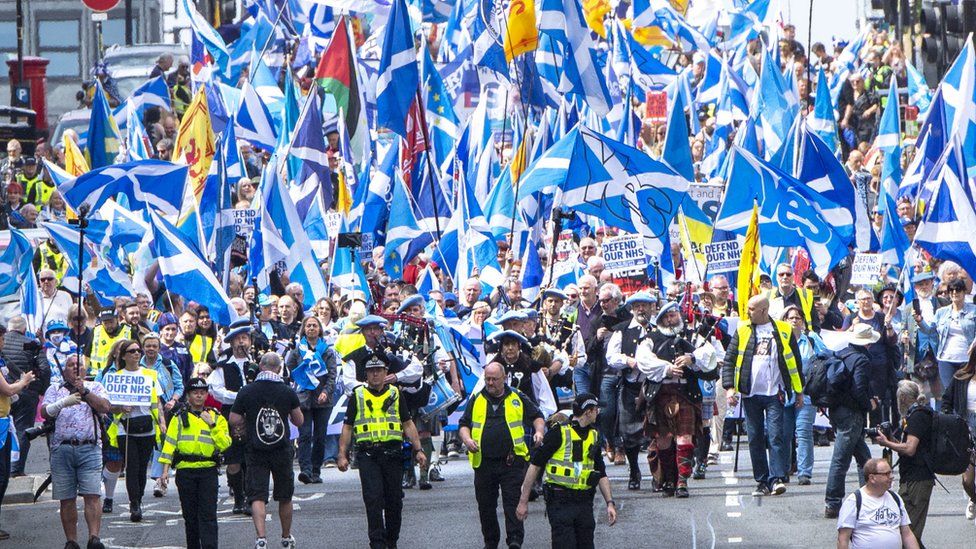
The Scottish government has published details of legal advice it was given on holding a new independence referendum.

The papers show ministers were told they could work on policies preparing for a vote, and to test a question with the Electoral Commission.

But there was no reference as to whether Holyrood would have the power to legislate for indyref2 without the UK government’s backing.

The Scottish government had initially refused to publish the advice.

It was ordered to do so by the country’s information commissioner, who said there was “exceptional” public interest in seeing the advice.

The government had argued that making the advice public would breach legal professional privilege.

It has now published some of the advice on its website, but said the commissioner had ruled that it was entitled to withhold some of the details that had been asked for by the Scotsman newspaper under freedom of information laws.

The two-page document said the advice from the Scottish government legal directorate in January last year was that “there is a legal basis for Ministers to ask (the Electoral Commission) to undertake question testing”.

A month later, the government was told that law officers had previously confirmed that “ministers can lawfully undertake policy development work preparing proposals for independence and in calling for a transfer of power”.

However, there is no mention of any advice the government received on whether or not it has the power to hold a referendum even if the UK government does not grant formal consent.

‘I have a mandate’

Constitutional experts have been split over the question, and there has been speculation that any attempt by First Minister Nicola Sturgeon to press on with her plan to hold a referendum next year could result in a court battle between the governments in London and Edinburgh.

That is because the UK government has shown no sign that it would be willing to give the formal consent that ensured the legality of the 2014 independence referendum, in which voters backed remaining in the UK by 55% to 45%.

Opposition parties have argued that it would be a waste of public money for the government to press on with its plan for another referendum if it has already been told by its own lawyers that it does not have the powers to hold one.

When questioned about whether she would be asking Boris Johnson for a transfer of power, Ms Sturgeon said: “I’ll set out more about this, in substance and process, in the period ahead. I have a mandate for another referendum won fairly and squarely in an election last year and anyone who has any respect for democracy will understand the importance of honouring that mandate.”

There are two interesting things about this advice, but neither of them are included in the page-and-a-half of A4 published.

The first is the fact it was released at all. The government is fierce in its defence of the principle of legal counsel remaining private, and do not want anything to set a precedent that would change that.

The information commissioner ruled that this principle can, at times, be overruled by the public interest, and this in itself may have ramifications in future.

The second interesting thing is what isn’t in the document – which is to say, advice about anything particularly controversial.

Nobody had questioned the legality of either of the actions discussed – testing questions and developing policies – in fact, most had assumed the government was already doing them.

The really key legal question around a referendum is whether the Scottish Parliament could legislate for one, even without a transfer of power from Westminster.

Of that, there is no mention – either because ministers have managed to keep that advice private, or because they haven’t asked for it in the first place.

The Scotsman had originally asked for the legal advice to be released in January last year, and appealed to the information commissioner after the government refused to publish it.

The government had been given until 10 June to publish the legal advice by Information Commissioner Daren Fitzhenry, who said that keeping it secret would “actively harm accountability and scrutiny and would be counter to the public interest”.

He also said that publishing details of the legal advice would “significantly enhance public debate on this issue”.

Opposition parties said the information that had been published left the big question unanswered.

Scottish Conservative constitution spokesman Donald Cameron said it was “welcome that the SNP have finally been dragged into releasing this information that they tried to hide from the public”.

But he added: “It still leaves unanswered questions about how they plan to continue their push for a second divisive referendum.

“The murky secretive approach must end. The public deserve answers about what the SNP are planning.”

His view was echoed by Scottish Labour MSP Sarah Boyack, who said: “Another referendum is the SNP’s answer to every question under the sun, so the public shouldn’t be kept in the dark on the legality of it.

“The SNP have dragged this circus out for long enough – they need to come clean once and for all.”

Scottish Liberal Democrat leader Alex Cole-Hamilton said: “The Scottish government are at it. What the public want to know is whether the Scottish government has legal advice on holding a referendum without a Section 30 Order and by refusing to publish that they are mocking freedom of information legislation.”


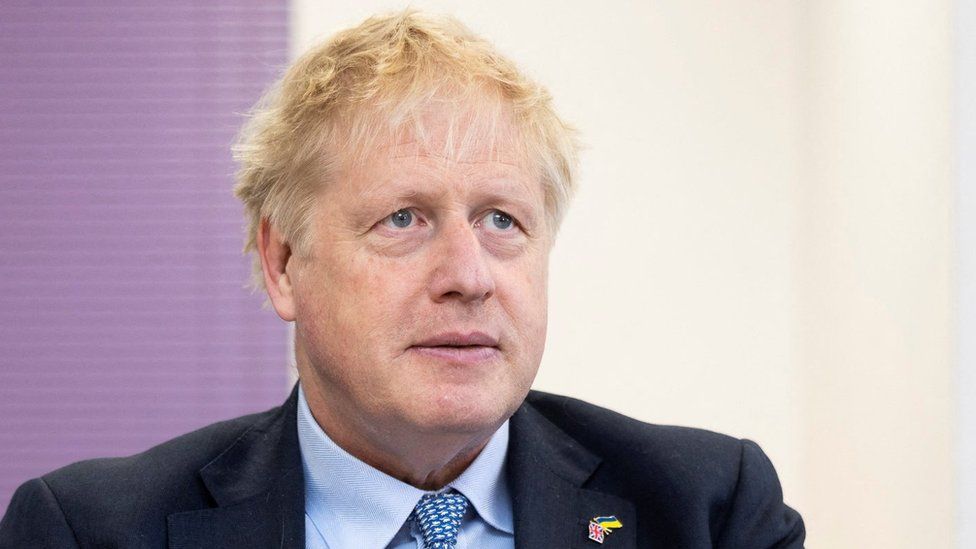
Boris Johnson is coming under pressure from his MPs to introduce tax cuts after surviving a vote of confidence.

Supporters of the prime minister believe the move would help rebuild unity in the Tory party and also address the cost of living.

Mr Johnson is preparing to face his MPs at Prime Minister’s Questions for the first time since four in ten of them voted to oust him on Monday.

He has urged his party to “draw a line” under questions about his leadership.

But some Conservative MPs are still publicly calling on him to quit.

In the vote, triggered by Partygate, Mr Johnson received the backing of 211 Conservative MPs, while 148 vote to remove him, a greater number than had been widely expected.

The scale of the revolt means he now faces pressure to announce policy that would appeal to MPs from across his party.

He is said to have hinted at reductions to the tax burden – currently at its highest level since the 1940s – when he met them ahead of Monday’s vote.

But the BBC’s Iain Watson has been told no specific measures were discussed at Tuesday’s cabinet meeting.


Next month will see a rise in the National Insurance threshold come into effect, and the autumn Budget is expected to bring tax cuts for businesses intended to encourage investment.

But the prime minister is being urged by both allies and internal opponents to bring forward cuts to personal taxation – such as income tax and VAT – planned for later in this parliament.

On Tuesday, Business Secretary Kwasi Kwarteng told the BBC he wanted to see tax cuts “as soon as is possible” and that he expected the government would adopt “a radical tax-cutting agenda” before the next election.

As well as internal strife, the Conservative Party faces tricky by-elections in the seats of Wakefield in Yorkshire and Tiverton and Honiton in Devon at the end of this month.

The prime minister is also to be the subject of an inquiry by the Commons privileges committee into whether he misled parliament over lockdown rule-breaking in Downing Street.

Mr Kwarteng admitted the two by-elections would be “challenging” but added that mid-term elections “generally are” for parties in government.

“People have written off Boris Johnson for 20 years. I’ve read his political obituary dozens of times,” he said. “But I think ultimately he is a winner”.

Presentational white space

Following the vote on Monday, the prime minister called the result “convincing and decisive”.

However, the 59% backing he won is worse than the 63% gained by Theresa May in late 2018 – six months before she was forced to resign amid internal opposition to her Brexit deal.

Under current Tory party rules, Mr Johnson’s victory means his backbenchers cannot trigger another confidence vote in him for a year.

One of the rebels, Ludlow MP Philip Dunne, said the opposition now facing the prime minister was “not a situation that can endure” and that the next few months would be challenging for him.

“It’s not going to happen for now, but we’ll have to see in the coming weeks and months. I think this is not over,” he said.

Tobias Ellwood, a longstanding critic of the PM, has called on Mr Johnson to resign and accept that the task of reuniting the Tories before the next election is “too big”.

Douglas Ross has said the prime minister should think about resigning, after 41% of Tory MPs said they did not have confidence in his leadership.

Asked by the BBC if Boris Johnson should resign, the Scottish Tory leader said: “He’s got to look at it.”

He said MPs from “across the entire parliamentary party” had no confidence in Mr Johnson.

Never had a prime minister lost as much support as he had on Monday, Mr Ross added.

“I think he really does have to reflect on that,” the Scottish Tory leader said.


The number of rebels in Monday night’s confidence vote was higher than predicted.

Mr Johnson was backed by 211 Conservative MPs while 148 voted to remove him.

Mr Ross said the number of MPs who said they did not have faith in the PM’s leadership would be “particularly troubling” for Boris Johnson, adding that it was “extremely serious and something the prime minister has to reflect on”.

Asked if Mr Johnson should resign, Mr Ross said: “I think he’s he’s got to look at it.”

He added: “This isn’t just some Scottish MPs, some Welsh MPs, a few from a certain part of England.

“This is across the entire parliamentary party – from people who supported staying in the EU and people who campaigned strongly to leave the EU, people who are on the right of the party, some in the centre and some on the left.”

‘Serious questions’ for PM

He would not be drawn on who he thought should lead the party after Mr Johnson, saying there were a lot of very good candidates.

Asked whether the PM had misled parliament over Downing Street parties, Mr Ross said Mr Johnson’s responses had been “quite clear” yet the evidence “suggests otherwise”.

And asked if Boris Johnson was a liar, Mr Ross said: “I think he has serious questions to answer.”

The Scottish Tory leader also responded to accusations from opposition parties that he had U-turned over whether the PM should go.

Last month, after the Sue Gray report was published, Mr Ross said on balance he still believed Boris Johnson should remain in office.

He said toppling him would cause instability that would benefit Putin, but added that the PM would still have to go if an inquiry found he had misled parliament.

Then on Monday, he said he was not one of the MPs who had called for the confidence vote – but said he would vote that he did not have confidence in the Mr Johnson’s leadership.

He said his belief that the PM should think about resigning was his final position, adding that the only change in recent months was the war in Ukraine.

He highlighted that President Zelensky had praised the prime minister as an important ally of Ukraine.

Mr Ross said: “I didn’t expect when I put in my letter to the 1922 committee in January that Russia would invade Ukraine.

“That’s still ongoing. We’ve seen from President Zelensky just today that there are still huge troubles in Ukraine and they need more and more support now than perhaps at any point in over 100 days of conflict.”

It still was not the right time for a leadership contest, he said, but noted that the confidence vote was prompted by other MPs in the party.

However, given that the vote was being held he said he had decided to “stick to” his initial belief that the prime minister’s actions had been “damaging to the government, to the country, and people are still extremely upset about what happened” over Partygate.

As the MP for Moray, Douglas Ross was one of six Scottish Tory MPs who were entitled to cast a ballot in the confidence motion.

Three other Scottish Tory MPs also said they had no confidence in Boris Johnson’s leadership.

That view is shared by the majority of Scottish Tory MSPs.

However, two Scottish Tory MPs, including the Scottish Secretary Alister Jack, gave the prime minister their support.

Prime Minister Boris Johnson has won the backing of a majority of Tory MPs in a confidence vote despite a significant revolt against his leadership.

The PM won 59% of the vote, meaning he is now immune from a Conservative leadership challenge for a year.

In all, 211 Tory MPs voted they had confidence in the PM’s leadership while 148 voted against him.

Mr Johnson described his confidence vote win as “decisive”.

Striking an upbeat tone, he said it was a “very good”, “convincing” result and “an opportunity to put behind us all the stuff that the media goes on about”.

The result sees the prime minister remain in office, but critics said the scale of the rebellion against him showed his authority had been weakened, with some calling on him to resign.

The vote share in support of Mr Johnson was lower than the 63% received by former Prime Minister Theresa May when she won a party confidence vote in 2018, before resigning six months later over a Brexit deadlock.

Labour leader Sir Keir Starmer said a “divided” Conservative Party was “propping up” Mr Johnson after he survived the confidence vote.

And Liberal Democrat leader Sir Ed Davey said while Mr Johnson had clung on to power, “his reputation is in tatters and his authority is now totally shot”.

But Downing Street said the result “renews the PM’s mandate” and allows the government to “focus relentlessly on the issues that concern our voters”.

Tory MP and Welsh Secretary Simon Hart told the BBC the prime minister “has lots to prove” but insisted the result “was pretty decisive”.

Watch: The moment Sir Graham Brady announces Boris Johnson won the confidence vote

Mr Johnson, who became prime minister in 2019, was informed he would face a vote on his leadership on Sunday during the Queen’s Platinum Jubilee, after weeks of speculation over his future.

The ballot was triggered by Conservative MPs after at least 15% of them wrote letters of no confidence to Sir Graham Brady, the chairman of the party’s backbench 1922 Committee.

Discontent among Tory MPs has grown since a highly critical report into lockdown parties in and near Downing Street during the Covid-19 pandemic was published last month.

The report laid bare the extent of Covid rule-breaking in Number 10, including at a birthday party Mr Johnson was fined by the police for attending in June 2020.

The fine meant Mr Johnson became the UK’s first serving prime minister to be sanctioned for breaking the law.

Some Tory MPs have also expressed dissent over tax rises, the government’s response to rising living costs and its policy direction.

Numbers only tell us so much

The first rule of politics: learn how to count. Mathematically, Boris Johnson was the winner in Monday’s confidence vote.

The second rule of politics: numbers often only tell so much of the story. You can claim victory and be robbed of authority in the same moment.

Boris Johnson can point to his own thumping majority from the last election.

But the simple truth is when more than four in ten of your own MPs think the country would be better off without you, you have a problem.

The last Conservative prime minister to face a party vote on their leadership was Mrs May, who won the vote but resigned six months later over her approach to Brexit.

Mr Johnson succeeded her in July 2019 and then called a general election in which the Conservatives won their biggest majority since former Prime Minister Margaret Thatcher’s 1987 election victory.

The next general election is expected to be held in 2024 but could be earlier if Mr Johnson uses his powers to call one.

The next tests for Mr Johnson are by-elections held in Wakefield and in Tiverton & Honiton on the same day this month following the resignation of two Tory MPs.

Calls for PM to consider position

The Tory rebels who voted against Mr Johnson were insistent that the result had compromised the prime minister’s ability to lead.

One of them, Julian Sturdy, said the result was “clear evidence that he no longer enjoys the full-hearted confidence of the parliamentary party and should consider his position”.

Another one, Sir Roger Gale, said the result was very bad and he would be surprised if Mr Johnson was still in post by the autumn.

But Mr Johnson’s cabinet ministers rallied around him with messages of support.

Health Secretary Sajid Javid said the prime minister had secured “a fresh mandate” from the Conservative Party following his confidence vote win.

Mr Javid tweeted: “Tonight the PM has secured a fresh mandate from the parliamentary party. Now we need to unite and focus on the country’s challenges.”

Education Secretary Nadhim Zahawi, who said he would back Mr Johnson before the vote, said the PM won “handsomely”. “I hope we can draw a line under this issue,” he said.

Highlighting Mr Johnson’s general election victory in 2019, Culture Secretary Nadine Dorries said it was “time to get back to the job of governing”.

Sir Keir Starmer says Conservatives MPs ignore a the British publish that is “fed up” with the PM

The Labour leader said the public were “fed up with a prime minister who promises big but never delivers”.

The PM was “utterly unfit for the great office that he holds”, Sir Keir said, and Tory MPs have “ignored the British public”.

Shadow foreign secretary David Lammy said the result left the prime minister “fatally wounded”. “We need someone in office that the British people can trust,” he told the BBC. “That’s why this vote was so important.”

The leader of the Liberal Democrats urged Tory MPs to “do the right thing, resign the whip and sit as an independent. “For the sake of our country, this failing prime minister cannot be propped up any longer,” Sir Ed said.

The SNP’s Westminster Leader Ian Blackford said he was “stunned” by the result, adding it was a “big thing” for that many Conservatives to vote against their own prime minister.

He said the PM now has the support of less than a third of the House of Commons. “For Boris, this should be over,” he said.

50 worshippers shot dead in Nigeria

A doctor at a hospital in Owo, a town in the state in Nigeria’s southwest, said that no fewer than 50 bodies had been moved to the FMC (Federal Medical Centre) in Owo and to St. Louis Catholic Hospital.

President Muhammadu Buhari condemned the attack, calling it “heinous”. The identity and motive of the attackers was not immediately clear.

Local media said gunmen had fired at worshippers and detonated explosives at the church. Those killed included women and children.

Funmilayo Ibukun Odunlami, police spokesperson for Ondo state, said only that there had been an incident at the Saint Francis Catholic Church in Owo and said police would issue a further statement soon.

Africa’s most populous country has witnessed attacks and kidnappings for ransom by armed gangs, mostly in its northwest. Such attacks are rare in southwestern Nigeria.

Ondo state governor Arakunrin Oluwarotimi Akeredolu cut short a trip to the capital Abuja and returned to Ondo after the attack.

Pakistan slams BJP for remarks against Holy Prophet

“I condemn in the strongest possible words hurtful comments of India’s BJP leader about our beloved Prophet (PBUH). [I have] said it repeatedly India under Modi is trampling religious freedoms and persecuting Muslims. The world should take note and severely reprimand India,” the premier said in a Twitter posting on Sunday.

“Our love for the Holy Prophet (PBUH) is supreme. All Muslims can sacrifice their life for the love and respect of their Holy Prophet (PBUH),” he said.

Meanwhile, APP news agency quoted President Alvi as saying such comments were the reflection of a growing trend of Islamophobia in India, which is home to millions of Muslims.

The president said that merely suspending and expelling party officials was not enough and the BJP must shun and denounce its extremist and fascist Hindutva ideology.

He said that India, under Modi’s hateful Hindutva philosophy, was trampling the religious freedoms of all its minorities and persecuting them without any impunity.

“Allowing such Islamophobic remarks to continue without punishment constitutes a grave danger to the protection of human rights and may lead to further prejudice and marginalisation, which will create a cycle of violence and hate,” he added.

He called upon the world community, United Nations and international human rights organisations to take serious notice of rising Islamophobia and systematic religious persecution in India without impunity and take all steps necessary to put an end to it.

The Foreign Office spokesperson also said in a statement on Sunday that Pakistan condemned in the strongest possible terms the highly derogatory remarks recently made by two senior BJP officials.

“BJP’s attempted clarification and belated and perfunctory disciplinary action against these individuals cannot assuage the pain and anguish they have caused to the Muslim world,” he said. “Muslims residing in India are equally outraged by the completely repugnant comments by the two BJP officials. The ensuing communal violence in Kanpur and in other parts of India bears testimony to this fact.”

He said Pakistan was also deeply concerned at the alarming rise in communal violence and hatred directed against the Muslims in India.

Muslims in India were being systematically stigmatised, marginalised and subjected to a well-orchestrated onslaught from radical Hindu mobs with full connivance and support of the security apparatus across various states in India. Regrettably, the Indian state machinery had remained aloof to the desperate calls for assistance by the local Muslim communities across the country, he said.

Reprehensibly, it had become a norm in India to deprive the Muslims of their right to live and freely practise their religion, he said.

Pakistan urges India to ensure that decisive and demonstrable action is taken against those responsible for making derogatory remarks and attacking the dignity of the Holy Prophet Muhammad (PBUH). India must also take immediate steps to protect its minorities from human rights violations, ensure their safety, security and well-being and allow them to profess and practise their faiths in peace.

“Pakistan once again calls on the international community to take immediate cognisance of the grievously aggravating situation of Islamophobia in India. India must be held accountable for stifling the rights of the minorities, especially Muslims, to practice their faith and religious beliefs,” the spokesperson said.

“The international community must dissuade India from its reprehensible campaign of ‘saffronisation’ and ensure that Muslims are not victimised for having different religious beliefs than the majority population. The world must intervene to protect the Muslims in India from an impending genocide at the hands of Hindutva-inspired Hindu zealots, emboldened by the BJP-RSS [Rashtriya Swayamsevak Sangh] dispensation at the helm.”

Former PM and Pakistan Tehreek-i-Insaf chairman Imran Khan while condemning India asked the Organisation of Islamic Cooperation to take strong action against India because “sadly so far India has been allowed to get away with its Islamophobic policies”.

US mulls over lifting some China tariffs to fight inflation

“We are looking at it. In fact, the president has asked us on his team to analyse that. And so we are in the process of doing that for him and he will have to make that decision,” Raimondo told CNN in an interview on Sunday when asked about whether the Biden administration was weighing lifting tariffs on China to ease inflation.

“There are other products — household goods, bicycles, etc — and it may make sense” to weigh lifting tariffs on those, she said, adding the administration had decided to keep some of the tariffs on steel and aluminum to protect US workers and the steel industry.

Biden has said he is considering removing some of the tariffs imposed on hundreds of billions of dollars worth of Chinese goods by his predecessor in 2018 and 2019 amid a bitter trade war between the world’s two largest economies.

China has also been arguing that tariff reductions would cut costs for American consumers.

Raimondo also told CNN she felt the ongoing semiconductor chip shortage could likely continue until 2024.

“There is one solution (to the semiconductor chip shortage)”, she added. “Congress needs to act and pass the Chips Bill. I don’t know why they are delaying.” The legislation aims to ramp up US semiconductor manufacturing to give the United States more of a competitive punch against China.

Raimondo said she disagreed with the characterisation that Biden’s $1.9 trillion American Rescue Plan had contributed to the current high inflation. Congress passed the Covid-19 relief package a year ago before it was signed into law, marking a signature achievement of Biden’s first year in office.

India has defended its decision to ban wheat exports after criticism that it could worsen the global food supply situation in the wake of the Ukraine war.

“If everyone starts to impose export restrictions… that would worsen the crisis,” German Food and Agriculture Minister Cem Ozdemir said after the ban was announced in May.

But India’s Commerce Minister, Piyush Goyal, says the export ban should not affect global markets because it is not a major wheat exporter.

So what has been the impact of India’s move?

Global wheat price rise

India’s ban was announced on 13 May, after unseasonably hot weather affected the wheat crop, sending local prices soaring.

Although India is not a major wheat exporter, the move unsettled global markets with the Chicago benchmark wheat index rising by nearly 6%.

The prices of some of the main types of wheat rose for several days, peaking on 17 to 18 May.

Wheat prices had risen throughout March and April after the Russian invasion of Ukraine, as had the prices of other foodstuffs.

Disruption caused by the war means that millions of tonnes of wheat have been unable to leave Ukraine, which is one of the world’s biggest exporters.

Kelly Goughary, of the agriculture data research group Gro Intelligence, explains that India’s ban led to a further price surge because “global buyers were depending on supplies from India after exports from the Black Sea region plunged”.

Who’s been affected by India’s ban?

India is the world’s second biggest wheat producer, but accounts for less than 1% of the global wheat trade. It keeps a lot of it to provide subsidised food for the poor.

But just before announcing the ban, India was aiming to boost exports by shipping a record 10 million tonnes of wheat this year – compared with just two million last year.

It was offering supplies to new markets in Asia and Africa, and even after the ban, several countries said they were in touch with India to keep exports going.

India had been trying to boost wheat exports

India says some countries will still receive wheat exports, and that it will “continue to assist neighbours in their hour of need.”

Its top export markets are Bangladesh, Nepal and Sri Lanka – as well as the United Arab Emirates (UAE).

In 2019-20, Sri Lanka and UAE imported more than 50% of their wheat from India, according to the Observatory of Economic Complexity (OEC), and Nepal imported more than 90%.

It is not yet clear whether these countries will still get Indian wheat under existing contracts, or will receive supplies under future deals.

However, Egypt says that government purchases of Indian wheat will continue. It’s one of the biggest importers of wheat globally.

The International Monetary Fund has called on India to reconsider the export ban, saying it could play a significant role in helping alleviate the current wheat supply crisis for those countries most affected by the war in Ukraine.

Bad weather and fertiliser prices

Apart from the war in Ukraine, the weather has had an impact in some major wheat-exporting countries.

“Drought, floods and heat waves threaten crops in some other major producers [US, Canada and France],” says Kelly Goughary of Gro Intelligence.

China is the world’s largest producer of wheat

Global wheat production for the 2022-23 period will be the lowest for four years, and global stocks of wheat are predicted to be at their lowest for six years, according to a US government report.

Gro Intelligence also points out that global fertiliser prices have tripled over the past year, risking “significant” reductions in crop yields this year.

It estimates that this – together with other factors – means global wheat stocks are down to their lowest level since the 2008 financial crisis.

China – the world’s largest producer of wheat for its huge population – said in March that its winter crop could be the “worst in history” because of heavy rainfall in 2021.

There is still uncertainty about the actual state of the harvest, and whether or not it will be badly affected.

But if it is, China may want to buy on global markets to build up its stocks, further tightening global supplies and pushing up prices.

Australia has long been considered a “big brother” by many small Pacific nations, but its approach in recent times has been tearing the family apart, some say. This is something the country’s new government wants to change.

“You claim the Pacific Islands are your brothers and sisters, and then look away when your brothers and sisters are having trouble,” says Reverend Alimoni Taumoepeau, a Tongan Australian church leader in Sydney.

The key aggravator, some say, has been the reluctance of previous governments in Australia to act on climate change.

“It is not a crisis anymore for the Pacific Islands – it is an emergency,” says Reverend Taumoepeau, who describes his homeland as an island paradise that’s drowning.

Across the Pacific, rising sea levels, cyclones, storm surges and even droughts are making everyday life “very tough”.

Under the previous Morrison government, Pacific countries were essentially told to “take the money… then shut up about climate change”, claimed ex-Tuvalu Prime Minister Enele Sopoaga in 2019.

That’s a mindset Australia’s new government, under Prime Minister Anthony Albanese, wants to dispel. In fact, its declared a “new era” for Australian engagement in the Pacific.

A lot rides on the strength of Australia’s relationships in the region. Many of its closest neighbours are in the Pacific, and Australia is counting on them to resist growing Chinese influence, which it views as a huge threat to national and regional security.

So how does the new government plan to patch things up?

Making up for ‘lost decade’ on climate

While Australia’s working relationships have remained strong, its image has been badly tarnished thanks to its stance on climate change, say some analysts.

Several leaders took “a great big stick” to the previous government on the issue, historian and author Patricia O’Brien says.

She also points to the time when newly appointed Liberal leader Peter Dutton was caught on camera joking about rising sea levels affecting Pacific Island nations, as then Prime Minister Tony Abbott chuckled beside him.

“The Pacific have not forgotten that,” Dr O’Brien says.

In 2019, Fiji Prime Minister Frank Bainimarama had blasted Mr Morrison as “very insulting and condescending” and last month appeared to take another swipe at him over a comment calling the Pacific Australia’s “backyard”.

“Fiji is not anyone’s backyard – we are a part of a Pacific family,” he said.

But with the election of a Labor government that has promised to “make up” for a “lost decade on climate action” by cutting emissions faster, the key tension in Australia’s regional relationships is gone, says Dr O’Brien.

Labor’s new foreign minister Penny Wong says she – as someone born in Malaysia – has a “personal understanding” of lingering colonial attitudes and promised to speak to the Pacific with more respect.

She also declared that the new government was “committed” to real climate change.

“I understand that – under past governments – Australia has neglected its responsibility to act on climate change, ignoring the calls of our Pacific family to act,” she said in a speech in Fiji last week.

“I want to assure you that we have heard you. We will stand shoulder to shoulder with our Pacific family in response to this crisis.”

Ms Wong announced that Australia would set up an “Australia-Pacific Climate Infrastructure Partnership, to support climate-related infrastructure and energy projects in Pacific countries and Timor-Leste”.

Dialling down rhetoric on China?

And as they show progress on solving the Pacific’s primary concern, Australia is hopeful it can convince them to help address theirs: China.

Earlier last week, Chinese Foreign Minister Wang Yi embarked on his own marathon tour of the region.

Australia was quick to launch a competing visit, sending out Ms Wong to Fiji to reinforce ties with the “Pacific family”, within just days of her appointment.

Penny Wong smiles beside Henry Puna, the Secretary General of the Pacific Island Forum

The trip came as China had earlier this year signed a broad security pact with the Solomon Islands, sparking fears of greater Chinese influence in the region, and a prospect of a possible Chinese military base.

Beijing offers Pacific nations support like quick aid or loans and policing assistance, but much of this has been criticised as “debt trap diplomacy”.

The Albanese government says the situation is evidence its predecessor “dropped the ball” in the Pacific, leaving the door open for Beijing to threaten Australia’s national security.

But Mr Morrison defended his government’s approach, saying it couldn’t go “stomping around telling leaders in Pacific islands what they should and shouldn’t do”.

That’s true, says political analyst Dr Richard Herr. But the way it spoke about China’s dealings in the region probably didn’t help its cause.

Mr Morrison had referred to a Chinese military base in the region as a “red line” for Australia, while then Defence Minister Dutton said the country needed to prepare for war.


That rhetoric made Australia look “overly sensitive” and “reactive” to China, says Dr Herr.

Australia will have to accept Beijing will inevitably play a role in the Pacific, and the new government will need to make itself the more attractive partner, he says.

“We can’t do things that will exclude China from the region.”

This would be unrealistic, as Pacific nations also accept aid from other countries and pursue their own friendly relations.

Solidifying ties through migration

But the most tangible way the new government can better its ties with Pacific nations is through changes to migration policy, says Dr George Carter, the co-Director of the Australian National University’s Pacific Institute.

Australia has promised to crack down on exploitation in the country’s seasonal worker programme, to let Pacific workers on longer visas bring their families to Australia with them, and to provide 3,000 permanent visas a year for Pacific Islanders.

That will offer work and education opportunities for families, many of whom send remittances back to their home country, in turn stimulating their economies, say Dr Carter.

But growing the Pacific community in Australia is mutually beneficial – it strengthens its relationship with the region and is something on which China has thus far been unable to compete.

“The ties which link certain island countries to Australia are already much stronger than what they are with China… (but) to have a door that would allow for migration, this will be a very welcome policy.”

Australia has promised a lot of other things too – including an extra A$500m (£289m; $363.5m) in aid over the next four years, the revival of regional broadcasting, and a new Australian-run defence school to provide training to Pacific forces.

More continuity than change

But overall, the new era being promised is not as radical as Ms Wong suggests, experts say.

Australia’s relationships in the Pacific remain strong, says former high ranking Australian diplomat James Batley.

The previous government’s aid and development programme was well received, as was its pandemic support – from financial aid to securing critical supplies like PPE and vaccines.

“There’ll be a lot of continuity. There’s an essential bipartisanship in a lot of the way that Australian governments approach the region,” Mr Batley says.

But Reverend Taumoepeau says the promise of even a little change has been enough to crack open “a window of hope” for Pacific communities, both in the region and Australia.

Reverend Alimoni Taumoepeau says there is now promise of change

“We were very hurt because the government didn’t want to listen to our story,” he said.

“Sometimes big brothers do that – instead of talking with the Pacific, they were talking to the Pacific. But [the new government] is willing to work together. So we are so looking forward to doing that.”

South Korea and the US launched eight missiles on Monday, in response to a volley of ballistic missiles fired by North Korea the previous day.

It comes as Pyongyang continues to escalate its missile tests.

South Korea’s president Yoon Suk-yeol said his government would respond sternly to any provocation from its northern neighbour.

“We will make sure there isn’t a single crack in protecting the lives and property of our people,” he said.

Speaking at a war memorial event in Seoul, he added that North Korea’s nuclear and missile programmes “are reaching the level of threatening not only peace on the Korean Peninsula but also in Northeast Asia and the world”, according to Yonhap.

The US and South Korea regularly hold joint military exercises, which often anger North Korea.

Early on Monday, hours after North Korea had fired several missiles off its east coast, the two allies launched eight surface-to-surface Army Tactical Missile Systems (ATACMS) – one from the US and seven from South Korea.

Analysts say the moves are South Korea showing off its muscle, with the aid of US weaponry.

It is the second retaliatory display from the US and South Korea in as many weeks, with a similar move made last week after Pyongyang fired a series of missiles in the immediate aftermath of US President Joe Biden’s visit to the region.

Such displays had been rare under South Korea’s previous administration.

President Yoon, who was inaugurated last month, has pledged to take a more hardline approach on North Korea.

The isolated Communist state has test-fired dozens of missiles in recent months, including an intercontinental ballistic missile for the first time in five years.

The UN prohibits North Korea from ballistic and nuclear weapons tests, and has imposed strict sanctions after previous tests.

Presentational white space

Over the past months, North Korea has been testing weapons with increasing frequency. And in the past few weeks, South Korea and the United States have agreed to respond more strongly and bolster their defence.

Now a cycle is starting to emerge.

This weekend, a US aircraft carrier took part in a naval drill with South Korea. The day after, North Korea fired eight missiles. Now, another day on, South Korea and the US have fired eight missiles of their own in retaliation.

The questions are over what these retaliatory drills achieve. Do they make South Korea any safer? And will they get North Korea to scale back its testing or change its behaviour in any way?

Washington’s real challenge is to convince North Korea to return to nuclear talks. The United States’ nuclear envoy on North Korea said in Seoul on Friday that he had made very clear to the North they were ready to talk, but the North had shown no interest.

Instead, North Korea appears to be preparing to conduct its first nuclear test in more than four years.

Tensions between the two Koreas could be about to escalate further.

Presentational white space

North Korean state media did not mention Pyongyang’s actions on Monday – a recent break with tradition that some analysts say is due to the country focusing on managing its Covid outbreak.

Its firings came a day after South Korea and the US finished customary joint military deals which have been criticised by North Korea as evidence of the US’ hostile behaviour towards it.

“The allies have quickly responded to the recent missile firings with counter launches that demonstrate combined readiness for precision strikes against the origin of an attack,” said Leif-Eric Easley, a professor of international studies at Ewha University in Seoul.

But he warned that South Korea’s current missile defences were “insufficient against the expanding North Korean threat.”