
Killings dampen mood at Hindu festival in India-occupied Kashmir

The annual gathering takes place at the Kheer Bhawani temple, a short drive from Srinagar, and is usually a major religious milestone for the local Pandit community.

Worshippers and pilgrims typically offer milk and Kheer to the sacred spring within the temple complex, throwing rose petals and lighting earthen oil lamps in rituals of respect for the Kheer Bhawani goddess.

But this year many stayed home, some fearful after the killing of 12 Hindus and Sikhs living in the Srinagar valley in recent weeks.

“I see much less crowd here compared to previous years,” said Kirti, who travelled for hours to reach the temple along with her family.

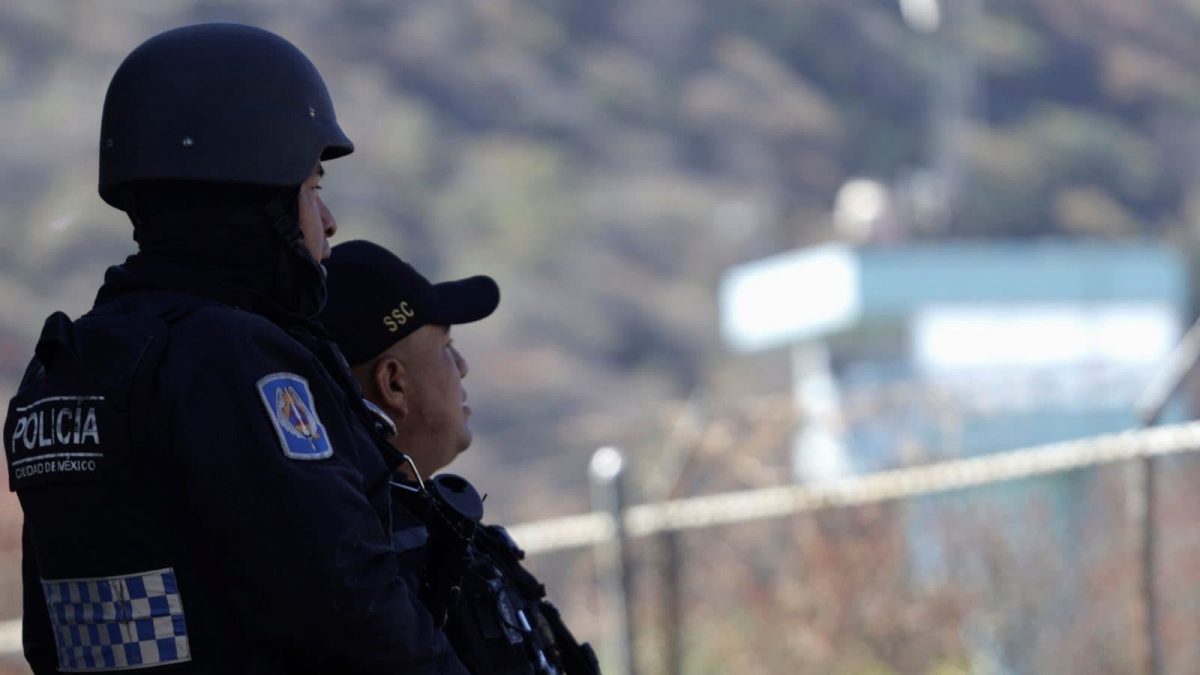
Their voyage to the shrine passed armed soldiers lining the road, while hundreds of police and paramilitary troops were deployed at the site to scan visitors with metal detectors and X-ray machines.

“Obviously, some people are scared because of the recent targeted killings,” Kirti said.

“But I am happy we came again and see it’s not that unsafe.”

Tensions high

India-held Kashmir has weathered decades of turmoil and upheaval since Kashmiris took up arms against New Delhi’s rule in 1989.

In 2019, Indian Prime Minister Narendra Modi overhauled the region’s special constitutional status and imposed a security chokehold which critics say has severely restricted civic life.

Tension has run high since then, with many accusing India of “settler colonialism” aimed at changing the demographics in the highly militarised territory.

Through the decades, Kashmir’s minority Pandits have long fretted over their place in the restive territory and their relationship with its Muslim majority, which largely supports the territory’s independence or a merger with Pakistan.

Hundreds of thousands of Pandits fled occupied Kashmir since 1989.

The spate of killings since the last week of May have heightened the community’s fears for its safety.

Among the victims was Rahul Bhat, a Pandit who had been employed by the government, alongside 10,000 others, to help resettle members of the community who have returned to the valley in recent years.

He was shot dead inside his office, sparking large protests by colleagues who have refused to return to work and demanded reassignment to “secure” locations outside the Kashmir valley.

‘Boycotted because of fear’

Only around 2,000 people made the pilgrimage to the Kheer Bhawani shrine on Wednesday — a fraction of the huge crowds seen in earlier years.

Sandeep Raina, a community representative, said most people living in Pandit resettlement projects had stayed away in protest.

“Most boycotted because of fear and the government not meeting our demands,” he said.

Those who did come for the festival nonetheless appeared in high spirits.

Every year, most of the festivals stalls are manned by local Muslims, selling toys and worship materials to Hindu pilgrims.

Ghulam Hassan was one of several vendors offering free flowers to worshippers.

“I have been doing it for six years,” he said. “It’s about maintaining brotherhood and doing it brings me comfort.”

Naasón Joaquín García, the leader of the La Luz del Mundo megachurch, has been sentenced in a Los Angeles court to 16 years and eight months in prison.

García, 53, pleaded guilty last week to three counts of sexually abusing girls from his congregation.

His plea deal means his sentence is considerably shorter than the life imprisonment he could have faced had he been found guilty in a trial.

To his followers, Naasón Joaquín García is known as “the Apostle”.

Warning: You may find some of the details of this story distressing

A fundamentalist Christian organisation, La Luz del Mundo (meaning The Light of the World in Spanish) was founded in Mexico in 1926 by Naasón Joaquín García’s grandfather, Eusebio Joaquín González.

The church’s influence has spread in recent years and is strong in parts of California that have large Hispanic populations, which García often visited.

He was arrested at Los Angeles airport in 2019 along with two of his female followers as they arrived by private jet.

La Luz del Mundo has its headquarters in Guadalajara, in Mexico

The church says it has baptised more than five million people worldwide, but independently verified numbers of its followers are hard to come by.

Surprise guilty plea

García had been facing 19 charges, but on Friday – three days before his trial was due to start – he pleaded guilty to two counts of forcible oral copulation involving minors and one count of a lewd act upon a child who was 15 years old.

The unexpected plea deal means that his trial has been dropped and the church leader will not face other charges including raping and trafficking girls from his congregation, which he has denied.

Some of those who have accused García of abusing them said the plea deal set a “dangerous” precedent.

Sochil Martin, a former member of the church who has filed a federal civil lawsuit against La Luz del Mundo, alleging it promotes an institutionalised culture of abuse, told journalists at a news conference she was disappointed there was “no day in court”.

“There was no trial. The people didn’t get to hear what this man represents in society and that’s what we need to understand,” she said on Tuesday.

“He deserves the maximum penalty possible,” said Ms Martin, who accuses García of abusing her over the course of 17 years.

But Attorney General Rob Bonta said Friday’s conviction sent “a clear message that sexual exploitation is never acceptable in California”.

“As the leader of La Luz del Mundo, Naasón Joaquín García used his power to take advantage of children. He relied on those around him to groom congregants for the purposes of sexual assault. Today’s conviction can never undo the harm, but it will help protect future generations,” a statement by Mr Bonta said.

The two followers who were arrested with him in 2019 have also pleaded guilty.

Susana Medina Oaxaca, 27, admitted assault likely to cause great bodily injury. She had been García’s assistant before their arrest.

The other, Alondra Ocampo, had already pleaded guilty in 2020 to four counts involving the sexual abuse of minors. She had been expected to testify against García.

His church has not yet reacted to the guilty plea. In May, it published a statement on its Instagram account saying that its members “trusted that the moment would come in which the innocence and honour of the Apostle of Jesus Christ #NaasónJoaquínGarcía would be proven”.

The Ministry of Defence (MoD) has acquired the government’s first quantum computer.

Quantum computers can make very complex calculations extremely quickly and their creators say they can solve the problems regular computers cannot.

The MoD will work with British company Orca Computing to explore applications for quantum technology in defence.

Stephen Till, of the MoD’s Defence Science and Technology Laboratory (DSTL), called it a “milestone moment”.

The computers found in most of our homes and workplaces process data in bits, which have a binary value of either zero or one.

Quantum computers instead use a two-state unit for data processing called a qubit.

This can represent digits like one or zero simultaneously through a quantum mechanical process called superposition, letting quantum computers bridge binary digits and cope with uncertainty where regular computers cannot.

Quantum computing experts and physicists say this means that the problems combed over by average computers for years could be solved in a matter of minutes.

Promise v reality

Prof Winfried Hensinger, head of the Sussex Centre for Quantum Technologies at University of Sussex, says the true potential of quantum computers will take time to fully materialise.

“They can’t actually solve any any practical problems yet. They’re enabling you to maybe gauge the possibilities of what working on a quantum computer would have if you can scale this machine to really large system sizes.”

But he adds the promise of quantum computing, and the MoD’s exploration of it, is still significant.

“Quantum computing can be disruptive in nearly any industry sector,” Prof Hensinger adds.

“You can imagine that within defence, there’s a lot of problems where optimisation can play a huge and very important role.”

Try explaining the ins and outs of quantum computing at a party and you may not hold your friends’ attention for very long.

It is a very complex concept, and works in a completely different way to your laptop, or the phone in your pocket – or even the giant supercomputers that can process mind-boggling amounts of data in a nanosecond.

The promise of quantum computing is that it will help to solve problems that standard computers can’t handle.

The idea is that it will be used in the fight against climate change, in the development of new drugs and improved artificial intelligence – and in this case, potentially to support the military.

Just like the early days of standard computers though, we are at the stage where these machines are very few and very cumbersome, not least because their building blocks, qubits, have to be kept frozen.

But Orca’s machine does not require this, meaning the device can be a lot smaller, and a little bit more practical.

A vote of confidence

Richard Murray, chief executive of Orca Computing, says despite debate over the realities and capabilities of quantum computing, the company’s work with the MoD is a “significant vote of confidence”.

“Our partnership with MoD gives us the type of hands-on close interaction, working with real hardware which will help us to jointly discover new applications of this revolutionary new technology.”

The MoD will work with Orca’s small PT-1 quantum computer, which the company says is the first of its kind to be able to operate at room temperature, rather than require sub-zero surroundings to keep heat-sensitive qubits cool.

Orca’s system uses photons, or single units of light, to optimise machine learning tasks like image analysis and decision-making.

Mr Till says having access to Orca’s quantum computer will accelerate the MoD’s understanding of the technology.

“We expect the Orca system to provide significantly improved latency – the speed at which we can read and write to the quantum computer,” he says.

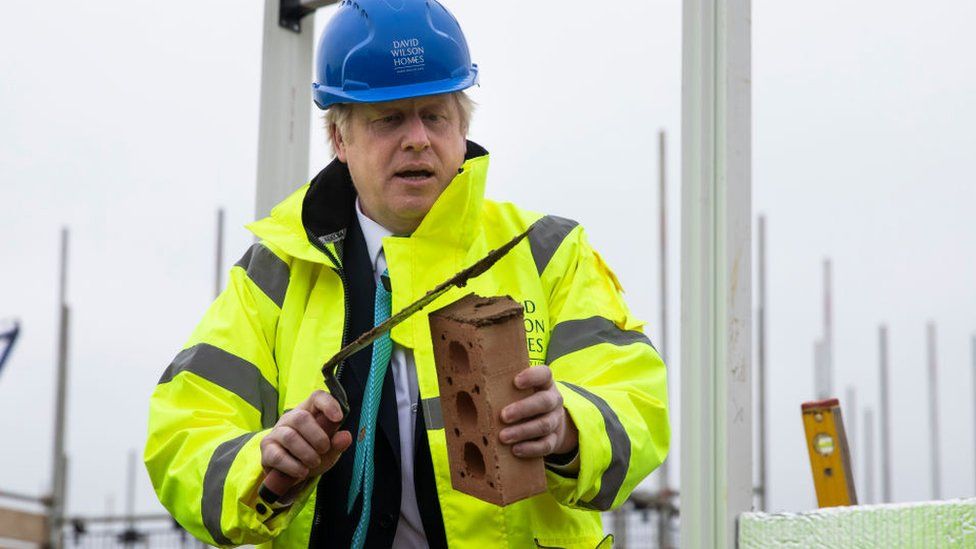
Boris Johnson will promise to boost home ownership later – as he attempts to repair relations with Tory MPs who revolted against his leadership.

In a speech in Lancashire, the PM is expected to say he wants to extend the right to buy to people who rent from housing associations.

He will also promise action in the coming weeks to cut household costs.

It comes after four in ten of his MPs voted against him in a confidence vote on Monday triggered by Partygate.

The worse-than-expected result followed months of criticism over parties in Downing Street during lockdown that broke Covid rules.

However, there is also unhappiness among Conservative MPs over taxation policy and a range of other issues.

The prime minister’s speech is expected to include new plans to allow people to use housing benefit payments to buy homes and make monthly mortgage payments.

Housing benefits, which help low-income or unemployed people pay their rent, costs the government around £30bn a year, a large proportion of which goes to private landlords. A person is not usually eligible for housing benefit if they have a mortgage.

Labour said the policies sounded like a “rehash” of old Conservative pledges and would show the government was “out of ideas”.


Council tenants in England have been able to buy their homes at a discount since October 1980, when the policy was introduced under former Conservative prime minister Margaret Thatcher.

But the same is not true for people who rent from housing associations, unless their property was once owned by a local authority and they lived in it during this period.

The right-to-buy policy has been blamed for exhausting supplies of social housing that have not been replaced, but has long held a totemic status within parts of the Tory party.

In England in 2020-21, around four million households – 17% of the total – lived in rented social housing. Of those, 2.4 million – 10% of the total – rented from housing associations, while 1.6 million – 7% of the total – rented from local authorities.

Replacement guarantees

Proposals to extend the the right to buy to housing association tenants on a voluntary basis began under ex-prime minister David Cameron.

However, only pilot schemes have since been implemented, which the Conservatives pledged to extend in their 2019 election manifesto.

The National Housing Federation, which represents housing associations, has said any extension to the right to buy should include a guarantee that any homes sold would be replaced, a commitment the BBC has been told will be included in the government’s plans.

In a recent statement, the federation said replacing housing association stock is difficult to achieve in practice because the money generated through sales is not enough to build new social homes.

About two million council homes in England have been sold under right to buy since 1980

Downing Street said Mr Johnson would confirm ambitions to boost housing supplies and help more people onto the property market.

The changes to allow people to use their housing benefit to pay a mortgage are understood to be part of this, although the policy – and further details – have not been confirmed.

Responding to reports of the policy, Torsten Bell, chief executive of the Resolution Foundation think tank, wrote on Twitter: “Let’s see the detail but there’s no way [the Treasury] will agree to allowing housing benefit to be used to pay a mortgage – huge cost implications.”

He added that broader reforms to the mortgage market would likely be needed to bring about significant increases in home ownership – such as relaxing restrictions on the amount people can borrow to buy a home.

According to extracts of Mr Johnson’s speech released by No 10, he will promise further measures “over the next few weeks” on living costs, amid 40-year high inflation driven by increases in energy costs.

He is expected to say these will target food, energy, childcare, transport and housing – although no details were given.

The PM will add: “We have the tools we need to get on top of rising prices. The global headwinds are strong. But our engines are stronger.”

“And, while it’s not going to be quick or easy, you can be confident that things will get better, that we will emerge from this a strong country with a healthy economy.”

Labour’s shadow trade secretary Nick Thomas-Symonds said the proposals for housing association tenants were “an indication of a government that is out of ideas”.

Speaking on BBC Two’s Newsnight, he added: “Existing right-to-buy schemes – they’ve not been replaced like-for-like with other social housing.

“Nor is this dealing with the fundamental problem of affordability, and people being able to have affordable homes.

“What the government should be doing is looking at this more broadly. Have a proper plan to do it, including, for example, looking at the definition of affordability and properly link it to local wages.”

Western states submit censure motion against Tehran to IAEA

“The text was submitted overnight” from Monday to Tuesday, a European diplomat said. A second diplomat confirmed the news.

The resolution urging Iran to cooperate fully with the International Atomic Energy Agency (IAEA) marks the first time since June 2020 when a similar motion censuring Iran was adopted.

It is a sign of growing Western impatience after talks to revive the 2015 landmark nuclear accord with Iran stalled in March.

The vote is likely to happen on Thursday during the week-long meeting of the IAEA’s 35-member Board of Governors, one of the diplomats said.

In a report late last month, the IAEA said it still had questions that were “not clarified” regarding traces of enriched uranium previously found at three sites, which Iran had not declared as having hosted nuclear activities.

IAEA head Rafael Grossi told reporters on Monday after opening the board meeting that he hoped “to solve these things once and for all”.

The negotiations to revive the accord started in April 2021 with the aim of bringing the United States back into the deal, lifting sanctions and getting Iran to scale back its stepped-up nuclear programme.

The deal — promising Tehran sanctions relief in exchange for curbs in its nuclear programme — started to fall apart in 2018 when the then US president Donald Trump withdrew from it.

Iranian foreign ministry spokesman Saeed Khatibzadeh told state TV on Monday that Iran would reject the resolution, saying it would have “a negative impact both on the general direction of our cooperation with the IAEA and on our negotiations”.

China and Russia — who with Britain, France and Germany are parties to the Iran nuclear deal — have warned that any resolution could disrupt the negotiation process.

“Russia will not associate itself with such a resolution,” Russia’s ambassador to the UN in Vienna, Mikhail Ulyanov, said in a tweet late on Monday.

Analysts say the high stakes negotiations are unlikely to fall apart because of the resolution.

Turkiye tells Russia it won’t tolerate instability in northern Syria

President Tayyip Erdogan announced two weeks ago that Turkiye would soon be launching military offensives into northern Syria against the Kurdish YPG militia, which Ankara considers a terrorist organisation.

Russian and Turkish foreign ministers will hold talks in Ankara on Wednesday.

Akar told Shoigu that “the necessary response will be given to actions aimed at disrupting the stability achieved in the region and the presence of terrorists is not acceptable”, the Turkish def­ence ministry said in a statement. It said Akar also “remi­nded Shoigu that previous agreements on this issue need to be adhered to”.

Pakistanis held in Italy over suspected links to Charlie Hebdo attack

The sting led to “arrests in Italy and abroad of Pakis­tani citizens with direct ties” to Zaheer Hassan Mahmood, a Pakistani man accused of attacking two people with a meat cleaver weeks after the magazine republished controversial cartoons of the Holy Prophet (peace be upon him), Italian police said.

It did not say how many were arrested.

Europol’s European Counter Terrorism Centre coordinated the operation along with anti-terrorism police in France and Spain, according to police in Genoa in north-western Italy, where a judge signed 14 arrest warrants concerning offences related to “international terrorism”.

Genoa’s Il Secolo XIX daily said eight of the arrest warrants had been carried out in Italy against people belonging to “a network of Islamic extremists… who were plotting attacks”.

The probe began in Genoa because one of the suspects lives in the area, but months of “wiretaps, stakeouts, tailing suspects and comparing numerous data with police in other countries” revealed other members of the gang in other parts of Italy, France and Spain, it said.

The investigation continues into others with alleged ties to those targeted in Tuesday’s sting, it added.

Mahmood injured two people during the 2020 attack, which came five years after 12 members of staff at the satirical weekly were gunned down for publishing the cartoons.

UN body rebukes Israel for seeking ‘complete control’ over Occupied Palestinian Territory

Israel’s ministry of foreign affairs called the report “a waste of money and effort” that amounted to a witch-hunt. Israel boycotted the inquiry, accusing it of bias and barred entry to its investigators.

While prompted by the 11-day May 2021 conflict in which 250 Gaza Palestinians and 13 people in Israel died, the inquiry mandate includes alleged human rights abuses before and after that and seeks to investigate the “root causes” of the tensions.

It cites evidence saying Israel has “no intention of ending the occupation” and is pursuing “complete control” over what it calls the Occupied Palestinian Territory, including East Jerusalem, which was taken by Israel in 1967.

“Ending the occupation alone will not be sufficient,” the report says, urging additional action to ensure the equal enjoyment of human rights.

Citing an Israeli law denying naturalisation to Palestinians married to Israelis, the report accuses the country of affording “different civil status, rights and legal protection” for Arab minorities. Israel says such measures safeguard national security and the country’s Jewish character.

The Israel ministry added: “It is a biased and one-sided report tainted with hatred for the state of Israel and based on a long series of previous one-sided and biased reports.” Israel withdrew from Gaza in 2005 but, with the help of Egypt, clamps down on the borders of the enclave now governed by Hamas. Palestinian authorities have limited self-rule in the West Bank, which is dotted with Israeli settlements.

Hamas, which is sworn to Israel’s destruction, opened the May 2021 war with rocket attacks following moves to evict Palestinian families in East Jerusalem, and in retaliation for Israeli police clashes with Palestinians near the Al Aqsa Mosque.

The amount of greenhouse gas leaking from Australian coal mines has been hugely under-reported, a report says.

And unless quick action is taken, it could prevent the country from reaching its emission reduction targets.

The new report analysed methane being released from coal mines, finding the amount is twice the official estimates.

Australia’s new government has pledged to cut emissions faster than its predecessor, but it has not ruled out supporting new coal mines.

Reducing emissions from methane – a potent greenhouse gas – is a renewed focus for world leaders.

The US, the EU and Indonesia – the world’s biggest coal exporter – were among more than 100 countries that last year promised a 30% cut in methane emissions by 2030.

Australia ranks second for coal exports and is among the world’s top methane emitters, but it did not sign on to the pledge.

Methane has more than 80 times the heating power of carbon dioxide over a 20-year period. It is estimated to be responsible for almost a third of the globe’s warming since pre-industrial times.


In 2019, Australia’s coal mines emitted 898,000 tonnes of methane, according to the federal industry department.

But the new report by UK think-tank Ember has found current methods of calculating those emissions are wrong – in the worst case by a factor of 10.

Previous estimates have been based on how much coal is produced rather than measuring how much gas leaked from mines, the report said.

Recent research using satellites have given a more accurate picture of pollution and have been adopted by the International Energy Agency (IEA).

The IEA has estimated Australian coal mines emitted 1.8 million tonnes of methane in 2021, double the latest officially reported figures, the report said.

1px transparent line

“Methane leaking from Australian coal mines has almost double the climate impact every year than all of Australia’s cars,” said Dr Sabina Assan, the report’s author.

“At the current level, methane leaking from coal mines will put Australia’s modest 2030 climate targets well out of reach.”

The country has a 2030 goal of a 43% emissions cut, still short of allies like the UK and US.

The good news is that it is possible to tackle coal mine methane emissions quickly, says the report, which was commissioned by a climate change lobby group.

“[It] really is the low-hanging fruit in the fight against climate change,” Dr Assan said.

The first step, it says, is to stop any new coal projects – dozens of which are currently being considered across Australia.

Retiring Australia’s “gassiest” mines early will also drastically help, as will banning “venting” – the release of gas build-ups in underground coal mines into the air – and finding sustainable uses or storage for methane.

Existing technologies – if applied to all underground mines – have the potential to cut Australia’s methane emissions by about 45%, the report said.

Prime Minister Anthony Albanese’s government has not commented on the report, but it previously said it will not leave “emissions intensive” industries – like mining – at a disadvantage to their global competitors.

It has also promised it will support new coal mines if they make commercial sense, and that it will not force coal-fired power stations to shut early.

A US official has warned that North Korea could conduct a seventh nuclear test “at any time”.

Sung Kim, US Special Representative to North Korea, made the warning days after Pyongyang test-launched a record eight ballistic missiles on Sunday.

Any such nuclear test would be met with a “swift and forceful response”, US Deputy Secretary of State Wendy Sherman told reporters.

Pyongyang has not carried out a nuclear test for five years.

However, tensions have been rising on the Korean peninsula. Speaking from Jakarta, Mr Kim said North Korea had tested an unprecedented number of missiles this year – 31 compared to 25 during the whole of its last record-breaking year, 2019.

“And it’s only June,” he told reporters during a briefing in Jakarta, Indonesia.

He added that rhetoric used by North Korean officials had suggested a willingness to use tactical or small-sized nuclear weapons as well.

When asked by reporters when the next round of testing would take place, Mr Kim warned it could happen “any time” – including as early as this week, according to news outlet Bloomberg.

Meanwhile, Ms Sherman told reporters in Seoul – where she has been meeting with South Korean and Japanese officials – that any such test “would be in complete violation of UN Security Council resolutions”.

“I believe that not only ROK (South Korea) and United States and Japan but the entire world will respond in a strong and clear manner,” she said.

North Korea is yet to respond to the US assertions.

You may also be interested in:

Watch: North Korea showcases banned missiles in a military parade broadcast on state TV

However, the US – which, with its ally, South Korea, responded to Pyongyang’s recent launches by launching eight missiles in response on Monday – remained committed to engaging diplomatically with North Korea “without preconditions”, Mr Kim said.

He went on to say the message had been conveyed “through private channels”. The US had also offered proposals on humanitarian cooperation and assistance with the recent Covid-19 outbreak in North Korea, he said. The country has been grappling with the spread of the virus in an unvaccinated population of nearly 25 million.

“However, to date, the DPRK has not responded and continues to show no indication that it is interested in engaging,” he said.