
Republican vying for governorship arrested over Capitol riots

Kelley, 40, of Allendale, is one of five Republicans in the state competing to take on Democratic Governor Gretchen Whitmer this coming fall. He currently serves as an appointed planning commissioner in Allendale.

His arrest came on the same day that the Democratic-led House of Representatives select committee investigating the attack on the Capitol plans to hold its first of several hearings to present the evidence it has amassed about the riot and the events leading up to it.

According to a sworn statement by an FBI agent, Kelley was captured on video standing in a crowd of people who were “assaulting and pushing past law enforcement officers” at the Capitol.

Other images also show that Kelley was climbing on an architectural feature near the northwest stairs of the building, the statement said. He then can be seen in video footage waving his hand to encourage the crowd to move toward the stairs.

Kelley’s presence at the Capitol that day was first identified by a caller on the FBI’s tip line, as well as a confidential human source who has worked with the bureau since 2020 to provide information about domestic terrorism groups in Michigan, the statement said.

The FBI sworn statement said that investigators were able to also compare photos of Kelley at other events in which he wore similar attire, including the American Patriot Council “Judgeent Day” rally in May 2020, among others.

Blinken says Iran’s actions risk deepening nuclear crisis, isolation

Iran’s actions threatened the possible restoration of the 2015 six-party nuclear deal, Blinken said in a statement.

“The only outcome of such a path will be a deepening nuclear crisis and further economic and political isolation for Iran,” he said.

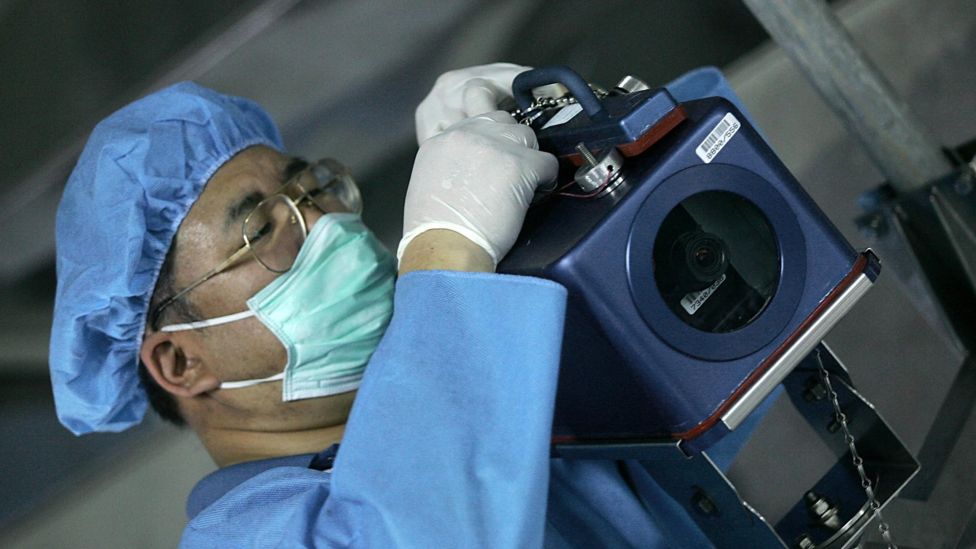
Earlier on Thursday, the International Atomic Energy Agency (IAEA) said the removal of 27 surveillance cameras used by the UN nuclear watchdog to monitor Tehran’s activities could deal a “fatal blow” to negotiations to revive a landmark deal.

The original agreement, known as the Joint Comprehensive Plan of Action (JCPOA), aimed at preventing Iran from developing nuclear weapons.

It was unilaterally abrogated in 2018 by the US administration of Donald Trump, and Iran has slowly resumed activities that have violated its commitments to the deal.

Since coming to office in January 2021, US President Joe Biden has sought to revive the agreement, by offering to lift sanctions on the country in exchange for Tehran agreeing to limitations and monitoring of its nuclear development programme.

Rather than address the IAEA’s concerns, Blinken said, Iran’s response was instead “to threaten further nuclear provocations and further reductions of transparency. ”

“Such steps would be counterproductive and would further complicate our efforts to return to full implementation of the JCPOA,” he said.

Blinken stressed that the basis to revive the JPCOA has been on the table since March, but said Iran was holding it up with “additional demands that are extraneous” to the agreement.

One Iranian demand holding up a deal has been that the United States removes its official terrorist group designation from the country’s powerful Islamic Revolutionary Guards Corps.

The Biden administration has rejected that demand, saying the issue is unconnected to the JPCOA.

Mystery plane puts east Europe air forces on alert

The aircraft flew over Hungary, crossed briefly into Serbia and then Romania before entering Bulgarian airspace at 1609 GMT on Wednesday, the Bulgarian defence ministry said in a statement.

The twin-engine Beechcraft, with two people onboard, had no approved flight plan and its transponders were turned off. The pilot did not respond to radio requests and visual signals, the Romanian defence ministry said.

Two Hungarian Gripen fighter jets, two US F-16s and two Romanian F-16s intercepted the intruder one after the other and escorted it until it entered Bulgarian airspace, Bucharest added.

Bulgaria’s air force did not immediately send up fighters as “the plane was not considered a threat at any moment”, Defence Minister Dragomir Zakov told journalists.

Israeli court upholds sale of Jerusalem church land to Jewish group

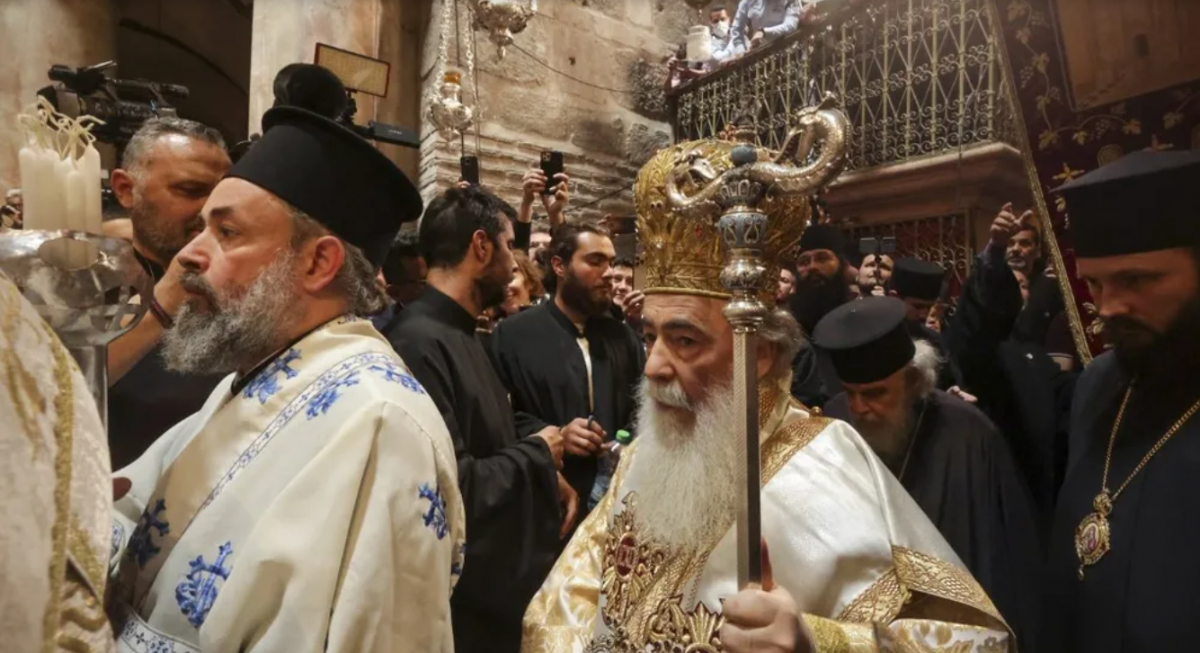
The Ateret Cohanim organisation, which seeks to “Judaise” Israeli-annexed east Jerusalem, bought three buildings from the church in a controversial deal struck in secret in 2004.

The sale triggered Palestinian anger and led to the dismissal of Patriarch Irineos I the following year.

The church brought charges against Ateret Cohanim, claiming the properties were acquired illegally and without its permission.

In a decision released late on Wednesday, Israel’s supreme court dismissed the church’s appeal, noting that the “harsh allegations” of misconduct by the parties involved in the original sale were “not proven to be true” in earlier proceedings. The church blasted that ruling as “unfair” and without “any legal logical basis”.

It condemned Ateret Cohanim as a “radical organisation” that had used “crooked and illegal methods to acquire Christian real estate” at a crucial Jerusalem site.

The church’s lawyer, Asaad Mazawi, said the ruling marked “a very sad day”.

“We are talking about a group of extremists that want to take the properties from the churches, want to change the character of (Jerusalem’s) old city and want to invade the Christian areas,” he said. Backed by Israel, “unfortunately they are succeeding”, he said.

The Greek Orthodox Church is the largest and wealthiest church in Jerusalem with extensive land holdings there dating back centuries.

It has faced repeated accusations of corruption and facilitating Israeli settlement expansion on its properties.

Israel captured east Jerusalem in the 1967 war and later annexed it, in a move not recognised by most of the international community.

Iran has told the global nuclear watchdog it is removing 27 surveillance cameras from its nuclear facilities.

It comes after the International Atomic Energy Agency’s board censured Iran for not answering questions about uranium traces found at three undeclared sites.

IAEA Director General Rafael Grossi said 40 cameras would remain, but that the move posed a “serious challenge”.

Unless it was reversed within three to four weeks, he warned, it would deal a “fatal blow” to the Iran nuclear deal.

Under the 2015 agreement with world powers, Iran agreed to limit its nuclear activities and allow continuous and robust monitoring by the IAEA’s inspectors in return for relief from economic sanctions.

However, it has been close to collapse since the US pulled out unilaterally and reinstated sanctions four years ago and Iran responded by breaching key commitments.

The US now wants to rejoin the deal if Iran returns to compliance, but indirect negotiations in Vienna have stalled since March.

Iran’s nuclear programme: What’s been happening at its key nuclear sites?

On Wednesday, the IAEA’s 35-nation board of governors approved a resolution that expressed “profound concern that the safeguards issues” related to the undeclared sites “remain outstanding due to insufficient substantive co-operation by Iran”. It also urged the country to “act on an urgent basis to fulfil its legal obligations”.

The US, UK, France and Germany, which drafted the text, said in a joint statement that they welcomed “the overwhelming majority vote” in favour of the resolution, which they said sent “an unambiguous message to Iran”.

But the Iranian foreign ministry denounced it as a “political, unconstructive and incorrect action”.

Spokesman Saeed Khatibzadeh tweeted that the Western powers had “put their short-sighted agenda ahead of [the] IAEA’s credibility” and that they were “responsible for the consequences”.

“Iran’s response is firm & proportionate,” he added.

Russia’s mission to the IAEA, which voted against the resolution along with China, tweeted that the US and its European allies did “not get the sensitivity of the moment”, adding: “Clearly #ViennaTalks taught them nothing: pressuring Tehran entails escalation.”

Rafael Grossi said the “continuity of knowledge” about Iran’s activities would be lost without the cameras

Iran has been withholding footage from the IAEA’s cameras for the past year in an attempt to increase pressure on the US at the negotiating table.

On Thursday, Mr Grossi said he had been informed that Iran was removing “basically all” of the cameras and other monitoring equipment that were installed under a 2003 agreement on inspections, implemented months after Iran’s secret nuclear sites were exposed.

“This, of course, poses a serious challenge to our ability to continue working there and to confirm the correctness of Iran’s declaration under the [deal],” he told reporters.

The 40 cameras remaining were installed under a safeguards agreement that was completed by Iran after it signed the nuclear Non-proliferation Treaty (NPT) in 1970

Mr Grossi warned that the removal of the cameras would deal a “fatal blow” to the nuclear deal unless it was reversed in the next three to four weeks because the IAEA would no longer be able to maintain a “continuity of knowledge” about Iran’s nuclear activities and material.

He invited Iran to engage with him urgently, adding: “Does this mean it’s the end of the line? I think this shouldn’t be the case. Not yet… Let’s hope that emotions go down a little bit.”

Iran has used advanced centrifuges to build its stockpile of highly enriched uranium

Iran insists its nuclear programme is entirely peaceful and that it has never sought nuclear weapons, but evidence collected by the IAEA suggests that until 2003 it conducted activities relevant to the development of a nuclear bomb.

The IAEA’s board voted to censure Iran after the director general told a meeting on Monday that he was still unable to confirm the correctness and completeness of Iran’s declarations under the Comprehensive Safeguards Agreement (1974) and Additional Protocol (2003).

He said that was because Iran had “not provided explanations that are technically credible in relation to the agency’s findings at three undeclared locations”, which he named as Turquzabad, Varamin and Marivan.

According to the IAEA’s latest report, environmental samples taken by inspectors at the three locations in 2019 or 2020 indicated the presence of “multiple natural uranium particles of anthropogenic [man-made] origin”.

Mr Grossi said Iran had also not informed the IAEA “of the current location, or locations, of the nuclear material and/or of the equipment contaminated with nuclear material, that was moved from Turquzabad in 2018”.

The director of the Atomic Energy Organisation of Iran (AEOI), Mohammad Eslami, insisted on Wednesday that his country had “no hidden or undocumented nuclear activities or undisclosed sites”.

Iran had maintained “maximum co-operation” with the IAEA, he said, adding that “fake documents” had been passed to the watchdog as part of a “maximum pressure” strategy provoked by Israel, its arch-enemy.

Mr Grossi also warned on Monday that Iran was “just a few weeks” away from having stockpiled enough enriched uranium to create a nuclear bomb. Enriched uranium is used to make reactor fuel, but also nuclear weapons.

The IAEA’s latest report said Iran had 43.1kg (95lb) of uranium enriched to 60% purity, which Kelsey Davenport of the US-based Arms Control Association said could be enriched to 90%, or weapons-grade, in under 10 days. However, Ms Davenport noted that “weaponization” – manufacturing a nuclear warhead for a missile – would still take one to two years.

Former US President Donald Trump orchestrated last year’s Capitol riot in an “attempted coup”, a congressional inquiry has heard as a prime-time hearing opened into the raid.

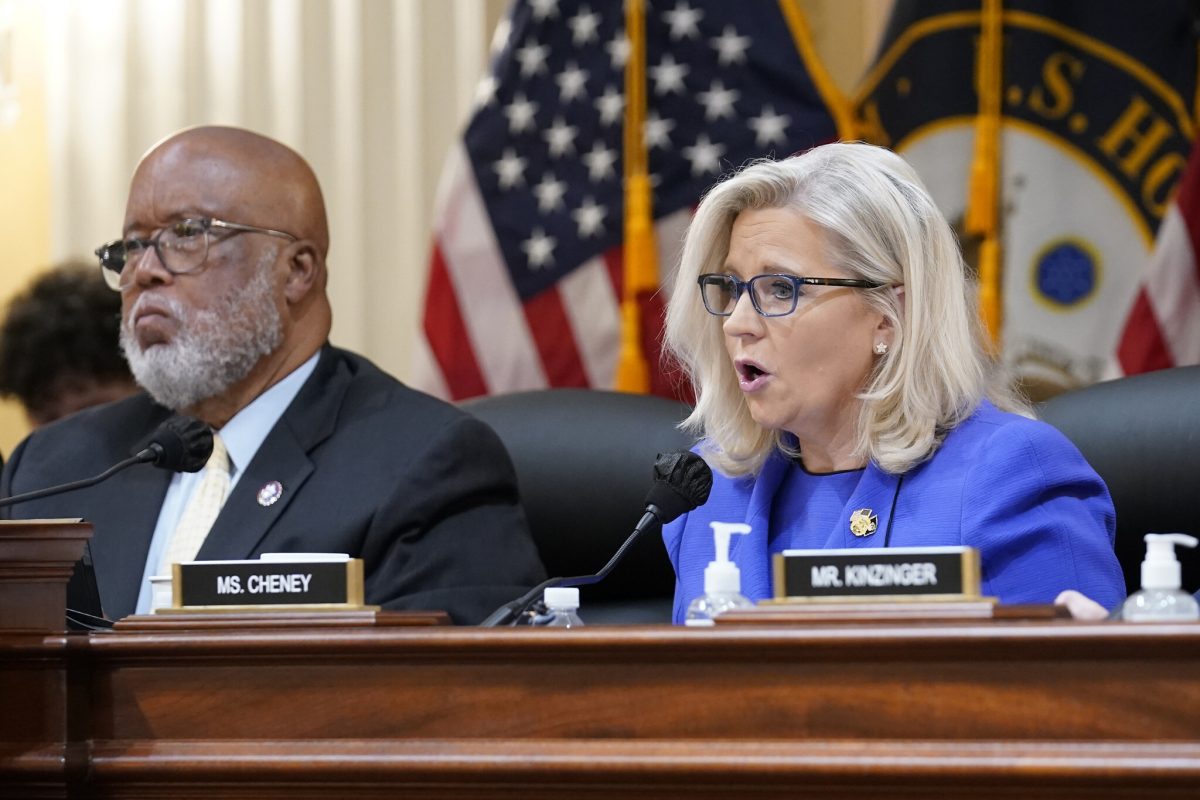
Liz Cheney, the Republican vice-chair of the committee, said Mr Trump had “lit the flame of this attack”.

Bennie Thompson, a Democrat, said the riot endangered American democracy.

Trump supporters stormed Congress on 6 January 2021 as lawmakers met to certify Joe Biden’s election victory.

After almost a year of investigation, the Democratic-led US House of Representatives select committee opened on Thursday evening by showing clips from interviews it conducted with members of Mr Trump’s inner circle.

Footage was aired of testimony by former US Attorney General Bill Barr saying the former president’s claims that the election was stolen were baseless.

“We can’t live in a world where the incumbent administration stays in power based on its view, unsupported by specific evidence, that there was fraud in the election,” said the former attorney general.

The hearing also featured a recording of testimony by Ivanka Trump, the ex-president’s daughter, saying she “accepted” Mr Barr’s rejection of her father’s conspiracy theory.


Before the House inquiry opened on Thursday evening – the first of six hearings expected this month – Mr Trump dismissed it as a “political HOAX”.

The former president has been publicly hinting about another White House run in 2024. He continues to peddle unsubstantiated claims that the last election was rigged by mass voter fraud.

Mr Thompson, the committee’s chairman and a Mississippi lawmaker, told the hearing: “Jan 6 was the culmination of an attempted coup, a brazen attempt, as one writer put it shortly after Jan 6, to overthrow the government.

“The violence was no accident. It was Trump’s last stand.”

Ms Cheney, the vice-chair of the committee and a Wyoming congresswoman, said: “Those who invaded our Capitol and battled law enforcement for hours were motivated by what President Trump had told them: that the election was stolen and that he was the rightful president.

“President Trump summoned the mob, assembled the mob and lit the flame of this attack.”

Running just over two hours, the unprecedented prime-time congressional hearing on the Capitol attack was a decidedly mixed bag.

The video evidence of the 6 January events, and the dramatic personal testimony of officer Caroline Edwards, were powerful reminders of the pain and suffering that day.

The extended statement by Liz Cheney – who has put her career in jeopardy with her criticism of the former president – was full of allegations and accusations but overly dense.

An American sitting down to watch the proceedings instead of their regular Thursday night entertainment may have not received the slickly packaged production that was promised.

But if they had forgotten what it was like on 6 January – the desperation and the drama – there was plenty to remind them.

What they do with that reminder, however, remains to be seen.

Caroline Edwards, the first police officer injured in the attack, testified that she was called a “traitor” and a “dog” by the rioters before she was knocked unconscious.

She described later encountering amid the melee a “ghostly pale” Officer Brian Sicknick, who died a day following the attack after suffering two strokes.

“I was slipping in people’s blood,” Officer Edwards told lawmakers of the “war scene” and “hand-to-hand combat”.

“Never in my wildest dreams did I think that as a police officer, as a law enforcement officer, I would find myself in the middle of a battle,” she added.

A British documentary filmmaker, Nick Quested, who was tracking the Proud Boys, a far-right group, on the day of the attack, also gave evidence.

He described his surprise at the anger and violence of the rampaging “insurrectionists”.

Four people died on the day of the US Capitol riot: an unarmed woman shot by police and the others of natural causes.

More than 100 police officers were injured. Four other officers later died by suicide.

Republicans have dismissed the televised inquiry as a ploy to distract Americans from the political headwinds Democrats face with five months to go until the US mid-term elections.

Opinion polls suggest Democrats may lose control of the House and even potentially the Senate when the nation votes in November.

As Americans grapple with galloping inflation, soaring petrol prices and a baby-formula crisis, US President Joe Biden, a Democrat, has seen his popularity with voters dip below Mr Trump’s approval rating at the same point in his tenure.

House Republican leader Kevin McCarthy – who was initially critical of Mr Trump in the aftermath of the Capitol riot, but has since shifted his tone – called the committee a “smokescreen” for Democrats to overhaul voting laws.

House Democrats impeached Mr Trump following the riot, with barely a week left in his presidency. They accused him of inciting insurrection, but he was acquitted in the Senate.

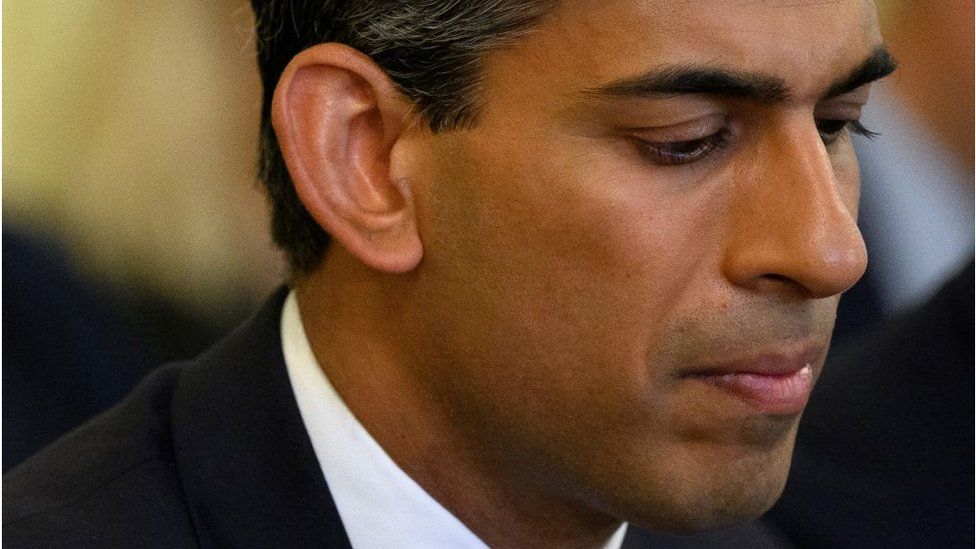
Rishi Sunak has been accused of failing to act soon enough to save £11bn of taxpayers’ money that has been used to pay interest on government debt.

The National Institute of Economic and Social Research (NIESR) said the losses stemmed from the chancellor’s failure to insure against interest rate rises.

It meant higher than necessary payments on £900bn of reserves created through the quantitative easing (QE) programme.

The Treasury said it has “a clear financing strategy” on debt.

The NIESR’s Professor Jagjit Chadha, told the Financial Times that Mr Sunak’s actions had left the country with “an enormous bill and heavy continuing exposure to interest rate risk”.

According to the FT report, the Bank of England (BoE) created £895bn of money through quantitative easing, most of which was used to buy government bonds from pension funds and other investors.

When those investors put the proceeds in commercial bank deposits at the Bank, it had to pay interest at its official interest rate.

Last year, when the official rate was still 0.1%, the NIESR – an economic research group – said the government should have insured the cost of servicing this debt against the risk of rising interest rates.

It suggested converting the debt into government bonds with longer to pay it back.

Prof Chadha said Mr Sunak’s failure to do this had cost taxpayers £11bn.

“It would have been much better to have reduced the scale of short-term liabilities earlier, as we argued for some time, and to exploit the benefits of longer-term debt issuance,” he told the FT.

‘Fast and loose’

Labour’s shadow treasury minister Tulip Siddiq said: “These are astronomical sums for the chancellor to lose, and leaves working people picking up the cheque for his severe wastefulness while he hikes their taxes in the middle of a cost-of-living crisis.

“This government has played fast and loose with taxpayers’ money. Britain deserves a government that respects public money and delivers for people across the country.”

A Treasury spokesman said: “There are long-standing arrangements around the asset purchase facility – to date £120bn has been transferred to HM Treasury and used to reduce our debt, but we have always been aware that at some point the direction of those payments may need to reverse.

“We have a clear financing strategy to meet the government’s funding needs, which we set independently of the Bank of England’s monetary policy decisions.

“It is for the [Bank’s] Monetary Policy Committee to take decisions on quantitative easing operations to meet the objectives in their remit, and we remain fully committed to their independence.”

It is unacceptable for patients to have to wait more than two years for NHS treatment, Nicola Sturgeon has said.

The first minister was responding to reports that a woman has been given a cardiology appointment at Glasgow Royal Infirmary in July 2024.

Figures released two weeks ago showed that more than 10,000 people in Scotland have been waiting more than two years for NHS treatment.

Ms Surgeon said Covid had significantly impacted on waiting times.

But opposition leaders said the problem was getting worse, with Scottish Conservative leader Douglas Ross saying only 648 patients had waited more than two years for treatment this time last year, but the figure was now more than 10,000.

He highlighted a report in the Scottish Sun that a woman with a heart condition was issued with a telephone appointment with a hospital consultant for July 2024.

Mr Ross also raised the case of Kelso pensioner Alan Turner, who was referred for a knee replacement last autumn. He said Mr Turner was told he would have to wait up to three years to be seen, and was instead offered private treatment in England that was paid for by the NHS in Scotland.

Mr Turner “reluctantly” agreed to travel south for treatment, but then had to wait months for essential aftercare and physiotherapy when he returned to Scotland, Mr Ross said, which had left the 70-year-old “back at square one – he can’t even bend his knee”.

Mr Ross added: “Right now 10,613 Scots have waited more than two years for treatment in Scotland’s NHS – that’s a 16-fold increase on last year. It’s completely unacceptable.

“This isn’t the NHS recovery the SNP promised. Things are getting far worse, not better. Now we’re hearing of heart patients being given appointments two years away.

“These longer and longer waiting times are a problem across every level of Scotland’s NHS. Twice as many Scots are waiting over three months for key diagnostics tests compared to last year.”

Douglas Ross highlighted cases where patients were having to wait more than two years

Ms Sturgeon said the case highlighted in the Scottish Sun was “not acceptable” and that a review was being undertaken into the patient’s case.

She acknowledged waiting times had gone up, adding: “It is the case that waiting times generally and those waiting an unacceptably long time for treatment has increased over the past year.

“I’m afraid that is the impact of a global pandemic.

“We have, over the past year, seen further waves of Covid that have had a big impact on the number of treatments that can be done in our National Health Service as infection control measures have had to be tightened up and, of course, as a number of staff have themselves had Covid and been off sick.”

The first minister said there was “not a health service literally on the planet” which had not been impacted by the pandemic, and that the government were investing heavily in NHS recovery with record numbers of staff working in the health service.

She went on to say there have been “tentative signs” of improvement in the health service and that “through the efforts of staff” Scotland’s NHS was performing better than those in the rest of the UK on waiting times.

Recent figures for NHS England have shown slightly higher rate of patients on waiting lists than in Scotland, while Wales and Northern Ireland have much longer waiting lists than Scotland and England.

‘Begging for medication’

Scottish Labour leader Anas Sarwar also raised NHS waiting times with the first minister, saying that that there were now 10,000 young people waiting for mental health treatment.

He said he had been contacted by a woman whose son had been diagnosed with autism 10 months ago, but was told he would have to wait to see a psychiatrist before medication could be prescribed.

Mr Sarwar said: “He is still waiting. In that time his condition has become worse, and he is begging for the medication – in his words – to “sort out my head.”

“He is eight years old.”

Ms Sturgeon acknowledged that the Child and Adolescent Mental Health Services (CAMHS) faced “tough challenges” with more and more young people coming forward for treatment.

She insisted there were “signs of improvement” which showed “the highest ever recorded number” start treatment in CAMHS services in the most recent quarter, a 20% increase on the same quarter last year and added that an extra £80m had been invested in the service since 2019/20.

The latest Public Health Scotland (PHS) data showed that 9,672 patients were referred to CAMHS between January and March – 22% more than the same period last year.

About three quarters – 73.2% – were seen within 18 weeks, with the government target being for 90% of patients beginning treatment within that timescale.

India tightens security after militant threat

Several Indian media groups shared the June 6 letter attributed to Al Qaeda’s branch in the Indian Sub-continent (AQIS) in which threats were made to carry out suicide bombings in Indian states to defend, it said, the “honour of the Holy Prophet (peace be upon him).

A federal home ministry official said intelligence agencies were checking the authenticity of the threats issued by AQIS.

“We have also ordered state police to ensure public gatherings or protests are not allowed as they could be targeted by the militant group,” a home ministry official in New Delhi said.

The security threat surfaced days after a spokeswoman for the BJP made comments about the Holy Prophet (PBUH) during a TV debate.

Nupur Sharma’s remarks sparked uproar among Muslims in India and triggered diplomatic protests from Muslim countries seeking an apology from the Indian government.

Sharma has been suspended from the party while another spokesman, Naveen Kumar Jindal, was expelled over comments he made about Islam on social media.

Police arrested a BJP youth leader in Uttar Pradesh for posting anti-Muslim comments on social media, along with 50 other people who took part in protests in parts of India last week over Sharma’s remarks.

India’s foreign ministry said on Monday the offensive tweets and comments did not in any way reflect the government’s views.

Instructions have been issued to several senior members of the BJP to be “extremely cautious” when talking about religion on public platforms.

But domestic outrage gained fresh momentum after leaders from Saudi Arabia, the United Arab Emirates, Qatar, Oman, Indonesia, Malaysia, Iran and Afghanistan sought apologies from New Delhi and summoned diplomats to protest against the remarks.

The 57-member Organisation of Islamic Cooperation (OIC) said in a statement that the insults came in the context of an increasingly intense atmosphere of hatred toward Islam in India and systematic harassment of Muslims.

Indian Muslims have felt more pressure on everything from freedom of worship to hijab headscarves under BJP rule.

The new controversy has become a diplomatic challenge for Modi, who in recent years has cemented strong relations with energy-rich Muslim nations.

Muslim rights groups in India said it was the first time influential foreign leaders had spoken out against humiliations experienced by the community.

“Our voices have finally been heard, only world leaders can nudge Modi’s government and his party to change their attitude towards Muslims,” said Ali Asghar Mohammed, who runs a voluntary rights group for Muslims in Mumbai.

Pakistan seeks emergency steps for highly indebted states

Underlining the need for emergency measures to address debt distress in many developing countries, Pakistan’s acting ambassador to the United Nations Aamir Khan called for “re-channeling at least $250bn of unutilised SDRs to developing countries in need of liquidity”.

In Rome, Director General of the UN Food and Agriculture Organisation (FAO) Qu Dongyu warned at an international meeting that “food insecurity and high prices can become a trigger for instability”.

The SDR (special drawing right) is an international reserve asset created by the International Monetary Fund (IMF) to supplement the official reserves of its member countries. Developing economies are much more dependent on SDRs than developed economies.

In August, a $650bn SDR fund was created to benefit all countries, but about two-thirds of it went to developed economies. The balance falls woefully short of developing countries’ financial needs.

“The access to liquidity must be complemented by other immediate measures, including by fulfillment of the longstanding commitments,” Ambassador Khan said. He also called for the distribution of $100 billion in annual climate finance by developed countries.

At the 2009 UN climate summit in Copenhagen, rich nations had pledged to channel $100bn a year to developing countries by 2020 to help them adapt to climate change. The promise was never fully implemented.

In Rome, the FAO chief urged developed nations to “keep the global food trade system open and ensure that agri-food exports are not restricted or taxed”.