Ambassador Khan was sent to Washington on March 25, when the PTI government was still in power, but after Imran Khan’s ouster on April 11, there was speculation that the change in Islamabad would also impact diplomatic appointments.
But Pakistan’s envoy to the United Nations, Ambassador Munir Akram, later explained that incumbent ambassadors continue to represent the country in foreign capitals unless specifically asked by the new government to return home. Neither Ambassador Khan nor Ambassador Akram were asked to do so.
On his arrival, Ambassador Khan received a letter from the chief of protocol at the US State Department, endorsing his appointment as Pakistan’s ‘working ambassador’ in Washington.
Later, on April 19, he also received a letter from the US president’s office, formally confirming his appointment.
On Monday, he is expected to visit the White House for an official photo with the US president, which will be the final endorsement of his ambassadorship.
Usually, a new ambassador is invited to the White House, along with other new envoys, to present his or her credentials. This ceremony confirms an ambassador’s appointment.
But like so many other things, the Covid-19 pandemic has also affected this tradition. Since President Biden’s age, 79, makes him particularly vulnerable to the virus, the White House tries to minimise the president’s contact with others.
Diplomatic sources in Washington told Dawn that Covid-19 has also hit the credentials ceremony.
Now, the White House processes all the documents and issues the necessary letters first and then invites an ambassador for the photo session.
Ambassador Blome, who arrived in Pakistan late last month, has taken over the charge of the US mission at a time of unique challenges and opportunities.
Though anti-American sentiments run deep in Pakistani society, the feelings got inflamed after former prime minister Imran Khan alleged that he was ousted through a US conspiracy for regime change and ran a mass campaign calling for ‘freedom’ from ‘slaves of foreign powers’. This heightened anti-American sentiment has, therefore, become the foremost challenge for Washington in executing its foreign policy goals in Pakistan.
But then, newer opportunities have also emerged. Ambassador Blome — the first full-time American envoy in Islamabad after a gap of almost four years — assumed the charge of his assignment when Afghanistan is apparently no more a dominant issue in the bilateral ties following last year’s withdrawal of US forces from there at the end of 20-year-long war — the longest in American history.
Counterterrorism cooperation to remain ‘defining feature’ of ties
Ambassador Blome, in an interview with Dawn, reiterated the rejection of Mr Khan’s `regime change’ allegation and said Washington was “very clear” about that.
“However, I think the best thing we can do going forward is to keep engaging across all levels of Pakistani society, as we have for the past 75 years!” he said, adding the engagement wouldn’t be limited just with the government, but will extend to political leaders, the business community, civil society, and the youth.
In this two-way communication, he said, he will “listen to and understand” what’s happening here and “convey that understanding” to Washington and at the same time share US “views and positions as clearly and as transparently as possible” with audiences here.
Beyond polarisation in the domestic politics on US ties, the new government in Islamabad has always been open to revitalising bilateral relations. The first opportunity that came in its way in the shape of Secretary of State Antony Blinken’s invitation for Foreign Minister Bilawal Bhutto-Zardari for attending a food security conference at the United Nations was clinched.
Mr Bhutto-Zardari and Mr Blinken also met on the sidelines of the conference in New York on May 18, which was the first highest level face-to-face contact between the two sides in months.
Ambassador Blome disclosed that “a number of follow-ups” were being planned on the basis of the agenda set by the two foreign ministers at their meeting.
“I will do some of that here, and I expect we will see a variety of US visitors to Pakistan in the coming months to build on it further,” he said.
In what appears to be a step towards the resumption of structured bilateral dialogue that has been suspended for long, the two sides are set to launch the US-Pakistan Health Dialogue in Washington for deepening their cooperation on health issues.
The ambassador recalled the “partnership” between the two countries against the global Covid-19 pandemic as a good example of cooperation on health.
US had donated more than 61 million Covid vaccine doses, $69m in financial support, and an additional $9m in in-kind assistance to support Pakistan’s fight against the pandemic.
“We can build on this work not just in assistance but through growing private sector partnerships in the health field,” the envoy added.
Much like the emphasis on investment and trade during the foreign ministers’ meeting, Ambassador Blome too said that he was “committed to promoting further development of our bilateral trade and investment”.
He further identified health, climate, and education as other areas where cooperation could be expanded.
But, at the same time, it was too obvious from the discussion with him that counterterrorism cooperation will remain a defining feature of this relationship for some time to come.
Ambassador Blome said US was seeking “a strong partnership with Pakistan on counterterrorism” and expects from Islamabad “sustained” and indiscriminate action against all militant and terrorist groups.
The ambassador was specifically asked to clarify if US pursuit for strengthening counterterrorism cooperation with Pakistan included negotiations over drone basing access closer to Afghanistan, but he avoided a direct reply.
“The United States is committed to preventing the reemergence of terrorist threats, in Afghanistan or anywhere else. Fighting terrorism is a global effort. We will continue to engage partners, allies, and key states around the world on how best to address terrorism,” he said while referring to President Joe Biden’s statement in which he had talked about developing capabilities and deploying assets in the region to prevent the re-emergence of terrorists from over the horizon.
On Afghanistan, the envoy said, US would work with Pakistan to “press the Taliban to prevent terrorist groups from using Afghanistan as a base for external operations and to meet the international community’s expectations — including pressing the Taliban to adhere to their counterterrorism commitments, form an inclusive government, and protect the rights of women and girls”.
Ambassador Blome welcomed Pakistan’s “ongoing efforts in countering the financing of terrorism and prioritising anti-money laundering measures”.
His remarks come ahead of Financial Action Task Force’s plenary meeting in Berlin from June 14. The global illicit financing watchdog will review the progress made by Pakistan, which has been on its ‘grey list’ since June 2018.
In a 12-page statement, he said the investigation was designed to distract Americans from the “disaster” of Democratic-led governance.
It came after the committee held two public hearings accusing Mr Trump of an attempted coup to remain in power.
The panel on Monday detailed evidence of divisions among Trump aides over whether to accept his election loss.
Supporters of Mr Trump stormed Congress on 6 January 2021 in a bid to thwart certification of Joe Biden’s election victory. A separate ongoing criminal investigation has led to more than 800 arrests in nearly every state.
“Seventeen months after the events of January 6th, Democrats are unable to offer solutions,” Mr Trump, a Republican, said in a statement released through his Save America PAC.
“They are desperate to change the narrative of a failing nation, without even making mention of the havoc and death caused by the Radical Left just months earlier,” he continued, alluding to the rioting that erupted during US racial justice protests over the summer of 2020.
“Make no mistake, they control the government. They own this disaster. They are hoping that these hearings will somehow alter their failing prospects.”
Mr Trump accused the “unselect pseudo-committee” of treason, referring to the Democratic-led House of Representatives select committee that has been conducting the inquiry for the past year.
For much of the statement, Mr Trump relitigated his unsubstantiated allegations of voter fraud. A handful of such cases, representing a tiny number of ballots overall, has been prosecuted since the November 2020 election, but nothing on any scale that could have tipped the election in Mr Biden’s favour.
Mr Trump labelled the current president as “Basement Biden”. “Our country is in a nosedive,” he concluded, dismissing the congressional inquiry as a pretext to prevent him running again for the presidency in 2024.
Earlier on Monday, the House committee was shown video testimony on its second day of public hearings from former campaign manager Bill Stepien, who said the aides had split into two teams after the election.
He described a “team normal” of those who accepted the results of the election, and “Rudy’s team”, who followed the claims of election fraud peddled by Trump lawyer Rudy Giuliani.
Donald Trump addressing supporters in Washington DC hours before the 6 January 2021 riot
Both Mr Stepien and another witness, former Trump adviser Jason Miller, testified that Mr Giuliani appeared to be inebriated on the night of the election.
Mr Miller said that even with results still coming in, Mr Giuliani suggested that Trump “go and declare victory and say that we’d won it outright”.
Through a spokesman on Monday, Mr Giuliani denied that he was intoxicated on election night, adding that he did not know why Mr Miller would “make such a false claim”.
In videotaped testimony also aired at Monday’s hearing, former Attorney General Bill Barr said he had repeatedly told Mr Trump there was no basis to claims of rigged voting machines or ballot “dumps” – which he referred to as “crazy stuff”.
Mr Trump, however, refused to acknowledge these concerns and continued to spread fraud claims, Mr Barr said. He testified that he was “demoralised” by his boss’ claims.
“I thought, ‘Boy if he really believes this stuff, he has lost contact with – he’s become detached from reality, if he really believes this stuff,'” he said.
The 6 January select committee is seeking to show that the ex-president’s election fraud claims led directly to an attack on the US Capitol.
But the panel will not refer Mr Trump or anyone else to the justice department for criminal prosecution, committee chairman Bennie Thompson, a Mississippi Democrat, told reporters on Monday.
“If the Department of Justice looks at it, and assumes that there’s something that needs further review, I’m sure they’ll do it,” he said, according to CNN when asked about the chance of prison time for Mr Trump or his inner circle.
Republican vice-chairwoman of the committee, congresswoman Liz Cheney, seemed to contradict Mr Thompson moments later by tweeting that the committee “has not issued a conclusion regarding potential criminal referrals”.
“We will announce a decision on that at an appropriate time.”
The committee is scheduled to hold more hearings on Wednesday and Thursday later this week.
Andrew Polson, who was the leader of East Dunbartonshire Council until May, has been released pending further inquiries.
His arrest is mentioned in court papers for a separate civil action brought by a 68-year-old woman
Mr Polson, 49, said he was unable to comment due to a confidentiality clause which is linked to that civil case.
In the court papers lodged by the woman, she claims that Mr Polson persuaded her to let him manage her finances and used her money to buy property for himself.
She alleges that he abused her trust and exercised “undue influence” over her.
Court claims
The woman also claims they had a five-year relationship that ended in 2018 when Mr Polson was getting re-married.
She alleges he sought to rekindle their association in 2021 after she had received a large divorce settlement.
Mr Polson was leader of East Dunbartonshire council until the local government elections in May and stood as a Conservative candidate in last year’s Holyrood election.
The Bearsden South councillor is also a director of the Christian community radio station, Revival FM.
A Police Scotland spokeswoman said: “A 49-year-old man has been arrested in connection with fraud and released pending further inquiries.”
They are among eight people still on the passenger list after dozens won legal cases and were removed.
A last-ditch attempt to block the flight altogether was rejected by the Court of Appeal on Monday, however.
The flight is likely to cost more than £500,000, but ministers say it will disrupt the business of traffickers.
As the archbishops of Canterbury and York joined opposition politicians in condemning the plan, a government spokesman acknowledged more last-minute legal challenges were expected but said “we will not be deterred” from starting the flights.
Pressing ahead with the policy of transporting asylum seekers to the east African nation would “break the business model of vile people smugglers” and “ultimately save lives”, a spokesman said.
The flight on Tuesday evening was originally due to carry dozens of passengers, but most succeeded in their individual appeals against deportation.
It was not clear exactly how many will leave on the flight: on Monday night, the Home Office said it was eight, while the charity Care4Calais said the number had fallen to seven.
In a letter to the Times, senior Church of England leaders described the plan as an “immoral policy that shames Britain”.
Signed by the archbishops of Canterbury and York and more than 20 other bishops who sit in the house of Lords, the letter said those being deported have had “no consideration of their asylum claim… or any attempt to understand their predicament”.
Tuesday’s flight is due to be the first in a five-year trial, in which some asylum seekers deemed to have entered the UK illegally are transported to Rwanda to claim refuge there.
The charter flight, operated by airline Privilege Style, is estimated to be costing the government £500,000
They will get accommodation and support while the Rwandan government considers their application, and if they are successful they can stay in the east African country with up to five years’ access to education and support.
If their asylum claim is unsuccessful, they will be offered the chance to apply for other immigration routes, but could face deportation from Rwanda.
The letter, signed by the entire senior leadership of the Church of England, said those being sent to Rwanda have had no chance to reunite with family in Britain.
Watch: Ros Atkins on… The Rwanda asylum seekers plan
“Many are desperate people fleeing unspeakable horrors. These are people Jesus had in mind as he said when we offer hospitality to a stranger, we do it for him,” it says.
“We cannot offer asylum to everyone, but we must not outsource our ethical responsibilities, or discard international law – which protects the right to claim asylum.”
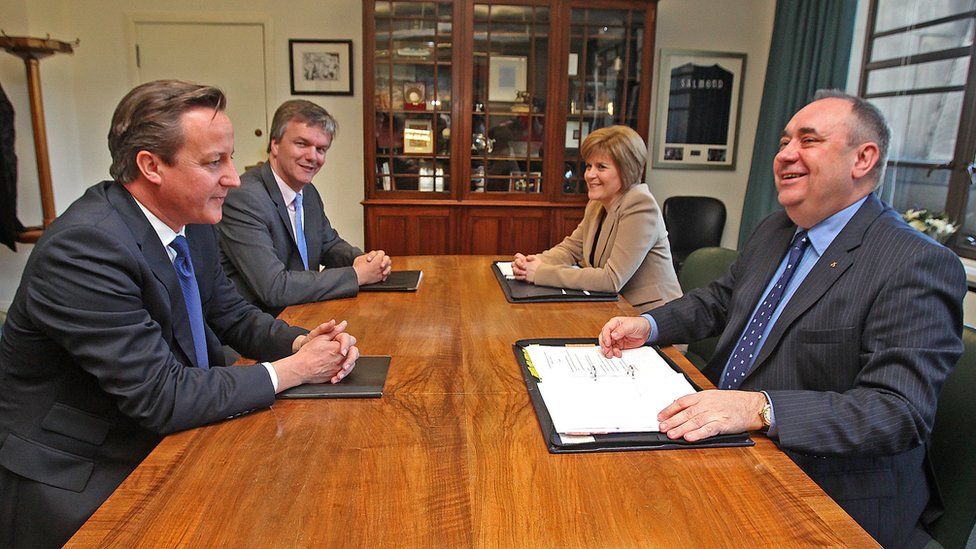
Asked whether she was now formally beginning the campaign for indyref2, the first minister replied: “Yes”.
She also insisted she still planned to hold another vote before the end of next year.
Ms Sturgeon said she would unveil the first in a series of new papers setting out the case for independence on Tuesday.
She added: “Had we known in 2014 everything we know now about the path the UK would have taken then, I’ve got no doubt Scotland would have voted yes back then.”
The first referendum on Scottish independence took place on 18 September 2014 when 55% of voters said “No” to the change while 45% said “Yes”.
Supporters of the Union have accused the Scottish government of being obsessed with independence.
‘Scene setter’ paper
The first paper on the new independence push – entitled ‘Wealthier, Happier, Fairer: Why Not Scotland?’ – will be a “scene setter” which will compare Scotland and the UK to other European countries and set out why the government believes the country would be better off if it were independent.
Ms Sturgeon added that subsequent papers would look at a number of areas including;
currency
tax and spend
defence
social security and pensions
and EU membership and trade
The first minister told the BBC: “The conclusion very clearly is that Scotland could be doing much better as an independent country… Nobody right now can look at the UK – the mess it’s in currently and its prospects for the UK outside of the European Union surely and conclude anything other than that Scotland can do better as an independent country.”
She said that a bill to bring about the referendum, or a timescale for putting forward a bill, would also be set out shortly.
Ms Sturgeon acknowledged that whether Holyrood had the power to legislate for a referendum was contested, and had not yet been tested in the courts.
She said: “That is the issue we are currently navigating so that we can deliver a lawful process,” – adding that more details on those plans would come soon too.
Ms Sturgeon has always said that she wants any referendum to be officially recognised, which therefore means the power to hold a fresh vote must be passed from Westminster to Holyrood (as it was to allow for the 2014 referendum – in which voters backed remaining in the UK by 55% to 45% – to take place).
However, the UK government has shown no sign it would be willing to give the formal consent that ensured the legality of the 2014 referendum again.
Ms Sturgeon insisted her government had a mandate to hold a further ballot, and accused the UK government of respecting neither democracy nor the rule of law.
Before the 2014 vote the UK government passed powers to Holyrood to hold the referendum
In a wide-ranging interview with BBC Scotland, the first minister also defended plans to make public sector cuts.
It followed a warning from a think tank that the Scottish government will face a £3.5bn gap opening up between spending and income.
Asked whether now was the right time to hold another vote, the first minister said the case for independence was not “abstract” or “separate” to the challenges the country faced.
“It’s exactly about how we best equip ourselves to navigate those challenges so we don’t have our budget set by Westminster, but we are in charge of these decisions ourselves,” she said.
“So many of these challenges if not caused by then are absolutely exacerbated by the fact we are not independent. So yes this is the time.”
Indyref2 a ‘distraction’
In response to the new campaign for a referendum, the Scottish Conservatives’ Donald Cameron said the vast majority did not want the “distraction” of another referendum next year.
He said the public wanted 100% of the government’s focus to be on Covid recovery, the cost-of-living crisis, and supporting the health service.
Sarah Boyack, of Scottish Labour, said the government’s attention was “still on their constitutional obsession”.
She said it was an “appalling waste of time, energy and money” and that independence would “make Brexit look like a walk in the park”.
Alex Cole-Hamilton, the Scottish Lib Dem leader, said the Scottish government cared “more about their independence obsession than everyone stuck on the longest NHS waiting lists in history, the cost of living crisis or the climate emergency.
“Nobody believes education is Nicola Sturgeon’s top priority any more.
Nicola Sturgeon has a Holyrood majority for indyref2 when all the SNP and Green votes are added together.
What she does not have is the undisputed power to hold a referendum on Scotland’s constitutional future.
That was secured in 2014 through an agreement with the UK government which lent Holyrood the power to put a referendum beyond legal challenge.
This time that will almost certainly not be forthcoming and if Holyrood legislates anyway, the bill is likely to be challenged in the UK Supreme Court.
I don’t expect the bill or even a timetable for it to emerge this week.
The paper being published on Tuesday is likely to set out big picture arguments for independence rather than a process designed to break the deadlock over holding a referendum.
The offensive remarks have drawn condemnation from the Muslim world. Foreign Minister Bilawal Bhutto-Zardari discussed the issue with the secretary general of Organisation of Islamic Cooperation (OIC), Hissein Brahim Taha. Separately, Pakistan strongly condemned the heavy-handed treatment by the Indian authorities of Muslims who were registering a peaceful protest over the derogatory remarks.
In India-held Kashmir, police arrested a youth for posting a video threatening to behead the ruling party’s former spokeswoman who had made some of the remarks, officials said. The video, circulated on YouTube, has been withdrawn by authorities.
Muslims have taken to the streets across India in recent weeks to protest against the comments by two members of Prime Minister Narendra Modi’s Hindu nationalist Bharatiya Janata Party (BJP).
Clashes have broken out between Muslims and Hindus and in some cases between protesters and police in several areas. Police in Uttar Pradesh arrested more than 300 people in connection with the unrest.
One victim to move court against demolition; Bilawal discusses matter with OIC chief
Some in India’s minority Muslim community see the comments as the latest instance of pressure and humiliation under the BJP rule on issues ranging from freedom of worship to the wearing of hijab.
The BJP has suspended its spokeswoman Nupur Sharma and expelled another leader, Naveen Kumar Jindal, for the comments, which have also caused a diplomatic row with several Muslim countries.
Police have filed cases against the two and the government has said the comments do not reflect its views.
Muslim groups have demanded their arrest, while some hardline Hindu groups label them as brave and nationalist politicians.
Over the weekend the chief minister of Uttar Pradesh state, Yogi Adityanath, ordered officials to demolish any illegal establishments and homes of people accused of involvement in riots there last week, the BJP’s state spokesperson said.
The house of an alleged mastermind of the riots, whose daughter is a female Muslim rights activist, was demolished amid a heavy police presence on Sunday. Properties of two more people accused of throwing stones after Friday prayers were also demolished in the state.
Mrityunjay Kumar, Adityanath’s media adviser, tweeted a photo of a bulldozer demolishing a building and said, “Unruly elements remember, every Friday is followed by a Saturday.”
Meanwhile, India Today reported that Mohammed Javed, the main suspect in the Prayagraj city protests, will move the high court over what he called the illegal demolition of his house by the Uttar Pradesh government.
K.K. Rai, representing Javed, said they will file a petition against the illegal demolition carried out by the Uttar Pradesh government.
The state government, which named Javed as the main suspect in the Friday protests against offensive remarks, razed down his house on Sunday evening. Javed was arrested and booked under the Gangster Act.
“Prayagraj Development Authority never gave prior notice. Made the entire family homeless,” Rai added.
The notice that was served on Sunday morning stated that the property has illegal structures which were constructed without taking the requisite permits and hence, in violation of several building and planning regulations.
Opposition leaders said Adityanath’s government was pursuing an unconstitutional method to silence protesters.
On Sunday, Jindal said his family faced continuous threats and some of his followers said a crude bomb was defused near his residence in capital New Delhi.
Prime Minister Modi has so far not commented on the communal unrest.
In the eastern state of West Bengal, authorities enforced an emergency law prohibiting public gatherings in the industrial district of Howrah until June 16.
BJP’s West Bengal president on Sunday staged a sit-in protest and accused neighbouring Bangladesh of inciting violence in the state.
Last week countries such as Qatar, Saudi Arabia, the UAE, Oman, Iran — which are key trade partners of India — lodged diplomatic protests to demand an apology from Modi’s government for the comments.
Bilawal talks to Taha
Meanwhile, Minister for Foreign Affairs Bilawal Bhutto-Zardari had a telephone conversation with OIC secretary general Hissein Brahim Taha on Sunday and they discussed the issue of rising Islamophobia.
In a tweet, the minister said the conversation focused on the series of Islamophobic actions in India, in particular blasphemous remarks made by two senior officials of BJP.
They shared concerns on rising Islamophobia and persecution of Muslims in India and the need to address that through collective efforts.—Agencies
Kashif Abbasi in Islamabad adds: The Foreign Office said that Pakistan strongly condemned the heavy-handed treatment by the Indian authorities of Muslim who were registering a peaceful protest over the derogatory remarks.
“The indiscriminate and widespread use of brute force by the Indian authorities across various states in India has resulted in killing of two innocent Muslim protesters and critically injured thirteen others in Ranchi city.
“The footage of Indian forces unabashedly opening fire on unarmed protesters in Ranchi city is horrific beyond belief. In Uttar Pradesh alone a total of 227 people have been arrested so far,” read an FO press release issued on Saturday night.
The FO said this is a new low in the Indian government’s repressive Hindutva-inspired majoritarian policy aimed at demonising and persecuting minorities, especially Muslims.
According to FO, Pakistan denounces this shameful treatment of Indian Muslim citizens by the Modi government and expresses its solidarity with the Muslims of India in these testing times.
It is alarming that despite the global condemnation of the blasphemous remarks, the Indian government’s reaction has been muted, while on the other hand the BJP-RSS regime has persisted in its Islamophobic actions and has shamefully chosen to handle public protest with brutal and indiscriminate use of force, the FO said. The Indian government’s apathy to the grievous situation and the vicious cycle of communal violence may lead to further marginalisation of the Indian Muslims.
“Pakistan once again strongly urges India to ensure that demonstrable action is taken against those responsible for making derogatory remarks and attacking the dignity of the Holy Prophet Muhammad (PBUH),” read the FO statement.
It urged the international community to take immediate cognisance of the grievously aggravating situation of Islamophobia in India. India must be held accountable for stifling the rights of the minorities, especially Muslims, and ensure that Muslims living in India are not victimised for practicing their faith and religious beliefs.
A government spokesman described the outbreak as “ferocious”.
All residents living in the area where the bar is located will be tested over the next three days.
The number of infections in the city is low by international standards but high for China, which is the world’s only major economy still maintaining a “zero Covid” policy.
The outbreak was traced to a venue called the Heaven Supermarket Bar, in the well-known entertainment area of Sanlitun in Chaoyang district.
Two buildings housing hundreds of people in Chaoyang were put under strict lockdown on Sunday after a positive case was reported, a residential committee worker told Reuters news agency.
Some people in Beijing said they were sent texts telling them to report to authorities if they had recently visited Sanlitun’s bars.
Chinese officials have reversed the relaxation of some Covid rules in Beijing because of the outbreak.
Most children in the capital will not return to school next week as originally planned, officials said.
The capital has reported 1,997 local Covid cases since 22 April.
China’s overall policy of “zero Covid” remains in place and people catching Covid face quarantine or hospital.
Their close contacts also face the prospect of removal to quarantine and the area immediately around where they live being locked down again.
The city of Shanghai, the country’s economic centre and a global trade hub, recently eased Covid curbs after a two-month lockdown.
Jean-Luc Mélenchon’s left-green alliance finished neck and neck with Mr Macron’s Ensemble (Together), in terms of votes cast in Sunday’s first round.
The president faces a battle in next week’s second round to win 289 seats and keep his majority.
Turnout was a historically low 47.5%.
Within half an hour of the first projection, a sombre Jean-Luc Mélenchon announced his alliance was in the lead: “The truth at the end of the first round is that the presidential party is beaten and defeated.” He called on voters to turn out in force next Sunday “to reject definitively the disastrous policies of Mr Macron’s majority”.
Centrist Emmanuel Macron won a second term in April, but without a majority in the Assembly he will struggle to push through reforms. He intends to raise gradually the retirement age from 62 to 65, while Mr Mélenchon vows to lower it to 60.
Although Ensemble won 25.71% of the vote, marginally ahead of the left’s 25.61%, it was still projected to dominate the National Assembly. TF1 pollster Ifop gave Ensemble 275 to 305 seats, with the green-left alliance on 175-205. Ipsos for France Télévisions said Mr Macron’s alliance was heading for a lower 255-295 seats and the left 150-190.
The left-wing coalition leader voted on Sunday morning in Marseille
Turnout was the lowest in modern French history. Many voters clearly decided to take advantage of the sunny weather across France, with temperatures in Paris hitting 27C. But so far the election campaign has largely failed to spark into life.
Mr Mélenchon has proved the exception, leading a vigorous campaign since he came a close third in the presidential election. He has built an alliance called Nupes, made up of his own far-left party France Unbowed, the Socialists, Communists and greens – with the slogan “Mélenchon prime minister”.
His aim has been to stop the president winning the majority he needs across France’s 577 constituencies. On top of lowering the retirement age, Nupes vows to freeze prices on 100 essentials and create a million jobs.
Meanwhile, Mr Macron has spent the intervening weeks since he won a second term in building a new government under Elisabeth Borne, as France grapples with rising inflation and a cost of living crunch.
The prime minister said the government had one week to convince voters and win a majority. Pointing to Russia’s invasion of Ukraine, she said “we cannot risk instability”; France’s values were at risk, she said: “We alone have a project of coherence and responsibility.”
Prime Minister Elisabeth Borne is one of 15 members of the government being challenged in this election
Ms Borne is one of 15 ministers who have to win their seats to stay in government. And as each constituency is an individual local race, this election is played out over two weeks. Amélie de Montchalin, the minister in charge of green transition, faces a battle to survive as an MP, as does Europe Minister Clément Beaune. Former Macron education minister Jean-Michel Blanquer was an early casualty, losing out in the Loiret area to the south of Paris.
Unless a candidate wins more than 50% of the vote based on a quarter of the electorate, the race culminates in a run-off next Sunday, involving the top two candidates and anyone else who wins 12.5% of the vote.
One of Mr Mélenchon’s closest colleagues, Manuel Bompard, was only denied outright victory in the first round in Marseille because of a low turnout. Green leader Julien Bayou also came close to winning through in the first round.
Far-right Marine Le Pen, who was runner-up in the presidential elections, was delighted with her party’s performance. Her National Rally won 18.74% of the vote with a projected 15-30 seats, higher than her current number of eight. Another far-right leader, Éric Zemmour, was knocked out of the election in the first round.
The mainstream right, which fared badly in the April vote, has focused its campaigning locally. Despite winning only 10.44% of the vote, the Republicans could win 45 to 65 seats.
The fact that one in two French voters had stayed away from the ballot box on Sunday was worrying, said political scientist Olivier Rouquan. People felt they had already expressed their opinions in the presidential election, he believed.
Until 2002, the two elections were kept apart, which meant the government was sometimes led by a different party from the president, in what became known as cohabitation. If Mr Macron loses his majority he could be forced into cohabitation with the left.
“This is progress even if small,” said David Hogg, a survivor of the 2018 Parkland school shooting in Florida.
Ex-lawmaker Gabrielle Giffords, injured in a 2011 shooting in Arizona, said it was an “important step forward”.
The plans include tougher checks for buyers under the age of 21 and cracking down on illegal gun purchases.
They were announced by a cross-party group of US senators on Sunday. Crucially, the proposals are supported by 10 Republicans, meaning they have the numbers to be voted into law.
President Joe Biden also said the plans were “steps in the right direction” but they fell far short of what he and many Democrats have been calling for.
Previous attempts to tighten gun laws in the US – which has the highest rate of firearms deaths among the world’s wealthy nations – failed to get the required support in Congress.
“It’s a great first step but that’s just what it is,” Mr Hogg told the BBC. “No single policy is going to stop every shooting but this policy could stop the next Parkland and that’s a good step.”
Ms Giffords, who suffered a severe brain injury, also gave a tentative welcome to the proposals. Writing on Twitter, she said the agreement “could be the first time in 30 years that Congress takes major action on gun safety.
“This deal represents that it’s still possible to cut through politics and deliver for the American people,” she said.
Moms Demand Action, a gun control advocacy organisation, tweeted: “Our grassroots army is ready to fight like hell to make sure it becomes law. 26 years for federal action on gun safety is unacceptable.”
Senate Majority Leader Chuck Schumer, a Democrat, said he was “pleased” by the development and that he wanted to move a bill quickly to a Senate vote once legislative details were worked out.
The Republican Senate Minority Leader Mitch McConnell stopped short of endorsing the proposals but said the showed “the value of dialogue and cooperation”.
The National Rifle Association of America (NRA), a powerful gun rights advocacy group, said it would respond once the full text of the reformed was released.
But the group stressed it would “continue to oppose any effort to insert gun control policies, initiatives that override constitutional due process protections & efforts to deprive law-abiding citizens of their fundamental right to protect themselves/loved ones into this or any other legislation”.
Watch: Thousands join gun control rallies across the US
Despite the shockingly high rate of firearms deaths, the US is a country where many cherish gun rights that are protected by the Constitution’s Second Amendment to “keep and bear arms”.
These are the first gun safety laws to receive bipartisan support of this kind in decades, with previous attempts by Democrats for strengthened controls frustrated by Republicans.
Attempts to tighten the laws in the wake of a previous school shooting at Sandy Hook in Connecticut nearly a decade ago – in which 20 children and six adults were killed – failed to get the required votes in Congress.
The Senate, or upper chamber of Congress, is currently split – with 50 Democrats and 50 Republicans – and legislation must have 60 votes to overcome a manoeuvre known as the filibuster.
Ten of the 20 senators who proposed the new measures are Republicans, meaning the proposals have the numbers needed to overcome the filibuster.
Democratic Senator Chris Murphy said a “substantial” part of the deal had been nailed down by negotiators, allowing the drafting of legislation to get under way on Monday, Reuters reported.