
Bilawal renews commitment to closer ties with Tehran

Moreover, Iranian Foreign Minister Hossein Amir-Abdollahian, while speaking during a joint press conference with Mr Bhutto-Zardari, said Iran still believes that negotiations can succeed in reviving the 2015 nuclear deal, despite a recent rebuke from the UN nuclear watchdog.

“Iran is a very important neighbour of Pakistan, one with which we share immutable historic and fraternal bonds,” said Mr Bhutto-Zardari. “For the prime minister and for me, building close relations with Iran remains a high priority,” he added.

The foreign minister, who reached the Iranian capital earlier in the day on a two-day visit at the invitation of Dr Amir-Abdollahian, said that during their consultations they took stock of the entire gamut of bilateral relations.

Iranian foreign minister claims nuclear deal can still be revived

The two sides identified ways to take their relationship further to match its true potential, particularly in the areas of trade, investment, connectivity, border management, facilitation for zaireen (pilgrims), cultural and educational cooperation, and enhancing people-to-people exchanges.

The foreign minister said he conveyed a message of goodwill and cordiality to Iranian brothers and sisters, adding that he was glad that they have come closer to resolving one of the major obstacles in expansion of bilateral trade through operationalising barter trade mechanism.

Mr Bhutto-Zardari said that another significant step towards improving bilateral relations was the commitment to strengthen energy cooperation through import of additional electricity from Iran.

He said that the two sides also discussed possibility of exchange of prisoners under the existing legal framework to allow them to complete their sentences in their respective countries.

“We appreciate Iran’s hospitality to receive and facilitate Pakistani pilgrims visiting Iran and have held useful discussions on creating additional facilities for zaireen,” he added.

The foreign minister said they discussed the latest developments in Afghanistan, especially the dire humanitarian situation and economic fragility.

He said that Pakistan and Iran were directly affected by conflict and instability in Afghanistan, and that they had vested interest in a peaceful, stable and prosperous Afghanistan.

From the Afghan authorities, the world expects a move towards inclusivity and effective counterterrorism action, he added.

The foreign minister said he also briefed his Iranian counterpart on the serious situation of human rights in Indian-held Jammu and Kashmir.

We are grateful for Iranian leadership’s steadfast support for the just cause of Jammu and Kashmir, he added.

The derogatory remarks made by BJP officials in India have deeply offended Muslims across the world. It is time for international community to show a common resolve against xenophobia, intolerance and incitement to violence on the basis of religion or belief, he maintained.

Nuclear deal revival

With regard to the nuclear negotiations, Tehran had last week condemned as “unconstructive” a move by the International Atomic Energy Agency (IAEA) to censure the country for failure to cooperate over its nuclear programme.

It had also disconnected some of its cameras at nuclear sites, a move the IAEA warned could deal a “fatal blow” to negotiations to revive the deal.

“We believe negotiations and diplomacy are the best ways to reach the final point of the agreement,” Dr Amir-Abdollahian said during the press conference with Mr Bhutto-Zardari.

Dr Amir-Abdollahian said that prior to the IAEA’s move, Tehran had put forward a new initiative that the US had accepted, adding that Washington nonetheless moved to submit the resolution censuring Iran.

Protests by Indian Muslims continue

Muslims have taken to the streets across India to protest against anti-Islamic comments made by two members of the Bharatiya Janata Party.Uttar Pradesh CM Yogi Adityanath, a BJP hardliner, ordered the weekend demolition of any illegal buildings of people accused of involvement in riots last week, including the home of activist Mohammad Javed.

In a letter addressed to the chief justice, six former judges and six senior lawyers on Tuesday condemned the state’s action in destroying Javed’s house.

The former judges and lawyers urged the Supreme Court to take action to “arrest the deteriorating law and order situation” in Uttar Pradesh.

“The coordinated manner in which the police and development authorities have acted lead to the clear conclusion that demolitions are a form of collective extra-judicial punishment, attributable to a state policy which is illegal,” they wrote.

Authorities were “selectively and viciously cracking down on Muslims who dare to speak up… against the discrimination faced by them,” Amnesty’s Aakar Patel said in a statement.

Amnesty slams crackdown

India must immediately end a “vicious” crackdown on Muslims who took to the streets to protest a ruling party official’s remarks about the Holy Prophet (PBUH), Amnesty International said on Tuesday.

“Cracking down on protesters with excessive use of force, arbitrary detention and punitive house demolitions… is in complete violation of India’s commitments under international human rights law.”

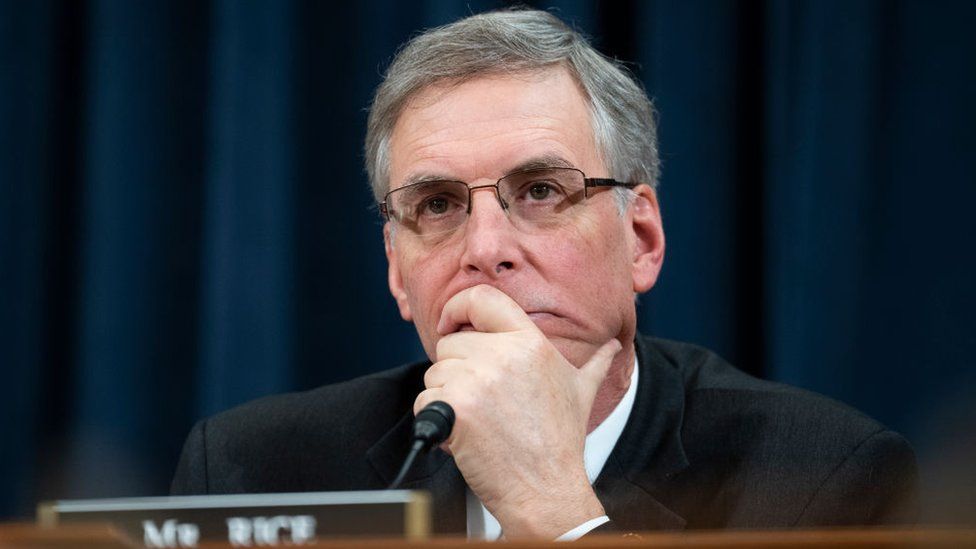
A Republican congressman has lost his bid to cling on to his seat, after a furious backlash to his vote to impeach former US President Donald Trump.

Tom Rice, a five-term South Carolina incumbent, was beaten in a primary election by Trump-backed challenger Russell Fry, a state legislator.

But another Republican in the state who had criticised Mr Trump, Nancy Mace, comfortably won her vote.

Ms Mace had later visited Trump Tower in a show of loyalty.

Congressional votes were held on Tuesday in Maine, Nevada, North Dakota, South Carolina and Texas.

Mr Rice had been a reliable supporter of Mr Trump until the US Capitol riot on 6 January 2021, when he became one of 10 Republicans who sided with Democrats days later to impeach the outgoing president for inciting insurrection.

Mr Trump was acquitted of the political charge in the Senate. A Democratic-led congressional inquiry is currently conducting public hearings into the Capitol riot, accusing the former president of plotting an attempted coup.

Mr Rice had acknowledged his impeachment vote could end his political career, but had maintained he was following his conscience. He lost on Tuesday night by more than 25 points.

The 10 Republicans who voted to impeach Mr Trump have faced varying outcomes. Liz Cheney and Adam Kinzinger have become vocal Trump critics and currently sit on the US House of Representatives committee that is investigating the Capitol riot. Mr Kinzinger is among those who are not running for re-election. Others are fighting for their political lives.

Ms Mace did not vote to impeach Mr Trump, but she incurred his displeasure by condemning him for the Capitol riot and voting to certify President Joe Biden’s win in the 2020 White House election.

She tried to make amends by filming a video in New York City this year outside Trump Tower to remind her constituents that she was one of the former president’s earliest supporters.

Nancy Mace won her vote despite Mr Trump endorsing her opponent

Mr Trump endorsed her opponent, former state legislator Katie Arrington. But Ms Mace comfortably passed the 50% vote threshold needed to avoid a run-off election.

Mr Trump, who turned 76 on Tuesday, had asked supporters to give him two birthday presents by defeating Mr Rice and Ms Mace.

Political analysts expect the winners of the Republican primaries in ruby-red South Carolina to prevail in the election against their Democratic challengers in November’s mid-term elections.

In other results, for the first time Republicans flipped a heavily Hispanic seat in Texas.

During a special election in the 34th district Mayra Flores captured a seat that President Biden won by 13 points in 2020.

The victory comes as Mr Biden’s approval rating fell for a third straight week to 39% in a Reuters/Ipsos opinion poll, as Americans grapple with soaring inflation.

Sri Lanka is giving government officials an extra day off a week to encourage them to grow food, amid fears of a food shortage.

The country has around one million public sector employees.

It comes as the island nation, home to around 22 million, faces its worst economic crisis in more than 70 years.

Sri Lanka is struggling to pay for critical imports such as food, fuel and medicine as it faces a severe shortage of foreign currencies.

Late on Monday, the government approved a proposal for public sector workers to be given leave every Friday for the next three months.

It said the decision was partly to help workers who are facing difficulties getting to work due to fuel shortages as well as to encourage them to grow fruit and vegetables to help feed themselves and their families.

“It seems appropriate to grant government officials leave for one working day of the week and provide them with the necessary facilities to engage in agricultural activities in their backyards or elsewhere as a solution to the food shortage that is expected to occur in the future,” the government said in a statement on its online news portal.


Also on Monday, the United States said that it was ready to help Sri Lanka.

After a phone call with Sri Lankan Prime Minister Ranil Wickremesinghe, US Secretary of State Anthony Blinken said the US “stands ready to work with Sri Lanka”.

The BBC is not responsible for the content of external sites.View original tweet on Twitter
Presentational white space

The government is in talks over an economic bailout package, with an IMF delegation expected to arrive in the capital Colombo next Monday.

The fall in the value of the Sri Lankan rupee, rising global commodity prices and a ban chemical fertilisers – which has now been lifted – helped to push annual food price rises to more than 57% in April.

At the end of last month, the country’s Agriculture Minister Mahinda Amaraweera called on farmers to grow more rice, saying “it is clear the food situation is becoming worse”.

“We request all farmers to step into their fields in the next five to ten days and cultivate paddy [rice],” he added.

At the same time the government raised taxes to help shore up its finances.

The first flight due to take asylum seekers from the UK to Rwanda was cancelled minutes before take-off after legal rulings on Tuesday evening.

Up to seven people had been expected to be removed to the east African country.

But the flight was stopped after a late intervention from the European Court of Human Rights (ECtHR) led to fresh challenges in the UK courts.

Home Secretary Priti Patel said she was “disappointed” but added: “Preparation for the next flight begins now.”

However, James Wilson from campaign group Detention Action said the rare intervention from the ECtHR “shows how potentially dangerous” the Rwanda removals are.

He said the court had recognised no one should be forced on to a plane until the policy was fully scrutinised in a High Court hearing next month.

The cancellation of the flight followed days of arguments in UK courts, ending with the home secretary getting the go-ahead to begin transporting some of the asylum seekers.

A Boeing 767, chartered at an estimated cost of £500,000, had been due to take off at 22:30 BST from a military airport in Wiltshire.

But a judgement from the ECtHR in Strasbourg halting the deportation of one of the men arrived just after 19:30, and triggered a series of legal challenges in London courts. By 22:15 all the passengers had been removed from the plane, which then returned to Spain.

The Strasbourg human rights court – part of the Council of Europe, which still counts the UK as a member, rather than the European Union – said an Iraqi man known as KN faced “a real risk of irreversible harm” if he remained on the flight.

Whereas the High Court in London had found that KN could be returned to the UK if his bid to overturn the Rwanda transportation policy succeeded, the ECtHR said there was no legally enforceable mechanism to ensure he could come back from east Africa.

It took little over an hour for the entire plan to send asylum seekers to Rwanda on Tuesday night to come crashing down like a house of cards – thanks to a series of linked decisions, all triggered by one ruling from the European Court of Human Rights.

The seven remaining passengers with orders to board the Boeing 767 warming up at MoD Boscombe Down looked like they had run out of options – but the Strasbourg court, which has the final say in human rights issues, ruled that one claimant had raised genuine concerns about the scheme and the fact that British judges had not yet properly looked at conditions in Rwanda.

That decision, in just one case, led the remaining men to appeal – some to judges in London. Ultimately, all the removal orders were scrapped.

However, the policy is not dead. What we don’t know right now is how judges will ultimately rule when they examine the entire Rwanda policy next month.

This battle – between ministers, lawyers they regard as enemies, and now the European Court – is only just beginning.

2px presentational grey line

The Strasbourg court also said the UN had raised concerns that UK asylum seekers transferred to Rwanda would not have access to “fair and efficient” procedures to determine their refugee status.

And it noted that the High Court had acknowledged there were serious issues regarding whether Rwanda had been correctly assessed as a safe third country.

The home secretary said these “repeated legal barriers” were similar to those the government faced on other deportations, adding that “many of those removed from this flight will be placed on the next”.

Ms Patel said that she had always maintained this policy would “not be easy to deliver” but added it was “very surprising” the European court had intervened after the government had been permitted to go ahead with the flights by domestic courts.

“Our legal team are reviewing every decision made on this flight and preparation for the next flight begins now,” she said.

The Rwandan government said it remained committed to its deal with the UK and was “not deterred” by the failure of the first flight to depart.

Spokeswoman Yolande Makolo said: “Rwanda stands ready to receive the migrants when they do arrive and offer them safety and opportunity in our country.”

Presentational grey line

At-a-glance: The Rwanda asylum policy so far

  • The PM announces a five-year £120m trial in which some asylum seekers will get a one-way ticket to Rwanda
  • It faces widespread opposition from more than 160 charities and campaign groups, a small number of which launch a legal challenge
  • Home Office lawyers say the plan is in the public interest – and the High Court says there is no lawful reason to stop the flight
  • Campaigners appeal the ruling but are unsuccessful
  • But a last-minute judgement by the European Court of Human Rights blocking one of the deportations sets off a fresh wave of legal challenges and ultimately grounds the flight
  • Judges will consider whether the whole Rwanda policy is lawful next month

Earlier on Tuesday, Prime Minister Boris Johnson told his cabinet that people undermining the Rwanda policy were “abetting the work of criminal gangs” and said the government would not be deterred from the policy.

Asked by reporters if the UK would withdraw from the European Convention on Human Rights, which the Strasbourg court upholds, Mr Johnson said it “very well may be” necessary to change the law.

But groups supporting asylum seekers urged the government to change course and provide a fair way for people fleeing persecution to seek refuge in the UK.

Refugee Council chief executive Enver Solomon said the fact the flight could not take off was “indicative of the inhumanity of the plan” and said the government had to rethink its plans by having “a grown-up conversation with France” over Channel crossings by migrants.

Mr Wilson from Detention Action said the European Court of Human Rights, founded in the wake of the Holocaust, had “done what it was established to do”, calling it “a night for the history books”.

Three Democratic Unionist Party (DUP) MPs have been barred from Russia, as part of sanctions, in response to UK measures on Russian public figures.

Gavin Robinson, Sammy Wilson and Gregory Campbell are among a list of figures that also includes journalists and defence figures.

BBC journalists who have reported from Ukraine and Director General Tim Davie are on the list of 29 media figures.

DUP MPs Paul Girvan and Jim Shannon were banned under sanctions in April.

Russia has already banned hundreds of elected British MPs and the foreign ministry in Moscow announced that work on expanding the list would continue.


Speaking to BBC News NI, East Antrim MP Mr Wilson described Russia’s sanctions as “fairly pathetic”.

He said he has “lobbied very hard for the government to do the right thing by Ukrainians”.

“In a way, I’m relieved though as well, because when my two colleagues were mentioned and I wasn’t mentioned there was suspicion in the party that I was some sort of closet commie or friend of Putin who escaped these sanctions,” he said, adding that he had “no plans to go to Russia” anyway.

“I think it just again illustrates the degree of tyranny that Russian people must live under.”

In a tweet, party colleague Mr Robinson said he rejected “Russian war crimes and imperial aggression”.

“I’m proud my constituency produces the means for brave Ukrainians to defend themselves,” he added.


Scotland’s First Minister Nicola Sturgeon has unveiled what she called a “refreshed” case for independence.

She told a press conference in Edinburgh that her government had an “indisputable mandate” for a second independence referendum.

Prime Minister Boris Johnson said the 2014 referendum result should be respected.

And opposition parties accused the Scottish government of being obsessed with independence.

The first minister said it was now time to set out “a different and better vision” for Scotland.

She said it was time to talk abut independence and then to make that choice.

Ms Sturgeon insisted she won last May’s election with a “clear commitment to give the people of Scotland the choice of becoming an independent country”, and that Holyrood had a “decisive majority” of MSPs in favour of independence.

“The Scottish Parliament therefore has an indisputable democratic mandate,” she added.

Nicola Sturgeon and Patrick Harvie at the launch of the new paper

However, she conceded that a future referendum faced challenges, including what she described as an issue of process. She said Holyrood’s power to hold a vote was “contested”.

If a referendum bill was introduced without Westminster agreement it could be challenged in the courts.

Before the 2014 referendum, the Scottish government struck an agreement with the UK government which transferred authority on a temporary basis to Holyrood. This was called a section 30 order.

The UK government has so far shown no indication that it would be willing to do so again.

Ms Sturgeon said any referendum “must be lawful”, and that only parties opposed to independence would benefit from doubt about the process.

“If this UK government had any respect at all for democracy, the issue of legality would be put beyond doubt, as in 2014,” she added.

An agreement was reached between the Scottish and UK governments ahead of the 2014 referendum,

She said she had made clear to Boris Johnson that she was “ready to discuss the terms of such an order at any time”.

The first minister said her government had a mandate for another referendum, adding: “If we are to uphold democracy here in Scotland, we must forge a way forward if necessary without a section 30 order.”

An update on the Scottish government’s plans for holding a referendum would follow soon, she added.

Ms Sturgeon said the independence papers would set the scene for the debate about Scotland’s future in the UK.

She said they would cover how Scotland can benefit from the “massive opportunities” independence would present, but also address the challenges and not shy away from tough questions.

She said independence would put “the levers that determine success into our own hands”, and away from Westminster – which was taking Scotland “in the wrong direction”.

The first paper – called Independence in the Modern World. Wealthier, Happier, Fairer: Why Not Scotland? – makes comparisons between Scotland and other European countries – all of which Ms Sturgeon said were independent, wealthier and fairer than the UK.

Subsequent papers will look at a areas including currency, tax and spend, defence, social security and pensions, and EU membership and trade.

Ms Sturgeon was joined at the press conference by Patrick Harvie, the co-leader of the Scottish Green Party and a member of the Scottish cabinet.

The SNP and the Greens are both pro-independence and struck a power sharing arrangement at Holyrood after last year’s election.

Mr Harvie said Scotland “could chart a different future” with independence and set out a vision for a greener, fairer and more prosperous Scotland.

Boris Johnson said the 2014 result should be respected. He said the UK government should focus on the economy and Covid recovery, adding: “That’s the focus of the government. We’re working with our friends in the Scottish government, in the Scottish administration, on those issues.”

At Holyrood, the presiding officer stopped a minister from making a statement to MSPs on Tuesday afternoon because the details had already been released to the media.

Alison Johnstone said the “benefits of independence” announcement should have been made in the chamber first “as a matter of courtesy and respect to the parliament”.

She skipped instead to response from Scottish Conservative leader Douglas Ross, who said energy was being wasted on the wrong priorities.

He said: “Pushing for another divisive referendum… is the wrong priority, at the worst possible time.”

Scottish Labour leader Anas Sarwar said Ms Sturgeon’s speech was “a disappointing return to the politics of the past”, adding that the majority were opposed to independence.

He said the first minister should not “turn her back” on important issues in order to “focus on her own obsession” with independence.

Alex Cole-Hamilton, the Scottish Lib Dem leader, said the first minister “must be wired to the moon if she thinks that breaking up the UK is the priority for people”.

Why is this renewed push for independence happening? The answer is simple. The people of Scotland voted for it. Of course there is plenty of opposition to, and concern about, a second independence referendum but it remains an inescapable fact that in last year’s elections to the Scottish Parliament voters returned a majority of MSPs, both SNP and Green, who had pledged to hold one.

When this happened in 2011, there was a referendum. If that was the accepted trigger then, why is it not the trigger now?

That is primarily a question for Prime Minister Boris Johnson. The SNP’s argument is that if his Conservative Party previously regarded a majority at Holyrood as a mandate for a poll, why is he thwarting the will of Scotland’s voters now?

Today the SNP leader did not or could not detail the alternative path she intends to follow if Mr Johnson persists in his refusal.

There are also difficult questions for both Ms Sturgeon and Mr Johnson about the “why” as well as the “how” of independence.

Independence is never far from the surface in Scottish politics. It is the principle fault line. The great divide.

The question will persist unless and until a) independence actually happens or b) the public tire of the political parties that promote it.

Neither of those possibilities seem very likely anytime soon and so the debate continues.

It was largely put on hold during the pandemic but when the SNP won the Holyrood election in 2021, they did so having promised another referendum.

Together with the Scottish Greens who share power with them in the Scottish government, they have a majority in parliament for indyref2.

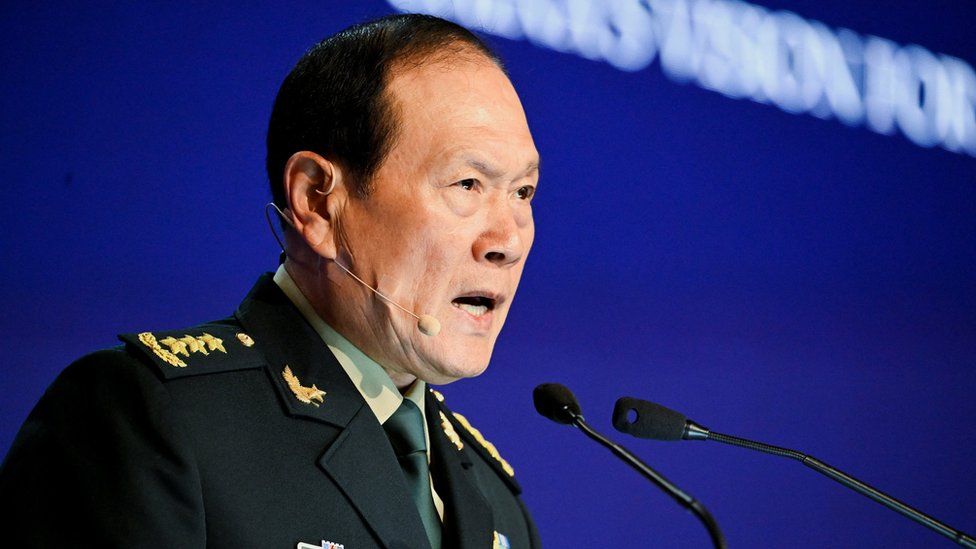
Weeks after the US president warned China over Taiwan, Beijing has delivered its sternest rebuttal yet, saying it would “resolutely crush any attempt” at Taiwan’s independence.

On Sunday, China’s Defence Minister General Wei Fenghe essentially accused the US of supporting the island’s independence, saying it was “violating its promise on Taiwan” and “interfering” in China’s affairs.

“Let me make this clear: if anyone dares to secede Taiwan from China, we will not hesitate to fight. We will fight at all costs and we will fight to the very end. This is the only choice for China,” he said at the Shangri-la Dialogue, an Asian security summit held in Singapore.

His comments follow US President Joe Biden’s recent message to China that it was “flirting with danger” by flying its warplanes close to Taiwan. He vowed to protect the island militarily if it was attacked.

Taiwan, which considers itself a sovereign nation, has long been claimed by China. But Taiwan also counts the US as its biggest ally, and Washington has a law which requires it to help the island defend itself.

The escalation in rhetoric comes as China increasingly sends warplanes into Taiwan’s air defence zone – flying their largest sortie of the year just last month – while the US has sent naval ships through Taiwan’s waters.

So are the US and China moving towards a military conflict?


Minding the gap

One major fear is that war would be triggered if China invades Taiwan. Beijing has said in the past it could reclaim the island by force if necessary.

But most analysts say this is not likely – for now.

There has been debate over whether China has the military capability to succeed in an invasion, and Taiwan has been considerably ramping up its air and sea defences.

But many agree that Beijing recognises that such a move would be too costly and disastrous – not only for China, but also for the world.

“There’s a lot of rhetoric, but the Chinese have to mind the gap very carefully if they want to launch an invasion of Taiwan, especially so close to the Ukraine crisis. The Chinese economy is far more interconnected with the global economy than Russia’s is,” says William Choong, senior fellow at the Institute of Southeast Asian Studies.


China’s consistent position has been that it seeks “peaceful reunification” with Taiwan – something that Gen Wei reiterated on Sunday – and that it would only act if faced with a provocation.

One trigger would likely be Taiwan formally declaring independence. But this is something that its President Tsai Ing-wen has strenuously avoided, even as she insists they are already a sovereign state.

Most Taiwanese support this position, which is known as “maintaining the status quo”, though increasingly a small number say they want to move toward independence.

Taiwan’s president posed with an anti-tank rocket launcher in a government handout photo that went viral recently

Similarly, the US would be reluctant to be drawn into a costly military conflict in Asia, and has signalled repeatedly that they do not want war.

US Defence Secretary Lloyd Austin, who also attended the Dialogue, said in his speech that the US does not support Taiwan independence, nor does it want “a new Cold War”.

“Both sides are sticking to their guns on Taiwan. They need to look tough, they don’t want to be seen as rolling back or stepping back,” said Collin Koh, research fellow with the S Rajaratnam School of International Studies.

“But at the same time they are very mindful about entering an outright conflict. They’re looking at each other’s rhetoric with eyes wide open, and both sides are trying to temper the risk.”

The fact that both Gen Wei and Mr Austin met at the sidelines of the Shangri-la Dialogue was a positive sign, as it meant that both sides wanted to show “they are still willing to sit down and talk it out, come to a consensus, and agree to disagree,” said Mr Koh.

This, he said, would likely lead to more operational discussions between the two militaries that would reduce the possibility of on-the-ground miscalculations that could lead to a conflict, and an overall “reinvigoration of dialogue” that was missing during Donald Trump’s administration.

Mr Biden’s recent remarks on Taiwan were seen by some as an apparent shift in tone in US policy

That said, both China and the US are expected to continue their rhetoric for the foreseeable future.

China may even step up its “grey zone warfare” designed to exhaust Taiwan’s military forces and patience – such as sending more warplanes – or disinformation campaigns, said Dr Ian Chong, a China expert with the National University of Singapore.

Taiwan has previously accused China of waging disinformation campaigns in the lead up to the island’s elections, and the island will be holding important local elections at the end of the year.

For the US and China at least, “there is no political will to change their positions” for now, particularly with significant events on the horizon – the US mid-term elections in November, and China’s 20th Communist Party congress in the second half of the year where President Xi Jinping is expected to further consolidate power.

“The bright side is that neither party is willing to escalate,” said Dr Chong.

“But non-escalation doesn’t mean we will get to a better position. So we are all stuck in this position for a while.”

Pakistan neutral in Russia-Ukraine war, says Bilawal

“It would be a misunderstanding to club the visit to Russia with the no-confidence resolution (moved by the opposition that led to ousting of former prime minister Imran Khan),” Mr Bhutto-Zardari said in an informal chat with journalists at the Parliament House.

“The biggest testimony of this is Pakistan’s neutral position in the war as it was the previous government’s stance and our government, too, has the same stance on the issue. Had the Russian visit of Mr Khan been the reason for PTI government’s ousting, then that policy would have changed now. But, Pakistan’s stand on the Russia-Ukraine conflict is clear: we were neutral yesterday, we are neutral today on the issue,” the foreign minister said.

About his visit to Iran, the PPP chairman said: “Iran is our neighbour and in Islam neighbours have rights. We believe that relations between peoples of Pakistan and Iran, including cultural and spiritual, are historic.”

The foreign minister said that economic cooperation and coordination between the two countries had much potential to be explored and exploited.

“As far as the Pak-Iran Gas Pipeline project is concerned, its foundation was laid by former president Asif Ali Zardari and we would want international obligations, their framework and the deal to progress so that we can unlock the potential in our relations further,” the PPP leader said. He said the Russia-Ukraine war had serious repercussions for Pakistan, too.

“There is a war going on in Ukraine and we are facing increased food insecurity. We are trying to end this war through diplomacy and dialogue. This war is not only harming Ukraine and its people, but also the entire region, including the people of Pakistan, through inflation, food and energy insecurity. We want the war to end immediately so that issues such as Covid-19 and climate change, which are impacting our agriculture, could be combated together,” the foreign minister said.

Iran visit

According to the Foreign Office, Mr Bhutto-Zardari would visit Iran on June 14 and 15 on the invitation of Iran’s Foreign Minister Dr Amir Abdollahian.

During the visit, the foreign minister would exchange views with his Iranian counterpart on all areas of mutual interest. He would also call on President Ebrahim Raisi and meet other dignitaries. The foreign minister will visit Mashhad on June 15.

During the delegation-level talks, the two sides will review all facets of bilateral relations, including trade and economic ties, electricity supply from Iran, border sustenance markets, road and rail connectivity and facilitation of pilgrims visiting Iran.

Saudi Arabia adopts online registration for Haj to combat scams

The new system was put in place as the kingdom prepares to welcome 850,000 Muslims from abroad for the annual Haj after two years during which pilgrims not already in Saudi Arabia were barred because of Covid pandemic restrictions.

It applies to the United States, Canada, the United Kingdom, Europe and Australia, said one of the officials.

Previously, pilgrims could register via travel agencies that organised Haj trips, a system that sometimes led to scams, with “fake agencies” making off with victims’ money, a second official said.

Saudi Arabia announced in April it would permit one million Muslims from inside and outside the country to participate in this year’s Haj.

State media announced the online portal a week ago, and the registration period ended Monday, the Haj ministry said on Twitter. Those who registered will be included in a lottery for Haj visas.

One official acknowledged that some Muslims in the affected countries may have already tried to register via travel agencies, before the online portal was announced.

He said they would also be included in the lottery — which has not been scheduled — provided they had booked via an agency accredited by the hajj ministry.

Mask rules

This year’s pilgrimage will be limited to vaccinated Muslims under the age of 65, the Haj ministry has said.

Those coming from outside Saudi Arabia are required to submit a negative Covid-19 PCR result from a test taken within 72 hours of travel.

Saudi Arabia said it would no longer require masks in most enclosed spaces, citing progress in fighting the pandemic.

However, masks will still be required in Grand Mosque, which surrounds the Kaaba, and the Prophet’s Mosque in Madina, according to a report published by the official Saudi Press Agency, citing an interior ministry source.

Owners of establishments can also insist masks be worn if they wish, the report said, though mask-wearing has been sparsely enforced in recent months.