
The UK government’s efforts to build new nuclear power plants may increase people’s energy bills in the short-term, the business secretary has told us

Kwasi Kwarteng said there might be a “small effect” on bills under a new model to fund nuclear projects.

But he said in the long-term, nuclear would provide cheaper power and energy security.

He said financial help had been offered to reduce bills in the short-term.

Mr Kwarteng said “nothing should be taken off the table” to ease pressures on the cost of living, including a windfall tax on the excess profits of oil and gas companies.

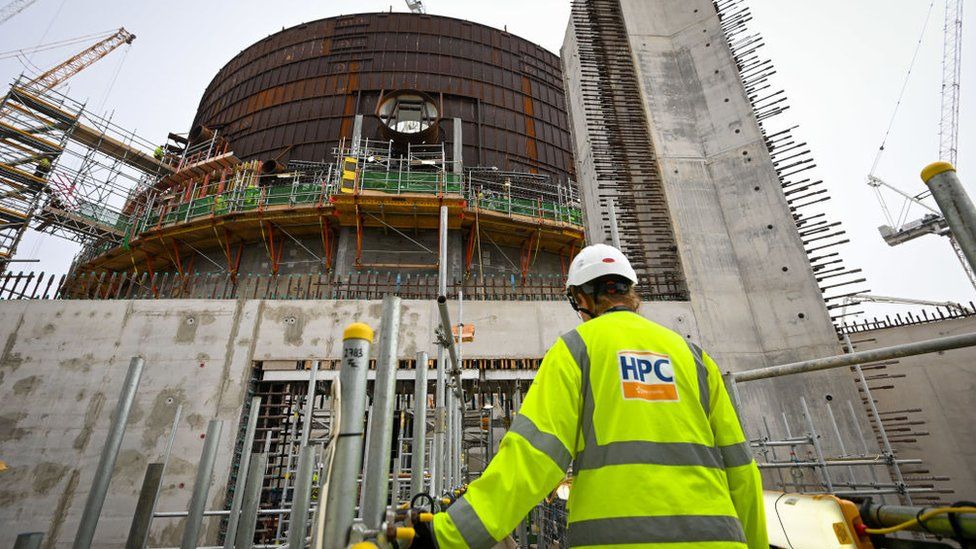
The BBC spoke to Mr Kwarteng as he visited north Wales on Thursday, where the government has pledged to build a new nuclear power station at Wylfa on Anglesey.

A previous plan for a new nuclear power station at Wylfa collapsed in 2020, but last month, Prime Minister Boris Johnson said he wanted to revive the idea “as fast as possible”.


Investing in nuclear power is one of the key focuses of the government’s energy strategy, released in April.

The government plans to reduce the UK’s reliance on oil and gas by investing in alternative sources of energy, including nuclear, wind and hydrogen power.

Watch: Nuclear projects may affect bills – Kwasi Kwarteng exclusively tells the BBC

The strategy contains an ambition to deliver up to eight new nuclear reactors before 2030, including two at Sizewell in Suffolk.

The government wants nuclear to supply 24 gigawatts (GW) of electricity by 2050 – about 25% of the UK’s predicted energy demand.

‘Nuclear is back’

Mr Kwarteng said he thought investing in nuclear was “part of the solution” to the UK’s energy needs.

He said “nuclear is back on the table” because it provides more decarbonised power and a sustainable energy source.

But building new nuclear power plants can be vastly more expensive than renewables and can take decades to build.

A new law means new nuclear reactors can be funded by adding a small levy to people’s bills during their construction.

The government says this will lead to savings for consumers in the long run, as developers can have more money upfront, and are less likely to take out loans.

But critics argue this shifts the risk of building new nuclear reactors onto the consumer, without knowing how long projects will take or how much they will cost.

When asked whether putting bills up in the short-term was worth the political gamble, Mr Kwarteng said: “Absolutely. People here really want to see new investment, jobs, opportunity for their kids and their community.”

The government’s own public attitudes research shows while 86% of people support renewable energy, public support is lower for nuclear energy (37%).

Nuclear plants are extremely expensive to build, although the overall cost is comparable to other forms of power.

Hinkley C – the newest of the UK’s planned nuclear power stations – is expected to cost £22-26bn.

1px transparent line

When asked if he thought the public supported investment in nuclear, the business secretary suggested “nuclear’s more popular now than it’s been for a while”.

He said there were two reasons why we want to see more nuclear – “security of supply here in the UK” and “what experts call firm power”.

“What that means is, if you look at renewables the sun doesn’t always shine, and the wind doesn’t always blow,” he said. “The great thing about nuclear power is that it’s continuous power.”

In a community like Wylfa, he said, “there’s actually broad public support”.

“Now the nuclear power won’t be everywhere in the UK, it will only be on sites where there is a history, a tradition.”

A mixed reception

The government’s plan for a new nuclear power station at Wylfa has split opinion among local people.

Jo Fosbrook, a local holiday business owner, said she reluctantly accepted that investing in nuclear power was necessary.

“You can’t say, ‘that I don’t want nuclear power’, because what else are you going to have?” she said. “What are you going to say to everybody, have a candle on in the eve instead?”

But Emlyn Richards, a retired Methodist minister, was less keen on the idea, expressing a preference for renewable sources of energy.

“Anglesey is noted for its wind,” he said. “Why don’t they harness that and turn it to power”.

He said Wylfa was the “most beautiful spot on the island”. “I don’t want them to spoil that beauty for the generation that’s coming after us,” he added.

Anglesey hasn’t had a functional nuclear power station for nearly seven years but is that about to change?

As part of its plan, the government opened a £120m fund designed to stimulate the development of nuclear technologies on Friday.

As well as large, traditional nuclear reactors, the government is also supporting the development of small nuclear reactors (SMRs), which are smaller and can be assembled in factories – making for a simpler construction project.

Tom Samson, CEO of Rolls Royce SMR, who wants to build some in the UK, told the BBC they hoped to finance their SMRs through a combination of private financing and government support.

Mr Samson said: “Generating electricity from nuclear is a much better way to keep consumers’ costs as low as possible.”

He added the government’s model of funding nuclear projects, which can add levies to people’s bills while they are in construction, would reduce the costs of delivering nuclear projects.

“We have to finance the build and we have to find ways to finance that build most economically,” he said.
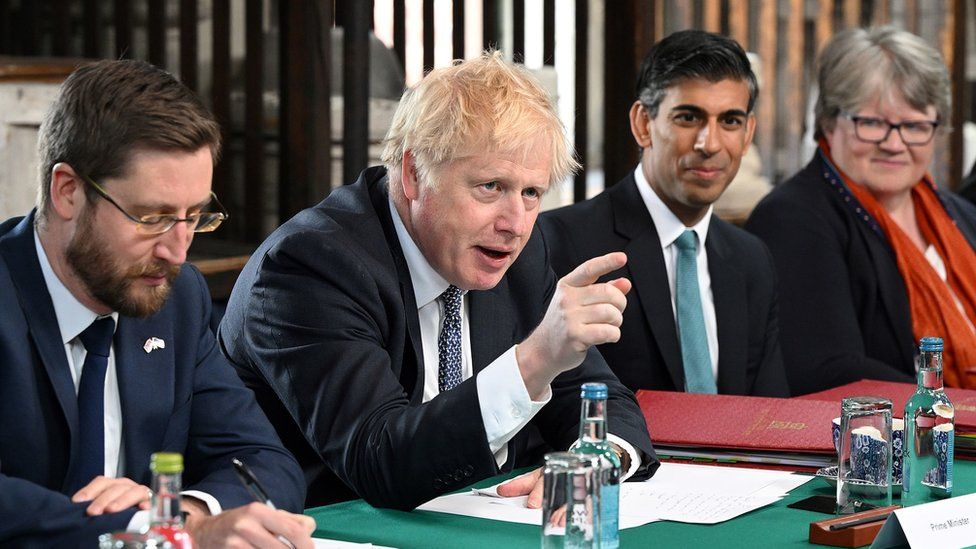
Boris Johnson has demanded his cabinet comes up with a plan which could cut up to 91,000 civil service jobs to free up cash to tackle the cost of living.

It is understood the PM wants to see civil service staffing levels drop to 2016 levels.

Government sources suggested the plan is about cutting people not needed and it could save £3.6bn a year.

A civil service union warned an “ill thought-out” plan could affect services.

Jacob Rees Mogg – the minister in charge of efficiency – told the BBC that they were trying to get back to 2016 levels of staffing before Brexit and the pandemic.

Mr Johnson told the Daily Mail: “We have got to cut the cost of government to reduce the cost of living.”

At an away day in Stoke-on-Trent on Thursday, the prime minister gave ministers a month to produce plans to drastically shrink the civil service, as the government comes under increasing pressure over the rising cost of living.

There were 384,000 civil servants employed in 2016 – the lowest number since World War Two – but as the UK prepared to leave the EU numbers steadily rose until they reached 475,000 at the end of last year.

While large-scale job cuts are likely to take time, a government source said “instant savings” could be achieved by imposing a recruitment freeze in Whitehall and abolishing any vacancies which had not been signed off by a minister.

Examples include the passport office and 70 staff said to be still working on climate change conference COP26.

A source said the cuts were “not ideological” but about “good housekeeping”.


The prime minister suggested to the Daily Mail that the savings could be used for tax cuts, saying: “Every pound the government pre-empts from the taxpayer is money they can spend on their own priorities, on their own lives.”

But civil service union the FDA said the expansion of Whitehall since 2016 had been necessary to tackle “two unprecedented events”, Brexit and the Covid-19 pandemic.

The number of civil servants grew from a post-war low in 2016 as the UK faced Brexit and the pandemic

FDA general secretary Dave Penman said the government could decide to cut the civil service back to 2016 levels, but he said it would also have to choose “what the reduced civil service will no longer have the capacity to do” which may affect services such as passports, border control or health.

“Without an accompanying strategy, these cuts appear more like a continuation of the government’s civil service culture wars – or even worse, ill-thought out, rushed job slashes that won’t lead to a more cost-effective government,” he said.

Major job reductions through natural wastage – waiting for people to resign or retire rather than enforcing redundancies – would take many years, Mr Penman warned.

Labour accused the government of “pointless rhetoric and lack of action” instead of implementing an emergency budget to offer more support to people struggling with bills.

A government spokesperson said that the prime minister and ministers were “clear that the civil service does an outstanding job delivering for the public and driving progress on the government’s priorities”.

But they added when people are facing rising costs, they “rightly expect their government to lead by example and run as efficiently as possible”.

PML-N’s London huddle agrees on not holding early elections

LONDON: Amid confusion within the coalition government over the time of the next general elections, the PML-N’s London huddle decided that there will be no early polls, The News reported.

The prime minister, along with his key cabinet members and party leaders, flew to London to meet PML-N supremo Nawaz Sharif on Wednesday where detailed discussions were held on the prevailing economic and political situation in the country.

The insiders of the meeting said that the incumbent government would focus on providing economic relief to the masses and take tough economic decisions which would serve in the long term.

Sources said that Nawaz sought suggestions on early elections and various other affairs during the meeting that continued for over six hours at an undisclosed location in London. “Everyone agreed on implementing the economic agenda first and then announcing the time of elections after consultation with coalition partners,” they shared.

Speaking to The News after the meeting, Federal Minister for Information and Broadcasting Marriyum Aurangzeb told that PM Shehbaz and ministers in his delegation presented a full report on Pakistan’s socio-economic and political situation to Nawaz Sharif.

Moreover, the meeting briefed the party chief on the government’s agenda and planning, she added.

Aurangzeb further stated that the PML-N and its coalition partners had inherited the worst kind of economic situation from the PTI government and the meeting reviewed the huge suffering of people as a result of the policies of the previous government. She said the meeting deliberated upon the IMF conditions and how the people of Pakistan were affected by them.

The minister informed that the huddle discussed the constitutional violations that took place between 3-12 April by the PTI leaders and which still continued in Punjab. She said the final decisions would be taken in the second and last sessions, which would take place on Thursday and then formal announcements would be made.

When asked why these issues could not be discussed virtually and why the whole government was visiting London, Aurangzeb said there was nothing surprising in the London meeting.

“Nawaz Sharif is our Quaid. Meeting between Nawaz Sharif and Shehbaz Sharif was long overdue. We have inherited today’s Pakistan in a written-off situation and we needed to review the whole situation to formulate a plan. This was a private delegation.”

When asked about the early elections, she said that the current government’s “mandate is till next year and we are here to give relief to the people of Pakistan. It’s the history of Nawaz Sharif to take Pakistan out of economic crisis and if there is one person who can deliver, that’s Shehbaz Sharif. Only the PML-N has the right strategy.”

In a separate discussion with Geo News, Defence Minister Khawaja Asif said that the party is ready to take difficult decisions to manage the worsening economic situation. Agreeing with the anchorperson about the cost of delaying the decisions, the minister said the government is aware of the country’s financial problems and fully geared up to address these challenges.

Protest in London

Outside Hasan Nawaz Sharif’s office, a large number of PML-N and PTI activists gathered and faced off each other for two hours. The PTI’s UK wing gave the call to protest to condemn PM Shehbaz Sharif’s visit, while PML-N announced holding a counter-demonstration to welcome the prime minister.

Both sides raised slogans in support of their leadership and also abused each other. The protest continued for two hours amid heavy downpours and then ended peacefully.

Bilawal vows to add new momentum to ties with China

In a virtual meeting with Chinese Foreign Minister Wang Yi, the Foreign Office said, Mr Bhutto-Zardari “underscored his determination to inject fresh momentum in the bilateral strategic cooperative partnership and add new avenues to practical cooperation”.

While condemning the terrorist attack in Karachi University in which three Chinese teachers lost their lives, the foreign minister underlined Pakistan’s firm resolve to apprehend the perpetrators and bring them to justice.

The two foreign ministers also discussed regional and global issues of mutual interest.

US Democrats throw down gauntlet with symbolic vote on abortion

The move comes amid a political firestorm ignited by a leaked draft opinion that showed the Supreme Court’s conservative majority prepared to overturn Roe v. Wade, a landmark 1973 ruling guaranteeing abortion access nationwide.

Chuck Schumer, the leader of the Senate’s Democratic majority, told colleagues the vote would be “one of the most consequential” in decades, describing the draft opinion as “one of the worst court decisions ever.” “Before the day is over, every member of this body will make a choice: vote to protect the fundamental rights of women across the country, or stand with five conservative justices ready to destroy these rights in one fell swoop,” he said.

The House-passed Women’s Health Protection Act would create a federal statute assuring health care providers have the right to provide abortions and patients have the right to receive them.

But the 60 votes needed to advance the debate towards a final yes or no vote in the evenly-divided, 100-member Senate are not there.

Even if they were, the Democrats don’t have the 51 votes required to pass the legislation since Democrat Joe Manchin is opposed to abortion rights, and told reporters in Congress Wednesday he would be voting no.

The only two Republican supporters of abortion rights — senators Susan Collins of Maine and Lisa Murkowski of Alaska — opposed a near-identical earlier version along with Manchin.

The move is seen as significant, however, with abortion rights set to be a hot button issue for November’s midterm elections, when control of both the House and Senate will be at stake.

A new Politico/Morning Consult poll has 53 percent of voters saying Roe should not be overturned, up three percentage points since last week, while 58 percent said it was important to vote for a candidate who supports abortion access.

“Generally, the people who vote and turn out based on abortion policy are those who support more restrictions on abortion rights,” said Shana Gadarian, professor of political science at Syracuse University.

“By striking down Roe, this is likely to create a new constituency of pro-choice voters who are activated to turn out and donate in ways that they would not normally in a midterm election.”

Senate Minority Leader Mitch McConnell has suggested a federal abortion ban is “possible” if Roe is overturned.

He later rowed back slightly, telling reporters that no abortion vote in the Senate had ever achieved the 60-vote threshold. But Democrats seized on the initial remark, arguing that highlighting their disagreement with Republicans could help them in the midterms, with the majority of Americans supporting abortion rights.

“If we are not successful, then we go to the ballot box,” Senator Amy Klobuchar told ABC on Sunday.

“We march straight to the ballot box, and the women of this country and the men who stand with them will vote like they’ve never voted before.” Meanwhile, activism around the issue is becoming increasingly acrimonious, with angry protesters in favor of abortion rights gathering at the homes of Supreme Court justices in Washington.

Multiple organizations that support abortion rights have called for a “massive day of action” on Saturday, with marches in New York, Washington, Chicago and Los Angeles, as well as hundreds of smaller events nationwide.

Pakistan, US hold security talks ahead of FM Bilawal’s visit

Inter-Services Intellig­e­n­­ce Director-General (DG ISI) Lt-Gen Nadeem Anjum spent three days in Washington this week, meeting senior security officials, including US National Security Advisor Jake Sullivan and CIA Director William J. Burns.

Neither side disclosed the details of these meetings, but the talks are believed to have focused on bilateral security concerns and the situation in Afghanistan, as the US believes that Pakistan can help stabilise the war-torn country.

The last security level talks between the two countries were held in July 2021, when then-National Security Advisor Moeed Yusuf met Mr Sullivan at White House. The Pakistani delegation had also included former ISI chief Lt-Gen Faiz Hameed.

Later, Mr Sullivan said in a tweet that their talks focused on ‘regional connectivity and security, and “the urgent need for a reduction in violence in Afghanistan.”

The current ISI chief’s visit followed an unprecedented deterioration in Pakistan-US ties, triggered by former Prime Minister Imran Khan’s claim that Washington conspired with opposition leaders to topple his government.

At a news briefing on Tuesday, US State Department Spokesperson Ned Price rejected Mr. Khan’s claims as speculations and lies, adding that the United States will not let “lies get in the way” of its bilateral ties with Pakistan, a relationship, he stressed, the US values.

“We are not going to let propaganda, misinformation, and disinformation — lies — get in the way of any bilateral relationship we have, including with the bilateral relationship we have with Pakistan, one we value,” he said while responding to a question about Mr. Khan’s claims.

On March 27, days before his ouster, the former PM brandished a letter at a rally in Islamabad, claiming it contained evidence of a “foreign conspiracy” hatched to topple his government.

All three wings of the US administration – the White House, the Pentagon, and the State Department – have rejected the accusations, saying there’s no veracity to them.

During Tuesday’s briefing, Mr. Price was also asked about a call made by US Secretary of State Antony Blinken to Pakistan’s newly appointed Foreign Minister Bilawal Bhutto-Zardari last week, during which the US official invited Bilawal to a United Nations food security summit on York in New on May 18.Mr. Price said that Mr Blinken and Mr Bhutto-Zardari also discussed the “ongoing engagement when it comes to our economic ties, trade and investment, climate, energy, health, and education.”

US backs new South Korea leader on North

President Yoon Suk-yeol, a conservative expected to take a harder line on the North, in his inaugural address on Tuesday called on his neighbor’s leaders to give up nuclear weapons in return for economic aid.

“We have a new partner — a new president — in South Korea that is determined, working with the United States, to be very clearly engaged in deterring and sending a strong message of partnership between Seoul and Washington,” said Kurt Campbell, the top White House official on Asia.

“And on that basis, I think we’re prepared for any kind of diplomacy or engagement with North Korea,” he said at the US Institute of Peace. Campbell acknowledged that North Korea has not responded to outreach by President Joe Biden’s administration for dialogue.

“Recently we’ve seen a number of steps — military steps — and tests that we view as provocative,” Campbell said.

The United States said last week that it saw signs North Korea could be planning a nuclear test, its first since 2017.

Yoon’s predecessor Moon Jae-in pursued a policy of engagement with Pyongyang, brokering summits between North Korean leader Kim Jong Un and then US president Donald Trump.

But the talks produced no lasting agreement and North Korea has shown little interest in dialogue with lower-ranking US officials under Biden.

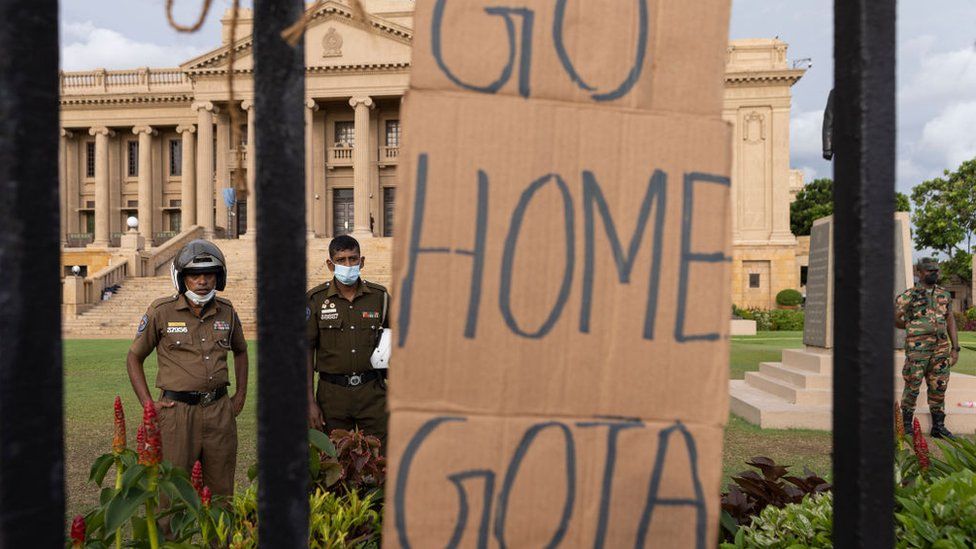
Sri Lankans have criticised a Wednesday night speech by President Gotabaya Rajapaksa in which he ignored calls to resign and vowed to restore order.

In his first national address since protests began last month, he offered to cede some of the presidency’s power to parliament, but set no timetable.

Sri Lankans who have been calling for him to resign over an unprecedented economic crisis were unimpressed.

Many said the speech failed to address the real issues.

“Where were you for the last 30 days? People don’t have medicine, people don’t have food, the entire country’s at a standstill,” Kavindya Thennakoon, a protester in Colombo, told the BBC.

“The reforms he’s suggesting are not what we need. What we need right now is for [the president] to resign from office… It baffles my mind that Gotabaya Rajapaksa doesn’t understand that.”

On social media, many referred to the resignation of Prime Minister Mahinda Rajapaksa – the president’s brother – earlier this week as they called for him to quit too. “One down. One more to kick out,” read one tweet on Thursday morning.

“You should have advised your ministers and your own brother Mahinda against influencing their goons to initiate a wave of terror. If not for their stupidity, Sri Lanka would not have experienced a wave of violence,” another tweet read.

Weeks of peaceful protests against the government turned violent on Monday, after supporters of Mahinda Rajapaksa attacked anti-government demonstrators and destroyed two protest sites where thousands had congregated.

Shoot on sight orders

Though the older Rajapaksa brother quit as PM shortly after, angry mobs have since been targeting property belonging to the family and other politicians supporting them.

Violence was reported on both Monday and Tuesday nights. Shops near Colombo were torched, as well as a resort owned by one of Mahinda’s sons.

The two-time former president is now holed up in a naval base in the north-east of the country for his own safety, the military has confirmed.

Mobs have attacked buses as well as property belonging to the Rajapaksas and other politicians

Security forces are deployed across Sri Lanka with orders to shoot looters on sight.

Gotabaya Rajapaksa made no mention of the role of pro-government supporters in triggering the violence, only condemning the actions of the mobs and vowing to bring down the full force of the law against them.

A nationwide curfew that shut shops, businesses and offices was lifted for a few hours on Thursday morning, but will be reimposed in the afternoon.

The BBC’s Anbarasan Ethirajan, in Colombo, reports that residents started lining up outside petrol stations even before the curfew was lifted. More vehicles could be seen on the roads as people rushed out to buy essentials.

Why are people angry?

Sri Lankans are desperate as basic items like food and fuel run out or become unaffordable.

Its dire financial situation has caused the Sri Lankan rupee to plunge, provoking severe shortages of basic items such as food, fuel and medical supplies.

The government blames the Covid pandemic, which all but killed off Sri Lanka’s tourist trade – one of its biggest foreign currency earners.

It also says tourists were frightened off by a series of deadly bomb attacks on churches three years ago.

However, many experts say economic mismanagement is to blame.

There is a great deal of anger against the Rajapaksa family. Many people believe Mahinda Rajapaksa paved the way for his relatives to plunder the country’s wealth for their own financial gain.

All the president’s brothers, as well as some of his nephews, held key positions in the government before continued protests forced them to step down.

What is the political alternative?

During his nationwide address, Mr Rajapaksa said he would appoint a new prime minister who commanded the majority of support in parliament, as well as a new cabinet.

He had said earlier he was holding talks with other political parties aimed at forming a unity government. But the main opposition has said it will not be part of the interim administration unless the president stands down.

At present, there is no clarity on which political parties might come together to form such a government.

The political stalemate comes as Sri Lanka attempts to iron out a bailout package with the International Monetary Fund (IMF) – the island’s $81bn economy is near bankruptcy.

It has suspended its foreign debt payments, largely because it cannot service loans from China that paid for massive infrastructure projects.

While the pandemic hit the vital tourism sector and shrank Sri Lanka’s earnings and foreign exchange reserves, experts say problems have been exacerbated by populist tax cuts in 2019 and a disastrous ban on chemical fertilisers in 2021 that devastated crop yields.

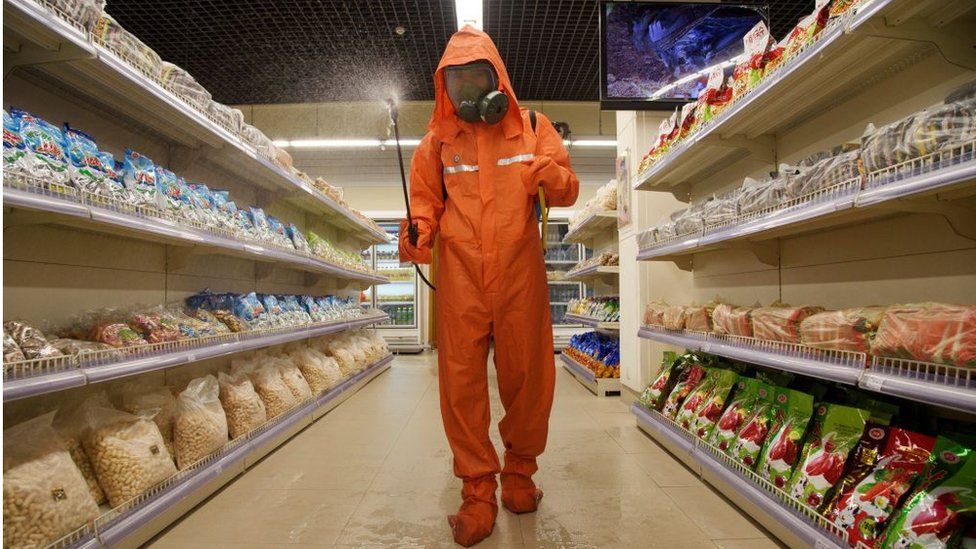
North Korea has ordered a strict national lockdown after confirming its first official Covid infections.

State media have reported an Omicron outbreak in the capital, Pyongyang, but did not state the number of cases.

KCNA said leader Kim Jong-un had vowed to eradicate the outbreak, which it called a “severe national emergency” that had breached the country’s “quarantine front”.

But observers believe the virus has long been present in the country.

Outsiders say the nation’s 25 million population is vulnerable as North Korea has declined to administer a Covid-19 vaccine programme, even rejecting offers from the international community to supply millions of AstraZeneca and Chinese-made Sinovac jabs last year.

There have also been concerns about North Korea’s impoverished healthcare system.

North Korea’s main way of combating Covid has been to seal its foreign borders – it was one of the first countries to do so, in January 2020.

But this has also stopped essential supplies from entering the country, which has led to food shortages and a cratering economy.


On Thursday, KCNA said Mr Kim had ordered “maximum emergency” virus controls, which appeared to include orders for localised lockdowns and gathering restrictions in workplaces.

The North Korean news outlet added that the first case of the Omicron variant had been reportedly detected in the capital four days ago.

Residents in some areas of Pyongyang had been subjected to lockdown for at least two days before the latest announcement, according to NK News, a Seoul-based monitoring site.

South Korea’s government said it has renewed its offer of humanitarian assistance to the North in response to the news of the outbreak. Pyongyang has yet to respond.

For more than two years, North Korea has, rather dubiously, claimed not to have a single case of Covid-19. So why admit to it now?

Most likely it is because this outbreak is too serious and too difficult to hide.

North Korea has been consistent in its public commitment to fighting the virus. This is how it has justified closing its borders for so long. Now that Omicron has entered the country, the challenge is to limit its spread.

With no vaccines, poor healthcare and a limited capacity to test people, North Korea’s options are very limited right now.

Authorities have clearly decided they have no choice but to put the country into lockdown. In order to do this, they simply have to tell people and the rest of the world.

It does not necessarily mean they will be any more willing to accept outside help.

Analysts say Pyongyang’s disclosure of the Covid cases at this time is significant and could hamper the state’s nuclear ambitions which have been on show this year.

North Korea has claimed to have conducted more than a dozen banned missile tests, including one of an intercontinental ballistic missile, a weapon it hadn’t tested in over four years.

Yang Moo-jin, a professor at the University of North Korean Studies, told AFP that North Korea might shelve plans for a nuclear test to focus on battling the outbreak, though if public fears escalated, Mr Kim may go ahead with a test “to divert this fear to another place”.

But Leif-Eric Easley, a professor at Ewha University, said that North Koreans “may be less interested in nuclear or missile tests when the urgent threat involves coronavirus rather than a foreign military”.

He added that he believed Pyongyang would “likely double down” on its lockdowns, given that it was entering a “period of uncertainty in managing its domestic challenges and international isolation”.

Despite North Korea’s previous claims that it had “shining success” in keeping out Covid, there have been signs throughout the pandemic of the virus’ potential presence in the country.

In June last year, state media reported that Mr Kim had punished officials over a “grave incident” related to Covid, but did not specify details.

Then in September, the state held a military parade featuring lines of soldiers wearing hazmat suits and masks, which some analysts saw as a sign that a special force was created to help prevent the spread of Covid.

North Korea shares land borders with South Korea and China, which have battled outbreaks. China is now struggling to contain an Omicron wave with lockdowns in its biggest cities.

The UK has agreed mutual security pacts with Sweden and Finland, agreeing to come to their aid should either nation come under attack.

UK Prime Minister Boris Johnson visited both countries to sign the deals, amid debate about them joining Nato.

The pacts also state that Finland and Sweden would assist the UK in a crisis.

Mr Johnson and Swedish PM Magdalena Andersson said co-operation was “even more important” given Russia’s invasion of Ukraine.

The second deal was announced in a joint press conference with Finnish President Sauli Niinistö.

Mr Johnson said the “solemn declaration” between the UK and Finland was reflective of the “extreme difficulty of the times we are in”.

He emphasised the deal was “not a short-term stop gap” while Finland considered whether to join the Nato defensive alliance, but rather a “enduring assurance between two nations”.

Sauli Niinisto said Finland appreciated the UK’s “strong support”

Asked if there would be “British boots on the ground” in Finland should a conflict break out, Mr Johnson said military assistance would be offered, but that the “nature of that assistance” would depend upon the “request of the other party”.

Mr Johnson added the agreement would become the “foundation of an intensification of our security and our defence relationship in other ways as well”.

Mr Niinistö said his nation appreciated the UK’s “strong support” of Nato’s open-door policy to Finland’s potential membership.

He said joining Nato would not be “against anybody” and the UK deal was intended to “maximise our security one way or another” while considering joining the defensive alliance.

However, when asked if the possible move could provoke President Vladimir Putin, Mr Niinistö said Russia would be responsible if Sweden or Finland joined Nato.

He said Russia was suggesting the two nations did not have their “own will” by threatening them against applying for membership.

“They are ready to attack their neighbouring country, so… my response would be that ‘you caused this – look at the mirror'”.


Speaking earlier in Sweden Mr Johnson said: “If Sweden were attacked and looked to us for help and support, then we would provide it.”

Asked by the BBC to spell out exactly what the UK would do if Russia attacked Sweden, Mr Johnson said the deal meant that “upon request from the other party, we would come to the other party’s assistance”.

Ms Andersson argued her country would be safer as a result of the mutual assistance agreement with the UK, adding: “Of course this means something. This is important whatever policy choice we make in Sweden.”

She also explained the country was “exploring all possible options and Nato is one of them that is on the table”.

Finland says applying to join Nato is all about defence. But Vladimir Putin doesn’t see it that way. He’s always viewed Nato’s eastern expansion as a threat.

Finland shares an 800 mile (1300km) long border with Russia, bringing the alliance’s military might that much closer Moscow.

Finnish and Swedish membership will make Nato more robust too – boosting its eastern flank and presence in the Baltic Sea. And the Kremlin has threatened retaliation.

Some fear it might deploy targeted nuclear weapons. But Finnish diplomats I’ve spoken to believe Russia has its military hands full in Ukraine and that it will instead focus on cyber and disinformation campaigns.

They say President Putin has himself to blame for Nato expanding. Before Russia invaded Ukraine, most Finns and Swedes preferred to work alongside, but not inside, Nato.

Russia’s aggression – its expansionist zeal – changed all that.

The agreements with Sweden and Finland are not a legal or automatic security guarantee but a political declaration that the UK would come to their aid, if requested.

In an interview with the UnewsUK, Mr Johnson described the deal with Sweden as stating something that “should be implicit” in the countries’ relationship anyway.

Asked if he thought Sweden should join Nato, Mr Johnson said it was “not for the UK to intervene” in their internal debate over whether to apply to become a member of the alliance.

But he added: “We would strongly support Sweden’s accession, if that’s what the Swedes chose to do. We’d certainly try to make things go smoothly and easily as possible.”

Nato – the North Atlantic Treaty Organisation – is a 30-nation defensive alliance founded shortly after the end of World War Two.

It has its headquarters in Brussels, but is dominated by the massive military and nuclear missile power of the US.

Support for joining the Nato has increased in both Sweden and Finland since Russia invaded Ukraine, despite their long history of pursuing policies of military neutrality to avoid conflict with regional powers.

Finland and Sweden are both modern, democratic countries that fulfil the criteria for membership.

Nato’s chief, secretary general Jens Stoltenberg, has said the alliance would welcome them with open arms and there would be minimum delay in processing their membership.

Russia has previously warned both nations not to join Nato and threatened “a military technical response” if they do try to become members.

Kremlin spokesman Dmitry Peskov stressed that Moscow would have to “rebalance the situation” with its own measures if any bid went ahead.