The UK economy shrank in March as households began to feel the impact of rising prices and cut down on spending.

The economy contracted by 0.1% in March after no growth in February, the Office for National Statistics said.

In the first three months of the year the economy grew by 0.8%, which was driven by hospitality and travel industries recovering from coronavirus pandemic restrictions.

The ONS said the motor industry in particular was “struggling”.

The Bank of England has warned the UK faces a “sharp economic slowdown”, with prices rising at their fastest rate for 30 years, driven by soaring fuel, food and energy costs.

The Bank has forecast that inflation – the rate at which prices rise – could reach more than 10% by the end of the year.

“You can see the cost of living really beginning to bite,” said Darren Morgan, director of economic statistics at the ONS.

He added that trade in the retail sector had fallen “well below expectations”, with people cutting spending on “big ticket, non-essential sales”.

Mr Morgan also said March saw a large fall in fuel sales as people reduced the amount of car journeys they took due to the high cost of fuel at the pumps, driven by soaring global oil prices.

“The other industry we saw very much struggling is the motor trade industry. They are really struggling at the moment,” he said.

The Society of Motor Manufacturers and Traders has said March marked the “weakest” for new car registrations since 1998, as supply chain problems continue to hamper carmakers.

The ONS said a 15.1% fall in repairs of motor vehicles and motorcycles was the main factor behind the UK’s services sector shrinking in March.

However, it said the construction industry saw a strong month due to repairs needing to be carried out on homes and buildings following storms across in the UK in February.

The government’s chief law officer has received legal advice that it would be lawful to override parts of the post-Brexit treaty for Northern Ireland.

The attorney general’s office said previous advice saying the opposite had changed because the agreement between the UK and EU is causing social unrest.

This means there could be new legislation scrapping checks on goods going from Britain to Northern Ireland.

The UK and EU are set to hold talks later to tackle the escalating dispute.

The new legal advice given to Attorney General Suella Braverman could allow the UK to make good on its repeated threats to scrap contentious parts of the agreement made with Brussels called the Northern Ireland Protocol.

Designed to avoid the need for a hard border with the Republic of Ireland, the deal came into force in 2021 and imposed checks on goods moving between Britain and Northern Ireland – angering unionists, who claimed it had made a border in the Irish Sea instead.

The Times, which first reported the change in legal advice, said the attorney general argued that signs of violence – such as a hoax bomb attack targeting Irish Foreign Minister Simon Coveney in March – justified the UK overriding the deal to keep the peace.


Prime Minister Boris Johnson said on Wednesday that “the most important agreement is the 25-year-old Belfast Good Friday Agreement”, which set up a cross-community power-sharing government as a way of ending decades of violence.

He said the Northern Ireland protocol failed to command cross-community support and “we need to sort it out”.

But Mr Johnson also said there should not be any need for “drama” over making changes to the deal.

The process of changing the trade arrangements is likely to take more than a year, with the House of Lords expected to try to block and delay the government’s legislation.

A stand-off which emerged out of the Northern Ireland Assembly election has increased the urgency, however.

The Democratic Unionist Party – which came second in the poll after Sinn Féin and backs continuing the union between Great Britain and Northern Ireland – is refusing to nominate ministers to help form a new executive until its issues with the trade protocol are tackled.

The UK government is concerned anger over the trade arrangements could lead to social unrest

The election established a majority for assembly members who support the protocol, with Republican Sinn Féin as the largest party for the first time.

But under the rules of the Northern Ireland Assembly, Sinn Féin cannot nominate a first minister without a unionist deputy minister.

Foreign Secretary Liz Truss, who has said she would not shy away from “taking action to stabilise the situation in Northern Ireland”, is due to hold talks with the vice-president of the European Commission on Thursday morning.

She is expected to tell Maros Sefcovic in a call that the dispute cannot be allowed to drag on.

The EU proposed changes to the protocol in October, focused on reducing inspections of food products in particular, but Ms Truss has rejected this plan.

Because of grace periods, the protocol is not yet being fully implemented, so the UK has argued that the changes being proposed would actually increase checks and controls, leading to “everyday items disappearing from the shelves”.

Mr Sefcovic has previously called on the UK to “dial down the rhetoric” and to “be honest” about what it committed to when it signed up to the protocol.

PM Shehbaz in London to meet Nawaz Sharif

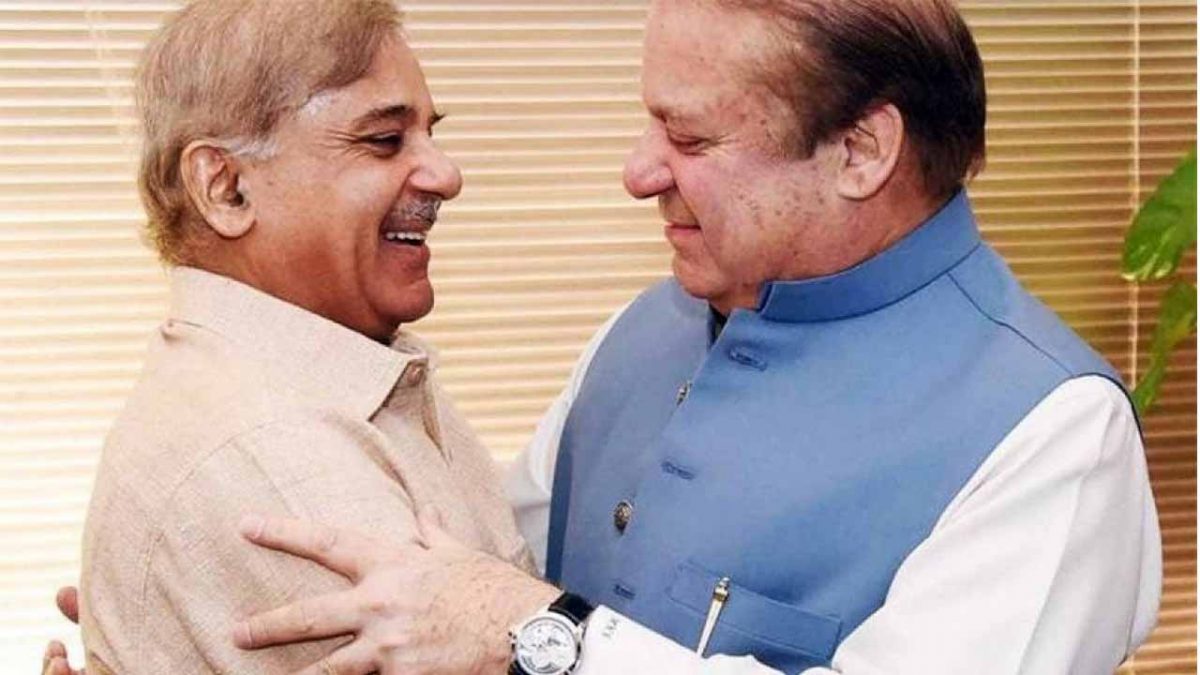
ISLAMABAD: Prime Minister Shahbaz Sharif and top PML-N leaders landed in London to meet party supremo Nawaz Sharif amid reports of a “big decision” by the government related to subsides on petroleum products, Geo News reported Wednesday, citing sources.

According to the sources, federal ministers Ahsan Iqbal, Marriyum Aurangzeb, Khawaja Saad Rafique, Khawaja Asif and Khurram Dastagir are accompanying the premier.

Former prime minister Nawaz Sharif, Ishaq Dar and Shahid Khaqan Abbasi confirmed that the London huddle would talk about the serious economic situation and attempt to find a way forward.

Speaking to the journalists, Nawaz said he looked forward to meeting Shahbaz and others. He said the PTI government had left Pakistan in a deep economic mess and the meeting would discuss the current situation as well as the way forward.

He said that thankfully Imran Khan’s PTI government was not there anymore after being ousted in a vote of no-confidence.

Nawaz said: “The PTI government has created a crisis in every sphere of the country. Imran Khan’s government harmed Pakistan in every possible manner, be it social, economic, cultural or political issues. Nothing like this ever happened before in the history of Pakistan. In the next election, the PTI’s chapter will be closed forever.”

When asked about former prime minister Imran Khan making references to Mir Jafar and treachery, Nawaz said: “Imran Khan has caused an unprecedented havoc in the country and the kind of destruction he has left behind has never been seen before. Thankfully, he is gone and his destructive ways have been stopped.”

Meanwhile, Ishaq Dar said the meeting in London was of critical importance as big decisions needed to be taken in relation to the economy.

Dar ruled out early elections and said that the Election Commission of Pakistan (ECP) had already said that elections before October were not possible.

Ex-prime minister Abbasi said that PM Shahbaz and other party leaders had requested Nawaz Sharif to call a consultative meeting.

According to sources, Nawaz has to consult the party leadership over some important issues over which he has reservations and the PML-N is expected to make a “big decision,” which is why he had rejected a proposal to have an online meeting.

Party sources said that during the meeting, a discussion on the strategy on the prices of petroleum products will be held with Nawaz Sharif and former finance minister Ishaq Dar.

The discussion holds special importance as a delegation of the International Monetary Fund (IMF) is expected to begin talks with Pakistani officials in Doha on May 18.

Moreover, decisions about power-sharing, the next general election, and the Punjab cabinet will also be taken during the meeting.

India’s Supreme Court has put a controversial colonial-era sedition law on hold that critics say is used to stifle dissent.

The judges asked the government to refrain from registering any new cases which invoke sedition until it finishes hearing petitions challenging it.

The court also asked the authorities to pause all existing sedition trials.

The government has been accused of using the law against critics, such as politicians, journalists and activists.

On Tuesday, the government said that they would review the law after earlier defending it.

While pausing the court hearing on Wednesday, the judges said that those already charged under the law, and in jail, could seek bail from trial courts.

Kapil Sibal, senior leader of India’s opposition Congress party and lawyer for the petitioners, told the Supreme Court that there were over 800 cases of sedition pending across India and as many as 13,000 people were in jail.

A majority of sedition cases filed against 405 Indians for criticising politicians and governments over the last decade were registered after 2014 when Prime Minister Narendra Modi took power, according to data compiled by the website Article14.

Too early to celebrate?

Soutik Biswas, BBC News, Delhi

The Supreme Court’s decision to pause the sedition law is a significant development.

For decades, successive governments have used the colonial-era law – the dreaded section 124a of the antiquated Indian Penal Code – against students, journalists, intellectuals, social activists, and those critical of the government to essentially suppress dissent and free speech.

A law which was mainly used against Indian political leaders seeking independence from British rule in the 19th and early 20th centuries has now been weaponised as a tool of suppression by successive democratically elected governments. That is, many say, is India’s shame.

But it would be too early to celebrate.

It remains to be seen how Narendra Modi’s government “re-examines and reconsiders” the draconian law. Will it be defanged and modified? Or will it be scrapped?

Most Indians will be happy to see the law, which they say has no place in a modern democracy, to be given a quick burial.

The law made headlines last year when it was invoked against a student who shared a document intended to help farmers protesting against agricultural reforms.

The offence is punishable by a monetary fine or a maximum sentence of life in prison, or both.

In 1962, the top court had imposed limits on the use of the law, but critics say authorities in India continue to flout these restrictions with impunity.

They say the law is mostly used to intimidate people who protest against authority. Given India’s slow moving judicial system, these cases get stuck for years.

Meanwhile, people charged under the sedition law have to surrender their passports, are not eligible for government jobs and must produce themselves in court whenever required.

WHO terms China’s Covid strategy unsustainable

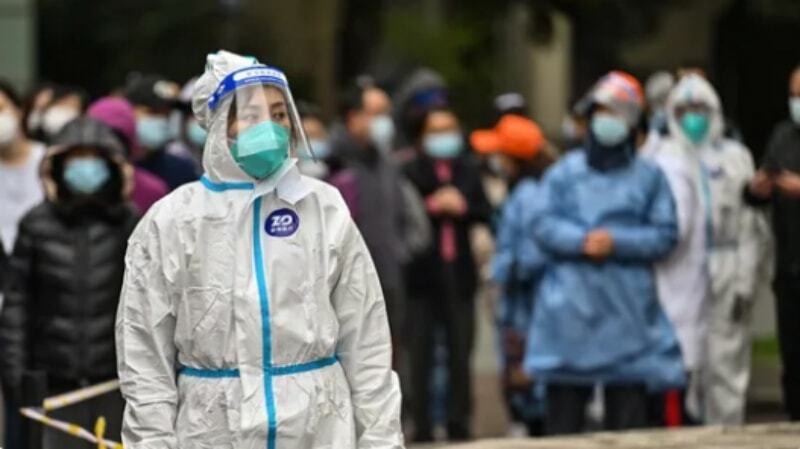
China has imposed draconian measures, trapping most of Shanghai’s 25 million people at home for weeks as the country combats its worst outbreak since the pandemic began.

The Shanghai lockdown has caused outrage and rare protest in the last major economy still glued to a zero-Covid policy, while movement in the capital Beijing has been slowly restricted.

“When we talk about the zero-Covid strategy, we don’t think that it’s sustainable, considering the behaviour of the virus now and what we anticipate in the future,” WHO chief Tedros Adhanom Ghebreyesus told a press conference.

“We have discussed about this issue with Chinese experts and we indicated that the approach will not be sustainable.

GENEVA: China’s flagship zero-Covid strategy to defeat the pandemic is unsustainable, the World Health

“Transiting into another strategy will be very important.” There is a pressing political dynamic to China’s virus response, with President Xi Jinping pegging the legitimacy of his leadership on protecting Chinese lives from Covid.

Xi has doubled down on the zero-Covid approach, despite mounting public frustration.

Rights, society and economy

Shanghai is China’s economic dynamo and its biggest city. The zero-Covid policy has damaged an economy which just months ago had been bouncing back from the pandemic.

“We need to balance the control measures against the impact they have on society, the impact they have on the economy, and that’s not always an easy calibration,” said WHO emergencies director Michael Ryan.

He said any measures to combat the Covid-19 pandemic should show “due respect to individual and human rights”.

Calling for “dynamic, adjustable and agile policies”, Ryan said early responses to the crisis in many countries showed that a lack of adaptability “resulted in a lot of harm”.

He reflected on how the world’s most populous nation had had relatively very few deaths officially ascribed to Covid, and therefore had “something to protect”.

Given the rapid rise in deaths since February-March, “any government in that situation will take action to try and combat that”, he told reporters.

Tedros has been discussing adjusting according to the circumstances to find an exit strategy, “in depth and in detail with Chinese colleagues”, Ryan said.

Maria Van Kerkhove, the WHO’s technical lead on Covid-19, said that worldwide, it was impossible to stop all transmission of the virus.

“Our goal, at a global level, is not to find all cases and stop all transmissions. It’s really not possible at this present time,” she said.

“But what we need to do is drive transmission down because the virus is circulating at such an intense level.

Level of Pakistan’s participation in UN food meeting still unclear

“He has both options, to be in New York for the meeting or address it virtually from Islamabad,” a diplomatic source told Dawn.

A source at the Foreign Office in Islamabad said the foreign minister is likely to decide about his participation in a day or two. In the meantime, Mr Bhutto-Zardari and his close aides are holding consultations over the matter.

In the meantime, there has been intense speculation in Islamabad over the foreign minister’s expected US trip. A senior member of the PML-N-led government told journalists in Islamabad that “the chances of Mr Bhutto-Zardari’s phy­sical participation are very high.”

But a senior diplomatic source thinks otherwise. He said though efforts are still underway to make the visit happen, but chances are pretty dim. Asked for reasons, the diplomat said one of the considerations is the current political environment is the country.

Last week, US Secretary of State Antony Blinken called the foreign minister and invited him to a food security meeting at the UN headquarters in New York on May 18.

Pakistani diplomats in both New York and Washington indicated that Mr Bhutto-Zardari would physically attend the meeting as it creates the opportunity for direct talks betw­een the two leaders. They also hin­ted at bringing Mr Bhutto-Zardari to Washington for a separate meeting with Secretary Blinken.

“Physical presence sends a totally different message,” said one of the diplomats. “It also creates opportunities for direct, high level talks between the two countries.”

Won’t let ‘lies’ get in way of ties with Pakistan, says US on Imran’s conspiracy allegations

Price made these remarks during a press briefing on Tuesday while answering a question about former prime minister Imran Khan blaming the US for his ouster from office and running an “anti-America campaign”.

“Sir, former prime minister Imran Khan is still blaming US efforts from — for his ouster from prime minister office and leading an anti-American campaign. So, do you think that his anti-American campaign [is] creating fractures among the structure of the diplomatic relation between Pakistan and [the] US or — or it doesn’t matter?” a reporter asked Price.

In response, Price said: “We are not going to let propaganda, misinformation, and disinformation — lies — get in the way of any bilateral relationship we have, including with the bilateral relationship we have with Pakistan, one we value.”

Imran, who was voted out of the top office last month via a no-confidence vote, alleges the move was masterminded by the US through the help of local collaborators over his pursuance of an independent foreign policy.

On March 27, days before his ouster, the former PM had brandished a letter at a rally in Islamabad, claiming it contained evidence of a “foreign conspiracy” hatched to topple his government. Imran had kept a mum about the contents of the letter when he first mentioned it, however, he spilled the beans days later by naming the US when the exit of the government appeared imminent.

His allegation that the US spearheaded his exit from power was based on a cable received from Pakistan’s then-ambassador to the US, Asad Majeed Khan, in which he had reported about a meeting with Assistant Secretary of State for South and Central Asia Affairs Donald Lu.

Majeed had reportedly said Lu had warned that Imran Khan’s continuation in office, who was set to face a vote of no confidence, would have repercussions on bilateral relations between the US and Pakistan.

The Pentagon and the State Department have rejected the accusations, saying there is no veracity to them.

The National Security Committee (NSC), which includes all services chiefs as well as the head of Pakistan’s top intelligence agency ISI, took up the matter on March 31 and decided to issue a “strong demarche” to a country that it did not name over what was termed “blatant interference in the internal affairs of Pakistan”.

However, the forum has clarified that no foreign conspiracy had been at play to topple the Imran Khan-led government.

Meanwhile, Imran and his party maintain that a foreign conspiracy was behind the PTI government’s ouster and he went on to allege during a video message on May 7 that the “conspiracy” to topple his government started after he refused the demand for military bases. He has repeated those claims on various occasions, including at public rallies, following his exit.

Blinken-Bilawal call

During Tuesday’s briefing, Price was also asked about a call made by US Secretary of State Antony Blinken to Pakistan’s newly appointed Foreign Minister Bilawal Bhutto-Zardari last week, during which the US official invited Bilawal to Washington to attend a United Nations food security summit on May 8 (tomorrow).

According to a Dawn report, which cites diplomatic sources, it so far remains unclear whether Bilawal will attend the meeting physically or address it virtually.

Speaking on the matter, Price said: “I don’t have any bilateral meetings to preview during the — next week’s food security gathering in New York.

“What I can say is that Secretary Blinken did have an opportunity to speak with his new Pakistani counterpart, Foreign Minister Bilawal Bhutto-Zardari, last week — May 6, I believe it was,” he added.

The State Department spokesperson said during the call, Blinken and Bilawal had “an opportunity to reflect on the 75th anniversary of US-Pakistani relations, to talk about how we can strengthen that cooperation going forward.

“It is a broad-based bilateral relationship. The Secretary underscored the resolute US-Pakistan commitment to Afghan stability and to combating terrorism as well. They also discussed ongoing engagement when it comes to our economic ties, trade and investment, climate, energy, health, and education,” Price further said, adding that the conversation was “wide-ranging”, as these introductory conversations oftentimes were.

“I expect before long they will have an opportunity to follow up on that,” he added.

When Australia – long considered a climate policy laggard – heads to the polls on 21 May, the outcome could be significant for the planet’s future.

Still reliant on coal for most of its electricity, it is one of the dirtiest countries per capita – making up just over 1% of global emissions, but only 0.3% of the world’s population.

It’s a massive global supplier of fossil fuels, and once that is factored in, it accounts for 3.6% of the world’s emissions.

But it’s also one of the nations most at risk from climate change.

In recent years, Australia has suffered severe drought, historic bushfires, successive years of record-breaking floods, and six mass bleaching events on the Great Barrier Reef.

And it’s racing towards a future full of similar disasters, the latest UN Intergovernmental Panel on Climate Change (IPCC) report warns.

The current government has angered allies with its short-term emissions reductions target – which is half what the IPCC says is needed if the world has any chance of limiting warming to 1.5C.

But Australia is still wedded to fossil fuels and climate policy has famously played a role in toppling three prime ministers in a decade.

Though most voters want tougher climate action, some coal towns lie in swing constituencies that are key to winning elections.

What is the government promising?

Scott Morrison famously praised coal’s value to Australia in a parliamentary debate on renewable energy in 2017

After years of warring within the Liberal-National coalition, Scott Morrison’s government committed to a 2050 net zero emissions target at the last gasp before last year’s Glasgow COP26 summit.

Deputy PM and National Party leader Barnaby Joyce remains personally opposed to the policy, claiming people in regional areas would have to “grab a rifle [and] go out and start shooting [their] cattle” to meet the goals.


Australia’s 2030 emissions reduction target of 26% on 2005 levels – half the US and UK benchmarks – has been called “a great disappointment”.

Mr Morrison has boasted the country is on track to achieve 35%. Yet that’s unlikely, vice chair of the IPCC and Australian National University Professor Mark Howden says, unless the government – which has been in power since 2013 – overhauls its “technology over taxes” approach.

Once emissions saved by a drastic reduction in land clearing are excluded, Australia’s carbon footprint has actually increased “significantly” since 2005, he notes.

And Mr Morrison’s plan to bring it down has been criticised for hanging on technologies that do not exist yet.

“That’s what we call a moral hazard – we make the assumption that the solution will pop up so we don’t take action now,” Prof Howden told the BBC.

Critically, coal mines and power stations are safe on Mr Morrison’s watch.

Labor will cut more, faster

The opposition Labor party’s 2030 emissions reduction target of 43% is “far more ambitious”, Prof Howden says.

“If you’re looking at the difference between those goals, it’s like taking every car off the road.”

If global leaders set targets similar to the coalition’s, the world would be heading towards “potentially terrifying” warming of more than 3C, he says.

Labor’s target is more consistent with warming of about 1.6C or 1.7C.


While it is still short of the IPCC recommendation, Labor leader Anthony Albanese has defended it as in line with key trading partners like Canada (40-45%), South Korea (40%) and Japan (46%).

Leader Anthony Albanese has defended the Australian Labor Party’s policy as similar to countries like Canada, South Korea and Japan

Labor has stressed its policy will not leave “emissions intensive” industries – like mining – at a disadvantage to their global competitors.

It has also promised it will support new coal mines if they make commercial sense, and that it will not force coal-fired power stations to shut early.

Instead the party says it will make electric cars cheaper, improve renewable energy storage options, and gradually lower the threshold at which big emitters need to buy carbon offsets.

Like the coalition, Labor is hoping the market will phase out coal without intervention, which Prof Howden says is risky.

“The maths tells us we can’t afford to put in new large fossil fuel infrastructure, and the infrastructure that we have currently we have to take out of the system fairly quickly.”

Could minor players have the final say?

Australian elections are generally a contest between Labor and the Liberal-National coalition.

The party with the majority of the 151 seats in the lower house of parliament governs, and only twice in the country’s history has no party achieved a majority – in 1940 and 2010.

But voters are increasingly shunning the major parties and in the event of another hung parliament, the government would need support from the crossbench to pass legislation.

Australia’s 2030 emissions cut pledges – by party

  • Liberal-National coalition:26-28%
  • Labor:43%
  • Teal independents:50-60%
  • Greens:75%

Source: Climate Analytics

A bevy of high-profile candidates – dubbed the “teal independents” – hope that will mean they can negotiate a 2030 target of at least 50% if they are elected and hold the balance of power.

But the future government could also turn to minor party MPs.

The Greens say net zero by 2050 is a death sentence, and the party would push for a 75% cut by 2030, and net zero five years after that.

On the other hand, the far-right One Nation Party proudly calls itself the only party to question climate science and wants the country’s targets scrapped.

Australia’s climate debate has been “toxic”, Prof Howden says, but he’s optimistic it is turning a corner.

“We actually do have the technology and the capability to reduce our emissions much faster than we have done.

“If we get potentially a hung parliament… I think we could actually end up with very significant climate action and people will start to see the benefits of that fairly quickly.”

Sri Lanka witnessed a second night of arson attacks on Tuesday, with properties damaged in the town of Negombo, near the capital, Colombo.

A mob torched a luxury holiday resort owned by the son of the former Prime Minister, Mahinda Rajapaksa.

On Monday, frustration at the country’s economic crisis spilled over, after government supporters attacked protesters who want President Gotabaya Rajapaksa to quit.

Eight people have since died.

More than 200 are believed to have been injured in the clashes.

Sri Lanka had already seen weeks of protests over its dire financial situation, which has caused the Sri Lankan rupee to plunge, provoking severe food and fuel shortages.

On Monday night, mobs burned more than 50 houses belonging to politicians, reports say, while a controversial museum dedicated to the Rajapaksa family was also razed to the ground in the country’s south.

Shops, businesses and offices will be shut for a third day on Wednesday under a nationwide curfew in place until Thursday morning.

A meeting between Sri Lanka’s political party leaders has been moved online over security concerns.

The streets of Colombo bear the evidence of this week’s rioting – a heavy police presence, overturned and burnt buses.

Security forces have been ordered to shoot law-breakers and looters on sight, and thousands of them have been deployed to patrol the streets.

Nonetheless, protesters continued to gather at Galle Face Green, the main protest site in Colombo, on Tuesday evening. They insist President Rajapaksa has grossly mismanaged the economy and must stand aside.

The president’s older brother, Mahinda, stepped down as prime minister on Monday in a bid to placate demonstrators, but the move failed to bring calm.

Protesters blame Gotabaya (right) and Mahinda Rajapaksa for the current crisis

President Rajapaska is holding talks with other political parties to form a new interim government. But the main opposition says it will not be part of the interim administration unless the president stands down.

At present, there is no clarity on which political parties will come together to form a government.

The political stalemate comes as Sri Lanka attempts to iron out a bailout package with the International Monetary Fund (IMF) – the $81bn economy is near bankruptcy.

It has suspended its foreign debt payments, largely because of loans from China that paid for massive infrastructure projects.

While the pandemic shrunk Sri Lanka’s earnings and foreign exchange reserves, experts say problems have been exacerbated by populist tax cuts in 2019 and a disastrous ban on chemical fertilisers in 2021 that hit crop productivity.

Protesters gathered in front of Trincomalee Naval Base in the north-east on Tuesday amid unconfirmed reports that Mahinda Rajapaksa had fled there with his family after escaping from his Colombo residence.

There have also been rumours that he and others in the family fled to India, which the Indian High Commission in Sri Lanka has denied.

From war heroes to villains

Anbarasan Ethirajan, BBC News, Colombo

Sri Lankans are still reeling from the violence that has erupted. Many politicians are sheltering in safe houses or avoiding appearing in public.

“It is not at all safe, particularly for politicians on the government side,” Nalaka Godahewa, until recently media minister, told the BBC. His house was among those torched.

Mahinda Rajapaksa, once celebrated by the majority Sinhalese as a war hero for defeating the Tamil Tiger rebels, has suddenly become a villain. Many blame his supporters for targeting anti-government protesters, which then set off a chain of violent events.

The Rajapaksas have always stood together, but this time their differences are out in the open. The problem appears to have started after Gotabaya asked the family patriarch Mahinda to “take one for the team” and resign.

How the family, who have dominated Sri Lankan politics for years, overcome this crisis is now an open question.

Al Jazeera journalist Shereen Abu Aqleh has been shot dead while reporting on a raid by Israeli security forces in the occupied West Bank city of Jenin.

The Qatar-based news channel said Abu Aqleh, 51, was shot “deliberately” and “in cold blood” by Israeli troops. Another reporter was shot and wounded.

The Israeli military denied that its forces targeted journalists.

It was looking into “the possibility” that they “were hit by Palestinian gunmen” during an exchange of fire.

Israel’s Foreign Minister Yair Lapid described Abu Aqleh’s death as “sad” and said it had offered to carry out a joint investigation with the Palestinian Authority.

“Journalists must be protected in conflict zones and we all have a responsibility to get to the truth,” he added.

Qatar’s Assistant Foreign Minister Lolwah al-Khater said Abu Aqleh was shot “in the face” while wearing a press flak jacket and helmet.

Shereen Abu Aqleh had been covering the Israeli-Palestinian conflict for the past 15 years

The Palestinian health ministry confirmed Abu Aqleh’s death and said she had been rushed to hospital in critical condition after being shot.

Shereen Abu Aqleh was a prominent figure on Al Jazeera’s Arabic news service who had been covering the Israeli-Palestinian conflict for 15 years.

Al Jazeera journalist Nida Ibrahim said she was a “very well respected journalist” and that the news was “a shock to the journalists who have been working with her.”

A wave of attacks by Israeli Arabs and Palestinians in Israel in recent weeks has left 17 Israelis and two Ukrainians dead.

At least 26 Palestinians have been killed – including assailants shot dead while carrying out attacks, or militants and civilians killed during Israeli raids and confrontations in the West Bank.

Israeli operations have centred on the Jenin district, where four of the Palestinians who carried out attacks in Israel came from.