
16 killed as blasts rock two Afghan cities

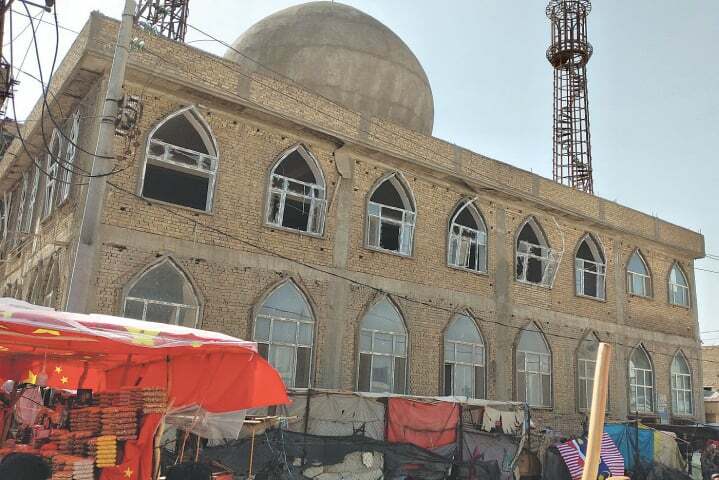
KABUL: At least 16 people were killed by bomb blasts in two Afghan cities on Thursday — including 12 worshippers at a Shia mosque in an attack claimed by the militant Islamic State group (IS).

Prime Minister Shehbaz Sharif condemned the bomb blast at the Shia mosque in Mazar-i-Sharif and stressed the need for eradication of terrorism from the region.

Since Taliban fighters seized control of Afghanistan last year after ousting the US-backed government, the number of bombings has fallen but the jihadist and Sunni IS has continued with attacks — often against Shia targets.

Earlier this week, at least six people were killed in twin blasts that hit a boys’ school in a Shia neighbourhood of Kabul.

PM Sharif condemns bomb blast at mosque in Mazar-i-Sharif

Grisly images posted to social media showed victims of Thursday’s attack being carried to hospital from Seh Dokan mosque in the northern city of Mazar-i-Sharif.

“Blood and fear are everywhere,” Ahmad Zia Zindani, spokesman for the provincial public health department in Balkh, said, adding “people were screaming” while seeking news of their relatives at the hospital.

“Many residents were also coming to donate blood,” he said.

The blast occurred as worshippers were offering midday prayers during Ramazan.

Twelve people were killed and 58 wounded, including 32 in serious condition, Zindani said.

In a statement, the IS said that “the soldiers of the caliphate managed to get a booby-trapped bag” inside the mosque, detonating it from afar.

In a separate blast on Thursday in the city of Kunduz, at least four people were killed and 18 wounded when a bicycle bomb exploded near a vehicle carrying mechanics working for the Taliban, police spokesman Obaidullah Abedi said.

‘Religious, ethnic hostility’

Shia Afghans, who are mostly from the Hazara community that makes up between 10 and 20 per cent of the country’s 38 million people, have long been the target of the IS, who consider them heretics.

“There is religious and ethnic hostility towards the Shias and Hazaras in particular,” said prominent Shia leader Mohammad Mohaqqiq. “All extremist groups that are in Afghanistan, be it IS or even Taliban, have shown this hostility.”

No group has yet to claim the deadly attack on a boys’ school in Kabul on Tuesday, which also wounded more than 25.

“Systematic targeted attacks on crowded schools & mosques call for immediate investigation, accountability and end to such human rights violations,” tweeted Richard Bennett, the United Nations Special Rapporteur for Afghanistan on human rights.

Taliban officials insist their forces have defeated the IS, but analysts say the group is a key security challenge. Since seizing power, the Taliban have regularly raided suspected IS hideouts in eastern Nangarhar province.

In May last year at least 85 people — mainly girl students — were killed and about 300 wounded when three bombs exploded near their school in the Shia-dominated Dasht-i-Barchi neighbourhood of Kabul.

No group claimed responsibility for that, but in October 2020 the IS admitted a suicide attack on an educational centre in the same area that killed 24 people, including students.

In May 2020, the group was blamed for a bloody attack on a maternity ward of a hospital in the same neighbourhood that killed 25 people, including new mothers.

Israeli warplanes strike Gaza after rocket attack

Two training camps used by Hamas, the group that rules the blockaded enclave, were hit, and no casualties were reported, witnesses said.

Israeli war planes struck a security post and part of an underground site used to produce rocket engines, the Israeli military said in a statement.

Earlier, a rocket fired from Gaza struck southern Israel, causing slight damage to a house but no injuries, police said. No faction claimed responsibility for what is the second such attack in days.

In a statement, Hamas said Israel’s bombing will only encourage Palestinians to “resist the occupation and step up their support for Jerusalem and its people”.

Meanwhile, the Arab League called on Israel on Thursday to end Jewish prayers inside the compound of Islam’s third holiest shrine in East Jerusalem, warning it was a flagrant affront to Muslim feelings that could trigger wider conflict.

They said while Israel was restricting the right of worship of Muslims in Jerusalem’s Old City, ultra-nationalist Jews under police protection were being allowed at the height of the Muslim fasting month of Ramazan to enter the Al Aqsa mosque compound.

“Our demands are clear that Al Aqsa and Haram al Sharif in all its area is a sole place of worship for Muslims,” Jordanian Foreign Minister Ayman al Safadi told reporters alongside the Arab League chief Ahmed Aboul Gheit after an emergency meeting in Amman on the matter.

Gheit said Israel was violating centuries-old policy according to which non-Muslims may visit the Al Aqsa compound, Islam’ s third most sacred site after Makkah and Medina, but not pray there.

Ilhan Omar regrets Kashmir not getting US attention it merits

MUZAFFARABAD: US Congre­ss­woman Ilhan Abdullahi Omar on Thursday acknowledged that Kash­mir dispute was not being talked about in the power centres of the United States of America at the required level, but expressed the hope that the situation would change.

At an interaction with local media at the President House, Rep. Omar said, “On the question of Kashmir, we held a committee hearing on the foreign affairs committee to look at the reports of human rights violations and to talk about the bigger issue with the [Narendra] Modi administration’s anti-Muslim rhetoric and how that’s leading to human rights violations as well.”

On the occasion, Azad Jammu & Kashmir (AJK) President Barrister Sultan Mahmood was present.

In the same breath, she added: “I don’t believe that it [Kashmir] is being talked about to the extent it needs to be, not only in Congress but also with the [US] administration.”

India reacts strongly to US Congresswoman’s visit to AJK

She, however, expressed the hope that her visit would pave the way for “many more conversations” on the Kashmir issue.

“And that the condemnations and concerns of those who fight for human rights and the question of the Kashmir issue will be included in those [hearings],” she said.

Local reporters had asked questions about anti-minorities legislation and state-sponsored assaults on religious minorities, mainly Muslims, in India, as well as the worsening human rights situation in occupied Jammu and Kashmir, particularly after it was stripped of its special status in August 2019.

One of them also asked if former prime minister and PTI chief Imran Khan, who blames the US for regime change in Pakistan, had also complained about it during their meeting the other day and if yes, what was her reply? However, Ms Omar avoided replying to it.

She thanked journalists for their “very spirited questions” and said she would address a formal press conference at the end of her trip and “probably answer some of the questions you all asked [here].”

Earlier, during her meeting with President Mahmood, she said she had voiced serious concern over the human rights violations in India and Kashmir and would [again] take up the issue with the US Congress as well as the Biden administration.

“We are deeply worried about India’s August 5, 2019 move,” she told the AJK president, according to a press release by the latter’s office.

She said she was delighted to be given this opportunity to be in meetings [with officials in Pakistan and AJK] and looked forward to seeing different parts of it and learning more first-hand.

“For me, human rights have been the priority of my work, and you can’t fight for the rights of others if you are not doing it in partnership with them,” she said.

On his part, Mr Mahmood said India’s traditional intransigence was the stumbling block in the way of resolving the longstanding Kashmir issue that had now assumed dangerous proportions.

Due to India’s obduracy, no progress whatsoever has been made on the issue since 1947. Instead of resolving the dispute peacefully, India has deployed over 900,000 troops in the disputed territory, who are engaged in the systematic genocide of Kashmiris. “

The AJK president also drew her attention to demographic engineering in occupied Kashmir and said India had issued fake domiciles to 4.2 million Indian Hindus to change the proportion of the population in occupied Kashmir.

“Under the prevailing circumstances, there is a dire need for the international community, particularly the US, to come forward and help resolve this dispute between the two nuclear powers.”

He expressed gratitude to Ms Omar for taking a strong stance on human rights violations and underscoring the importance of dialogue.

“The manner in which you have condemned the human rights violations in occupied Kashmir by India is a source of strength for us,” he said.

According to official sources, the Congresswoman was also flown to the Line of Control (LoC) in the Chakothi sector, where she was briefed on the situation before and after the fresh understanding between the Pakistani and Indian armies to respect the 2003 ceasefire agreement.

Some residents, who had been affected by Indian shelling prior to the ceasefire, had also gathered there and shared their tales of horror with the visitors.

The Chakothi sector was home to one of the three active crossing points along the LoC, which had been opened in 2005 as a Kashmir specific confidence-building measure (CBM). Three years later, barter trade between the divided parts of Kashmir was also started as another CBM to increase people-to-people contact.

However, India unilaterally discontinued both travel and trade on flimsy grounds in April 2019 – just four months after scrapping the special status of occupied Jammu and Kashmir in a blatant disregard of the UN Security Council resolutions.

It’s not the first time that Ms Omar, a Somali-American who belongs to President Joe Biden’s Democratic Party, has drawn attention to India’s poor human rights record.

In early April, she questioned the alleged reluctance of the US government to criticise Indian Prime Minister Narendra Modi’s government on human rights.

Days later, US Secretary of State Antony Blinken said that Washington was monitoring the rise in human rights abuses in India by some government, police, and prison officials.

On Thursday, while Rep Omar was still in AJK, India issued a strongly-worded reaction to condemn her visit.

According to Indian media reports, Arindam Bagchi, spokesperson for India’s ministry of external affairs, said: “Let me just say that if such a politician wishes to practice her narrow-minded politics at home, that’s her business.

“But violating our territorial integrity and sovereignty… makes this ours, and we think the visit is condemnable.”

US says Ilhan Omar not visiting Pakistan on govt-sponsored travel

The senior official made the statement during a press briefing today in response to a question from a journalist.

“As you are well aware that Imran Khan is still blaming US for his ouster from PM’s office while he’s also asking his supporters to keep protesting outside the White House. But yesterday Congresswoman Ilhan Omar met with Mr. Khan in Islamabad. It was kind of an hour-long meeting. Close associates of Mr. Khan claim that United States trying to clear the air with Mr. Khan. Is it true that Ilhan Omar is representing Biden government there in Islamabad,” the journalist had asked.

“Well, as I understand it, Representative Omar is not visiting Pakistan on US government-sponsored travel, so I’d need to refer you to her office for questions on her travel,” Price replied.

Omar, who made history as one of the first two Muslim women elected to the US Congress, arrived in Islamabad earlier this week on a visit to Pakistan. The Congresswoman will stay in Pakistan till April 24.

During her stay, she has met several important figures, including President Dr Arif Alvi, Prime Minister Shehbaz Sharif, National Assembly Speaker Raja Pervaiz Ashraf and Foreign Office officials, as well as PTI Chairman Imran Khan.

Omar’s first day in Pakistan was dominated by a controversy over her meeting with ex-premier Khan who claims a Washington-backed conspiracy was behind his government’s ouster. Washington has denied the claims.

Besides taking a hardline on the private interactions between politicians and US officials, Khan has in his speeches at public rallies vowed no subservience to the US while accusing his opponents of toeing Washington’s line.

According to PTI’s Shireen Mazari, Omar had discussed Islamophobia and other related issues in the meeting with Khan at the PTI chairman’s Bani Gala residence.

Politicians and social media users immediately questioned the PTI chairman about the meeting with the American legislator and reminded him of his criticism of US officials meeting opposition figures. Newly elected Interior Minister Rana Sanaullah led the charge by asking Khan if his meeting with Omar was “a conspiracy or interference”.

Mazari, subsequently, fired back at the critics by saying that Omar was not a part of the US administration.

Omar’s visit to AJK

Price’s statement on Omar’s visit has come a day after she visited Azad Jammu and Kashmir (AJK), where she acknowledged that the Kash­mir dispute was not being talked about in the power centres of the US at the required level.

“I don’t believe that it [Kashmir] is being talked about to the extent it needs to be, not only in Congress but also with the [US] administration,” she said while speaking to local journalists in Azad Kashmir.

“And that the condemnations and concerns of those who fight for human rights and the question of the Kashmir issue will be included in those [hearings],” she said.

She, however, expressed the hope that her visit would pave the way for “many more conversations” on the Kashmir issue.

Omar further told the journalists that on the question of Kashmir, “we held a committee hearing on the foreign affairs committee to look at the reports of human rights violations and to talk about the bigger issue with the [Narendra] Modi administration’s anti-Muslim rhetoric and how that’s leading to human rights violations as well”.

Separately during a meeting with AJK President Barrister Sultan Mahmood, Omar voiced serious concern over human rights violations in India and occupied Kashmir and said she would again take up the issue with the US Congress as well as the Biden administration.

“We are deeply worried about India’s August 5, 2019 move,” she told the AJK president, according to a press release issued by the latter’s office.

For his party, the AJK president highlighted the “dire need for the international community, particularly the US, to come forward and help resolve this (Kashmir) dispute between the two nuclear powers”.

According to official sources, the Congresswoman was also flown to the Line of Control (LoC) in the Chakothi sector, where she was briefed on the situation before and after the fresh understanding between the Pakistani and Indian armies to respect the 2003 ceasefire agreement.

Some residents, who had been affected by Indian shelling prior to the ceasefire, had also gathered there and shared their tales of horror with the visitors.

Meanwhile, Omar’s visit to Azad Kashmir did not sit well with India and New Delhi condemned it in a strongly-worded statement.

Indian media quoted Arindam Bagchi, spokesperson for India’s external affairs ministry, as saying: “Let me just say that if such a politician (Omar) wishes to practice her narrow-minded politics at home, that’s her business.

“But violating our territorial integrity and sovereignty … makes this ours, and we think the visit is condemnable.”

Indian PM Modi to address first public event in occupied Kashmir since clampdown

Narendra Modi’s Hindu nationalist government has sought to quell a long-running insurgency in Indian-occupied Kashmir and buttress its hold over the Muslim-majority region.

New Delhi nullified the area’s limited autonomy in 2019, when authorities arrested thousands and imposed the world’s longest internet shutdown, seeking to forestall local opposition to the move.

It is the most militarised part of India, with more than half a million soldiers and paramilitaries deployed across the region.

High security is being put in place for Modi’s visit, but he can nonetheless expect a rousing welcome in Palli, with tens of thousands expected to welcome him at an event marshalled by his governing Bharatiya Janata Party (BJP).

The village is in Jammu, the Hindu-majority southern part of the territory, which celebrated New Delhi’s introduction of direct rule as a bulwark against Kashmir’s freedom struggle.

Modi will preside over a ceremony to mark Panchayati Raj — a day that commemorates grassroots democracy, although occupied Kashmir has been without an elected regional government since 2018, when the BJP left its ruling coalition and the New Delhi-appointed governor stepped in.

Its last chief minister was detained during the clampdown and only released more than a year later.

Sunday’s event will see Modi lead the region “into a new era of development”, Lieutenant Governor Manoj Sinha told reporters.

‘Fearful atmosphere’

Modi’s government says its decision to end the occupied territory’s limited autonomy was aimed at fostering a lasting peace and bringing investment into the troubled region, where tens of thousands of people have been killed over the years.

The result has been a rigid security framework that has rendered public protest virtually impossible and that critics say has put a stranglehold on civic life.

Around 2,300 people, mostly politicians and activists who have campaigned against Indian rule, have been arrested under vaguely worded legislation that allows authorities to designate anyone as a terrorist and puts the burden of innocence on the accused.

International human rights groups have condemned the measures.

Foreign journalists are barred from visiting and local reporters are often summoned by counterinsurgency police and questioned over their work, with three arrested in recent months under preventative detention laws.

“Reporting from Kashmir is now like walking and living on the razor’s edge all the time,” a journalist working for an Indian newspaper told AFP, declining to be identified for fear of government reprisals.

“It’s a very fearful atmosphere.”

Police say that violence has declined since the 2019 overhaul of occupied Kashmir’s status.

But almost 1,000 people have been killed in that time — among them soldiers, freedom fighters and civilians.

Most of the violence has taken place in the mostly Muslim Kashmir valley, which according to reports is not on Modi’s weekend itinerary.

Sunday’s event will be his first formal public appearance in the region since the crackdown, although he has made informal visits to celebrate Hindu religious festivals with troops stationed along the Line of Control with Pakistan.

The 2019 changes also opened land ownership, jobs and local university places in occupied Kashmir to all Indians — privileges which had been earlier reserved for the territory’s permanent residents.

Commentators allege the move was aimed at boosting a Hindu constituency in the contested region, likening it to “settler colonialism”.

Modi’s visit was “pandering” to a population already inclined to support his agenda in the territory, historian and political commentator Siddiq Wahid told AFP.

But, he added, “it will be hard to achieve that and deflect attention from the overarching territorial dispute”.

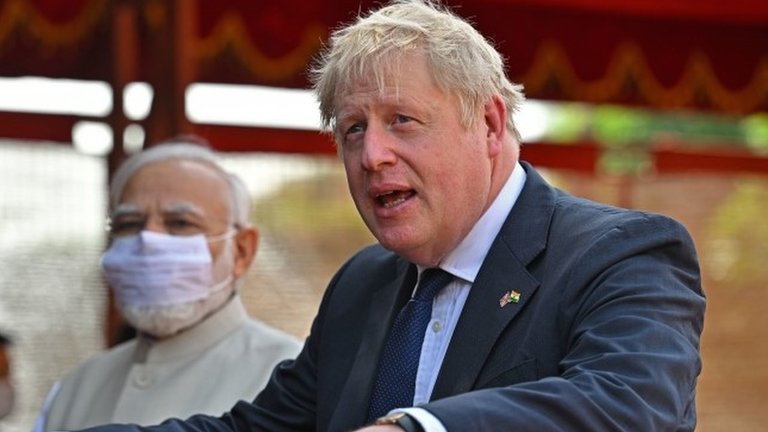
Boris Johnson has met his Indian counterpart Narendra Modi to discuss defence, energy and trade ties.

Mr Johnson said he wanted their negotiators to agree a post-Brexit free trade deal before Diwali in October.

However, the prime minister is facing more questions about his leadership and lockdown parties in No 10.

On Thursday, MPs gave the go ahead to an inquiry into whether he misled Parliament over the issue.

The government had tried to delay the vote by MPs, but made a U-turn after opposition from within its own party.

The PM now faces an investigation by the Commons Privileges Committee, which will launch once the Metropolitan Police has finished its own probe into the gatherings.

Last week, Mr Johnson was fined for breaking Covid laws at an event in Downing Street. He had previously told MPs laws were not broken in No 10, leading to accusations from opposition parties that the prime minister had misled them.

Conservative MP Tobias Ellwood, who has previously been critical of the PM, told the BBC it is a matter of “when not if” Mr Johnson faces a vote of no confidence from his MPs.

The Defence Committee chair also rejected suggestions from the prime minister’s allies that the leadership should not be called into question while the war in Ukraine continues, saying the crisis is being used as a “fig-leaf”.


The meeting between Mr Johnson and Mr Modi in India’s capital came on the final day of Mr Johnson’s two-day trip to the country, which has been delayed by Covid.

Ahead of their meeting, Downing Street announced the UK planned to streamline its licensing rules for exporting military hardware to India.

Mr Johnson said the UK would support India to construct fighter jets, in an attempt to reduce the volume of weapons bought from Russia.

No 10 also said the two countries would be boosting their security co-operation in the Indo-Pacific region, including the Indian Ocean.

And there was a commitment to increase research into lowering the cost of “green” hydrogen power – part of the UK’s renewable energy plans.

The two leaders also discussed the latest in UK-India trade talks – where Mr Johnson has set an autumn target for an agreement to be signed.

Ukraine stance

Mr Johnson had pledged to raise the issue of India’s relations with Russia during his trip.

Along with other Western countries, the UK has been trying to persuade India to drop its neutral stance and join in condemning Moscow, which is its biggest arms supplier.

Earlier this month, India condemned killings in the Ukrainian town of Bucha – the strongest statement it has made since Russia’s invasion. But it stopped short of blaming Russia for the violence, and has not criticised Russia directly since its invasion in February.

Mr Johnson acknowledged on Thursday that India, which has strong ties to Russia, was “not in the same place” as the UK over the conflict.

But he told reporters there was still a “huge amount we can work on together”.


Prime Minister Boris Johnson visited Gujarat Biotechnology University on Thursday
He also visited a temple in Gandhinagar, Ahmedabad

Ahead of his meeting with Mr Modi, Mr Johnson said collaboration with India on issues including climate change and security was of “vital importance”.

He added: “The world faces growing threats from autocratic states which seek to undermine democracy, choke off free and fair trade and trample on sovereignty.

“The UK’s partnership with India is a beacon in these stormy seas.”

A former president of Honduras, Juan Orlando Hernández, has been extradited to the United States to face charges of drug trafficking and money laundering.

Mr Hernández, who governed the Central American nation until January, was put on board a US Drug Enforcement Administration plane for New York.

He was arrested at his home just weeks after his second term in office ended.

The ex-leader has denied wrongdoing, arguing that disgruntled drug traffickers are trying to frame him.

Mr Hernández is facing charges of:

  • conspiracy to import a controlled substance into the US
  • using or carrying firearms including machine guns
  • conspiracy to use or carry firearms

In a video posted on his wife’s Twitter account, he denied the allegations, saying: “I am innocent. I have been subjected to an unfair trial.”

In a statement, the US Department of Justice said Mr Hernández would make his first appearance before a New York court on Friday.

US Attorney Damian Williams said the former president had “partnered with some of the world’s most prolific narcotics traffickers to build a corrupt and brutally violent empire based on the illegal trafficking of tons of cocaine”.

The head of the Drugs Enforcement Administration (DEA), Anne Milgram, called Mr Hernández “a central figure in one of the largest and most violent cocaine trafficking conspiracies in the world”.

The 53-year-old’s legal troubles were triggered by the trial against his younger brother Tony, a former member of the Honduran Congress, who was sentenced to life in prison last year.

Juan Orlando Hernández, seen exercising here, has been in police custody since 15 February

During Tony Hernández’s trial in New York, prosecutors alleged that the infamous Mexican drug lord Joaquín “El Chapo” Guzmán had personally handed the younger Hernández $1m (£765,000).

Juan Orlando Hernández is accused of having accepted millions of dollars in bribes during his eight years as president in exchange for protecting drug traffickers from investigation, arrest and extradition.

In its extradition request, the US outlined some of the allegations in more detail, accusing the former president of “participating in a violent drug trafficking conspiracy to receive shipments of multiple tonnes of cocaine sent to Honduras from Colombia and Venezuela and other locations by air or sea routes”.

The request alleges that the drugs – amounting to a total of 500 tonnes since 2004 – were then transported to the Guatemala border and from there to the US.

Mr Hernández has denied the allegations, arguing that he fought drug traffickers with all the means at his disposal.

The former president – who was elected to the office in 2014 – says that the evidence against him was fabricated by drug traffickers out for revenge after his government extradited them to the US.

He has been in police custody since his arrest on 15 February.

The SNP will pledge a “pandemic level response” to supporting communities, in its campaign for May’s council elections.

The party, which has been in government at Holyrood since 2007, says it has a plan “to help families in tough times”.

Its manifesto, to be launched by Nicola Sturgeon on Friday, includes promises to address the rising cost of living.

They include improving energy efficiency in homes and buildings.

Other key priorities to be outlined in the document include:

  • Protecting council tax reduction schemes
  • A new “parental transition fund” to tackle the financial barriers facing parents entering the labour market
  • More walking and cycling routes
  • Funding to maintain pavements, pathways and routes used by cyclists and pedestrians
  • Publishing plans to reduce kilometres travelled by car by 20% by 2030.

All 32 of Scotland’s councils will hold elections on 5 May.

The polls coincide with a cost-of-living crunch hitting millions across the UK, with soaring energy and fuel bills, rising prices in shops and changes to National Insurance payments.

More cycle paths are promised in the SNP manifesto

Ms Sturgeon, the SNP leader, is expected to praise the compassionate effort across Scottish communities to help families affected by rising costs.

She will draw on comparisons with community action throughout the pandemic, as she is expected to say only her party has a plan to combat the tough times.

At her manifesto launch, Ms Sturgeon will say: “Council elections are always important, but this one is particularly crucial.

“When I think about the last couple of years – of how we all pulled together in the face of huge uncertainty – I know that, by working together and with the right leadership, we can get through the challenges we are facing today and build a better tomorrow.

“What we need over the coming period is nothing less than a pandemic-level ‘Team Scotland’ response to these challenges.”

Counting is being held the day after the ballots, on Friday 6 May, with results expected from the 32 dedicated count centres across the country by the end of the day.

There has been a sharp rise in the number of people registered for postal votes, with 22.5% of the total electorate signed up for them as of December 2021.

This represents a 38.3% increase on the previous year, with the National Records of Scotland saying the jump was “most likely driven by the Covid pandemic”.

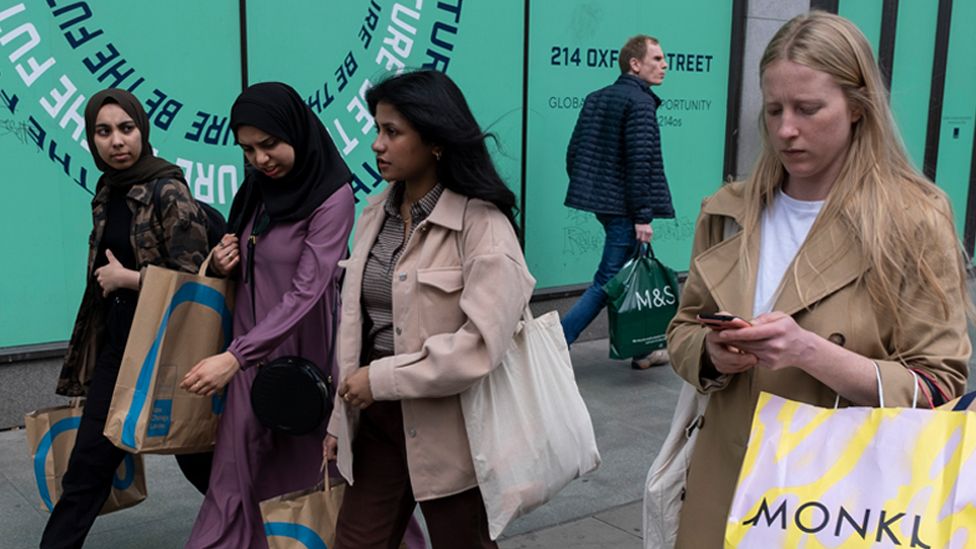
UK retail sales dropped in March as the rising cost of living hit consumer spending, according to official data.

Online sales fell sharply as people cut down on non-essential spending, the Office for National Statistics said.

Fuel sales also dropped as people cut travel amid record petrol and diesel prices.

However, overall retail sales were still above pre-Covid levels, the ONS said.

Retail sales fell by an unexpected 1.4% in the month, and February’s sales figures were also revised down.

Darren Morgan, ONS director of economic statistics, said “Online sales were hit particularly hard due to lower levels of discretionary spending.

“Fuel sales also fell substantially, with evidence suggesting some people reduced non-essential journeys, following record high petrol prices, while food sales continued to fall, dropping for the fifth consecutive month.”

The cost of living crisis is being driven by surges in fuel, energy and food prices, with inflation running at 7% – its highest rate for 30 years.

Energy and fuel prices had been rising even before Russia’s invasion of Ukraine as economies started to recover from the coronavirus pandemic, and the conflict has pushed up prices further.


Bethany Beckett, UK economist for Capital Economics, said inflation was set to keep rising and “there’s a real risk of an outright fall in consumer spending in the coming quarters”.

The biggest contribution to the March retail sales slide came from the drop in online sales, which have been falling from pandemic highs after coronavirus restrictions eased.

“The sharp decline in sales in March suggests that households are already paring back spending to cope with higher costs for food and fuel,” said Ms Beckett.

“That is only likely to worsen in the coming months as the cost of living crisis intensifies. After all, the March data predated April’s huge 54% rise in utility bills which will have hit household budgets hard.”

Separately, a survey by GfK suggested that UK consumer confidence in April dropped to its second-lowest level in 50 years due to people’s weakening confidence in the economy and in their personal finances.

Consumer confidence was at its lowest ebb since July 2008, which was during the severe worldwide economic crisis, the market research firm said.

Analysis

by Ramzan Karmali, BBC business correspondent

The bigger-than-expected fall in retail sales last month was largely down to the current cost of living crisis – that’s according to ONS officials.

Online sales of non-essential items fell again, and the data suggests that record high petrol prices are having a major impact with a cut in non-essential journeys.

More significantly perhaps is the fact food sales have been falling since last November, which is a sign that consumers are paring back their spending to cope with higher costs.

Economists believe the situation will only become more acute as March’s data came before April’s 54% hike in gas and electricity bills.

They also point to falling consumer confidence – the survey for this in April slumped to its lowest level in 14 years.

2px presentational grey line

Meanwhile, a survey of businesses suggested a slowdown in private sector growth in April.

The UK’s dominant services sector saw growth slow sharply, the S&P Global/CIPS composite Purchasing Managers’ Index indicated.

Although manufacturing growth picked up slightly after a five-month low in March, new manufacturing orders from abroad fell by the most since June 2020 as orders from Europe fell back.

Firms also said export orders were hit by Brexit, recent congestion in UK ports and sanctions on Russia, the survey found.

There was also a sharp rise in company insolvencies in March, according to official data. The number of firms going bust rose to 2,114 in March, more than double the number in March 2021, and a third higher than pre-pandemic figures.

‘Stagflation risk’

The Bank of England has been raising interest rates to try to cool inflation, and its key rate currently stands at 0.75%.

Its governor, Andrew Bailey, said on Thursday that the Bank was walking a tight line between dealing with inflation and avoiding recession.

Bank of England monetary policymaker Catherine Mann said that interest rates would probably have to go up “a little bit” further.

Asked about the risk of so-called “stagflation”, which is a combination of slow growth and high inflation, Ms Mann said “in some senses, we could say we’re already there” because of the jump in energy prices and slowing retail sales.

“But I think that, you know, it’s premature to kind of hearken back to the 1980s or the 1970s, in the US context in particular, and use that vocabulary,” she said.

Northern Ireland Minister Conor Burns has insisted Boris Johnson will not be stepping down over Partygate saying he has “unfinished business” in No 10.

Mr Burns said the PM was determined to “rebuild trust” with the public.

But a senior Tory MP has said it is “a matter of when not if” the PM faces a no confidence vote from his own MPs.

Mr Johnson is also facing a Commons investigation into whether he deliberately misled MPs by telling them Covid laws in No 10 were followed.

No 10 had tried to delay the vote on launching the inquiry, but U-turned at the last minute meaning the motion passed unopposed.

Last week, Mr Johnson, his wife Carrie and the Chancellor Rishi Sunak were fined by the police for breaching lockdown rules by attending a gathering to celebrate his birthday.

The police have confirmed they have issued at least 50 fines so far.


Speaking to the BBC’s Today programme, chair of the Defence Committee Tobias Ellwood said Conservative MPs were “deeply troubled” and warned that the ongoing row about lockdown parties was doing “long-term damage to the party’s brand”.

He accused No 10 of lacking “discipline, focus and leadership” and predicted the prime minister would face a vote of no confidence, which could force him out of office.

The Bournemouth East MP also dismissed suggestions Mr Johnson should stay in post to manage the Ukraine crisis accusing the prime minister’s allies of using the war as a “fig leaf”.

‘The gig is up’

BBC political correspondent Jonathan Blake said that one MP, a critic of the PM, said the government’s U-turn and fallout was “predictable”, while a loyalist to Boris Johnson admitted the Partygate saga had “polarised” him and his colleagues.

A critical MP pointed to Conservative Steve Baker’s contribution in the Commons debate on Thursday, when Mr Baker removed his support from Mr Johnson.

Mr Baker and another critic, former chief whip Mark Harper, are influential voices in the party and the MP pointed out that they are notorious organisers, although there is no suggestion there is an immediate move to unseat the prime minister.

WATCH: Ros Atkins On… The PM and the Ministerial Code

Speaking during a debate in the House of Commons Mr Baker said he had been “deeply moved” when the prime minister apologised to MPs for breaking the rules.

However, he said the contrition “had only lasted as long as it took to get out of the headmaster’s study” and that the PM should realise “the gig is up”.

Earlier in the week, Mr Harper said the prime minister was “not worthy” of the office and should step down.

‘Walk on water’

Mr Burns dismissed criticism from Conservative MPs saying some of his colleagues had never supported the prime minister.

“If the prime minister stepped off Westminster Bridge and walked down the Thames on top of water they would say it was because he couldn’t swim,” he said.

He said Mr Johnson still “had work to do” and cited the cost of living crisis and continued complications over Brexit arrangements in Northern Ireland.

Labour shadow minister Peter Kyle said Mr Johnson was a “dead man walking” who could no longer manage the country or his own party.

Liberal Democrat deputy leader Daisy Cooper said the partygate issue was “a huge distraction for Boris Johnson and the government, and this is why he should have resigned a long time ago.”

Mr Johnson is currently on his final day of an official trip in India, where he met Indian Prime Minister Narendra Modi.

The two men agreed they wanted to secure a free trade deal between the two countries, with Mr Johnson saying it should be done by October.

What will the Privileges Committee do?

Following a debate in the House of Commons, MPs have asked the Privileges Committee to investigate whether Mr Johnson deliberately misled Parliament.

If the committee finds Mr Johnson did mislead Parliament, they can recommend a sanction which could include a suspension or expulsion from Parliament entirely. They could also recommend he apologises to the House.

MPs will then decide whether or not to approve the report and implement the recommended sanctions.

The Privileges Committee is made up of seven MPs – two Labour MPs (Yvonne Fovargue and Chris Bryant), one SNP (Allan Dorans) and four Conservatives (Andy Carter, Alberto Costa, Laura Farris and Sir Bernard Jenkin).

However, the committee chair Mr Bryant has recused himself from the investigation as he had already commented publicly on the matter.