He was born on November 9, 1877, in Sialkot.
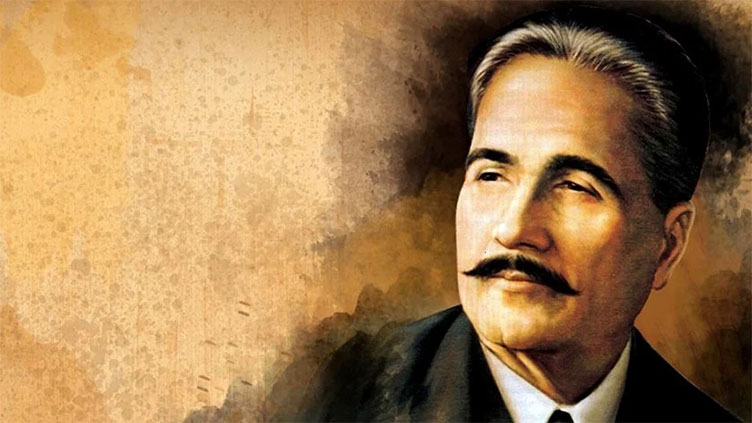
Allama Iqbal was a great visionary poet, who conceived the idea of a separate homeland for the Muslims of the Sub-continent, which was ultimately materialized in the shape of Pakistan.


He was born on November 9, 1877, in Sialkot.
Allama Iqbal was a great visionary poet, who conceived the idea of a separate homeland for the Muslims of the Sub-continent, which was ultimately materialized in the shape of Pakistan.
Britain’s longest-reigning monarch travelled by helicopter to her Norfolk estate, where she will be joined by family and friends.
She is expected to stay in a cottage on the estate particularly liked by her late husband, Prince Philip.
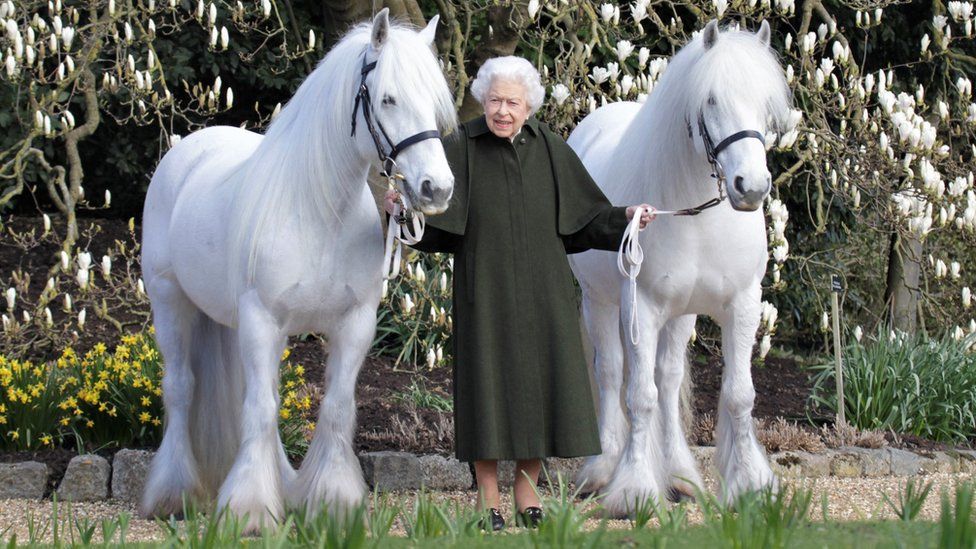
A photograph has been released to mark the birthday, showing the Queen with two ponies and reflecting her lifelong interest in horses.
The picture was taken at Windsor Castle, where the Queen now mostly stays, and shows her with two Fell ponies, who will appear in the forthcoming Royal Windsor Horse Show.
The Duke and Duchess of Cambridge wished the Queen happy birthday on Twitter, calling the monarch an “inspiration to so many across the UK, the Commonwealth and the world”, and sharing a photo of the Queen and Prince Philip with seven of their great-grandchildren.
Alongside birthday wishes, Buckingham Palace tweeted a picture of a two-year-old Princess Elizabeth from 1928.
Prince Harry suggested in a US TV interview that the Queen might be downplaying this latest milestone, saying that “after a certain age you get bored of birthdays”.
But she will be spending time at Wood Farm, a cottage described as “small and intimate” by former housekeeper Teresa Thompson, and a place with strong associations with Prince Philip, who died a little over a year ago.
The Queen was in Sandringham earlier this year when she marked her accession to the throne in 1952.
She was born in 1926, not in a royal residence, but in a London townhouse on Bruton Street, where she first lived with her father and mother, who became King George VI and Queen Elizabeth.
Birthday wishes have been sent by Prime Minister Boris Johnson and Labour leader Sir Keir Starmer and gun salutes will be fired.
The prime minister also paid tribute to the monarch’s “dedicated and faultless service” in a pre-recorded address posted on Twitter.
The Queen has had mobility problems in recent months and has had to miss a number of events, including church services over Easter.
Her only public appearance this year, outside of her own residences or on video, was at the Thanksgiving Service for Prince Philip at Westminster Abbey.
The Queen’s 96th birthday marks another unprecedented age for a British monarch, in a year in which she has become the first monarch to celebrate a Platinum Jubilee of 70 years on the throne.
The next longest-lived monarchs were Queen Victoria and George III, who lived to the age of 81, and were the only other monarchs to have lived into their 80s.
According to figures from the Office for National Statistics, the Queen is one of about 124,000 people in the 95 to 99 age group in the UK, almost three quarters of these being women.
Although 21 April is the day the Queen was born, it is not her only birthday. The monarch also has an official birthday celebration on the second Saturday of June, a tradition which began because her great-grandfather Edward VII’s birthday was in November, when the weather is generally less favourable for a birthday parade.
The Queen’s official birthday is marked each year by the military parade Trooping the Colour. This year, the parade will take place on Thursday 2 June to coincide with the Platinum Jubilee.
A number of commemorative items are being produced to mark the Jubilee. Among them is a Barbie doll, featuring a recreation of her wedding tiara and an ivory gown fitted with a blue ribbon.
MPs were set to vote on Thursday on a Labour plan for a Commons committee to investigate his past comments about Whitehall gatherings.
But ministers now say that vote should wait until probes by the Met Police and civil servant Sue Gray have finished.
The PM said MPs should have the “full facts” before ordering an inquiry.
Mr Johnson will miss the vote himself as he is in India for an official visit.
Speaking during his trip, he said he was “very keen for every possible form of scrutiny”, but he wanted to focus on the “amazing opportunities” developing between the UK and India
Earlier, Mr Johnson had told reporters he would fight the next general election and would not say if there were any circumstances under which he would resign.
Along with his wife Carrie and Chancellor Rishi Sunak, the PM was fined for breaking Covid laws at a June 2020 birthday party for him in No 10.
He had previously told MPs that no Covid laws were broken in Downing Street – leading opposition parties to accuse him of having misled Parliament.
Mr Johnson has denied knowingly misleading MPs – a charge that is a resigning matter under the ministerial rulebook.
Labour’s plan – which is backed by other opposition parties – is to have the Commons Privileges Committee launch an inquiry into whether he did, once the police investigation has finished.
Some rebel Tory MPs were threatening to vote with Labour, or not at all.
But the government has now tabled its own amendment to Labour’s proposal, to say a vote on whether they should investigate should wait until the police have concluded their investigations and Ms Gray has published her report.
Conservative MPs will be ordered to vote for it – meaning it is highly likely to pass given that the government has a Commons majority of 70.
The government said a delay would allow MPs “to have all the facts at their disposal” when they made a decision.
Labour’s shadow health secretary Wes Streeting accused the Conservatives of “kicking the can down the road”.
Speaking to the BBC’s Today programme he said: “Conservative MPs must decide today: are they standing with their voters, who are furious, or are they standing the their discredited, deceitful prime minister?”
One Conservative MP, Peter Aldous, said he stuck by his previous calls for the PM to step down, arguing that the row was “getting in the way of good government”.
No 10 insiders say they were confident they could have killed off an inquiry today – as not enough Tory MPs were prepared to rebel against the government.
But there was clearly anxiety among Tory MPs about being forced to publicly block an investigation.
Which one of them wanted to have their face displayed on social media ads and leaflets in May’s local elections, accused of taking part in a “stitch-up”?
The bet ministers are making is that once the Met investigation and Sue Gray’s report are finished and published, there may not be appetite for yet another investigation into lockdown parties.
But should more fines emerge, or Sue Gray’s report reveal particularly damning evidence, this could become more risky.
All they’ve done for now is delay the decision on whether the prime minister should face investigation, not killed it off completely.
It’s a gamble, it seems, they are willing to make.

Mr Johnson is known to have attended at least two further events of the 12 being investigated by police, meaning he could be fined again.
Apologising for his fine on Tuesday, he said he respected the police’s decision but argued that he did not think he was breaking the law at the time.
Sir Keir Starmer called his apology a “joke”, and accused him of offering “insulting” and “absurd” excuses for his Covid fine.
Under Labour’s plan, the Privileges Committee – made up of seven MPs – would begin a probe after the Met inquiry has concluded.
The committee, which has a Tory majority, would determine whether the PM had committed a “contempt” of Parliament by misleading MPs.
The committee can ask for witnesses to give evidence and produce documents as part of its inquiries.
It can also recommend sanctions including suspension of an MP – although this requires the approval of the whole House of Commons.
When asked whether there was a party in Downing Street on 18 December 2020, Boris Johnson told the Commons on 1 December 2021 that “all guidance was followed completely in No 10”.
After the publication of a video showing No 10 staff joking about the 18 December event, he told MPs on 8 December 2021 he had been “repeatedly assured” that “there was no party and that no Covid rules were broken”.
Later that day, he told the Commons he was “sure that whatever happened, the guidance was followed and the rules were followed at all times”.
On 12 January 2022, he apologised for attending a Downing Street garden party on 20 May 2020 but said he had “believed implicitly” it was a work event.
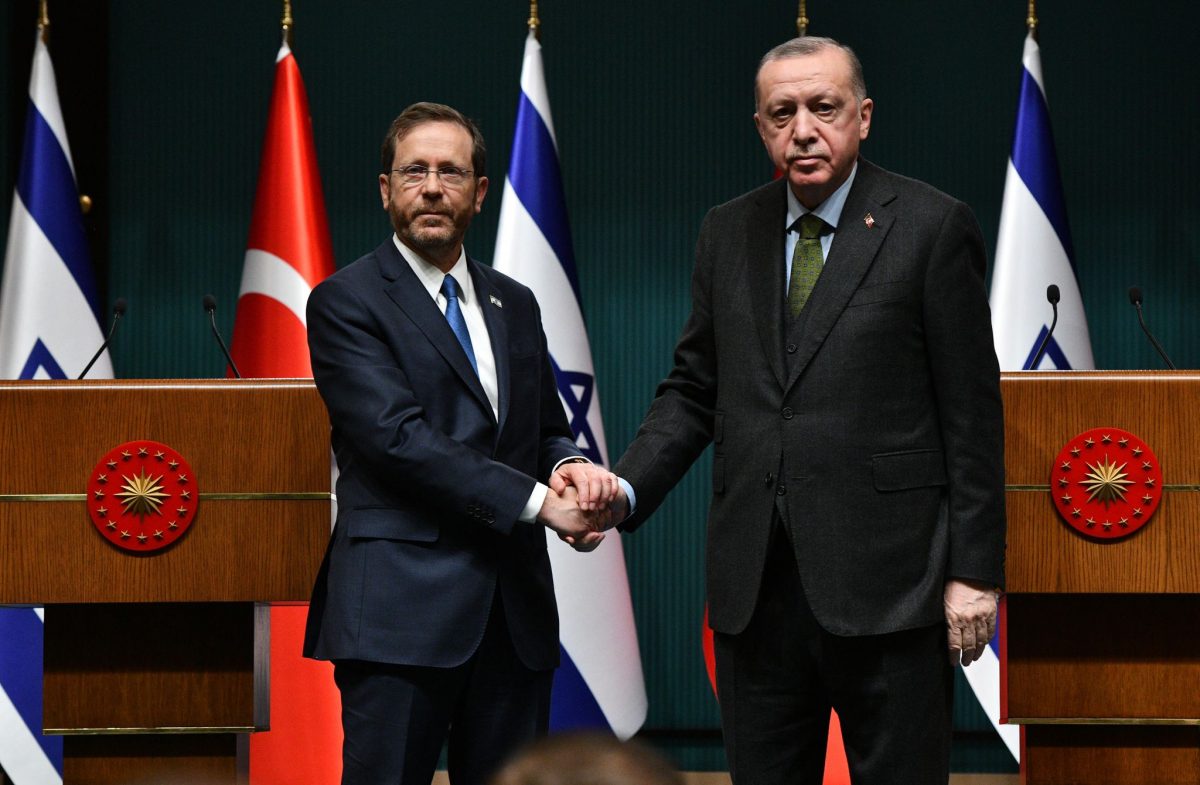
Turkish President Tayyip Erdogan will hold a call with Israel’s President Isaac Herzog on Tuesday, after Israeli interventions on Palestinian worshippers at Jerusalem’s Al-Aqsa mosque last week, Turkey’s foreign minister said.
On Friday, at least 152 Palestinians were wounded in clashes with Israeli riot police inside the Al-Aqsa mosque compound.
“We have already made our statements and we are continuing our contacts in response to the unacceptable attacks by Israeli security forces in the West Bank and Al-Aqsa,” Foreign Minister Mevlut Cavusoglu told a news conference in Ankara.
“Our President will have a phone call with Israeli President Isaac Herzog as well,” he added.
The call comes after Erdogan on Sunday told his Palestinian counterpart, Mahmoud Abbas, that he condemned Israeli “intervention on worshippers” at Jerusalem’s Al-Aqsa mosque and threats to its “status or spirit”. It also comes amid recent efforts by Turkey and Israel to repair their long-strained ties.
Regional rivals Turkey and Israel expelled ambassadors in 2018 and have often traded barbs over the Palestinian conflict, Turkish support of the Hamas, which runs Gaza, and other issues.
Turkey, which supports a two-state solution to the Israeli-Palestinian conflict, has said it believes a rapprochement with Israel will also help find a solution to the issue, but that it would not abandon commitments to Palestinians for better ties with Israel.
Earlier this month, Erdogan had told his Israeli counterpart Isaac Herzog, whom he also met in Ankara last month, that Ankara expected Israeli authorities to be sensitive over Al-Aqsa during Ramadan and stressed the importance of allowing Palestinians to enter the mosque.
While it has criticised the clashes in Jerusalem, Turkey’s reaction to the violence has been much calmer than in the past, when it had launched various initiatives at the UN and other platforms to condemn Israel and support Palestinians.
Last month, Turkish Foreign Minister Mevlut Cavusoglu said he would visit Israel and Palestine with Energy Minister Fatih Donmez in May and discuss the re-appointment of ambassadors with his Israeli counterpart during the visit.
On Friday the World Health Organisation said it was monitoring 84 cases of severe acute hepatitis that were reported in Britain since April 5 and said it expected more cases in coming days.
Cases have now been recorded in children in Denmark, Ireland, the Netherlands and Spain, the European Centre for Disease Prevention and Control (ECDC) said in a statement on Tuesday.
Nine suspected cases have also been recorded in the US state of Alabama, it said.
“Investigations are ongoing in all countries reporting cases. At present, the exact cause of hepatitis in these children remains unknown,” the ECDC said.
In most cases the children did not have a fever. But some of the cases in the UK were so severe that patients had to be transferred to specialist children’s liver units, while six children had liver transplants, both the WHO and ECDC have said.
The infection mainly affected children aged under 10 and symptoms included jaundice, diarrhoea, vomiting and abdominal pain.
The drive to demolish the properties in Delhi’s Muslim majority Jahangirpuri area came four days after violence there during a Hindu religious procession.
A three-judge bench of the top court, headed by the Chief Justice of India N.V. Ramana, ordered that the status quo should be maintained in the case until the next hearing, slated for Thursday.
The petitioner to the court said the municipal authorities had not alerted the local shopkeepers before the razing operation.
The civil authority leading the demolition, the Municipal Corporation of Delhi (MCD), is governed by Prime Minister Narendra Modi’s Bharatiya Janata Party (BJP).
Local police and members of the paramilitary forces, all of whom report to the federal home ministry, were present on Wednesday in Jahangirpuri, a residential area about 25km (14 miles) from the Indian Parliament.
Hundreds of officers in riot gear, backed with seven bulldozers, surrounded a few shops in a small Muslim pocket of the area. Some scrap dealers left the site in the morning ahead of the demolition.
A senior police officer overseeing the demolition said adequate forces had to be deployed to ensure civic authorities could do their job peacefully.
“We are here to provide protection, and to maintain law and order,” said Deependra Pathak, a senior police official at the site.
So far, police have arrested at least 20 people in connection with the Hindu-Muslim clashes that erupted during a Hanuman Jayanti procession amid celebrations over the weekend.
India in recent weeks has witnessed a spurt in small-scale religious clashes between Hindus and Muslims.
Recent demolition drives after communal clashes in several parts of India have sparked outrage, with critics calling it an attempt to instill fear among India’s 200 million Muslims by Prime Minister Narendra Modi and the BJP.
BJP leaders and hardline Hindu leaders affiliated with his party reject the allegation.
This month several homes and shops were torn down in the central state of Madhya Pradesh and western Gujarat state in the aftermath of communal violence on the day of another Hindu festival.
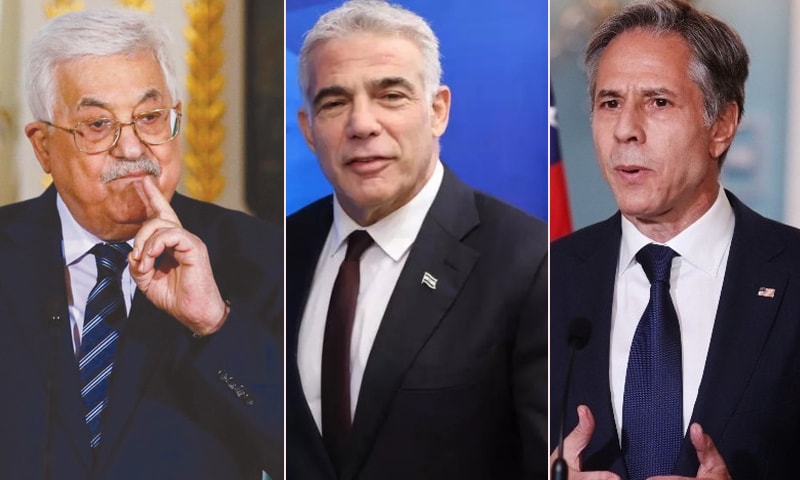
In separate calls with Palestinian President Mahmud Abbas and Israeli Foreign Minister Yair Lapid, Blinken stressed “the importance of Israelis and Palestinians working to end the cycle of violence in Israel, the West Bank, and Gaza by exercising restraint and refraining from actions that escalate tensions,” the State Department said.
He also urged both sides to exercise “restraint” and refrain “from actions that escalate tensions” including at the Al Aqsa mosque compound, Islam’s third-holiest site, but known to Jews as the Temple Mount — Judaism’s holiest place — in Jerusalem’s Israeli-annexed Old City.
In his call with Lapid, Blinken reiterated the US government’s “steadfast commitment” to Israel’s security and condemned recent rocket attacks allegedly from Gaza.
In his call with Abbas, Blinken affirmed the US commitment to improving Palestinians’ quality of life.
But with both leaders, Blinken urged for a two-state solution.
The State Department announced on Tuesday evening that Yael Lempert, assistant secretary for near eastern affairs, would travel to Jordan, Israel, the occupied West Bank and Egypt for talks aimed at “reducing tensions” in the region.
Her trip will last from Tuesday until April 26.
Editorial: Al Aqsa attack
Israel carried out its first airstrike on the Gaza Strip in months early on Tuesday, in response to a rocket allegedly fired from the Palestinian enclave after a weekend of violence around the Jerusalem holy site.
The strikes come after weeks of mounting violence, with a total of 23 Palestinians and Arab-Israelis killed, including alleged assailants who are said to have targeted Israelis in four deadly attacks.
The violence, coinciding with the Muslim holy month of Ramazan as well as the Jewish Passover festival, has sparked fears of a repeat of last year’s events, when similar circumstances sparked an 11-day assault by Israel that levelled parts of Gaza.
To be fair, only one of them was actually shouting and it wasn’t Macron, but the exchange between them, in the old mining town of Denain, reveals the trait that propelled the French president to power five years ago. It’s the very same trait that has set many voters against him now.
Elodie, the dental assistant, was furious. She shouted about the president’s “insulting” language in describing those who remained unvaccinated against Covid.
Macron told her she had taken his words the wrong way. Elodie shouted about taxes and rising prices.
He said he’d lowered taxes and she wasn’t being fair.
“You’ve lowered taxes?” she responded, incredulous. “Have you been to the petrol station yourself? How much do you earn each month?”
“I don’t control the global market,” Macron replied. “We just won’t agree,” Elodie concluded.
“But it’s important I explain,” Macron said.
The French president has always believed he has the answer to the country’s problems. And that, if only he can explain his thinking to others, they will see that too.
That self-belief has led to many long speeches, a tough approach to protesters – and a perception among some people that Macron just won’t listen.
Even before he was elected, he radiated a kind of single-minded evangelism about his project for France. How else could a 39-year-old running his first election campaign become president in the first place?
Alain Minc, an influential political adviser and early mentor to Macron, tells the story of meeting the future leader in the early 2000s.
“I’ll tell you the first words I exchanged with him. He came to visit me, when he was a young inspector of finance, and I [asked him]: ‘What will you be in 20 years from now?’. Macron answered, ‘I’ll be president’. I was stunned.”
Fifteen years later, while serving as economy minister, Emmanuel Macron launched his political movement, En Marche.
Without the backing of any established party or structure, he was initially written off by many people as too young and too inexperienced; a “champagne bubble” liable to pop before polling day.
One fellow minister in France’s Socialist government mocked Macron’s new movement – whose members were nicknamed “the Marchers” – by posting a video of the launch on social media, set to a song titled I Walk Alone.
That’s not how it turned out.
Macron had a fair amount of luck in his first election campaign.
His rivals from the main Socialist and Republican parties left a good deal of political ground in the centre of politics – the space he hoped to occupy. And the Republican frontrunner, François Fillon, became embroiled in a financial scandal during the campaign.
But Macron’s vision for France was clear, and it was new, and it was delivered with energy and passion.
At his campaign rallies, the future leader seemed to give himself completely to the moment. Hoarse with emotion, almost Messianic, he would shout into the auditorium, head thrown back, arms wide, telling his fans he loved them, needed them. It was rock star politics.
The impression was that a new wind was blowing through French politics, bringing a promise of inclusion and democracy. All driven by one man.
Before formulating a political programme, En Marche began by carrying out 25,000 interviews with voters across the country, going door-to-door and asking people two questions: what works in France, and what doesn’t work?
But political biographer Marc Endeweld says that, despite the image of a fresh, more horizontal democracy, Macron was always the one with the power.
“You have to realise that, in the end, En Marche is something very vertical,” he told me at the time. “There isn’t really a campaign manager. Emmanuel Macron has compartmentalised his relationships, and he has an extremely personal conception of power.”
The deal was signed this week, fuelling fears China may seek to build a naval base in the Pacific nation.
The Solomon Islands had rebuffed last ditch efforts by Australia – its biggest aid donor – to stop the deal.
Prime Minister Manasseh Sogavare said the pact would not “undermine peace and harmony” in the region.
The Solomon Islands leader added that the pact was not aimed at traditional allies but “rather at our own internal security situation”.
He did not disclose the pact’s terms, but insisted it was made “with our eyes wide open, guided by our national interests”.
A leaked draft of the agreement, which was verified by the Australian government, said Chinese warships would be permitted dock on the islands and that Beijing could send security forces “to assist in maintaining social order”.
The islands have been rife with social unrest in recent years and in November the Australian government sent personnel from its defence forces to help quell deadly riots in the capital Honiara, sparked after protesters stormed parliament in a bid to topple Mr Sogavare.
A spokesperson for the Chinese foreign ministry confirmed on Tuesday that the final agreement had retained the provisions on “maintaining social order”.
Australia’s Foreign Minister Marise Payne and Pacific Minister Zed Seselja called the freshly signed deal “deeply disappointing”, saying they were “concerned about the lack of transparency with which this agreement has been developed”.
“Our consistently stated view, including from the perspective of Australia’s national interests, remains that the Pacific family is best placed to meet the security needs of the region,” they said in a joint statement.
Australia’s Labor opposition called it the “worst failure of Australian foreign policy in the Pacific” in 80 years.
Prime Minister Scott Morrison – who is currently campaigning for re-election, in part on a platform of national security – denied that the pact was proof that his government had bungled its diplomacy with the Solomon Islands.
He added that he could not have gone around “telling leaders in Pacific islands what they should and shouldn’t do”.
But Mr Morrison said his country would not have a “submissive relationship” with China, which he said had made “all sorts of promises” to Pacific nations.
“We’ve always stood up to China because it’s in our interests,” Mr Morrison told reporters on Wednesday.
New Zealand’s Foreign Minister Nanaia Mahuta, similarly said the country was “saddened” that the Solomon Islands had made the pact.
The Solomon Islands had earlier last month confirmed it was drafting a security deal with China.
This particularly concerned Australia, which is just 2000km (1,400 miles) south of the Solomon Islands. It has seen years of escalating tensions with China
The news comes days before US National Security Council official Kurt Campbell is due to arrive in the Solomon Islands for high-level talks.
The US has said it will re-open its embassy in the Solomon Islands, which has been closed since 1993.
Footage of police opening fire in the central town of Rambukkana has been widely shared on social media.
Police said they used “minimum force” to disperse protesters, but many have asked why live bullets were used.
The incident has been condemned by the UN representative to Sri Lanka as well as the US and EU envoys.
It comes as the nation is grappling with its worst economic crisis since independence from Britain in 1948.
Tens of thousands of demonstrators have taken to the streets since Sri Lanka ran out of money for vital imports which has seen the prices of essential commodities skyrocket and caused acute shortages of fuel, medicines and electricity.
Protesters are demanding the resignation of President Gotabaya Rajapaksa as they blame his policies for the crisis, but he is refusing to quit.
Mr Rajapaksa admitted that he made several “mistakes” that contributed to the situation, but his appointment of a new cabinet on Monday angered many Sri Lankans.
There were protests in a number of areas on Tuesday after Sri Lanka’s main fuel retailer put prices up by nearly 65%. The prices of essential food items like wheat flour also increased on Tuesday.
The crowds in Rambukkana had been protesting for about 15 hours demanding fuel, BBC Sinhala’s Ranga Sirilal reports.
Thousands of angry motorists and bus drivers were also burning tyres and blocking the nearby highway linking the capital Colombo with the city of Kandy.
At least three of the injured protesters are said to be in a critical condition. The man who died was likely to have been shot, Mihiri Priyangani, director of the Kegalle Teaching Hospital, told Reuters news agency.
“We are suspecting gunshot injuries but need a post-mortem to confirm the exact cause of death.”
“Police had to fire to control the protesters. They set fire to some tyres too, so police had to fire to disperse them,” police spokesman Nihal Talduwa told the BBC.
The authorities say the crowd threw stones and other objects at police, injuring a number of them but many are asking why live bullets were deemed to be an appropriate response.

The Inspector General of Police CD Wickramaratne later issued a statement saying that police had acted to stop a group of protesters from setting fire to a truck containing 30,000 litres of fuel.
This has been disputed by protesters, while many on social media have pointed out that video of the incident shows no such threat to the truck.
Footage from other parts of the country showing police beating and firing tear gas at protesters have also caused massive outrage.
The US Ambassador to Sri Lanka, Julie Chung, has called for a “full, transparent investigation” into the violence, adding that “the people’s right to peaceful protest must be upheld”.
The demonstrations mark a massive turnaround in popularity for Mr Rajapaksa who swept into power in 2019, promising stability and a “strong hand” to rule the country.
Critics say corruption and nepotism – his brothers and nephews occupied several key ministerial portfolios – are the main reasons for the crisis.
His new cabinet contained several party stalwarts, but was shorn of Rajapaksa family members, apart from the president’s elder brother Mahinda who kept his job as prime minister.
The latest incident came as Sri Lankan officials headed to the IMF requesting urgent financial help.