
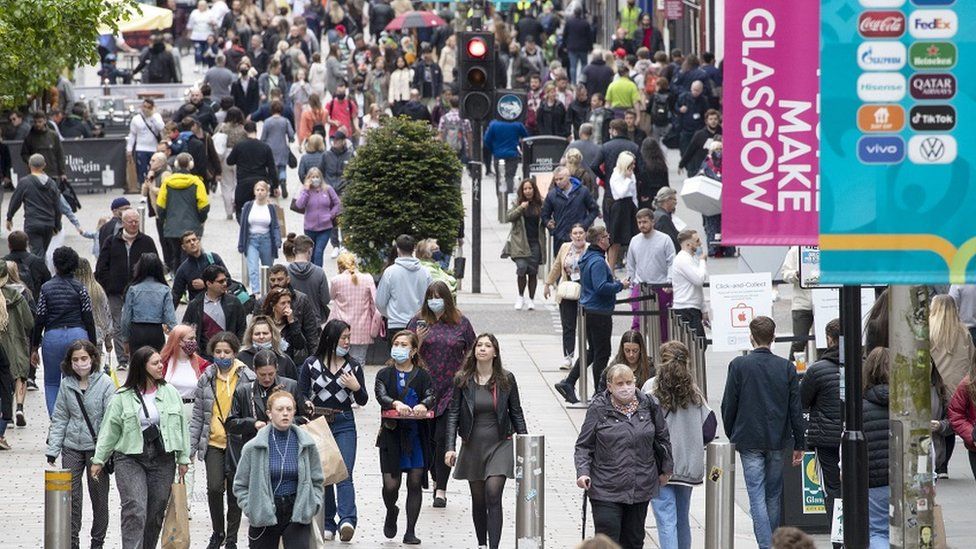
Shop sales in Scotland have returned to pre-pandemic levels for the first time since the health crisis began, according to new data.

Figures released by the Scottish Retail Consortium (SRC) showed total sales last month were 0.6% up on March 2019.

However, it attributed the improvement in part to rising prices, rather than increased sales volumes.

The industry body also warned that “economic storm clouds” such as rising costs and inflation remained a concern.


March’s figures showed overall food sales increased by 6%, compared with the same period three years ago, while the non-food category was down by 3.9%.

SRC said food was driven by higher inflation and customers focusing more on eating at home than at eateries. It also benefited from the first Mother’s Day in three years when Scots could visit family.

Fashion and beauty lines also performed better, as did furniture and electrical shops as supply challenges eased.

Rising prices

SRC head of policy Ewan MacDonald-Russell said March sales had “sparkled” compared with recent months, following the removal of nearly all Scottish Covid restrictions.

However, he added: “Whilst these sales figures are encouraging, the economic storm clouds continue to concern retailers.

“Costs continue to rise and will worsen in April as non-domestic rates bills return for many retailers.

“Rising inflation means prices are likely to continue rising, which will put immense pressure on households discretionary spending which has significant implications for many retailers.”

The return to pre-pandemic level of sales isn’t much of an achievement if it is caused by price inflation. And after a severe battering in recent years, the cost-of-living crisis confronts retailers with new challenges.

This was the sector that wasn’t just hit hard by Covid, but was already struggling due to structural change. So it was never likely to be a full recovery, but an acceleration of existing trends and new business shapes emerging.

The growth in grocery home delivery was slowing up until pandemic hit. Lockdown then forced a rapid shift to consumer habits that have continued to be dynamic between shop visits, use of convenience stores and big weekly shops.

The decline in conventional shopping, particularly on high streets, raises questions much bigger than sales figures, prompting retailers to set out how they can make shopping a more appealing prospect.

KPMG’s UK head of retail, Paul Martin, said that while the latest figures were proising, it was too early to call them a return to normality.

He added: “As households feel the pressure, retailers are facing their own battle with rising costs and inflation, and are walking a tightrope between absorbing rising costs themselves or passing these on to consumers.

“It remains to be seen whether or not consumers will reduce physical and virtual spending to offset rising household bills and reduced household incomes.”
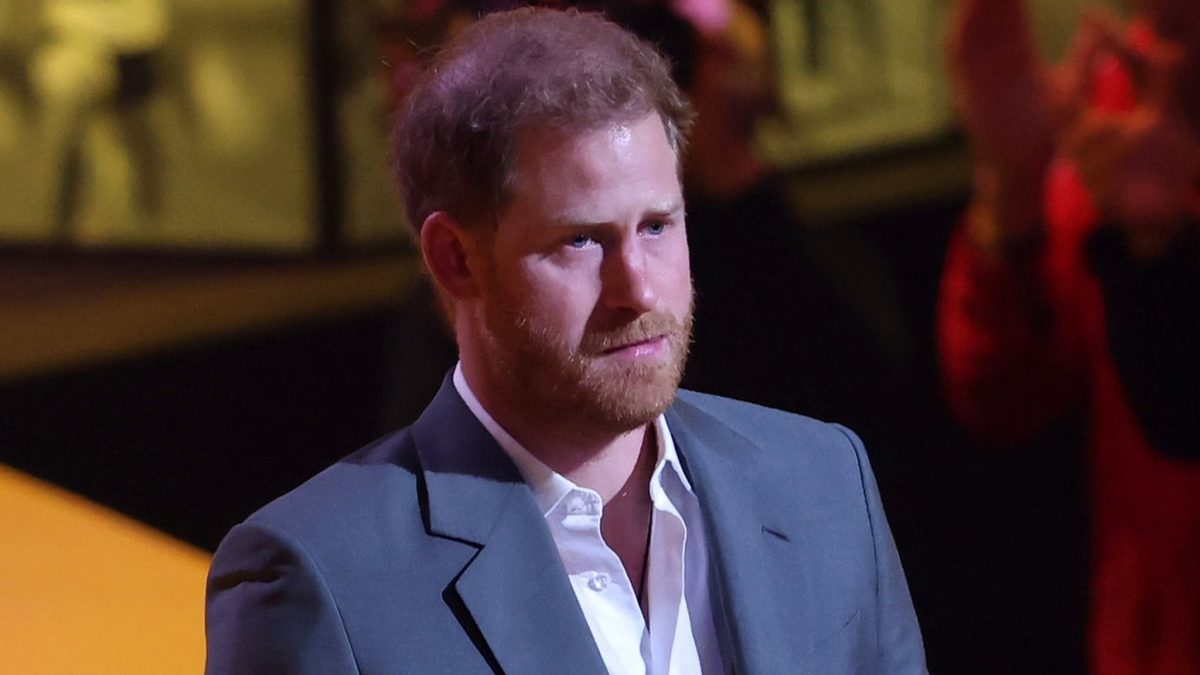

The Duke Of Sussex has revealed the Queen was “on great form” during their recent meeting – as he describes making sure she is “protected”.

Prince Harry dropped in to see his grandmother with wife Meghan, Duchess of Sussex, on the way to the Invictus Games in the Netherlands last week.

He said in a US television interview it allowed him to check the monarch, 95, has “the right people around her”.

“It was really nice to catch up with her,” he told NBC’s Today show.

The duke also used the interview in The Hague, in the Netherlands, to describe the United States as his home “for the time being” where he has been “welcomed with open arms”.


Describing the visit to see the Queen, which was not announced in advance, the duke said: “Being with her, it was great. It was so nice to see her… she’s on great form.”

“She’s always got such a great sense of humour with me and I’m just making sure she’s protected and got the right people around her,” he added in a preview of the full interview, expected to air in the US later.

Prince Harry and Meghan, who had not visited the UK together since they stepped back from royal duties in early 2020, also saw Prince Charles while they were at Windsor Castle, reports said.

The 37-year-old did not attend a memorial service for his grandfather, the Duke of Edinburgh, in London last month.

He is currently engaged in a legal case against the UK government over his police protection in the UK.

Meanwhile, the Queen – who is 96 on Thursday – has been forced to pull out of several key events – including a traditional Easter Sunday church service – in recent weeks after speaking about her mobility problems.

The short clip from US television doesn’t reveal what Prince Harry was “making sure” the Queen was protected from. Problems with her health? Bad advice?

But his comments, following his flying visit to the UK, are likely to raise some eyebrows and maybe even some hackles among those already looking after the Queen in Windsor Castle.

There’s a danger of overanalysing a few seconds of small talk – and maybe more will be explained in the full interview later.

But what did seem clear is that Prince Harry sees his future as being in the United States, at least for the time being. Never mind the royal genes, it’s jeans and sunshine for now.

With a young family now growing up in California, it has the feel of putting down roots.2px presentational grey line

Prince Harry is visiting Europe in his role as private patron to the Invictus Games, which sees 500 injured and sick military personnel and veterans from 20 nations compete in a week of adaptive sports.

The aim of the event, which he founded, is to help recovery, support rehabilitation and promote wider understanding of injured and sick servicemen and women.

A film crew is expected to be joining him at the games as part of filming for a Netflix series called Heart Of Invictus.

Prince Harry and Meghan made a deal with Netflix in September 2020 to make a range of programmes which they said would focus on creating content that “informs but also gives hope”.

The government faces a challenge to move on from a row over the prime minister breaking Covid rules, a business minister has said.

Paul Scully told the BBC Boris Johnson had apologised and would now “rebuild trust with people who are angry”.

The PM is working to secure support from his own MPs, ahead of a vote on whether a committee should investigate him for misleading Parliament.

The vote, secured by Labour, will take place on Thursday.

Labour has accused Mr Johnson of lying to Parliament about gatherings in Downing Street during lockdowns – something he has denied.

Under government rules, ministers who knowingly mislead Parliament, which the PM denies doing, are expected to resign.

If MPs vote for an inquiry, the privileges committee – made up of seven MPs – could recommend sanctions, including an apology, a suspension or even expulsion from the Commons.

But the move is unlikely to succeed because the majority of Conservative MPs are standing by the PM, and are likely to be ordered to vote against the Labour motion.


Mr Scully said the government would wait to see the wording of the motion before deciding how to vote.

Speaking on BBC Breakfast, he said Mr Johnson “wants to move on with the really important issues of the day”.

“That’s difficult because he has to rebuild trust with people who are angry and frustrated but that’s the challenge that we have.”

On the same programme, Labour’s deputy leader Angela Rayner reiterated her party’s call for Mr Johnson to resign.

She said Mr Johnson was “undermining our democratic processes” and “debasing the office” of prime minister.

Watch: ‘What a joke!’ – Starmer berates PM’s fine apology

Addressing MPs on Tuesday, for the first time since he was fined by Met Police for breaking Covid laws, Mr Johnson apologised for his “mistake” 35 times.

He said he had not realised he was breaking the rules when he attended a birthday gathering in Downing Street but that he accepted the police’s decisions.

Labour leader Sir Keir Starmer accused the prime minister of offering “absurd” excuses; while the SNP’s Westminster leader Ian Blackford said: “If he has any decency, any dignity, he would not just apologise, he would resign.”

And Liberal Democrat leader Sir Ed Davey said it was “profoundly damaging” to the UK to be “led by a man the public no longer trust and no longer have confidence in”.

In the Commons, the majority of Conservative MPs gave the PM their backing, but a former senior minister – Mark Harper – urged Mr Johnson to quit saying his actions had been “indefensible”.

And another MP Duncan Baker told Radio Norfolk: “If there are more fixed penalty notices MPs like me will have a lot to consider.”

Watch: Mark Harper explains why he no longer has confidence in the PM’s leadership

After taking questions in the Commons for over an hour and a half, Mr Johnson address his own MPs in a bid to shore up support.

The BBC has been told Mr Johnson asked his party if they would rather have him or Labour in power, adding: “We’re going to get on with our one-nation Conservative agenda.”

A Downing Street source has confirmed that Mr Johnson told Conservative MPs the government’s plan to send some asylum seekers to Rwanda had been “misconstrued” by the Archbishop of Canterbury and the BBC.

The Archbishop of Canterbury, Justin Welby, said the policy was “the opposite of the nature of God” during his Easter sermon at the weekend.

Mr Scully told the Today programme that he did not remember the PM’s remarks, and said: “I am not attacking the BBC.”

Mr Johnson will face MPs again at midday when he goes to the Commons for Prime Minister’s Questions.

What has the PM told MPs about parties?

When asked whether there was a party in Downing Street on 18 December 2020, Boris Johnson told the Commons on 1 December 2021 that “all guidance was followed completely in No 10”.

After the publication of a video showing No 10 staff joking about the 18 December event, he told MPs on 8 December 2021 he had been “repeatedly assured” that “there was no party and that no Covid rules were broken”.

Later that day, he told the Commons he was “sure that whatever happened, the guidance was followed and the rules were followed at all times”.

On 12 January 2022, he apologised for attending a Downing Street garden party on 20 May 2020 but said he had “believed implicitly” it was a work event.

PM Shehbaz summons his first cabinet meeting

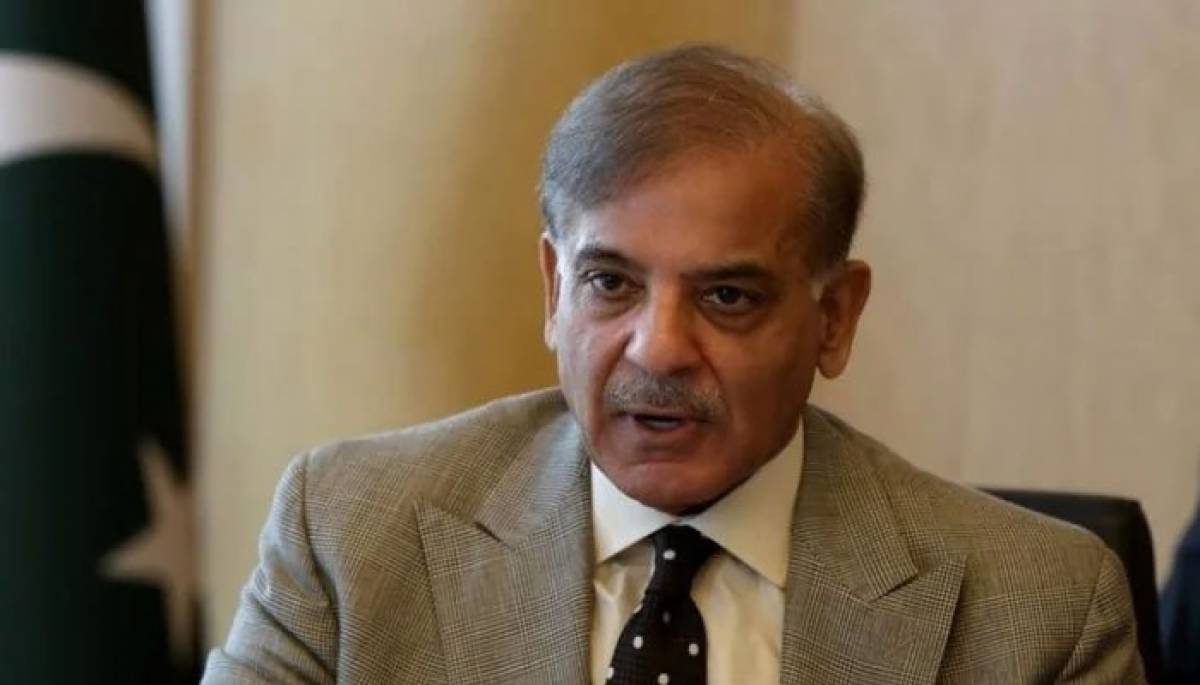
Prime Minister Shehbaz Sharif on Tuesday summoned the first meeting of his federal cabinet shortly after the members were sworn in in the first phase at an oath-taking ceremony at Aiwan-e-Sadr.

The newly formed cabinet will meet at PM House tomorrow (Wednesday) at 10am,

All the newly appointed cabinet members and advisers will attend the meeting, where the current political and economic situation of the country will be discussed.

It has been almost two months since the last federal cabinet meeting was held under an agenda. However, special meetings of the cabinet were summoned during this period but only for approval on specific matters, such as the much-talked-about “threat letter”.

PM Shehbaz Sharif’s cabinet was finally formed after much anticipation and delays.

Senate Chairman Sadiq Sanjarani administered the oath to the members of the federal cabinet. So far, the cabinet has 31 federal ministers, three ministers of state and three advisers.

Turkey begins fresh offensive in Iraq

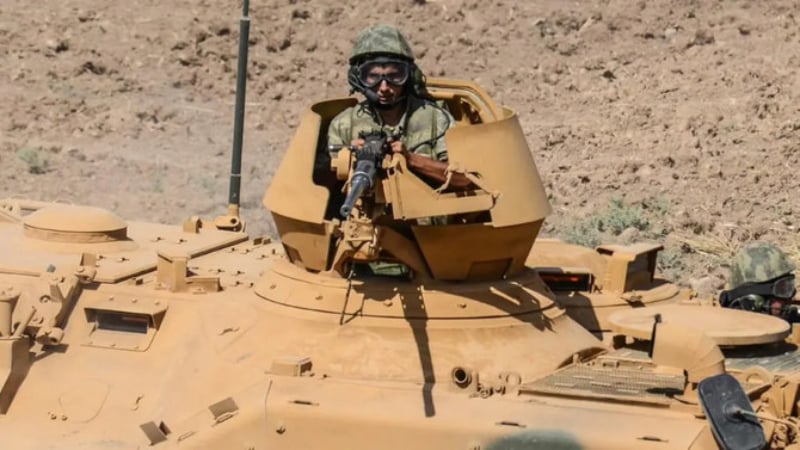
Defence Minister Hulusi Akar said commando units, unmanned aerial vehicles and attack helicopters were pounding Kurdistan Workers Party (PKK) hideouts in three restive regions near the Turkish border.

Designated as a terrorist group by Ankara and its Western allies, the PKK has been waging an insurgency against the Turkish state since 1984 that has claimed tens of thousands of lives.

Turkey routinely carries out attacks in Iraq, where the PKK has bases and training camps in the Sinjar region and on the mountainous border with Turkey.

“Our heroic pilots successfully struck shelters, caves, tunnels and ammunition depots belonging to the terrorist organisation,” Akar said.

“A large number of terrorists were neutralised,” he said, adding that the scale of the operation will “further increase in the coming hours and days”.

Akar would not say how many troops were involved in the operation, which he said started on Sunday night.

Asked to comment on Turkey’s operation, a PKK spokesman in Iraq said on condition of anonymity: “The occupation army, which tried to land troops by helicopters, also wanted to advance by land.

Air strikes kill seven in Ukraine as Russian forces mass in the east

The air strikes in Lviv came just hours after Ukrainian President Volodymyr Zelensky accused Moscow of wanting to “destroy” the entire eastern region of Donbas bordering Russia.

Russia’s defence ministry said it had hit 16 military targets at various locations across Ukraine. Following the attack on Lviv, black smoke billowed from the gutted roof of a car repair shop in the northwest of the city as air raid sirens wailed.

“Fires were set off as a result of the strikes. They are still being put out. The facilities were severely damaged,” Lviv regional governor Mak­sym Kozytsky said on social media.

In the south, Russia continued its push to capture the besieged port city of Mariupol where the last remaining Ukrainian forces prepared for a final stand.

Ukraine has pledged to fight on and defend the strategic city, defying a Russian ultimatum for remaining fighters inside the encircled Azovstal steel plant to lay down their arms and surrender.

Prisoner swap

Russian state TV on Monday broadcast a video of what it described as “Britons” captured fighting for Ukraine and demanding that Prime Minister Boris Johnson negotiate their release.

The two haggard-looking men asked to be exchanged for Viktor Medvedchuk, a Ukrainian tycoon close to President Vladimir Putin, who was recently arrested in the pro-Western country. Ukraine then aired its own video featuring Medvedchuk calling for his exchange in return for an evacuation of civilians and troops from Mariupol.

“I want to ask Russian President Vladimir Putin and Ukrainian President Volodymyr Zelensky to exchange me for Ukrainian defenders and residents of Mariupol,” he said in the video published by Kyiv’s security services, wearing black clothes and looking directly into the camera.

Mariupol has become a symbol of Ukraine’s unexpectedly fierce resistance since Russian troops invaded the former Soviet state on Feb 24.

While several large cities were under siege, according to Prime Minister Denys Shmyhal, not one — with the exception of Kherson in the south — had fallen, and more than 900 towns and cities had been re-captured.

Capturing Mariupol would allow Russia to have a land bridge between the Crimea peninsula, which it annexed in 2014, and the two Moscow-backed separatist statelets in Ukraine’s east.

‘Last chance to save you’

In the east, Ukrainian authorities urged people in Donbas to move west to escape a large-scale Russian offensive to capture its composite regions of Donetsk and Lugansk.

“Russian troops are preparing for an offensive operation in the east of our country in the near future. They want to literally finish off and destroy Donbas,” Zelensky said.

Police arrest 88 after mob attack in India

A mob attacked police and vandalised public property on Saturday night in Hubli, 480 km north of Bengaluru, after the derogatory message spread on Whatsapp, police said.

Twelve police officials were injured in the violence even though the person who posted the message had already been arrested. “People still gathered near the police station … The mob pelted stones at police, tried to enter the police station and damaged police vehicles,” said Labhu Ram, a senior police official probing the incident.

Clashes have broken out between the majority Hindu and minority Muslim communities during religious processions in several parts of India in recent weeks.

Prime Minister Narendra Modi’s Hindu nationalist Bharatiya Janata Party has emboldened hardline religious groups to take up causes that they say defend the Hindu faith.

Minority Affairs Minister Mukhtar Abbas Naqvi played down the violence and said in an interview published on Sunday that intolerance among religious communities was not worsening. In another incident of communal violence, riots broke out after an accident between two motorcyclists in Vadodara, in the western state of Gujarat, on Sunday night, police said. Crowds of Hindus and Muslims pelted stones at one another. At least three people were injured and 10 vehicles were torched.

Opposition politicians have accused Modi’s party of stoking tensions between majority Hindus and Muslims in states that it rules.

Israel hits Gaza after alleged rocket attack as Jerusalem tensions spike

The army also said its special forces had made five arrests overnight in the occupied West Bank, which has seen a string of deadly Israeli raids since an uptick in attacks and demonstrations four weeks ago.

Tensions have focused on the highly contested Al Aqsa mosque compound, known to Jews as the Temple Mount, in Jerusalem’s Israeli-annexed Old City.

Palestinian worshippers gathering there for Ramazan prayers have been outraged by visits by religious Jews under heavy Israeli police protection — as well as restrictions on their own access.

Jews are allowed to visit the site at certain times but prohibited from praying there.

The violence, coinciding with the Jewish Passover festival as well as the Muslim holy month, has sparked fears of a repeat of last year’s events, when similar circumstances sparked an 11-day war that levelled parts of Gaza.

On Monday, warning sirens sounded after a rocket was purportedly fired into southern Israel from the blockaded enclave, controlled by Hamas, in the first such incident since early January.

The Israeli military said that the rocket had been intercepted by the Iron Dome air defence system.

Hours later, the Israeli air force said it had hit a Hamas weapons factory in retaliation.

Hamas claimed to have used its “anti-aircraft defences” to counter the raid, which caused no casualties, according to witnesses and security sources in Gaza.

No faction in the crowded enclave of 2.3 million inhabitants immediately claimed responsibility for the rocket.

Editorial: Al Aqsa attack

But it comes after weeks of mounting violence, with a total of 23 Palestinians and Arab-Israelis killed, including alleged assailants who are said to have targeted Israelis in four deadly attacks.

Those attacks claimed 14 lives, mostly civilians, according to an AFP tally.

The rocket fire also followed a weekend of Israeli-Palestinian violence in and around the Al Aqsa Mosque compound that wounded more than 170 people, mostly Palestinian demonstrators.

Diplomatic sources said the United Nations Security Council was to meet on Tuesday to discuss the spike in violence.

Israeli police said they had refused to authorise a march Jewish nationalists had planned around the walls of the Old City.

A similar parade last year, following a similar wave of violence, was interrupted by rocket fire from Gaza which in turn triggered an 11-day war.

That conflict killed at least 260 Palestinians including many fighters, and 14 people on the Israeli side including a soldier.

Incidents at the Al Aqsa mosque compound, the holiest site in Judaism and the third-holiest in Islam, have triggered repeated rounds of violence over the past century.

Hamas has vowed to defend Al Aqsa’s status as “a pure Islamic site”.

But analysts have said in recent weeks that the movement does not want a war at present, partly because its military capacities were degraded by the last one.

They say Hamas is also wary that a new conflict could prompt Israel to cancel thousands of work permits issued in recent months to residents of impoverished Gaza, where unemployment is near 50 per cent.

But Islamic Jihad, another Palestinian faction which Israel says has thousands of fighters and rockets in the enclave, said on Monday that “the enemy’s threats to cut off aid to Gaza will not force us into silence over what is happening in Jerusalem”.

US State Department spokesperson Ned Price said on Monday that the United States was “deeply concerned” about the tensions and that senior US officials had been in touch by telephone with their counterparts from Israel, the Palestinian Authority and Arab governments.

“We have urged all sides to preserve the historic status quo” at the Al Aqsa compound and avoid “provocative” steps, he said.

US looks forward to ‘working closely’ with Shehbaz govt across regional, international issues

The senior official made the statement during a press briefing today in response to a question from a journalist.

“For almost 75 years our relationship with Pakistan has been a vital one,” he said. “We look forward to continuing that work with the new government in Pakistan across regional and international issues. This is work that has the potential to promote peace and prosperity in Pakistan and throughout the region.

“We have already congratulated the new Pakistani prime minister, Shehbaz Sharif, on his election, and we look — we work — excuse me — we look forward to working closely with his government.”

In the press briefing on Tuesday, Price was responding to a question about reports of alleged Pakistani air strikes in Afghanistan. “We are aware of the reports of Pakistani air strikes in Afghanistan, but we’d refer you to the Pakistani government for comment,” the US official said.

The State Department spokesperson’s statement follows a flurry of allegations from PM Shehbaz’s predecessor, Imran Khan, who claims that Washington was behind a conspiracy to oust his government.

He based his allegation on a diplomatic cable in which it was reportedly said that a State Department official had warned of “consequences” for bilateral ties if the no-confidence motion against Khan failed. Washington has denied the claims.

In his press briefing Tuesday, the State Department spokesperson underlined that the US viewed Pakistan as an “important stakeholder and partner” with whom the country was engaging to bring about a stable and secure Afghanistan.

“And importantly an Afghanistan that respects the basic and fundamental rights of its people, all of its people, including its minorities, its women, its girls,” Price added.

Afghan border issues

Reuters had on Saturday reported that Afghanistan’s foreign affairs ministry had summoned Pakistan’s ambassador to Kabul over the recent alleged attacks in the eastern Afghan provinces of Khost and Kunar and had given him a diplomatic demarche to deliver to Islamabad.

Subsequently, the Foreign Office had said that the government was looking into the situation and “will give its position accordingly”. On Sunday, the Foreign Office issued a statement in which it “strongly condemned” the use of Afghan soil by terrorists to carry out activities in Pakistan and urged the Afghan government to take stern action against such elements, while reaffirming respect for Kabul’s “independence, sovereignty and territorial integrity”.

“Pakistan will continue to work closely with the Afghan government to strengthen bilateral relations in all fields,” it had said in its statement.


Sri Lanka says it has requested emergency financial help from the International Monetary Fund (IMF) as bailout talks got under way on Monday.

The global financial organisation will consider providing the assistance after representations by neighbouring India.

Meanwhile, a leading rating agency warned Sri Lanka will see “a series of defaults” on its foreign debts after officials said it would halt payments.

It comes as Moody’s downgraded its assessment of bonds sold by Sri Lanka.

Sri Lankan officials, led by finance minister Ali Sabry, are in Washington this week for talks with the IMF as the South Asian nation faces its worst economic crisis in more than 70 years.

At a meeting, the IMF “commended on the steps already taken by [Mr Sabry] to mitigate the financial situation in Sri Lanka,” the country’s finance ministry said in a statement.

“[The] Minister of Finance has made a request for a Rapid Financing Instrument (RFI) with the IMF. IMF has subsequently informed Minister Sabry that India had also made representations on behalf of Sri Lanka for an RFI,” it added.

“It had been communicated that IMF will consider the special request made despite it being outside of the standard circumstances for the issuance of an RFI.”

A RFI is usually granted to an IMF member nation with “urgent” funding needs, because of sharp commodity price rises, natural disasters or conflicts. It does not require the country to have a plan to restructure its economy.

Last week, the Sri Lankan government said it would temporarily default on $35.5bn (£27.3bn) in foreign debt as the pandemic and the war in Ukraine made it “impossible” to make payments to overseas creditors.

On Monday, Sri Lanka’s finance ministry confirmed that it would miss $78m in interest rate payments on international sovereign bonds.

A spokesperson told the BBC this was “in line with the government policy decision” to pause foreign payouts.

If the overdue interest rate payments are not made within a 30-day grace period, it would mark Sri Lanka’s first default on its foreign debt since its independence from the UK in 1948.

Asked if payment would be made within the grace period, the spokesperson said: “A decision in this regard will be published in due course”.

The country has seen mass protests in recent weeks as it suffers food shortages, soaring fuel prices and major power cuts as its reserves of foreign currencies are running low.

The latest rating from Moody’s suggests that overseas bonds issued by Sri Lanka are “likely in, or very near default”.

The rating agency said the country’s move to stop some payments “will lead to a series of defaults with the first coupon payments for the government’s international bonds coming due today, April 18, 2022.” A coupon is the interest payment due on a bond.

Moody’s added that the non-payment was “unlikely to be cured during the grace period”, as a debt restructuring programme with the IMF “will take time”.

Last week, two other major credit rating agencies also warned that Sri Lanka was on the brink of defaulting on its debts.

Credit ratings are intended to help investors understand the level of risk they face when buying a financial instrument, in this case a country’s debt – or sovereign bond.

International sovereign bonds make up the largest share of Sri Lanka’s foreign debt.

They are held by countries including China, Japan and India as well as major investment firms such as BlackRock, UBS and Allianz.

Meanwhile, the Colombo Stock Exchange is scheduled to remain closed all this week, due to the “present situation in the country”.